Laudable Linkage

It’s been a few weeks since I’ve been able to share links I found interesting recently. But I don’t have as many as you might expect for a longer time period. Here they are:

What Does It Mean to “Accept Jesus”? “Accepting Jesus’ is not just adding Jesus. It is also subtracting the idols.”

No, Hanging Out With Your Friends Is Not the Church. Love this blog name, too: The Wardrobe Door.

Freedom From Parenting Guilt.

10 Amazingly Enjoyable Things About Having Kids. We hear so much negativity in the world about the frustrations of having children, but there are many fun things, too. This is from a secular source and therefore has a couple of philosophical bits I wouldn’t agree with, but overall some great observations.

Love Theologically. HT to Challies. Love and theology should feed each other, not oppose each other.

Sweet video about Moms.

If you’re a fan of Pixar movies (we are!), you might enjoy this video of “Easter eggs” in the films – little surprises from one film in another:

Happy Saturday!

Friday’s Fave Five

FFF spring2

It’s Friday, time to look back over the blessings of the week with Susanne at Living to Tell the Story and other friends.

This week has definitely had its challenges. But it’s had its bright spots, too. Here are a few of the latter:

1. Surprise Mother’s Day breakfast. My son and daughter-in-law surprised me Mother’s Day morning by showing up early to make breakfast for us. They made biscuits and gravy and some really cute fruit cups and Jim made scrambled eggs.

2. Mother’s Day as a whole. My family always makes it a special day for me. Besides the aforementioned breakfast, Jim grilled burgers for lunch, we Face-timed with my oldest son, and they got me flowers and a few very nice gifts.

Mother's Day 20153. Baby Cuddles. Now that Timothy has gotten mobile, he’s usually more interested in playing or exploring than sitting and cuddling. But while everyone else was making breakfast, I think he wasn’t quite awake yet, and he was content to lean against me and play with the buttons on my housecoat for a while.

4. Ruby Tuesday’s Smoky Mountain Chicken. Jim had to be out of town one night, which meant I had great-grandma’s full care, and Jason and Mittu offered to pick up dinner to help out.

5. A tooth problem averted. For a few days the gum under the bridge I just had put in a few weeks ago was swollen and painful. The bridge experience wiped our our dental benefits for the rest of the year, so I was really hoping this wasn’t going to develop into a major problem (well, the pain and discomfort of another potential procedure were concerns, too!) Thankfully it went away – I guess something had just irritated it for a bit.

Happy Friday!

A few more thoughts on caregiver resentment

EldercareSeveral thoughts coalesced this morning to a realization. I wrote last week about caregiver resentment, and I may go back and add this in at some point.

We can get resentful or “weary in well doing” in just about any endeavor. But I think in most of them, you have every expectation of seeing improvement or completion. If you’re building something or involved in a big project, you know at some point it will be done. Some of the frustrations are easier to bear because you can see progress and look forward to the end results. With the frustrations and limitations of raising children, you also continually see them learn and grow and gradually get more independent and able to do some things on their own. Plus they’re cute, and there are moments of fun and joy along the way.

But with an elderly loved one who is declining, it’s not going to get better. It will likely get worse. And the only way it all ends is when that person dies (or goes to a nursing home, which we feel would only hasten my mother-in-law’s death. She was so low when she was there that we felt we were bringing her home to die – and that was almost two years ago). So wishing to be relieved or for it all to be over seems akin to wishing for that person’s death, which adds guilt to the mix.We backtrack and think, “No, no, no, I didn’t mean that.” We just wish it could be different. But it’s not going to be.

Some caregivers battle depression more than resentment, or maybe both. Besides all that is involved in caring for an elderly person, there is the sadness of seeing them lose mental or physical abilities one by one.

There are times I wonder at God’s ways. Last year we lost our pastor to a short battle with cancer and a young mom of two children to a very sudden and unexpected reaction to a medication. He was in his early fifties, two daughters had just gotten married, he was known for uniquely caring for everyone whose life he touched. He would have been a wonderful grandfather. The young mom left behind a grieving husband, children, and friends. Why are people like that taken “early,” as it seems to us, when they still have so much vitality and usefulness ahead of them, and other people experience a slow decline for years, some vacant and unresponsive in nursing homes, others no longer recognizable due to the alterations of Alzheimer’s?

I don’t know. But I do trust that God has His reasons. He’s doing something in the lives of all the people connected with each individual.

All we can do is continually apply God’s truth to our situations, as I mentioned previously, and depend on His grace day by day.

Something else that helps me a bit sometimes is when I think of my mother-in-law’s situation as analogous to how God sees me: helpless, completely dependent, messy and unable to do anything about it. Yet He loves me. He doesn’t resent cleansing and caring for me. He knows how thoroughly I need Him even more than I do. Seeing my own helplessness and basking in His love and care for me helps love for others to well up in my own heart.

A new commandment I give to you, that you love one another: just as I have loved you, you also are to love one another.
 John 13:34.

Book Review: Taken

TakenWhen a kidnapped victim is released, we tend to think that’s the happy ending to their story, or at least to that chapter or ordeal. But Dee Henderson starts there in her newest novel, Taken. Shannon Bliss had been missing for eleven years, having been abducted at the age of 16. She escaped on her own and sought out private investigator Matthew Dane to help her take the next steps. He’s a former police officer, but he’s also the father of a kidnap victim: his daughter had been missing for a number of years, so Shannon feels Matthew can help her in a unique way that others could not.

I’ve always pictured recovered kidnapping victims as spending their first few days, after a medical check-up, giving their testimony to various officials. I don’t know how it works in real life, but in this book, Shannon shares the details of what happened in small bits at a time. One reason is that she can’t bring herself to lay it all out at once, but there are bigger reasons: the family who took her thinks she is dead, and her life might be in danger if they find out she’s alive, plus she is waiting on one friend who also had plans to escape, plus she has evidence that could put the whole family away if it’s shared at the right time and handled the right way. Her abductors were a large network of family members involved in a number of crimes, so Shannon wants to tread carefully in order to catch as many as possible, especially the most dangerous.

Matthew is friends with FBI Special Agent Paul Falcon (from Dee’s previous novel Full Disclosure) and is able to pass along information as Shannon shares it. His experience with his daughter’s kidnapping is helpful, but he has to learn that Shannon is older and copes in her own way. Still, he recognizes that she is still in survivor mode and that at some point the emotions will hit. For now, he helps her process things, acts as a buffer between her and the public and the police, and advises and protects her.

An added wrinkle is that her brother is running for governor and has mentioned his missing sister in his campaign. Deciding when to tell and meet with him and then when and how he should make the news public requires much thought.

Most of Dee’s books are edge-of-your-seat suspenseful. This was not that way, but I still enjoyed finding out Shannon’s story as it unfolded and seeing what happened afterward.

Of particular interest, and something Matthew is surprised at, is that her faith didn’t suffer through her ordeal. In quite an interesting conversation between them about free will, Shannon says,

“But God decided to create a world where free will was more important than no one ever getting hurt. There must be something stunningly beautiful and remarkable about free will that only God can truly grasp, because God hates, literally abhors, evil, yet He created a world where evil could happen if people chose it. God sees something in free will and choice that’s worth tolerating the horrifying blackness that would appear if evil was chosen rather than good. I find that utterly remarkable” (pp. 107-108).

“God gave Adam and Eve that free will and choice. He gave them one warning: eat of any tree that is here, including the wonderful tree of life, but don’t eat from the tree of the knowledge of good and evil…I wish Adam and Eve had thought more about what knowledge meant. Eve saw it as a good thing, to know more. But how do you really know something? You experience it” (p. 108).

I disagreed when she said “God expected, fully intended, for Adam and Eve to obey what He had said,” since the Bible speaks of “the Lamb slain from the foundation of the world” (Revelation 13:8). That and other verses (besides verses about God’s omniscience) indicate that of course God knew what was going to happen. But I agree with her conclusion that man’s evil choices don’t make God evil, despite the fact that God could have stopped them, and that He gives grace and help in the midst of that pain of people’s wrong choices. “God has been acting honorably throughout history regrading what He wants. We’re the ones at fault. God is good. And I still really, truly like Him” (p. 109).

I’m always reluctant to get to the end of Dee’s books, because the characters feel like friends and I kind of miss them when the story is over. But in the last few, characters from some of her other books make appearances in the newer ones, so it’s neat to feel like you’re touching base with them again.

This was a book I made time for beyond my usual reading times, and I very much enjoyed it.

(This review will also be linked to Semicolon‘s Saturday Review of Books.)

Book Review: The Valley of Fear

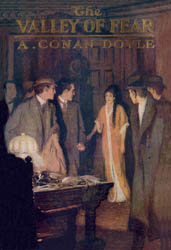
Valley_of_fearThe Valley of Fear is the fourth of Sir Arthur Conan Doyle’s full-length Sherlock Holmes novels. Like most of his other stories, it first appeared serialized in a magazine, this time in The Strand.

The book opens with Holmes and Watson trying to decipher a message from an informant concerning Professor Moriarty. The only other time Moriarty has been mentioned was in the last chapter of The Memoirs of Sherlock Holmes, in which he died. So this story predates that one, but there is a bit of a disconnect in that Watson didn’t know who Moriarty was in Memoirs, and if the events in The Valley of Fear occurred in the timeline before that book, Watson would surely have known the name. But as far as I know that’s the only major slip up in Doyle’s narratives, so we can forgive him: he may have even been aware of the problem and decided to write this story as is anyway.

At any rate, Holmes and Watson are interrupted by the arrival of a Scotland Yard Inspector MacDonald asking Holmes to assist on a case and then being stunned to learn that the message Holmes had just deciphered concerned the very man who had been killed. The victim had been shot in the face with an American sawed-off shotgun. There are a number of odd incidents and clues that do not add up. Holmes fixates on one that the others do not think is important, and, of course, solves the mystery.

The second part of the book is the back-story of what happened leading up to these events and is written in a completely different style, much like the story within a story in A Study in Scarlet. At first nothing seems related at all, but the reader assumes that some of the characters are going by different names than what they’re known as in the first part. In this story, a young John McMurdo is fleeing from the law in Chicago and comes to a Vermissa Valley to start anew. He’s part of an organization called The Eminent Order of Freemen, which primarily engages in charitable works in Chicago. But in Vermissa Valley, it’s a tightly run gang of thieves, murderers, and extortioners called the Scowrers who have the area under their thumb so much that it is nicknamed the Valley of Fear. McMurdo has no choice but to become involved with the gang, even though his landlord kicks him out over it and refuses to let him see his daughter any more.

Events unfold with the Scowrers for several chapters until they learn that a Pinkerton detective is undercover in the area, and their focus turns to finding and dealing with him.

An epilogue ties up the loose ends of the story and brings it back to Moriarty’s involvement.

Though I eventually guessed who McMurdo was (and rereading the first few pages, I saw several clues which caused me to realize I should have guessed it much sooner), I was totally surprised by the twist in the second story. Though some of the first story gets a little boring with the deciphering and then the arguing over which clues mean what, the last couple of chapters were the most exciting of any of Doyle’s work that I have read so far.

After looking around Wikipedia a bit, I saw that the story was based on the real life Molly Maguires in PA and their encounter with Pinkerton Agency detective James McParland. I had heard the term Molly Maguires before but had no recollection of what it meant until reading about it just now.

I listened to the audiobook read by Simon Vance, who did a wonderful job not only with the various English accents and voices in the story, but also with American, Scottish, and Irish accents as well. I also read parts of the story online at Project Gutenberg.

(This review will also be linked to Semicolon‘s Saturday Review of Books.)

A Belated Happy Mother’s Day!

I was beginning a Mother’s Day post yesterday morning when my son and daughter-in-law unexpectedly came in to surprise me by coming to prepare breakfast. A welcome interruption! I had a wonderful day, which I’ll say more about Friday. There wasn’t time during the day to come back to the computer, so I started to just skip a Mother’s Day post. But it was on my heart to do this morning, so I thought I’d go ahead. We can honor our mothers beyond Mother’s Day, right? 🙂

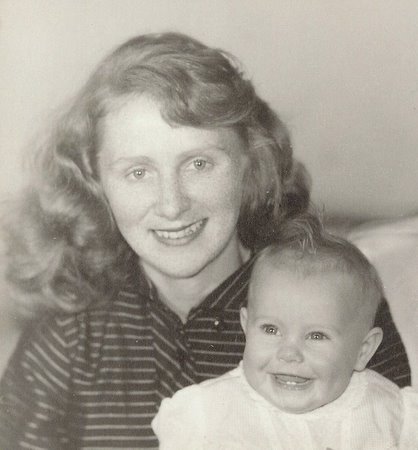
I want to honor the memory of my mom. I miss her deeply.

image03.jpg

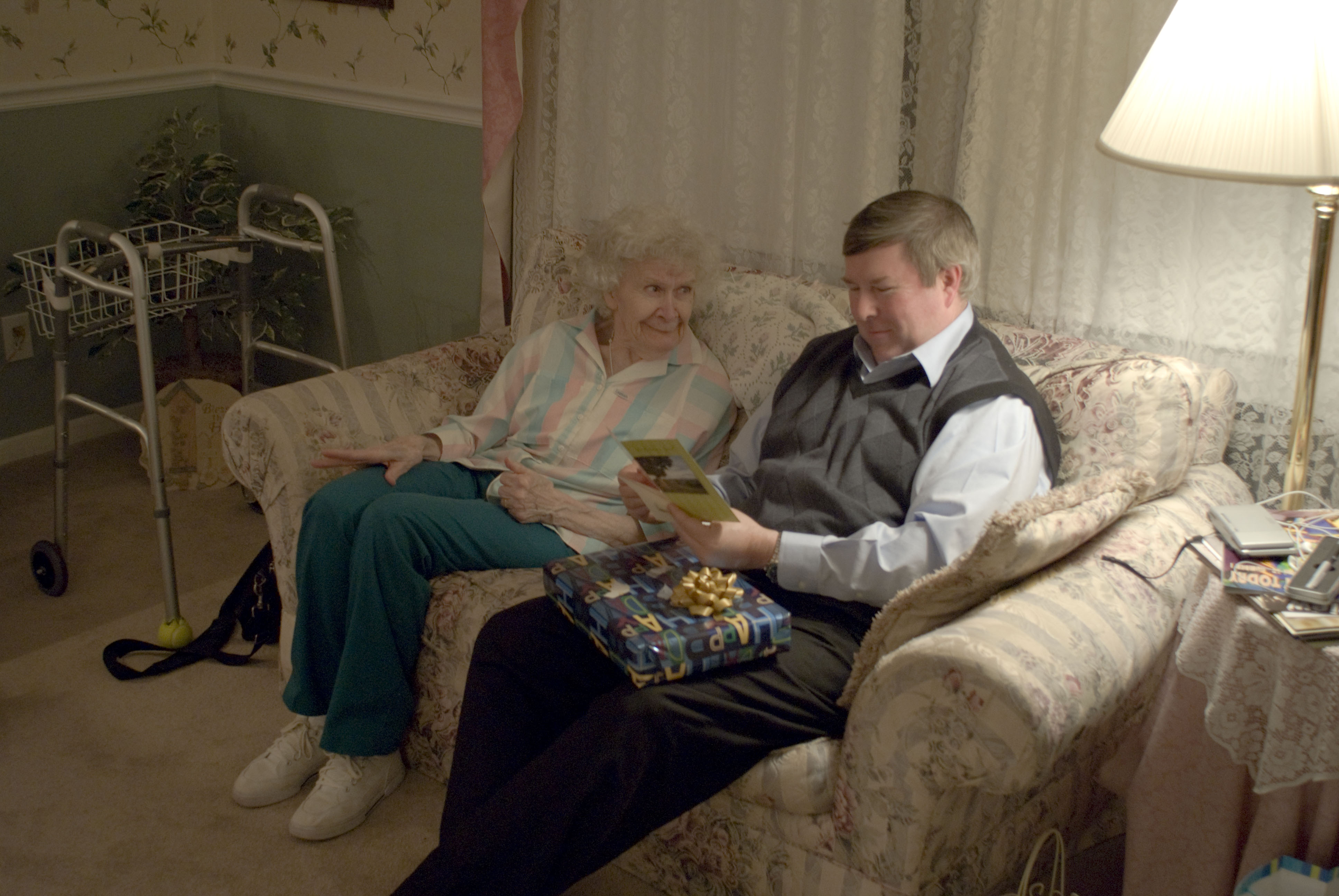
I want to honor my mother-in-law, who raised four children, one of whom became my wonderful husband, and who maintained a sweet spirit throughout her life in the face of serious trials:

2009

Barbara's Cell phone pics 233

2013

I want to honor my daughter-in-law, who is a loving wife to my son and mother to the cutest grandson in the world:

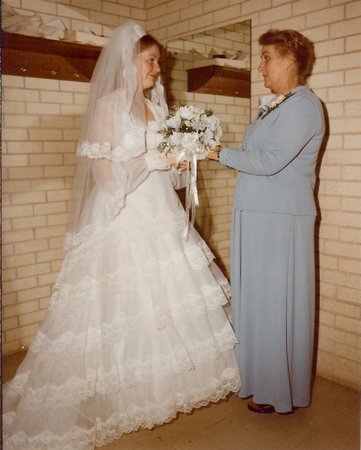
01dc9269e86cfa0f61905861ceb4270c6fe0121bf2I want to honor my daughter-in-law’s mother, who raised such a sweet girl:

133And I want to remember and honor my sisters, nieces, sisters-in-law, and friends with mothering and nurturing hearts.

I hope you had a wonderful Mother’s Day and feel renewed in your roles this morning.

mothers-day-flowers-13

Friday’s Fave Five

FFF spring2

It’s Friday, time to look back over the blessings of the week with Susanne at Living to Tell the Story and other friends.

It’s been a pretty nice week. Cool mornings, a little hot in the afternoons, but not like it will be later in the summer. Here are some of the best parts of the week:

1. Visiting the zoo with Timothy, and his parents and also my youngest son and his girlfriend. Timothy wasn’t terribly interested in the animals yet – most of them were too far away for him to really notice them. But the few he did see, he just kind of took it all in, observing and trying to process. Jason has a cute video of his watching a monkey’s antics. I think he’ll get more out of it when he’s a little older, but it was still a fun outing.

01a9664c121e962d9590244ffca3445d8b21a2b76b

2. Not cooking for three days. For various reasons, we had different things going on at dinner time three days in a row. It was almost like a mini-vacation!

3. A couple of hours with a book. I mentioned in finding time to read that most of my reading is done in 10-20 minutes snatches rather than at long intervals. But Sunday I got in about two hours with my latest Dee Henderson novel. Bliss!

4. Sleep. I could probably name that every week. 🙂 I wasn’t feeling well Sat. night and didn’t get a lot of sleep. Sunday morning was one of those times I felt like I just couldn’t function, so I stayed home from church and slept about 2 1/2 hours and then napped a couple of times during the day. I finally started feeling back to normal later in the afternoon.

5. Roses budding! I didn’t think they would for a few weeks yet.

IMG_1192

Hope you have a great weekend remembering and honoring your mom!

Book Review: Feeding Your Appetites

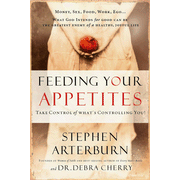
AppetitesFeeding Your Appetites: Taking Control of What’s Controlling You by Stephen Arterburn and Debra Cherry is based on the premise that most of our out-of-control desires are based on God-given appetites that are not wrong in themselves (food, sex, work, rest), but they can wreak havoc when they get out of balance. Even appetites for things that are wrong in themselves (gambling, drugs) can have a basis in a desire that’s not wrong.

Stephen discusses the nature, good purposes, and value of appetites God created within us. But “when pleasure becomes what we are searching for, we will soon learn that there is never enough to satisfy” (p. 33). “Our poor choices are rooted in self-indulgence and obsession with self-entitlement. We indulge to seek pleasure and avoid pain because we think we are entitled to it. The fleshly pleasure we seek is self-serving” (p. 35).

He discusses how change begins (seek forgiveness, stop make excuses, stop blaming others, stop believing falsehoods, and others), the many factors that influence us (including biology, culture, and a host of others), the ways Satan uses our desires against us to tempt us, ways to deal with or redirect our desires, and ways to cultivate a “divine appetite.” The last chapter on “The Surrendered Life” ties it all together in emphasizing that the only way to keep our appetites in their proper places is to walk surrendered to God every day. An appendix and study guide in the back help apply the truth personally.

Sprinkled throughout the book are case studies which are very helpful in fleshing out the principles Stephen is discussing. My only minor quibble with them is that they came in the middle of rather than at the end of sections. I don’t like having to either interrupt the section I am reading to read the case study or read on to finish the section I am in and then turn back to the case study when it could have easily been placed between sections. But, again, that is a relatively minor irritation.

A few quotes I found helpful:

[In Eden] Eve couldn’t overeat because her appetite for food would have been under control and submissive to her primary appetite to obey God” (p. 18).

When we have an out-of-control appetite for food, it signals that we have put that appetite above its rightful place as a necessary and God-given function (p. 18).

The question of how to satisfy our appetites becomes instead a call to seek to obey God in all circumstances and through all appetites and desires. That means making the necessary choices to satisfy our appetites in a manner that honors Him. When we do, true fulfillment is our reward (p. 25).

There were a few little points where I disagreed with his teaching, but not enough to get into long explanations. I will say that I disagreed with his concept of meditation, which he seemed to define as listening to God as opposed to talking to Him in prayer. Meditation is more of a ruminating, thinking over what He has said in His Word, not listening for Him to speak apart from His Word (see next to last paragraph here.)

Overall it’s a very good book. It covers some of the same ground as Taste For Truth by Barb Raveling except it expands to cover about every appetite you could think of whereas Barb’s book focuses on food. Barb’s style is much more direct, which I tend to prefer. I felt Stephen tended to over-explain or use too many words, but that may have been because I had just read many of the same principles in Barb’s book. This book might be especially helpful for a non-Christian or new Christian or a Christian who had not been taught very well along the way. But really, it can benefit anyone. I gleaned much good from it.

(This review will also be linked to Semicolon‘s Saturday Review of Books.)

Dealing With Caregiver Resentment

I’ve never tried to portray myself as anywhere near perfect or as having it all together, but one fault that seems abominable and embarrassing to have to admit is that sometimes I resent having my mother-in-law here and caring for her. I mentioned some of the disadvantages of caring for a parent at home about seven paragraphs down here.

I Googled caregiver resentment and came up with some practical, helpful tips, but nothing really for the deeper issues. One post even advised just accepting it as part of the whole package. While I can accept that resentment might naturally arise, I can’t accept that as normal and okay: it’s miserable to live with, but even worse, as a Christian, it’s an evidence of my own selfishness. So then I Googled something along the lines of overcoming resentment as a Christian and looked at several of the articles that came up, but most of them dealt with resentment against someone who has done you wrong and the need to forgive.

So I decided to write down some of the things that help me during those times both so it’s here for me to refer back to when needed and so hopefully it might be a help to someone else. And I am calling it “dealing with” rather than “overcoming” caregiver resentment because, although I’d like to have a conversation like this just once and have that take care of my attitude forever, I’ve found I have to go over these things periodically. I guess that is part of living with a sinful nature and needing to renew one’s mind.

So here are ways to deal with resentment, beginning with the practical and moving on toward the spiritual:

1. Take care of your own health, including getting enough sleep. Everything seems worse if you’re sleep-deprived or dragging because you’re not eating right.

2. Talk to someone. My husband and I feel free to talk honestly with each other, and he’s not offended that I do get frustrated with the situation sometimes. I know I have an open door to talk with him about it whenever needed.

3. Get away from the situation sometimes. I am thankful we do have a caregiver here in the mornings so I can run errands or take care of other things, and occasionally we’ll have someone come in for an evening or stay longer on a Saturday so we can have an outing.

4. Remember what brought you to this place. As we trace our history with my mother-in-law’s care, we come again to the same conclusion, that this is the best situation for her at this stage. There may come a time when one or both of us become unable to care for her or her needs become greater than what we can manage at home, but for now, this is best.

5. Remember that caring for a loved one at home used to be the norm before assisted living facilities and nursing homes became widespread, and it still is in some countries.

6. Remember her care of you or your husband for so many years, and look at this as an opportunity to repay her love and care.

7. Remember it could be worse. My mother-in-law is not hard to get along with at all. Some of the residents we encountered in assisted living or the nursing home perhaps made us appreciate that fact even more.

8. Take it a day at a time, or a moment at a time. If we think, “How many years will I have to do this?” we can feel defeated and depressed. All we have to do is deal with this moment, this day, and trust God’s grace will be sufficient for all the days ahead.

9. Think how you would want to be regarded and treated if you were in the same situation.

10. Accept it as God’s will. Maybe you didn’t have time to sort through options, as we did, to come to the conclusion to bring an elderly parent home, or maybe there are extenuating circumstances that compound the resentment you feel. Maybe you don’t have a parent at home, but you’re the only sibling in town to visit them or oversee their care in a facility. Maybe it is even time to do something different. But for this moment right now, this is God’s will for you, and if you surrender it to Him, He will provide the grace to deal with it. “In acceptance lieth peace,” a poem by Amy Carmichael attests.

11. Pray. Sometimes just before going into my mother-in-law’s room to change her, I pray that I might be “Strengthened with all might, according to his glorious power, unto all patience and longsuffering with joyfulness,” part of Paul’s prayer in Colossians 1:9-13. Or, as the ESV puts it, “May you be strengthened with all power, according to his glorious might, for all endurance and patience with joy.” That encompasses so much: that I need His strength, longsuffering, and patience, that He has the “glorious power” to give it, and that He can help me to go beyond just acting out of duty, but He can enable me to serve with joy. I also frequently pray that He will help me have a more loving, unselfish heart.

12. Remember the Christian life is one of service, not self-focus. Claudia Barba said in The Monday Morning Club, “The Christlike life has nothing at all to do with satisfying, coddling, or promoting self, but everything to do with being poured out for others” (p. 55). You see it in the life of Christ and Paul and others in the Bible both in instruction and in example. That doesn’t mean we’re doormats or martyrs or that we can never we can never do anything just for fun. But our primary purpose is serving Him by serving others. Some verses that help in this regard are:

Now we exhort you, brethren…comfort the feebleminded, support the weak, be patient toward all. (I Thessalonians 5:14).

Whosoever shall give to drink unto one of these little ones a cup of cold water only in the name of a disciple, verily I say unto you, he shall in no wise lose his reward (Matthew. 10:42).

To do good and to communicate forget not: for with such sacrifices God is well pleased (Hebrews. 13:16).

God is not unrighteous to forget your work and labour of love, which ye have shewed toward his name, in that ye have ministered to the saints, and do minister (Hebrews. 6:10).

So after [Jesus] had washed their feet, and had taken his garments, and was set down again, he said unto them, Know ye what I have done to you? Ye call me Master and Lord: and ye say well; for so I am. If I then, your Lord and Master, have washed your feet; ye also ought to wash one another’s feet. For I have given you an example, that ye should do as I have done to you (John 13:12-15).

With good will doing service, as to the Lord, and not to men (Ephesians 6:7).

And let us not be weary in well doing: for in due season we shall reap, if we faint not. (Galatians 6:9)

For I was an hungred, and ye gave me meat: I was thirsty, and ye gave me drink: I was a stranger, and ye took me in; naked, and ye clothed me: I was sick, and ye visited me: I was in prison, and ye came unto me. Inasmuch as ye have done it unto one of the least of these my brethren, ye have done it unto me (Matthew 25:35-36, 40).

13. Accept this as my primary ministry. This is one area I struggle with the most. As the nest starts emptying, though we miss our kids intensely, we begin to look to other things that have been put on the back burner for a while: maybe now we can write that book, get that degree, travel, sew up all that fabric or complete all those projects. But now we’re tied down again. Or maybe some have had to step back from other ministries at church in order to care for a parent. We need to remind ourselves that this is not a hindrance to our ministry: it is our ministry. Even limitations set the parameters of our ministry. Elisabeth Elliot has said:

This job has been given to me to do. Therefore, it is a gift. Therefore, it is a privilege. Therefore, it is an offering I may make to God. Therefore, it is to be done gladly, if it is done for Him. Here, not somewhere else, I may learn God’s way. In this job, not in some other, God looks for faithfulness.

I don’t mean to reduce caring for a parent to a “job,” but I believe we can substitute “ministry” for “job” there.

I hope some of these are helpful for any reader facing any kind of resentment in your situation, and I’d be happy to hear any other thoughts or tips you might have.

EldercareSharing at Thought-Provoking Thursday. and Works For Me Wednesday.

Book Review: The Monday Morning Club

Claudia Barba is one author I know in person. I first knew her sister when we were classmates in college. Her dad was one of my teachers there. I met her mother as well through activities with her sister. Claudia and her husband and son came to our church for a week once when her husband was the keynote speaker for a conference, but I am sorry to say I did not introduce myself to her or get to know her at that time. Some years later her sister, now a pastor’s wife in a neighboring city, invited the ladies of our church to a weekend ladies’ conference where Claudia was the speaker. A few of us went…and I was greatly blessed by her speaking. Her strawberry story (which I am glad to see is in her book) especially convicted and touched me.

Claudia’s husband was a pastor at first, then traveled with his family in evangelism for a few years. Then he and his wife began Press On Ministries, in which they travel to spend a few months at a time helping a church planter get a new church off the ground and stable, and then they travel to another new church plant and do the same. One year our ladies’ group was looking for a speaker for our ladies’ luncheon, and Claudia and her husband were working near enough that I thought it might be a possibility that she could speak for us. A few e-mails and it was all arranged, and Claudia’s message was again a blessing.

Now we live in TN, and the Barba’s home base is close enough that they pop into our church every now and then between ministries. At their last visit, Claudia asked me if I had her new book, and when I said I didn’t, she took my address and sent me a copy – for free, with no expectation or request for a review, but rather just to be nice. 🙂

MMCThat book, The Monday Morning Club: You’re Not Alone — Encouragement For Women in Ministry, began with Claudia and her mother and sisters, who were all married to men in the ministry. They would e-mail each other on Monday mornings when they needed a friend to talk to, someone to “share my joys without jealousy and hear my frustrations without judgement” “whether Sundays were thrilling or discouraging.” (p. xiii). Then another friend asked to be included, and eventually it grew into an e-mail list to women all over the world. This book is a compilation of some of these Monday morning thoughts and devotions. Though many of them are aimed at ministry wives in particular, the bulk of them would be applicable to any Christian women. Even those that are specific to pastor’s wives are helpful for the rest of us to read because they give us a window into some of the trials, temptations, thoughts, and feelings a pastor’s wife might wrestle with, and give us a better idea how to pray for and encourage our own.

There are 94 in all, each covering only one to three pages. They could be read one or two at a time straight through, or dipped into at random, or there is a topical index where you can look up columns by need, such as “When you’re discontent,” or “When you’re lonely,” etc.

I love Claudia’s way of writing and speaking. It’s simple, but deep; sweet, but clear. She advises with wisdom and grace. Often she goes straight to my heart.

Here are a few samples:

When a friend thought that “marrying a pastor morphed an ordinary woman into a super saint”: I’m sure in her own mind she was honoring me by placing me on a pedestal. That is, after all, where we place statues of people we admire. But it’s not a comfortable place for a plain old human to live. It’s lonely on a pedestal. Other people think you are looking down on them. There are pigeons. And if you stumble even once, you’ll fall off (p. 5).

The Christlike life has nothing at all to do with satisfying, coddling, or promoting self, but everything to do with being poured out for others (p. 55).

When discussing her husband’s tendency to “jump off cliffs” spiritually in “great leaps of faith” and her own tendency toward security: “The fences I thought meant security were the walls of a prison instead…A fearful spirit is never from the Lord (2 Timothy 1:7). It’s the prison, not the cliff, that’s the scary place. It’s awful to realize that my female anxieties can hinder God’s working through my husband. When His divine leading is clear to my human leader, it’s time for me to stop digging in my heels and join him in bold strides of faith, not because my husband is flawless, but because it’s God’s work we are doing, and He’s the One Who keeps us safe” (p. 123).

Stability is not innate or effortless for most of us female-type humans. Only in Christ is “no variableness, neither shadow of turning.” He is the solid, immutable Rock of Ages, and He can keep you stable. When your earth quakes, anchor your thoughts to His unchanging promises. When storms roll in, hide in His shadow. When you’re too tired to handle the demands of the day, let Him be the Rock of your strength. When your heart is unsatisfied, let the sweet water flowing from the Rock quench your thirst. Whenever any scary or upsetting thing happens, just run straight to the Rock (p. 153).

Sometimes all that’s needed to heal a wounded soul and lift a sagging spirit is one loving listener, for at its core, listening is love–love that sacrifices its need to be heard in favor of hearing, a desire to lecture in favor of learning, an opportunity to show off in favor of showing compassion. Instead of always leading the way, a patient listener, just by nodding in all the right places, can help a wanderer discover the right path on her own (p. 170).

You can read more samples of Claudia’s writing here in their web site. One of my all-time favorites, “His Dear Wife,” is not in the book but a copy is here. I previously reviewed her Bible study When Christ Was Here.

There is a Kindle version of The Monday Morning Club here. I hope you’ll give it a try. I think it will truly challenge, encourage, and bless you.