31 Days With Elisabeth Elliot: Forgiveness

Elisabeth Elliot2

This is from from “As We Forgive Those….” from Elisabeth’s book Love Has a Price Tag:

To forgive is to die. It is to give up one’s right to self, which is precisely what Jesus requires of anyone who wants to be his disciple.

“If anyone wants to follow in my footsteps, he must give up all right to himself, carry his cross every day and keep close behind me. For the man who wants to save his life will lose it, but the man who loses his life for my sake will save it.”

Following Christ means walking the road he walked, and in order to forgive us he had to die. His follower may not refuse to relinquish his own right, his own territory, his own comfort, or anything that he regards as his. Forgiveness is relinquishment. It is a laying down. No one can take it from us, any more than anyone could take the life of Jesus if he had not laid it down of his own will. But we can do as he did. We can offer it up, writing off whatever loss it may entail, in the sure knowledge that the man who loses his life or his reputation or his “face” or anything else for the sake of Christ will save it.

Wow, not easy – but possible only by His grace.

See all the posts in this series here.

_____________________________________________________

DaySpring.com is celebrating all of the amazing Write 31 Days readers who are supporting nearly 2,000 writers this October! To enter to win a $500 DaySpring shopping spree, just click on this link & follow the giveaway widget instructions by October 30. Best wishes, and thanks for reading!

Laudable Linkage

With the 31 Days With Elisabeth Elliot series going on every day, I wasn’t sure whether additional posts during the week might be a bit much to keep up with; on the other hand, I don’t want to have an excessively long list of links to share at the end of the month, because I know that can be a bit much, too. So here are a few things I found of interest in the last couple of weeks:

How Your Bible Study Shapes Your Theology.

Hand in Hand, Heart Linked to Heart. A sweet piece about C. H. Spurgeon and his wife.

Why Modesty Scares Me.

Why Christians should Paint, Dance, Quilt, Act, Compose Music, Write Stories, Decorate Cookies, and Participate in the Arts.

The Pinterest feed changes: How to see more of what you want to see. And why you’ll never see all of it. If, like me, you have been frustrated with changes at Pinterest, this article shares how to fix a couple of them, and the powers that be at Pinterest seem to have reached out to this blogger with an interest, so maybe some of the comments there will reach the ears of someone who can and will do something about it.

Happy Saturday!

31 Days With Elisabeth Elliot: Transformation

Elisabeth Elliot2

This is from Elisabeth Elliot’s book A Lamp For My Feet concerning Romans 12:1-2:

The primary condition for learning what God wants of us is putting ourselves wholly at his disposal. It is just here that we are often blocked. We hold certain reservations about how far we are willing to go, what we will or will not do, how much God can have of us or of what we treasure. Then we pray for guidance. It will not work. We must begin by laying it all down–ourselves, our treasures, our destiny. Then we are in a position to think with renewed minds and act with a transformed nature. The withholding of any part of ourselves is the same as saying, “Thy will be done up to a point, mine from there on.”

If God is almighty, there can be no evil so great as to be beyond his power to transform. That transforming power brings light out of darkness, joy out of sorrow, gain out of loss, life out of death.

Sometimes we boggle at the evil in the world and especially in ourselves, feeling that this sin, this tragedy, this offense cannot possibly fit into a pattern for good. Let us remember Joseph’s imprisonment, David’s sin, Paul’s violent persecution of Christians, Peter’s denial of his Master. None of it was beyond the power of grace to redeem and turn into something productive. The God who establishes the shoreline for the sea also decides the limits of the great mystery which is evil. He is “the Blessed Controller of all things.” God will finally be God, Satan’s best efforts notwithstanding.

We tend to want bad things prevented rather than transformed. That day will come, but it is not now. A friend once said she realized that if God were to wipe out all the evil in the world, He would have to wipe out all of us, for we all sin. I am thankful He transforms us rather than just doing away with us, and and we can trust Him to limit what He allows of evil and trust Him to somehow work it together for good (Romans 8:28) until the day when it is taken out of the way completely. It starts within my by “laying it all down,” rather than saying “Thy will be done up to a point.”

See all the posts in this series here.

_____________________________________________________

DaySpring.com is celebrating all of the amazing Write 31 Days readers who are supporting nearly 2,000 writers this October! To enter to win a $500 DaySpring shopping spree, just click on this link & follow the giveaway widget instructions by October 30. Best wishes, and thanks for reading!

31 Days With Elisabeth Elliot: Learning the Father’s Love

Elisabeth Elliot2

This is from a chapter titled “Learning the Father’s Love” from Elisabeth’s book A Lamp For My Feet:

When my brother Dave was very small, we spent a week at the seaside in Belmar, New Jersey. In vain my father tried to persuade the little boy to come into the waves with him and jump, promising to hold him safely and not allow the waves to sweep over his head. He took me (only a year older) into the ocean and showed Dave how much fun it would be. Nothing doing. The ocean was terrifying. Dave was sure it would mean certain disaster, and he could not trust his father. On the last day of our vacation he gave in. He was not swept away, his father held him as promised, and he had far more fun than he could have imagined, whereupon he burst into tears and wailed, “Why didn’t you make me go in?”

An early lesson in prayer often comes through an ordeal of fear. We face impending adversity and we doubt the love, wisdom and power of our Father in heaven. We’ve tried everything else and in our desperation we turn to prayer–of the primitive sort: here’s Somebody who’s reputed to be able to do anything. The great question is, can I get Him to do what I want? How do I twist His arm, how persuade a remote and reluctant deity to change His mind?

Poor Dave! His father could have forced him to come into the water, but he could not have forced him to relax and enjoy it. As long as the child insisted on protecting himself, saving the life he was sure he would lose, he could not trust the strong love of his father. He refused to surrender. In this simple story we hear echoes of the most ancient story, of the two who, mistrusting the word of their Father, fearing that obedience to Him would ultimately bar them from happiness, chose to repudiate their dependence on Him. Sin, death, destruction for the whole race were the result.

Learning to pray is learning to trust the wisdom, the power, and the love of our Heavenly Father, always so far beyond our dreams. He knows our need and knows ways to meet it that have never entered our heads. Things we feel sure we need for happiness may often lead to our ruin. Things we think will ruin us … if we believe what the Father tells us and surrender ourselves into His strong arms, bring us deliverance and joy.

The only escape from self-love is self-surrender. “Whoever loses his life for Me will find it” (Matthew 16:25, NIV). “Dwell in my love. If you heed my commands, you will dwell in my love, as I have heeded my Father’s commands and dwell in His love. I have spoken thus to you, so that my joy may be in you, and your joy complete” (John 15:9-11, NEB). My father knew far better than his small, fearful, stubborn son what would give him joy. So does our Heavenly Father. Whenever I have resisted Him, I have cheated myself, as my little brother did. Whenever I have yielded, I have found joy.

I can sure identify with that little boy. “The only escape from self-love is self-surrender.” Hard, but true.

See all the posts in this series here.

_____________________________________________________

DaySpring.com is celebrating all of the amazing Write 31 Days readers who are supporting nearly 2,000 writers this October! To enter to win a $500 DaySpring shopping spree, just click on this link & follow the giveaway widget instructions. Best wishes, and thanks for reading!

Friday’s Fave Five

FFF tamara'sIt’s Friday, time to look back over the blessings of the week with Susanne at Living to Tell the Story and other friends.

It’s been down into the 50s at night and downright nippy a few mornings, and the day time has been quite pleasant and sunny. Here are some fave moments of the last week:

1 A family outing. We hadn’t had one since August, and I was feeling a little cooped up with Jim having been away a little more than usual lately, so I suggested we go visit the Mast General Store downtown and then eat lunch at a little sandwich and gelato shop nearby on Saturday. I had never been to either before and I enjoyed reading some of the history of Mast on the way. It was a fun morning.

2. A new dish towel from the store we visited. I didn’t get it just for the birds, though I like them, but mainly because it is hard to find “fluffy” dish towels any more.

IMG_1376

3. A zucchini cookie at the aforementioned shop. I’d had zucchini bread and zucchini cake before, but not a cookie. This was excellent.

zucchini cookie

4. A football game is not something I had thought I would ever have on any kind of favorite list, but we’ve watched a couple of UT Vols games lately. The first one was their game against Oklahoma, which is where Mittu is from, so she was rooting for the Sooners. 🙂 UT started out well ahead in that game and then lost. We ended up watching last Saturday’s game as well, which they won. I googled a couple of basic things during the game, like “What is a first down” and a “first and ten.” Such was my ignorance. 🙂 But it did help to know those things! Who knows, I may become a fan yet.

5. A few hours with no interruption has gotten to be almost a rarity these days, but I had one such glorious afternoon this week and was able to get several posts ahead on my 31 Days With Elisabeth Elliot series for Write31 Days.

Happy Friday!

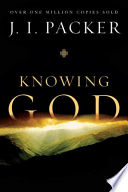
Knowing God, Chapters 17 and 18: God’s Jealousy and Propitiation

Knowing GodWe’re continuing to read Knowing God by J. I. Packer along with Tim Challies’ Reading Classics Together Series. This week we are in chapters 17 and 18.

The word “jealousy” has a bad connotation: we usually picture a jealous person as one who is short-tempered, unreasonable, unnaturally possessive. But God is sinless and holy, so what does He mean when He proclaims Himself to be a jealous God?

Even among humans there is a right kind of jealousy which is a “zeal to protect a love relationship” and sets safeguards to do so. But “God’s jealousy is not a compound of frustration, envy, and spite, as human jealousy so often is, but appears instead as a (literally) praiseworthy zeal to preserve something supremely precious” (p. 170).

Even humans expect loyalty in certain relationships. God certainly does as well, and as absolutely perfect and holy, He “will vindicate his claim by stern action against them if they betray his love by unfaithfulness” (p. 171).

Christians’ proper response, Packer says, should be zealousness for Him and His name. This doesn’t mean we start wars with people who don’t believe as we do. But it does mean we should have “a burning desire to please God, to do His will, and to advance His glory in the world in every possible way” (p. 173).

Chapter 17 ended a section of chapters called “Behold Your God!” which talked about His attributes; Chapter 18 begins the final section of the book called “If God Be For Us.”

The title of this chapter is “The Heart of the Gospel,” and Packer asserts that heart is propitiation. Like many people, I think the average preacher and writer needs to use words accessible to the common man and not lapse into verbiage only a theology student would grasp, but propitiation is a word that we need to understand. Packer defines it as “averting God’s anger by an offering” (p. 180), yet it is different from offerings for the same purpose in pagan religions due to many factors. One is that God initiated the offering of His Son. There is nothing we could offer that would take away our sin.

Some dislike the word and its concept because they don’t like to think of God as angry over sin. But as we have seen in the chapter on God’s wrath, God has a righteous and just anger over sin.

Propitiation was accomplished by the death of Jesus Christ on the cross, the OT sacrifices being a picture of that which was to come:

Christ hath redeemed us from the curse of the law, being made a curse for us: for it is written, Cursed is every one that hangeth on a tree (Galatians 3:13).

For the love of Christ constraineth us; because we thus judge, that if one died for all, then were all dead: And that he died for all, that they which live should not henceforth live unto themselves, but unto him which died for them, and rose again…  To wit, that God was in Christ, reconciling the world unto himself, not imputing their trespasses unto them; and hath committed unto us the word of reconciliation. Now then we are ambassadors for Christ, as though God did beseech you by us: we pray you in Christ’s stead, be ye reconciled to God. For he hath made him to be sin for us, who knew no sin; that we might be made the righteousness of God in him. 2 Corinthians 5:14-15, 19-21).

 Being justified freely by his grace through the redemption that is in Christ Jesus: Whom God hath set forth to be a propitiation through faith in his blood, to declare his righteousness for the remission of sins that are past, through the forbearance of God; To declare, I say, at this time his righteousness: that he might be just, and the justifier of him which believeth in Jesus (Romans 3:24-26).

And he is the propitiation for our sins: and not for ours only, but also for the sins of the whole world (1 John 2:2).

In this was manifested the love of God toward us, because that God sent his only begotten Son into the world, that we might live through him. Herein is love, not that we loved God, but that he loved us, and sent his Son to be the propitiation for our sins (1 John 4:9-10).

This was a very long chapter and I am only feebly hitting a few of the highlights here, but Packer gives a very thorough looking into from various angles.

31 Days With Elisabeth Elliot: God’s Help For God’s Assignment

Elisabeth Elliot2

Gods-Help-For-Gods

This taken from a a chapter called “God’s Help For God’s Assignment” from Elisabeth’s book A Lamp For My Feet:

Sometimes a task we have begun takes on seemingly crushing size, and we wonder what ever gave us the notion that we could accomplish it. There is no way out, no way around it, and yet we cannot contemplate actually carrying it through. The rearing of children or the writing of a book are illustrations that come to mind. Let us recall that the task is a divinely appointed one, and divine aid is therefore to be expected. Expect it! Ask for it, wait for it, believe that God gives it. Offer to Him the job itself, along with your fears and misgivings about it. He will not fail or be discouraged. Let his courage encourage you. The day will come when the task will be finished. Trust Him for it.

“For the Lord God will help me; therefore shall I not be confounded, therefore have I set my face like a flint, and I know that I shall not be ashamed” (Is 50:7 AV).

This is one I have come back to many times and found true. I tend to resist those tasks that I know are beyond me (and really, everything would be without His aid), but that’s where we really see God’s enabling power at work.

See all the posts in this series here.

________________________________

Dayspring contest

DaySpring.com is celebrating all of the amazing Write 31 Days readers who are supporting nearly 2,000 writers this October! To enter to win a $500 DaySpring shopping spree, just click on this link & follow the giveaway widget instructions. Best wishes, and thanks for reading!

Book Review: I Dared to Call Him Father

I Dared to Call Him FatherI Dared to Call Him Father: The Miraculous Story of a Muslim Woman’s Encounter with God by Bilquis Sheikh is, as the subtitle indicates, the story of how an aristocratic Pakistani woman, a lifelong Muslim, became a Christian in her fifties.

Bilquis’ family was well-known, hosting people from all over the world and often visiting London or Paris. Her husband was the Minister of the Interior, but they had divorced five years before, and feeling “the shame of rejection,” she secluded herself in her family’s ancestral home in the village of Wah. She lived with her servants and four-year-old grandson, and for the most part only visited with other family members.

After her grandson recovered from an illness, she started reading the Quran, not out of duty or obligation this time, but to see if it “would help explain the events and at the same time fill the emptiness within me.” She was “impressed by its many references to Jewish and Christian writings that preceded it” and wondered if it would be helpful to read them. Muslims believed that “the early Christians had falsified…much of” the Bible, but she felt compelled to obtain one and to read it. One of the first verses she came across was Romans 9:25-26: “I will call them my people, which were not my people; and her beloved, which was not beloved. And it shall come to pass, that in the place where it was said unto them, Ye are not my people; there shall they be called the children of the living God.” Somehow that passage gripped her heart and stayed with her for days. As she continued to read more, particularly about Jesus and His claims to be God and the way of salvation through Him, she was confused, because the Muslims believed that Jesus was only a prophet, not God. After more reading and two vivid dreams, Bilquis decided to visit Christian missionaries in the village to get more information. One of her questions was, “What has Jesus done for you?” After sharing and praying, the missionary, Synnove Mitchell, kept in touch with Bilquis.

Bilquis continued reading “the Quran because of the loyalty of a lifetime, delving into the Bible because of a strange inner hunger.” She knew “God couldn’t be in both books…because their messages were so different.” When her grandson experienced pain in his ear to the point that he needed to be hospitalized, someone at the hospital asked Bilquis about the Bible she was carrying. Bilquis answered that she was “earnestly searching for God,” told about her experience so far, and admitted, “I must find God, but I am confused about your faith.” This person suggested, “Why don’t you pray to the God you are searching for? Ask Him to show you His way. Talk to Him as if He were your friend. Talk to Him as if He were your father.”

“The thought shook my soul in the peculiar way truth has of being at once starling and comforting…No Muslim, I felt certain, ever thought of Allah as his father.” But thoughts of her loving earthly father encouraged her to think of God in the same way, so she prayed to Him. In part of her prayer, she confessed her confusion and asked whether the Bible or the Quran was His book. He seemed to answer in her heart, “In which book do you meet Me as your Father?” And “that’s all it took” to convince her. She shut herself in her room with the Bible, read, thought about the consequences to herself and her family if she became a Christian, and finally opened her heart to Him.

The rest of the book details her growth and experiences, including those consequences.

There were several things that impressed me about this book and Bilquis’ story: the power of the gospel to change a heart, the love and courage He gave her to withstand persecution, her reaching out to family members during times of grief, even though they had shunned her.

When I reviewed Nabeel Qureshi’s biography, I mentioned that at first I was troubled by the mention of God speaking to him through dreams, believing that God speaks primarily through His Word. As I said there, I do still believe that, but I have come to understand that many Muslims experience dreams that aid them along the way to the gospel. In an afterward, it is said of Bilquis that when others who had experienced dreams and visions came to her, she “carefully brought attention to Jesus by praying for them and claiming the promises He Himself had made, and applying those promises in simple faith to their specific needs. She was concerned not only to give her visitors truths about God, but to bring them into the presence of Jesus, the Truth.”

One aspect of Bilquis’ testimony that troubled me was her frequent reference to experiencing or losing God’s presence depending on what she did. Sometimes she said “the sense of His presence,” and that I would not have had as much of a problem with. But she goes so far as to say that “the Spirit left” or “His Presence would disappear” if she disobeyed in some way. God is omnipresent and He is with His children always: He doesn’t leave us ever. And He deals with us on the basis of His grace. Yet He does still require obedience, and, just as we experience an uneasiness and lack of peace when there is trouble in any of our relationships until we talk about it, confess whatever we need to confess, and make things right, so we can experience that with God. Yet one can be walking in perfect step with Him and not sense His presence (see Job and many of the Psalms.) In Evidence Not Seen, Darlene Deibler Rose wrote of the comforting sense of God’s presence when she was a POW. But one day that sense was gone, and she searched her heart and couldn’t find any offense she needed to confess, prayed for it to return, but it didn’t for a long time.She finally realized it was something she needed to take by faith even if she didn’t always “feel” it. Bilquis doesn’t sound like she understood this truth. Perhaps what she meant is what we would call today “feeling peace” about a decision or action (although that’s not a foolproof indication of God’s will, either).

Nevertheless, God clearly worked in and through her, and it warmed my heart to see how He did and how she responded. Her obedience to what she determined to be the will of God at any given time was a rebuke to me, and the way He sustained her through many trials encouraged and blessed me. I like what someone shared with her: “God is always stretching us…until we don’t have a safe handhold left except Him.”

This book was originally published in Bilquis’ lifetime in 1978. The version I read was a 2003 reprint, and I am very thankful it contains an epilogue in the back, telling about the end of Bilquis’ life, along with a couple of afterwards by Synnove Mitchell, one of the missionaries Bilquis became friends with. In one, she tells of Bilquis coming to see her from her vantage point, which was neat to read. Then in the final one, titled “Enriched by the East,” she shares some of the differences between Eastern and Western ways of thinking (group culture vs. individuality, hospitality vs. punctuality, indirectness vs. bluntness, etc.) and talks about how we need each other and how we can enrich each other instead of clashing with each other.

(This review will also be linked to Semicolon‘s Saturday Review of Books.)

31 Days With Elisabeth Elliot: A Devious Repentance

Elisabeth Elliot2

This is from a chapter titled “A Devious Repentance” in Elisabeth’s book A Lamp For My Feet:

Recently I committed a sin of what seemed to me unpardonable thoughtlessness. For days I wanted to kick myself around the block. What is the matter with me? I thought. How could I have acted so? “Fret not thyself because of evildoers” came to mind. In this case the evildoer was myself, and I was fretting. My fretting, I discovered, was a subtle kind of pride. “I’m really not that sort of person,” I was saying. I did not want to be thought of as that sort of person. I was very sorry for what I had done, not primarily because I had failed someone I loved, but because my reputation would be smudged. When my reputation becomes my chief concern, my repentance has a hollow ring. No wonder Satan is called the deceiver. He has a thousand tricks, and we fall for them.

Lord, I confess my sin of thoughtlessness and my sin of pride. I pray for a more loving and a purer heart, for Jesus’ sake.

I have wrestled with this. “I don’t understand, I am not really like this!” Oh, but I am, and that’s what I need to confess to Him. Thankfully, “If we confess our sins, he is faithful and just to forgive us our sins, and to cleanse us from all unrighteousness.” (1 John 1:9). A former pastor taught that to “confess” in this text means to say the same thing about it that God does. No dressing it up, no excuses. Just the bald truth. It’s humbling, but necessary.

God resisteth the proud, but giveth grace unto the humble. James 4:6

To this man will I look, even to him that is poor and of a contrite spirit, and trembleth at my word. Isaiah 66:2b

Whoever conceals his transgressions will not prosper, but he who confesses and forsakes them will obtain mercy.
 Proverbs 28:13

See all the posts in this series here.

31 Days With Elisabeth Elliot: On Asking God Why

Elisabeth Elliot2

This is from Elisabeth’s book On Asking God Why:

I seek the lessons God wants to teach me, and that means that I ask why. There are those who insist that it is a very bad thing to question God. To them, “Why?” is a rude question. That depends, I believe, on whether it is an honest search, in faith, for his meaning, or whether it is a challenge of unbelief and rebellion. The psalmist often questioned God and so did Job. God did not answer the questions, but he answered the man–with the mystery of himself.

He has not left us entirely in the dark. We know a great deal more about his purposes than poor old Job did, yet Job trusted him. He is not only the Almighty–Job’s favorite name for him. He is also our Father, and what a father does is not by any means always understood by the child. If he loves the child, however, the child trusts him. It is the child’s ultimate good that the father has in mind. Terribly elementary. Yet I have to be reminded of this when, for example, my friend suffers, when a book I think I can’t possibly do without is lost, when a manuscript is worthless.

Elsewhere (I am not sure of the source) she writes:

Now is it a sin to ask God why? It’s always best to go first for our answers to Jesus Himself. He cried out on the cross, ‘My God, My God, why have You forsaken Me?’ It was a human cry; a cry of desperation springing from His heart’s agony at the prospect of being put into the hands of wicked men and actually becoming sin for you and me. We can never suffer anything like that, yet we do at times feel forsaken, don’t we? It’s quite natural for us to cry, ‘Why, Lord?’

The psalmist asked why. Job, a blameless man suffering horrible torments on an ash heap, asked why. It doesn’t seem to me to be sinful to ask the question. What is sinful is resentment against God and His dealings with us. When we begin to doubt His love and imagine that He is cheating us of something we have a right to, we are guilty as Adam and Eve were guilty. They took the snake at his word rather than God.

The same snake comes to us repeatedly with the same suggestions. ‘Does God love you? Does He really want the best for you? Is His Word trustworthy? Isn’t He cheating you? Forget His promises. You’d be better off if you’d do it your way.’

I’ve often asked why. Many things have happened which I didn’t plan and which human rationality could not explain. In the darkness of my perplexity and sorrow, I have heard God say quietly, ‘Trust Me.’ He knew that my question was not the challenge of unbelief or of resentment.

I don’t understand Him, but then I’m not asked to understand, only to trust. Bitterness dissolves when I remember the kind of love with which He has loved me–He gave Himself for me. He gave Himself for me. He gave Himself for me. Whatever He is doing now, therefore, is not cause for bitterness. It has to be designed for good, because He loved me and gave Himself for me.

I agree. It’s not a sin to ask, at least not unless the attitude is one of defiance or resentment. He may not answer, or may answer in a way we hadn’t at first wanted, but the more we learn to know Him, the more we can trust Him with those questions, no matter the answer or lack thereof.

See all the posts in this series here.