End-of-June Musings

I was just telling my youngest son that summer doesn’t have the same feel as it did when the kids were young and in school. May was one of the busiest months with end-of-school-year programs, recitals, etc., so June was a welcome respite. Then summer’s more laid-back days were thoroughly enjoyed until near the end, when we decided we really did operate better with a little more structure to our days. But now, with no one in school, even with Jesse taking college classes online the last few years, there’s not that big sense of joy and relief when June comes.

Nevertheless, summer does mark a change of seasons, more time outdoors, lighter foods. Our June has more more temperate than usual so far, much to my delight.

And this month has been filled with mostly everyday activities: mowing (my dear husband), planting flowers (me), family get-togethers, reading. Oddly, I am on my second cold — or something — of the month, marked mainly by a sore throat.

One highlight of the month was Father’s Day.

My only card-making this month was for Father’s Day. This first one was for my step-father:

This was for Jim. I sometimes feel I am “cheating” a little bit when I use all stickers, but my laptop was having trouble connecting to my Cricut machine, and these all ‘fit” Jim. And they were 3-D, layered stickers, which seemed a little snazzier.

And this was for my son, Jason, from our generation encouraging the next :

During the month of June I’ve completed reading (each title is linked back to my review):

  • How to Understand and Apply the New Testament by Andrew David Naselli. A great resource, though a bit technical in places.
  • Promises to Keep by Ann Tatlock a novel set in the 1960s about a divorced mom fleeing an abusive husband making a new start. The older woman who used to own their home keeps escaping the nursing home and showing up, saying she had planned to stay there til she died. The family ends up “adopting” her.
  • The Returning by Ann Tatlock. A husband and father coming home from prison seeks to reintegrate into his family and society.
  • Close to Home by Deborah Raney. A family’s daughter-in-law has continued being close to the family after the death of their son. After five years, she starts thinking about dating but doesn’t want to lose her relationship with her in-laws.
  • Home at Last by Deborah Raney, the last of her Chicory Inn series. The family’s only remaining son is interested in a biracial girl, but she might not be willing to navigate all that they would need to in order to have a relationship.
  • Wuthering Heights by Emily Bronte. Not my favorite classic. 🙂
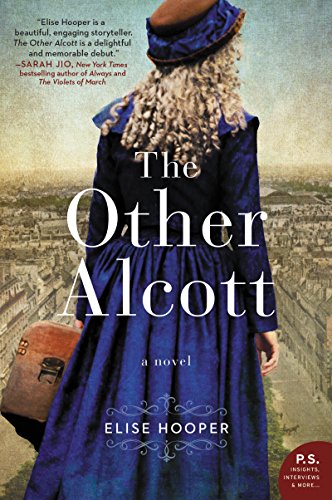
  • The Other Alcott by Elise Hooper, a fictional treatment of Louisa May Alcott’s youngest artist sister, May. A bit of a disappointment.
  • The Inheritance by Louisa May Alcott was her first novel, written when she was seventeen, but it was only recently discovered.
  • The Little Women Treasury by Carolyn Strom Collins and Christina Wyss Eriksson, an excellent resource for Little Women fans.
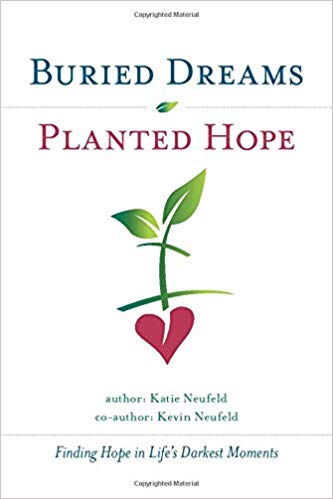
  • Buried Dreams, Planted Hope by Katie and Kevin Neufeld, a father-daughter team telling about navigating grief after Katie’s fiance is killed in an accident. Kevin was our former pastor when we lived in GA 20+ years ago.

I say “completed reading” because the first two were mostly read before this month and were just finished the first few days of June. I did get more reading in than usual, though, due to a couple of sick days and lack of much on TV in the evenings.

The Other AlcottThe Inheritance, and The Little Women Treasury were for Tarissa’s Louisa May Alcott Reading Challenge.

I’m currently reading:

  • Loving People: How to Love and Be Loved by John Townsend
  • Suffering Is Never for Nothing by Elisabeth Elliot with the True Woman Summer Book Club.
  • The Mill on the Floss by George Elliot
  • A Place Called Morning by Ann Tatlock
  • Rorey’s Secret by Leisha Kelly

Around the blog, besides the book reviews, Friday’s Fave Fives, and Laudable Linkage, I’ve posted:

  • While We Wait, thoughts from 1 Peter about how we can actively wait for Christ’s return.
  • Studying the Parts to Understand the Whole. Though it might seem tedious to break down a Bible passage in pieces and study it, as opposed to just reading, we learn, retain, and love a passage so much more when we’ve dug into it more. With some examples from classical music.
  • Bruised Reeds Are We All. God is so tender with us when we fall and fail, that should inspire us to be the same way with others.
  • The Lost Art of Forbearance. What the Bible says about “bearing with” each other.

Thanks so much to those of you who graciously answered my question last month about the value of these end-of-month wrap-ups. I enjoy them, but didn’t want to keep posting them if no one else did. I was pleased and encouraged to know you did get something from them and didn’t think they were just rehashes of previous posts.

I hope you enjoyed your June and are ready to turn the calendar page tomorrow!

(Sharing with Shannan, and Linda, and Literary Musing Monday)


Laudable Linkage

I have just a short list of noteworthy reads today, but thought I’d go ahead and share them. If I don’t, I’ll likely have an extra-long list next time.

Messy Church History. HT to Challies. I’ve been thinking about writing a post concerning our profound disappointment when someone we revere is found to have a fatal flaw as well as our tendency to write people off after finding skeletons in their closets. This says much that I would have. Church history, Biblical history, is messy because it involves sinners who aren’t totally perfect yet. Only God is perfect. It’s only by His grace that He uses any of us.

I’m Not a Mary or a Martha! Mary and Martha’s story wasn’t told in order to become fodder for social media personality quizzes. Julia points out ways that we infer more from the story that’s there and do Martha a disservice.

When You Are Refined by Family Conflict. “Conflict is simply two people viewing the same situation in two different ways.” If we take time to view things from the other person’s perspective, even though we might not agree, we’ll understand better, lose our defensiveness, and be able to look for bridges across the divide.

I shared this yesterday, and I think I may have even referenced it before, but I was so blessed by this post about Jim Elliot’s brother Bert, who was a missionary to Ecuador for over 50 years. Burt commented that “Jim and I both served Christ, but differently. Jim was a great meteor, streaking through the sky.” Randy Alcorn said yes, he was, but Burt was the faithful start that rose every night for years.

Finally, this baby copying the workout from the movie Rocky is SO cute! HT to Adam Blumer.

Happy Saturday!

Friday’s Fave Five

It’s Friday, time to look back over the blessings of the week
with Susanne and other friends at Living to Tell the Story .

It’s been another quiet week here in my neck of the woods. The last Friday of June already! Here are some of the best parts of the week:

1. Baptisms at church. Two adults were baptized at church last Sunday. Always a joy to hear people’s testimonies and see them take that step.

2. Finger food fellowship after the baptismal service. When we left, we were not quite full, but not really hungry enough for lunch. So we just scrounged around the refrigerator and heated up some leftovers — easy lunch, easy clean-up.

3. Pizza and movie night.Jason, Mittu, and Timothy came over and we watched Ralph Wrecked the Internet. I enjoyed that much more than I thought I would!

4. Chick-Fil-A brought in. I had gotten over my last cold but then got another one – very similar to the first one, staring out with a very sore throat. Timothy wanted to come over and play with some of the riding toys we have here. I let Jason and Mittu know I had another cold starting up, though I felt fine at that point, so they could decide if they wanted to risk coming over. They offered to bring Chick-Fil-A for dinner.

5. Updates on Steve Saint and Mincaye. Some of you know that I’ve loved and followed the story of the five missionaries who were killed in Ecuador in 1956, beginning with Elisabeth Elliot’s Through Gates of Splendor, then several other books of hers and some of the others in that story, up through Steve Saint’s book End of the Spear, and the documentary, Beyond the Gates of Splendor. I found a link to Randy Alcorn’s blog post about Mincaye, who was one of the men who killed the missionaries but later became a Christian and adopted Steve Saint’s family as his own. Mincaye is in his 90s now and in need of a wheelchair, and Joni Eareckson Tada’s organization sent him one. Randy’s post linked some some past posts with Steve and Mincaye, so I went on a rabbit trail reading some of those and watching the videos. I really enjoyed this one about Jim Elliot’s brother Bert, who was a missionary to Ecuador for over 50 years. Burt commented that “Jim and I both served Christ, but differently. Jim was a great meteor, streaking through the sky.” Randy said yes, he was, but Burt was the faithful start that rose every night for years. Then I also enjoyed the post and videos here, about Mincaye and his wife visiting Steve after his accident, and the Waodani telling Steve about “other foreigners” they saw the day the five missionaries were killed.

Happy Friday!

Book Review: Buried Dreams, Planted Hope

Katie Neufeld was the young daughter of our pastor when we lived in GA several years ago. In the intervening years she grew up, went to college, became a nurse, met the man of her dreams, and got engaged, following close to God each step of the way.

Then the unthinkable happened. A few months before the wedding, Katie and her fiance, Jerod, were in a horrific car accident, hit from behind and “pinballed” between two other cars. Jerod did not survive his injuries.

Katie shares her story in Buried Dreams, Planted Hope. She tells her background of how God worked in her life as she grew up, how she and Jerod met and fell in love, the accident, the raw grief afterward, and the many ways God ministered to her heart. Her father, Kevin, writes from his standpoint as a parent helping his daughter through such deep pain. At some point he realized he had suffered a loss of a friend and future son-in-law as well and had his own grief to deal with in addition to hers.

Part of their reason for writing is to share with others who might be going through their own season of grief the comfort and hope that they’ve found. Their joy is not the pasted-on, grin-and-bear-it, “everything is fine” when it’s not variety. It’s hard-won, through the pain and not bypassing it. There are still unanswered questions and mysteries about God’s will in all of this. But they’ve found, as Job and countless others have, that God shares Himself even when He doesn’t give satisfactory answers to our whys.

A few of the quotes I marked:

We made the conscious choice to be honest about our thoughts and feelings with those around us. Far too often Christians froth at the mouth with pious platitudes and paint an impossibly rosy picture (p. 3).

In all of these things, God is really taking me back to the basics and teaching me to trust. To believe that He will take care of me and provide for me in this drought. When I start to worry or dread, I am not trusting. As messy and ugly as the circumstances of my life are right now, I know my God, and I know I can count on Him (p. 113).

That last quote reminded me of something Spurgeon said about Hebrews 12:27, that God sometimes shakes up our world “that the things that cannot be shaken may remain.”

One of the lessons we learned was that it wasn’t our job to stop her tears. The Bible says to weep with those who weep. Oftentimes we attempt to stop the tears of others, but this, though well-intended, turns out to be more about our own discomfort with tears than the one who sheds them. In those initial days, there were many times where we would wrap our arms around Katie and cry with her (p. 142).

Taking every thought captive isn’t an easy or a one-time-fix-all task, but it’s a critical skill to learn and put into daily practice that will serve you well when those thoughts start to creep in that you know are not of God (p. 243).

When I reached my rock bottom, I found that Jesus was the Rock at the bottom, that sure and steady Rock that I could hold onto, the Rock that I realized was already holding on to me. And in those darkest and lowest moments, when He was all I felt I had left, I realized like no time ever before that He was all I’d ever needed (p. 245).

Suffering has this way of liberating us from the petty concerns and worries of everyday life. It clears the clutter and idols and helps us realize that Jesus really is all we need (p. 247).

Even though my story doesn’t have the cliche happy ending right now, there is still joy, although different from any I’d ever experienced in the past. A more pure form of joy (p. 252).

One of the ways God ministered to Katie was by unexpectedly bringing across her path people further along on the road of grief who could assure her that she wasn’t crazy, understand her feelings, and provide hope that things would get better. Katie and Kevin want “to comfort those who are in any affliction, with the comfort with which we ourselves are comforted by God” (2 Corinthians 1:4).

(Sharing with Literary Musing Monday, Carole’s Books You Loved, and Booknificent)

Book Review: The Inheritance

In 1996, two professors going through Louisa May Alcott’s letters and journals discovered a previously unknown and unpublished manuscript. The Inheritance was Louisa’s first novel, written when she was 17. Neither the professors nor anyone else could find any other information about the novel. There was no record of it having been submitted for publication and rejected. Maybe Louisa just wrote it for fun or for her family. After the novel’s discovery, it was published in 1997.

The heroine of the story is Edith Adelon. She was discovered as a poor orphan in Italy by Lord Hamilton, who took pity on her and brought her home. There she became a companion to Hamilton’s daughter, Amy.

As the story  opens, Edith is a young woman and Amy is a teenager. Edith teaches Amy “music, painting, and Italian, and better lessons still in patience, purity, and truth,” but she’s not exactly a governess. However, she is regarded by Lady Hamilton as “poor and lowborn,” and as such, she is not allowed to mingle with “noble” guests as an equal (p. 17). Lord Hamilton died years before. Amy’s older brother, Arthur, her mother, Lady Hamilton, and her mother’s niece, Lady Ida complete the household. A friend, Lord Percy, comes for an extended visit and the young siblings learn his background: he and his brother had loved the same woman, and once Percy found out, he stepped back for his brother’s happiness. “Careless of the wealth and honor that might be his, he prized far more the purity and worth of noble human hearts, little noting whether they beat in high or low.” He visited the “poor and suffering” and still kept a hope that he “might win a beautiful and noble wife to cheer life’s pilgrimage and bless him with her love” (p. 13).

Ida hopes to attract Percy’s attention for herself, but when she sees him favoring Edith, Ida’s latent jealousy comes to the surface. Between Ida’s verbal jousts, another visitor’s ignoble intentions, and a betrayal of her kindness, Edith has her hands full.

Yet there is a secret to Edith’s background that none of them knows. But will it be revealed or suppressed and forgotten?

The story is only 150 pages and has elements of both a Gothic novel and what were called sentimental novels. It’s a very sweet story, but a little overdone in places. Edith is too good to be true. Descriptions such as this one abound: “With an angel’s calm and almost holy beauty, Edith bore within as holy and pure a heart–gentle, true, and tender” (pp. 12-13). Likewise, Percy’s “calm, pale face and serious eyes are far more beautiful than mere comeliness and grace of form, for the pure, true heart withing shines clearly out and gives a quiet beauty to his face, such as few possess” (p. 5).

But even though Louisa’s writing is understandably not as mature as her later works, and the characters are a little two-dimensional, I thought it was very sweet and a good effort on Louisa’s part for her age then.

Several years ago I saw a film version of The Inheritance which I enjoyed immensely. It must have come out not long after the book was published. It’s been a while since I’ve seen it, but it kept to the main points of the book. A few exceptions: it has Lord Hamilton as still living for most of the film; shows Lady Hamilton as warm and friendly whereas she is described as cold and haughty in the book; and it has Edith loving and racing horses, which was not at all in the book. I’m looking forward to seeing the film again some time now that I’ve read the story.

Thankfully Tarissa, who hosts the Louisa May Alcott Reading Challenge, told me about the Internet Archive, which loans copies of books that have been photocopied page by page. It’s not quite the same as an e-book, but once I figured out how to make the page fit my iPad mini, I read it quite easily. I’m glad to know this service exists! The edition I read included a lengthy introduction by the two professors who discovered this manuscript, Joel Myerson and Daniel Shealy.

I’m counting this book as my Classic Novella (250 or fewer pages) for the Back to the Classics Challenge.

(Sharing with Carole’s Books You Loved and Booknificent)

The Lost Art of Forbearance

“Forbearance” isn’t a word we hear much these days, but it’s a needed one. It shows up throughout KJV New Testament passages meaning endurance. But two passages in particular bring out this meaning more fully.

Ephesians 4:1-3 says “I therefore, the prisoner of the Lord, beseech you that ye walk worthy of the vocation wherewith ye are called, with all lowliness and meekness, with longsuffering, forbearing one another in love; endeavouring to keep the unity of the Spirit in the bond of peace.”

Other translations say, instead of “forbearance”:

    • “bearing with one another in love” (several)
    • “making allowance for each other’s faults because of your love,” NLT
    • “showing tolerance for one another in love,” NASB
    • “patiently put up with each other and love each other,” CEB

A similar passage is in Colossians 3:12-15, with similar translations in other versions: Put on therefore, as the elect of God, holy and beloved, bowels of mercies, kindness, humbleness of mind, meekness, longsuffering; Forbearing one another, and forgiving one another, if any man have a quarrel against any: even as Christ forgave you, so also do ye. And above all these things put on charity, which is the bond of perfectness. And let the peace of God rule in your hearts, to the which also ye are called in one body; and be ye thankful.”

The Dictionary.com definition for “forbear” that most closely matches this context is “to be patient or self-controlled when subject to annoyance or provocation.

A former pastor’s definition matches most closely with the CEB: “good, old-fashioned putting up with each other.”

People don’t “put up with” much these days, do they? Or, I should say, do we? We want what we want, the way we want, and we want it now. Woe to the person who hinders any aspect of our getting what we want. Having multitudinous selections and the fastest cooking and delivery times in history have not made us more patient: we’re more impatient than ever. And if someone wrongs us in the slightest way or even makes a mistake that inconveniences, we feel obligated to let them have it and vent all over social media. And if someone holds a position we disagree with, well, then, they’re fair game for ridicule at the very least.

Granted, some things should not be tolerated: abuse, criminal activity, actions which hurt others all need to be dealt with. Wrongs need to be dealt with. Stands need to be taken.

But everyday faults and mistakes? Who doesn’t have those in abundance? How do we want others to treat us when we mess up?

Ephesians and Colossians pairs forbearance with:

  • humility (Where’d I get the idea everything is supposed to be my way?)
  • meekness
  • kindness
  • forgiveness: Colossians 3:13 gives the standard: “even as Christ forgave you, so also do ye.”
  • love
  • peace

Aren’t these the traits we long for in others’ interactions with us? Don’t we long for others to take time to hear and understand instead of just assuming, reacting, and blowing the situation out of proportion? Wouldn’t we rather someone talk to us privately when there’s been a misunderstanding instead of talking to everyone else? When we make a mistake, and we’re fearing the worst reaction, aren’t we blessed when someone says, “That’s all right — don’t worry about it. We all blow it sometimes.” Don’t we yearn for mercy and grace?

Then let’s take the initiative and exercise these traits toward each other.

Jesus said, “Come to me, all who labor and are heavy laden, and I will give you rest. Take my yoke upon you, and learn from me, for I am gentle and lowly in heart, and you will find rest for your souls” (Matthew 11:28-29, ESV).

(Sharing with Inspire Me Monday, Tell His Story, Let’s Have Coffee, Porch Stories, Share a Link Wednesdays, Faith on Fire, Grace and Truth, Kingdom Bloggers)


Laudable Linkage

Here are a few noteworthy reads discovered recently:

Is an Unborn Child a Parasite, Living off Another Person’s Body without Permission? HT to Challies.

Chinese Christians Memorize the Bible in Jail: “They Can’t Take What’s Hidden in Your Heart.

Ten Steps for Getting Started With Inductive Bible Study.

Understanding Narrative Passages of the Bible. Sometimes it’s easy to breeze through Biblical narratives, especially familiar ones (David and Goliath). This post has an excellent worksheet for getting more out of those passages.

Small vs. Insignificant. It isn’t the size of the task or the reach that’s most important.

7 Things You Should Never Say to Your Aging Parents.

Creativity for People Who Think They’ve Lost It. I used to think I wasn’t creative because I wasn’t “artsy.” But creativity involves much more than art.

Christianaudio is having a great sale on audiobooks.

Meet the Irishman Who Takes the World’s Best Animal Selfies, HT to Laura. These photos are so cute! Here’s a short video of his attempts to get some of the shots. He’s braver than I am!


Friday’s Fave Five

It’s Friday, time to look back over the blessings of the week
with Susanne and other friends at Living to Tell the Story .

It seems like it’s been a quiet week online: my Feedly account of others’ blog posts has been very light, as have comments here. Maybe everyone’s off doing summery things. 🙂 We’ve been mostly indoors due to a rain, but here are some of the five best parts of the week:

1. Father’s Day. Had a good day remembering my father and step-father and celebrating my husband and son with spaghetti and Mittu’s pineapple upside-down cake.

2. Finally getting a haircut. I tend not to get around to it until I can hardly stand it any more. When my hair gets to a certain length, it just goes limp. Nice to get that taken care of.

3. Finally getting flowers in my planters. I usually have these done way back in May. They look much better than they did.

4. Takeout on a sick day. I don’t get migraines often, but battled one this week. I feel for those who are prone to them. Thankfully there was nothing pressing that day, so I could lay low. I asked my husband if he could bring home McAlister’s Deli that night, and he did.

5. This adorable video which has been making the rounds is just SO cute. Denny’s even asked the father and son duo to do a sweet commercial.

Happy first day of summer!

Book Review: The Other Alcott

Louisa May Alcott has been famous for hundreds of years as the author of Little Women. Not many people know that her younger sister, Abigail May (who went by May and is Amy’s counterpart in LW) had some success as an artist. May probably would have gone further in her career, but she died at the age of 39. The Other Alcott is Elise Hooper’s attempt to bring May’s story to the forefront via fiction.

The book begins just after Little Women has been published and the Alcott family received the first reviews. Praise was high for Louisa’s book, but not so kind for May’s illustrations. May decided she needed more instruction, so she approached Louisa about living with her in Boston and taking art lessons there. After some curmudgeonly grumbling, Louisa agreed.

A few years later, Louisa, May, and another friend traveled to England, where Louisa wrote and May explored and took lessons. They were prohibited from traveling to Paris at that time due to war, but a few years later May traveled to Paris on her own and continued her studies. She met John Ruskin and several other “women artists languishing in the margins of the historical record.” She became friends with Mary Cassatt during the beginnings of the Impressionist movement. Mary eventually became a well-known Impressionist, but the movement was controversial at first. May continued along a more traditional route. “Her paintings were exhibited in the Paris Salons of 1877 and 1879, major accomplishments for an artist of the era.” She wrote a book titled Studying Art Abroad, and How to do it Cheaply.

She met and married Ernest Nieriker, a Swiss tobacco merchant and violinist, in 1878. In November of 1879, May gave birth to a daughter named after Louisa but called Lulu. But May died seven weeks later, Wikipedia says from childbed fever, Hooper says from cerebral spinal meningitis. May wanted Lulu to be sent to Louisa in the event of here death. Louisa raised Lulu until her own death ten years later, when Lulu was sent back to her father.

I enjoyed learning more about May’s life. I had particularly wondered why her daughter was sent to Louisa, and this gave insight into that decision. It was interesting to read of the Impressionist movement’s beginnings.

May and Louisa seemed to be the most headstrong and spirited of the Alcott sisters. May’s burning of one of Louisa’s early manuscripts (an event that really happened and was portrayed in LW) gives a glimpse of the way they could clash. But I felt Hooper played up their differences and potential for butting heads a bit overmuch. She admits in her afterward that the estrangement between the two in her book was made up for the story. I know authors may have to make up some details and dialogue in a fictionalization of a true story, but I felt this went too far. Hooper also portrayed May as resenting the way her book counterpart, Amy, was portrayed. I don’t know if this is true or made up or over-emphasized for the book. The book indicates Louisa was unhappy about May’s marriage and suspicious that her husband was really after Louisa’s money, but Wikipedia says, “Louisa Alcott called the day a ‘happy event’ and described Ernest as a handsome, cultivated and successful ‘tender friend’. Further, ‘May is old enough to choose for herself, and seems so happy in the new relation that we have nothing to say against it.'”

Louisa comes off as mostly grouchy in this portrayal. The author says of May, “Creating beauty through art made her happy. And being happy seemed to be her natural state.” But Hooper did not portray May as happy except during her courtship and early married days.

Hooper describes one scene where May finds herself in a class of all men sketching a male nude model who, when he sees May, acts lewdly toward her. Again, I don’t know f this scene is real or invented, but even if real, it went into more detail than needed.

So, I have mixed emotions bout the book, and reviews seem to be mixed as well. Though I did enjoy learning more about May, and I think the cover of the book is gorgeous, I don’t think I will be reading this author again.

Book Review: Home at Last

 Home at Last is the last book in Deborah Raney’s Chicory Inn series. Link Whitman is the oldest and only remaining son of bed and breakfast owners Grant and Audrey Whitman. He’s 29 and single. He’d like to have a family like the rest of his siblings, but has been too involved with work and has just never found the right girl. He tries to avoid disastrous set-ups with relatives of his mom’s friends.

Link is not above a little flirtation now and then, however. On his way to the bakery on cold morning for his mom, he anticipates seeing Shayla, the cute girl who works there. But right in front of the bakery, suddenly a young girl runs into the street. Link has trouble stopping on the icy road, but manages to swerve his pickup and miss her. Then Shayla comes running out, terrified and angry with him. At first he thinks the little girl is Shayla’s daughter, but finds she’s the niece – but a niece that Shayla is responsible for.

This incident sets Link and Shayla off on the wrong foot. But overcoming this rough start proves easier than handling their more serious differences. Shayla is of mixed race, with neither set of grandparents approving her parents’ marriage. Her mother has died, her brother is in jail, and her father is bitter and disillusioned. She thinks there are too many obstacles and issues that Link would never understand.

But Link wants to try and convinces her to go out with him – along with her niece, Portia. The path isn’t easy, with misunderstandings and misconceptions on both sides. Will they overcome them or give up trying?

I enjoyed this last visit with the Whitman family and felt Deborah handled the issues involved with sensitivity and understanding.

(Sharing with Carole’s Books You Loved and Booknificent)