Friday’s Fave Five

It’s Friday, time to count the blessings of the week
with Susanne and other friends at Living to Tell the Story.

Here we are halfway through the first month of the year (and the decade, depending on how you count it). I love these weekly stops to reflect on what’s gone before. Here are some of my favorite things from the last week:

1. More light. I usually walk my youngest son to the door as he leaves for work to say goodbye and lock the door behind him. It has still been dark when he leaves, until this week. Or at least this is the first week I noticed the light shining that time of morning. I know the days have been getting longer since the winter solstice, but this is the first time it has been noticeable.

2. Mending done. I order almost all my clothes online, and when you use the same companies, you get used to their sizing. Until they change. Somehow the last few dresses I’ve bought have been baggy, and not because I have lost weight (because I haven’t). I felt I could just take them in a little on the sides and they’d be ok, but hadn’t gotten to it in … months. I finally made time to do that this week.

3. Organizational ideas. I love when some better way to do or arrange things just comes to me out of the blue. I had received some Instant Pot accessories as gifts last year. As I hunted for one of them this week, I thought, you know, it would be a good idea to keep all of them together in a box. Then at a store other than the one I planned to go to for said box, I found one just the right size, saving me another stop.

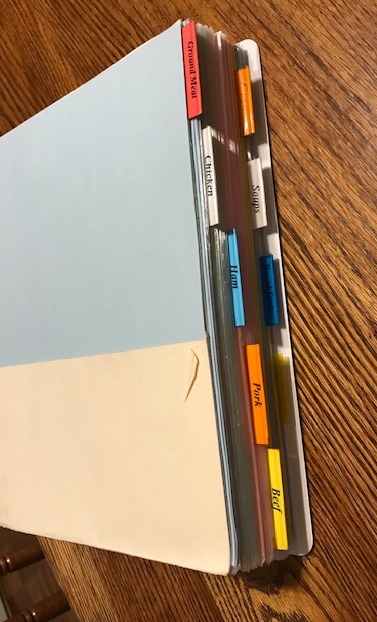
4. Recipe book update. A few years ago I made a scrapbooked notebook of recipes I’d torn out of magazines or had recipes cards for, etc. It was nothing fancy or decorative—just the scraps of paper or card stock glued to pages and divided into categories. My “main dish” notebook was breaking up, so I got another. Instead of just transferring everything over, I thought it would be a good time to weed out those recipes I didn’t think I’d ever really use and add in a few I had printed from the Internet. For instance, I had three chicken and stuffing casserole recipes, and the one I use wasn’t even in there. It got a little more involved than I had anticipated: after pulling some recipes out, then I had to rearrange what was left. I’m not entirely done yet, but it feels good to have them in a fresh new notebook and arranged more efficiently.

5. Kindle deals. I follow a couple of sites that share Christian books on sale for the Kindle app for 99 cents to a dollar or so. I love trying out new authors that way or finding other books by authors I already love. Both of these have a broad umbrella—I wouldn’t endorse everything they share. Discern is always needed. But I appreciate their services combing through Amazon deals for those labeled Christian.

What’s one good thing from your week?

January-March 2020 Reading List

Years ago, someone who is no longer blogging used to host a “Fall Into Reading” and “Spring Reading Fling,” where participants would share what they planned to read for the next few months and then come back and share what they actually did read. I always enjoyed reading those and added to my TBR list exponentially.

Susanne misses those posts, too, and has decided to start up an informal quarterly reading list sign-up. I thought this might be a good way to break up my larger reading plans into smaller goals. You can find more information here and join in here, if you’d like.

Planning for the month or the quarter just involves looking through the unread books on my shelves, in my Kindle app, and in my audiobook library and deciding which I want to read next. It helps condense the reading decision time by doing it this way rather than every time I finish one book and look for another.

My two biggest challenges are the Back to the Classics Challenge and then two others that focus on reading books we already own (Mount TBR) or have had on our reading list a while.

For classics:

  • I’m currently listening to The Merry Adventures of Robin Hood by Howard Pyle.
  • Hard Times by Charles Dickens
  • I might start Larkrise to Candleford by Flora Thompson next. My copy has three volumes in one, so it’s rather large. But I have also been wanting to watch the series based on these stories as well, and want to read the books first.

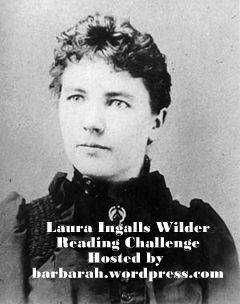
I’ll be hosting my last Laura Ingalls Wilder Reading Challenge Feb. 1-29 and will share on Feb. 1 what I am reading for that challenge. I have one book on hand and am considering another.

From my current stash:

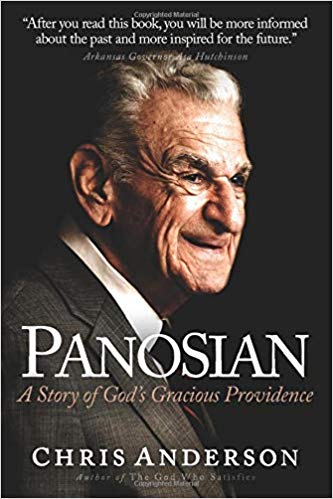
I just finished Panosian: A Story of God’s Gracious Providence by Chris Anderson. Next are:

Nonfiction:

  • Good Tidings of Great Joy: A Collection of Christmas Sermons by Charles Spurgeon (currently reading)
  • Off the Clock: Feel Less Busy While Getting More Done by Laura Vanderkam (currently reading).
  • The Last Castle: The Epic Story of Love, Loss, and American Royalty in the Nation’s Largest Home by Denise Kiernan about the Biltmore House. I loved what she did with The Girls of Atomic City, so I’m eagerly looking forward to this book.
  • Anne Morrow Lindbergh: Her Life by Susan Hertog

Fiction:

  • Promise Me This by Cathy Gohlke, a novel involving a couple of people on the Titanic, one who survived and one who did not, and those who wished the results had been reversed (currently reading).
  • The Space Between Words by Michele Phoenix
  • The Shopkeepers by Nancy Moser, a sequel to The Pattern Artist and The Fashion Designer, novels about a young women going into those professions in the early 1900s.
  • Castle on the Rise by Kristy Cambron, sequel to The Lost Castle, a novel involving three different timelines touching an old castle.
  • The One True Love of Alice Ann by Eva Marie Everson, a novel set in 1940s Georgia about a girl waiting for the one she loves to come home from WWII.

Those should keep me busy for a while! I’m looking forward to all of them. I probably won’t finish them all this quarter, but whatever I don’t finish will just go on next quarter’s list.

What’s on your reading horizon?

(Sharing with Susanne, Global Blogging, Senior Salon, Hearth and Soul, Happy Now, InstaEncouragement)

Book Review: Panosian: A Story of God’s Gracious Providence

Dr. Edward Panosian is one of the most beloved professors of my alma mater. But Panosian: A Story of God’s Gracious Providence by Chris Anderson would be beneficial to more than those who knew the doctor as a teacher. It’s not only the fascinating story of God’s hand in one family’s life. It’s the story of a people that were almost completely wiped out in the nearly forgotten Armenian Genocide.

Dr. Panosian taught several history and church history courses at Bob Jones University, but he’s most well-known for History of Civilization. Nearly every freshman took that course. For me, that class was the first time history “clicked” for me as something other than meaningless names and dates.

Students quickly became aware of Panosian’s distinctive voice and mastery of his subject. He pointed out God’s hand throughout history and made history interesting and relevant to students.

Soon students came to know their professor’s kindness, warmth, humor. He is known for many famous sayings, which Anderson lists in the book. He was a fixture riding his bike around campus.

When Dr. Panosian introduced himself the first day of class, he mentioned that he was Armenian. I thought something like, “Huh. I’ve never heard of anyone from Armenia before.” In those pre-Google days, I was, sadly, not curious enough to look up Armenia then. But there was a reason I had never heard of Armenians.

Armenia was a small Christian part of the Ottoman empire, a mostly Muslim entity. Armenians were persecuted for decades, but their ill-treatment culminated in mass murder, rape, exile, forced marches after WWI. Dr. Panosian’s great-grandfather was murdered by a mob in his family home, in front of his wife and children. His grandmother could not escape with all the children. She took one ill son with her to America, and the rest were taken to an orphanage run by German missionaries in Beirut. She didn’t see them or hear from them for nine agonizing years. That they survived and were found is miraculous.

Dr. Panosian’s father’s story is also told, and then we learn how God led Dr. Panosian to his university, wife, and calling.

Betty Panosian taught speech, particularly storytelling. For years she told and read classic stories that were heard on a local radio station Friday nights. She has narrated a few books, and she and Dr. Panosian read Scripture on Scripture Meditations 1 and 2 CDs (some of the latter can be heard here).

Some might be familiar with Dr. Panosian through the university’s Unusual Films productions or through his multiple roles in various Shakespeare plays. His foray into acting had an amusing beginning.

Dr. Panosian also, at someone’s suggestion, created presentations of famous people in history, like Martin Luther, telling their story from a first person point of view. He has given these presentations at a number of churches around the country.

I have several places marked in the book. Here are just a few quotes:

After risking everything to come to America, and after enduring grueling journeys across the Atlantic in cramped and squalid ships, immigrants now had to fret about whether they would actually be let in. It wasn’t a given. Ellis Island was a place of inspection, interrogation, and sometimes quarantine. For some, it was a place of rejection. Imagine arriving so close to the American “Paradise,” only to be sent back to the very country you had fled. For some, Lady Liberty was a sentry, not a hostess. Debates over immigration policies are nothing new. If anything, the debate over granting asylum to refugees was more volatile a century ago than it is today (p. 62).

Betty Panosian tells how she needed a tutor to help her catch up in a class she missed part of to participate in a radio program: “I looked around the class to see who made the As, and I saw Ed. He always knew everything. And so I asked him if he’d help me; and he’s been helping me ever since” (p. 127).

When Dr. Panosian taught his last History of Civilization class after 48 years, he quipped, “This is the end of the history of civilization  as we have known it” (p. 144).

You might recognize author Chris Anderson’s name from his penning hymns like “His Robes for Mine” and “My Jesus Fair.”

I got both the paperback copy of this book plus the audiobook when it came out later. The audiobook is read primarily by Anderson, with Dr. Panosian reading parts. Betty Panosian and a few other voices contribute as well. It was so good to hear the Panosians’ voices again.

Here is a book trailer for this volume:

This trailer is a bit longer, with Dr. Panosian telling some of his story.

Though this book will have special meaning to those who knew the Panosians personally, I think anyone could gain much by reading it.

(Sharing with Carole’s Books You Loved, Booknificent)

Ways to Both Read and Study the Bible

When I first became a Christian, the church I was in urged people to read the Bible through in a year. I’m so glad, because I believe that grounded me in my faith more than anything else.

In later years, pastors often emphasized the need to read passages of the Bible in context and encouraged to read a book of the Bible through at a time rather than scattering our reading all around. I mentioned last week Drew Hunter‘s quote that we wouldn’t read only page two of a friend’s three-page letter. Nor would we read a paragraph on page three and a line on page one. The Bible isn’t a book of random quotations. Each book is a coherent whole, and all together they present a unified message.

Reading the whole Bible helped me keep things in context and see the grand themes of the Bible. It helped me get into books like Leviticus and Chronicles, which I probably would not have drifted into. I found some nuggets there I would have missed. Reading all of the Bible helps you interpret it, as some passages shed light on other passages.

Kelly Needham says:

Most Christians I talk to have never read the entirety of the Bible. They may read it frequently but only parts of it. But daily reading parts of the Bible doesn’t mean you know it any more than daily reading the first chapter of Moby Dick makes you an expert on the famous novel. Ignorance of the whole of God’s Word makes us easy targets in the war Satan has waged against God. Lies can slip through undetected like poison gas because we’re just not that familiar with the truth.

I still believe in reading the Bible through, but I don’t do it in a year any more. Sometimes I wanted to slow down, but felt I couldn’t or I’d fall behind schedule. Once one does fall behind, it’s hard to catch back up. So now I just go at my own pace. I don’t even know how long it takes me. Sometimes I read a couple of chapters a day. Other times I read more or less. I usually read the shorter epistles a few times through before moving on because they’re packed so full and go by so quickly.

I’ve seen some two-year or other plans. John O’Malley said in Overcoming Your Devotional Obstacles, “If it takes you five years to read through the Bible, you are not less of a Christian. Read it at a pace that you can comprehend it and receive something from it.”

Some folks I know have tried “binge-reading” the Bible occasionally. Joel Arnold says, “A pretty average reader can finish in 100 days by reading just 40 minutes a day.” My friend Kim once read the whole Bible in 90 days and shared her experience here.

Joel once read the whole Bible in a week, 10-12 hours a day. Afterward he noted:

The Bible is the most intertwined body of literature I’ve ever read. The books cite, quote, allude and echo each other constantly. It’s like a city, built up layer by layer, strata by strata, so that each later addition rests on every layer that came before … We don’t usually sense these relationships because we’ve forgotten 95% of the OT before we ever get to the New. But having it all out in front of your brain at once changes that completely. You find yourself flipping back and forth constantly between the testaments, jumping across thousands of years of history to study the same teachings and sometimes even the same phrases (Meditations from Binge-Reading the Bible).

Obviously no one can read 10-12 hours a day every week. But if we can use vacation time to binge watch a TV series, why not use it to read the whole Bible?

However, if we only read the Bible in great chunks, we miss something. We’re also told to study it, meditate on it, chew on it. Sometimes we need to slow down and spend more focused time on a smaller passage. Charles Spurgeon is quoted as saying, “Some people like to read so many [Bible] chapters every day. I would not dissuade them from the practice, but I would rather lay my soul asoak in half a dozen verses all day than rinse my hand in several chapters. Oh, to be bathed in a text of Scripture, and to let it be sucked up in your very soul, till it saturates your heart!” Sometimes there’s nothing like honing in on one or a few verses for an extended amount of time.

Remember, the early churches did not have the entire Bible bound in one book for a long while. They had the Old Testament and gospels, but they would have spent a great deal of time on the one letter sent to their congregation and others as they came around.

I mentioned last week that Tim Challies said the larger blocks of reading were for familiarity, and reading for intimacy was slowing down and meditating on or studying shorter passages. Kelly Collier calls these two methods plow work (which “moves through large portions of Scripture more quickly,” like reading the Bible in a year or two) and trowel work (“taking a passage or verse of Scripture and settling in to dig for a long time,” like inductive Bible Study). I likened the two styles to a panoramic or macro lens. Or we could simply call them reading and studying.

I wrote a few years ago about finding time to read the Bible. Some seasons allow for both reading and studying, and it’s great to do both each day if you can. With the friend’s letter I mentioned earlier, we usually read the whole thing once or twice and then go back over it section by section. That’s good to do with a Bible passage as well. But it’s hard enough some days to get a few minutes to read the Bible at all. How can we possibly employ both reading and studying?

Here are some ideas:

Take turns. Often after I’ve finished a book of the Bible, I’ve taken a break to do a shorter study. Then I go back to the next book of the Bible.

Alternate days. Use a few days of the week for general reading, the others for more focused study.

Do the opposite of your church. For several years we were under a pastor who took a very detailed, thorough approach to preaching through a book of the Bible at a time. It took us years to get through Romans. But that was great, because then we knew it well. Since the preaching I heard was the in-depth, verse or two at a time style, my personal reading was more general. By contrast, when in other churches where the preaching covered more ground, I liked to do in-depth studies on my own.

Join a Bible study group. Bible studies tend to be slower and more focused (unless they’re topical), so I did in-depth study for the group and more general study on my own.

Adjust as needs arise. Once, chagrined and ashamed after an angry outburst, I set aside my regular Bible reading to look up and mediate on passages dealing with anger. That kind of thing has happened several times: an issue came up that I had to study out now.

Slow down and speed up as you feel led. In reading the Bible through, if I feel the need to put the breaks on in a certain passage and camp out for a while, I do so. Then I’ll pick up the pace for more general reading later.

There are going to be days when your regular routine flies out the window: illness, traveling, company, emergencies. God gives grace for those. I have a small devotional book called Daily Light on the Daily Path that is a few verses on a certain theme each day. Usually I use it to start my devotions, but some days that’s all I get to.

There are going to be seasons in life when finding time for quiet study is nearly impossible, like when young children are in the house. Just like we sometimes grab a protein bar instead of having a sit-down lunch, so our spiritual feeding sometimes has to be grab-and-go rather than a leisurely meal. When I truly only had time for a verse or two, God fed my soul with just those verses. Anything is better than nothing. One writer proposed a micronutrient Bible reading plan for those times.

We need to keep in mind the goal for reading the Bible isn’t just to get through it in a specified time. Instead, we read to learn it, learn from it, get to know God and His Word better.

Our current church has us read through a book of the Bible together. We’re asked to read five chapters of the Bible a week, one a day Monday-Friday with Saturdays to catch up. Then the preaching focuses on a short passage of a different book. Then we all learn a verse each month. So we incorporate the general overview reading, have a more in-depth study of a short passage, and spend a longer time meditating on one verse. That’s not a bad practice for one’s personal reading as well.

What ways have you find to incorporate both reading and studying the Bible? Do you tend toward one more than the other?

(Sharing with Inspire Me Monday, Global Blogging, Hearth and Soul, Senior Salon, Purposeful Faith, Happy Now, Tell His Story, InstaEncouragement,
Recharge Wednesday, Worth Beyond Rubies, Share a Link Wednesday,
Let’s Have Coffee, Heart Encouragement, Grace and Truth, Faith on Fire,
Blogger Voices Network)

Laudable Linkage

IMG_0195

Here are a few of the good reads found in the last couple of weeks:

Humbly Coming Before Our Father, HT to Challies. “Although most people, even many professing Christians, believe that everyone is a child of God in a spiritual way, the word of God is undeniably clear that only those who are united to the Son by faith are the adopted children of God.”

Are You Following a Bootstrap Gospel? “The bootstrap gospel is good, and sometimes is even full of things that we need to hear, but it’s not enough. We need the real gospel to truly change our lives.”

A New Year’s Resolution Worth Keeping. “All living things need constant care, including faith. No one brushes her teeth and says, ‘Done, I never have to do that again!’ So it is with faith. Moment by moment, opportunity by opportunity, we must choose to walk by faith, or, by default, we defer to sight.”

Church kids and Church Shootings. “For times like these, for the church shooter days and the monster under the bed nights, for the why did this have to happen conversations, there is only one source of wisdom and truth, and our kids are counting on us to be able to offer the real answers and real promises of our good God.”

Is Your Church Worship More Pagan than Christian? HT to Proclaim and Defend. “Scripture is full of exhortations to God’s people to sing and make music to the Lord. Our God has been gracious to give us this means to worship Him. But it is important to understand that music in our worship is for two specific purposes: to honor God and to edify our fellow believers. Unfortunately, many Christians tend to grant music a sacramental power which Scripture never bestows upon it.”

Laughing at the Days to Come. The Proverbs 3 woman, instead of fearing the future, “laughs at the days to come.” “The woman who laughs at the days to come, however, does not live a life governed by the fearful question, ‘What if?’ Rather, she calmly and confidently approaches the unknown with the words, ‘Even if.'”

Courageous: Inspiring Courage Through Classic Literature. “Stories feed our children’s minds and spirits the same way food feeds their bodies. I want my children to feast on books with characters who point them to hope, who are brave and honest and kind.”

And finally, this is one way to help people wake up and pay attention to the flight safety information:

Happy Saturday!

Friday’s Fave Five

It’s Friday, time to count the blessings of the week
with Susanne and other friends at Living to Tell the Story.

How can we be a third of the way through January already? I’m pausing to reflect on some of the best parts of the week.

1. New Year’s Eve. I forgot to mention this last week. We had a Hickory Farms box of sausages and cheese we hadn’t opened yet, and I decided to use that and build around it for a smorgasbord-type easy dinner. I got some frozen potato skins and meatballs and such at the store, and Mittu made a chocolate-peanut butter tart and a few other things. Jim made ham salad. We ended up having quite the spread. Then we filled our plates and watched the old animated version of 101 Dalmatians. Jason and Mittu have been trying out the Disney Plus service, and it’s been fun to have access to all the Disney movies.

2. A belated anniversary get-away. Jim and I took a couple of days to go to the Gatlinburg/Pigeon Forge area to celebrate our 40th anniversary a couple of weeks late. He had all last week off while the kids had all gone back to work. We stayed in a lovely lodge, had some great meals, and visited the Titanic Museum. And he had dug out some of our notes from dating days to read again. I wrote all about it here.

3. Getting my hair cut. I had been meaning to since before Christmas, but hadn’t had a chance.

4. Jeopardy’s “Greatest of All Time” tournament. We don’t watch Jeopardy every night, but catch it sometimes when I’ve finished cleaning the kitchen after dinner. We watched several months ago when James Holzhauer took the program by storm and broke all kinds of records. Now he, Ken Jennings (who had a 72-game winning streak) and Brad Rutter (who has won the most money of any game show contestant) are back for a “Greatest of All Time” tournament among the three of them. I always wonder how Jeopardy contestants can know (and remember!) all that they do, but these guys take it to another whole level. I’ve also love the banter between them on the show and on Twitter.

5. Affirmation. My youngest son has been at his job about six weeks now. He received some good comments about his performance from a couple of people this week, and that’s always encouraging. He told us last night that even though this wasn’t exactly the type of job he was looking for originally, he’s enjoying it.

Those are highlights of my week. What’s a highlight from your January so far?

Reading Plans for 2020

There are some books you don’t get around to reading unless you plan to. Participating in some book challenges has helped be more purposeful in my reading. But I have found I also need flexibility. I don’t want to feel pressured and tied down by a reading list. I want the freedom to pick up books discovered during the year, new releases, etc. But I also want to read more classics and more books from my own shelves or list of recommendations. There are two main reading challenges I participate in every year, and sometimes I try a few others as well. Thankfully the books can overlap several challenges: otherwise I could probably only do one or two.

So this year, I’ll participate in these challenges:

The Laura Ingalls Wilder Reading Challenge begins here February 1-29. This will be my last year to host it. I have one book in mind for it this year, which I’ll share Feb. 1.

Tarissa at In the Bookcase hosts the Louisa May Alcott Reading Challenge in June.

Tarissa also hosts the Literary Christmas Reading Challenge November through December.

Karen at Books and Chocolate is hosting the Back to the Classics challenge again this year. Books have to be 50 years old for this challenge and fit into the following categories. We don’t have to determine them all at this point, but I’ll list a few I have in mind.

1. 19th Century Classic: Hard Times by Charles Dickens
2. 20th Century Classic
3. Classic by a Woman Author: Eight Cousins by Louisa My Alcott
4. Classic in Translation (originally written in something other than your native language): Possibly Phantom of the Opera by Gaston Leroux. I read it a long time ago but can’t remember much about it.
5. Classic by a Person of Color
6. A Genre Classic
7. Classic with a Person’s Name in the Title: The Mystery of Edwin Drood by Charles Dickens.
8. Classic with a Place in the Title: The Merry Adventures of Robin Hood of Great Renown in Nottinghamshire by Howard Pyle
9. Classic with Nature in the Title: Rose in Bloom by Louisa May Alcott
10. Classic About a Family (multiple members of the same family as principal characters)
11. Abandoned Classic (one you started but never finished). Possibly Billy Budd by Herman Melville. I was supposed to read that for a college class but never finished.
12: Classic Adaptation (Any classic that’s been adapted as a movie or TV series): I might try Larkrise to Candleford by Flora Thompson. It’s long, but I’ve been wanting to read it and see the series.

Most of these books would fit in many of the categories, so I might change them around as I decide on the rest of the titles.

Karen draws a name from participants at the end of the year to receive a $30 gift card towards books, and the number of categories you finish determines how many entries you get.

mount-tbr-2017Bev at My Reader’s Block hosts the Mount TBR Challenge to encourage us to read the books we already own.. Every 12 books read is another level or “mountain” climbed. We don’t have to list the books yet, but we do have to commit to a level. I am committing to Mt. Vancouver (36 books). I’ve been able to reach that pretty easily the last couple of years. The one main rule here is that the books have to have been owned by us before January 1, 2020.

Bev is also hosting the Virtual TBR Reading Challenge, like the Mount TBR except that the first one requires you to own the books you’re reading. The virtual one can include borrowed books or books on your to-be-read list that you don’t own yet. I haven’t done this one before, but I think I can commit to Mount Rum Doodle, 12 books.

The Backlist Reader Challenge sign-up link

The Backlist Reader Challenge is new to me this year. It encourages reading books on our want-to-read list, whether we already own them or not. The only caveat is they have to have been published before 2018 and be a book you’ve already been considering. Lark will give away a $15 Amazon or Book Depository gift certificate at the end of the year. Since most of the Mount TBR and Virtual Mount TBR books will qualify for this challenge, I’m going to aim for 30.

The Audiobook Challenge is new to me, too. But since I listen to several a year (usually classics), it should be easy. I’m aiming for the Stenographer level (10-15 audiobooks). there will be a couple of giveaways with this challenge, on June 30 and December 15.

Yet another new one to me is the For the Love of Ebooks Challenge, which, as the name implies, involves reading ebooks. A good chunk of my TBR books are in my Kindle app, so I think I could do the Semi-Pro status (10-19).

Finally, I am going to try the Nonfiction Reading Challenge since I read several a year anyway. I’m only going to aim for the Nonfiction Nibbler (6 books), though, since I am not interested in all the categories for the next level.

Thanks to Tarissa and Lisa for introducing me to a few that I hadn’t heard of before.

I would never do all these except that they can overlap, and many involve types of reading I already do. There are still several other interesting challenges out there that I decided against!

Do you participate in any reading challenges or make reading plans for the year?

A quick 40th anniversary get-away

Our anniversary is just a few days before Christmas. With everything else going on that month, we don’t usually exchange anniversary gifts. We exchange cards and go for a nice dinner out, a quiet spot for just the two of us during a busy season.

But since we celebrated 40 years of marriage this past December, we thought we’d do a little something special. Our kids had gone together earlier to give us a gift card to use for our celebration. We did go out for our dinner at a favorite local restaurant the night before our anniversary. Our oldest son flew in the day of our anniversary, and that day was the last opportunity to go to Christmas in the Cavern. We decided to wait until the week after Christmas to celebrate. My husband was off New Year’s week, but everyone else went back to work.

Previously I never would have thought of staying in the Pigeon Forge/Gatlinburg area because they’re so close to home. But a friend posted pictures on Facebook about staying in a bed and breakfast there. The area was so pretty, I began to think about the possibility of going there for our anniversary.

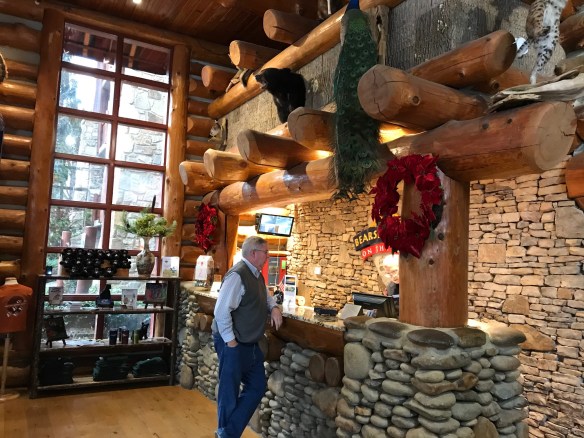
We didn’t stay in that bed and breakfast, but Jim found the very nice Bearskin Lodge. The lobby looked like this:


Our room balcony opened over a stream running over rocks.
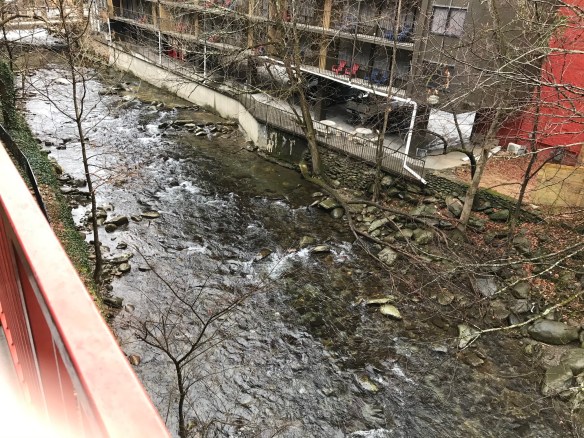
We really enjoyed the fireplace.

The rest of the room:

Very cozy!

We drove up Thursday afternoon and just chilled out in the room for a bit. We went out to dinner at The Peddler Steakhouse, right next to the hotel. The food was delicious. But the restaurant was very crowded and noisy. We felt really rushed. Jim asked the waitress about getting an appetizer, and she said she’d be back to see what he wanted, but she never did come back til after we got our meal. The lady refilling the salad bar elbowed me and others to get where she needed to go. Our silverware had bits of food stuck on. Altogether it was not the best experience, sad not only because it was for our anniversary, but also because this is a pricey place.

By the time they asked if we wanted dessert, we just wanted to go. Plus they didn’t have any dessert we wanted. There didn’t seem to be any coffee shops or dessert places nearby, so we stopped across the street at Old Dad’s General Store. Jim got a Nutty Buddy ice cream cone and I got a peanut butter cookie. Then we went back to the room and watched the Vols win the Gator Bowl (Yay!).

But before that, when we drove back to the lodge, Jim pulled out a couple of boxes from the car that I hadn’t noticed before. He said he had an activity in mind. I was intrigued!
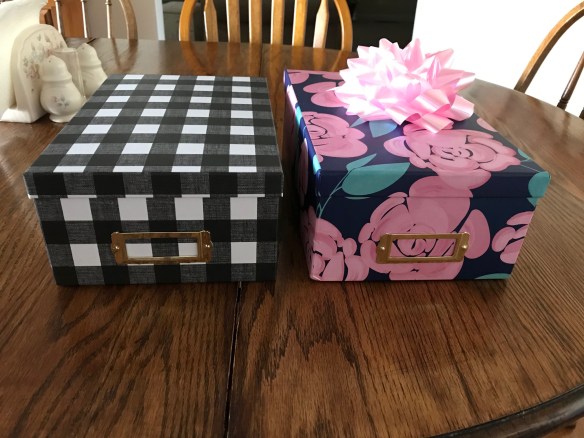
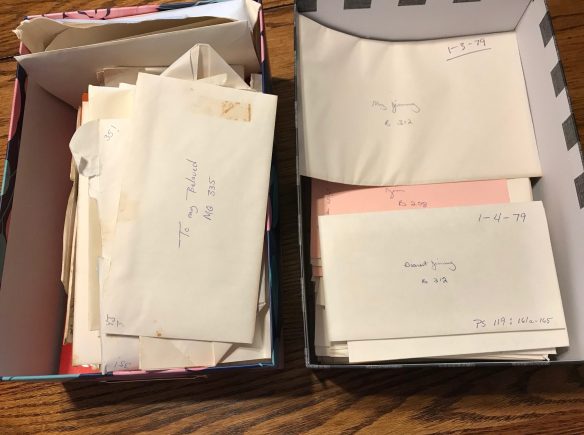
When we got settled back in our room, he let me open the boxes. He had filled them with notes we had written each other when we were dating. Our college, in the days before cell phones or even phones in the rooms, had a note system whereby guys and girls could send notes to each others’ dorm rooms. Every dorm lobby had a box with slots for the other dorms, and we’d deposit our notes there. Then several of the guys would run the boxes around to each of the dorms and deliver the mail to the lobby. That was the primary way guys asked girls out for dates then. For dating couples, it was a nice way to say good-night and make arrangements for the next day (when to meet for lunch, etc.). We dated for two years, so nine months of nightly notes times two years … would be a lot! Jim said he didn’t gather all the notes. just as many as would fit in the boxes. Some time we need to sort through them. That night we took turns reading several of them out loud to each other. Such memories! It was funny how many of them started out saying we didn’t have time to write much because we had tests or projects due, but then we’d go on for two pages. I have to say, I was very impressed that he thought of doing this!
We got a surprise when we went to take showers the next morning. The water was cold even after running it for a long time. I was up first, and thought perhaps the hot and cold were reversed (that’s happened in some places). So I turned the dial to the right, but that took it from cold to icy cold. I turned it back to the left and tried to decide what to do. I didn’t want to mess with going to another room at that point, and didn’t know if perhaps the whole hotel was having a problem. I decided to step in, away from the shower head, and just try to do a quick sponge bath. By the time I was done, the water was lukewarm enough that I could stand under it and rinse. Jim had the same experience a half-hour or so later. When he went down to the desk to mention it, he was told they have a boiler that starts up on the fifth floor (we were on the third). They said it just takes a while to work its way down, so we just have to run the water in the sink and shower until it warmed up. Well, that would have been nice to know! And I can’t fathom wasting all that water. I imagine later on, when more people are up and showering, the water is circulating better and warmer. At least I hope so. That was our only complaint about the lodge.

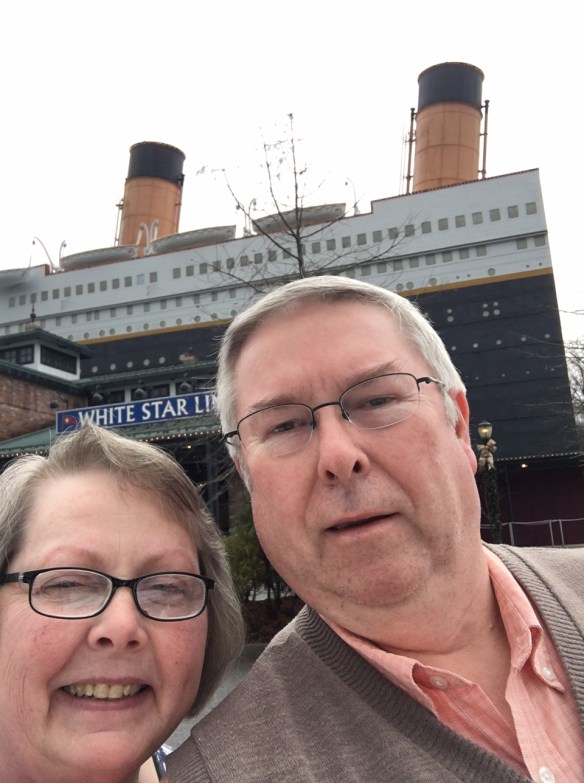
We ate breakfast and then rested in the room for a bit. Then we went to see the Titanic Museum.
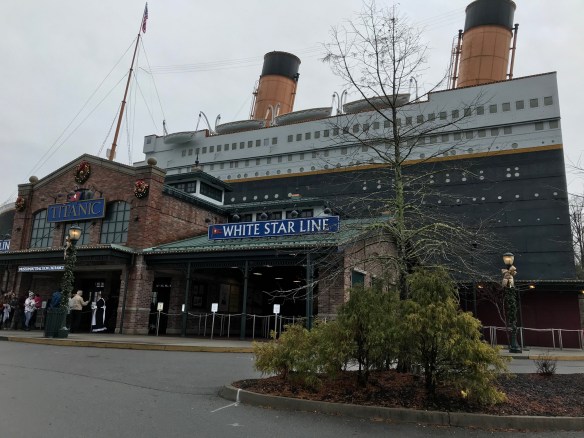
We had passed this several times on our way to other attractions in previous years, and I always wanted to stop in some day.

You might be able to tell in the picture that the lady letting us in was dressed as a crew member would have been back in the day. All the employees were.

When you first enter, they give you a boarding pass that has the name and information of one of the passengers or crew that were actually aboard the Titanic.
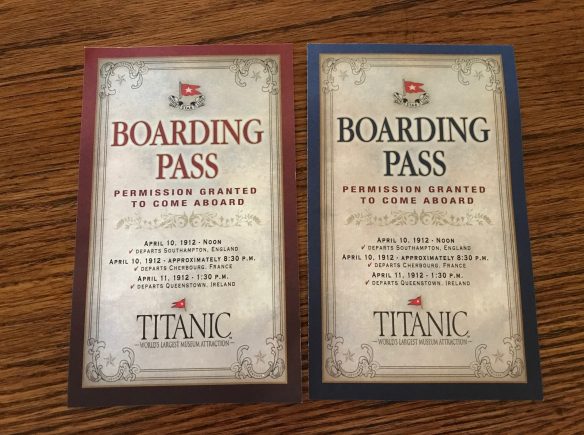
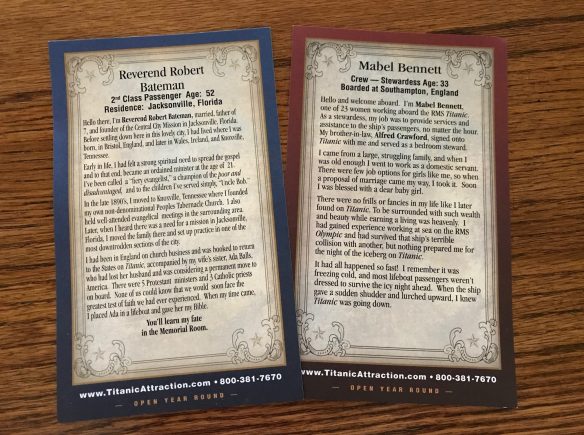
Unfortunately, they don’t allow photos inside the museum. They give you an audio device when you come in, and at certain sections you can push a button to listen to more information. But we never did. They had a different button for children to hear something they might be interested in.

They had several rooms, one dedicated to the man who drew up the plans, another to the man who took most of the pre-sail photographs, etc. There were artifacts like life jackets, a piece of railing, letters. One of the most interesting parts to me was a big cross-section. A panel in front told about the different areas, and you could push a button to see that area light up.

I read that the entire museum was built to half-scale. They built the grand staircase exactly to scale as well as a really small (by our standards) room.

I found it interesting that they gave a good amount of space to the “spiritual heroes” of the Titanic. The man on Jim’s boarding pass was one. Another was John Harper, subject of The Titanic’s Last Hero. He was known for asking everyone his bit of flotsam floated to whether they were ready for eternity and quoting Acts 16:31: “Believe in the Lord Jesus, and you will be saved, you and your household.” I read the book years ago but need to do so again some time. We wondered if we were related to him. I’d like to think so.

At the end they had some photos and information about the effort to explore and recover as much of the Titanic as they could.

They also had a Lego replica of the Titanic built by a a 14 year-old autistic boy over eleven months. It’s 26 by 5 feet and used 56,000 Legos, quite a fete.

There was a very small area for children. We thought it a little weird that the had a child-sized ship’s steering wheel with a screen in front of it so kids could see if they could miss the iceberg.

I never saw the Titanic movie, but I think lots of things in the gift shop might have been inspired by the movie.

I’m glad we went. We had often discussed whether we should do so as a family or just the two of us. I don’t think Timothy would have gotten much out of it—maybe when he’s older and learning about it, he might be interested then.
When we got done there, we looked for a place to eat. One funny instance of my brain not working right: every time I looked up restaurants or attractions on Google maps, it showed them being 4. something miles away. I thought that was so odd. As we searched for a place to eat on our phones, I found the Applewood Farmhouse Restaurant. That place is a favorite for me. We’ve eaten there several times before, and it has special memories because once when my mom, step-dad, and siblings were visiting, we met my aunt and uncle there. I mentioned it to Jim but noted that it was 4.5 miles away. He said his phone only showed it at only .04 miles away. I looked again—and realized that all this time, I had been looking at the star ratings, thinking that was mileage. Duh!

But we were delighted it was so close. We had a great meal there, and they have some little shops and a bakery as well. It had been too wet and cold to walk around the shops at Gatlinburg, so this finished off our visit just right.

One nice thing about going on a trip like this is that’s one of the few times I feel officially “off.” No cooking, no dishes to wash, someone else picks up the wet towels and makes the bed. So it was a nice little vacation for me, especially after the fun busyness of Christmas.

But mostly it was special just to go out and spend some time alone together doing something different and fun.

(Sharing with Global Blogging, Hearth and Soul, Senior Salon, Happy Now, InstaEncouragement, Worth Beyond Rubies)

Cards Made in December

I’ve written end-of-month posts this year, but I didn’t for December. There just wasn’t time, plus I figured most of us were doing the same things: getting ready for and then celebrating Christmas.

One thing I mention in those end-of-month posts is the books I read. Most of December’s reading was for the Literary Christmas challenge: one Christmas novel and three collections of Christmas stories or novellas. But I also finished up The Gilded Age by Mark Twain and Charles Dudley Warner and Shakespeare’s King Lear, both audiobooks, to complete the Back to the Classics Reading Challenge. Plus I finished the devotional book I had been reading all year, Seasons of the Heart.

At the end of the month I also share any cards I’ve made that month. December was a busy month for card-making.

This one was for my husband for our 40th anniversary. It’s supposed to look like a bouquet of balloons. It didn’t come out quite as I had hoped, but my husband liked it.

I buy Christmas cards to mail out, but I make cards for the immediate family. Only once before have I had a theme in making Christmas cards, and that was snow people. This year, as I looked at the design ideas I had accumulated on Pinterest, I saw several that looked like ornaments. So I decided to use that idea. I had a Cuttlebug embosser that looked like a fir tree, so I used that for all of the backgrounds.

The design I used for Jim’s and Jeremy’s came from a free pattern I used for felt ornaments for Timothy a few years ago. I just loved both of these designs and was glad to have a chance to use them again.

Jim’s:

I used this for Jeremy because he likes foxes, but this ended up looking more like a dog. I could not find a single rust-colored paper or card stock in Hobby Lobby or my own collection. I’ll have to stock up next fall.

I think Jason likes designs that are a little playful, so this one seemed perfect. I used stick-on felt for the snowman and card stock for the bird. The eyes and smile were stick-on beads.

Mittu likes purple, and one of their Christmas trees was white, so this seemed like a good combination for her. I cut strips from various pieces of scrapbooking paper and glued them side by side for the design.

The snow people on Timothy’s were made with stickers. I was delighted to find some that represented their family.

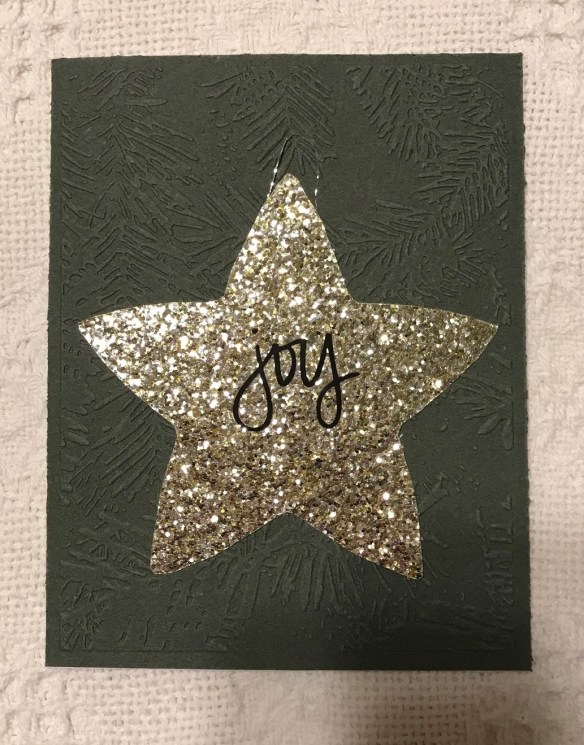
And this is Jesse’s, cut from a piece of glittery cardstock. The word is a sticker.

I had thought about coming back and adding a word at the top of each card, but there just wasn’t time.

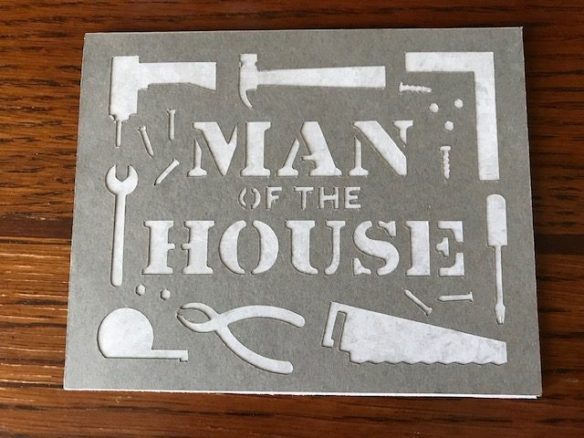
Finally, this card was for my step-father’s after-Christmas birthday. The design was all done on the Cricut.

So that was my month in card-making! It was a busy one. But there are none to be made in January, so I’ll have a bit of a rest before February’s Valentine cards.

(Sharing with Create, Bake, Grow, Gather)

You don’t have to choose a word for the year

If you read many blogs, you’ll find a lot of people writing about a word they’ve chosen for the year. I don’t know how long this has been a thing, but I’ve been reading about it for several years now.

For many, choosing a word for the year replaces a list of resolutions. That one word gives them focus for the year. Christians who do this usually pray about it leading up to the new year and feel this word has been given them or impressed on them by God. They often plan their Bible study around their word.

Many share that this emphasis has been a great blessing to them. Some have been amazed at how God intersects their study and circumstances around their word. Some, like my friend Lisa, purposefully read several books involving their word over the course of a year. Others, like Crystal, plan activities to incorporate their word.

But perhaps you’ve never felt led to choose a word for the year and you wonder if you’re missing out. Or perhaps you’ve chosen one in the past but, like a soon-forgotten New Year’s resolution, it faded out of memory.

I just want to assure you of a few truths.

God never tells anyone in the Bible to choose a word, a theme, or even a verse for the year. That doesn’t mean the practice is wrong. It’s just one method of focus and of studying and applying God’s Word.

God may lay on your heart to study a certain topic, truth, characteristic, etc. from the Bible, and that may or may not coincide with January 1 and may or may not last a year.

Psalm 119:105 says “Your word is a lamp to my feet and a light to my path.” Commentary I’ve read for that verse said that with the lighting they had in Bible times, they could only see a step or two ahead. God may well prepare you for something that only He knows is ahead through a word for the year. But often you don’t have that much notice. God’s guidance and provision is often moment by moment, day by day.

What’s more vital than a word for the year is daily seeking God in His Word.

I’ve never felt led to choose a word for the year. I’ve often said that God usually has more to say to me than one word. And, to be fair, those who choose a word for the year don’t claim that’s the only thing God wants them to deal with. They do read other books and other parts of God’s Word as well.

A topical Bible study on a certain word or concept can be highly valuable. But we also need the daily reading of Bible passages in context. Drew Hunter says:

If you received a three-page letter from a distant friend, you wouldn’t just read page 2. You could spend all day “studying” that page, but until you read pages 1 and 3, you will not fully (or perhaps even rightly) understand your friend’s message.

The human authors of the Bible organized their books intentionally. So, we step back and think through the author’s flow of thought. Studying the Bible involves thinking paragraph-by-paragraph, section-by-section, and seeing how everything fits into the overall structure and flow of the book.

We need the panoramic lens to take in the beauty and wonder of the big picture of God’s Word. We also need the macro lens for close-ups, for camping out with a verse at a time and mining its truths. Tim Challies calls these reading for familiarity (reading longer passages in a sitting) or intimacy (slowing down and meditating on or studying shorter passages) and says we need both approaches. Kelly Collier calls these two methods plow work (which “moves through large portions of Scripture more quickly,” like reading the Bible in a year or two) and trowel work (“taking a passage or verse of Scripture and settling in to dig for a long time,” like inductive Bible Study).

Choosing a word for the year shouldn’t replace contextual Bible study.

There are many who choose and study a word for the year and employ both these other methods of studying the Bible in context. That’s ideal. For some, the word for the year is their close-up, slowed-down study. That’s fine.

While many people find great value in choosing a word for the year, those who don’t use that method shouldn’t feel they’re missing out or somehow not as spiritual.

Jesus said, “Man shall not live by bread alone, but by every word that comes from the mouth of God” (Matthew 4:4). Let’s be faithful to partake of that bread every day.

Morning by morning he awakens; he awakens my ear to hear as those who are taught (Isaiah 50:4).

Your words were found, and I ate them, and your words became to me a joy and the delight of my heart, for I am called by your name, O LORD, God of hosts.  (Jeremiah 15:16)

____________________________________________

(Sharing with Inspire Me Monday, Global Blogging, BOSS Blog Share, Hearth and Soul, Happy Now, Tell His Story, InstaEncouragement, Anchored Abode,
Recharge Wednesday, Worth Beyond Rubies, Share a Link Wednesday,
Let’s Have Coffee, HeartEncouragement, Grace and Truth, Faith on Fire)