Unknown's avatar

About Barbara Harper

https://barbarah.wordpress.com

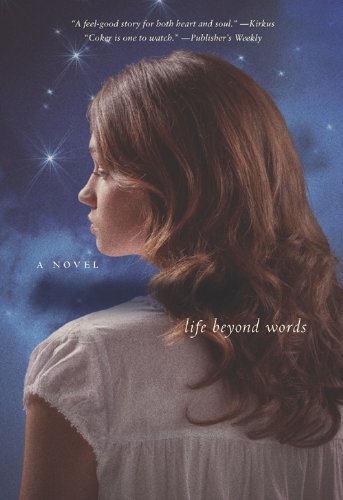
Book Review: Interrupted: A Life Beyond Words

In Rachel Coker’s debut novel, Interrupted: A Life Beyond Words, teenager Allie Everly takes care of her mother in the late 1930s. Suffering from a brain tumor, Allie’s mother’s behavior and memory become increasingly erratic.

After her mother passes away, Allie is uprooted and sent miles away from home to be adopted by a single woman named Beatrice. Resentful and bitter, Allie can’t allow herself to accept Beatrice’s love. She closes people out and barely accepts a friendship with bright bubbly classmate Charlie (a girl). When her childhood friend, Sam, shows up, Allie keeps him at arms length.

Allie’s mother had not believed in God, had even told Allie not to trust Christians. Beatrice assures her that:

Faith isn’t about superstition or leaning on others because you haven’t got any … guts. It takes guts to believe sometimes. To know that even when things don’t look like they’re going well, God is still there and he’s still guiding you. Faith like that—the faith to trust Christ enough to take the place for your sins and take control of your life. Faith like that takes all the guts in the world. And it’s worth it.

This was such a good story. I loved Sam and Beatrice’s patience and Allie’s slow dawning that life might be different, good, even. I enjoyed the lines from Emily Dickinson at the beginning of each chapter.

Most astonishing of all is that Rachel wrote this and one other book when she was a home school student. She did a marvelous job. But it doesn’t look like she has written anything since these books in 2012, unless perhaps she has started using a pen name. I hope she is still writing, or comes back to it, because she has great talent.

(Sharing with Carole’s Books You Loved, Booknificent)


Book Review: None Like Him

The subtitle of None Like Him by Jen Wilkin is 10 Ways God is Different From Us (and Why That’s a Good Thing).

God has some attributes that we’re supposed to emulate: kindness, love, compassion, etc. He possesses those characteristics in perfection. We never will this side of heaven, but we should be growing in them as we read God’s Word.

Some of God’s attributes, however, are unique to Him: omnipotence (all-powerful), omniscience (all-knowing), omnipresence (everywhere at the same time), immutability (unchangeableness), eternality, etc. Jen devotes one chapter each to these and five more characteristics of God. A subject like this could easily be filled with ivory-tower theologicalese, but Jen doesn’t let it. Her treatment of God’s attributes is both understandable and practical while still invoking awe.

At first it might seem more practical to study the attributes of God that we’re supposed to grow in (and Jen’s next book, In His Image, does just that). But there’s good reason to ponder these unattainable attributes. Studying these characteristics helps us get to know our God better, contributes to our worship of Him, and reminds us of our limitations.

Wait—do we want to be reminded of our limitations? Well, we need to be. Sometimes our overreaching is due to pride. And it’s immensely restful to leave to God the things only He can do.

Our limits teach us the fear of the Lord. They are reminders that keep us from falsely believing that we can be like God. When I reach the limit of my strength, I worship the One whose strength never flags. When I reach the limit of my reason, I worship the One whose reason is beyond searching out (p. 25).

For instance, it never occurred to me before reading this book that our constant efforts to be in more than one place (with one person, on the phone with another, with one eye on the news) might be grasping for omnipresence. Subject ourselves to information overload might be reaching towards omniscience. We don’t want to stagnate: we want to keep learning and growing. But we do have limits.

No, we cannot be in more than one place at one time. When we reach for omnipresence ourselves, we guarantee that we will be fully present nowhere, spread thin, people of divided attentions, affections, efforts, and loyalties. Better to trust that these bodies which tether us to one location are good limits given by a good God. Better to marvel that, wherever we are tethered, his spirit surrounds us and fills us. Aware that he is witness to all we think, speak, and do, we learn to live circumspectly. Aware that he views his children through the lens of grace, we learn to choose frank confession over futile concealment. Aware that we cannot outrun his presence, we cease running, and abide. We learn to savor his nearness. No more virtual Twister. When we trust him as fully present everywhere, we are finally free to be fully present wherever he has placed us (pp. 104-105).

Here are just a few of the quotes I marked:

The thought that there might be a way to cast off at least some of these perpetual needs for perpetual needlessness is an enticing one, indeed. Take, for example, our current cultural obsession with caffeinated drinks as evidence of our desire to be sleep-optional creatures (p. 58).

Sanctification is the process of learning increasing dependency, not autonomy (p. 63).

Like Samson, when we view a particular strength as the product of our obedience to God, we will use that strength to serve ourselves rather than to serve God and others. All strength, whether physical, emotional, or intellectual, can be used either to serve or to self-elevate (p. 127).

The truth of God’s limitless power would be absolutely terrifying were it not paired with the truth of his limitless goodness (p. 135).

Our primary problem as Christian women is not that we lack self-worth, not that we lack a sense of significance. It’s that we lack awe (p. 154).

We too often approach the Bible in a self-serving way: we want to be comforted, affirmed, or assured in some way. The Bible does minister to us, but we need to approach it to learn about God.

God is incomprehensible. This does not mean he is unknowable, but that he is unable to be fully known. It is the joyful duty, the delightful task of his children to spend their lives, both this one and the next, discovering who he is. According to Jesus, knowing God is the fundamental aim of life: “And this is eternal life, that they know you the only true God, and Jesus Christ whom you have sent” (John 17:3). We take pleasure in working to grow in our knowledge of him (p. 33).

Meditating on His attributes leads us to worship and increases our faith. The more we know Him, the more we love Him, the more we trust Him.

My meditation of him shall be sweet: I will be glad in the LORD (Psalm 104:34).

(Sharing with Senior Salon, InstaEncouragament,
Carole’s Books You Loved, Booknificent)

Mason Is in Heaven

Precious to God is the death of His saintsA few times here on the blog, I’ve asked you to pray for Mason, a little boy battling leukemia. Mason had just turned seven a few days ago. He was the grandson of a former pastor. He’d had leukemia, which had gone into remission. But then it came back. Mason battled hard, but finally went to be with the Lord a few days ago.

His family is rejoicing that Mason is now free from pain and with Jesus. But while there are no tears or sorrow in heaven, there are still plenty here. This sweet family has kept their eyes on the Lord through all the high and low points of this journey, but they have really been through the mill. If you think of them, I’m sure they could use prayer for grace and healing. They have two younger children.

While dealing with the death of any loved one is difficult, it hits especially hard when a child has died. His loved ones lose not only his presence, but the potential of all that could have been and the milestones that will be missed. We naturally feel that our children and grandchildren will outlive us, and it’s jarring when they don’t.

One thing that the death of one so young teaches us is that we’re not promised 80+ years. We don’t know the days God has appointed to us. May we not only live our days to their fullest as Mason did, but be ready to meet Jesus at any time.

And a young one’s home-going also reminds us that even a life of seven years can have an impact for eternity. As I have followed updates on the family’s Facebook page for Mason and read just a handful of the comments, it’s been clear that God has been moving in hearts.

Once when one of the children that Amy Carmichael was Amma (Mother) to passed away at the orphanage Amy established in India, she was comforted by something Samuel Rutherford had written to a grieving mother some 200 years earlier:

You have lost a child. Nay, she is not lost to you who is found to Christ; she is not sent away but only sent before, like unto a star which going out of our sight doth not die and vanish, but shineth in another hemisphere: you see her not, yet she doth shine in another country.


If her glass was but a short hour, what she wanteth of time that hath she gotten in Eternity; and you have to rejoice that you have now some treasure laid up in heaven…Your daughter was a part of yourself, and you, being as it were cut and halved, will indeed be grieved; but you have to rejoice that when a part of you is on earth, a great part of you is glorified in heaven…There is less of you out of heaven that the child is there. (Frank Houghton, Amy Carmichael of Dohnavur)

“What she wanteth of time that hath she gotten in Eternity.” Mason and little ones like him  have a head start in heaven.

My heart aches for the family, and I pray that God’s merciful kindness will be for their comfort, according to His word (Psalm 119:76).

Father, I desire that they also, whom you have given me, may be with me where I am, to see my glory that you have given me because you loved me before the foundation of the world. John 17:24.

(Sharing with Grace and Truth)

Dwelling Richly

Letting God's Word dwell richlyHave you ever wondered what Colossians 3:16 meant when it said, “Let the word of Christ dwell in you richly”?

A couple of translations and one commentary connected “rich” to the “Word of Christ,” indicating that God’s Word is rich, and we should let it dwell in us. It is, and we should.

However, most translations phrase the verse so that “richly” modifies “dwell.” In fact, according to the definitions at the bottom of this page, the Greek word translated “richly” is an adverb meaning “Richly, abundantly, copiously.”

So how do we let God’s Word dwell “richly, abundantly, copiously” in us?

One former pastor put it this way. When a guest of honor comes to your home, what do you do? You “roll out the red carpet” for them. You give them the best bed, the best room. You bring out the guest towels and dishes that you save for company. You make your best recipes. You generally set aside your normal pursuits to some degree to spend time with that person.

In these days of more casual entertaining, you might not have special dishes or towels for guests, and you might have everyone work together on the meal and the clean-up. Still, you make some accommodations for a guest. You don’t generally put them in a drafty back room with a lumpy mattress where the Wifi doesn’t reach. You don’t invite someone over and then ignore them. You don’t go about your business and then bump into them in the hallway and act surprised: “Oh! I didn’t know you were here. Carry on.” Well, you might if one of your children’s friends came over unexpectedly.

What do most who come to your home value? Time, the hardest thing to give. As lovely as special table settings, wonderful food, and a well-appointed guest room are, they all fall a little flat if the hostess is constantly flitting about taking care of details. As Martha learned, Jesus cared more about her time, attention, and open heart than what was on the menu.

So how do we let the Word of God dwell richly with us? First of all, notice the word “dwell.” The Bible isn’t just a special guest who comes to visit once a year. It stays, lives in, abides in, inhabits us. Jesus spoke of His words abiding in us. God often tells people in the Bible to meditate, think over, chew on, His Word. You can’t think on what you don’t know. That meant they had to have read or heard it enough to mull over a piece of it at a time.

So we don’t treat God’s Word as a once- or twice-a-year visitor. We let it abide, dwell with us. That involves spending time with it. As we’ve discussed before, that doesn’t necessarily mean spending hours a day reading and studying it. Some days and seasons of life allow for more time than others, but we try to give it some time most days. We try to give it the best time of our day when we can get the most out of it rather than the leftovers of our day. One of my mottoes regarding the Bible is any time spent with it is better than nothing. So there may be busy, weary days when we fit it in whatever spare moments we can find. But as much as we can, we make room and time for the Bible.

And then, throughout the day, we think about it. That might involve listening to Christian music, sermons, Christian radio or podcasts. Or it might involve just thinking. John O’Malley suggests in Overcoming Your Devotional Obstacles that we jot down on a 3 x 5 card something that stood out to us during our Bible reading, and then set the card where we can see it through the day and think over it.Some people have memory verse cards they’ll go over when their hands are busy but their minds are free.

Many mental health experts recommend getting away from the constant barrage of information available through our phones and computers, especially when so many agitated opinions are flung about. Instead of automatically checking our phones, we could spend those minutes reading the Bible or thinking about what we read earlier.

Psalm 1:1 says “Blessed is the man who walks not in the counsel of the wicked, nor stands in the way of sinners, nor sits in the seat of scoffers; but his delight is in the law of the Lord, and on his law he meditates day and night.” Paul told Timothy in 2 Timothy 2:7: “Think over what I say, for the Lord will give you understanding in everything.”

What’s the result of this rich dwelling we give God’s Word? Colossians 3:16 continues: “ Let the word of Christ dwell in you richly, teaching and admonishing one another in all wisdom, singing psalms and hymns and spiritual songs, with thankfulness in your hearts to God.” When we fill up on God’s Word, we spill over into serving others and worshiping God. Psalm 1 goes on to say that the one who meditates on God’s Word day and night is “like a tree planted by streams of water that yields its fruit in its season, and its leaf does not wither.” When we’re filled with God’s Word, we have a continual source of nourishment.

If our service seems lifeless and forced, our worship barren, our inner spirit dry and withered, we probably need some time letting God’s Word dwell richly in us.

What are some ways you let God’s Word dwell richly with you?

(Sharing with Inspire Me Monday, Hearth and Home, Global Blogging,
Senior Salon, Purposeful Faith, InstaEncouragement,
Recharge Wednesday, W2W Share a Link Wednesdays,
Let’s Have Coffee, Heart Encouragement, Grace and Truth,
Blogger Voices Network)


Friday’s Fave Five

I was so sorry to miss last week’s FFF! It was just a busy few days, with very little time at the computer. But I’m glad to join Susanne and friends today to ponder and share some of the good parts of the week.

And this week, there is an abundance!

1. Jason and Mittu’s anniversary. It was fun to remember everything involved with wedding week and to rejoice in their good marriage. I didn’t think we’d see them that day. We’re all still not eating at restaurants, which they would normally do for an anniversary while we watched Timothy. But I figured they’d get take-out from somewhere and eat at a favorite park or something. They did that at lunch. Then they texted asking if we had plans for dinner and could they come over and make something. I said, “On your anniversary?” Jason said, “Why not?” LOL! So he grilled lemon chicken and Mittu made the sides, then they worked together on this gluten-free apple cinnamon cake in a cast-iron pan on the grill. So pretty, and very good, too!

2. A crossed-off to-do list is a rarity. Usually whatever doesn’t get done is transferred to the next list. But I had one satisfying day when everything got done (everything on that list, at least. I have a running list of “things to get to if/when I have time” that will probably never be completed).

3. A church picnic. We’ve still been using Zoom to attend church, though the congregation has been meeting with safety measures in place. As long as cases are still on the rise, we feel we’d better stay home as much as possible. They were having an informal picnic this last Sunday on a pavilion behind the building, with everyone bringing their own lawn chairs and lunches and families seated at a distance from each other. My husband has read studies that outdoor meetings don’t have the same problems with droplets from our breath staying in the air as indoor meetings, so we decided to go. Since we decided to go just the night before, we hadn’t let anyone know we were coming. It was fun to surprise everyone and to see everyone in person. After we ate, people drew chairs closer but still distanced to the different families to talk and visit more.

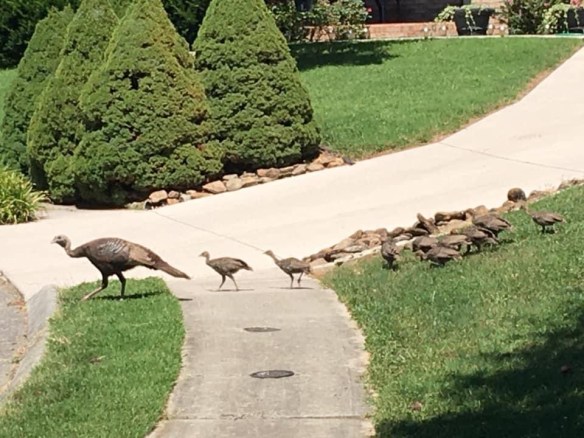
4. Unexpected visitors. When we got back home from the picnic, we saw two adult turkeys in the yard space between our house and our neighbor’s. We had never seen turkeys in the neighborhood before. My husband stopped to take pictures of them while I unpacked our cooler. When he came in, he showed me there was a whole brood of little turkeys!

I was sorry I didn’t get to see the little ones. We haven’t seen them since, so hopefully they got back to wherever they’ve been living. The neighbors across the street have a big woodsy area behind their house, so the turkeys probably live back in there. It was a fun sighting.

5. A good doctor visit. I had my annual visit with the cardiologist this week. A few weeks ago, I’d had a seven-hour episode of atrial fibrillation—the first time I’ve had anything lasting that long since the ablation a few years ago. Of course, that raised concerns that this was all going to start up again and I’d have to have another procedure. I’ve had a few little blips, where it feels like my heart is trying to turn over into afib, and the doctor said that was normal. He didn’t think this episode was anything to worry about, since it was a single occurrence in the span of a few years. He prescribed another medicine to take if I have any episodes lasting more than an hour (in addition to the metoprolol I take regularly). But the best part of the visit was that I brought a couple of readouts from a device that Jim had gotten for me that detects irregular heartbeats and gives you an EKG-looking readout. I was afraid the doctor would laugh or scoff at it, so I started out by saying, “I know this is not as accurate as what you have here…” But he thought it was a great idea to be able to capture what was going on in the moment.

Bonus 1: I’ve mentioned a little discount store Jim visits almost every week.  He brought me some of my favorite Lindt Lindor truffles in candy bar form from there.

Bonus 2:Timothy was excited about starting school again, and he and his mom had a great first day! They’re using the same online program they used for K-5 last year.

How was your week?

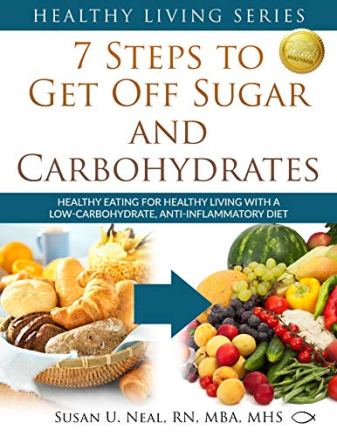
Book Review: 7 Steps to Get Off Sugar and Carbohydrates:

I had read a few blog posts by Susan Neal on some writing blogs, so I got her book: 7 Steps to Get Off Sugar and Carbohydrates: Healthy Eating for Healthy Living with a Low-Carbohydrate, Anti-Inflammatory Diet.

I confess I went into the book not planning to get off sugar completely—I mainly wanted to keep sugar consumption under better control. Plus, nutritional studies can be confusing because many of them contradict each other. For instance, it seems like one year, studies say caffeine is bad for you. Then another study another year will say it’s beneficial. And back and forth it goes. But even though I wasn’t sure what to believe about all the facts Susan shared, I knew I generally need to eat more healthy foods and less sugar and fewer carbs.

Susan goes into why sugar is so addicting. For one thing, consuming sugar releases the feel-good chemical dopamine which can lead to addiction. And probably for some people, sugar needs to be eliminated completely.

Susan also goes into why wheat causes so many problems for people today. It has been crossbred to resist drought and changed so much in the process that the body doesn’t recognize it as food. On the other hand, some people seem to eat it with no apparent problem, so perhaps some are more sensitive to it than others.

In addition,

These crops are genetically engineered to be resistant to the carcinogen glyphosate, which is the primary ingredient in the herbicide Roundup. Farmers who produce Roundup Ready crops are free to spray Roundup on their fields throughout the growing season, as the plants are resistant to this herbicide. In the United States most of the nation’s corn, wheat, oats, soy, and sugar beets are Roundup Ready crops.

My son had also found this news about Roundup in his research after his wife and son became gluten-intolerant.

Besides all that, many foods today are so processed and developed for a longer shelf life that little nutrition is left.

Susan recommends eating foods that are as close to their original form as possible and as few processed foods as possible. She acknowledges that this probably can’t be done all the time due to eating out, visiting others, and considering other family members’ choices.

Susan also deals with the spiritual side of fighting temptation to eat the wrong food by encouraging the use and memorization of Scripture and dependence on the Lord. Though we agree in many areas, I think we must come from different faith traditions, especially in the area of spiritual warfare. I wouldn’t agree with everything in this section of the book, I very much appreciated the spiritual emphasis.

Susan shares a multitude of studies, tips, facts, outside resources, and recipes.

I also read through Susan’s Christian Study Guide for 7 Steps to Get Off Sugar and Carbohydrates. It’s designed for a group study accompaniment to the original 7 Steps book, but it can also be used by individuals.

Overall, this is a good source of information and encouragement toward more healthy eating.

(Sharing with Carole’s Books You Loved)

Blind Spots

IMG_2333

My oldest son’s first car was a used convertible. When I borrowed it once for an errand, I commented to him that the car had a huge blind spot. The corner between the small plexiglass back windshield and the door window was wider than in most cars. If I looked back over my right shoulder, I could hardly see anything. My son responded, “Yeah, but if the top is down, there’s no blind spot!”

We know that vehicles have blind spots—areas where we can’t see what’s around the car. So we use mirrors, signals, and occasionally other passengers to help make sure the way is clear when we need to change lanes.

If you’ve ever read about the blind spots of an 18-wheeler, you know not to drive your car next to the truck in a spot where you can’t be seen.

But somehow we go barreling through life without thinking that we might have personal blind spots.

Our church has just finished reading through Malachi, where God brings up several different issues with His people. But their response to each charge is basically, “What are you talking about? We’re doing fine.”

God said of the Laodicean church in Revelation, “For you say, I am rich, I have prospered, and I need nothing, not realizing that you are wretched, pitiable, poor, blind, and naked” (Revelation 3:17).

You’ve probably read online conversations, as I have, where someone lashes out at others over some issue, and then complains about feeling judged. But somehow these folks miss their own judging of others that they’ve just displayed. The irony would be been funny if it wasn’t so serious.

And then, just about the time I get all stirred up about other people’s blind spots, God reminds me that I have a few of my own.

What causes blind spots?

We think we know more than we do—at least, more than the other person.

We’re too busy looking at the speck in another person’s eye to see the log in our own.

We haven’t given enough thought or prayer to a subject.

We assume we know the other person’s meaning and motives.

We haven’t studied the Bible enough to know what it says on certain issues, or we study with preconceived conclusions in mind.

We don’t want to change our views on a subject, so we don’t listen to other perspectives.

How can we combat blind spots? What tools, mirrors, assistance, or signals can help us navigate and avoid collisions?

Humility. We don’t know all there is to know on any issue. We don’t know every perspective. Sometimes we’re quick to jump on and expound upon a topic because we’ve read and studied it out before. Still, even if we’re an expert in an area, we have to be careful of appearing arrogant. And there might just be a thing or two we could still learn about it.

Ask for others’ feedback. Just as a fellow passenger can see what we can’t from their viewpoint, a friend or mentor can give us a kind but honest assessment.The first time I turned in a partial manuscript for a paid critique, I was astounded and humbled at the number of mistakes the editor discovered. The experience was a painful but necessary step to improvement.

Prayer. David prayed, “Search me, O God, and know my heart! Try me and know my thoughts! And see if there be any grievous way in me, and lead me in the way everlasting.” This is something we should be doing regularly. Jeremiah 17:9 says, “The heart is deceitful above all things, and desperately sick; who can understand it?Other versions say “desperately  wicked” or “incurable.” We’re probably deceived about ourselves more than anyone or anything else.

Listening. James 1:19 says, “Let every person be quick to hear, slow to speak, slow to anger.” If I am getting riled up about something, that’s usually a clue that I need to step back rather than launch in. And before I share what I think, I need to really hear what the other person is saying and look at it from their point of view. I still might not agree with them, but I might understand them better.

Read and listen to God’s Word. Anatomically speaking, we all have a blind spot where nerves pass through our retina. At the spot where they pass through, there are no rods or cones, so our eyes don’t see light there. The brain usually fills in what we don’t actually see. Spiritually, though, we don’t need to have any blind spots. We need God to turn His searchlight on to show us things we need to confess to Him and seek His help to overcome. If something keeps coming up in our Bible reading, books, sermons, and conversations, God might be trying to get our attention about it. Instead of being quick to brush it off, we need to take it before the Lord.

Listen to criticism and correction. Sometimes criticism is totally unfounded. But instead of getting defensive, we need to examine criticism for any truth in it. “The ear that listens to life-giving reproof will dwell among the wise” (Proverbs 15:31).

Proceed cautiously. I was extra-careful in my son’s convertible since I knew I couldn’t see traffic in one area well. Similarly, there’s a turn on our way home that’s right on top of a hill. I can’t see oncoming traffic until I get to the top, so I am careful not to turn early. Ephesians 5:15 says, “Look carefully then how you walk, not as unwise but as wise.”

I usually use a Swiffer sweeper on our hardwood floors, because it gets dust and hair more efficiently. But one day I got the broom and dust pan to sweep up some crumbs.The sunlight was streaming in the windows as I swept, and I saw a cloud of dust swirling almost chest high from my efforts. Without the light shining in, I would never have known that I was stirring up more dust than I was getting rid of.

How desperately we need God’s truth to shine in on our lives and show us what we wouldn’t otherwise see. How we need His wisdom, cleansing, and guidance.

To open their eyes, so that they may turn from darkness to light and from the power of Satan to God, that they may receive forgiveness of sins and a place among those who are sanctified by faith in me (Acts 26:18).

Clara H. Scott wrote a hymn in 1895, asking God to open her eyes, ears, mind, and heart to His truth. It’s a good prayer for us today:

Open my eyes, that I may see
Glimpses of truth Thou hast for me;
Place in my hands the wonderful key
That shall unclasp and set me free.

Refrain 1:
Silently now I wait for Thee,
Ready my God, Thy will to see,
Open my eyes, illumine me,
Spirit divine!

Open my ears, that I may hear
Voices of truth Thou sendest clear;
And while the wave notes fall on my ear,
Everything false will disappear.

Refrain 2:
Silently now I wait for Thee,
Ready my God, Thy will to see,
Open my ears, illumine me,
Spirit divine!

Open my mind, that I may read
More of Thy love in word and deed;
What shall I fear while yet Thou dost lead?
Only for light from Thee I plead.

Refrain 3:
Silently now I wait for Thee,
Ready my God, Thy will to see,
Open my mind, illumine me,
Spirit divine!

Open my mouth, and let me bear,
Gladly the warm truth everywhere;
Open my heart and let me prepare
Love with Thy children thus to share.

Refrain 4:
Silently now I wait for Thee,
Ready my God, Thy will to see,
Open my heart, illumine me,
Spirit divine!

(Sharing with Inspire Me Monday, Hearth and Home,
Global Blogging, Senior Salon, Purposeful Faith,
InstaEncouragement, Legacy Link-Up,
Let’s Have Coffee, Heart Encouragement,
Grace and Truth, Blogger Voices Network)

Late Laudable Linkage

A collection of good reading onlineI‘m sorry I missed the Friday’s Fave Fives yesterday! I know some of you especially like those posts. I just had a lot of things that had to get done the last few days, so I haven’t been at the computer for very long at a time since Thursday morning.

I was going to save the “Laudable Linkage” for next week since it’s late in the day and I haven’t even finished reading every post in my Feedly account. But I decided to go ahead and pop in and say hello and share what I have so far.

Busy Day? Keep Quiet Time Simple (Bible Study Tips), HT to Lisa. Our other relationships vary with how much time we spend together on any given day. We forget sometimes that our quiet time is about our relationship with the Lord, not just our routines.

You Keep Using That Word, HT to Challies. “If you have heard, for example, that critical theory or some other -ism is making inroads into the church and you are concerned, do some homework before saying anything. When we do not do this, the possibility of our violating the ninth commandment goes up exponentially.”

How to Pray in Perilous Times. I love that the Bible teaches us how to pray both by instruction and example. This prayer of David’s has much to consider.

Is White Fragility a Helpful Resource for Christians? I know this is a delicate and sensitive topic right now, but that’s all the more reason to think Biblically about it. I have not read this book, but I’ve had some of these same concerns just from reading others’ comments on it.

When Homeschooling Wasn’t Your Plan: 10 Tips to Help. I wish I had read something like this during the few years we homeschooled, even without a pandemic.

I saw some of this sweet story on “The Greatest #AtHome Videos” TV show on Friday night on CBS. A pregnant wife had to spend several weeks in the hospital when her water broke prematurely at 20 weeks. Her husband couldn’t be with her due to COVID restrictions. So he set up “date nights” where he would send food up to her room and have his outside her window so she could see him and they could sort-of be together. When they aired the show, she had had the baby and all was well. In their honor, the hospital was going to install a bench where this man used to set up his chair, so other patients could “visit” their loved ones that way.

Have a great rest of your weekend!

Book Review: Be Amazed

Be Amazed (Minor Prophets): Restoring an Attitude of Wonder and Worship is Warren W. Wiersbe’s commentary on Hosea, Joel, Jonah, Nahum, Habakkuk, and Malachi. He covers the rest of the twelve minor prophets in two other books. As I said in an earlier review of Be Concerned, these books are considered “minor” only because they are much shorter than the “major” prophets.

And, as with the previous book, Wiersbe gives a little background of each of these prophets, the times they lived, the kings who were in power at the time, and the prophets’ major messages and concerns, a suggested outline of the books, and his commentary.

There are commentaries much longer and more detailed than Wiersbe’s “Be” series, but these are a nice size, easy to use with one’s Bible study.

Wiersbe says in his introduction:

We should be amazed as Hosea describes God’s jealous love and Joel pictures God’s glorious kingdom. Jonah and Nahum both deal with the wicked city of Nineveh and amaze us with God’s gracious long-suffering. Habakkuk watches the enemy approaching and invites us to be amazed at God’s righteous judgment. Malachi amazes us with his revelation of God’s contemptuous people, weary of serving the Lord.

Too many sleepy saints have lost their sense of wonder. The Minor Prophets shout at us to awaken us and invite us to open our eyes and be amazed at what God is doing in this world.

The Lord Jesus admonishes us “to believe all that the prophets have spoken” (Luke 24: 25), and that includes the Minor Prophets. May we be faithful to receive and believe their messages and to obey what God tells us to do.

I won’t get into any more of the individual books than that, since there are six of them. But here are a few of the many quotes I highlighted:

One of the greatest judgments God can inflict on any people is to let them have their own way.

The essence of idolatry is enjoying the gifts but not honoring the Giver.

Until people experience the guilt of conviction, they can’t enjoy the glory of conversion.

In their trials, they turned to God for help, but in their prosperity, they became proud and turned away from God to idols.

Idols are dead substitutes for the living God (Ps. 115). Whatever people delight in other than God, whatever they are devoted to and sacrifice for, whatever they couldn’t bear to be without, is an idol and therefore under the condemnation of God.

But wrestling with these challenges is the only way for our “faith muscles” to grow. To avoid tough questions, or to settle for half-truths and superficial pat answers it to remain immature, but to face questions honestly and talk them through with the Lord is to grow in grace and in the knowledge of Christ (2 Peter 3: 18).

When God’s people deliberately disobey Him, they sin against a flood of light and an ocean of love.

The one thing that encourages us to repent and return to the Lord is the character of God. Knowing that He is indeed “gracious and compassionate, slow to anger and abounding in love” (Joel 2:13 NIV) ought to motivate us to seek His face.

This sounds eerily like our times:

Their concern was for healing and not for cleansing. They saw their nation in difficulty and wanted God to “make things right,” but they did not come with broken hearts and surrendered wills. They wanted happiness, not holiness, a change of circumstances, but not a change in character.

I’m thankful once again for Dr. Wiersbe’s insights into these books.

(Sharing with Booknificent Thursday, Carole’s Books You Loved)

Book Review: Candleford Green

Candelford Green is the third installment of the Lark Rise to Candleford series, Flora Thompson’s semi-autobiographical account of growing up in a small English village.The books take place in the 1880s and 1890s, and Flora writes as an adult looking back at simpler times and the changes that happened since.

In the first book, Lark Rise, Flora’s alter-ego, Laura, is the oldest daughter in her family, living in the small village of Lark Rise. In the next book, Over to Candleford, Laura spends a lot of time with her relatives in Candleford Green, a slightly bigger village some eight miles away.

In this third book, Candleford Green, Laura works as an assistant in the post office. Young girls often went into service as maids or mother’s helpers at this time. Laura’s mother didn’t feel she was suited for either of those jobs. But when a friend of the Candleford relatives invites Laura to help her out in the Post Office, her family agrees to let her go.

Like the first two books, there’s no real plot. The book is mostly Laura’s observations of how the people lived, worked, celebrated, decorated their homes, etc. Along the way are little vignettes of some of the individuals who make up the village.

Some of the quotes that caught my eye:

Few would care to take that trouble for the sake of a few spoonfuls of jelly in these days. . . it was thought a waste of time in many households. On the face of it, it does seem absurd to spend the inside of a week making a small jelly, and women were soon to have other uses for their time and energy, but those who did such cookery in those days looked upon it as an art, and no time or trouble was thought wasted if the result were perfection. We may call the Victorian woman ignorant, weak, clinging and vapourish—she is not here to answer such charges—but at least we must admit that she knew how to cook.

At fourteen it is intolerable to resign every claim to distinction. Her hair was soft and thick and brown and she had rather nice brown eyes and the fresh complexion of country youth, but those were her only assets in the way of good looks. ‘You’ll never be annoyed by people turning round in the street to have another look at you,’ her mother had often told her, and sometimes, if Laura looked dashed, she would add: ‘But that cuts both ways: if you’re no beauty, be thankful you’re not a freak.’

And she had her own personal experiences: her moments of ecstasy in the contemplation of beauty; her periods of religious doubt and hours of religious faith; her bitter disillusionments on finding some people were not what she had thought them, and her stings of conscience over her own shortcomings. She grieved often for the sorrows of others and sometimes for her own.

‘You’ve got to summer and winter a man before you can pretend to know him’ was an old country maxim much quoted at that time.

This about two single women taking care of elderly parents while trying to run a shop:

No wonder the Pratt girls looked, as some people said, as if they had the weight of the world on their shoulders. They must in reality have carried a biggish burden of trouble, and if they tried to hide it with a show of high spirits and simpering smiles, plus a little harmless pretension, that should have been put down to their credit. Human nature being what it is, their shifts and pretences only served to provoke a little mild amusement.

The new vicar, according to Laura, didn’t mention heaven or hell or sin or repentance, but his sermons made “you feel two inches taller.” The people were what I’d call God-fearing in a general sense, but it doesn’t sound like the gospel was proclaimed except for one or two of the townspeople.

I found the first book sometimes hard to wade through. I didn’t have any problems with the last two: maybe I grew more used to Thompson’s style.

Nowadays, the books are usually packaged together under one title, Lark Rise to Candleford. My copy looks like the one here.

I hope to be able to watch the series, Lark Rise to Candleford. I know some things will be different. Laura is just a teenager in this last book and younger than that in the first two books. Dorcas, the postmistress, doesn’t appear until halfway through the second book, but I understand she’s there at the beginning of the series.

Overall, these were pleasant reads. I’m glad to finally be acquainted with Laura and the villagers.

(Sharing with Booknificent Thursday Carole’s Books You Loved)