Unknown's avatar

About Barbara Harper

https://barbarah.wordpress.com

Review: An Ocean of Grace

Ocean of Grace

Tim Chester collected collected thoughtful writings about Christ’s death and resurrection and edited them into An Ocean of Grace: A Journey to Easter with Great Voices of the Past.

Some of the selections are from familiar pens: Augustine, Martin Luther, and Charles Spurgeon. Others are more obscure: Cyril of Alexander from the fifth century, Gregory of Myssa from the fourth, Cyprian of the third, and many others. I was delighted to see a piece by Anne Steele, an eighteenth-century female hymn writer. And I was surprised to see a selection from Catherine Parr, Henry VIII’s last wife, leading me to read a little more about her online. I think Spurgeon is the most recent of the authors included.

These selections are divided into daily readings from Ash Wednesday to Easter. They are grouped into themes for each week: The Light of Love, The Welcome of Grace, The Exchange of Places; The Assurance of Faith, The Gift of Christ, and The Victory of God.

In his introduction, Chester says he removed archaic language except for poetry and hymns while trying to retain the “voice” of the original authors. He also says many “descriptions have been turned into a prayer addressed to God or an exhortation addressed to our own souls.” He doesn’t say why, but he also turned what I think were prose selections into a free-verse style of poetry. I wish he had kept the selections closer to the originals–but then maybe I wouldn’t think so if I read the originals.

I began reading this book late in the season due to finishing a previous study. Because of that, and because the selections were fairly short, I read two or three a day. I think that may have lessened the impact of them. If I read this book again, I’ll plan to read one a day as the author intended.

Nevertheless, I did receive much food for thought and warmth for heart by reading this book. I have many places marked, but I will try not to overwhelm you with quotes.

In an excerpt from Catherine Parr’s The Lamentations of a Sinner, she spends several lines listing her sins and Christ’s merits. She concludes:

Shall I fall in desperation?
No, I will call upon Christ,
 the Light of the world,
  the Fountain of life,
   the relief of all careful consciences,
    the Peacemaker between God and man,
     and the only health and comfort of all true repentant sinners.

By his almighty power he can save me
and deliver me out of this miserable state.
For this is the life everlasting, O Lord,
 to believe you to be the true God,
 and him whom you sent, Jesus Christ.
By this faith I am assured,
and by this assurance I feel the forgiveness of my sins:
 this is what gives me confidence,
 this is what comforts me,
 this is what quenches all despair (p. 10).

This line of Puritan Stephen Charnock’s “A Discourse of the Knowledge of Christ Crucified” stood out to me: “May all the charms of sin be overcome by this ravishing love” (p. 27). He goes on to say:

How can we, with thoughts of the cross alive in our hearts, sin against so much tenderness, compassion and grace, and all the other perfections of you, our God, which sound so loud in our ears from the cross of Jesus? Shall we consider him hanging there to deliver us from hell and stain, and retain any desire to walk in the way which led him there? Can we take any pleasure in that which caused so much pain for our best friend? Can we love that which brought a curse better than him who bore the curse for us?” (pp. 26-27. I put this in paragraph form just to save time formatting).

This from Isaac Ambrose also stood out to me: “Surely his death is more satisfactory to God than all your sins can possibly be displeasing to God” (p. 94).

This was from Thomas Watson: “We cannot lift up Christ higher in heaven, but we may lift up him in our hearts. So let us believe him, adore him and love him, and exalt him in our lives, for all the doxologies and prayers in the world do not exalt Christ as much as a holy life” (p. 132).

I loved this closing poem from Henry Vaughan titled “Easter Hymn”:

Death, and darkness get you packing,
Nothing now to man is lacking,
All your triumphs now are ended,
And what Adam marred, is mended;
Graves are beds now for the weary,
Death a nap, to wake more merry;
Youth now, full of pious duty,
Seeks in thee for perfect beauty;
The weak and aged tired, with length
Of days, from thee look for new strength;
And infants with thy pangs contest
As pleasant, as if with the breast.
Then, unto him, who thus hath thrown
Even to contempt thy kingdom down,
And by his blood did us advance
Unto his own inheritance,
To him be glory, power, praise,
From this, unto the last of days! (p. 154).

I had a couple of formatting complaints in the book. Chester writes verse references as, for example, Isaiah 61 v 10 rather than Isaiah 61:10. The latter has been used for centuries. I have never seen the former except in Chester’s books. I wondered if perhaps it’s done that way in the UK, but I have read several books from authors from various countries without having seen this way of writing Bible references. I Googled “how to write Bible verse references” just to see if this is a new style, and I didn’t see it mentioned in any source I looked at. It’s not a big deal in the grand scheme of things. It’s more a commentary on my heart to say it irritated me. But I tried to overlook it

The other complaint is not unique to Mr. Chester, but is to all the books I have from The Good Book Company. They put the table of contents in the back of the book rather than in the front after the title page. That doesn’t make sense to me. I use the Table of Contents to look at where a book is going, not where it has been. When I am considering a new book, I look at the front cover, the back cover, the description, the table of contents, and the first few paragraphs or pages. If I look at a sample on Amazon, they usually only include the first several pages. If the Table of Contents is in the back, I am not able to see it in the sample.

I also wish Chester had listed the titles of all the readings in the Table of Contents rather than just the main section headings.

Again, these are minor issues compared to the content of the book.

There were just two or three places where I put a question mark or didn’t quite agree with how something was worded. But overall, I enjoyed this book and plan to use it again for Lenten reading in the future.

(I often link up with some of these bloggers.)

Hebrews for You

Hebrews for You

Most New Testament epistles begin with who wrote the letter and who the audience is. The author of Hebrews does neither. He appears to be someone familiar with the apostles’ teaching. He might even have been an apostle himself. He references the Old Testament. and seems to assume his audience would be familiar with it. Thus we believe he’s writing primarily to Jewish Christians. Many were undergoing persecution for their belief in Jesus and the prophesied Messiah. Some felt maybe they should go back to the Jewish traditions they had been taught.

The main theme of the book is that Jesus is better: better than angels, better than Moses, better than God’s previous revelations. His priesthood, according to the line of Melchizedek Psalm 110:4), is better because it’s eternal. His sacrifice is better because He only had to offer it once; He didn’t have to offer sacrifices for His own sin because He didn’t have any sin.

There are stern warnings at the end of each section–warnings against apostasy, against failing to enter God’s rest.

Probably most people who know anything about Hebrews are familiar with the “hall of faith” in Hebrews 11: the detailed list of people in the Bible who did follow Jesus in faith. They weren’t perfect; some on the list are a surprise. They are an encouragement to us to keep following.

This chapter also tells us, “And without faith it is impossible to please him, for whoever would draw near to God must believe that he exists and that he rewards those who seek him” (verse 6).

Chapter 12 urges readers to endure God’s discipline as a loving father and reminds us of the coming kingdom that cannot be shaken. Chapter 13 ends with practical instructions and applications.

One of my favorite verses in the book comes near the end in chapter 13, verses 20-21: “Now may the God of peace who brought again from the dead our Lord Jesus, the great shepherd of the sheep, by the blood of the eternal covenant, equip you with everything good that you may do his will, working in us that which is pleasing in his sight, through Jesus Christ, to whom be glory forever and ever. Amen.” What a magnificent prayer that we can pray today.

Even though the first audience was Jewish, we Gentiles benefit from reading the book today. The truth it contains is applicable to all. We’re spiritual children of Abraham by faith (Galatians 3:7-9) and we’ve been grafted in (Romans 11). We don’t replace Israel. But we’re part of God’s family. So all this truth pertains to us, too.

If you’ve read through the first five books of the Bible, especially if you’ve gotten lost in Leviticus, reading Hebrews will really help in understanding.

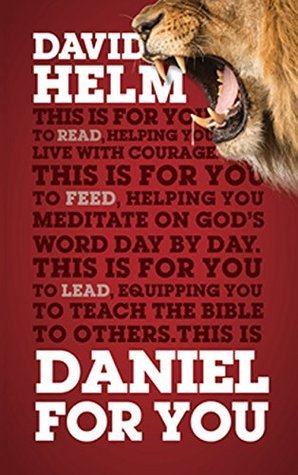
Our ladies’ Bible study has been reading Hebrews this semester using Michael Kruger’s book, Hebrews for You: Giving You an Anchor for Your Soul as an aid. I appreciated the author’s thoughtful insights as he went verse by verse through the book.

Some of the quotes I marked:

The old covenant was not false or wrong. But it was provisional and partial. “The law has but a shadow of the good things to come instead of the true form of these realities [Hebrews 10:1]” (p. 136).

Since God’s word is empowered by the Holy Spirit, when we encounter the word, we encounter God. It is through God’s word that we meet him, learn from him, and have fellowship with him (p. 61).

The word of God is not just a way to get to know God but also a way to get to know yourself. When you read the Bible and let it penetrate your heart, you will see things about yourself that you never saw before. You will see your real intentions, your real motives, and your real character. This is a good thing because there is rot and mildew built up in our hearts which need to be exposed (p. 65).

People in our world today sometimes embrace doubt and uncertainty as things worth striving for in themselves; Christians, by contrast, believe that there are certainties, even though we may find it difficult to hold on to them. So, when we have those struggles with doubt, we fight them. We look for reassurance from God (p. 164).

God does not promise that if we follow him we will have health and wealth—becoming successful or rich. There is a sad trend in evangelicalism today of teachers claiming that if you follow God it will make your life better in earthly ways. Of course, it is better to follow Jesus; but that does not mean bigger bank accounts or more popularity. This is not your best life now (p. 190).

Hebrews has some difficult passages, but Kruger’s commentary helped shed light on them.

I’m happy to recommend this book.

(I often link up with some of these bloggers.)

Two Books by Patti Callahan Henry

I’ll say upfront that I have mixed emotions about these two books by Patti Callahan Henry. I’ll explain why a little later.

In the first one, The Story She Left Behind, Clara Harrington lives in Bluffton, SC in 1952. Her mother, Bronwyn, was a child prodigy who wrote a best-selling book at the age of twelve. But Bronwyn disappeared twenty-five years ago, taking her dictionary of a language she had created with her. The family’s boat was found, but Bronwyn and her dictionary were not. Most assumed both were at the bottom of the sea.

Clara was eight when her mother disappeared, and she lived under the shadow of that event all her life. Now she’s a divorced mom with an eight-year-old daughter. They live with Clara’s father. Clara is a successful children’s book illustrator who is about to receive the Caldecott medal.

Then one day, out of the blue, Clara receives a phone call from England. A man tying up his father’s affairs found an old satchel in his father’s study. Inside was a stack of papers with words he couldn’t understand, along with a note and a sealed letter addressed to Clara. The note said the contents of the satchel were to be given only to Clara in person. They must not be mailed.

At first, Clara thinks the caller is another scammer, looking for information or seeking remuneration for false information. But as the man, Charlie, describes the satchel and reads the note, Clara realizes they are truly her mother’s.

With her father’s help, Clara and her daughter, Wynnie, take a ship and then a train to England.

The story was inspired by a true one concerning Barbara Newhall Follett, a child prodigy who wrote a book at age eight and had it published at age twelve. She also developed a language for her stories. And she disappeared at age 28. But the comparisons seem to end there. She didn’t have a daughter, and nothing is known about her since her disappearance.

The bones of Henry’s story are very good. I enjoyed the unrolling of the mystery. I liked the historical references, including Beatrix Potter and T. S. Elliot. Clara and Wynnie arrive in London during the “great smog,” a period of several days in which London was covered in an unusually thick fog caused by weather conditions and coal used for heating. Some 4,000 people died and a hundred thousand more were made ill by the air. I had also read of this in Christmas with the Queen by Hazel Gaynor and Heather Webb. In Henry’s story, the smog causes a crisis for Wynnie, who has asthma.

In the two previous books by Henry that I have read, Becoming Mrs. Lewis and Once Upon a Wardrobe, the author expressed some Christian-ish beliefs. That may have been just because C. S. Lewis, a major character in each book, was a Christian. I don’t know what Mrs. Henry’s personal beliefs are. But this book was thoroughly secular. That’s not so much a problem in itself–I wouldn’t expect anything different from a non-Christian. But I was very sorry to see a sex scene in the book plus continued reference to two characters sleeping together. One is even concerned that the other will somehow think less of her because she had only been intimate with her husband until now.

There were a lot of references that made me think the book was going to delve into magical realism. Emjie is the main character in Clara’s mother’s book and also Wynnie’s invisible friend (Wynnie insists she is invisible, not imaginary). There’s talk of Emjie being “sent” to Wynnie. Gaelic curses are mentioned, plus a couple of times the author writes variations of “All things are one and we are all things.” I’m not sure what philosophy that comes from, but I disagree with it.

There was a lot of repeat information, a lot of convenient coincidences, a smattering of “damns” and similar words and way too much taking the Lord’s name in vain. The romance developing over ten days seems unrealistic.

I listened to the audiobook wonderfully narrated by Julia Whelan and Theo Solomon. And I appreciated that the author’s end notes were included, which isn’t often the case in an audiobook.

Wild Swan

Wild Swan is only available on Audible at this point, and is included with an Audible membership. It’s short, less than two hours. This book tells about Florence Nightingale’s “calling” to become a nurse in an era when cultured, privileged young ladies did not do such things.

When Florence accompanies a friend and her ailing husband on their travels, she spends two weeks at a religious medical community in Germany. The simple, almost spartan lifestyle appealed to her. She felt confirmed in her calling as a nurse.

But when she returned home, her mother and sister called her ambition selfish and said they needed her.

The rest of the story tells her inward struggles and her family’s eventual agreement to let her pursue her calling. A brief few paragraphs at the end tell of her accomplishments as well as a scene at the beginning when she meets with Queen Victoria.

This audiobook was narrated by Cynthia Erivo, who did a great job except for speaking a little too quietly sometimes.

I thought this story was very good. Mrs. Henry portrays Florence as a little too “Woe is me,” but then, she would have been greatly frustrated at being expected to fritter away her life in idle pastimes when she wanted to be useful.

The is the second book of Henry’s in which she compares mountains or hills to a resting woman’s breasts. I don’t see any need to inject a sensual element into such descriptions. It made a little more sense for Joy Davidman in Becoming Mrs. Lewis, but it doesn’t seem like Florence would think in those terms.

Several times, Henry has Florence referring to the Victorian era or Victorian women. I wondered if that term would have been used during Queen Victoria’s lifetime. Perhaps so. But it seems like people in later eras would have referred back to this time as Victorian rather than the people living during that time.

Henry is a gifted writer, and her books are wildly popular (the library’s waiting lists for both the print and Kindle versions of The Story She Left Behind had about thirty people each). Once Upon a Wardrobe was my favorite and had the fewest objectionable elements. Personally, though I liked the main stories in each book, I had reservations about some of the content.

(I often link up with some of these bloggers.)

If Jesus Had Not Been Resurrected

If Jesus Had Not Been Resurrected

There’s an old Christmas song I’ve only heard a few times titled “If Jesus Had Not Come” by Albert C. Norton and Donald P. Hustad. The songwriters list several consequences we would face if Jesus never came to earth. Then the rousing chorus affirms:

But Jesus came! He came to earth,
And men beheld His manger birth!
The shepherds heard the angels sing,
The wise proclaimed Him Lord and King!
He died, He rose; and by His blood,
We too become the sons of God;
We preach the gospel in His name!
For Jesus came! Yes, Jesus came!

This Easter week, I’m thinking about what the consequences would be if Jesus had not been raised from the dead.

No resurrection for us. 1 Corinthians 15:20-23 says Jesus was the “firstfruits of those who have fallen asleep. For as by a man came death, by a man has come also the resurrection of the dead. For as in Adam all die, so also in Christ shall all be made alive. But each in his own order: Christ the firstfruits, then at his coming those who belong to Christ.” If He wasn’t raised from the dead, we won’t be, either. “If in Christ we have hope in this life only, we are of all people most to be pitied” (verse 19).

Futile faith. “If Christ has not been raised, then our preaching is in vain and your faith is in vain . . . And if Christ has not been raised, your faith is futile and you are still in your sins” (1 Corinthians 15:14, 17).

No meaning in life. Paul questions the worth of the dangers he endured for gospel’s sake if there is no resurrection. “If the dead are not raised, ‘Let us eat and drink, for tomorrow we die'” (1 Corinthians 15:30-32).

Death’s sting. Paul concludes his “resurrection chapter” with this: “For this perishable body must put on the imperishable, and this mortal body must put on immortality. When the perishable puts on the imperishable, and the mortal puts on immortality, then shall come to pass the saying that is written: ‘Death is swallowed up in victory.’ ‘O death, where is your victory? O death, where is your sting?'” (1 Corinthians 15:53-55). But if Jesus is not risen, death’s sting is still with us.

No hope. Peter begins his epistle by saying, “Blessed be the God and Father of our Lord Jesus Christ! According to his great mercy, he has caused us to be born again to a living hope through the resurrection of Jesus Christ from the dead” (1 Peter 1:3). But if there is no resurrection, we don’t have a living hope.

No inheritance. Peter speaks of an “inheritance that is imperishable, undefiled, and unfading, kept in heaven for you” which encourages us in our trials. But we’ll never receive that inheritance if there is no resurrection. (Ephesians 1 also speaks of our inheritance.)

No seeing loved ones again. When a loved one dies, or when facing our own death, one comfort is that we’ll see our loved ones again if they’ve believed on the Lord. Paul shares in 1 Thessalonians 4:13-18 that those who have already died will be reunited with those of us who are still alive when Jesus returns. Therefore we do “not grieve as others do who have no hope.” But without that hope, we’ll be swallowed up in grief.

No comfort. After sharing the expectation that we’ll see our loved ones again after death, Paul tells us to comfort (some versions say encourage) one another with these words. Likewise, Peter says we can rejoice in our sufferings when Jesus’ glory is revealed (1 Peter 4:12-14). But with no resurrection, there is no comfort.

No power. Paul prays that we may know “what is the immeasurable greatness of his power toward us who believe, according to the working of his great might that he worked in Christ when he raised him from the dead and seated him at his right hand in the heavenly places” (Ephesians 1:19-20). But with no resurrection, there is no resurrection power.

No intercession. Hebrews 7:25 says Jesus “is able to save to the uttermost those who draw near to God through him, since he always lives to make intercession for them.” I can’t imagine being without His prayers!

No wrongs set right. One of our comforts in a world where there are so many wrongs is that some day they will be set right. Paul preached that God “has fixed a day on which he will judge the world in righteousness by a man whom he has appointed; and of this he has given assurance to all by raising him from the dead” (Acts 17:31). But without the resurrection, those wrongs will never be righted.

No seeing Jesus. In this life, we love and believe in Jesus, though we do not see Him (1 Peter 1:8). We look forward to that “blessed hope, the appearing of the glory of our great God and Savior Jesus Christ, who gave himself for us to redeem us from all lawlessness and to purify for himself a people for his own possession” (Titus 2: 13-14). If he’s still buried, we won’t see Him.

No motivation. Paul concludes all he says about resurrection by encouraging, “Therefore, my beloved brothers, be steadfast, immovable, always abounding in the work of the Lord, knowing that in the Lord your labor is not in vain” (1 Corinthians 15:58). But without resurrection, our work would be largely in vain and we’d lose our impetus to keep going.

Facing God’s wrath. Paul writes of the Thessalonians who “wait for his Son from heaven, whom he raised from the dead, Jesus who delivers us from the wrath to come” (1 Thessalonians 1:10). But if Jesus was not raised from the dead, we’re not delivered.

How bleak and hopeless life would be if Jesus had not been raised from the dead.

But, thank God, He has been raised! Not only that, He is the resurrection! He told Martha, “I am the resurrection and the life. Whoever believes in me, though he die, yet shall he live” (John 11:25).

I love how Krissy Nordhoff and Michel Neale expressed the joy of Jesus’ resurrection in The Mercy Tree (these are some middle verses and the chorus):

Hope went dark that violent dayThe whole earth quaked at love’s displayThree days silent in the groundThis body born for heaven’s crown.
 
And on that bright and glorious dayWhen heaven opened up the graveHe’s alive and risen indeedPraise Him for the Mercy Tree!
 
Death has died, love has wonHallelujah!, Hallelujah!Jesus Christ has overcomeHe has risen from the dead.

May we rejoice in all Jesus accomplished through His life, death, and resurrection! Hallelujah!

1 Peter 1:3

(I often link up with some of these bloggers.)
Laudable Linkage

Laudable Linkage

Here are some of the good reads found this week:

The Resurrection and the Rest of Your Life. “Encountering Jesus—walking with Him through both suffering and resurrection—changes you. When you trace His steps all the way to the cross and begin to grasp the weight of His love, when you witness His power over death and realize what He has already overcome—you don’t walk away the same.”

The Most Radical Thing You Can Bring to Easter Dinner, HT to Challies. “You look at the calendar and begin counting down the days to Easter—not with anticipation, but with angst. What should be a grateful celebration of the greatest event in history, Christ’s resurrection, is instead a time of stress as you think about getting together again with troublesome friends or family members.” Thankfully, none of the people we’re having for Easter is troublesome. But these reminders are good for any time of year.

The Dragon and the Rooster, HT to Challies. A father and daughter at odds and the power of forgiveness.

When Scripture Gets Stale, HT to Challies. “If you’re getting mired down in your reading, I want to give you some tips to help you refresh your mindset. If reading the Bible began to feel stale to me, here are five things I would do.”

When a Good Thing Turns Deadly, HT to Challies. Good and harmless things can become deadly if overindulged.

How to Publicly Thank God After a Work Win, HT to Redeeming Productivity. “Over the years, we’ve watched as the occasional actor or athlete directs thanks to God during an award show acceptance speech or after a big game. While most of us will never celebrate a win on national network television, gone are the days of a simple in-office announcement or a quiet dinner with family to celebrate a work promotion. Now, we update our LinkedIn profiles with a carefully crafted announcement that reaches beyond the intimate circles of our workplace or kitchen table. It’s wise to be discerning about how (and to whom) our gratitude is directed when we share good news.”

Shall we consider him hanging there to deliver us from hell and stain, and retain any desire to walk in the way which led him there? Can we take any pleasure in that which caused so much pain or our best friend? Stephen Charnock

Friday’s Fave Five

Friday's Fave Five

After a rainy weekend, we’ve had a gorgeous spring week. The dogwoods I mentioned last week are still holding onto their blooms. I think that must be a record.

I’m joining with Susanne and friends at Living to Tell the Story to remember the blessings of the week.

1. Guys’ camping trip. Jim, Jason, and Timothy were eager to try out Granddad’s new camper, so they spent Thursday afternoon through Saturday morning at Douglas Dam. The forecast called for rain much of that time, but Timothy still wanted to go. I sent games and a couple of early birthday presents in case they were cooped up inside. As it turned out, it only rained Thursday evening. Jason sent a picture of a gorgeous rainbow after the storm.

Rainbow over dam

I usually drive out one evening when they are camping to join them for dinner and visit a while. I had a lot to do, so I asked Jim if he would be offended if I didn’t come, and he said no. I regretted it just a little when I saw how pretty their campsite was.

Camping

But, although I love my people, I also enjoy some time to myself sometimes. And I got a lot done.

2. Timothy’s eleventh birthday.

Tim birthday

3. A light cooking week. With Jim gone, I treated myself to take-out and delivery Thursday and Friday. Then we got Panda Express Saturday night, had its leftovers for Sunday lunch, and ate dinner with Timothy and his family on his birthday.

4. Azalea in bloom. We planted this little azalea bush years ago, but for some reason, it has never taken off. This year it’s actually bigger, plus has more flowers than ever before.

small azalea

5. Grandson fun. Timothy accidentally left his Buc-cee’s Beaver puppet in Granddad’s camper. We were going to take it when we went to their house for his birthday, but forgot. So I sent them this text:

Grandson text

Then I texted them pictures of his activities, one at a time, over the next couple of days.

Buc'cee's Beaver
Buc-cee's Beaver

That was so much fun. 🙂 And Timothy seemed to enjoy it, too.

Since it was a puppet rather than a stuffed animal, it was floppy and hard to pose. Then it occurred to me to put a plastic cup upside down in the space where a hand goes. It worked!

Some of the bonus blessings this week: finally getting my spring decorations up; a prescription snafu worked out; my husband doing a lot of yard clean-up (it looks so much better!); and good news from a friend recovering from an accident.

I hope you’ve had a good week. Even more, I hope you have a blessed Easter remembering the one and only Savior who loved us enough to bear our sins and their penalty so that all who believe on Him can be saved. He is risen!

John 11:25

When Stones Speak

When stones speak

On what we call Palm Sunday, Jesus rode a donkey into Jerusalem while crowds waved palm branches and laid their cloaks on the ground before Him.

As twenty-first century Gentiles, we might not grasp the significance of this event.

Zechariah 9:9 foretells, “Rejoice greatly, O daughter of Zion! Shout aloud, O daughter of Jerusalem! Behold, your king is coming to you; righteous and having salvation is he, humble and mounted on a donkey, on a colt, the foal of a donkey.”

All through Jesus’ ministry, as He healed people, He told them not to tell anyone. Of course, for most, their healing would be obvious and foster questions. Some did slip up and tell about Jesus, resulting in His fame as a healer spreading, crowds increasing, and hindering His ability to go out in public. Some wanted to make Him king on the spot, thinking His rule would throw off Roman oppression.

But He said His time was not yet come.

Until Palm Sunday. Fulfilling ancient prophecy and accepting the accolades of the crowds, He took His rightful place as the predicted Messiah.

The Pharisees certainly got the message. They told Him to rebuke His disciples. But Jesus replied, “I tell you, if these were silent, the very stones would cry out” (Luke 19:28-44).

Perhaps Jesus was speaking literally. He could make the stones cry out if He wanted to.

But It’s probably more likely that He was speaking metaphorically.

How can stones cry out in praise of Him, in acknowledgement of who He is?

Here are a few testimonies of stones in Scripture:

Stones of righteousness and holiness. The ten commandments were written by God’s own hand on tablets of stone (Exodus 32:15-16). Although the law of God in itself can’t save anyone, because we could never keep it all, the law shows God’s holiness and character.

Stones of remembrance. God decreed that stones with the names of the twelve tribes of Israel engraved on them were to be placed on the garment Aaron wore in the tabernacle as stones of remembrance. Every time Aaron ministered in the tabernacle, he brought all of Israel before the Lord (Exodus 28).

Stones of promise. When Jacob left his family to escape the wrath of Esau and find a wife in Paddan-aram, he spent the night in a certain place and used a stone for a pillow. That’s where he dreamed of a ladder with angels coming up and down. God spoke to Him and promised him the land, a multitude of descendants, and His presence and keeping. When Jacob woke up, he made an altar of the stone where he experienced his dream and promised it would become God’s house (Genesis 28).

Stones for memorial and testimony. When the children of Israel finally crossed over the Jordan River into the promised land after forty years of wilderness wandering, God told them to gather twelve stones as a memorial and a testimony when future generations asked about them (Deuteronomy 27, Joshua 4).

Likewise, after the Israelites defeated the Philistines, Samuel set up an “Ebenezer,” a stone of help, to commemorate the victory God gave Israel (1 Samuel 7).

Stones of deliverance. David, a shepherd boy, killed Goliath the giant. All Israel’s soldiers had trembled before Goliath. But David, in simple faith in God and a desire to vindicate Him, was given the victory with one stone flung from a sling.

Stones of forgiveness. When the Pharisees brought an adulterous woman to Jesus, they said the law of Moses required her to be stones. They asked Jesus what He had to say about the matter, in order to test Him. Instead, he wrote on the dirt on the ground with His finger. When all the Pharisees left, Jesus told the woman He did not condemn her and to go and sin no more (John 8).

Stones of judgment. Jesus foretells the destruction of the temple, when one stone will not be left upon another, “because you did not know the time of your visitation” (Luke 19:41-44).

Stone of resurrection. A large stone was rolled in front of the cave where Christ was buried to ensure no one could come and steal His body and then claim He had risen. But an angel rolled the stone away to show Christ was already gone.

Christ, the cornerstone. Many Old Testament passages foretell “a cornerstone chosen and precious, and whoever believes in him will not be put to shame.” Peter declares Jesus is that cornerstone, which the builder rejected (1 Peter 2:4-8). “Let it be known to all of you and to all the people of Israel that by the name of Jesus Christ of Nazareth, whom you crucified, whom God raised from the dead—by him this man is standing before you well. This Jesus is the stone that was rejected by you, the builders, which has become the cornerstone. And there is salvation in no one else, for there is no other name under heaven given among men by which we must be saved” (Acts 4:10-12).

Stones of habitation. “As you come to him, a living stone rejected by men but in the sight of God chosen and precious, you yourselves like living stones are being built up as a spiritual house, to be a holy priesthood, to offer spiritual sacrifices acceptable to God through Jesus Christ” (1 Peter 2:3-5).

Stones of relationship. “He who has an ear, let him hear what the Spirit says to the churches. To the one who conquers I will give some of the hidden manna, and I will give him a white stone, with a new name written on the stone that no one knows except the one who receives it” (Revelation 2:17).

If stones can testify so much about God, how much more should we, with the whole canon of Scripture, the history of His interaction with people, and our own personal experience with Him. May we testify of Him abundantly!

________________________

(This post was inspired by the Our Daily Bread radio program which aired on Palm Sunday, April 13, 2025, and our Sunday School lesson from that day on Mark 11.)

(I often link up with some of these bloggers.)

The Cross Is the Measure

The Cross Is the Measure

We talk about the cross of Christ lightly these days. We’ve gotten so used to the news that Jesus died on a cross for our sins that we’ve lost the horror of it.

Perhaps you’ve heard or read, as I have, the physical description of how a person died on a cross. I’m not going to go into all that detail here, but it would have been agonizing. When you consider that Jesus had been beaten, scourged, had nails driven into His hands and feet and was being held up by them as His body sagged–it’s almost too much to think about.

The cross was considered a shameful death as well. It was public. People not only gawked as Jesus gasped for breath, but they mocked Him. He was unclothed. His loved ones had to see and hear all that went on.

Jesus’ cross would have had a spiritual element as well. 1 John 2:2 says, “He himself is the atoning sacrifice for our sins, and not only for ours, but also for those of the whole world” (CSB). The holy, righteous Son of God, who never sinned, bore the sins of everyone else.

But he was pierced for our transgressions; he was crushed for our iniquities; upon him was the chastisement that brought us peace, and with his wounds we are healed (Isaiah 53:5).

But I think the worst part of the cross for Jesus was the temporary breach between His Father and Himself. We don’t thoroughly understand how that worked (though this article gives a good explanation). But we hear Jesus’ agony when He cries out from the cross, “My God, my God, why have you forsaken me?” (Matthew 27:46).

Four times in John 10, Jesus said He lays down His life for His sheep.

Why did Jesus do this?

Because that’s what it took to atone for sin. That’s what sin costs. That’s how awful sin is.  The cross is the measure of sin.

Ye who think of sin but lightly,
Nor suppose the evil great;
Here may view its nature rightly,
Here its guilt may estimate.
Mark the sacrifice appointed!
See who bears the awful load!
‘Tis the Word, the Lord’s anointed,
Son of man, and Son of God.

From “Stricken, Smitten, and Afflicted” by Thomas Kelly

No one else could atone for us; everyone has their own sins that need atonement. Instead, “You were ransomed from the futile ways inherited from your forefathers, not with perishable things such as silver or gold, but with the precious blood of Christ, like that of a lamb without blemish or spot” (1 Peter 1:18-19).

But the cross is also the measure of love.

For while we were still weak, at the right time Christ died for the ungodly. For one will scarcely die for a righteous person—though perhaps for a good person one would dare even to die— but God shows his love for us in that while we were still sinners, Christ died for us (Romans 5:6-8).

For God so loved the world, that he gave his only Son, that whoever believes in him should not perish but have eternal life (John 3:16).

In this the love of God was made manifest among us, that God sent his only Son into the world, so that we might live through him. In this is love, not that we have loved God but that he loved us and sent his Son to be the propitiation for our sins (1 John 4:9-10).

But God, being rich in mercy, because of the great love with which he loved us, even when we were dead in our trespasses, made us alive together with Christ—by grace you have been saved (Ephesians 2:4-5).

The Father was willing to give His Son, and the Son was willing to lay down His life, because they loved us enough to suffer all that was involved in order to redeem us. Hebrews 12:2 says that Jesus, “for the joy that was set before him endured the cross, despising the shame.” A former pastor said that “despising” there doesn’t mean that Jesus hated the shame of the cross, but that He “thought it down.” The Greek word for “despise” can mean scorn or disregard. We would probably magnify the shame if we were on a cross.

But Jesus endured the cross, disregarding the shame, for the joy that was set before Him. What was the joy He looked forward to? I imagine He anticipated His mission being over, being reunited with His Father, and going back to heaven when all was done. But I think a big portion of that joy was accomplishing what was needed to atone for us so we could be with Him. All through Scripture, God expresses a desire to dwell among His people. Jesus’ death and resurrection was going to make that possible.

This time of year, with Easter on the horizon, perhaps we think of Jesus’ death on the cross a little more than usual. Before racing to the joy of Jesus’ resurrection, let’s take time to meditate on His cross–the depth of our sin that necessitated it, and the depth of God’s love to pay so great a price so all who believe in Him could be saved.

Face the cross and see the dying Son.
See the Lamb upon the killing tree.
See His anguish and His tears of love.
Face the cross, He dies to set us free.

Look upon the One without a sin,.
Spotless Lamb upon the killing tree.
Feel His pain and love from deep within,
So great a price, yet paid so willingly.

From “Face the Cross,” words by Herb Fromach, music by David Lantz

Ephesians 2:4-5

More songs about the cross are listed here.

(I often link up with some of these bloggers.)

Laudable Linkage

Laudable Linkage

I found quite a few good reads this week:

Taking Our Stress to the Lord, HT to the Story Warren. “The world invites us into its fear and its solutions to that fear constantly. We live in a particularly tense and defensive time. Fried nervous systems and dialed up threat responses crowd our communities, near and far. Well-meaning tips about stress management often invite more stress with additional tasks to incorporate into our packed lives. And if we’re honest, unhelpful messages about stress are not exclusively external.”

We Can’t Fear Questions. “If you have the truth on your side, you don’t have to be afraid of questions. If you fear questions, people might wonder if you really have the truth on your side. If we want to successfully pass off our faith to the next generation, we can’t be afraid of their questions.”

To Go Forward, We Must Go Backward, HT to the Story Warren. “Other mediums require you to give your attention and, like books, paintings, songs, and even food, sometimes will point you to the transcendent. That’s what art does. But our phones are different. They’re black holes for attention. Social media, when it is primarily used to consume content instead of connecting with others, takes your attention and gives you nothing back.”

Prove Me, Try Me, Test Me, HT to Challies. “I don’t think I can do it. I don’t want to be proven, tried, and tested again. Not now; not tomorrow; not ever. Can we take a little break, God? How about a month? Can we take a month off from being proven, tried, and tested? Just a little vacation from trials? Can life just be easy for a little while?”

Quiet Invitations. A tip for engaging children in activities works for oneself as well.

What Does the Bible Mean When It Teaches Wives to Submit? HT to Challies. “Many people cringe at the teaching that wives are to submit to their husbands. A clear understanding of this teaching will lead us to marvel at the goodness of God’s plan for marriage and society.”

8 Marriage Pitfalls to Avoid Like the Plague. “We’re focusing on marriage’s irritating, foolish snares. When all is said and done, these pitfalls ultimately emerge as spiritual issues, because no one loves to fan the flames of inappropriate, subtly destructive behavior more than the enemy of our souls who most certainly hates any loving, loyal, compassionate commitment. On the table? Eight marriage bugaboos to be aware of. And if you’re not married, you’ll probably glean some helpful insights for other relationships.”

The Enormous Significance of Small Tasks. This is written in the context of parenting, but it’s true of teaching, caregiving, and so many other activities.

Walking with Those Who Weep, HT to Challies. “I have had the opportunity and privilege of walking with many through various forms of loss and trial. It was not until we lost our 18-year-old son, however, that I truly learned that there is a huge difference between knowing about grief and knowing grief. Walking through the death of our son revealed to me that I knew far less about what is actually helpful in supporting others than I thought.”

The Spiritual Problem of Being Overinformed, HT to Challies. “In a sense, ‘being informed’ is more of a liability than an asset in today’s world. The quality of digitally mediated information is simply too untrustworthy. What happens to us when we’re overinformed but underactivated? From my experience and observations, some common side effects occur.”

It Only Gets Better, HT to Challies. “Youth has many advantages, like strength and energy. Getting older has some drawbacks, but it has its perks too.”

Wings and a Prayer, HT to nikkipolani. A fascinating story of a Vietnamese pilot’s escape with 52 family members before the fall of Saigon.

J. C. Ryle quote

Pain that brings you closer to God will always be better
than comfort that keeps you away from Him.-
-J. C. Ryle

Friday’s Fave Five

Friday's Fave Five

Somehow this week has flown by even more quickly than weeks normally do. I’m joining with Susanne and friends at Living to Tell the Story to reflect on the good happenings of the week.

1. Dogwood trees in bloom. Sometimes dogwood blossoms fall off pretty quickly, especially if a storm comes through. But these in our yard have been hanging on for several days now. So pretty!

Dogwoods

2. Cinderella. The Christian school associated with our church is doing a condensed version of the Rodgers and Hammerstein’s musical, Cinderella. They had a free open dress rehearsal this week and invited family and church members with the understanding that they might still have some glitches to work out. But everything went great, except for a broken microphone. It was really enjoyable. This is one of my favorite musicals, especially the 1965 version, so I was singing “Ten Minutes Ago” for days afterward.

3. Dinner out with the family. The play got over around dinnertime, so we went to a new-to-us Mexican food restaurant with Jason, Mittu, Timothy, and Jesse.

4. An easy fix. Jim had a busy week, so I hated to add to it by telling him the knob that turns the water flow from the faucet to the shower had broken. But it was a quick and easy fix.

5. Lunch with Melanie is always enjoyable, but seemed especially so this week. I had gift cards to Red Lobster, and was having a hard time deciding between two choices on the menu. Then I saw a listing for a combo of two of several different things–and both items I wanted were available for the combo. So I got some of each! Then we had probably the best waiter we’ve ever had. But most of all we enjoyed the fellowship.

How was your week?