Unknown's avatar

About Barbara Harper

https://barbarah.wordpress.com

Book Review: When Christ Was Here

I’ve been privileged and blessed to hear Claudia Barba speak a few times, so when I saw she had written a book called When Christ Was Here: a Woman’s Bible Study, I was happy to order it. I was just finishing the gospels in my reading through the Bible, so the book was timely for me.

Claudia opens with the importance of studying the doctrine of Christ’s incarnation, because “every false religion is an open denial or some sort of distortion of this doctrine” (p. 1). The first chapters study the claims and testimony in Scripture about Jesus’s deity, then one chapter is devoted to His humanity. The remaining chapters focus on Jesus and different types of people (His earthly family, the self-righteous, social and moral outcasts, people in pain, people who fail, the discouraged) and different situations (trials and temptation), because, she points out, “You need to know how He lived on earth because you are commanded to live as He lived. “He that saith he abideth in him ought himself also so to walk, even as he walked.” (I John 2:6).

Much of the book was familiar territory (I had forgotten until halfway through the book that Claudia’s father, Dr. Otis Holmes, had been the professor for my Life of Christ class in college! Though I can’t remember specifics from the class, I am sure its truths became a part of my thinking.)  But it was good to go over it again: we’re instructed often in Scripture to remember what we’ve been taught, and if we don’t, all too often we can veer off the straight path of Scripture.

Some thoughts were new to me, though, or opened my understanding a bit more.

For instance, in John 5:19, Jesus said, “Then answered Jesus and said unto them, Verily, verily, I say unto you, The Son can do nothing of himself, but what he seeth the Father do: for what things soever he doeth, these also doeth the Son likewise.” Claudia comments, “He was not saying that He did not have adequate power alone but that because of their essential union, He could not act independently of His Father” (p. 15).

A particularly interesting chapter was the one on Jesus’s earthly family. “Doesn’t it seem strange that those who lived so closely with Jesus did not believe on Him? Even His example of perfect holiness in daily living was not enough to bring belief to their hearts. Their rejection says nothing at all about Him but everything about them” (p. 40). This should be enlightening in considering “lifestyle evangelism,” the thought of just being a witness by our godly lifestyles without verbally witnessing: even a perfect lifestyle does not convert people (though our lives must back up what we believe). I am sure Jesus spoke truth to His family as well as living it, and thankfully some of them did come to believe on Him after the resurrection, and I am sure His godly life as well as the words He had spoken had new meaning to them then.

Another eye-opening section to me in the chapter on moral outcasts had to do with Simon and the woman known as a sinner who washed His feet with her tears, dried them with her hair, and anointed them with ointment from an alabaster box (from Luke 7).

Simon had thought that Jesus didn’t recognize the real sinner in the room. But He did, of course. It just wasn’t the one Simon thought it was! (p. 74).

There’s irony here, for the sinner is praised as a saint, and the “saint” is exposed as the real sinner (p. 74).

Simon loved little, not because he had fewer sins, but because he thought he didn’t need forgiveness (p. 75).

This was the first time it dawned on me that when Jesus said, “Her sins, which are many, are forgiven; for she loved much: but to whom little is forgiven, the same loveth little” (Luke 7:47), the point was not just her great sin which had been forgiven: it was also that Simon had great sin as well, but he just didn’t realize it. It’s not that her sins were big and his were little: it was that she loved much because hers were forgiven, but he didn’t love much (he didn’t even extend the common courtesies of the day to Jesus) because his sins weren’t forgiven because he had not acknowledged them.

In “Jesus and People in Pain,” part of the chapter deals with Mary and Martha when their brother Lazarus died, and Jesus had not come to them when they sent word that Lazarus was sick. “[Jesus] doesn’t delay because He doesn’t know, doesn’t love, or doesn’t care. His delays are for our good. They are designed to accomplish much greater purposes’ (p. 82).

In “Jesus and People Who Fail”:

Jesus allowed Peter to be sifted as wheat (Luke 22:31). This is not the sort of sifting of flour you are familiar with. It’s a winnowing process, the tossing of grain in a bowl that allows the breeze to blow away the chaff (hulls, dust), and leave behind only the good grain. The Lord let Satan “shake up” Peter through this failure, and as a result, much fleshly self-reliance was filtered from his character. (p. 99)

If you have failed, don’t despair. Repent and begin again! But never forget what you are capable of, and use your experience to help others (p. 101).

That phrase “never forget what you are capable of” is most sobering to me. That is one good thing that comes out of failure, though: the reminder of what we’re capable of when we lean on our own strength instead of His, the reminder of how we need to stay every close to Him and in His Word and to rely on Him to keep us.

From “Jesus and Temptation”:

Temptation is not designed to make you fail or give you an excuse to sin. Instead, it is an opportunity for you to find the way of escape, to glorify God by defeating Satan. (p. 130).

If you are looking for a rich, meaty Bible study, if you feel the need to “turn your eyes upon Jesus,” this book is for you.

(This review will also be linked to Semicolon‘s Saturday Review of Books.)

Laudable Linkage

Here is a short (turned out to be not so short!) list of very good reads discovered this week:

How to Thrive in College, HT to Lisa Notes.

The next four are from a new-to-me blog called The Good Life. I’ve been reading the Ink Slinger for a while now, and this is his mom.

When the Call For Grace Means the Gagging of Discernment. Excellent. Grace and discernment come from the hand of the same God and are not enemies.

Eleven Ways to Hurt Your Local Church.

How Can I Love My Local Church? Let Me Count the Ways.

11 Ways God Uses Church Conflict to Sanctify Us.

The Other Edge of the Sword. We need love plus truth, love founded and backed up by truth, not love that obscures truth.

Mothering Amnesia.Yes, I suffer from it. 🙂

You Are Equipped for Motherhood. I don’t know a mom who hasn’t doubted this, and this is great encouragement.

Preventing Bullying: Children With Special Needs. Sadly, “Our society does not value the lives of people with special needs as highly as it values lives of people without disabilities.”

What’s Your Thing? We each have different gifts.

If you are familiar with Star Trek beyond the original series, you might get a smile from this:

This is from the Galkin team. The Galkins, as well as the former youth pastor from our church and a few other families, are planning to move to Salt Lake City later this year to plant a Baptist Church there. The young man who first starts singing here was in our older two sons’ youth group in SC. It’s exciting to see how the Lord is opening the way for them!

Friday’s Fave Five

Welcome to Friday’s Fave Five, hosted by Susanne at Living to Tell the Story, in which we can share five of our favorite things from the last week, a wonderful exercise in looking for and appreciating the good things God blesses us with. Click on the button to learn more, then go to Susanne’s to read others’ faves and link up your own.

The weeks just keep a-flyin’. I don’t know when the laid-back part of summer will get here! But here are some favorite parts of the last week:

1. A graduation — no, not Jesse’s, but the class he had been a part of from K-5 through 10th grade in SC. Since he has many good friends in that class, we went down to see their graduation and stay for the reception afterward. I thought I would feel very emotional — sometimes when we’d see on Facebook that this class had done certain things (senior trip, Junior-Senior banquet,etc.), I’d feel pangs about Jesse not being a part of it. It’s not that I don’t feel our move wasn’t God’s will, but there was still sadness that he’d had to pull up stakes. But this time, it was all right: I felt assured that this wasn’t home any more, though there are folks we’ll always love and I hope always be friends with there, and he’s had many good experiences and developed many friendships here as well.

2. Catching up with old friends both at the graduation above and a dear friend’s daughter’s graduation party the next day.

3. A contract on our old house. We combined the visiting portion of the trip with a few tasks on the old house that needed to be done before the final inspection. We hope to close on it soon!

4. A new iPhone case. A belated Mother’s Day present just arrived in the mail this week. Isn’t it cute?

5. Memorial Day with the family. I’m not sure how Memorial Day came to be associated with grilling, but I loved my husband’s grilled burgers, hot dogs, and sausages! Plus time with the family and a three-day weekend — and the ability to celebrate these things and our freedoms because of those who fought for them. It was especially nice having Monday off after our busy weekend trip.

Hope you have a great weekend!

If I were to write a book…

btt  button Booking Through Thursday is a weekly meme which poses a question or a thought for participants to discuss centering on the subject of books or reading.

I haven’t done a Booking Through Thursday for a very long time, but today’s question piqued my interest:

Cathy De Los Santos asks: If you could write a book, what would it be about, and why? (Though, of course, some of you already HAVE.)

I’ve thought about it.

One book I’ve given thought to writing is a devotional book for pre-teen and teen boys, because I haven’t really found anything I liked along those lines when I’ve read them with my youngest. I’ve seen some good books and Bible studies for them, but not a short devotional — they all tend to try to be too trendy or “hip,” and that kind of approach sadly fails, in my opinion. And others are a little off in their theology. Having raised three boys, there is a lot I’d love to say to guys, and there are things I hope my own have picked up along the way. But then I ask myself, why would any teen guy care what a middle-aged mom he doesn’t know has to say?

I’ve also thought of writing missionary biographies. Personally, I’d rather read and point people to the old ones, but some people don’t want to labor through the older language or the ponderous details and history of them. This desire has been renewed since picking up a new biography I had high hopes for but am a little disappointed in — the language is updated but the writing style does not draw one in at all (more on that when I finish and review it). The story of one of my favorite missionaries is spread out over several of her books, and I’ve often thought someone should blend them into one — and I’ve given thought to giving that a try or trying to write a new biography of her.

I’ve also thought of writing Christian fiction, but I have very little idea of what to write. For years I’ve had in mind a couple of characters: a teen girl who moves to a new place with her family, reluctantly does something for an elderly neighbor, strikes up a friendship with her, and the older woman becomes something of an unofficial mentor to her. But that’s about all I’ve got, even though, as I said, I’ve had them in mind for years. I’m not sure where to go with them, where to take them. I’m not a very decisive person , and there are multitudes of decisions to make when writing fiction. With non-fiction, especially biography, your source material is there: you just have to decide how to present it and organize it, what to include and what to leave out, etc. But with fiction, you’re making everything up as you go, and you can go any number of directions!

So far there hasn’t really been time to delve much into any of these, but maybe now that my youngest has graduated……..we’ll see how the Lord leads!

I know a couple of my blog friends have written books, one published and one on its way! I may be coming to you for advice if/when I follow in your footsteps.

What would you write if you were to write a book?

Quotes about books and reading

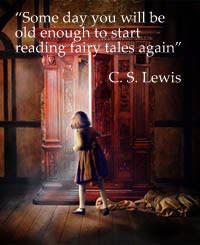
So, most of you know I love to read. And I know many of you do as well. Here are some quotes I’ve seen recently that resonated with me, and I feel sure they will with some of you as well. All of the images are from Pinterest. I don’t endorse everything about every person quoted, just the quote itself.

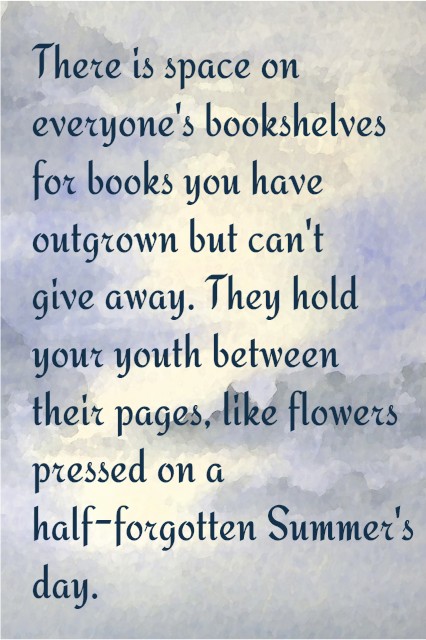
– “Literature is my utopia. Here I am not disenfranchised. No barrier of the senses shuts me out from the sweet, gracious discourses of my book friends.” Helen Keller

– “Reading is to the mind what exercise is to the body. As by the one, health is preserved, strengthened and invigorated; by the other, virtue (which is the health of the mind) is kept alive, cherished and confirmed. But as exercise becomes tedious and painful when we make use of it only as the means of health, so reading is apt to grow uneasy and burdensome, when we apply ourselves to it only for our improvement in virtue. For this reason, the virtue which we gather from a fable, or an allegory, is like the health we get by hunting; as we are engaged in an agreeable pursuit that draws us on with pleasure, and makes us insensible of the fatigues that accompany it.”
-Joseph Addison and Richard Steele
The Tatler No. 147

– “An interesting book is food that makes us hungry.” Marie Von Ebner-Eschenbach (seen at Mama Bear‘s).

– “Reading allows me to thrive. If I don’t, then I feel stagnant.” ~ Michael D. Perkins

‎- “A good story is life, with the dull parts taken out.” Alfred Hitchcock (seen at Robin Lee Hatcher’s Facebook.)

The following two were seen at Carrie‘s:

– “The books that help you most are those which make you think the most. The hardest way of learning is that of easy reading; but a great book that comes from a great thinker is a ship of thought, deep freighted with truth and beauty.” Theodore Parker (1810 – 1860)

– “The reading of all good books is indeed like a conversation with the noblest men of past centuries who were the authors of them, nay a carefully studied conversation, in which they reveal to us none but the best of their thoughts.” Rene Descartes (1596 – 1650)

“The best moments in reading are when you come across something – a thought, a feeling, a way of looking at things – that you’d thought special, particular to you. And here it is, set down by someone else, a person you’ve never met, maybe even someone long dead. And it’s as if a hand has come out, and taken yours.” Alan Bennett (I saw this on Pinterest, and after looking around discovered it is from a movie that I would not see and would not recommend. I started not to include it for that reason, but I do like the quote in and of itself.)

– “Reading a book gives us somewhere to go when we stay where we are.” Unknown

– “Reading is the sole means by which we slip, involuntarily, often helplessly, into another’s skin, another’s voice, another’s soul.” Joyce Carol Oates

Book Review: Chasing Mona Lisa

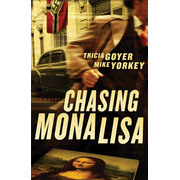
I saw Chasing Mona Lisa by Tricia Goyer and Mike Yorkey listed as a free Kindle book (at the time: it is not free now) at Inspired Reads, and thought it looked interesting, so interesting + free = “Sure, I’ll try it!”

The setting is in France just as WWII is close to winding down. Germany’s Goring has been quietly amassing a treasure of prized art pieces, and when he sees the handwriting on the wall concerning the war, he sets his sights on the Mona Lisa as his ticket to flee to South America and escape the consequences of his wartime activities.

The French, foreseeing that the Mona Lisa might be in danger, packed it up and hid it before Germany took over the country, yet Goring and his agent, Heller, have their ways of ferreting out information.

Eric Hofstadler and Gabi Mueller are two Swiss OSS (Office of Strategic Services) covert agents working to further the Allied cause. They are in Paris to deliver food, medical supplies, and information when they are reassigned to find and secure the Mona Lisa.

Bernard Rousseau is a leader of one of the resistance movements, this particular one being Communist. A sub plot is that the various resistance groups are vying to set themselves up to be able to grab power and authority as soon as the German regime comes down. Bernard is one of the first people Eric and Gabi meet in Paris, and he becomes involved in helping them find the Mona Lisa before Heller’s operatives do. Yet he has ulterior motives they know nothing of, and further complications involve his girlfriend, Collette, the Louvre museum curator, and whether she is in on Heller’s plot or not.

I don’t read many spy novels, but this one definitely kept me interested and threw a couple of unexpected twists into the mix.

I got the feeling that this might have been a sequel, and I was right: Gabi and Eric first appear in The Swiss Courier by the same authors. I’ve not read that one, and this book is easily readable on its own.

One part where I had to smile was where Gabi, Eric, and Rousseau escape from pursuers down into the sewers, and Rousseau begins to expound on the “technological marvel” of Paris’s sewer system: it reminded me of Victor Hugo’s doing the same in Les Miserables (linked to my review). Paris seems to be very proud of its sewer system!

One major problem I had with the novel, though, was its graphic depictions of violence. It’s a war novel, so violence and death are expected parts of the plot, but the authors just got too detailed and graphic for my tastes. Thankfully there aren’t many of those scenes.

It’s also odd that this book is marketed as Christian fiction, yet there is very little of Christianity in it. Gabi’s father, another OSS agent, is also a pastor and wonders from time to time how his congregation would react if they knew of some of his activities, and Gabi mentions God or prayer a few times, but otherwise there isn’t really a Christian theme or perspective woven into the plot. It’s a very clean novel, except for the aforementioned violent scenes, but of course Christian fiction is more than just clean.

But I did like the book, reading most of it on my iPhone or Touchpad during a road trip, and it made for a pleasant diversion.

This particular theft attempt was purely fictional, by the way, but the Mona Lisa was stolen once in 1911, and the book does tell about that incident as further motivation for not letting it happen again.

(This review will also be linked to Semicolon‘s Saturday Review of Books.)

Memorial Day

“Thank you for sacrificing your pleasant moments so we can have ours.”

“Some things are worth fighting for.”

Laudable Linkage

It’s been a few weeks since I shared any links with you of interesting things found ’round the Web. Here is some good reading, in my opinion:

5 Questions About Eternity.

Why Bible Study Doesn’t Transform Us.

That Idol That You Love, It Doesn’t Love You Back.

“I Thank Thee That I Am Not as Other Legalists,” Or, How “Freer Than Thou” Became the New “Holier Than Thou.” ‘Christian liberty is not realized by adopting a normative principle of conduct (i.e., If the Bible does not condemn it, then I am free); rather, the law of Christ is realized most significantly when I love my neighbor as myself (v. 8).”

The Top 5 Things Introverts Dread About Church.

10 Writing Tips From a Real-Life Editor.

When Mother’s Day Isn’t a Celebration.

Carrie reviews Why Isn’t a Pretty Girl Like You Married? in two parts: Part I and Part II. I haven’t read the book but I like the thoughts Carrie shares.

On reading:

A Bookworm Reborn. Rediscovering a love of reading.

Why Men Should Read Fiction, HT to Challies. I don’t agree with the evolutionary slant, and a word or two used, but it provides some food for thought.

Reading as a Writer.

On parenting:

Evangelize, Not Indoctrinate.

Are You Mom Enough? (Mommy Wars) “Somehow, in God’s mathematics of grace: Mom (never enough) + God (infinitely enough) = Mom enough.”

On blogging:

My Journey to 5,000 Followers.

Linking Up With… A collection of buttons to various weekly memes and such.

Hope you have a great weekend!

Friday’s Fave Five

Welcome to Friday’s Fave Five, hosted by Susanne at Living to Tell the Story, in which we can share five of our favorite things from the last week, a wonderful exercise in looking for and appreciating the good things God blesses us with. Click on the button to learn more, then go to Susanne’s to read others’ faves and link up your own.

This week has flown by. Here are some of the favorites from it:

1. Youngest son Jesse’s graduation. More on graduation weekend and its activities and photos here.

2. Oldest son Jeremy being able to come down for graduation plus a few days.

3. Family time with Jeremy, Jesse, and middle son Jason and daughter-in-law Mittu (and husband Jim, of course. 🙂 ) Skype and Facetime are great and help, but it’s just not the same as actually being all together.

4. Playing games while all the family was here.

5. Having the Steve Pettit Evangelistic Team at our church Sunday morning.

Bonus: Graduations cards and gifts. Even those are not for me, it still touches my heart. When my children are blessed, I am blessed.

I think after this week life will slow down into something like normal….at least for a while. 🙂