As I have mentioned before, somehow I didn’t encounter Narnia until about twelve years ago, in my early forties. I read the whole Chronicles of Narnia through at that time and loved them. Somehow I must have read The Lion, the Witch, and the Wardrobe more than once, or maybe a couple of viewings of the movie helped cement the details in my mind, because this reading was like visiting old friends whereas I don’t even remember the characters of some of the other books in the series.
I chose to read the series in the order Lewis published the books rather than the story order. Maybe next time I’ll do it the other way — that probably would help keep elements of the story in order, But I can’t imagine beginning with anything other than LWW, and I like exploring the stories as they as the public first discovered them.
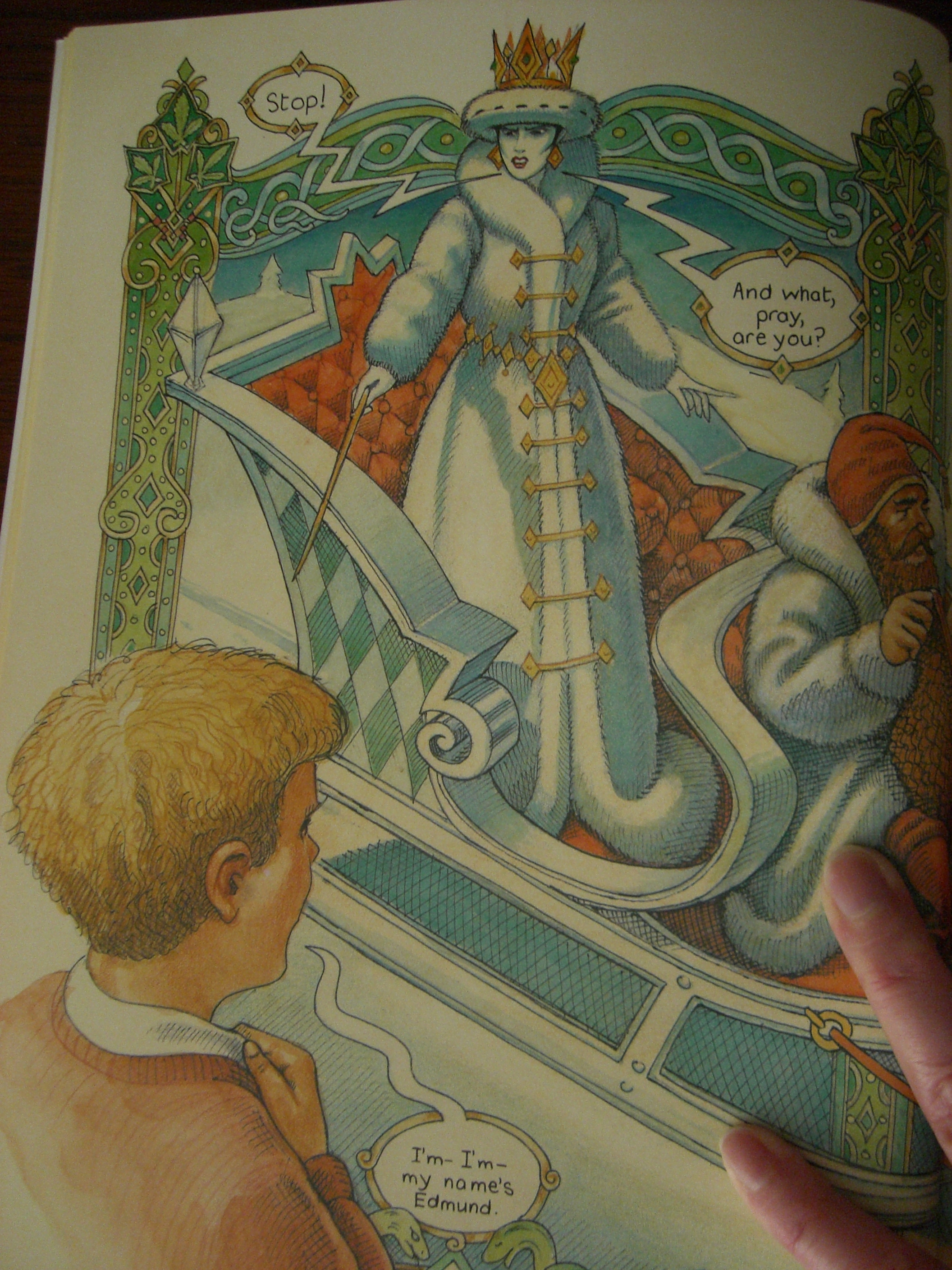
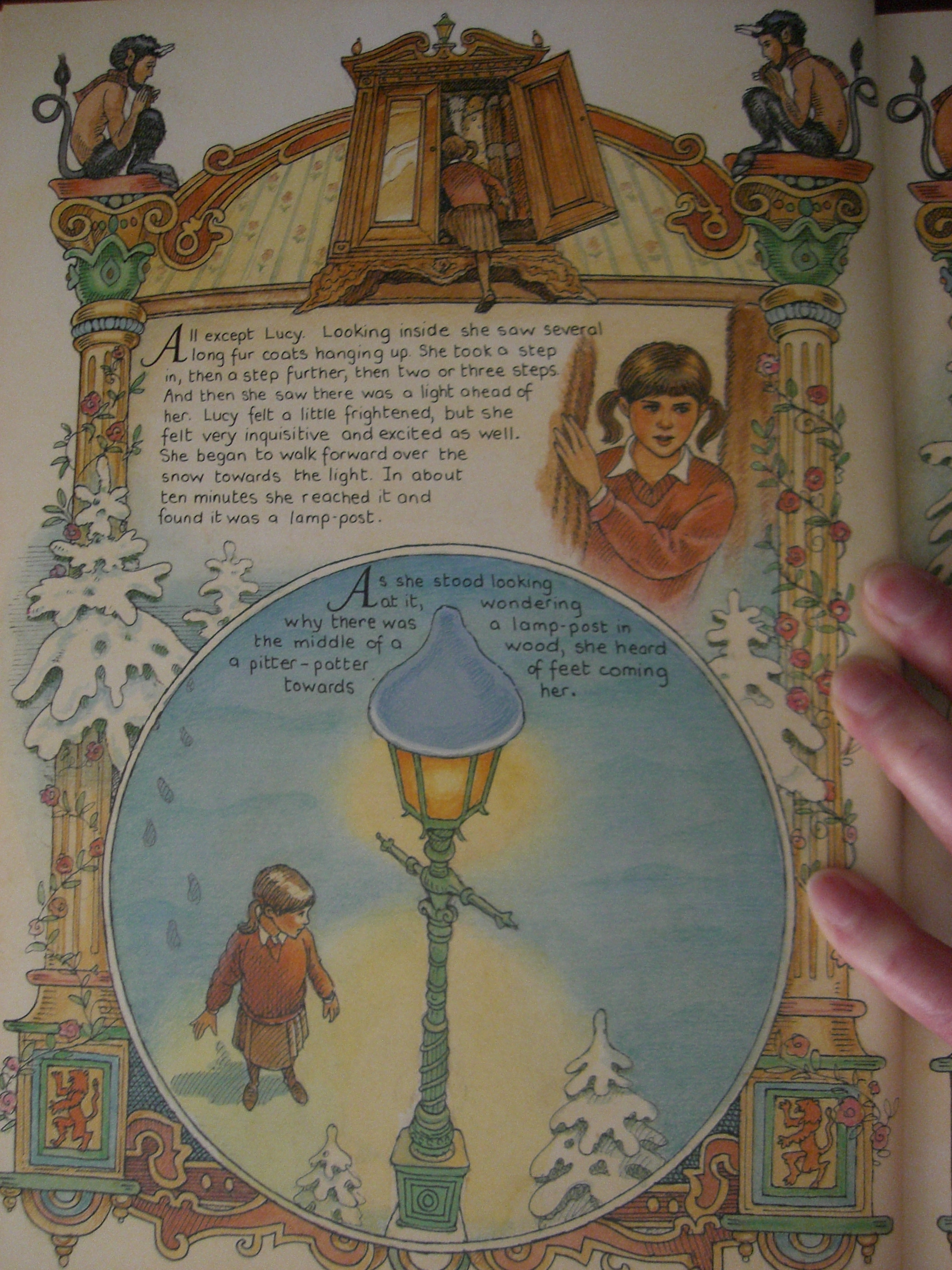
If you are not familiar with the series, Narnia is another land that you could call enchanted: time moves much more slowly, animals talk, fauns, centaurs, and dwarves abound, and, in this book, Narnia is in a perpetual winter without the benefit of Christmas. Lucy, the youngest Pevensie child, accidentally discovers Narnia while playing hide and seek with her brothers and sister during a stay in an old professor’s house. She hides in a wardrobe and tries to get as far back into it as possible when she discovers snow and trees, and on further exploration, meets a fawn who tells her, among other things, that Narnia is under the control of the White Witch who has deemed it always winter but never Christmas.
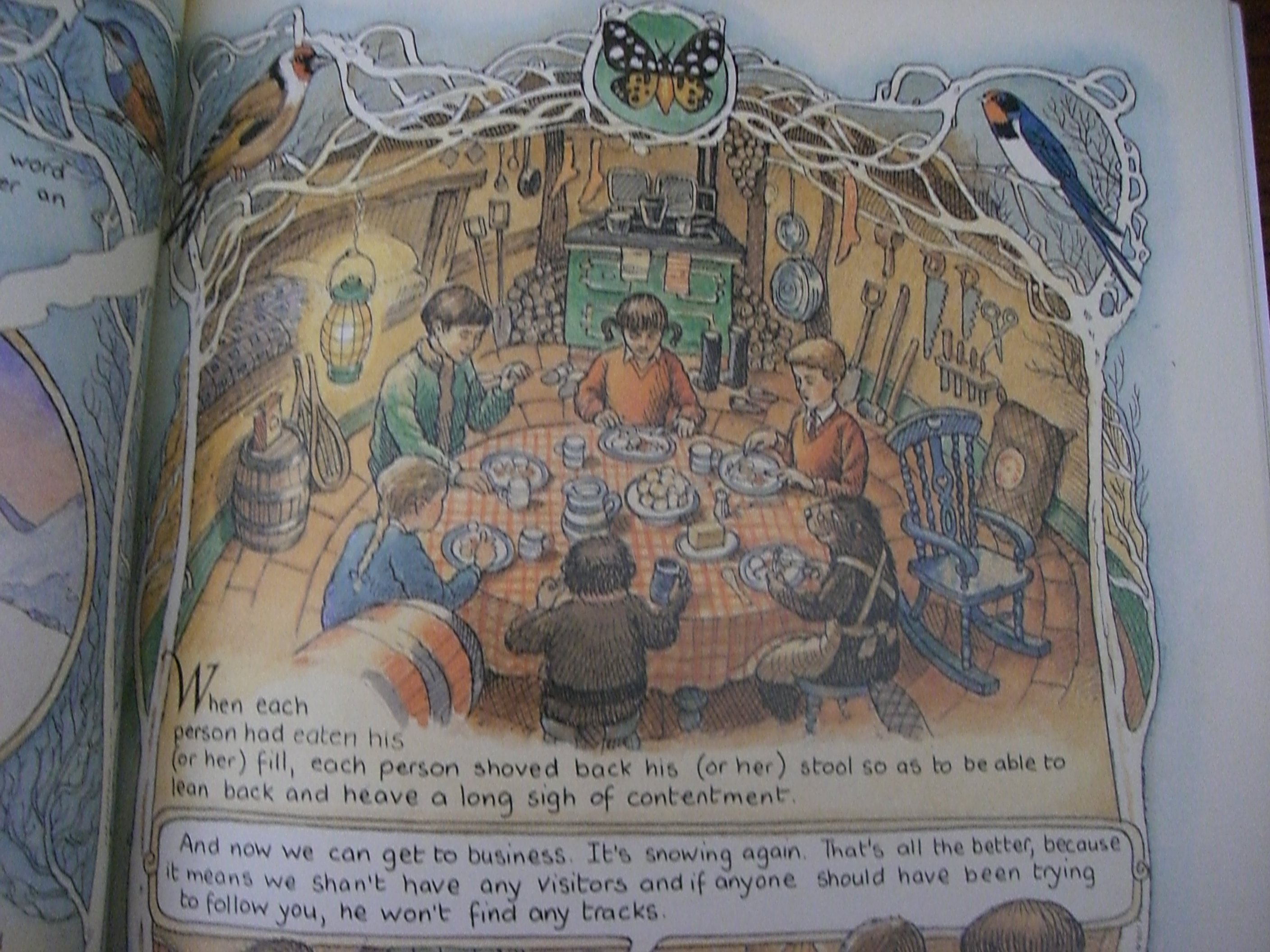
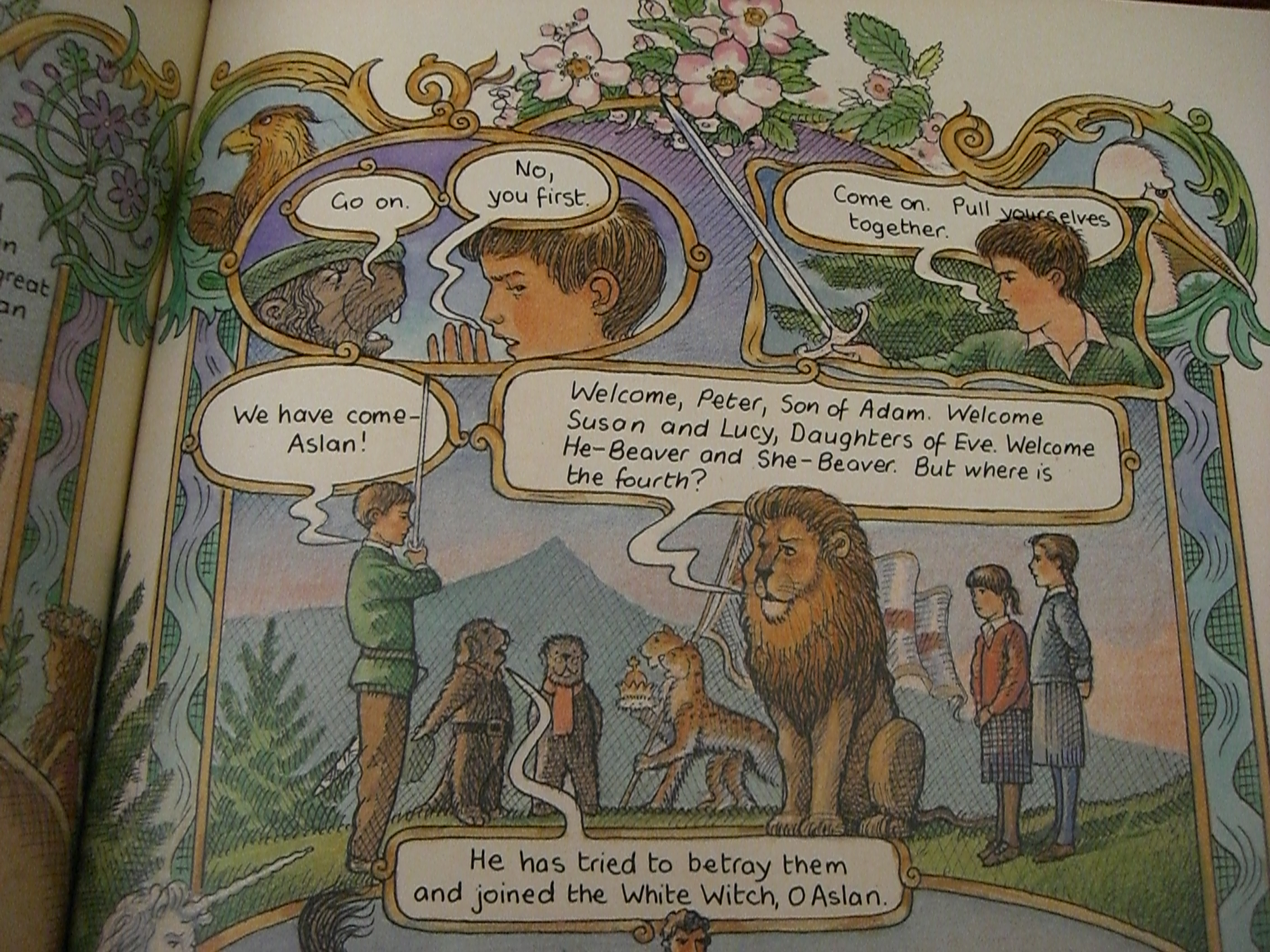
When Lucy comes back through the wardrobe, her siblings don’t believe her until they have their own encounters with Narnia. The Narnians call them Sons of Adam and Daughters of Eve and tell them of a prophecy in which four humans will rule on the thrones of Cair Paravel. They also tell the children of Aslan, a talking lion, the King of Beasts, son of the Emperor-Over-the-Sea. In one of my all-time favorite literary passages, Lucy asks Mr. Beaver whether Aslan is safe. He responds, “Safe?…’Course he isn’t safe. But he’s good. He’s the King, I tell you.”
There follows all the best elements of a fairy tale: classic battles of good versus evil while they learn about themselves and Aslan along the way.
And although LWW is not meant to be an exact allegory with every minute element being symbolic, there are numerous parallels to Christianity. In the article “What’s Christian About Narnia?” Lauren Winter writes:
[Lewis] preferred to think of the Chronicles as “supposals”–“Let us suppose,” he wrote in his essay “Sometimes Fairy Stories May Say Best What’s to be Said,” “that there were a land like Narnia and that the Son of God, as He became a Man in our world, became a Lion there, and then imagine what would happen.”
Lewis also uses elements from mythology, and some have seen pagan elements in these writings as well. I discussed this more in Narnian Magic and concluded that I see those as fairly tale elements and have read enough about Lewis’s Christianity to feel secure that its overarching truths are the underpinnings of the series though I would not agree with every little point.
Two words kept coming to mind during this reading: delicious and delightful. Lewis is a master storyteller. Imaginative names and elements mingle with the very real and human struggles and characters. I love the way Lewis describes things to the children reading using examples of what they might know. One example, when Lucy and Susan were riding on Aslan’s back:
That ride was perhaps the most wonderful thing that happened to them in Narnia. Have you ever had a gallop on a horse? Think of that; and then take away the heavy noise of the hoofs and the jingle of the harness and imagine instead the almost noiseless padding of the great paws. Then imagine instead of the black or grey or chestnut back of the horse the soft roughness of golden fur, and the mane flying back in the wind. And then imagine you are going about twice as fast as the fastest racehorse. But this is a mount that doesn’t need to be guided and never grows tired.
In fact, one of the marvels of this book to me is that a learned Oxford scholar who never claimed to be theologian but was one of the greatest thinkers in recent times could write such marvelous tales that are easily accessible to children and yet delight grown-ups as well.
 I had originally committed to only reading this book for Carrie’s Chronicles of Narnia Reading Challenge, but I had forgotten the books are not all that long. I’ve actually already finished Prince Caspian as well. My original desire was to read LWW, Caspian, and The Voyage of the Dawn Treader and then see the corresponding films of each again. I don’t know if there will be time to get to the films before the challenge is over, but I’ll easily be able to finish these three books.
(This review will also be linked to Semicolon‘s Saturday Review of Books.)


 The M.O.B. Society (Mothers of Boys) is having a blog hop in order to get to know each other better.