Unknown's avatar

About Barbara Harper

https://barbarah.wordpress.com

What’s On Your Nighstand: July

What's On Your NightstandThe folks at 5 Minutes For Books host What’s On Your Nightstand? the fourth Tuesday of each month in which we can share about the books we have been reading and/or plan to read. You can learn more about it by clicking the link or the button.

Since last time I have finished:

No Distance Too Far, Book 2 in the Home to Blessing series by Lauraine Snelling, about a young female doctor in the early 1900s trying to discern whether she is called to Africa, reviewed here.

The Lion, the Witch, and the Wardrobe by C. S. Lewis, reviewed here.

Prince Caspian by C. S. Lewis, reviewed here.

Voyage of the Dawn-Treader by C. S. Lewis, reviewed here.

A graphic novel of The Lion, the Witch, and the Wardrobe abridged and illustrated by Robin Lawrie. I just finished this last night and haven’t reviewed it. It’s beautifully illustrated and not hard to read in one sitting, so it may be a good introduction for young readers who are more visually oriented. I’m still wrestling with whether I’d want my children to see this first or the novels. I do appreciate that it uses much of the original text rather than changing the language.

Gospel Meditations For Women by Chris Anderson and Joe Tyrpak, about a 32-page booklet. Excellent.

I’m currently reading The Way into Narnia: A Reader’s Guide by Peter Schakel and Beyond Suffering: Discovering the Message of Job by Layton Talbert.

Next, depending on how long Way Into Narnia takes, I may try to read The Silver Chair by Lewis if I think I can do so before Carrie‘s Narnia Reading challenge ends this week. Next up after that is A Heart Most Worthy by Siri L. Mitchell, and I’d like to go through Gospel Meditations For Men with my son. After that I’m not sure — I have several books stacked up to choose from.

Happy Reading!

Book Review: Voyage of the Dawn-Treader

I love the way Voyage of the Dawn Treader by C. S. Lewis begins: “There was a boy called Eustace Clarence Scrub, and he almost deserved it.” Eustace is an obnoxious cousin of the Pevensie children of the previous Chronicles of Narnia books. Lucy and Edmund are having to stay with Eustace’s family while their parents and Susan are in America and oldest brother Peter is preparing for an exam with the professor in whose house LWW took place.

It’s been a year since their last visit to Narnia, and they’re missing it and reminiscing about it in Lucy’s room when they notice a ship in a picture on the wall looks very Narnian. The ship begins to look like it is actually moving, they feel the spray of sea water, and suddenly they find themselves in the ocean near the ship…along with Eustace, who happened to come into the room. The ship turns out to be Caspian’s, and he pulls them out of the water. Three years have passed in Narnia, peace reigns throughout the land, and Caspian is making good on his vow that he would search for the seven lost lords of Narnia whom his evil uncle had sent away in Prince Caspian.

Lucy and Edmund join Caspian, Reepicheep, and the rest of the crew on the search: Eustace has no choice but to come along, complaining the whole time. Their adventures, discoveries, temptations, and lessons make up the bulk of the book. And I can’t say much more than that without telling you too much and spoiling the story for you if you’ve not read it.

I saw somewhere that this book was thought to be “darker” than LWW and Prince Caspian. I don’t know that I would say that, but it does seem each major character struggles more with personal temptations.

We did watch the film version of this book a few months ago, and I liked it well enough at the time, but now that I’ve reread the book, I am disappointed that they made several unnecessary changes. When will filmmakers learn that when they veer farther away from the plot of well-known, beloved books, their film suffers?

One of my favorite scenes in the book is when Aslan relieves Eustace of his (small spoiler here) dragon skin (and that scene was a big disappointment in the movie).

And one of my favorite lines is when Aslan tells the children that in their world he has another name and “You must learn to know me by that name. This was the very reason why you were brought to Narnia, that by knowing me here for a little, you may know me better there.” That to me encapsulates the Narnia series as a whole.

Though neither Caspian nor Dawn-Treader quite measures up to LWW  for me, they are only a small notch or so below it. I did like and enjoy them very much.

(This review will also be linked to Semicolon‘s Saturday Review of Books.)

The Week in Words and a Poll

”"

Welcome to The Week In Words, where we share quotes from the last week’s reading. If something you read this past week  inspired you, caused you to laugh, cry, think, dream, or just resonated with you in some way, please share it with us, attributing it to its source, which can be a book, newspaper, blog, Facebook — anything that you read. More information is here.

I only have a couple this week. One I posted earlier in a review of Prince Caspian, but I couldn’t resist posting it again:

“You come of the Lord Adam and the Lady Eve, and that is both honor enough to erect the head of the poorest beggar, and shame enough to bow the shoulders of the greatest emperor on earth.”

This one came from an e-mail devotional of Elisabeth Elliot from a chapter titled “A Devious Repentance” in A Lamp For My Feet:

Recently I committed a sin of what seemed to me unpardonable thoughtlessness. For days I wanted to kick myself around the block. What is the matter with me? I thought. How could I have acted so? “Fret not thyself because of evildoers” came to mind. In this case the evildoer was myself, and I was fretting. My fretting, I discovered, was a subtle kind of pride. “I’m really not that sort of person,” I was saying. I did not want to be thought of as that sort of person. I was very sorry for what I had done, not primarily because I had failed someone I loved, but because my reputation would be smudged. When my reputation becomes my chief concern, my repentance has a hollow ring. No wonder Satan is called the deceiver. He has a thousand tricks, and we fall for them.

Lord, I confess my sin of thoughtlessness and my sin of pride. I pray for a more loving and a purer heart, for Jesus’ sake.

I’ve been there. You?

I’ve marked a few more from Beyond Suffering by Layton Talbert, but I think I might save those for when I review the book. It’s hard to wait to post them, though!

Also — I’ve been kind of thinking about discontinuing The Week In Words. I’ve hosted it about a year now, and most weeks there are only two or three of us who participate, though some weeks we have 4 and I think once or twice we’ve had as many was six. (I know some of you have been away lately, but I am thinking of the overall trend: it hasn’t really “taken off.”) But then it’s not really about numbers. Also, I think many people who don’t participate in it skip the post entirely (which is fine — I don’t always read or comment on every post of every blog I read, though I usually at least skim them). I’ve been going back and forth about it in my own mind for a few weeks now, and I decided to ask you what you thought. You can either vote in the poll or leave a comment, or both.

If you’ve read anything that particularly spoke to you that you’d like to share, please either list it in the comments below or write a post on your blog and then put the link to that post (not your general blog link) in Mr. Linky below. I do ask that only family-friendly quotes be included.

I hope you’ll visit some of the other participants as well and glean some great thoughts to ponder. And don’t forget to leave a comment here, even if you don’t have any quotes to share! :)

Jesus, I Come

This is another older hymn I haven’t heard in a long time. I’m not sure, why, but it came to mind this morning. I love some of the newer spiritual songs coming out these days, but I hope we don’t forget the good old ones. These words are just as applicable and relevant today as they were when first written.

Out of my bondage, sorrow, and night,
Jesus, I come, Jesus, I come;
Into Thy freedom, gladness, and light,
Jesus, I come to Thee;
Out of my sickness, into Thy health,
Out of my want and into Thy wealth,
Out of my sin and into Thyself,
Jesus, I come to Thee.

Out of my shameful failure and loss,
Jesus, I come, Jesus, I come;
Into the glorious gain of Thy cross,
Jesus, I come to Thee.
Out of earth’s sorrows into Thy balm,
Out of life’s storms and into Thy calm,
Out of distress to jubilant psalm,
Jesus, I come to Thee.

Out of unrest and arrogant pride,
Jesus, I come, Jesus, I come;
Into Thy blessèd will to abide,
Jesus, I come to Thee.
Out of myself to dwell in Thy love,
Out of despair into raptures above,
Upward for aye on wings like a dove,
Jesus, I come to Thee.

Out of the fear and dread of the tomb,
Jesus, I come, Jesus, I come;
Into the joy and light of Thy throne,
Jesus, I come to Thee.
Out of the depths of ruin untold,
Into the peace of Thy sheltering fold,
Ever Thy glorious face to behold,
Jesus, I come to Thee.

~ William T. Sleeper, 1887

Happy Birthday to Jason!

Jason’s 24th birthday was actually Monday, but he wanted to wait til Saturday to celebrate it with the family so we could include Grandma and have a little more time. So we’re looking forward to getting together later today.

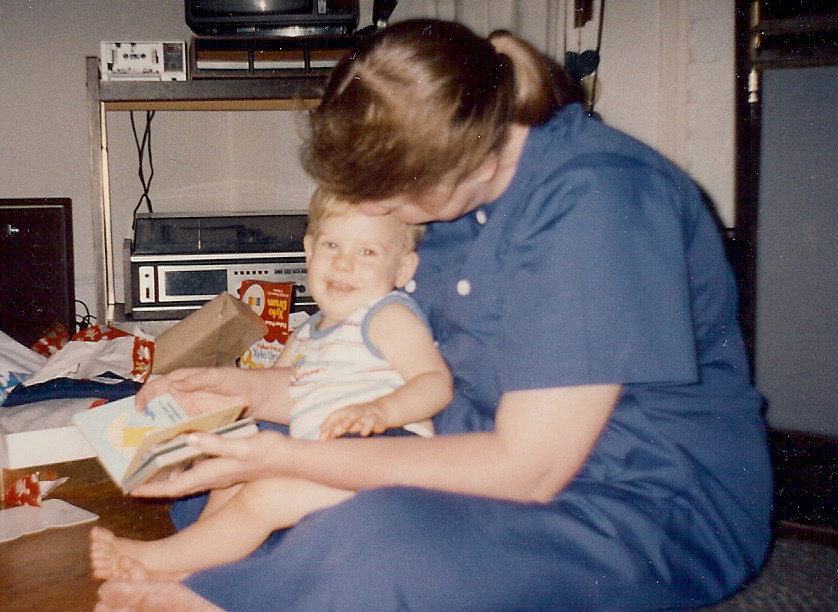
Jason's first birthday

Jason's first birthday

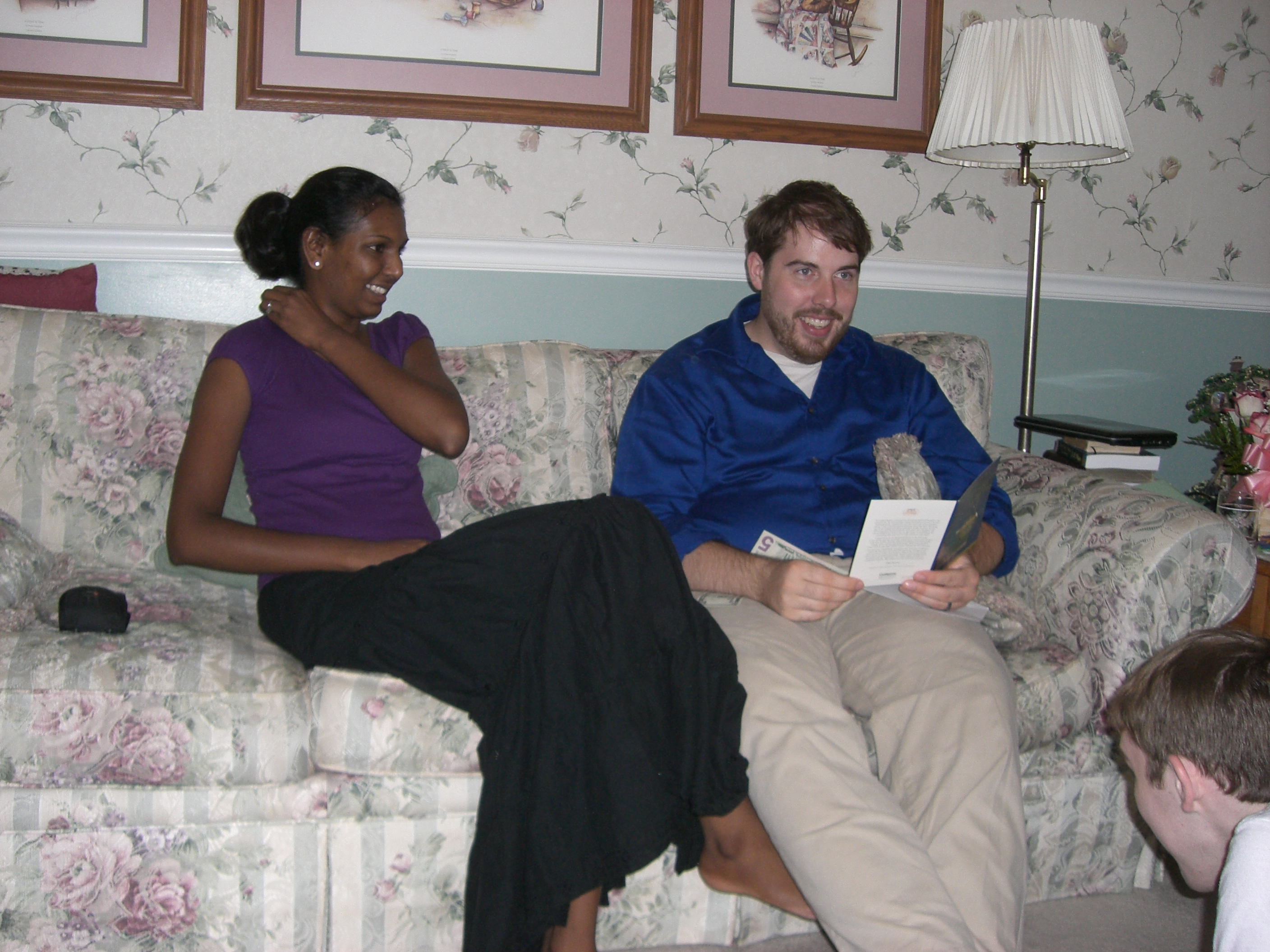
Jason's 23rd birthday

Hope you had (and have!) a wonderful birthday, Jason! You’re a joy and blessing to our family.

Friday’s Fave Five

Welcome to Friday’s Fave Five, hosted by Susanne at Living to Tell the Story, in which we can share five of our favorite things from the last week. This has been a wonderful exercise in looking for and appreciating the good things God blesses us with. Click on the button to learn more, then go to Susanne’s to read others’ faves and link up your own.

Here are a few favorites from the past week:

1. Chicken teriyaki. Back in SC we used to love a Japanese place in the mall. It was fast food but a nice switch from burgers and breaded, fried chicken. And the people there seemed to know the families of their regular customers — I think they acted like that with everyone, really, but if I was there by myself they asked about the rest of the family. Then the guy who was assembling our food asked if we wanted “yummy yummy sauce.” 🙂 We always did. The same Japanese place is in the mall here in TN, but the mall is 20 minutes away, so it’s too far out for a quick stop for dinner. The food was still good: the people, though, were different, of course, and the guy on the end — well, I couldn’t understand exactly what he was saying, but he was holding the ladle of sauce over my plate, so I assumed he was asking me if I wanted some. So it was a little surreal in some ways, but I’d been craving their chicken teriyaki and it was good to have it again.

2. Jesse’s home! I know, I mentioned last week that my youngest son was due back after being on a mission/camp trip for ten days, the longest he has ever been away before. But I was just anticipating it last week, and this week I have the reality. 🙂

3. Air conditioning in my car. I know I have mentioned AC before, but the car is probably the place I can cool off the quickest, with the AC turned up and the vents aimed right at my face.

4. Carrie’s Chronicles of Narnia Reading Challenge. I’ve enjoyed getting back into these books.

5. A low-key week after a very busy one.

Hope you have a great weekend!

Book Review: Prince Caspian

Prince Caspian is the second book of the Chronicles of Narnia series (in publication order; in story it is the fourth.) The book begins with the four Pevensie children at a train station waiting to go back to boarding school when they’re suddenly pulled back into Narnia. Before too long they discover that time in Narnia moves much differently than in their world, and multitudes of years have passed since their last visit.

It takes them a long time, actually to encounter anyone, and finally they meet a dwarf who tells them that men called Telmarines are in power, chiefly a King Miraz, uncle to the rightful heir, Prince Caspian. No one knows anything about talking animals and most everyone thinks the time of  Kings Peter and Edmund and Queens Susan and Lucy and even Aslan himself are just myth, or at least so far back in history as not to be significant anymore. Miraz has just had his own son and desires to seal his succession to the throne by killing the rightful heir, Caspian.

Caspian, meanwhile, in the course of his escape discovers there really are “Old Narnians” who, once they realize who he really is (it takes more convincing for some than others), side with him. He realizes there is more at stake than his own life: for the sake of Narnia he has to overthrow his uncle’s rule.

My only complaint with this book is that it takes a while for anything to happen: it’s about three-fourths of the way into the book before the Pevensies even meet up with Caspian. But everything leading up to it is necessary to lay the foundation and background.

Aslan returns as well, seeming larger (though not because he is older, he tells Lucy, but because she is), but I think he and the Pevensies are the only returning characters from The Lion, the Witch, and the Wardrobe: new beloved characters emerge, such as Trumpkin the Dwarf, Trufflehunter the Badger, and noble mouse Reepicheep.

Two of my favorite quotes from this book:

Aslan asks Caspian, “Do you feel yourself sufficient to take up the Kingship of Narnia?”

“I — I don’t think I do, Sir,” said Caspian. “I’m only a kid.”

“Good,” said Aslan. “If you had felt yourself sufficient, it would have been a proof that you were not.”

And when Caspian, upon learning something of the history of his people, wishes he came of a more honorable lineage, Aslan replies:

“You come of the Lord Adam and the Lady Eve, and that is both honor enough to erect the head of the poorest beggar, and shame enough to bow the shoulders of the greatest emperor on earth.”

Though perhaps not quite as exciting as LWW (to me), the book still has many beloved elements of the first: Lewis’s inimitable style, good versus evil, memorable characters, quests that take characters beyond themselves, and moral lessons such as Lucy’s need to follow Aslan even though others don’t see him or understand or agree.

(This review will also be linked to Semicolon‘s Saturday Review of Books.)

Book Review: The Lion, the Witch, and the Wardrobe

As I have mentioned before, somehow I didn’t encounter Narnia until about twelve years ago, in my early forties. I read the whole Chronicles of Narnia through at that time and loved them. Somehow I must have read The Lion, the Witch, and the Wardrobe more than once, or maybe a couple of viewings of the movie helped cement the details in my mind, because this reading was like visiting old friends whereas I don’t even remember the characters of some of the other books in the series.

I chose to read the series in the order Lewis published the books rather than the story order. Maybe next time I’ll do it the other way — that probably would help keep elements of the story in order, But I can’t imagine beginning with anything other than LWW, and I like exploring the stories as they as the public first discovered them.

If you are not familiar with the series, Narnia is another land that you could call enchanted: time moves much more slowly, animals talk, fauns, centaurs, and dwarves abound, and, in this book, Narnia is in a perpetual winter without the benefit of Christmas. Lucy, the youngest Pevensie child, accidentally discovers Narnia while playing hide and seek with her brothers and sister during a stay in an old professor’s house. She hides in a wardrobe and tries to get as far back into it as possible when she discovers snow and trees, and on further exploration, meets a fawn who tells her, among other things, that Narnia is under the control of the White Witch who has deemed it always winter but never Christmas.

When Lucy comes back through the wardrobe, her siblings don’t believe her until they have their own encounters with Narnia. The Narnians call them Sons of Adam and Daughters of Eve and tell them of a prophecy in which four humans will rule on the thrones of Cair Paravel. They also tell the children of Aslan, a talking lion, the King of Beasts, son of the Emperor-Over-the-Sea. In one of my all-time favorite literary passages, Lucy asks Mr. Beaver whether Aslan is safe. He responds, “Safe?…’Course he isn’t safe. But he’s good. He’s the King, I tell you.”

There follows all the best elements of a fairy tale: classic battles of good versus evil while they learn about themselves and Aslan along the way.

And although LWW is not meant to be an exact allegory with every minute element being symbolic, there are numerous parallels to Christianity. In the article “What’s Christian About Narnia?” Lauren Winter writes:

[Lewis] preferred to think of the Chronicles as “supposals”–“Let us suppose,” he wrote in his essay “Sometimes Fairy Stories May Say Best What’s to be Said,” “that there were a land like Narnia and that the Son of God, as He became a Man in our world, became a Lion there, and then imagine what would happen.”

Lewis also uses elements from mythology, and some have seen pagan elements in these writings as well. I discussed this more in Narnian Magic and concluded that I see those as fairly tale elements and have read enough about Lewis’s Christianity to feel secure that its overarching truths are the underpinnings of the series though I would not agree with every little point.

Two words kept coming to mind during this reading: delicious and delightful. Lewis is a master storyteller. Imaginative names and elements mingle with the very real and human struggles and characters. I love the way Lewis describes things to the children reading using examples of what they might know. One example, when Lucy and Susan were riding on Aslan’s back:

That ride was perhaps the most wonderful thing that happened to them in Narnia. Have you ever had a gallop on a horse? Think of that; and then take away the heavy noise of the hoofs and the jingle of the harness and imagine instead the almost noiseless padding of the great paws. Then imagine instead of the black or grey or chestnut back of the horse the soft roughness of golden fur, and the mane flying back in the wind. And then imagine you are going about twice as fast as the fastest racehorse. But this is a mount that doesn’t need to be guided and never grows tired.

In fact, one of the marvels of this book to me is that a learned Oxford scholar who never claimed to be  theologian but was one of the greatest thinkers in recent times could write such marvelous tales that are easily accessible to children and yet delight grown-ups as well.

Chronicles of Narnia Reading ChallengeI had originally committed to only reading this book for Carrie’s Chronicles of Narnia Reading Challenge, but I had forgotten the books are not all that long. I’ve actually already finished Prince Caspian as well. My original desire was to read LWW, Caspian, and The Voyage of the Dawn Treader and then see the corresponding films of each again. I don’t know if there will be time to get to the films before the challenge is over, but I’ll easily be able to finish these three books.

(This review will also be linked to Semicolon‘s Saturday Review of Books.)

Narnian Magic

I started to write about the magical aspect of Narnia in a book review of The Lion, the Witch, and the Wardrobe, but it then took on a life of its own, so I decided to make it a separate post.

I came to The Lion, the Witch, and the Wardrobe by C. S. Lewis via a slightly different route than many of you. I don’t remember reading or even hearing about the Chronicles of Narnia until about twelve years ago. A lady in my church who is very gifted in art and drama was talking about being in a local stage production of The Lion, the Witch, and the Wardrobe along with her daughter. This lady herself was playing the White Witch. I was very surprised.

There was a time when I avoided any book, program, cartoon, anything that had anything remotely to do with witches, magic, etc., for a couple of very good reasons. First of all, back in the ninth or tenth grade I had done a group research project in English class on the occult. This was before I became a Christian, and some time after I became a Christian a few years later, I realized how foolish that was and rejoiced that God had protected me from getting any further involved. I discovered dire warnings in the Bible against witches, wizards, and the like. Secondly, when my kids were younger, we picked up a truly horrible book. The title had to do with a magic carpet, and as my son showed it to me at the library, I felt what I can only describe as a check in my spirit, kind of a warning signal that this might be a problem. But we had had a different book about a magic carpet before and it was just a sweet reference to a rug where a girl and her grandmother or aunt had sat and told stories. So I let my son check out the book with the thought that I’d look at it before we read it. As I got into it, I discovered it was written from a New Age viewpoint complete with a “spirit guide” (who had his own chapter in the back), and the book advocated things like throwing books at your teachers if they didn’t let you do what you wanted, hinted at an incestuous relationship between a brother and sister, and urged the reader to throw off everything he had ever learned before from his parents. I can’t adequately describe the revulsion and horror at the book I had in my hands.

So naturally I was a bit skittish at the thought of anything “magical.” But somewhere along the way, I can’t remember just how, I came to the conclusion that fairy tale magic usually is a different thing than the actual occult. Usually the witch in a fairy tale is just the representation of the bad guy in the “good versus evil” plot. When we watched The Fellowship of the Ring, the first of the Lord of the Ring series (I had also missed these books growing up. My education was sadly deficient of classics), I struggled a bit with the wizardry in them, but eventually concluded that the wizards were more like Middle Earth super heroes than actual occultish wizards. Real life wizards, after all, don’t ride on the backs of giant birds or fight each other with power blasts (at least as far as I know).

One definition of “magical” in Dictionary.com is “mysteriously enchanting” and one of “magic” is “any mysterious or extraordinary quality or power.” I did read the Chronicles of Narnia and a biography of Lewis not long after the encounter with my friend at church, and I think when Lewis speaks of the “deep magic” of Narnia, he is meaning this “mysterious or extraordinary quality or power.”

Yet I recently read (and I wish I could remember where) of a modern-day pagan who claims Narnia every bit as much as Christians do. And “Googling” “paganism in Narnia” results in many articles and posts discussing the issue from both sides. Such pagan ideas existed in Lewis’s day: did he have any idea pagans in days to come would champion elements from his work as much as Christians do? Or is it a matter of the principle that “Unto the pure all things are pure: but unto them that are defiled and unbelieving is nothing pure; but even their mind and conscience is defiled” (Titus 1:15)? I don’t know: perhaps some of you who have read more of the background of the books can lend some insight.

I’ve read that Lewis never meant Narnia as an exact Christian allegory, but Christian elements are definitely there: Christ is referred to as “the lion of the tribe of Judah”; Aslan, the Christ figure of Narnia, is a great lion. Aslan dies for one who betrayed him just as Christ did, and he is similarly resurrected. I mentioned in yesterday’s post that the way the children felt about Aslan being good and terrible at the same time mirrored our feelings of God.  (See What’s Christian About Narnia” for more.)

Having read a biography of Lewis, his Mere Christianity, and snips of his other writings, I am content to say, like Lauren Winner, “That an unmistakably biblical narrative emerged is perhaps a testimony to Lewis’s own formation, a reminder of how deeply steeped he was in the Christian story.” Though I don’t know how to reconcile all the elements of the stories, I know enough about his Christian beliefs to trust that they really are there in the stories.

I would say, however, to anyone who has a doubt or a question about this or any other book or program, don’t violate your conscience. Read about them, talk to others, pray about it before going ahead, and if you decide not to read them, that’s fine. And those of us who do read them shouldn’t scoff at those who don’t. We each need to remember the principles of Romans 14 when it comes to differing convictions: that we shouldn’t despise or judge each other on these kinds of things, that we should each be “fully persuaded in our own minds,” that whatever we do or don’t allow needs to be done as unto the Lord, that we will all give account of ourselves to God, that we shouldn’t put stumblingblocks in each other’s way, that we should “follow after the things which make for peace, and things wherewith one may edify another,” that we shouldn’t condemn ourselves in what we allow, and that if we can’t do a thing in faith, we shouldn’t do it.

The Week In Words

”"

Welcome to The Week In Words, where we share quotes from the last week’s reading. If something you read this past week  inspired you, caused you to laugh, cry, think, dream, or just resonated with you in some way, please share it with us, attributing it to its source, which can be a book, newspaper, blog, Facebook — anything that you read. More information is here.

Forgive me, I am running late today. But here are a few quotes that spoke to me this week:

From Robin Lee Hatcher‘s Facebook page:

“Without love for God & His Word, [our obedience is] just trying to be good. Nothing will wear you out faster.” Beth Moore

I’ve never read a Beth Moore book or Bible study, but I can attest to the truth of this statement.

From The Lion, the Witch, and the Wardrobe by C. S. Lewis:

But as for Aslan himself, the Beavers and the children didn’t know what to do or say when they saw him. People who have not been in Narnia sometimes think that a thing cannot be good and terrible at the same time. If the children had ever thought so, they were cured of it now. For when they tried to look at Aslan’s face they just caught a glimpse of the golden mane and the great, royal, solemn, overwhelming eyes; and then they found they couldn’t look at him and went all trembly.

For those who might not know, Aslan the lion is the Christ figure in the Narnia stories, and I thought this was a sweet and lovely depiction trying to explain his being both good and terrible (terrible not meaning “bad” here but inspiring awe, as in these verses.)  Sometimes I have tried to reconcile in my own mind how we can think of Christ as an elder brother and friend and God as an “Abba” father, and yet, as John, the closest disciple to Christ, fall on his face as dead when we see Him in all His glory. The closest parallel that comes to mind is what it might be like when a child of royalty sees his parent “in state” at a royal function all decked out in royal garb with pomp and ceremony.

From Beyond Suffering by Layton Talbert:

Commenting on Job being a man who “eschewed evil“: The Hebrew verb means to recoil and to go out of one’s way to avoid. Job feared God and was frightened of evil because he understood the true nature of each. Being frightened of evil is not a sign of immaturity or paranoia. It is the same sane aversion to danger that my nephew has to peanuts: they may appear harmless but he knows they can kill him (p. 29).

And later commenting on some people’s disagreeing with James’s assessment of the patience of Job: This Biblical virtue is not a sappy, carefree cheeriness. It is a manly word that means to ‘remain under’ whatever pressure or pain one is presently enduring from the hand of God. Patience is fortitude under adversity. Job struggled to maintain his integrity and his faith under great duress. (p. 32).

Finally, from the July 1 reading of The Invitation by Derick Bingham:

The Lord Jesus got down below the level of their couches and washed their feet, gently. So if we would seek to correct, say, someone’s attitude problem, we must not do it in an arrogant and proud manner, else we will do them more harm than good. Humility of attitude and helpfulness goes a long way to guiding those who have bee soiled to a place of cleansing. If you would be a true foot-washer, imitate the Lord’s method. Christians are often hopeless at this ministry simply because they are not willing to stoop low enough.

Much food for thought today!

If you’ve read anything that particularly spoke to you that you’d like to share, please either list it in the comments below or write a post on your blog and then put the link to that post (not your general blog link) in Mr. Linky below. I do ask that only family-friendly quotes be included.

I hope you’ll visit some of the other participants as well and glean some great thoughts to ponder. And don’t forget to leave a comment here, even if you don’t have any quotes to share! :)