Unknown's avatar

About Barbara Harper

https://barbarah.wordpress.com

Careful of Our Strengths as Well as Our Weaknesses

A recent Sunday School class focused on Samson, the biblical long-haired “strong man” in Judges 13-16. One man in class described Samson as cocky.

I hadn’t really thought of Samson in those terms, so I had to ponder for a while. I suppose you could describe Samson that way. Some of his challenges seemed to be motivated by the fact that he knew he would win. It’s possible to be cocky even while thinking one is doing the Lord’s will. Cockiness seems to come from being self-assured rather than confident in God’s gifting and calling.

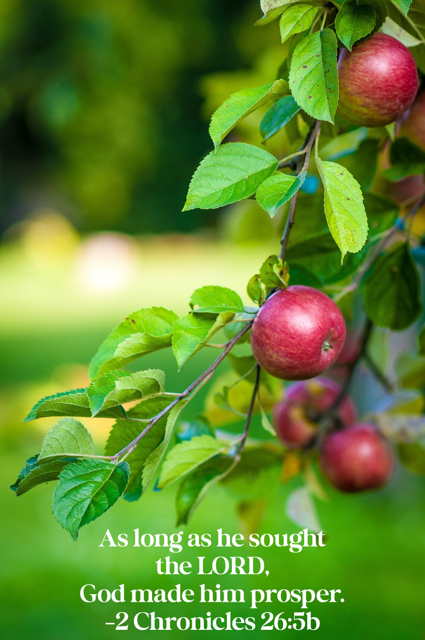
The discussion reminded me of something I had recently read in 2 Chronicles 26 about King Uzziah. Verses 4-5 say, “And he did what was right in the eyes of the Lord, according to all that his father Amaziah had done. He set himself to seek God in the days of Zechariah, who instructed him in the fear of God, and as long as he sought the Lord, God made him prosper.”

But just a few verses later, we’re told, “And his fame spread far, for he was marvelously helped, till he was strong. But when he was strong, he grew proud, to his destruction. For he was unfaithful to the Lord his God and entered the temple of the Lord to burn incense on the altar of incense” (verses 15-16).

Only the priests were supposed to burn incense in the temple. But in Uzziah’s pride, he presumptuously stepped beyond his authority. Then when he was confronted, he became angry. God made him a leper the rest of his life.

He was marvelously helped, till he was strong. But when he was strong, he grew proud.” That statement stops me in my tracks. It’s possible to seek God and depend on Him for help, and then turn right around and become proud as if we answered our prayer instead of God.

When we fear falling or failing, we usually worry about the areas where we’re weak.

But we should also be concerned about the areas where we’re strong. “Therefore let anyone who thinks that he stands take heed lest he fall” (1 Corinthians 10:12). We can too easily become confident in ourselves instead of leaning on God.

We need to remind ourselves that any strength we have comes from God. We all have besetting sins and tendencies. If we don’t have problems in a given area, it’s not because we’re just that good. And if we have good traits and seem “naturally” strong in some areas, that comes from God, too. Paul reminds us, “What do you have that you did not receive? If then you received it, why do you boast as if you did not receive it?” (1 Corinthians 4:7).

Pride is one danger of strength. Another is what one of our former pastor used to say, “With every strength is an off-setting weakness.”

Say, for instance, that one had natural leadership skills. Those come in handy when a leader is needed. But they might be resented when the leader oversteps, doesn’t listen to anyone else, and starts taking over decisions and tasks unasked.

Peter was a natural spokesman. He was loyal and ready to jump into the fray. But he sometimes spoke when he should have been silent or acted when he should have been patient.

We love David’s passionate emotion in the psalms because they mirror ours. But that passionate nature got David in trouble in other areas.

Some of us are naturally quiet, which keeps us out of trouble from speaking up at the wrong time. But then we also avoid speaking when we should.

Another potential problem with our strengths is that, like the folks Paul addressed in Romans 14 and 15:1-7, we don’t give due consideration to those who are weaker. Our insistence on our own freedoms can even cause them to sin against their conscience. Then we have the audacity to look down on them. “We who are strong have an obligation to bear with the failings of the weak, and not to please ourselves. Let each of us please his neighbor for his good, to build him up. For Christ did not please himself” (15:1-3a).

As long Uzziah sought the Lord, God made him prosper. When Uzziah stopped seeking the Lord and relied on what he thought was best, he fell into pride and error.

In Samson’s final days, he was humbled and sought the Lord. He didn’t depend on his own strength, but he asked God to strengthen him. God restored Samson, and he’s mentioned in the “hall of faith” in Hebrews 11 as one “who through faith conquered kingdoms, enforced justice, obtained promises . . . were made strong out of weakness” (Hebrews 11:33-34).

“Thus says the Lord:
‘Let not the wise man boast in his wisdom,
let not the mighty man boast in his might,
let not the rich man boast in his riches,
but let him who boasts boast in this,
that he understands and knows me,
that I am the Lord who practices steadfast love, justice, and righteousness in the earth.
For in these things I delight, declares the Lord’”
(Jeremiah 9:23-24).

May we remember that in Him we live and move and have our being (Acts 17:28). May we set our hearts to seek Him and rely on Him for wisdom, guidance, and strength.
(I often link up with some of these bloggers.)


Laudable Linkage

Here are some of the good reads found this week:

5 Effects of Expository Preaching, HT to Challies. “To publicly herald God’s Word is an act of worship (2 Tim. 2:15), and a stewardship for which we’ll give an account. Here are five ways expository preaching beautifies Christ’s bride.”

Growth: Potential vs. Actual. A tale of two fig trees, one flourishing and one not, and what we can learn from them.

3 Ways to Turn Against Your Pastor, HT to Challies. “How do otherwise good Christians turn against otherwise good pastors? Here are three very common ways it happens.”

Not as the World: Finding Peace in Motherhood, HT to The Story Warren. “The sun dips and light filters through the back window, washing my kitchen in a warm shade of orange. It would be peaceful, except for the teething baby screeching in his highchair. The sizzling of a half-cooked dinner on the stove. The drumming in my head from sleeplessness. Fading light reminds me that the day is closing, but my responsibilities are endless.”

Why We Must Teach Our Kids Safety Skills, HT to Challies. “Young people are growing up in an increasing godless world, while also in deep need for wisdom and discernment to navigate it. More than ever, they need to know how to traverse the dangers around them.”

Truth and Story, HT to The Story Warren. “‘The earth is the Lord’s and the fullness thereof, the world and those who dwell therein…’ Psalm 24:1 (ESV). This verse applies to books and readers, too. This is the foundation of why we read to the glory of God, because we have Him to thank for excellent literature.”

I’ve read parts of The Valley of Vision: A Collection of Puritan Poems and Devotions, but not the whole book. Hope’s review mentions an interesting article about who collected and edited the prayers in the book.

I heard a great message from Adrian Rogers on the radio yesterday while working in the kitchen. The overall message was about burdens, but the section on today’s broadcast was about restoration after one has fallen. The audio is here and an outline and transcript are here.

Friday’s Fave Five

It’s hard to believe we’re nearing the end of October already. I’m grateful Susanne at Living to Tell the Story started this tradition of stopping for a few minutes to recap the best parts of the week. Maree’s blog today shares how gratefulness makes us happy.

1. Pumpkin decorating/carving. Mittu made chili and cornbread. Jim and Jason were the only ones to carve their pumpkins this year. They’re the most proficient at it. Jason created his from a photo of Timothy.

The rest of us painted ours. Mine is *supposed* to look like a cupcake. 🙂 Jesse did the clown face, Mittu the cute little ghost, and I think Timothy’s is a bat. I found some face stickers that some of us used on the back of our pumpkins.

2. Caramel popcorn and apple cider is what I traditionally make for pumpkin decorating night. the caramel popcorn is one of my husband’s favorite things. It’s a bit of work to make, but it’s so addictive (and it makes the house smell so good).

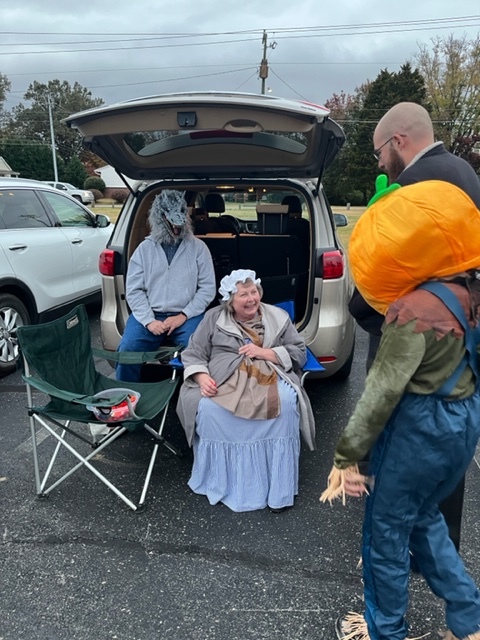
3. Trunk or Treat. We’ve never been in a church that did this. but the church we are visiting did this week both as a community outreach and to provide a safe place for kids to dress up and get candy. Most of the adults giving out candy dressed up, too. Jim and I resurrected our Red Riding Hood’s Grandmother and the Big Bad Wolf outfits from a couple of years ago. I thought some of the kids would be afraid of Jim’s mask, but they mostly just laughed or growled when they saw him. One little one kept his distance, though, and stared. Jason, Mittu, and Timothy came out for it, and it was a lot of fun.

4. Getting a physical is not fun, but getting it over with is nice. Plus I had a fairly good visit this time. I am not always happy in trying to discuss things with this doctor—he tends to brush off my concerns. But we had a good discussion this time.

5. Tidying the blog and around the house. Nothing major, but I deleted a few defunct things from my sidebar got some things put away at home. It’s always nice to neaten and restore order.

Finally, I wanted to share this quote from a book I am reading, Joy: A Godly Woman’s Adornment by Lydia Brownback. This seems to encapsulate Friday’s Fave Five:

“If we are not looking for the good things, we may fail to see them when they come. That’s part of why thankfulness is so important. Offering thanks to God, no matter what is going on in our lives, is a way of acknowledging that he knows exactly what he is doing and that we can trust him” (p. 28, Kindle version).

I liked this one as well:

“Sometimes thankfulness is a choice we make rather than a feeling we have” (p. 28).

October Reflections

Once again, we’re nearing the end of another month that flew by quickly. Though there are a few days of October left, I thought I’d go ahead and take a look back.

October is usually a quiet month, with no family birthdays (except my brother’s near the beginning) and no major holidays. I had completely forgotten about pumpkin carving/decorating with the family. We enjoyed doing that last weekend. And I had a couple of medical visits this month. On one hand, it’s nice to have those in a month where nothing else is going on–on the other hand it would have been nice to have a month without anything else on the calendar. But they have to be done some time.

We’ve really enjoyed the changing leaves and cooler temperatures. We’ve had a couple of early morning freezes, but otherwise, the weather has been quite comfortable. And the fall color is hanging on for a good while this year.

I haven’t quite known whether to mention it here, but we recently made the sad decision to leave our church. We love the people, and because of that tried to stay as long as we could. But we have some major differences in doctrine and emphases. We don’t consider each other heretics or anything like that. 🙂 The church was becoming incorporated and encouraging “official” membership, which we hadn’t had yet, since the church was just started a few years ago. Part of the pledge for church membership was promising to support the church’s teachings, and there were some we felt we couldn’t.

It’s a bit difficult to seek a new church, both in feeling “homeless” and in evaluating new places. As I said in Monday’s post, we know no church will tick every box. And churches with the same statement of faith can still vary widely in personality, emphasis, and secondary doctrines.

Creating

I didn’t make any cards this month, though I need to work on one in the next few days.

Watching

We seem to be the only people who enjoyed The Rings of Power, kind of a prequel to The Lord of the Rings.

We also enjoyed Red Tails, about an African American crew during WWII (warning: a smattering of bad language).

Reading

Since last time, I have finished (titles link to my reviews):

  • Always, Only Good: A Journey of Faith Through Mental Illness by Shelly Garlock Hamilton. Ron and Shelly Hamilton’s oldest son began experiencing mental illness in his teens, eventually taking his life in his early thirties. Shelly tells his story and offers encouragement to those whose loves ones walk the same path.
  • Women and Stress: A Practical Approach to Managing Tension by Jean Lush and Pam Vredevelt. I didn’t agree with every little point, but the authors provide a lot of great, practical tips.
  • Enchanted Isle by Melanie Dobson, fiction. A young American woman travels to the Lake District of England, where her mother had visited twenty years earlier. An unsolved disappearance from that era hangs over the reputation of a young man, and he and the young woman try to find out more. Very good.
  • The Hatmaker’s Heart by Carla Stewart, fiction. A talented hatmaker is both stifled and used by her employer. Meanwhile, the young man she thought she would marry is interested in someone else.
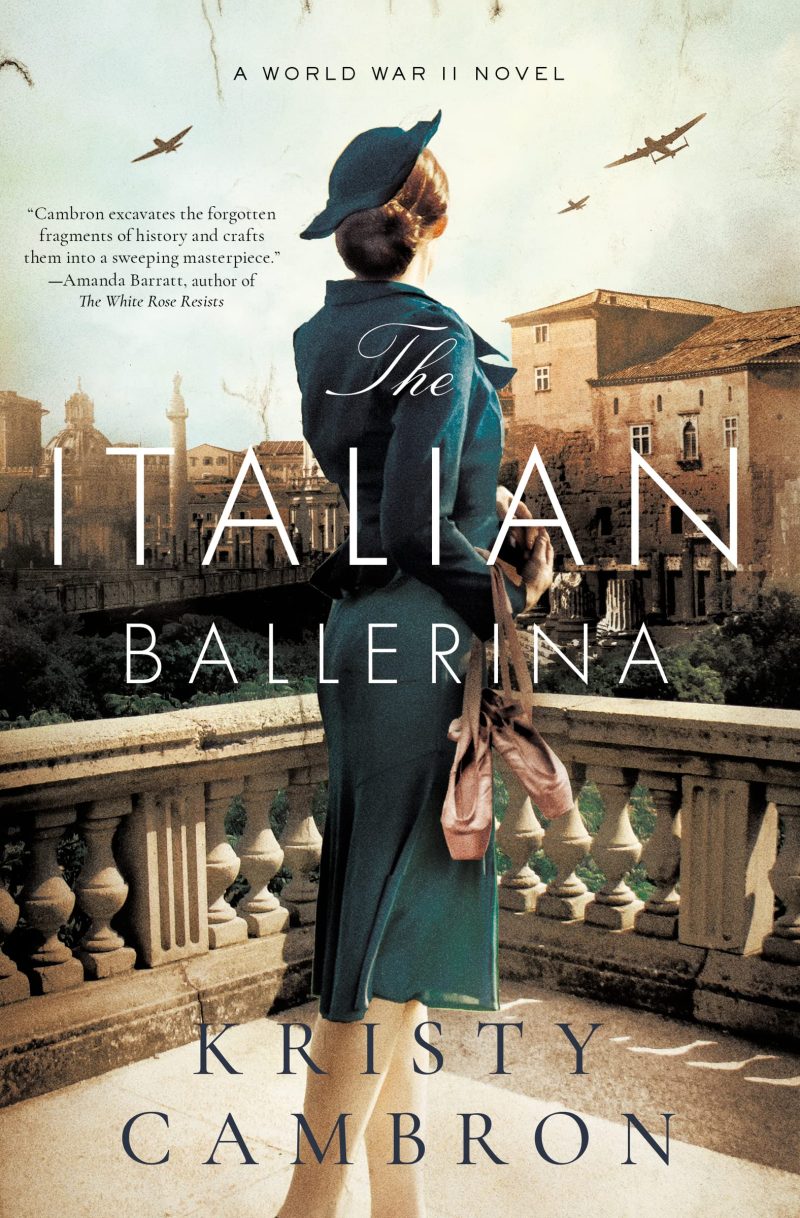
  • The Italian Ballerina by Kristy Cambron, fiction. After her grandfather’s death, Delaney Coleman hears from an Italian family claiming he had something that belongs to them. A trip to Rome and some old letters reveal a side of her grandfather that Delaney had never known–including an orphaned Jewish girl, a British ballerina, and “Syndrome K,” a fake illness manufactured to keep Nazi soldiers away from efforts to smuggle Jews to safety. Excellent. Will probably be one of my top ten books of the year.
  • The Search by Grace Livingston Hill, fiction. A society girl and an old friend going to war realize they are nor prepared for death, and they embark on a search for God.
  • A Daily Rate by Grace Livingston Hill, fiction. A single girl on her own for the first time wishes she could spruce up her depressing boarding house and help its inhabitants. When she receives an inheritance, she’s able to pursue her dreams. But the results aren’t always what she planned.

I’ve been going through 2 Chronicles in my devotional time. Warren Wiersbe combined his commentary on 2 Kings and 2 Chronicles in Be Distinct: Stand Firmly Against the World’s Tides, Since I just read and reviewed that book back in June when I went through 2 Kings, I just looked at the parts specifically dealing with Chronicles this time. Most people don’t think of Chronicles as one of the most exciting books of the Bible. But I really got a lot out of it this time. Between Wiersbe’s book and the ESV Study Bible notes, I think this may have been the first time I realized that Chronicles was not just a rehashing of Kings, but it was written when the Jewish exiles in Babylon were about to come back to Israel. It was meant to encourage and remind them that they were still God’s people and His promises to them as a nation were still in effect. And it was also perhaps a warning–they had gone into captivity because they had disobeyed God, worshiped idols, and would not listen to His prophets. They needed to be careful not to go down that same path again.

I’m currently reading:

  • Joy: A Godly Woman’s Adornment by Lydia Brownback
  • Seasons of Sorrow: The Pain of Loss and the Comfort of God by Tim Challies
  • Be Free (Galatians): Exchange Legalism for True Spirituality by Warren Wiersbe
  • Worthy of Legend by Roseanna M. White
  • Three Fifty-Seven A. M.: Timing Is Everything by Kendra Norman-Bellamy and Hank Stewart

Blogging

  • The More We Know Him, the More We Trust Him. “If we’re not careful, we can approach Bible reading with an ‘all about me’ attitude. What’s in it for me, how does it relate to me, how does it make me feel. Instead, the Bible is all about God. God wants to meet our needs, but more than that, He wants us to know Him”
  • Offers of Safety Are Not Always Safe. The world wants to quiet opposing voices in the name of providing a safe haven. But the safe haven is actually a trap where Satan is enfolding people in error.
  • When Is It Wrong to Complain? Sometimes complaining isn’t so much about the words, but the attitude behind them. It’s not wrong to share burdens or problems.
  • Ministry Beyond Church Membership. It can be discouraging to invest time in church visitors who don’t stay. But our ministry still counts if done as unto the Lord.

Writing

I continue to enjoy our writing critique group and have started implementing some of their suggestions for my manuscript.

But I was recently discouraged by a podcast where a literary agent said an aspiring author needed to have 50,000 followers before even seeking an agent. My jaw dropped and my spirit plummeted. If you don’t know, the days are gone when an author submitted a book to a publisher who did all the marketing. These days, new authors are expected to have an audience before a publisher will take a chance on them. Part of that is due to changes in books and publishing over the last several years (more online purchases, fewer bookstores, cuts in publishers’ budgets and personnel) and to the fact that word of mouth is the best way to promote books.

But when a blogger’s focus changes to getting followers, there’s a subtle shift in everything else they do. And I don’t want to have that shift in focus. I want to keep coming alongside and encouraging others here, sharing what I am learning.

It’s not wrong in itself to seek a larger audience. People in the Bible sought ways to share their message. But when that becomes a primary focus, it can skew everything else.

So I am praying about that and about time to write. If you feel led, this writer and others would appreciate your prayers for wisdom and balance and God’s leading.

As we turn the calendar to November in a few days, we’re expecting another fairly quiet month until Thanksgiving week. I enjoy that there is a theme of gratefulness through the entire month of November.

How was your October?

(I often link up with some of these bloggers.)

A Daily Rate

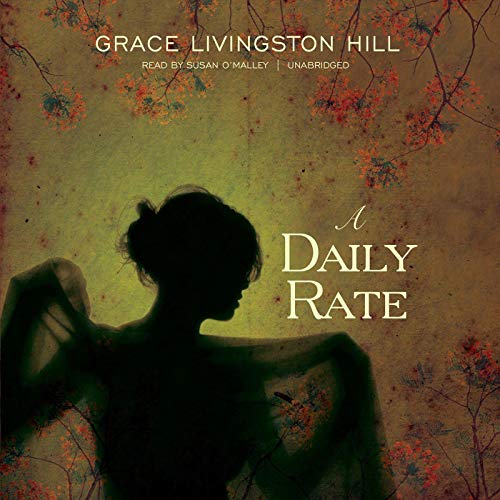
The second free Grace Livingston Hill audiobook I mentioned yesterday was titled A Daily Rate.

Celia Murray lives in a Philadelphia boarding house. She and the other residents put up with awful food and shabby surroundings. She’s concerned about one of the younger men who is hanging out with the wrong crowd in the evenings. A couple of the young women seem giggly and frivolous and into nothing more than dating and novels. Celia wishes she could fix up the place and make it more home-like. Perhaps then some of the others would stay in for more wholesome activities.

Celia would also love to bring her Aunt Hannah to live with her. Aunt Hannah had raised Celia when her parents died. Then Hannah had taken in some other nieces ad nephews as well, but they didn’t seem to appreciate her efforts as much. Due to reduced circumstances, Hannah now lives with another niece who treats her as an unpaid servant and baby-sitter.

When Celia comes into an unexpected small inheritance at the same time her landlady has to take a leave due to medical problems, Celia is able to make both dreams come true. She brings Aunt Hannah to help her “mission of making one bright little clean home spot for a few people who had hitherto been in discomfort.” They start small with a few touches here and there, but the biggest change is in providing nourishing food in a clean and attractive setting.

Though Celia has good intentions, she comes across as somewhat judgmental. Plus she is impatient. When her efforts appear to fail, she wants to give up. But Hannah gently helps her gain the right perspective.

One level of the plot has to do with the transformation of the home and boarders, but another level focuses on Celia’s maturing.

A Daily Rate was one of Hill’s earliest novels, written in 1900. The Search, mentioned yesterday, was written 19 years later. Like any author, Hill’s growth as a writer can be seen in her later book. But this one was good as well. It was fun in both books to hear the slang of the day and to get picture of life in that era.

I especially appreciated the emphasis in A Daily Rate on how homemaking can be a ministry to a home’s inhabitants. Even though that’s my chosen profession, I can still get caught up in all the “stuff” that has to be done and have not the best attitude about it. It helps to be reminded that the “stuff” of housekeeping isn’t an end in itself.

The Kindle version of this book is available for 99 cents at the time of this writing.

The Search by Grace Livingston Hill

Somehow I never read Grace Livingston Hill, even though her books were very popular with young women when I was in my teens and twenties. I thought of them as clean, sweet romance novels. Though most fiction will include romance, no matter the genre, I prefer novels with more to them.

But recently I finished my audiobook and wouldn’t receive a new credit for my next book til the end of the month. I scrolled through Audible’s selections that are included free with membership. I found a couple of Hill’s books there, so decided to give them a try.

The first was titled The Search. Ruth Macdonald is a society girl whose life consists of parties and outings with friends. When WWI starts, Ruth helps in ways that ladies of her class did: making bandages, knitting socks and sweaters for soldiers. etc. Some of her male friends became officers. But the magnitude and meaning of the war didn’t really sink in until she accidentally came upon a group of people seeing draftees off. There Ruth saw an old classmate, John Cameron, who was not of her “set,” but who had done her a kindness when they were children. Ruth is struck by his tender good-bye to his weeping mother and his brave, resolute face. Their eyes met for a brief moment.

Ruth decides to write to John as a friend to tell him she still remembered what he did for her so long ago and to express her appreciation for his part as a soldier. She writes that she hadn’t really thought of the sacrifice young men were making until she saw him.

John is touched by Ruth’s letter, and they begin corresponding regularly. When John gets leave to come home, he asks to visit Ruth.

But then he learns that an old enemy plans to marry Ruth. Could Ruth really love someone like that?

Then this old enemy becomes an officer in John’s company and makes his life miserable.

As John knows he must be prepared for death when his company leaves for France, he tries to search for God. His home minister is not much help. But someone he meets on base gives him a New Testament, and various contacts along the way shed light. But somehow he still doesn’t comprehend.

He tells Ruth about his search, and she realizes that, even though she has been in church all her life and been a “good” girl, she doesn’t really know God either. She embarks on a search of her own.

Hill’s style and tone seemed very similar to Louisa May Alcott and D. E. Stevenson, though Hill is more overtly Christian. Hill’s lifetime was between the other two ladies, overlapping them each by a few decades.

I enjoyed the story quite a lot and wished I had read them in my younger years.

A Kindle version of the book is currently available for 99 cents.

Ministry Beyond Church Membership

When we knew we were going to move from GA to SC several years ago, we checked into churches and schools as well as housing long before time to go. One church had a Christian school that we liked. But on our first day visiting the church after our move, the pastor announced his resignation due to health problems.

We continued visiting for a while to make sure the school would be a good place for our kids. But we didn’t feel we could make a decision about the church until they chose a new pastor and we could see what kind of man he was and what direction they were going.

So we continued to visit around. We finally settled our choice between this church, still without a pastor, and one other. At this second church, we were invited to attend a membership class to learn what the church was all about. The class was supposed to run about four weeks, if I remember correctly. But the class discussions stretched the length of the class out for several more weeks. We got to know a few people and were asked to participate in various church functions.

In the meantime, the first church called a new pastor. We went back to that church a few times and met with the pastor. Both churches were good, but we felt this first church was a better fit for us.

My husband called the pastor of the second church to let him know we wouldn’t be attending any more. The pastor asked if they had done anything wrong that would cause us not to join there. No, my husband said. Theirs was a fine church. We just felt the first church was where we should be at this point in time.

Any time we ran into the second pastor in town, the encounter felt a little awkward. We hadn’t meant to “lead them on.” In hindsight, perhaps we should not have attended the membership class until we knew we were ready to take that step. On the other hand, the class was presented as the best way to learn about the church. We also didn’t feel we should have abstained from church fellowships, the Missions banquet, etc., until we joined. Going to those events is part of getting to know the church.

I know it can be frustrating to feel like you’ve invested time in people who visit your church, only to have them join somewhere else.

But if I had a chance to speak to the pastor or anyone from the second church now, I would love to tell them your ministry counted, even if we didn’t join. The teaching, kindness, invitations, and conversations were not wasted. They still ministered to us.

Most pastors and church members know that, deep down. They are kind to people for the Lord’s sake, not just to gather church members. Yet I understand the potential for frustration and disappointment.

Our pastor in GA used to faithfully visit people and talk to them about the Lord. He once commented that when someone he talked to became a Christian or decided to get back into church, suddenly relatives seemed to come out of the woodwork to fold the person into their church. He was tempted to think “Where were you before now?” But he knew the principle that one person plants the seed, another waters, but God is the one who brings a soul to Himself (1 Corinthians 3:5-9). While experiencing a pang that his own church was small, ultimately he wanted the new believer or reclaimed backslider to be where God wanted them, where they could best get established and grow in Him. And I’m sure most ministers and church members want the same.

The last time we searched for a new church, we noticed that not many people greeted first-time visitors. The pastor always made it a point to meet us (with one exception). But often only one other person spoke to us beyond a nod. Perhaps they think the occasional new face is just passing through. It’s usually after a few visits, especially to smaller services like Wednesday prayer meetings, before people seem to loosen up. I don’t think they are consciously thinking, “We”ll see if they’re going to stick around first before we open up to them,” but it can feel that way. I know greeting strangers in church feels awkward except to the most outgoing extroverts. One of the hardest things for me to do is greet someone I don’t know. I’m usually fine once I get started, but that initial contact can be daunting. But it’s always worth it.

So many churches sound the same on their websites. Even churches with almost identical statements of faith can have vastly different personalities and emphases. My husband said that “no” concerning a potential church is relatively easy to come to, but a “yes” takes longer. Sometimes on the very first visit, we can tell a church is not for us. But other times, it takes a while to really get a feel for where the church is and where it’s going. I suppose it’s an embarrassment of riches that in most American cities, we have so many options to choose from.

No church is perfect, of course. None will tick every little preference. Church visitors know that.

But as they seek the place God has for them, where they can best grow and serve, they might have to try several places. Choosing one doesn’t necessarily mean there’s anything “wrong” with the others.

So as people come through our doors, we welcome them, we minister to them as unto the Lord, we want God’s best for them. If they don’t stay in our church, they’re still “family,” if they are believers. If they don’t know the Lord, we lovingly try to point them to Him. We hope they all stay on. But if they don’t, we want to be able to rest in the fact that we’ve helped them draw closer to Him in the time they were with us.

(I often link up with some of these bloggers.)

Laudable Linkage

Here’s another round of good reads found this week.

There’s No Growth Without Death, HT to Challies. “I’m sure you’ve heard good Christians say things like I want to know God more this year. I want to be more prayerful. To read my Bible more regularly. To be more committed at church. Perhaps even give more. The problem is like with many new year resolutions they don’t see beyond February. Why? Because with most good intentions we don’t really think they have a cost.”

What to Say to Someone Suffering Like Job, HT to Challies. “The book of Job does not directly tell us how to address Job-like suffering. But I think we can sketch what a helpful answer would be, if we take an approach exactly opposite from his friends.”

How to Be Gracious When Haters Gonna Hate, HT to Challies. “If indeed I have anything valuable to say about graciousness, it’s because I have the best Teacher. Let me just take you through three Bible passages I go to when I realize that there are theological critics under my skin and normal tweezers aren’t getting them out.”

Praying in Public, HT to Challies. Lisa offers some good tips for getting beyond the awkwardness of being asked to pray in public.

Getting America’s Most Famous (or Infamous) Sermon Right, HT to Challies. “Edwards expounded the mercy, grace, and goodness of God to an equal degree with the wrath of God. Therefore, contrary to popular understanding, being in the hands of an angry God isn’t strangulation, it’s mercy. God’s hands are full of grace. They are the only force keeping you out of hell this very second. Every moment in his hands is an opportunity to turn to him and live.”

The Need for Roots, HT to Challies. “A few years ago I noticed how many of my favourite authors were writing during or immediately after World War II. It had not occurred to me before, and I wondered why it might be the case.” It had not occurred to me, either. Some interesting observations.

The Birth of Narnia and Why Tolkien Hated It, HT to Challies. I had heard a little about this, but I was glad to read more. I’m glad Lewis persevered!

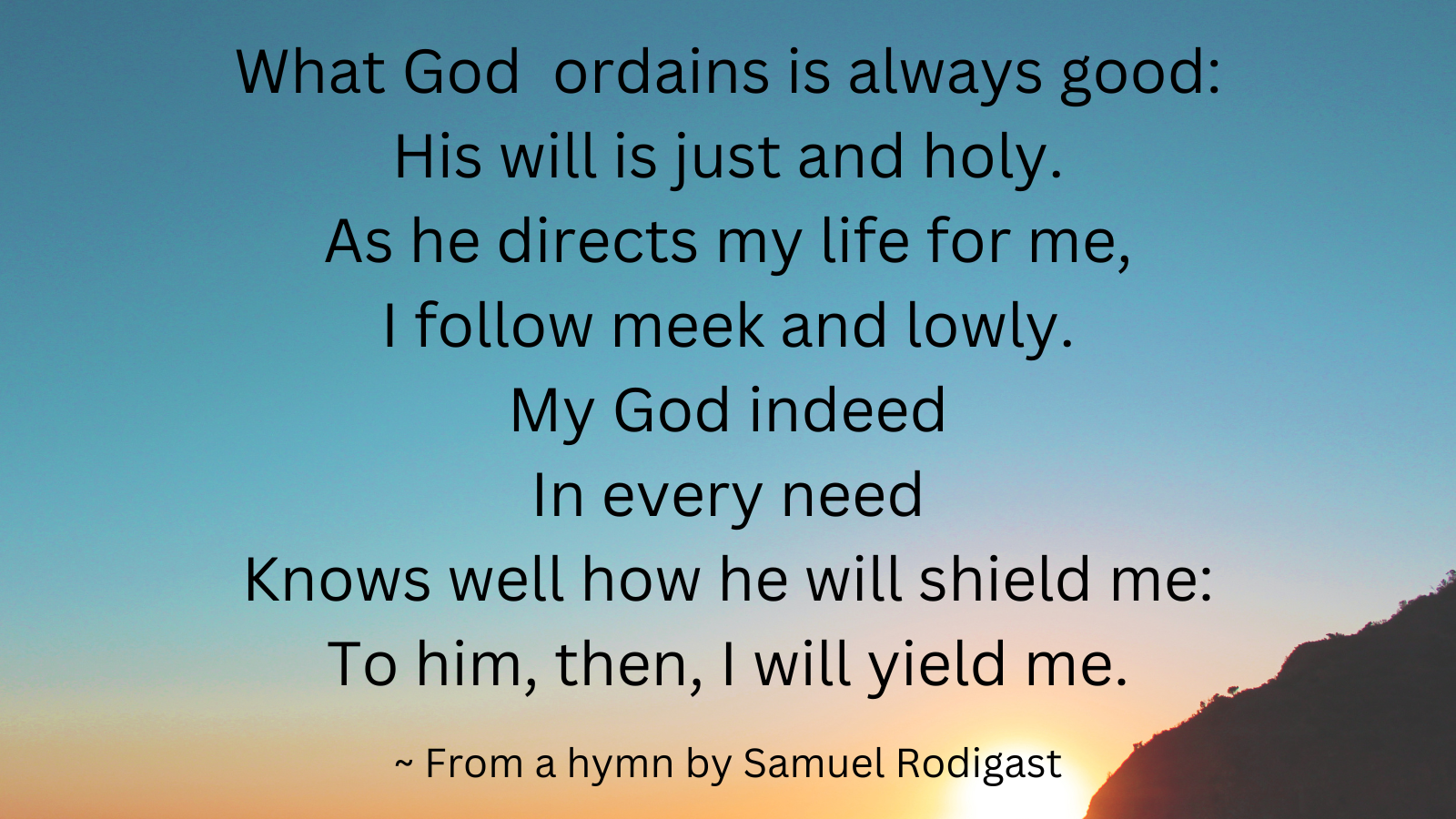
I love the hymn “What God Ordains” by Samuel Rodigast. This is the first stanza:

Friday’s Fave Five

I appreciate our regular practice of pausing at least once a week to remember the blessings of the week with Susanne and friends at Living to Tell the Story.

1. The University of TN vs. Alabama game. Neither my husband and I are much into sports. But when we moved to Knoxville, it was hard not to get caught up into Vols fandom. The last few years, however, we haven’t been able to see the games on our particular cable plan. Last Saturday’s game was on CBS, so we turned it on mid-way through the second quarter. Man, what a nail-biter. Each side had some great plays, and each side made mistakes (they’re only human, after all). I hadn’t realized that there was a particular rivalry between these two teams, with AL winning the last 15 or so of their matches with UT. But UT won with a field goal in the last minutes. I’m thankful the game we got to see was such a good one.

2. Dinner with the family. We usually see Jason, Mittu, and Timothy at least once a week, but hadn’t seen Jesse since my out-of-town family was here a couple of weeks ago. Mittu made dinner for us all Sunday night–tilapia, garlic mashed potatoes, and broccoli in cheese sauce. Then we played a couple of games.

3. Newish clothing. I had ordered some long-sleeved items last year near the end of winter, but didn’t have a chance to wear them much before the weather turned warm. It’s been fun to rediscover those this year and to find that my clothing is pretty well set for the season.

4. A favorite old sweater. I have newer, better looking sweaters, but they’re a little heavier and thicker. The one I wear most is old, stretched out, frayed, and even has some holes—but it’s just the right weight for around the house. One bonus: since it’s already so well-worn, I don’t care if I spill on it or snag it on something. But I’d be embarrassed to wear it out or even have anyone but family see me in it at home. I’d love to find something the same weight to replace it with.

5. Our beautiful fall weather and color continue, though we’ve had early morning freezes a couple of times.

Some of you who have participated in FFF for a long time may remember Debbie in Canada (Edmonton) who used to blog as Purple Grandma, though her blog doesn’t appear to be online any more. Her family and ours attended the same church for a decade or more after we were first married. She and her husband planted Foundation Baptist Church in Calgary, and I believe they began Foundation Baptist College, or were, at least, instrumental in starting it. Debbie has been battling cancer recently. It started in her pancreas but has metastasized to other parts of her body. She keeps having bad reactions to different combinations of chemo—fever, severe digestive issues, low white blood count. I think she has ended up in the hospital after almost every treatment. Her doctor discontinued chemo, saying it was killing her. Their only other option appears to be various herbal treatments and supplements. Debbie is ready to go to heaven, but she’d love to stay around for a while longer with her family. If you’re a praying person, I’m sure she would appreciate your prayers. If you’d like to follow her journey, you can find updates at Mama Talbert’s Cancer Fight on Facebook.

The Italian Ballerina

The Italian Ballerina by Kristy Cambron is one of those books that makes you want to put everything aside and just read.

Delaney Coleman has just returned home to help her parents after the death of her grandfather. She learns that they’ve received notices from a family in Italy saying they have a claim to something of her grandfather’s. Delaney’s mom has ignored the messages, but Delaney looks into the claim.

She speaks to Matteo, who says that Delaney’s grandfather owned a small ivory suitcase printed with cherries on the outside. He claims that the suitcase belongs to his grandmother, and she’d like to have it back. His family offers to fly Delaney and the suitcase to Rome.

Intrigued and confused, and as a writer “between pens,” as she puts it, Delaney decides to accept the offer. In Rome, Delaney meets Calla, Matteo’s grandmother. Calla can’t speak English, but she gazes at Delaney and says, “Salvatore.” Delaney and Matteo work together to learn the connection between their grandparents.

Scenes switch back to Delaney’s grandfather’s time before and during WWII. Court Coleman had gotten himself into trouble and pushed away Penelope, the girl he loved. Roped into helping Penn’s father at their orchard in order to pay off his debts, Court begins to settle down and wonder if he might have a chance with Penn again. But then America enters WWII, and Court is sent to Italy as a medic.

One day as his unit is on a reconnaissance mission, Court and his commanding officer, AJ, are stranded while a Nazi troupe is rounding up Jews. They are horrified to watch the Nazis shoot a couple in cold blood and leave their daughter in the streets. Against orders, Court rescues the girl and is injured in the process.

He wakes up in an Italian hospital. He finds that he is in a quarantine ward, where a mysterious, deadly illness called Syndrome K is running rampant.

Except—Syndrome K is a made-up illness, created to keep the Nazis away from the ward while the doctors and Catholic priests who own the hospital hide and send out Jews.

A British ballerina named Julia and her partner are stranded at the hospital as well while he heals from a gunshot wound in his leg. She helps Court and A. J. and the little girl with them, as well as the doctors in the ward.

Unfortunately, the audiobook I listened to did not include the author’s information about what parts of the story were true, and our library system didn’t have a copy.. But the part about Syndrome K was real, as detailed here.

There are many strands nicely woven together in this novel, many developing relationships, and the unfolding mystery of the connection between Matteo’s and Delaney’s grandparents. The Amazon description says, “Based on true accounts of the invented Syndrome K sickness, The Italian Ballerina journeys from the Allied storming of the beaches at Salerno to the London ballet stage and the war-torn streets of World War II Rome, exploring the sometimes heart-wrenching choices we must make to find faith and forgiveness, and how saving a single life can impact countless others.”

I’ve gotten used to time-slip novels that go back and forth between history and present day. Kristy has written a few with three timelines. The only problem was that the scenes flashing back to Court’s earlier life weren’t in chronological order. The first scenes were in Italy during WWII–then there’s a scene at Penn’s family’s orchard before the war. The same thing happens with Julia’s timeline. The format made it a little confusing and jarring, although it only took a sentence or two to get reoriented. I had to train myself to listen for the date and location listed at the beginning of each chapter, which is a little harder to do with an audiobook.

But other than that, I loved everything about this book. I wanted to race to see what happened, yet didn’t want it to end.

I listened to the audiobook, wonderfully read by Barrie Kreinik.