Book Review: 10 Gospel Promises For Later Life

I don’t usually begin book reviews this way, but I feel I must say at the outset that I cannot recommend 10 Gospel Promises For Later Life by Jane Marie Thibault.

The premise is a good one. Mrs. Thibault has been a clinical gerontologist and has worked with the elderly for nearly thirty years. After a consultation with a pastor whose housebound church members said they had trouble relating to the gospel any more for various reasons, Mrs. Thibault began discussing this with her patients and heard similar comments. So she compiled a list of ten major concerns elderly people face — among them, depending on others for help, fear of illness, pain, fragility, disability, loneliness, losing everything and ending up in a nursing home, life after death — and sought to apply gospel truth to them.

While there are some helpful parts to the book, unfortunately there are several major difficulties.

In a section speaking of Jesus’ suffering on the cross, the author says:

Jesus realized that his suffering was necessary. The only way he could convince humanity of God’s love for us was to die for his cause and his teaching. He put his money where his mouth was, dying for his message out of total and complete God-love for the entire world’s well-being until the end of time (p. 85).

Jesus’ death was much more than dying for his cause to convince us of his teaching! He died so that those who believe could be”justified freely by his grace through the redemption that is in Christ Jesus:Whom God hath set forth to be a propitiation through faith in his blood, to declare his righteousness for the remission of sins that are past, through the forbearance of God; To declare, I say, at this time his righteousness: that he might be just, and the justifier of him which believeth in Jesus (Romans 3:24-26.) If a judge told a convicted murderer that he could go free, everyone would cry that that was unjust. In the same way, God cannot just forgive sins without satisfying His justice. When Jesus took our sin on Himself and suffered our punishment, that act satisfied God’s holiness and justice, so He could justify us and still be just Himself, and those who receive Christ as Savior receive as well “the righteousness of God which is by faith of Jesus Christ unto all and upon all them that believe” (Romans 3:22).

Another major problem I have with the book is Mrs. Thibault’s belief that living people can ask the dead for help. Speaking of “institutionally acknowledged saints,” she writes:

“If they continue to live in God’s love and to participate in God’s love of us, the saints might also help us in our daily lives, especially if we ask them to enable us to grow in our love of God and one another” p. 121-122).

“I also believe that every single Christian in the church visible (that’s us) can ask for help from anyone in the church triumphant (those who have been promoted into heaven before us”) (p. 123).

She relates that in struggling with forgiving her mother because of feeling that her mother had been apathetic to her and emotionally abandoned her before her death when the author was a teenager, the author wrote a prayer to her mother asking that the two of them work on healing their relationship.

There is nothing in the Bible that encourages interaction with the dead: in fact, there are warnings against it. Deuteronomy 18:11 says, “There shall not be found among you any one that maketh his son or his daughter to pass through the fire, or that useth divination, or an observer of times, or an enchanter, or a witch.Or a charmer, or a consulter with familiar spirits, or a wizard, or a necromancer.  For all that do these things are an abomination unto the LORD: and because of these abominations the LORD thy God doth drive them out from before thee.” The only time I can remember in the Bible that anyone tried to communicate with the dead was in I Samuel 28 when King Saul was desperate because the Philistines were about to attack him and God wasn’t answering his prayers any more because of his disobedience. He tried to contact the prophet Samuel through a medium, and Samuel did not say, “Hi there, what can I do for you?” He said, “Why hast thou disquieted me, to bring me up?” He not only did not help him, but he prophesied that Saul and his sons would be die. There is nothing I am aware of in the New Testament that would negate these warnings. Mrs. Thibault is not advocating using mediums or having seances, but still, there is nothing in the Bible instructing us to seek help from the dead or to pray to anyone other than God. Why would we want to, anyway, when He has promised to meet every need exceeding abundantly above all that we ask or think?

A third major problem is the idea that “By interpreting our suffering as energy that can be useful to the human community and by offering this energy to God, we unite our sufferings with those of Christ…In effect, we turn the energy of our suffering into a gift for others to use for their well-being” (p. 86). She posits “According to the string theory of quantum physics, we are all inter-connected by subatomic ‘strings’ along which energy flows from one created thing to another. We can use our will, our intention, to direct this energy wherever we want it to go” (p. 88-89).  According to my husband, who is a physicist, this is a faulty application, and the string theory is just a theory: according to Wikipedia, “The theory has yet to make testable experimental predictions, which a theory must do in order to be considered a part of science.” Mrs. Thibault says “This sounds like the scientific equivalent of Jesus’ image of the vine and the branches” (p. 89), but Jesus is speaking of the spiritual life and energy He gives to those who abide in Him (John 15), not of our directing energy wherever we want it. She writes, “Jesus has promised us that we can use our suffering energy for the welfare of all” (p.91). Not in any version of the Bible I have ever read. There are many Scriptural reasons for suffering, but nothing like this is mentioned: even the section of suffering for others’ sake does not indicate this kind of thing. The author tells of “dedicated suffering” as a group for agreed upon persons and  says that those who participated in this kind of thing decreased their doctor visits and personal complaints. I don’t doubt that they felt better, but I think it was more likely due to the thought that their pain could help others and the practice of each participant expressing his or her pain. It is helpful to discuss your pain with others who also experience pain who would uniquely understand you. The author says this practice of offering the energy created by our pain to others or to God for Him to use for others “has its theological foundation” in Colossians 1:24: “Who now rejoice in my sufferings for you, and fill up that which is behind of the afflictions of Christ in my flesh for his body’s sake, which is the church.” But I do not believe this type of practice is what Paul is talking about (my views on what this verse is teaching align more with what is taught here.)

Even though there were parts of the book I found helpful and useful, I cannot endorse it overall for these reasons.

(This review will also be linked to Semicolon‘s Saturday Review of Books.)

How not to be a grumpy old lady

I had a couple of post ideas floating around, but this has been an different kind of day with much to do and I never did sit down and develop either of them. Then this afternoon I was listening to a radio program about growing older and knew I wanted to share some of what was said.

The premise was that you don’t become a sweet little old lady when you get to whatever age you deem “old” — when you get older you’ll be an extended version of whatever you are now. So if we want to be sweet rather than grumpy old ladies, we need to be working on that now. Several ladies then shared things they’d learned about growing older and ways they’d learned to cope with the differences in their bodies and ministries.

The main thing I wanted to share was something they read that I had heard before, but it brought both a smile and conviction to my heart today as well. I found several variations of it online; this is one:

‘Lord, you know better than anybody that I’m getting older and will someday be old. Keep me from being talkative; from the fatal habit of thinking I’ve got to say something on every subject and on every occasion. Release me from the need to straighten out everybody’s affairs. Keep my mind free from the recital of endless details; give me wings to get to the point. I ask for grace to listen to the tales of others’ pains and to endure them with patience. But seal my lips when it comes to my own aches and pains, for they’re increasing, and my love of rehearsing them is becoming sweeter as the years go by. I ask for improved memory, but even more for a growing humility and a lessening cock-sureness when my memory seems to clash with the memory of others. Teach me that occasionally I may be mistaken. Keep me reasonably sweet. I don’t want to be a ‘saint’ because some of them are so hard to live with – and a sour old person is one of the crowning works of the devil. Make me thoughtful, but not moody; helpful, but not bossy. With my vast store of wisdom, it seems a pity not to use it; but you know, Lord, I still want to have a few friends at the end. Give me the ability to see good things in unexpected places and talents in unexpected people, then give me the grace to tell them so. Amen.’

Maybe this was so poignant to me because I can see traces of some of those tendencies in myself even now!

I did a little searching and didn’t find the session itself available online, but a CD of it is here called “Grumpy Old Ladies or Glad Golden Givers – Which Will You Be?” If you have access to a BBN station, the second half of the program will be aired on their “Building Blocks For the Family” segment at 2:30-3:00 p.m. EDT tomorrow, March 18. You can listen to the station online but I don’t know if they have all the programs online that they do on the radio. But if you can arrange to listen to it, I can recommend at least what I have heard so far as very helpful.

Finishing well

I just finished reading II Chronicles. Though it has a reputation for being pretty dry, it actually has many great truths in it. II Chronicles covers the history of the kings of Israel and Judah from the time of Solomon until the Babylonian captivity. Most of the kings were bad, in that they did not follow Jehovah God in the way He prescribed, and many followed idols and false gods instead. Most of the few who did start out well did not finish well. And though “finishing well” is not what “the” theme of the book probably is, it’s what stood out to me in this reading.

Solomon, for all his wisdom and all the blessings he experienced during his early reign, fell away when his many wives led him to other gods.

“Asa did that which was good and right in the eyes of the LORD his God” (II Chronicles 14:2), was marvelously helped in battle after prayer, took down idols, removed even his own mother from her position because of the image she made. But in later years he sought the help of a pagan king instead of God and even imprisoned the prophet who came to warn him (16:1-10). He ended up with diseased feet or which he did not seek the Lord at all.

“Joash did that which was right in the sight of the LORD all the days of Jehoiada the priest” (24:2), but after Jehoiada died, Joash fell away to the point of killing Jehoaida’s son (24:19-27).

Amaziah “did that which was right in the sight of the LORD, but not with a perfect heart” (25:2). He received great help from the Lord when he did things His way, yet instead of continuing to follow Him, he “he brought the gods of the children of Seir, and set them up to be his gods, and bowed down himself before them, and burned incense unto them.  Wherefore the anger of the LORD was kindled against Amaziah” (25:14-15).

Uzziah, “as long as he sought the LORD, God made him to prosper” (26:5), and “And God helped him against the Philistines” and other enemies, “and his name spread abroad even to the entering in of Egypt; for he strengthened himself exceedingly” (26:7-8). “And his name spread far abroad; for he was marvellously helped, till he was strong. But when he was strong, his heart was lifted up to his destruction: for he transgressed against the LORD his God, and went into the temple of the LORD to burn incense upon the altar of incense” (26:15-16). The NASB puts it this way: “But when he became strong, his heart was so proud that he acted corruptly, and he was unfaithful to the LORD his God.”

Josiah was one of Judah’s best kings, leading a revival after the book of the law was found during temple repairs, yet he went to battle and “hearkened not unto the words of Necho from the mouth of God” and ended up dying of wounds received in that battle.

Will I forget the things I knew, like Solomon did, and be led away by other loves, or will I keep my first love? Will I forget from whence my help comes, like Asa did, and look for help elsewhere? Will I fall away after my spitual mentors are gone, like Joash? Do I serve God with a perfect (complete) heart, or am I holding anything back, like Amaziah? Will I be lifted up with pride like Uzziah? Will I neglect to listen to wise counsel from God’s Word, like Josiah?

May I heed the warnings and lessons in these examples. May God save me from these and other failures and help me to keep my eyes on Him and to finish well.

Book Review: Living with Purpose in a Worn-out Body: Spiritual Encouragement for Older Adults

When I saw Mocha With Linda mention Living with Purpose in a Worn-out Body: Spiritual Encouragement for Older Adults by Missy Buchanan, I knew I had to get it for my mother-in-law and myself. Missy was a daily caregiver to her mother, who lived to be 92, and now Missy spends much time visiting with other residents in the senior residence center where her mother spent her last days. Her experiences make the  devotionals she began writing for senior adults ring with authenticity.

This book covers several areas: pain, loneliness, feeling forgotten, the treasure of friends, sleep, purpose, clutter, medicine, bingo, laughter, sensible shoes — many aspects of an older person’s life. The devotionals address these issues in a genuine way. Some are poignant, some are fun, but all bring the reader back to focus on God in every issue. Here is a sample:

Sometimes I wonder why you have left me on this earth.
Ia have outlived so many family and friends. Why do I linger?
What purpose could you have for me now?
Look at my hands. Once strong and sure, they are unsteady and frail.
My mind, once quick and incisive, now falters under the weight of names and faces.
What real purpose do I serve knitting away the hours, surfing the channels, dozing through the afternoon?
Then Your Spirit stirs my heart and convicts my soul.
You are not a wasteful God!
The length of my earthly days is a mystery to me, but one thing I know for sure. You have created me with an eternal purpose.
How can I be more like Christ today?
Whose life can I touch with kindness?
Lord, give me an extra measure of grace when I feel that I’m too old to be useful.
Help me as I take my limitations in stride as I search for opportunities to serve you.
My purpose has not withered away with another birthday.
It is rooted in eternity.

Psalm 33:11:
But the plans of the LORD stand firm forever,
the purposes of his heart through all generations.

The text in the book is large print, yet the book as a whole is slim.

I would highly, highly recommend this to any “senior saint” you know as well as family members and caregivers.

(This review will also be linked to Semicolon‘s Saturday Review of Books.)

Randomness

I was going to do the usual Wednesday Random Dozen today….but I could only come up with answers for about half the questions. Then my mother-in-law’s hearing aid suddenly stopped working, and I had to take her over to get it checked, and didn’t get back til lunch time. Then I was just tired and not feeling well for a good bit of the afternoon.

Thankfully her hearing aid revived with a thorough cleaning and changing the tube. I was afraid they were going to have to send it off for repairs, and she really can’t hear much of anything without it. We still have her old one somewhere, but it is not a lot of help. It’s hard to communicate and disconcerting to her when she can’t hear, so it was a blessing that that’s all that was needed.

She was thrown off a bit when I came in because she had forgotten I was taking her in (somehow the lack of hearing wasn’t a reminder…), and she went back and forth from apologizing for forgetting (though it was not a big deal at all — just a matter of waiting for her to use the restroom) to frustratedly saying, “I wish you had reminded me!” 🙂 We had talked about it and I had left her a note…but such is life at 81.

I love the hearing aid doctor’s medical building, though. They have people waiting at the door to assist people, and they’ll open the car door, bring out a wheelchair, and wheel her in while I go park the car and then come back to take her to the appropriate office. She usually uses a walker rather than a wheelchair, but that would be a bit too much of a walk for her.  Then when we’re done I can leave her in the lobby by the door in the wheelchair while I bring the car around, and they’ll wheel her out and help her into the car.

Whenever I take her anywhere other than home or church, she almost always comments about hoping I know the way or being glad I know the way, because she sure doesn’t. 🙂 I assure her in an upbeat way that yes, I’ve lived here for twelve years and and pretty familiar with the area. But she even did that when she flew with Jim to visit and then later to move here. Even though he is a seasoned traveler, she was all worried about finding the right gate instead of trusting him to find it. But instead of getting frustrated, he told her what gate he was looking for and asked her to help him find it, and that kept her mind occupied and off the worry cycle a little. I guess all of that conveys an understandable underlying insecurity of being ferried around unfamiliar places under someone else’s direction and control. I mentioned a while back logical thinking is one of the first things to go in dementia, in this case the logical thinking that we know the way, and if we didn’t, we could find it, and even if we got lost, we’d find our way home eventually. But, for all that, most of the time she thinks pretty clearly, except for repeating conversations we’ve already had. New unfamiliar situations do trigger more muddled or illogical thinking.

After I took her back to her assisted living place just in time for her lunch there, I looked forward to getting one of my favorite fast food lunches, a McDouble and small fries for $2.18. I love their fries. But when I got home, I had two burgers and no fries. 🙂 I ate one and put one in the frig.

Speaking of fries, when I buy the frozen ones to bake, I usually like the smaller cuts. But the last time I wanted them, they didn’t have them, so I got the regular crinkle cut kind. I just didn’t like them as well. So one day this week when I was using up the rest of them, I tried spraying them with Pam and sprinkling garlic powder, salt, and paprika on them. They weren’t too bad — they need something else, though…

Last night I made peanut butter Rice Krispie treats with melted chocolate and peanut butter chips on top. Mmmmmm…

Only a week and a half til school is out! Yay!

I am loving the last few episodes of Lost. It’s kind of like a good book that I can hardly put down for wanting to see how it turns out, but then I miss it when I am finished. I think the definite end date has helped the writing to be a lot tighter, but I am SO going to miss this show when it is gone.

I was dismayed when Daris was in the bottom two on the Biggest Loser. I have been rooting for him all season, I think because he reminds me of my oldest, in that he is quiet and somewhat reserved. They’ve all come so far, though — I wish them all the best.

Well, I think that’s about enough randonmness — and it is time to go fix dinner. See ya later!

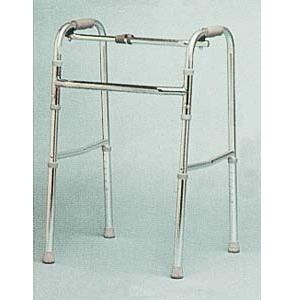
A public service announcement concerning walkers

No, not the walkers babies use, but the ones the elderly or disabled use.

1. Do not pull or jerk on the walker, even if trying to help the person over a bump. There are several reasons for this:

  • It throws them off balance.
  • The walker is an extension of themselves and it is an invasion of their personal space as much as if you pulled on their arm.
  • It can make them feel helpless and embarrassed.

Sometimes, however, the person may appreciate a little assistance if they are having trouble maneuvering. If you see someone trying to get their walker up a step or over a hump, be patient and observe for a moment and see if they are doing all right or seem frustrated. If you think they might like help, offer first. “Mrs. Jones, can I help you get your walker over this step here?” Don’t just jump in and jerk it. Gently lift it, especially being careful if they are leaning on it for balance: you may need to let them take your arm as well, depending on whether they can balance on their own for a moment or need help with a step.

2. The person with a walker usually understands that he or she is a little slow and you may want to get around them, and that’s fine, but please don’t cut in too closely — the sudden movement and closeness can also cause balance to waver.

3. Some people can’t stand long even with a walker. They would love to talk with you, but may need to sit down first.

4. If you see someone coming with a walker, please move out of their way. Often they feel conspicuous and cumbersome and are embarrassed to ask. Some are not, though, and will just call out a cheery, “Beep, beep!” or something similar — please don’t be offended.

5. Similarly, please don’t be offended if they accidentally bump into you. Sometimes, especially with older people, their depth perception is affected as well. Some might not even be aware that they bumped you, but most would be horrified.

I am writing both from the perspective of having used a walker for several months after TM, but also from my elderly mother-in-law’s perspective now. I think most people mean well, but have just never thought about or experienced some of these things from the point of view of one using a walker. A little patience and thoughtfulness are much appreciated.

Please feel free to share anything I may have forgotten or not thought about, but please keep it positive. I don’t want people to think we’re ranting or griping at them, but rather just informing and educating.

A poem for my birthday

(My Friday Fave Five post is below this one.)

I saw this poem several months ago quoted on the Facebook page of a friend’s daughter — a young woman in her mid-20s! I just loved it and set it aside to post on my birthday — today. I’m sharing it for Poetry Friday as well, hosted this week by The Boy Reader.

I shall be older than this one day.

I shall think myself young when I remember.

Nothing can stop the slow change of masks my face must wear, one following one.

These gloves my hands have put on, the pleated skin, patterned by the pale tracings of my days…

These are not MY hands! And yet, these gloves do not come off!

I shall wear older ones tomorrow, til glove after glove, and mask after mask, I am buried beneath the baggage of Old Women.

Oh, then shall I drop them off,

Unbutton the sagging, misshapen apparel of age, and run, young and naked into eternity.

~ Joan Walsh Anglund

So when this corruptible shall have put on incorruption, and this mortal shall have put on immortality, then shall be brought to pass the saying that is written, Death is swallowed up in victory. I Corinthians 15:54

“Despise not thy mother when she is old.”

I was reading on a completely different topic yesterday when I was brought up short as the writer quoted the second half of Proverbs 23:22:

Hearken unto thy father that begat thee, and despise not thy mother when she is old.

We usually think of the word “despise” by today’s definition: “to regard with contempt, distaste, disgust, or disdain; scorn; loathe” (Dictionary.com). But sometimes the word translated “despise” in the KJV has an added layer in addition to those: “to hold as insignificant” (Bible StudyTools.com).

As a general rule, older people aren’t very well respected in American society. Oh, we might respect our individual grandparents and have a general feeling that we should be kind to older people. But they are often the target of jokes and stereotypes, and get behind one in a slow-moving vehicle or try to maneuver through a store having “Senior’s Day,” and frustration (and worse feelings) can abound. We often think of them as “out of touch” and do our best to just tolerate them.

Scripture has a different view of the elderly:

Thou shalt rise up before the hoary head, and honour the face of the old man, and fear thy God: I am the LORD. (Leviticus 19:32)

The hoary head is a crown of glory, if it be found in the way of righteousness. (Proverbs 16:31)

The glory of young men is their strength: and the beauty of old men is the grey head. (Proverbs 20:29)

I have to admit there can be frustrations in dealing with older people, which have become even more acute to me with my mother-in-law moving here: going through the same conversational loop four times in twenty minutes; a loss of social graces they once had; fretting and fears that they once could keep in perspective and under control but that now run rampant, etc. I don’t say these things to “talk down” about her or any older person, but just to be honest. The first verse I mentioned spoke to me in reminding me not to let those frustrations spill over into negative attitudes. We may not always have warm, fuzzy, altruistic, loving feelings when we’re helping or serving others — sometimes we do, but sometimes those come afterward (as one beloved professor used to say, “Good feelings follow right actions”), but we can guard against the negative.

A verse that I sometimes pray just before going to see my mother-in-law is “Strengthened with all might, according to his glorious power, unto all patience and longsuffering with joyfulness” (Colossians 1:11), and I’ve been reminded recently of our Lord’s words that “Inasmuch as ye have done it unto one of the least of these my brethren, ye have done it unto me” (Matthew 25:31-46) (not that I think of my mother-in-law or older people as “the least of these,” but rather I’m reminded that serving anyone else is service to Christ.) I Thessalonians 5:14 reminds me,”Now we exhort you, brethren, warn them that are unruly, comfort the feebleminded, support the weak, be patient toward all men.” And I remember sometimes, too, that some day, Lord willing, I’m going to be elderly, and “And as ye would that men should do to you, do ye also to them likewise” (Luke 6:31).

In some ways I am hesitant to post this because I don’t want to sound as if dealing with the elderly is all a trial of patience, and I don’t want to sound gripey. It can be pleasant, even fun sometimes. I hope those who don’t deal with the elderly and who might think we shouldn’t have any negative feelings will withhold judgment: There are frustrations in any relationship that we need to learn how to deal with Biblically. I’ve made several friends in cyberspace who also care for elderly parents, and I don’t want anyone to think I am talking about them: I’m just sharing what the Lord’s been dealing with me about, and I hope it is a blessing to you, too. It’s been a help to me when I read of your dealings with your loved ones.

The following has also been a blessing to me:

Grandmother’s Beatitudes or Beatitudes for Friends of the Aged

Blessed are they who understand
My faltering step and palsied hand.
Blessed are they who know that my ears today
Must strain to hear the things they say.
Blessed are they who seem to know
That my eyes are dim and wits are slow.
Blessed are they who look away
When coffee spilled at the table today.
Blessed are they with a cheery smile
Who stop to chat for a little while.
Blessed are they who never say
“You’ve told that story twice today.”
Blessed are they who know the ways
To bring back memories of yesterday.
Blessed are they who make it known
That I’m loved, respected, and not alone.
Blessed are they who know I’m at a loss
To find the strength to carry the cross.
Blessed are they who ease the way
On my journey Home in loving ways.

~ Author unknown

If you left a comment recently…

…on the post “Caring for Elderly Parents,” I apologize, but it was accidentally deleted. It was in my spam folder, which I do check every day, because sometimes legitimate comments get caught in there. But I only skim those posts lightly because they are so often vile (why do spammers not find better uses of their time??!!) I skimmed through the spam comments, clicked delete, and just before it disappeared saw what looked like a legitimate lengthy comment on the post about elderly parents, mentioning something about coming up to the one year mark of having moved my mother-in-law near to us. I checked with the WordPress support forum, and there is no way to get it back.

I hope whoever left that comment sees this and resubmits it. I would very much like to read what you had to say! My apologies again.

Laudable Linkage

Hmm…I was trying to come up with a more interesting title than just…”Interesting links.” But I’m not sure that’s “it” either.

At any rate, here are some interesting (looks like I need to get out my thesaurus) things I’ve found this week.

Quilly’s Barefoot Weather made me smile.

Crystal’s A life poured out for others convicted me.

I don’t remember how I found this, but Encouraging Caregivers is a blog that seeks to do just as its title says by one who is a caregiver in her home. Though my mother-in-law doesn’t live in our home, we’re actively involved in her life and care, and I’ve found much here to be helpful. A couple of the many good posts there: Things you can do to encourage yourself and Life with Mom.

Brenda’s Blog from Paraguay has some great, great advice for short-term mission teams. I was thankful that the mission trips my sons have been on were led by people who had been on the mission field, and this echoed much of what they were told. You might pray for Brenda — she’s just found out she has breast cancer and will have to come home to the US for treatment.

I’m not familiar with the blog All you have to give, but from a link somewhere (I forgot to note where) I found this great post on fasting.

I LOVE Anita’s creative space.

Just for fun, I did go head and look up “interesting” at Thesaurus.com: “appealing, entertaining. Synonyms: absorbing, affecting, alluring, amusing, arresting, attractive, beautiful, captivating, charismatic, compelling, curious, delightful, elegant, enchanting, engaging, engrossing, enthralling, entrancing, exceptional, exotic, fascinating, fine, gracious, gripping, impressive, intriguing, inviting, lovely, magnetic, pleasing, pleasurable, prepossessing, provocative, readable, refreshing, riveting, stimulating, stirring, striking, suspicious, thought-provoking, unusual, winning.” I think many of those adjectives apply to many of these links. 🙂 Not “suspicious,” though. And I need to look up what “prepossessing” means (the dictionary can keep me occupied for hours…)

Hope you have a great Saturday. I need to do laundry (again), make a smallish trip to the store, restock the missions closet at church for visiting missionaries tomorrow, and attend a baby shower. And then maybe jump into any of the 101 other things that need to be done around here. Or maybe not. 🙂