Book Review: The Listener

The Listener is an older book by Terri Blackstock, and I had picked it up somewhere along the way, but somehow hadn’t read it yet. Terri is one of my favorite authors, and I have read almost everything she’s written, so I was glad to add this one to the collection.

The premise is that a somewhat indifferent Christian man named Sam, who is more interested in getting out of church early to get to a restaurant, suddenly is gifted with the ability to hear the needs of souls around him. At first it is maddening and disturbing. He goes to his pastor, who at first thinks he needs to see a counselor, until Sam remarks on what the pastor’s heart cry is. His pastor tells him he needs to use this gift to point people to the Lord, but Sam is filled with fear and has all the standard excuses most of us do: I can just be a witness for the Lord by my life; I don’t know how to bring it up; what if someone asks me a question I can’t answer? Sam’s reaction and development of his gift and the reactions of those he talks with as well as his family and friends comprise most of the rest of the book.

I don’t want to give away too much of the plot — it is a very short book, so if I disclose much more I’ll be giving the story away. But I will say I much appreciated the conclusion that we don’t need such a gift, nice as it would be, because we already know what people most need, and we have the Word of God and guidance of the Holy Spirit. But through the use of this gift as a plot device, Terri does an expert job at bringing out the problems and joys of our need to share our faith.

By the way, Semicolon hosts a weekly review of books on Saturdays: bloggers can link to book reviews on their site and/or read book reviews from others.

The Mother at Home

When my older children were little, a book making the rounds among young mothers at church was The Mother at Home by John S. C. Abbott. It was originally published in 1833. Some of the principles discussed in that book were foundational to my parenting.

For instance, he instructs mothers (and this would go for teachers as well) to punish for disobedience, not the results of disobedience. He writes:

Never give a command which you do not intend shall be obeyed. There is no more effectual way of teaching a child disobedience, than by giving commands which you have no intention of enforcing. A child is thus habituated to disregard its mother; and in a short time the habit become so strong, and the child’s contempt for the mother so confirmed, that entreaties and threats are alike unheeded.

“Mary, let that book alone,” says a mother to her little daughter, who is trying to pull the Bible from the table . Mary stops for a moment, then takes hold of the book again. Pretty soon the mother looks up and sees that Mary is still playing with the Bible. “Did you not hear me tell you to let that book alone?” she exclaims. “Why don’t you obey?”

Mary takes away her hand for a moment, but is soon again at her forbidden amusement. By and by, down comes the Bible upon the floor. Up jumps the mother, and hastily giving the child a passionate blow, exclaims, “There then, obey me next time.” The child screams, and the mother picks up the Bible, saying, “I wonder why my children do not obey me better.”

…Is it strange that a child, thus managed, should be disobedient? No. She is actually led on by her mother to insubordination; she is actually taught to pay no heed to her directions. Even the improper punishment which sometimes follows transgression, is not inflicted on account of her disobedience, but for the accidental consequences…. Had the Bible not fallen, the disobedience of the child would have passed unpunished. Let it be an immutable principle in family government, that your word is law.

He describes a better way to handle the situation, then comments, “I know that some mothers say that they have not time to pay so much attention to their children. But the fact is, that not one-third of the time is required to take care of an orderly family, which is necessary to take care of a disorderly one.”

There are many other good principles here, among them: “Never punish when a child has not intentionally done wrong.” “Allowances must be made for ignorance.” “Guard against too much severity.” “Every effort should be made to make the home the most desirable place.” You might not agree with every point (I disagree with his suggestion to have the child ask forgiveness a second time), but overall it is a very helpful and thought-provoking book. I wish I had read it about once a year.

Booking Through Thursday: Manual labor

btt button
The Booking Through Thursday question for today is:

  • Writing guides, grammar books, punctuation how-tos . . . do you read them? Not read them? How many writing books, grammar books, dictionaries–if any–do you have in your library?

These days I only read that kind of thing if I need to look up something in particular. Harbrace College Handbook from English Comp. 101 and 102 over 25 years ago was my go-to book for grammar and usage for ages. Though I still have it on the shelf along with an ancient dictionary, Roget’s Thesaurus, and a few other related books, I most often look things up on the computer these days. Dictionary.com has both dictionary and thesaurus functions. I can usually find answers to grammar and usage questions just by googling.

In fact, I have been needing to clear out some books (no room for any more bookshelves!) and I’ve been thinking of getting rid of a lot of that kind of thing both since my copies are old and since I am more likely to use online versions. I don’t know if I could give up Harbrace, though — he’s been an old friend.

Book Review: The Forbidden

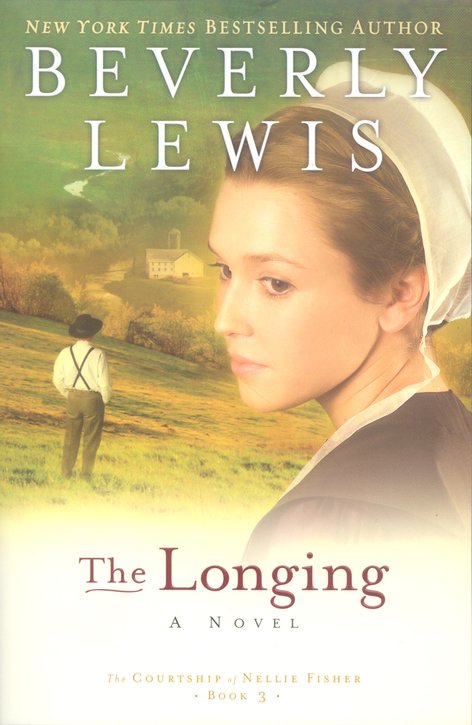
The Forbidden by Beverly Lewis is the second book in “The Courtship of Nellie Fisher” series. The local Amish church has split between two factions: the Old Order group who wants to keep to the strict rules they have always had and a new group who believe one can know they are saved and that they belong to God. There are some in the new group who are primarily interested in being able to use more modern conveniences like tractors and cars, but the core group began by reading the Bible on their own (something frowned on in the old order) and finding truths that they were never taught. They have found joy and peace in trusting Christ, but the old order folks believe it is prideful to feel sure of salvation.

Nellie is caught in the middle. Many in her family have become believers, and she can’t deny the changes in them. But her beau, Caleb, is very much Old Order and his father one of its strictest and most stubborn members. Caleb’s father has forbidden him to see Nellie, but they still manage to find ways to be together while hoping Nellie’s continuing to go to the Old Order church will convince Caleb’s father of her stand.

In one of the subplots, Nellie’s friend Rosanna, who has not been able to have children, has been given the gift of twins by another cousin, Kate, who already has several children. Yet it is obvious that Kate is having trouble letting go, and on top of that, the two women find themselves on opposite sides of the growing rift in the church.

In another subplot, Nellie’s sister Rhoda’s life shows that though every outward vestige of “the world” is removed from the life, worldliness is a matter of the heart.

I always enjoy Beverly Lewis. Her Amish grandmother’s influence and much research make these stories real, and it is easy to love these gentle, hardworking people and to long for their eyes to be opened to the truth of the gospel. Lewis also weaves many truths of life, character, Christianity, and family within her stories.

Book Review: Uncharted

When I went to the Christian bookstore to look for one of the books on my Spring Reading Challenge, it wasn’t in yet, but I caught sight of Uncharted by Angela Hunt. It wasn’t on my list for this spring, but it was on an ongoing list I keep of books recommended by others that I want to try out. I had seen this book recommended by many bloggers, so I bought it.

The basic premise is that there are six college friends whose lives have drifted apart. When one dies, the rest decide, for various reasons, to take up a mission he had planned to do, traveling to a remote island to build a Christian school. An unexpected storm capsizes the boat and the five find themselves on an uninhabited island. Conditions are fairly miserable, particularly the lack of fresh water. It’s not long until they begin to learn that this is no ordinary island…

Survivors on a mysterious island who have to face not only their past deeds, but also their heart motives — that all sounds close to the premise of the television show Lost. A blurb on the back of the book speaks of a biblical parable that this book parallels, but somehow I missed that. I am kind of glad, in a way, because it lent more mystery to the island. When the parallel does come up, though, it is very clear, as is the message of what the island is about. It’s very sobering and thought-provoking.

I liked the author’s emphasis that the regular church-goer and doer of good deeds yet without Christ is just as guilty as a murderer before God’s eyes. It’s only through Christ’s righteousness and God’s grace that we’re saved — all our righteousness is a filthy rag in comparison.

What I didn’t like was the ending. I suppose it lent weight to the theme that these people were stuck forever with the choices they had made in this life, and there is coming a day when that will be true. Yet a part of me wanted them to wake up and discover it was all a dream, yet have some of them learn from and profit by it.

Another thing that bothered me about this book were phrases such as the first line about someone’s seeking sex appeal and a line later where one character notes “the rhythmic tilt” of a woman’s bikini as she walked away. Perhaps this struck me with a little more force because I had just finished another Christian book that I decided not to review at all here because it had a very high degree of sensuality throughout plus was only “Christian” in the last several pages, and I had been stewing over that for a while before beginning this book. I know the characters here were not Christians, and non-Christians (and even Christians) would have such thoughts and make such observations. But it does bother me when Christian authors introduce sexuality into a story unnecessarily or in a way that brings up mental images that we should not want in our minds.

I think this is the first Angela Hunt book I have read. I did feel a lot more “in tune” with her in the question and answer section in the back of the book. Overall I do think the book is a worthy read despite the couple of disappointments.

This review is linked to Semicolon‘s Saturday Review of Books,where bloggers can link to book reviews on their sites. If you like checking out others’ thoughts on interesting books, you will find much to ponder there.

Book Review: Mansfield Park

In Mansfield Park, Fanny Price is the “poor relation” who helps to relieve her family’s financial woes by going to live with a more prosperous aunt and uncle, the Bertrams, when she is ten. Her other aunt, widowed Mrs. Norris, lives near the Bertrams and has more influence with the family than Lady Bertram. Sir Thomas Bertram is imposing and, though not unkind, neither is he warm. Mrs. Norris feels it her duty to constantly keep Fanny in her “place.” Fanny’s female cousins, Mariah and Julia, are selfish, spoiled, and vain and interact little with her. Her oldest cousin Tom takes little notice, but cousin Edmund sympathizes with her and helps her find ways to learn and to interact. Fanny is quiet, shy, “finding something to fear in every person and place,” but eventually the family decides that, “though far from clever, she showed a tractable disposition, and seemed likely to give them little trouble.”

The family continues on this way for years until their neighbor’s younger sister and brother, Henry and Mary Crawford, come to town for an extended visit. Both are bright, witty, vivacious, and personable, and the young people –except for Fanny — soon become best friends. Fanny’s high regard for Edmund has become secret love over the years, but Edmund, who is planning to join the clergy, begins to fall for Mary, who has no use for the clergy and tries to talk him into changing to a profession where he can “distinguish” himself. Fanny begins to see some of Mary’s flaws, but Edmund is willing to excuse them. Meanwhile Henry, who has been showering attention on both the Bertram sisters, begins to show a decided favor not towards unattached Julia, but rather to her engaged sister. Thus the stage is set for the character of each one to be displayed in the ensuing conflicts.

I’ll leave the plot there for the discovery of those who have not yet read the book, but I did want to discuss a few other aspects of the book.

In the introductory notes of this edition as well as the introduction to the recent Masterpiece Classic version on PBS, there seemed to be an almost apologetic tone that shy, quiet Fanny is the hero of the story rather than vivacious and witty Mary. Amanda Claybaugh, who wrote the introductory notes, writes that “Fanny differs not merely from Mary, but also from our most basic expectations of what a novel’s protagonist should do and be. In Fanny, we have a heroine who seldom moves and seldom speaks, and never errs or alters.” I am not the expert Ms. Claybaugh is, but that is not my impression at all. We’re shown many of Fanny’s inner thoughts, and I find the conflict is in Fanny’s staying true to her moral core despite everyone else’s failure to varying degrees. Edmund says of Fanny at one point that she “is the only one who has judged rightly throughout; who has been consistent.” She is far from self-righteous and ungracious, however, and though morally she does not change, she does mature and grow. Though her nature remains shy and reticent and fearful, she begins to overcome it or act in spite of it in situations like heading a ball in her cousins’ absence and standing up to Sir Thomas when he wants her to marry someone whom she not only does not love but in whom she sees moral flaws that she cannot expound on.

In almost all of Jane Austen’s books, she subtly points out the ironies of life in her time. Perhaps the irony here is the truth that though Fanny lacks the characteristics that are highly valued in her setting — wit, wealth, and worldliness — she possesses qualities far more valuable in her moral goodness, graciousness, insight, and steadfastness.

I enjoyed this book very much and found it very readable. I highly recommend it.

This completes my reading Jane Austen’s novels. I had read Emma back in college and would love to revisit her, but all of the rest I have read over the last couple of years in a quest to catch up on some of the classics I somehow missed along the way. I know I will enjoy reading these books again in the future.

Book Review: The Restorer’s Journey

restorer-journey.jpgThe Restorer’s Journey by Sharon Hinck is the third book in the Sword of Lyric series. In the first book, The Restorer, Mom Susan finds herself pulled through and unexpected portal into another world where she finds herself in an unsought for and unwanted leadership position that she feels totally unqualified for, and she finds God’s grace is sufficient even for all of that. In Book 2, The Restorer’s Son, just as Susan and her husband, Mark, get back to their own world, they discover their son Jake has accidentally gone through the portal, so they have to go back for him and get caught up once again in Lyric’s destiny, it’s enemy, Hazor, and their friend, the reluctant new Restorer, Kieran.

The Restorer’s Journey opens with two problems: Cameron, the evil, self-seeking Council leader, and Medea, a Rhusican whose race specializes in controlling people’s minds and using them against them, have come through the portal back to Susan’s world and disappeared after trashing her house, and she and Mark have no idea where they are and what they want. Secondly, Jake is now showing the signs of the Restorer. The family isn’t sure what that will mean and when and if he should return to Lyric.

After many days Cameron and Medea return with bags of equipment and force Mark and Susan to tell them how to get back to their own world, then they suddenly pull Susan back with them as they go through. Mark and Jake gather the supplies they will need and try to follow, but Mark can’t get through. Jake finds a very different Lyric, tries to find people he knows and determine what is going on and what to do.

The point of view shifts back and forth between Susan and Jake as they are separated through most of the story.  Susan finds herself enduring a cruel captivity with the Rhusicans but has to find the grace not to just endure but to pray for her captors. Jake faces a people who feel deserted by the One due to Cameron’s lies and almost gives up to go home, but once he is sure of his calling, he finally earns their trust, but then faces a stunning betrayal.

I loved the spiritual parallels in this book as in the others and the fact that the struggles and lessons are real and true even though couched in a fantasy world.. Cameron had failed to ascend previously while people turned to the Verses, so he undermines the Verses by adding to them. Truth is undermined by a different tactic for Susan as her captors twist the truth, just as those in captivity for their faith in other places have had to deal with the propaganda and psychological torture. It seems that for us to grow, God often calls us beyond what we can do in our own strength, and Susan learns to rest in Him even when mentally beaten and defeated and to go beyond natural instincts to be concerned for and pray for her enemies.

Jake knows what he is called to as the Restorer and thinks he will go in like the cavalry with guns blazing to save the day. It doesn’t quite work that way, and he has to learn to follow and to trust God to lead when he can’t see what to do or what steps to take.

Though the signs of the Restorer are the same for each, each has his or her own different gifts and inclinations. Jake finds he can’t heal others like Kieran did, but songs of praise come to him.

Susan’s story in the first book had parallels to Old Testament Deborah while Kieran in the second book had similarities to Jonah, Jacob, and Gideon. Jake reminds me a lot of a David with his youth, warrior status, and propensity for song.

I had thought this book was the last in the series, but the ending leaves the door open for future stories. I loved each of these books and wouldn’t mind at all another trip through the portal.

Spring Reading Thing 2008

Katrina at Callapidder Days is hosting another Spring Reading Thing, beginning the first day of spring, March 20, through the last day of spring. The idea is not to make a hard and fast list that you will feel guilty for not completing: it’s entirely flexible.

As Katrina says here, “Spring Reading Thing 2008 is simply an opportunity for you to set some reading goals, share them with the blogosphere, and work toward them this spring. Perhaps you want to add some variety to your fiction reading. Or maybe you’ve had very good intentions as far as reading that book on budgeting or marriage or starting a home business, but…you haven’t even cracked the cover yet. Some might want to read more with their children; others might feel guilty for never having read Wuthering Heights. Or maybe you just love to read and want to share your reading list and check out everyone else’s.

More information and a Mr. Linky sign-up is here.

Here is my list:

The Restorer’s Journey by Sharon Hinck, third in the Sword of Lyric series. I am in the midst of this one right now (and loving it!)

Dawn’s Light, Restoration Series #4 by Terri Blackstock. The series deals with a cataclysmic event that knocks out all electrical power all over the earth and the ways people have to learn to cope, and this is the final book, due out April 18.

The Forbidden, The Courtship of Nellie Fisher #2 by Beverley Lewis, due out April 1. I had read the first in the series several months ago and am looking forward to the sequel.

The Count of Monte Cristo by Alexandre Dumas. I’ve wanted to read this for a long time and had it on a previous reading list but just never got to it.

Mansfield Park by Jane Austen. This will complete my reading of Austen’s books.

To Kill a Mockingbird by Harper Lee. Somehow I have never read it or seen the film, but I often see it on people’s lists of favorite books.

In the Best Possible Light by Beneth Peters Jones, subtitled Godly Femininity in the Twenty-first Century. I started this last year but never finished it.

I will probably read more than these, but these will get me started. I have about 28 books on my to-be-read list that I can draw from plus I am sure there will be others that catch my eye along the way.

Book Review: Northanger Abbey

northanger.jpgNorthanger Abbey is Jane Austen’s first book completed for publication, but the last to be published, with Persuasion, her last book, after her death. It had been sold to a publisher but never published. Eventually Jane bought it back for the same sum for which she sold it, but it was shelved for years.

Northanger Abbey, especially the first part, is a parody of gothic novels popular at the time, with their requisite ingredients of horror, castles, secrets, and villains.

“No one who had ever seen Catherine Morland in her infancy would have supposed her born to be a heroine” is the opening line of the book, and the first several paragraphs expand on the reasons for such a supposition: she is not particularly beautiful nor remarkably intelligent or diligent, and her family, while well enough off, is not rich. All about her is rather ordinary. Her major asset is her trusting, innocent, good-natured heart.

Her adventure begins when she goes to Bath with neighbors and friends of the family, the Allens. Yet it doesn’t seem very adventurous at first: Mrs. Allen is obsessed with fashion and can’t seem to discuss much else, and they know no one in all the crowded places they go. Finally they run into the Thorpes, old friends of the Allens, and one the the Thorpe daughters, Isabella, is a friend of Catherine’s brother, James. And then Catherine and Mrs. Allen unexpectedly meet an affable and pleasant Mr. Henry Tilney at a ball, who engages Catherine for the evening.

Isabella’s brother, John, is a rather boorish young man who pursues Catherine, but Catherine is not interested. Isabella, after becoming engaged to Catherine’s brother, becomes interested in Henry’s brother when he flirts with her. Henry’s father, General Tilney, mistakenly believes Catherine to be richer than she is, and therefore invites her to Northanger Abbey, the family’s home, for a visit. Catherine is delighted, both because of her growing interest in Henry and friendship with his sister, Eleanor, but also because she longs to have the experience of visiting such a structure as is often found in the gothic novels she loves.

One of the many things she learns, though, is that life is not like those novels, and once her views are shaped by reality, she begins to grow and mature.

I don’t want to go further into the plot for the sake of those who might not have read the book. I found it very enjoyable. It contains Austen’s trademark observations of the social mores of her time, though not quite as ironically or satirically as her later books. Plus she includes a spirited defense of novel reading as well as a caution against the wrong kinds. Catherine has to learn not to let her imagination, influenced by highly unlikely tales, get away from her. Catherine also learns one of the most painful lessons of maturity, that, while it is generally good to have a trusting heart, there are people not worthy of that trust. (Update: I just finished listening to this via audiobook 4/22/13, and I can’t believe I thought this book less ironic or satirical. It fairly sparkles with both irony and satire, but in a fun rather than a put-down sarcastic way.)

The particular copy I bought is a Barnes and Noble publication, complete with footnotes and endnotes, which were often helpful but sometimes unnecessary and distracting. The introductory notes I felt were better read after the novel than before, especially if one has not read the book yet, as too much is given away.

In the back of the book are a few questions, one of which is “Is there any sign that any of the characters in Northanger Abbey feels sexual desire? Can Austen’s realism be considered complete without this aspect of human relationships.” Good grief, what questions! One of the things I most resent about modern adaptations of classics is the inclusion of sexual scenes, or the spelling out of what had been written with restraint and decorum. The continued popularity of Austen’s books should indicate that an audience can be entertained without going into great sexual detail. Restraint and subtlety are no enemies of realism.

Update: I listened to this story again for the Austen in August challenge in August 2014.

Austen in August

Booking Through Thursday: Hero

btt button

The Booking Through Thursday question for this week is:

Who is your favorite Male lead character? And why?

If I think about this very much, I’ll have way too long a list. But the first ones that come to mind are:

David Copperfield in the book of the same name by Charles Dickens. I like how he overcomes his disadvantages to become a decent man — even if it does take him too long to recognize the love of his life. 🙂

Sidney Carton in A Tale of Two Cities by Charles Dickens. He comes from the wrong side of the reader’s sympathies at first, brilliant but drunken and languid, to give himself sacrificially for one he loves with no hope of being loved by her in return.

Jean Valjean in Les Miserables by Victor Hugo. He comes from poverty, prison, and bitterness, changes in response to love and compassion, and becomes one of the strongest and most gracious leading men in literature.

Clark Davis in the Janette Oke Love Comes Softly series. A strong but gentle man, a leader without being a tyrant, with a high and strong moral core.

Colonel Brandon in Sense and Sensibility. Strong, decent, kind, a “tortured soul” who lost the woman he loved twice — once because she was intended for another, and then permanently in her tragic death — who gives himself in his love for Marianne even when there is no encouragement at first.

I am seeing that though none of them is perfect, they have in common moral strength (eventually if not at first), perseverance, the overcoming of obstacles, grace, kindness, and sacrificial giving.