Book Review: Loving My Actual Christmas

Though we love Christmas time, its busyness stresses us out. Calendars are full anyway, and then we add gatherings, programs, extra shopping and food preparation, wrapping, decorating, and various traditions.

Alexandra Kuykendall tried an “experiment in relishing the season,” as her subtitle says. Instead of an idealistic or nostalgic or “perfect” Christmas, she wanted to create a realistic Christmas that didn’t leave her exhausted and frustrated when it was over. She lets us in on the experiment in her book, Loving My Actual Christmas. Though she includes ideas and tips, “it’s more for your spirit to absorb the message of the holiday among the lights and gifts.”

She chose the four weeks and themes of advent to guide her. She wanted not just to “do better” organizationally, but to implement, foster, and be guided by hope, love, joy and peace.

Because hope, peace, joy, and love are certainly words I want to associate with this time of year. Rather than overspending, overeating, undersleeping, and underrejoicing, I want to notice the goodness God has offered in the here and now. In this year. This Christmas. Regardless of the circumstances. Because I don’t want to resent this actual Christmas, I want to love it.

For each week of Advent, she wrote down her approach, the Scriptures she read, a daily recording of what happened that week, a summary of what she learned, a list of what practices she’ll continue, and questions for reflection.

One of the first things she did was consult with her family about their desires. Expectation can make the holiday sweet and exciting but also set oneself up for a letdown. So they discussed the different programs, traditions, etc., to see what was most important to everyone and what, if anything, could be left out for sanity’s sake.

Here are some of the quotes I highlighted:

Circumstances may not be what we want, but we can step over the “whens” and “if onlys” to notice God’s gifts right in our midst.

“And heaven and nature sing.” Because he rules the world, all of his creation rejoices. That’s it. It doesn’t say heaven and nature sing when the Christmas card is beautiful and perfectly photoshopped, but because he rules the world. That’s it then. Joy does really come back to Jesus.

My people don’t need the perfect Christmas, but a present mother, daughter, wife, friend.

Christmas isn’t a race that ends on the 25th with recovery after, but a true season of relishing.

Jesus didn’t come to earth in order that we might overspend every December and have terrible arguments about the holiday bills. He came that we might have life. Let’s figure out what we can afford and live within those parameters.

You don’t want to end the party season depleted by executing the details, but energized by the relationships that are strengthened by a shared time together.

There are no awards shows for Christmas party throwing. No prizes for “Best Able to Pull It Off Alone.” Ask guests to bring food or help with decorations, invitations, setting up, or cleaning up.

There was one place that made me wince a bit. In discussing the circumstances of the first Christmas and Mary’s quiet pondering mentioned in Luke 2:19, the author writes, “Here Mary has just given birth to God . . .” I know what she meant. Jesus was (is) God in flesh. He didn’t originate in this birth: He existed eternally. And He is part of the Godhead, along with the Father and Spirit. The author would agree with all this, so she’s not saying God had His beginning here. She’s just pointing out the wonder of a young woman giving birth to the Messiah in such a setting. But the way it was phrased was a little uncomfortable to me.

Most of us have to do some mental adjusting about the holidays by the time we’ve had many Christmases as adults. We have to continually reminds ourselves what the season is actually supposed to be about and adjust our perspective. I found the author’s thoughts and tips very practical and helpful.

(Sharing with Grace and Truth, InstaEncouragement,
Carole’s Books You Loved, Booknificent Thursday)

Book Review: The Answer Is…

Even if you’ve never watched the game show Jeopardy!, you are likely familiar with the program and its host, Alex Trebek. He had never planned to write about his life, though he had been urged to several times. But after his pancreatic cancer diagnosis, he received such an outpouring of love and support, he thought perhaps he should share with his supporters “a little more about the person they have been cheering on”. He also said in one interview that he noticed chemo patients didn’t have much to do while receiving treatment, so he thought he’d provide “a little light reading.” And he also thought that someone would probably write about him at some point, so he wanted to have his say first . (As it happened, the biography Who Is Alex Trebek? by Lisa Rogak was released the same day as Alex’s autobiography. Because of that, I suspect her book might not have been authorized.)

The title of Alex’s book is the phrase he spoke when revealing clues on Jeopardy!: The Answer Is… (by the way, I didn’t realize the exclamation mark was part of the show’s name until reading this book). The chapter titles are formatted like the questions and answers from the show: “The answer is . . .Neckties” or “Who is . . .The Great Gildersleeve?”

Alex’s subtitle, Reflections on My Life, aptly describes the book. Most of the chapters aren’t long and don’t go into great detail. He shares some memories from his family, growing-up years in Canada, his beginnings in show business, and various memories from his 36-year run as Jeopardy! host. He philosophizes a little about different topics..

I’ve watched the show occasionally for decades (I even remember the original Jeopardy! with Art Fleming), but my husband and I have watched regularly the last few years.So I enjoyed reading about the show, especially the chapters on Ken Jennings’ and James Holzhauer’s, historic runs as Jeopardy champions. I’m glad they included a picture of the “script sheet” Alex uses as he hosts (I had thought the clues and answers must come up on a computer screen at his podium, but they are printed out). I liked that photos are scattered throughout the book rather than just on a few glossy pages in the middle.

I enjoyed learning more about Alex personally as well. He insisted that he be called the host of the show rather than the star. He feels viewers see him “not so much as a showbiz personality but as an uncle” (p. 221). He has always come across as someone who doesn’t take himself very seriously.

I was surprised to find a lot of swear words in the book. Alex said he started cursing deliberately because he “needed a vice.” He felt held back from “becoming one of the guys” in his early career because “people can be suspicious of someone who’s so chaste.” Later he felt that cursing “didn’t help me become one of the guys. It just made me look like a jerk. My bad” (p. 93).

I’m always interested in people’s encounters with spiritual truth. Though Alex was raised Catholic, he says he believes “we are all part of the Great Soul—what some call God. We are God and God is us. We are one with our maker. How do I know this? It’s not that I know it. It’s that I feel it.” However, he says that, facing the end of his life, “I’ve been thinking more and more about that old line they used to use in the military: ‘No one’s an atheist in a foxhole.’ If ever there was an opportunity to believe in God—a god—this might be a good one. Trebek, now that you’re on the verge. What have you got to lose?” (p. 284). I hope he had an opportunity to hear, understand, and truly consider the gospel before his passing.

Except for the swearing, this was a nice overview and a bit of insight into the man so many of us knew and loved.

(Sharing with Carole’s Books You Loved)

Back to the Classics Challenge 2020 Wrap-up

I enjoy participating in the the Back to the Classics challenge hosted by Karen at Books and Chocolate. I wasn’t exposed to many classics growing up, and I’ve determined to educate myself with several of them. The categories help me expand my reading horizons. The titles link back to my reviews. I included the publication dates to verify that the books are 50 years old, as required:

1. 19th Century Classic: Hard Times by Charles Dickens (1854)
2. 20th Century Classic: My Antonia by Willa Cather (1918)
3.Classic by a Woman Author: Eight Cousins by Louisa My Alcott (1875)
4. Classic in Translation (originally written in something other than your native language): Phantom of the Opera by Gaston Leroux (1910)
5. Classic by a Person of Color: Wynema: A Child of the Forest (1891)
6. A Genre Classic:
1984 by George Orwell (1949)
7. Classic with a Person’s Name in the Title: The Merry Adventures of Robin Hood by Howard Pyle (1883)
8. Classic with a Place in the Title: Lark Rise (1939), Candleford Green (1943), and Over to Candleford (1941), the Lark Rise to Candleford trilogy by Flora Thompson
9. Classic with Nature in the Title: Rose in Bloom by Louisa May Alcott (1876)
10. Classic About a Family (multiple members of the same family as principal characters): Amberwell  (1955) and Summerhills by D. E. Stevenson (1956)
11. Abandoned Classic (one you started but never finished). Billy Budd by Herman Melville (1924)
12: Classic Adaptation (Any classic that’s been adapted as a movie or TV series): Doctor Thorne by Anthony Trollope (1858)

Anthony Trollope, D. E. Stevenson, and Willa Cather were all new-to-me authors whose other works I look forward to exploring.

We’re allowed up to three children’s books: mine were Eight Cousins, Rose in Bloom, and Robin Hood.

Karen has a points system where the number of categories we complete gives us a corresponding number of entries in a prize drawing she holds. I don’t get extra points for reading more than one book in a couple of the categories—I did so just because I wanted to keep reading a series. Karen likes for us to calculate our number of entries. For completing all twelve categories, I get three entries.

If you are interested in participating next year, the rules, categories, and sign up post are here at the Back to the Classics 2021 post. Thanks to Karen for hosting! I enjoyed it very much.

Book Review: 1984

George Orwell’s 1984 depicts a futuristic totalitarian state. An oligarchy known as “the Party,” headed by an unseen Big Brother, rules Oceania, one of three superpowers. Telescreens broadcast only what the Party allows, but they also observe people at work and home. Thought Police come for anyone whose words, actions, or even expressions step outside of party policy. Those who do not comply become nonpersons and are “vaporized”: all trace of them disappears and they are never referred to again.

Winston Smith is a member of the party, but he hates it. He remembers fragments of what life was like before the revolution, when the Party took over. He also works for the Ministry of Truth, which, ironically, rewrites and “corrects” news to line up with current Party position. He wonders that no one else seems to see the absurdity in the contradictory reports coming from the party. But he doesn’t dare try to talk to anyone about it.

In an atmosphere like this, everyone is suspect. When one woman seems to have her eye on Winston, he fears she is looking for some reason to report him. But, to his surprise, she gets a secret message to him that she loves him. Through much subterfuge, they arrange to meet, and then embark on an illicit relationship.

Sadly, however, another relationship turns out to be false.

1984 is based on the totalitarianism of Stalinist Russia but also warns against the dangers of totalitarianism in any context. Wikipedia points out many of the corresponding details.

The novel brought many new terms into the mainstream: Big Brother and the phrase “Big Brother is Watching You,” Thought Police, Doublespeak.

I thought I had read this back in high school. Maybe I did. But some of the frank sexual content makes me surprised that the book would have been required reading by teenagers, especially that many years ago. Yet the sexuality is not titillating. It’s not exactly clinical, either. It’s there to show that the Party control reached even into bedrooms: sexual relations were illegal even between married people except for purposes of bringing forth children as their duty to the Party. The novel reveals later the purpose for suppression of sexual desire was to channel all passion to the Party.

What drew me to 1984 at this time was coming across a quote from the book: “Who controls the past controls the future. Who controls the present controls the past.” That struck a chord with me because we see traces of it even now in revisionist history and “fake news.”

1984 has one of the most interesting opening lines: “It was a bright cold day in April, and the clocks were striking thirteen.” A few other quotes:

If you want a picture of the future, imagine a boot stamping on a human face—for ever.

Being in a minority, even in a minority of one, did not make you mad. There was truth and there was untruth, and if you clung to the truth even against the whole world, you were not mad.

For, after all, how do we know that two and two make four? Or that the force of gravity works? Or that the past is unchangeable? If both the past and the external world exist only in the mind, and if the mind itself is controllable – what then?

Nothing was your own except the few cubic centimetres inside your skull.

Every record has been destroyed or falsified, every book rewritten, every picture has been repainted, every statue and street building has been renamed, every date has been altered. And the process is continuing day by day and minute by minute. History has stopped. Nothing exists except an endless present in which the Party is always right.

One does not establish a dictatorship in order to safeguard a revolution; one makes the revolution in order to establish the dictatorship.

We know that no one ever seizes power with the intention of relinquishing it.

In the past the Middle had made revolutions under the banner of equality, and
then had established a fresh tyranny as soon as the old one was overthrown.

Don’t you see that the whole aim of Newspeak is to narrow the range of thought? In the end we shall make thoughtcrime literally impossible, because there will be no words in which to express it.

The heresy of heresies was common sense.

If you can feel that staying human is worth while, even when it can’t have any result whatever, you’ve beaten them.

1984 is not a pleasant read. It’s depressing in places. It’s deeply disturbing, but in a way that provokes thought. Hopefully it’s a warning to every generation who reads it.

I listened to the audiobook nicely read by Simon Prebble.This book will fulfill the genre classic requirement for the Back to the Classics Reading Challenge.

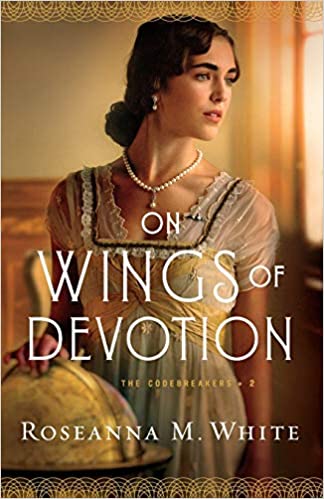
Book Review: On the Wings of Devotion

In Roseanna M. White’s novel, On Wings of Devotion, Phillip Camden’s nickname is “Black Heart.” He earned it when his squadron went down in flames and he was thought to be the cause due to a loud argument and threat to one of his men. A friend pulled some strings to get Phillip out of prison and into Room 40, where the codebreakers worked during WWI. But his surliness and bitterness keep everyone at bay.

Arabelle Denler is a nurse and an heiress. She’s warm and kind, but not considered attractive. Since her father had been absent most of her childhood, all she ever wanted was a family. When a lifelong friend suggested a marriage of convenience so her money could help preserve his family home, she readily agreed. But then her fiance fell in love with someone else.

Phillip puts himself forth as Arabelle’s protector from the stream of men seeking her hand—and her money—now that she’s free. As they come to know each other, Arabelle sees beyond the surface of Phillip’s brusque exterior. He sees the goodness and kindness of her heart.

But an old acquaintance seeks Phillip out. He knows she’s up to no good. But he doesn’t realize that she’s setting him up as part of a larger target.

This book is the second of the Codebreaker series, which is a continuation of the Shadows over England series. I enjoyed seeing a few characters from the previous books pop up. But I enjoyed Phillip’s and Arabelle’s stories even more. All the threads of the story—the characters, the spiritual and mental journeys, the intrigue—kept me listening to the audiobook every chance I got, especially the last fourth or so of the book.

A couple of quotes:

This war was destroying her entire generation. Those it hadn’t wiped out entirely it was trying to take apart piece by piece. And what could she do?

We can be sure it will be painful. Cutting out what stands between us and God always is. But we can also trust that in the giving, we’ll gain something far more precious.

The audiobook was wonderfully read by Susan Lyons. The only negative about the audiobook is that it doesn’t include the author’s notes at the end, where she tells how she came to write the story, what historical details she drew on, etc.

Each book I read from Roseanna is my favorite. Until I read the next.

(Sharing with Booknificent Thursday, Carole’s Books You Loved)

Literary Christmas Challenge 2020

A Literary Christmas: Reading Challenge // inthebookcase.blogspot.comI enjoy reading Christmas books after Thanksgiving through the end of the year. Tarissa at In the Bookcase hosts a Literary Christmas challenge for that purpose. You can find the details here, but the basic idea is to read Christmas books and write posts about them.

I have ten unread Christmas books on my Kindle app, plus one I’ve read but don’t remember and would like to reread. I don’t think I can get through them all in a month. I don’t want the challenge to be pressured, especially during a month with a lot else going on. So I’ll start with these and add some in if I have time and inclination.

An advent devotional—either Joy to the World: Daily Readings for Advent by Charles Spurgeon or A Christmas Longing by Joni Eareckson Tada. Haven’t decided yet.

Loving My Actual Christmas by Alexandra Kuykendall, nonfiction.

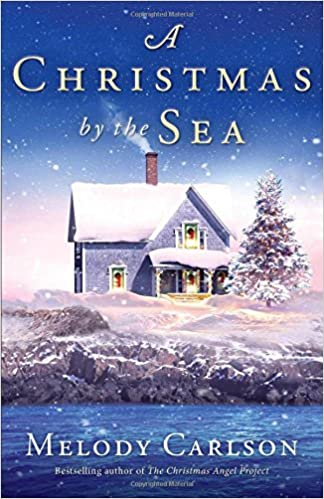
A Christmas by the Sea by Melody Carlson. This appealed to me because I grew up on the Texas coastline, so my early Christmases were more seaside than wintery.

Mistletoe and Murder: A Christmas Suspense Collection of ten novellas by different authors. Not the usual Christmas fare, eh? I’ve only read two of the authors and heard of a couple more. I’m mainly reading it for Adam Blumer’s entry, but I hope to enjoy all of them.

A Very Bookish Christmas by Sarah Holman, J. Grace Pennington, Kate Willis, and Rebekah Jones. A series of stories based on classic books. I loved the Thanksgiving version so much, I couldn’t wait to get the Christmas one.

That gives me a good start! Do you like to read Christmas stories? Do you have plans to read any this year?

(Sharing with InstaEncouragement, Booknificent Thursday)

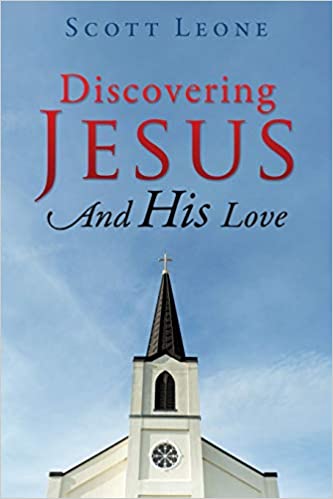
Book Review: Discovering Jesus and His Love

Discovering Jesus and His Love by Scott Leone is a short book (115 pages) about a family who comes to know the Lord through the influence of their neighbor. The author notes that the story is fictional, yet reflects on the types of experiences many Christians have as they believe on Christ for salvation and walk with Him through life.

The story opens with a brother and sister taking a walk and meeting their neighbor, Mr. Lion, who invites them into the yard for a cold drink and a visit. Mr. Lion uses every opportunity to speak to the children about the Lord. They have not been to church and their family isn’t religious, so what Mr. Lion tells them is mostly new to them.

The children accompany Mr. Lion to church, and over time believe that Jesus is God’s Son and died for their sins. Then Mr. Lion tries to teach them more about the faith as they continue to interact. The changes in the children’s lives affect their parents, who each have their own issues which cause resistance to the gospel.

In the meantime, Mr. and Mrs. Lion face struggles of their own as they grow older and their health declines.

The book reads very much like the Sunday School papers for all ages that my husband’s church used to give to attendees: brief stories illustrating a spiritual truth or lesson.

It also reminds me a bit of a book I was given as a teenager which told about salvation and the first steps of discipleship, except that book was nonfiction.

I can see this book being used to introduce someone to the gospel or encourage a new Christian in their walk. Mr. Lion’s eagerness to share Christ is convicting.

Thanks to Scott and his wife, Sara, for sending me a copy of the book. Sara has been a longtime email friend I “met” through this blog.

(Sharing with Carole’s Books You Loved, Booknificent Thursday)

Book Review: A Very Bookish Thanksgiving

Three factors intrigued me when I saw A Very Bookish Thanksgiving mentioned at Tarissa’s. First, I can generally trust what Tarissa recommends. Second, I don’t think I have ever seen a series of stories based on Thanksgiving before. Third, each of the five stories ties in with a classic book. I was unfamiliar with all of the authors but interested enough to give the book a try.

A Promise of Acorns by Kelsey Bryant is inspired by Jane Eyre. Erin Moore is hired as a nanny to two children cared for by a reserved grandfather. Dr. Manchester has an unusual request: he has not celebrated Thanksgiving in years because it was his deceased wife’s favorite holiday, and it’s too much for him. He wonders if Erin would take on the responsibility of teaching the children about Thanksgiving. He doesn’t know that Erin has her own difficulties with the day, but she agrees to his request.

As Long as I Belong by Sarah Holman is inspired by Mansfield Park by Jane Austen. Annalise Marshell comes from a bickering family headed by a father who can’t keep a job. They’ve been offered a place at a Christian retreat center, headed by the Clark family. Mrs. Clark helps Annalise feel welcome and a part of the team, but Annalise feels like she’s in-between her family and the Clarks, belonging fully to neither.

The Windles and the Lost Boy by Rebekah Jones is inspired by Peter Pan. Patrick Quill takes in stray boys in a secret location. Some are running from abusive situations, and he gives them a safe place until they are ready to launch on their own. Arabella Windle and her brothers unexpectedly discover one such boy needing help. They’ve heard stories about Patrick. Is he real, and can they find him?

Grand Intentions by J. Grace Pennington is based on Dickens’ Great Expectations. Pippa Charles’ dream is to write a novel, but helping her mother take care of her brothers doesn’t leave much time. Then she receives a grand opportunity: her grandmother is going away for a few months and asks Pippa to stay at her house and take care of her dog. Pippa relishes the time alone, but then she gets distracted by the new friends she makes. Will this experience bring out the best or worst in her?

A Fine Day Tomorrow by Amanda Tero is based on Little Women by Louisa May Alcott. Essie March suffered from serious illness during her childhood. But she survived and now wants to be a nurse. She feels the need all the more as the Spanish flu rages through the country. But a series of misfortunes stop her in her tracks and make her wonder if she’ll ever be good for anything again.

The stories aren’t a point-for-point retelling of their respective books, but the main characters and some of the details mirror them. The books themselves are almost characters in the stories as they are referred to during the plot.

Each of the stories has a strong and well-woven faith element as well.

Some of my favorite quotes from the book:

Bookshelves told you more about a person or a family than anything else in a house.

Celebrating Thanksgiving was not just about blood family but about creating family among those you celebrated with. I couldn’t be with my parents on this earth anymore, but there were other people for me to love and to love me back.

My favorite thing about any Dickens book was how you could always get something new out of it at each reading, no matter how many times you revisited it.
 
I enjoyed each of these stories—so much so, that I ordered A Very Bookish Christmas based on the same premise by some of the same authors.
 

Book Review: Be Authentic

Be Authentic (Genesis 25-50): Exhibiting Real Faith in the Real World closes Warren Wiersbe’s trilogy of commentaries on the book of Genesis.

These chapters in Genesis focus primarily on Jacob and his sons, especially Joseph.

Jacob and his twin brother, Esau, were very different personalities. They struggled with each other even in the womb (Genesis 25:22-23), and their parents’ favoritism only fueled the fire.

God had chosen the younger Jacob to be in the line of the family He would use to bless the world rather than Esau, the older. But Jacob and his mother, Rebekah, used that information to manipulate circumstances rather than trusting God to accomplish what He had proclaimed. That brought Jacob’s conflict with Esau to a head, resulting in Jacob fleeing to his mother’s relatives.

There he fell in love and got a taste of his own scheming medicine. The next twenty years were hard, but they helped develop his character. “Little by little, Jacob was learning to submit to God’s loving hand of discipline and was growing in faith and character.”

He had twelve sons, but favored Joseph. Jacob seemed not to have learned about the dangers of parental favoritism from his own situation. “The man who had grown up in a divided an competitive home (25:28) would himself create a divided and competitive family.” Joseph’s brothers, in jealousy and hatred, sold him into slavery, took his special coat that his father had made for him, spread animal’s blood over it, then let Jacob conclude that Joseph was dead.

Though a slave, Joseph seemed to have a talent for administration. But even his master saw that “The LORD was with him, and the LORD caused all that he did to succeed in his hands” (Genesis 39:3). Joseph rose to prominence until he became second only to his master. But then he was lied about and sent to prison. He rose to prominence there as well, and aided two of Pharaoh’s servants. But the one who was restored to his portion forgot Joseph—until Pharaoh had a dream that troubled him, and the servant remembered Joseph had helped him with his dream. So Joseph was called for, interpreted Pharaoh’s dream, gave him sound advice, and once again rose to prominence as the second in the land.

And then one day his brothers showed up in Egypt. But they didn’t recognize him. These chapters are some of the most dramatic in the Bible, keeping me in anticipation even though I have read them before and knew how the story would turn out.

Wiesrbe’s title for this commentary comes from his conclusion that, “In short, they were authentic, real, believable, down-to-earth people. Flawed? Of course! Occasionally bad examples? Certainly! Blessed of God? Abundantly.” These people are an encouragement that God works with and accomplishes His will through flawed individuals.

There were many helpful and instructive things to observe in these chapters. I was blessed to see the changes in some people—Jacob over time, and his son, Judah, especially. But a few things in Joseph’s story particularly stood out to me this time. Because Joseph so often comes out on top even when he’s thrown into dire circumstances, I think we sometimes downplay his suffering. But when he named his sons in reference to his afflictions, it really spoke to my heart:

Joseph called the name of the firstborn Manasseh. “For,” he said, “God has made me forget all my hardship and all my father’s house.” The name of the second he called Ephraim, “For God has made me fruitful in the land of my affliction” (Genesis 41:51-52).

Wiersbe pointed out that Joseph could have become bitter, but instead he maintained his faith in God and kept a tender heart, showing compassion towards others. “Joseph’s sensitive heart was a miracle of God’s grace. For years dead Egyptian idols and the futile worship given to them had surrounded Joseph, yet he had maintained his faith in God and a heart tender toward his own people. He could have hardened his heart by nursing grudges, but he preferred to forgive and leave the past with God (41: 50–52).”

Then, as often as I have pored over the Scriptures about suffering and reconciled myself to the fact that it’s a tool God uses in wisdom and love, I find myself still asking “Why?” sometimes. I wondered why Joseph had to go through all he did when he was one of the “good guys.” But Wiesrbe pointed out that if Joseph had remained at home as the favored son, he might have grown up into a very different kind of person.

A few more quotes from the book:

Being a victorious Christian doesn’t mean escaping the difficulties of life and enjoying only carefree days. Rather, it means walking with God by faith, knowing that He is with us and trusting Him to help us for our good and His glory no matter what difficulties He permits to come our way. The maturing Christian doesn’t pray, “How can I get out of this?” but “What can I get out of this?”

In the life of a trusting Christian, there are no accidents, only appointments.

When God wants to move us, He occasionally makes us uncomfortable and “stirs up the nest” (Deut. 32:11 NIV).

A good beginning doesn’t guarantee a good ending. That’s one of the repeated lessons taught in Scripture, and it’s tragically confirmed in the lives of people like Lot, Gideon, Samson, King Saul, King Solomon, Demas, and a host of others. Let’s add Isaac to that list.

If we obey the Lord only for what we get out of it, and not because He is worthy of our love and obedience, then our hearts and motives are wrong.

With all their weaknesses and faults, the sons of Jacob will carry on the work of God on earth and fulfill the covenant promises God made to Abraham.

Years later, Jacob would lament, “All these things are against me” (v. 36), when actually all these things were working for him (Rom. 8:28).

God’s delays are not God’s denials.

Too many Christian believers today think that God can use only His own people in places of authority, but He can work His will even through unbelieving leaders like Pharaoh, Cyrus (Ezra 1: 1ff.; Isa. 44: 28), Nebuchadnezzar (Jer. 25: 9; 27: 6), and Augustus Caesar (Luke 2: 1ff.). 

The only people God can forgive are those who know they’re sinners, who admit it and confess that they can’t do anything to merit or earn God’s forgiveness. Whether it’s the woman at the well (John 4), the tax collector in the tree (Luke 19: 1–10), or the thief on the cross (23: 39–43), all sinners have to admit their guilt, abandon their proud efforts to earn salvation, and throw themselves on the mercy of the Lord.

According to Hebrews 11:13–16, the patriarchs confessed that they were “strangers and pilgrims on the earth.” A vagabond has no home; a fugitive is running from home; a stranger is away from home; but a pilgrim is heading home. They had their eyes on the future, the glorious city that God was preparing for them, and they passed that heavenly vision along to their descendants.

One of the major differences between a church and a cult is that cults turn out cookie-cutter followers on an assembly line, while churches model a variety of individual saints on a potter’s wheel.

Martin Luther said it best: This life, therefore, is not righteousness but growth in righteousness; not health but healing; not being but becoming; not rest but exercise. We are not yet what we shall be, but we are growing toward it. The process is not yet finished, but it is going on. This is not the end, but it is the road. All does not yet gleam in glory, but all is being purified. (Edwald M. Plass, comp., What Luther Says, vol. 1 (St. Louis, MO: Concordia Publishing House, 1959), 234–35).

The book of Genesis provides for a rich study. I enjoyed Dr. Wiersbe’s aid on this trek through the book.

(Sharing with InstaEncouragment, Grace and Truth,
Faith and Worship Christian Weekend,
Carole’s Books You Loved, Booknificent Thursday)
Book Review: Under a Cloudless Sky

In Chris Fabry’s novel, Under a Cloudless Sky, two girls from widely different circumstances become friends in 1933 West Virginia. Bean, short for Beatrice, is the daughter of a coal miner. Ruby’s father is one of the coal mine’s owners. The other owner, Mr. Coleman, employs some shady practices, and the conflict between him and Ruby’s father comes to a head.

Fast forward to 2004. The community wants to make the old coal mine’s company store a tourist attraction. They invite Ruby, now in her eighties, to be their special guest for the opening. But she had never returned and never planned to. There were too many painful memories and hidden secrets.

But Ruby’s grown children are pressuring her to give up her keys and her independence. So she decides she’ll go back to that little coal mining community on her own without telling her children where she’s going. Maybe that will teach them that she’s perfectly capable of handling herself.

Hollis Beasley is one of the last holdouts who refuses to sell his land to Coleman Coal and Energy. But with his neighbors succumbing to CCE one by one and his wife’s illness, he’s not sure if he’ll be able to keep the promise he made his parents to keep the land. “It was in a man to fight and it was in a woman to nest, and those desires competed and wore both down until they became one flesh.”

As the story goes back and forth between timelines, secrets come to light and provide unexpected connections between characters.

Chris Fabry’s stories always contain a lot of warmth and heart, and this one is no exception. He shares in his afterword the people and stories the book is based on. He skillfully brought them together in a compelling way.

(Sharing with Carole’s Books You Loved, Booknificent Thursday)