Book Review: In His Image

There are some ways in which we will never be like God. Jen Wilkin dealt with most of those in her excellent book None Like Him:10 Ways God is Different From Us (and Why That’s a Good Thing) (linked to my review).
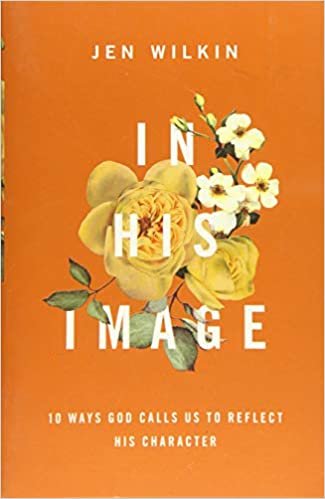
But there are ways we are supposed to be like God. We will never become deity and we’ll never exercise these in perfection, at least until heaven. But we’re supposed to grow in them now. Jen discusses ten of these in In His Image: 10 Ways God Calls Us to Reflect His Character.: holiness, love, goodness, justice, mercy, graciousness, faithfulness, patience, truthfulness, and wisdom.

Jesus held all these traits in perfection. We’re called “to be conformed to [His] image” (Romans 8:29).

Our inclination is to discern God’s will by asking, “What should I do?” But God’s will concerns itself primarily with who we are and only secondarily with what we do. By changing the question and asking, “Who should I be?” we see that God’s will is not concealed in his Word, but is plainly revealed.

The Bible plainly answers the question “Who should I be?” with “Be like Jesus Christ, who perfectty images God in human form.” God’s will for our lives is that we conform to the image of Christ, whose incarnation shows us humanity perfectly conformed to the image of God (pp. 20-21).

In each chapter, Jen discusses what these traits look like in God, and then explains how we can best put them to practice in our own lives. The chapters end with verses and discussion questions.

I have multiple places marked in the book. But here are a few quotes that convicted me:

If we focus on our actions without addressing our hearts, we may end up merely as better behaved lovers of self.

As with the Ten Commandments, the Great Commandment begins with the vertical relationship and moves to horizontal relationships. Unless we love God with all of our heart, soul, mind, and strength, we will love ourselves and our neighbors inadequately. Right love of God is what enables right love of self and others (p. 38).

And what does right vertical relationship look like? It looks like the full deployment of our heart, soul, mind and strength—the totality of our being—in the active love of God (p. 39).

Right now, there is much that we witness or endure that is clearly not good. But under the sovereign governance of an eternally good God, we can trust that all that is not now good will ultimately be used for our good. Like Joseph we will one day, in this life or the next, look over our had pasts and acknowledge with him that what our enemies meant for evil God has used for good (Gen. 50:20) (p. 48).

Generosity is the hallmark of those who are determined to be lights in the darkness as children of their heavenly Father. It is the calling card of all who are recipients of the generous good news of salvation through Christ (p. 52).

We are familiar with the maxim that patience is a virtue, but it is a virtue rarely sought. The world’s solution to the problem of impatience is not to develop patience, but to eliminate as many situations that require it as possible (p. 110).

It is not coincidental that a lack of discernment and a neglected Bible are so often found in company (p. 144).

I wish there was a way to retain everything we read from books. Since there is not, I will have to revisit this and None Like Him again in the future. I appreciate Jen’s clear and skillful discussion of biblical concepts.

(Sharing with InstaEncouragement, Grace and Truth,
Carole’s Books You Loved, Booknificent Thursday)
Book Review: The Number of Love

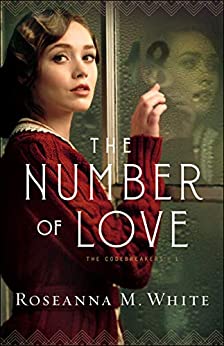
Margot De Wilde thinks in numbers. Numerals line up differently in her head when all is well or something is off. Her father developed a system of cryptography before WWI with young Margot as his main pupil. After his death, Margot and her mother were rescued from Belgium (in A Song Unheard) to be with her brother, famous violinist Lucas De Wilde, in London. Though a teenager, Margot is recruited to work in the admiralty’s secret Room 40 deciphering Germany’s coded messages.

Margot had one good friend back in Belgium, but she’s not interested in the silly things most girls are. She’s content to be alone, but when she notices Dot, another young woman at the admiralty seemingly on the outskirts of society, they strike up a satisfying friendship.

Dot thinks her brother, Drake, is in the Navy. Their grandfather in Spain thinks Drake is a student. Neither suspects Drake actually works undercover.

Drake finds Margot fascinating and loves her sarcastic sense of humor. But Margot has no time for or interest in romance.

Then Margot suffers a tragic loss that turns her well-ordered world upside-down. Not only do the numbers in her mind stop, but God seems silent.

And Drake returns from Spain wounded with an enemy who may pursue him all the way to London.

The Number of Love is the first in Roseanna M. White’s Codebreakers series, which follows the Shadows Over England series. A few of the characters carry over. This novel is every bit as captivating as the first three. It may be my favorite of Roseanna’s so far.

A couple of quotes from the book:

Faith isn’t just feeling. We have to know He’s still there, unchanged, even when we can’t feel Him. When the grief’s too loud to let us hear His voice.

There were never any guarantees. Even being sure God wanted him to do this didn’t mean he’d come home safely. Sometimes God’s will meant bullets searing flesh. Death coming too soon. Sometimes God’s will was to let man taste the consequences of his folly and his hatred and his supposed self-sufficiency. Sometimes God let people die. Let His children break. And then pieced them back together into something new. Something that He could use for His glory instead of theirs

I enjoyed the suspense provided by the intrigue and mystery concerning Drake’s pursuer and the historical detail. At the end of the book, Roseanna differentiates between the actual historical facts she used and the details she made up.There was an actual Room 40 of codebreakers during WWI that few knew about.

I love that Margot is an imperfect heroine. Even though she’s smart, she’s also young and a bit immature. And she can come across as a little arrogant sometimes. But her experiences help mature and humble her and teach her to rely not on her abilities or systems, but on God.

I’m so glad Roseanna continued this series. I look forward to the next book!

(See also: Why Read Christian Fiction)

(Sharing with Booknificent Thursday, Carole’s Books You Loved)

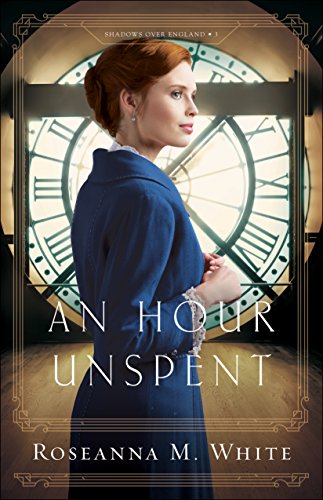
Book Review: An Hour Unspent

Barclay Pearce is the head of a makeshift family of orphans who found each other on the streets and put themselves together as a family. The only way the older kids knew to care for the younger was to become pickpockets. They became quite good at what they did, to the point that V., an enigmatic figure with some kind of ties to the British government during WWI, recruited some of them for some behind-the-scenes, off-record reconnaissance and information-gathering.

Now Barclay and his two oldest “sisters” have become Christians and turned the family from thieving. For now, V provides them with plenty of well-paid work. What they’ll do after the war, they don’t know—but they’ll trust God to lead.

Meanwhile, Barclay, the newest to become a believer, tries to learn how to walk by faith, find God’s guidance, and apply Christian principles to the work V asks of him.

His latest job is to get to know clock-maker Cecil Manning. Dr. Manning is something of a tinkerer, creating toys and other inventions. Rumor has it that he’s working on a synchronized gear that could help pilots in the war. If he is, the admiralty wants information: how close he is to completion, does he need anything to aid his efforts, would he be willing for the government to use the gear.

Evelina Manning Is the clock-maker’s only daughter. She’s close to her father and fondly tolerant of his eccentric habits. She’s less tolerant of her mother’s controlling ways. Evelina works with the suffragette movement, much to her mother’s dismay. Her childhood bout with polio left her with a leg that works most of the time.

But one time when her leg betrayed her, this Barclay fellow stepped in to help, unasked and unneeded. That set them off on the wrong foot. Finding out more about Barclay’s past and his unconventional but loving family doesn’t raise him in her eyes. But there’s something about him that piques her interest.

As the first zeppelins attack London and the Germans also learn of Manning’s gear, Barclay and Evelina will have to work together to escape the danger coming for them.

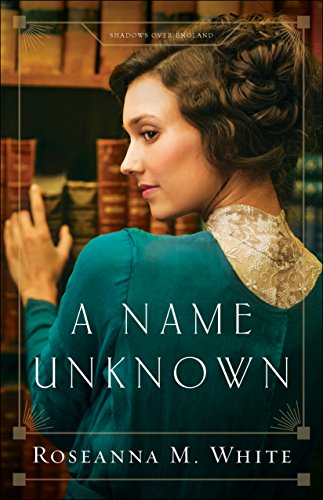
An Hour Unspent is the third and last in Roseanna M. White’s Shadows Over England series. As with the first two (A Name Unknown and A Song Unheard), I loved the story, the characters, and the realistic faith element. Thankfully, some of the characters from this series carry over into the next, The Codebreakers. I also love the covers of all three books. The fact that they were different from what I have seen before first drew me to them.

(Sharing with Carole’s Books You Loved, Booknificent Thursday)

Book Review: True Strength

I don’t read many celebrity biographies or memoirs. But we had seen Kevin Sorbo in a couple of things, then noticed he starred in Christian-based movies the last several years (he portrayed the atheist professor in God’s Not Dead). And he seems to have become more outspoken about his Christian faith on Twitter and Facebook. I became interested in his story. So when I saw his book, True Strength: My Journey from Hercules to Mere Mortal—and How Nearly Dying Saved my Life, come out on a Kindle sale, I got it.

He grew up in Mound, Minnesota, with small-town values and a strong work ethic. He got some modeling jobs to help pay bills in college, then starting acting in commercials. Soon he got the starring role in three Hercules movies, which then transitioned to a TV series, becoming one of the top shows in its day.

Just as things were going well, Kevin noticed a lump on his shoulder. It turned out to be not cancer, but an aneurysm. A chiropractic maneuver released hundreds of blood clots in his arm and a few in his brain, triggering three mini-strokes. At first, the doctors’ main concern was saving his arm. But Kevin experienced a host of symptoms, from vision loss to lack of balance to buzzing and vibrating in his brain to headaches. The only treatment seemed to be physical therapy and time. Doctors called his health crisis “one in seventy-five million.”

Both because Kevin was a private person, plus he and the producers didn’t want his Hercules persona to be tarnished, the full extent of his condition was not made public. He filmed the rest of the series with minimum camera time, creative use of a body double, and plots that worked around his situation.

Kevin talks about faith in the book, but there’s no real conversion point or switchover. It’s more like he reached back for the faith he had been brought up with and started praying and relying on God to see him through. He rejected the “hellfire and eternal flames of misery on us sinners” that his childhood pastor preached. That in the Bible, but his pastor seems to have used it as a club to beat over people’s heads rather than an invitation. Kevin did believe in a “loving, forgiving God” and acknowledged that:

Before my illness I was fully preoccupied with the material side of life. Moving at the speed of light, I ignored the spiritual side, the unseen. God created this world, but I was determined to live in it to the fullest, to get the most out of it. I figured He would want that

Through his illness, he realized:

My illness made me special—in a way that I never wanted nor expected, yes, but if I was to be special, then I was going to do something with that gift. I wasn’t a half-god or any part god. I was a mere mortal, with human limitations and problems, but I was determined not to behave like a victim anymore.

His dear wife deserves an MVP award: they were engaged when Kevin’s illness struck, and she was his main support all through it.

There are some crude spots in the book, some sexual encounters (though not explicit), and a bit of bad language (though some of it is disguised comic strip-style with keyboard characters).

Even though our situations were very different, my experience with transverse myelitis helped me identify with-some of the neurological issues and the long recovery.

It was also interesting reading about some of the behind-the-scenes aspects of the film industry.

I appreciate Kevin’s sharing his story and wish him and his family all the best.

(Sharing with Carole’s Books You Loved)

Book Review: Termination Zone

Termination Zone is the sequel to Adam Blumer‘s thriller, Kill Order (linked to my review).

In the first book, pianist Landon Jeffers had surgery for a brain tumor. After he recovered, he began waking up with partial memories of things he wouldn’t normally do. He found out an organization had implanted a chip in his head in order to control him and have him do their bidding. And he discovered he was not the only one.

Landon has been in hiding in the months since the last book, but he is discovered. His method of jamming his implant’s signals is no longer working. He’s on the run again. But an unexpected help directs him home: his mother is in danger.

Landon learns the organization behind the implants is called the Justice Club. He’s also told that a covert group is trying to thwart and disable the organization. His contact tells Landon they want him to work from inside the club. It’s a dangerous prospect, and Landon is not sure whom to trust. But he decides to work with the Justice Club’s hidden opponents. Landon tries to discern what the Justice Club is up to, but their aim is bigger than he imagined. Will he find out in time? Can he do anything about it? Will it endanger the woman he loves?

This sequel starts off with a bang and grabbed me from the first page. Fast-paced action and mystery kept me riveted.

Landon had become a Christian in the last book, and he struggles realistically in this book to learn to yield to God, to pray, to seek God for discernment and guidance.

Adam has pledged to readers to keep his novels clean. There are no sexual scenes, bad language, or gore. He proves that an excellent, thrilling novel can be written without all that. There are bad guys who are out for people’s lives, but there’s nothing gratuitous.

Once again, Adam has done a superb job. The fact that thrillers aren’t my usual reading fare, yet I eagerly await Adam’s every new book, should tell you something about his writing.

Update: Here is a trailer for the book which I just became aware of:

(Sharing with Carole’s Books You Loved, Booknificent Thursday)

Book Review: A Song Unheard

A Song Unheard is the second of Roseanna M. White’s Shadows Over England series set during WWI. The series involves a group of young people who were orphaned or abandoned as children, found each other, and formed their own family. They support themselves by stealing, but they have a strict code to steal only from those who won’t miss the loss.

Willa Forsythe had found an abandoned violin as a child and discovered she could make it sing. She had a natural talent to play beautifully by ear.

She’s approached by the mysterious Mr. V., who gave a job to her sister, Rosie, in the previous book, A Name Unknown. Mr. V. has some connection with the British government, but they are not sure what exactly it is or whether it is in an official capacity. But he pays well. He wants Willa to travel to Wales and pretend to be an old school chum of a couple of sisters who are aiding a group of musicians from Belgium. They are trying to gather relief efforts for the folks back home. Her specific job: get to know acclaimed violist Lukas De Wilde and find a cypher that he carries with him. Lukas’ father, now deceased, had been a talented cryptographer. V. wants the cypher to aid Britain in the war.

Lukas is worried sick about his mother and sister. He had been shot in an attempt to find them and get them out of Belgium. He knew their home had been destroyed, but he didn’t know their whereabouts or status. His face and his father’s work were both well-known enough that he can’t risk going back to Belgium. Meanwhile, he tries to hide his injury and work with the orchestra while trying to figure out what to do.

He and Willa are intrigued with each other, but he’s a known flirt, so she doesn’t take him seriously. She knows they are from two different worlds, and he would never respect her if he knew what she was. But the more she gets to know him, the more she regrets that she will have to betray him. And unknown dangers lurk just beyond her awareness.

My thoughts:

I loved this book as much as the first one. The story, the history, and the characters were all wonderfully written. During the last few chapters, I wished I could set aside everything else just to find out what would happen.

One of the things I most appreciate about this author is that she is not afraid to be clear about spiritual matters. So many Christian writers are so subtle these days about the faith element in their stories that, unless you already understood what Christianity is, you’d never figure it out in their books. Roseanna proves that you can talk about Christianity normally and clearly without sounding preachy or strained or artificial.

The sister in the previous book had come to know the Lord. In a family of thieves, a conversion will necessitate some changes. Even though the sister is non-judgmental and still a loving part of the family, Willa feels a little betrayed. This is something that’s not often dealt with in Christian fiction, and I am glad Roseanna explored it.

Both of Willa’s parents had abandoned her, and she transfers her feelings about them to God. She felt He was someone who either wasn’t there or didn’t care about her. I loved her journey.

I listened to the audiobook read by Liz Pearce. I thought her narration was a little too blustery in the last book. But either I got used to her style, or her characterizations for this book were much more pleasant. At any rate, I enjoyed it and look forward to Book 3!

(Sharing with Carole’s Books You Loved, Booknificent Thursday)

Book Review: Be Obedient

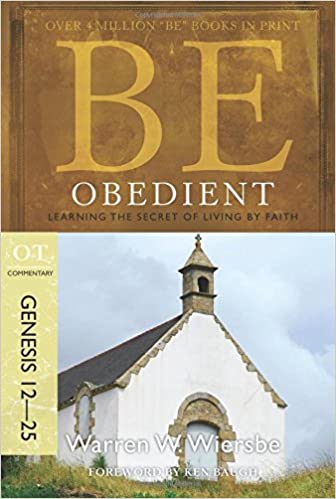
Be Obedient (Genesis 12-25): Learning the Secret of Living by Faith by Warren W. Wiersbe is the second in his three-part commentary on Genesis. These chapters cover the life of Abraham.

Humanity had not had a good track record so far In Genesis: sinning in paradise, murder, drunkenness, immorality, and rebellion. But in His longsuffering, God continued working with man.

In this section, God called Abraham to leave his family, his country, and his idols and go to the land where God sent him. God promised Abraham He would bless him, make his name great, make of him a great nation, and through him bless “all the families of the earth” (Genesis 12:1-3).

Abraham and his wife, Sarah, were not sinless examples of living by faith. While I am not happy when anyone makes wrong choices, I am encouraged that even towering figures like Abraham were not perfect, and we can confess our sin, be forgiven, pick up, and go one. Abraham and Sarah are both listed in what is sometimes called the “Hall of Faith” in Hebrews 11.

Ultimately, Abraham’s story is about God showing grace and faithfulness and setting aside a line of people through whom the promised Messiah would eventually be born.

In the last chapter, Wiersbe lists several ways “all the nations of the earth” are blessed through Abraham.

  • “Abraham left us a clear witness of salvation through faith.” Romans 15:3: “Abraham believed God, and it was counted to him as righteousness.”
  • “Abraham also leaves us the example of a faithful life. James used Abraham to illustrate the importance of proving our faith by our works (James 2:14-26). Wherever Abraham went, he pitched his tent and built his altar, and he let the people of the land know that he was a worshiper of the true and living God.”
  • “From Abraham, we learn how to walk by faith.”
  • “Abraham gave the world the gift of the Jewish nation; and it is through the Jews that we have the knowledge of the true God plus the Word of God and the salvation of God (John 4: 22).”
  • “Finally, because of Abraham, we have a Savior.” Matthew 1:1 begins, “The book of the genealogy of Jesus Christ, the son of David, the son of Abraham.”

Here are a few of the other quotes that stood out to me in this book:

Living by faith means obeying God’s Word in spite of feelings, circumstances, or consequences. It means holding on to God’s truth no matter how heavy the burden or how dark the day, knowing that He is working out His perfect plan. It means living by promises and not by expectations.

“The victorious Christian life,” said George Morrison, “is a series of new beginnings.”

God alone is in control of circumstances. You are safer in a famine in His will than in a palace out of His will.

When you disobey the will of God, the only right thing to do is to go back to the place where you left Him and make a new beginning (1 John 1: 9).

God’s remedy for Abraham’s fear was to remind him who He was: “I am thy shield, and thy exceeding great reward” (Gen. 15: 1). God’s I AM is perfectly adequate for man’s “I am not.”

The Hebrew word translated “believed” means “to lean your whole weight upon.” Abraham leaned wholly on the promise of God and the God of the promise. We are not saved by making promises to God but by believing the promises of God.

In times of testing, it is easy to think only about our needs and our burdens; instead, we should be focusing on bringing glory to Jesus Christ. We find ourselves asking “How can I get out of this?” instead of “What can I get out of this that will honor the Lord?” We sometimes waste our sufferings by neglecting or ignoring opportunities to reveal Jesus Christ to others who are watching us go through the furnace.

Once again, I am indebted to Dr. Wiersbe for his helpful insights.

(Sharing with Worth Beyond Rubies, Grace and Truth,
Carole’s Books You Loved, Booknificent Thursday)
Book Review: A Name Unknown

In A Name Unknown by Roseanna M. White, Rosemary Gresham’s parents died when she was eight, and she found herself on London’s streets. Eventually she and similar children formed themselves into a makeshift family with the older ones taking care of the younger the best way they knew how: stealing. Rosemary’s many years of practice have honed her skill into an art, taking her from pickpocketing to mixing with and stealing from society’s upper echelons.

A mysterious Mr. V. asks Rosemary to do a job with the biggest payoff she’s ever seen: gain access to a Peter Holstein, a “rich bloke” who “has the king’s ear.” Holstein’s family roots are German. War is brewing with Germany. V suspects Holstein is a traitor and wants Rosemary to find solid evidence.

Fortunately, Holstein has just advertised for a librarian to organize his stacks of books and family papers, and Rosemary applies for the job.

Peter Holstein is aware that trouble is brewing over his name and associations. He is not in public much due to a stutter, but his absence is taken for aloofness. He has secrets of his own, but they don’t include espionage: he’s a best-selling author writing under a pseudonym. He prays God will guide him. Rosemary seems the answer to his prayers: hopefully she can help him find family journals and documents which will prove them loyal British subjects.

My thoughts:

I loved this book on many levels: the intrigue of Rosemary’s search and whether she’ll be found out; her prejudices about “rich blokes” being upended by what she sees in Peter; Peter’s frequent lapses into the work he’s writing and decisions over his plot; his awkwardness and trouble expressing himself orally; his efforts to live out his faith; her constant chatter and his need for quiet.

This is the first book in a Shadows Over England series, and I immediately bought the second book after finishing this one.

(Sharing with Booknificent Thursday, Carole’s Books You Loved)

Book Review: Be Basic

The book of Genesis is 50 chapters long and covers a lot of ground. So Warren Wiersbe divided his commentary on Genesis into three volumes. The first is Be Basic (Genesis 1-11): Believing the Simple Truth of God’s Word.

The first eleven chapters of Genesis cover creation, the fall, Cain and Abel, Noah and the flood, and the tower of Babel. The next section begins with Abraham’s life.

Be Basic is probably a good title, because Genesis sets up foundational truths for the rest of the Bible.

Genesis is quoted or referred to more than two hundred times in the New Testament, which means it’s important for the New Testament Christian to understand its message.

Here are a few other passages I have marked:

God didn’t create a world because He needed anything but that He might share His love with creatures who, unlike the angels, are made in the image of God and can respond willingly to His love.

Work isn’t a curse; it’s an opportunity to use our abilities and opportunities in cooperating with God and being faithful stewards of His creation. After man sinned, work became toil (Gen. 3: 17–19), but that wasn’t God’s original intention.

We’re commanded to worship God, love people, and use things for the glory of God and the good of others. When this divine order becomes confused, then God’s creation suffers. When in our greed we start lusting after things, we soon begin to ignore God, abuse people, and destroy creation.

Bible history begins with a beautiful garden in which man sinned, but the story ends with a glorious “garden city” (Rev. 21—22) in which there will be no sin. What brought about the change? A third garden, Gethsemane, where Jesus surrendered to the Father’s will and then went forth to die on a cross for the sins of the world.

As always, I appreciate Dr. Wiersbe’s helpful insights.

(Sharing with Booknificent Thursday, Carole’s Books You Loved)

Book Review: The Medallion

In The Medallion by Cathy Gohlke, Sophie Kumiega is a Brit living in her husband’s city of Warsaw, Poland, in 1939. He’s a fighter pilot, in the air during the German attack on Warsaw. He can’t get back into the country after Germany’s occupation. Sophie first tries to work, until the library where she is employed is bombed and taken over. Then she helps the underground in various ways, still unsure whether her husband lives.

In the same city, Rosa and Itzhak Dunovich are a Jewish couple dealing with the increasing encroachment of German occupation. They welcome their first child into the Jewish ghetto. Itzhak worries about his family in another town. He devises a way to go to them to see if they’re safe or bring them back to Warsaw if they’re not.

But Itzhak doesn’t return. Food becomes even more scarce, atrocities increase. Rosa makes a heart-wrenching decision. The only way to protect her daughter is to send her with an underground nurse who finds places to hide Jewish children. Rosa cuts in half the tree of life medallion Itzhak gave her on her wedding day and places it on a chain around her daughter’s neck. When the war is over, hopefully she will be able to match her half of the medallion to her child’s and reclaim her.

I can’t imagine living through what either Sophie or Rosa did. Both saw loved ones die and conditions grow worse. Sophie had to constantly be aware of who was around and who might see and report her. Rosa dealt with the effects of deprivation and starvation.

I had an idea how the plot might end, but it took quite a different route there than I had guessed.

In the afterword. Cathy told how she became intrigued with two different true stories—one of a woman who posed as a nurse and hid Jewish children in convent schools or with Gentile helpers, and another involving searching for a child with half a medallion given up during the war. She wove them together in this story.

Somehow I happened to have both the Kindle and Audible versions of this book. It was nice to be able to pick up either one where I left off from the other. Normally the audiobook narration enhances the story, but this one felt a little overdone to me.

But all in all, an excellent, touching book.

(Sharing with Booknificent Thursday, Carole’s Books You Loved)