The folks at 5 Minutes For Books host What’s On Your Nightstand? the fourth Tuesday of each month in which we can share about the books we have been reading and/or plan to read.
It has been a very busy month, with a medical procedure at the beginning and two birthdays and family visiting in the middle. But I was glad to be able to get a bit of reading done through the month as well.
Pygmalion by George Bernard Shaw, reviewed here. The play on which the musical My Fair Lady is based. I listened via audiobook but looked up parts in the free Kindle version. Fun!
The River by Beverly Lewis, reviewed here. Very good. Probably one of my favorites of hers.
This title of Emma, Mr. Knightly, and Chili Slaw Dogs by Mary Hathaway intrigued me when I saw it listed on fellow “What’s On Your Nightstand” participant Tonia’s post in May (which is one advantage of the Nightstand posts – new book recommendations!) I got it to read for the the Austen in August Challenge for which we can include spin-offs of Austen’s books as well as books by or about her.
As you can guess by the title, this book is a take-off of Austen’s Emma(linked to my review). It’s part of a series titled Jane Austen Takes the South, the first of which was Pride, Prejudice, and Cheese Grits (which I have not read but have put on my TBR list!) The books are all set in the modern-day South, this one in a small town called Thorny Hollow, though I don’t remember if the state is named.
Caroline Ashley was a promising journalist for The Washington Post, but her father’s sudden death has left her mother unable to cope, so Caroline left her job to care for mother and their antebellum house. She chafes over helping with society luncheons and bridge parties and has plans someday for more articles and a book, but nothing ever seems to come to fruition. The one bright spot in her life is longtime family friend Brooks Elliott, a journalism professor and heir to a nearby estate. A costumed Jane Austen-themed party and Civil War reenactors add to the story.
When an exciting, handsome newcomer offers Caroline a job in a new publishing venture, Brooks distrusts him, but Caroline welcomes the offer. And when a neighbor’s beautiful, accomplished granddaughter seems to vie for and catch Brooks’ Caroline, Emma is dismayed.
Knowing the book is based on Emma, we know where the plot is ultimately going to go, but it’s fun to see how it plays out in this setting and to look for the other reworked characters in the story. Not all of Austen’s characters and scenes are here: I don’t think I saw a Mr. Elton and his conniving wife as well as some others. Plus there are a few characters and plot points not in the original books. But the story isn’t meant to be a carbon copy: it’s a modern-day retelling.
There are modern attitudes as well, which is only natural, but one I was sad to see was towards Caroline’s mother. Though Emma’s father was a hypochondriac and a little ridiculous at times, everyone was kind and solicitous towards him, with Emma even declining to marry out of care for him. In this book, both Caroline and Brooks speak somewhat disdainfully of her mother, though later Caroline does come to understand her a little better and they come to an understanding.
I liked that Caroline, who comes from an old-money, well-established family, has to have her thinking challenged in regard to a less fortunate acquaintance and in regard to how others of her set have to handle dealing with their aging homes. Some of these beautiful old homes cost a fortune to maintain, and though there is regret that some of them have to “go commercial” in some way to make it, it’s an understandable and real issue.
I wasn’t sure if the book was marketed as Christian fiction, though the back cover mentions “good Christian women with spunk to spare” as part of the cast. As I looked at some reviews and sites after reading the book, apparently it was, but I’d say it’s light on the Christian aspect. About all I can recall being mentioned along those lines is one character being encouraged to pursue her God-given gifts and Brooks recalling his grandmother’s talk about “ferreting out God’s will” for one’s life. Nothing necessarily wrong with that – some authors and readers, even among those who like Christian fiction, don’t like it to be heavy-handed, and I agree that it needs to be natural and not preachy or forced. But, as I’ve said before, there are normal things you’d expect to see Christian people doing that are largely absent here.
There’s also one scene that reviewers argued over, some calling it R-rated, some saying it’s clean and merely a kiss. I’d say it goes beyond being merely a kiss, but while it’s not R-rated, it’s more PG 13 than I’d expect to see in a book like this. It’s meant to jolt the characters into realizing their feelings for each other and into changing the dynamic, but I think that could have been done with a “mere kiss.”
Overall I enjoyed the book and am looking forward to reading more in the series.
The back of the book as well as several blurbs online say that “Mary Jane Hathaway is the pen name of an award-nominated inspirational fiction writer who spends the majority of her literary energy on subjects un-related to Jane Austen.” I do wonder why she chose a pen name for this series, especially since her real name is mentioned on Amazon, and she owns up to these books on her blog. She is also a “homeschooling mother of six young children,” which make me question my excuses for not getting a book written! There is a Facebook page for the Jane Austen Takes the South series here.
(This review will also be linked to Semicolon‘s Saturday Review of Books.)
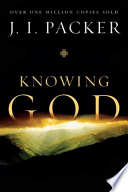
Somehow I have never read Knowing God by J. I. Packer, though I have heard it is wonderful. The title came to my attention again a few weeks ago, and I thought it might be a good time to start it. Then I saw that Tim Challies was leading readers through the book for his Reading Classics Together Series on Thursdays, and that added impetus to read it now, along with the fact that a few blog friends will be reading it at this time as well.
I’ve only participated in Tim’s Reading Classics Together one other time, with The Disciples of Grace by Jerry Bridges. I had decided I wasn’t going to blog about this book every week like I did then, especially since Tim has closed comments on his blog and readers can only participate via a Facebook group for that purpose. I’m really sad about that, for a number of reasons. But as I read the first chapter, I decided it would help me get more out of it and cement what I was learning to keep notes from each chapter rather than just trying to tie it all together at the end.
Chapter 1 is “The Study of God.” I don’t think I am going to summarize or outline each chapter, as Tim will probably do that. I’m just going to share a few things that stood out to me.
Packer starts out with a lengthy quote from Spurgeon extolling the virtues of studying God, reproduced here. Packer counters charges that such a study would be boring, impractical, and irrelevant and instead asserts that “it is the most practical project anyone can engage in” (p. 19).
He talks in the preface and some in the chapter about the spirit of the modern age of skepticism, and here comments, “I ask you for the moment to stop your ears to those who tell you there is no road to knowledge about God, and come a little way with me and see. After all, the proof of the pudding is in the eating, and anyone who is actually following a recognized road will not be too worried if he hears nontravelers telling each other that no such road exists” (p. 19).
Packer warns that, “To be preoccupied with getting theological knowledge as an end in itself, to approach Bible study with no higher a motive than a desire to know all the answers, is the direct route to a state of self-satisfied self-deception. We need to guard our hearts against such an attitude, and pray to be kept from it” (p. 22).
“There can be no spiritual health without doctrinal knowledge; but it is equally true that there can be no spiritual health with it, if it is sought for the wrong purpose and valued by the wrong standard” (p. 22). I very much appreciate that he doesn’t downplay Bible study or knowledge – too many people today, trying to make the same point Packer does, tend to set up false dichotomies about whether we love God or the Bible when we actually learn to love God through the Bible. Rather, he says, yes, study God’s Word – that’s how we learn what He wants us to know about Him – but don’t stop with the academics and the facts. Yearn to get to know God Himself through your study of His Word.
The psalmist [of Psalm 119] was interested in truth and orthodoxy, in biblical teaching and theology, not as ends in themselves, but as means to the further ends of life and godliness. His ultimate concern was with the knowledge and service of the great God whose truth he sought to understand (pp. 22-23).
One of the ways we do this is by meditation, “the activity of calling to mind, and thinking over, and dwelling on, and applying to oneself, the various things that one knows about the works and ways and purposes and promises of God. It is an activity of holy thought, consciously performed in the presence of God, under the eye of God, by the help of God, and as a means of communion with God. Its purpose is to clear one’s mental and spiritual vision of God, and to let His truth make its full and proper impact on one’s mind and heart. It is a matter of talking to oneself about God and oneself; it is, indeed, often a matter of arguing with oneself, reasoning oneself out of moods of doubt and unbelief into a clear apprehension of God’s power and grace” (p. 23).
Chapter 2, “The People Who Know Their God,” Packer expands on the theme of knowing God vs. just knowing about Him. Daniel 11:32b says, “the people that do know their God shall be strong, and do exploits,” or, as another version states it, “shall stand firm and take action.” Drawing from the book of Daniel, he notes and discusses that:
Those who know their God have great energy for God.
Those who know their God have great thoughts of God.
Those who know their God have great boldness for God.Those who know their God have great contentment in God.
It’s not too late if you’d like to join in on this study. We’re reading and discussing two chapters a week, and the chapters are easy to read and not long. I am finding it very beneficial so far.
The TBR Pile Challenge is for reading books we have on hand or have on a TBR list but haven’t gotten to yet. A wrap-up post is required at the end, and I am happy to say I have completed the challenge! So I wanted to go ahead and write a wrap-up post now rather than wait til the end of the year. I’ve linked each title to my review of it. The publishing dates are just to make it easier for RoofBeamReader, who requires that the books for this challenge are ones published before 2014. I’ve also included the date I finished reading each one.
Here are my selections for this year:
1. A Million Little Ways: Uncover the Art You Were Made to Live by Emily Freeman, 2013. I got this because I really liked her Grace For the Good Girl. I got it right at the beginning of last year but it got pushed aside for some of the other challenges. Mixed emotions about parts of it but overall a good message. (Finished 3/30/15)
2. He Is There and He Is Not Silent by Francis Schaeffer, 1972. I can’t tell you how many years I have had this on my shelf, but I wouldn’t if I could because it would be too embarrassing. It wasn’t what I had thought it would be, but it was still highly valuable. (Finished 4/22/15)
3. Gentle Savage Still Seeking the End of the Spear: The Autobiography of a Killer and the Oral History of the Waorani,2013, by Menkaye Aenkaedi with Kemo and Dyowe, 2013. Those who have been reading here a long time know that the whole story of the five missionaries who were killed trying to reach the Waorani, known then as Aucas, and the subsequent way God opened the hearts of this tribe to receive Jesus as Savior and Lord means a great deal to me and has impacted my life exponentially. This book was told by Menkaye, one of the killer of the missionaries who later became a father and grandfather figure to Steve Saint and his family, descendants of one of the five men. (Finished 5/24/15)
4. Strait of Hormuz by Davis Bunn, 2013. I like Bunn and his Marc Royce series, but this is another that kept getting pushed aside while I worked on other reading challenges. This series keeps one on the edge of one’s seat! (Finished 6/9/15)
5. Better to Be Broken by Rick Huntress, 2012, about an accident that left him in a wheelchair and the influence it has had on his life. (Finished 3/2/15)
6. The Fairest Beauty by Melanie Dickerson, 2013, a retelling of Snow White. (Finished 6/17/15)
7. My Emily by Matt Patterson, 2011, a family’s story of a young daughter born with Down’s Syndrome who is then diagnosed with leukemia. (Finished 3/4/15)
8. The Swan House by Elizabeth Musser, 2001. I really enjoyed her Words Unspoken (it was one of my top ten from 2010), so I wanted to read more from her. Loved it and want to read more. (Finished 4/18/15)
12. The Narnian by Alan Jacobs, 2009, for Carrie’s Chronicles of Narnia Reading Challenge in July as well as this challenge. Liked the information, did not like Jacobs’ style. (Finished 7/24/15)
We’re allowed two alternates in case there is a book we just can’t get into. I had chosen The Captive Maiden by Melanie Dickerson, 2013 (a retelling of Cinderella) and read it even though I did complete my original list and didn’t need an alternate (Finished 6/28/15). I had also chosen “something by Ann Tatlock, if I can be that unspecific.” I have six of her books in my Kindle app and ended up choosing Things We Once Held Dear. I’ve started it but have picked it up so intermittently that I am not really into yet, but I do want to complete it even though I don’t need to for the challenge. (Update: Finished this 10/5/15)
One of the reasons I value this challenge is that it does help me purpose to read books that I have been meaning to get to and helps me be more intentional in my reading yet it also allows room for picking up books on a whim through the year as well. I’ve found I do best if I do have some reading plans for the year but do have some breathing room for other interests or new books as well.
Thanks to RoofBeamReader for hosting this challenge once again!
I had seen Alan Bradley’s The Sweetness at the Bottom of the Pie highly recommended by several bloggers a few years ago, so when it came up on sale at Audible, I snapped it up.
The book starts off abruptly with 11-year-old Flavia de Luce gagged and tied up in a dark closet finding her way out of the predicament her older sisters had put her in. She plots her revenge by concocting a poison ivy extract to put into her sister’s lipstick, taking sibling rivalry to new heights (…or depths, depending on how you look at it).
Flavia, as the youngest of three girls and daughter of a distracted widowed father in 1950’s England, had been left to entertain herself much of her life and discovered early on an extensive love of chemistry. The old English manor house that had been passed down through generations of de Luces and came equipped with a full laboratory leftover from an ancestor with similar interests and became Flavia’s sanctum. Her primarily chemical study was of poisons.
One morning the housekeeper discovers a dead bird outside the door with a stamp stuck on its beak, unusual not only in itself, but in the reaction it evokes in Flavia’s father. Then one night she awakens to hear her father arguing with a stranger, and when she peeps into the keyhole, her father’s man, Dogger, sends her back to her room. But when she finds the stranger in their cucumber patch the next morning, and he says, “Vale!” with his dying breath, she starts putting together what she observes with what she heard of the argument the night before and then searches out old newspaper articles and talks to various people in town, sleuthing out the mystery one step ahead of the police.
I’ve seen this described as a cozy mystery, and it is that. Flavia is certainly a precocious and engaging protagonist. As a child, she has unsuspected access to many people and places in the village. In interviews quoted in Wikipedia,
Bradley describes the theme as “youthful idealism” and how far it can take someone “if it’s not stamped out, as it so often is.” Thinking back to his own childhood, he identifies with Flavia’s 11-year-old zeal, remembering the “feeling of being absolutely unstoppable,” capable of anything. He explains, “when you’re that age, you sometimes have a great burning enthusiasm that is very deep and very narrow, and that is something that has always intrigued me – that world of the 11-year-old that is so quickly lost.”
Though Flavia definitely embodies that youthful idealism, some readers, myself included, feel that she’s beyond precocious. Even though she’s bright and has done lots of reading and self-educating, she comes across as too adult in some ways, such as an observation that someone looked like a “sour old chamberlain were looking on dyspeptically as his mistress unfurled silk stockings over her long, youthful legs.” There’s a certain suspension of disbelief one has to have in any “child as hero” story, but I think Bradley stretches that almost too far. Plus I was dismayed at the number of “damns” and “hells” scattered throughout the book, most of them from the mouth of Flavia herself. He does give her a few childish qualities, such as pigtails and braces, her reactions when she’s thwarted, and her cycling all over the area on her bike, named Gladys.
One other aspect that makes Flavia not entirely likeable to me is that she lies without compunction or correction. Maybe this is to show that she hasn’t been very well disciplined or taught morals in her neglected childhood: maybe Bradley just felt that had to be part of her character in order to accomplish what she did.
Who would have thought that an engaging, funny, and clever mystery could be crafted based on chemistry and philately (stamp-collecting) with an 11-year-old sleuth? Bradley deserves credit for having done so, but since what I don’t like about Flavia mars what I do like, I don’t know that I will ever read the sequels. But I’ll leave you with a few of my favorite quotes:
Wrapped up in the music, I threw myself into an overstuffed chair and let my legs dangle over the arm, the position in which Nature intended music to be listened to, and for the first time in days I felt the muscles in my neck relaxing.
Heaven must be a place where the library is open twenty-four hours a day, seven days a week. No … eight days a week.
If there is a thing I truly despise, it is being addressed as “dearie.” When I write my magnum opus, A Treatise Upon All Poison, and come to “Cyanide,” I am going to put under “Uses” the phrase “Particularly efficacious in the cure of those who call one ‘Dearie.'”
A peculiar feeling passed over me–or, rather, through me, as if I were an umbrella remembering what it felt like to pop open in the rain.
The woman was putting her purse in the drawer and settling down behind the desk, and I realized I had never seen her before in my life. Her face was as wrinkled as one of those forgotten apples you sometimes find in the pocket of last year’s winter jacket.
“Yes?” she said, peering over her spectacles. They teach them to do that at the Royal Academy of Library Science.
I listened to the audiobook wonderfully read by Jayne Entwhistle. Her inflections, style, expressiveness, and voice really added to the enjoyment of the book.
(This review will also be linked to Semicolon‘s Saturday Review of Books.)
You might think, from my remarks on Growing Up Amish, that I don’t read Amish fiction, and it is for those reasons that I don’t read much of it. But I was reading Beverly Lewis long before Amish fiction started exploding on the Christian fiction market. Since her books were based on or inspired by some of her grandmother’s experiences, and since she didn’t idealize the Amish lifestyle but delved into some of its problems and hardships, I’ve enjoyed all of her books that I have read. (Some other authors of Amish fiction may do the same, but I am not interested in expanding my reading of that genre.)
The River is about two sisters from an Amish family who had left the Amish years before to “go fancy” into the world of Englischers. They receive word from a brother that there is a celebration planned for their parents’ 50th wedding anniversary, and both sisters are invited. They’re not inclined to attend until they hear that their father has a serious heart condition and is resisting the idea of surgery. They decide to go, with some trepidation.
Tilly, the older sister, had left the Amish first. There had always been tension between her and her father, and when her youngest little sister, Anna, had drowned in a river, that tension was exacerbated because Tilly blamed herself for not watching her sister closely enough and felt her father blamed her as well. Her sister Ruthie left a few years later primarily due to a hard breakup with a beau. Since their leaving, Tilly married and had two children; Ruthie was single but actively involved in a good church.
As they return, Tilly has the harder time, feeling that she is blamed not only for Anna’s death, but also for influencing Ruthie away from the Amish. Her father is not hostile but is not welcoming, either. Ruthie runs into her old boyfriend and at first wants to avoid him, but then decides she should at least hear him out when he wants to talk with her. Both women struggle with the parts of their former lives that are good and familiar vs. the parts that are painful.
Strong themes in the book are the need to look at another person’s side of things and the need for forgiveness, both extending and receiving.
I very much enjoyed the book and felt the struggles that were faced were realistic.
Beverly mentioned in her note at the end that she had made a documentary called “Glimpses of Lancaster County.” Part 1 is here and Part 2 is here. Each is only a few minutes long. The end of Part 2 mentions a Part 3, but I didn’t see it on the site (later I did find Part 3 on YouTube.) It was enjoyable to hear Beverly describe her childhood, her grandmother who was shunned for marrying outside of her father’s will, and to see some of the places where she and her family grew up and where some scenes for her books take place.
For those who enjoy book trailers, here is the one for The River.
A Captain’s Duty: Somali Pirates, Navy Seals, and Dangerous Days at Sea by Richard Phillips first came to my attention through Lisa. I vaguely remembered this incident in 2009 and knew a movie had been based on it, which I’ve not seen. But I decided I wanted to read the story behind it.
Captain Phillips tells a bit of his own background and a bit of merchant marine history. I had a step-uncle in the merchant marines and didn’t know much about it, so I found this quite informative. I liked that Phillips read a lot of merchant marine history and regarded his position as not just a job to earn a paycheck and pay bills, but rather a continuation of that tradition. This information as well as some background into his family is told mostly in flashbacks in conjunction with getting ready for his next trip. He also tells of the danger of pirates, particularly in certain hot spots, but said there had not been an instance of pirates taking an American ship in 200 years. However, he notes, “Sailors are bringing the world’s most vital resource through the world’s most unstable region, which had turned the area around the Gulf of Aden and the Somali coast into a shooting gallery. Anyone sailing there would be under constant threat of attack from pirates, who were getting smarter and more violent by the month” (p. 26).
The chapters are set up in a countdown fashion leading up to the day the pirates did overtake his ship. He talks about training his men in what to do in case of a pirate attack and shoring up security. They had two uncanny close calls with pirates, and then, suddenly, when the Somali pirates did come after his ship, it happened incredibly fast. They had time to sound an alarm so that most of the men could go into a prearranged hiding place and so that Phillips could turn dials and switches that would disable the radar and many of the functions on the ship. They wanted as few people as possible to be visible so that the pirates could not kill them or hold them hostage.
The way it usually worked was that the pirates had a larger “mother ship” nearby which they could communicate with once a ship was taken, and negotiations would begin to demand a ransom. But Phillips had made it so that the radar wasn’t detecting their ship and had turned the radio channel so their hails were on a little-used frequency. He convinced them that many of the ship’s operations were broken and he couldn’t fix them and didn’t know where the rest of the crew was, and they believed him. They threatened to kill the four men on the bridge but did not carry out their threat after two deadlines, and finally stopped threatening. They took Phillips through the ship to try to find the missing crew, but he was able to keep them away from their hiding place, or, in a couple of instances, the one or two crewman who were at large heard them coming and hid in time. When they began taking the other crewmen on the bridge to do the same thing, those men were able to get away into hiding places of their own. Finally Phillips was able to convince the pirates to take the lifeboat, and him along with them. I had not realized that the bulk of this ordeal occurred with just Phillips and the pirates on the lifeboat, but he succeeded in getting ship and crew free.
The pirates thought they could still hold out for a ransom. They actually all got along pretty well, even joking together, until Phillips tried to escape. Then they turned on him, kept him tied up, and began beating him. After four more long days, Navy SEALs rescued him (no spoiler there since that was in the news. 🙂 ) In fact, during some of the tenser moments in the book, I had to keep reminding myself, “It’s going to be ok. He makes it our alive.”) The SEALs did admit, though, that the outcome was better than they thought it was going to be.
Phillips weaves in to the story what was going on with his wife and family during this situation as well, how friends came to be with his wife and help in various ways, how the media made a nuisance of itself by camping in front of their house.
Even knowing the outcome, this was a riveting story.
One major problem with the book, however, is a heavy smattering of bad language. I had set it aside for a time, not sure if I should go ahead with it. I finally decided to pick it back up again, and large chunks of it would be profanity-free, then I would be blasted with it again. Of course, it’s his story, and he is telling it like it happened. “Cussing like a sailor” is a known idiom, though I don’t know why they have a penchant for or think they’re free to engage in such speech. I know it’s real to the story: I just don’t like to fill my brain with it so that it comes into my own mind in tense moments.
I am always interested in the spiritual side of things, even though spirituality is not a major component of the book. Phillips and his wife were Catholics, but, by his admission, not good ones. He talks about being a believer in some sense of the word, and says that this incident helped his wife come back to her faith. He calls one of his crewman a born again Christian, so he seems to acknowledge that that’s something different from himself. He says he prayed:
“God, give me the strength and the patience to see my chance and to take it. I know I’m going to get only one shot. Give me the wisdom to know it.” I never prayed to get away. I just prayed for strength and patience and knowledge to know when to make my move. I believe God helps those who help themselves. Asking for Him to do all the work is just not my style (p. 191).
What a wonderful opportunity that would have been to completely humble himself and abandon himself to God. I’m glad he had the measure of faith he did and pray God will continue to grow it.
Another interesting thing he discusses near the end is what he calls “the H word: Hero.” He was very uncomfortable with people calling him that and noticed that other people in a similar position would also comment that they didn’t feel they were. I have noticed that, too, in those kinds of interviews. People will say things like, “I wasn’t a hero – I just did what I had to do.” Phillips theorizes that “we are stronger than we think we are” and we can handle far more than we think we can (p. 284). He feels that everyone has “this potential inside you, too. If fate put you in my shoes, you’d have done the same thing” (p. 285). He acknowledges that “mental toughness” and “training your mind never to give up” are a part of it (pp. 284-284).
I’ll close with one quote I especially liked that he opened the book with from John Paul Jones, who was also a merchant mariner and Revolutionary war hero:
If fear is cultivated, it will become stronger. If faith is cultivated, it will achieve mastery.
(This review will also be linked to Semicolon‘s Saturday Review of Books.)
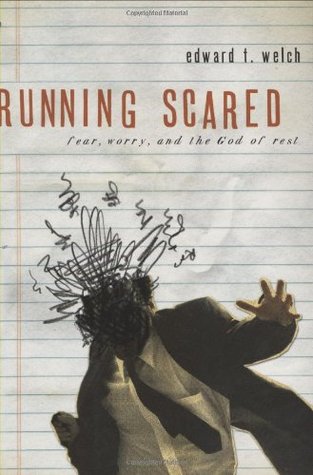
Edward T. Welch aims Running Scared: Fear, Worry, and the God of Rest primarily at himself as a “fear specialist,” but thankfully he lets us in on what he has learned. He notes that “Fear not” is the most often repeated command in the Bible and can be taken either as “a judicial warning, which has a threatening overtone” or as a “parental encouragement, which aims to comfort.” He says, “Luke places the accent on parental encouragement,” and Welch does as well. The thirty meditations are not an outline or in linear form — there’s a bit of overlap — but reading a chapter a day is doable and helps build on the principles he discusses.
The first couple of chapters set the scene, and, if you didn’t think you were fearful or had anything to worry about, these will convince you! One problem with dealing with fears in a conventional way is that they don’t usually submit to logic, and some techniques for dealing with them are only temporary and don’t get to the heart of the matter.
The heart of the matter, Welch asserts, is that our fears and worries reveal something to us about ourselves. Most of them focus on not getting something we think we need, or fearing something that might happen. Both involve a fear of not being in control and reveal what we value. So he encourages us to “Rather than minimize your fears, find more of them. Expose them to the light of day because the more you find, the more blessed you will be when you hear words of peace and comfort.”
“Worriers are visionaries without the optimism.” Most worriers would qualify as false prophets because our predictions don’t come true more often than not.
“The sheer number of times He speaks to your fears says that He cares much more than you know…The way He repeats Himself suggests that He understands how intractable fears and anxieties can be. He knows that a simple word will not banish our fears.”
“Search Scripture and find that our fears are not trivial to God. ‘Do not be afraid’ are not the words of a flesh-and-blood friend, a mere human like yourself. They are not the words of a fellow passenger on a sinking ship, who had no experience in shipwrecks, can’t swim, and has no plan. These words are more like those of captain who says, ‘Don’t be afraid. I know what to do.’ When the right person speaks these words you might be comforted.”
There is so much that is helpful in this book and so many places I have highlighted that it’s hard to know which ones to share without quoting half the book here. I’ll try to just share some of the things that were most helpful to me.
One was the “manna principle,” lessons drawn from God’s providing Israel with manna in the wilderness. One lesson was that the Israelites weren’t really models of prayer in that instance. They were complaining. That doesn’t give us the right to complain, but it does highlight the fact that God answers because of His grace, not because of “the quality of our prayers.” Another I shared earlier is that the Israelites were to gather what they needed for each day. If they tried to hoard enough to last, the excess would rot. So for us, we depend on God’s grace for each day’s needs. Most worry is about what is going to happen in the future, but Jesus said, “Therefore do not be anxious about tomorrow, for tomorrow will be anxious for itself. Sufficient for the day is its own trouble” (Matthew 6:34). That doesn’t mean we never plan ahead — there are Scripture verses about that, too — but we don’t worry or become anxious about them, trusting God will provide what is needed when the time comes. We won’t have grace for a future event because we don’t need it yet. Another was that the principle of Sabbath rest was built into their system and served, among other things, as a test of faith and a way to honor God and acknowledge His control. Just as they had to trust that the manna would be there every morning, they had to trust that when they gathered enough on Friday to last through the Sabbath, it wouldn’t rot like it usually did when they gathered extra. This is a principle largely lost on modern Christians. True, we’re not under the specific Sabbath restrictions that Israel was, but a Sabbath rest was exemplified by God in the first week of creation. Businesses feel they can’t afford to lose the business that they would if they were closed on Sundays, and individuals feel they can’t possibly get everything done they need to do if they take a day of rest. We don’t realize what we’re missing out on.
Another chapter, “The God of Suspense,” deals with the fact that sometimes God delivers before we even know we have a need, sometimes He seems to deliver at the last minute, and sometimes He delivers after the fact, “after hope dies,” as with the death of Lazarus and the widow’s son. In those cases. God had a greater purpose in mind: to show people that Christ had power over even death. He cites some cases in which the very thing someone feared came upon them (as Job said), and God didn’t deliver in the way hoped for, yet He did something greater in drawing the person closer to Himself and helping them know Him in ways they would not have otherwise. He cites many Biblical examples that God does not shield us from every hardship, but “If the difficulty you anticipate comes upon you, you will receive grace” to deal with it.
He talks a great deal about the Sermon on the Mount and being taken up with God’s kingdom:
Are you worried? Jesus says there is nothing to worry about. It isn’t our kingdom, it’s God’s. We take our cue from the King, and the King is not fretting over anything. He is in complete control.
When you know that the Kingdom is God’s alone (though He gives it to us), that is the only thing that can lead to peace and rest. Owners are the ones who do all the worrying; stewards simply listen to the owner’s desires and work to implement them. Owners are responsible for the outcome; stewards strive to be faithful.
A few more favorite quotes:
“Worry is focused inward. It prefers self-protection over trust…It can reveal that you love something more than Jesus. It crowds Jesus out of your life.” It can even “choke the word” of God in our lives (Mark 4:19), so it is nothing to be ignored or treated lightly. “Anxiety and worry are wake-up calls that must be handled by spiritual means.”
“Worry’s magnetic attraction can only be broken by a stronger attraction, and David is saying [in Psalm 27] we can only find that attraction in God Himself.”
“When you call out, you might feel like He isn’t present or easily found. That is the nature of pain. The worse it is, the more alone you feel. But this is a time when the words of God must override your feelings. There are times when we listen to our feelings and times when we don’t. This is a time when we don’t. Instead, whenever there is a clash between our sensory experience and the promises of God, the promises of God win. The one who says, ‘verily, verily’ can be trusted. Call out and He will be found when you need Him.”
Welch deals with not only the anxiety and worry over physical needs, like money and provision, but with personal needs like approval and love, fear of death and judgment. He discusses prayer and what it means to have died in Christ and what freedom that can bring us. He points to our need to find and focus on our calling from God, what God’s peace, or shalom, means, and His instructions to be peacemakers. In short, I think he pretty much covers every base he can think of that might be related to anxiety and worry and points us to Christ in each instance.
There were a few places I disagreed with him about some particular, but I don’t fell the need to delineate all of that here. Overall I found this one of the most helpful books I have ever read. I mentioned before that I had bought it as a Kindle sale and forgotten about it, then came across it about a month before my recent surgery and decided to read it in the days leading up to the procedure. Combined with the prayer of friends, it helped me keep my mind on God and off the “what ifs,” and I know I will return to it often in the future.
(This review will also be linked to Semicolon‘s Saturday Review of Books.)
Pygmalion by George Bernard Shaw wasn’t really on my radar, but one of the categories for the Back to the Classics Challenge was a play. At first all I could think of was Shakespeare, and I wasn’t quite up to him just now. Then, perusing a list of classic play titles, I saw Pygmalion. Perfect!
The play opens with a number of people in front of Covent Garden late on a rainy night. All different classes of people are represented here. Someone trying to find a cab runs into a flower girl and knocks her basket out of her hand, spilling her wares and thus ruining her income for the night. In trying to sell her flowers, someone points out a man taking notes. She fears he is with the police and starts protesting her innocence and right to be there. As it turns out, he is not with the police. He is Henry Higgens, a professor of phonetics who can tell everyone where they are from by their accent. One of the crowd is a Colonel Pickering, who, as a student of Sanskrit, had just come from India to confer with Higgens. In their conversation, Higgens remarks offhandedly that he could take the flower girl’s “depressing and disgusting sounds” that would “keep her in the gutter to the end of her days,” and within three months’ time pass her off as a duchess.
To his surprise and consternation, the flower girl. Eliza Doolittle, shows up at his house the next day to take him up on what she perceived as an offer. She’d like to work in a flower shop instead of on the streets, and needs to know how to talk better to do so. Pickering encourages Higgens to take her on, saying that if he can teach her to pass for a refined member of society by an ambassador’s garden party, he’ll pay for her lessons. Despite the protests of his housekeeper that “You can’t take a girl up like that as if you were picking up a pebble on the beach,” Higgens agrees.
Thus begins their work, with much clashing of wills and opinions, triumphs and not-quite triumphs. A couple of my favorites of the Professor’s instructions:
Remember that you are a human being with a soul and the divine gift of articulate speech: that your native language is the language of Shakespeare and Milton and The Bible; and don’t sit there crooning like a bilious pigeon.
Remember: that’s your handkerchief; and that’s your sleeve. Don’t mistake the one for the other if you wish to become a lady.
If you’ve ever seen the musical My Fair Lady, you may know that it is based on Pygmalion. The ending is vastly different, and the actual scene of Eliza’s ultimate test is shown in the film whereas it is only referred to in the book, but otherwise for the most part it follows the play pretty closely (at least as far as I can remember – I haven’t seen the musical in a long time). Pygmalion is based in turn on a Greek mythological character of the same name who falls in love with a statue he created and gets his wish for it to come to life.
The end of My Fair Lady has Eliza and Higgens falling in love: Pygmalion does not. In fact, the end of Pygmalion seems a little unsatisfying at first. I thought that was just because I was used to My Fair Lady’s ending, but according to a number of sources I read, many who produced or directed the play varied the end slightly to at least hint that Eliza and Higgens came to some understanding. Shaw got so disgusted that he wrote a very long afterward explaining why they could not possibly have married, whom she does marry, and what happens to the major characters after the end of the play. Though this Pygmalion does not fall in love with his creation, he does “bring her to life.” In one of their final scenes together, when they’re arguing over what’s to become of her now, she shows she has gone from simpering and whining about it to having a plan, even if it means standing up to Higgens. He replies, “It’s better than snivelling; better than fetching slippers and finding spectacles, isn’t it? By George, Eliza, I said I’d make a woman of you; and I have. I like you like this.” So if we can set aside the desire to see a “romantic” ending, it is a conclusive ending in that now his “creation” is truly complete. Cliff notes says:
Consequently, with the conflict clearly stated for Higgins, the essence of human life is through mutual improvement; for Eliza, it is through human loving and commitment — then only the most sloppy, sentimental reader could ever think that their relationship will ever change.
In Shaw’s afterward he says, “The rest of the story need not be shown in action, and indeed, would hardly need telling if our imaginations were not so enfeebled by their lazy dependence on the ready-makes and reach-me-downs of the ragshop in which Romance keeps its stock of ‘happy endings’ to misfit all stories.” SparkNotes suggests Shaw was trying to deconstruct the typical fairy tale. If he was, he did a good job. Henry Higgens is no Prince Charming. He’s gruff, conceited, ill-mannered and self-centered. Though Eliza is transformed, she’s not exactly a Cinderella. And their ending, if not “happily ever after,” is probably more realistic (“What is Eliza fairly sure to do when she is placed between Freddy and Higgins? Will she look forward to a lifetime of fetching Higgins’s slippers or to a lifetime of Freddy fetching hers?”)
Other sources say Pygmalion is a satire of the social classes, and I can see that angle, too, especially in the subplot with Eliza’s father. And though each class is shown to be ridiculous in some ways, Shaw makes some poignant observations as well. Eliza tells Colonel Pickering:
Your calling me Miss Doolittle…That was the beginning of self-respect for me. And there were a hundred little things you never noticed, because they came naturally to you. Things like standing up and taking off your hat and opening doors — yes, things that showed you thought and felt about me as if I were something better than a scullery maid…
The difference between a lady and a flower girl is not how she behaves, but how she’s treated. I shall always be a flower girl to Professor Higgens, because he always treats me as a flower girl, and always will; but I know I can be a lady to you, because you always treat me as a lady, and always will.
Shaw says in his preface, though, that it is primarily about speaking English and based on well-known phonetics specialists. He says, “The English have no respect for their language, and will not teach their children to speak it. They spell it so abominably that no man can teach himself what it sounds like…German and Spanish are accessible to foreigners: English is not accessible even to Englishmen. The reformer England needs today is an energetic phonetic enthusiast: that is why I have made such a one the hero of a popular play.” He says later:
I wish to boast that Pygmalion has been an extremely successful play all over Europe and North America as well as at home. It is so intensely and deliberately didactic, and its subject is esteemed so dry, that I delight in throwing it at the heads of the wiseacres who repeat the parrot cry that art should never be didactic. It goes to prove my contention that art should never be anything else.
As I said earlier, I had no thoughts of reading this play until I saw the title and thought it would be good for the Back to the Classics play category, and indeed it was. It was nice to have lighter fare after some longer and heavier works. Though I missed the musical numbers, I did enjoy finding out what the original story was like. I enjoyed listening to the audiobook delightfully read by a full cast but also got the free Kindle version to go back over some parts more thoroughly.
Some readers will want to know that it has a smattering of “damns” in it.
And even though these are not part of the original play, especially the last two, they’re on my mind after finishing the story, so I will share them here:
The folks at 5 Minutes For Books host What’s On Your Nightstand? the fourth Tuesday of each month in which we can share about the books we have been reading and/or plan to read.
I love when the Nightstand posts occur actually near the end of the month, as they do this time. It’s been a busy month, but let’s see what’s been accomplished on the reading front.
In addition, last time I had finished The Little Prince by Antoine de Saint-Exupéry but hadn’t reviewed it yet. That review is here. Ended up liking it quite a lot, though I thought it was odd at first.
I also started two books that I set aside due to language. I haven’t decided yet whether to finish them or lay them aside permanently. One was a classic, one was a modern true story that I had really wanted to read.
If I finish those I have a stack of unread books on the bookshelf in my bedroom as well as a lengthy TBR list and a multitude of Kindle books to choose from.

 The folks at 5 Minutes For Books host What’s On Your Nightstand? the fourth Tuesday of each month in which we can share about the books we have been reading and/or plan to read.