31 Days of Inspirational Biography: A Sense of Him

photo 3(2)

For the 31 Days writing challenge, I am sharing 31 Days of Inspirational Biography.
You can find others in the series here.

I’ve written often of Isobel Kuhn and have benefited so much from her books. One is called Second Mile People, in which she writes of several who have influenced her life in a major way. In Jesus’s instruction about going the second mile, she says, the first one is compulsory, but the second is an offering “for the good and peace of His kingdom.” All of the people she writes of in this book have gone the extra mile and “have cried out, not ‘How much will He ask?’ but ‘How much can I give Him?'”

One such is Dorothy. She begins her chapter with this poem:

Indwelt

Not merely in the words you say,
Not only in your deeds confessed,
But in the most unconscious way
Is Christ expressed.

Is it a beatific smile,
A holy light upon your brow;
Oh no, I felt His Presence while
You laughed just now.

For me ‘twas not the truth you taught
To you so clear, to me still dim
But when you came to me you brought
A sense of Him.

And from your eyes He beckons me,
And from your heart His love is shed,
Til I lose sight of you and see
The Christ instead.

—by A. S. Wilson

Isobel then tells of meeting a young woman named Dorothy at a conference. Isobel had not been saved very long. “My ideas of the Christian life were still in a crude, unmoulded state.” Dorothy seemed attractive, winsome and sweet, and Isobel was pleased when she asked her to go for a walk. Dorothy had in mind to “speak just a word for Jesus” while on this walk, but as it happened, their conversation centered on happy, funny things. “When we parted Dorothy felt she had been a failure, unconscious that the one she had hoped to help was going away enchanted with this glimpse into the very human sweetness of this Christlike girl. ‘…I felt His Presence when you laughed just now….’ The Spirit-filled life cannot ‘fail’, it is fruitful even when it may seem least to have done anything. That walk gave Dorothy ‘influence’ over me when a ‘sermon’ would have created a permanent barrier. In fact at that time I carried a mental suit of armour all ready to slip on quietly the moment any ‘old fogey’ tried to ‘preach’ at me!”

“Oswald Chambers says, ‘The people who influence us most are not those who buttonhole us and talk to us, but those who live their lives like the stars in heaven and the lilies of the field, perfectly simply and unaffectedly.’ A great mistake is to think that a Spirit-filled man or woman must always be casting sermons at people. Being ‘filled with the Spirit’ (which is a first qualification of Second Mile People) is merely a refusing of self and a taking by faith of the life of Christ as wrought in us by His Holy Spirit.” “We must take the Spirit’s fullness, as we take our salvation, by faith in God’s promise that He is given to us.”

Some weeks later when Dorothy and Isobel met again, Dorothy’s “time had come” to “get in a ‘preach,’” for Isobel then was in a frame of mind and heart to receive it. “The Holy Spirit is never too early and never too late.” Though Isobel did not understand as yet all Dorothy was trying to say, her words did lay the groundwork for future understanding, and “from Dorothy I just drank in the inspiration of herself, the ‘sense of Him’, and the fact that this life of undisturbed peace was no mystic dream but a possible reality who sat before me with earnest sweet eyes and soft pink cheeks.”

Please don’t misunderstand — I don’t mean any of this in any kind of a mystic way. I have written much on being grounded in Scripture and not feeling. But I have known some people who seem to reflect Christ and carry a “sense of Him” in everything they do, every word, action, and attitude. May I live so close to Him that people always sense His presence.

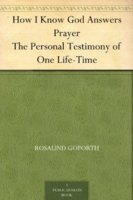
RTK Classics Book Club Selection for October: How I Know God Answers Prayer


Reading to Know - Book Club

Those of you who follow along with Carrie’s  Reading to Know Classics Book Club. know that we were originally going to do To the Golden Shore by Adoniram Judson this month. But shortly before the end of September, I began to be concerned that most participants might not read it, for several reasons: the book club was running a bit behind due to some lengthier classics earlier in the year and to busy life circumstances, there is no Kindle version of this book, and it probably isn’t in most public libraries. I was thinking about How I Know God Answers Prayer for next year, then suggested to Carrie that under the circumstances we might want to switch and do it this year: it’s shorter, there is a free Kindle version, and the text is online at Project Gutenberg. Though I am a little sad about not going forward with To the Golden Shore, I’d much rather choose a book that people will actually read. It seems from the comments Carrie and I both have received that this was a good decision. I do recommend To the Golden Shore to you: I apologize if you did go ahead and buy the book for this month’s discussion, but I feel sure you’ll find it worth the money and effort to read it.

Jonathan and Rosalind Goforth were pioneer missionaries to China at a time when foreign suspicion and distrust there reigned.

In the foreword of her little book How I Know God Answers Prayer, Rosalind shares how this book came to be:

When in Canada on our first furloughs I was frequently amazed at the incredulity expressed when definite testimony was given to an answer to prayer. Sometimes this was shown by an expressive shrug of the shoulders, sometimes by a sudden silence or turning of the topic of conversation, and sometimes more openly by the query: “How do you know that it might not have happened so, anyway?”

Gradually the impression deepened: “If they will not believe one, two, or a dozen testimonies, will they believe the combined testimonies of one whole life?”

The more I thought of what it would mean to record the sacred incidents connected with answers to prayer the more I shrank from the publicity, and from undertaking the task. There were dozens of answers far too sacred for the public eye, which were known only to a few, others known only to God. But if the record were to carry weight with those who did not believe in the supernatural element in prayer, many personal and scarcely less sacred incidents must of necessity be made public.

…It will be seen that these incidents of answered prayer are not given as being more wonderful, or more worthy of record, than multitudes the world over could testify to; but they are written and sent out simply and only because I had to write them or disobey God.

She goes on to do just that. Some of the answers to prayer are miraculous and monumental; some involve everyday concerns. Some are deeply personal, involving the depths of her own heart.

This was Rosalind’s first book, originally published in 1921. She went on to publish her husband’s biography, Goforth of China, in 1937, and then she was asked to share some of her own perspectives of life as a missionary wife in Climbing, one of my all-time favorite books, in 1940 (links are to my reviews). You’ll probably find her writing just a touch old-fashioned, but it is not hard to comprehend. She’s very transparent, and I’ve written before how it encouraging it is to find a woman “of like passions as we are” who found God’s grace to live for Him.

If you’ve never read of the Goforths, this will be a good introduction, and I hope you’ll go on to read her other books: if you have, it will be a good refresher.

If you’d like to read this book with us this month, you might let Carrie know here, and around the end of the month she’ll have a post where we can comment, share thoughts, or link up our review posts.

31 Days of Inspirational Biography: Frances Ridley Havergal’s Response to a Rude Waitress

photo 3(2)

For the 31 Days writing challenge, I am sharing 31 Days of Inspirational Biography.

HavergalA few years ago I read a book titled In Trouble and In Joy: Four Women Who Lived For God by Sharon James. She wrote fairly short biographies of four women and then included several samples of their own writing: Margaret Baxter, wife of Puritan preacher Richard Baxter; Sarah Edwards, wife of Jonathan Edwards; Anne Steele and Frances Ridley Havergal, both single hymn writers. You might know some of Frances’s hymns: “Take My Life and Let It Be,” “Like a River Glorious,” “I Could Not Do Without Thee,” “Who Is on the Lord’s Side?” She wrote a sweet poem about fellow hymn writer Fanny Crosby, shown here. She only lived 42 years. One of the excerpts from Frances Ridley Havergal included this letter from a collection that was published under the title Swiss Letters (available online at Google Books). It was convicting to me because I’m sure I would have reacted much less graciously than she did.

 For the first and only time in Switzerland, I found a strange contrast to the usual civility and even kindness of the people…A tall, bold, rough girl, of twenty-five or so, let me in. ” Yes, you can have a room when it’s ready; not before. Here, in here !” And she ushered me into a dark dirty room with tables and benches, marched off, and shut the door. I did not like my quarters at all, but there was no help for it…. But of course I had been asking all along to be guided, so I was not uneasy, but expected I had been guided there for some good reason, perhaps some wandering sheep to be found. It got quite dark, and then five or six men came in, and she brought a candle, and they sat down at one of the tables and smoked. I hardly think they saw me. I asked if my room was ready. ” No, you must wait! ” and out she darted, slamming the door. So I waited, sitting on my bench in my dark corner for nearly an hour, she coming roughly in and out, talking noisily and bringing wine for the men. At last— ” You can come upstairs now! ” So I went, glad enough.

 It was not quite so dirty as downstairs, but not brilliant. A jug and basin on the table was all the apparatus ; the bed was barley straw, no pillow, but a pink cotton bolster. “Are you going to bed now ?” she asked. I told her yes, very soon. About eight o’clock, just as I really was going to bed, came a sharp angry rap at my door. I was glad it was locked, for before I could answer the handle was rattled violently.

 “What is it?”

 “Are you going to burn the candle all night ? How soon are you going to put it out, I should like to know! burning it all away ‘ comme cela!'” I considered it advisable to answer very meekly, so I merely said it should be put out in a few minutes, whereupon she banged downstairs. It seemed to me that this was an ” opportunity,” so I asked God that when morning came He would shut her mouth and open mine.

 [The next morning at breakfast] I asked her to get me some coffee. ” Can’t have coffee till it’s made !” said she savagely. So I went and sat outside the door and waited patiently. In about half an hour she poked her head out. ” Do you want anything besides coffee ?” still in a tone as if I were a mortal enemy ! I suggested bread and butter. ” Butter!” (as if I had asked for turtle soup!) ” there is none, but you can have a piece of bread if you like.”

 Then it was my turn! I went close to her, looked up into her wicked-looking eyes, and put my hand on her arm and said (as gently as possible): ” You are not happy ; I know you are not.” She darted the oddest look at me ; a sort of startled, half frightened look, as if she thought I was a witch! I saw I had touched the right string and followed it up, telling her how I saw last night she was unhappy, even when she was laughing and joking, and how I had prayed for her; and then, finding she was completely tamed, spoke to her quite plainly and solemnly, and then about Jesus and what He could do for her. She made a desperate effort not to cry. She listened in a way that I am sure nothing but God’s hand upon her could have made her listen, and took ” A Saviour for You” (in French), promising to read it, and thanking me over and over again. The remaining few minutes I was in the house she was as respectful and quiet as one could wish. I also got a talk with her old mother. So if God grants this to be the checking of this poor girl in what I should imagine to be a very downward path, was it not well worth getting out of the groove of one’s usual comforts and civilities?

Irritating vs. Irritate-able

Irritated

One of my sons, when he was a youngster, got hold of the word “irritating” – as in, “Mo-ooom, he’s irritating me.” Now, we tried to teach our boys not to irritate each other on purpose, not to hit, tease, “bother,” bait, infringe on the possessions or person of the other, etc. But sometimes in just everyday living together, we’re going to get irritated with each other. Someone in the innocence of their heart can make too much noise, be somewhere I was going to be or use something I was about to use, etc. So, after listening to whatever had irritated my young son, sometimes I would deal with the issue, but sometimes I would say something like, “You need to work on not being so irritate-able” (Spelled and pronounced that way on purpose for emphasis). That was not a satisfying answer. The problem is with the other guy, Mom! You need to make him stop!

I find myself getting far too irritated far too often. Sometimes it’s the other thing or person that is being irritating, or causing the issue: the stupid recalcitrant computer, the driver who wasn’t watching what he was doing, etc. But too often, it’s just a matter of my own irritate-ableness. Touchiness, my mom used to call it. I started to list my most frequent irritants, but we all have our own (and I don’t want to offend anyone 🙂 ).

So what can I do when I am feeling irritated?

1. Fix the issue, if possible. Find out if there is something wrong with the computer, leave early so every red light isn’t aggravating, slow down and take the necessary time to accomplish something so haste doesn’t create more problems, gently ask the other person to refrain from or change whatever they are doing,etc..

2. Forbear. A former pastor used to say forbearing was just good old-fashioned putting up with each other. In Ephesians 4:1-3, Paul says, “I therefore, the prisoner of the Lord, beseech you that ye walk worthy of the vocation wherewith ye are called, With all lowliness and meekness, with longsuffering, forbearing one another in love; Endeavouring to keep the unity of the Spirit in the bond of peace.” Not just forbearing, but forbearing in love. “Above all, keep fervent in your love for one another, because love covers a multitude of sins,” I Peter 4:8. Colossians 3:12-14 says, “Put on therefore, as the elect of God, holy and beloved, bowels of mercies, kindness, humbleness of mind, meekness, longsuffering; Forbearing one another, and forgiving one another, if any man have a quarrel against any: even as Christ forgave you, so also do ye.  And above all these things put on charity, which is the bond of perfectness.”

3. Humble myself. The verses mentioned speak of humility and meekness. Who am I to think that the entire world should revolve around my whims and preferences?

4. Focus on the other person. Those verses also speak of love. Instead of focusing on that irritant, I need to focus on that person as another child of the Father whom He loves every bit as much as He loves me and seek ways to serve him or her.

5. Do unto others as I would have them do unto me. I need to remember that I’m probably unwittingly irritating someone else sometimes who is graciously (I hope) being forbearing with me. I need to handle the irritations that come from other people as graciously as I would want them to handle mine.

6. Don’t make excuses. There are certain times and seasons and hormones and circumstances that make one more susceptible to irritability. I admit it is really hard for me to be civil, much less loving, when I haven’t had enough sleep. And during certain hormonal surges I’ve wondered how in the world God expected me not to blow up at someone with all that going on. But He gives grace when we ask Him and rely on Him for it.

7. Behold our God. II Corinthians 3:18 says we’re changed more and more into Christ’s likeness as we behold Him. When I look inside and tell myself I need to be more kind, loving, forbearing, etc., I get discouraged and fail because I don’t have it in myself. “For I know that in me (that is, in my flesh,) dwelleth no good thing: for to will is present with me; but how to perform that which is good I find not” (Romans 7:18). But when I look at Him, that irritability seems to just melt away.

“Even as Christ forgave you, so also do ye.” Colossians 3:13b.

“Being justified freely by his grace through the redemption that is in Christ Jesus: Whom God hath set forth to be a propitiation through faith in his blood, to declare his righteousness for the remission of sins that are past, through the forbearance of God. Romans 3:24-25.

“Or despisest thou the riches of his goodness and forbearance and longsuffering; not knowing that the goodness of God leadeth thee to repentance?” Romans 2:4.

“And the Lord passed by before him, and proclaimed, The Lord, The Lord God, merciful and gracious, longsuffering, and abundant in goodness and truth.” Exodus 34:6.

“But the fruit of the Spirit is love, joy, peace, longsuffering, gentleness, goodness, faith, Meekness, temperance.” Galatians 5:22-23.

“The Lord is merciful and gracious, slow to anger, and plenteous in mercy.” Psalm 103:8.

“The Lord is gracious, and full of compassion; slow to anger, and of great mercy.  The Lord is good to all: and his tender mercies are over all his works.” Psalm 145:8-9.

8. Pray. Something that I pray for myself and my loves ones often is Colossians 1:9-14:

9 For this cause we also, since the day we heard it, do not cease to pray for you, and to desire that ye might be filled with the knowledge of his will in all wisdom and spiritual understanding;

10 That ye might walk worthy of the Lord unto all pleasing, being fruitful in every good work, and increasing in the knowledge of God;

11 Strengthened with all might, according to his glorious power, unto all patience and longsuffering with joyfulness;

12 Giving thanks unto the Father, which hath made us meet to be partakers of the inheritance of the saints in light:

13 Who hath delivered us from the power of darkness, and hath translated us into the kingdom of his dear Son:

14 In whom we have redemption through his blood, even the forgiveness of sins.

Verse 9 reminds me that I need His strength and power to be patient and longsuffering, and that He will even enable me to do it with joyfulness!

Have you found any other tips for dealing with irritability?

To Behold Thee

From weariness of sin I turn at last, O Lord, to Thee
My eyes and heart grown dim from looking long on vanity.
I venture toward thy radiance then, compelled to come by grace
And in the pages of Thy word behold Thy lovely face.

(Refrain)
Face of glory, turned upon me
I cannot but Thee adore.
To behold Thee, O my Saviour,
Is to love Thee more and more.

Each grace in all its fullness on Thy countenance I see.
Great tenderness of mercy, blazing light of purity.
Thine eyes are wells and love and wisdom, s
ettled peace Thy brow,
Before the whole of perfect beauty I in worship bow.

(Refrain)

When someday I before Thee stand, a debtor to Thy grace,
And gaze with heaven’s eyes upon the brightness of Thy face,
Transformed into Thy likeness, all my sin thrust far away,
With millions of redeemed ones I will lift my voice and say:

Face of glory turned upon me
I cannot but Thee adore.
To behold Thee, O my Savior,
Is to love Thee more and more.
To behold Thee, O my Savior,
Is to love Thee more and more.

Words: Eileen Berry

Music: Dan Forrest

To hear this beautiful hymn, go here and click on “Listen

But we all, with open face beholding as in a glass the glory of the Lord,
are changed into the same image from glory to glory,
even as by the Spirit of the Lord.

II Corinthians 3:18

31 Days of Inspirational Biography

For the past few years Myquillyn Smith (The Nester) has hosted 31 Days on her blog, a writing challenge wherein bloggers can choose a topic to write on every day in October in 9 different categories. It has gotten so big that this year it has its own site: 31 Days. You can find more information at What is 31 Days?

I really enjoyed participating for the first time last year with 31 Days of Missionary Stories. I decided this year to write about 31 Days of Inspirational Biography. I was originally going to call it Christian Biography, but rather than just give you an overview of someone’s life that you can find on Wikipedia, I want to share what inspired me about that person’s life. It may be an overview in some cases, or it may be one incident.

photo 3(2)

Reading Christian biographies has been one of the most influential activities of my life: I’ve learned so much by seeing faith in action, growth, example, victories as well as defeats, all of which has aided me in my own walk with the Lord.  I hope to share some of that with you.

I got several comments last year about how much time it must take to write these posts: most of them will come from newsletter articles I’ve already written. For nine years in a previous church I compiled a newsletter for our ladies’ group with a biographical section, for the same reasons listed above, and the Lord has opened the door for me to do something similar in our current church. I’ll be editing and tweaking them, but for the most part I won’t be writing these “from scratch,” so it is not taking as much time as it might appear to be.

I hope you’ll join me! As I post each day, I’ll put the links on this post so that they’ll all be in one place.

And in the meantime you might check out the 31 Days site and see if you’d like to participate. Let me know if you do!

Day 1: Frances Ridley Havergal’s Response to a Rude Waitress.
Day 2: If I Perish. Refusing to bow down to falsehood.
Day 3: A Sense of Him: One of Isobel Kuhn’s “Second Mile People
Day 4: Facing the Darkness.
Day 5: Lady Huntingdon. Saved by an “M”
Day 6: One Woman Against the Reich: The True Story of a Mother’s Struggle to Keep Her Family Faithful to God in a World Gone Mad.
Day 7: Bill Maher, “Missionary to the Handicapped
Day 8: Mimosa: Great Faith From Small Seeds.
Day 9: Dr. Sa’eed of Iran.
Day 10: Margaret Paton, Missionary to Cannibals in the South Sea Islands
Day 11: Walter Wilson, Caring Ambassador For Christ.
Day 12: Georgi and Natasha Vins, Christianity Behind the Iron Curtain
Day 13: William Tyndale, Bringing the Scripture to the People at Risk to Himself
Day 14: Anne Bradstreet, Puritan Poetess
Day 15: The “Uncommon Union” of Jonathan and Sarah Edwards
Day 16: Sarah Edwards As a Mother
Day 17: Rosaria Butterfield: How a Leftist, Feminist, Lesbian Professor Who Hated Christians…Became One.
Day 18: Darlene Deibler Rose learns “faith stripped of feelings, faith without trappings
Day 19: Corrie Ten Boom Repurposes a Concentration Camp
Day 20: Louis Zamperini: Olympian, POW, Christian
Day 21: Ann Judson, Brave and Faithful First American Woman Missionary
Day 22: Margaret Baxter, Overcoming Natural Fear to Face Persecution and Hardship
Day 23: Mrs. C. H. Spurgeon
Day 24: Rosalind Goforth: How I Know God Answers Prayer
Day 25: Rosalind Goforth Learns Submission
Day 26: Rosalind Goforth As a Young Mother Tries to Find Time For Bible Reading
Day 27: The Last CIM Missionaries in Communist China
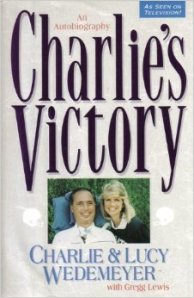
Day 28: Charlie Wedemeyer, Living With ALS and Giving Hope to Others
Day 29: Nabeel Qureshi: A Devout Muslim Encounters Christianity
Day 30: A list of several other good biographies
Day 31: Why Read Biographies?

I Could Not Do Without Thee

The first time I heard this hymn was from an ensemble visiting our church, and I was riveted. I thought it was a new hymn, but looking it up after I got home, I saw it was written by Frances Ridley Havergal in1873. I like the newer melody better, but I don’t know who wrote it.

I have usually only heard it sung with these four stanzas, but cyberhymnal.org lists several more.

I could not do without Thee
O Savior of the lost,
Whose precious blood redeemed me
At such tremendous cost.
Thy righteousness, thy pardon
Thy precious blood, must be
My only hope and comfort,
My glory and my plea.

I could not do without Thee,
I cannot stand alone,
I have no strength or goodness,
No wisdom of my own;
But Thou, beloved Savior,
Art all in all to me,
And weakness will be power
If leaning hard on Thee.

I could not do without Thee,
O Jesus, Savior dear;
E’en when my eyes are holden,
I know that Thou art near.
How dreary and how lonely
This changeful life would be,
Without the sweet communion,
The secret rest with Thee!

I could not do without Thee,
For years are fleeting fast,
And soon in solemn loneness
The river must be passed;
But Thou wilt never leave me,
And though the waves roll high,
I know Thou wilt be near me,
And whisper, “It is I.”

The first time I heard it I was struck with the repetition of “lone,” “alone,” and “loneness.” I was feeling very much alone at the time because Jim was traveling a lot, and I was reminded that I am never alone with Christ, and that’s not just a trite saying but a meaningful reality. And then the second stanza has been a help to me so many times. We truly have no strength, goodness, or wisdom of our own, but because of the redemption mentioned in the first stanza, we can experience the strength in the second stanza.

Absent From the Body, Present With the Lord

My pastor, who has been battling pancreatic cancer the last few months, passed away last night.

It’s been hard to know how to pray the last few weeks as we’ve seen the effects of cancer continually decimate his body. We wanted him to have as many days with his family as possible, but we didn’t want him to have to suffer any more than necessary. My youngest son has frequently prayed that Pastor “would have as many good days as possible,” which I thought was probably the best way to pray in addition to asking for God’s will and grace for him and his family and all those who loved him.

As people arrived for prayer meeting last night, a few men were stationed at the church doors and would go out to greet people individually as they approached the building to let them know Pastor had passed away just a short time before. That was probably the best way to handle it rather than waiting for everyone to come in and then starting the evening with a shock moment, or having someone who didn’t know accidentally overhear it mentioned in the conversation of someone who did. This way everyone had a moment to react, absorb the news, and collect their thoughts for a moment before going in, and we could start the service more or less on the same page. One of our assistant pastors led us in singing a song Pastor Tom had requested often lately, “O The Deep, Deep Love.” Another of our men shared some Scripture, someone prayed, people in the congregation were given opportunity to  share Scripture that was comforting to them, we broke up into smaller groups to pray, and we sang “O The Deep, Deep Love” one more time.

O the deep, deep love of Jesus, vast, unmeasured, boundless, free!
Rolling as a mighty ocean in its fullness over me!
Underneath me, all around me, is the current of Thy love
Leading onward, leading homeward to Thy glorious rest above!

The comforting and sharing have continued through the night and into this morning on Facebook. It has been a great blessing to me, and I am sure to many others, as we’ve shared with each other through this journey, particularly in the last several hours. This extension of community has been both comforting and edifying as I’ve seen photos and read various thoughts, memories, Scriptures, and bits of song that people have shared.

I’ve only known Pastor Tom for four years. Two main things stand out to me about himself as a person and his ministry. One, he continually led (even gently pushed) us to be deeply grounded in the Bible and in our relationship to God: to see Him in the Scriptures, not to “surface” read the Bible or pray in cliches. He constantly encouraged us to make it real and make it deep. Secondly, he had a true pastor’s heart. He deeply cared for his people, would be with them through any trial as much as he could. When we came forward at the end of a service to join the church, my mother-in-law was with us in her wheelchair. He got down on one knee to speak to her face to face and tell her how he wanted to be her pastor. When my husband was facing his kidney surgery (they joked about being in the “one kidney club” – Pastor also had a kidney removed when he was younger), we had told him that I’d probably be more comfortable getting lost in a book while waiting than having someone outside the family with me – then I’d feel pressured to keep a conversation going. He understood. But he showed up at the hospital in the early hours just as we arrived and signed in, and we had a few minutes to chat and pray before we were called back. That meant a lot to both of us.

Two verses came to mind as we shared during prayer meeting last night. One was shared with me when my mother passed away and it ministered to me greatly then: Psalm 119:76: “Let, I pray thee, thy merciful kindness be for my comfort, according to thy word unto thy servant.” This, among other things, is what I pray for Pastor Tom’s family. I am so thankful he was able to walk his two older daughters down the aisle at their weddings this summer and that they were all able to be there when he passed. Though we “sorrow not, even as others which have no hope” (I Thessalonians 4:13), we do sorrow, “Sorrowing most of all …that they should see his face no more” (Acts 20:38) until we join him there. I know I felt it was much too soon when my mother passed away in her 60s: I can imagine that feeling is even more magnified when a father and husband passes away in his early 50s. Even trusting that this is God’s will and plan and rejoicing that he is with his Savior and out of pain, it still hurts in a way that only God can heal. Death is called an enemy (I Corinthians 15:26), and though its sting is removed and it’s “swallowed up in victory” (I Corinthians 15:54-57), grief is wrenching, and I pray for His special kindness and comfort for them and our church in the days and months to come.

The second was the verse I did share last night: not long before His own death, Jesus prayed, “Father, I will that they also, whom thou hast given me, be with me where I am; that they may behold my glory, which thou hast given me: for thou lovedst me before the foundation of the world” (John 17:24). That’s where Pastor Tom is now – with Him who loved him since before he was even born, where he is, beholding His glory. Though we miss him, we rejoice and look forward to joining him there.

Craigs

I once scorned ev’ry fearful thought of death,
When it was but the end of pulse and breath,
But now my eyes have seen that past the pain
There is a world that’s waiting to be claimed.
Earthmaker, Holy, let me now depart,
For living’s such a temporary art.
And dying is but getting dressed for God,
Our graves are merely doorways cut in sod.

 Calvin Miller

When you sailors see the haven before you, though you were mightily troubled before you could see any land, yet when you come near the shore and can see a certain land-mark, that contents you greatly. A godly man in the midst of the waves and storms that he meets with can see the glory of heaven before him and so contents himself. One drop of the sweetness of heaven is enough to take away all the sourness and bitterness of all the afflictions in the world. ~ Jeremiah Burroughs

“But if not…”

Since our pastor has been diagnosed with cancer and given only 6 months or so to live, he has had a couple of sessions of combined adult Sunday School classes in order to discuss with us some issues and some of his vision and burden for us. A couple of weeks ago he was feeling poorly enough not to be able to make it for Sunday School for one of these sessions. Our assistant pastors took that opportunity to share a bit of their perspective and then a few men prayed for the family. That time was greatly beneficial and therapeutic for me: outside of our own family and sharing of thoughts on blogs or Facebook with other members, I hadn’t really had a chance to partake of that kind of sharing and praying together. Though I’m sorry our pastor was feeling so sick that day, I think the time was very well spent.

Though those who prayed aloud mentioned varying aspects – the pastor’s physical needs, grace for his wife and family, his two daughters who were getting married in what was supposed to have been one of the best summers of their lives, direction for the youngest daughter scheduled for college in the fall, and many others – there was a recurring theme in several of them. They prayed for the miracle of healing (and it would take a true miracle) and promised to give God the glory for it, but, acknowledging that might not be God’s will, prayed for His grace for the family and our church.

I’ve known some who belittle the Christian faith to point to this kind of praying as a lack of faith, as providing an “out” if God doesn’t answer prayer the way we ask, or even a lack of evidence for God since we can explain away the lack of an answer with it’s not being God’s will. But that’s not why we pray that way. We have good Biblical precedent.

In Daniel 3, Shadrach, Meshach, and Abednego were threatened with being thrown in a fiery furnace if they did not bow down and worship the king’s golden image. They refused and replied, “Our God whom we serve is able to deliver us from the burning fiery furnace, and he will deliver us out of thine hand, O king.  But if not, be it known unto thee, O king, that we will not serve thy gods, nor worship the golden image which thou hast set up” (verses 17-18).

Jesus, in the garden of Gethsemane the night before He was crucified, prayed, “Father, if thou be willing, remove this cup from me: nevertheless not my will, but thine, be done” “Luke 22:42).

Someone once said, “Prayer is asking God to align you with His will rather than asking Him to be aligned with yours.”

Can God heal someone diagnosed with cancer and only months to live? Sure. Why doesn’t He do so every time we ask Him to? I don’t know.

In Goforth of China when Rosalind recounted their miraculous deliverance during the Boxer rebellion, she had been asked why God didn’t deliver all the missionaries in China at that time. Some were horribly murdered. She responded:

Truly a vital question, which could not lightly be set aside! Humbly and prayerfully we pondered this “Why” in the light of Scripture. In the twelfth chapter of Acts, we read of Herod’s succeeding in putting James to death by the sword, and directly after comes the story of how Herod was hindered in carrying out his intention to kill Peter who was delivered by a miracle. Then who could read that marvelous eleventh chapter of Hebrews with its record of glorious martyrdom and miraculous deliverances without being thrilled? In face of these and many other passages, while still unable to answer the “why” we saw our Almighty God used His own prerogative to glorify His name whether in the glorious martyrdom of some or in the miraculous deliverance of others (p. 129-130).

James was killed while Peter was delivered. Uriah was killed while David lived. Many Hebrew babies died while Moses was rescued. Not only was Moses answered “no” to his request to see the Promised Land, but God admonished him not to speak about it any more. Jesus escaped Herod while the rest of the children under 2 in Bethlehem were slaughtered. Many people were healed, but God answered Paul’s request for deliverance with a “No” and a promise of His grace instead. The people in the first part of Hebrews 11 experienced glorious deliverance: the people at the end experienced trials, mocking, imprisonment, stoning, being sawn asunder, homelessness, “being destitute, afflicted, tormented” – yet these were included with the rest as “having obtained a good report through faith” (verse 39) even though they weren’t delivered.

Sometimes there are reasons why prayer isn’t answered, or at least isn’t answered the way we’d like. God has many reasons for allowing suffering, but we can’t know all the reasons or see the big picture of what He is doing in the world or even in the life of any one person and his or her sphere of influence. But those who know Him can trust Him as a father. Even the best of fathers has to sometimes say “no.”

Why does God have to use such means to accomplish His purposes? Somewhere I read that Elisabeth Elliot wrote that, though she had heard many wonderful stories of how God used her husband Jim’s death in many people’s lives, that knowledge still didn’t really satisfy. Didn’t God save people and call them to His service through other means than someone’s death? Sure, all the time. Why was that required this time? She didn’t know, but she trusted that God had His reasons. In “Thy Calvary Still All Our Questions” in the book Rose From Brier, Any Carmichael wrestled with this:

This is a Why? of a different order from that of the little mosquito. It is immeasurable greater. It strikes at the root of things. Why is pain at all, and such pain? Why did God ask Satan the question which (apparently) suggested to the Evil One to deal so cruelly with an innocent man? Why do the innocent so often suffer? Such questions generally choose a time when we are in keen physical or mental suffering, and may (the questioner hopes will) forget our comfort. They seize us like fierce living things and claw at our very souls.

Between us and a sense of the pain of the world there is usually a gate, a kind of sluice gate. In our unsuffering hours it may be shut fast. Thank God, it is shut fast for tens of millions. But let severe pain come, and it is as though the torture in us touched a secret spring, and the door opens suddenly, and straight upon us pour the lava floods of the woe of a Creation that groans and travails together….

O Lord, why?

After considering several answers which did not really satisfy her, she wrote,

But, though, indeed, we know that pain nobly born strengthens the soul, knits hearts together, leads to unselfish sacrifice (and we could not spare from our lives the Christ of the Cross), yet, when the raw nerve in our own flesh is touched, we know, with a knowledge that penetrates to a place which these words cannot reach, that our question is not answered. It is only pushed farther back, for why should that be the way of strength, and why need hearts be knit together by such sharp knitting needles, and who would not willingly choose relief rather than the pity of the pitiful?

…What, then, is the answer? I do not know. I believe that it is one of the secret things of the Lord, which will not be opened to us till we see Him who endured the Cross, see the scars in His hands and feet and side, see Him, our Beloved, face to face. I believe that in that revelation of love, which is far past our understanding now, we shall “understand even as all along we have been understood.”

And till then? What does a child do whose mother or father allows something to be done which it cannot understand? There is only one way of peace. It is the child’s way. The loving child trusts.

I believe that we who know our God, and have proved Him good past telling, will find rest there. The faith of the child rests on the character it knows. So may ours, so shall ours. Our Father does not explain, nor does He assure us as we long to be assured… But we know our Father. We know His character. Somehow, somewhere, the wrong must be put right; how we do not know, only we know that, because He is what He is, anything else is inconceivable. For the word sent to the man whose soul was among lions and who was soon to be done to death, unsuccored, though the Lord of Daniel was so near, is fathomless: “And blessed is he whosoever shall not be offended in me.”

There is only one place we can receive, not an answer to our questions, but peace — that place is Calvary. An hour at the foot of the Cross steadies the soul as nothing else can. “O Christ beloved, Thy Calvary stills all our questions.” Love that loves like that can be trusted about this.

There are many strong and positive verses about prayer that we can rely on, yet we have to include “if it be Thy will” and trust that even if God doesn’t heal or deliver or provide like we wanted Him to, He is still good and wise and accomplishing His purpose.

God is doing good things in our own church and across the country through our pastor’s situation. One of our church members has shared some of those things. If you feel led, I’m sure all involved would appreciate your prayers. In addition, some are attempting to help raise funds for the family’s needs through https://www.idoitfor.org/Tom/.

tom

When People Say the Wrong Thing

In the last couple of years I have seen an abundance of articles about “What not to say to…” single people, a pregnant person, a childless couple, adoptive parents, a depressed person, the chronically ill etc. Some are actually quite helpful and enlightening. For the record, never ask a single person why they’re not married yet (they may be wondering the same thing themselves), or a couple when they’re going to start a family (it’s not our business, and if they’ve been trying without success such questions are extremely painful), or any lady when she’s due (unless you know she’s pregnant!) I remember when my husband and I were dating during college, whenever we’d come back from any kind of break, I”d hear remarks like, “Let me see that left hand!” or “Are you engaged yet?” I wanted to whimper, “We’re trying to figure it out. When we have news to share, you can be sure we’ll tell everyone we know.” We can easily make people feel hurt or pressured or frustrated by such questions. A friend shared on Facebook a chart of some of these common statements (or thoughts) to parents, and a lively discussion ensued of those on the receiving end of some of these comments:

how many kids

Sometimes it’s not so much hurtful speech as thoughtless speech.Years ago friends with the last name of Fox had their first child, and when I saw them at church I smilingly quipped the verse about “little foxes spoiling the vine.” The husband looked at me and said wearily, “Everyone says that.” I instantly realized what a thoughtless, inane statement that was, and later was convicted that it was a horrible misuse of Scripture.

Sometimes people can rival Job’s “miserable comforters,” who meant well, sympathized (at least at first), and said many true things, but misapplied much of the truth they shared. We need to be especially careful about telling people why we think God allowed something to happen in their lives. We don’t really know, but we can comfort and encourage them in many others ways.

Ephesians 4:29b reminds us make our speech “that which is good to the use of edifying, that it may minister grace unto the hearers,” and Colossians 4:6 says, “Let your speech be alway with grace, seasoned with salt, that ye may know how ye ought to answer every man.” We need to be careful, thoughtful, prayerful, and edifying in what we say.

Yet not everyone is going to get the memo or read these kinds of articles. Eventually we’re all going to have someone say or ask something that hits us wrong. What’s the best way to react?

Avoid sarcastic retorts. Most times they don’t realize they’ve said something hurtful. Sending back a zinger will only escalate the incident.

Educate if needed. If they’ve never been in our situation, of course they are not going to understand. A friend with a child with severe life-threatening allergies has often had to shed light on common misconceptions, as have many others in different situations.

Appreciate their interest. At least they are interested in your life and they’re not ignoring you.

Give the benefit of the doubt. Most people truly do mean well. If they are trying to say hurtful things on purpose – then we need to have a different kind of conversation with them.

Realize sometimes we’re the problem. Sometimes something is meant well but we take it the wrong way.

View the opposite end of the spectrum. Sometimes, particularly when a person is in a very difficult situation like marital problems or illness or a death in the family, people are so afraid of saying the wrong thing that they say nothing and avoid them. We can foster that by too much complaining about the wrong things that have been said.

Give them grace, the same grace we would want people to extend to us if we said the wrong thing…because we likely will at some point. In fact, we probably have at some time without realizing it.

You may need to talk to them about why their comment hurt and try to resolve the issue. (Matthew 18:15: “If your brother sins against you, go and tell him his fault, between you and him alone. If he listens to you, you have gained your brother.”)

Or you may decide just to overlook it (I Peter 4:8: “Above all, keep loving one another earnestly, since love covers a multitude of sins,” Proverbs 10:12: “Above all, keep loving one another earnestly, since love covers a multitude of sins.”)

But we need to deal with it one way or the other and let it go. Don’t hold it against them, don’t carry a grudge, don’t let it fester, don’t avoid them afterward.

We need to forgive:

Matthew 6:14-15: “For if you forgive others their trespasses, your heavenly Father will also forgive you, but if you do not forgive others their trespasses, neither will your Father forgive your trespasses.”

We need to forgive on the basis of the great wrongs we have been forgiven, not on the basis of whether or not they “deserve” it (See Matthew 18:20-35). We didn’t deserve God’s forgiveness, and He has forgiven us so much more than anything anyone has done or said to us.

We need to exercise patience and forbearance:

Colossians 3:12-13: “Put on then, as God’s chosen ones, holy and beloved, compassionate hearts, kindness, humility, meekness, and patience, bearing with one another and, if one has a complaint against another, forgiving each other; as the Lord has forgiven you, so you also must forgive.”

Ephesians 4:1-3: “I therefore, a prisoner for the Lord, urge you to walk in a manner worthy of the calling to which you have been called, with all humility and gentleness, with patience, bearing with one another in love, eager to maintain the unity of the Spirit in the bond of peace.”

We need to be filled with and manifest the fruit of the Holy Spirit:

Galatians 5:22-23: “But the fruit of the Spirit is love, joy, peace, patience, kindness, goodness, faithfulness, gentleness, self-control; against such things there is no law.

Whether we’re the speakers or the receivers, we need to walk closely with the Lord, seek His guidance, and manifest His grace.

(Update: I’m not saying there is anything at all wrong with those “What not to say” type posts. Sometimes they are very informative and enlightening and usually help dispel our notions of stereotypes. There is nothing wrong with telling someone that something they’ve said is off-base or hurtful. But I’ve known people to carry around a personal bitterness because of something another person has said in ignorance about their situation, and that’s not healthy.)