Jesus, I Come

This is another older hymn I haven’t heard in a long time. I’m not sure, why, but it came to mind this morning. I love some of the newer spiritual songs coming out these days, but I hope we don’t forget the good old ones. These words are just as applicable and relevant today as they were when first written.

Out of my bondage, sorrow, and night,
Jesus, I come, Jesus, I come;
Into Thy freedom, gladness, and light,
Jesus, I come to Thee;
Out of my sickness, into Thy health,
Out of my want and into Thy wealth,
Out of my sin and into Thyself,
Jesus, I come to Thee.

Out of my shameful failure and loss,
Jesus, I come, Jesus, I come;
Into the glorious gain of Thy cross,
Jesus, I come to Thee.
Out of earth’s sorrows into Thy balm,
Out of life’s storms and into Thy calm,
Out of distress to jubilant psalm,
Jesus, I come to Thee.

Out of unrest and arrogant pride,
Jesus, I come, Jesus, I come;
Into Thy blessèd will to abide,
Jesus, I come to Thee.
Out of myself to dwell in Thy love,
Out of despair into raptures above,
Upward for aye on wings like a dove,
Jesus, I come to Thee.

Out of the fear and dread of the tomb,
Jesus, I come, Jesus, I come;
Into the joy and light of Thy throne,
Jesus, I come to Thee.
Out of the depths of ruin untold,
Into the peace of Thy sheltering fold,
Ever Thy glorious face to behold,
Jesus, I come to Thee.

~ William T. Sleeper, 1887

Narnian Magic

I started to write about the magical aspect of Narnia in a book review of The Lion, the Witch, and the Wardrobe, but it then took on a life of its own, so I decided to make it a separate post.

I came to The Lion, the Witch, and the Wardrobe by C. S. Lewis via a slightly different route than many of you. I don’t remember reading or even hearing about the Chronicles of Narnia until about twelve years ago. A lady in my church who is very gifted in art and drama was talking about being in a local stage production of The Lion, the Witch, and the Wardrobe along with her daughter. This lady herself was playing the White Witch. I was very surprised.

There was a time when I avoided any book, program, cartoon, anything that had anything remotely to do with witches, magic, etc., for a couple of very good reasons. First of all, back in the ninth or tenth grade I had done a group research project in English class on the occult. This was before I became a Christian, and some time after I became a Christian a few years later, I realized how foolish that was and rejoiced that God had protected me from getting any further involved. I discovered dire warnings in the Bible against witches, wizards, and the like. Secondly, when my kids were younger, we picked up a truly horrible book. The title had to do with a magic carpet, and as my son showed it to me at the library, I felt what I can only describe as a check in my spirit, kind of a warning signal that this might be a problem. But we had had a different book about a magic carpet before and it was just a sweet reference to a rug where a girl and her grandmother or aunt had sat and told stories. So I let my son check out the book with the thought that I’d look at it before we read it. As I got into it, I discovered it was written from a New Age viewpoint complete with a “spirit guide” (who had his own chapter in the back), and the book advocated things like throwing books at your teachers if they didn’t let you do what you wanted, hinted at an incestuous relationship between a brother and sister, and urged the reader to throw off everything he had ever learned before from his parents. I can’t adequately describe the revulsion and horror at the book I had in my hands.

So naturally I was a bit skittish at the thought of anything “magical.” But somewhere along the way, I can’t remember just how, I came to the conclusion that fairy tale magic usually is a different thing than the actual occult. Usually the witch in a fairy tale is just the representation of the bad guy in the “good versus evil” plot. When we watched The Fellowship of the Ring, the first of the Lord of the Ring series (I had also missed these books growing up. My education was sadly deficient of classics), I struggled a bit with the wizardry in them, but eventually concluded that the wizards were more like Middle Earth super heroes than actual occultish wizards. Real life wizards, after all, don’t ride on the backs of giant birds or fight each other with power blasts (at least as far as I know).

One definition of “magical” in Dictionary.com is “mysteriously enchanting” and one of “magic” is “any mysterious or extraordinary quality or power.” I did read the Chronicles of Narnia and a biography of Lewis not long after the encounter with my friend at church, and I think when Lewis speaks of the “deep magic” of Narnia, he is meaning this “mysterious or extraordinary quality or power.”

Yet I recently read (and I wish I could remember where) of a modern-day pagan who claims Narnia every bit as much as Christians do. And “Googling” “paganism in Narnia” results in many articles and posts discussing the issue from both sides. Such pagan ideas existed in Lewis’s day: did he have any idea pagans in days to come would champion elements from his work as much as Christians do? Or is it a matter of the principle that “Unto the pure all things are pure: but unto them that are defiled and unbelieving is nothing pure; but even their mind and conscience is defiled” (Titus 1:15)? I don’t know: perhaps some of you who have read more of the background of the books can lend some insight.

I’ve read that Lewis never meant Narnia as an exact Christian allegory, but Christian elements are definitely there: Christ is referred to as “the lion of the tribe of Judah”; Aslan, the Christ figure of Narnia, is a great lion. Aslan dies for one who betrayed him just as Christ did, and he is similarly resurrected. I mentioned in yesterday’s post that the way the children felt about Aslan being good and terrible at the same time mirrored our feelings of God.  (See What’s Christian About Narnia” for more.)

Having read a biography of Lewis, his Mere Christianity, and snips of his other writings, I am content to say, like Lauren Winner, “That an unmistakably biblical narrative emerged is perhaps a testimony to Lewis’s own formation, a reminder of how deeply steeped he was in the Christian story.” Though I don’t know how to reconcile all the elements of the stories, I know enough about his Christian beliefs to trust that they really are there in the stories.

I would say, however, to anyone who has a doubt or a question about this or any other book or program, don’t violate your conscience. Read about them, talk to others, pray about it before going ahead, and if you decide not to read them, that’s fine. And those of us who do read them shouldn’t scoff at those who don’t. We each need to remember the principles of Romans 14 when it comes to differing convictions: that we shouldn’t despise or judge each other on these kinds of things, that we should each be “fully persuaded in our own minds,” that whatever we do or don’t allow needs to be done as unto the Lord, that we will all give account of ourselves to God, that we shouldn’t put stumblingblocks in each other’s way, that we should “follow after the things which make for peace, and things wherewith one may edify another,” that we shouldn’t condemn ourselves in what we allow, and that if we can’t do a thing in faith, we shouldn’t do it.

The Week In Words

”"

Welcome to The Week In Words, where we share quotes from the last week’s reading. If something you read this past week  inspired you, caused you to laugh, cry, think, dream, or just resonated with you in some way, please share it with us, attributing it to its source, which can be a book, newspaper, blog, Facebook — anything that you read. More information is here.

Forgive me, I am running late today. But here are a few quotes that spoke to me this week:

From Robin Lee Hatcher‘s Facebook page:

“Without love for God & His Word, [our obedience is] just trying to be good. Nothing will wear you out faster.” Beth Moore

I’ve never read a Beth Moore book or Bible study, but I can attest to the truth of this statement.

From The Lion, the Witch, and the Wardrobe by C. S. Lewis:

But as for Aslan himself, the Beavers and the children didn’t know what to do or say when they saw him. People who have not been in Narnia sometimes think that a thing cannot be good and terrible at the same time. If the children had ever thought so, they were cured of it now. For when they tried to look at Aslan’s face they just caught a glimpse of the golden mane and the great, royal, solemn, overwhelming eyes; and then they found they couldn’t look at him and went all trembly.

For those who might not know, Aslan the lion is the Christ figure in the Narnia stories, and I thought this was a sweet and lovely depiction trying to explain his being both good and terrible (terrible not meaning “bad” here but inspiring awe, as in these verses.)  Sometimes I have tried to reconcile in my own mind how we can think of Christ as an elder brother and friend and God as an “Abba” father, and yet, as John, the closest disciple to Christ, fall on his face as dead when we see Him in all His glory. The closest parallel that comes to mind is what it might be like when a child of royalty sees his parent “in state” at a royal function all decked out in royal garb with pomp and ceremony.

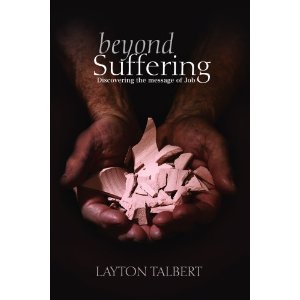
From Beyond Suffering by Layton Talbert:

Commenting on Job being a man who “eschewed evil“: The Hebrew verb means to recoil and to go out of one’s way to avoid. Job feared God and was frightened of evil because he understood the true nature of each. Being frightened of evil is not a sign of immaturity or paranoia. It is the same sane aversion to danger that my nephew has to peanuts: they may appear harmless but he knows they can kill him (p. 29).

And later commenting on some people’s disagreeing with James’s assessment of the patience of Job: This Biblical virtue is not a sappy, carefree cheeriness. It is a manly word that means to ‘remain under’ whatever pressure or pain one is presently enduring from the hand of God. Patience is fortitude under adversity. Job struggled to maintain his integrity and his faith under great duress. (p. 32).

Finally, from the July 1 reading of The Invitation by Derick Bingham:

The Lord Jesus got down below the level of their couches and washed their feet, gently. So if we would seek to correct, say, someone’s attitude problem, we must not do it in an arrogant and proud manner, else we will do them more harm than good. Humility of attitude and helpfulness goes a long way to guiding those who have bee soiled to a place of cleansing. If you would be a true foot-washer, imitate the Lord’s method. Christians are often hopeless at this ministry simply because they are not willing to stoop low enough.

Much food for thought today!

If you’ve read anything that particularly spoke to you that you’d like to share, please either list it in the comments below or write a post on your blog and then put the link to that post (not your general blog link) in Mr. Linky below. I do ask that only family-friendly quotes be included.

I hope you’ll visit some of the other participants as well and glean some great thoughts to ponder. And don’t forget to leave a comment here, even if you don’t have any quotes to share! :)

How does God deal with evil?

Our pastor is taking us through a study of the book of Job, and of course one of the questions that arises from Job is the problem of suffering, especially seemingly undeserved suffering. That’s a question too big for one small blog post, but I wanted to share one outline that our pastor shared with us that was helpful to me.

He had titled it “How Does God Mesh Good and Evil?”

1. Sometimes He prevents it:

Gen 20:6: And God said unto him in a dream, Yea, I know that thou didst this in the integrity of thy heart; for I also withheld thee from sinning against me: therefore suffered I thee not to touch her.

2. He permits it:

Psalm 81:12-13: So I gave them up unto their own hearts’ lust: and they walked in their own counsels. Oh that my people had hearkened unto me, and Israel had walked in my ways!

3. He directs it [redeems it, uses it for good]:

Genesis 50:20: But as for you, ye thought evil against me; but God meant it unto good, to bring to pass, as it is this day, to save much people alive.

Romans 8:28: And we know that all things work together for good to them that love God, to them who are the called according to his purpose.

4. He limits it:

Psalm 124: all, sample 2-3:  If it had not been the LORD who was on our side, when men rose up against us: Then they had swallowed us up quick, when their wrath was kindled against us.

God put limits on what Satan could do to Job: Job 1:12, 2:6.

I think you could also add that He punishes it — not immediately, always, but He promises that He will take care of justice and vengeance.

Pastor has encouraged us to journal what we’re learning as we go through Job. I haven’t done that in connection with Bible study in a long while, but decided to do so this time. I’ve been thinking of putting those thoughts in a separate blog just for that purpose but I haven’t decided — it’s more in a rambling style of jotting things down as I think of them, of snatches from sermon notes, etc., rather than well thought-out and put-together posts. But we’ll see.

In the meantime, I just thought I’d share this one little section of things I’ve found helpful so far.

The Week In Words

”"

Welcome to The Week In Words, where we share quotes from the last week’s reading. If something you read this past week  inspired you, caused you to laugh, cry, think, dream, or just resonated with you in some way, please share it with us, attributing it to its source, which can be a book, newspaper, blog, Facebook — anything that you read. More information is here.

I hope you’ll forgive the length of some of these: I cut them down but didn’t want to cut too much.

The following is an excerpt from from the Day 12 reading titled “Sanctification by Satisfaction” of Gospel Meditations For Women:

Scripture describes the Christian life as the source of such great joy that temptations lose their appeal. Like the feeling we have after Thanksgiving dinner, we should be so full of Christ that we don’t have room for sin!…Does obeying Christ mean saying no to sinful pleasures? Sure. However, saying no to sin in favor of Christ is like saying no to a scooter in favor of a sports car, or no to peanuts in favor of filet mignon. Life with Christ is a feast, not a famine.” ~ Chris Anderson

I never thought of “fullness” in that way — what a great illustration.

This is an excerpt from an Elisabeth Elliot e-mail devotional taken from a chapter titled “How to Be Free” from All That Was Ever Ours.

Dietrich Bonhoeffer, a man who epitomized true freedom in his acceptance, for God’s sake, of the prison cell and death, wrote: “If you set out to seek freedom, then learn above all things to govern your soul and your senses. . . . Only through discipline may a man learn to be free.”

Freedom and discipline have come to be regarded as mutually exclusive, when in fact freedom is not at all the opposite, but the final reward, of discipline. It is to be bought with a high price, not merely claimed. The world thrills to watch the grace of Peggy Fleming on the ice, or the marvelously controlled speed and strength of a racehorse. But the skater and horse are free to perform as they do only because they have been subjected to countless hours of grueling work, rigidly prescribed, faithfully carried out. Men are free to soar into space because they have willingly confined themselves in a tiny capsule designed and produced by highly trained scientists and craftsmen, have meticulously followed instructions and submitted themselves to rules which others defined.

This was from a post at ivman:

“We give to God to show Him we think He’s valuable, not because He’s poor..” — Drew Conley

God doesn’t “need” what we have to give, but we need to give it.

I hope you’ll visit some of the other participants as well and glean some great thoughts to ponder. And don’t forget to leave a comment here, even if you don’t have any quotes to share! :)

In Tenderness He Sought Me

This is an old hymn I’ve not heard in ages — I’m not sure why. I don’t know what brought it to mind today, but it brought to mind a sad situation we know of where a father with a wayward daughter seems to be assuming the stance of arms-folded hardness and toe-tapping impatience until his daughter repents. I don’t know his heart or the conversations they have privately, and I know his heart breaks for her. Yet seemingly, from a public vantage point, he’s forgotten that love woos and draws. There has to be a balance: sin can’t be skimmed over, but rather needs to be dealt with, yet love draws. Again, I don’t know their hearts: I pray for them. But I hope the daughter and all wayward ones know the tender love of a Savior who wants to cleanse, heal, and restore them in love.

In tenderness He sought me,
Weary and sick with sin;
And on His shoulders brought me
Back to His fold again.
While angels in His presence sang
Until the courts of Heaven rang.

Refrain:

Oh, the love that sought me!
Oh, the blood that bought me!
Oh, the grace that brought me to the fold,
Wondrous grace that brought me to the fold.

He washed the bleeding sin wounds,
And poured in oil and wine;
He whispered to assure me,
“I’ve found thee, thou art Mine”;
I never heard a sweeter voice;
It made my aching heart rejoice!

Refrain

He pointed to the nail prints,
For me His blood was shed,
A mocking crown so thorny
Was placed upon His head;
I wondered what He saw in me,
To suffer such deep agony.

Refrain

I’m sitting in His presence,
The sunshine of His face,
While with adoring wonder
His blessings I retrace.
It seems as if eternal days
Are far too short to sound His praise.

Refrain

So while the hours are passing,
All now is perfect rest,
I’m waiting for the morning,
The brightest and the best,
When He will call us to His side,
To be with Him, His spotless bride.

Refrain

– W. Spencer Walton

I couldn’t find a video of this hymn being sung to the tune I know: this one is just instrumental, but it was a blessing to me. Hopefully you can put together the words and melody easily if you’re not familiar with it. And may anyone reading who is not yet “in the fold” be found of the seeking Savior today.

Book Review: No Distance Too Far

No Distance Too Far is Book 2 in the Home to Blessing series by Lauraine Snelling. Dr. Astrid Bjorkland, the daughter of Norwegian immigrants, has planned to help her doctor sister-in-law in their home town of Blessing, North Dakota in 1904. But after hearing the needs of Africa, she feels perhaps God is calling her there. With a great measure of reluctance but a desire to be obedient and to test whether this is really God’s call, she enrolls in a missionary school. There she enjoys classes from godly teachers, makes wonderful friends, has her faith challenged and stretched, but she also encounters negative responses both from male students and some board members who feel that a woman, especially an unmarried one, has no place as a missionary to Africa. Further complicating her efforts to discern her call are the needs back home as Dr. Elizabeth falls ill, needs that Astrid seems uniquely fitted to meet, as well as the desperate needs of an nearby Indian reservation, and the attentions of Joshua, a young man who works with her brother.

Though it’s been over 30 years since I was in college, it doesn’t really seem that long ago that I struggled with discerning God’s call and wondering whether that call meant the mission field. I empathized with Astrid’s struggles and thought the author portrayed them genuinely.

In some Christian books, the pastor is sometimes brought in as the voice of authority or the one with the answers to the dilemma, but I found Astrid’s discussion with her pastor quite natural. He doesn’t tell her what to do but helps her as she wrestles through questions.

I thought I was reading the book that immediately followed the one I had previously read, but I discovered afterward there was one book in between. That contributed to my feeling like I was missing something from references to events I couldn’t remember, but after a while I was able to piece together enough to comprehend the implications of those past events.

The only very minor negative was that there were so many people it was hard to keep them all straight. There were two sets of series before this one concerning the whole family when they first came to the States, and therefore there was a lot of history and family expansion leading to this book which I had not read. But early on I decided not to try to keep straight who everyone was and how they were related and just to concentrate on the main characters, and eventually those other relationships did become clear. I do think this book could be read as a stand-alone book without having to read all the ones that came before to understand it.

I didn’t necessarily agree with every little point made throughout the book, but overall I did enjoy it and did agree with the overarching principles, and I am happy to recommend it.

(This review will also be linked to Semicolon‘s Saturday Review of Books.)

Links, a video, and a birthday

Here are a few things I found interesting the Web this week:

Quotes about sacrifice….from a surprising source, but applicable to Christian life.

The Enemy Next Door. Good thoughts on interaction with “worldly” neighbors.

Does Gender Matter? Yes! Despite one family’s attempt to keep their baby’s gender a secret for its “freedom.”

Believe It Yourself. “If you look at the ten commandments as a boundary around something, instead of a obstacle to something, you will see that God’s laws are situated in places that make real life possible. They are rules of freedom.”

Free Desktop Wallpaper. I got the “Be Still and Know That I Am God” one.

This is pretty amazing. I am surprised the guy ever found his camera again.

Today is Grandma H’s 83rd birthday! We’re bringing her over for pizza and birthday cake tonight.

Why Go To Church?

Many people have become disillusioned with organized religion over the years. Some accusations against church are that it seems all form, busyness and programs with little substance or real spirituality, or the people seem cliquish. With the availability of sermons and Bible study aids online, is there any real need to go to a building to hear a man preach? Since Jesus has promised He will be in the midst of two or three gathered together in His name, is it church if those three meet at a coffee shop? Why go to church, anyway? Is it outdated?

I don’t believe so, and here are a few reasons why.

1. Biblical instruction. Hebrews 10:25 admonishes “Not forsaking the assembling of ourselves together, as the manner of some is; but exhorting one another: and so much the more, as ye see the day approaching.” In some way or another, Christians are supposed to gather together regularly. While Christian fellowship can occur at Starbucks, that can’t really supplant “church” as I hope we’ll see when we consider the other points.

2. Bible “one anothers. The Bible instructs believers to love one another, forbear one another, bear one another’s burdens, etc. Sure, much of that can take place outside the church walls, but if you are not part of a church you likely won’t know many people with whom to exercise these. And since many of these instructions were written to churches, it seems obvious that’s the main context in which they are to be exercised.

3. Jesus’ example.  The Son of God attended the worship services of His day while on earth even though they were far from perfect.

4. God’s gifts to the church. “And he gave some, apostles; and some, prophets; and some, evangelists; and some, pastors and teachers; For the perfecting of the saints, for the work of the ministry, for the edifying of the body of Christ” (Ephesians 4:11-12). These people, the pastor-teacher especially, exercise their gifts mostly at church: to neglect their ministry is to neglect God’s gift to you. Every believer has gifts God wants to use in ministry, and though ministry can take place outside the walls of church, it’s clear that is one major setting in which they are meant to be used.

5. Consideration. The pastor, if he is a man worth his salt, has spent time studying for the message he will bring to the people. In Acts 6:1-6, the apostles placed importance on their being able to spend most of their time in prayer and the ministry of the Word. For me to lightly esteem his study, preparation, and preaching would be similar to grabbing a granola bar on the way out of the house while ignoring the meal someone has taken time and effort to prepare for me at home. And though I can listen to his messages online, I’m sure he prefers preaching to real live people.

6. The importance the Bible places on church. Search for the word “church” in a Bible search engine and see what you come up with. Sure, some of those verses refer to the church “universal,” or the entire body of Christ, but that entire body won’t meet until Christ returns again. In the meantime, segments of it meet together locally. It is obvious many of these passages refer to local assemblies. Here are just a few verses:

I Timothy 3:15: But if I tarry long, that thou mayest know how thou oughtest to behave thyself in the house of God, which is the church of the living God, the pillar and ground of the truth.

Ephesians 5:25-27: Husbands, love your wives, even as Christ also loved the church, and gave himself for it; That he might sanctify and cleanse it with the washing of water by the word, That he might present it to himself a glorious church, not having spot, or wrinkle, or any such thing; but that it should be holy and without blemish.

7. To be fed. I Peter 3:1-4intructs church leaders to “feed the flock.” Yes, we should feed ourselves in the Word during the week, but we shouldn’t neglect the “family dinner” available to us every week at church.

8. The church is a testimony. Paul says in Ephesians 3:9-10 that part of his purpose is “to make all men see what is the fellowship of the mystery, which from the beginning of the world hath been hid in God, who created all things by Jesus Christ:  To the intent that now unto the principalities and powers in heavenly places might be known by the church the manifold wisdom of God.” Somehow God’s interactions with the church display God’s wisdom and power even unto “the principalities and powers in heavenly places.” The church, for better or worse, is also a testimony to the world.

9. Not to miss anything. Every nutritional meal benefits us whether it is particularly tasty or not, but there are some meals that really stand out in our memories. So, too, though I might not remember every single message at church, they all benefit me if they are Scripturally sound. Even so, there are some where God did a very special work in my heart that I would have missed if I just hadn’t felt like going that day and gave in to my flesh. And yes, even though these days I can hear many messages online and God has worked in my heart through those, particularly at times when I could not attend church, there are still those times when God had especially prepared my heart for that particular time and message.

There are some churches that should not be attended: Churches that do not preach the gospel or the whole counsel of God. Unfortunately there are some churches whose foundations are based on truth but whose emphasis has been sidetracked or whose people handle the truth harshly. But there are many good, gospel-preaching churches throughout the country, though none will be perfect because they are all made up of imperfect people. If there are none in your area, perhaps God will use your longings and prayers to begin one.

And what about those cliquish people? Most of the time there aren’t really groups of people who decide they are going to be fast friends and not let anyone else “in.” But many of them have had relationships for years and it will take some time to build up your own relationships with them. Some churches are better at welcoming new people than others (and on a side note, I have to say our current church excels at this), but even if they are not very welcoming, take the initiative. “A man that hath friends must shew himself friendly” (Proverbs 18:24). You’re obviously not going to make friends if you’re not there. And when you are there, don’t sit on the sidelines and wait for people to come to you: mingle, introduce yourself, get involved in some of the ministries, come to some of the fellowships and other events, and talk to people.

When I was in college and attended Mission Prayer Band, I usually prayed for Slavic countries then behind the Iron Curtain. There were so many stories of Christians there and in other countries without true freedom of religion who assembled together despite great risk, because they not only wanted to, they needed to. When I first became a Christian living in an unsaved household, I had that same sense of deep need to be with God’s people. It’s not that we need it any less now: it’s just that we don’t realize because of all of life’s distractions.

I was glad when they said unto me, Let us go into the house of the LORD.
Psalm 122:1

He that hath an ear, let him hear what the Spirit saith unto the churches. Revelation 3:22.


I love Thy kingdom, Lord,
The house of Thine abode,
The church our blessed Redeemer saved
With His own precious blood.

I love Thy church, O God.
Her walls before Thee stand,
Dear as the apple of Thine eye,
And written on Thy hand.

If e’er to bless Thy sons
My voice or hands deny,
These hands let useful skills forsake,
This voice in silence die.

Should I with scoffers join
Her altars to abuse?
No! Better far my tongue were dumb,
My hand its skill should lose.

For her my tears shall fall
For her my prayers ascend,
To her my cares and toils be given
Till toils and cares shall end.

Beyond my highest joy
I prize her heavenly ways,
Her sweet communion, solemn vows,
Her hymns of love and praise.

Jesus, Thou Friend divine,
Our Savior and our King,
Thy hand from every snare and foe
Shall great deliverance bring.

Sure as Thy truth shall last,
To Zion shall be given
The brightest glories earth can yield
And brighter bliss of Heaven.

~ Timothy Dwight, 1800

See also The Community of Believers on this blog and Lisa’s 7 reasons why I still go to church.

(Photo courtesy of the morgueFiles.)

This post will be linked to “Works For Me Wednesday,” where you can find a plethora of helpful hints each week at We Are THAT family on Wednesdays, as well as  Women Living Well.

The Week In Words

”"

Welcome to The Week In Words, where we share quotes from the last week’s reading. If something you read this past week  inspired you, caused you to laugh, cry, think, dream, or just resonated with you in some way, please share it with us, attributing it to its source, which can be a book, newspaper, blog, Facebook — anything that you read. More information is here.

I just have a few this week, but they packed a pretty big punch for me.

Seen on Adam Blumer‘s Facebook status:

“Take care that you do not waste your sorrows; that you do not let the precious gifts of disappointment, pain, loss, loneliness, or similar afflictions … mar you instead of mending you…. There is no failure of life so terrible as to have the pain without the lesson, the sorrow without the softening.” (Hugh Black, early 20th-century pastor)

There is so much there: that our troubles can mar instead of mend us if we let them, that we can endure them without getting what we’re supposed to out of them and thereby “waste” them.

And seen on David McGuire‘s Facebook:

“Winning is great, sure, but if you are really going to do something in life, the secret is learning how to lose. Nobody goes undefeated all the time. If you can pick up after a crushing defeat, and go on to win again, you are going to be a champion someday.” — Wilma Rudolph

One of the most heartening and enlightening sermons I ever heard was in college on the topic of how to deal with failure. I wasn’t failing classes, but I was doing worse than I ever had academically, and that was a serious blow that felt like failure.

Finally, this sobering thought from the June 22 reading of The Invitation by Derick Bingham:

The message that proclaims life to those who believe it is the same message which proclaims judgment to those who disobey it. At the end of the day it is what you do with the Saviour’s word that matters.

If you’ve read anything that particularly spoke to you that you’d like to share, please either list it in the comments below or write a post on your blog and then put the link to that post (not your general blog link) in Mr. Linky below. I do ask that only family-friendly quotes be included.

I hope you’ll visit some of the other participants as well and glean some great thoughts to ponder. And don’t forget to leave a comment here, even if you don’t have any quotes to share! :)