The Small House at Allington

The Small House at Allington by Anthony Trollope houses three occupants in the 1860s. Mrs. Dale is a widow with two teenage daughters, Lily and Bell. Lily is lively and outgoing, almost a little saucy, and rash sometimes. Bell is quieter and more mature.

The “small house” belongs to the manor house owned by Squire Dale, Mrs. Dale’s brother-in-law. The squire had not cared for his brother’s wife, but he wants to care for her girls since his brother died by giving them a place to stay and introducing them to society they otherwise would not have encountered. Mrs. Dale and the squire maintain a polite atmosphere but avoid each other as much as possible.

Bernard Dale, the squire’s nephew by another brother, stays with the squire several months out of the year and is in line to be the squire’s heir. Lily and Bell don’t mind the squire’s preference for Bernard: they’re simply grateful for the squire’s beneficence toward them.

On one of Bernard’s lengthy visits, he brings a friend, Adolphus Crosbie. Crobie falls in love with Lily “with all his heart,—with all the heart that he had for such purposes.” And though he thinks she is a dear, sweet girl, he has high ambitions. Crosbie knows Lily has no money or rank and therefore would not be welcome in the circles he aspires to. They become engaged, and Lily gives her whole heart to Crosbie. However, inwardly he wonders about an earl’s daughter he met from de Courcy castle.

Johnnie Eames is a neighbor of the Dales’ and has loved Lily since childhood. But he dares not speak to her of his feelings. He knows he has nothing to offer. Lily senses his regard and is kind to him, but does not encourage him. John is now a clerk living in a boarding house in London. His landlady’s daughter sets her cap toward him, not out of love, but to entrap him into a commitment. It seems if a girl had written proof of a man’s matrimonial intentions towards her, and then he backs out, she could sue him.

Doctor Crofts is a dear friend of the family and loves Bell, but he is early in his practice and does not have much money.

Meanwhile, Squire Dale wants Bernard and Bell to marry (I guess cousins could wed in those days). Bernard doesn’t love Bell, but he’s amenable to the arrangements. Bell, however, only thinks of Bernard as a brother and does not want to hear about marriage. It’s not until Bell refuses, multiple times, that Bernard begins to be in earnest about wanting to marry her,

Whew. Though much of the book traces this romantic heptagon, there are other strands of plot as well. There are a couple of other romances—or at least flirtations—not involving these characters.One young man helps an earl out in a crisis, and the earl becomes a patron and mentor of sorts. One young man rises in others’ regard while another sinks, though they make similar mistakes. Some of the office politics of both are seen.

I especially enjoyed the growth in Mrs. Dale’s and the squire’s relationship. He is described as one of those men who comes across as gruff, but really does have a tender heart.

All of these happenings are couched within the times. Trollope makes wry observations regarding class consciousness, gossip, hypocrisies, city vs. town life, etc. A couple of examples: when two of the young men come to blows over the wrongs of one of them, an older lady who is a righteous, upstanding woman and the moral center of her set expresses “by the light of her eyes anything but Christian horror at the wickedness of the deed.” When the police are called over the incident: “‘What’s all this?’ said the superintendent, still keeping on his hat, for he was aware how much of the excellence of his personal dignity was owing to the arrangement of that article.”

The ending was disappointing to me. One character got his comeuppance in a away. But one couple I was rooting for didn’t come to the end I had hoped. I saw one character’s name in some chapter titles of the next book, so perhaps their happy ending comes later.

Still, I enjoyed the book as a whole.

This book is the fifth and next to last in Trollope’s Chronicles of Barsetshire series. Though several of the characters are new, it was fun to see several old friends from earlier books. When I read the fourth, Framley Parsonage, I decided maybe I’d better go ahead and read the rest of the series in succession so I didn’t have to remind myself of who the characters were and their relationship with each other with each book.

The Kindle edition of this book is free at this time, and the audiobook was included as part of my Audible subscription. They were synced so that I could pick up where I left off in either one, which worked out nicely. Simon Vance was the excellent narrator for this, and I think for all the Barsetshire series I’ve listened to.

I’m counting this for the “Classic set in a place you’d like to visit” for the Back to the Classics Reading Challenge.

The Dangers of Success

There are scores of books, articles, blog posts, podcasts, and sermons about dealing with trials and suffering. And that’s good, because we need them.

But I don’t know that I have ever seen any material about the dangers of success.

What danger can there be in success? Especially success that we’ve prayed and trusted God for?

One potential danger of success is forgetting who gave us that success. God had warned Israel about forgetting Him once they got settled in their land.

Take care lest you forget the Lord your God by not keeping his commandments and his rules and his statutes, which I command you today, lest, when you have eaten and are full and have built good houses and live in them, and when your herds and flocks multiply and your silver and gold is multiplied and all that you have is multiplied, then your heart be lifted up, and you forget the Lord your God, who brought you out of the land of Egypt, out of the house of slavery, who led you through the great and terrifying wilderness, with its fiery serpents and scorpions and thirsty ground where there was no water, who brought you water out of the flinty rock, who fed you in the wilderness with manna that your fathers did not know, that he might humble you and test you, to do you good in the end. Beware lest you say in your heart, ‘My power and the might of my hand have gotten me this wealth.’ You shall remember the Lord your God, for it is he who gives you power to get wealth, that he may confirm his covenant that he swore to your fathers, as it is this day. And if you forget the Lord your God and go after other gods and serve them and worship them, I solemnly warn you today that you shall surely perish. Like the nations that the Lord makes to perish before you, so shall you perish, because you would not obey the voice of the Lord your God (Deuteronomy 8:11-20).

The New Testament echoes this truth: “What do you have that you did not receive? If then you received it, why do you boast as if you did not receive it?” (1 Corinthians 4:7).

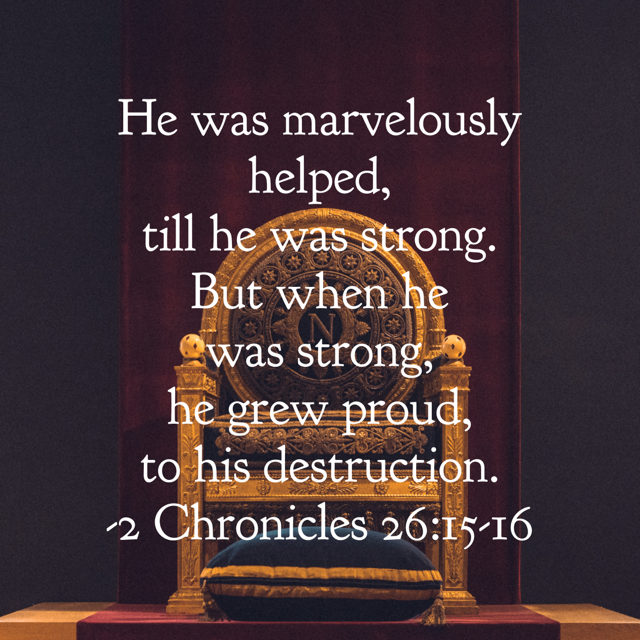
Another danger of success is pride. Perhaps forgetfulness leads to pride. Uzziah started out as a good king of Judah who “did what was right in the eyes of the Lord, according to all that his father Amaziah had done. He set himself to seek God in the days of Zechariah, who instructed him in the fear of God, and as long as he sought the Lord, God made him prosper” (2 Chronicles 26:4-5). The Bible goes on to tell of Uzziah’s accomplishments, feats, and even inventions. Then we read this sobering statement: “He was marvelously helped, till he was strong. But when he was strong, he grew proud, to his destruction” (2 Chronicles 26:15-16).

Saul, Israel’s first king, fell into the same pattern. When he was chosen king, he hid among the baggage and people had to look for him (1 Samuel 10:17-24). He saw himself as “little in his own eyes” (1 Samuel 15:17). But then he became too concerned with how the people regarded him.

“One’s pride will bring him low, but he who is lowly in spirit will obtain honor” (Proverbs 29:23).

Both of these kings went from pride to presumption. They stepped into duties God had given priests, not kings. God then rejected Saul as king (1 Samuel 13:8-15) and turned Uzziah into a leper (2 Chronicles 26:16-23).

Presumption led to further disobedience (1 Samuel 15). Saul’s decline is one of the saddest stories in history. He became jealous, irrational, untruthful, and even murderous. “Pride goes before destruction, and a haughty spirit before a fall” (Proverbs 16:18).

It’s an odd thing, isn’t it, to know God’s help, to know success was only available because God provided it, and then to be proud because of it–proud not of God, but of self, as if we did anything all by ourselves. Yet it happens all too easily.

Rosalind Goforth, one of my heroes for many reasons, writes in Climbing: Memories of a Missionary’s Wife of marvelous answers to prayer. Often she was supposed to speak to a group of women, yet her schedule was so full with caring for her children, homemaking, and regular ministry work that she couldn’t make time to study and prepare as she would like to. She writes of jotting down notes or studying her Bible while nursing a baby, or crying out to God in prayer before a speaking engagement and then being given a perfect outline of a message.

Sadly and humbly, I must confess that many, many times when I cried out to the Lord for power in speaking and evident power was given, I had not left the platform before the thought would come, “I have done well today.” Then would come the cry for forgiveness (pp 112-113).

I can confess to similar experiences.

How can we counter that tendency to exalt self instead of God?

My dear mother-in-law once said she had such a tendency toward spiritual pride that she withdrew from any kind of ministry in front of people. I understand her heart. But if we all did that, how would any of us minister to anyone else? We can’t do everything anonymously, though there are times to meet people’s needs “behind the scenes.” We’re not supposed to hide our lights under bushels.

Here are a few actions that help me:

Remember. Remember the ways God has led us along, His “Ebenezers” to us. Remember His Word; be in it regularly to keep our minds saturated with God’s perspective.. Remind ourselves that without Him we can do nothing  (John 15:4-5), that His strength is made perfect in our weakness (1 Corinthians 12:8-10).

Humble ourselves. “Humble yourselves before the Lord, and he will exalt you” (James 4:10). “God opposes the proud but gives grace to the humble” (James 4:6). Humbling is not the same thing as belittling. “There’s no need to shrink yourself down or deflate your gifts. That’s not humility any more than inflating your importance. Take an honest look at who you are and what you’ve been given” (Influence: Building a Platform That Elevates Jesus (Not Me) by Kate Motaung and Shannon Popkin). Martin Luther said, “God created the world out of nothing, and so long as we are nothing, He can make something out of us” (quoted in Influence, p. 65).

Acknowledge our dependence on God. I try to pray most mornings that God would fill me with the fruit of His Spirit as a way to remind myself I can’t manufacture a right spirit on my own.

Focus on ministering as unto the Lord. “Whatever you do, work heartily, as for the Lord and not for men, knowing that from the Lord you will receive the inheritance as your reward. You are serving the Lord Christ” (Colossians 3:23-24).

Focus on others. Philippians 2:3-4 says, “Do nothing out of selfish ambition or empty pride [I love the KJV word vainglory here], but in humility consider others more important than yourselves. Let each of you look not only to his own interests, but also to the interests of others.” Jesus said that whoever would be great must serve others, and even He did not come to be ministered to, but to minister (Mark 10:42-45).

Be grateful. Thanking God for His provision and enabling helps remind us that everything came from Him.

Look to Jesus: We become more like Him by beholding Him.

Have this mind among yourselves, which is yours in Christ Jesus, who, though he was in the form of God, did not count equality with God a thing to be grasped, but emptied himself, by taking the form of a servant, being born in the likeness of men. And being found in human form, he humbled himself by becoming obedient to the point of death, even death on a cross. Therefore God has highly exalted him and bestowed on him the name that is above every name, so that at the name of Jesus every knee should bow, in heaven and on earth and under the earth, and every tongue confess that Jesus Christ is Lord, to the glory of God the Father (Philippians 2:5-11).

Kevin DeYoung and Trevin Wax discuss a modern-day dilemma along these lines: book publishers expect authors to promote their own books, to build a “platform.” Yet how can one do that without being prideful? I appreciate their thoughts here, especially this from Trevin:

But I’m still conflicted about blogging about my book. Maybe that’s where I need to be. Maybe this is the Spirit’s method of rooting out sinful motivations and spurring me on to holiness.

Maybe God is saying, “I don’t ever want you to be totally comfortable with self-promotion, even if some promotion will result in more people buying a book that is beneficial to the church.” Maybe God wants me to remember that my motives are never completely pure, and even my best intentions are tainted with sin.

That tension between promoting the message God gave us and yet wanting to be careful not to exalt or promote self can help keep us balanced.

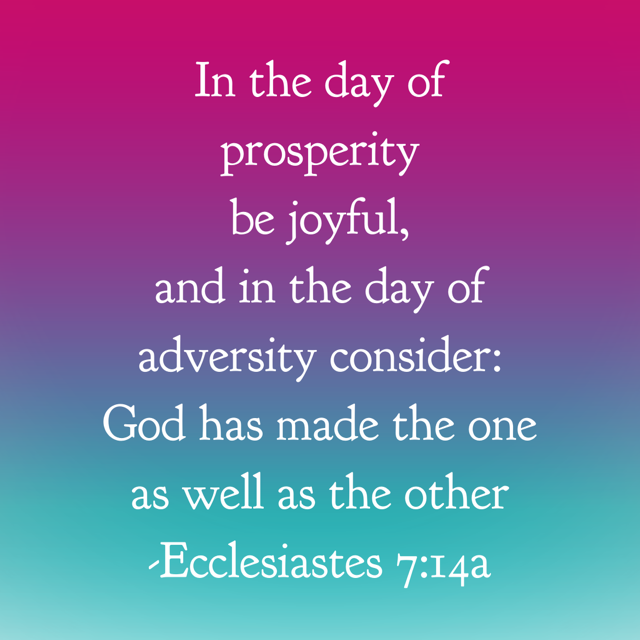
Ecclesiastes 7:14 sums it up well: “In the day of prosperity be joyful, and in the day of adversity consider: God has made the one as well as the other.” Both success and failure have their purposes. May we keep our eyes on Him in either case.

(I often link up with some of these bloggers.)

Laudable Linkage

Here are some of the good reads I’ve discovered recently. Maybe some will pique your interest, too.

On the Fence, HT to Challies. “The midst of a car accident is not the best time to consider whether or not Jesus is who He says He is. Although it’s better than never considering the Jesus question, it’s still not the optimal time.”

War. “Some think that mankind can be educated to the point where he will never desire to resort to brutal force in the settlement of problems. That theory is certainly proven wrong in this case. There are three questions that many people ask concerning wars. Why do wars occur, why does God permit them to take place and will we see peace in our generation?”

Are You Getting in the Way of God’s Work? HT to Challies. “Being an instrument of God means that we live in a paradox. On one hand, God does significant things through us to advance his kingdom, and on the other, we are acutely aware of how much better things could go if we weren’t constantly tripping over our own feet.”

On What You Put in Your Head: Toto, We’re Not in Eden Anymore. “While there’s great joy in romping through fields of wildflowers, we know that the pastoral scenes in novels and movies aren’t really accurate. There are ants at the picnic and snakes in the woods. The world is a broken place; it’s really not a good idea to follow my recommendation in the previous post—’learn all you can about everything you can’—without putting some sensible limitations in place. We’re not in Eden anymore. How do we decide which trees in the garden to sample?”

Showing Mercy in a Feeding Frenzy. “They could almost have been us—people who so often delight to tear one another apart, to focus on flaws more than virtues, to be critical rather than encouraging, harsh rather than tender, vindictive rather than merciful. I recently found myself studying the Parable of the Good Samaritan and marveling at its example of mercy.”

The Disproportional Response, HT to Challies. “There’s something deeply disturbing about our cultural moment when it comes to how we respond to being hurt, offended or disagreed with. It’s no longer enough to cut down the poppies, now we have to scorch the earth they were planted in too. When it comes to our churches, this should give us pause and prompt us to deep, and maybe even painful reflection. Are our churches places where loving one another, bearing with one another and exercising costly forgiveness are still the kinds of things that mark us out from the surrounding culture?”

Does My Son Know You? HT to Challies. A moving article about a sports writer’s journey with cancer and his father’s early death from Parkinson’s.

How Can I Expect My Children to Honor Me Since I Am a Sinner, Too? HT to Challies. “I was recently asked this question at a conference. Have you ever wondered the same thing? Certainly, as parents, we blow it. Can we still ask our children to honor us?”

The Lord’s Prayer for Writers, Part 1. Though this is written for writers, it’s a good study of the first part of what we call “the Lord’s prayer” for anyone.

A Right Big Mess Was Made By All, or, The Transformative Powers of Mud. “Today I am challenged by this memory; I have been daily cursing the mud and dirt dragged into our home by my children as they try to find rays of sun and active pastimes in our backyard. I’ve resented what the dirt represents: carelessness on the part of my children. Work for me. But writing out this fantastic and hilarious and ridiculous memory has taken me back, and I hope transformed me a bit, again.”

Finally, going along somewhat with the previous article, this is a sweet video about a boy’s adventures with his grandfather and a red wagon:

Happy Saturday!

Friday’s Fave Five

It’s so easy to get caught up in the negative and let the positive pass by without much notice. Fridays offer us a time to stop, reflect on the past week, and recount the good things courtesy of Susanne at Living to Tell the Story.

1. Forecast. Our early spring is due to be interrupted this weekend by snow and 12-degree nights. That’s not the favorite, though. The good part is the weather is due to warm up again next week.

2. Jim’s birthday. It’s always a joy to celebrate my dear husband.

3. Tires. Jason had an appointment to get new tires, but before the appointment one of his developed a large hole. He had his car towed in, but the company from which he buys his tires had been hacked into and wasn’t operational. Thankfully, we had a vehicle we could loan him in the meantime. We just got word yesterday that the tires had finally come in.

4. Sleep. It’s odd–I love sleep and its benefits, but I hate going to bed. I think in the later evening, when there’s nothing going on and no demands on my time, I like to relish that time to just read or whatever. But then when I am up too late, or I doze off on the couch and then wake up and get ready for bed, I pay for it the next day by either needing a nap or dragging. I’ve been making a concerted effort to go to bed earlier, and it does help.

5. Not cooking, as you know, is one of my favorite things. Besides the time off from meal preparation, it’s nice not to have to think what to make and then clean up the kitchen afterward as well. Sunday we picked up Sarku Chicken Teriyaki on the way home from church. Then one night when Jim was away, I tried one of Domino’s sandwiches (not very good, I am afraid. But I had been wondering about them, and now I know). Then last night, my grocery store and drug store runs took longer than expected, and I brought home Wendy’s (and discovered their chocolate chip cookies are wonderful).

How has your week been? Don’t forget to turn your clocks ahead this weekend.

Just 18 Summers

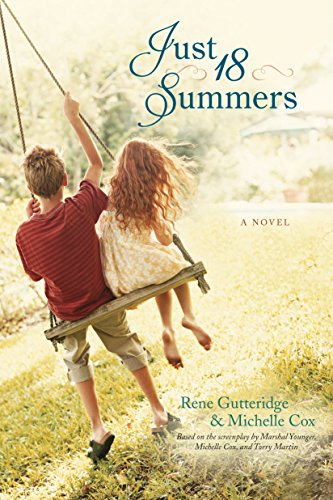
Just 18 Summers by Michelle Cox and Rene Gutteridge is a novel that tells the story of four families.

Butch Browning’s wife, Jenny, has recently passed away, and Butch is in a fog. Jenny had taken care of so many things, especially their young daughter, Ava. Butch owns a construction company and feels the weight of responsibility much more than when he was just another worker. But at home, the most he can manage is pizza every night.

Beth is Butch’s sister, married with three children. Her oldest daughter is in college and her oldest son is heading there next fall. In the midst of distress over her emptying nest, her daughter throws the family a curve ball: she wants to quit college and get married . . . to the pizza delivery guy.

Tippy is Butch’s foreman, and he and his wife, Daphne, are expecting their first child. But Daphne has gone off the deep end in trying to do everything possible to protect their child: reading every book she can find, covering every corner with pool noodles, forbidding certain foods from their home, etc., etc. etc.Her obsession is affecting their marriage, and Tippy can’t fathom how they’ll cope when the baby actually comes.

Helen and Charles Buckley are Beth’s neighbors, and the wives of all these families attend the scrapbooking get-together that Jenny started and which currently meets at Helen’s home. Charles has an excellent job, and Helen is determined to provide their children the very best opportunities so they’ll never be deprived or embarrassed like she was growing up. But Charles’ business responsibilities keep him from being an active part of his children’s lives, and Helen’s driven and regimented schedule for her children misses their deepest needs.

One theme in this book is that parents have a relatively short time—just 18 summers–to form relationships with their children, make lasting memories, and be the primary influence to their children. It goes so fast. Though, of course, we still have a relationship and make memories even after our children leave home, we have the biggest hand in their training when they are young.

Another theme is that there is only so much parents can control. As children become old enough to make their own decisions, those decisions may not be in keeping with what the parents think best. As Daphne discovers, we can’t protect our children from every little thing. Though we seek God’s will and do our best, ultimately our children’s lives are in God’s hands.

The book illustrates both points with humor and poignancy.

Though Jenny seems to have been almost too good to be true, and though Ava seems more capable than a child her age would normally be, all the characters are realistic and enjoyable.

I don’t think I’ve ever read Rene before. And though this is my first book of Michelle’s as well, I enjoyed attending one of her workshops at a writer’s conference. That conference also held a “Lightning Learning” session–kind of like speed dating–where three or four attendees would go in groups to an author’s table, hear their words of wisdom for 5 minutes, then go on to another table when a bell rang. I remember Michelle’s table being particularly merry.

Michelle explains in notes at the back of the book that Just 18 Summers was originally a screen play written by herself, Marshall Younger, and Torry Martin, and they were seeking funding to make the movie. I don’t know if it was ever made—I couldn’t find any videos of it.

As I searched for Michelle’s web site, I discovered there is another Michelle Cox, also an author, who writes in a different genre. The Michelle Cox who co-wrote 18 Summers also writes devotional books based on the When Calls the Heart TV series.

Overall I thought this was a great, enjoyable book. Though it has a point to make, it’s not didactic or heavy-handed. Since my own children are “out of the nest,” I can “amen” the truths in this book.

Christopher Robin Milne

As you’re probably aware, A. A. Milne’s children’s books about Pooh and Christopher Robin and the Enchanted Forest were based on his son, his son’s toys, and the family farm, Cotchford, which edged the Five Hundred Acre Wood (which became the Hundred Acre Wood in the Pooh stories).

Though Christopher Robin was Milne’s son’s name, young Christopher wasn’t called that. He went by Billy Moon, or just Moon (which came from his early attempts to say “Milne”).

A. A. Milne was known for plays and other works when he wrote a few poems and then a couple of books based on Christopher and his real childhood toys. He was dismayed that those books overshadowed all else he wrote. He stopped writing related children’s books because he didn’t feel the extensive fame was good for Christopher.

A few months ago, my husband and I watched Goodbye Christopher Robin, about the Milnes and the fame of Pooh and Christopher Robin. My children had grown up with Pooh (mostly the Disney version) and the Milne characters will always have a soft spot in my heart.

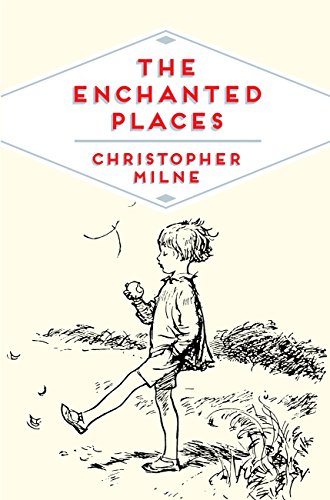
I wanted to learn more about how Christopher (as he was known as an adult) really felt, so I decided to read his book, The Enchanted Places: A Childhood Memoir. I learned shortly thereafter that Christopher had written a sequel titled The Path Through the Trees, so I read that as well, and decided to review them together.

Though there’s a bit of overlap, the first book covers Christopher’s life until he went into the army, and the second covers that time forward. (For convenience sake, I am going to refer to the first as EP and the second as PTT.)

In The Enchanted Places, Christopher tells about his family, his nanny, and growing-up years.

Though the Pooh books were inspired by Christopher Robin’s toys, they also contained his father’s nostalgia about his own childhood.

The Christopher Robin who appears in so many of the poems is not always me. For this was where my name, so totally useless to me personally, came into its own: it was a wonderful name for writing poetry round. So sometimes my father is using it to describe something I did, and sometimes he is borrowing it to describe something he did as a child, and sometimes he is using it to describe something that any child might have done (EP, p. 19).

In the second book, Christopher says that part of his writing the first book had to do with his feelings upon his father’s death. He learned that his mother had destroyed almost everything of his father’s, and at first he was quite angry. Later he came to believe she was right to do so. But he knew that at some point someone would come around wanting to write a biography of A. A., and EP was a place to sort through his remembrances and present “not a full-length study, but just a collection of snapshots” of his father (EP, p. 91). His father “doesn’t wear his heart on his sleeve as [his brothers] do. Alan’s heart is firmly buttoned up inside his jacket and only the merriest hint of it can be seen dancing in is eyes, flickering in the corners of his mouth” (EP, p. 91).

Christopher “quite liked being Christopher Robin and being famous” (EP, p. 81). But in boarding school, “it was now that began the love-hate relationship with my fictional namesake that has continued to this day” (EP, p. 86). The Goodbye Christopher Robin film shows his being bullied at this point, as do a couple of articles I read. He doesn’t specifically say he was in either of these books, but he said the poem “Vespers” “brought me over the years more toe-curling, fist-clenching, lip-biting embarrassment than any other” (p. 23).

Christopher’s lowest point seemed to come after the war when he was looking for a job. He didn’t seem to have any qualifications for anything, a least none that anyone needed. He was a little jealous of his father’s success at his expense then:

But were they entirely his own efforts? Hadn’t I come into it somewhere? In pessimistic moments, when I was trudging London in search of an employer wanting to make use of such talents as I could offer, it seemed to me, almost, that my father had got to where he was by climbing upon my infant shoulders, that he had filched from me my good name and had left me with nothing but the empty fame of being his son.

This was the worst period for me. It was a period when, suitably encouraged, my bitterness would overflow. On one or two occasions it overflowed more publicly that it should have done, so that there seemed to be only one thing to do: to escape from it all, to keep out of the limelight. Sorry, I don’t give interviews. Sorry, I don’t answer letters. It is better to say nothing than to say something I might regret (EP, p. 146).

Christopher says in both books that he was fiercely independent.

However much I wanted to succeed as a bookseller on my own merits, people would inevitably conclude that I was succeeding partly at least on my father’s reputation. They might even think (wrongly) that my father’s money was subsidizing the venture and that–unlike other less fortunate booksellers–I did not really need to make ends meet (EP, p. 148).

In The Path Through the Trees, (sometimes this title is prefaced with Beyond the World of Pooh, Part 2), Christopher tells of his life from the time he began to make his own choices: his five-year stent in the Army, his finishing college, search for a job, marriage, life as a book-seller.

He’s oddly selective about what he writes, which, of course, he has every right to be. He does say this book is “a personal memoir, not a biography” (PTT, Location 3889) and presents “a disjointed story—but a happy life” (Location 31).

In this second book, he tells a great deal about his first love, a woman named Hedda whom he met in Italy. But he tells us very little about his wife, Lesley, except things they did together. She was his cousin, so he had known her for years. But he doesn’t describe her as a person or how they went from cousins to romance. Likewise, he tells us his daughter, Clare, was born with cerebral palsy, couldn’t walk, had limited use of her arms. But he doesn’t describe her personality or appearance. I don’t know if this quietness was for their protection, a result of his own struggles with fame and too much of his life made public, or what.

He spends a lot of time on how they came to be booksellers, how things progressed with the shop, choices they made, things that affected the market, etc. He defends book-selling as a profession—there appears to have been some who regarded book-selling as a “trade” (which was somehow lower in rank than other professions) or as somewhat mercenary.

He has a chapter on animals they took care of (including a vole and owl in their home). In other circumstances, he might have been a naturalist.

He talks a great deal about Dartmouth, the town where he and Lesley settled and had their bookshop.

When Clare was done going to school and came home to stay, she needed full-time care. Christopher stayed home with her while Lesley continued part-time at the bookshop. This seems to have been one of the happiest times of his life, taking Clare out into nature and devising and making various helps for her needs. He had often said that he had inherited his mother’s hands and his father’s brains, and these devices for Clare employed both. His thoughts about equipment for the disabled was interesting:

It is a sad fact that much of the equipment designed for the disabled is inefficient and nearly all of it is ugly. To some extent the one follows from the other. An efficient design has a natural elegance which needs little embellishment to make it attractive. Whereas the wheel chair issued to Clare was such a mechanical disaster that nothing could have redeemed it. How unfair it is that a person who most needs a chair should so often have just the one–and one so very far from beautiful–while the rest of us, who need chairs only now and again, possess so many (PTT, Location 3233).

But of course the greatest pleasure of all was to see Clare sitting comfortably where before she had been uncomfortable, doing something she had not previously been able to do. And it was a pleasant thought that this was, in a sense, a legacy from her grandparents whom she had never known–a product of the fusion of my father’s fondness for mathematics with my mother’s competent hands. If she had inherited neither, she could at least benefit from the fact that I had inherited both (PTT, Location 3243).

Christopher’s independence caused him to refuse accepting money from the Pooh book sales until Clare came home.

Christopher seems to have been a kind and gentle man, though fiercely opinionated on some topics. He was a classic introvert, a thinker. He describes one scene in the second book where he’s walking home and comes upon a couple searching for elephant hawk caterpillars, which they hoped to take back to their area so the bugs would hatch and breed there. Christopher got home and told Lesley about the encounter. Lesley left a few minutes later and came across the same couple. She commented that her husband had just spoken with them. The man replied, shyly, “I thought he looked like the sort of person who would be interested in my caterpillar,” which Christopher took as “a nice compliment” (PTT, Location 3721). I can somewhat picture him ambling around Dartmouth, as he describes it, enjoying his bookshop, stopping to observe and contemplate nature, willing to talk about moths with strangers.

Though Christopher had some rough spots with both parents, and didn’t see his mother the last fifteen years of her life, he loved them and spoke fondly of them in these books.

Sadly, to me, Christopher “converted to humanism” when he was 24, believing that man invented God rather than the other way around. He states this in the first book, but apparently felt he came across a little too strongly. So in the second book he says that though he does not believe in God, someone else can, and they can both be right (which does not make sense, but apparently he means something like “believe whatever works for you and helps you through life”). A. A. was also an atheist but did not push his beliefs on his son until he shared an atheistic book with Christopher in his twenties.

This article tells some of the differences between the film and reality. There are some things in the films that were not in these books but may have come from other sources (A. A. also wrote a biography, It’s Too Late Now, and both Milnes wrote other books as well). Or, as always happens in movies, the makers may have taken a bit of license. One difference this article doesn’t mention is that though A.A. Milne wrote an anti-war book after WWI, he felt war was justified against Hitler and wrote another book telling why. “Hitler was different: different from anything he had imagined possible; that, terrible though war was, peace under Hitler would have been even more terrible” (PTT, Location 140). The film shows A. A.’s battle with PTSD (though it was not called that then). Christopher doesn’t mention his dad having flashbacks or problems adjusting, but he knew he’d had “sad times” in his life and felt they came out through Eeyore.

Another scene in the film comes when young Christopher asks his father, “Are you writing a book? I thought we were just having fun.” Alan responds that he’s writing book and having fun. I think that was accurate: I don’t think A. A. observed his child’s activities with a mercenary air, pulling from them what he thought would “sell.” Perhaps as happens with many parents, having children brings up memories of one’s own childhood, and A. A. recognized what would resonate not only with other children, but other parents.

I read the Kindle version of both books, but then discovered the second was included in my Audible subscription. So the audio and ebook were synced to where I could go back and forth between them. One advantage to listening was hearing the words in an English accent. I knew, of course, Christopher was English, but I don’t think in accents when reading. The audiobook has a lovely postscript not in the books by Peter Dennis, the narrator of this and the Pooh books and a personal friend of the family. I also checked both books out of the library to see if there were any pictures or other material in them. The first book had pictures of Christopher as a child as well as pictures of some of the places in the books side-by-side with the book’s illustrations of those places.

There’s a scene at the end of the film where Christopher tells his father he had more or less made peace with his childhood namesake. In the army, especially, he came across people whose fond childhood memories included Pooh and were a comfort to them. I didn’t read any sentiments like that in these books, but I hope Christopher did come to something like that realization in real life. Though he didn’t want to be mistaken for his fictional namesake, and though he understandably wanted to be permitted to grow up and away from him, the fictional boy and his toys and their innocence and imagination have touched the hearts of children and parents for decades.

(These books fit within the Nonfiction Reading Challenge celebrity category).

We Don’t Know What to Do

A few years ago, I compiled a list of prayers in the Bible that I sometimes use in my own prayers.

It’s perfectly fine to just speak to our Father from our hearts. We don’t have to use certain words like an incantation in order for Him to hear us.

But prayers in the Bible help give our prayers more guidance and depth. It’s great to pray for God to bless someone and give them a good day. However, praying that they “may be filled with the knowledge of his will in all spiritual wisdom and understanding” (Colossians 1:9) or “that according to the riches of his glory he may grant you to be strengthened with power through his Spirit in your inner being, so that Christ may dwell in your hearts through faith” (Ephesians 3:16-17a) just goes so much further.

Plus, when we pray Scriptural prayers, or turn a passage of Scripture into prayer, we can know we’re praying according to God’s will.

Often we have some idea how to pray.

When someone is sick, we pray for healing, if it is God’s will, and for grace and help for everyone involved. We pray for wisdom for the doctors, freedom from pain, good reports from medical tests.

When we’re burdened for loved ones who don’t know the Lord, we pray that “the eyes of [their] hearts” would be “enlightened” (Ephesians 1:18), that God would draw them to Himself as only He can (John 6:44), that God would send someone to talk to them and live before them a good testimony (Matthew 9:37-38), that their hearts would be “good ground” (Matthew 13:1-23), that the Holy Spirit would reveal truth to them (John 16:13).

If someone loses a job or has a specific need, we pray for God to supply, while asking Him if there is anything He would have us do (James 2:15-16).

Sometimes, however, we just don’t know how to pray, except “Your will be done.” And that’s fine. It’s not like God needs our ideas or suggestions.

In those times, Jehoshaphat’s prayer in 2 Chronicles 20 is one I lean on heavily.

Jehoshaphat was king of Judah when he was told a “great multitude” from several nations was coming against him. “Then Jehoshaphat was afraid and set his face to seek the Lord, and proclaimed a fast throughout all Judah. And Judah assembled to seek help from the Lord; from all the cities of Judah they came to seek the Lord” (verses 3-4).

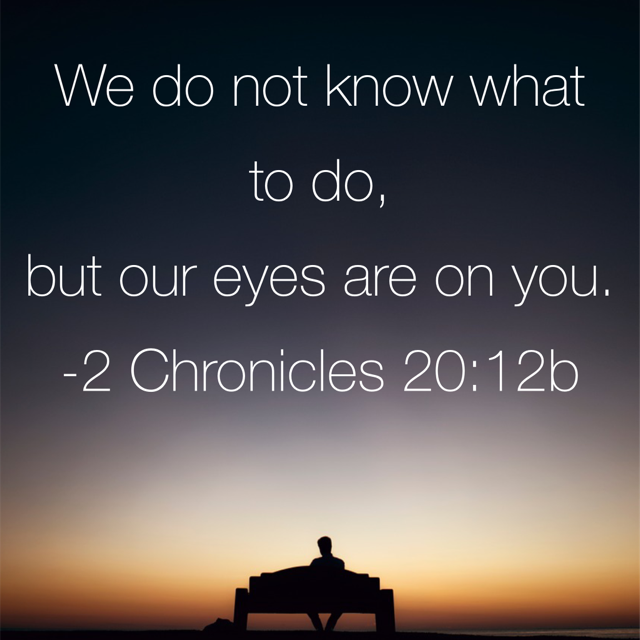
Jehoshaphat reminded himself who his God was (verse 6). He reminded himself of God’s promises to Israel about their land and the fact that they belonged to Him (verses 7-10). He told God the problem (verses 10-11). Then he confessed, in one of my favorite Bible verses, “we are powerless against this great horde that is coming against us. We do not know what to do, but our eyes are on you” (verse 12).

There are things in this world too big for me. In some national and world-wide issues, I have no idea the best course of action. Sometimes I don’t even know what’s true amid conflicting news reports. Sometimes I have a strong opinion about what should happen, but I am personally powerless to do anything about it.

Besides not being able to affect change on a large scale, I can’t change anyone’s heart. I can pray for them as mentioned above. I can speak or try to influence. But would that be useful or would I be “nagging?” Would I help or push them farther away?

Sometimes we have a major decision ahead of us. I can see pros and cons of each choice.

I don’t know what to do.

I don’t know what to do, but my eyes are on Him.

I’m powerless, but He is not. He sees the big picture. He knows what’s best when. I can rejoice that He is big enough and wise enough to know what’s best and and powerful enough to accomplish it. I can trust Him to guide me and work through me. Or, like in Judah’s plight in 1 Chronicles 20, He may have me do nothing but watch Him work.

Corrie ten Boom once said, “The wonderful thing about praying is that you leave a world of not being able to do something, and enter God’s realm where everything is possible. He specializes in the impossible. Nothing is too great for His almighty power. Nothing is too small for His love.”

Prayer makes a difference—sometimes in us, sometimes in our circumstances, sometimes both. Even when we’re not sure how to pray, we can take our requests and burdens to the Lord.

Likewise the Spirit helps us in our weakness. For we do not know what to pray for as we ought, but the Spirit himself intercedes for us with groanings too deep for words. And he who searches hearts knows what is the mind of the Spirit, because the Spirit intercedes for the saints according to the will of God (Romans 8:26-27).

(I often link up with some of these bloggers.)

Laudable Linkage

IMG_0195

Welcome to my almost weekly list of good reads found around the Web.

This Dying Young Woman Has a Message for Us, HT to Challies. “Brooklyn may face dark moments, but they are never so dark that the light of Christ does not breakthrough. Along with telling her story, she wants to speak directly to us, and even when she wants to tell us hard truths, her sense of humor steps in to help us swallow the medicine. ‘I’m sick. Soon to die. But so are you. I’m just doing it faster.'” Brooklyn did pass away March 1.

Truth in Small Bites Is Truth Nonetheless. “When life takes a turn, most of us tend to push Bible reading aside until our circumstances return to normal. If you’re not able to sit down at your kitchen table for a quiet hour of in-depth study, you don’t even crack open God’s Word. Somewhere along the way, you’ve told yourself that if you’re not able to feast, you shouldn’t eat at all, not realizing that a handful of almonds in the middle of the night is far better than allowing your soul to starve.

Sexual Sin Is Not Inevitable, HT to Challies. “God never commands us to do anything without providing the resources to obey by the power of the Holy Spirit.”

Death, Miracles, and Tears from a missionary in Cameroon, HT to Challies. “About three years ago I took a girl in our village named Mami to get an ultrasound. At the clinic I met her boyfriend named Koo who was visibly concerned about her pregnancy. So much so that he made a deal with God: if his baby survived, he would dedicate his life to the Lord.”

The Friend Who Sharpens Me, HT to Challies. “While it’s great to have friends we agree with theologically and mentors who can teach us more about the historical faith we hold to, I’m learning that it’s important to make friends with those I disagree with. It’s important to learn from those with a different viewpoint than me.”

Tell Me a Story? “There are many nights when both Dan and I draw a complete blank. Four sets of eyes stare at us longingly as we frantically rake our minds for something to say, only to come up as empty as one of Pooh’s honey jars. Over the years we have developed a strategy for handling situations like this. It’s easy to implement, and it has never failed.”

This is a good reason to get those dust bunnies when they’re small and few. 🙂

Happy Saturday!

Friday’s Fave Five

Somehow, it’s March already!. Susanne at Living to Tell the Story invites us to pause a moment and recount the blessings of the week. Feel free to join in! Here are a few of mine:

1. In-store apps. I didn’t realize, until my sons told me, that grocery store apps can tell you where to find items. There’s one store I go to maybe every other week, and I get so frustrated at not being able to find things there. Their logic about how items should be laid out is different from my way of thinking, and apparently, that of other stores. It’s so nice to search for an item and then see what aisle to go to.

2. An Amazing Race watch party. Jason, Mittu, Timothy, and Jesse came over to watch the Amazing Race finale. The team we were rooting for was in the final three (and won!). It was fun to watch it together.

3. Calzones and pie. Mittu made calzones and lemon meringue pie for dinner the night of our watch party. She and Timothy are gluten-intolerant, and she just got a new gluten-free recipe book for Christmas. I think both dishes came from that cookbook. The calzone dough, if I remember correctly, only had three ingredients (I don’t remember what they were, except I think one was yogurt). Both were delicious!

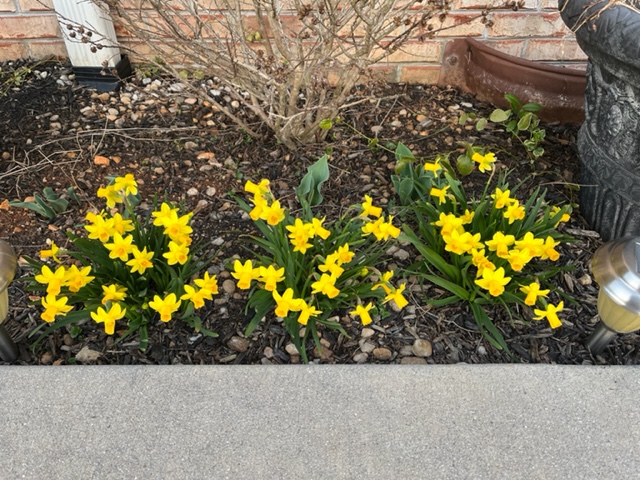
4. Daffodils are the first sign of spring to me, and I was happy to see some of ours in bloom this week. I’m especially thankful that the ones we transplanted survived and are blooming.

5. Nice temperatures and sunshine. It’s been a fairly spring-like week outside, getting into the 70s in the daytime and 40s at night. We’re not completely done with cold weather yet, but I love this harbinger of spring.

How was your week?

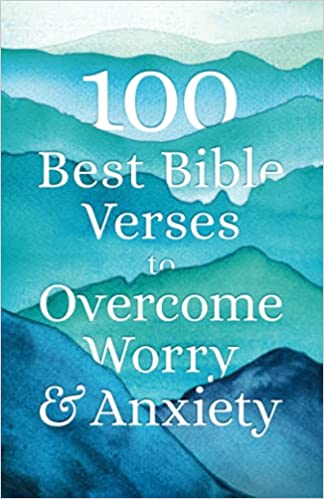
100 Best Bible Verses to Overcome Worry and Anxiety

100 Best Bible Verses to Overcome Worry and Anxiety is compiled from writings of several authors and published with Bethany House.

Each two- to three-page spread begins with a Bible verse. The author then adds a brief paragraph about the context the verse was set in. Then several paragraphs about the meaning of the verse and one or two of application are included. Then a few references are listed for additional reading.

When I first saw this book reviewed at Joanne’s, I thought it was a great idea. I’ve mentioned before that anxiety is probably not something that can be conquered by answering an altar call or sitting down for one massive Bible study. Rather, battling anxiety is a matter of continually feeding our souls truth. This book is a wonderful way to keep God’s provision, protection, and promises continually before us in small but substantial doses.

I very much appreciated that the writers delved into the context of the verses before explaining the meaning and applying them. The context enriches our understanding of the passage and keeps us from spinning our own take on a single sentence.

I’ve repeatedly heard that there are 365 Bible verses that say, “Fear not.” That declaration is often followed by the quip, “One for every day of the year.” I had thought this would be a collection of those verses. It’s not (though such a collection would be a great idea for a devotional book). I was surprised at some of the verses used, as they didn’t seem to directly relate to anxiety or worry. But I came to understand they were foundational verses about God’s character or promises. The more we know Him, the less reason we have to be anxious about anything.

Here are just a few of the quotes I marked in this book:

[On John 16:33] It’s a strange way to promise peace—Jesus starts by telling his disciples that they are about to go through a time of sorrow and fear. How is that peaceful? they might have wondered, especially after Good Friday, when their teacher was killed, and it seemed like the world had won.

Still, Jesus’ words, “Take heart!” are a command in the original language, not just an inspirational phrase but something God wanted them—and us—to actively do. It could be phrased “Choose hope!” or “Be encouraged!” (p. 39).

Some seasons, taking heart might be among the hardest of God’s commands to follow. Until we remember the rest of the verse: “I have overcome the world” (p. 40).

[On 2 Timothy 1:7] Fear is a tool of the enemy that exists to keep us from advancing the kingdom of God. It distracts us from trusting him, and instead tempts us to protect ourselves and rely on our own abilities” (p. 51).

In verses 7 and 8 [of Joshua 1], God connects being strong and courageous to faithfully following his Word. Not believing in God’s Word nor taking it seriously had been the sin that forced the Israelites to wander in the wilderness for forty years (p. 62).

[On Lamentations 3:57] His response will always be, “Do not fear.” Not condemnation for being afraid, but telling us there is no need for it. He is holding on to us tightly, a good Father whose perfect love casts out fear . . . if we just ask (p. 65).

[On Genesis 50:20] [Joseph] endured some of the most difficult circumstances and betrayals and still honored the Lord in the midst of them. He refused to see his journey as one setback after another, but instead chose to believe that God was writing a much bigger story (p. 78).

Allow your confidence to be informed by your faith, not your circumstance (p. 79).

[On Psalm 61:2] We don’t need to strive so hard to be self-sufficient when the chaos threatens to overwhelm us, but we can rest in the truth that God is infinitely more capable than we are (p. 121).

[On Psalm 23:4] Dark valleys don’t stay dark. The beauty of a valley is that it dips down but then rises back up. Valleys aren’t endless stretches of defeat, but stretches we walk through and rise from. What a beautiful promise. We are not alone in our valleys. Even as we “walk through,” we don’t need to sprint through in a panic; we will walk through our valley with Jesus by our side and emerge safely, made stronger by the experience (p. 125).

This book doesn’t just try to make readers feel better. It continually points the reader back to God’s character and His Word. Thus, it is an excellent resource when worries or fears try to pull our gaze away from Him.