Friday’s Fave Five

It’s Friday, time to look back over the blessings of the week
with Susanne at Living to Tell the Story and other friends.

Here we are at the last FFF of January already. We’re almost 1/12 of the way through 2022! Here are some favorites of this week.

1. Take-out, always a favorite. We don’t usually get it all weekend, but it was nice to have the weekend “off.” I requested McAlister’s Deli Friday night—we hadn’t had it in a while. Then Jim suggested Chick-Fil-A Saturday night and wanted pizza Sunday night.

2. One organizing project done. I have four areas I wanted to work on even before Christmas, but then didn’t get to in the busyness of the holidays. I tackled one on Saturday. We have a short bookcase in our bedroom where I put books I’ve bought, received as gifts, or have read but haven’t decided what to do with yet. I sorted through and dusted all of them, filled one box to give away, found places on other shelves for some, and stacked the remaining unread ones in a more orderly fashion.

3. Dinner and a visit. Jason and Mittu brought dinner over one night when Jim was away.

4. Catching up with a good friend. One of my dearest and longest-known friends and I had a long phone conversation this week. It was so nice to have that extended time rather than a text or Facebook comment here and there (though those are nice, too).

5. Frito bars. The name may sound strange, but the sweet and salty combination was really good, and there were very easy to make. I halved the recipe for an 8×8 pan this time, but I look forward for making it for the rest of the family sometime.

Is it bad that three of my five favorites this week involved food? 😀

How was your week?

End of January Reflections

The end of the month is still a few days away. But I have other posts in mind between now and then, so I thought I’d do my end-of-month wrap-up now.

January is usual a rest month after the beloved busyness of December. It hasn’t quite worked out that way this year. But we’ve had a bit of down time in-between appointments and appliance repairs.

Covid hit my daughter-in-law and grandson, and we didn’t see them for three weeks–a record (and a hard one!) I’m thankful for FaceTime when we can’t see them in person. But they are finally doing better, and we got together for a couple of times the last few days.

Covid numbers are up again here, as they are in others places. Our church is meeting in person, but thankfully they keep the Zoom option open.

I mentioned in last week’s Friday’s Fave Five that my husband had been working on our leaking dishwasher. The parts he ordered didn’t fix the problem. After two weekends working on it, he posted this on Facebook:

There is one more thing he’ll try when the part comes in. If that doesn’t work—it’s dishwasher shopping time.

I was just telling a friend today that something about January makes me want to sort and organize. I don’t usually do a whole closet or cabinet at a time, but sometimes it will suddenly hit me that this item would work better there and this would be a better way to sort that. I had three areas (or more accurately four–two are in the kitchen, but they are separate spaces) that I was chafing to get to before Christmas. That didn’t happen, but I want to tackle them this month. I’ve done one—three to go.

A question about Feedly

Do any of you use Feedly as a blog aggregator? I like to put the blogs I read in there, and I can see when they have new posts instead of having to visit them individually. Feedly has been working fine for years, but lately it hasn’t been showing all of a site’s blog posts. There’s one that won’t update at all. Another only updates twice a week though they post five times a week. Another has posts on an irregular basis, but Feedly won’t show any posts from them for a while and then will show three all on the same day (not the way they were posted). Other blog posts show up like they are supposed to—at least, as far as I know.

I’ve tried to Google the problem but haven’t found a solution. When I click on Feedly’s support button, it takes me to a page that shows their paid plans—so I guess you get no support if you use the free plan?

It may be time to try a different service. Do you use something other than Feedly? I don’t need something with all kinds of features—I just want a blog aggregator.

I know I could subscribe to blogs via email, and some bloggers prefer that you follow them that way. But I really don’t want blog posts coming to my email. I like keeping blogs separate to read when I can get them. If they came through the mail, I’d either feel pressured to read them as soon as they come in, or they’d get buried and I’d miss them.

Creating

No cards this month–nice since December and February are big card-making months here.

I have another project in mind for the guest room, but I’ll share more about that when I get it started.

Watching and Listening

I mentioned earlier this week listening to a series on aging from Elisabeth Elliot’s old Gateway to Joy programs. BBN Radio is playing them this week, but they are also available on the EE web site.

I had not watched The Amazing Race for the last few years. But this year the Holderness Family is on it-–my son and d-i-l have shared with us several of their videos. I love that they treat each other with respect . . . unlike some other contestants. That’s one reason I stopped watching the show before—all the drama with people fighting. But I am looking forward to this year’s race.

We’ve been watching Around the World in 80 Days and All Creatures Great and Small on PBS Masterpiece Theatre. This is the second season of All Creatures, and even though it’s not entirely true to the books, the feel of the show and the characters are so cozy. 80 Days, however, is the kind of remake that riles me. It’s been a while since I read/listened to the book, but from what I can tell, only the characters’ names and the bare overview of the story are the same. It’s not just that they turned Detective Fix (who in the book mistook Fogg for a bank robber and was after him for much of the book) into a young female journalist. But they’ve changed nearly every scene, making it more fan fiction than a remake. And they are trying to infuse 21st century sentiments into a 19th century work. Argh! But . . . if I can just take it as it is and not compare it to the book, it’s enjoyable to watch.

We also watched Darkest Hour, about Winston Churchill’s appointment and early days as Prime Minister during WWII. It has been out for a while, but we had never heard of it. It was quite good, though some scenes and details are fictional. (Warning–one or two bad words.)

Reading

Since last time I have finished:

I’m currently reading:

  • 100 Best Bible Verses to Overcome Worry and Anxiety
  • Be Successful (1 Samuel): Attaining Wealth That Money Can’t Buy by Warren W. Wiersbe
  • The Middle Matters: Why That (Extra)Ordinary Life Looks Really Good on You by Lisa-Jo Baker
  • IBS for Dummies by Carolyn Dean and L. Christine Wheeler
  • Framley Parsonage (fiction) by Anthony Trollope (audiobook)
  • Half-Finished (fiction) by Lauraine Snelling

Blogging

Besides book reviews, Friday Fave Fives, and Laudable Linkage, I had these posts on the blog this month:

  • When God Changes Your Plans. “God’s highest blessing may not be having my plans and dreams turn out like I want.”
  • Books Shape Our Thinking. “We observed over the course of years a definite shift in thinking and beliefs in each of these cases. The speaker or writer didn’t come to their new views from their Bible reading, but from the books they read. Those books then colored their view of Scripture.”
  • Blameless? “Sometimes the word ‘blameless’ caused me the same kind of frustration as a white shirt. My flesh fails daily. How can I ever be blameless?”
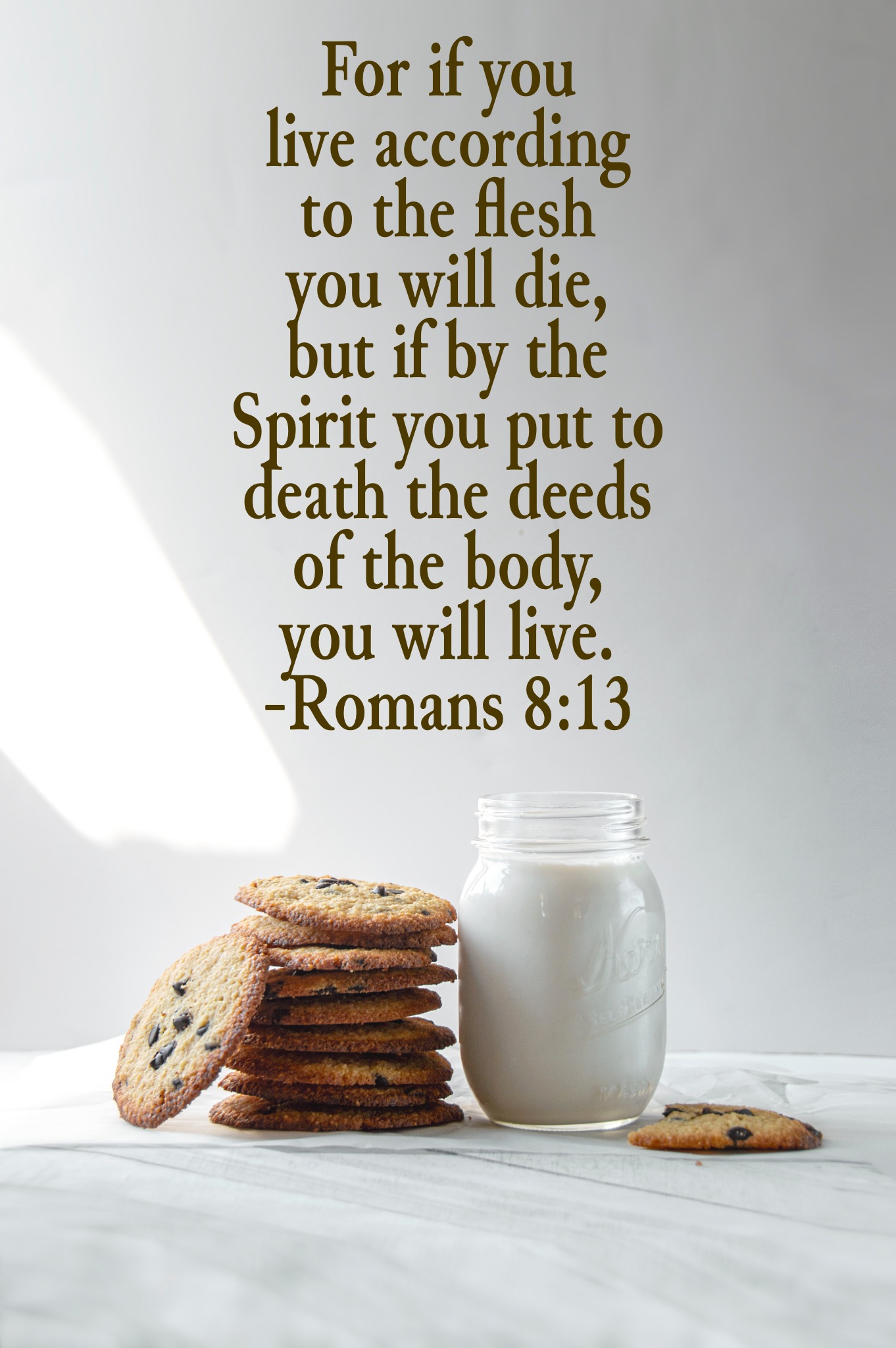
  • God Is Not Going to Slap the Cookie From Your Hand. “Our standing before God and His love for us are totally dependent on His grace, not our actions. My ups and downs, stumblings, faults, and failures don’t threaten His love for me or my salvation. But Jesus did say, ‘If you love me, you will keep my commandments’ (John 14:15).”
  • An Old Poem for a New Year. Part of a poem by John Greenleaf Whittier about his birthday seemed applicable to the start of a new year.

Looking Ahead

On the plus side, we make much about Valentine’s Day, plus my daughter-in-law’s birthday is this month. A friend and I are trying to get together for lunch one day, an event that has been postponed due to the holidays and illnesses. On the downside, I have a medical test I am not looking forward to. But getting it over with will be a plus.

And each day is one day closer to spring, warmer days, more sunlight, and growing things!

How was your January? What are you looking forward to in February?

(I often link up with some of these bloggers.)

The Writer’s Desk

I saw The Writer’s Desk by Jill Krementz mentioned by literary agent Wendy Lawton at the Books and Such blog. I was able to find a used copy at Amazon for around $6. I’ve enjoyed leafing through it the past few days.

The book is made up of large black and white photos of over 50 writers at their desks. Alongside each photo is a paragraph or two from the writer about his or her workspace, style, routine, etc.

It’s interesting to see the wide variety of styles, routines, and even dress. Some of the men came to their desks with sports jackets and ties. James Michener preferred very loose tee shirts and shorts so he was unimpeded as he worked.

The work space for some was clean and sparse. Many had very cluttered desks and offices.

Some had a routine; others were more free form in style.

Some needed absolute quiet and solitude; some were able to concentrate in the midst of everyday family life.

Some wrote longhand, some used a typewriter, others a computer. The book was published in 1996, and some of the pictures are much older. I don’t know how many chose pencils or typewriters instead of computers or just because that’s what was available in their day.

I loved many of the insights:

John Updike writes “by hand, when the fragility of the project—a poem, the start of a novel—demands that I sneak up on it with that humblest and quietest of weapons, a pencil” (p. xi).

Archibald MacLeish: “I am sure—I mean I am not sure at all but I believe—the master poets must come at their poems as a hawk on a pigeon in one dive. I can’t. I chip away like a stonemason who has got it into his head that there is a pigeon in that block of marble. But there’s a delight in the chipping” (p. 77).

Joseph Heller said many of his ideas come when he’s doing things like walking the dog or brushing his teeth. “I don’t get my best ideas while actually writing” (p. 85).

Isaac Bashevis Singer: “Some writers say that they can only write if they go to a far island. They would go to the moon to write not to be disturbed. I think that being disturbed is a part of human life and sometimes it’s useful to be disturbed because you interrupt your writing and while you rest, while you are busy with something else, your perspective changes or the horizon widens. All I can say about myself is that I have never really written in peace” (p. 91). That’s encouragement for people like me who are easily disturbed.

Saul Bellow: “I think that art has something to do with an arrest of attention in the midst of distraction” (p. 99).

Jill Krementz is the wife of Kurt Vonnegut and the author of several other books. She says in her acknowledgements that many of these excerpts came from George Plimpton’s “Writers at Work” series in his magazine.

Of the 56 authors mentioned here, I had only heard of nineteen and read about six of them. So I took a little bit of time to look up the desks of other favorite authors. I had looked up Louisa May Alcott’s desk after reading the novel The Orchard House, taken from the name of the house Louisa lived in while writing Little Women. It’s hard for me to imagine writing much on such a small area, but it was unusual for a woman to have a desk in those days. Her father made the semicircle desk especially for her. I also enjoyed this view of C. S. Lewis at his desk with his cup of tea nearby and Lucy Maude Montgomery at hers. I stopped there, as this rabbit trail could take hours. But maybe someday I’ll explore some more.

I enjoyed this glimpse of writers’ spaces and styles.

An Old Poem For a New Year

Last week, I listened to Elisabeth Elliot’s Gateway to Joy series about aging. In one episode titled Being Part of the Permanent, she quoted a stanza of a poem by John Greenleaf Whittier. The words so seized me, I had to stop and look them up.

The poem is titled My Birthday. Whittier was 64 when it was published, a significant age in the 1800s. Though all the poem is a touching look at an “older” birthday, the first few stanzas seem to me to apply also to a new year. We’re not so far from the beginning of this one, so perhaps they’ll speak to you as they did to me. The stanza Elisabeth quoted is at the end of what I am sharing here, but there are many more stanzas besides.

Beneath the moonlight and the snow
Lies dead my latest year;
The winter winds are wailing low
Its dirges in my ear.

I grieve not with the moaning wind
As if a loss befell;
Before me, even as behind,
God is, and all is well!

His light shines on me from above,
His low voice speaks within,–
The patience of immortal love
Outwearying mortal sin.

Not mindless of the growing years
Of care and loss and pain,
My eyes are wet with thankful tears
For blessings which remain.

(I often link up with some of these bloggers.)

God Is Not Going to Slap the Cookie From Your Hand

Many decades ago, during my college years, an administrator said that most religions of the world emphasized trying to earn God’s favor. Christianity, however, declared that it’s not by trying, but trusting—trusting the perfect, sinless Son of God who took our place on the cross we deserved.

These words were a relief to me. I had been familiar with Ephesians 2:8-9 for a few years by then: “For by grace you have been saved through faith. And this is not your own doing; it is the gift of God, not a result of works, so that no one may boast.” But I still had to reassure myself that salvation was not a matter of being “good enough,” but rather resting in His goodness.

I had to learn the same principle in my Christian walk. Even after salvation, my standing with God was not a matter of trying to be good enough. My works were not to earn His approval. I would never be more saved or more loved than I already was. My walk, or sanctification, or growth was as much a matter of faith as my salvation. It was still Christ’s righteousness, not mine, that counted before God. The whole book of Galatians was written to people who thought they had to obey certain rules in order to be right with God:

 Let me ask you only this: Did you receive the Spirit by works of the law or by hearing with faith? Are you so foolish? Having begun by the Spirit, are you now being perfected by the flesh? Did you suffer so many things in vain—if indeed it was in vain? Does he who supplies the Spirit to you and works miracles among you do so by works of the law, or by hearing with faith—just as Abraham “believed God, and it was counted to him as righteousness”?

It’s given immeasurable rest to my spirit to know I can always “with confidence draw near to the throne of grace, that we may receive mercy and find grace to help in time of need” (Hebrews 4:16).

The same college administrator made another statement at another time that has stayed with me all these years: “God’s not going to do your math homework for you.”

I don’t recall the context of that statement. Perhaps there were college students who thought prayer took the place of study. I can understand, as one who prayed my way through various lessons. I’m sure there were courses that were passed only through prayer. But they also required mental and physical effort.

Since then, I have amended that administrator’s statement about what God is not going to do:

God is not going to slap your fifth cookie out of your hand.

God is not going to turn off the TV when the sex scene starts.

God is not going to have devotions for you.

God is not going to make you take the opportunity you’re afraid of.

And so on.

I tend to be overly analytical. I’ve spent a great deal of thought on what’s God’s part and what’s our part in the Christian life. I can’t say I have it all figured out, even now. My tendency is to want to sort it out neatly in a series of points. God does this: 1, 2, and 3. And we do this: 1, 2, and 3. But I don’t think it works like that.

I do know this: As I said, our standing before God and His love for us are totally dependent on His grace, not our actions. My ups and downs, stumblings, faults, and failures don’t threaten His love for me or my salvation.

But Jesus did say, “If you love me, you will keep my commandments” (John 14:15).

We don’t keep His commandments to earn His love or favor or salvation.

But we keep His commandment from His love and favor and salvation.

Because He loves us, saved us, changed us, we’re new creations.

We don’t put down the cookie because we’ll lose points with God if we eat it. But His Spirit dwells within us, and part of His fruit is self-control.

We don’t turn off the sex scene because we’ll go to hell if we don’t. We turn off the sex scene because we love a pure and holy God.

We don’t have time in prayer and the Bible because we’ll have a bad day if we don’t. We spend time with God because He is our Father, and we want to hear His great and precious thoughts.

We don’t take the scary opportunity because God won’t love us if we don’t, but because we want to do what He has called us to.

We can’t do anything without Him.

Abide in me, and I in you. As the branch cannot bear fruit by itself, unless it abides in the vine, neither can you, unless you abide in me. I am the vine; you are the branches. Whoever abides in me and I in him, he it is that bears much fruit, for apart from me you can do nothing (John 15:4-5).

But as we walk through the day, seeking grace to help in time of need, asking for His strength, step by step, we yield to Him.

What do we do when we see a “Yield” traffic sign? We let the other drivers have the right of way.

What do we do when we yield to God? We let Him have His way. We acquiesce to His will.

The fact that our salvation is by grace through faith doesn’t mean there is no effort to the Christian life. Grace does not preclude obedience. Grace is not good just for forgiveness. Grace enables obedience.

The verses that seem to most clearly show our effort and His working:

But by the grace of God I am what I am, and his grace toward me was not in vain. On the contrary, I worked harder than any of them, though it was not I, but the grace of God that is with me. (1 Corinthians 15:10).

For if you live according to the flesh you will die, but if by the Spirit you put to death the deeds of the body, you will live (Romans 8:13).

So maybe there is no actual dividing line between God’s part and our part as we seek to live for Him. We don’t muster up the strength or will to serve Him on our own—we feed on His Word for our nourishment and strength and ask for His grace and help through prayer. Maybe it’s like the man with the withered hand or the paralyzed man in Scripture whom Jesus told to do the very things they could not do. With faith and obedience came enabling.

(I often link up with some of these bloggers.)

Laudable Linkage

IMG_0195

Here are a few posts that especially caught my eye this week. Maybe some with catch yours, too.

What to Do When Your Resolutions Start Dissolving. “We’re officially two weeks into 2022. And two weeks also happens to be the average life span of a new year’s resolution. So, even if you’re finding your big plans for “new year, new me” are already floundering, I’d like to offer you a few notes of encouragement.”

Spiritual Covid and Losing Your Taste for God, HT to Challies. “Through the pain of suffering or the false promises of sin, we can come down with a case of Spiritual COVID. We’re fatigued and grumpy, and even worse, we can’t taste anything anymore. We eat to survive, not because the food has any taste. We become sluggish in our service, bored with the Bible, less committed to the church.”

Everywhere Spoken Against, HT to Challies. “There may be a time to leave the local congregation but never a time to leave the church. I’ve compared her to an ugly bride, stumbling down the aisle toward glorification. That’s me, and that’s you.”

Our Escape Room, HT to Challies. “Finding out that you’re not the cream rising to the top is only traumatic if you thought you should be. And who are you to think you should be? A friend once told me, ‘Your problem is not that you think you’re not as good as other people; your problem is you want to be better than other people.’ Ouch.”

3 Simple Ways to Flatten Your Neighbor, HT to Challies. “Unfortunately, many in our society seem to be reverting to fourth-grade categorizations for just about everyone, and often doing so with the zeal of a crusader for a righteous cause.”

When Aslan Wept, HT to Challies. “While it is within God’s power to remove our suffering and make us feel better again, sometimes He does not. We can only trust that He’s grieving alongside us while working things out behind the scenes for our good and His glory.”

Whose Purpose Will Prevail in Your Suffering? HT to Challies. “Satan intends your suffering for evil; God intends it for good. Whose purpose in your suffering will prevail? Whose purpose are you furthering? Satan attempts to destroy your faith, while God invites you to draw near to Him and draw upon His sovereign grace to sustain you.”

Discipline: What If Scripture Isn’t Politically Correct? “Scripture has always been countercultural and while the world remains in its sinful state it always will be. This also means that faithfulness to the Biblical text will lead to cultural conflict. If some texts are ‘troubling to modern readers,’ we shouldn’t be surprised.” Beyond the subject of discipline, this article shows the problem with wrongly interpenetrating Scripture.

End of Year 2021 Book Lists. If you like adding to your ever-growing TBR list, Sherry looked through a lot of end-of-year book lists to get some great ideas.

Temperance and Play: The Weird and Wonderful Word of Wordle, HT to The Story Warren. If you’ve seen those tri-colored grids of cubes on social media and wondered what they were all about, this article explains.

And to end with a smile:

Happy Saturday!

Friday’s Fave Fives

It’s Friday, time to look back over the blessings of the week
with Susanne at Living to Tell the Story and other friends.

Time just keeps marching on, doesn’t it? Here are a few highlights from this week.

1. Visit with friends. Our church had set up a succession of ladies to bring meals to our pastor and his wife upon their bringing their new baby home from the hospital. I was prepared for the possibility of just dropping off food on my night–sometimes the new mom is sleeping or feeding the baby, etc. And with Covid, it would be understandable if the parents wanted people to keep a distance. But we were able to visit a little while (we wore masks just to be on the safe side and not bring germs in). I was so glad–these are some of my favorite people. We even got to see the new little one.

2. Snow that didn’t impede travel. Northern friends sometimes scoff over this, but Southern cities just don’t have the equipment to keep roads clear during snow and ice. When we were taking care of my m-i-l at home, often an inch or two of snow would keep hospice people from coming. We had snow this week that hung around for three days (unusual here–it’s usually gone within a day), but the roads were fine. Plus we didn’t experience power outages, another factor for snowfall here.

3. A handy husband–not only his handiness, but his willingness to deal with things around the house. Our dishwasher developed a leak that we discovered when the flooring in front of it started buckling. He was thinking dishwashers were only $300 or so, so he didn’t want to put too much money into repairs if buying a new one seemed a better idea. But he investigated—and dishwashers are considerably more than that. Last Saturday, Jim pulled the dishwasher out and took up the affected flooring. He was able to improve the dishwasher problem, but we have to wait on some parts to come in to fix it. He was able to salvage some of the flooring, plus the previous owners had some leftovers.

He put everything back together so I could still use the dishwasher this week.

4. Reading is always a favorite, but I don’t often stop to read (or listen to) a book in the middle of the afternoon. I tend to tuck reading into other times or listen while doing other things. One day this week, I’d had to get up early for a doctor’s appointment, then I went to the store afterward. Plus the day was cold and gray and drizzly. After lunch, I was wiped out. So I leaned back in my desk chair and set my audiobook for 30 minutes. I was close enough to the end, and caught up enough in the story, that I wanted to press on and finish. It was a nice little break in the week.

5. A visit with the kids is always a favorite, too. But just after Jeremy left to go back to RI, Mittu and Timothy contracted Covid, so we haven’t seen them in almost three weeks now except for a couple of Face Times via iPhone (they are still coughing, but overall better. Hopefully we’ll see them this weekend.) We hadn’t seen Jesse just from his being involved in other things, but he came over Sunday for dinner and a haircut. Though it’s nice to visit with everyone together, it’s nice sometimes to visit one on one—and especially after not seeing anyone for so long.

Hope you’ve had a good week!

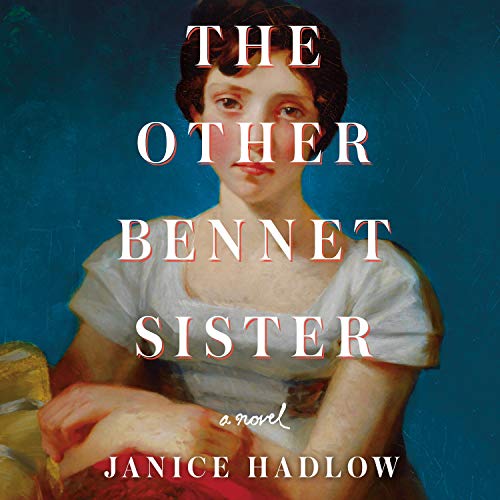
The Other Bennet Sister

If you are a Pride and Prejudice fan, you might remember middle sister Mary Bennet as being bookish and quiet. In fact, the only significant scene of hers I can recall is when she’s playing the piano at the Bingley ball (the one where all the Bennet family comes across as ridiculous in front of Mr. Darcy) to the point that her father has to pull her away with “You’ve entertained us enough for now.”

Janice Hadlow has crafted a novel from Mary’s point of view: The Other Bennet Sister. Hadlow delves more deeply into Mary’s character and what might have been after P&P ended.

The Bennets had five daughters. Mr. Bennets property is entailed, meaning it will go to a male cousin upon Mr. Bennet’s death rather than a Bennet daughter.

Even though the Bennets are landed gentry, there’s not enough money for any of the girls to have large enough dowries to attract the “right” kind of husband. But most of the girls are pretty enough to attract attention, and their ambitious mother is determined to place them where they can be seen and admired.

Mary, however, is plain. In Mrs. Bennet’s book, that’s almost a sin. At the very least, Mary’s plainness is a great disappointment to her mother. Mrs. Bennet is one of the most annoying characters in literature, and one of my least favorite. Mary’s mother not only has little use for Mary, she constantly berates her daughter. “She had learned from Mrs. Bennet that without beauty, no real and lasting happiness was attainable. It never occurred to her to question what she had been taught.” Mrs. Bennet didn’t even want Mary to get needed glasses because they would further hamper her ability to get a husband.

Since Mary doesn’t have the looks or personality to be “pleasing,” and she loves to learn, she sets herself to study in her father’s library. Perhaps at some point she can discuss books with him. But he demands absolute silence in the library—except when Lizzie, his favorite, is there.

Mary tries other venues, like music, in which to stake her significance, with poor results.

Mary is also in the very middle of the five sisters. The older two are close, as are the younger two, leaving Mary with no one. Lizzie and Jane are not unkind, but they don’t draw Mary in, either.

Since Mary feels invisible, she looks invisible as well, wearing very plain dresses with no color or frill.

The first part of the book covers the events of P&P, but from Mary’s point of view.

Then the book jumps ahead a couple of years. Mr. Bennet had died, and all the Bennet daughters are married except Mary. Mary and her mother go to live with Jane and Mr. Bingley. But the days there are dreary for Mary, with her mother’s constant harping and Caroline Bingley’s sniping remarks. Mary goes to visit Elizabeth and Mr. Darcy for a while, then Charlotte (Elizabeth’s close friend) and Mr. Collins, the obsequious cousin who inherited the Bennet family home. Charlotte and Mary have several talks about life as a plain woman.

Single women did not have many options in those days. Spinsters were pitied and often poor, earning money as governesses or music teachers. Mary is not interested in either profession, but living with one of her sisters is not ideal, either.

Finally Mary goes to London to stay with her aunt and uncle, the Gardiners—the same aunt and uncle Lizzie stayed with in P&P. Things start to turn a corner as Mrs. Gardiner gently draws Mary out and convinces her that it is not drawing undue attention to herself to dress nicely. And the Gardiner’s friend, Mr. Hayward, convinces Mary’s very rational mind that poetry and feeling are valuable.

I loved a lot of Mrs. Gardiner’s advice, some of which had a double meaning.

Sometimes the very best stuff can seem quite plain, until one examines it closely. It is only then that one sees its true quality.

I see plainly enough that you don’t like to make a fuss about dress—that you dislike having attention drawn to you. But there are times when the best way to ensure you are not remarkable is to conform to the expectations of those around you.

There is a middle way between an obsession with one’s appearance and an absolute denial of its importance.

It’s hard to persuade anyone, especially a man, that your regard is worth having if you have none for yourself.

In our house, no-one is obliged to sparkle. Which, I find, makes it far more likely that they might.

There were several things I liked about this novel. One is Mary’s slow “blossoming,” often with one step forward and two back as she makes mistakes.

I thought the author did an admirable job keeping the personality of each of Austen’s main characters close to what they were in P&P. Even though Hadlow’s style is different from Austen’s, the book still had a cozy Regency feel to it.

I had two minor complaints, though. One is that, especially in the beginning of the book, there was a lot more “telling” than “showing.” That improved after the story got into new material after the P&P timeline.

The other complaint is that sometimes there was too much explanation. The narrative would belabor a point long after the reader understood.

Those two aspects made the story drag just a little in places, but not enough to ruin the book.

Overall, I really enjoyed this story. I wanted to speed ahead to see how things worked out for Mary, but then I didn’t want it to end. Some parts of the book had me in tears.

I listened to the audiobook wonderfully narrated by Carla Mendonca.

Thanks to Lois for putting this book on my radar.

Blameless?

I can’t wear white until I get to heaven.

At least, I can’t wear white without frustration. I invariably spill food or find scuffs and stains from unknown sources that speckle my white garment.

I can wash white clothes, with varying degrees of success. But eventually they turn gray or yellowish.

So I prefer to wear clothes that make the occasional spill or scuff less noticeable.

Four times since December 30, my Daily Light on the Daily Path devotional book, compiled from Scripture by Samuel Bagster, has had readings about being blameless. Here are a few:

And it is my prayer that your love may abound more and more, with knowledge and all discernment, so that you may approve what is excellent, and so be pure and blameless for the day of Christ, filled with the fruit of righteousness that comes through Jesus Christ, to the glory and praise of God (Philippians 1:9-11).

And may the Lord make you increase and abound in love to one another and to all, just as we do to you, so that He may establish your hearts blameless in holiness before our God and Father at the coming of our Lord Jesus Christ with all His saints (1 Thessalonians 3:12-13).

Therefore, beloved, since you are waiting for these, be diligent to be found by him without spot or blemish, and at peace (2 Peter 3:14).

Sometimes the word “blameless” caused me the same kind of frustration as a white shirt. My flesh fails daily. How can I ever be blameless?

Well, first of all, we’re not only forgiven, but also cleansed when we trust Christ for our salvation.

Christ loved the church and gave himself up for her, that he might sanctify her, having cleansed her by the washing of water with the word, so that he might present the church to himself in splendor, without spot or wrinkle or any such thing, that she might be holy and without blemish (Ephesians 5:25-27).

And you, who once were alienated and hostile in mind, doing evil deeds, he has now reconciled in his body of flesh by his death, in order to present you holy and blameless and above reproach before him (Colossians 1:21-22)

In 1 Corinthians 6:9-10, Paul lists some of the kinds of people who will not inherit the kingdom of God. Then he says in verse 11:

And such were some of you. But you were washed, you were sanctified, you were justified in the name of the Lord Jesus Christ and by the Spirit of our God.

The ESV Study Bible comments on this passage:

God has already declared the Corinthians Christians to be ‘righteous’ (see Rom. 5:1; 8:1, 33). God was able to do this because the ‘righteousness’ that belongs to Christ, due to his perfect life, has become ‘our . . . righteousness’ (1 Cor. 1:30; see also 2 Cor. 5:21). Paul’s point in 1 Cor. 6:1-11 is that the Corinthians need to live in a way that is consistent with this verdict and status (p. 2198).

If you’re familiar with the Corinthians at all, you know they weren’t living as people washed and sanctified. They weren’t going to lose their salvation, but they needed to live in light of it. We’ll never be perfect in this life, but our lives should reflect the change God has made in us. We should be continually growing more and more like our Savior.

It can be easy, as Christians, to take grace for granted. I have my sins that I continually battle with; I am sure you have yours. We can be tempted to accept that they are a part of who we are. Under the umbrella of being “authentic,” we can even wallow in our “mess” in ways that make it seem we’re proud of it.

Sure, we want to be real with people. We don’t want to portray ourselves as anywhere near perfection or above anyone.

But the Bible continually points us higher. It’s not that we rely on God’s goodness to save us and ours to walk with Him. No, we depend on His goodness all the way. We don’t compare ourselves to each other. But we strive to be like Christ. Not in our own efforts or strength, but relying on His. We rest in His grace, but we don’t presume on it.

For if you live according to the flesh you will die, but if by the Spirit you put to death the deeds of the body, you will live (Romans 8:13).

Do all things without grumbling or disputing, that you may be blameless and innocent, children of God without blemish in the midst of a crooked and twisted generation, among whom you shine as lights in the world (Phil 2:14-15).

Beloved, I urge you as sojourners and exiles to abstain from the passions of the flesh, which wage war against your soul. Keep your conduct among the Gentiles honorable, so that when they speak against you as evildoers, they may see your good deeds and glorify God on the day of visitation (1 Peter 2:11-12).

Not just forgiven, but actively living unblameable before the world.

Abstain from every form of evil. Now may the God of peace himself sanctify you completely, and may your whole spirit and soul and body be kept blameless at the coming of our Lord Jesus Christ. He who calls you is faithful; he will surely do it (1 Thessalonians 5: 22-24).

This shows both our effort–our abstaining–as well as God’s keeping us. Isn’t it interesting that verse 24, which we take out of context and apply to all kinds of other things, was a promise given to encourage us of God’s faithfulness to sanctify and keep us?

But how do we live a blameless life when we’re so prone to go our own way?

Our relationship with the Father, the Son, and the Holy Spirit. Back in Romans 8, our relationship with God is woven through the passage. We’re in Christ Jesus (verses 1-2); in the Spirit (verse 9); Jesus is in us (verses 10-11); we call God our Father (verses 14-16); the Spirit helps us in our weakness (verse 26); God foreknew us and predestined us to be like Christ (verses 29-30); nothing can separate us from God’s love (verses 31-37). These truths of our relationship with the Father, Son, and Holy Spirit are throughout the Scripture.

Remember you are a temple of God. Not your own. Bought with a price.  Flee from sexual immorality. Every other sin a person commits is outside the body, but the sexually immoral person sins against his own body. Or do you not know that your body is a temple of the Holy Spirit within you, whom you have from God? You are not your own, for you were bought with a price. So glorify God in your body” (1Corinthians 6:18-20).

Word of God. “So put away all malice and all deceit and hypocrisy and envy and all slander. Like newborn infants, long for the pure spiritual milk, that by it you may grow up into salvation” (1 Peter 2:1-2).  “How can a young man keep his way pure? By guarding it according to your word. With my whole heart I seek you; let me not wander from your commandments! I have stored up your word in my heart, that I might not sin against you” (Psalm 119:9-11).

Prayer. “Keep back your servant also from presumptuous sins; let them not have dominion over me! Then I shall be blameless, and innocent of great transgression” (Psalm 19:13).

Confession: “If we confess our sins, he is faithful and just to forgive us our sins and to cleanse us from all unrighteousness” (1 John 1:9).

Don’t just “don’t,” but “do“—actively follow right.  Flee also youthful lusts; but pursue righteousness, faith, love, peace with those who call on the Lord out of a pure heart” (2 Timothy 2:22).

Don’t make provision for the flesh. “Let us walk properly as in the daytime, not in orgies and drunkenness, not in sexual immorality and sensuality, not in quarreling and jealousy. But put on the Lord Jesus Christ, and make no provision for the flesh, to gratify its desires” (Romans 13:13-15).

Be renewed in our minds. Ephesians 4 shows the difference being a Christian should make in our lives. Paul urges us to “walk in a manner worthy of the calling to which you have been called” (verse 1) and explains why. In the middle he calls us to “put off your old self, which belongs to your former manner of life and is corrupt through deceitful desires, and to be renewed in the spirit of your minds, and to put on the new self, created after the likeness of God in true righteousness and holiness” (Ephesians 4:22-24).

Abide in Christ. “Abide in me, and I in you. As the branch cannot bear fruit by itself, unless it abides in the vine, neither can you, unless you abide in me. I am the vine; you are the branches. Whoever abides in me and I in him, he it is that bears much fruit, for apart from me you can do nothing” (John 15:4-5).

Yield to God. “Neither yield ye your members as instruments of unrighteousness unto sin: but yield yourselves unto God, as those that are alive from the dead, and your members as instruments of righteousness unto God” (Romans 6:13).

Walk in the Spirit. “Walk by the Spirit, and you will not gratify the desires of the flesh) Galatians 5:16).

Beholding His glory. “And we all, with unveiled face, beholding the glory of the Lord, are being transformed into the same image from one degree of glory to another. For this comes from the Lord who is the Spirit” (Corinthians 3:18). Ultimately, our change comes as we behold Him.

Does this all seem a little overwhelming, a little too much to keep up with? It’s probably supposed to, to remind us that we can’t do it on our own. The word “walk” in Galatians 5 is encouraging to me because a walk is a series of steps. I don’t have to worry about the whole pathway of the rest of my life. I just have to take this step yielding to Him, walking in fellowship with Him.

I think of this similarly to parents and children. In most cases, parents love children even when they mess up or wills clash. They’ll do everything they can to help a child do right. A child isn’t ever going to stop being his parents’ child, even if they aren’t on good terms. But a child who loves and respects his parents will want to do what they say and please them, even though sometimes he fails.

As a father shows compassion to his children, so the Lord shows compassion to those who fear him. For he knows our frame; he remembers that we are dust” (Psalm 103:13-14). But He also said, “If you love me, you will keep my commandments” (John 14:15). We don’t do His will to earn or increase His love, but to show our love to Him. And when we fail, we come to Him for cleansing and forgiveness and carry on.

Now to him who is able to keep you from stumbling and to present you blameless before the presence of his glory with great joy, 25 to the only God, our Savior, through Jesus Christ our Lord, be glory, majesty, dominion, and authority, before all time and now and forever. Amen. (Jude 24-25).

(I often link up with some of these bloggers.)

Laudable Linkage

A collection of good reading online

Here are the best of the good reads found this week:

How Do We Process the Scariest Passage in All of Scripture? HT to Challies. The passage discussed is Matt. 7:21–23, where many who think they are going to heaven will hear Jesus say, “Depart, I never knew you.”

Why Does God Hide Himself from Christians? HT to Challies. “’So God never forsakes his people, but he sometimes withdraws from them the sweetness of communion with him. He hides his face, as the psalmist says in about a dozen places.’ His question is, Why would God do that to his own children?”

A Known Way. “The year stretches out before me like an uncharted sea. Some now-secret stories will bring me joy, I know. There will be tender beauty and many good gifts from my Father’s hand. But what if the churning darkness also contains a violent, unexpected storm? What if my ship is disabled? What if I am taken to an unwanted, difficult place?”

Yes, You Need to Talk to the Manager. HT to Challies. Some interesting, and I think accurate, considerations here. “The older generation acts as if the proper recipient of their frustration is the institution itself and that asking them to make it better is reasonable and right. The younger generation believes that their anger should be directed toward the audience, and that the goal of complaining in these spaces is not to get anything fixed by the institution but to see the institution punished by others.”

Song of Songs: The Intoxication of True Love in its Time. An overview of Song of Solomon.

What Does It Mean to be Pro-Life? Good thoughts for any time, but especially in light of Sanctity of Life Sunday tomorrow.

God Is With Us on the Long Walk Home. “The length of our days, as well as what the end looks like for each of us, falls under the purview of God’s sovereignty, just like everything else.”

Winter Crafts for Kids, HT to The Story Warren.

I enjoyed this flight attendant’s attempts to liven up the safety announcements to help people pay attention and perhaps relieve some travel stress.

Happy Saturday!