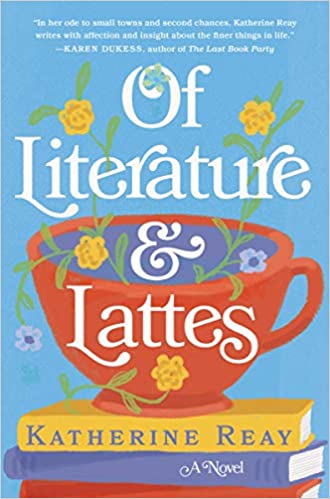
Of Literature and Lattes

Alyssa Harrison got along with her father, but clashed with her mother at every turn. Then her mother committed an unpardonable offense. So Alyssa moved out as fast as she could with no plans to return.

But then the company she worked for in CA was closed down by the FBI over rumored wrongdoing. The FBI interviewed all the employees—except Alyssa. While she waits for their call, she has no job and no way to pay for her apartment. The only place she can go is back home to Winsome, IL.

Her parents were divorced, and she wants to move in with her dad. But he doesn’t have the space and sends her to her mom. Sparks fly from the outset. Her mom doesn’t fight back any more, which somehow makes Alyssa madder. Alyssa can see changes in her mom’s life, but she doesn’t take time to try to understand them. She looks for a job and waits nervously for the call from the FBI.

Jeremy Mitchell moved from Seattle to Winsome to be near his young daughter. His wife had walked out of the marriage while still pregnant, and Jeremy’s visits with his daughter, Becca, have been sparse. But he wants to rectify that. He’s put everything he has into a Seattle-style coffee shop. But Winsome residents resent the changes from the homey coffee shop that Jeremy replaced. And he can’t seem to figure out where all his money is going.

Alyssa’s best friend, Lexi, sets her up to help Jeremy with his business. Alyssa speaks numbers like a second language. Alyssa and Jeremy are drawn to each other. But each has so many issues in their personal lives, and neither is sure they are staying in Winsome.

Of Literature and Lattes by Katherine Reay is the sequel to The Printed Letter Bookshop. It took me a while to remember some of the situations of the characters from the first book. I think the background of the first book would shed light on this one, especially Alyssa’s mother’s situation. But I do think this could be read as a stand-alone book.

The back of the book says, “With the help of Winsome’s small town charm and quirky residents, Alyssa and Jeremy discover the beauty and romance of second chances.”

The second chances theme comes through not only for Jeremy and Alyssa, but for many characters. And Winsome is a lovable small town.

Katherine’s books are always sprinkled with literary quotes and references. I wasn’t familiar with some of the books mentioned this time. The main one was Of Mice and Men, which I’ve never read—but now I am tempted to.

Overall, I really enjoyed the story, the bookshop, the small town atmosphere. It was a little hard to take all the arguing between Alyssa and her mother and Jeremy and his ex-wife. I know stories need conflict, but I am not used to people talking to each other so harshly. The tension in some scenes left me tense after putting the book down. This isn’t a criticism—I’m sure some families duke it out verbally as much as these do, or worse. And their verbal jabs point up the severity of their issues. It was just hard for me to take in personally.

My biggest problem with the book would be hard to explain without going into a lot of detail, which I don’t want to do in a book review. Let’s just say I am not ecumenical. There are times to put differences aside and just love people in Jesus’ name. But there are some differences that should not be put aside—like the truth that a person is saved by grace through faith alone. When the main spiritual spokesperson in a book is from a faith background that adds church ritual and traditions, that seems to emphasize works and faith, that’s a problem for me. Yes, I know James says our faith should manifest itself in works—but the works come as an outgrowth of faith, not in addition to faith to merit favor in God’s eyes. I have some very dear friends in this faith background, but I wouldn’t hold a joint ministry together with them. There are all sorts of angles to this that could be discussed endlessly, thus the difficulty of getting into it in a short book review. So I’ll leave it there for now.

My other problem with this book was not the fault of the author. I listened to the audiobook, which was narrated by an English woman. It felt weird hearing the narration, including the character’s thoughts, in an English accent, but their speaking voices in an American accent. Then, the narrator’s English accent bled through the American voices sometimes. Most words ending in an “a” sound had instead an “r.” The word “idear” came up several times, as did “Grandmar,” “vanillar,” etc. Then there was “enything” for “anything” and “figger” for “figure.” Plus she didn’t do many of the male voices very well. So I’d recommend reading this over listening to it. Most of the comments on the audiobook page were similar. I love English accents in English audiobooks, but I didn’t think the mix worked well here.

If you like small towns with quirky neighbors, stories with a lot of book references, or families coming together over their differences, you’d probably like this book.
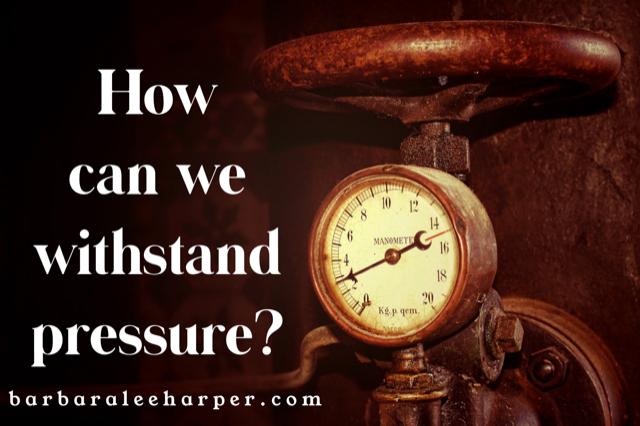
Pressure

My husband and I listened to an online sermon recently which contained a story I had never heard before.

The USS Thresher was a nuclear-powered submarine that sank in 1963, killing all 129 people on board. A series of events caused it to sink and then to implode due to the extreme pressure deep in the ocean.

Research equipment with cameras that could withstand the oceanic pressure were lowered and found the Thresher in five pieces.

It’s hard to fathom water pressure strong enough to crush a submarine.

Yet there are fish and creatures that live at such depths. How are they not crushed?

This article tells of some features of a few specific deep-sea creatures. But the bottom line, Wikipedia says, is “Deep-sea organisms have the same pressure within their bodies as is exerted on them from the outside, so they are not crushed by the extreme pressure.”

The fish and other creatures aren’t crushed by deep sea pressure because their internal pressure is equal to it. In fact, many die (even explode) when they are brought to the surface for study because their pressure is no longer equalized.

We face a lot of pressures these days, don’t we? Making a living, keeping up with responsibilities, making time for those we love. Then we all have struggles against our own besetting sins. The world is getting less friendly to Christianity every day. And we have an enemy of our souls who seeks our destruction like a roaring lion.

We’re not equal to it in ourselves. “My flesh and my heart may fail,” Asaph says. Mine, too. But he goes on to say, “but God is the strength of my heart and my portion forever” (Psalm 73:26).

“Little children, you are from God and have overcome them, for he who is in you is greater than he who is in the world” (1 John 4:4). The one within us is more than equal to the pressures around us.

“Now we have this treasure in clay jars, so that this extraordinary power may be from God and not from us. We are pressured in every way but not crushed; we are perplexed but not in despair” (2 Corinthians 4:7-8, HCSB).

Sometimes God relieves pressure by removing a burden from us. Other times, He gives us grace to bear it. He invites us to cast our care on Him, to depend on His strength in our weakness, to come to Him for rest.

(I often link up with some of these bloggers.)

Laudable Linkage

IMG_0195

Here are some noteworthy reads found this week.

On Christians and Vaccines. “Writing about vaccines is going somewhere that angels fear to tread. Last year’s mask controversies pale in comparison to the vaccine discussions going on now.”

Sin Is Death? HT to Challies. “While sin isn’t a substance in itself, that doesn’t make it any less lethal. Sin isn’t just a series or errors or poor judgments with momentary consequences. Sin is taking you somewhere. It’s leading you down a path of decay, a path that ends in spiritual death.”

Relationships 101: One Young Mother’s Journey to Love. “Yet sometimes we find it hard to love anyone, even the most loveable. We may think that God’s greatest command, to love Him with all our heart, soul, mind and strength, is also His hardest command. But honestly, the second great command often feels even more impossible. How can we truly love others as we love ourselves (Matt. 22:37–40)?”

Peanut Butter and the Marriage Supper of the Lamb, HT to Story Warren. “The table is, for many on this broken Earth, a place of struggle. The gift of food itself, in all its savory, salty, sweet wonder, is for many a source of sin or brokenness or fear or lack. The good has become not good, and we suffer for it. The wrong meal in Eden has polluted every meal since, and though we look to redemption, the shadows still lurk.”

21 Things That Are Still True in 2021, HT to Story Warren. “1. God is still God. He is still on His throne, unshaken by what happens. Nothing takes Him by surprise and nothing is out of His control. 2. Right and wrong aren’t subjective.”

Care. “The cares are valid cause for concern as the world is so rapidly changing,” but “The cares of this world will choke out the Word and cause our lives to become unfruitful.”

God, Don’t You Care? “If God cares, why does the storm continue? Why does he let it get so hard? Why doesn’t he do something?”

What If God Doesn’t Speak to Me? HT to Challies. “Rather than giving directions for receiving prophecy, hearing God speak, or discerning nudges and feelings, the New Testament writers beckon us to immerse ourselves in the writings of Scripture.”

The Hidden Harm of Gender Transition, HT to Challies. “Grace is one of many who have been fast-tracked down a pathway of ‘treatments’ for gender dysphoria, while underlying mental health issues have remained undiagnosed and unaddressed. They are victims of the false claims of gender ideology.”

The Secrets of the World’s Most Famous Symphony, HT to Challies. A video that shares “what makes Ludwig van Beethoven’s Symphony Number Five a musical masterpiece, and uncover[s] the story behind its inception.”

I’ve seen Victor Borge perform this before, but not with someone. It never gets old. HT to Steve Laube.

Happy Saturday!

Friday’s Fave Five

It’s Friday, time to look back over the blessings of the week
with Susanne at Living to Tell the Story and other friends.

As another week zooms by, I enjoy these Friday pauses to stop, think, and thank God for His provisions.

1. Dinner and SpaceX viewing.Timothy and Granddad planned to go fishing last Saturday, but plans got canceled for a variety of reasons. But he wanted to “hang out” with us, so later in the day Jason and Mittu brought over rotisserie chicken and mashed potatoes. I have not kept up with the SpaceX flights, but Jason has. They were due to splash down that evening, so we watched the coverage. It was a fun time with the family.

2. The first day of fall came right on time with cooler temperatures.

3. Low carb experiments. We’re trying to lower our carbs–my husband’s blood sugar numbers were running a bit too high, and we could both stand to drop some calories. Frozen riced cauliflower has been a good substitute for rice in soups, stir fry, and even as a side dish with pepper steak. It didn’t work so well in a casserole–it doesn’t absorb liquid like rice does, so the dish was a little soupy. We may add more next time or use half rice, half riced cauliflower.

We had tried frozen pizza with a cauliflower-based crust in the past and didn’t care for it at all. And not having pizza is not an option unless we’re at death’s door. 🙂 But we tried thin crust pizza the last couple of times. Jim prefers pan pizza, but he said the thin crust didn’t raise his blood sugar significantly. I’m a carnivore, and the thinner crust seems to bring out the other flavors better to me. (I’d love to hear any other low carb tips and tricks you have, other than just eat more salad.)

4. Restoring order. My utensil drawers in the kitchen had gotten jumbled up, so I spent a few minutes taking items out, putting like things back together, and cleaning out crumbs that mysteriously gather in drawers that are mostly closed. It’s an oddly peaceful thing to do, and opening those drawers now brings a smile of satisfaction rather than frustration over not being able to find what I need.

5. Preorders of books can be often be had for a cheaper price than what the book will be upon publication. I just found out here yesterday that Christmas in Mistletoe Square is available at $1.49 as a preorder. I’ve only read one of the four authors listed, so I hope it’s good. But $1.49 isn’t a bad risk. 🙂

Book Review: Be Daring

Warren Wiersbe divided his commentary on Acts into two volumes. I reviewed the first, Be Dynamic (Acts 1-12): Experience the Power of God’s People, a few weeks ago. I just finished the second commentary, Be Daring (Acts 13-28): Put Your Faith Where the Action Is.

As I said in the last review, Wiersbe has commented on books longer than 28 chapters in one volume before. But Acts is a pivotal book between the OT, gospels, and the rest of the NT. The death, burial, and resurrection of Christ changed a lot of things, and the early disciples were still figuring out the implications. But this was also probably the biggest expanse of the church in history.

Serious persecution also dogged followers of the Way, as Paul referred to it. Thus Wiersbe’s title to Be Daring fits.

The apostle Paul is the focus of these latter chapters of Acts: his standing as a loyal Pharisee and his persecution of the church, his miraculous conversion, his three missionary journeys, his arrest and imprisonment.

As usual, I have several quotes marked from the book. Here are a few:

The first one was from the context of the big council meeting in Acts 15 about whether the newly-saved Gentiles needed to keep the Jewish laws and customs:

It is beautiful to see that this letter expressed the loving unity of people who had once been debating with each other and defending opposing views. . . . We today can learn a great deal from this difficult experience of the early church. To begin with, problems and differences are opportunities for growth just as much as temptations for dissension and division. Churches need to work together and take time to listen, love, and learn. How many hurtful fights and splits could have been avoided if only some of God’s people had given the Spirit time to speak and to work. . . . Most church problems are not caused by doctrinal differences but by different viewpoints on practical matters (pp. 35-36, Kindle version).

This is still applicable in our times, isn’t it?

[Paul] used one approach with the synagogue congregations and another with the Gentiles. He referred the Jews and Jewish proselytes to the Old Testament Scriptures, but when preaching to the Gentiles, he emphasized the God of creation and His goodness to the nations. His starting point was different, but his finishing point was the same: faith in the Lord Jesus Christ (p. 23).

If God had to depend on perfect people to accomplish His work, He would never ever get anything done. Our limitations and imperfections are good reasons for us to depend on the grace of God, for our sufficiency is from Him alone (2 Cor. 3: 5) (p. 43).

To walk by faith means to see opportunities even in the midst of opposition. A pessimist sees only the problems; an optimist sees only the potential; but a realist sees the potential in the problems (p. 71).

The church ministers by persuasion, not propaganda. We share God’s truth, not man’s religious lies. Our motive is love, not anger; and the glory of God, not the praise of men (p. 91).

Luke did not write his book simply to record ancient history. He wrote to encourage the church in every age to be faithful to the Lord and carry the gospel to the ends of the earth. “What was begun with so much heroism ought to be continued with ardent zeal,” said Charles Spurgeon, “since we are assured that the same Lord is mighty still to carry on His heavenly designs” (p. 174).

Acts doesn’t mention any of the apostles writing epistles, except the joint one in Acts 15. But we have clues from the epistles that many of them were written during this time period.

The book of Acts ends somewhat abruptly, with Paul in prison. Dr. Wiersbe shares from what we know of history what happened during the rest of Paul’s life: he was released from prison, ministered a few more years, was arrested again, and was eventually beheaded. Of course, at the time Luke was writing, they did not know how long Paul would be in prison. Luke probably figured it was a good a time as any to stop where he was and send this long letter to Theophilus. But Luke was also under the inspiration of the Holy Spirit, and perhaps the Spirit’s leading Luke to stop where he did was an indication that the transitional phase was over and the church was established and on its way to continued growth til Christ returns.

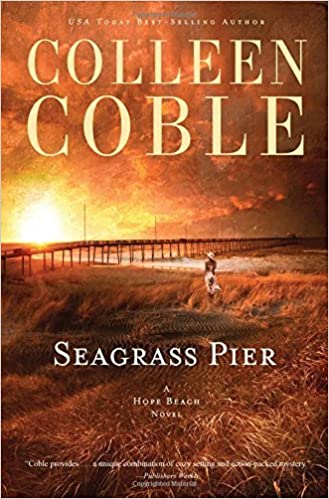
Book Review: Seagrass Pier

Elin Summerall has a lot on her plate. Her husband died a few years ago, leaving her with their baby daughter, now four years old. She took in her mother, who was diagnosed with Alzheimer’s. Then Elin developed a virus in her heart, which required a transplant.

Recovering from transplant surgery, Elin has been having frightening dreams—only they seem more like memories, memories of her donor being stalked and murdered. When she tells people, they think she’s just reacting to the trauma of the surgery and the strong anti-rejection drugs.

But then someone breaks into her home, leaving odd messages.

She takes her daughter and mother and flees to Hope Beach. There she finds an old acquaintance, an off-duty FBI agent, Marc Everton, who takes her story seriously and offers to help. They’ve never gotten along, except for one night in their past that they’ve both repented of.

Can they overcome their differences and work together before it’s too late—especially after Marc finds out Elin’s secret?

Seagrass Pier is the third in Colleen Coble’s Hope Beach series, and to me was the most intense. The first two were Tidewater Inn and Rosemary Cottage (linked to my reviews). Some characters from the first two books appear in the third as well. All of the books are set in a beach town on the Outer Banks, and all feature lovely historic homes I’d love to see in person.

The books have been reprinted with different covers, and one Kindle version bundles all three together.

I don’t know if the concept of “cell memory”—the idea that a transplant recipient can have memories of the donor or take on traits of the donor—goes as far in real life as is portrayed in this book. But as this is a work of fiction and not a medical treatise, I was able to set aside whether this could really happen and just go with the story.

If you like romantic suspense with a Christian undercurrent, you would probably like these books. Just don’t do what I did and start the last one in the evening without being able to put it down until way past bedtime.

Book Review: Rosemary Cottage

Amy Lange visits her family’s beach home, Rosemary Cottage, to mourn for her brother, Ben. They used to spend time at the cottage every summer together. But Ben died, in what some say was a surfing accident. A mysterious email suggests another possible explanation. However, the police think the email is just a prank.

Amy is a midwife. As she revisits Hope Island, she begins to think she could start a practice there.

Curtis Ireland is a member of the Coast Guard rescue team on the island. He’s raising his young niece, Raine, since his sister died after being struck in the water by a passing boat. His aunt, Edith, has come to help him with Raine.

Amy’s brother was idolized by her family as the golden boy, set for a successful life. Gina, Curtis’s sister, was the “black sheep” of the family, yet had made positive changes the last years of her life. But appearances can be deceiving.

Amy and Curtis join forces to investigate the siblings’ deaths, yet each holds back secrets. Each is defensive of his or her sibling. But they need to put aside their differences . . . especially as someone begins to threaten them both.

Rosemary Cottage is the second book in Colleen Coble’s Hope Beach series. Tidewater Inn was the first, and some of those characters appear in this book as well.

I not only liked the beachy setting, but I enjoyed the old houses mentioned in each book. There’s a budding romance for those who like that in a book, and there’s plenty of suspense for those who prefer action and intrigue. I thought the faith element was developed naturally.

All in all, a nice summer read.

You Don’t Have to Write Devotionals

I follow the Facebook page of someone who is not a household name, but is well known in certain circles. I don’t know her personally, but she and her husband have ministered to my family for decades. She writes of her husband’s declining health, the decisions that need to be made about his care, memories of their life and ministry together, funny stories from the past and present, etc. I’ve been thankful for her transparency, the way God has used her family, and the way He provides for her in myriad ways now.

In one post, however, she lamented talking about herself too much. The next day, she posted lessons from a passage of Scripture.

I had never thought of any of her previous posts as talking about herself too much. I had been encouraged to see God’s hand in her life and the strength and grace He gave her. While I hope I never have to walk the road she is on, her example taught me that God will help if He calls me to that. She reminded me that a life used and blessed by God is not always an easy one and that shining moments occur along the way.

Devotionals are good. Bible studies are good. I’ve been blessed and helped by both.

But I’ve also been blessed and helped by seeing God’s hand at work in someone’s everyday life.

A couple of my favorite bloggers, who, sadly, are no longer blogging, had what I called homemaking blogs. Their blogs weren’t how-to articles. The ladies just shared what was going on in their lives, but their spirit showed through and instructed me. They talked about the Lord in a natural way as part of everything they did.

I was startled to realize recently that Jesus didn’t say, “Be a light to the world.” He said, “You are the light of the world” (Matthew 5:14a). If we’re believing Him, obeying Him, walking with Him, His light will shine through us.

I’ve shared a few times before an incident found in Isobel Kuhn’s book, Second Mile People:

Isobel shared that at a certain Bible conference, she met a sweet, winsome girl named Dorothy. Isobel was not yet a believer, and Dorothy hoped to speak to her about the Lord. But when they took a walk together, Dorothy didn’t get a chance to share, and she felt like a failure. Isobel wrote later that Dorothy was

unconscious that the one she had hoped to help was going away enchanted with this glimpse into the very human sweetness of this Christlike girl. ‘…I felt His Presence when you laughed just now….’ The Spirit-filled life cannot ‘fail’, it is fruitful even when it may seem least to have done anything. That walk gave Dorothy ‘influence’ over me when a ‘sermon’ would have created a permanent barrier. In fact at that time I carried a mental suit of armour all ready to slip on quietly the moment any ‘old fogey’ tried to ‘preach’ at me!”

Oswald Chambers says, ‘The people who influence us most are not those who buttonhole us and talk to us, but those who live their lives like the stars in heaven and the lilies of the field, perfectly simply and unaffectedly.’ A great mistake is to think that a Spirit-filled man or woman must always be casting sermons at people. Being ‘filled with the Spirit’ (which is a first qualification of Second Mile People) is merely a refusing of self and a taking by faith of the life of Christ as wrought in us by His Holy Spirit. “We must take the Spirit’s fullness, as we take our salvation, by faith in God’s promise that He is given to us.”

This isn’t saying, “Preach the Gospel at all times. Use words if necessary,” as is often mistakenly attributed to Francis of Assisi. Not only did Francis not say this, but it’s an unscriptural idea. The very gospel is words, words Jesus wants us to share with others. Later in Isobel’s book, Dorthy did get to share the gospel with her more clearly, at a time when Isobel was ready to receive it.

But those words don’t always have to be in the form of a “lesson.” If we walk with the Lord, His Spirit will fill us and infuse everything we do.

God can use those gifted at unfolding truths from Scripture in ways that help others understand.

But God also uses any kind of writing or speaking that testifies of His working in our lives, acknowledging His provision, protection, fellowship. When someone tells of how God met their need or manifested Himself to them in some way, I’m drawn in.

I have known some people like Dorothy who seem to reflect Christ and carry a “sense of Him” in everything they do, every word, action, and attitude. Something of Him shines through even when they are talking about everyday activities. That only comes from spending much time with Him in His Word and prayer and being filled with His Spirit.

May I live so close to Him that people always sense His presence.

(I often link up with some of these bloggers.)

Laudable Linkage

A collection of good reading online

I am behind again in my blog reading, but here are posts that stood out to me this week:

Judging the Sins of Our Fathers, HT to Challies. “It should also make us less sanctimonious and more cautious when we judge the sins of our fathers and the systems in which they were participants. Our hands are not so clean.”

Give Me Nineteen Men“: Muslim Missions Twenty Years after 9/11, HT to Challies. “It could not have been a better time to go. Going when circumstances looked so dark made a statement to our new neighbors: we weren’t afraid because we knew Jesus went with us. It also bore testimony that we loved the people of the Arabian Peninsula, and that we had something important to share with them.”

The Americans Who Don’t Want to Leave Afghanistan, HT to Challies. “But there are indeed Americans who want to stay in Afghanistan. I don’t know how many and I don’t know the story of each one. But there are more who want to stay than you might think. Why? Because they love God and they love Afghans.”

Are Pro-Lifers Just “Pro-Forced Birth?” HT to Challies. “Abortion advocates are brilliant at playing word games. Using clever rhetorical moves, they are able to make protecting preborn children look bad and killing preborn children look good.”

Does This Really Matter? HT to Challies. “How we spend our days isn’t just how we spend our lives. It’s how we become who we are and who we will be. It’s not just about what we’re doing, but the heart behind how and why we’re doing it.”

All We Need. “Earlier this week a friend and I were talking about the difficulty of not casting blame when other people let us down.  We came up with a pretty simple prayer from the perspective of frail and fallible human beings who are walking side-by-side along life’s path with other frail and fallible human beings.”

Finalists of the 2021 Comedy Wildlife Photography Awards, HT to Laura. These are always so fun.

And finally, I just happened across this video. Having a little fun with the William Tell Overture:

Friday’s Fave Five

It’s Friday, time to look back over the blessings of the week
with Susanne at Living to Tell the Story and other friends.

In contrast to last week’s quietness, this week has been pretty busy. Here are some highlights:

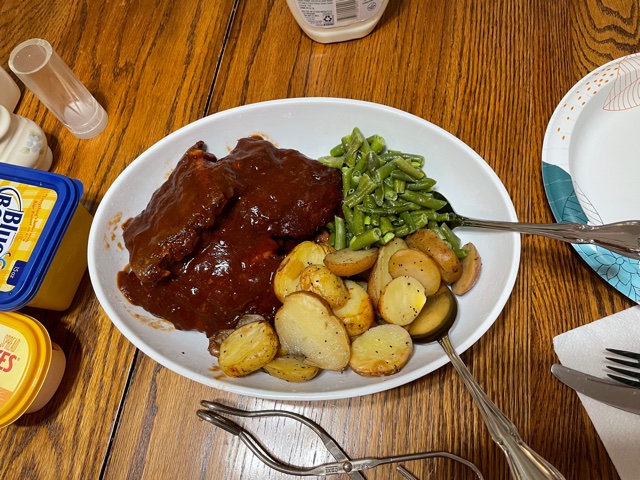
1. Grandparents’ Day. We had planned to get together with the family on Sunday. But two people in our church and three at Jason’s place of work tested positive for COVID this week. Just to be extra safe, we decided we should put off getting together. (The adults are vaccinated, but vaccinations aren’t 100% effective. Plus one can carry the virus even if not sick personally. And Timothy has not been vaccinated–and kids can get COVID.) Jason, Mittu, and Timothy dropped off a wonderful meal (ribs, potatoes, green beans, rolls, and cheesecake), plus pink roses for me and beef jerky for Jim.

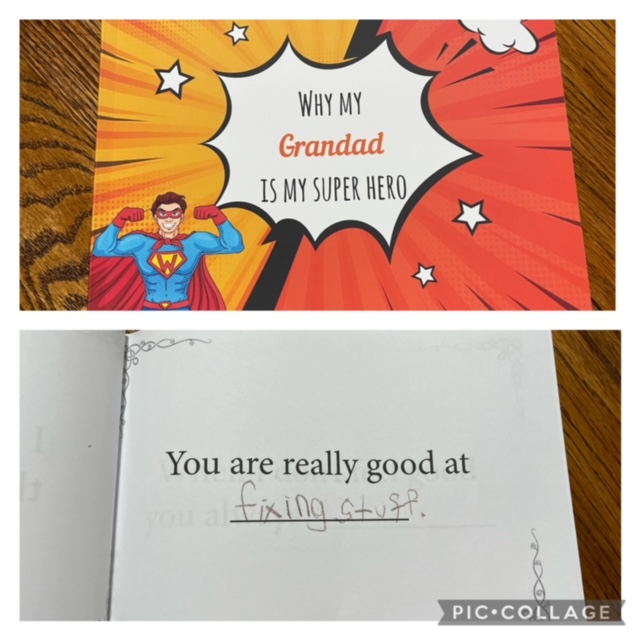
2. Granddad book. Also for Grandparent’s Day, Jason, Mittu, and Timothy gave me a throw blanket for the living room to replace the one I’ve been using, which is so old the threads are starting to break off. They gave Jim the cutest book called Why My Granddad Is My Super Hero. Each page had a prompt for Timothy to fill in.

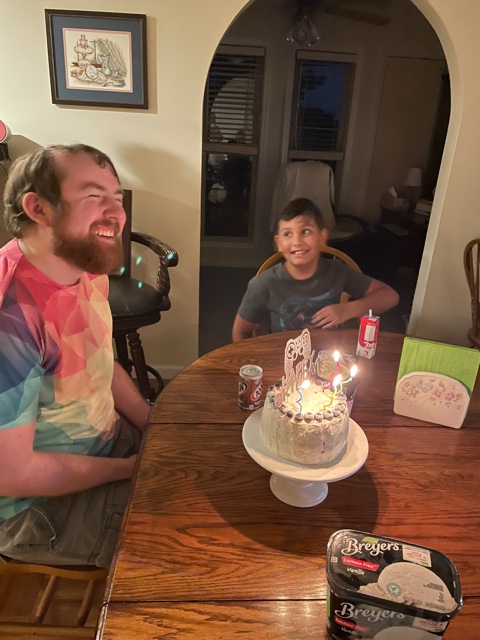
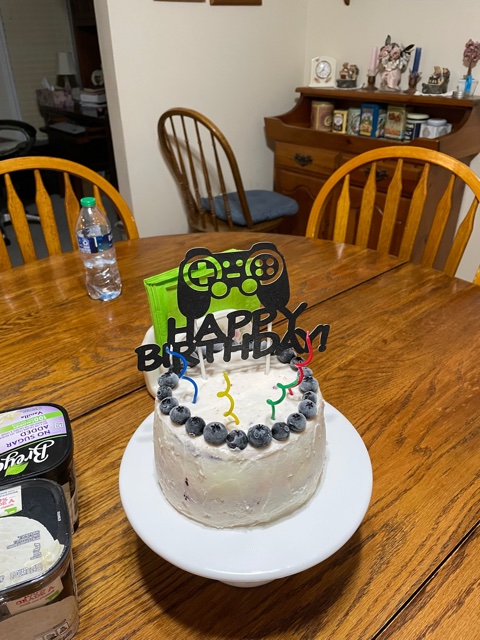
3. Jesse’s birthday. Love celebrating the family’s special days.

4. Cake reclamation. Jesse wanted this Lemon Blueberry Cake, which Mittu had made back for his “10,000th day” celebration. Cakes are not my best thing, especially from scratch. And replacing the regular flour with a gluten-free blend doesn’t always go well. But I gave it a try. To make a long story short, it did not go well. There were tears. I didn’t take a picture of it at its worst, but, once I stopped crying about it, we all had a good laugh. My dear daughter-in-law did a wonderful job redeeming it and even making it look cute–and it ended up tasting good, too.

To give you a clue of just one of the MANY things that went wrong in the course of making this cake . . .

. . .when I went to mix the wet stuff with the dry, I dropped the wet stuff bowl, and it splattered.

I so appreciated that Jim, Mittu, and Timothy pitched in to help clean up the kitchen, and Jim did some straightening around the house I hadn’t been able to get to before everyone came over.

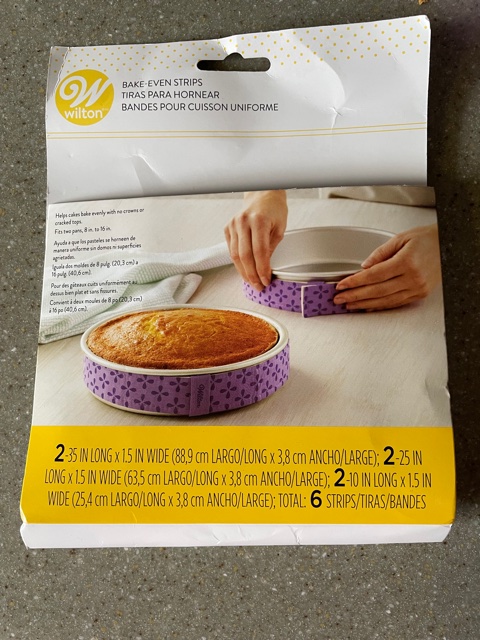
5. Cake strips. One thing that did go right! The blogger with the cake recipe recommended cake strips, which you wet and put around the cake pan. Normally my cakes end up thin around the edges and domed in the middle. Evidently that’s because the outside edge cooks more quickly, and the cake strips help avoid that. They worked great! But I’ll share this tip: I bought the kind he recommended from Amazon, but then later I saw them for half the price in Wal-Mart’s craft section.

And a bonus: today there’s nothing on the agenda and nothing that absolutely has to be done, so I’ve already had a nap and am looking forward to some rest.

How was your week?