Friday’s Fave Five

FFF daisies
It’s Friday, time to look back over the blessings of the week with Susanne at Living to Tell the Story and other friends.

It’s the last Friday of July! A good time to stop and reflect on the last week. Here are some of the highlights:

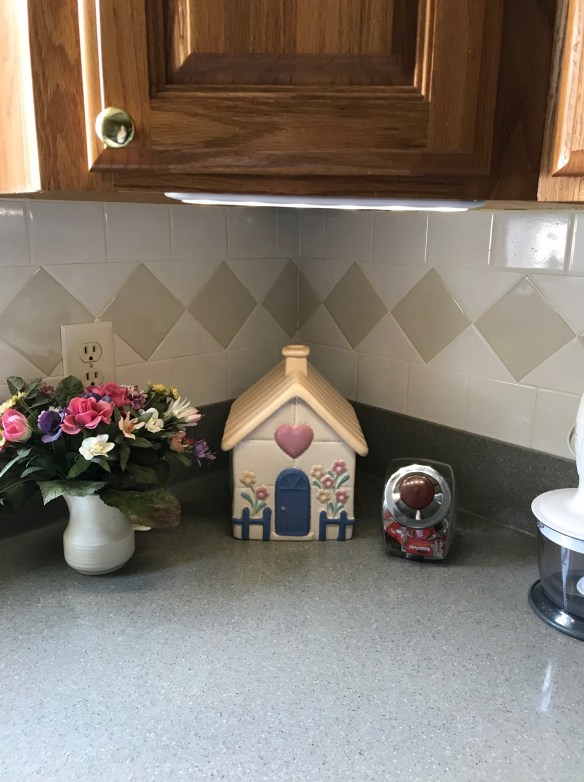
1. Under-cabinet lights. I had received these as a gift for Mother’s Day, but we just got them installed last weekend. As easy as they were, I probably could have installed them myself! But I didn’t know that beforehand. Thanks to my husband for putting them up for me. It’s nice to have light on the counters that were previously in the shadows.

IMG_1056

IMG_1064

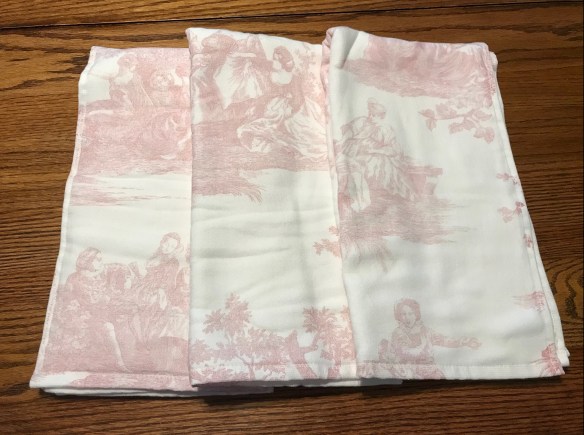
2. Reduced price on a desired purchase. When we moved into this house, I purchased some pink toile towels from Target for the master bathroom. The bath towels are still in good shape, but the washcloths are long gone, and the hand towels are getting raggedy. It’s hard to find bath items in a regular old light pink. Decorating pinks either look like bubble gum or have gone from reddish to peachy, and now they have something called blush, which looks like a pinkish beige to me. I haven’t been able to find hand towels with the shade of pink I want in any design. On a recent Internet search, I found some toile ones that looked just like my originals! But they were about twice the price I wanted to pay. They were a “Buy It Now” purchase rather than an auction. I watched them for a few days to see if the seller would drop the price. She didn’t, so I sent her a note to ask if she’d accept a lower price. If she’d take one price I proposed, I’d take two of the towels: if she’d take an even lower price I offered, I’d take all three. She accepted the lowest price! I’m not usually a bargainer, but since I couldn’t find anything like these anywhere else, I ventured forth – and I am glad I did.

img_1065.jpg

3. An uneventful cardiologist’s visit. I had a follow-up visit from last year’s ablation surgery for atrial fibrillation. Everything was routine, and I don’t have to go back for a year unless problems come up. If everything is still okay at that time, I’ll be released from his care back to my primary care doctor. I still have some flutters and palpitations, but they last for just seconds instead of hours, and he said I’d probably always have them.

4. A morning outing. The day of the doctor visit, I was chafing at having to get up early and drive so far for the appointment. But afterward I stopped by Joann’s and used some gift cards, then got take-out lunch at Cracker Barrel, along with my favorite Coca-Cola Cake. So it turned out to be a pleasant morning.

5. Bluetooth headphones or earpieces. This was another gift from a while back that we just got set up. It will be nice to listen to an audiobook or music that way without the long dangly cords from my previous headphones.

Happy Friday!

Book Review: Overcoming Your Devotional Obstacles

If you’ve ever tried to develop a habit of Bible reading and prayer time (often called devotions or quiet time), you know it doesn’t take very long at all to run into some obstacles. The first one is usually making time: busy schedules crowd out quiet time or urgent needs come up in the midst of it. Then when we do get a few minutes, we’re easily distracted. If we can rein in our attention and focus, we don’t always understand what we read or know how to apply it to our everyday lives. And if we do understand, we forget what we’ve read within minutes. We see cozy Instagram photos of people with their open Bibles and steaming mugs of coffee and wonder why our devotional time seems to far so fall below the picture-perfect time others experience.

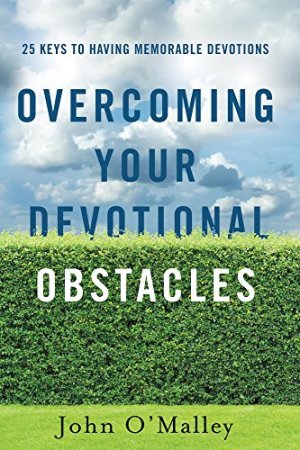
Devotional ObstaclesJohn O’Malley tackles these issues in Overcoming Your Devotional Obstacles: 25 Keys to Having Memorable Devotions. I appreciate that he deliberately chose a positive, encouraging title rather one with a negative cast, like Seven Reasons I Fail in My Devotions. His purpose, he writes, is not assigning fault or blame, but rather “putting tools in your hand to help you go from defeated to victorious in your time alone with God.”

The author emphasizes that our relationship with God is based on grace, not performance. Our devotional time is not meant to try to impress Him (or anyone else). Devotions are not a work to gain favor with God; they’re a means of communicating with Him. But there are ways to improve our understanding of His communication to us.

Our Quiet Time with Him is more about discovering His presence than finding the perfect Bible reading plan or study method. If we complete a Bible reading plan and did not discover His presence, we may have checked off the box for the day on our daily Bible reading plan, but we missed Him.

When we do not spend time with God, we deplete ourselves. We deplete our peace, joy, and strength. When limiting our access to time with God, we tend to lean on our own understanding; we are filled with doubts, and we consult our own heart instead of the mind of God (Proverbs 3: 5-6).

Jesus said that His sheep know, hear, and follow His voice. Your time with the Lord is about listening. God’s Word is the answer to every human need. Read not to accomplish book or chapter count. Read and listen.

If it takes you five years to read through the Bible, you are not less of a Christian. Read it at a pace that you can comprehend it and receive something from it.

The author discusses each of the obstacles mentioned above: finding time for devotions, battling distractions, improving comprehension, discerning how to apply what we read, understanding cultural differences, and retaining what we read.

I loved the author’s description of application as “the intersection of Bible learning and Bible living.”

I particularly liked his illustration about understanding and learning from the different culture that the Bible was written in. He likens it to taking a friend to a family reunion. The friend won’t know the histories, background stories, and quirks of all the family members, so you’ll likely have to explain some references along the way. “Culture is the system of beliefs, values, and ideas of a people in a certain time period.” However, “God and His Word are transcultural.” The author suggests some resources for finding out more about the cultural aspects, but above all other resources, he reminds that the Holy Spirit indwells believers and teaches us from God’s Word.

I also appreciated the tips for retaining what we read, something I don’t remember seeing in other books about devotions. One tip was to write down on a 3×5 card three key points from the verses read and then read and think about the verse and those points several times throughout the day.

The author advocates a lot of 3×5 cards, however. I counted at least four that he recommended filling out: one for a verse to meditate on; one for recording the time spent and main truth learned; one for writing down several statements about why we read the Bible; and one to write down your expectations for what God will do through His Word. He notes that one can use a journal, electronic device, etc.

The author includes some Bible study plans, lists of resources, and work sheets.

My only point of disagreement in the book was with the author’s statement that “Applying Scripture to your life is what brings the Word of God to life.” I know what he means: we don’t benefit and really learn it unless we apply it. But I always wince when I see someone speak of “making the Bible come alive.” God’s Word IS alive (“For the word of God is living and active, sharper than any two-edged sword, piercing to the division of soul and of spirit, of joints and of marrow, and discerning the thoughts and intentions of the heart” – Hebrews 4:12, ESV; “The words that I have spoken to you are spirit and life” – John 6:63b, ESV). We’re the ones who need to be brought to life. But I know the author believes these truths, so the disagreement was with the wording.

This book is immensely practical and to the point with little to no fluff. It is an excellent resource for anyone who is trying to establish a devotional time or who has run into any of these obstacles in their own quiet time.

(Sharing with Semicolon‘s Saturday Review of Books, Literary Musing Monday, Carole’s Books You Loved)

Book Review: When the Morning Glory Blooms

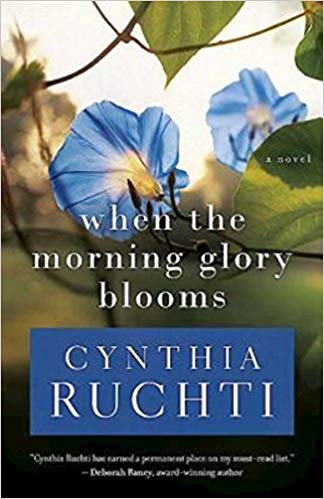
Morning Glory When the Morning Glory Blooms by Cynthia Ruchti explores three different, but related, timelines.

The first one, in modern times, involves Becky, whose teenage daughter had a baby out of wedlock. Becky takes care of her grandson so her daughter can finish high school, but she struggles with how much she’s helping and how much she’s enabling her daughter’s lack of sense of responsibility.

In 1951, Ivy just saw her boyfriend off to the Korean War. Then she found out she was pregnant. Now she’s afraid to tell him. She doesn’t want to put him in danger by distracting him, but she’s also afraid he’ll reject her. Ivy works in a nursing home, and one of her patients is Anna. Anna wants Ivy to help write down her story, and at first Ivy acquiesces just to please Anna. But she realizes that Anna is perfectly clear and not at all the dementia patient Ivy had thought. And Anna’s story is not only remarkable in itself, but it touches her own in many ways.

In the 1890s, Anna inherited some property. Her dream: to turn the old home into a haven for unwed mothers. She had little resource except faith. Her plan was not well-received by the community – except for her pastor and his wife, who helped to bring others on board.

As you can see, each of the stories involves unplanned pregnancies. Even though they were handled in different ways in different eras, they still brought complicated and painful consequences. Yet in each story line, those involved found some measure of grace and some maturity and growth through their circumstances.

The three are also connected by morning glories – but I’ll let you discover what that means.

A few quotes:

Your baby’s name is not Regret.

Wouldn’t one think that the forgiven would be quickest to forgive others? That the redeemed would fall over one another in their rush to carry the song of deliverance to those who had yet to hear its calming melody? That those who had found refuge would do everything in their power to light the way for others?

When young women lived with me, they worked beside me both because their help was needed and because work is both healing and character building.

I thought I’d have trouble keeping up with three different threads of story, but Cynthia wove them together well while keeping each distinctive enough to avoid confusion. I enjoyed the humor especially in Becky’s narrative. There were a few surprises: some of the connections between the women turn out to be different from what I had thought they would be. I enjoyed the unfolding of each woman’s story, and the need to extend and receive grace displayed in each one.

(Sharing with Semicolon‘s Saturday Review of Books, Literary Musing Monday, Carole’s Books You Loved)

Violence in films, books, and the Bible

Sometimes when someone objects to bad words, nudity, or sexual scenes in a media, someone else will bring up violence. Some are quite incredulous that anyone could object to a word or image which “doesn’t hurt anyone,” yet have no problem someone getting killed in a movie.

Well, words and images do hurt people. I’ve discussed that before in other posts. But violence in media may be acceptable or not, depending on how it is handled.

There has to be conflict in a story, or else there is no plot. Sometimes the conflict is physical: war, a robbery or murder investigation, a woman fleeing from an abusive husband, etc. These things happen in real life, so of course they make for real conflicts in stories. But they can be shown in ways that makes the danger real and suspenseful, or they can be handled in ways that are gratuitous, just for the shock and gore factor. The dividing line between acceptable and unacceptable portrayals of violence has to be determined by more than just our feelings or what we think we can handle.

I decided to do a little Bible study, looking up verses that contain the words “violence” and “violent” in the ESV. I discovered violence is a bigger topic than I had thought, because there are many passages that describe something violent without using the word. So I did not look up every single violent act in the Bible at this time, but I came up with six pages of references and found some good principles.

There is, of course, violence in the Bible. A murder occurred among the first children born on Earth, and it seems violence has been part of the culture ever since. Just a few chapters later, “the earth was corrupt in God’s sight, and the earth was filled with violence. And God saw the earth, and behold, it was corrupt, for all flesh had corrupted their way on the earth. And God said to Noah, ‘I have determined to make an end of all flesh, for the earth is filled with violence through them'” (Genesis 6:11-13). In the major and minor prophets, part of the condemnation they preached was due to violence on the part of those they preached to. For instance, Jonah did not tell the people of Nineveh to repent, but then king called the people to”Let everyone turn from his evil way and from the violence that is in his hands” (Jonah 3:8), in hope that God would forgive. In Ezekiel 28, a passage that talks about the king of Tyre but also references Satan, the power behind the king, Satan is described as being “filled with violence” (Ezekiel 28:16).

God condemns violence.

Do not envy a man of violence and do not choose any of his ways, for the devious person is an abomination to the Lord, but the upright are in his confidence. Proverbs 3:1-2

Be not envious of evil men, nor desire to be with them, for their hearts devise violence, and their lips talk of trouble. Proverbs 24:1-2

Thus says the Lord: Do justice and righteousness, and deliver from the hand of the oppressor him who has been robbed. And do no wrong or violence to the resident alien, the fatherless, and the widow, nor shed innocent blood in this place. Jer. 22:3

Thus says the Lord God: Enough, O princes of Israel! Put away violence and oppression, and execute justice and righteousness. Ezekiel 45:9a

Words often associated with the violent in many of the verses are wicked, treacherous, scoffer, evil, devious. The wicked are said to “eat the bread of wickedness and drink the wine of violence” (Proverbs 4:17); “The mouth of the wicked conceals violence” (Proverbs 10:6,11); “pride is their necklace; violence covers them as a garment” (Psalm 73:6).

I looked up the Hebrew or Greek words for violence for just a few of the verses I found, and words often occurring there were cruelty and injustice.

There are acts of God that would be considered violent, though the word is not used in those passages: the worldwide flood, the killing of the firstborn in Egypt and the drowning of the Egyptians in the Red Sea, the destruction of Sodom and Gomorrah, the wars of Israel against Canaan, to name a few. But these acts were not the result of cruelty and injustice. God is the righteous judge. He is longsuffering and gracious, but his “spirit shall not always strive with man.” At some point, time is up. If there has been no repentance and faith, judgment must come.

God promises in several places to punish violence. Sometimes He acts directly, sometimes He uses the human authority system He set up: and authorizes them to use a “sword” (in that day, other means in ours, but He gives them authority to punish wrongdoing).

Jesus condemned not only human physical violence, but the hatred of heart and anger that leads to violence:

“You have heard that it was said to those of old, ‘You shall not murder; and whoever murders will be liable to judgment.’ But I say to you that everyone who is angry with his brother will be liable to judgment; whoever insults his brother will be liable to the council; and whoever says, ‘You fool!’ will be liable to the hell of fire.” Matthew 5:22-23

And James reinforces the truth that violence starts in the heart:

What causes quarrels and what causes fights among you? Is it not this, that your passions are at war within you?  You desire and do not have, so you murder. You covet and cannot obtain, so you fight and quarrel. You do not have, because you do not ask. You ask and do not receive, because you ask wrongly, to spend it on your passions. You adulterous people! Do you not know that friendship with the world is enmity with God? Therefore whoever wishes to be a friend of the world makes himself an enemy of God. James 4:1-4

But there is hope for people with violence in their hearts (which includes all of us since, as Jesus said, hatred and anger are sinful as well). Paul said in 1 Corinthians 6, “Do you not know that the unrighteous will not inherit the kingdom of God?” (verse 9). He then lists several types of sinners and adds, “And such were some of you.” Were. Past tense. What happened? “But you were washed, you were sanctified, you were justified in the name of the Lord Jesus Christ and by the Spirit of our God” (verse 11).

God says the overseers (spiritual leaders) of the church must be “not violent but gentle, not quarrelsome (1 Timothy 3:2-3) and “not…arrogant or quick-tempered or a drunkard or violent or greedy for gain (Titus 1:7). And those who are filled with God’s Holy Spirit display His fruit: “love, joy, peace, patience, kindness, goodness, faithfulness, gentleness, self-control” (Galatians 5:22-23).

Back to viewing or reading about violence: we see that the Bible condemns personal violence towards others. But it also tells us about many violent acts, like any other sin. Yet it doesn’t present violence in a way that glorifies it and it doesn’t share unnecessary gory details. Take, as one example, one of the oddest stories in the Bible: the man who cut into pieces his concubine, who had been raped, beaten and killed, and then sent the pieces among the twelve tribes of Israel to enlist their support for is revenge. The Bible says that “In those days there was no king in Israel. Everyone did what was right in his own eyes” (Judges 21:25). This is one of those extreme examples of someone doing right in his own eyes apart from any instruction from God. The story itself is gory enough, but it doesn’t expand on the details unnecessarily. There is no description of dripping blood, bulging eyes, entrails, sounds, smells. etc.

One of the most compelling verses I found in my study was Psalm 11:5: “The Lord tests the righteous, but his soul hates the wicked and the one who loves violence.” The one who loves violence. I think that’s one key. A villain in a story may display a love for violence, but is the story told in a way that appeals to or stirs up a love of violence in the reader? Is the violence glorified or made appealing in any way? To me that’s one difference between, say, a war movie and a slasher or horror movie.

The other extreme might be desensitization, indifference. I don’t recall a specific verse which spells that out, but it might be indicated by several passages which show people considering violence as just normal when it should not be. Years ago my husband and I were watching a TV how when a character in the program was shot – not an uncommon occurrence.  But this viewing took place shortly after a close friend’s mother passed away at a fairly young age. The thought of death was still fresh, and seeing it displayed so easily and carelessly disturbed me greatly. It’s easy to let TV or movie violence float past us because we know it’s not “real,” but I don’t want even fictional violence to dull my sensitivity to it.

Violence is a humongous topic, and this one blog post can’t do it justice. I’m not sure why this was on my heart to write about this week. It’s an area I have been interested in and have thought about a lot and wanted to study a bit further, but I would rather have written about other subjects today. Yet, since this topic was on my heart, perhaps these thoughts will be of help to others.

(Sharing with Inspire Me Monday, Literary Musing Monday, Tell His Story, Let’s Have Coffee, Porch Stories, Faith on Fire)

Laudable Linkage

IMG_0195

Here are several thought-provoking reads found in the last week or so.

Every Testimony Is Dramatic and Miraculous. “There is nothing basic or boring about the life-transforming power of our Lord Jesus Christ. The angels throw a party every time someone comes to Christ, and the parties aren’t less enthusiastic for the freckle-faced eight year olds. Salvation is never small. It is big and dramatic and miraculous, every single time.”

Is Prayer Enough?

What Jesus Said About White Privilege.

7 Stabilizing Principles in a Chaotic World, Part 3: Everyone Is Made in the Image of God. Even the people on the other side of the political fence or the ones who drive us crazy. And we “need to treat everybody—everybody—with that kind of respect.”

How You Might Break the Third Commandment in Church, HT to Challies.

What to Do When a Friend Loses a Baby, HT to True Woman. Much of this is good for other types of loss as well.

Give Children All of Your Attention. Some of the Time. HT to True Woman. I remember  as a young mom struggling with guilt when I did not give my children my full attention, yet feeling it was good for them to learn to entertain themselves sometimes. I thought of women in Bible times or even a couple of hundred years ago who had to do so much from scratch and could not have possibly sat on the floor playing with their children eight hours a day. But it is good to set everything aside for one-on-one time together sometimes. This post has some good thoughts along these lines.

How to Leave Porn Behind, HT to True Woman. Good thoughts on “radical repentance” for any sin.

3 Reasons Contemporary Worship Is Declining, and What We Can Do to Help the Church Move On. I don’t agree with every point here, but I especially like this: “We’ve done ourselves and the church a disservice by insisting that there are two kinds of worshipers, traditional and contemporary…Our musical tastes don’t dictate how we worship, our theology does. Both of these extremes are toxic. All worship is historic because it recalls the creative and redemptive acts of God. All worship is contemporary, because we’re doing it now. All worship is future, because it foretells the coming resurrection.”

And, finally, a smile found on Pinterest. This is close to how I really think now, except I say 20. 🙂

Happy Saturday!

Friday’s Fave Five

FFF daisies
It’s Friday, time to look back over the blessings of the week with Susanne at Living to Tell the Story and other friends.

And just like that, another week is in the books. They seem to fly faster all the time. It’s nice to pause for a moment and reflect on some of the highlights so we don’t forget them and we remember to thank God for them.

1. A library book sale. I stopped into our local library to pick up a particular book and saw, in a side room off the lobby, a sign for a used book sale. You could fill up a grocery bag with books for $5. So I did!

2. Jason’s birthday. We celebrated my middle son’s birthday this week. Fun!

IMG_1051

3. Online grocery shopping. I think I have mentioned this before, but I’ve only done it two or three times. I may make it a regular habit, though. It saves time, stress, and money (money because I don’t impulse-shop that way).

4. Productive days. I tend to think a day is productive when I get done what I wanted to do that day. But the truth is that most days are productive in one way or another even if what I spent time on wasn’t on my to-do list that day. It’s not like I’m watching hours of TV and eating bonbons on “non-productive” days. Still, it’s a good feeling when I can make a good dent in a project I’ve been wanting to get to, and I had one of those this week.

5. Timothy and the leaf-blower. Timothy (my grandson, age 4) uses a couple of items around the house as pretend leaf-blowers, and makes the motor sound while he uses them. Last week Granddad let Timothy use the real leaf-blower. Then Granddad told Timothy he was coming to his house Saturday to do some yard work, and he’d bring the leaf-blower. Timothy got up early in the morning to wait for Granddad. Granddad let Timothy blow the debris off the porch and sidewalk, and paid him $2! Quite a day! 🙂

Happy Friday!


Back to the Classics Challenge Mid-year Check-in

Karen at Books and Chocolate hosts the Back to the Classics Challenge for reading classics at least 50 years old. She’s holding a mid-year check-in for the challenge – and a giveaway!

I enjoy this challenge because I was not exposed to many classics as I grew up, and this challenge inspires me to expand my horizons and explore books I might not otherwise read. I’m happy to report that I have read 11 of the 12 classics on my list, and I am now reading (or listening to) the 12th. Here’s what I’ve read so far:

My unfinished one is a classic that scares you (due to its length or it intimidates you in some way), and for that I chose The Hunchback of Notre Dame by Victor Hugo. I’m working on it now.

Karen allows for three children’s classics, and I am counting Where the Red Fern Grows, The Secret Garden, and Journey to the Center of the Earth for those. I’m not counting 20,000 Leagues Under the Sea because nothing I read about it indicated it was written for children.

I enjoyed all of these except Journey to the Center of the Earth, but I think my favorite is He Fell in Love With His Wife. Adam Bede would be a close second. Frankenstein was the biggest surprise.

Have you read any classics lately?

Book Review: More Than These

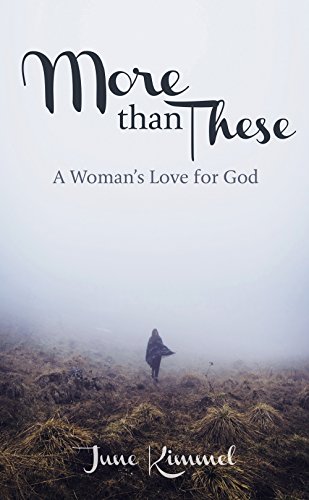
More Than TheseWhen I saw More Than These: A Woman’s Love for God by June Kimmel featured at By the Book, my interest was piqued for three reasons: JustRead Publicity Tours was sponsoring a giveaway of the ebook; I had used some of June Kimmel’s Bible studies before; June’s son-in-law was our youth and music pastor at the church we attended when we first moved to Tennessee, and he and his wife are some of the dearest people on the planet. Fortunately, I won a copy of the book!

The premise of the book is that we have multiple facets of our lives that vie for first place in our hearts, crowding out our first love for God. Some of these are God’s good gifts, like family, friends, and ministry. But when they take His place, we’re not loving either Him or them in the best way. Others are sinful aspects that we need to put to death. So June examines several of these issues, couching them in a time when she and her husband felt led of the Lord to move from South Carolina, where they were near all of their grown children and grandchildren and had jobs and ministries they loved, to Wisconsin for a new ministry opportunity.

A few quotes from the book that stood out to me:

Without love, our good efforts are empty and hollow. We are useless and unprofitable if our service, however noble, is done without supreme love for God.

We must be in the Word to know God’s promises. Sometimes people expect God to do what he never promised to do.

May we see beyond the circumstances of the moment and praise God continually. May our fear never exceed our love for God.

Do you have goals for tomorrow? Did that ambition begin at the feet of the Lord Jesus? Our plans may be exactly what God has for us, but is it the dream we long for or the Master?

We all have positive and negative experiences to recall, but God doesn’t want us living in the past or focusing on it instead of Him. God simply wants to use our past as a tool to shape us into His image.

Unless we surrender our fearfulness to the Lord, it will draw our focus off the Savior by consuming our thoughts. The circumstances intended to draw us closer to the Master will attempt to capture the throne of our heart.

June encourages us to “diligently study His Word and endeavor to take the truths we learn and turn them into daily actions that demonstrate the goodness of our God.” The more we get to know Him, the more our love for Him grows.

I would have preferred the study questions at the end of each chapter rather than all together at the end of the book, but that’s just a matter of personal preference.

Thanks to June, By the Book, JustRead Publicity Tours, and Ambassador International for the giveaway and for sending me a copy of the book!

(Sharing with Semicolon‘s Saturday Review of Books, Literary Musing Monday, Carole’s Books You Loved)

Book Review: My Father’s House

My Father's House My Father’s House by Rose Chandler Johnson begins with the idyllic childhood of Lily Rose Cates in Georgia. Then her father died when she was sixteen, turning her world upside down. Her mother had been not entirely mentally present for some time, a situation made worse by the death of Lily’s father. A lady who took care of their home, Annie Ruth, became a second mother and the main stabilizing influence in Lily’s life.

Milestones pass – high school graduation, friendships, college. Lily has a couple of part-time jobs she likes, but life is pretty tame. She is invited to visit a cousin’s place in New York City and is absolutely mesmerized by all there is to see and do. One highlight is an encounter with a handsome and charming waiter who asks for her number.

To her joy and surprise, the waiter, Manny, does call – only he’s not a waiter. The restaurant was his family’s, and he was just helping out for a while. He’s actually a driven, high-powered lawyer in Detroit. A telephone romance leads to a proposal and a move for Lily Rose. Some incidents and reactions from Manny make Lily uncomfortable, but she’s in love and her courtship is such a whirlwind, she lets them go.

Their first few days are bliss until Manny has to go back to work, leaving Lily lonely trying to get accustomed not only to a new city, but a new situation, style of home and life, everything. Before long, Manny’s dark side comes out bit by bit. Lily realizes that she can no longer brush off or overlook his actions. Manny has become unpredictable and dangerous, and Lily decides to leave with the help of a friend.

Lily goes back to Georgia to a home of her father’s that she had inherited but had not told Manny about.  She knows Manny will come looking for her, but for a while she has time to heal, stabilize, and rediscover her roots and her faith.

This was a wonderfully told story with a strong sense of place. The description of the Southern setting makes one want to settle in a rocking chair on the porch with a glass of sweet iced tea. I was drawn right in and looked forward to each new chapter, sorrowing with Lily over the loss of her father and her marriage, rejoicing as she grew.

There were a few too many references to Lily and Manny’s intimacy for my tastes, but none of that was explicit, and what was said did make sense in context. Then in the second half of the book, there are a number of instances of an unmarried man and woman staying overnight in a cabin and home. None of the other characters seems to have a problem with that: I would have loved for at least one of them to object. The author prevents anything from happening between them. And there’s an odd incident where Lilly almost seems to be saying she visited her father in heaven in a dream.

But other than those caveats, I thought this was a lovely story.

(Sharing with Semicolon‘s Saturday Review of Books, Carole’s Books You Loved)

Psalms for the Sleepless

Most of us occasionally wake up in the middle of the night and then have a hard time getting back to sleep, but it seems to happen more as we get older. Sometimes I can get right back to sleep after a brief nocturnal trip to the bathroom, but other times I’m awake for a couple of hours. I don’t know what makes the difference. Generally I try keep things quiet, turn the lamp back off as soon as possible, avoid checking my phone, and do whatever else I can to make the atmosphere conducive to sleep. But still I find myself staring into the darkness.

I know some who read if they wake up during the night. Reading on the couch makes me doze off: reading in bed keeps me awake.

I’ve learned that stressing about it only makes it worse. Elisabeth Elliot once said that when she woke up in the night, she could luxuriate: she didn’t have to be up and doing anything else, so she could relax and rest, even if she didn’t get back to sleep. I’ve tried to take that tack, and it helps some.

But sometimes I find myself distressed, even in tears, over my sleeplessness. As it is I struggle with finding the best way to arrange my schedule and get everything done that I want to during the day. A nap sometimes gets me over feeling draggy, but it takes a chunk of time out of my prime work hours. I’d rather sleep when it’s time to sleep, not when I want to be busy doing other things.

Once I dealt with sleeplessness for several Saturday nights in a row…and had trouble staying awake in church the next day. I would plead with God in prayer: “Lord, You know I need sleep. You made me to need sleep. You know the things I need to do tomorrow. I’d really like to stay away in church, and I think You want me to as well. You’ve said you give to your beloved sleep. Why won’t You help me get back to sleep?” I try, instead, to rest in the fact that He does know when I need sleep. I ask Him in the morning to multiply the few hours of sleep like He did the loaves and fishes and make them sufficient for the day ahead. And He does.

Recently I looked up a couple of verses that refer to thinking or praying during the night, and that turned into a Bible study with much more than I bargained for! I primarily searched through Psalms but checked in Job and Proverbs a little, too.

Apparently many Bible people were up in the night. Job said, “When I lie down I say, ‘When shall I arise?’ But the night is long, and I am full of tossing till the dawn” (Job 7:4). Here’s what some Biblical writers did during their sleepless hours (some of the verses could be used in multiple categories):

Attend to needs

Some got up or stayed awake to attend to urgent tasks.

David vowed, “I will not enter my house or get into my bed, I will not give sleep to my eyes or slumber to my eyelids, until I find a place for the Lord, a dwelling place for the Mighty One of Jacob” (Psalm 132:3-5).

One who had gotten himself involved in an unwise pledge was urged to “Give your eyes no sleep and your eyelids no slumber; save yourself like a gazelle from the hand of the hunter, like a bird from the hand of the fowler” (Proverbs 6:1-5).

“He who gathers in summer is a prudent son, but he who sleeps in harvest is a son who brings shame” (Proverbs 10:5).

The Proverbs 31 woman got up “while it was yet night” to prepare food and worked late into the night (Proverbs 31:15, 18).

I just finished a book in which the author told of using late night hours to write because she had trouble falling asleep. My husband has said that he can often get much more work done when he wakes up in the night than when he is in a busy office.

Mourn and seek comfort

Painful or sad thoughts can be kept at bay while we’re busy through the day. But at night, there is nothing else to distract us. Asaph said: “In the day of my trouble I seek the Lord; in the night my hand is stretched out without wearying; my soul refuses to be comforted. When I remember God, I moan; when I meditate, my spirit faints. Selah. You hold my eyelids open; I am so troubled that I cannot speak” (Psalm 77:2-4). David mourned over sin until he found forgiveness (Psalm 6, especially verse 6: “I am weary with my moaning; every night I flood my bed with tears” and 32, especially verses 4-5: “For day and night your hand was heavy upon me; my strength was dried up as by the heat of summer. Selah. I acknowledged my sin to you, and I did not cover my iniquity; I said, ‘I will confess my transgressions to the Lord,” and you forgave the iniquity of my sin.'”) It’s good to confess sin as soon as we’re aware of it, but it’s not a bad practice at the end of the day to ask God to search us and show us anything we overlooked.

The psalmist of Psalm 42 mourns because of an enemy (verse 9): “My tears have been my food day and night, while they say to me all the day long, ‘Where is your God?'” (verse 3). He remembers past times of praising God in the house of God and admonishes himself, “Why are you cast down, O my soul, and why are you in turmoil within me? Hope in God; for I shall again praise him, my salvation and my God” (verses 5 and 11).

Sing praises to the Lord, O you his saints, and give thanks to his holy name. For his anger is but for a moment, and his favor is for a lifetime. Weeping may tarry for the night, but joy comes with the morning” (Psalm 30:4-5).

Meditate

Biblical meditation is not an emptying of the mind but turning something over in your mind.

Psalm 1 says of the blessed man “his delight is in the law of the Lord, and on his law he meditates day and night.”

“My soul will be satisfied as with fat and rich food, and my mouth will praise you with joyful lips, when I remember you upon my bed, and meditate on you in the watches of the night; for you have been my help, and in the shadow of your wings I will sing for joy. My soul clings to you; your right hand upholds me” (Psalm 63:5-8).

“My eyes are awake before the watches of the night, that I may meditate on your promise” (Psalm 119:148).

“I bless the Lord who gives me counsel; in the night also my heart instructs me“(Psalm 16:7).

“Be angry, and do not sin; ponder in your own hearts on your beds, and be silent” (Psalm 4:4).

One good example of the process of meditation is Psalm 77. There Asaph was so troubled he could not sleep. But then he reminded himself of God’s character, grace, faithfulness, love, past works and deeds.

Pray

Sometimes when I lament nighttime wakefulness, someone glibly advises me to “just pray.” That makes me feel they don’t understand or aren’t taking into account the problems with wakefulness I mentioned above. On the other hand, though the advice comes across as a little unsympathetic, those hours are a good time for undistracted, heartfelt prayer.

“O Lord, God of my salvation, I cry out day and night before you. Let my prayer come before you; incline your ear to my cry! For my soul is full of troubles, and my life draws near to Sheol” (Psalm 88:1-3).

“I rise before dawn and cry for help; I hope in your words” (Psalm 119:147).

Of course, the mourning and seeking comfort above and singing and praising below are also parts of prayer.

Sing

“By day the Lord commands his steadfast love, and at night his song is with me, a prayer to the God of my life” (Psalm 42:8).

“I said, ‘Let me remember my song in the night; let me meditate in my heart.’ Then my spirit made a diligent search” (Psalm 77:6).

One of my favorite posts discussed songs in the night.

Praise

“For the Lord takes pleasure in his people; he adorns the humble with salvation. Let the godly exult in glory; let them sing for joy on their beds” (Psalm 149:4-5).

“It is good to give thanks to the Lord, to sing praises to your name, O Most High; to declare your steadfast love in the morning, and your faithfulness by night” (Psalm 92:1-2).

“Come, bless the Lord, all you servants of the Lord, who stand by night in the house of the Lord!” (Psalm 134:1).

Rest from fear

Like mourning, fear can plague at night. When we’re still and quiet, our thoughts can run rampant. But we can take our thoughts captive and turn them to God’s protection.

“In peace I will both lie down and sleep; for you alone, O Lord, make me dwell in safety” (Psalm 4:8).

“He will cover you with his pinions, and under his wings you will find refuge; his faithfulness is a shield and buckler. You will not fear the terror of the night, nor the arrow that flies by day” (Psalm 91:4-5).

“He will not let your foot be moved; he who keeps you will not slumber. Behold, he who keeps Israel will neither slumber nor sleep.The Lord is your keeper; the Lord is your shade on your right hand. The sun shall not strike you by day, nor the moon by night” (Psalm 121:3-6).

In the context of rejoicing in God’s presence with him everywhere (“Where shall I go from your presence?” verse 7), David says, “If I say, ‘Surely the darkness shall cover me, and the light about me be night,'” even the darkness is not dark to you; the night is bright as the day, for darkness is as light with you” (Psalm 139:11-12).

Among the benefits of keeping “sound wisdom and discretion” is this: “If you lie down, you will not be afraid; when you lie down, your sleep will be sweet. Do not be afraid of sudden terror or of the ruin of the wicked, when it comes, for the Lord will be your confidence and will keep your foot from being caught” (Proverbs 3:21-26).

Then there are people whose nighttime activities we don’t want to emulate. The adulteress of Proverbs 7 was active at night. “The wicked…plots trouble while on his bed; he sets himself in a way that is not good; he does not reject evil” (Psalm 36:3-4) and “they cannot sleep unless they have done wrong; they are robbed of sleep unless they have made someone stumble” (Proverbs 4:16).

Some people dread night, but God “made the moon to mark the seasons; the sun knows its time for setting. You make darkness, and it is night, when all the beasts of the forest creep about. The young lions roar for their prey, seeking their food from God” (Psalm 104:19-21). “Yours is the day, yours also the night; you have established the heavenly lights and the sun” (Psalm 74:16).

It would be a profitable exercise to read some of these psalms in their entirety, maybe one a day, and see in context what the psalmist was troubled about and how he turned his thinking around. I love how so many of the psalmists begin with trouble and anguish, remind themselves and the reader of God’s truth and love, and end up in hope and peace.

Losing sleep in the middle of the night can be frustrating. But if we turn our thoughts to the Lord, those moments can become precious times of fellowship with Him.

(Sharing with Inspire Me Monday, Literary Musing Monday, Tell His Story, Wise Woman, Woman to Woman Word-filled Wednesday, Let’s Have Coffee, Faith on Fire)