Book Review: The Hunchback of Notre Dame

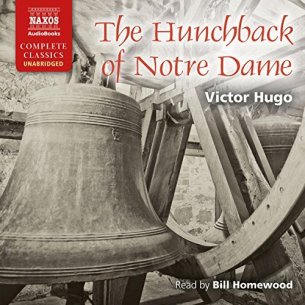
The Hunchback of Notre Dame by Victor Hugo was published in 1831 but set in the Paris of 1482.

Quasimodo was a deformed child left at a place where foundlings were deposited for anyone who might want to take them in. He had so many physical issues that one of the gossipy women observing him declared it “must be a sin to look at such a thing.” A priest came by, saw the child, and adopted him.

The priest, Claude Frollo, had been a promising scholar when his own parents died. In compassion he took in his younger brother, Jehan, and raised him, and thoughts of what would have happened to Jehan if Claude had not been available compelled Claude to take in Quasimodo.

But several years later, Jehan became dissolute, preferring drinking and carousing to studying. Quasimodo, “From his very first steps among men…had felt himself, later on he had seen himself, spewed out, blasted, rejected. Human words were, for him, always a raillery or a malediction. As he grew up, he had found nothing but hatred around him. He had caught the general malevolence. He had picked up the weapon with which he had been wounded.” Quasimodo became the bell ringer for Notre Dame and loved the bells as he did no one else except Claude, but the bells made Quasimodo deaf. He was unable to benefit from the study Claude longed to impart. Thus, “Claude, saddened and discouraged in his human affections, by all this, had flung himself eagerly into the arms of learning, that sister which, at least does not laugh in your face, and which always pays you, though in money that is sometimes a little hollow, for the attention which you have paid to her. Hence, he became more and more learned, and, at the same time, as a natural consequence, more and more rigid as a priest, more and more sad as a man.” His insatiable thirst for knowledge led him to delve “further, lower, beneath all that finished, material, limited knowledge; he had, perhaps, risked his soul, and had seated himself in the cavern at that mysterious table of the alchemists, of the astrologers, of the hermetics.”

Further drawing Claude away from anything good and right was his lust for a gypsy girl named Esmeralda, who used to dance in the streets with her tambourine and have her goat perform tricks to earn money. Claude deemed that his unhealthy obsession for Esmeralda must be due to some sorcery on her part.

When Quasimodo was publicly punished for a crime that Claude put him up to, Esmeralda was the only person who took pity on him and offered him water. That act of kindness caused Quasimodo to love her, though he knew his love would never be returned.

Claude’s jealousy led to an assault for which Esmeralda was blamed. Quasimodo rescued her and hid her in the cathedral. But massive misunderstandings all around led to multiple tragedies.

My thoughts:

I have not seen any of the film versions of this book, but from what I understand, many of them twist the ending to be more upbeat. There is no happy ending in this book, except maybe for the playwright and the goat. In fact, it’s so dark and seemingly hopeless, I pondered for a long while what it was all for.

Some have said, due to the fact that the Hugo’s original title was Notre-Dame de Paris, and most of the action in the novel takes place in and around the cathedral, that it is the main character. One reason Hugo wrote this book was to call attention to the value of the Gothic architecture in the city and to rouse support for preserving it. Many of Paris’s buildings had been damaged over the centuries and new construction or repairs were not always in keeping with the Gothic style. One chapter in the book talks about how literature will “kill” architecture as a means of expression.

But on another level, this novel depicts a very human story. I can’t believe that it is all about the cathedral.

It could be about the destructive power of lust. Most of the tragedies that came raining down on almost everyone stem from Claude’s obsession with Esmeralda. Some of the others came or were exacerbated by a lust for power. Early in the novel, a playwright wanders into the wrong part of town and is put on “trial” by the riffraff of the city. Later, two different trials by the proper magistrates show themselves to be no more just than the underground kangaroo court. Even one scene involving the king shows his misplaced priorities.

It could be about the mistake of judging by appearances. Quasimodo, of course, was obviously misjudged from day one, which had an effect on his character. A captain, Phoebus is misjudged, but on the other end of the scale: because he is so handsome, people think he is good, when in reality he is a cad. Esmeralda is misjudged for her beauty but also for her ethnicity: gypsies were not respected, and she is constantly accused of sorcery or other crimes just because she is a gypsy. One of my favorite parts is a song Quasimodo sings outside Esmeralda’s window, translated by Project Gutenberg as follows:

Look not at the face, young girl, look at the heart. The heart of a handsome young man is often deformed. There are hearts in which love does not keep. Young girl, the pine is not beautiful; it is not beautiful like the poplar, but it keeps its foliage in winter. Alas! What is the use of saying that? That which is not beautiful has no right to exist; beauty loves only beauty; April turns her back on January. Beauty is perfect, beauty can do all things, beauty is the only thing which does not exist by halves. The raven flies only by day, the owl flies only by night, the swan flies by day and by night.

It could be about the nature of real love. Claude thinks he loves Esmeralda but his affection is dark, destructive, and self-centered. Esmeralda thinks she loves the captain, but her warm feelings are based on his looks and an act of kindness he rendered toward her. She’s totally blind to his real nature. Quasimodo, though not a good character, shines in his love for the bells and the cathedral – some say he is the soul of the cathedral, and without him, the building “seems deserted, inanimate, dead…like a skull which still has holes for the eyes, but no longer sight.” He loved Claude, but it was a love based on “gratitude carried to its extreme limit.” But his love for Esmeralda causes him to extend himself and sacrifice for her benefit. When he rescues her from the gallows, for the first time the mob sees him as “really beautiful,” at least for a time. Personally I like this view the best.

It could be about fate. In Hugo’s introduction, he describes “rummaging about” Notre Dame coming across the word “ANNAKE” inscribed on one of the walls. Later someone in the book defines the inscription to mean “Fate.” That did not make much sense to me, as the troubles in the book came often from wrong choices rather than outside forces. But Wikipedia defines the word as “a personification of inevitability, compulsion and necessity.” That makes more sense considering who inscribed it and why. The Wikipedia article also quotes Hugo in a collection of his poems, Toute la Lyre:

Religion, society, nature; these are the three struggles of man. These three conflicts are, at the same time, his three needs: it is necessary for him to believe, hence the temple; it is necessary for him to create, hence the city; it is necessary for him to live, hence the plow and the ship. But these three solutions contain three conflicts. The mysterious difficulty of life springs from all three. Man has to deal with obstacles under the form of superstition, under the form of prejudice, and under the form of the elements. A triple “ananke” (necessity) weighs upon us, the “ananke” of dogmas, the “ananke” of laws, and the “ananke” of things. In Notre Dame de Paris the author has denounced the first; in Les Misérables he has pointed out the second; in this book (Toilers of the Sea) he indicates the third. With these three fatalities which envelop man is mingled the interior fatality, that supreme ananke, the human heart.

I’m still sifting through what that means.

I chose The Hunchback of Notre Dame for the “classic that intimidates you” category of the Back to the Classics Challenge. It intimidated me due to its length, due to the fact that the subject matter didn’t naturally draw me, and due to Hugo’s penchant for rabbit trails. I have come close to reading it many times and then backed away, but Tarissa’s review encouraged me toward trying it.

There were fewer side discussions here than there were in Les Miserables, one of my top three favorite novels, and this book is not as long as Les Mis. But Les Mis ends triumphantly and beautifully even though it ends sadly. And even though darkness pervades Les Mis, light shines through. There’s little light in Hunchback. I was stunned to find much more sensuality in Hunchback, even though a major character in Les Mis is a prostitute. I thought Les Mis was fairly discreet, but Hunchback goes into much more detail in Frollo’s thoughts and in the captain’s nearly successful seduction scene. On the other hand, sometimes it sounds worse than it is: Esmeralda is described as “half naked” when she is taken to the gallows, but she is in a shift (something like a slip) with her legs uncovered: that hardly constitutes being “half naked” in our day, but it would have been indecent then.

So, I have mixed emotions about the book. I am glad to have read it, but it will never go down as a favorite. But I did enjoy the way Hugo developed the characters and their psychology. And, as most classics do, this book had me pondering different aspects of it for days after finishing it.

Forgive the lack of page numbers for the quotes: I listened to the audio version marvelously narrated by Bill Homewood. I got a paperback copy from the library to go over some parts, but it was a modernized translation. So I ended up using the Gutenberg version online to look up certain sections.

(Sharing with Semicolon‘s Saturday Review of Books, Carole’s Books You Loved)
Book Review: Back Home Again

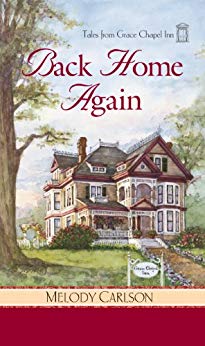
Back HomeIn Back Home Again: Tales from the Grace Chapel Inn by Melody Carlson, Alice Howard is a middle-aged single woman who has lived with her father in the old family home for years. Now her father has passed away, and her sisters have come home for the funeral. The house has been left to the three of them equally, and as they discuss what to do with it, they hit upon the idea of converting it to a bed-and-breakfast.

Their first obstacle is a meddling aunt and small-town resistance to anything new. Then, the three sisters are so different, and two of them in particular disagree over every little aspect. Alice tries to be a peacemaker between her two sisters and her family and the town.

The sisters, their aunt, and the town learn to come together, forgive, and give each other the benefit of the doubt.

This is the first book in a series of over thirty, authored by various writers. A light, pleasant read.

(Sharing with Semicolon‘s Saturday Review of Books, Literary Musing Monday, Carole’s Books You Loved)

Book Review: The Pattern Artist

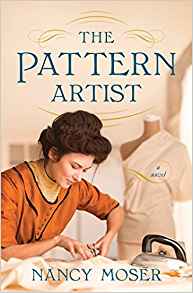
Pattern ArtistIn The Pattern Artist by Nancy Moser, Annie Wood left her dysfunctional family to go into service as a housemaid in England in 1911. She had a knack for sewing and alteration and hoped those skills would pave her way towards becoming a lady’s maid. She accompanied the family on a visit to America, and a number of factors worked together to compel her to run away with a couple of friends to see what life had to offer in this country.

Their first few days are rough, but then Annie lands a job at Macy’s Department Store in the sewing department. Her suggestions for her customers are noticed favorably by her managers, but negatively by a jealous coworker. A Butterick pattern salesman sees her potential and recruits her to join his company as a pattern designer.

Annie’s path is not always smooth, though. A number of obstacles, dangers, and a tragedy block her way. But she hopes, with hard work, determination, and a faith just beginning to bud, that she might find her own American dream. She learns “Humble beginnings are a badge of honor. It’s not where you begin, but where you end up” (p. 187).

This book caught my eye because I have enjoyed many of Nancy’s books, plus I used to do a lot of sewing and worked in a fabric shop for years. It was fun to read of how all of that worked in the early 1900s.I had not heard before of the Reform Dress Movement, an effort “started in the 1840s, rejecting the unhealthy confinement of the female form, and promoting practical clothing” (p. 189), but I am glad it helped get rid of corsets and ridiculous fashions like the hobble skirt.The movement plays a part in Annie’s career.

I enjoyed the author’s explanations in the afterword about how she came to include some of the various historic details. And somehow I totally missed the double meaning of the title until I read it in that afterward, but it should have been plain to me. Realizing that made me enjoy the story all the more.

It dawned on me at some point that the family Annie first worked for was in Nancy’s Summerfield (Manor House) series. I have only read the first book in that series so far, but it was fun to make that connection.

Overall quite an enjoyable read!

(Sharing with Semicolon‘s Saturday Review of Books, Literary Musing Monday, Carole’s Books You Loved)

Toward a Quiet Soul

Why art thou cast down, O my soul? and why art thou disquieted in me?

Have you ever felt disquieted?

Three times the psalmist asked himself why he is cast down and disquieted (Psalm 42:5, 11 and 43:5). The ESV says “in turmoil”; the NASB uses “disturbed.” Other translations say “sad,” “restless,” “upset.” But “disquieted” aptly includes all kinds of disturbances.

The Hebrew word translated “disquieted” in those two psalms includes these definitions:

“To murmur, growl, roar, cry aloud, mourn, rage, sound, make noise, tumult, be clamorous, be disquieted, be loud, be moved, be troubled, be in an uproar, to roar, to be in a stir, be in a commotion, to be boisterous, be turbulent.”

Ever felt any of those?

Each of those times the psalmists asks himself why he is disquieted, he answers himself, “hope thou in God: for I shall yet praise him for the help of his countenance.

That’s the course of many of the psalms. The writer has no peace of mind for various reasons: enemies are after him; sin weighs on his conscious; wicked people are prospering at the expense of the righteous. I love the honesty of the psalmists’ emotions as they lay out their dilemmas and questions before God. And gradually, as they remind themselves of what they know about their God and put their situation in the proper perspective, their souls return to peace, to rest.

Psalm 107 speaks of a physical storm, but there are parallels to a spiritual, emotional, or mental storm as well.:

Then they cry unto the Lord in their trouble, and he bringeth them out of their distresses. He maketh the storm a calm, so that the waves thereof are still. Then are they glad because they be quiet; so he bringeth them unto their desired haven. Psalm 107:28-30, KJV

We’re always glad when peace and quietness reign after any storm.

A quiet soul is not a result of Zen-like tranquility or an emptying of the mind. It’s not a mystical state. It comes from deliberately, consciously reminding ourselves of God’s love, wisdom, promises, and power and resting in Him. Whatever we’re going through, God has a reason for it and will give us grace to deal with it.

But I have calmed and quieted my soul, like a weaned child with its mother; like a weaned child is my soul within me. Psalm 131:2, ESV

It’s fine to pray for calm circumstances.

I urge that supplications, prayers, intercessions, and thanksgivings be made for all people, for kings and all who are in high positions, that we may lead a peaceful and quiet life, godly and dignified in every way. 1 Timothy 2:1-2, ESV

God doesn’t always remove the problems, but He gives His peace. I once saw a saying on a plaque that said, “Sometimes God calms the storm: sometimes He lets the storm rage and calms His child.”

But whoso hearkeneth unto me shall dwell safely, and shall be quiet from fear of evil. Proverbs 1:33, KJV

A quiet soul is not passive, but actively resting in God.

For thus said the Lord God, the Holy One of Israel, “In returning and rest you shall be saved; in quietness and in trust shall be your strength.” But you were unwilling…Isaiah 30:15, ESV

A quiet soul can go from God’s Word and prayer into everyday life, still trusting and resting.

But we urge you, brothers, to do this more and more, and to aspire to live quietly, and to mind your own affairs, and to work with your hands, as we instructed you, so that you may walk properly before outsiders and be dependent on no one. 1 Thessalonians 4:10b-13, ESV

For we hear that some among you walk in idleness, not busy at work, but busybodies. Now such persons we command and encourage in the Lord Jesus Christ to do their work quietly and to earn their own living. 2 Thessalonians 3:11-12, ESV

But let your adorning be the hidden person of the heart with the imperishable beauty of a gentle and quiet spirit, which in God’s sight is very precious, 1 Peter 3:4, ESV

Having a quiet spirit does not mean one is silent or mousy: it doesn’t quell exuberance. It’s a quietness of rest and peace. It’s not stirred up in a wrong way over the wrong things.

It is good that a man should both hope and quietly wait for the salvation of the Lord. Lamentations 3:26, KJV

And the effect of righteousness will be peace, and the result of righteousness, quietness and trust forever. . Isaiah 32:17, ESV

Sometimes God has to disquiet us before He can quiet us. Sometimes we need to be shaken out of our complacency or chastened. Jonah was disturbed at God’s calling for him and tried to run away. God dealt with him rather severely. In Jonah’s prayer in the fish’s belly, he laments:

For you cast me into the deep, into the heart of the seas, and the flood surrounded me; all your waves and your billows passed over me (verse 3, ESV).

The waters closed in over me to take my life; the deep surrounded me; weeds were wrapped about my head at the roots of the mountains (verses 5-6, ESV).

But when his “life was fainting away,” he “remembered the Lord” (verse 7), prayed, thanked God, and promised to fulfill his vows. God delivered him, and Jonah went on to obey God. Unfortunately, Jonah continued to have attitude problems and never did seem to come to truly rest in the Lord, at least in this book. The end result of chastening rightly received is “the peaceful fruit of righteousness” (Hebrews 12:5-13).

I originally wanted to publish this post last week, but felt strongly impressed to go with a different one instead. I think one of the reasons for waiting was that God knew I would come across two quotes in my reading this week that tied in with this topic.

H. A. Ironside said in his book Full Assurance:

As one walks with God, and learns to suffer and endure as seeing Him who is invisible, eternal things become more real than the things of time and sense, which are everything to the merely natural man. Thus there comes to the heart a trustful calm, a full assurance, based not alone on the revealed Word but upon a personal knowledge of communion with God, which gives implicit confidence as to this present life and all that lies ahead. (pp. 59-60, emphasis mine).

Then the ESV Study Bible says of Psalm 62:1-2:

The description of a trusting soul is there to set an ideal for God’s people: each one should aspire to this kind of quiet faith (p. 1011).

And the introduction to Psalm 63 in the ESV Study Bible says:

This psalm opens as if it were a lament, seeking God in a time of trouble; and yet the overall flow of the song is one of confident expectation. Hence it is best to see the psalm as enabling each of God’s people to develop confidence during their times of trouble (p. 1012).

Whatever the source of our trouble – God’s chastening or growing us, outward circumstances or inward turmoil – we can rest in His presence, wisdom, love, care, and provision.

The Lord your God is in your midst, a mighty one who will save; he will rejoice over you with gladness;  he will quiet you by his love; he will exult over you with loud singing. Zephaniah 3:17, ESV

He Will Quiet You

In this life, there are times of tribulation;
Hearts are filled with deep despair.
Heartache and pain and troubles abound;
Is there comfort anyway?
In your times of trial,
Lift your eyes to the Father above
He alone is the Answer,
The Source of please and love.

He will quiet you,
He will quiet you.
He will take delight in you,
And quiet you with his love.
His plans for you are perfect
And all His ways are best.
He will give you rest
As He quiets you with his love

He longs to take you into his arms,
And gently shelter you.
Only He can calm the storms in your life,
And give you peace anew.
And He will rejoice,
He will rejoice over you with singing.
He will rejoice,
He will rejoice over you with singing.
The Creator of all will lift up His voice;
And over your life
He will sing and rejoice!
He will rejoice!
He will rejoice!

He will quiet you,
He will quiet you.
He will take delight in you
And quiet you with his love.

His plans for you are perfect
And all His ways are best.
He will give you rest
As He quiets you with his love.
Come to Him for rest
Let Him quiet you with his love.

~ Words and music by Cindy Berry

(Sharing with Inspire Me Monday, Literary Musing Monday, Tell His Story, Let’s Have Coffee, Porch Stories, Wise Woman, Faith on Fire)

Laudable Linkage

Here’s my latest round-up of thought-provoking online reads:

Danger: Doing “Jesusy” Stuff Without Knowing Jesus, HT to True Woman.

7 Things You Should Know About the Formation of the New Testament, HT to Out of the Ordinary.

Russian Spies, Post-millennialism, and the National Prayer Breakfast.

The Morning Before a Sexual Fall: How the Battle for Purity Is Lost. Though the context is sexual sin, the principles apply to any temptation.

Smells Like Teen Spirit, HT to Challies. “For many, ‘going to church’ is less about worshiping the infinitely holy God who was redeemed a people for Himself by giving up His Son to the bloody death on the cross, as it is about getting a shot of motivational vitamin-B for existential significance. Rather than being called by God into His presence by the mediating work of His Son, “Here we are now; entertain us” becomes the liturgical responsive call to worship. After all, the success of the church is dependent on your excitement, isn’t it?”

6 Warning Signs Of A Bad Pastor And Spiritual Abuse, HT to Challies.

Learn to Embrace Mess, HT to Challies. I didn’t think I was going to agree with this, based on the title, but it does make sense in context.

Confusing Christ-likeness with Christ: Seeking the soft-hearted in the search for a spouse, HT to True Woman.

No, Kids, You Can’t Be Anything You Want to Be.

9 Things Adult Daughters Want Their Moms to Know.

Shouldn’t We Share Our Concerns About a Book Directly with the Author Instead of in the Public Forum? HT to Challies.

How Many Cups in a Quart? A free printable chart.

Fake Views: The Good, the Bad, and the Ugly of Soviet Photoshopping – before Photoshop was invented. HT to Challies.

And finally, a couple of thoughts for the day found on Pinterest:

Happy Saturday!

Friday’s Fave Five

FFF daisies
It’s Friday, time to look back over the blessings of the week with Susanne at Living to Tell the Story and other friends.

The first of August always seem like the beginning of summer’s end, even though technically summer lasts well into September. We still probably have the hottest part of year to go through. But schools start here next week! Here are some highlights of the last week:

1. Replacement parts. With pureeing my mother-in-law’s meals for the last five years, we have worn out a lot of hand blenders and their parts. These were the last couple of cups we had, cracking in places. Thankfully we’ve found sources online for those and a few other items. It’s nice to use bright, shiny clear ones and not worry about whether they’ll hold up.

IMG_1068

2. Lunch with my son, daughter-in-law, and grandson. They invited us over last Saturday – always a treat.

3. Voting. Oh, the process of voting, and even sometimes the process of choosing candidates, is not all that fun, but I am thankful for the privilege. And I was especially thankful my husband was able to go with me this time, as we discovered upon arriving at the polling place that voting was not where it usually was. It was quite a hike to get to the right place, but the whole process was not as disconcerting with him with me.

4. Medical care at home. My mother-in-law is under hospice care, and part of that service is sending a nurse out once a week and a doctor out every couple of months. Even though she doesn’t have any major issues just now, it’s nice that someone is accessible to ask questions of, to check on her, and to prescribe anything she needs.

5. Timothyisms. My son and daughter-in-law send me texts of the cute or funny things my grandson says. One day he was playing doctor with his mom, and left and then came back with his play saw. He assured her, “It’s ok Mommy! I put a bandaid on it when I’m done.” Then yesterday my daughter-in-law sent me this conversation:

“Timothy, we’re going to go vote today.”

T: “We are getting a boat?!”

“No, we are going to vote.”

T: “We are going fishing in a boat?”

“No, voting is when we pick who helps America.”

T: “Fishing helps America too.”

Happy Friday!

Just chatting

It’s been a while since I’ve had a “just chatting” kind of post, so I thought I’d catch up with the doings around here.

I wanted to let you know that iBelieve.com contacted me and asked to reprint an article I had submitted to the Perennial Gen about caregiving. They gave it a different title, but the content is the same: 3 Lifegiving Tips for Caregivers Struggling with Guilt and Resentment.

Writing progress

My WIP (work in progress) has over 29,000 words now! Yay! I’ve written most of what was in my mind. Now I am going through notes I left to myself on my phone to remind me of points I wanted to add. Then I need to go through a list of posts and a stack on books that I wanted to reference. Then I need to take a look at each individual chapter and see what shaping-up I need to do. This is all a bit more tedious, but very necessary. I am still mulling over some of the same writing questions I mentioned a month or so ago, but I think I am about ready to create an author Facebook page. It seems like that should wait til I am finished or even published, but I am told publishers want that kind of thing established beforehand.

Cards

As many of you know, I like to make cards as a creative outlet. It has been a while since I shared them, so here’s what I have made since last time I showed them.

This was my Father’s Day card for Jim, done on the Cricut.

This was for Jason for Father’s Day, also cut on the Cricut machine. As Timothy’s into super-heroes, I thought this would fit. 🙂

I forgot to take a picture of my step-father’s card.

This was for a friend’s birthday. The paper was so pretty in itself, I didn’t want to cover it up with a lot of other things.

This was for Jim’s mom’s 90th birthday. She likes yellow.

This was for Jason’s birthday last month. Technically the design is not a birthday one, but when I saw it on the Cricut design space, I *had* to use it. I also learned a new skill with this one: changing out the blade for a Cricut pen, which does the lettering.

Movies

I mentioned yesterday the books I’ve read the past month. We don’t watch many movies – Jim prefers shorter programs. But we’ve seen a few over the last several months. The Book Thief was excellent, set during WWII about a girl sent to live with foster parents in Germany who then hide a young Jewish man in their basement. Wonder, about a deformed boy trying to go to school for the first time, was really good, too, with several touching moments and a lot of fun ones. The Finest Hours was based on a true story about the largest small boat rescue ever. A tanker was ripped in half during a storm, and four men in a small boat brought back 32 survivors (the boat was only supposed to hold 20 or so). Warning: there were a couple of bad words at the beginning. But otherwise this was excellent. I especially liked watching the main character’s growth.

My first podcasts

Lisa would be so proud of me! She mentions several good-sounding podcasts every month, but usually I listen to either music or audiobooks. But recently I listened to several in regard to the recent PBS adaptation of Little Women. It was fun hearing some of the background and views from some of the actors.

Recent Conversations

For July 4th, my son and daughter-in-law brought over some themed plates that someone had given them. When we asked Timothy what the plates reminded him of, with their red and white stripes and white stars on a blue background, he said, “Captain America!”

One day I spilled my lunch down my front and lamented, “I’ve been feeding myself for over 50 years, and I still keep spilling!” Jim said, “It’s only going to get worse.”

One day I found this on my bathroom ceiling:

I called Jim to come and take care of it for me. He said, “It’s ugly.”

I replied, “It’s gross.”

He responded, “He can’t help it.”

🙂

Around the Blog

Besides the weekly Friday’s Fave Fives, book reviews, and occasional laudable linkage, my favorite posts the last month have been:

When the Solution I Want Isn’t What I Need

Doing or Don’t-ing?

Psalms for the Sleepless

Violence in Films, Books, and the Bible

Bedrock Truth

***

We’ve had a pretty quiet, routine summer so far. Lots of fun times together with the family. Later this month my oldest son comes for a visit, and Jim will take some time off then. We usually have a few outings the week Jeremy is here. It will be nice to have some extended family time and a bit of a “stay-cation.”

Better get back to work now. Thanks for visiting and chatting with me!

(Sharing with What I’m Into with Leigh Kramer)

Book Review: 30 Days of Hope When Caring for Aging Parents

Hope in caregiving30 Days of Hope When Caring for Aging Parents  by Kathy Howard caught my eye both because of our own caregiving journey and because Kathy used to write for Do Not Depart, a group blog I follow.

Kathy opens with a brief introduction sharing caregiving experiences of her husband’s parents and her own. Then each of the 30 chapters begins with a Scripture passage, progresses through two pages of content relating the passage to caregiving, and ends with a short prayer.

Topics include how to still honor your parents when you’ve switched roles, “ugly emotions,” “losing them before they’re gone,” keeping peace with family members in the midst of differing opinions, forgiveness, perseverance, guilt, God’s grace in our weakness, and many others.

One point Kathy made that impacted me was that when we experience regret (over anger, impatience, or whatever), after we confess it to the Lord and receive forgiveness, we can release feelings of guilt and shame. God’s goal for those feeling is “repentance, restoration, and renewed usefulness (2 Corinthians 7:8-11). God never uses our past mistakes as a weapon against us. Instead, He desires to use them as a catalyst for our personal growth and change” (p. 65).

Another point I wish I had thought of was helping our parents deal with what they’re going through: loss of independence, failing bodies, upheaval in their living situation, death of plans and dreams, inability to participate in activities that have always brought them pleasure before, adjustments to new situations. By sharing God’s Word and truth with them, in a sympathetic rather than a preachy way, we can encourage their faith and help them renew their hope. There are aspects of this I just didn’t consider, and Jim’s mom was not one to complain or even say, “You know, I am really struggling with such and such.”

The format of this book is not an exhaustive treatise, but rather a friend sharing help, support, and information.

When you’re in the midst of caregiving, there is nothing quite like talking to or hearing from another caregiver who understands by experience all that’s involved. Kathy’s book provides that fellowship and encouragement and always points to the God of grace.

(Sharing with Semicolon‘s Saturday Review of Books, Literary Musing Monday, Carole’s Books You Loved)


What’s On Your Nightstand: July 2018

Nightstand82The folks at 5 Minutes For Books host What’s On Your Nightstand the last Tuesday of each month in which we can share about the books we have been reading and/or plan to read.

I enjoy this monthly opportunity to share what we’re reading. And I love when it falls on the actual last day of the month!

Since last time I have completed:

Invincible Louisa by Cornelia Meigs, a biography of Louisa May Alcott, reviewed here. Very good.

More Than These: A Woman’s Love for God by June Kimmel, reviewed here. Good encouragement to make and keep God our first love.

Overcoming Your Devotional Obstacles: 25 Keys to Having Memorable Devotions by John O’Malley, reviewed here. Good, practical book.

Villette by Charlotte Bronte, reviewed here. A semi-autobiographical novel of a young Englishwoman all alone in the world who ventures forth to a teaching job in France.

My Father’s House by Rose Chandler Johnson, reviewed here. Good Southern fiction about a woman rediscovering her roots and her faith after fleeing from a dangerous husband.

The Song of Sadie Sparrow by Kitty Foth-Regner, reviewed here. Good story of adjustments, growth and faith in nursing home residents and their families, with a little mystery on the side.

When the Morning Glory Blooms by Cynthia Ruchti, reviewed here. Very good, about unplanned pregnancies in three different timelines which all end up tying in together.

Looking Into You by Chris Fabry, reviewed here. Very good: a woman who placed her baby for adoption twenty years ago rediscovers her first in a TV documentary and then as a student in her classroom.

A Small Book About a Big Problem: Meditations on Anger, Patience, and Peace by Edward T. Welch was finished last time but not yet reviewed. That review is here. Excellent.

That looks like a lot, but it covers all of July and the last few days of June, a little more than the usual nightstand post.

I’m currently reading:

The Hunchback of Notre Dame by Victor Hugo

30 Days of Hope When Caring for Aging Parents  by Kathy Howard

Full Assurance by Harry A. Ironside

The Pattern Artist by Nancy Moser

Back Home Again: Tales from the Grace Chapel Inn by Melody Carlson

Up Next:

Christian Publishing 101 by Ann Byle. I keep listing this one and not getting to it. But I will one day!

The Guernsey Literary and Potato Peel Society By Mary Ann Shaffer and Annie Barrows. Finally! I think I may be one of the last people on the planet who have not read this yet, but I wanted to before the movie came out.

Before We Were Yours by Lisa Wingate

The Incorrigible Children of Ashton Place: Book VI: The Long-Lost Home by Maryrose Wood. I’ve been waiting for this last book in the series for ages and just discovered yesterday that it’s out. I’m going to need something light-hearted after I get done with Hunchback.

How about you? Anything interesting reading on your nightstand?

Bedrock Truth

Society today is trending away from absolute truth – truth that always has been and always will be real for everyone. Instead everyone has his or her own truth. This mindset is one of the tenets of postmodernism; another is valuing questions more than answers.

Unfortunately, this way of thinking has filtered into the church.

Sure, it’s irritating when someone gives a trite, pat response to a complicated question, especially without even hearing out the question first. Or when someone expresses obnoxious assurance about an area where there’s room for nuance and speculation. There are mysteries about life and even Christianity that we’ll never understand completely this side of heaven.

But Jesus said we can know the truth, and it will set us free. He said we can discern His teaching if we’re willing to do God’s will.

Here are a few solid, bedrock, foundational truths we can rest on:

God’s Word is reliable (2 Peter 1:16-21). Peter was one of only three people to experience one of the most awe-inspiring experiences ever. He, James, and John saw Jesus transfigured before their eyes talking with Moses and Elijah, though the two prophets had been in heaven for centuries. Yet Peter called Scripture a “more sure word of prophecy” than even this experience. (See also Romans 16:25-26).

Jesus is the Son of God. “And we know that the Son of God has come and has given us understanding, so that we may know him who is true; and we are in him who is true, in his Son Jesus Christ. He is the true God and eternal life” (1 John 5:20, ESV). “ So Jesus said to the twelve, “Do you want to go away as well?” Simon Peter answered him, “Lord, to whom shall we go? You have the words of eternal life, and we have believed, and have come to know, that you are the Holy One of God” (John 6:67-69, ESV). He is in the Father, and the Father is in Him.

We’re not good in ourselves. “For I know that nothing good dwells in me, that is, in my flesh. For I have the desire to do what is right, but not the ability to carry it out” (Romans 7:18, ESV).

We can know God: “And this is eternal life, that they know you, the only true God, and Jesus Christ whom you have sent” (John 17:3, ESV).

We can know His love.

Jesus has authority to forgive sins.

Jesus redeemed us to himself by His blood.

We can be justified by faith in Christ. “we know that a person is not justified by works of the law but through faith in Jesus Christ, so we also have believed in Christ Jesus, in order to be justified by faith in Christ and not by works of the law, because by works of the law no one will be justified” (Galatians 2:16, ESV).

We can know we have eternal life. “I write these things to you who believe in the name of the Son of God, that you may know that you have eternal life” (1 John 5:13, ESV).

We can live a godly life: “His divine power has granted to us all things that pertain to life and godliness, through the knowledge of him who called us to his own glory and excellence” (2 Peter 1:3, ESV).

Jesus was raised from the dead, and we will be raised, too.

His sheep hear His voice.

Suffering has a purpose. “We rejoice in our sufferings, knowing that suffering produces endurance, and endurance produces character, and character produces hope” (Romans 5:3-4, ESV). (See also James 1:2-4).

We can learn something about God from His creation. “For his invisible attributes, namely, his eternal power and divine nature, have been clearly perceived, ever since the creation of the world, in the things that have been made” (Romans 1:20, ESV).

It’s worth everything to know Him.

We don’t know everything. Someday we’ll know more clearly. But what we do know, we can have full confidence in.

“I know whom I have believed, and I am convinced that he is able to guard until that day what has been entrusted to me” (2 Timothy 2:12, ESV).

True, some people will deny and undermine these truths. But I’d rather stake my soul on the truth that God made us and communicated His will to us than try to build a foundation on forever shifting sands of self-invented realities.

(Sharing with Literary Musing Monday, Tell His Story, Wise Woman, Woman to Woman Word-filled Wednesday, Let’s Have Coffee, Porch Stories, Faith on Fire)