Friday’s Fave Five


friday fave five 12
It’s Friday, time to look back over the blessings of the week with Susanne at Living to Tell the Story and other friends.

Wow, another week has flown by quickly. I’m thankful for an opportunity to sit down and reflect and appreciate the best parts of it.

1. Good news from Timothy’s cardiologist. When Timothy was born about ten weeks premature, he had a little hole in his heart that normally closes up before babies are born. It caused a heart murmur, and his parents have had to take him him to have it checked out occasionally. They just had an appointment this week, and the echocardiogram showed it had closed up completely. No more visits to the cardiologist or concerns about heart issues!

2. Comfort. When they tried to start the echocardiogram, Timothy got so upset that the technician went to tell the doctor that they weren’t going to be able to do it. His parents held and comforted him and gave him something to drink, and then asked him if he wanted to go to Grandma’s house later. They said that seemed to calm him down, and when the technician came back in, she was able to complete the test. Though probably all of the comfort measures contributed to calming him, it touched my heart to think that the thought of going to Grandma’s helped. I hope he will always regard Grandma’s house that way.

3. Spending gift cards. I had received a couple of gift cards to Amazon for Christmas and enjoyed spending them this week. A couple of items had been in the back of my mind for a while, and it suddenly clicked that I could use the cards for them.

4. Two nights off from cooking. Jason and Mittu brought take-out Mexican food over on Friday night. Then Saturday, Jim was over at their house and saw that while they were working on painting their kitchen cabinets, everything in the cabinets was out on the counters and table. It’s hard to cook while a project like that is going on, so he offered for them to come over and he went out to get take-out Chinese food.

5. Unexpected words of encouragement. A friend send me a sweet note this week that was a big encouragement to me.

6. Bonus: Acetaminophen. I’ve been having some muscle spasms in my back this week, and I am glad that helps.

Happy Friday! Hope you have a good weekend and stay warm!

Book Review: Twelve Years a Slave

12-years-a-slaveSolomon Northup was a free black man living in New York in the early 1800s. His father had been a slave and was freed, and his mother was free. His father became a farmer, eventually owned his own land, had the right to vote, and educated his children. Solomon married Anne Hampton and they had three children. Anne was a noted cook and worked for different hotels and taverns. Solomon was a professional violinist, but the inconsistency of his opportunities to play led him to supplement his income by a variety of other jobs, often carpentry.

When he was 32, he met a couple of men who said they were circus performers on their way back to Washington, D.C. They planned to give several performances along the way and asked him to come with them and play his violin. Anne was away and he thought he would be home soon, so he didn’t notify her. Slavery was legal in Washington, so they advised him along the way to obtain papers declaring his freedom.

One afternoon after the group stopped in a saloon he became terribly ill. He went back to his hotel room in not a very good state (probably drugged). “The memory of that night of horrible suffering will follow me to the grave,” he later wrote. During the night some men came to his room and said they were taking him to a doctor. On the way he became “insensible” for an unknown period of time, and “when consciousness returned, I found myself alone, in utter darkness, and in chains.” His papers and everything else were gone.

He later discovered he was in a slave pen within sight of the US Capitol building. When someone finally came into his cell and he protested that he was a free man, he was severely beaten.

He was eventually taken to Louisiana, his name was changed to Platt and those holding him said he was from GA. He was bought for $1,000 by a farmer named Ford who later became a preacher.

In many northern minds, perhaps, the idea of a man holding his brother man in servitude, and the traffic in human flesh, may seem altogether incompatible with their conceptions of a moral or religious life. From descriptions of such men as Burch and Freeman [those who sold him], and others hereinafter mentioned, they are led to despise and execrate the whole class of slaveholders, indiscriminately. But I was sometime his slave, and had an opportunity of learning well his character and disposition, and it is but simple justice to him when I say, in my opinion, there never was a more kind, noble, candid, Christian man than William Ford. The influences and associations that had always surrounded him, blinded him to the inherent wrong at the bottom of the system of slavery. He never doubted the moral right of one man holding another in subjection. Looking through the same medium with his fathers before him, he saw things in the same light. Brought up under other circumstances and other influences, his notions would undoubtedly have been different. Nevertheless, he was a model master, walking uprightly, according to the light of his understanding, and fortunate was the slave who came to his possession.

This, especially the parts I highlighted, helped me in understanding why a professing Christian could ever hold a slave. Someone once said that though the Bible doesn’t expressly forbid slavery, applying Jesus’ admonition to “do unto others as you would have them do unto you” would nip it in the bud. I don’t know why it took Christians so long to realize this.

Ford and Northup had a good working relationship. The latter was able to use his carpentry skills in a variety of ways and knew he was appreciated. Ford took time to instruct his slaves spiritually. But when he came into debt, he had to sell several of them, Northup included.

After his severe beating for maintaining his freedom, Northup kept quiet about it, and with his name change, it was impossible for anyone he knew in his previous life to find him. The next two masters he was sold to were cruel and unreasonable. He was beaten, unjustly charged, worked to exhaustion for the majority of his time in slavery.One of his masters taught slaves Scripture as well, but took passages about slaves out of context and misused them to justify his beating of them.

Finally when his master had a visitor, Bass, who argued with him about the justice of slavery, Northup took a huge chance to talk with him privately to ask if he would send a letter in his behalf to friends in NY who might be able to advocate for his freedom. It’s amazing that the letter got where it needed to go and then that those who worked to liberate Northup found him, as Bass had not signed his name (fearing repercussions) and Norhthup’s name had been changed. A whole series of seeming coincidences (or, as I prefer, signs of God’s providence) worked together, and the scene where Northup realizes who the men are who have come for him is priceless.

Along with telling his own tale, Northup tells of several others he encountered along the way. Slave women had  a particularly hard time of it: when the master made sexual advances toward them, they could not refuse, at least not without beatings; when the master’s wife knew of it, then she was jealous and dished out her own punishment. One such woman with two children was sold with him: her master’s wife sold her and her children when the master was out of town, and the scene of her separation from her children was heart-wrenching (one was sold to someone else; the seller just out of spite  would not let Ford buy her child). She was ever after a broken woman.

He also writes of moral dilemmas he found himself in. At one time he was “promoted” to a driver, and part of his responsibility was to whip other slaves who were not performing up to par. “If Epps was present, I dared not show any lenity, not having the Christian fortitude of a certain well-known Uncle Tom sufficiently to brave his wrath by refusing to perform the office.” Instead, he got proficient with the whip to make it look like he was beating them, yet not letting it actually touch them, and they writhed as if beaten. Another time he secretly obtained paper, made ink, and wrote a letter to friends up North, and took a chance by asking someone to send it. But that someone told his master, though he didn’t give a name. His master confronted him, and he knew it would mean a beating, if not death, to have been found out. He asked how he could write a letter with no supplies and suggested that the man, who had been working temporarily for Epps, was trying to scare him with the thought of runaway slaves so Epps would hire him as an overseer. Epps believed him.

One of the conversations Bass had with Northup’s last owner was the following:

These n…. are human beings. If they don’t know as much as their masters, whose fault is it? They are not allowed to know anything. You have books and papers, and can go where you please, and gather intelligence in a thousand ways. But your slaves have no privileges. You’d whip one of them if caught reading a book. They are held in bondage, generation after generation, deprived of mental improvement, and who can expect them to possess much knowledge? If they are not brought down to a level with the brute creation, you slaveholders will never be blamed for it. If they are baboons, or stand no higher in the scale of intelligence than such animals, you and men like you will have to answer for it. There’s a sin, a fearful sin, resting on this nation, that will not go unpunished forever. There will be a reckoning yet—yes, Epps, there’s a day coming that will burn as an oven. It may be sooner or it may be later, but it’s a coming as sure as the Lord is just.

Later he asks, “What difference is there in the color of a soul?” Indeed.

After he was united with his family, Northup wrote of his experience in 12 Years a Slave  The book ends fairly soon after his reunion with his family, and afterward, according to Wikipedia he worked “again as a carpenter. He became active in the abolitionist movement and lectured on slavery.” He was uniquely gifted and qualified to write this book and shed light on a horrible institution and give voice to others who could not share theirs.

In the “enhanced edition” of the book, which is supplemented by the research of Dr. Sue Eakin, she writes, “In 1853, Solomon’s autobiography brought immediate reaction from New York newspapers, and his first-hand account was perceived as validation of Stowe’s portrayal of Southern slavery. Twelve Years A Slave was published less than a year after Stowe’s spectacularly successful fiction.” Her own story of discovering the book as a child and then spending decades of her life researching it is pretty interesting as well.

I listened to the audiobook based on Eakin’s version very ably read by Louis Gossett, Jr. and read parts in the Kindle version as well.

Genre: Classic non-fiction
My rating: 10 out of 10

(Sharing with Semicolon‘s Saturday Review of Books, Carole’s Books You Loved, Literary Musing Monday)

Books you loved 4

lmml-button-2-6

Save

Save

Save

Book Review: The Tidewater Sisters

tidewaterThe Tidewater Sisters by Lisa Wingate is a sequel novella to The Prayer Box. At the end of the latter, sisters Tandi Jo and Gina had had a confrontation and parted ways in opposite directions figuratively.

In this new book, Tandi is busy getting the Poole house ready to become a museum as well as planning her upcoming wedding. Right in the throes of all of that she receives notice that she is being sued for fraud connected with a piece of real estate — real estate that she doesn’t even own.

Suspecting that Gina is behind it, Tandi Jo takes an unplanned trip to the Tidewater area of NC to see what’s going on. She confronts several elements of her past: her grandparents’ home, her old boyfriend, and old family secrets. She also discovers secrets that Gina has kept from her for years and tries to unravel the legal situation. How will the impact of all of that affect her future?

As this is a very short book, there is not much else to say without revealing too much of the plot. I enjoyed Lisa’s writing here, the humor tucked in places and the pathos in others. I also appreciated, if I can say this without spoiling anything, that though the sisters do eventually come to an understanding, Gina does not have her “come to Jesus” moment here. Some authors would have resolved things in that way. While I like to think that everyone, even in fiction, is a candidate for redemption, and would hope that Gina would come around eventually, realistically in life sometimes you just have to let people be who they are and move on. As Tandi says in the book, “Eventually, you must stop running to something or from something and embrace where you are. Otherwise you’ll never embrace anything.” As one line in the old hymn says, “Though none go with me, still I must follow.”

The only thing I didn’t like is that the book ended at what the Kindle app said was the 62% mark. With so much left in the book, I wasn’t expecting the story to wrap up yet, so I was surprised and disappointed and just not ready for the end. Even though the main issue was resolved, I was expecting to see the wedding. 🙂 The rest of the content is lengthy excerpts from three of Lisa’s other books, two of which I had already read and one I have on hand and didn’t want to read a preview of yet.

But overall, it’s a very enjoyable read.

Genre: Christian fiction
Potential objectionable elements: None

My rating: 9 out of 10

(Sharing with Semicolon‘s Saturday Review of Books and Carole’s Books You Loved)

Books you loved 4


Save

Save

Save

Save

Happy Birthday, Laura Ingalls Wilder!

lauraingallswilder1936

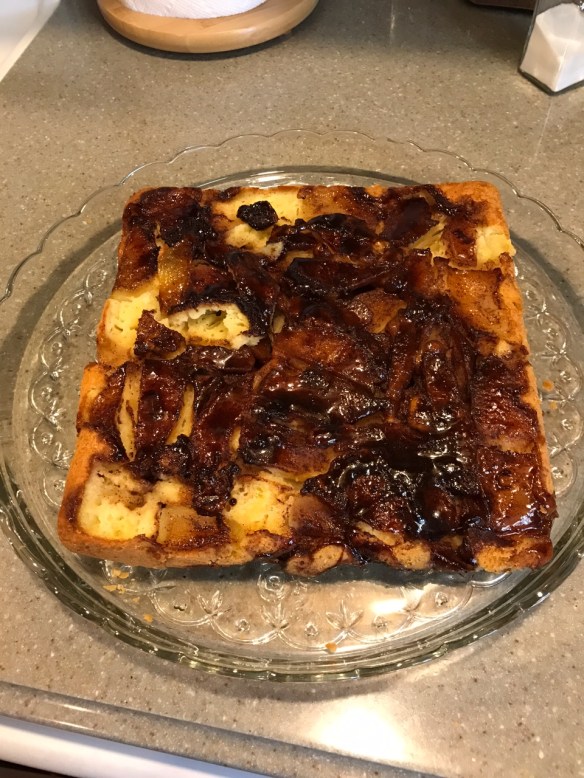
Today marks the 150th birthday of Laura Ingalls Wilder, famed write of the Little House on the Prairie books. In honor of her birthday, I made an Apple Upside-Down Cake from The Laura Ingalls Wilder Country Cookbook, compiled from a scrapbook of her recipes (I’ll have more to say about the book in a later post). I actually made it on her birthday eve so I could have the photos ready for today. 🙂

A few of the apples stuck to the pan, but not as many as I feared!

img_0066

It made a one-layer 8-inch square cake, which I liked because with just the three of us, we don’t need a big cake. I had all of the ingredients on hand, which helped, too. It probably won’t replace this cake as a favorite apple cake, but it was good, especially warm with a bit of ice cream.

img_0068

I was going to share some fun facts about Laura in honor of her birthday, but then discovered I did that last year! But I’ll repost a few of them and add a few more:

  • She was born on February 7, 1867 and died February 10, 1957 (that’s why we hold the Laura Ingalls Wilder Reading Challenge in February). Almanzo was born in February as well (the 13th), 10 years before Laura. According to the cookbook mentioned above, his favorite meal was Swiss Steak and he sometimes got it on his birthday.
  • She didn’t start writing the Little House books until she was in her 60s.
  • She had originally written one book called Pioneer Girl, but was advised to expand and edit it. This manuscript published for the first time a couple of years ago.
  • Pioneer Girl is factual, but the Little House books, though heavily based on Laura’s family, are fictional and arranged a little differently than real life, so there are some differences. For instance, Jack the dog’s death scene was totally fiction. Pa sold him.
  • Nellie Oleson was based on a composite of three different girls in Laura’s life.
  • Laura couldn’t spell very well — odd since she was a teacher and even wrote of competing well in spelling bees. It may be that in the original draft of Pioneer Girl, which was handwritten for her daughter, she was more concerned about getting it down that concentrating on spelling.
  • Before Laura wrote her books, she wrote a column for the Missouri Ruralist: most, if not all, of those columns have been compiled into a book called Little House in the Ozarks (liked to my review.) There are over 140 articles or columns arranged by topic, and the topics range from WWI, women’s progress, and “the greatness and goodness of God,” but most are just observations drawn from everyday life.
  • There was a Japanese series based on Laura’s novels called Laura, The Prairie Girl.
  • Both Laura and Almanzo were fairly short. She was 4’11” and he was 5’4″. They had the kitchen in the last house built for their height.
  • When asked why she didn’t write more books, one time she replied that the money she received from them cost her more in taxes. “She never found taxes on those who had labored their way to prosperity to be an incentive for even more labor” (Stephen W. Hines, I Remember Laura, p. 97). But another time she said that if she wrote more, she’d have to get into some of the sad times of her life (p. 122).
  • According to the cookbook, she used a wood cookstove most of the time, even after having an electric one installed just for quick things. Some of the recipes had to be configured for modern day regulated ovens.

Some of my favorite quotes of Laura’s from her columns in Little House in the Ozarks:

  • “Let’s be cheerful! We have no more right to steal the brightness out of the day for our own family than we have to steal the purse of a stranger. Let us be as careful that our homes are furnished with pleasant and happy thoughts as we are that the rugs are the right color and texture and the furniture comfortable and beautiful” (p. 37).
  • “It is a good idea sometimes to think of the importance and dignity of our everyday duties. It keeps them from being so tiresome; besides, others are apt to take us at our own valuation” (p. 130).
  • “Just as a little thread of gold, running through a fabric, brightens the whole garment, so women’s work at home, while only the doing of little things, is like the golden gleam of sunlight that runs through and brightens all the fabric of civilization” (p. 207).
  • “Here and there one sees a criticism of Christianity because of the things that have happened [during WWI]…. ‘Christianity has not prevented these things, therefore it is a failure’ some say. But this is a calling of things by the wrong names. It is rather the lack of Christianity that has brought us where we are. Not a lack of churches or religious forms but of the real thing in our hearts” (p. 265).

Favorite moments in Laura’s books:

  • When Mr. Edwards endured an arduous journey to bring Christmas presents to the Ingalls girls.
  • When Pa played his fiddle in the evenings.
  • When they thought they lost their dog, Jack, and he found them.
  • The church Christmas party where Laura gets her fur cape and muff.
  • The girls bringing in all the firewood during a storm when Ma and Pa are away after they heard about a house of children who froze.
  • When Laura admires the kitchen Almanzo built for her in the first home together.

Fun links about Laura:

Save

Thoughts about women’s ministries

img_0065Every now and then I come across a blog post or article saying something like, “I’m tired of fluffy pink crafty ladies’ meetings. I want to be authentic and go deep.”

I often think, “OK…what exactly does that look like in a ladies’ meeting setting?” Many times the writers say that want Bible studies or opportunities to share that really speak to the core of their Christian walk, where they can share what they’re really struggling with and receive advice and help without being judged. They say they can get craft instruction anywhere; they don’t need it at church. They don’t need scrapbooking or cupcake-making get-togethers. They remind us that every woman is not married or a mother, not every woman is called to be a wife and mother, and we need to minister to the whole spectrum of women represented in our churches, not just wives and mother. They want to discuss and participate in activities to change the world.

And those are all good points.

I’d like to make a few observations.

1. Most women ministry leaders would love to hear suggestions about what ladies would like to do (or they should be. We need to be open to new ideas and not just do the same things we always have). I was a ladies’ ministry coordinator for 9 or so years, and sometimes we’d send out questionnaires to the ladies of the church (to be answered anonymously) asking what they liked, didn’t like, would like us to do. We got very little response from those. A handful of ladies came faithfully; a great many didn’t, and I didn’t know if it was because they didn’t have time, didn’t like what we did, didn’t like us, or what. Plus, sometimes I scrambled for ideas that were new and fresh and that might appeal to a number of ladies. So that kind of feedback would be highly valuable.

2. Make suggestions graciously. Some of these posts have been quite harsh, feeling like a slap across the face or as if the writer is saying, “You’re shallow and I hate everything you do.”

3. Remember different people like different things. If you have two or more people at a church or a meeting, you’re going to have differences of opinion on what and how things should be done. Some women like the fellowship and the crafty things. That doesn’t mean they don’t like Bible study or are shallow. Sure, you can take classes at Michael’s or watch a YouTube video or peruse Pinterest. But often we don’t get to see our friends at church except at church or at these other functions, and it’s fun to get together in that way.

4. Sometimes the crafty things can be a ministry. At one church, we had different ladies share things within their expertise, so it was a way for them to minister when they might not be comfortable leading a Bible study or teaching a lesson. Plus the gathering was not only a basis for forming or growing friendships, it was also a non-threatening venue to invite lost or unchurched friends to. And often at meetings like that, or inbetween meetings like that, we had a woman in the church share her testimony. I remember one in particular in which a woman shared much about her early walk with God and navigating through her young adult years, dating relationships, etc., and was so sad that more of our single young women weren’t there to hear that.

5. It doesn’t have to be either/or. A church or ladies’ group can have informal, fun meetings as well as more serious Bible studies and service projects.

6. Proverbs 31 and Titus 2 do cover more areas than Bible study, though that’s the most important activity. In an era when women might not receive instruction and examples in homemaking as they did years ago, a ladies’ group can help support and instruct along these lines. Most women have a home, whether they have husbands or children, so some of these skills and principles can be helpful to all and can be used to minister to others and glorify God (see Edith Schaeffer’s The Hidden Art of Homemaking.)

7. On the other hand, there is much in those passages applicable to women in any setting regarding character and reaching out to the poor, and much in Proverbs 31 that could be brought out regarding single and working women (business savvy, interacting with merchants, making good quality products, industriousness, dealing with employees, etc.). We do need to make sure every meeting isn’t centered on marriage and motherhood, and, Moms, don’t just call ladies without children only when you need a babysitter.

8. At a time when marriage and motherhood are devalued and under attack, wives and moms need the support, affirmation, and encouragement of the church, and especially other ladies. But we need to remember that single and childless women are under attack in different ways and support, affirm,and encourage them, too. We tend to gravitate towards those in like circumstances and seasons of life, but we can learn from and support each other even when our lives are vastly different. (see When the Message Isn’t For Me.)

9. Deepness can’t be manufactured. Some people, introverts in particular, do like to “go deep,” but would be uncomfortable with a “turn to your neighbor and bare your heart on command” approach. You can have a good Bible study and make every effort for people to feel free to share, but you can’t force it. For some, that inclination will take time to grow; for others, that will only happen with maybe one or two close friends, not in a group setting.

10. Maybe you should go to your church’s ladies’ meetings anyway, even if they’re not exactly what you’d prefer. One of the purposes for almost any ladies’ function is fellowship among the attendees. Maybe a conversation started there will blossom into a warm friendship or an informal mentoring relationship. There’s nothing wrong with formal mentoring, but in my own life, it’s happened informally alongside hospitality and ministry situations. One conversation with an older lady that shaped my thinking about my kids’ teen years took place while we put up a bulletin board in a church hallway. Just being with older women gives you an opportunity to observe, soak up some of their wisdom, and sometimes ask questions.

Something that should have been said first is to pray about it. God knows what kinds of ministries are needed in a given place and the best way to go about them. And consider that if something is on your heat, maybe He is directing you to minister in that way. If you see a need reaching out to the poor, the elderly, single women, etc., perhaps God has brought that to your attention for a reason, either as a function of the ladies’ group or a separate ministry. Though I prefer ladies’ functions when the ladies of the church are all together, there are occasions for a smaller group with a specific focus.

I am at a stage in life when I can’t attend as many of the ladies’ functions as I’d like. With my husband’s mother in our home, I already leave him to take care of her alone most Sunday nights, and I just don’t feel right doing that much more than I already do, plus his work often keeps him from coming home in time for me to go anywhere. I do interact with her caregiver, the hospice nurse, etc., and try to remember to be an encouragement even there. And I admit, it’s cozy staying home on a cold dark night rather than driving a ways and spending an evening elsewhere. But I do strongly believe in women’s ministries and hope to participate in them more in the future. I encourage women to look past their differences and find ways to learn from each other and love each other and encourage each other in the Lord.

See also:

Mentoring Women
Church Ladies’ Groups
Why Older Women Don’t Serve
How Older Women Can Serve
I’m An Older Woman…So Now What?
How Not to Become an Old Biddy
The Quiet Person in the Small Group

(Sharing with Inspire Me Mondays, Testimony Tuesday, Woman to Woman Word-filled Wednesday, Wise Woman, Thought-provoking Thursday)

Save

Save

Save

Save

Friday’s Fave Five

FFF snowflakesIt’s Friday, time to look back over the blessings of the week with Susanne at Living to Tell the Story and other friends.

Here we are at the end of another week and several days into February already. Some highlights of the last week:

1. Going back to the gym is not so much a favorite in itself…I go because I know it’s good for me and I do feel better when I am going regularly. But I had been out for six weeks with a broken toe, and I was afraid I had lost all the conditioning I had built up and would have to start from scratch. But thankfully I was able to do all the things I normally do.

2. Talking to Timothy. My son told me that one day Timothy wanted to say Hi to me, so Jason texted, “Timothy says Hi.” Then Timothy asked him, “See her face?” So we FaceTimed after that. My grandmother’s heart melted. 🙂 I’m so glad we have the technology to talk to each other face to face whenever we want, and that he wants to talk to me.

3. Snuggling and watching videos. I didn’t know until recently that there is a kid’s channel on YouTube and a way to set parental controls so that the child can’t go anywhere but the kid’s channels. My son and daughter-in-law kept an old phone when they upgraded so that Timothy could use it for his videos, and he likes to watch them snuggled up with somebody. I got to be the snugglee when they were here last, and it was fun to have him show me his favorite videos (anyone else know the Excavator song? 🙂 ) and see him get excited about red Play Doh and Blue Play Doh getting mixed together to make purple.

4. Answered prayer. I had something I needed to work on this week, and I’d had trouble getting time, quiet, solitude, and clear thinking all together at the same time. I prayed for that specifically Thursday morning, started my task, thinking it would take me most of the day – and I was pretty much done by noon. That was such a blessing to me. Then before I wrapped it up this morning, God sent me an idea that finished it off perfectly.

5. A pretty iPhone case. One of my Christmas presents was a new phone, and my old phone case wouldn’t fit it. I like the rubbery kind because they help me not to drop it. I was delighted to find this one inexpensively on Amazon and purchased it with a gift card, another present.

img_00531

Happy Friday!

Save

Save

Book Review: The Story Girl

story-girlI read The Story Girl by L. M. Montgomery for Carrie’s  L. M. Montgomery Reading Challenge.

It opens with two brothers, Beverly and Felix King, going to stay with their father’s extended family while he travels to Rio de Janeiro on business. The King family lives on the old family homestead, and Bev and Felix look forward to exploring all the old haunts their father has told them of. The branch of the family they are staying with includes a brother and two sisters, Dan, Felicity, and Cecily King. Another cousin, Sara Stanley, lives with a nearby aunt and uncle. Neighbor Sara Ray and hired boy Peter Craig round out the group.

Sara Stanley is called the Story Girl partly because there is another Sara in the group, but mainly because she has a unique voice and ability to enthrall children and adults alike with the way she tells stories. The book tells of the children’s interactions, adventures, and misadventures, and along the way Sara entertains them with stories. Some are family tales, some are local lore, others are fairy tales or classical stories.

The children range in age from 11 to 14, yet seem younger than children of the same age by today’s standards.

I wondered if one reason Montgomery told stories about children was because she could explore issues through a child’s innocence, lack of experience, and questioning that she might not feel quite the freedom to with adults. For instance, in one chapter the cat is unwell, and some of the children think one of the women in the village put a spell on him when he yelped because she accidentally stepped on his tail. Some don’t think so, but they agree that they need to make an appeal for her to remove the spell and explain that he didn’t mean any harm. They also get some medicine down him, and pray. When he gets well, they argue about whether it was the spell removal, the medicine, or the prayers that cured him. “Thus faith, superstition, and incredulity strove together amongst us, as in all history.” In another, one of them finds an article in the newspaper reporting that someone in the USA predicted the date for Judgment Day. They argue over whether it’s true and what to do about it and respond in a variety of ways.

One story that disturbed me a bit was a legend about how the Milky Way came to be (in the chapter “A Daughter of Eve”). As the story has it, two archangels fell in love, which God did not allow among angels, so He separated them to far sides of the universe. But they loved each other so much, they each began building a bridge of light toward the other, not realizing the other was doing the same. When they met, some of the other angels reported it to God and asked him to punish them. He said, “‘Nay, whatsoever in my universe true love hath builded not even the Almighty can destroy. The bridge must stand forever.” It’s not the fanciful story that bothers me so much as the thought planted in reader’s heads that there is something God is powerless against. In another part of the book, the children wonder what God looks like until finally one of them finds someone who says he has a picture of God in a book at home, and they buy the picture from him for 50 cents. When they see it, they’re sad and dismayed that He looks old and “cross” and intimidating rather than friendly and inviting. They all process this in different ways until they finally ask the minister, who assures them that, though no one really knows what God looks like, He assuredly does not look like this. He tells them to bury the picture. They’re relieved, yet,

We had lost something of infinitely more value than fifty cents, although we did not realize it just then. The minister’s words had removed from our minds the bitter belief that God was like that picture; but on something deeper and more enduring than mind an impression had been made that was never to be removed. The mischief was done. From that day to this the thought or the mention of God brings up before us involuntarily the vision of a stern, angry, old man. Such was the price we were to pay for the indulgence of a curiosity which each of us, deep in our hearts, had, like Sara Ray, felt ought not to be gratified.

To me, planting that thought from the other story that God is powerless against true love does the same thing. Even though we know that’s not true, that thought keeps coming to mind.

But most of the stories and happenings are much lighter. There is a lot of charm in the stories, and I particularly like LMM’s characterizations and how the children play off each other. But there is a bit of a sharp edge, too, when the children are mean to each other, like the constant references to Felix being fat or Dan’s larger than usual mouth. Some of LMM’s writing is lovely; some seems to me to overstep into purple prose. But one of the main points of the story that I love is:

There is such a place as fairyland – but only children can find the way to it. And they do not know that it is fairyland until they have grown so old that they forget the way. One bitter day, when they seek it and cannot find it, they realize what they have lost; and that is the tragedy of life. On that day the gates of Eden are shut behind them and the age of gold is over. Henceforth they must dwell in the common light of the common day. Only a few, who remain children at heart, can ever find that fair, lost path again; and blessed are they above mortals. They, and only they, can bring us tidings from that dear country where we once sojourned and from which we must evermore be exiles. The world calls them its singers and poets and artists and story-tellers; but they are just people who have never forgotten the way to fairyland.

And I could identify with this, said of the Story Girl:

She loved expressive words, and treasured them as some girls might have treasured jewels. To her, they were as lustrous pearls, threaded on the crimson cord of a vivid fancy. When she met with a new one she uttered it over and over to herself in solitude, weighing it, caressing it, infusing it with the radiance of her voice, making it her own in all its possibilities for ever.

If I still had children of an age to read to, I am not entirely sure I would read this to them: if I did, it would be with some editing and discussions along the way.

One of the reasons I wanted to read this book was that the series “The Road to Avonlea” is based on it and its sequel, The Golden Road. I don’t remember seeing any of the series when it was originally on except for possibly a part of one episode at someone’s house. I had planned to see one before writing this review, but it’s not on Hulu or Netflix. There are excerpts on YouTube, but only 4 or 5 minutes each, with links back to Sullivan Entertainment, where they offer to sell them to you. DVDs are still available, but I didn’t want to buy them – I just wanted to see the first episode. Unfortunately our library system only has one Christmas episode from the series. The part I saw on YouTube had the same feel and look as Sullivan’s production of “Anne of Green Gables” with Megan Follows, but apparently they left out some of the characters and changed various details.

I listened to a free audiobook version on Librivox, which was read by volunteers across the country. Unfortunately, it sounds like it was read by volunteers. The sound quality wasn’t good on all of them: some had static or other noises. Some of the readers did better than others. But…it was free, Audible didn’t have it, and I had more room in my listening time than I did in my reading time, so I pressed on with it. I did get a copy of the book from the library to go over certain parts, and I just discovered a short while ago that the text is online here. I do want to read The Golden Road some time to see what happens with the children.

So – mixed emotions. A lot of good, a handful of qualities I in particular didn’t like. For more enthusiastic reviews, see Hope‘s or Carrie‘s.

(Sharing with Semicolon‘s Saturday Review of Books)

Save

Save

Laura Ingalls Wilder Reading Challenge Sign-up Post 2017

Welcome to the sixth Laura Ingalls Wilder Reading Challenge! I am especially excited for it this year as Feb. 7 marks her 150th birthday.

The basic idea is to read anything by or about Laura Ingalls Wilder. In the comments below let us know what you’re planning to read. On Feb. 28 I’ll have a wrap-up post where you can tell us how you did and what you thought, either in the comments or with a link back to your posts. You don’t have to have a blog to participate, but if you do I’d appreciate your linking back here.

If you’re looking for ideas for books other than the Little House books themselves, I have a list of Books Related to Laura Ingalls Wilder, with some others listed in the comments there and here.

Sometimes participants have done projects or made recipes from the series as well. If you do so, please do share with us! Annette at Little House Companion has some activities and other resources.

I like to have some sort of drawing to offer a prize concluding the challenge, and I decided to once again offer one winner the choice of:

The Little House Cookbook compiled by Barbara M. Walker

OR

Laura’s Album: A Remembrance Scrapbook of Laura Ingalls Wilder by William Anderson

If neither of those suits you, I can substitute a similarly-priced Laura book of your choice. To be eligible, leave a comment on the wrap-up post at the end of the month telling us what you read for this challenge. I’ll choose a name through random.org. a week from then to give everyone time to get their last books and posts finished.

For myself, I am planning on reading at least These Happy Golden Years, the next to last book in the series. I may go on to The First Four Years – or I may save that for next year.I also recently got a used copy of The Laura Ingalls Wilder Country Cookbook, compiled from recipes found in Laura’s kitchen and supplemented with information about Laura’s life and photos of the Wilders and their home. I plan to at least read the supplemental information: I may even try one or two of the recipes.

How about you? Will you be joining us this year? What will you be reading?


What’s On Your Nightstand: January 2017

What's On Your NightstandThe folks at 5 Minutes For Books host What’s On Your Nightstand? the last Tuesday of each month in which we can share about the books we have been reading and/or plan to read.

It’s the first Nightstand post of 2017! And I love that it is on the actual last day of the month.

Since last time I have completed:

A Patchwork Christmas Collection by Judith Miller, Nancy Moser, and Stephanie Grace Whitson, reviewed here. Christian fiction romances set in the Victorian era and based on second chances. Nice Christmas read.

A Fall of Marigolds by Susan Meissner has a double timeline, one on 1911 with a nurse on Ellis Island, and another in 2011 with a single mom, both timelines connected by a scarf, reviewed here. Very good.

The Golden Braid, a Christian fiction retelling loosely based on Rapunzel, reviewed here. Very good.

The Silent Songbird by Melanie Dickerson, a Christian fiction retelling loosely based on “The Little Mermaid,” reviewed here. Good.

The Magnolia Story by “Fixer-Upper” stars Chip and Joanna with Mark Dagostino, reviewed here. Enjoyed it quite a lot.

The Sea Glass Sisters by Lisa Wingate, reviewed here, is an novella prequel to The Prayer Box. A woman whose life is unraveling travels with her mother into a predicted hurricane to try to avert a family crisis. Excellent.

June Bug by Chris Fabry, reviewed here. Sort of based on Les Miserables, a man and his daughter travel the US in an RV, until one day she sees her photo on a missing children’s bulletin board. Very good.

The Story Girl by L. M. Montgomery for Carrie’s  L. M. Montgomery Reading Challenge.I just finished it Saturday and hope to review it later this week.

I’m currently reading:

How to Read the Bible For All Its Worth by Gordon D. Fee and Douglas Stuart

The Tidewater Sisters by Lisa Wingate

Two Roads Home by Deborah Raney

12 Years a Slave by Solomon Northup

Spiritual Mothering: The Titus 2 Design for Women Mentoring Women by Susan Hunt. Our ladies at church are going through this over the next few weeks. I probably can’t attend the sessions, but wanted to read it.

Up Next: Not sure yet, but my next choices will be from these:

A Place of Quiet Rest by Nancy Leigh DeMoss

Something from my reading plans for the year – I am leaning toward Middlemarch by George Elliot.

Either Fierce Convictions: The Extraordinary Life of Hannah More by Karen Swallow Prior and Eric Metaxas or When Others Shuddered: Eight Women Who Refused to Give Up by Jamie Janosz

Traces of Guilt by Dee Henderson.

The Portrait of Emily Price by Katherine Reay

These Happy Golden Years by Laura Ingalls Wilder for the Laura Ingalls Wilder Reading Challenge.

Speaking of the Laura Ingalls Wilder Reading Challenge – it starts tomorrow, runs through February, and it is hosted right here! More information is here, and I’ll have a sign-up post tomorrow. I’d love to have you join us!

Save

Save

Save

Manufactured Spirituality

I’ve had this draft sitting here since last July, and had jotted some notes and spent a lot of thought on it even before that. I’ve (obviously) had a hard time bringing my thoughts into a cohesive and coherent unit. I thought about calling it form vs. function, or the mechanics of ministry, or using artificial means to accomplish spiritual ends. Finally what seemed most apt was manufactured spirituality.

I see this on three different levels:

1. To try to be more self-disciplined, we establish habits to aid in godliness, like regular times of reading the Bible or prayer, church attendance, etc.  And that’s a good thing. But we all know what it is to have days when we’re just going through the motions, when our eyes are dragging across the page and we check “Have devotions” off your list of things to do for the day but haven’t really engaged with the text or been affected spiritually. Or we “feel spiritual” if we’ve crossed that duty off or don’t “feel spiritual” if we haven’t.

2. To try to minister more effectively as a church, we set up various programs or committees. But sometimes our routines and programs not only don’t accomplish the ministry for which they are intended, they can even hinder them. For instance, we’d all agree it’s a good thing for church members to greet visitors. But once when we were visiting a new church, no one spoke to us or even looked at us the whole time we were there – except at the hand-shaking time built into the service.They had squeezed all their greeting into that few moments, leaving visitors feeling awkward and not really greeted at all.

We can fall into the trap of thinking that when we show up for church visitation, then we’ve gotten our witnessing obligation in for the week, or because we have official greeters at church, none of the rest of us needs to greet new people, or because there is a committee to take care of x, y, or z, we don’t have to be involved.

3. We try to force results. For instance, we can feel that small groups would be good for the congregation to get to know one another better, and they work best if everyone participates. So we “make” the quiet person participate by putting undue pressure on them to say something, calling them out and putting them on the spot. Then we feel self-satisfied that the group went quite well today because everyone spoke, when we left the quiet person miserable and determined not to come back. Or, as happened to us once in a new church, whatever the pastor was talking about (I’ve forgotten now), at the end he asked everyone to break into family groups and discuss and pray right then and there about how to implement what he preached on. That seemed to my husband and me like forcing the issue or “making” people respond instead of letting God use His Word to convict and change. Another example: we want people to “go deep” in their conversations and relationships, so we have “turn to your neighbor and bare your heart on command” sessions instead of letting those opportunities arise in a more natural way. We’ve known people who made a profession of faith after a zealous Christian buttonholed them and would not back off until the person responded, yet there was no life change, no interest in the Lord afterward. By contrast, Jesus let people walk away sometimes.

Setting up good habits and routines and even programs can greatly aid us in our walk with God. But we have to keep in mind what they are for and not get lost in them for their own sake.

A book I read recently about getting more from our reading of God’s Word emphasized applying what we learn. That’s a good thing: we’re told to be doers of the Word, not just hearers. But his illustration went something like this: we need to apply God’s Word in measurable ways, not vague ones. So if, say, we come to a passage about prayer, instead of saying to ourselves, “We really should pray more,” according to this book, we should instead make plans to pray six minutes every day. As if God cared how many minutes we pray. The better approach, in my opinion, would be to stop and think about what I could and should be praying for. That in itself would generate a longer prayer list than I could probably keep up with (some people divide their prayer lists into categories over several days). Then the next step would be to study the prayers in the Bible, particularly in the epistles. Paul’s prayers in Philippians 1, Ephesians 1 and 3, and Colossians 1 are wonderful examples. Granted, that author probably intended that, if a person planned to pray six minutes and ran out of things to pray in three, that would lead him to these other ways of expanding his prayer life. But the emphasis on “measurable results” can lead to outward exercises without always the accompanying inward change. Similarly, if I read a passage and am convicted about needing to be more loving and less selfish, it might help to think of specific ways in which I need to do those things. But it would be wrong to check those off my list at the end of the day and think, “There! Done! Good work!” Sometimes instead I need to carry those thoughts with me all throughout the day and apply them in ways I couldn’t know I would need to when I first read them.

Years ago we were visiting my in-laws, and a couple of ladies from the church came by to visit my husband’s mother. I think it may have been her birthday, or maybe they were just visiting her as an “older” church member, but they brought a small plant, and, I believe, a card. She tended to be profuse in her thanks, and perhaps to counteract that a bit after she thanked them several times, one of them responded, “Well, you were on our list.” Wow, what a way to deflate any good feelings about someone coming to visit. She never said anything about it after they left, but it would have been understandable if she had thought, “They don’t really care: they just came because I was on ‘a list’ to visit.”

Our ministry isn’t boxed into a particular time, place, or group of people. Our programs don’t take care of all of our obligations. There is a sense in which we should always be “on,” always at the ready to serve. Even if there are official greeters at church, we can greet people when we see them or help a confused visitor find the right place. Even if there is someone designated to send cards to sick Sunday School class members, we can send one, too. If God has placed on our hearts that we need to help someone else in the church, we need to pray about how to do that rather than just dismissing it because our church has a benevolence committee to take care of those things.  If there is trash on the floor, we can pick it up instead of thinking, “There is a custodian for that.”

On the other hand, I’ve known women who felt terrible for not “serving” in church when their whole lives were ministering in “unofficial” ways. One lady would often apologize for not being more involved in our ladies’ group, but she lived next to and helped her elderly mother, cared for a disabled son, was the go-to baby-sitter for the rest of the family. She sang in the choir and took an interest in people, yet felt she wasn’t really being used of the Lord because she couldn’t plug into some of the ministries. Another had to step down from a position for which she was uniquely qualified, and I watched and was blessed as she found various other ways to minister: greeting newcomers, inviting ladies over for lunch, and other ways that didn’t fit in with any particular official ministry in the church, but ministered very well to the people involved.

Habits, routines, programs help greatly in organizing a ministry, and we need to use whatever systems are set up (reporting a plumbing problem to whoever is in charge, signing up for taking a meal to someone so she doesn’t receive two or three in one night or receive something she’s allergic to, etc.). And sometimes we do need those systems and routines because we don’t always “feel like” doing what we need to. A former pastor once said that the best time of prayer he ever has was when he didn’t feel like praying and had to confess that to the Lord right off the bat. Sometimes just doing what we should whether we feel like it or not is the first step to feeling like it.

But we should seek God’s grace to serve not just out of duty, and not to check off all the designated boxes, but with a right heart. The mechanics of ministry and spiritual disciplines are tools, but not the main focus, not the end-all of our efforts. Routines, habits, programs are an avenue of ministry, not an end in themselves, and ministry doesn’t take place only within those parameters. On the other hand, sometimes we can perfectly follow all of our routines, and our programs can seem to be going swimmingly, but we’re unaware that we’re missing something vital.

The simplicity which is in Christ is rarely found among us. In its stead are programs, methods, organizations and a world of nervous activities which occupy time and attention but can never satisfy the longing of the heart. The shallowness of our inner experience, the hollowness of our worship and that servile imitation of the world which marks our promotional methods all testify that we, in this day, know God only imperfectly, and the peace of God scarcely at all. If we would find God amid all the religious externals, we must first determine to find Him, and then proceed in the way of simplicity. Now, as always, God discovers Himself to “babes” and hides Himself in thick darkness. ~ A. W. Tozer, The Pursuit of God

God created whole systems of programs and routines for Israel in the Old Testament. But there were times He told them He hated their sacrifices and feasts – the very sacrifices and feasts He had commanded them (here, here, and here, for a few). Why? Sometimes because they harbored sin in their hearts even while performing their religious duties outwardly. Sometimes because they missed the main point, like those who kept the systematic observations but failed to minister on a personal level, or like Pharisees whose religious zeal was wrapped up in keeping not just God’s law, but their additions to it. God said to them through Hosea, “For I desired mercy, and not sacrifice; and the knowledge of God more than burnt offerings” (6:6). We’re no longer under those systems, but in the same way I think He would want us to implement whatever habits, routines, systems, or programs are helpful, yet not get lost or fixated on them for their own sake, and to keep in mind that the main point is to know Him and make Him known and minister to others in their need in His Name and by the power of the Holy Spirit.

And this is eternal life, that they know you, the only true God, and Jesus Christ whom you have sent. John 17:3

Not by the way of eye-service, as people-pleasers, but as bondservants of Christ, doing the will of God from the heart. Ephesians 6:6

img_0057

 (Sharing with Inspire me Monday, Testimony Tuesday, Woman to Woman Word-Filled Wednesday)

Save

Save

Save