Book Review: The Case-Book of Sherlock Holmes

Case Book of SHThe Case-Book of Sherlock Holmes is the last of the Holmes stories by Sir Arthur Conan Doyle. It opens with a preface from Doyle himself, rather than Watson, saying that “I fear that Mr. Sherlock Holmes may become like one of those popular tenors who, having outlived their time, are still tempted to make repeated farewell bows to their indulgent audiences. This must cease and he must go the way of all flesh, material or imaginary.” He says that he “had fully determined at the conclusion of The Memoirs to bring Holmes to an end, as I felt that my literary energies should not be directed too much into one channel,” but he later revived him (reportedly due to public demand, though he doesn’t say so here). He goes on to note:

I have never regretted it, for I have not in actual practice found that these lighter sketches have prevented me from exploring and finding my limitations in such varied branches of literature as history, poetry, historical novels, psychic research, and the drama. Had Holmes never existed I could not have done more, though he may perhaps have stood a little in the way of the recognition of my more serious literary work.

The Wikipedia article on Doyle states that he “wrote seven historical novels, which he and many critics regarded as his best work,” as well as other pieces, but he’s best known for Sherlock Holmes.

A couple of variations in this volume are two stories written as by Holmes himself rather than Watson and one written from a third person point of view. One of the two stories by Holmes occurred when he criticized Watson’s style of storytelling, and Watson told him he should give it a try; the second occurred after Holmes had retired and was no longer in touch with Watson when he came upon an unexpected case.

Twelve stories are included in this book, with some editions arranging them in different orders. The very last Holmes story written was “The Adventure of Shoscombe Old Place” in 1927.

The stories include a variety of cases brought to Holmes’ attention in a variety of ways, most often by someone connected with the case. The include a woman seen only in a veil, a mother accused of vampirism, a missing diamond, the theft of papers from a dead son’s trunk, a man searching for two other men with an unusual last name, a jealous wife, an unusual sea creature, a missing soldier, and a wax effigy of Holmes. In one of them, Holmes says, “In all my chronicles the reader will find no case which brought me so completely to the limit of my powers. Even my imagination could conceive no solution to the mystery.”

They occur in a variety of times as well: some when Watson was rooming with Holmes, some when he was not, one after Holmes retirement.

A few sentences stood out to me concerning Holmes’ regard for Watson. In “The Case of the Blanched Soldier,” one of the stories written from Holmes point of view rather than Watson’s, he says, “Speaking of my old friend and biographer, I would take this opportunity to remark that if I burden myself with a companion in my various little inquiries it is not done out of sentiment or caprice, but it is that Watson has some remarkable characteristics of his own to which in his modesty he has given small attention amid his exaggerated estimates of my own performances.” He says in this same story, “The good Watson had at that time deserted me for a wife, the only selfish action which I can recall in our association. I was alone.” In “The Adventure of the Mazarin Stone,” the one written in the third person, it’s said that, “Watson was always the man of action, and he rose to the occasion.” In one story in which Watson was wounded, Holmes cried out, “You’re not hurt, Watson? For God’s sake, say that you are not hurt!” Watson thought to himself, “It was worth a wound–it was worth many wounds–to know the depth of loyalty and love which lay behind that cold mask. The clear, hard eyes were dimmed for a moment, and the firm lips were shaking. For the one and only time I caught a glimpse of a great heart as well as of a great brain. All my years of humble but single-minded service culminated in that moment of revelation.”

After receiving a note from Holmes in one case which simply read, “Come at once if convenient–if inconvenient come all the same. S.H.,” Watson muses:

The relations between us in those latter days were peculiar. He was a man of habits, narrow and concentrated habits, and I had become one of them. As an institution I was like the violin, the shag tobacco, the old black pipe, the index books, and others perhaps less excusable. When it was a case of active work and a comrade was needed upon whose nerve he could place some reliance, my role was obvious. But apart from this I had uses. I was a whetstone for his mind. I stimulated him. He liked to think aloud in my presence. His remarks could hardly be said to be made to me–many of them would have been as appropriately addressed to his bedstead–but none the less, having formed the habit, it had become in some way helpful that I should register and interject. If I irritated him by a certain methodical slowness in my mentality, that irritation served only to make his own flame-like intuitions and impressions flash up the more vividly and swiftly. Such was my humble role in our alliance.

Other interesting features in this story: in one Holmes refused to eat, and when Watson asked why, he replied, “Because the faculties become refined when you starve them. Why, surely, as a doctor, my dear Watson, you must admit that what your digestion gains in the way of blood supply is so much lost to the brain. I am a brain, Watson. The rest of me is a mere appendix. Therefore, it is the brain I must consider.” I don’t think that’s the wisest course of action for most people, but it is interesting that he thought of himself primarily in terms of his brain. That appears to be a factor in his suppression of emotion and lack of relationships as well. Holmes says in one story: “Women have seldom been an attraction to me, for my brain has always governed my heart, but I could not look upon her perfect clear-cut face, with all the soft freshness of the downlands in her delicate colouring, without realizing that no young man would cross her path unscathed.”

Another observation I thought unusual for Holmes occurred when a man was taking a potion to seem to become more youthful: “There is danger there–a very real danger to humanity. Consider, Watson, that the material, the sensual, the worldly would all prolong their worthless lives. The spiritual would not avoid the call to something higher. It would be the survival of the least fit. What sort of cesspool may not our poor world become?”

One sentence that struck me as particularly clever: “When his castle in the air fell down, it buried him beneath the ruins.”

It’s been fun to read of the “real”…or at least, the original Sherlock Holmes. One of my main curiosities was whether he was really as rude as some modern conceptions of him make him out to be. I was happy to find he wasn’t. He was eccentric in some ways and could be egoistical, but he knew how to interact with people when he needed to and could even be kind and comforting when needed. He was a classic introvert and only had a very few close friends. I was surprised to find that his nemesis, Moriarty, only appeared in two books, with just a mention in one of them. I was also pleased to find that Watson was not a doddering old man, but was vibrant, described as “fleet of foot” in one story, and that Holmes valued him for his medical skills as well as his skills with a revolver, besides his being a good sounding board.

I was concerned, before reading the stories, about his rumored drug addiction, but it wasn’t enough to be an addiction, only appeared in a couple of books, and Watson talked him out of using drugs any more. I was also concerned because I had heard there were instances of spiritism in the book, but I did not find any. I did just read yesterday that Doyle was heavily involved in such, but Holmes, although he was not a religious man, did use various Biblical phrases and did not participate in anything like spiritism. There were a couple of cases where there were evidences of voodoo or something similar, but those involved were always portrayed as being from some island or another.

Here are my reviews of the other Holmes books:

A Study in Scarlet (novel)
The Sign of the Four (novel)
The Adventures of Sherlock Holmes (short stories)
The Memoirs of Sherlock Holmes (short stories)
The Hound of the Baskervilles (novel)
The Return of Sherlock Holmes (short stories)
His Last Bow: Some Reminiscences of Sherlock Holmes (short stories)
The Valley of Fear (novel)

I listened to the first books read by various narrators, and the last ones read by Simon Vance in this collection, who once again did a wonderful job. This edition of all the Holmes stories together came through on a good sale, so I got it, but it was maddening that the divisions weren’t according to the books. They are just run together one after the other, which is fine if you’re listening to them that way, but it’s hard to find a particular book. Thankfully one listener posted a table of contents which shows where the various books begin and end.

I don’t feel all warm and fuzzy toward these stories as I do some other books, so I don’t know that I’d reread or relisten to them, at least not any time soon. But they were fun while they lasted! And Holmes is such an iconic figure with so many cultural references to him, it’s nice to be familiar with him now.

(This review will also be linked to Semicolon‘s Saturday Review of Books.)

Spots and Wrinkles

Spots of spilled food or splashed mud and wrinkled clothes can usually be repaired, thankfully, but other spots are more of a problem.

In regular exchanges between Father Tim and his wife, Cynthia, in Jan Karon’s Mitford books, she joyously exclaims that she loves  something, then he will ask, “What don’t you love?” She usually replies with three items, one of which is often “age spots.”

I share her dislike and dismay over those pesky blotches. They’re popping up all too frequently, and there doesn’t seem to be much one can do about them.

Another dismaying sign of aging is wrinkles. Hopefully most of one’s wrinkles will mark laugh lines rather than frown creases, but neither is really a welcome sight. I have dry skin, which was responsible for my not having many pimples in my teens, for which I was glad. But I didn’t learn until later that same dry skin would betray me by wrinkling earlier than my oilier counterparts. In the hormonal changes of middle age, I once experienced the ultimate injustice of a big fat pimple right in the middle of a wrinkled forehead. It didn’t seem like those two should go together!

Spots and wrinkles in one’s character, though, are worse than the biggest age spot and the most wrinkle-prone linen and harder to deal with. Too often my good deeds are splotched with wrong motives. Fissures of selfishness seem to grow deeper and longer every day. My efforts to clean up those spots or iron out those wrinkles only seem to add more.

In the 1720s, Benjamin Franklin “conceiv’d the bold and arduous project of arriving at moral perfection. I wish’d to live without committing any fault at any time; I would conquer all that either natural inclination, custom, or company might lead me into.” He made a chart listing thirteen virtues, and placed a dot beside each one he violated every day, with the goal that eventually he’d be able to live with a completely clean chart. But it was never spotless. He had to admit that “I never arrived at the perfection I had been so ambitious of obtaining, but fell far short of it, yet I was, by the endeavour, a better and a happier man than I otherwise should have been if I had not attempted it.”

Even though we might become “better and happier” by trying to develop virtue, we can never become perfect, and perfection is what is required to be right with God and to get into heaven. Revelation 21:27 says of heaven, “But nothing unclean will ever enter it, nor anyone who does what is detestable or false, but only those who are written in the Lamb’s book of life” (ESV). Jesus said, “Be ye therefore perfect, even as your Father which is in heaven is perfect.” Even if we could be completely perfect and sin-free from this moment forward, we have all the sins of our past still spotting our souls.

It would be hopeless except that “Christ also loved the church, and gave himself for it; That he might sanctify and cleanse it with the washing of water by the word, That he might present it to himself a glorious church, not having spot, or wrinkle, or any such thing; but that it should be holy and without blemish” (Ephesians 5:25-27).

Only Jesus is free of spots or wrinkles of wrong thinking and wrongdoing.

How much more shall the blood of Christ, who through the eternal Spirit offered himself without spot to God, purge your conscience from dead works to serve the living God? Hebrews 9:14.

 Forasmuch as ye know that ye were not redeemed with corruptible things, as silver and gold, from your vain conversation received by tradition from your fathers; But with the precious blood of Christ, as of a lamb without blemish and without spot. (1 Peter 1:18-19).

Only Jesus can cleanse us and remove the wrinkles in the depths of our souls:

And from Jesus Christ, who is the faithful witness, and the first begotten of the dead, and the prince of the kings of the earth. Unto him that loved us, and washed us from our sins in his own blood. (Revelation 1:5)

This then is the message which we have heard of him, and declare unto you, that God is light, and in him is no darkness at all. If we say that we have fellowship with him, and walk in darkness, we lie, and do not the truth: But if we walk in the light, as he is in the light, we have fellowship one with another, and the blood of Jesus Christ his Son cleanseth us from all sin. If we say that we have no sin, we deceive ourselves, and the truth is not in us. If we confess our sins, he is faithful and just to forgive us our sins, and to cleanse us from all unrighteousness. (1 John 1:5-9)

I don’t know whether our bodies in heaven with retain the spots and wrinkles they had on earth, but I am sure we won’t care then. However, I am intensely, eternally thankful that when we believe on Jesus Christ as our own Lord and Savior, our souls are thoroughly cleansed now and through all eternity from any hint of a blemish or wrinkle.

Be diligent that ye may be found of him in peace, without spot, and blameless. (2 Peter 3:14b).

IMG_1210

I lay my sins on Jesus,
The spotless Lamb of God;
He bears them all, and frees us
From the accursed load.
I bring my guilt to Jesus,
To wash my crimson stains
White in His blood most precious,
Till not a spot remains.

I lay my wants on Jesus:
All fullness dwells in Him;
He heals all my diseases,
He doth my soul redeem.
I lay my griefs on Jesus,
My burdens and my cares;
He from them all releases;
He all my sorrows shares.

I rest my soul on Jesus,
This weary soul of mine;
His right hand me embraces,
I on His breast recline.
I love the Name of Jesus,
Emmanuel, Christ, the Lord;
Like fragrance on the breezes
His Name abroad is poured.

I long to be like Jesus,
Meek, loving, lowly, mild;
I long to be like Jesus,
The Father’s holy Child;
I long to be with Jesus,
Amid the heavenly throng;
To sing with saints His praises,
To learn the angels’ song.

~ Horatius Bonar

Just as I am, and waiting not
to rid my soul of one dark blot,
to thee, whose blood can cleanse each spot,
O Lamb of God, I come, I come.

~ Charlotte Elliott

Sharing at Thought-Provoking Thursday.

God’s Messengers

I’ve been going through some old posts lately and came across this, from when I used to host “The Week in Words.” It was originally posted August 9, 2010, and it convicted me again today:

From the Elisabeth Elliot e-mail devotionals, this taken from her book A Lamp For My Feet:

How can this person who so annoys or offends me be God’s messenger? Is God so unkind as to send that sort across my path? Insofar as his treatment of me requires more kindness than I can find in my own heart, demands love of a quality I do not possess, asks of me patience which only the Spirit of God can produce in me, he is God’s messenger. God sends him in order that he may send me running to God for help.

Sometimes the very circumstance in our lives that we’re chafing against is the one God is using to work something necessary into our hearts and characters that we would not learn or develop any other way.

That goes along with something I read at Washing the Feet of the Saints:

In a recent conversation with a delightful young friend, we considered what it means to die to self, particularly in the ordinary tasks of every day life, and to live sacrificially in our home and community to the glory of Christ.

The “dying” this young lady referenced was a simple household chore that had nothing to do with family/elderly caregiving, but it’s application was obvious. My friend lamented that it should be easier to put her desires and contentment aside for the benefit of other. “But then it wouldn’t be dying,” I countered.

Laudable Linkage

It’s been a few weeks since I’ve been able to share links I found interesting recently. But I don’t have as many as you might expect for a longer time period. Here they are:

What Does It Mean to “Accept Jesus”? “Accepting Jesus’ is not just adding Jesus. It is also subtracting the idols.”

No, Hanging Out With Your Friends Is Not the Church. Love this blog name, too: The Wardrobe Door.

Freedom From Parenting Guilt.

10 Amazingly Enjoyable Things About Having Kids. We hear so much negativity in the world about the frustrations of having children, but there are many fun things, too. This is from a secular source and therefore has a couple of philosophical bits I wouldn’t agree with, but overall some great observations.

Love Theologically. HT to Challies. Love and theology should feed each other, not oppose each other.

Sweet video about Moms.

If you’re a fan of Pixar movies (we are!), you might enjoy this video of “Easter eggs” in the films – little surprises from one film in another:

Happy Saturday!

Friday’s Fave Five

FFF spring2

It’s Friday, time to look back over the blessings of the week with Susanne at Living to Tell the Story and other friends.

This week has definitely had its challenges. But it’s had its bright spots, too. Here are a few of the latter:

1. Surprise Mother’s Day breakfast. My son and daughter-in-law surprised me Mother’s Day morning by showing up early to make breakfast for us. They made biscuits and gravy and some really cute fruit cups and Jim made scrambled eggs.

2. Mother’s Day as a whole. My family always makes it a special day for me. Besides the aforementioned breakfast, Jim grilled burgers for lunch, we Face-timed with my oldest son, and they got me flowers and a few very nice gifts.

Mother's Day 20153. Baby Cuddles. Now that Timothy has gotten mobile, he’s usually more interested in playing or exploring than sitting and cuddling. But while everyone else was making breakfast, I think he wasn’t quite awake yet, and he was content to lean against me and play with the buttons on my housecoat for a while.

4. Ruby Tuesday’s Smoky Mountain Chicken. Jim had to be out of town one night, which meant I had great-grandma’s full care, and Jason and Mittu offered to pick up dinner to help out.

5. A tooth problem averted. For a few days the gum under the bridge I just had put in a few weeks ago was swollen and painful. The bridge experience wiped our our dental benefits for the rest of the year, so I was really hoping this wasn’t going to develop into a major problem (well, the pain and discomfort of another potential procedure were concerns, too!) Thankfully it went away – I guess something had just irritated it for a bit.

Happy Friday!

A few more thoughts on caregiver resentment

EldercareSeveral thoughts coalesced this morning to a realization. I wrote last week about caregiver resentment, and I may go back and add this in at some point.

We can get resentful or “weary in well doing” in just about any endeavor. But I think in most of them, you have every expectation of seeing improvement or completion. If you’re building something or involved in a big project, you know at some point it will be done. Some of the frustrations are easier to bear because you can see progress and look forward to the end results. With the frustrations and limitations of raising children, you also continually see them learn and grow and gradually get more independent and able to do some things on their own. Plus they’re cute, and there are moments of fun and joy along the way.

But with an elderly loved one who is declining, it’s not going to get better. It will likely get worse. And the only way it all ends is when that person dies (or goes to a nursing home, which we feel would only hasten my mother-in-law’s death. She was so low when she was there that we felt we were bringing her home to die – and that was almost two years ago). So wishing to be relieved or for it all to be over seems akin to wishing for that person’s death, which adds guilt to the mix.We backtrack and think, “No, no, no, I didn’t mean that.” We just wish it could be different. But it’s not going to be.

Some caregivers battle depression more than resentment, or maybe both. Besides all that is involved in caring for an elderly person, there is the sadness of seeing them lose mental or physical abilities one by one.

There are times I wonder at God’s ways. Last year we lost our pastor to a short battle with cancer and a young mom of two children to a very sudden and unexpected reaction to a medication. He was in his early fifties, two daughters had just gotten married, he was known for uniquely caring for everyone whose life he touched. He would have been a wonderful grandfather. The young mom left behind a grieving husband, children, and friends. Why are people like that taken “early,” as it seems to us, when they still have so much vitality and usefulness ahead of them, and other people experience a slow decline for years, some vacant and unresponsive in nursing homes, others no longer recognizable due to the alterations of Alzheimer’s?

I don’t know. But I do trust that God has His reasons. He’s doing something in the lives of all the people connected with each individual.

All we can do is continually apply God’s truth to our situations, as I mentioned previously, and depend on His grace day by day.

Something else that helps me a bit sometimes is when I think of my mother-in-law’s situation as analogous to how God sees me: helpless, completely dependent, messy and unable to do anything about it. Yet He loves me. He doesn’t resent cleansing and caring for me. He knows how thoroughly I need Him even more than I do. Seeing my own helplessness and basking in His love and care for me helps love for others to well up in my own heart.

A new commandment I give to you, that you love one another: just as I have loved you, you also are to love one another.
 John 13:34.

Book Review: Taken

TakenWhen a kidnapped victim is released, we tend to think that’s the happy ending to their story, or at least to that chapter or ordeal. But Dee Henderson starts there in her newest novel, Taken. Shannon Bliss had been missing for eleven years, having been abducted at the age of 16. She escaped on her own and sought out private investigator Matthew Dane to help her take the next steps. He’s a former police officer, but he’s also the father of a kidnap victim: his daughter had been missing for a number of years, so Shannon feels Matthew can help her in a unique way that others could not.

I’ve always pictured recovered kidnapping victims as spending their first few days, after a medical check-up, giving their testimony to various officials. I don’t know how it works in real life, but in this book, Shannon shares the details of what happened in small bits at a time. One reason is that she can’t bring herself to lay it all out at once, but there are bigger reasons: the family who took her thinks she is dead, and her life might be in danger if they find out she’s alive, plus she is waiting on one friend who also had plans to escape, plus she has evidence that could put the whole family away if it’s shared at the right time and handled the right way. Her abductors were a large network of family members involved in a number of crimes, so Shannon wants to tread carefully in order to catch as many as possible, especially the most dangerous.

Matthew is friends with FBI Special Agent Paul Falcon (from Dee’s previous novel Full Disclosure) and is able to pass along information as Shannon shares it. His experience with his daughter’s kidnapping is helpful, but he has to learn that Shannon is older and copes in her own way. Still, he recognizes that she is still in survivor mode and that at some point the emotions will hit. For now, he helps her process things, acts as a buffer between her and the public and the police, and advises and protects her.

An added wrinkle is that her brother is running for governor and has mentioned his missing sister in his campaign. Deciding when to tell and meet with him and then when and how he should make the news public requires much thought.

Most of Dee’s books are edge-of-your-seat suspenseful. This was not that way, but I still enjoyed finding out Shannon’s story as it unfolded and seeing what happened afterward.

Of particular interest, and something Matthew is surprised at, is that her faith didn’t suffer through her ordeal. In quite an interesting conversation between them about free will, Shannon says,

“But God decided to create a world where free will was more important than no one ever getting hurt. There must be something stunningly beautiful and remarkable about free will that only God can truly grasp, because God hates, literally abhors, evil, yet He created a world where evil could happen if people chose it. God sees something in free will and choice that’s worth tolerating the horrifying blackness that would appear if evil was chosen rather than good. I find that utterly remarkable” (pp. 107-108).

“God gave Adam and Eve that free will and choice. He gave them one warning: eat of any tree that is here, including the wonderful tree of life, but don’t eat from the tree of the knowledge of good and evil…I wish Adam and Eve had thought more about what knowledge meant. Eve saw it as a good thing, to know more. But how do you really know something? You experience it” (p. 108).

I disagreed when she said “God expected, fully intended, for Adam and Eve to obey what He had said,” since the Bible speaks of “the Lamb slain from the foundation of the world” (Revelation 13:8). That and other verses (besides verses about God’s omniscience) indicate that of course God knew what was going to happen. But I agree with her conclusion that man’s evil choices don’t make God evil, despite the fact that God could have stopped them, and that He gives grace and help in the midst of that pain of people’s wrong choices. “God has been acting honorably throughout history regrading what He wants. We’re the ones at fault. God is good. And I still really, truly like Him” (p. 109).

I’m always reluctant to get to the end of Dee’s books, because the characters feel like friends and I kind of miss them when the story is over. But in the last few, characters from some of her other books make appearances in the newer ones, so it’s neat to feel like you’re touching base with them again.

This was a book I made time for beyond my usual reading times, and I very much enjoyed it.

(This review will also be linked to Semicolon‘s Saturday Review of Books.)

Book Review: The Valley of Fear

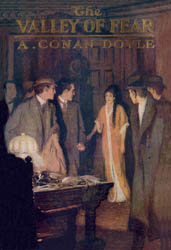
Valley_of_fearThe Valley of Fear is the fourth of Sir Arthur Conan Doyle’s full-length Sherlock Holmes novels. Like most of his other stories, it first appeared serialized in a magazine, this time in The Strand.

The book opens with Holmes and Watson trying to decipher a message from an informant concerning Professor Moriarty. The only other time Moriarty has been mentioned was in the last chapter of The Memoirs of Sherlock Holmes, in which he died. So this story predates that one, but there is a bit of a disconnect in that Watson didn’t know who Moriarty was in Memoirs, and if the events in The Valley of Fear occurred in the timeline before that book, Watson would surely have known the name. But as far as I know that’s the only major slip up in Doyle’s narratives, so we can forgive him: he may have even been aware of the problem and decided to write this story as is anyway.

At any rate, Holmes and Watson are interrupted by the arrival of a Scotland Yard Inspector MacDonald asking Holmes to assist on a case and then being stunned to learn that the message Holmes had just deciphered concerned the very man who had been killed. The victim had been shot in the face with an American sawed-off shotgun. There are a number of odd incidents and clues that do not add up. Holmes fixates on one that the others do not think is important, and, of course, solves the mystery.

The second part of the book is the back-story of what happened leading up to these events and is written in a completely different style, much like the story within a story in A Study in Scarlet. At first nothing seems related at all, but the reader assumes that some of the characters are going by different names than what they’re known as in the first part. In this story, a young John McMurdo is fleeing from the law in Chicago and comes to a Vermissa Valley to start anew. He’s part of an organization called The Eminent Order of Freemen, which primarily engages in charitable works in Chicago. But in Vermissa Valley, it’s a tightly run gang of thieves, murderers, and extortioners called the Scowrers who have the area under their thumb so much that it is nicknamed the Valley of Fear. McMurdo has no choice but to become involved with the gang, even though his landlord kicks him out over it and refuses to let him see his daughter any more.

Events unfold with the Scowrers for several chapters until they learn that a Pinkerton detective is undercover in the area, and their focus turns to finding and dealing with him.

An epilogue ties up the loose ends of the story and brings it back to Moriarty’s involvement.

Though I eventually guessed who McMurdo was (and rereading the first few pages, I saw several clues which caused me to realize I should have guessed it much sooner), I was totally surprised by the twist in the second story. Though some of the first story gets a little boring with the deciphering and then the arguing over which clues mean what, the last couple of chapters were the most exciting of any of Doyle’s work that I have read so far.

After looking around Wikipedia a bit, I saw that the story was based on the real life Molly Maguires in PA and their encounter with Pinkerton Agency detective James McParland. I had heard the term Molly Maguires before but had no recollection of what it meant until reading about it just now.

I listened to the audiobook read by Simon Vance, who did a wonderful job not only with the various English accents and voices in the story, but also with American, Scottish, and Irish accents as well. I also read parts of the story online at Project Gutenberg.

(This review will also be linked to Semicolon‘s Saturday Review of Books.)

A Belated Happy Mother’s Day!

I was beginning a Mother’s Day post yesterday morning when my son and daughter-in-law unexpectedly came in to surprise me by coming to prepare breakfast. A welcome interruption! I had a wonderful day, which I’ll say more about Friday. There wasn’t time during the day to come back to the computer, so I started to just skip a Mother’s Day post. But it was on my heart to do this morning, so I thought I’d go ahead. We can honor our mothers beyond Mother’s Day, right? 🙂

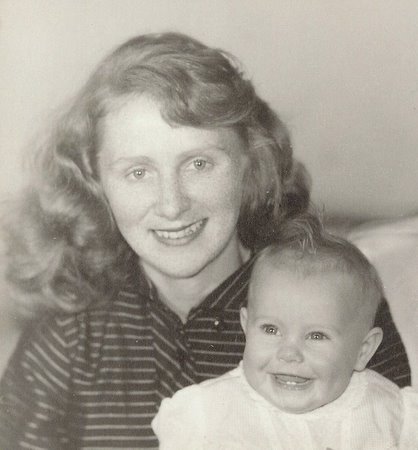
I want to honor the memory of my mom. I miss her deeply.

image03.jpg

I want to honor my mother-in-law, who raised four children, one of whom became my wonderful husband, and who maintained a sweet spirit throughout her life in the face of serious trials:

2009

Barbara's Cell phone pics 233

2013

I want to honor my daughter-in-law, who is a loving wife to my son and mother to the cutest grandson in the world:

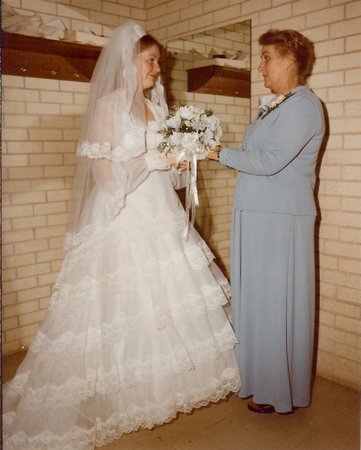
01dc9269e86cfa0f61905861ceb4270c6fe0121bf2I want to honor my daughter-in-law’s mother, who raised such a sweet girl:

133And I want to remember and honor my sisters, nieces, sisters-in-law, and friends with mothering and nurturing hearts.

I hope you had a wonderful Mother’s Day and feel renewed in your roles this morning.

mothers-day-flowers-13

Friday’s Fave Five

FFF spring2

It’s Friday, time to look back over the blessings of the week with Susanne at Living to Tell the Story and other friends.

It’s been a pretty nice week. Cool mornings, a little hot in the afternoons, but not like it will be later in the summer. Here are some of the best parts of the week:

1. Visiting the zoo with Timothy, and his parents and also my youngest son and his girlfriend. Timothy wasn’t terribly interested in the animals yet – most of them were too far away for him to really notice them. But the few he did see, he just kind of took it all in, observing and trying to process. Jason has a cute video of his watching a monkey’s antics. I think he’ll get more out of it when he’s a little older, but it was still a fun outing.

01a9664c121e962d9590244ffca3445d8b21a2b76b

2. Not cooking for three days. For various reasons, we had different things going on at dinner time three days in a row. It was almost like a mini-vacation!

3. A couple of hours with a book. I mentioned in finding time to read that most of my reading is done in 10-20 minutes snatches rather than at long intervals. But Sunday I got in about two hours with my latest Dee Henderson novel. Bliss!

4. Sleep. I could probably name that every week. 🙂 I wasn’t feeling well Sat. night and didn’t get a lot of sleep. Sunday morning was one of those times I felt like I just couldn’t function, so I stayed home from church and slept about 2 1/2 hours and then napped a couple of times during the day. I finally started feeling back to normal later in the afternoon.

5. Roses budding! I didn’t think they would for a few weeks yet.

IMG_1192

Hope you have a great weekend remembering and honoring your mom!