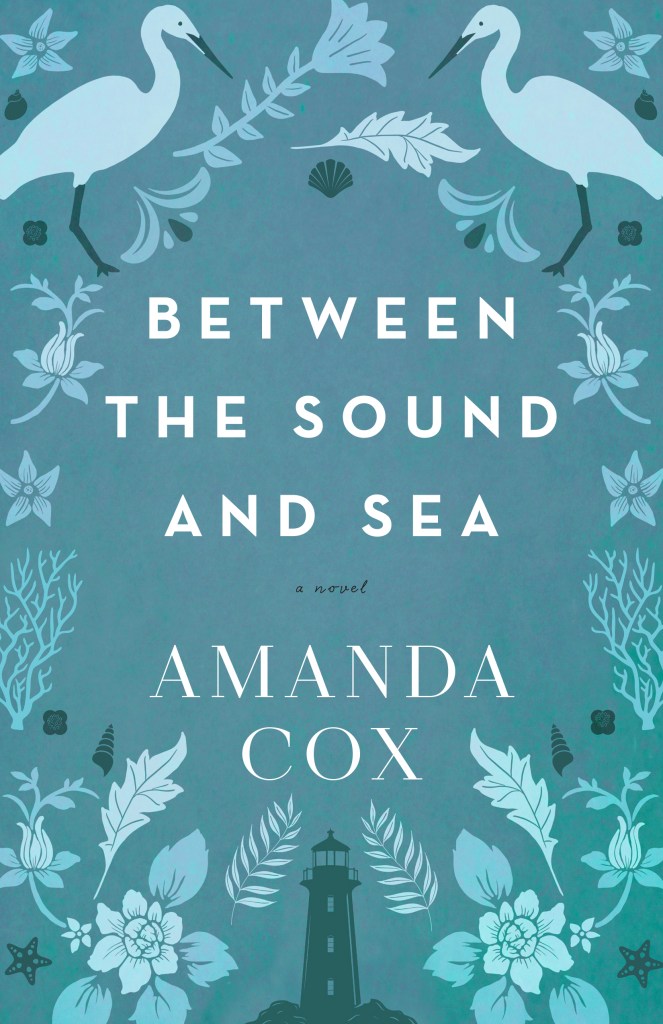
Between the Sound and Sea is “Inspirational Contemporary Fiction with History and Mystery at a North Carolina Lighthouse.” The Sound in the title is Pamlico Sound in the Outer Banks of NC, but the title has several layers of meaning.
Josephina Harris–Joey–owns a fledgling event-planning business in Copper Creek, TN, where she grew up. She had helped her father and brother in their restoration business until her father retired and sold the business. But the new owner cheated people, who, for some reason, blamed Joey’s father. Her parents decided to make a new start in Florida. Joey’s customers have cancelled events one by one
When Joey’s friend sends her an ad about help wanted to restore a lighthouse and cottage on a North Carolina island, Joey decides to apply. If she gets the job, it will give her an income to tide her over and give her time to think about what she should do next.
Joey travels to NC and meets the owner of the lighthouse, 81-year-old Walt O’Hare, and his grandson, Finn. Walt had grown up in the area but left after WWII. His best friend, Cay, short for Cathy, had been the lighthouse keeper’s daughter. During the war, her father’s body had mysteriously washed up on shore, but Cay was never found and presumed dead. Walt wants to restore the lighthouse in their memory. Finn is not so sure this idea of his grandfather’s is a good one and is even less sure Joey is the person for the job. But he acquiesces.
It soon becomes clear that Walt has other reasons for wanting to restore, reasons which he is not sharing.
The people in town tell of strange things happening on the island over the years. Some say ghosts inhabit the island. Others say Cay’s father was working for the Nazis.
As Joey begins restoration, she finds patched-up places in the lighthouse’s inner walls. When one area begins chipping, she discovers what appears to be a lighthouse keeper’s log inside–but the events described don’t match the official logs.
Local lore describes a “Saint Mae” who rescued people lost at sea. Could these logs belong to Mae? But who is she and why is she not listed among the lighthouse keepers?
When accidents and unexplained things start happening around the lighthouse and cottage, Joey wonders what’s at the bottom of it all.
Besides the lighthouse mystery, Joey, Walt, and Finn all deal with regrets from their past and indecision about how to handle the future. There’s a secondary story line involving a teenage boy with a troubled past.
I enjoyed how the story unfolded, sharing what really happened with Cay, who Mae was, how everything connected, and how each character found peace. The restoration of the lighthouse seemed a subtle metaphor for the needed restoration available to each character.
I also loved that the author had Christian characters doing Christian things without being heavy-handed about it. Some Christian fiction is so subtle, there’s almost nothing Christian about it. It’s refreshing to find truly Christian fiction.
A couple of favorite quotes:
God meets us right where we’re at. And maybe things in our lives get broken down and beat up along the way. The good news is restoration work is kind of His specialty.
I’m grateful to have played a role, but I wasn’t the planner orchestrating this event. This one was in the hands of One far more skilled than I, gently guiding even when we were all half certain we’d lost our way.
A couple of well-worded descriptions caught my ear, too: “the comfort of an oversized sweater worn on a crisp fall morning” and “Her voice was wispy like fog over water.”
I listened to the audiobook read by Rebecca Quinn Robertson, who did an okay job. She spoke too softly sometimes.
As I sat down to write this review, I looked up the book on Amazon and reread the first few pages in their free sample. I had forgotten how it began, with an older woman telling a young boy about Saint Mae. I was delighted to realize who those characters were later in the story.
Overall, this was a great read that I am happy to recommend.
As I grew up, some people emphasized God’s love to the extreme of discounting His wrath or justice. For that reason, some churches tended not to talk about the love of God so much except in that He loved us enough to send His Son to die for our sins. We sang about God’s love in our hymns. We read about it in our Bible studies. But God seemed to be presented as a stern judge rather than a loving Father.
The more I read the Bible, though, the more God’s love seems to be foundational to our Christian lives.
Paul prayed for the Ephesians that “according to the riches of his glory he may grant you to be strengthened with power through his Spirit in your inner being, so that Christ may dwell in your hearts through faith—that you, being rooted and grounded in love, may have strength to comprehend with all the saints what is the breadth and length and height and depth, and to know the love of Christ that surpasses knowledge, that you may be filled with all the fullness of God” (Ephesians 3:16-19).
And then he writes, “Now to him who is able to do far more abundantly than all that we ask or think, according to the power at work within us, to him be glory in the church and in Christ Jesus throughout all generations, forever and ever. Amen” (verses 20-21). We apply those verses to all kinds of things, but think what it means in the context of knowing God’s love. The love of Christ “surpasses knowledge”–is more than we can fathom. Yet God inspired Paul to pray that we might know His love.
How does knowing God loves us affect our lives?
God loved us even before we came to Him.
We tend to think God will love us once we get cleaned up. But Romans 5:8 says, “But God shows his love for us in that while we were still sinners, Christ died for us.” Similarly, Ephesians 2:4-6 tells us, “But God, being rich in mercy, because of the great love with which he loved us, even when we were dead in our trespasses, made us alive together with Christ—by grace you have been saved— and raised us up with him and seated us with him in the heavenly places in Christ Jesus.”
God loved us enough to send His Son to bear our sins.
““For God so loved the world, that he gave his only Son, that whoever believes in him should not perish but have eternal life” (John 3:16). Isaiah 38:17 puts it this way: “In love you have delivered my life from the pit of destruction, for you have cast all my sins behind your back.”
God’s love draws us to Him.
When I first began to hear the gospel, I knew I was in trouble, because I knew I was a sinner. But I would have been afraid to come to God if I didn’t know that He loved me. His law convicted me, but it was His love that drew me to Him. Hosea writes that God “drew them with gentle cords, With bands of love” (11:4, NKJV). James Grindly Small expanded on this thought in the hymn, “I’ve Found a Friend”:
I’ve found a Friend, O such a Friend! He loved me ere I knew Him; He drew me with the cords of love, And thus He bound me to Him; And round my heart still closely twine Those ties which naught can sever, For I am His, and He is mine, Forever and forever.
God’s love keeps us secure.
In college, a friend and I were listening to the hymn, “O Love That Wilt not Let Me Go.” She commented that the song title seemed odd. But it’s not if you’ve ever felt unsure of someone’s love. Even the best human love will fail us at times. But God says, “Who shall separate us from the love of Christ? Shall tribulation, or distress, or persecution, or famine, or nakedness, or danger, or sword? As it is written, ‘For your sake we are being killed all the day long; we are regarded as sheep to be slaughtered.’ No, in all these things we are more than conquerors through him who loved us. For I am sure that neither death nor life, nor angels nor rulers, nor things present nor things to come, nor powers, nor height nor depth, nor anything else in all creation, will be able to separate us from the love of God in Christ Jesus our Lord” (Romans 8:35-39).
God’s love sustains us.
Knowing how deeply God loves us will sustain us when, like Job, we’re going through trials that don’t make sense. We may not feel God’s love in those movements. But when we know His character through His Word and we know His love, we can rest in the fact that He has a purpose in what He allows and He will keep us.
God’s love disciplines us.
A mother who never disciplines her child or tells him “no” might feel she is the most loving parent in the world. But she’s not: she’s impairing her child. He will never learn self-discipline or self-control if he’s never been taught to deny himself and yield to another. He probably won’t get along well with others and may have trouble holding a job.
We mentioned the disconnect some have between God’s love and His wrath. Yet everyone who loves another hates what would harm his loved one. God knows sin is harmful to us, so he disciplines us like a loving parent. “My son, do not regard lightly the discipline of the Lord, nor be weary when reproved by him. For the Lord disciplines the one he loves, and chastises every son whom he receives” (Hebrews 12:5-6).
God’s love comforts us.
David wrote in Psalm 31:7: “I will rejoice and be glad in your steadfast love, because you have seen my affliction; you have known the distress of my soul.” The writer of Lamentations adds: “My soul continually remembers it and is bowed down within me. But this I call to mind, and therefore I have hope:The steadfast love of the Lord never ceases; his mercies never come to an end;they are new every morning; great is your faithfulness.” Hymnwriter Frank E. Graeff captured these truths in “Does Jesus Care?”
Does Jesus care when my heart is pained Too deeply for mirth or song; As the burdens press, and the cares distress, And the way grows weary and long?
O yes, He cares- I know He cares! His heart is touched with my grief; When the days are weary, the long nights dreary, I know my Savior cares.
God’s love sparks our love to Him.
1 John 4:19 says, “We love because he first loved us.” I don’t think that’s just the order of events, although it’s true that He loved us first. But His love creates a response of love in us. Romans 5:5 says, “God’s love has been poured into our hearts through the Holy Spirit who has been given to us.”
God’s love helps us love others.
When God sheds His love abroad in our hearts, it spills over to others. Consequently, 1 John 4:20-21 says, “If anyone says, ‘I love God,’ and hates his brother, he is a liar; for he who does not love his brother whom he has seen cannot love God whom he has not seen.And this commandment we have from him: whoever loves God must also love his brother.“
I’ve shared this many times before, but I’ve always been inspired by a missionary who struggled with loving those in her charge. Every time she saw her failures and thought, “I need to be more loving,” she grew more discouraged by more failure. But when she began to meditate on God’s love for her, she began to act in love towards others, so much that people commented on the change in her.
God’s love enables us to live for Him.
2 Corinthians 5:14-15 says, “For the love of Christ controls us, because we have concluded this: that one has died for all, therefore all have died;and he died for all, that those who live might no longer live for themselves but for him who for their sake died and was raised.” When you love someone, you want to please them. 1 John 5:2-3 says we not only keep His commandments because we love Him, but we don’t find them burdensome.
How can we mediate on God’s love for us?
Verses like these can remind us just how much God loves us:
“How precious is your steadfast love, O God! The children of mankind take refuge in the shadow of your wings” (Psalm 36:7).
“But you, O Lord, are a God merciful and gracious, slow to anger and abounding in steadfast love and faithfulness” (Psalm 86:15).
“The Lord your God is in your midst, a mighty one who will save; he will rejoice over you with gladness;he will quiet you by his love; he will exult over you with loud singing” (Zephaniah 3:17).
“See what kind of love the Father has given to us, that we should be called children of God” (1 John 3:1a).
“Can a woman forget her nursing child, that she should have no compassion on the son of her womb?Even these may forget, yet I will not forget you. Behold, I have engraved you on the palms of my hands; your walls are continually before me” (Isaiah 49:15-16).
“‘For the mountains may depart and the hills be removed, but my steadfast love shall not depart from you,and my covenant of peace shall not be removed,’says the Lord, who has compassion on you” (Isaiah 54:10).
“The steadfast love of the Lord never ceases, his mercies never come to an end; they are new every morning; great is your faithfulness” (Lamentations 3:22-23).
Songs based on Scripture help us fill our minds with the truth of God’s love:
Oh, the deep, deep love of Jesus— Vast, unmeasured, boundless, free— Rolling as a mighty ocean In its fullness over me! Underneath me, all around me Is the current of His love— Leading onward, leading homeward To His glorious rest above. —S. Trevor Francis
Could we with ink the ocean fill, And were the skies of parchment made; Were every stalk on earth a quill, And every man a scribe by trade; To write the love of God above Would drain the ocean dry; Nor could the scroll contain the whole, Though stretched from sky to sky. –Frederick M. Lehman, 1917
Here is love, vast as the ocean, Loving-kindness as the flood; When the Prince of Life, my ransom, Shed for me his precious blood. Who his love will not remember? Who can cease to sing his praise? He shall never be forgotten, Through Heav’n’s everlasting days
On the mount of crucifixion, Fountains opened deep and wide, Through the flood-gates of God’s mercy, Flowed the vast and gracious tide; Grace and love, like mighty rivers Poured incessant from above, And God’s peace and perfect justice Kissed a guilty world in love. –William Rees
Loved with everlasting love, Led by grace that love to know; Spirit, breathing from above, Thou hast taught me it is so. Oh, this full and perfect peace! Oh, this transport all divine! In a love which cannot cease, I am His, and He is mine. –George Wade Robinson
Though it’s wonderful to feel love, love is not just a feeling. Whatever the circumstances in our lives, we can rest in the fact that God loves us.
These truths are just a sampling. The more I studied this topic, the more I found, and my heart was warmed even further.
In what ways has God’s love helped you? What verses or hymns help you rest in God’s love?
I haven’t had a lot of extra time at the computer, so I have just a short list of recommended reading:
How Honest Can I Be with God in Prayer? “Do you ever wonder how honest you can be with God in prayer? On the surface, this question probably seems silly. After all, God knows everything. How could we hide anything from the God who knows our hearts and can read our minds? Yet sometimes, we hold back in prayer. As if our thoughts, emotions, or words don’t really exist if we don’t speak them. Or perhaps that we won’t be held accountable for them if we don’t admit our thoughts.”
2 Reading Strategies to Get Wisdom From the Word. “The Bible won’t tell you who to date, which car to buy, where to go to college, or whether to accept the job offer on the West Coast. It does, however, offer principles to live by, guard rails to keep readers on the path of wisdom.”
Finding Joy in Bible Reading, HT to Knowable Word. “It will help if we consider what we are doing when we read the Bible. It is not like a textbook we have to wade through in order to pass an exam. It is not something we have to do out of expectation or duty. It is something we get to do; a privilege, a blessing. Countless people through history would have loved to have the access to God’s word that we enjoy today.”
Improving Our Listening to Sermons. “Sermons are not lectures; they are intended to persuade you of something. They should lead to action, not only to increased knowledge. We should always ask what to do in response to what we have heard.”
Thank You Gracious Church Members, HT to Challies. “A pastor’s heart is not his congregants’ responsibility. But there is an invitation to be a congregant who steps into church life with a heart of submission and care for your leaders.”
The Church’s Opportunity when “Gentle Parenting” Crashes, HT to Challies. Although “gentle parenting” seems attractive and has some good points, it doesn’t deal accurately with sin. “Diagnosing sin in our kids’ hearts doesn’t strip them of dignity. On the contrary, it dignifies and deepens them. We treat children as moral agents, respect them enough to discipline them in love, and then forgive and restore them.”
The Vibe Shift: What Does It Mean for the Gospel? HT to Challies. Though the “vibe shift” in America since the election and especially since the inauguration has been a welcome change more in line with Christian values, we’re reminded that the “vibe” is not the gospel and people still need the Lord.
If you wake up feeling fragile, remember that God is not, and trust Him to be everything you need today. –C. S. Lewis
Usually I jot down things to include for FFF throughout the week. Somehow I didn’t this time. As I sit down to write, I’m thinking . . . .what did happen this week? I’m sharing blessings with Susanne and friends at Living to Tell the Story.
1. Feeling much better. Thanks so much for your prayers last week for my sinus and back pain.
2. Sunshine and warmth. We’ve had rain off and on and more is predicted for most of next week. But I am thankful the temperatures are too warm for snow and ice, and we have seen blue skies and sunshine some days. We almost hit 70 on Thursday. I know winter is not over yet, but it’s nice to have a reprieve from bone-chilling cold.
3. More home improvements. Jim finished painting the living room last week and this week did what we call the alcove, the study, or the office. It’s a little extension off the dining area where we keep a couple of desks. I didn’t do “before” and “after” pictures of the other rooms, but thought I’d do so here to give you an idea of how things have been brightening up all over the house.
Before: beige walls, off-white blinds that look old and yellowish.
After: light grey walls, new white blinds, brighter light bulbs.
We’ve been so pleased with the transformation.
My dear husband even cleaned the windows inside and out as well as the window screens.
The only major rooms left are the master bedroom and Jim’s office. After that, there’s stuff like the pantry, laundry room, and closets. We have four closets near the garage door with coats, Timothy’s toys, games, and decorating items. We need to take all of that out to paint and want to go through everything before putting it back in. That will be a chore, but it will be nice to get it done.
4. Mug warmer. One of the kids–Jeremy, I think–bought this for me some time ago. I wanted the cord to go behind the desk, which was going to entail someone scrambling around on the floor to plug it in, since this desk is too massive to scoot. So I put this in the desk until such time as I remembered to ask someone to set it up. Since Jim had to move the desk around while painting, I asked if he could plug this in behind the desk while he had it pulled out. It’s been so nice to keep my decaf coffee warm while I’m at the computer!
5. Dinner at Jason and Mittu’s for the first time since Christmas break. Jesse came, too, and we Face-timed with Jeremy.
Timothy has a thing for tornado sirens, and I am amazed at his knowledge of them. Jim and Jeremy were making one for him for Christmas with their 3-D printers, but a problem getting materials meant they couldn’t get it ready in time. Jim got it finished, and we brought it over last night. It’s nowhere near as loud as the real thing, of course, but I think he enjoyed using it. Plus Jim brought it over in pieces so Timothy could see how it was made and help put it together.
So thankfully, a little reflection brought to mind many highlights of the week. That’s one thing this exercise is so good for.
In the novel, The Librarian of Saint-Malo, by Mario Escobar, World War II broke out on the day Jocelyn and Antoine married. She developed tuberculosis on their honeymoon and struggled with her health for a long time.
Jocelyn worked as a librarian’s assistant in Saint-Milo, France, a port city that was once a haven for privateers. Antoine was eventually called for military service. When the Nazis invaded France, Jocelyn and her friend, bookstore owner Denis, hid some of the most valuable and important books away before the Nazis could either destroy or steal them.
A Nazi officer took over one of the bedrooms in Jocelyn’s apartment. The officer in charge of going through the books at the library was kinder and did not search as thoroughly as he could have for forbidden or valuable books.
The longer the Nazis occupied the area, the worse things got: food shortages, restrictions, people being herded and sent to concentrations camps–including Denis.
When the tide turned and the Nazis saw they were beginning to lose the war, they refused to surrender or retreat from Saint-Malo in an effort hold off Allied forces from getting further inland. So the city was besieged by American bombs to try to drive out the Nazis, leaving it nearly totally destroyed.
The book is written as a series of letters from Jocelyn to an author she admires so that he might tell her story. But most of the chapters weren’t really written as letters. When Jocelyn addresses the author at intervals, it seems she does so almost as a reminder to the reader that she’s writing letters.
Escobar writes in his author notes that this book was inspired by a visit he took to Saint-Malo as well as an account of a love story someone shared with him. He shares what circumstances and characters were based on real people.He writes that he “wanted to show the suffering of the common people during the German occupation of France and home in on the terrible persecution that the occupation unleashed on culture and books in particular” (p. ix).
I’ve read a number of WWII novels, mainly because that seems to be the most popular era for historical fiction. Usually this genre details some of the awful things people went through during that time but also highlights the bravery and humanity of the characters and leaves one feeling inspired and hopeful.
But this book fell flat for me, especially the ending. I never really connected with Jocelyn. The fact that this book was translated from another language and written by someone from another culture may have contributed to some of the thinking and conversations seeming a little unnatural to me.
Plus the author had characters, mainly Jocelyn, making sweeping generalizations. At one point she comes to see the wife of the marshal’s daughter because she’s been told letters from her husband have been sent there. She remarks, “I thought about how the rich and powerful never lose a war; they can adapt to any circumstance, as if pain and suffering were never meant for them (p. 46)–as if no one rich or powerful ever suffers. In another place, she says, “Heroism is just selfishness” (p. 46). She writes to her author-correspondent, “Being a writer means feeling things at a deeper level than everyone else and knowing how to communicate those depths, helping readers to see reality in a way they never have before” (p. 112). I agree with the second half of the sentence, but not the first. She tells an officer, “You fail to understand women, Lt. Bauman. We are not moved by ideals—that is a banal game ever played by men. We’re driven by something much deeper that really makes the world turn: affections” (p. 116). That doesn’t make sense to me at all.
And then there’s a vulgar expression that I thought was more modern uttered by the Marshall.
I had thought this was a Christian fiction novel, but it doesn’t seem to be. “Fate” is mentioned several times.
One good thing from the book was learning about Saint-Malo, which I had never heard of before. Somehow it was rebuilt after all the destruction and is now a resort town.
Plus there were a few quotes I loved. A couple of my favorites:
My hope is that someday, when humanity regains its sanity, people will know that the only way to be saved from barbarianism is by love: loving books, loving people, and, though you may call me crazy, loving our enemies. There’s no doubt that love is the most revolutionary choice and, therefore, the most persecuted and reviled (p. 2).
Literature is a weapon against evil (p. 124).
Since Escobar is a new author to me, I looked up several reviews of this book when I saw it on sale. Opinions were mixed. Some, like me, felt the book fell short in some ways; others loved it.
Ezekiel can seem like an intimating book of the Bible at first, with his many visions, odd heavenly creatures, acted-out sermons, and prophecies.
There’s much going on in Ezekiel’s 48 chapters. The basic idea of the book is that Israel has sinned, worshiping other gods and not living the way God told them to. They thought they were okay because they had the temple. After repeated warnings from various prophets, Israel is conquered and exiled by Babylon. Eventually Babylon destroys the temple in Jerusalem. Ezekiel was taken in the first wave of exiles and given the task of preaching to hard-hearted people who don’t listen to him. Some form of the phrase “You will know that I am the LORD” is used around seventy times in the book.
Eventually, God promises “I will give you a new heart, and a new spirit I will put within you. And I will remove the heart of stone from your flesh and give you a heart of flesh. And I will put my Spirit within you, and cause you to walk in my statutes and be careful to obey my rules. You shall dwell in the land that I gave to your fathers, and you shall be my people, and I will be your God. And I will deliver you from all your uncleannesses (Ezekiel 36:26-29). The famous vision in chapter 37 of the valley of dry bones that comes to life is a dramatic picture of what God is going to do in their hearts.
God also promises a coming shepherd-king, the Messiah, and a new temple (with much debate over the years whether this temple is literal or symbolic).
During my last reading of Ezekiel, I used Warren Wiersbe’s Be Reverent (Ezekiel): Bowing Before Our Awesome God as an aide while reading the book in my ESV Study Bible with its notes. Last year, I finished the last of Warren Wiersbe’s 50 “Be” commentaries on different books of the Bible. So I wanted to use a different source this time.
I had enjoyed our ladies’ Bible study’s use of the Good Book Company’s Isaiah for You by Tim Chester and 2 Corinthians for You by Gary Millar so I checked to see if there was a “For You” book for Ezekiel. There wasn’t, but while looking I found Ezekiel: The God of Glory by Tim Chester. It’s a six-week, 63-page study guide providing what the publisher called a “whistle-stop tour” through Ezekiel’s 48 chapters.
Unfortunately, I don’t think this format worked for Ezekiel. Perhaps it’s just too big a book to be covered in six chapters. I’m sure Chester had good reasons or highlighting the chapters he did, but they seemed random. There were several key passages I was surprised weren’t covered in the study.
In Isaiah for You, even though Chester only spent thirteen chapters on Isaiah’s 66 books, he summarized the chapters that came between the ones he covered. That helped orient the passages we did study into the book as a whole. Of course, in a smaller study like the one on Ezekiel, there was not space to do that, but it would have helped.
Each chapter’s study seemed fragmented to me. In fact, I was not getting much out of the study at all and thought perhaps I should get the leader’s guide it referred to, only to discover the guide was included in the back of the book. That helped some.
There were individual nuggets throughout the study that ministered to me and brought out truths from Ezekiel, but I was disappointed in the study as a whole. I don’t think the problem is with Chester’s writing since he did such a good job with Isaiah. I just don’t think this format worked well for Ezekiel. It might do better for some of the Bible’s smaller books.
On a side note, I’d heard about The Bible Project’s videos giving animated summaries of different books of the Bible, but had not seen one until it was used in our ladies’ Bible study as an introduction to Hebrews. I looked up their videos on Ezekiel and found them both fascinating and helpful. Part 1 is here and part 2 is here.
One of my college roommates didn’t seem to be able to study alone. Often, when I came back to my dorm room after dinner, I’d find a group of girls studying (and talking and laughing) with my roommate. A roommate’s study group in my room meant I had to find another quiet place to study. I’m the type that can’t concentrate when there is noise and commotion in the room.
I knew students who couldn’t seem to go to lunch or the bookstore or much of anywhere without a companion.
Of course, the opposite is true of some. I liked to go many places (other than lunch) alone because it was more efficient. If you have three or four girls running errands together, it’s going to take three or four times as long to get done. But sometimes the fellowship is worth the extra time. We need a balance of time alone and time with others.
The same is true in the church. The last several years, I have seen an emphasis on community among believers, along with reminders that we’re not “lone rangers.”
While that emphasis is needed, I feel some take it too far. Some say we were never meant to read God’s Word alone, but in community. It’s true that for many years, people didn’t have their own copies of the Scriptures. All they had was what was shared and discussed when they gathered together. But that doesn’t mean no one should ever read the Bible alone now.
One writer said the preaching time at church is our main spiritual meal. I’m not sure what she based that conclusion on. It’s a vital part of our Christian life, but meeting God alone is vital as well. In fact, though I learn a lot and have been convicted during church and Bible studies, I think the main time I do serious business with God is home alone when I can process what I have heard.
Those who believe in the Lord Jesus Christ as Savior are part of God’s family. Yet we don’t relate to Him only as “one of the kids.”
God knew us individually before we were born. “Before I formed you in the womb I knew you, and before you were born I consecrated you” (Jeremiah 1:5; see also Psalm 139:13-16).
God knows us by name. “The sheep hear his voice, and he calls his own sheep by name and leads them out” (John 10:3).
God knows our thoughts. “O Lord, you have searched me and known me! You know when I sit down and when I rise up; you discern my thoughts from afar. You search out my path and my lying down and are acquainted with all my ways. Even before a word is on my tongue, behold, O Lord, you know it altogether” (Psalm 139:1-4).
God knows our ways. “I the Lord search the heart and test the mind, to give every man according to his ways, according to the fruit of his deeds” (Jeremiah 17:10).
Even the number of our hairs is known by Him. “Are not five sparrows sold for two pennies? And not one of them is forgotten before God.Why, even the hairs of your head are all numbered. Fear not; you are of more value than many sparrows” Luke 12:6-7).
We’ll each give account of ourselves personally to God. “For we must all appear before the judgment seat of Christ, so that each one may receive what is due for what he has done in the body, whether good or evil” (2 Corinthians 5:10).
The psalms in the Bible are songs which were sung by the children of Israel. Some of them have plural pronouns, but many have personal pronouns. That means even though the congregation is singing about the truths of the passage together, the passage was written by someone’s experience with the Lord alone. Those singing can take those truths into their own individual relationship with the Lord.
I sought the LORD, and he answered me and delivered me from all my fears (Psalm 34:4).
He drew me up from the pit of destruction, out of the miry bog, and set my feet upon a rock, making my steps secure. (Psalm 40:2).
My soul will be satisfied as with fat and rich food, and my mouth will praise you with joyful lips, when I remember you upon my bed, and meditate on you in the watches of the night; for you have been my help, and in the shadow of your wings I will sing for joy. My soul clings to you; your right hand upholds me (Psalm 63:5-8).
I rise before dawn and cry for help; I hope in your words. My eyes are awake before the watches of the night, that I may meditate on your promise (Psalm 119:147-148).
God spoke to individuals as well as groups. Many New Testament letters were written to individuals (Luke, Acts, Titus, Philemon, 1 and 2 Timothy) as well as churches.
Saints of old had some of their most meaningful encounters with God alone.
Joseph spent years as the only apparent believer in the one true God when he was a slave in Egypt. His witness spread to others. But he had to remind himself of God’s truth on his own.
Two turning-point meetings with God in Jacob’s life happened when he was alone.
Daniel had friends of the same faith, but he faced the lion’s den alone, received visions alone, and prayed alone.
Paul ministered with companions but sometimes was alone.
Jesus dealt with crowds of people yet sought His Father alone.
In Revelation 2:17, God says, “He who has an ear, let him hear what the Spirit says to the churches. To the one who conquers I will give some of the hidden manna, and I will give him a white stone, with a new name written on the stone that no one knows except the one who receives it.”
Spurgeon wrote in the October 12 reading from Morning and Evening, “There are times when solitude is better than society, and silence is wiser than speech. We should be better Christians if we were more alone, waiting upon God, and gathering through meditation on His Word spiritual strength for labour in His service. We ought to muse upon the things of God, because we thus get the real nutriment out of them. “
Elisabeth Elliot wrote in On Asking God Why, “Few people know what to do with solitude when it is forced upon them; even fewer arrange for solitude regularly. This is not to suggest that we should neglect meeting with other believers for prayer (Hebrews 10:25), but the foundation of our devotional life is our own private relationship with God. . . . Christians may (and ought to) pray anytime and anywhere, but we cannot well do without a special time and place to be alone with God.”
We’re to meet together frequently (Hebrews 10:25), “stir one another up to love and good works” (Hebrews 10:24), learn from the incredible gifts God gave to the church in pastors and teachers (Ephesians 4:11-13), sing worshipful, Scripture-based songs together (Colossians 3:16).
Time with other believers learning God’s Word is vital and wonderful. I learn much from the observations of others. But we only meet together once or twice a week. The Bible is our spiritual food, and we need to eat more than that.
Our time alone with God should feed into our time with others, and our time in the Word together should edify our inner souls and equip us in our daily walk.
We often tell unbelievers that Christianity is not a religion, but a personal relationship with God. Relationships are developed with communication and interaction. God loves and cares about us individually as well as a body of believers. We don’t have to pit time alone with God against time with Him as a group. We need both.
(After I wrote a portion of this post, I searched my blog and saw I had written on this topic a couple of times before. So I pulled excerpts from both of those posts into this one.)
How Jesus Helps My Unbelief, HT to Challies. “If I’m honest, I have felt a bit like I need to be brought back to life. My spirit has been heavy, weighed down by depression that has returned after a long hiatus, and it has left me sad and discouraged and so very defeated. I must remind myself daily (sometimes hourly) that my life is a good life, that I am loved, that it will not always feel this way.”
I Know God’s a Writer, HT to Challies. “God is far more than any one description. We just tend to see more of his beauty down the avenues we love—the ones we know. My years spent writing has tuned my ear to catch the way the Lord demonstrates his own writing chops—how his poetry and beauty spill out of his world. In turn, my husband, who spends time problem solving, building, and dealing with the particulars of spreadsheets and numbers, notices the way the Lord orders every minute detail to perfect harmony.”
The Digital Allure of Being Attended To, HT to Challies. “I’ve been wrestling with the implications of people turning to AI Chatbots for friendship or, even more distressingly, romantic relationships, and what that means about our social fabric. I can’t help but feel that this is a bigger concern than we realize, or at least a more significant sign of the state of our society.” The last paragraph is especially good.
Small Injustices. “If we aren’t careful, we can allow the small injustices to make us spiritually blind. It’s like staring at the sun. If we focus on the small injustices, that’s all we’ll be able to see, and then pretty soon, we won’t see anything at all. We’ll live in the darkness of woe-is-me, and we will be completely incapable of thinking of others, being grateful, seeing God’s goodness in all that comes our way. We will forget the value in suffering, and we will quit our reliance on God.”
Five Things You Can Control, HT to Challies. “I had confided to my wise mother-in-law, who is now in her ninth decade of life, that I have felt at a loss some days over not having control over things that used to feel very controllable. This precious saint understands all too well the challenges of losing control over some of life’s circumstances.”
The Ministry of Small Things, HT to Challies. “Wanting to rise above the comfortable and predictable is far better than making an idol of our personal comfort and ease. But we don’t have to be notable or do notable things. In the pursuit of meaningful service for Christ, oftentimes the little things are the big things.”
How to Make Yourself at Home At (Almost) Any Church. HT to Challies. “The church is the gathering where the Word is preached, God is worshiped, the people serve one another and the community through their gifts, and the light of God’s salvation shines to the world. But how do you make the church home? Here are some recommendations:”
Parenting Is Hard, HT to Challies. “Yes, parenting is hard. I think parenting is supposed to be. Being an excellent parent, the kind we always thought we would be, is just…beyond…reach. Just…past…our outstretched finger tips. Oh, how this impossible task shows us our need for a Savior like nothing else we are called to do!”
Rubbing Shoulders Throughout Eternity, HT to Challies. This is a nice article about the people we’ll rub shoulders with in eternity. “Life is full of such encounters. You rub shoulders with a soul, perhaps only for a moment, and then your paths never again cross. And yet, just sometimes, there exists within these brief encounters a touch of some unknown and mysterious quality; a mingling between souls that cannot be put into words, though it is felt deeply.”
Christians are not so much in danger when they are persecuted as when they are admired –C. H. Spurgeon
This has not been a great week. I started coming down with a head cold late Sunday night. I think it might be a sinus infection now, but I am waiting to see if it goes away on its own. I can’t take decongestants due to afib, so I muddle through with Tylenol, cough drops, and rest.
Then I did something to my back one day this week. Though it feels much better now, it’s also a little twingy. So I’m trying to remember to move slowly and deliberately rather than suddenly.
But even on the not-so-good weeks, there are blessings to be found. I’m thankful Susanne at Living to Tell the Story started this weekly exercise in cultivating gratefulness.
1. A peaceful transfer of power. I forgot to mention the inauguration last week. I’m thankful that, whatever political affiliations are represented, we have a peaceful transfer.
2.Lunch with Melanie was also from the week before. I always enjoy our lunches. We met on a Friday, and I had already published my FFF for the day. Then I forgot last week. We went to Red Lobster courtesy of some gift cards I had received. The waitress even gave us some extra Cheddar Bay biscuits to take home with our leftovers.
3. Home improvements. One of the things we looked at during our excursion to Home Depot last week was new knobs for our kitchen cabinets. We discussed painting the cabinets but weren’t sure if that’s what we really wanted to do. But I did want to go ahead and change out the plain brassy knobs. We bought three to try out, then after we made a decision, Jim took back the ones we didn’t choose and bought enough of our choice to do the whole kitchen–something like 29 knobs. I took a picture when he was part-way through installing the new ones:
New ones are on the left, old ones are on the right.
I liked some of the antique brass ones we saw. But if we ever do paint the cabinets, I want to paint them grey, and the black would look better on those. I think they look better now. 🙂 Funny how such a little thing can spruce up a whole room.
Jim is almost done painting the family room, probably the most used room in the house. That room and one other had off-white window blinds that looked old and discolored–plus would not go well with the light grey walls. I’ve wanted to get rid of them for a long time, and now Jim replaced them with white ones. They look so nice!
4. Dry cleaning sheets. With painting the window frames, we wanted to clean our valances. The fabric I used for them is dry clean only. Woolite makes sheets for the dryer for dry clean items. Jim cleaned off dust and cobwebs from the curtain, and I popped them into the dryer with the Woolite sheet for twenty minutes. So much nicer than trying to find a dry cleaner and paying their prices! The valances came our great.
5. A “Bed Buddy” pad that can be used for heat or cold. I put it in the microwave to heat and use when my back was bothering me and Icy Hot and Tylenol weren’t working. It helped a great deal. I wish it was unscented, but at least the scent didn’t give me a headache like scented things usually do.
Just sharing the highlights of the week has lifted my spirits.
I don’t want to pine away the time by always looking ahead, but January is one month I am glad to see come to an end.
In some ways, it has been a quiet month. We had one excursion with Jason, Mittu, and Timothy to a pizza place, and they dropped by one day. There have been a lot of activities and meetings at church involving one or more of them, plus snow and colds. Hopefully we’ll see them more next month!
We spent the first few days of January putting away Christmas decorations and presents and recuperating from the much-enjoyed but busy holidays.
My dear husband has spent much of the month painting the interior of our house. We’ve lived here fourteen years and only painted a couple of bedrooms and bathrooms, so the rest of the rooms were in need of refreshing. He wanted to put painting off til he retired so he didn’t have to maneuver around his work schedule. I mentioned on a previous Friday’s Fave Five that he has been wiping down wall plaques and such before putting them back up, which has been much appreciated! He also cleaned the blinds of one room while I washed and ironed the curtains. We’ll do the same as we come to the last couple of rooms with windows. It’s a nice feeling to have a paced spring cleaning.
I didn’t made any cards this month.
Watching
We’re enjoying the return of Masterpiece Theatre’s production of All Creatures Great and Small.
We also watched Blitz Spirit with Lucy Worsley, a documentary in which she tries to prove that the brave camaraderie of WWII was a myth. From what little I have seen of her productions, she’s somewhat iconoclastic in her approach generally. She tried to prove her point with six different stories drawn from governmental archives of personal stories. I’ve read so much from this era, I can’t help but think she’s wrong to a degree. Yes, people were afraid, sometimes desperate, and experienced horrible things. But overall, I think society in general was more brave and more apt to pull together than any time in history.
Set the Stars Alight by Amanda Dykes, audiobook. A watchmaker’s daughter and her childhood friend reunite to discover what happened to the Jubilee, a fictional English ship supposedly taken over by a traitor named Frederick Handford. The dual timeline shows us the real story of Frederick. Amanda writes books that touch the heart, and this was no exception.
Miramar Bay by Davis Bunn, fiction, audiobook. A secular but clean story about a Hollywood star determining what he really wants in life, a restaurant owner striving to keep her business despite troubles, and a mother seeking courage to reunite with the daughter she abandoned. This is the first in the Miramar Bay series; The Christmas Hummingbird was the eighth.
Firefly Cove by Davis Bunn. fiction, audiobook. The second in the Miramar Bay series. It’s kind of an odd story about a man who dies in the 1960s and wakes up in someone else’s body in modern time. Not the kind of story I usually go for, but it was touching and interesting.
Everyday Gospel for Christmas by Paul David Tripp and The Christmas Hummingbird by Davis Bunn were both finished right at the end of December, but not reviewed until this month together here.
I’m currently reading:
Ezekiel: The God of Glory by Tim Chester
Hebrews for You by Michael Kruger with the ladies’ Bible study group.
What’s a Disorganized Person to Do? by Stacey Platt
The Collected Letters of C.S. Lewis, Volume 3: Narnia, Cambridge, and Joy, 1950 – 1963, compiled by Walter Hooper
The Librarian of Saint-Malo by Mario Escobar, fiction
Between the Sound and the Sea by Amanda Cox, fiction
I started Hans Brinker or the Silver Skates by Mary Mapes Dodge as one of Audible’s free books for subscribers, but it was pulled out of rotation before I could finish it. I will probably look for it, maybe from the library, just to complete it, though it wasn’t really grabbing me. But I think the best of it might be nearer the end.
Our critique group started back up this month. Though I appreciated and needed the time off during the last couple of months of the year, I am happy we’re meeting again. I learn so much from the discussions even when the focus is on the other writers’ pieces.
I had hoped to delve into my own manuscript since January is usually less busy. But it hasn’t worked out for various reasons. My turn to present to the group is coming up in March–there’s nothing like a deadline to spark motivation. 🙂
















 Stray Thoughts