What’s On Your Nightstand: March 2015

 What's On Your NightstandThe folks at 5 Minutes For Books host What’s On Your Nightstand? the fourth Tuesday of each month in which we can share about the books we have been reading and/or plan to read.

Often I am caught off guard when the fourth Tuesday of the month is not the last Tuesday, but this time I saw it coming. 🙂

Since last time I have completed:

Out of a Far Country: A Gay Son’s Journey to God. A Broken Mother’s Search for Hope by Christopher and Angela Yuan, reviewed here. Excellent – I am predicting it will be one of my top ten books of the year.

I Deserve a Donut (And Other Lies That Make You Eat) and Taste For Truth: A 30 Day Weight Loss Bible Study, both by Barb Raveling, reviewed together here. Excellent.

She Is Mine: A War Orphan’s Incredible Journey of Survival by Stephanie Fast, review and a giveaway here. Riveting.

To See the Moon Again by Jamie Langston Turner, reviewed here.

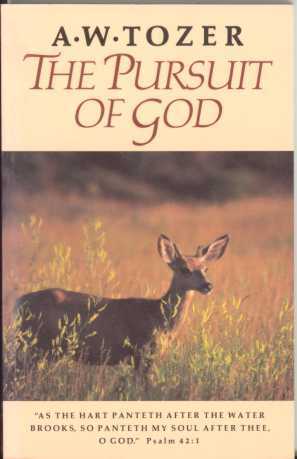
The Pursuit of God by A. W. Tozer, reviewed here.

My Emily by Matt Patterson, a family’s true story of a young daughter born with Down’s Syndrome who is then diagnosed with leukemia at the age of two, reviewed here.

Better To Be Broken by Rick Huntress, his personal testimony of God getting hold of his heart after an accident left him in a wheelchair, reviewed here.

The Long Winter by Laura Ingalls Wilder, reviewed here.

The Pound a Day Diet by Rocco DiSpirito, reviewed here.

That looks like more than usual – but one was a children’s book, and two were very short.

I’m currently reading:

A Million Little Ways: Uncover the Art You Were Made to Live by Emily Freeman. Got off on the wrong foot with this one but am settling into it now. Will explain more when I review it.

War and Peace by Leo Tolstoy, audiobook. I’m about 2/3 of the way through.

The Swan House by Elizabeth Musser

Songs of the Morning: Stories and Poems for Easter compiled by Pat Alexander, including excerpts from C. S. Lewis, E. B. White, and others.

Next Up:

Hard to say. I’m working on my reading plans for the year, and you people keep adding to my lengthy list of books I want to get to. 🙂 Once I finish War and Peace, I think I’ll get back to the Sherlock Holmes series via audiobook. Pioneer Girl by Laura Ingalls Wilder had been delayed but I am informed it is on its way now just arrived. I’ve seen several people mention Being Mortal by Atul Gawande, and I just ordered it. I may need something lighthearted to break up some of the heavier reading.

What are you reading now?

Book Review and Giveaway: She Is Mine: A War Orphan’s Incredible Journey of Survival

She Is MineI first became aware of She Is Mine: A War Orphan’s Incredible Journey of Survival by Stephanie Fast through Carrie’s review, and then I won her giveaway of the book.

Stephanie does not remember her birthday or her given name: she gave herself the name of Yoon Myoung in her book. She was born in Korea not long after the Korean War: her mother was Korean and her father was an American serviceman who never knew of her. Because she was of mixed blood, she was not accepted, even by her mother’s family. Stephanie explains:

In Korea, having a fatherless child of mixed blood brought impurities to the ancestral bloodlines. It was culturally unacceptable – a disgrace. And children who were not given a family name literally had no birthright and lived unacknowledged. They were rejected. Worthless. Nothings. (p. 34).

The Korean people had suffered greatly during the Japanese occupation before WWII. Then the communist occupation had come, and then the Korean War–their cultural identity had been ripped away. Although grateful to their Western liberators, their greatest desire was to rebuild their lives, reclaim their land, and forget their pain. The site of mixed blood children such as Yoon Myoung stirred up their anger, frustration, and hurt. The foreigners may have fought to preserve South Korea’s independence, but they were not permitted into Korean families, heritages, or bloodlines (pp. 35-36).

When Stephanie was four, her mother’s family found someone who was willing to marry her despite her indiscretion, but who was unwilling to take her mixed child. Her mother sent her away on a train, telling her an uncle would meet her at her destination. It’s unclear whether that was an outright lie or whether Stephanie got off at the wrong stop or what, but an uncle was not there when she got off the train. Instead of trying to find out what happened and taking care of her, the station master just shooed her away when he closed. Stephanie decided to follow the train tracks back the direction from which she had come to find her village and her mother, but she never found them. She wandered around the Korean countryside alone for three years. She had to try to find shelter and forage for food, finding out by trial and error what worked and what didn’t. When she did encounter people, it almost always went badly. She was called names, treated in abominable ways, betrayed at the deepest level from someone she had come to trust. At times she lived with groups of other abandoned children, once at a large encampment of many of them. Over time, due to exposure, malnutrition, and lack of ability to get clean, and everything else she had gone through, she was filthy, had a head full of lice, open wounds, and worms, so that added to the repulsion people felt toward her, but the primary hatred always went back to her mixed race.

At a very few intervals she came across someone kind who rescued her from death and danger, until finally she was near the end of her rope, abandoned on a garbage heap. A Swedish nurse passed by who picked up abandoned babies and nursed them back to health so they could be sent to an orphanage and adopted. She cared for all the children but could not possibly help them all, so she concentrated primarily on the babies. But when she saw Stephanie, she was compelled to pick her up. Stephanie then described her time at the clinic, the orphanage, and finally her adoption by an American missionary couple who actually had been planning to adopt a baby boy.

This is a heart-breaking story. It’s hard to fathom people being so cruel to a child for any reason.

But it is also a story of hope.

Stephanie writes in the third person rather than first because she wants people to think not only of her story but of the millions of orphans in need in the world. She has become an advocate for orphan care.

Overall I was greatly touched by this book, and also convicted about how I would react if, as happened to several in her book, I found a dirty, wounded, and somewhat wild child stealing from my garden or sleeping in my garage. I would want someone to help them but would be more likely to call a shelter or something than to take them into my own home. Yet throughout the Bible we’re told both by instruction and example to care for people. I was convicted to look beneath the surface to the person underneath, to see their souls, and to care for their needs.

Stephanie said in her preface that there were great gaps in her memory, so she filled in some of the story the best she could. I can’t help but wonder if much of the filling in was in the first three chapters about her mother and father and how they came together: I don’t know how much of that her mother would have told her in her early childhood. I would rather have had a little less filling in there than to wonder how much of it was true. And I would have liked to have heard a bit more about how she adjusted after being adopted. She told of many doctor’s visits and the healing of her physical wounds, and mentioned that it was a long time before she could return affection to her adopted parents. But after the trauma she went through, it had to have taken a long time for her to heal mentally and emotionally. I think families need to be aware that adoption, as wonderful as it is,  is not necessarily a fairly-tale “happily ever after,” that there is a lot to work through. But I realize, too, that the main purpose of this book is to draw attention to and awareness of the needs of orphans, so perhaps the rest is for another book.

Stephanie says at the end that she eventually came “to a place in my life where I can say with all conviction: There is nothing that has happened to me that I would have been better off without” (p. 224). She plans to write another book about how she came to that acceptance – that is one I can’t wait to read.

A synopsis of her story is here:

I highly recommend this book to you. I’d like to follow Carrie’s example and give this copy away to one reader. I’ll take all comments on this post as entries for the giveaway unless you tell me you would not want to receive the book. Due to shipping costs I am afraid I can only send it to the US and Canada. I’ll draw a name from among those who have commented using random.org a week from today.

(This review will also be linked to Semicolon‘s Saturday Review of Books.)

The giveaway is closed: The winner is Michele. Thanks for participating!

Laudable Linkage and a Jan Karon Video

I didn’t do one of these last week because I only had two or three – and now this week I have several. That’s how it goes sometimes. But here is some noteworthy reading found in the last couple of weeks:

Moms Need Theology Too. Excellent. Not just for moms.

Adding to Our Faith? Good study of what 2 Peter 1:5 means when it talks about things we need to add to our faith.

5 Things People Blame the Church For – But Shouldn’t.

A Good [Wo]man is Easy to Find. Excellent piece about finding a mentor.

From Lesbianism to Complementarianism – one woman’s testimony.

Dear Gay Community: Your Kids Are Hurting. From the daughter of a gay couple.

An 11-Year-Old Boy’s Open Letter to Sports Illustrated.

Nancy Leigh DeMoss’s Advice to Young Writers and Speakers.

Solid Food for Little Ones. A list of books for young children that teach about God. Keeping in mind for future reference when my little grandson gets older.

Remember Card Catalogs? As a former librarian and avid reader, I loved this piece about people who take the old cards from library card catalogs and illustrate them.

I thought this was really cool. With a nerdy family who loves the Marvel universe films, Iron Man being one on them, I loved this video of Robert Downey, Jr. (aka Iron Man) delivering a bionic arm to a boy who has only a partially developed right arm.

And for Jan Karon fans, I saw on her Facebook page this announcement about her newest book coming out this fall!

I loved hearing her talk and watching her expressiveness! I also saw this post on her Facebook page saying that there might be a movie about Mitford and asking for suggestions about who should play which part. I hope if this comes to pass that they let her have creative control. I have mixed feelings – I love the books and would definitely see any film made from them, but I’m not sure I’d want any images other than the ones in my head. 🙂 But we’ll see.

Happy Saturday!

Friday’s Fave Five

FFF spring2

It’s Friday, time to look back over the blessings of the week with Susanne at Living to Tell the Story and other friends.

This has been another good week. Here are some of the best parts of it:

1. Pi Day. For years I have heard of other people celebrating “Pi Day” – March 14, the same numbers as pi (3.14 – even more remarkable in 2015 because the next numbers in the sequence are 15) by having pie on that day, and I thought it looked like a fun thing to do (and any excuse to eat pie is a good one! 🙂 ). But I had never done it, usually because I didn’t think about it in time. But this year I did! We had hamburger pie for dinner and then dessert via a store-bought chocolate pie and a pumpkin pie from Christmas that had been in the freezer. It was fun.

IMG_1099

2. Cracker Barrel take-out. Love that place, but my husband doesn’t really care for it. Yet he agreed to bring some home for me one night. Nice man. 🙂

3. Mittu’s dinner. We came home from church Sunday afternoon to a dinner already made by my daughter-in-law. So nice to just come in and sit down and eat!

4. Ceiling fans. During the first part of the week it was pretty warm out (60s and 70s, even got up to 80 one day), but I didn’t want to turn on the AC yet (although I finally did when it got up to 75 in the house one evening). But for the most part ceiling fans helped cool things off a bit as needed.

5. Starting a project that has been on my mind for more years than I want to admit. Trying to decide exactly what I wanted to do held me up for a long while, and then finding the time and motivation (at the same time) to do the preparatory work was a problem. But I got that much done this week and hope the actual execution will go pretty quickly. I had hoped to be finished with it by now, but maybe I will be by next week. Meanwhile, here is a sneak peek:

CIMG2048

Bonus: It’s officially the first day of SPRING!

It turned rainy and cooler the latter half of the week, but I’m still glad it’s not snow and ice any more, and I am looking forward to a sunny weekend. Happy Friday!

Note to Paula – I tried several times to comment on your FFF post but just kept getting a window saying “Error establishing a database connection.”

Book Review: To See the Moon Again

ToSeeTheMoonAgainTo See the Moon Again by Jamie Langston Turner begins with Julia, a widowed, middle-aged, introvertish teacher of Creative Writing at a university in South Carolina. Her tightly-controlled world has been shaken up a little by the award of a sabbatical, a paid year off from teaching, and she is not quite sure what to do with herself. But it is shaken up even more by a message on her answering machine: Carmen, a niece she has never met, daughter of her estranged brother, is in the state and planning to come to see her. While Julia hopes with everything in her that Carmen doesn’t come, of course, she does, and while Julia plans to send her off again as soon as possible, for various reasons she can’t.

Carmen is Julia’s opposite in many ways: she is free-spirited, open, gregarious, and a Christian. Julia thinks Carmen’s faith is naive and unrealistic. But as the two women get to know each other, we learn more of what makes each of them the way they are. Both have had a number of hard breaks and tragedies, both have actions in their pasts that they can’t forgive themselves for. Julia takes Carmen along on a trip which takes them both literally and figuratively to far different places than they had first imagined.

I identified with Julia and her introverted way of thinking quite a bit, but I can understand that some readers may not like her. Sometimes introverts can come across as standoffish, and Julia has other reasons as well for holding people at arm’s length. Although I like Julia, I haven’t liked many of Mrs. Turner’s main characters in other books, but as I got to know them, their background, what makes them tick, and came to understand them better, I could at least empathize and usually came to like them as well.

I like the way Mrs. Turner gradually reveals the depth of her characters. I like that the spiritual truth in the book comes not from an expert who has it all together, but from a young woman who is still dealing with issues herself. I also like that the ending isn’t tied up with a neat bow: things are left a little more open, but you know both characters are on their way to where they need to be. I have to admit to a little disappointment with the ending: without revealing anything, I had hoped it would go the way Julia was thinking it would. Yet I can see that the choices that were made were necessary to the growth of both Julia and Carmen.

Many of Mrs. Turner’s books have the aspect of an outsider looking in on someone else of faith, and that is an interesting and refreshing perspective. They also have grace and redemption as major themes. She’s often described as a different kind of Christian fiction author, and I would agree.

Since I spent 26 years of my adult life in South Carolina, fourteen of them in the town where Mrs. Turner lives, which is near the town many of her books are set in, I very much enjoyed that aspect of the book as well. I knew some of the places mentioned and knew the pattern of spring blooming that she described and could very much picture it. And some of the different types of Southerners were familiar as well.

Since Mrs. Turner is also a teacher of Creative Writing, there are often literary references in many of her books. This one contains a lot of mention of Flannery O’Connor, someone I have never read but now want to.

An interview with the author about this book is here. I think this is my favorite of her books, and I hope you’ll give it a try.

(This review will also be linked to Semicolon‘s Saturday Review of Books.)

“Special” Music in the Church

choir

Let me say at the outset that I know some people object to the term “special music” in church, meaning songs that are performed by instrumentalists or sung as solos or groups as opposed to congregational singing, because it sounds like we’re elevating that type of music above congregational singing. In the order of service in our own church bulletin, a “special” is listed as “Ministry in music,” and that’s perfect. But if I used that phrase as a blog title, it would sound like I was writing about the whole panorama of music in the life of a church, and I am not doing that. I just wanted to share a few thoughts on this particular aspect of church music.

These thoughts were spurred some time ago by an article I saw (which I can’t find now) which advised that one way to encourage more and better congregational singing was to deemphasize the special music. I don’t know how many people saw that particular article, but it seems like that is the current trend, and I think it is a sad one, for reasons I’ll get into in a moment. We always have such a tendency to be unbalanced in one direction or another, and I think to scrap or at least downplay personal ministry in music creates a loss for the church, a loss for the musicians and their gifts as well as for the hearers who would be ministered to.

The writer of the article in question suggested that one reason people weren’t singing as well as they could congregationally was that having worship leaders and a band on stage made it seem more like they were “the professionals” and everyone else was just there primarily to listen and maybe to sing along occasionally. I have never experienced a set-up like that personally; the churches we have attended have been more traditional, with a songleader behind the pulpit and a choir behind him, and a few instrumentalists to one side. I am not knocking the other style, but I can see the point that if it is set up more like a concert, the audience will be more likely to listen than to participate. However, I really don’t think that’s the problem in most churches.

Some think that when we listen to others “perform” a spiritual song, we’re more likely to enjoy the performance rather than be ministered to by the words. And I do admit that is a danger. But I don’t think it is a reason to deemphasize performed hymns and spiritual songs. I can get distracted by how well I like a song or its melody even in congregational singing, so I think that’s largely a matter of training our minds and taking “every thought captive.” I don’t think it is wrong to enjoy the music, the harmony, the performance aspect of it, but we need to let that enhance the message rather than become the main point.

Some want to downplay “special” music in church because they feel congregational singing is more participatory, whereas with special music we’re just listening. But I disagree: listening is participating if done right. (And besides that, we don’t apply the same logic to the preaching, which is done by one and listened to by everyone else.) I think we need to train our families and ourselves to concentrate, to pay attention to the words especially, not to talk or fidget or otherwise distract ourselves and others during the performance. Part of that is just consideration and respect for those performing, but another part of it is to enhance our own ability to receive the song’s message.

For me personally, the special music, whether an offertory, solo, or ensemble, is the most worshipful part of the church service. (By the way, I don’t believe the musical segment of a service is the only time where worship takes place: worship should be what we do in every part of the service.) I do enjoy congregational singing very much, but I do get more distracted by my own voice, by the voices of those around me, by wondering when we’re going to get to sit down because my knees are killing me, by what I need to do to start dinner, etc. That is my own problem, and I work on it constantly. Our church does display the words to the songs we’re singing, and that helps immensely, but that time is the hardest time in the whole service for me to keep my mind on what I am doing. During special music, however, I’m all in and focused without really trying to be.

Besides being able to focus better personally, I think special music has value in other ways as well. Some people are gifted vocally or in ways of expressing what they are singing so that we can get more of the nuance of a song than when we’re just barreling through it with everyone else. And though I have a wealth of recorded Christian music I can listen to any time, and do often, it means more to hear someone I know personally who is dealing with a chronic illness sing, “Day by day and with each passing moment, strength I find to meet my trials here,” or someone who recently lost her husband sing about the New Jerusalem, or a sweet couple who have walked with the Lord for decades together singing about Him whom their souls love, or someone undergoing a longstanding trial singing:

What if Your blessings come through raindrops?
What if Your healing comes through tears?
What if a thousand sleepless nights
Are what it takes to know You’re near?
What if trials of this life are Your mercies in disguise?

(“Blessings” by Laura Story)

I can and have been ministered to through music sung by someone I don’t know, but when I know the people and observe how they walk with the Lord, that adds a valuable layer of ministry to a church.

The article I mentioned also proposed that singers and musicians should take it down a notch and not sound so professional so as not to discourage those of us with more average voices to sing out. But Psalm 33:1-3 talks about playing music skilfully. Those who sing and play need to have some skill in doing so (and that is another reason I enjoy it: I can sing and praise in my own spirit vicariously through them, since I don’t have the skills they do.) I don’t think special music has to sound “professional”: it can be very simple. But it is not wrong for it to sound professional, either. Different people have different skill levels, and I can enjoy a variety of them just as I enjoy reading from writers at various levels of writing skill or listening to preaching from men whose style or gifts vary. A child’s first piano offertory or a simple solo with a guitar can minister just as much as a full scale performance of Handel’s Messiah, and I like them all in different ways.

Not long after I came across the article I mentioned, I came to Chronicles in my Bible reading. Among the many people with various specific functions in the temple were musicians and singers.

I Chronicles 16:4-7: Then he appointed some of the Levites as ministers before the ark of the Lord, to invoke, to thank, and to praise the Lord, the God of Israel. Asaph was the chief, and second to him were Zechariah, Jeiel, Shemiramoth, Jehiel, Mattithiah, Eliab, Benaiah, Obed-edom, and Jeiel, who were to play harps and lyres; Asaph was to sound the cymbals, and Benaiah and Jahaziel the priests were to blow trumpets regularly before the ark of the covenant of God. Then on that day David first appointed that thanksgiving be sung to the Lord by Asaph and his brothers.

I Chronicles 16:41-42: With them were Heman and Jeduthun and the rest of those chosen and expressly named to give thanks to the Lord, for his steadfast love endures forever. Heman and Jeduthun had trumpets and cymbals for the music and instruments for sacred song.

I Chronicles 25 gives great detail about David appointing different people for different musical functions. One of the most interesting verses to me is I Chronicles 25:1: “Moreover David and the captains of the host separated to the service of the sons of Asaph, and of Heman, and of Jeduthun, who should prophesy with harps, with psalteries, and with cymbals.” A former pastor used to say that even instrumental music was a form of prophecy.

When the ark was brought into the temple,

all the Levitical singers, Asaph, Heman, and Jeduthun, their sons and kinsmen, arrayed in fine linen, with cymbals, harps, and lyres, stood east of the altar with 120 priests who were trumpeters; and it was the duty of the trumpeters and singers to make themselves heard in unison in praise and thanksgiving to the Lord), and when the song was raised, with trumpets and cymbals and other musical instruments, in praise to the Lord, “For he is good, for his steadfast love endures forever,” the house, the house of the Lord, was filled with a cloud,  so that the priests could not stand to minister because of the cloud, for the glory of the Lord filled the house of God. II Chronicles 5:12-14.

“Special” music was also performed at the dedication of the temple, before the army, at the crowning of a king, when Hezekiah reestablished worship in the temple, at the restoration of the Passover,  at the Passover in Josiah’s time, when the foundation for the temple was laid again in Ezra’s time. But special or performed music wasn’t just for special occasions:  II Chronicles 8:14 says  “According to the ruling of David his father, he appointed the divisions of the priests for their service, and the Levites for their offices of praise and ministry before the priests as the duty of each day required.” Singers are mentioned multiple times from Chronicles to Nehemiah: Ezra 2: 65 says they were male and female.

Then of course the Psalms are themselves songs and mention music throughout. Whether they were song congregationally or by the temple musicians, or both, I don’t know. Now I am in Isaiah: I am not sure whether I’ll find references to singing in the prophets, as their focus and purpose is different.

That is all Old Testament: what about the New? I’ll look for specific references when I come to it in my reading, but two passages there come to mind. Colossians 3:16 says, “Let the word of Christ dwell in you richly in all wisdom; teaching and admonishing one another in psalms and hymns and spiritual songs, singing with grace in your hearts to the Lord.” I think that can apply to both congregational and performed music. I Corinthians 14:6 says, “How is it then, brethren? when ye come together, every one of you hath a psalm, hath a doctrine, hath a tongue, hath a revelation, hath an interpretation. Let all things be done unto edifying.” The ESV has “hymn” in place of “psalm.”

I think songleaders and preachers can enhance the performed music of a church by emphasizing the message of it just before or after the person or people sing. If there is one thing I could say to preachers everywhere on this topic: please don’t joke just after someone has ministered in song, especially about that person. I’m not against laughter, I love to laugh as much as the next person, I know the Lord loves a merry heart, but joking just after someone sings is one of the quickest ways to quench whatever ministry their testimony in song could have had.

Instead of downplaying ministry in musical performance, I think songleaders can enhance congregational singing in a number of other ways: reminding us to sing as unto the Lord and what the Bible says about singing or commenting on something the song teaches (not long: a little sermon before each song or each stanza can dull its effect). Please, however, don’t do what I have heard often through the years and say something like, “Are you a Christian? Do you love the Lord? Then please tell your face!” or “If you could see the view from here, you’d be really depressed. Smile!” That’s basically saying, “Paste a smile on so you look better,” an emphasis on the outer rather than the inner man and not conducive to worship. How much better to encourage better singing by encouraging worship of the one we’re singing about and thinking about the message of the song.

Please understand that I am not trying to exalt “special” or performed music above congregational singing because I have emphasized it here: I’m just asking that we don’t discourage or downplay special music in our efforts to encourage congregational singing. Both have vital places in our worship: both can be great tools the Lord can use to minister to our hearts.

Book Review: The Pursuit of God

Pursuit-of-GodI had not originally planned to reread The Pursuit of God by A. W. Tozer for Carrie‘s Reading to Know Classics Book Club, this month because I thought I had read it just last year. When I actually checked, however, what I had read last year was Tozer’s The Knowledge of the Holy. (Good thing I don’t rely much on my memory. 🙂 ) It had been years since I had read The Pursuit of God and I couldn’t remember much about it, so I decided to delve into it again. And I am glad I did.

In his preface, Tozer expresses concern that though there are good Bible teachers teaching vital right doctrine and the fundamentals of the faith, they seem “strangely unaware that in their ministry there is no manifest Presence,” that “God’s children [are] starving while actually seated at the Father’s table,” that “there may be a right opinion of God without either love or…right temper toward Him (pp. 8-9). “The Bible is not an end in itself, but a means to bring men to an intimate and satisfying knowledge of God, that they may enter into Him, that they may delight in His Presence, may taste and know the inner sweetness of the very God Himself in the core and center of their hearts” (p. 10). This book is his “modest attempt to aid God’s hungry children so to find Him” (p. 10).

The ten chapters explore different aspects or pursuing God. I had thought about jotting a few notes about each chapter as I finished and wish I had now.

The first chapter, “Following Hard After God,” reminds us that our pursuit of God is preceded by His pursuit of us. Jesus said, “No man can come to me, except the Father which hath sent me draw him” (John 6:44a).  “The impulse to pursue God originates with God, but the outworking of that impulse is our following hard after Him” (p. 12). “We Christians are in real danger of losing God amid the wonders of His Word. We have almost forgotten that God is a person and, as such, can be cultivated as any person can” (p. 13). We still pursue Him even after we first find Him, as Moses and David and others did. “Complacency is a deadly foe of all spiritual growth. Acute desire must be present” (p. 17). One of my all-time favorite quotes closes this chapter:

O God, I have tasted Thy goodness, and it has both satisfied me and made me thirsty for more. I am painfully conscious of my need for further grace. I am ashamed of my lack of desire. O God, the Triune God, I want to want Thee; I long to be filled with longing; I thirst to be made more thirsty still. Show me Thy glory, I pray Thee, so that I may know Thee indeed. Begin in mercy a new work of love within me. Say to my soul, ‘Rise up my love, my fair one, and come away.’ Then give me grace to rise and follow Thee up from this misty lowland where I have wandered so long (p. 20).

The second chapter. “The Blessedness of Possessing Nothing,” according to the introduction “reflected his desperate struggle to turn his only daughter over to God” (p. 7). He begins by acknowledging that all good gifts come from God, but we have a tendency to grasp them for ourselves and even elevate them in our hearts rather than Him. Jesus said, “If any man will come after me, let him deny himself, and take up his cross, and follow me. For whosoever will save his life shall lose it: and whosoever shall lose his life for my sake shall find it.” In our pursuit of God, we need to come to a place of “having nothing, and yet possessing all things” (II Corinthians 6:10b), holding all things, as some have said, with an open hand, remembering that they are His to do with as He will.

We are often hindered from giving up our treasures to the Lord out of fear for their safety; this is especially true when those treasures are loved relatives and friends. But we need have no such fears. Our Lord came not to destroy but to save. Everything is safe which we commit to Him, and nothing is really safe which is not so committed.

Our gifts and talents should also be turned over to Him. They should be recognized for what they are, God’s loan to us, and should never be considered in any sense our own. We have no more right to claim credit for special abilities than for blue eyes or strong muscles. “For who maketh thee to differ from another? and what hast thou that thou didst not receive?”

Since these truths must be learned by experience and not just as facts, sooner or later God will bring every one of His children through such a test as Abraham underwent with Isaac. Though the struggle is immense, when all is yielded to God, blessedness follows.

Chapter 3 speaks of removing the veil of self-life (“self-righteousness, self-pity, self-confidence, self-sufficiency, self-admiration, self-love and a host of others like them”) which hinders our following God and our need of renunciating it. Chapter 4 talks about the reality of the invisible world and our need to set our hearts on unseen and eternal realities. Chapter 5 excellently explains the difference between pantheism (the mistaken thought that God is in everything) and God’s immanence, which means that God is everywhere. Since God is everywhere and wants to manifest Himself to people, “Why do some persons ‘find’ God in a way that others do not? Why does God manifest His Presence to some and let multitudes of others struggle along in the half-light of imperfect Christian experience?” (p. 67).

I venture to suggest that the one vital quality which they had in common was spiritual receptivity. Something in them was open to heaven, something which urged them Godward. Without attempting anything like a profound analysis I shall say simply that they had spiritual awareness and that they went on to cultivate it until it became the biggest thing in their lives. They differed from the average person in that when they felt the inward longing they did something about it. They acquired the lifelong habit of spiritual response. They were not disobedient to the heavenly vision. As David put it neatly, “When thou saidst, Seek ye my face; my heart said unto thee, Thy face, Lord, will I seek” (p. 67).

Receptivity is not a single thing; it is a compound rather, a blending of several elements within the soul. It is an affinity for, a bent toward, a sympathetic response to, a desire to have. From this it may be gathered that it can be present in degrees, that we may have little or more or less, depending upon the individual. It may be increased by exercise or destroyed by neglect. It is not a sovereign and irresistible force which comes upon us as a seizure from above. It is a gift of God, indeed, but one which must be recognized and cultivated as any other gift if it is to realize the purpose for which it was given (pp. 68-69).

He then reminds that this takes time, something our instant and push-button generation needs to reminds ourselves of. “And always He is trying to get our attention, to reveal Himself to us, to communicate with us. We have within us the ability to know Him if we will but respond to His overtures. (And this we call pursuing God!) We will know Him in increasing degree as our receptivity becomes more perfect by faith and love and practice” (p. 71).

Chapter 6 explores the ways God speaks to us. Chapter 7, “The Gaze of the Soul,” perhaps my favorite, is about faith: not so much a definition as a study of how it works, what it looks like.

In the New Testament this important bit of history [Numbers 21:4-9] is interpreted for us by no less an authority than our Lord Jesus Christ Himself. He is explaining to His hearers how they may be saved. He tells them that it is by believing. Then to make it clear He refers to this incident in the Book of Numbers. “As Moses lifted up the serpent in the wilderness, even so must the Son of man be lifted up: that whosoever believeth in him should not perish, but have eternal life” (John 3:14-15).

Our plain man in reading this would make an important discovery. He would notice that “look” and “believe” were synonymous terms. “Looking” on the Old Testament serpent is identical with “believing” on the New Testament Christ. That is, the looking and the believing are the same thing. And he would understand that while Israel looked with their external eyes, believing is done with the heart. I think he would conclude that faith is the gaze of a soul upon a saving God. (pp. 88-89).

I made a note in my book that that is perhaps one reason why God often puts us in situations where we must look to Him, not just for salvation but for our everyday lives as well. “The man who has struggled to purify himself and has had nothing but repeated failures will experience real relief when he stops tinkering with his soul and looks away to the perfect One. While he looks at Christ the very things he has so long been trying to do will be getting done within him. It will be God working in him to will and to do” (p. 91).

“Neither does place matter in this blessed work of believing God. Lift your heart and let it rest upon Jesus and you are instantly in a sanctuary though it be a Pullman berth or a factory or a kitchen. You can see God from anywhere if your mind is set to love and obey Him” (pp. 94-95).

Another of my all-time favorite quotes is from this chapter:

Someone may fear that we are magnifying private religion out of all proportion, that the “us” of the New Testament is being displaced by a selfish “I.” Has it ever occurred to you that one hundred pianos all tuned to the same fork are automatically tuned to each other? They are of one accord by being tuned, not to each other, but to another standard to which each one must individually bow. So one hundred worshippers met together, each one looking away to Christ, are in heart nearer to each other than they could possibly be were they to become “unity” conscious and turn their eyes away from God to strive for closer fellowship. Social religion is perfected when private religion is purified. The body becomes stronger as its members become healthier. The whole Church of God gains when the members that compose it begin to seek a better and a higher life (p. 96).

This is refreshing to me because there is such an emphasis on community today – a needed emphasis, but we can always get unbalanced one way or another. I don’t hear as much these days about being individually “tuned” to the Lord as I used to, yet without that, we’re not going to be of much use to each other when we do come together in community. But if each individual member is growing closer to the Lord and more like Christ, then we’ll become closer to and more unified with each other.

In chapter 8, “Restoring the Creator-Creature Relation, I have far too many places marked to reproduce here, and chapter 9, “Meekness and Rest,” contains another favorite and piercing quote:

The labor of self-love is a heavy one indeed. Think for yourself whether much of your sorrow has not arisen from someone speaking slightingly of you. As long as you set yourself up as a little god to which you must be loyal there will be those who will delight to offer affront to your idol. How then can you hope to have inward peace? The heart’s fierce effort to protect itself from every slight, to shield its touchy honor from the bad opinion of friend and enemy, will never let the mind have rest. Continue this fight through the years and the burden will become intolerable. Yet the sons of earth are carrying this burden continually, challenging every word spoken against them, cringing under every criticism, smarting under each fancied slight, tossing sleepless if another is preferred before them.

Such a burden as this is not necessary to bear. Jesus calls us to His rest, and meekness is His method (p. 112).

Chapter 10, “The Sacrament of Living,” talks about what it means to truly “do all to the glory of God” – not just spiritual exercises, but everyday life.

The “layman” need never think of his humbler task as being inferior to that of his minister. Let every man abide in the calling wherein he is called and his work will be as sacred as the work of the ministry. It is not what a man does that determines whether his work is sacred or secular, it is why he does it. The motive is everything. Let a man sanctify the Lord God in his heart and he can thereafter do no common act. All he does is good and acceptable to God through Jesus Christ. For such a man, living itself will be sacramental and the whole world a sanctuary. His entire life will be a priestly ministration. As he performs his never so simple task he will hear the voice of the seraphim saying, “Holy, Holy, Holy, is the Lord of hosts: the whole earth is full of his glory” (p. 127).

I echo Tozer’s closing prayer in the book” “I beseech Thee so for to cleanse the intent of mine heart with the unspeakable gift of Thy grace, that I may perfectly love Thee and worthily praise Thee” (p. 128).

I hope you’ll forgive the lengthiness of this review. I was just thinking recently, in wondering how to cultivate time for other writing, whether to make shorter work of the book reviews I write, especially since they don’t seem to be viewed as much as other blog posts. But I write them not just for blog readers, but also as a reminder to myself not only as I go through a book but also as I look back on it in the future.

There is good reason this book is a Christian classic, and I heartily recommend it to you. I am sure I will revisit it again a number of times in the future. At the moment it is 99 cents for the Kindle and free online at Project Gutenberg, and of course it is available as a paper and ink or audiobook as well.

(This review will also be linked to Semicolon‘s Saturday Review of Books.)

Friday’s Fave Five

 FFF spring2

It’s Friday, time to look back over the blessings of the week with Susanne at Living to Tell the Story and other friends.

This has been a great week. Here are some of the best parts:

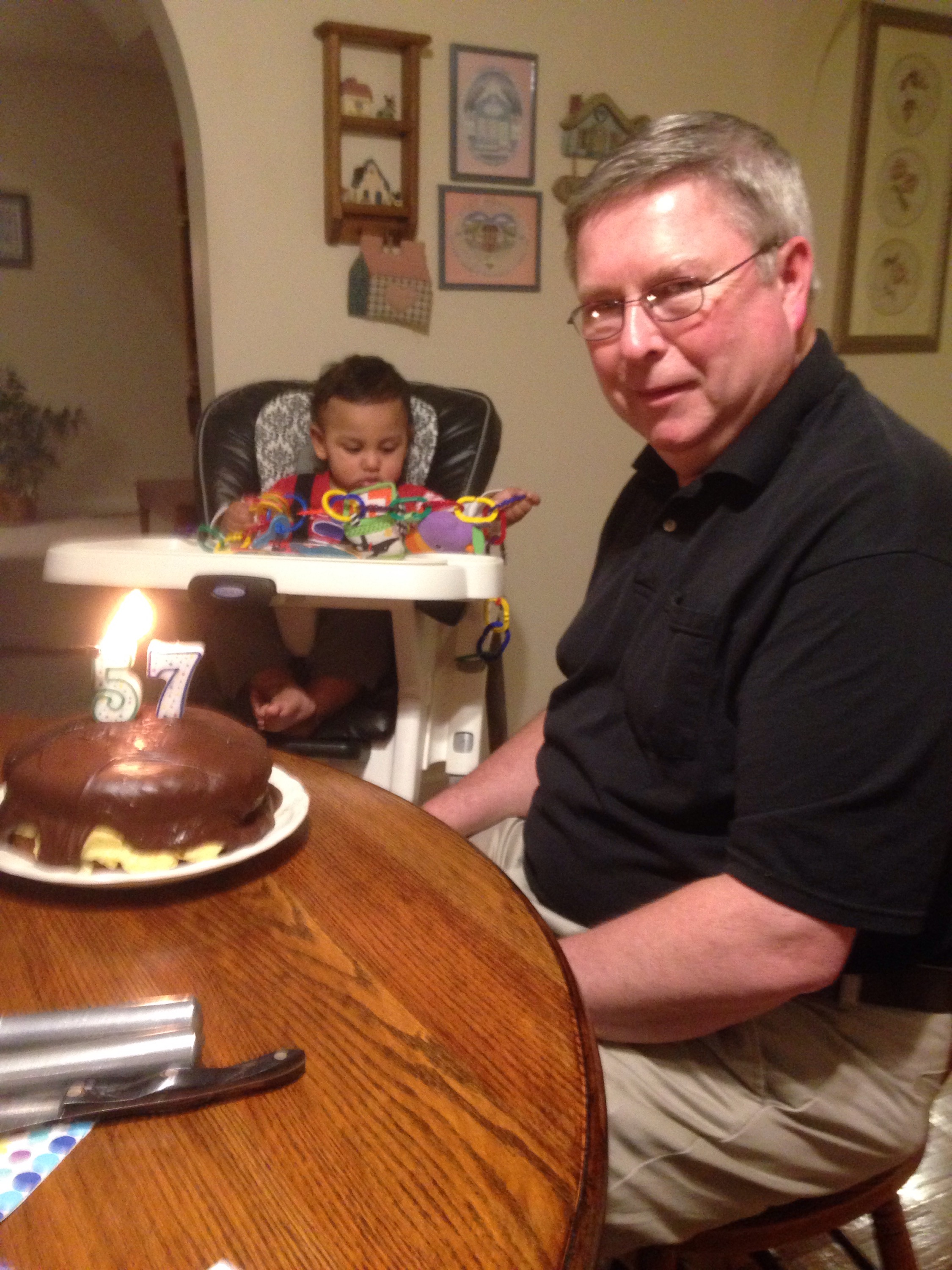
1. My husband’s birthday was Friday but we celebrated Saturday. Jason picked up take-out from Jim’s favorite Asian place, and it was a joy to have the family together (Jeremy via FaceTime) and celebrate God’s giving our husband, dad, and grandad to us. One of my favorite things, too, in looking back through the pictures, is seeing Timothy at different places throughout them. He isn’t crawling yet but is quite adept at rolling all over! He may skip right past crawling and go on to walking – he can stand on his own for increasing amounts of time.

IMG_1089

2. Wonderful temperatures. It has been in the 50s and 60s all week, so refreshing after the long cold spell we had. It’s been wet most of the week, but I don’t think we got as much rain as predicted, and I’m just glad it wasn’t ice and snow again. We did actually see sunshine  for a while on Thursday – much appreciated!

3. A normal week. I dearly love holidays, birthdays, family get-togethers, and so on, but they do take some time and effort to prepare for. We have Easter, Timothy’s birthday, and a visit from Jeremy all coming up in April, but between now and then there is nothing else on the calendar, nothing extra going on at church, no appointments. I’m enjoyed this first “normal” week immensely and got to rest a bit and then tackle a cleaning project I had been wanting to get to. I have a couple of other creative projects I hope to get to in the next week or two.

4. Being done with the dentist for a while. Since a routine x-ray showed some extensive decay under a filling last November, I’ve had oral surgery plus four dental appointments to take care of all of that and get a new bridge put in. Not something I wanted to deal with, but there was nothing to do but just go through the process. It’s finally done, thankfully. And since all of this maxed out my dental insurance coverage for the year already, my dentist’s receptionist rescheduled my cleanings so that instead of having two this year, I have one during the summer and one right after the new year, so it will go on next year’s insurance claim. Hopefully I won’t have need of the dentist beyond that.

5. Removable shelves. My extra cleaning project involved taking everything out of the shelves in the refrigerator door and giving them a thorough cleaning, something I have been wanting to get to for some time. I don’t know how crumbs and debris get into those when there’s nothing but bottles and jars there. But being able to take the shelves out and to the sink helped immensely in getting them cleaned out.

Happy Friday!

Why Listen to Audiobooks?

IMG_1096

Like most avid readers, I like the tactile experience of a book in my hand and turning pages while taking in the story, though I’ve gotten used to e-readers since so many free and discounted books can be found for it, and there are features of it I like. But my first preference is still an actual book made of paper and ink. Why, then, would I listen to an audiobook? Listening, after all, is a different experience than reading.

I first sought out audiobooks when we moved here. As I have mentioned before, where we used to live, the places we needed to go most often were only five minutes away. Going “across town” only took maybe 15 minutes. When we moved to our present location outside a larger city, it took longer to get most places. I’m not a person who likes to spend time in the car: “going for a drive” is not on my list of fun things to do, and I chafed at the “wasted” time driving, even with a Christian radio station and an abundance of music to listen to. I decided to try a trial subscription to Audible.com: if I remember correctly, the introductory offer at that time was one free book, with the option of canceling the monthly fee at any time. I was hooked immediately. Driving became an enjoyable experience rather than just a chore. Then I also began to listen while getting ready in the morning, doing housework, and exercising. Of course, I listen when I am alone or when other members of the family are occupied in others rooms: since my children are older and are usually otherwise occupied, that affords me more listening time than I would have had when they were younger and usually with me.

Though I have listened to a variety of genres of audiobook, for me they work best for classics that I might not otherwise read. I’m currently halfway through War and Peace, a book I probably never would have tackled in print just because I wouldn’t want the sheer length of it to monopolize my reading time for so long. Plus the meandering narrative or excessive descriptions of classics are easier to take if I am doing something else while listening than if I am trying to slog my way through it by reading. They also work best for fiction or biography for me. With non-fiction, even for the print version I have to reread or review sections to get the most out of them, which doesn’t work as well for audiobooks, plus my attention wavers much more listening to non-fiction than fiction.

Some of the advantages of audiobooks:

  • They allow you to do something useful with your mind while your hands are busy.
  • I don’t usually think in the accent of the country the book is set in, and hearing it read with an accent increases the enjoyment of the setting.
  • Hearing the inflections of the author draws out meanings or points I might have glossed over.
  • I can get through more books than I can just by reading physical ones.

There are some disadvantages as well:

  • You can’t skim through a boring part.
  • If your attention wavers or you need to go back and refresh your memory about a person or incident, it’s harder to flip back through to the part you need. The app I use does have a button to go back 30 seconds or go back to the beginning of the chapter, but I can’t always get to it if I am driving or cooking.
  • I miss the tactile sensation of holding a book and knowing about where physically a favorite part is.
  • Audiobooks often do not include the acknowledgments page or author’s afterword.

Personally I feel the advantages outweigh the disadvantages.

Many Audible books work in sync with Kindle version of the book, and often if you buy one, you can get the other for a discounted price. With classics you can often get a free or very inexpensive Kindle version, and if you leave off at a place in the audiobook, you can pick up at the same place in the Kindle version and vice verse. If I don’t have a Kindle version, sometimes I’ll get the print version from the library just so I can mark places (though the Audible app does have a way to bookmark certain spots) or go back through a passage I feel I need to go over again to understand better.

I don’t think I could get much from a nonfiction audiobook that is not a story or biography: with those books I underline, mark places, and place sticky tabs all through and still feel  sometimes like I haven’t quite grasped the whole thing.

I’ve mentioned Audible.com because that is primarily what I use (I am not affiliated with them and will not receive compensation from them for mentioning them). The monthly charge is $14.95 a month for one credit, which usually equals one book. That might sound high, but a longer classic runs 20-30 hours, and there is not much else I could do for $14.95 that will give me that many hours of use and pleasure (especially comparing it to the price of going to see a 2-hour film with someone). But in addition to the monthly credit, they have sales for members throughout the year where I have gotten books for $1.95 to $6.95. They also release a free book around Christmastime (past free books have included A Christmas Carol, The Cricket on the Hearth, The Snow Queen, and The Wizard of Oz). They have an app that makes it very easy to buy, download, and listen to a book. I also like that you can play decent sized samples of the book before buying: sometimes they’ll have several editions of a book with different narrators, and I’ll listen to several before choosing which one I like best. Narrators can really make or break the listening experience, especially since you’ll be spending so much time listening to one and they shape the way you experience the book. In over four years of listening to audiobooks, I’ve found only a small handful of truly bad or just flat narrators, but it is worth the time to decide between the okay or good narrators and the best.

But there are a few places where one can get free or inexpensive audiobooks. Some public libraries have them. A few other places are LibriVox (free) and ChristianAudio.com (discounted). Audiobooks.com is the same price as Audible.com. ITunes has some as well. LearnOutLoud.com is a subscription service as well with different prices for different types of subscription but they do have some free selections. GoBible.com does not charge a monthly subscription, but the few books I looked at on their front page were quite a bit more expensive. I think they offer one free audiobook download per month – at least they used to. I haven’t gotten their mailings in a while. Sync offers a free young adult or classic audiobook once a week, I believe, from May through the summer. I got my first Incorrigible Children of Ashton Place book through them and got subsequently hooked not only on the stories but also on Katherine Kellgren’s narration. I have used a couple of these but don’t remember which ones other than Sync. Others I have read of but have not tried are AudiobooksForFree and OpenCulture.

You do have to be watchful when buying or downloading an audiobook to make sure you’re getting the unabridged version rather than an abridged or “dramatization” (unless that’s what you want). Dramatizations are usually cut down like movies are, but they have the advantage of different actors for the different characters, so it is a little more like listening to an old-time radio drama. You won’t get all the nuances of the book, but for a longer classic that you might not otherwise delve into because of the older styles of language or writing, an abridged or dramatized version might give you the basic idea of the story.

On a practical note, I am not a big fan of ear buds, but I do use them when listening while walking. In the car I have an adapter that plugs into my iPhone and then into the tape player (yes, my car is old enough that it only plays cassette tapes) so that the sound comes through the speakers; my youngest son’s newer car has a built-in plug-in for phones that does the same thing. Otherwise I listen with the phone on the counter or in my pocket.

What is your experience with audiobooks? Do you enjoy them? What are your sources?

See also:

Why Read? Why Read Fiction? Why Read Christian Fiction?

Why Read Biographies?

Finding Time to Read.

(Sharing with Booking Through Thursday.)

btt  button

Is it nice to call someone a false prophet or a false teacher?

Caution

I don’t know whether it’s nice. But sometimes it is necessary, and oftentimes it is the most loving thing one can do.

The Bible has some pretty serious things to say about false prophets and false teachers:

Jesus said, “Beware of false prophets, which come to you in sheep’s clothing, but inwardly they are ravening wolves.” Matthew 7:15

But there were false prophets also among the people, even as there shall be false teachers among you, who privily shall bring in damnable heresies, even denying the Lord that bought them, and bring upon themselves swift destruction. And many shall follow their pernicious ways; by reason of whom the way of truth shall be evil spoken of. II Peter 2:1-3

Beloved, believe not every spirit, but try the spirits whether they are of God: because many false prophets are gone out into the world. I John 4:1

I marvel that ye are so soon removed from him that called you into the grace of Christ unto another gospel: Which is not another; but there be some that trouble you, and would pervert the gospel of Christ. But though we, or an angel from heaven, preach any other gospel unto you than that which we have preached unto you, let him be accursed. As we said before, so say I now again, if any man preach any other gospel unto you than that ye have received, let him be accursed. Galatians 1:6-9

If there arise among you a prophet, or a dreamer of dreams, and giveth thee a sign or a wonder, And the sign or the wonder come to pass, whereof he spake unto thee, saying, Let us go after other gods, which thou hast not known, and let us serve them; Thou shalt not hearken unto the words of that prophet, or that dreamer of dreams: for the Lord your God proveth you, to know whether ye love the Lord your God with all your heart and with all your soul. Ye shall walk after the Lord your God, and fear him, and keep his commandments, and obey his voice, and ye shall serve him, and cleave unto him. Deuteronomy 13:1-4

I don’t recall seeing in Scripture anything along the lines of “He doesn’t speak the truth, but he is very kind…or gives food to the poor…or has such a nice family…” or whatever. For one thing, those “good works” don’t give anyone points with God. For another, the falsehood is such an important issue that it trumps whatever else the person might be doing.

And what I am doing I will continue to do, in order to undermine the claim of those who would like to claim that in their boasted mission they work on the same terms as we do. For such men are false apostles, deceitful workmen, disguising themselves as apostles of Christ. And no wonder, for even Satan disguises himself as an angel of light. So it is no surprise if his servants, also, disguise themselves as servants of righteousness. Their end will correspond to their deeds. II Corinthians 11:12-15, ESV.

I’m not talking about every little thing people can disagree about in the Bible. People can have different views of baptism, church government, election and free will, the best Bible versions, standards of modesty, etc., and still each love God and teach the major truths of the Bible. While all of these are important and we should study the Scripture to be fully persuaded in our own minds, the Bible also teaches that people can have different convictions and should be able to still get along. I think as modern day Christians we have spent way too much time fighting amongst brethren on these things and have gotten sidetracked from the bigger picture of sharing God’s Word and making disciples (for Him, not for our views).

But there are majors issues – the fundamentals, if you will – truths that to deny would be to deny Christ and mislead people into tragedy: who God is, how a person can be rightly related to Him, the Deity of Christ, the inspiration and verity of the Bible, the death, burial, and resurrection of Christ, among others. When a person is wrong on these, I believe it is harmful to dwell only on the “good” he seems to be doing without warning people of his falsehoods. We don’t want to do anything to give credence to his message. That’s why I said earlier that calling a false prophet or teacher what he is can be the most loving thing you can do if it keeps someone from blindly following him into error.

I don’t think that means we have to set up web sites as false teacher watchdogs. I have come across a few like that, and though I am sure the owners meant well, the sites I have seen come across as harsh and unbalanced.

I also don’t think it means that if someone said they read a book or listened to a message from someone we would consider to be a false teacher, that we have to “pounce” on them and rip the teacher to shreds. We should be kind and compassionate with the person we’re speaking to, and part of that may be acknowledging that the person they are listening to might have some good points. We can prayerfully continue and bring biblical truth to bear in the conversation. If a person is really entrenched, we may need to just deal with one aspect at a time.

Jude 1:3 says, “Beloved, when I gave all diligence to write unto you of the common salvation, it was needful for me to write unto you, and exhort you that ye should earnestly contend for the faith which was once delivered unto the saints.” We are called to contend for the faith. Many of the epistles do just that in dealing with falsehoods making the rounds, even to the point of naming names. Interestingly, I had this started this post last week and saved it, and then last Sunday our Sunday School teacher started teaching from Jude. He said the Greek word for “contend” is used only one time in the Bible, and that is in this passage, and it has the idea of an athlete pouring everything into competing and winning with total commitment. Ephesians 5:11 goes on to say, “And have no fellowship with the unfruitful works of darkness, but rather reprove them.”

Besides contending for the faith, we need to clearly separate from false teaching.  Romans 16:17-18 says, “Now I beseech you, brethren, mark them which cause divisions and offences contrary to the doctrine which ye have learned ; and avoid them. For they that are such serve not our Lord Jesus Christ, but their own belly; and by good words and fair speeches deceive the hearts of the simple.” 2 John 1:9-11 says, “Whosoever transgresseth , and abideth not in the doctrine of Christ, hath not God. He that abideth in the doctrine of Christ, he hath both the Father and the Son. If there come any * unto you, and bring not this doctrine, receive him not into your house, neither bid him God speed: For he that biddeth him God speed is partaker of his evil deeds.”

Considering the above, when I quote someone or review a book, if I have some minor issues I might say something like, “I don’t agree with everything he said but I think there are good things to be gleaned from the book.” But if the author is wrong on the major issues, I can’t leave at “I disagree with some things he says”: I feel I must warn my own readers about this person’s falsehoods. Then if they want to go on and read the book, that is up to them, but at least they’ll know to compare what was written with what the Bible teaches (something we should be doing anyway.)

Warning of false teaching is one way we can we can contend for truth; we also need to be sharing truth proactively, as the Biblical writers did as well. Some years ago when David Koresh was in the news, I was astonished to hear an interview with one of his disciples commenting on his knowledge of the Bible. That person had to have had an amazing lack of previous Bible teaching or reading to think a thing like that. That’s one reason, among many others, that I have a passion to get people into the Word of God for themselves: it teaches us to know Him and His truth, helps us grow in Him, and keeps us from being deceived by false teachers who would lead us astray.

While we don’t need to set ourselves up as the False Teaching Police and become consumed with ferreting out falsehoods, we should be in the Word of God enough to recognize when we come across false teaching of it and be able to articulate the truth. It may be one thing that makes a difference in the hearts of those who hear us.