Friday’s Fave Five

FFF spring2

It’s Friday, time to look back over the blessings of the week with Susanne at Living to Tell the Story and other friends.

Here are some highlights of my week:

1. Finally getting a haircut. Nothing new or different – I just tend to wait way beyond the time it needs to be shaped up to the point that it cooperates even less than it does normally. It just tends to continually be a low priority in my schedule. But I am glad I made time to get it done.

2. A fun wedding. We have three weddings scheduled at our church this summer. The first one was last weekend, between two of my son’s closest friends. I know fun isn’t a word one usually uses with weddings, but this one was, beginning with the groom and groomsmen all wearing matching tennis shoes. πŸ™‚ There were, of course, appropriate moments of solemnity as well.

3. Great-Grandma’s 86th birthday was Wednesday. It was pretty low-key – she can’t do much. But she enjoyed it, especially Jim reading her cards to her, singing along as we sang “Happy Birthday,” and Face-timing with little Timothy.

4. Independence Day. America is far from perfect, but I love it and am happy to celebrate its birthday! Plus it’s really nice that it falls on a Friday this year. One neighbor has organized a neighborhood potluck, so I am looking forward to that. We might even try to get Great-Grandma into her wheelchair to come to it for a while.

5. Timothy’s “Welcome Home” video. I mentioned last week that my little grandson was finally able to come home after 10 and 1/2 weeks in the NICU. My son, Jason, made a little video to announce it. So sweet – I’ve watched it several times.

Happy Friday, and Happy 4th of July to my fellow Americans!

fourth2

Book Review: The Knowledge of the Holy

Knowledge of the HolyI read The Knowledge of the Holy by A. W. Tozer some years decades ago, but The Cloud of Witnesses Challenge inspired me to pick it up again, and I am so glad I did.

“True religion confronts earth with heaven and brings eternity to bear upon time,” Tozer begins. He writes that the church has lost its view of the majesty of God and their awe of Him, and that in turn is having an effect on what kinds of Christians it is producing (if that was true at the time of the book’s publication in 1961, how much more is is true now!) “No people has ever risen above its religion…no religion has ever been greater than its idea of God. Worship is pure or base as the worshiper entertains high or low thoughts of God” (p. 1).

“A right conception of God is basic not only to systematic theology but to practical Christian living as well. It is to worship what the foundation is to the temple; where it is inadequate or out of plumb the whole structure must sooner or later collapse. I believe there is scarcely an error in doctrine or a failure in applying Christian ethics that cannot be traced finally to imperfect and ignoble thoughts about God” (p. 3).

“The one mighty single burden of eternity begins to press down upon him with a weight more crushing than all the woes of the world piled one upon another. That mighty burden is his obligation to God. It includes an instant and lifelong duty to love God with every power of mind and soul, to obey Him perfectly, and to worship Him acceptably. And when the man’s laboring conscience tells him that he has done none of these things, but has from childhood been guilty of foul revolts against the Majesty in the heavens, the inner pressure of self-accusation may become too heavy to bear.

The gospel can lift this destroying burden from the mind, give beauty for ashes, and the garment of praise for the spirit of heaviness. But unless the weight of the burden is felt, the gospel can mean nothing to the man; and until he sees a vision of God high and lifted up, there will be no woe and no burden. Low views of God destroy the gospel for all who hold them” (p. 4).

Tozer’s purpose, then is to help people think about God “as He is in Himself, and not as…imagination says He is” (p. 16), at least as much as we can know about Him from His Word, for we could never comprehend Him totally. He does so in readable everyday language rather than that of a theologian.

“The study of the attributes of God, far from being dull and heavy, may for the enlightened Christian be a sweet and absorbing spiritual exercise. To the soul that is athirst for God, nothing could be more delightful” (p. 19).

After a chapter on the Trinity and on what an attribute is, Tozer then discusses some of God’s attributes one by one, from omniscience, self-sufficiency, and self-existence to His justice, love, mercy, grace and several others. As He discusses each one, he also discusses how they relate to each other.

“I think it might be demonstrated that almost every heresy that has afflicted the church through the years has arisen from believing about God things that are not true, or from over emphasizing certain true things so as to obscure other things equally true. To magnify any attribute to the exclusion of another is to head straight for one of the dismal swamps of theology; and yet we are all constantly tempted to do just that” (p. 123).

“We can hold a correct view of truth only by daring to believe everything God has said about Himself. It is a grave responsibility that a man takes upon himself when he seeks to edit out of God’s self-revelation such features as he in his ignorance deems objectionable. Blindness in part must surely fall upon any of us presumptuous enough to attempt such a thing. And it is wholly uncalled for. We need not fear to let the truth stand as it is written. There is no conflict among the divine attributes. God’s being is unitary. He cannot divide Himself and act at a given time from one of His attributes while the rest remain inactive. All that God is must accord with all that God does. Justice must be present in mercy, and love in judgment. And so with all the divine attributes” (p. 124).

“God is never at cross-purposes with Himself. No attribute of God is in conflict with another” (p. 136).

“Both the Old and the New Testaments proclaim the mercy of God, but the Old has more than four times as much to say about it as the New” (p. 140). (Interesting! Especially as people seem to think the NT is more “merciful” than the Old.)

“When viewed from the perspective of eternity, the most critical need of this hour may well be that the Church should be brought back from its long Babylonian captivity and the name of God be glorified in it again as of old. Yet we must not think of the Church as an anonymous body, a mystical religious abstraction. We Christians are the Church, and whatever we do is what the Church is doing. The matter, therefore, is for each of us a personal one. Any forward step in the Church must begin with the individual” (p. 180).

It’s not unusual for me to think of God as He is or to think high thoughts of Him: that comes with having regular times in the Word of God and hearing His Word proclaimed by faithful preachers. Yet too often my response is something like “Wow, that’s neat!” or a quick prayer of thanks as I go on to the next verse or go about the tasks for the day. Having this sustained time of focusing on what He says about Himself and Who He is has been both humbling and uplifting. I highly recommend this book to everyone.

I wanted to say just a word about reading what some friends have called “deep” books. It’s actually been a long time since I’ve read this kind of book, and I’m thankful to the The Cloud of Witnesses Challenge for encouraging me to get back into them. It works best for me to read a little bit from a book like this after my regular devotional time. It’s not that I couldn’t pick it up at odd times during the day and get something out of it, but personally I just get more out of it by regularly plodding through in the morning before my attention is diverted. For some people other times of day work best. Mere Christianity was a little easier to do this with because the chapters were very short: the chapters here were longer, so some days I was only able to read a few pages at a time. Someone encouraged me once that just fifteen minutes a day in a book will eventually get you through it, and get you through more in a year than you’d think. Neither of these books was hard to read or understand.

I’ll close as Tozer does:

Thus far we have considered the individual’s personal relation to God, but like the ointment of a man’s right hand, which by its fragrance “betrayeth itself,” any intensified knowledge of God will soon begin to affect those around us in the Christian community. And we must seek purposefully to share our increasing light with the fellow members of the household of God.

This we can best do by keeping the majesty of God in full focus in all our public services. Not only our private prayers should be filled with God, but our witnessing, our singing, our preaching, our writing should center around the Person of our holy, holy Lord and extol continually the greatness of His dignity and power. There is a glorified Man on the right hand of the Majesty in heaven faithfully representing us there. We are left for a season among men; let us faithfully represent Him here (pp. 183-184).

(This will also be linked toΒ Semicolonβ€˜s Saturday Review of Books.)

Book Review: The Book of Three

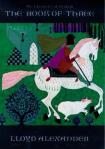
The Book of ThreeThe Prydain Chronicles by Alexander Lloyd are well-known children’s classics, but somehow I had never heard of them until the last few years. I saw them mentioned favorably at various blogs, so when I saw the first three books either on sale or free (I forget which) for the Kindle app, I got them.

The first in the five part series is The Book of Three. Young Taran lives with a retired soldier named Coll and an old “enchanter” named Dallben. He has ambitions to do great, heroic things, but in the meantime he is made Assistant Pig-Keeper. The pig he is charged with keeping is not just any old farm pig, however: this one, called Hen Wen, is a white oracular pig: she can tell prophesies and help information come to light. Taran fails at his first major responsibility when Hen Wen runs away. He sets out to find her even though he has been told not to leave the farm.

While searching for the pig, Taran is startled to see the dreaded Horned King, the champion of Arawn Death-Lord ride by with his soldiers. One throws a sword at him which wounds him, but not fatally. After running for his life and passing out, he awakens to find his wounds being treated by none other than Prince Gwydion in disguise.

Gwydion and Taran face unexpected battle and are captured. Taran escapes but is sure that Gwydion has died when the castle where they were held collapses. He decides he must go to warn the king of the advancing army of the Horned King. Along the way he is joined by a minor king named Fflewddur Fflam who is moonlighting as a bard and whose harp strings break whenever he stretches the truth, Princess Eilonwy, who talks a lot and has been learning magic, and Gurgi, sort of between man and beast who refers to himself in the third person and speaks in rhymes (“crunchings are munchings,” his reference to food,””sneakings and peekings,” “smackings and whackings,” etc.).

In his quest Taran has to come face to face with his own shortcomings and learn that heroism is not only not easy, but it isn’t always displayed in mighty public acts.

The books are somewhat loosely based on Welsh mythology (with which I am not familiar). The author grew to love the land and language of Wales when he was stationed there during WWII while in the army.

A few of the notable quotes from the book:

β€œNeither refuse to give help when it is needed,… nor refuse to accept it when it is offered.”

“It is not the trappings that make the prince, nor, indeed, the sword that makes the warrior.”

“I have studied the race of men. I have seen that alone you stand as weak reeds by a lake. You must learn to help yourselves, that is true; but you must also learn to help one another.”

I enjoyed some of the humor in the story, such as this exchange:

β€œBy all means,” cried the bard, his eyes lighting up. “A Fflam to the rescue! Storm the castle! Carry it by assault! Batter down the gates!”

“There’s not much of it left to storm,” said Eilonwy.

“Oh?” said Fflewddur, with disappointment. “Very well, we shall do the best we can.”

I have to admit it took me a while to get into the story, and I didn’t like it at first. I didn’t really care for the princess: I hate when girls continually take things said in innocence and twist them around to mean something else and get offended by them, and the princess here did that quite a lot. Then again, she is young as well, so possibly her maturing will come about in one of the next books.Β  I thought the idea of an oracular pig was silly, and the story seemed to resemble The Lord of the Rings a little too closely in the beginning with the undead Cauldron Born soldiers a little too similar to the Ring Wraiths, and Gurgi sounding very much like Gollum. As the story went on, however, Gurgi developed into quite a different personality than Gollum and the story took on its own direction and feel.

I do like coming of age “quest” stories where the protagonist has to reach beyond his abilities and learn about himself and life in the process, and this story fits that bill nicely.Β  The author says in his after-word, β€œMost of us are called on to perform tasks far beyond what we can do. Our capabilities seldom match our aspirations, and we are often woefully unprepared. To this extent, we are all Assistant Pig-Keepers at heart.”

(This will also be linked toΒ Semicolonβ€˜s Saturday Review of Books.)

Book Review: The Sign of Four

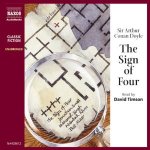
sign of fourThe Sign of Four by Arthur Conan Doyle is the second Sherlock Homes novel. It was originally published in a magazine as The Sign of the Four and later published as a novel. Later publications shortened the name to The Sign of Four.

Sherlock and Watson are visited by a Miss Mary Morstan. Her father had disappeared ten years earlier and she began receiving a valuable pearl from an anonymous source every year for the last six years. She’s just received a note saying she is a wronged woman and requesting a meeting. She can bring two friends as long as they are not police. Sherlock and Watson agree to go. Mary shows them an odd paper found among her father’s things that appears to be a map with four crosses and four names, three of them English and one Indian.

When they arrive at their destination they are greeted by one of two twin brothers who were sons of an associate of Mary’s father. I’ll leave what he told them and what they found there for you to discover if you read the book. πŸ™‚

Hearing that Holmes engaged in drug usage caused me to hold his stories at arm’s length at first, but Wikipedia explains that the drugs he uses are not illegal at the time. He uses them when he is extremely bored or when he feels his brain needs the stimulation. This book introduces the habit and Watson’s disapproval, which he finally works up the nerve to express to Holmes. According to Wikipedia, in later stories Watson is eventually able to “wean” Holmes off of them. The drug use doesn’t play a major role in this book, but it’s there, mainly at the beginning.

This book also delves more into Holmes’s pysche and personality, which I found as interesting as the mysteries. We saw in the first book that Holmes had a brilliant intellect and developed his skills for deductive reasoning and crime solving almost to the exclusion of others, even to the point of not knowing that the earth revolved around the sun or caring since it didn’t affect his work. Some years ago I saw an documentary on Einstein which showed him to have a horrible relationship with his wife. I almost wondered then whether becoming a genius in one area required one to be out of balance in other areas. I don’t know – I’ll have to explore that idea further if I read about any more geniuses. πŸ™‚ But it appears to be true in Holmes’ case: if he is not solving a crime or developing a skill which will help in the future, he’s utterly bored and doesn’t know what to do with himself. This book humanizes him a bit and we see him as more than just a brilliant intellect.

Part of my interest in reading Holmes’ stories is spurred by some modern adaptions of them, mainly the BBC television production of Sherlock starring Benedict Cumberbatch, which depicts Holmes as a modern London city-dweller and adapts the stories in the current culture and technology.Β  I’ve only seen the first three episodes and have been advised that the fourth (or actually the first episode in the second season, concerning Irene Adler) is best avoided. But I’ve enjoyed the three I’ve seen and thought they were quite well done. They don’t follow the original stories exactly but there are enough similarities to make the modern Sherlock as much like the original as possible within a modern framework.

But even though the TV series touched off my reading of the Holmes books, they are interesting enough that I want to continue to read them for themselves. For this book I listened to the audiobook ably narrated by David Timson. The text of the story can be found online here.

(This will also be linked toΒ Semicolonβ€˜s Saturday Review of Books.)

Laudable Linkage

Here are some noteworthy reads recently discovered:

Nobody Understands What I’m Going Through.

How to Truly Encourage the Spiritual Life of Your Husband.

Slow-to-Anger Parenting, HT to Challies.

Thunder and Bugs: Helping Children Deal With Fear.

What To Do When Compliments Scare You.

I’ve seen this video in a couple of places this morning. We think of erosion as a destructive force, and it can be: we have to take measures against its damaging foundations and crops, etc. But God can also use it to create beauty.

Have a great weekend!

Friday’s Fave Five

FFF spring2

It’s Friday, time to look back over the blessings of the week with Susanne at Living to Tell the Story and other friends. Here are five highlights:

1. Timothy is home! My little grandson finally got to come home from the NICU yesterday! That will probably be one of the fave fives for the year! πŸ™‚ I was able to go over last night and hold him for a little while – so sweet.

2. Take-out two nights. I asked my husband if he’d bring something home for dinner Friday night, and then he offered to get something on Saturday night, too. It was nice to have a couple of nights “off.”

3. Not having a spider bite. πŸ™‚ I’ve had a red spot with blisters on one leg for the last couple of days and probably would have just waited to see if it went away, but with it being Friday I was antsy about letting it go over the weekend. I was thinking it was some kind of bug bite, but the doctor said it looked like contact dermatitis, possibly poison ivy. It’s on part of my leg that doesn’t have full sensation due to transverse myelitis, so it doesn’t itch or hurt. πŸ™‚ But he did prescribe a cream for it. I was glad they were able to see me today.

4. Antibiotics. My husband had been feeling pretty terrible with a sinus infection, but the antibiotics have started kicking in and he s been feeling a little better.

5. Our doctor’s office for getting me in today and for seeing my husband after hours one night this week.

Hope you have a great weekend!

Timothy is home!

welcome-home

As most of you know, my little grandson, Timothy, was born almost 11 weeks premature back in April and has been in the NICU ever since. He finally got to come home yesterday! We’re all so happy!

I had thought that once he reached his due date and everything else (weight, heart-rate drops, etc.) was ok, that we were home free and he would be the same as any other newborn. But apparently preemies’ immune systems are still more vulnerable than other babies even when they reach full term status. So he’ll have to be isolated for a while, except for the multitude of follow-up visits with various therapists and doctors.

But we’re definitely rejoicing at this happy long-awaited major milestone! And since so many of you have prayed with us for him, I wanted to let you know.


What’s On Your Nightstand: June 2014

What's On Your NightstandThe folks at 5 Minutes For Books host What’s On Your Nightstand? the fourth Tuesday of each month in which we can share about the books we have been reading and/or plan to read.

Since last time I have completed:

Loving the Church by John Crotts, reviewed here.

The Brothers Karamazov by Fyodor Dostoyevsky via audiobook, reviewed here. This is the August selection for Carrie’sΒ  Reading to Know Classics Book Club list, if you want to try to give it a whirl before then. πŸ™‚

Wow, not very much, considering one was an audiobook! Not sure what happened to my reading time in June.

I’m currently reading:

The Book of Three by Alexander Lloyd, first book in the Prydain Chronicles.

The Knowledge of the Holy by A. W. Tozer

How to Read Slowly: Reading for Comprehension by James W. Sire. Not that I want to actually decrease my reading speed or that I have problems with comprehension, but I’d like to retain more of what I read, so I am hoping this will help.

The Sign of the Four by Sir Arthur Conan Doyle, second of the Sherlock Homes novels, via audiobook.

Next up:

Why We Are Not Emergent: By Two Guys Who Should Be by Kevin DeYoung, Ted Kluck, and David F. Wells

Undetected by Dee Henderson

I will Repay by Baroness Orzcy, part of The Scarlet Pimpernel series

Possibly Girl in the Gatehouse by Julie Klassen and Just Jane: A Novel of Jane Austen’s Life by Nancy Moser, two of my alternates from the TBR Challenge list, rather than the one remaining nonfiction book I have left there. The nonfiction has been beneficial, but I am missing stories. πŸ™‚

Carrie’sΒ  Chronicles of Narnia Reading Challenge. is in July, but I haven’t decided whether I’ll do anything for it yet. I finished the Narnia series last year and am not ready to start it over again. There are several Narnia-related non-fiction books I’d like to read, but I am reading so much other non-fiction this year I am not feeling inspired at the moment to choose another one. I hate to miss out on it, though, as I have participated for the last few years, so I may decide to jump in before it’s over.

What have you been reading?

Book Review: The Brothers Karamazov

KaramazovDostoyevsky is one of those people I’ve thought about reading for a long time, but his works tend to be pretty chunky volumes. However, I did read somewhere not long ago that his books are actually fairly easy to get into, so when I saw his The Brothers Karamazov on Carrie’sΒ  Reading to Know Classics Book Club list, that seemed like the perfect opportunity to give him a try. This book is the selection for August, but I kept thinking it was coming up in July and I wanted to get a head start on it, so I started listening to the audiobook some weeks back and just finished it a few days ago. I wanted to go ahead and write a review wile it was still fresh in my mind.

The first of the title brothers is Dmitri, also called Mitya, the oldest (about 28 when the book begins), passionate, impulsive, tempestuous. He has a running feud with his father over his inheritance and over a woman who is called Grushenka.

The second is Ivan, brilliant, logical, skeptical. He can’t reconcile the idea of God with the suffering he sees in the world, particularly that of children, and feels that if there is a God, He is malevolent. He comes to find out that the logical conclusions of his philosophies have natural but unforeseen consequences.

The youngest is Alexei, also known as Alyosha, about age 20, who lives at the monastery (Russian Orthodox) while training to become a monk. He is kind, reasonable, thoughtful, compassionate, a peacemaker and has a genuine love for people.

It’s widely believed that there is a fourth illegitimate brother called Smerdyakov. His mother was a retarded homeless girl who died in childbirth. He is found and raised by the senior Karamazov’s servant, Grigory, who raises him. He becomes a servant in the Karamazov household as well. He is epileptic and has a mean, warped streak.

The father of this brood is Fyodor (the three sons all have the middle name Fyodorovich, which means “son of Fyodor”). Fydor is wealthy but debauched, wicked, and greedy. He has had little to do with any of his sons’ upbringing, and they all hate him except for Alyosha.

It is not much of a spoiler to say that Fyodor is killed: the author refers to his coming death early on and hints at a terrible event: it’s not much of a stretch to connect the two and realize that Fyodor is going to come to a bad end. And, indeed, he does: he is murdered. One of his sons is arrested for the murder and the evidence seems pretty certain against him (again foreshadowed by the author as he often comments that this or that happened “as so-and-so testified later.”) But the evidence isn’t conclusive, leaving the reader to wonder for a while who actually killed him. Besides being a major factor in the plot, Fyodor’s murder is also a major catalyst in the lives of his sons for different reasons.

Amidst all the action there are several philosophical discussions, notably between Elder Zosima, Alyosha’s mentor, and various people, and later between Ivan and Alyosha, touching on the nature of God, free will and whether it is a burden, moral responsibility, and other subjects.

I am heavily indebted to SparkNotes for getting much more out of this book than I would have from a surface reading/listening. I liked reading the chapter analysis and summaries at intervals (but I have learned from past experience not toΒ  look at the plot overview or character analysis there until finishing a book because they reveal key details of the story). The chapter analyses did help me see the connection between the philosophical discussions and the action: those discussions weren’t isolated rabbit trails: they were integral to the story (possibly the main points of the story), and the action played out the truths discussed. For instance, I hadn’t connected Alyosha’s ministrations to a dying child (Ilyusha) to his earlier discussion with Ivan, but SparkNotes pointed out:

Ivan looks at the abstract idea of suffering children and is unable to reconcile the idea with his rational precepts about how God ought to be. His solution is to reject God. Alyosha, on the other hand, sees an actual suffering child and believes that it is God’s will for him to try to alleviate the child’s suffering to whatever degree he can. His solution is to help Ilyusha. Again, Dostoevsky shows how the psychology of skepticism walls itself off, in elaborate proofs and theorems, from having a positive effect on the world, while the psychology of faith, simplistic though it may be, concerns itself with doing good for others. This very subtle response to the indictment of God presented by Ivan in Book V brings the philosophical debate of the novel onto a plane of real human action, and shows the inadequacy of Ivan’s philosophyβ€”which Ivan himself would readily acknowledgeβ€”to do good in the real world.

As with many older classics, this book can seem a little tedious and wordy by today’s standards. Newer stories start off with action that grabs you and makes you want to know what happens nextΒ  or causes you to care about a character right away: older books have a lot of explanation and description first. The first style is usually more exciting; the latter takes a little more patience but does usually pay off in the end.

This story that has more layers than one would think at first, and it is causing me to think and make connections long after I’ve finished it – a hallmark of a classic. I didn’t agree with much of the theology, but the overall theme of a quiet faith lived out in everyday life with love and service towards one’s fellow man appealed to me.

I also enjoyed reading more of Dostoyevsky’s background at Wikipedia and SparkNotes.

I usually like audiobooks for classics, for several reasons, but in this case it was probably not the best way to go. For one thing, the multitude of polysyllabic Russian names and nicknames was hard to distinguish at first, but after a while I was able to distinguished who was who (whom?) Secondly, there were a few sections of philosophical discussion that were hard for me to follow just by listening while driving, fixing hair, etc.: those would have benefited from being able to go over them on the printed page a couple of times. Nevertheless I thought the narrator, Constantine Gregory, did a good job telling the story.

(This will also be linked toΒ Semicolonβ€˜s Saturday Review of Books.)

This also completes one of my selections for theΒ  Back to the Classics Challenge hosted by Karen at Books and Chocolate.

classics2014


Laudable Linkage

Here is a collection of some thought-provoking posts discovered in the last couple of weeks:

You Are What – And How – You Read from Rosaria Champagne Butterfield. About more than reading.

When Sin Looks Delicious.

The Inner Life — Four Reasons to Have a Quiet Time.

The ladies of Out of the Ordinary have been blogging about middle age this month, a topic you don’t often see on blogs. My two favorite posts so far have been Things to Guard Against in the Middle Years and The Middle Years: There’s Good News, Too!

On Daughters and Dating: How to Intimidate Suitors. Loved this: “Instead of intimidating all your daughter’s potential suitors, raise a daughter who intimidates them just fine on her own. Because, you know what’s intimidating? Strength and dignity. Deep faith. Self-assuredness. Wisdom. Kindness. Humility. Industriousness.”

What do those with disabilities owe those without?

An Outburst Is An Opportunity.

When It’s Time to Leave a Church.

Five Helps for Memorizing Bible Verses.

Three Reasons to Diversify Your Reading. Why Christians should read non-Christian books.

Hope you have a great weekend!