Book Review: Made to Crave

Made to CraveMade to Crave by Lysa TerKeurst caught my eye a couple of years ago when a numbers of bloggers spoke highly of it. I was interested, but I thought from the title that it probably focused more on the emotional side of eating, like another book I read. I knew that was one factor in my problem with weight, but it wasn’t the only factor. I forgot about it until the e-reader version showed up either free or just a couple of dollars for the Kindle app last year. I got it then, but still didn’t crack it open. Then I saw on one of my friend Kim‘s posts that the Proverbs 31 Ministries, was hosting a six-week Bible study using Made to Crave, so I thought this would be an ideal time to read the book. The study just concluded last week. I’ve been jotting chapter notes here.

The book chronicles Lysa’s journey from being almost 200 lbs. down to a healthier weight. She discovered along the way that losing weight is not just a physical issue, but also a spiritual and mental one. The subtitle of the book is Satisfying Your Deepest Desire with God, Not Food. She explains that the Greek word translated “seek” in Matthew 6:33 is the word for “crave.” She says of the rich young ruler, who wanted to follow Jesus until Jesus asked him to sell his possessions and give to the poor. “Jesus didn’t mean this as a sweeping command for everyone who has a lot of money. Jesus meant this for any of us who wallow in whatever abundance we have. I imagine Jesus looked straight into this young man’s soul and said, ‘I want you to give up the one thing you crave more than me. Then come, follow me.'”

“When Jesus says, ‘Follow me,’ it’s not an invitation to drag our divided heart alongside us as we attempt to follow hard after God. When Jesus wants us to follow Him – really follow Him – it’s serious business. Here’s how Jesus describes it: ‘If anyone would come after me, he must deny himself and take up his cross and follow me’ (Mark 8:34).”

“God never intended us to want anything more than we want Him. Just the slightest glimpse into His Word proves that, Look at what the Bible says about God’s chosen people, the Israelites, when they wanted food more than they wanted God: ‘They willfully put God to the test by demanding the food they craved’ (Psalm 78:18). Yikes” (p. 28K). Those who did so never made it to the Promised Land, but wandered in the wilderness the rest of their lives.

There are multitudes of spiritual principles discussed throughout the book, but there are physical ones as well, such as the fact (proven through research) that junk foods are addicting and do make one feel less full. Some people seem to be able to eat them with no problems – some people seem to be able to eat an abundance of foods with no problem – and we struggle with that feeling unfair, but we can’t compare ourselves to others and think, “If they can eat it, I should be able to as well.” If “they” don’t have issues with food, they have issues with something.

She gives mental tips, too (which overlap somewhat with the spiritual), such as have go-to scripts for certain situations to change the mental processes we’re used to and concentrating on what we’re gaining while going through this process rather than what we’re giving up.

Something that really stood out to me from the first chapter was the observation that Eve fell while surrounded by plenty: Jesus stood strong while in a deprived state of having fasted 40 days and nights. When I feel “deprived,” that’s no excuse to give way to temptation. “He quoted God’s Word. And so can we. When we feel deprived and frustrated and consumed with wanting unhealthy choices, we too can rely on God’s Word to help us.”

Another standout (among many) was the application of I Corinthians 10:12-13: “Wherefore let him that thinketh he standeth take heed lest he fall. There hath no temptation taken you but such as is common to man: but God is faithful, who will not suffer you to be tempted above that ye are able; but will with the temptation also make a way to escape, that ye may be able to bear it.” The “way out” the Lord provided for Lysa, she says, was deciding in advance what she will and won’t have that day. I have to admit, when I think of the “way out,” I think more of God coming to my rescue with supernatural strength and reminders of His truth rather than this kind of thing, but He does also say “Casting down imaginations, and every high thing that exalteth itself against the knowledge of God, and bringing into captivity every thought to the obedience of Christ” (I Corinthians 10:5), and planning is part of doing that. In Israel’s battles, sometimes God supernaturally intervened, and sometimes they had to take up their swords and fight in reliance on Him. When God gives me that “sword” with His promise of help and grace, I’m to use it while relying on His grace and strength, not wait for Him to do the battle for me.

I didn’t quite agree with every little application or illustration (the most serious disagreement was when she was asked how to grow close to God and she replied, “By making the choice to deny ourselves something that is permissible but not beneficial. And making this intentional sacrifice for the sole purpose of growing closer to God. After all, Jesus Himself said, “If anyone would come after me, he must deny himself and take up his cross daily and follow me’ (Luke 9:23).” I don’t think that’s what I would answer if someone asked me how to draw close to God. I think I would have encouraged being in the Word and praying as well as dealing with any sin in the life and yielding our wills to His. I can see people taking this premise of denying something permissible and running with it beyond anything God intended). But overall I benefited greatly from the book and would highly recommend it to anyone.

This will also be linked to Semicolon‘s Saturday Review of Books.)

Jesus, I Am Resting

This hymn has been on my mind for a couple of weeks. We used to sing it in church quite a bit but I haven’t heard it in years. I was going to post it last week, but then went with another one instead.

Now this hymn is especially poignant to me today as a young wife and mother in our church passed away suddenly and unexpectedly Saturday morning from heart failure in response to a catastrophic reaction to some kind of medication. We’re all stunned and saddened, I just ache for the husband and two young children left behind. I just can’t fathom how he was able to tell their children that Mommy is gone and the many ways this will affect them all in the days ahead. Only by God’s grace, which I am asking Him for them.

But I’m also comforted by the words to this song. We rest in Him by faith: now she is doing so by sight. I can only imagine what that is like.

Jesus, I am resting, resting,
In the joy of what Thou art;
I am finding out the greatness
Of Thy loving heart.
Thou hast bid me gaze upon Thee,
And Thy beauty fills my soul,
For by Thy transforming power,
Thou hast made me whole.

O, how great Thy loving kindness,
Vaster, broader than the sea!
O, how marvelous Thy goodness,
Lavished all on me!
Yes, I rest in Thee, Belovèd,
Know what wealth of grace is Thine,
Know Thy certainty of promise,
And have made it mine.

Simply trusting Thee, Lord Jesus,
I behold Thee as Thou art,
And Thy love, so pure, so changeless,
Satisfies my heart;
Satisfies its deepest longings,
Meets, supplies its every need,
Compasseth me round with blessings:
Thine is love indeed!

Ever lift Thy face upon me
As I work and wait for Thee;
Resting ’neath Thy smile, Lord Jesus,
Earth’s dark shadows flee.
Brightness of my Father’s glory,
Sunshine of my Father’s face,
Keep me ever trusting, resting,
Fill me with Thy grace.

~ Jean S. Pig­ott, 1876.

Though I have always liked the old tune, I really like this new version as sung by the Steve Pettit Evangelistic Team on their CD, If Eyes Could See.

Laudable Linkage

Here are some noteworthy reads from the last couple of weeks:

An Invitation. “I don’t want to be grouchy and discontented. I don’t want to become angry with my kids, short-tempered with my husband, or aloof with my friends. It is my desire to be more. To be patient, kind, and others-centered.”

Dear Lonely Mom of Older Kids.

Why Miscarriage Matters If You’re Pro-Life.

Don’t Be Original.

There are two helpful posts concerning the issue of Christians not wanting to give business to situations that would violate their consciences and whether or not that is hypocritical: Against Christian Hypocrisy and On Weddings and Conscience: Are Christians Hypocrites?

The Heartbreak of Foster Care. “We don’t do it because we aren’t afraid of heartbreak, but because we are afraid of what would happen to them without us.”

Trailer for “Unbroken” Movie. I loved the book about Louis Zamperini, Olympic runner who became a POW in WWII. The trailer looks good: I hope the movie does it justice.

Teddy Roosevelt’s Rules For Reading. I especially like the idea that there is no list of the 100 best books that will fit everyone.

Infographic: Top Ten Reasons for Choosing a Paper Book Over an E-Book. I do read e-books – can’t pass up the free or deeply discounted chance to get books, plus they’re convenient to carry around – but I do still prefer paper books. This graphic shows the top reasons other people prefer them, too.

Why Some Kids Can’t Spell and Why Spelling Tests Won’t Help.

And a couple of fun things:

Tiny Lego Photographer. Really neat photos.

The Man Who Built the Settlers of Catan game.

20 People Who Tried Things on Pinterest and Totally Nailed It. This is hilarious. I’ve written before of some of my cake disasters: these look like something I would do.

I saw this going around Facebook: a math teacher whose students never suspected his secret softer side:

Friday’s Fave Five

FFF birds on a wire

 It’s Friday, time to look back over the blessings of the week with Susanne at Living to Tell the Story and other friends. Here are some of mine:

1. The Olympic Skater’s Gala, when some of the figure skater’s perform something of an encore. I had actually forgotten about it and thought the skating was all done, so I was pleasantly surprised that there was one more event. It’s especially fun because there is no judging and therefore less pressure.

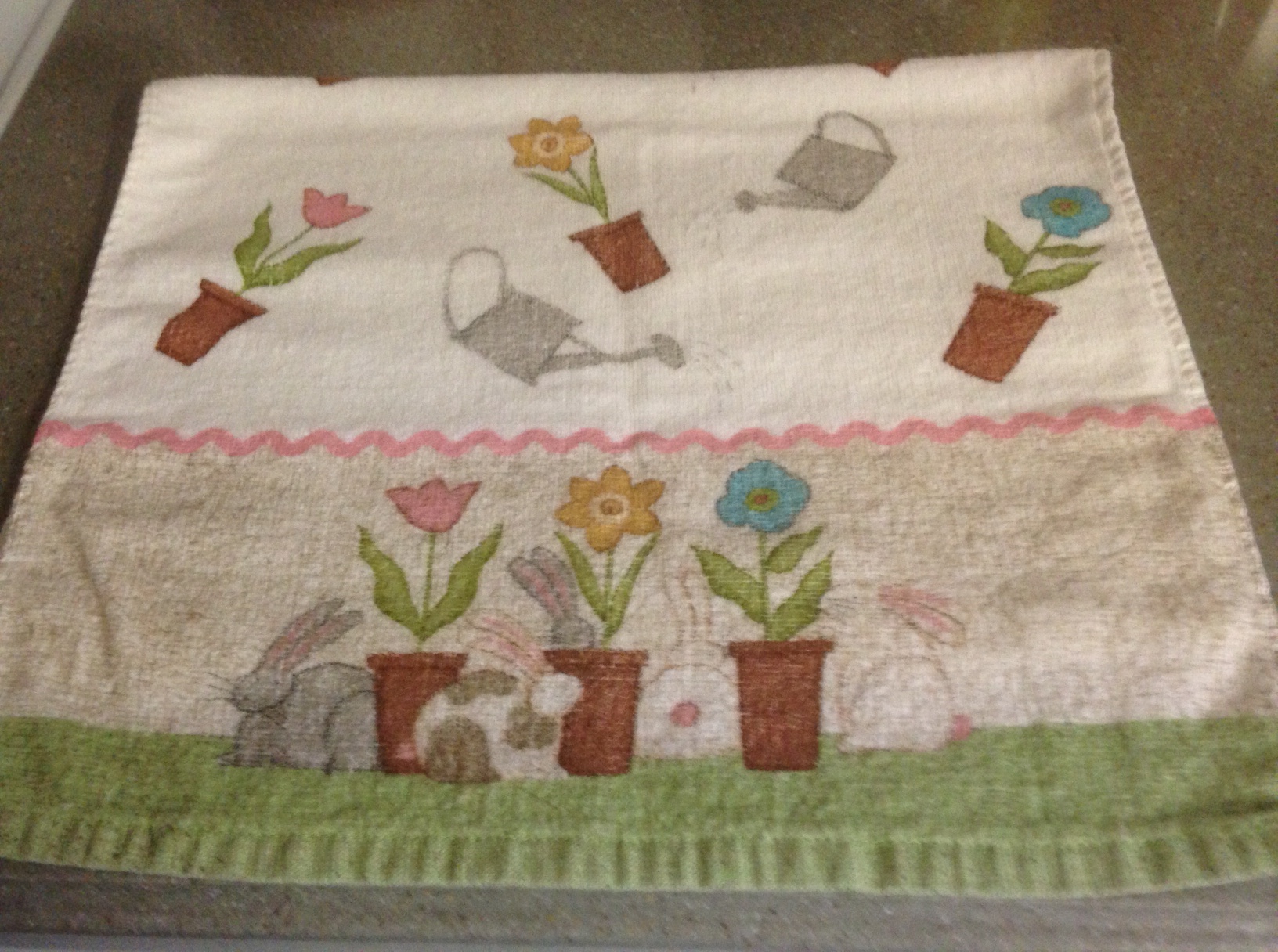
2. A cute little spring dish towel, bought with a gift card on my shopping excursion last week.

photo

3. Getting these done:

photo 1

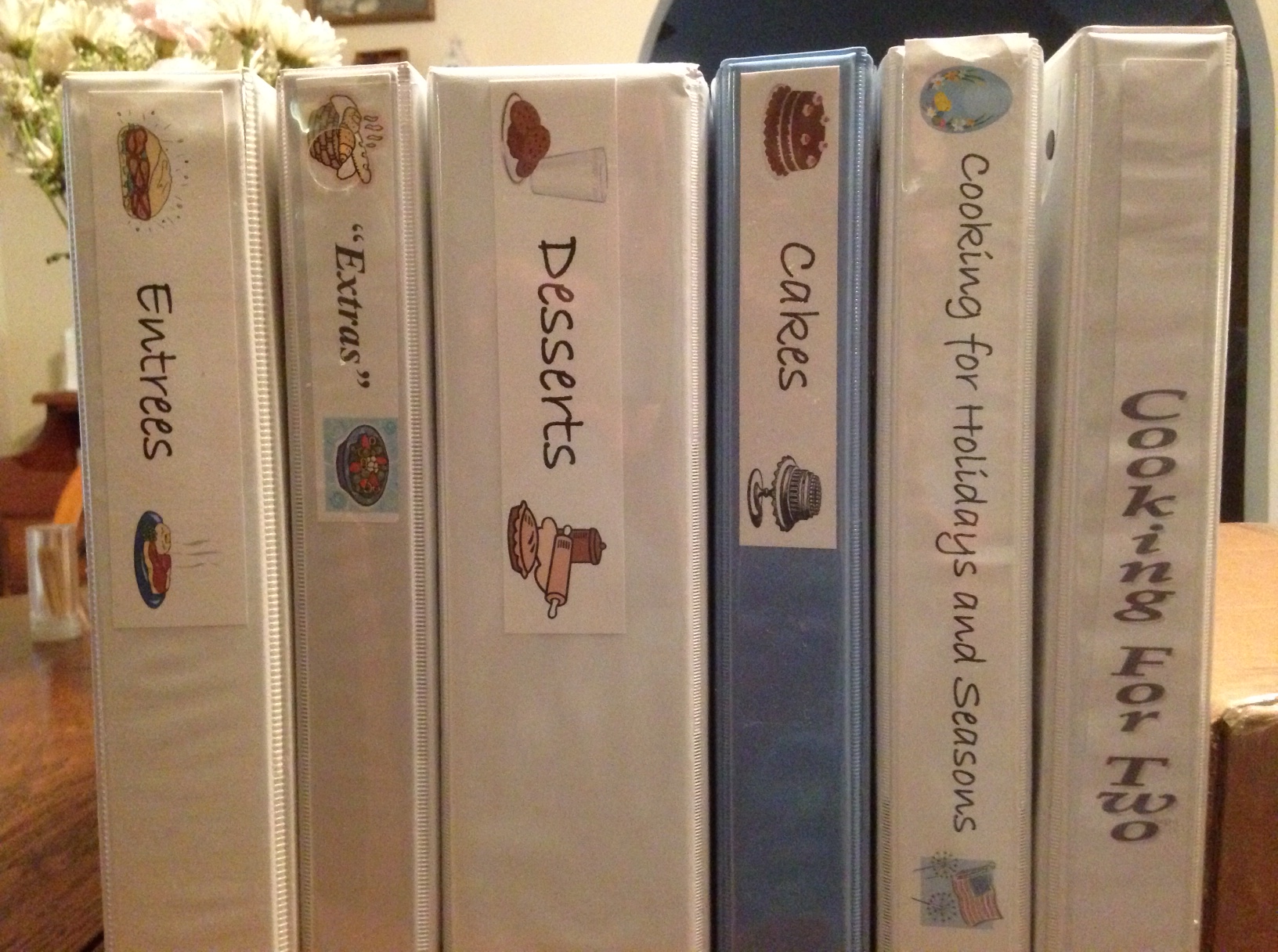
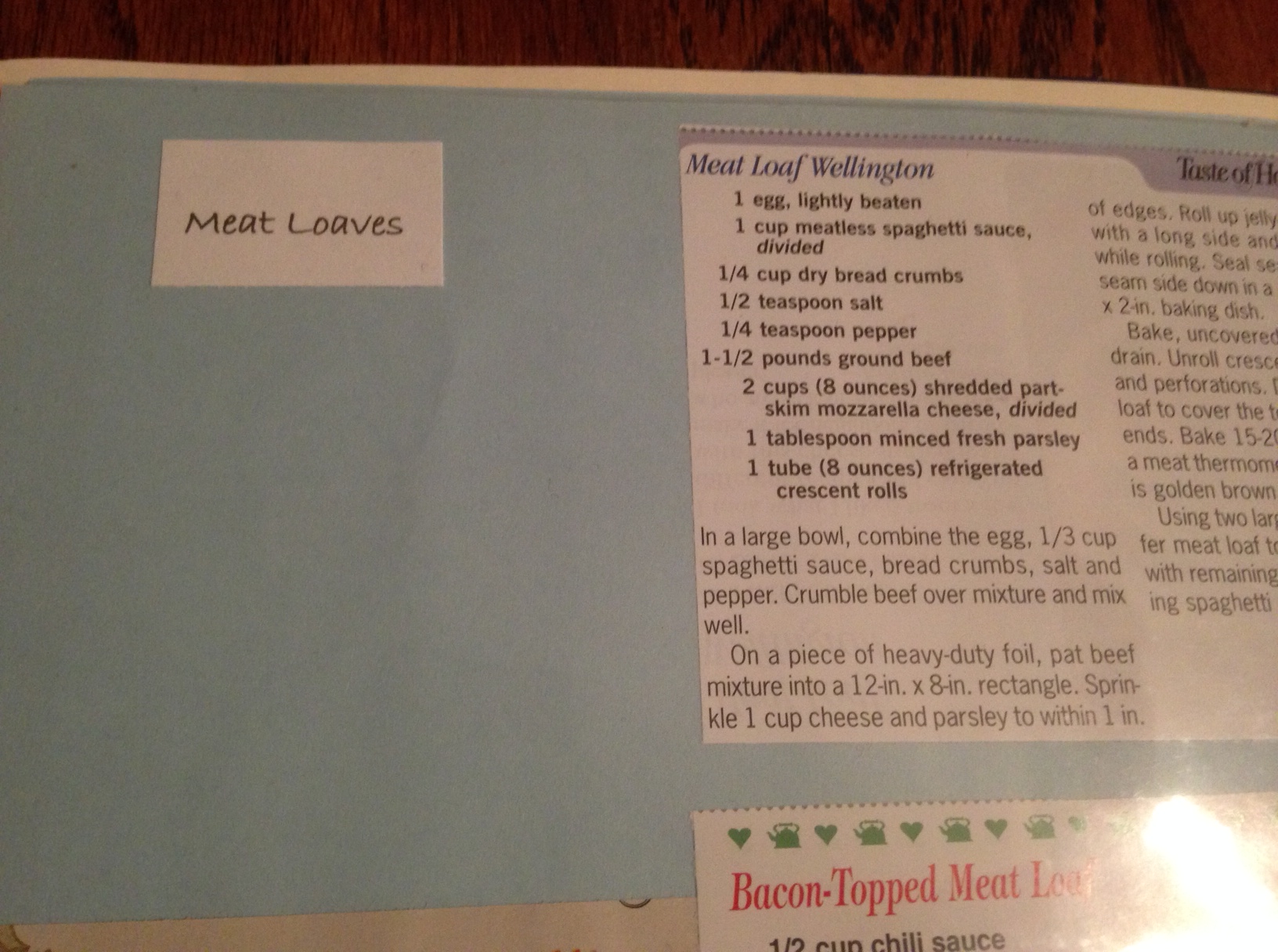
I’ve been taking the multitude of loose recipes I had stacked up from many years of tearing them out of magazines and putting them in scrapbook-like notebooks, working on it in the evenings. I didn’t get at all fancy with it, because then it would have taken me twice as long. I still need to work on some of the inside labeling, but they are already easier to use. Plus since they are in page-protectors, they won’t get splattered.

photo 2

4. Exercise DVDs – which is ironic for me to say, because I approach exercise with gritted teeth and grim determination, though I always feel better afterward and am glad I did it. But I’ve accumulated a few of them over the years, so I can vary the workouts and not get bored, plus they allow me to be able to exercise in my own home. My favorites are “The Biggest Loser Power Walk” and Leslie Sansone’s “Five Mega Miles,” because each is divided up into 15 minute segments which are supposed to cover a mile each, yet they also include some exercises for arms with weights or a stretch band, so I usually do a couple of segments a day. Having some variety is important for me.

5. Throw blankets. I know I have mentioned them before, but they’re just so cozy for cool evenings. I even use one on my bed at night over my bedspread, and it’s just enough. I don’t know what they’re made out of, but they have just the right degree of coziness – not too hot or cool.

Hope you’ve had a great week as well!

Laura Ingalls Wilder Reading Challenge Wrap-Up

Laura Ingalls Wilder Reading Challenge

Wow, the month of February has really flown! How did you do with your LIW reading? I’m looking forward to hearing about it.

If you’ve read anything by, about, or related to Laura this month, please share it with us in the comments. You can share a link back to your book reviews, or if you’ve written a wrap-up post, you can link back to that (the latter might be preferable if you’ve written more than one review — the WordPress spam filter tends to send comments with more than one link to the spam folder. But I’ll try to keep a watch out for them.) We’d also love to hear if you’ve done any “Little House” related activities.

And, if you’ve participated this month and leave a comment on this post, you’re eligible for the drawing for a copy of The Little House Cookbook, compiled by Barbara M. Walker and illustrated by Garth Williams (the same illustrator for my set of Little House books). I’ll choose a name through random.org. a week from today to give everyone time to get their last books and posts finished. You’re eligible even if you don’t have a blog: just share with us in the comments what you read and a few of your thoughts about it. If you already have this book, I can substitute a similarly-priced Laura book of your choice. (Note: the drawing is closed and the winner is Susan!)

For myself, I read and enjoyed Farmer Boy this year (linked to my review), the story of Almanzo’s childhood. I’m already looking forward to getting back to Laura’s story next year and exploring a couple of other Laura-related books I just heard about this month.

Thank you all for participating! That’s what makes this challenge so fun. I’m looking forward to your thoughts on what you’ve read!

Book Review: Farmer Boy

Farmer BoyFarmer Boy by Laura Ingalls Wilder is the second book published in her Little House series and deals with the childhood of her husband, Almanzo. If I remember correctly, I think I read that  Little House in the Big Woods and this book were all that were planned originally, and when they became so popular, then Laura went on to write other books about her growing up. Since Almanzo doesn’t appear in the rest of the series until a few books later, his story can really be read just about anywhere along the way.

The book covers a little over a year, beginning when Almanzo was almost nine years old. His father was a farmer and his family more prosperous than the Ingalls’ family, but they were very frugal as well. In this book Almanzo was the youngest of four children, though another boy was born to the family some years later.

Farming at this time involved the whole family. Almanzo and his brother Royal helped their father with the everyday chores like milking and cleaning out the animal stalls, and his sisters Eliza Jane and Alice helped their mother in the house, though Alice sometimes helped outside with planting and harvesting (in hoop skirts!) and Almanzo had to help inside sometimes during spring cleaning or other busy times.

Farmers were not busy just in planting and harvesting, though those, especially the latter, might be the most pressured times. They also made repairs, made equipment, broke horses, trained cattle, sheared sheep, cut ice, and many other tasks, while their wives spun thread, wove fabric, sewed, knitted, made hats, made (and sold) butter, etc. etc.

And the children were to participate in it all, both to learn by doing and to learn to pull together as a family. But the children had plenty of fun times as well. They attended school, though the boys could stay home when needed for certain tasks (which Almanzo preferred).

The children were no angels, but I’d say they were pretty normal. When their parents went away for a week, they slacked off on what they were supposed to do and ate a horrendous amount of sweets, then had to scramble to catch up the day before their parents were to come home. Almanzo got into a fight with his cousin (from a literary point of view, he had it coming for a long time: from a Christian and moral point of view, no, that’s not what he should have done) and threw a blacking brush (used on the stove) at his sister, which left a black splotch on the wallpapered wall of Mother’s for-company-only pristine parlor.

I mentioned before that Almanzo’s parents were frugal even though they were considered pretty well off. I remember when I had a job for a while cleaning in the home of a lady whose husband was the vice president of a large company. One day she fussed at me for washing the whole glass door when there was only one spot that needed to be taken care of. Inwardly I kind of rolled my eyes and thought, “As if you need to worry about a few cents worth of cleaner being wasted!” But then I thought, prosperous people don’t get where they are by being wasteful. At an Independence Day celebration, Almanzo was goaded by his cousin into asking his father for a nickel for lemonade. Almanzo was nine and had never asked his father for such a thing before. His father pulled out a half-dollar and asked Almanzo what it was. When all Almanzo could identify it as was a half-dollar, his father said, “It’s work, son. That’s what money is; it’s hard work.” He asked Almanzo a series of questions about growing, harvesting, and selling potatoes, remarked that half a bushel sold for a half-dollar, held up the coin, and then said, “That’s what’s in this half-dollar, Almanzo. The work that raised half a bushel of potatoes is in it.” Then he gave it to him and told him he could either spend it in lemonade or, he suggested, he could buy a little pig and raise it to have more pigs to sell for 4 or 5 dollars apiece. I’ll let you guess which Almanzo did.

One of the major take-aways from this book is what a tremendous lot of work such a life was. It sounds almost idyllic here, but it seemed almost constant. No one complained about it: that’s just how life was. There is something neat about knowing how to use all the parts of a butchered animal (some was frozen in the shed or attic for future use, some was saved for sausage, some parts were used in making soap and candles, the hide was saved for making shoe leather) and which trees were good for what (one kind was used for making sleds and carts, another kind for runners for the sled, another kind for withes or straps for baling hay, etc), and I admire it, but I don’t know that I’d want to go back to those days.

When Almanzo helped his father thresh wheat and asked why his father didn’t buy a threshing machine, his father said, “‘That’s a lazy man’s way to thresh. Haste makes waste, but a lazy man’d rather get his work done fast than do it himself. That machine chews up the straw til it’s not fit to feed stock, and it scatters grain around and wastes it. All it saves is time, son. And what good is time, with nothing to do? You want to sit and twiddle your thumbs, all these stormy winter days?’ ‘No!’ said Almanzo. He had enough of that on Sundays.” Yet they did use some machinery. I guess it depended on what the machine did and whether it helped or wasted goods.

There is a bit of contrast between the Almanzo’s family and his cousins, who live nearer town and wear store-bought clothes, and the shopkeepers who have to “cotton to people,” while farmers are considered (by the farmers, at least) to be “free and independent.” Almanzo’s parents dislike that Royal wants to be a storekeeper. I hadn’t thought of this aspect until I saw it mentioned in a couple of reviews I skimmed through, but town cousins and shopkeepers may have represented the changing society away from being farm-based to being more centered around towns and other goods and services.

Something else that stands out in the book is the way children were treated. It was definitely not a child-centered era. Some of it might come across as harsh by today’s standards, yet the parents were not unkind. Children were not to speak until spoken to at the table or when the parents were talking with other adults and, as I mentioned before, were expected to participate in most of the family work. I don’t think the latter is a bad thing, though these days we wouldn’t require quite so much of it. I don’t remember if I ever read this book to my boys – I should have –  but I do remember telling them, when they fussed over having to vacuum and dust every other Saturday, that there were some kids who had to milk cows and muck out barns every day. 🙂 I do think it is good for children to work around the house, for several reasons: they learn by doing, they learn to be givers and not just takers, they learn to pull together as a family, they learn responsibility and (hopefully) the value and satisfaction of a job well done which will carry through not just in their own homes but in their jobs as well. I get frustrated with sentimental poems that seem to indicate you can have a clean house or you can be a good mom, but not both, or that you’re a bad mom if you don’t stop what you’re doing every time your child wants you to play with him. We do get distracted, with both work and our own “play,” and we need to be reminded not to get caught up in all of that and neglect our children, but there is just as much value (maybe more) in working together with them as there is in playing together. And it doesn’t hurt children to learn to wait for things, either, whether it’s waiting for their parents to finish a conversation before asking them something, or waiting, as Almanzo did when he wanted a colt, for his parents to be sure he was really ready. Though I wouldn’t want to totally go back to how things were in that day, I think there is some good balance between that extreme and the mindset these days.

There were also interesting forays into how some things were done, such as having a cobbler come to the house for a week or two to make the family shoes, how they sheared sheep and made bobsleds and threshed wheat, etc. Sometimes there was a bit too much detail, but overall it was interesting.

I remember not liking this book as well as the others in the series in previous readings, but I liked it quite a lot this go-round.

I read this book for my Laura Ingalls Wilder Reading Challenge and for Carrie’s  Reading to Know Classics Book Club as well as the Back to the Classics Challenge.

(This will also be linked to Semicolon‘s Saturday Review of Books.)

This also completes one of my requirements for the  Back to the Classics Challenge hosted by Karen at Books and Chocolate.

classics2014

What’s On Your Nightstand: February 2014

What's On Your NightstandThe folks at 5 Minutes For Books host What’s On Your Nightstand? the fourth Tuesday of each month in which we can share about the books we have been reading and/or plan to read.

For a short month, this February sure has seemed like a long one! The Olympics impinged on my reading time a bit, but that’s okay.

Since last time I have completed:

Ida Scudder: Healing Bodies, Touching Hearts by Janet and Geoff Benge, reviewed here.

The Woman in White by Wilkie Collins, reviewed here.

I’m currently reading:

Made to Crave: Satisfying Your Deepest Desire With God, Not Food by Lisa TerKeurst along with a online Bible study using Made to Crave hosted by Proverbs 31 Ministries. Should be finished with that by the end of the week.

Walking From East to West: God in the Shadows by Ravi Zacharias

Crowded to Christ by L. E. Maxwell

Farmer Boy by Laura Ingalls Wilder for my Laura Ingalls Wilder Reading Challenge and for Carrie’s  Reading to Know Classics Book Club. Almost done!

Bleak House by Charles Dickens via audiobook.

Next up:

The Little White Horse by Elizabeth Goudge for Carrie’s  Reading to Know Classics Book Club. I have never read Goudge but have heard good things from those who have.

The House Is Quiet, Now What? Rediscovering Life and Adventure As a Empty Nester by Janice Hanna and Kathleen Y’Barbo.

The Great Divorce by C. S. Lewis

I’m longing for a couple of Christian fiction books waiting patiently for me on the book shelf, but I feel I should chip away at the books I’ve decided on for the various reading challenges I’ve signed up for first. But maybe, if I get all the ones listed here done, I’ll take a break with one of them.

Happy reading!

Be Still? Or Fight?

file000594726062

Photo courtesy of morguefile.com


I Corinthians 10:12-13 says, “Wherefore let him that thinketh he standeth take heed lest he fall. There hath no temptation taken you but such as is common to man: but God is faithful, who will not suffer you to be tempted above that ye are able; but will with the temptation also make a way to escape, that ye may be able to bear it.”

In reading Made to Crave by Lysa TerKeurst, she cites this passage in Chapter 16 and then says one “way out” the Lord provided for her was deciding in advance what she will and won’t have that day.

I have to admit, when I think of the “way out,” I think more of God coming to my rescue with supernatural strength and reminders of His truth rather than this kind of thing, but He does also say “Casting down imaginations, and every high thing that exalteth itself against the knowledge of God, and bringing into captivity every thought to the obedience of Christ” (I Corinthians 10:5), and planning is part of doing that.

In Exodus 14:14, when Israel was caught between Egypt’s advancing army and the Red Sea, Moses said, “The Lord shall fight for you, and ye shall hold your peace.” Some versions say “be still” instead of “hold your peace, some say “be silent.” I’ve seen people post this verse ending with “be still” on Pinterest or in other places as if that is God’s instruction to anyone facing any battle any time. In Israel’s battles, sometimes God supernaturally intervened, like He did at the Red Sea, and sometimes they had to take up their swords and fight. They couldn’t win unless He was with them and they relied on Him, as they discovered, but they had to actually go into battle and swing a sword and get sweaty and messy and strain their muscles in reliance on Him. In fact, after Moses tells Israel to “be still” in Ex. 14:14, in the very next verse “the Lord said unto Moses, Wherefore criest thou unto me? speak unto the children of Israel, that they go forward.”

When God gives me that “sword” of His truth like Lysa described of planning ahead for eating, or of reminding myself of His truth to oppose Satan’s lies, or of fleeing temptation,  I’m to use it, with His promise of help and grace, rather than waiting for Him to do the battle for me. Sometimes He will supernaturally win the battle for me while I only watch, but sometimes He gives me victory by handing me a sword.

I Run to Christ

I run to Christ when chased by fear
And find a refuge sure.
“Believe in me,” His voice I hear;
His words and wounds secure.

I run to Christ when torn by grief
And find abundant peace.
“I too had tears,” He gently speaks;
Thus joy and sorrow meet.

I run to Christ when worn by life
And find my soul refreshed.
“Come unto Me,” He calls through strife;
Fatigue gives way to rest.

I run to Christ when vexed by hell
And find a mighty arm.
“The Devil flees,” the Scriptures tell;
He roars, but cannot harm.

I run to Christ when stalked by sin
And find a sure escape.
“Deliver me,” I cry to Him;
Temptation yields to grace.

I run to Christ when plagued by shame
And find my one defense.
“I bore God’s wrath,” He pleads my case—
My Advocate and Friend.

Words by Chris Anderson
Music by Greg Habeggar

You can peruse more of Chris and Greg’s hymns at their web site, Church Works Media. Notes on the text to this hymn are here. The version on the video is from the Wilds CD, A Living Sacrifice.

May you run to Christ for any and every need, large or small.

Friday’s Fave Five

FFF birds on a wire


It’s Friday, time to look back over the blessings of the week with Susanne at Living to Tell the Story and other friends.

1. Lovely weather. We had a little cold, some rain, some thunderstorms, but overall it has been really nice weather with sunshine most days and temperatures in the 70s some days. Felt so good after the old snap the last couple of weeks.

2. My daughter-in-law’s birthday yesterday, a fun family time.

photo(1)
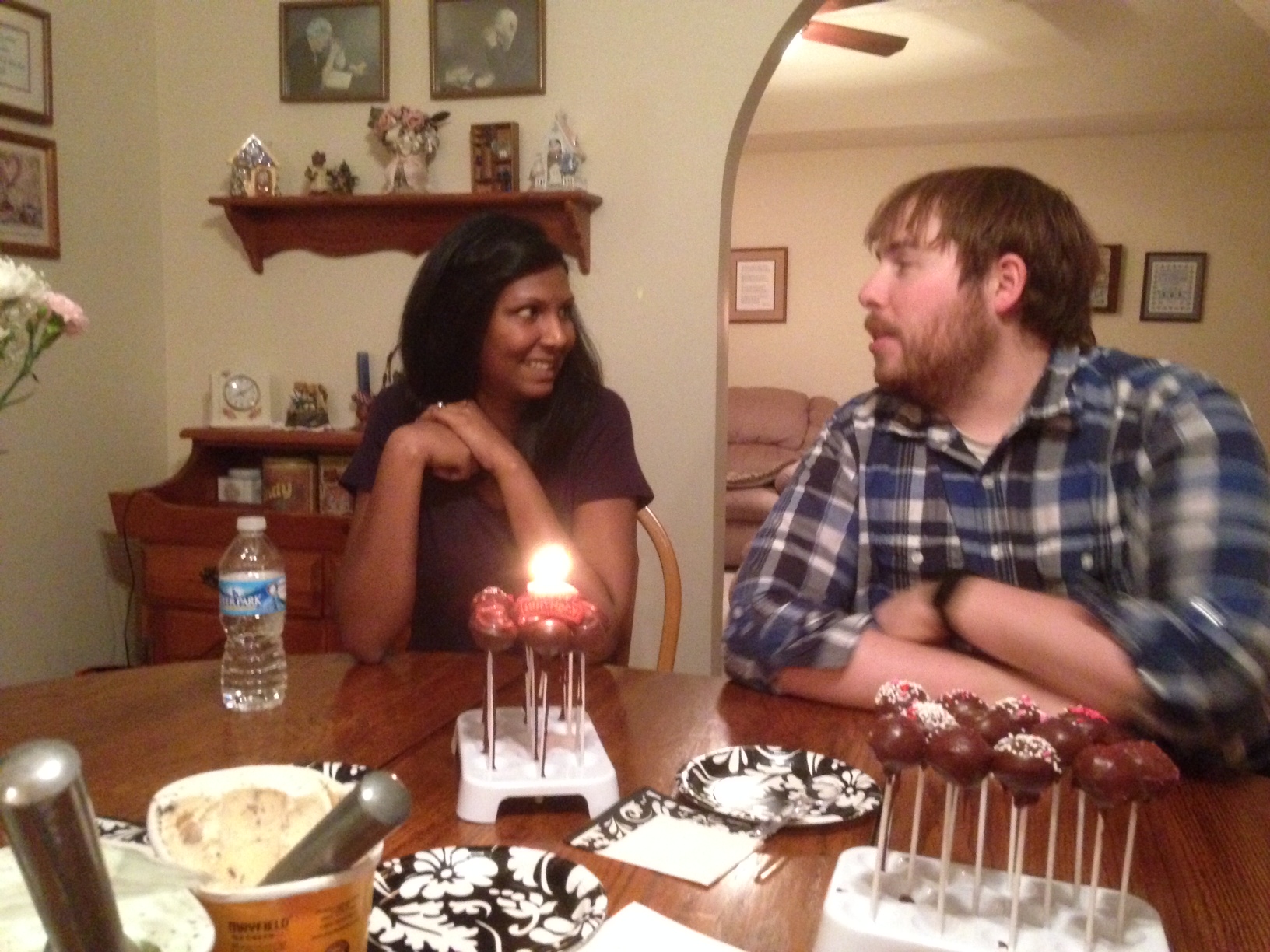
Thought this picture of when we were singing Happy Birthday was sweet. 🙂

3. Cake pops.

photo

Last Christmas Jason and Mittu bought me a cake pop maker, but I hadn’t used it yet. Mittu requested them for her birthday, and it was fun to get the stuff out and play. I obviously need to work on my technique so that the icing doesn’t dribble down the stick. 🙂 By the way, the Betty Crocker gluten free devil’s food cake mix was really good. Some other gluten-free cakes we’ve had were very heavy, but this tasted just like regular cake.

4. A day out. Normally I prefer staying at home and ordering online, but one item I needed for Mittu’s birthday was cheaper in town. I had a couple of gift cards for places nearby as well, so I took the better part of an afternoon doing some shopping and finding some things I needed. It was one of those gorgeous, just-right days I mentioned earlier. I had felt cooped up for a while between weather and Jim’s mom’s aide not being able to come in due a few days due to weather, so it felt really good to get out and about.

5. Jesse’s internship plans finalized. My youngest son is required to do an internship this semester, and had tried several leads, but nothing had worked out yet. His director had found another possibility, and things were looking really good for this one, but it wasn’t completely finalized until this morning when he had an interview. That is SUCH a relief!

Happy Friday!