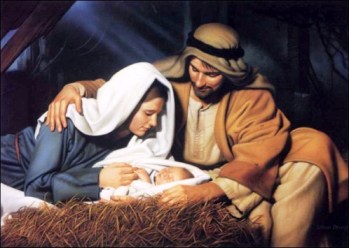
Merry Christmas!

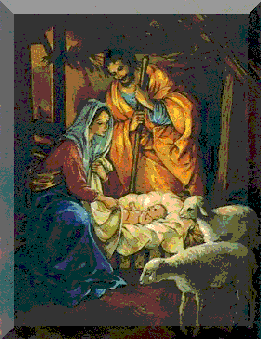
Manger12

How silently, how silently
The wondrous gift is given!
So God imparts to human hearts
The blessings of His heaven.
No ear may hear His coming,
But in this world of sin,
Where meek souls will receive him still,
The dear Christ enters in.

O holy Child of Bethlehem
Descend to us, we pray
Cast out our sin and enter in
Be born to us today
We hear the Christmas angels
The great glad tidings tell
O come to us, abide with us
Our Lord Emmanuel.

~ Phillips Brooks, “O Little Town of Bethlehem”

I wish for your and your families a wonderful Christmas remembering and centering on the greatest Gift of all.

For the wages of sin is death;
but the gift of God is eternal life through Jesus Christ our Lord.
Romans 6:23

What’s On Your Nightstand: December 2013

What's On Your NightstandThe folks at 5 Minutes For Books host What’s On Your Nightstand? the fourth Tuesday of each month in which we can share about the books we have been reading and/or plan to read.

December has been a busy month with not as much reading as usual, but that’s ok – January will be a good time to snuggle in and catch up!

Since last time I have completed:

The Healer’s Apprentice by Melanie Dickerson, reviewed here.

Granny Brand, Her Story, missionary to India and the mother of Paul Brand, by Dorothy Clarke Wilson, reviewed here.

Save Me From Myself: How I Found God, Quit Korn, Kicked Drugs, and Lived to Tell My Story by Brian Welch, reviewed here.

Praying for Your Addicted Loved One by Sharron K. Cosby, recommended by Joyful Reader, reviewed here.

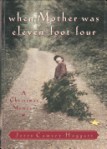
When Mother Was Eleven-Foot-Four by Jerry Camery-Hoggatt, reviewed here.

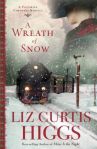
A Wreath of Snow: A Victorian Christmas Novella by Liz Curtis Higgs, reviewed here.

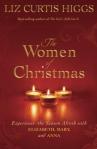
The Women of Christmas: Experience the Season Afresh with Elizabeth, Mary, and Anna by Liz Curtis Higgs, reviewed here.

Well, I actually got more done than I thought!

I’m currently reading:

A Tale of Two Cities (audiobook) by Charles Dickens for Carrie’s Reading to Know Book Club for November.

Throughout the year I have been reading devotional books A Quiet Place by Nancy Leigh DeMoss, One Year Christian History by E. Michael and Sharon Rusten, and Daily Light on the Daily Path, and I haven’t felt the need to mention them month to month, but I’ll finish them by the end of the year.

Next up:

Lost and Found by Ginny Yttrup

Jennifer: An O’Malley Love Story by Dee Henderson (I’ve had these two books on my TBR list for months – hope to get to them this month!

Ten Fingers For God about Paul Brand by Dorothy Clarke Wilson

Traveling Toward Sunrise by Mrs. Charles E. Cowman, given to me by a friend.

The Blue Castle by L. M. Montgomery for Carrie’s Reading to Know Classic Book Club and her L. M. Montgomery Reading Challenge in January.

If I should get through all of those…I have plenty more stacked up!

What are you reading?

Book Review: The Women of Christmas

I like to read something devotional about Christmas during December, with the Scripture passages regarding Advent themselves and/or a devotional book. I’ve enjoyed Come, Thou Long Expected Jesus, compiled by Nancy Guthrie, a number of times and thought about picking it up again this year, but I kind of wanted something new and different. Then my friend Kim mentioned she was enjoying Liz Curtis Higgs’ book The Women of Christmas: Experience the Season Afresh with Elizabeth, Mary, and Anna.  I have read several of Liz’s novels, but never one of her non-fiction books, so on Kim’s recommendation I decided to give this one a try.

Women of ChristmasIt was just what I wanted this year. The book takes us thoughtfully through the Christmas passages of Scripture, focusing mainly, as the title indicates, on three women: Elizabeth is older, beyond the usual childbearing years, but finds herself miraculously expecting the forerunner of Christ. Mary is a young teenager, a virgin, yet she is told she will bear the Son of God. Anna is elderly yet still serves God with all her heart and life. Though Zacharias, Joseph, and Simeon are discussed as well, the main focus of the book is on how God worked in the lives of these women.

It’s obvious that Liz has put a wealth of study behind this book, but it’s not what I would call a technical book. She touches on some of the controversies and questions of the Christmas story but wisely doesn’t spend a lot of time speculating on that for which we have no answers. She brings and out meditates on the truth we can find from what God has told us in His Word and provides an opportunity to get a fresh viewpoint from passages so familiar that we can sometimes zip through them without stopping to think about the real implications for the real people in these real stories.

For instance, I never thought to wonder before why Mary went to see Elizabeth right after learning that she was going to bear Jesus. We can’t tell from the text how well they knew each other or whether they were close, though they are cousins. Elizabeth was quite a distance away from Mary. Yet when the angel, in his announcement to Mary, told her that her barren older cousin was pregnant, that must have been an encouragement to her that the God who did this impossible thing for Elizabeth could and would do the impossible thing the angel foretold for her as well. But it also provided her with someone who would understand something of what she was going through. There is no record that Mary told anyone about the angel’s announcement. We assume she told Joseph, though we don’t really know. But Elizabeth was the one person who would believe her about an angelic visit and a miraculous pregnancy.

A few quotes that stood out to me:

“Now consider this: the first person to hold the newborn Christ was Mary of Nazareth, and the first person to touch the newly risen Christ, however briefly, was Mary of Magdala. God placed himself in a woman’s care when he came to earth, then entrusted a woman to announce his resurrection when he came back to life.

“When I hear women rail that the Bible is misogynistic, I wonder if we’re reading the same book. God loves women, redeems women, empowers women – then and now. On the day we call Christmas, he could simply have arrived on earth, yet he chose to enter through a virgin’s womb. On the day we call Easter, he could have appeared first to his beloved disciple John, yet he chose as his first witness a woman set free from seven demons” (p. 122)

(On Mary’s bearing a child in a stable), “Given the circumstances, it’s surprising what we don’t find in the passage. She whined. She complained. She demanded better accommodations. Not our Mary. Even after giving birth to the Savior of the world, she didn’t insist on special treatment, didn’t fuss about there being ‘no space for them in the living-quarters'” (p. 124).

“On that day in Bethlehem, absolute abasement was bathed in breathtaking glory. Born the lowest of the low, the infant Jesus was the highest of the high” (p. 125).

(On the announcement by the angels to the shepherds), “We’ve seen countless Christmas cards and tabletop Natvity scenes with Jesus as a ‘newborn baby’ (CEB) dressed in ‘swaddling-clothes’ (KNOX) and ‘lying in a feeding trough’ (ERV). But we’ve had a lifetime to embrace that reality. Think of these men hearing it for the first time” (p. 130).

(After the shepherds told everyone about the baby on their way back to their sheep), “What about Mary? Did she run around Bethlehem, telling everyone about God’s Son? She did not. ‘But Mary treasured up all these things and pondered them in her heart.’ Luke 2:19. Mary focused on caring for her baby while she stored all she’d seen and done ‘like a secret treasure in her heart’ (NIrV). Some women like to talk their way through experiences; others prefer the Mary approach: ‘weighing and pondering’ (AMP), ‘mulling them over’ (CJB), and ‘trying to understand them’ (ERV)” (p. 136).

Note in the last quote that she didn’t say this was a better approach: just that it contrasted with the reaction of the shepherds and then later Anna. That was a blessing to me in this year of having read and heard a lot about introverts and extroverts: neither is better, God made both, and He works in and through both in different ways for His glory.

I’m so glad I read this book this year. It provided me with many quiet, meditative moments during the mornings of this Christmas season. I’m sure I’ll be using it again in years to come.

Save

Book Review: A Wreath of Snow

Wreath of SnowIn Scotland during the Victorian era, a “wreath” meant not just a circular decoration for your front door, but a drift, like a snowdrift. In A Wreath of Snow: A Victorian Christmas Novella by Liz Curtis Higgs, a wreath, or giant snowdrift, has not only stopped but also damaged the train leaving the small town of Stirling. An invisible wreath of mistakes, pain, and deception has halted and damaged the lives of two of its passengers.

One of them, Meg Campbell, had fled from home in a hurry after an altercation with her brother, who had become churlish, moody, and demanding after an accident that left him without much use of his legs years ago. Now she will have to go back home and face him again.

Gordon Shaw is a newspaper man passing through Stirling. He used to live there but a thoughtless and harmful act on his part hurt someone else there several years ago, and he has been living under its shadow ever since.

At first Meg and Gordon do not recognize each their or their shared histories, and once they do, they feel it best to cover it all up again with lies to Meg’s family. But deception never leads to healing. Is there any chance this wreath, this impasse, in the lives of all involved can be removed?

This book was a perfect Christmas read. Since it is a novella, it’s not overly long or involved, but the characters and plot are well-developed. The ending is what you would hope, without being sappy. This season when we sing of peace on earth and goodwill to men can be fraught with conflict and a long history of hard feelings, and the truths of this story encourage readers to seek peace with each other.

Our 34th anniversary!


Thanks to my wonderful husband for his patience, kindness, and example of unconditional love to me. On our 30th anniversary I posted 30 things I love about my husband. He is a very nice man. :)


A few years ago he made this video for our anniversary and I think I have posted it every year since. The song is “Voyage” by John McDermott of the Irish Tenors.

Happy Anniversary, hon!

DSCF2258

Friday’s Fave Five

christmas FFF


Welcome to Friday’s Fave Five, hosted by Susanne at Living to Tell the Story, in which we can share five of our favorite things from the last week, a wonderful exercise in looking for and appreciating the good things God blesses us with. Click on the button to learn more, then go to Susanne’s to read others’ faves and link up your own.

Whew! What a busy week! After thinking last week that the schedule of Christmas-related tasks was going pretty well, I hit a couple of snags this week that threw me behind and made for one stressful day in particular. I’m making adjustments to plans as I go along, and I think everything will be fine. Here are some highlights of the last week:

1. A quiz and a pen. Our Sunday School teacher gives a Christmas quiz every December, a series of questions about the Christmas story in the Bible, designed as a way to get us to spend time in those passages. For prizes for the top three “students” who get the most points, he makes little gifts using his woodworking skills: an ornament, key chain, yo-yo, pen, etc. I think our first year here I came in third and got the yo-yo, but really wanted the pen. 🙂 I haven’t placed in the top three since then, but this year I came in first and got the pen. 🙂 It helped a lot that the couple who usually gets first place (often coming in at #1 and 2) was absent on quiz day this year. 🙂

2. Carolers. On Wednesday night this week our church members divided up into groups and each group went to visit one of the at-home members who, due to age or illness, can’t make it to services. We enjoyed their visit to my mother-in-law. They also brought her a nice gift basket.

photo

3. Christmas card garland. I mentioned on my Christmas meme that I had wanted to hang the Christmas cards we received on a garland this year, and got that done this week. I love being able to look at and enjoy the Christmas cards throughout the weeks until Christmas.

photo(2)

By the way, feel free to join in on the Christmas meme if you have time!

4. The first harvest loaf cake of the season!

5. Christmas devotions. I’ve been reading The Women of Christmas by Liz Curtis Higgs per my friend Kim‘s suggestion, and it has been just what I wanted this year. I’ll have more to say about it next week.

Hope you have a great weekend!

Book Review: Granny Brand

Granny BrandI first came across Granny Brand by Dorothy Clarke Wilson some 25-30 years ago after reading the same author’s biography of “Granny’s” son, Paul Brand,  Ten Fingers For God. At that time the ladies’ group of the church we attended had an extensive collection of missionary biographies that we could check out at the monthly ladies’ meetings. It was through that venue that I read both books, so I did not own them. I thought about both of them when I was doing the 31 Days of Missionary Stories, but it had been so long since I had read them, I thought it would be better to wait to discuss them til I had a chance to read them again. I found used copies and enjoyed revisiting Granny’s life. The book about Paul was actually written first, and the author met his mother in the course of her research and wanted to write about her, too. Granny agreed at first, and then changed her mind and started to write her own book, and finally gave permission but asked the author to wait until her death.

Granny Brand began life as Evelyn Harris. She was born the ninth of eleven children into a strict but loving well-to-do Christian family in 1879. She had “the eyes and soul of an artist,” and all through her life would stop to paint or sketch beloved sites. But though she loved her art, it didn’t fully satisfy. She had been raised doing charitable works, but she wanted to do more. Various events turned her eyes towards missions, especially a booklet by a young missionary named Jesse Brand, who ministered in India. Not coincidentally, that very same Jesse Brand came to speak at her church. She was over 30 when she told her father she was called to missions. He had wanted to keep at least some of his daughters close by and brought forth various arguments as to why she should stay, but finally, “He understood. It was his own stern creed of obedience to a higher Will that she was determined to follow” (p. 34).

Though at her farewell party someone remarked that “She looks more like an actress than a missionary” (p. 35), it didn’t take her long to lay aside her finery and immerse herself into the work and life in India. There she unexpectedly met up again with Jesse Brand, though he was assigned to another area. When they parted, they began a correspondence which blossomed into love, and when he proposed, she agreed to join him in marriage and his work.

Their wedding night was typical of her response to life: they started on a long journey to Jesse’s home, first 5 miles in wagon drawn by a pony, then in a dholi. I tried to find an image online to share, but none of them looks like the picture in the book, which shows a long length of canvas with poles through openings on both sides, which were carried by four men. The passenger would recline along the length of the fabric and be jostled up and down, back and forth, hanging onto the poles while the men walked…or ran…up and down steep mountain paths. First the heat wilted her clothing, then a deluge drenched her, the higher mountain air chilled her (no one had told her she might need warmer clothing there). Then they walked over a narrow trail with thorns tearing her skirt and branches slapping her face. Finally they trekked across a muddy rice field, and when they arrived, she thought, “Life is not going to be easy. It’s good all this happened. I may as well know it now.” “But she had not come here for an easy time. She had come for love of God, and of these hill people, and of the man whose strong arms were now lifting and carrying her over the threshold” (p. 48).

Jesse was a man of many talents, with skill in medicine, building, and planting, all put to use in ministering to the people and helping them improve their lives. Evelyn’s medical skills were more homeopathic, but they worked together smoothly. One boy was saved early on, but it was six long years later before any other converts. A priest who had actively opposed their message and work became ill and asked them to take his children when he died, as they would otherwise be left to die. His own “swamis” deserted him in his hour of need, and he now believed “Yesu-swami” was the one true God. His conversion and the Brands’ care of his daughter began to crack the door open for the gospel, and eventually more believed and a church was started.

Jesse and Evelyn took in many more children, had two of their own, and had many fruitful years in the “mountains of death,” until, nearly 14 years after their marriage, Jesse contacted malaria, which turned into blackwater fever, and died.

Evelyn was devastated and, after making arrangements for the work, went back to England for a time. But she was called to India, not just to Jesse, and wanted to go back. There were five mountain ranges that she and Jesse had dreamed of bringing the gospel to, and she wanted to continue on.

The mission board had a policy against sending a missionary back to a field that another missionary had taken over because of the understandable rifts that could arise, but Evelyn argued that this work was begun by herself and Jesse and much of their own money had been poured into it. They had built it up with their own hands. The board relented and let her go, and though she loved being back in her beloved hills, and the people loved having her, indeed “this five-year term…was filled with tensions and frustrations.” The missionary couple who came to take over the work “were capable and dedicated, but they were not Jesse Brand, and of course their methods were there own. It was inevitable that differences of opinion should arise between them and one who for sixteen years had been co-creator, co-manager, co-builder of every enterprise in the beloved complex – one who, moreover, could be neither meek nor silent when she felt a principle was at stake” (p. 113).

Meanwhile Evelyn did want to press on to the other ranges. She took camping trips to scout them out. Long used to simple, even stark living, all she could see was the exciting possibilities, while some of those she took with her could only see the hardships. But she persevered. The board wanted her to retire at 68, but after a year she resigned from the board and remained in India independently. She was 84 when she moved to her third mountain range. She continued taking in children, caring for the sick, fighting the production of kanja (marijuana), riding a pony from village to village, and sharing the gospel. She added two more mountain ranges to the original five she wanted to reach. Somewhere along the way people started calling her “Granny Brand,” though she scoffed at the thought of being old until relatively late in life.

She experienced sicknesses, broken bones from falls, and when carriers accidentally knocked her head against a rock and she never regained her balance afterward, she walked with the aid of two long sticks. Whenever she was in the hospital, she disobeyed orders to stay in her bed and went from room to room via wheelchair or pulled herself along the floor to visit other patients, share the gospel, and encourage them.

When her 95th birthday was approaching, she was afraid people would praise her for continuing to work at her age. She wrote to her son, Paul: “I am not wonderful.  I am just a poor, old, frail, and weak woman.  God has taken hold of me and gives me the strength I need each day.  He uses me just because I know that I have no strength of my own.  Please tell the people to praise God, not me.” God took her home before that birthday, but those words would continue to express her desire.

She wasn’t perfect and never would have claimed to be. She was opinionated, feisty, independent, and strong-willed, all qualities which can good but can also be a problem in some situations. But because she yielded herself to God, He transformed her and used her to touch many lives for His glory, in her lifetime and still today.

(This will also be linked to Semicolon‘s Saturday Review of Books.)

Book Review: When Mother Was Eleven-Foot-Four

eleven foot fourWhen Mother Was Eleven-Foot-Four by Jerry Camery-Hoggatt caught my eye when it was free for the Kindle app at the time. I didn’t realize it was a children’s book, but as I think C. S. Lewis said, the best children’s books are enjoyable to adults as well, and this one definitely is.

This is the story of the Christmas of 1963 for the author’s family. His mother was a tiny woman, only four-foot-eleven and about 100 lbs., but when she drew herself up to her full height, she seemed eleven-foot-four. One full-height moment was when she stared down a black-clad, tattooed biker who was making threats against her: “He blinked first.”

Mother loved everything about Christmas: the multitudes of ornaments, with a story behind every one, the symbols and meanings of everything they did for the season. She was romantic and extravagant, because she believed God was. Father  was a realist because he believed God was. Father was a man of principle, inflexible because, after all, how can a man of principle compromise his principles? And some of his strongest principles revolved around Christmas: he felt it was too commercial and that Santa’s list-keeping of good boys and girls gave the wrong idea that gifts were earned. So every year they clashed over Christmas, ending with Father compromising for Mother…

…Until one Christmas, when everything changed. Poverty and grief hung heavily over the family, and it looked like there would be no Christmas celebrating. That’s when Mother’s boys learned what Christmas giving really meant, and learned that both parents were right.

I can’t tell you much more than that, because it’s a very short book, but it’s very sweet and not at all sappy like some of the made-for-TV Christmas movies. I especially loved the author’s last couple of pages of reflections.

I just discovered the hardback version, which is apparently out of print, but the glimpse of its illustrations made me seek out a used copy. I think this book is going to become a yearly tradition.

(Updated to add: there was one aspect of the story that bothered me that I couldn’t really put into words until a day or so after posting the review. Though traditions are important, I did have trouble with Mother in the story fighting with Father over them and then going beyond what he compromised to say she could do. It sounded like, with their two strong personalities and different views, this was a regular thing, not just at Christmas, which is probably what led to the father leaving (which is what caused the grief mention that one Christmas). The mother did say later that she wished she had done better by him, so maybe she realized that as well (though of course the fault for the marriage break-up wasn’t entirely hers). As this is a story from a child’s point of view about learning to give at Christmas, the author doesn’t go into analyzing all of that: he appropriately just mentions what is necessary to this particular story.)

(This will also be linked to Semicolon‘s Saturday Review of Books.)

Mary’s Song

Jesus-Mary-Joseph

Blue homespun and the bend of my breast
keep warm this small hot naked star
fallen to my arms. (Rest…
you who have had so far to come.)
Now nearness satisfies
the body of God sweetly. Quiet he lies
whose vigor hurled a universe. He sleeps
whose eyelids have not closed before.

His breath (so slight it seems
no breath at all) once ruffled the dark deeps
to sprout a world. Charmed by dove’s voices,
the whisper of straw, he dreams,
hearing no music from his other spheres.
Breath, mouth, ears, eyes
he is curtailed who overflowed all skies,
all years. Older than eternity, now he
is new. Now native to earth as I am, nailed
to my poor planet, caught
that I might be free, blind in my womb
to know my darkness ended,
brought to this birth for me to be new-born,
and for him to see me mended
I must see him torn.

~ Luci Shaw

Laudable Linkage and Videos

Here are some good reads from the last couple of weeks:

Christmas Is For Those Who Hate It Most.

God May Not Have a Wonderful Plan for Your Life. He does, in the sense that He made it possible for us to go to heaven when we repent and believe He sent His Son to take our sins on the cross, and He has promised to be with us in this life, but some things in life are hard. The Bible said they would be, and we can give people the wrong picture of Christianity and rub salt in an open wound sometimes by spouting phrases like this.

God’s Heavenly, Glorious Melting Power. Ways to keep devotions from becoming mechanical.

Scowling at the Angel. “There in my brokenness I had so little to give. But grace, she never left. She met me in all my frailty, raw and wrathful, as exposed and defenseless as the day I was born.”

The Needs of Three Women. Being ministered to while ministering to the homeless.

3 Marks of Righteous Anger.

Daily Scriptures to Help Tame the Tongue.

The Story of Gwen and Marlene. This is a theme I have mentioned often, that women’s ministry is not always in specific programs. It’s mostly a matter of being available and interested in others.

Inhospitable Hospitality.

Our Love-Hate Relationship With Christian Art. “Christian art? Are you kidding me? Christianity has produced the greatest art of all time.”

A Letter to an “Expectant” Adoptive Mom. Great advice from one who has gone through the process not only of adopting, but adopting internationally.

How to Get People to Read the Bible Without Making Them Feel Dumb.

Union With Christ in Marriage. “Paul doesn’t give us commands to extract from the other spouse. Instead, Paul instructs us in the graces to give!”

What Foster Parents Wish Other People Knew.

It Takes a Pirate to Raise a Child, HT to Bobbi. Loved this – about how children’s stories shape their ideas of right and wrong, e.g., telling the author’s son that he was acting like Edmund in The Lion, the Witch, and the Wardrobe  helped him understand his behavior towards his siblings was wrong when explaining and exhorting wasn’t getting through.

Merry Literary Christmas. 🙂

A couple of fun videos:

An two year old with amazing basketball skills:

Captain Picard and crew sing a Christmas song:

And a nice summary of The Paradox of Christmas:

Happy Saturday!