Daniel Deronda

Daniel Deronda is a young man of uncertain parentage brought up to be an English gentleman as the ward of kind-hearted Sir Hugo Malinger in England in the 1870s. The pain and shame of the possibility of being illegitimate and the lack of knowing his family has worked in him a tender heart and an inclination to help and rescue others in need. He is uncertain about what to do with his life, dropping out of university and resistant to Sir Hugo’s urging that he take up politics. “To make a little difference for the better was what he was not contented to live without; but how to make it?”

But though he is the title character, he appears silently in the first chapter and then not again until about the 15th. Those intervening chapters and the intertwining storyline are taken up with Gwendolen Harleth, a beautiful, vain, self-centered, seemingly heartless young woman. Used to getting everything she wants, her world is shaken when her family loses its fortune and the only option they can find is to move and for her to “take a situation” as a governess. To escape that fate she goes against her conscience to marry Henley Grandcourt. She knows he has a shameful secret, but she doesn’t know he knows she knows, and his knowledge gives him power over her. She was initially attracted to him because he didn’t fawn and act “ridiculous” around her like the other smitten young men in her wake, and he was rich and seemed to indulge her. But after the marriage, the niceties are off and he turns out to be a cold and cruel man whose main source of pleasure is in mastering others.

Daniel had crossed her path in the first chapter, and when they meet again, her misery in her marriage and her tormented conscience draw her to him almost as an alternate conscience and confessor.

Meanwhile Daniel finds Mirah Lapidoth at the lowest point in her life and undertakes to help her as much as he can. She is a young Jewess who was taken from her mother and brother and forced to work on the stage, but she escaped and returned to try to find them again. In Daniel’s search through the Jewish quarter of town for Mirah’s family, he meets a young zealous Jew named Mordecai, who is dying and thinks Daniel is the answer to his prayers for a successor and future leader of his people. Daniel can’t help him in that aspect because he is not Jewish, but Mordecai insists he could be since he doesn’t know his own parentage. Though Daniel continues to resist him, they do become friends and Daniel learns more about Jewish culture.

The rest of the book is taken up with the intersection and development of these lives and Daniel’s ultimately finding his identity and purpose.  In fact, identity could be an overarching theme of the book: Daniel searches for his, Gwendolen wrestles with hers, Grandcourt hides his, Mirah and Mordecai are guided by theirs.

This is the first of George Eliot’s books that I’ve ever read, though I heard a performance of Silas Marner (and want to read it as well as Middlemarch some time). I enjoyed the psychology of her writing, the way she delved into and displayed each character’s pysche. Though, as with many older classics, there is a lot more explaining than there is in modern work, the author still tucks in neat scenes that expose a lot about the characters without further explanation, like the one where Grandcourt shows his cruelty by baiting one dog and then rejecting it.

Since Eliot is a “a writer who, for many, embodies the ideals of the liberal, secular humanism of the Victorian age,” according to Wikipedia, obviously the book is written from that standpoint, and though there are Biblical allusions, grace and forgiveness are largely and sadly missing: e.g., when Gwendolen confesses to having hateful thoughts and is stricken by her conscience, she is urged to try to live a better life, serve a purpose outside herself, etc., rather than to confess to God and seek His help. That’s not surprising when you read a bit about Eliot and find that she either missed or resisted that grace in her own life as well.There are also some weird mystical allusions in regard to Mordecai, who thinks his soul will be reincarnated in Daniel.

The Wikipedia article on Daniel Deronda also goes into the influences leading to the Jewish elements in the book in a time when society was rather anti-Semitic. I thought these lines from the book were telling:

Deronda, like his neighbors, had regarded Judaism as a sort of eccentric fossilized form which an accomplished man might dispense with studying, and leave to specialists. But Mirah, with her terrified flight from one parent, and her yearning after the other, had flashed on him the hitherto neglected reality that Judaism was something still throbbing in human lives, still making for them the only conceivable vesture of the world…This awakening of a new interest–this passing from the supposition that we hold the right opinions on a subject we are careless about, to a sudden care for it, and a sense that our opinions were ignorance–is an effectual remedy for ennui, which, unhappily, cannot be secured on a physician’s prescription.

I first became acquainted with this novel when I saw the BBC film several years ago starring Hugh Dancy as Daniel, Romola Garai as Gwendolen, and Hugh Bonneville (currently of Downton Abbey fame) as Grandcourt. I think it was one of the first period dramas I ever saw, and except for too many shots of Gwendolen’s cleavage, I was enamored with movie. I just watched it again this week on Netflix and I was less so. The filmmakers were attentive to many details, such as Daniel’s tendency to grasp his coat high near the collar and Grandcourt’s to keep a thumb and forefinger in one pocket, and many lines and scenes are taken straight from the book. But they turned Daniel and Gwendolen’s relationship into more of a romance, almost an adulterous one, and changed some scenes and lines in others (such as Gwendolen’s visit to Mirah). I still enjoyed the film, though not as much as I would have without the changes, and it does follow the overall structure of the book, but of course it condenses it.

I listened to much of the book via audiobook, and Nadia May’s reading and accents were delightful. But some of the philosophical parts were harder to comprehend without pondering the words in print, so I referred often to the free (at this time) e-book version as well.

I’m thankful to Heather at Do Not Let This Universe Forget You for choosing Daniel Deronda for Carrie’s Reading to Know Book Club for August. I enjoyed the journey!

(This will also be linked to Semicolon‘s Saturday Review of Books.)

Laudable Linkage

Here are some noteworthy reads from the last week:

I Weep for Miley and some follow-up thoughts on comments and criticisms of the post.

What Would Jesus Say to Miley Cyrus? I don’t agree with every little point here, but the majority of it is very good.

Make the Bible Your Native Tongue.

Mom vs. Mom: The War I didn’t See Coming. Excellent post.

I have been very happy to see a number of posts lately on preaching and teaching relative to how to do one’s secular work as unto the Lord and to find value in in for His sake. For years the only thing I heard about vocation in church was the urge to surrender to “full-time Christian service,” and that is indeed a noble calling, but it is not everyone’s calling, though we are all called into full-time Christian service in a sense. Anyway – off the soapbox for now. 🙂 Here are a couple of posts along these lines. The second one was especially good I thought.

5 Ways Pastors Can Affirm Faith, Calling, and Vocation.

You Do Not Labor in Vain.

Oh Sweet Lorraine and Missing Hope. A man in his 90s wrote a song for his wife, who had passed away, and sent it into a song contest. It didn’t fit the parameters of the contest, but the company involved had the song professionally recorded for him. So sweet to see his reaction to hearing it. But Challies points out that, touching as it it, there is no mention of the hope that can comfort and sustain us in our losses, and I hope this dear man finds that.

Knowing vs Feeling in Worship.

Cultivating the Habit of Prayer. Great tips.

When You Feel Resentful About Homemaking.

Compelling Conversion, thoughts on the book The Secret Thoughts of an Unlikely Convert. I reviewed it here, but he includes some points that also spoke to me but I didn’t articulate.

School Is No Place For a Reader. If this kind of thing is going on nation-wide, it’s really sad and doesn’t bode well for our country.

And for a smile, or several: 19 Photos of Hilarious Home Improvement Fails.

Have a great weekend!

Friday’s Fave Five

FFF daisies

Friday’s Fave Five is hosted by Susanne at Living to Tell the Story, who invites us to share five of our favorite things from the last week. It’s a wonderful exercise in looking for and appreciating the good things God blesses us with. Click on the button to learn more, then go to Susanne’s to read others’ faves and link up your own.

I’m late to the party today! Had a deadline to meet this morning. But here’s my first-week-of-school faves:

1. The most low-key start to school ever. My youngest son started his second year of community college on Monday. On the previous Saturday I was at the store, saw some notebook paper, and thought, “Oh! I should probably get some of that.” Got a package of pens, too, for good measure. 🙂 And had to replace a lunchbox later in the week (he had used the old one for years and it finally broke.) He had bought his books before his oral surgery, and he had enough supplies and clothes in good condition (with the exception of tennis shoes – he bought some recently) that we didn’t have to have any big shopping sprees.

2. Recovery. Jesse had four wisdom teeth and two molars removed last Thursday, and the first day was really rough (mainly from nausea), but every day since has been progressively better. He is still chewing a little gingerly, but overall is doing well.

3. Bringing church to Grandma. Our church divided into groups on Sunday night and visited the “at-home” members, mostly elderly folks who can’t come to church often, if at all. We had a pretty sizable group come here to sing and read Scripture for Grandma. There were several children in the group who also stood up together and sang. It was sweet to see Grandma singing along with some of the hymns.

4. Beginning a walking regimen. 20 minutes Monday, 24 minutes Wednesday, 31 minutes today.

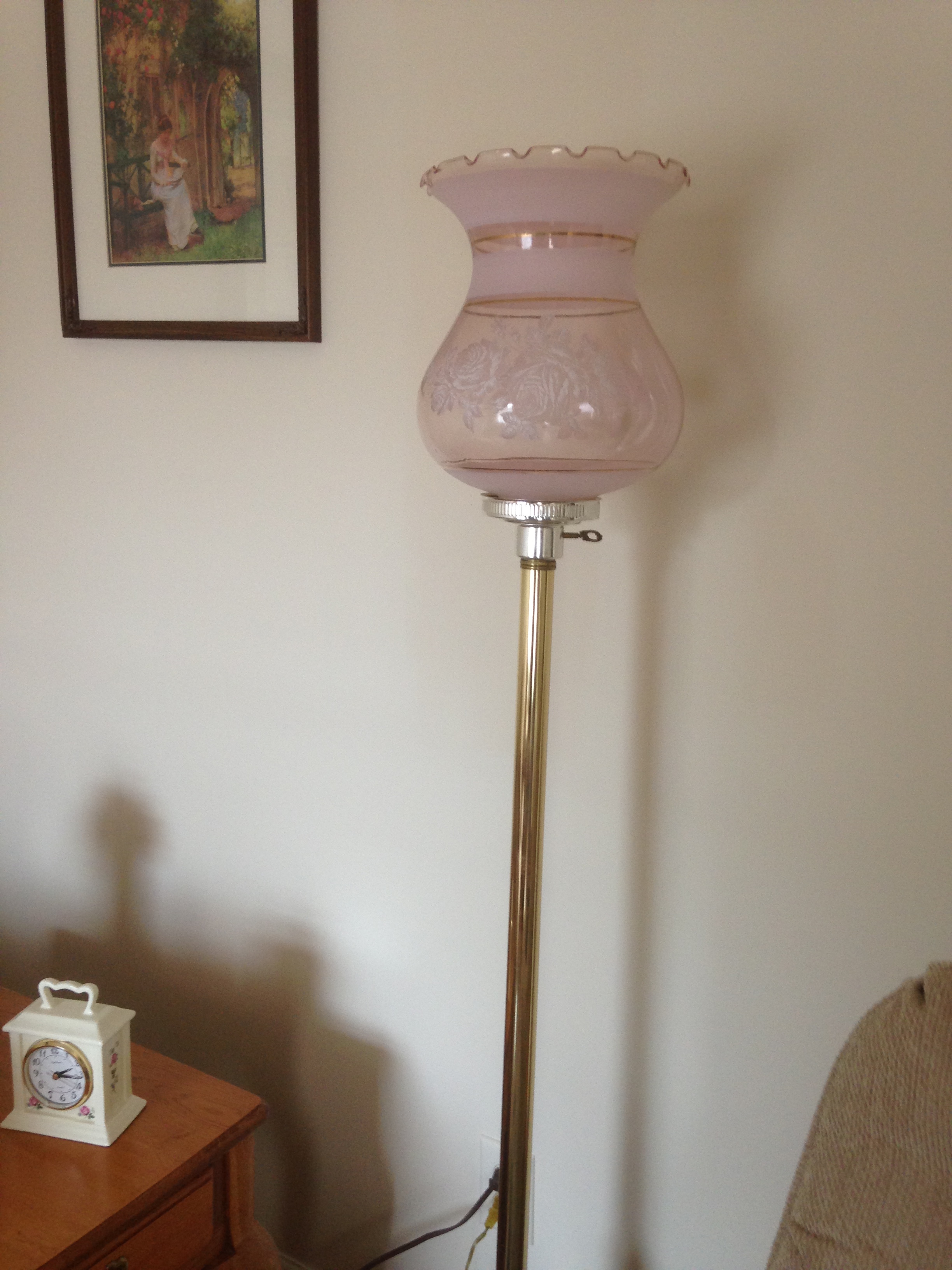
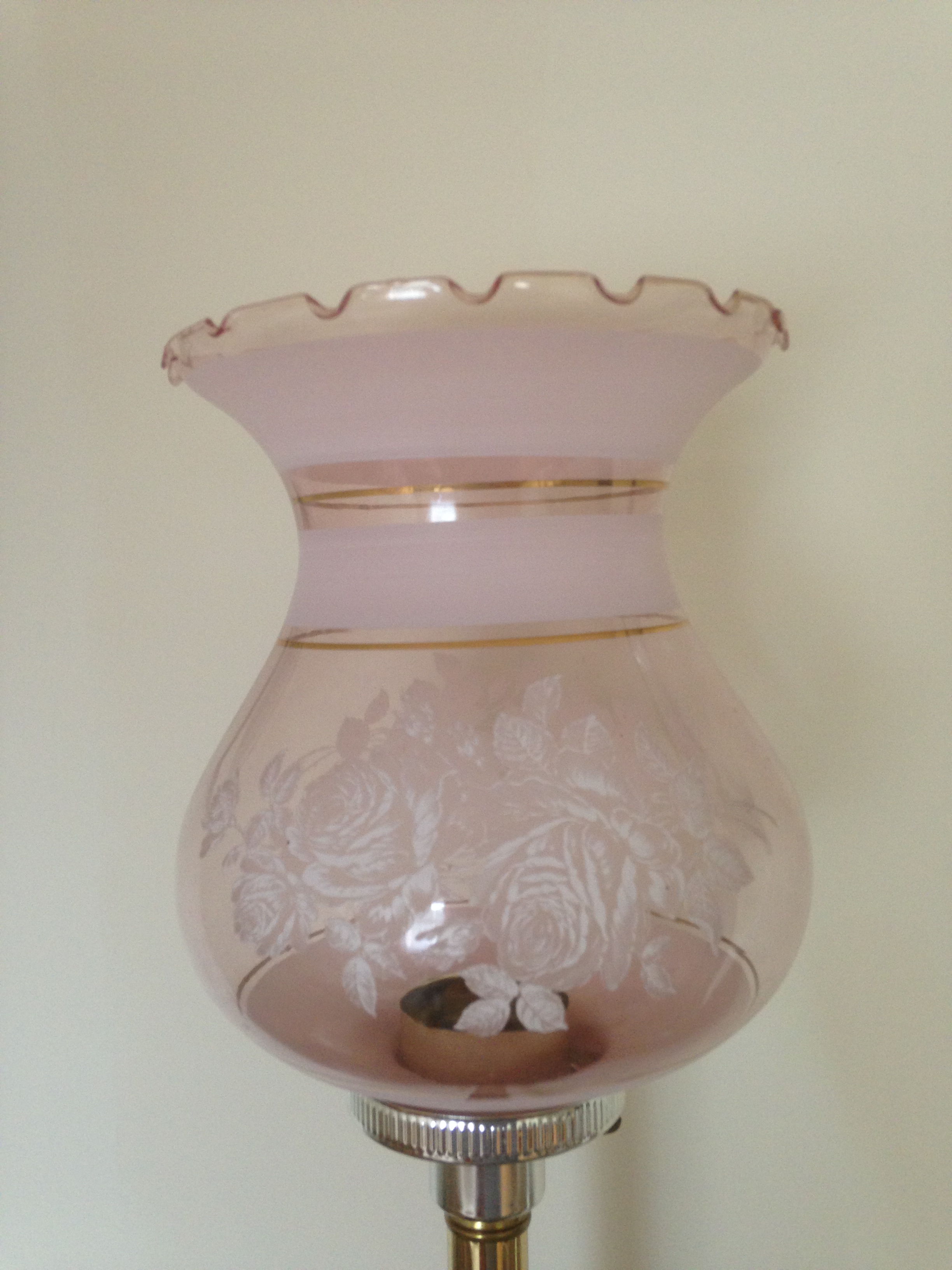
5. A lamp I’ve had my eye on for three years but thought was too expensive. The store it was in is going out of business, and yesterday when I was in the area I dropped in to see if the lamp was still there. It was, and the salesperson offered it for half price. I had some money I had kept back from last December when my husband gave me a portion of his Christmas bonus and decided to use it for that.

photo(13)

photo(12)

Happy Labor Day weekend!

What’s On Your Nightstand: August 2013

What's On Your NightstandThe folks at 5 Minutes For Books host What’s On Your Nightstand? the fourth Tuesday of each month in which we can share about the books we have been reading and/or plan to read.

It has been a long and busy summer, but thankfully there have been pockets of time to read. Here’s what I’ve been reading since the last Nightstand post and what I plan to read next.

Since last time I have completed:

The Last Battle by C. S. Lewis for Carrie‘s Chronicles of Narnia Reading Challenge, reviewed here.

The Fruitful Wife by Hayley DiMarco, applying the fruit of the Spirit specifically to marriage, but it had so much and I felt I had only grasped a handful of it, so I’m going back through the chapters and outlining them. I hope to review it later this week or early next week.

The Hidden Art of Homemaking by Edith Schaeffer, reviewed here.

Invisible by Ginny Yttrup, reviewed here. Good!

The Wedding Dress by Rachel Hauck, reviewed here. Meh.

Gulp: Adventures on the Alimentary Canal by Mary Roach, reviewed here. Interesting, funny in parts, unnecessarily vulgar in a few places.

The Incorrigible Children of Ashton Place, Book III: The Unseen Guest by Maryrose Wood, audiobook, not reviewed. It had all the elements I loved from Book I and Book II, with some new information about the children’s backgrounds, but it had the negative element of a seance.

I’m currently reading:

Daniel Deronda by George Eliot for Carrie’s Reading to Know Book Club for August. Enjoying it very much, but I’m going to have to step on it to finish by the end of the month!

On Distant Shores, brand new from Sarah Sundin.

Overcoming Overeating by Lisa Morrone

Next up:

The Boy in the Striped Pajamas by John Boyne. I have been wanting to read this for a long time.

Lost and Found by Ginny Yttrup

Jennifer: An O’Malley Love Story by Dee Henderson

I hope you have had a good reading month as well!

To look back or not to look back

Recently I saw the saying, “Don’t look back: you’re not going that way” on Pinterest, and now it seems like I am seeing it all over the place.

Is that good advice? It can be sometimes, if looking back is keeping you from moving forward, if it is keeping you from obedience, if it tempts you in any kind of wrong way, if it causes you to wallow in regret instead of repentance or instead of learning a better way, if it fuels your longing for something or someone you should not have.

We don’t know all the reasons Lot’s family was told not to look back, but when Jesus admonished His hearers to “Remember Lot’s wife,” who did look back and was turned into a pillar of salt, the context was that of the coming of the kingdom of God, and just after mentioning her, He said, “Whosoever shall seek to save his life shall lose it; and whosoever shall lose his life shall preserve it.” Clearly when God says, “Go!” then it is not time to look back.

But are there times to look back? This depiction of the saying above amused me, because in context, not looking back would be a major safety hazard!

Looking back

This one also makes a good point:

don't_look_back,_but-85120

There are times God tells us to look back. Just this morning I read, “Hearken to me, ye that follow after righteousness, ye that seek the Lord: look unto the rock whence ye are hewn, and to the hole of the pit whence ye are digged” (Isaiah 51:10). It is good to look back at where the Lord found us and where He brought us from. Many times in both the Old and New Testaments, a prophet, preacher, or apostle recounted Israel’s history to them, reminding them of their unfaithfulness and His faithfulness and mercy and grace. They were told to “remember all the way which the LORD thy God led thee these forty years in the wilderness, to humble thee, and to prove thee, to know what was in thine heart, whether thou wouldest keep his commandments, or no” (Deuteronomy 8:2), “Remember the days of old, consider the years of many generations: ask thy father, and he will shew thee; thy elders, and they will tell thee” (Deuteronomy 32:7), “Remember his marvellous works that he hath done, his wonders, and the judgments of his mouth” (I Chronicles 16:12).

A couple of churches mentioned in Revelation were admonished to “Remember therefore from whence thou art fallen, and repent, and do the first works; or else I will come unto thee quickly, and will remove thy candlestick out of his place, except thou repent,” (Revelation 2:5), and “Be watchful, and strengthen the things which remain, that are ready to die: for I have not found thy works perfect before God. Remember therefore how thou hast received and heard, and hold fast, and repent. If therefore thou shalt not watch, I will come on thee as a thief, and thou shalt not know what hour I will come upon thee” (2:2-3).

The Psalmist encouraged himself (here and here and here, among other places) by looking back and remembering how God had met his needs and faithfully dealt with him in the past.

Peter said, “This second epistle, beloved, I now write unto you; in both which I stir up your pure minds by way of remembrance: That ye may be mindful of the words which were spoken before by the holy prophets, and of the commandment of us the apostles of the Lord and Saviour” (I Peter 3:1-2).

So, do we look back or do we not look back? We can’t live life by catch phrases. There are times and reasons to look back, but there are times and reasons not to look back: it depends on what we are looking at and why and what effect it has on us.

I waited patiently for the Lord; and he inclined unto me, and heard my cry.

He brought me up also out of an horrible pit, out of the miry clay, and set my feet upon a rock, and established my goings.

And he hath put a new song in my mouth, even praise unto our God: many shall see it, and fear, and shall trust in the Lord.

Blessed is that man that maketh the Lord his trust.

Psalm 40:1-4a.

Laudable Linkage

Here are some noteworthy reads from the last few weeks:

Why You Can Trust Your Bible despite differences in texts.

The Amalekite Genocide. God’s command to wipe out the Amalekites is used as ammunition against Christianity by atheists and is troublesome to Christians. Here is a thoughtful article about God’s possible reasons for it.

Where does brokenness drive you? I pondered this for a long time after reading it. It’s kind of popular in blogging right now to expose our failings in the name of transparency and lean heavily on grace, and that’s not wrong. I think perhaps it started as a reaction against appearing to have too picture-perfect a life to readers. But do we sometimes wallow in our failures and presume upon grace? We are all broken in some respects, and grace provides for blessed forgiveness, but it doesn’t stop there.

Indispensable. No one is. Beautiful.

21 Spiritual Things to Pray for Other Christians. It’s easy to pray for physical needs, but we sometimes neglect these spiritual needs.

Dear Disillusioned Christian Girl.

Stories That Lead By Example. Sometimes a story explains things better than an explanation. “I believe stories can broaden our empathy, helping us to love. They tell us we’re not alone. But they can also give us something to live up to, whetting our appetite for virtues we don’t yet have.”

To Moms of One or Two Children. Feeling overwhelmed and finding God’s grace sufficient no matter how many you have.

Richard Baxter on Educating Children.

Three Things You Don’t Know About Your Children and Sex. They probably know more than you think they do, and from dangerous sources. This is not a new problem, but the Internet exponentially increases the availability of unwholesome sources of information.

Are we doing the Lord’s work? Questions for web sites set up specifically to expose a leader’s sins.

The 5 Worst Books For Your Children. Interesting thoughts.

23 Signs You’re Secretly an Introvert.

18 Fun Things To Do Before Going Back to School. I think most students have already, but these are still fun ideas.

And something to bring you a smile:

Have a great weekend!

Friday’s Fave Five

This is the last week of summer break for us, and it’s certainly had its highs and lows – though I guess truthfully you could say that of most weeks. 🙂 Here are some of the highs:

1. A lovely Saturday. Saturday was my oldest son’s last full day of vacation here before having to head back to his place on Sunday. We took a picnic lunch and kayaks out to the lake for a few hours, and though the skies were overcast, it didn’t rain while we were there and the temperatures were wonderful. Then we went to an Asian place for dinner, and the dish I chose this time was just right (the one I had chosen last time was too sweet for my tastes). Then Jason and Mittu took us to the Orange Leaf for dessert, a frozen yogurt place, and they had a couple of nondairy options I could try. All in all a wonderful day!

2. My birthday was Wednesday, and my dear family made it very special for me.

3. Dinner at Cheddar’s for my birthday. Yum!

4. An iPad mini. This wasn’t even on my radar, but my husband thought I might like it and got it for my birthday. And I love it! The screen is bigger and easier to read than my phone’s, but it isn’t as heavy as an iPad and can fit well in my purse.

5. Greetings. I have a handful of friends who still send birthday cards via snail mail – so nice to receive something written by hand in the mail! And Facebook birthday greetings add a lot to the day as well.

The main “low” for the week was that Jesse had four wisdom teeth plus two molars removed yesterday, and though the pain didn’t seem to be a problem for him, he wasn’t able to keep any food down until late that evening. I think it was a combination of the effects of anesthesia, perhaps a bit of dehydration (the surgery wasn’t til 1 and he hadn’t had anything to eat or drink since the night before), and bleeding. He’s asleep now, and I am going to let him sleep as long as he wants to. I hope his stomach is settled today. I’m also praying he doesn’t have any complications, which I would probably do anyway, but his college classes start Monday and that’s added impetus.

Hope you’ve had a great week with more highs than lows as well!

FFF daisies

Friday’s Fave Five is hosted by Susanne at Living to Tell the Story, who invites us to share five of our favorite things from the last week. It’s a wonderful exercise in looking for and appreciating the good things God blesses us with. Click on the button to learn more, then go to Susanne’s to read others’ faves and link up your own.

Bookish fun

813359_book_stack_4.jpgI saw this over at Joyful Reader, who found it at Two weeks from everywhere, and it looked like a fun thing to do. I haven’t done this kind of thing in a while. All links are to my thoughts or reviews.

1. Favorite childhood book?  Little Women by Louisa May Alcott

2. What are you reading right now?  The Fruitful Wife by Hayley DiMarco (actually for the second time in a row. I finished it, but it was so full and I didn’t feel I had really grasped a fraction of it, so I am going back and outlining the chapters), Daniel Deronda by George Elliot, and Overcoming Overeating by Lisa Morrone.

3. What books do you have on request at the library?  None at the moment

4. Bad book habit?  Probably buying too many. 🙂

5. What do you currently have checked out at the libraryGulp! by Mary Roach

6. Do you have an e-reader?  I have a Kindle app on my HP tablet and iPhone. It took some getting used to, and I still prefer an actual paper book, but I have enjoyed some electronically. I especially enjoy finding free or very inexpressive e-books!

7. Do you prefer to read one book at a time or several at once?  I usually have 2, sometimes 3 going at once.

8. Have your reading habits changed since starting a blog?  My To Be Read list has grown quite a bit longer! And I probably read things I might not have otherwise because I saw them recommended.

9. Least favorite book you read this year (so far)?  Probably The Duet by Robert Elmer. It was not a bad book at all – I just couldn’t engage with the characters. I loved his Wildflowers of Terezin, though.

10. Favorite book you’ve read this year?  The Secret Thoughts of an Unlikely Convert by Rosaria Champagne Butterfield.

11. How often do you read out of your comfort zone?  Occasionally, usually if a book is highly recommended by someone whose judgement I trust or if the subject matter is really interesting to me.

12. What is your reading comfort zone?  Christian fiction, biographies, classics.

13. Can you read on the bus?  I haven’t had occasion to in many years, but the last time I tried it I could. I can read in the car as well, thankfully. I am not a good traveler and reading is the only thing that makes it endurable.

14. Favorite place to read? Curled up on the couch with a throw blanket and something to drink.

15. What is your policy on book lending?  I don’t mind lending books out generally, but you have to be prepared that something might happen to it or you might not get it back. For that reason I might not lend one that wasn’t easily replaceable or had sentimental value or that I had a lot of notes in that I wanted to keep.

16. Do you ever dog-ear books?  Rarely.

17. Do you ever write in the margins of your books?  Sometimes.

18. Not even with text books?  Textbooks were my most marked-up books.

19. What is your favorite language to read in?  English – I can’t read any other language.

20. What makes you love a book?  That would take a while to answer…but I guess I’d say I have to really connect with it in some way. Sometimes it is the plot, sometimes one of the characters, sometimes beautiful writing, with the best  books connecting all of those.

21. What will inspire you to recommend a book? Probably any of the elements mentioned above, or if it is non-fiction, if I found it helpful and truthful.

22. Favorite genre?  Christian fiction when it is good.

23. Genre you rarely read (but wish you did)?  I can’t think of any I wish I did read more of. There are some I don’t read and have no intention of ever reading.

24. Favorite Biography?  That’s a hard one – I have several favorites. But the top ones would be Amy Carmichael of Dohnavur by Frank Houghton, By Searching and In the Arena by Isobel Kuhn, and Climbing by Rosalind Goforth.

25. Have you ever ready a self help book?  Oh, sure.

26. Favorite cookbook?  My old faithful falling-apart Betty Crocker cookbook that I have used for 30+ years and the church cookbook put together at our last church.

27. Most inspirational book you’ve read this year (fiction or non-fiction)? Through Gates of Splendor by Elisabeth Elliot.

28. Favorite reading snack?  I don’t usually snack while reading, because I don’t want to get food stains on my books, but I usually do have either a cup of decaf coffee or a decaf Diet Coke nearby.

29. Name a case in which hype ruined your reading experience.  I know I have had that experience, but at the moment I can’t think of any particulars.

30. How often do you agree with critics on a book?  I don’t usually read the critics, but I do peruse Amazon.com reviews as well as that of several bloggers I follow.

31. How do you feel about giving bad/negative reviews?  I feel it is important to give an honest review, whether it is good or bad, both as a matter of character and because people have told me they have bought a book on my recommendation, so I feel a heavy responsibility in what I say about a book. I don’t usually read books that I am expecting to review negatively, but if I find something that troubles me, I feel compelled to mention it, and my readers can take that information and make their own decisions.

32. If you could read in a foreign language, which language would you choose?  I don’t know – I really have no desire to learn a foreign language, despite all the reasons I have heard for doing so. Probably Greek, as I’d love to read the New Testament in its original language.

33. Most intimidating book you’ve ever read? The unabridged Les Miserables just because of its size, but I loved it.

34. Most intimidating book you’re too nervous to beginWar and Peace or Crime and Punishment. I have heard both are good and not as hard to read as one might think.

35. Favorite poet?  Hmmm…probably Robert Frost or Edgar Allen Poe.

36. How many books do you usually have check out of the library at any given time?  1

37. How often have you returned a book to the library unread?  Not often.

38. Favorite fictional character?  Oh wow. That is a hard one. Maybe Aslan. Or Jean ValJean in Les Miserables. Or Mr. Peggoty, the old fisherman in David Copperfield. Or…

39. Favorite fictional villain?  Javert in Les Miserables.

40. Books I’m most likely to bring on vacation?  Just whatever I am reading at the time, but probably Christian fiction or biographies rather than non-fiction or older classics with older language styles that require more concentration.

41. The longest I’ve gone without reading. I’ve not gone more than a few hours without having read something, but I’ve gone a day or so without dipping into whatever book I am currently in.

42. Name a book that you could/would not finish. The Shop on Blossom Street by Debbie Macomber. I’ve seen bloggers mention this name for years and I finally decided to check out one of her books. I had to put this one aside due to quite explicit sexual content. I had no idea that would be in a story about ladies coming together over knitting! Very disappointing as I have seen a lot of bloggers favorably mention her books and they look so good.

43. What distracts you easily when you’re reading?  Other people talking or playing videos on their electronic devices.

44. Favorite film adaptation of a novelAnne of Green Gables and The Lion, the Witch, and the Wardrobe.

45. Most disappointing film adaptation? Anne of Green Gables: The Continuing Story.

46. The most money I’ve spent in the bookstore at one time?  Several hundred dollars – but that was not for myself. 🙂 That was when I was in charge of buying items for our church’s mission closet. For myself – I don’t really know. Maybe upwards of $75…or more….on occasion…

47. How often do you skim a book before reading it?  I will usually skim the table of contents and occasionally look at a page or two ahead of time with non-fiction, but I don’t want to ruin the surprise of fiction.

48. What would cause you to stop reading a book half-way through?  Bad language or illicit sexual scenes. Otherwise, if the writing is poor or the characters uninteresting, I keep hoping it will get better and usually persevere til the end.

49. Do you like to keep your books organized?  Yes, they are organized by genre and some genres are organized by author name or subject.

50. Do you prefer to keep books or give them away once you’ve read them? I prefer to keep them, but one only has so much room, so I have to be discriminating about what I keep.

51. Are there any books you’ve been avoiding?  I don’t know if I’d use the word avoiding. I haven’t gotten into the Harry Potter books because I just have no interest in them and have stacks of books I do want to read. If my kids had been interested in them I probably would have read them.

52. Name a book that made you angry. There was a book we checked out from the library when my kids were younger that was like a New Age allegory complete with a personal note from the “spirit guide” in the back. Much of it was subversive, and I wanted to destroy it.

53. A book you didn’t expect to like but did? I can’t say I liked The Picture of Dorian Gray per se, but it was fascinating in some respects, and though it wasn’t meant as a book to draw lessons from, I did glean many pertinent observations.

54. A book that you expected to like but didn’tIntroverts in the Church by Adam McHugh. I did glean many good things from it, but I expected to thoroughly love it, and instead I found many things that troubled me or that I could not endorse.

55. Favorite guilt free, pleasure reading?  I think about all of my reading could be described that way.

Wow….that was a long meme and took a lot longer to do that I thought it would. But if you decide to do it, too, let me know and I’ll come read your answers.

(Graphic courtesy of the stock.xchng)

Book Review: Gulp: Adventures on the Alimentary Canal

GulpI first became aware of Gulp: Adventures on the Alimentary Canal by Mary Roach via a 5 Minutes For Books review. It caught my eye since I have some…digestive issues, shall we say, so I put it on hold at the library. It took several weeks for it to come in, and then I couldn’t renew it because someone else had placed a hold on it, so it must be pretty popular right now.

I had thought I might just read the chapters I was most interested in and skim through the rest, but Mary’s engaging style drew me in from the first with her insatiable sense of curiosity and droll sense of humor.

However, the book is not so much an explanation of all the organs involved in digestion, how they work, how they interact with each other, and what can go wrong along the way, though there is some of that: it’s more a “Ripley’s Believe It or Not” of weird cases (like William Beaumont’s experiments with a wounded woodsmen named Alexis St. Martin who had been shot but was left with a hole in both his side and his stomach. Beaumont would tie food to string and dip it in the hole and see what happened, plus take gastric juices out to experiment with) or the searching out of questions that you likely won’t find anywhere else (Why doesn’t the stomach digest itself? Can mealworms eat their way out of a predator’s stomach? Can a person die from constipation?)

I’m not sure why the author made the choices she did in some chapters. There is a whole chapter on the rectum primarily concerned with things people put there that it was not meant for (smuggled drugs, prison contraband, etc.). There is a whole chapter about dog food testing, but it was interesting to learn that markets tend to gravitate to customers wishes in absurd ways: for instance, people think grains and vegetables are more healthy that meats, so they want their dog food made out of them, but dogs don’t eat grains and vegetables, so manufacturers have to experiment with coatings that are appetizing to dogs. So what customers end up with is a pile of chemicals that seem and sound natural but obviously are not, while some of them would cringe at the thought of giving their dog a piece of meat, especially raw meat, which is natural for dogs.

Mary goes all over the world to visit mostly various scientists but also Eskimos, prisoners, rabbis, and murderers to discuss various issues relating to digestive organs. She often actively participates (taste-testing, placing her arm in a cow’s stomach, undergoing a test for sniffers of olive oil, attending a fecal transplant – yes, there is such an procedure.)

Being from a secular viewpoint, of course there were many things in the book Christians would not agree with. The author credits evolution with the wonders of the human body rather than God’s creativity and intelligence and spends a great part of one chapter trying to prove that Jonah could not have survived being swallowed by a whale (that’s why it would be considered a miracle, like a virgin conceiving a child or feeding 5,000+ people with a small lunch of bread and fish.) She seems to have a generally negative attitude toward the Bible. There are a handful of instances of the “s word” when a more acceptable synonym would have served just as well and a couple of instances of totally unnecessary vulgarity.

But if one can, not excuse, but look past those objections, the book is pretty interesting. It’s not what I’d recommend if someone wanted to study out the digestive organs or processes completely (I didn’t find the particular information I was interested in), but if one wants to study some of the history of digestive research and a lot of fascinating, if sometimes gross, information, this book is an entertaining way to do so.

(This will also be linked to Semicolon‘s Saturday Review of Books.)
Friday’s Fave Five

As foretold, I haven’t been around online much this week due to Jeremy’s being here for his birthday. I’ve been enjoying having him here and the extra time with all the family together. So here are some favorites from the last week.

1. Having Jeremy here, of course, and celebrating his birthday (lasagna and Boston cream pie!) It’s been a quieter visit since the rest of the family had to work most of the week and we had Grandma here, but we’ve enjoyed talking and eating lots of food! Jim was able to take a couple of days off, and they went to the shooting range one day and bought and installed a new router another. Plus Jeremy helped me figure out a few computer-related issues.

2. Playing games all together as a family.

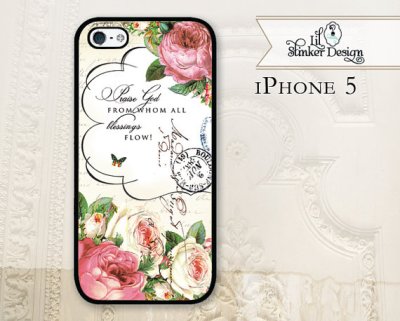
3. My new iPhone case, found by Googling “iphone 5 rubber case pink floral.” Love it!

iphonefloralcase

4. Grilled steaks and cheesy potatoes. Since we couldn’t easily go to Jason and Mittu’s apartment for dinner one night, since Grandma’s caregiver leaves at 6, they brought dinner here. It was wonderful!

5. Mittu liked the anniversary gift I made for them! They celebrated four years together last week. We don’t usually exchange anniversary gifts, but they’ve done some nice things for ours, and I saw an idea similar to this on Pinterest, so decided to try to do it now. This was what I used my cool hot glue gun for that I mentioned last week. 🙂 I sort of followed this felt rose tutorial but used the hot glue gun instead of stitching.

photo(11)

I have the hanger set so that the flowers are on the bottom left side: I don’t know why I took the picture with them at the bottom.

It has been a lovely week. Hope yours has been, too!

FFF daisies

Friday’s Fave Five is hosted by Susanne at Living to Tell the Story, who invites us to share five of our favorite things from the last week. It’s a wonderful exercise in looking for and appreciating the good things God blesses us with. Click on the button to learn more, then go to Susanne’s to read others’ faves and link up your own.