Laudable Linkage

Here are some interesting reads from the last couple of weeks:

8 Evangelism Lessons From an Unlikely Convert.

Gospel-Centered Counsel For Moms. “So often, in our sincere desire to be gospel-centered, we skip over a biblical diagnosis and assume we know what the problem is.” Excellent post.

When Your Friend Is Paralyzed With Fear.

How Cancer Changed Me For Good.

When You’ve Lost Your Joy in the Midst of Marriage and Motherhood.

Help for the Blindsided, when a past sin blindsides you with shame and sorrow.

Sanctification In the Season of Singleness.

Bosses Don’t Give Gold Stars — and Other Career Advice.

DOMA and the Rock.

Hope you have a great weekend!

Friday’s Fave Five

It’s hard to believe the summer is half over already. I wonder if the rest of it will be as busy as the first of it – probably so for us as we have three birthdays in July and August. But each week has its highlights, and here are some from this week:

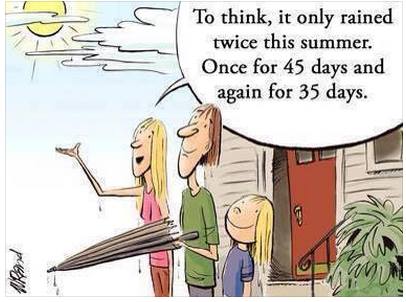
1. Sunlight! We’ve had way more rain than usual this summer. I fact, this cartoon going around Facebook seemed apt:

Rain

But we’ve had some bright sunshine parts of this week as well, which has helped to dry things out about and was quite refreshing.

2. Cool evenings. One advantage to the rain has been that it has taken the edge off the normal summer heat wave. We’ve actually had to turn the AC down at night, and I’ve enjoyed some decaf coffee with something desserty in the evenings – I usually avoid coffee during the summer because it makes me hot.

3. New corner shelves for the closet in the craft/sewing room, and a son to put them together for me:

Corner shelves

I had been trying to figure out how to best utilize that corner, and this was the perfect solution, plus being open on two sides makes it more accessible.

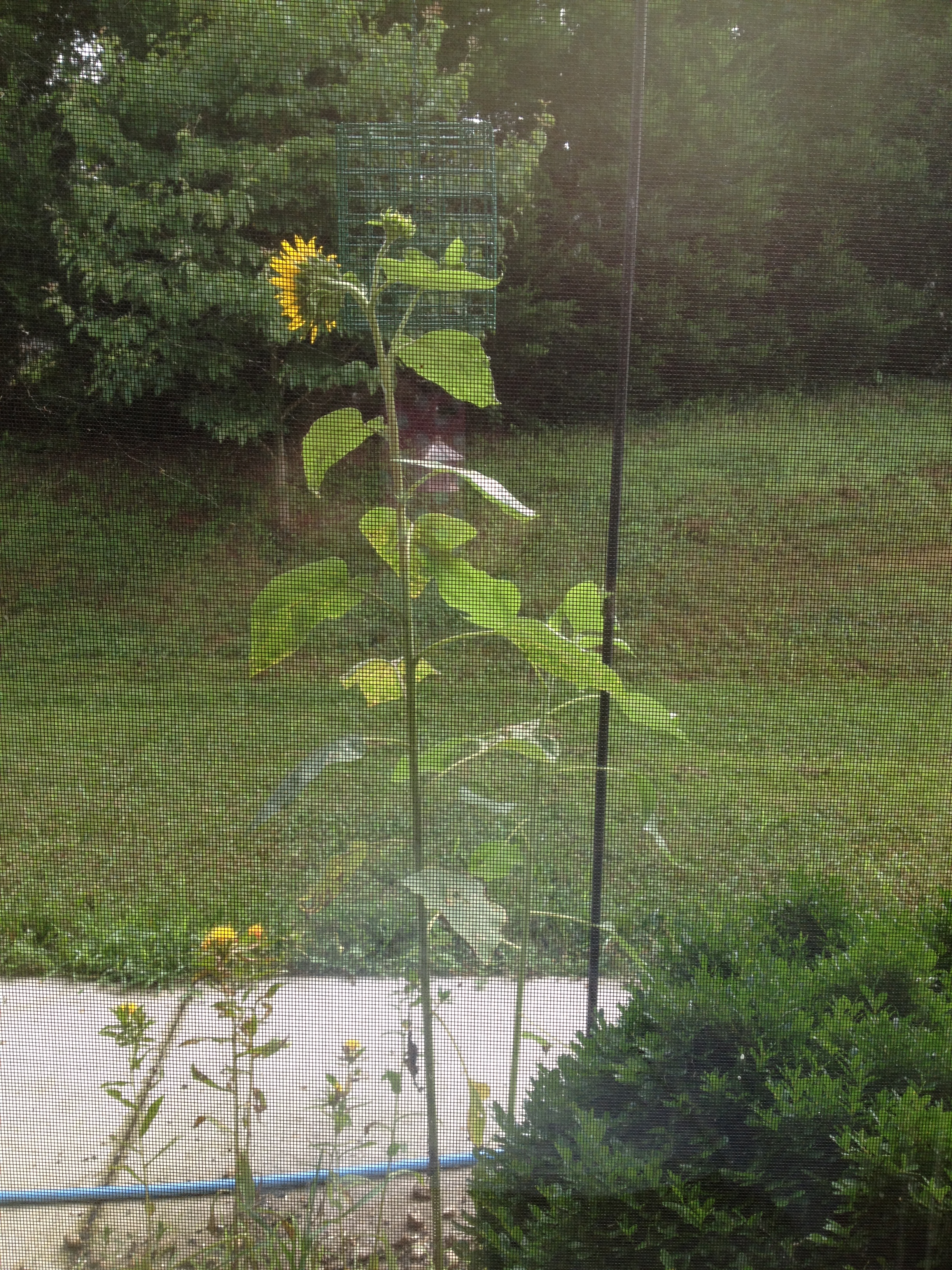
4. Sunflowers are not my favorite flower, but they are kind of neat – fun, happy flowers. When this one sprouted from dropped bird seed, we decided to let it grow. I think I am going to have to move the bird feeder, though!

photo(8)

5. Finally getting eye doctor appointments made and completed…after nearly three years here. 😳 Jesse’s eyes have not changed much, thankfully, so he does not need new glasses. I have a prescription for bifocals if I want them, or I can just keep on with my little readers if I prefer. I hate the constant off-and-on activity with the readers (as in church, for example, when I need them on to see my notes or Bible and off to see the preacher or screen), but I’m not sure that aggravation is worth the expense of bifocals. Still thinking about it.

I could also list books this week, always a fave, but I’ve been in some particularly good ones this week. Plus I have gotten some more organizing done in my craft/sewing room, which always feels good.

We have a busy week ahead with a church activity, a birthday, a ladies’ group activity, and preparations to bring my mother-in-law home – more on that later. Plus my 3,000th post and my 7th blogging anniversary are coming up: seems like I should do something special to commemorate those, but I am not sure what yet. Stay tuned! 🙂

FFF daisies

Friday’s Fave Five is hosted by Susanne at Living to Tell the Story, who invites us to share five of our favorite things from the last week. It’s a wonderful exercise in looking for and appreciating the good things God blesses us with. Click on the button to learn more, then go to Susanne’s to read others’ faves and link up your own.

The Mitford Books

Last December I reread, or rather, listened to a book I had previously read: At Home In Mitford by Jan Karon. I reviewed it here and then set off to listen to audiobook versions of the whole series. I found I wasn’t necessarily inclined to write a review of each one, though, I suppose because although there are movements of plot in each book, the overall people and themes are the same. So I decided at the end of the series I’d write one post summarizing each one.

I wrote previously that “I first encountered Jan Karon in the pages of Victoria magazine some years ago. Victoria chooses a “Writer-in-residence” whose work they showcase in each issue throughout the year, and Jan was featured one year. I loved her warmth and hominess and clear faith depicted — in fact, I was surprised and pleased that a secular magazine would feature a writer whose faith was integral to her stories. I believe it was there I also first heard of and then sought out Mitford.”

The series mainly follows the life of Father Tim Kavanagh, a sixty-something Episcopal priest, and the various characters in the fictional small town of Mitford, NC. Father Tim is a hard-working single priest, but in the first book an appealing single lady moves in next door, and though he thought he was a confirmed bachelor, he finds himself entranced but not sure what to do about it.

His flock consists of a number of memorable characters: his sometimes annoying secretary, Emma: Miss Sadie Baxter, town matriarch; LouElla, her companion; Uncle Billy Watson, resident joke-teller, perhaps to take the edge off of living with his wife of several decades, Miss Rose, who is schizophrenic but refuses to take her medicine; Esther Bolick, who expresses her love via her famed Orange Marmalade Cake; the “Turkey Club” he eats lunch with regularly at Percy Mosely’s Main Street Grill, the “man in the attic” (one of my favorite story lines), and a host of others.

Mitford is a typical small town where everyone knows everyone’s business, which can be a thorn in the flesh occasionally, but overall everyone genuinely cares. I think of it as something like Mayberry but not as corny. 🙂 Though every book contains some of the same familiar, comforting elements, the lives of the characters do progress: people fall in love, marry, babies are born, people face crises and grow and some die. Father Tim himself progresses over the series and deals with a couple of lifelong issues; his wife Cynthia is a bright spot in his life and helps him become less staid and more sure of himself.

The Mitford books were not marketed as Christian fiction that I remember, but there are ample amounts of Biblical truth and pure gospel woven in naturally.

So here are brief descriptions of each book in the series:

At Home in Mitford (reviewed here): Father Tim, the town, and its characters are introduced; a dog “as big as a Buick” finds and “adopts” Father Tim and becomes a pleasant companion; new neighbor Cynthia moves in next door; neglected orphan Dooley Barlow enters Father Tim’s previously quiet life.

A Light in the Window, reviewed here: Father Tim and Cynthia become more serious while a widow in town also sets her cap for Father Tim and he doubts whether he can give himself in marriage as he should; Miss Sadie takes an interest in helping Dooley, who is now living with Father Tim, by wanting to send him to a prep school out of town; the Main Street Grill is in danger of being closed; a very abrasive, rough around the edges construction supervisor, Buck Leeper, is in charge of the nursing home being built with Miss Sadie’s donated money.

A Common Life: The Wedding Story, not reviewed, was not published until after the next three books had been written, but fits in here in the story line. It is Father Tim and Cynthia’s wedding story, both sweet and comical.

These High Green Hills, not reviewed: Father Tim adjusts to marriage; a severely abused child ends up at Father Tim’s door; an unidentified burn victim is brought to the hospital; Dooley’s mother is found; a long-time Mitford resident dies.

Out to Canaan, not reviewed: Father Tim contemplates and prepares for retirement; Mayor Cunningham faces an unlikely opponent; a mysterious Florida corporation is trying to buy up Mitford property, including Miss Sadie’s Fernbank.

A New Song, not reviewed: Father Tim supplies a pulpit as an interim in Whitecap, an island on the NC coast, gets a disturbing phone call about Dooley back in Mitford, discovers a mysterious neighbor, and performs an unusual wedding.

In This Mountain, not reviewed: Father Tim deals with retirement and wonders what his life has been worth while his wife’s fame as an author and illustrator soars to new heights; neglect of his diabetes causes a major breakdown; a serious accident plunges Father Tim into a season of depression. Though this is a bit darker than the other books, it was still a very good read.

Shepherds Abiding, not reviewed: a lovely Christmas story dealing with many aspects of the season; Father Tim, who has worked with his mind most of his life, discovers the pleasure of working with his hands by restoring an old Nativity scene in a state of disrepair as a Christmas gift for his wife; bookstore owner Hope Winchester may have to close down and move, but then the possibility of may open new doors. (In the audiobook, smaller gift books Esther’s Gift and The Mitford Snowmen are also included.)

Light From Heaven, not reviewed: Father Tim and Cynthia “house sit” at Meadowgate Farms while dear friends, the Owens family, are away for several months; Father Tim is asked to revive a little mountain church and discovers another batch of unique characters: gentle Agnes and her deaf son, Clarence, who kept up the church building for years in faith that God would bring it back into use, invalid Dovie, crusty Jubal, and many others; Dooley, nearing the end of his college career, learns about an inheritance.

Throughout the books, too, each of Dooley’s lost siblings were found, though I neglected to note which one came in which book.

Two other things I loved about this series is that Karon weaves in a number of literary references throughout each book (some of the quotes are gathered into two separate books, Patches of Godlight (which I own) and A Continual Feast: Words of Comfort and Celebration (on my wish list), both in the style of Father Tim’s quote book), and that with just a few words she can set a scene that is very warm and homey.

The only real negative in the books was that many characters have a tendency to say “Good Lord!” or “Oh Lord,” which I perceive as taking the Lord’s name in vain, using something holy and glorious as an empty epithet. It’s tame compared to the type and amount of objectionable language found in many modern books, but still it rankles.

Some have felt that the series lagged a bit in the middle books, but I did not think so: there is enough sameness to keep it familiar but enough difference in each one to keep it moving and interesting. Probably the first one is my overall favorite, with These High Green Hills and In This Mountain tying for second, but I enjoyed each one.

The audiobooks I listened to were read by stage actor John McDonough. It took me a while to get into his style, but in some parts he reminded me of a beloved pastor from my teen and college years, and once I got into the stories I enjoyed his rendition very much. He did a wonderful job with the variety of voices and accents involved, and his voice will always embody Father Tim’s for me.

Finally, one last note, The Mitford Bedside Companion is a wonderful accompaniment to the books. In it, Karon tells how the Mitford stories came about (I was surprised to learn they started as a newspaper column), groups some favorite scenes from the book under different headings (characters, prayers, meal scenes, etc.), adds some essays, some recipes, trivia, a quiz, crossword puzzle, and a list of most commonly asked questions. I haven’t read all of it, but I have enjoyed dipping in at various places in it.

There are two more books concerning Father Tim, Home to Holly Springs, where he revisits his home town and comes to grips with events from his past, and In the Company of Others, (both linked to my reviews) about his and Cynthia’s long anticipated trip to Ireland, but they are listed as a separate Father Tim series rather than a continuation of the Mitford series, fitting since they take place away from Mitford with only a few references to some of the people. I would like to listen to them as well, but I think I’ll take a little break from Mitford for a while. I always enjoy visits there.

(This will also be linked to Semicolon‘s Saturday Review of Books.)

Book Review: The Magician’s Nephew

Magicians NephewI read The Magician’s Nephew by C. S. Lewis for Carrie‘s Chronicles of Narnia Reading Challenge. It’s the fifth book in order of publication but the first book in the Narnian time line. I liked reading it as the fifth book very much, and I’ll tell you why in a moment.

The story opens with two children, Digory and Polly, meeting. Polly lives in London, and Digory has just come there to stay with an aunt and uncle because his mother is very ill and his father is in India. Digory is not happy about leaving his pony and nice home in the country to come to London, and he is concerned about his mother, but after his meeting with Polly gets off to a shaky start, they become friends.

Digory’s uncle is thought by some to be mad, but if he’s not exactly mad, he’s at least strange. One day Digory and Polly go exploring in an attic corridor that seems to run along the length of the row of houses (the description of stepping on the rafters reminds me of a description of Lewis doing the same thing when he has a boy in a biography I read years ago – I don’t remember which one). They’re trying to get to an empty house to explore, but they miscalculate and find themselves in Uncle Andrew’s attic room. He dabbles in magic and has made some rings which he thinks sends people to other worlds – at least that seems to be what’s happened to the guinea pigs he has sent through. He suddenly sends Polly through and then manipulates Digory into going after her.

The children find themselves in what looks like a land of ancient ruins, where Digory inadvertently awakens an ancient evil, which follows them to London and causes a ruckus. In trying to get everyone back where they belong, they end up in an uninhabited world, and witness the creation of Narnia, beautifully and wonderfully described.

But they’ve brought the evil with them into the brand new world on its first day, which Aslan predicts will cause further evil later, but he promises to “see to it that the worst falls upon myself,” an echo of Christ’s taking the punishment for our evil on Himself.

More of those echoes to Biblical truth are found when Aslan breathes life into his creatures, when Aslan questions Digory as to how the evil came to be in Narnia, and Digory finds that Aslan won’t let him fudge the truth at all, when Digory concludes “the Lion was not at all the sort of person one could try to make bargains with,” with the freedom of choice that might lead to evil and its consequences, when Digory is sent to retrieve a particular apple from a particular tree enclosed by a particular gate and reads a sign that one must come through the gate, that stealing or climbing over the wall will lead one to despair, when Digory is tempted by forbeidden fruit, when Aslan welcomes him back from his quest with “Well done,” and probably in other ways as well which I am not remembering. With this book as well as the others, as Aslan told the children in Voyage of the Dawn-Treader, “You were brought to Narnia, that by knowing me here for a little, you may know me better there.”

I’m leaving our great chunks of the story on purpose so as not to spoil it for those who haven’t read it yet. But this book as well as the others leaves me with an appreciation of its underlying truths and a wistfulness for Narnia.

And personally, I think I got so much more out of this book reading it at this stage rather than the beginning because of the thrill and anticipation when I recognized certain connections – realizing just who the children were waking up, recognizing the lamppost in the woods as that lamppost, finding out who Digory turns out to be, etc.. If I had read this book first I think I would have had a hard time caring much about what was going on with Digory and Polly at the beginning: I even had to almost fight to care this time, even knowing, from having read the book before, where their adventures were going to lead. But I suppose people who read this book first might experience the same thrill of recognition when they get to The Lion, the Witch, and the Wardrobe. It’s just hard for me to fathom experiencing these stories without starting there.

I ended up loving this book much more than I thought I would at the beginning, and I’m very much looking forward to The Last Battle next.

(This will also be linked to Semicolon‘s Saturday Review of Books.)

The Hidden Art of Homemaking Book Club: Chapter 12: Clothing

We’re discussing The Hidden Art of Homemaking by Edith Schaeffer a chapter at a time at  The Hidden Art of Homemaking Book Club hosted by Cindy at Ordo Amoris.

Chapter 12 discusses clothing, and Edith brings out many important points to consider. Some consider certain colors or patterns to be wrong, some feel it is more spiritual to dress in styles just before the current times. For some time conservative Christians in my area looked like they stepped off the set of Little House on the Prairie. How does one discern what is truly pleasing to the Lord in our clothing?

Edith brings out first of all that Jesus said, “Consider the lilies how they grow: they toil not, they spin not; and yet I say unto you, that Solomon in all his glory was not arrayed like one of these. If then God so clothe the grass, which is to day in the field, and to morrow is cast into the oven; how much more will he clothe you, O ye of little faith?” (Luke 12:27-28). She then spends several paragraphs considering flowers of the field, their variety and beauty, and reasons that the God who designed them must not have intended for His children to be dressed dowdily. He who could have made the world simply utilitarian also made it beautiful and filled it with variety. She points out, too, that the Proverbs 31 woman “maketh herself coverings of tapestry; her clothing is silk and purple,” not burlap or drab attire.

These thoughts helped me as a newly saved young woman years ago when I struggled with some of these questions. I also struggled with whether it was right or wrong or “worldly” to want to be in style. Edith discusses that, too. She points out with a bit of humor that those who dress ten years behind the times to avoid worldliness don’t stop to consider that ten years ago others would have considered that style worldly. There was a time when it was risque to show ankles. There is nothing in the Bible that indicates dressing out of accord with one’s times is more spiritual and less worldly, and practically speaking, dressing in an obvious out-of-style way can cause more negative that positive attention for Christ. All things must be kept in balance, of course, and we have to be careful not to spend too much time, money, and attention on clothing. She is not advocating that we dump our wardrobe for a new one every season, and even if we need to go among those in a higher economic class than ourselves, we can dress tastefully without having to go buy a lot of expensive new items. (On the other hand, of course, sometimes what is in style can be immodest or inappropriate for a Christian. Modesty would be the higher principle here. We shouldn’t run after the latest styles just because they’re the latest styles if there is something wrong with them.)

If I can go off on a side trail here, I agree with her on this, but it has bothered me for a long time that the world in general or sometimes Christians in particular decide that a style is suddenly old and unworthy any more. For instance, some years ago someone called denim jumpers “home school mom’s uniforms,” and then suddenly it was uncool to wear denim jumpers. I loved them for their durability and continued to wear them until I couldn’t find them any more. When I was growing up, a “comb-over” was what we called the hairstyle when a balding man tried to comb a few strands of hair over his bald spot, but for a while it was what some people called it when a man parted his hair on the side, and it was deemed too conservative and straight-laced, We can be silly with some of this kind of thing, and we have to be careful not to judge people unfairly on one side or the other. But yes, I do think that dressing deliberately and obviously out of style and out of touch with the times is not something that in and of itself glorifies God.

Back to Edith’s book: she also discusses appropriateness and how it can vary depending on what country, area of the country, and community one lives in. She touches on modesty briefly, but not as much as I would have thought: she mainly advocates not dressing in a way that would tempt anyone else, and remembering Whom you represent. Those two principles taken seriously and thoughtfully would take care of much of the problem.

She also deals with pants, a big consideration in some conservative Christian circles. The first pastor I had as a Christian taught that Deuteronomy 22:5 (“The woman shall not wear that which pertaineth unto a man, neither shall a man put on a woman’s garment: for all that do so are abomination unto the Lord thy God.”) referred to women wearing pants. Around that time I saw a “Big Valley” episode in which it was scandalous when Audra wore pants, and I thought that sounded reasonable. Then I got to a Christian college, and one of my teachers pointed out that both men and women wore long, loose-fitting robes in those days. Hmm. Okay (though I am not entirely sure about that since the Bible also discusses “breeches“, at least for the priests, but that seems to have been worn under the robe anyway). And then, as Edith describes here, her father went as a missionary to China at a time when women wore trousers and men wore long tunics. Would it have helped or harmed the cause of Christ to cling to an understanding that women weren’t to wear pants in that context, especially when that passage is not talking about pants? The general principle carries over that men should dress obviously as men and women as women, but to distil this verse down just to wearing pants does it a disservice. For the record, I do wear dresses out of preference, and I think they are generally more modest: pants tend to outline everything you’ve got. I’ve seen more than I wanted to and more than I thought was appropriate via some women’s pants, though I admit I have also seen immodest dresses and very modest pants. I’ve worn pants during childbirth classes, and though I’m not a hiking or mountain climbing person, if I were, I’d have no trouble wearing modest pants for those activities or any other when they’d be more modest and appropriate than a dress. But I don’t judge those who are more comfortable wearing modest pants.

Overall I enjoyed this chapter, both the truths that Edith brought out as well as the balance.

Thoughts on being an introvert

IndoorsyI don’t know if I was taught this somewhere along the way or if it was just a misconception, but as I was growing up I had the idea that an introvert was someone who was indoorsy, not as physically active (and therefore probably a little pudgy), quiet, and didn’t have many friends, whereas an extrovert was more physical, active, outgoing, talkative, and loud.

Evidently I’m not the only one with incorrect ideas of what it means to be an introvert. I was talking with a friend yesterday who said that she has sometimes been accused of being antisocial and once even of being sinful due to her introversion (the latter was said teasingly, but still, that kind of thing stings).

Over the last year I’ve found myself reading a number of books (Quiet; The Power of Introverts in a World That Can’t Stop Talking by Susan Cain and Introverts in the Church by Adam McHugh, both linked to my thoughts on them) and articles about introverts that helped clarify my own thinking and understanding. But as I was commiserating with my friend yesterday, one problem is that extroverts aren’t likely to read books about introverts, and therefore misunderstanding continues.

No one is completely all introvert or extrovert, but most people do lean strongly one way or another. The differences between the two aren’t just a matter of preference: Cain quotes a number of sources documenting that introverts are neurologically wired differently. So it behooves us (both introvert and extrovert) to understand and accept our differences, to realize that God created people differently and has different ways they can each minister, rather than trying to make each other more like ourselves or make everyone fit into one mold.

One of the main differences between the two are their sources of energy in relation to people. Introverts are drained by much social interaction: extroverts thrive on it. Introverts are not antisocial: they do like to get together with people but usually prefer smaller groups. If they are in a large gathering, they’ll likely be on the sidelines talking with one or two people rather than mixing and mingling with many (and they’ll likely collapse at home afterward).

Introverts also tend to be more analytical and slower to process their thoughts. That’s one thing that makes them lag a bit in group discussions and conversations: by the time they process what is being discussed and what they want to say, the conversation has moved on. That’s also why they can panic or at least strongly dislike being called on in a class or small group, and why they don’t think “on their feet” well and often express themselves better in writing than speaking. Introverts are generally more quiet because they’re thinking and processing (and because they prefer quietness and calmness), whereas extroverts often think things through by talking.

Not all introverts are shy: shyness may involve some of the above but may have the added factor of fear, or may just be habit. I was actually raised with the phrase, “Children are to be seen and not heard,” and it is hard to just flip the switch as an adult and start talking. God has helped me with that a lot (that may be a subject for another post). But even if shyness is due to fear, it isn’t helped by rebuking a person for it. Take whatever you’re most afraid of (public speaking, heights, spiders, etc.), and tell yourself “Just stop it!” and see how far you get. 🙂 Then apply that to a fear of people, and perhaps you’ll understand a bit better. One can learn coping mechanisms to help with shyness (and should, since one needs to learn to interact with people), but understanding and empathy help more than a superior or judgmental attitude.

Few if any introverts want to be total hermits. They do need and want people – just preferably in smaller doses. Some of us can talk a blue streak once we get to know and feel comfortable with people. And we can learn to be more talkative than we are really comfortable with. We do need to reach out and be involved in community – all those Biblical “one anothers” do involve other people. But it is comforting to know that Jesus said, “Where two or three are gathered together in my name, there am I in the midst of them” (Matthew 18:20).

There are other characteristics of introverts (which is why, after all, whole books have been written about them), but the main point I wanted to make today was just that we need to understand and respect differences. God made people different and as such He has a place and a purpose for each. The church needs both introverts and extroverts both for balance but also so they can minister to those most like themselves as well as to each other. One of my favorite e-mails came from Karla Dornacher, when I had posted a comment on her blog in a post where she had mentioned being a bit of a loner even though she does well at speaking to crowds. She responded that she couldn’t be alone in her studio so much of the time if she couldn’t be content with being alone for long stretches, and God gives us personalities to fit our callings. That was one of those proverbial light bulb moments for me. I’ve appreciated ways that God has opened for me to minister to others that fit in with the personality He has given me.

There are times, though, that He has pushed me out of my comfort zone. Every trait has its good and bad tendencies, and Adam’s book in particular cautions introverts against some of their potential problem tendencies (some of the most helpful quotes are here). We can avoid people sometimes just out of selfishness rather than need, and we need to realize that a lack of interaction can be hurtful and seem rude even if it is not meant to be. Adam also encourages us that when God does call us to make sacrifices or extend ourselves, He will provide the grace to do so.

Friday’s Fave Five

I don’t know what happened to the “lazy days of summer.” July has barely started and I’m tired already! 🙂 But it has been a good week. Here are some of its highlights:

1. My mother-in-law’s 85th birthday.

2. Getting word that my niece’s fiance is CANCER FREE!!!!! Some months ago I had mentioned that my niece’s 19 year old fiance had been found to have multiple tumors in various places. After a surgery and then months of grueling chemo, scans last week showed no sign of cancer. Praise the Lord! He has to go back to the doctor every six months for the next two years just to check on things.

3. Independence Day. I am so thankful that our country is free and that people have sacrificed to make and keep it that way. A day off in the middle of the week is nice, too. 🙂 Our neighbors planned something of a block party that went well despite frequent rain. I only knew two neighbors before, so it was nice to meet and get to know others. We ended the night with a family game of Settlers of Catan.

4. Getting some overdue phone calls made. For some reason I am getting terrible about that, especially in regard to appointments. I finally determined to just sit down and plow through all of them.

5. A hopeful prognosis. One of those phone calls was to an orthodontist. Jesse’s previous orthodontist in SC had recommended waiting until he finished growing to try to begin work on his needs. He had also said he would likely need surgery to remove part of his jaw to correct his particular problem, which to us sounded like a drastic measure (though we don’t question his judgement – he had been great with our older two boys). The orthodontist we saw here said there is a good chance we can correct the problem just by removing some extra teeth and positioning others. They took x-rays and such, and we won’t know the best course of action they’ll recommend until we see them again next week, but it’s a great relief that we might be able t get away without that kind of surgery. Plus it is just good to get the ball rolling on all this.

Hope you have a great weekend! It’s due to be a rainy one here, but we’ve got lots of indoor projects we can work on.

FFF daisies

Friday’s Fave Five is hosted by Susanne at Living to Tell the Story, who invites us to share five of our favorite things from the last week. It’s a wonderful exercise in looking for and appreciating the good things God blesses us with. Click on the button to learn more, then go to Susanne’s to read others’ faves and link up your own.

Happy Independence Day!

Our fathers’ God, to Thee,
Author of liberty,
To Thee we sing;
Long may our land be bright
With freedom’s holy light;
Protect us by Thy might,
Great God, our King.

~ Samuel Francis Smith

free-indeed800

Grandma’s 85th birthday

…was yesterday. In past years we have brought her to our home for dinner, presents, and cake. But she is not very mobile any more, is on a pureed diet due to swallowing difficulties, and doesn’t stay awake for more than 10 minutes or so at a stretch. We weren’t sure how it was going to work to try to do something for her birthday, but we planned to go to her room after everyone got off work.

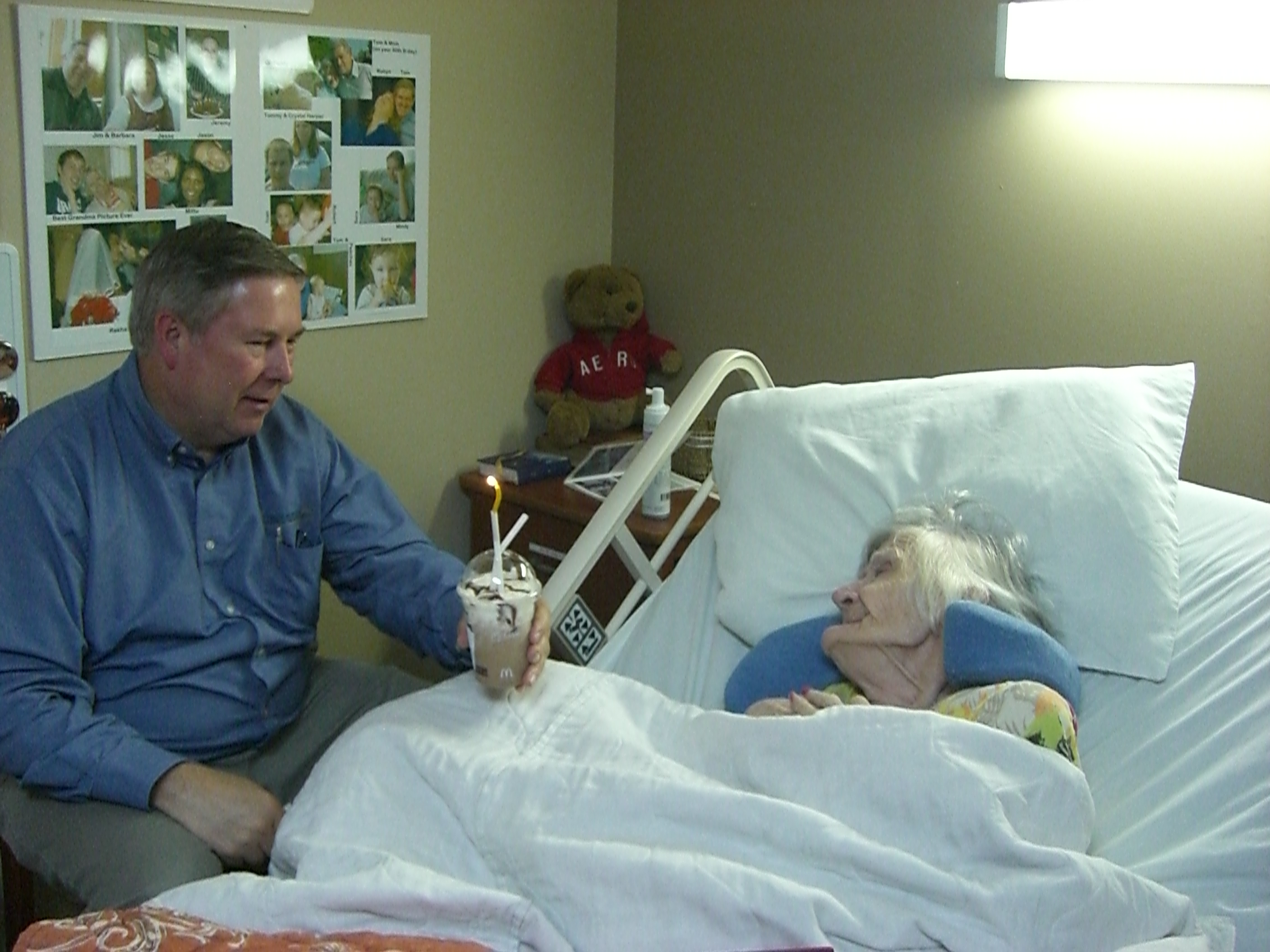
It all went well. She was awake for a longer stretch than usual – maybe because there were five of us there and usually it is just Jim or myself alone. Since we couldn’t do cake, we got her a McDonald’s mocha frappe (which she loves – and she needs the calories!) and put a candle in the straw.

CIMG5855

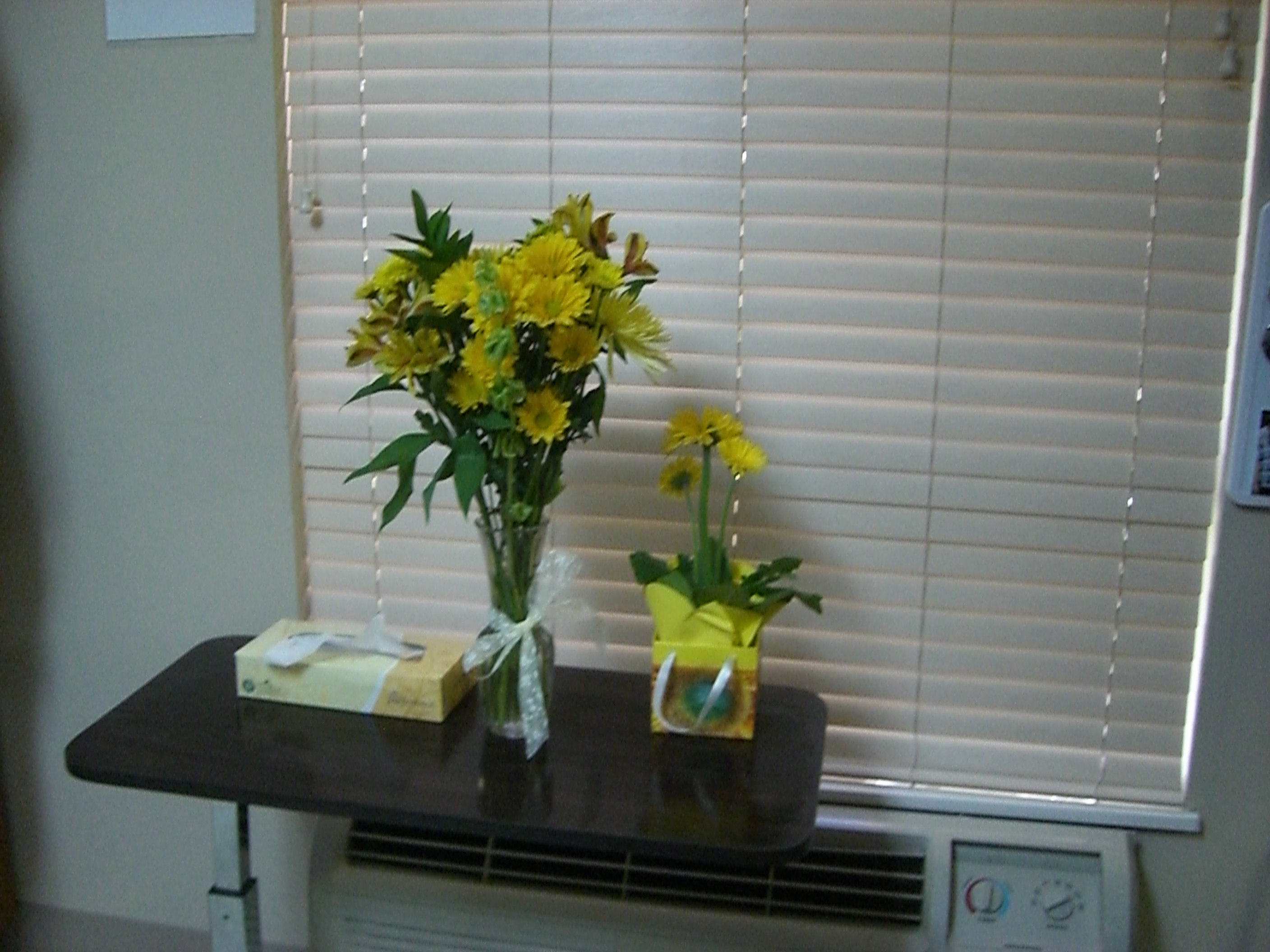
We didn’t do much with gifts, both because she really doesn’t need anything, and because too much activity probably would have been wearing. Jeremy got her some soft fuzzy socks, we got her a new nightgown and some flowers, Jason and Mittu got her some flowers, so we opened those for her and showed them to her and read her cards for her and showed them to her. She was very responsive, even speaking audibly, saying, “That’s nice” or “That’s pretty.”

CIMG5859

We even got to FaceTime with Jeremy so he could see her open his gift.

She made a good effort to blow out her candle, smiled, blew kisses at the kids, and seemed to enjoy the time very much (though her smile didn’t show up in the pictures!.

CIMG5858

Barbara's Cell phone pics 233

When we all left the room, Jim went back in to do something, and she was out like a light. 🙂

Then we all went to a nearby Asian place for dinner.

All in all a good evening.

The Hidden Art of Homemaking Book Club, Chapter 11: Creative Recreation

We’re discussing The Hidden Art of Homemaking by Edith Schaeffer a chapter at a time at  The Hidden Art of Homemaking Book Club hosted by Cindy at Ordo Amoris.

Chapter 11 is titled “Creative Recreation,” and I have to admit it rubbed me the wrong way in spots.

I like what Edith said in the beginning:

Creative recreation, in my personal definition, can be thought of in two ways. Firstly, it is recreation which produces creative results, stimulates creativity, refreshes one ideas and stirs one to “produce.” Secondly, it is recreation which is the result of original ideas, creative because someone has creatively planned an evening, a day, an occupation which in itself is fresh and different (p. 165).

No argument there.

People differ so tremendously in what recreation does for them that one could not give hard and fast rules as to what would stimulate creativity (p. 165).

Very much agree there.

My problem comes when she expresses her opinion that this is best done by getting away from everything and getting back to nature, and she gives various ways to do that.

I have never been an outdoorsy girl, not even since early childhood. My mom would have to “make” me go outside to play. Since we’ve had children, yes, we’ve played in the park, gone camping, had various forays to the beach, the lake, etc., and we’ve had some fun family times. But I can’t say that any of them, for me, served to “produce creative results, stimulate creativity, refresh one ideas and stir one to ‘produce.'” So the pages and pages of that just fell flat to me and even irritated me a little bit. I did feel very rested after one extended trip to the beach at a during a spring break when our school was on break on a different week than other area schools, and we had most of the place to ourselves. But most of my forays into nature are something I “endure” rather than something that produces creativity.

In various parts of the book she has used the word “plastic” a lot to refer to modern life, but here she takes it to new heights, even saying that “natural” fabrics give us more of a feel “of interacting with or relating to nature” because when we wear wool we think of sheep grazing, when we wear linen we think of flax growing, etc. Seriously? I admit I like cotton, but I don’t think of fields of cotton when I am wearing it. My husband has worked in the textile industry for most of his career, dealing mostly with fibers that result from petroleum manufacturing (which can be a pretty fascinating process). I guess you could say even that is “natural” in a way, though Edith probably would not, but I am not necessarily thinking about that when I appreciate my mixed blend of fibers which causes me not to have to iron my clothes.

I do agree with the need for conservationism, to “get away from it all” sometimes, etc., but I appreciate the conveniences of modern life too much to have much criticism of it. And I think even people who are more critical of it use a lot more of it than they think.

But enough of that.

I did like the section on the second part of her definition, “recreation which is the result of original ideas,” and her description of Treasure Hunt meals. And I agree that there are things we can do to foster or to kill creativity (or at least allow it to lay dormant), and it is better to do the former.

So, this has ended up being my least favorite chapter so far. I wish she had explored some other avenues of stimulating creativity. I would have to say that activities for me that do that are more likely to be reading, going to craft shows or stores, perusing Pinterest, even working on things with other people and being stimulated by their ideas.

Updated to add: Just to clarify, I’m not anti-nature. I can be inspired by and instructed by it and see God’s glory in it, even with the after-effects of man’s fall in it. It just doesn’t fit in with Edith’s description of creative recreation for me and I was frustrated that that’s the only avenue of creative recreation she discussed.