Flashback Friday: School Discipline

Mocha With Linda hosts a weekly meme called Flashback Friday. She’ll post a question every Thursday, and then Friday we can link our answers up on her site. You can visit her site for more Flashbacks.

The prompt for today is:

How strict were teachers when you were in school? What were common methods of discipline? No recess? Writing sentences? Being sent to the principal’s office? Were “pops” or “swats” allowed? Did you ever get in “big” trouble at school? If so, what was it for and what happened to you? Were you ever suspended from school? If you got in trouble at school, what happened at home? Was school lunch a pretty relaxed environment or was discipline maintained in the cafeteria as well? If you are a teacher, what have you vowed never to do as a result of your experiences growing up?

My parents told us horror stories of their being swatted on the hand with a ruler or pulled by the ear to the front of the class, but when I was in elementary school, the primary method of discipline was writing an excess of sentences. I think “swats” were allowed at nearly every school I attended, and we had great legends about the paddles used. etc., but I don’t think I ever knew anyone who actually received any. It was very much a method of “last resort.” I don’t remember missing recess being used except once or twice when someone had to work on those sentences, though it was when my kids were in elementary school, and I felt that actually could make things worse for the child who needed to let out pent-up energy. Getting called to the principle’s office was a Really Big Deal. My father always said if we got a spanking at school we would get another one at home. Thankfully I never had to see if he meant it.

The only major trouble I got in was in first or second grade. Some of us were throwing rocks at each other — I don’t remember what we were playing, but it was in fun, not maliciousness. I got hit in the head by a rock and started bleeding profusely. The school had to call my mom and I had to go to the doctor. When I got back to school, all of us involved in the rock-throwing had to stay inside and write “I will not throw rocks” something like 50 or 100 times. At the time I thought that was grossly unfair of the teacher to include me in the punishment since I had been injured. I also remember getting in trouble for saying “doggone it.” If the teacher only knew what kinds of other things I heard at home, she would’ve thought that was pretty tame. πŸ™‚ But I am glad I did learn the importance of watching my language.

I don’t remember what punishments were enforced in junior high and high school except that the Christian high school I went to for two years used demerits. I may have gotten a demerit or two for minor things, but overall I wanted to obey the rules. I would get upset if I thought that a teacher was not happy with me or thought I wasn’t doing my best, so I pretty much stayed out of trouble. There were some teachers who were very hard to please, but overall I didn’t do anything deliberately to cross them.

Book Review: Anne of Avonlea

L. M. Montgomery Reading ChallengeI am participating in Carrie‘s third annual Lucy Maud Montgomery Reading Challenge and finished Anne of Avonlea this week.

This book takes up where Anne of Green Gables left off, covering Anne’s first two years of teaching beginning at the tender age of 16. Her beloved Matthew is gone and Marilla has rented part of the farm and is having trouble with her eyesight. Neighbor Mrs. Lynde is still the town gossip though waylaid a bit by her husband’s illness. Anne and Gilbert study together some times in hopes of pursuing college in the future, and Anne still has outings with her friends, mainly her “bosom friend” Diana Barry. Yet Anne has a new responsibility in teaching a classroom full of young charges.

I enjoyed seeing Anne’s natural enthusiasm and wonder mature a bit. I found the changes in the people and situations very natural, the course things might take in any young person’s life as they’re in that transition from youth to adulthood.

I had completely forgotten about Marilla’s taking in young orphans Davy and Dora from my previous reading. At first I thought the book lagged a little bit in recounting various “scrapes,” but by the time Montgomery introduced Lavendar Lewis (whom I had also forgotten), I was once again “hooked.” Her story ended perhaps a bit too perfectly and fairy-tale-ish, but, really, it was the ending I hoped for. I can’t imagine her story ending any other way without changing the whole tone of the book. And “happily ever after” is nice some times. I wasn’t terribly interested in Anne’s grumpy new neighbor, Mr. Harrison, at first, but later in the story I was. Anne’s visit from author Mrs. Morgan is very Anne-ish.

The book ends with yet another series of major changes facing Anne, changes that make her “glad with her head, sorry with her heart,” and yet also with a little glimmer of the joys to come.

Here are some of my favorite quotes from this book:

Anne: “It does people good to have to do things they don’t like…in moderation” (p. 55).

Mr. Harrison, of Mrs. Lynde: “She can put a whole sermon, text, comment, and application, into six words, and throw it at you like a brick” (p. 66). (Sadly, I’ve known people who take great delight in having that ability.)

Anne: “I believe the nicest and sweetest days are not those on which anything very splendid and wonderful and exciting happens but just those that bring simple little pleasures, following one another softly, like pearls slipping off a string” (p. 160).

She held over him the unconscious influence that every girl, whose ideals are high and pure, wields over her friends, an influence which would endure as long as she was faithful to those ideals and which she would as certainly lose if she were ever false to them (p. 168).

Mr. Harrison: “You’ve got a very expressive face, Anne; your thoughts come out on it like print” (p. 221).

She must leave many sweet things behind…all the little simple duties and interests which had grown so dear to her…which she had glorified into beauty and delight by the enthusiasm she had put into them (p. 230)

Charlotta the Fourth to Anne after a fanciful description: “Oh, Miss Shirley, ma’am, what is that in prose?” (p. 258).

Perhaps, after all, romance did not come into one’s life with pomp and blare, like a gay knight riding down; perhaps it crept to one’s side like an old friend through quiet ways; perhaps it revealed itself in seeming prose, until some sudden shaft of illumination flung athwart its pages betrayed the rhythm and the music; perhaps…perhaps…love unfolded naturally out of a beautiful friendship, as a golden-hearted rose slipping from its green sheath (p. 276).

I’m looking forward to Anne of the Island next. I had hoped to read through to Anne’s House of Dreams this month, thinking that book was the fourth, but I just noticed yesterday it was the fifth. So we’ll see! I am making myself wait to rewatch the DVD of Anne of Green Gables; The Sequel until I finish the books that it covers, but already I can see that it veered from the books more than I thought.

I’m enjoying revisiting this series again in all its wholesomeness and sweetness.

A successful experiment

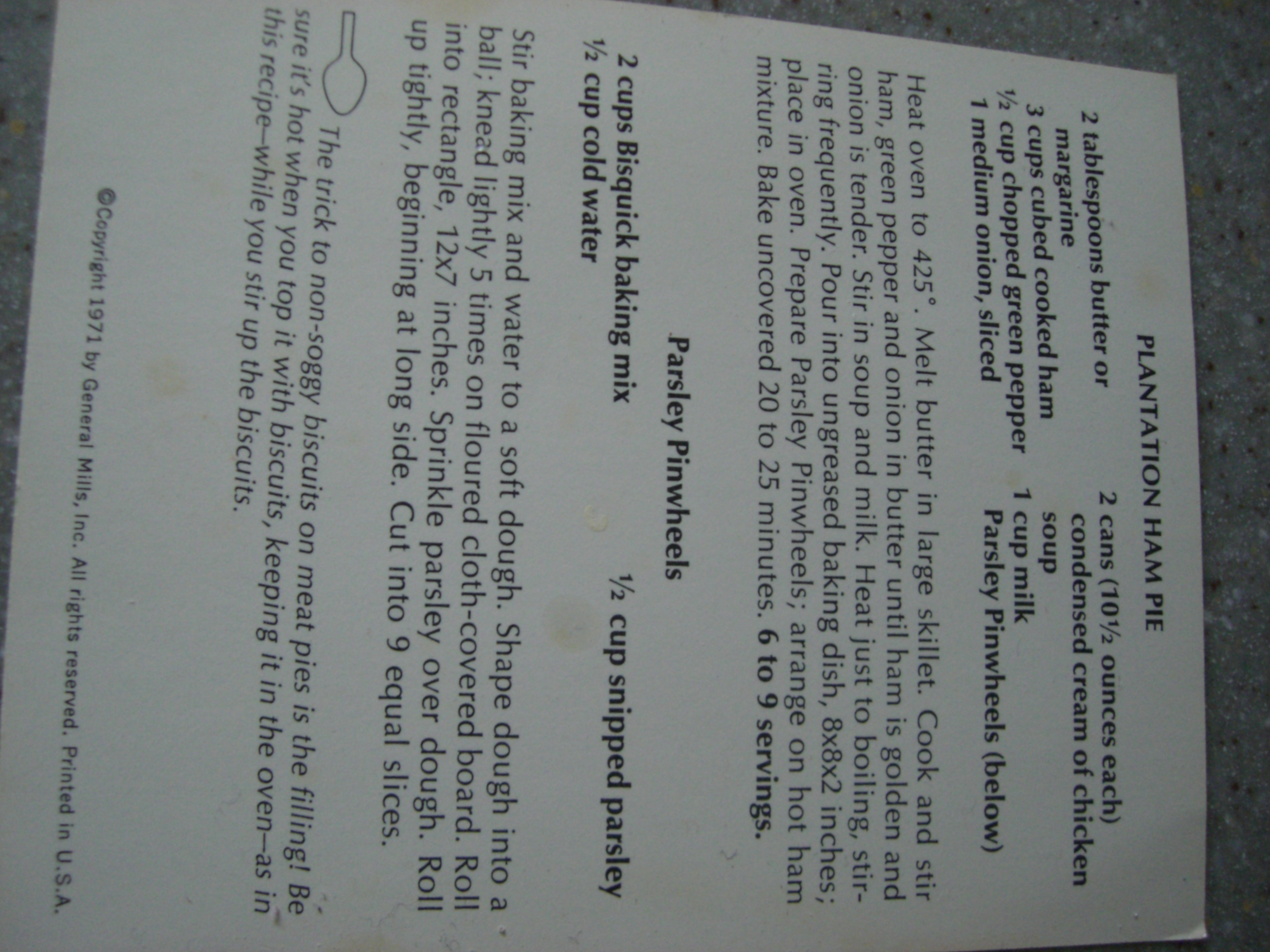
In planning for Sunday dinner after church, I was craving something creamy, with chicken, biscuits, and a bit of cheese. I didn’t have anything quite like that in my repertoire. But slowly an idea formed. I took this recipe:

And used chicken instead of ham. Instead of the “parsley pinwheels”

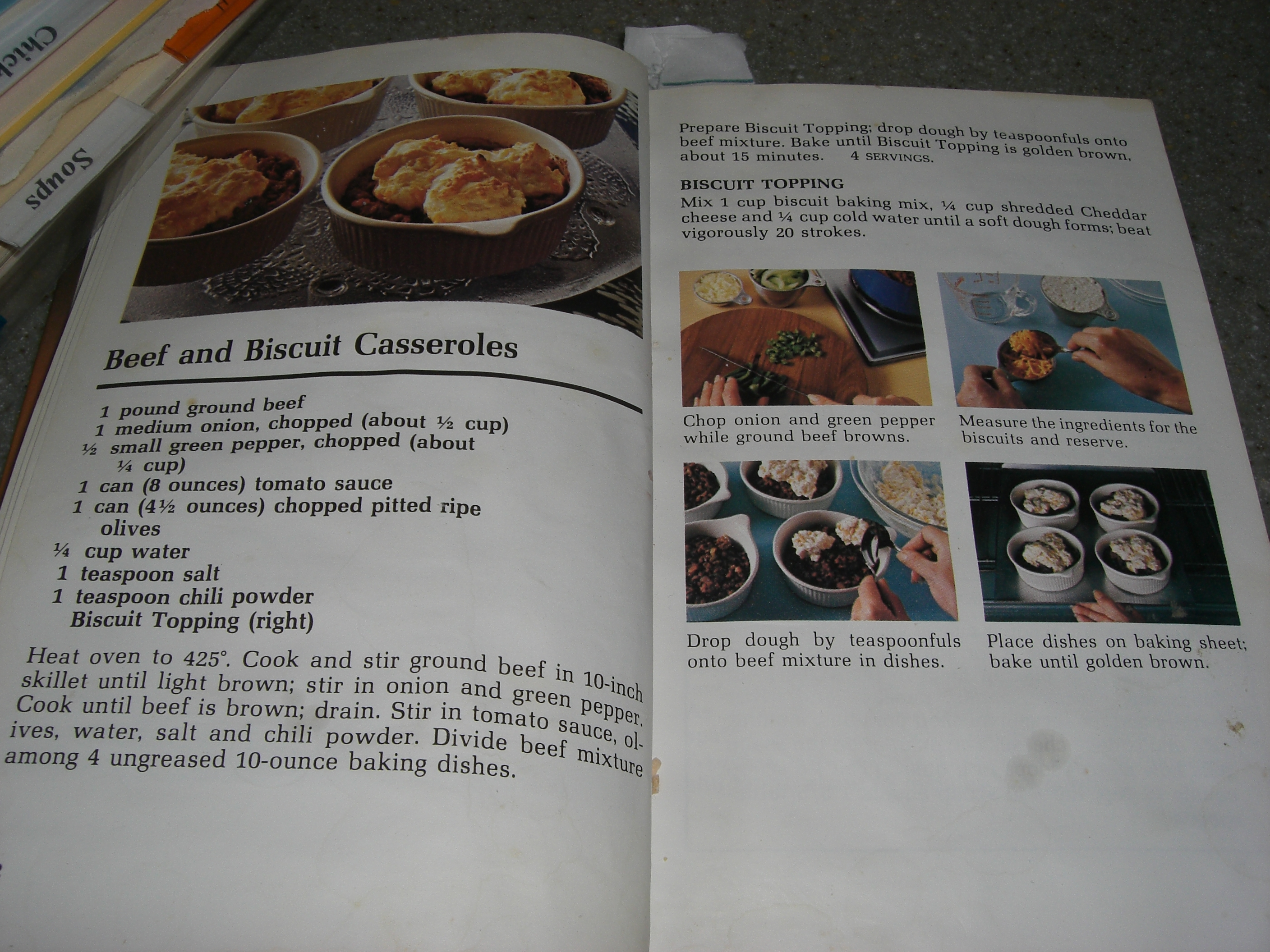
…which I didn’t usually make anyway (I usually used canned biscuits — the flaky kind is best — without parsley), I used the biscuit topping from this recipe:

It was perfect. It was exactly like I imagined it.

The only flaw was that it sat in the oven for 10-15 minutes before I realized the oven hadn’t been turned on. 😳 πŸ™„ So the biscuit topping sank into the casserole a little more than it would have otherwise. And it took a little too long for a Sunday meal — we get out of church later than we’re used to and we have a 20 minute drive home. But otherwise it’s great for a cozy winter dinner.

Now, what to call it? Creamy Chicken with Cheesy Biscuits is a bit bulky. Chicken-Cheese-Biscuit Casserole is a bit stark. But whatever it’s called — I’m glad it turned out so well and hit the spot.

Wednesday Hodgepodge

Joyce From This Side of the Pond hosts a weekly Wednesday Hodgepodge of questions for fun and for getting to know each other.

Today’s questions:

1. Every January 1st since 1976 Lake Superior University has published a list of words they’d like to see banished from the Queen’s English. Words may be banished due to misuse, overuse or just general uselessness and they receive over 1000 nominations. Here are the fourteen words/phrases they’d like to see banished in 2011-viral: epic, fail, wow factor, a-ha moment, back story, BFF, man up, refudiate, Mama Grizzlies, The American People, facebook/google when used as verbs, I’m just sayin’, and Live life to the fullest.

What word or phrase would you like to see banished from our everyday vocabulary in 2011? You can choose one from the ‘official list’ or you can get creative and come up with your own.

Mama Grizzlies? Hadn’t heard that one. The word “like” when used as an interjection can get annoying. And “a-MA-zing” is so over-used that it’s not really amazing any more. But there are two that I’d like to see banished. One is OMG or its unacronymed version, “Oh. My. God.” because, beyond just being annoying, that is taking the Lord’s name in vain. Taking His name in vain isn’t just using it in a cuss word — it is using it in a commonplace, meaningless way unbefitting Him. I cringe almost every time I hear it. The other is “WTF” — which I will not spell out for you, but which is coming even into mainstream print. Totally vulgar. As is a third,”suck.”

On to pleasanter topics…

2. Do you consider opportunity something that comes to you or something you create for yourself?

I think it is a little of both. I think ultimately they come from God, but He blesses initiative and hard work. Sometimes He brings them about through initiative and hard work.

3. Since we’re all eating healthy this month, ahem, what’s included in your favorite salad? Is there dressing?

A mixture of greens like iceberg lettuce, romaine, and spinach (but not weedy-looking greens) plus a few carrots topped with a little ham and cheddar cheese and just a few bacon bits and Catalina dressing.

4. The fourth Monday in January is said to be Blue Monday…aka the most depressing day of the year. The date was calculated using many factors including weather, debt level, time since Christmas, time since we’ve failed at our new year resolutions, low motivation and feeling a need to take action. Do you get the blues this time of year and if so what is something you do to lift your spirits?

I just posted Help for the winter blues yesterday and included a lot of ideas there. A couple of my favorites are reading, setting up a bird-feeder, playing uplifting music, buying fresh or artificial flowers, and remembering some of the benefits of winter — relief from heat, humidity, bugs, and the ability to have oven meals that I don’t make in the summer.

5. Do you wear a watch? Any other everyday jewelry essentials?

No. I have nerve damage in my left hand, and anything that fits close on my wrist bugs me. My wedding ring causes little pinging sensations like when you hit your “funny bone.” 😦 I don’t wear bracelets or a watch on my right hand because I am right-handed and it seems anything I wear there is constantly being banged against a counter or something. I do wear necklaces and brooches, but not every day.

6. What is something useful you learned in high school?

That not being in the “in crowd” can be a blessing in the long run.

7. Do you use an accountant when completing and filing your income tax returns or do you attempt to muddle through all by yourself?

My husband does them, bless him. He does use software, but I forget which one.

8. Insert your own random thought here.

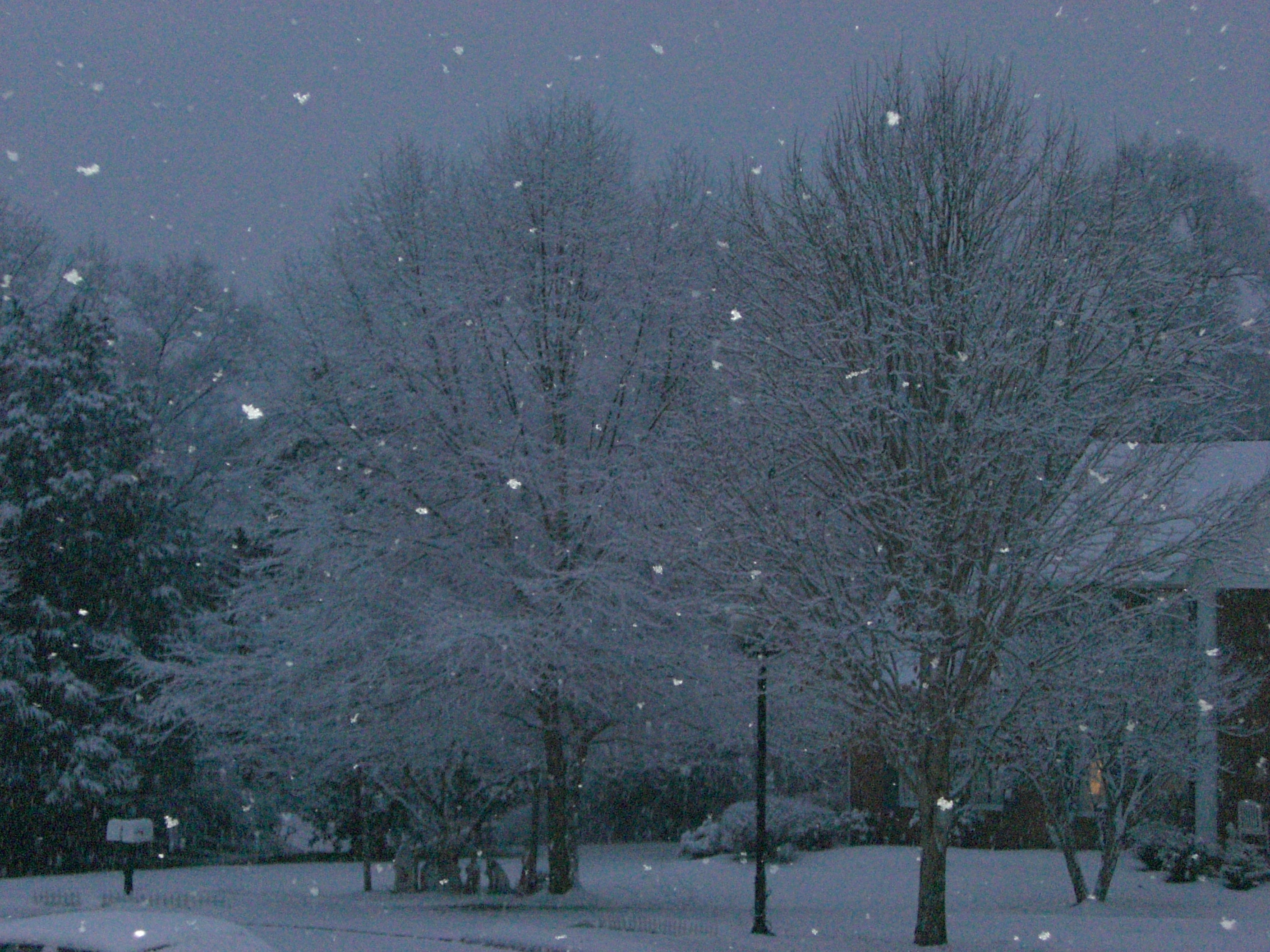
We’re on our third snow day these week and even Jesse is about ready to get back to school. Between these and the two or three we had before Christmas due to ice, I’m afraid we’re going to have to make up some of them, which is no fun. Because I have always lived in places where it snowed only once or twice a year and the snow only hung around for a day or two, I am more than ready for this to all be gone and for life to get back to “normal.” But temperatures are supposed to be fairly low all day and we’re still getting intermittent snow. I did see some sunshine for a little bit this morning, though!

Help for the “winter blues”

I’ve mentioned and I’ve seen others mention having trouble with the “winter blues.” The excitement of Christmas is over and the landscape is drab and dreary for the next several weeks. What can we do to lessen “the blues” this time of year? Here are a few ideas:

  • Start a project — building, sewing, some type of craft.
  • Bake cookies.
  • Curl up with a good book and a cup of your favorite hot drink.
  • Plan what you’ll plant in the spring.
  • Write — a letter, a blog post, an article. Or start that novel you’ve been dreaming about.
  • Look up your family history.
  • Do something with all those old photos you took before you got your digital camera.
  • Volunteer — check with hospitals, nursing homes, crisis pregnancy centers, etc.
  • Meet a friend for lunch or invite them over.
  • Experiment with a new recipe.
  • Work through a DVD series of a favorite program or one you missed.
  • Do a Bible study on “cold” or “snow” or “winter” or some topic you’ve wanted to study out.
  • Write a letter to one of those people you only hear from at Christmas.
  • Go through that stack of old recipes.
  • Start organizing….whatever it is you need to get organized. Just choose one area lest you get overwhelmed.
  • Color in a coloring book. Incredibly relaxing.
  • Take an online course.
  • Play uplifting music.
  • Start a fitness program.
  • Buy fresh or artificial colorful flowers.
  • Hang a birdfeeder and watch its visitors.
  • Count your blessings. Literally.
  • Choose a composer or artist and look up their work as well as information about them.
  • Sing
  • Look for the beauty in winter. John Updike’s poem “November,” from A Child’s Calendar, often comes back to me during winter. Everything except the “oldness of the year” applies to January:

The stripped and shapely
Maple grieves
The loss of her
Departed leaves.

The ground is hard,
As hard as stone.
The year is old,
The birds are flown.

And yet the world,
Nevertheless,
Displays a certain
Loveliness –

The beauty of the bone.

Remember the benefits of winter:

  • relief from the extreme heat and humidity of summer
  • rest from working outside (for most)
  • fewer bugs
  • fires in the fireplace
  • oven meals
  • winter sports
  • snow
  • some plants need the cold weather to develop in their life cycle
  • anticipation and greater appreciation of spring

Here are some quotes about winter:

The tendinous part of the mind, so to speak, is more developed in winter; the fleshy, in summer.Β  I should say winter had given the bone and sinew to literature, summer the tissues and the blood. ~John Burroughs

Spring, summer, and fall fill us with hope; winter alone reminds us of the human condition.Β  ~Mignon McLaughlin

Winter is the time for comfort, for good food and warmth, for the touch of a friendly hand and for a talk beside the fire:Β  it is the time for home. ~Edith Sitwell

One kind word can warm three winter months. ~Japanese Proverb

Thou hast set all the borders of the earth: thou hast made summer and winter. Psalm 74:17.

Any other ideas for combatting winter “blues”? Any other benefits of winter you can think of?

This post will be linked to “Works For Me Wednesday,” where you can find a plethora of helpful hints each week at We Are THAT family on Wednesdays.

The Week In Words

”"

Welcome to The Week In Words, where we share quotes from the last week’s reading. If something you read this past weekΒ  inspired you, caused you to laugh, cry, think, dream, or just resonated with you in some way, please share it with us, attributing it to its source, which can be a book, newspaper, blog, Facebook β€” anything that you read. More information is here.

A couple stood out to me from a Notable Quotes section of a recent issue of Frontline Magazine.

O what I owe to the furnace, fire, and hammer of the Lord. ~ Samuel Rutherford

So true — much as we resist them, there are things we can only learn via trials and tribulations.

Our Father refreshes us on the journey with some pleasant inns, but will not encourage us to mistake them for home. ~ C. S. Lewis

There are cozy spots in this life, but I need to remember “This world is not my home — I’m just passing through.”

This was from an Elisabeth Elliot e-mail devotional taken from a chapter titled “Spontaneity” from her book All That Was Ever Ours:

I wonder if spontaneity is not sometimes a euphemism for laziness… Isn’t it much easier not to prepare one’s mind and heart, not to premeditate, simply to have things (O, vacuous word!) “unstructured”?

If you leave a thing altogether alone in hopes that it will happen all by itself, the chances are it never will. Who learns to play the piano, wins an election, or loses weight spontaneously?

From the chapter “Some of My Best Friends Are Books” from the same book and author:

A reader understands what he reads in terms of what he is. As a Christian reader I bring to bear on the book I am reading the light of my faith.

Everything I read may not line up exactly with what I believe the Bible to be teaching, but I read it with Christian eyes and discernment and sometimes even see spiritual truth when the author hasn’t meant to share it. On the other hand, I don’t think that okays an “anything goes” mentality with reading. I’m still responsible for thinking on right things (which is hard to do if I am filling my mind with wrong things), and “All things are lawful for me, but all things are not expedient: all things are lawful for me, but all things edify not” (I Corinthians 10:23.) In fact, I am a little concerned about a friend who swoons over romances while her marriage crumbles (and I have to wonder if there is a connection) and whose language is becoming increasingly less Christlike and more vulgar while she reads books with that I personally wouldn’t be comfortable with. We do bring our frame of reference to bear on our reading, but our reading does influence us as well.

I have a few marked from Anne of Avonlea, but I think I will wait to post them until I review the book.

If you’ve read anything that particularly spoke to you that you’d like to share, please either list it in the comments below or write a post on your blog and then put the link to that post (not your general blog link) in Mr. Linky below. I do ask that only family-friendly quotes be included. I hope you’ll visit some of the other participants as well and glean some great thoughts to ponder.

And please β€” feel free to comment even if you don’t have quotes to share!

Have You Heard?

Another lovely new-to-me song from the Steve Pettit Team CD So High the Price.

Have You Heard?

Have you heard about Jesus? Do you know who He is?
He’s the very Son of God, He’s the King of Kings.
Have you heard of the gospel? Do you know what it is?
It tells us Jesus died for us to save us from our sins.

This is the best news that we could ever hear;
More than amazing, it drives out every fear.
By trusting in Jesus Christ and His saving sacrifice
We can be made new, we can be made new.

Have you heard of the promise God has made to us all?
That if we turn from our sinful ways and put our faith in His Son.
He will freely forgive us, He will wash us clean
And when we stand before His throne He will shout, “Welcome in!”

This is the best news that we could ever hear;
More than amazing, it drives out every fear.
By trusting in Jesus Christ and His saving sacrifice
We can be made new, we can be made new.

~ Words and music by Zach Jones

Laudable Linkage & Videos

Oddly, after a couple of weeks of not sharing interesting links I’ve seen, I only have a few. You’d think I’d have multitudes, but much of the blogosphere was fairly quiet over the holidays, and perhaps my reading was distracted enough that I didn’t think to save many. But here are a few:

8 Amazing Blogging Lessons from Albert Einstein, HT to Lisa Notes. The author takes quotes from Einstein and cleverly applies them to blogging.

52 Ways to Read and Study the Bible compiled by Semicolon. So many ways, and with all our electronic devices so many venues — it should be easier than ever.

A couple of years ago I compiled a list of resources and reasons for reading the Bible in Planning to read the Bible more this year?

Katrina at Callapiddar Days told of her first successful attempt at reading the Bible through in Part 1 dealing why she wanted to do so and finding a plan and Part 2 concerning how she succeeded this time, what she learned, and a few resources.

Lisa shares Why I am NOT reading the Bible through in a year, though she is still reading and shares tips for making it more effective.

One area where I’ve fallen short is memorizing. I did a lot in college and then in a children’s ministry we worked with, and those verses have pretty much stayed with me all these years (except I have trouble remembering the references) but not much at all since then. I’ve never memorized a whole book of the Bible. Some ladies at church are memorizing Ephesians, but they meet at a time that isn’t best for me and they are already a good ways into it. Lisa Notes shared a plan for memorizing Philippians by Easter: Partnering to Remember The 2011 Philippians Memory Moleskin.Β  Ann shares a plan for memorizing Colossians with 2 verses a week for a year with some more details and updates here. I am leaning toward the Colossians plan — 2 verses a week sounds very doable, and I have to admit the little booklet really appeals to me. They’ve set up a Facebook page as well.

Well, I guess I only thought I had just a few!

Just a couple more:

The worst gifts ever, HT to Challies. Though, I don’t know, that office chair looks good for a power nap. πŸ™‚

How Critical Thinking Saves Faith HT again to Challies, on the need to talk with young people and wrestle through their questions with them rather than cutting them off for even asking.

I’ve shared this before, but here is some fun you can have with your Christmas tree when you’re done with it. My guys used to love shooting off model rockets, so this really appealed to them.

And I can’t remember if I shared this here or not, but it just makes me happy:

Friday’s Fave Five

Welcome to Friday’s Fave Five, hosted by Susanne at Living to Tell the Story, in which we can share our favorite things from the last week. This has been a wonderful exercise in looking for and appreciating the good things God blesses us with. Click on the button to learn more, then go to Susanne’s to read others’ faves and link up your own.

1. Surprise Snow as the weather forecasters called it Wednesday. It started up in the late afternoon, stopped by nighttime, and the roads were clear with a one hour delay for school.

2. Computer access to libraries. I’ve been able in other places to look up and place a hold on a book online, but the system here even lets me renew a book online.

3. Harvest loaf cake. I usually make this in November or December but just never did this year. But I couldn’t let a winter go by without it! I was craving it and made some mini-loaves this week and sent one to Jeremy. I wasn’t sure how it would do after 2-3 days in the mail, but he said it tasted fine.

4. Back to routine. I love breaks in routine but by the time the break is over I am pretty well ready to get back to it.

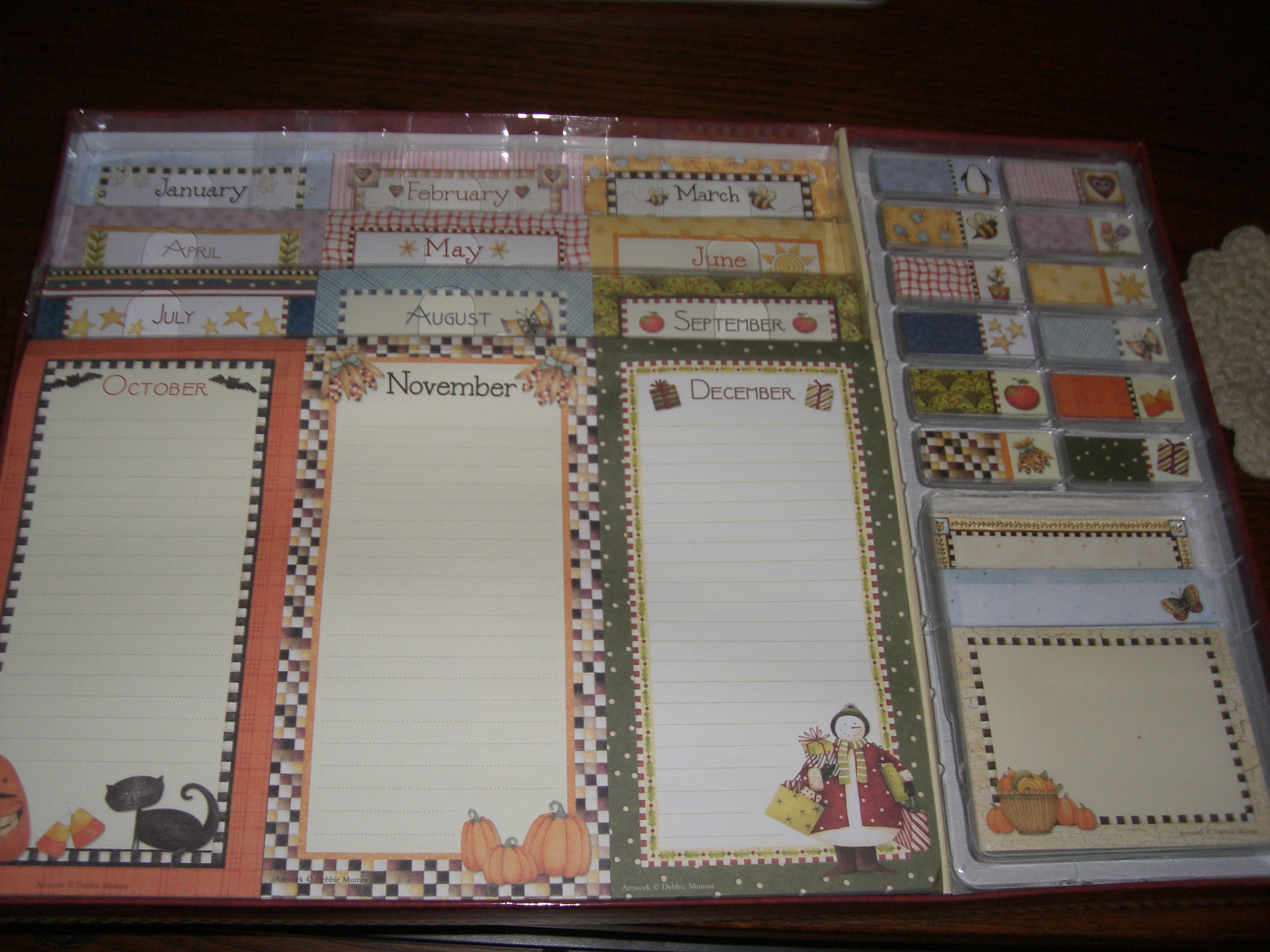
5. Notepads. I got this from my dear friend, Carol, just before Christmas, but I just unpacked the box yesterday.

I keep a magnetic notepad on the refrigerator all the time for grocery and to-do lists, and I use the little tab ones to mark places in books I want to remember. Plus I use post-it notes all the time. And to have them all really cute like this is so much fun! I have my January pad on the frig now!

Edited to add: Someone asked me who the artist or designer was for the notepads. I meant to take a picture with the label on, but I forgot. The designer is Debbie Mumm. I did see she had the notepads on her site here but they are out of stock. I don’t know if my friend ordered them online or got them in a store.

They’re forecasting a heap of snow here this weekend — we’ll see. I just made my run to the store this morning, so we’re pretty well set. Already we’ve gotten much more snow here that we did in SC, but I don’t know if that’s normal for TN or if they’re getting more than usual — need to ask the neighbors. But, whether you have snow or sunshine, I hope you have a great weekend.

Flashback Friday: Discipline

Mocha With Linda hosts a weekly meme called Flashback Friday. She’ll post a question every Thursday, and then Friday we can link our answers up on her site. You can visit her site for more Flashbacks.

The prompt for today is:

Were your parents strict, permissive, or somewhere in-between when you were growing up? Did you tend to be compliant or rebellious? What did you tend to get in trouble for doing? How did your parents discipline/punish you – spankings (and what did they use when spanking), revoking privileges, grounding, time-outs or some other manner? Did both parents handle punishment or did one tend to do it more than the other? (And which one was it?) Is there anything that you have admitted doing since you’ve been an adult that you got away with as a child? Or is there anything you were punished for that you have since learned your parents had to try hard not to laugh while they were meting out your discipline? If you are a parent, what is something you have done or not done (or vowed you would never do) as a result of your growing-up experiences with discipline?

My father could be overly strict and quite harsh, and my mom was a little more permissive when she could be without going against his wishes. Maybe she was trying to make up for him, but I think she was just more that way in personalty anyway. I think that, rather than suffering from mixed signals, her softness kept me from a terribly negative response to my father, and his strictness kept me from giving way to my natural inclinations. I tended to be pretty compliant, both because I was afraid of punishment, but also because I loved my parents and wanted to please them. I tend to be a rule-keeper by nature, though of course I was willful and disobedient sometimes. My only really rebellious phase was around the time just before and after my parents’ divorce — I did some pretty stupid things then and I am so glad the Lord protected me from serious consequences and from continuing down that road.

I don’t recall that they ever used time-outs. I think they did revoke privileges or ground my siblings — or maybe that was after my mother and step-father got together. I don’t recall ever having privileges revoked or being grounded myself. The primary method of disciple was spanking, although yelling and ridicule were natural reactions of my father’s. His discipline was inconsistent and sprang up suddenly like a summer thunderstorm. Both parents believed that any cuddling or hugging after spanking took away the effect of it. My dad primarily did the disciplining with his belt. I don’t remember ever being spanked by my mom though she must have when I was little. My mom and I could talk about the whys of an issue.

You might be surprised that my husband and I spanked our kids as well, but we handled it differently. We believed spanking was Scriptural (still do) but needed to be handled carefully. We saved it for deliberate, willful disobedience and not childish forgetfulness or accidents. We tried never to spank in anger — thus the “Go sit on the bed and think about what you’ve done until I come up” was as much for our benefit as for theirs. We always sat down and talked very calmly with them first, both so that we understood what had happened — sometimes as a parent you can walk in on a situation and think something has happened that hasn’t — and also so that they understood why they were being punished. We brought up any Scriptural principles involved in what they had done. We spanked only on their bottoms, using a hand or wooden spoon, until we sensed a difference in attitude. Then we hugged, told them how much we loved them, and put the matter behind us. We always tried to leave the encounter on good terms with each other.

I didn’t believe the phrase, “This hurts me more than it does you” until I became a parent. But I’ve seen the fruit of lives that have almost no self-restraint, and I wanted them to learn right from wrong and obedience. I’m sure there were times I let things go that should have received punishment, but overall I felt it would be harmful to let them get by with deliberate disobedience and defiance. One thing I liked about spankings was that it dealt with the issue and then got it over with. Being sent to one’s room is not much of a punishment for kids these days, with all they have to entertain themselves there, and groundings, to me, just dragged it all out that much longer and caused more resentment. My kids always resented a simple swat — sometimes I did that when I felt the issue didn’t warrant a full-fledged spanking, but that usually made them angry or hurt their feelings when an actual spanking didn’t.

An older father with a whole brood of very sweet grown kids and grandkids once told me that if you discipline your kids as you should when they’re young, you don’t have to very much as they get older, and I have found that to be true. When obedience and respect is the tone of the home, that spills over into situations outside the home and the pre-teen and teen years. I don’t think we spanked our oldest and youngest past the age of 4-6 or so; the middle one a few years more. Spankings did not occur all that often. Mostly we talked (they may have said lectured πŸ™‚ ) about what was wrong and why and what they needed to do about it. I don’t recall ever using a time-out or grounding. I don’t think we ever even revoked privileges: I threatened to when we had one computer and they all needed to take turns with it. Actually I think I threatened to make a schedule for computer use if they couldn’t find a peaceful way to handle it. And I think a few times if they were fighting over something, I put it away for a while. We did incorporate dealing with natural consequences — if they broke or spilled something, they weren’t punished but they had to help clean it up or fix it, because that’s just life: even if you don’t mean to cause a problem of some kind, if you do, then you need to be willing to correct it. I don’t think we ever used chores as punishment, either — chores were just a natural part of life.

I don’t recall hearing about about my parents laughing over any disciplinary incidents later, but I do remember one time when my family was all together my sisters sharing hilarious stories of things that happened that my mom and step-father never knew about (they were there and laughed, too.)

With my own kids, once my husband was spanking my middle son with a wooden spoon when it broke right in the middle of things. They both started laughing and the spanking was over. Another time we were in the grocery store when my middle son was a pre-schooler, and we saw a package of wooden spoons. He pointed to them and said, “Look, Mommy, spanking spoons!” They must not have traumatized him too much!

Proverbs 29:17 says, “Correct thy son, and he shall give thee rest; yea, he shall give delight unto thy soul.” I see so many parent-child relationships which are not restful at all, with a constant struggle between parent and child. I know some personalities are harder to discipline: I recommend James Dobson’s Strong-Willed Child.

I mentioned before believing that spanking was Scriptural and I wanted to expand on that a bit. Proverbs 13:24 says, “He that spareth his rod hateth his son: but he that loveth him chasteneth him betimes.” It takes effort and carefulness and thoughtfulness to discipline in a right way, but it’s not love to let a child get away with everything, or to make excuses for him, or to constantly nag him. The NIV version of Proverbs 23:13-14 say, “Do not withhold discipline from a child; if you punish them with the rod, they will not die. Punish them with the rod and save them from death..” The KJV uses the word “beat,” but it doesn’t mean it like we think of that word today: it’s not advocating abuse or the parent being out of control. Proverbs 19:18 says, “Chasten thy son while there is hope, and let not thy soul spare for his crying.”

Many passages compare God’s chastening of His children with a father’s loving discipline of his son. Here’s one from Hebrews 12:

5And ye have forgotten the exhortation which speaketh unto you as unto children, My son, despise not thou the chastening of the Lord, nor faint when thou art rebuked of him:

6For whom the Lord loveth he chasteneth, and scourgeth every son whom he receiveth.

7If ye endure chastening, God dealeth with you as with sons; for what son is he whom the father chasteneth not?

8But if ye be without chastisement, whereof all are partakers, then are ye bastards, and not sons.

9Furthermore we have had fathers of our flesh which corrected us, and we gave them reverence: shall we not much rather be in subjection unto the Father of spirits, and live?

10For they verily for a few days chastened us after their own pleasure; but he for our profit, that we might be partakers of his holiness.

11Now no chastening for the present seemeth to be joyous, but grievous: nevertheless afterward it yieldeth the peaceable fruit of righteousness unto them which are exercised thereby.

I wanted to emphasize that last verse: “Now no chastening for the present seemeth to be joyous, but grievous: nevertheless afterward it yieldeth the peaceable fruit of righteousness unto them which are exercised thereby.” That’s the goal.