Be Encouraged: Wiersbe on 2 Corinthians

The church in Corinthians had lots of problems. 2 Corinthians is actually the fourth letter Paul wrote to the church at Corinth. His second letter to them is our 1 Corinthians. Some of Paul’s opponents had invaded the church and stirred up rebellion. A previous visit by Paul to deal with the issues had not gone well. Paul left and then sent by Titus a “severe” letter. He rejoiced that many in Corinth repented. So in this letter, Paul wanted to encourage those who had repented but warn those who had not.

He also had to defend his apostleship from various charges.

Plus, the Corinthians had promised some time before to send an offering for the poor in Jerusalem, but had not done so yet. Paul planned to pick up their donations to take along with what he had collected from other churches, so he encouraged them to give and give cheerfully. The offering would not only help meet material needs, but would help unite the Jewish and Gentile congregations.

Dr. Warren W. Wiersbe’s short commentary on 1 Corinthians is Be Encouraged (2 Corinthians): God Can Turn Your Trials Into Triumphs.

In the first chapter, Wiersbe writes:

One of the key words in this letter is comfort or encouragement. The Greek word means “called to one’s side to help.” The verb is used eighteen times in this letter, and the noun eleven times. In spite of all the trials he experienced, Paul was able (by the grace of God) to write a letter saturated with encouragement.

What was Paul’s secret of victory when he was experiencing pressures and trials? His secret was God. When you find yourself discouraged and ready to quit, get your attention off of yourself and focus it on God. Out of his own difficult experience, Paul tells us how we can find encouragement in God (p. 18).

Wiersbe also points out:

The words comfort or consolation (same root word in the Greek) are repeated ten times in 2 Corinthians 1: 1–11. We must not think of comfort in terms of “sympathy,” because sympathy can weaken us instead of strengthen us. God does not pat us on the head and give us a piece of candy or a toy to distract our attention from our troubles. No, He puts strength into our hearts so we can face our trials and triumph over them. Our English word comfort comes from two Latin words meaning “with strength.” The Greek word means “to come alongside and help.” It is the same word used for the Holy Spirit (“ the Comforter”) in John 14—16.

God can encourage us by His Word and through His Spirit, but sometimes He uses other believers to give us the encouragement we need (2 Cor. 2: 7–8; 7: 6–7) (p. 20).

Dr. Wiersbe also shares that “There are ten basic words for suffering in the Greek language, and Paul uses five of them in this letter” (p. 20).

I won’t go point by point through Corinthians–Wiersbe includes an outline as well as discussion. But some of the most well-known passages in this book of the Bible are these: God comforts us in all our affliction and we comfort others (1:2-7); when we behold God, we become more like Him (3:18), “we have this treasure in jars of clay, to show that the surpassing power belongs to God and not to us” (4:7-12), though outwardly we’re wasting away, inwardly we’re renewed day by day, and our “light momentary affliction” prepares for us “an eternal weight of glory beyond all comparison” (4:16-18), the ministry of reconciliation (5), Now is the day of salvation (6:2), we’re God’s temple and shouldn’t be yoked up with darkness (6:14-18), godly grief vs. worldly grief (7:5-12), grace giving (8:1-15), the cheerful giver, sowing and reaping (9:1-15), “God is able to make all grace abound to you, so that having all sufficiency in all things at all times, you may abound in every good work” (9:8), Paul’s thorn in the flesh, God’s strength in our weakness, (12:7-10), “Examine yourselves, to see whether you are in the faith” (13:5).

Some other quotes from Wiersbe that stood out to me:

The word sufficiency means “adequate resources within” (see Phil. 4: 11). Through Jesus Christ, we can have the adequacy to meet the demands of life. As Christians, we do need to help and encourage one another; but we must not depend on one another. Our dependence must be on the Lord. He alone can give us that “well of water” in the heart that makes us sufficient for life (John 4: 14) (p. 117).

God did not give Paul any explanations; instead, He gave him a promise: “My grace is sufficient for thee.” We do not live on explanations; we live on promises. Our feelings change, but God’s promises never change. Promises generate faith, and faith strengthens hope (p. 160).

How do people measure the ministry today? By powerful oratory or by biblical content? By what the media says or by Christian character? (p. 169).

Paul prayed for their perfection, which does not mean absolute sinless perfection, but “spiritual maturity.” The word is part of a word family in the Greek that means “to be fitted out, to be equipped.” As a medical term, it means “to set a broken bone, to adjust a twisted limb.” It also means “to outfit a ship for a voyage” and “to equip an army for battle.” In Matthew 4: 21, it is translated “mending nets.”

One of the ministries of our risen Lord is that of perfecting His people (Heb. 13: 20–21). He uses the Word of God (2 Tim. 3: 16–17) in the fellowship of the local church (Eph. 4: 11–16) to equip His people for life and service. He also uses suffering as a tool to equip us (1 Peter 5: 10). As Christians pray for one another (1 Thess. 3: 10) and personally assist one another (Gal. 6: 1, where “restore” is this same word perfect), the exalted Lord ministers to His church an makes them fit for ministry (pp. 170-171).

Sometimes the minister of the Word must tear down before he can build up (see Jer. 1: 7–10). The farmer must pull up the weeds before he can plant the seeds and get a good crop. Paul had to tear down the wrong thinking in the minds of the Corinthians (2 Cor. 10: 4–6) before he could build up the truth in their hearts and minds. The negative attitude of the Corinthians made it necessary for Paul to destroy, but his great desire was to build (pp. 171-172).

2 Corinthians closes with a well-known benediction: “The grace of the Lord Jesus Christ and the love of God and the fellowship of the Holy Spirit be with you all” (13:14).

Wiersbe says of this verse:

If each believer is depending on the grace of God, walking in the love of God, and participating in the fellowship of the Spirit, not walking in the flesh, then he will be a part of the answer and not a part of the problem. He will be living this benediction—and being a benediction to others! (p. 174).

Amen.

Laudable Linkage

Here’s another collection of reads that especially caught my eye this week.

Meat From the Sky and the Resurrection’s Plausibility, HT to Challies. “No one knows for certain how a half-bushel of raw meat fell from the heavens. The very idea of a meat shower seems absurd. And yet there are good reasons to think it really happened. Two of them can also help us trust the veracity of Jesus’s resurrection.”

One of the Most Overlooked Arguments for the Resurrection, HT toChallies. “It is an often overlooked fact that provides the necessary context for the discussion. That fact is simply this: the earliest Christians came to believe, against all odds and against all expectations, that Jesus of Nazareth had been raised from the dead.”

More Than Doing: Categories for Applying God’s Word. “But how do we do Bible texts like those found in the book of Judges? How do we do narratives, historical accounts, chronologies, prophetic literature, or Old Testament laws written for the people of Israel? How do we apply God’s Word when there’s nothing in the passage for us to do?”

Was Jesus Punctual? HT to Challies. “The English phrase ‘don’t waste your time’ has an equivalent in Spanish: ‘no pierdas el tiempo’, which strictly translated means ‘don’t lose [the] time’. There is, nonetheless, a subtle difference between the English and the Spanish. Whereas a Westerner feels they can control time (by deciding whether to waste it or not), a Latin American feels they cannot control time (it gets lost).”

Seedlings Need the Weather, HT to Challies. “When we asked a gardener friend, he told us that the absence of difficulty was not the solution to their problem. It was the problem. The trouble for our seedlings—the trouble that made them weak—was that they had no trouble. Without at least some exposure to the elements, they would never grow strong.”

Who Will Speak Up for the Transgender Kid? HT to Challies. “This is the brutal reality of ‘gender affirming care.’ It’s not really gender affirming. It’s body destroying. And yet, our culture appears to be so under the spell of transgender propaganda that even some parents are going along with barbaric medical experiments performed on their own children. Some parents are manipulated into it against their better judgment after gender counselors put before them an ultimatum.”

Mother Yourself Out of a Job: Nurturing Children Toward Independence. “The journey from dependent child to independent adult is never without its pulling and stretching on both sides. As young adult children relinquish their need for hands-on parenting and take up responsibility for their own lives, there is a mirrored relinquishment for which we, as their loving parents, usually need plenty of grace.”

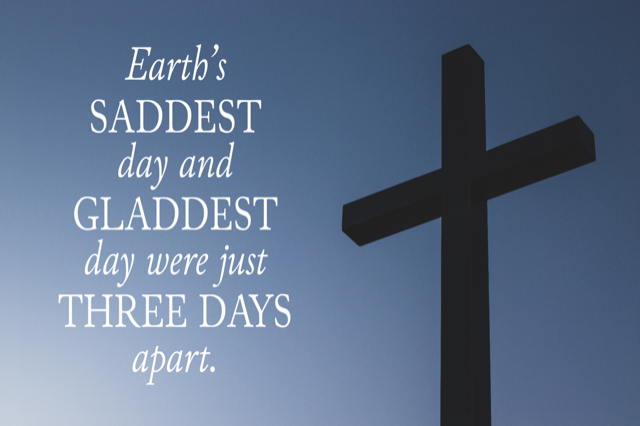
Finally, I don’t know who originally said this quote, but it’s one of my favorites this time of year:

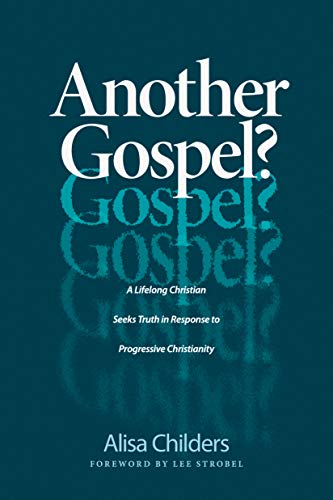
Another Gospel? A Lifelong Christian Seeks Truth in Response to Progressive Christianity

Alisa Childers’ faith wasn’t shaken by an atheist professor or a New Age neighbor.

Her beliefs were dismantled by her pastor.

She knew and trusted him. He had invited a select group of “out of the box thinkers” to a special class, a “safe zone to process our doubts and questions.” Alisa was surprised when he began to question and then to take apart the doctrines she had always believed.

“I wouldn’t hear the term progressive Christianity until years later. But it was clear that this group of people wanted to ‘progress’ beyond the Christianity they had known. They were going through what would practically become a rite of passage in this new and flourishing movement: deconstruction. In the context of faith, deconstruction is the process of systematically dissecting and often rejecting the beliefs you grew up with” (p. 24).

There were things that bothered Alisa about Christianity as it had always been presented, things like massive altar calls where people streamed forward. Did those people know what they were doing? Did their decision “stick?”

But those things didn’t cause her to question her foundational beliefs. Her pastor’s class did. She realized she knew what she believed, but not why. She had grown up in a Christian family who actively ministered to others. But her faith was “intellectually weak and untested” (p. 5).

“When progressive Christianity first entered the scene, its proponents raised some valid critiques of evangelical culture that the church needed to examine and reevaluate. But those progressives who reject essential teachings—like the physical resurrection of Jesus—can confuse unsuspecting Christians and kick the foundation out from under them” (p. 8).

This class led her into a dark pit, “a spiritual blackout—a foray into darkness like I’d never known” (p. 8). What if everything she had ever believed was false? Another girl in the class stood next to her in choir practice one day and said, “It’s funny that we’re all singing these songs and none of us have any idea what we believe!” (p. 28).

That wasn’t good enough for Alisa. “When I have doubts about my faith, or deep nagging questions that keep me up at night, I don’t have the luxury of finding ‘my truth’ because I am committed to the truth. I want to know what is real. I want my worldview (the lens through which I see the world) to line up with reality. God either exists, or he doesn’t. The Bible is his Word, or it’s not. Jesus was raised from the dead, or he wasn’t. Christianity is true, or it isn’t. There is no ‘my truth’ when it comes to God” (p. 10).

“I wanted to progress in my faith . . . in my understanding of God’s Word, my ability to live it out, and m relationship with Jesus. But I didn’t want to progress beyond truth” (p. 25).

Alisa prayed for God to send her a lifeboat. And He did, sending more than one. Alisa took time to study in detail the claims of the foundational doctrines of Christianity. It was a long process. Sometimes her study brought up more questions.

“Slowly and steadily, God began to rebuild my faith. The questions that had knocked the foundation out from under my beliefs—the ones I had never thought to ask, the ones I didn’t know existed—were not simply being answered. They were being dwarfed by substantial evidence and impenetrable logic so robust that I felt like a kid in a candy store—who had just found out that candy exists” (p. 227).

Her faith didn’t look exactly as it had before. She corrected some beliefs and determined some, while important, weren’t essential. But her beliefs in the fundamental truths of historic Christianity were now on a firm foundation.

Another Gospel: A Lifelong Christian Seeks Truth in Response to Progressive Christianity is Alisa’s testimony and the result of her study. She takes a great deal of information and distills it to its essentials in an understandable way.

She quotes from progressive Christianity’s authors to show what they believe and how it differs from historic Christianity. Then she draws from her extensive research to share why she believes the evidence supports historic Christianity.

There’s so much I wish I could tell you and quote from this book. But I’ll touch on just a few issues.

One big difference between historic and progressive Christianity is their views of Scripture. Alisa spends three chapters on the different threads of thought in regard to the Bible and the abundant proof that it is accurate and reliable and authoritative.

Other major differences involve who Jesus is and why He came. Some call the idea of Jesus dying for our sins “cosmic child abuse.” But Jesus said He willingly gave His life. Atonement wasn’t an idea borrowed from primitive religions. It was worked into the fabric of the OT sacrifices and symbols and came into fruition in Jesus’ death for our sins. Many NT books expound on it.

If more churches would welcome the honest questions of doubters and engage with the intellectual side of their faith, they would become safe places for those who experience doubt. If people don’t feel understood, they are likely to find sympathy from those in the progressive camp who thrive on reveling in doubt. In progressive Christianity, doubt has become a badge of honor to bask in, rather than an obstacle to face and overcome (pp. 51-52).

As I navigated through my faith crisis, I realized that it’s not enough to simply know the facts anymore . . . we have to learn how to think them through—to assess information and come to reasonable conclusions after engaging religious ideas logically and intellectually. We can’t allow truth to be sacrificed on the altar of our feelings. We can’t allow our fear of offending others to prevent us from warning them that they’re about to step in front of a bus (p. 11).

The progressive wave that slammed me against the Rock of Ages had broken apart my deeply ingrained assumptions about Jesus, God, and the Bible. But that same Rock of Ages slowly but surely began to rearrange the pieces, discarding a few and putting the right ones back where they belonged (p. 9).

Those of you who have read here for a while know that I am not given to gushy superlative statements. But this is one of the most important books I have ever read. I had seen some of the things Alisa described mentioned here and there, and her book helped those pieces click into the bigger picture.

These doctrines matter. There are many areas where we can differ from other Christians and give each other grace. But it’s not enough to have a nebulous belief in a generic Jesus. It’s vital that we know Who and what we believe in and why.

I strongly encourage you to read this book. It will help you discern the threads of progressive Christianity. It will strengthen your own faith and its foundations. It will help you minister to others.

(I often link up with some of these bloggers.)

Laudable Linkage

Here’s another round of good reads:

Do Christians Still Have Evil Desires? HT to Challies. “So, is the ground of judgment the acting out of sins, beyond merely harboring the impulse within? Or is this very tendency in us, a diminished but still present earthly desire towards sin’s allure, also ground for eternal judgment? Or is putting to death sin the complete eradication of evil desires from in us? Or is it (by grace) tamping down those desires that will always be there, but not acting out consistently on those impulses? If so, how would that apply to not just the acted-out sins, but specifically to ‘evil desires’?” John Piper answers these in a very helpful way.

Are You an Addict? “Chemicals are one of the ways that people, even God’s people, unbiblically cope with life’s trials. Others might immerse themselves in gaming, sex, or fantasy entertainment. Others use exercise, current events, food, dieting, obsession with sports teams, and even sleeping to escape from life’s realities. Many of these are good things, but they are being used in the wrong way. I had to take a long look at myself, and I found some unpleasant things that I had not even considered a problem before. I had to ask myself some difficult questions.”

Is There an Easy and Transformational Way to Study the Bible? “My dad was a kind man, but he demanded respect and obedience. When he spoke, he didn’t mean, ‘Hear my words, but do whatever you want.’ He meant, ‘Hear my words, understand what I’m saying, and respond in proper obedience.’ Our kind heavenly Father calls us to the same, if not a greater, level of hearing.”

6 Wrong Ways to Approach Difficult Passages, HT to Knowable Word. “It doesn’t take long for a Christian who’s studying the Bible to come across challenging passages. When we do, we should always remember the basics of interpretation: looking for the author’s intended message, reading it in context and with the whole of Scripture in view, even considering how believers throughout history have interpreted it. But following those principles isn’t enough. There are still common mistakes we can make when we study—or seek to teach from—difficult texts in Scripture.”

The Mustard Seed Mum: Pressured to Be Perfect? HT to Challies. “It’s not a competition, even if it feels like it. So what if your child’s best friend’s mother bakes brownies better than you? You’re the best mama for your kids. God put you in a position to look after these precious children. You can trust Him to help you do it.”

Looking for Contentment? It’s Not What You Think. “The more I reflect upon Paul’s letters, the more the Lord continues to refine my incomplete notions of contentment. Paul is not carefree, unburdened, and surrounded by trouble-free relationships. In fact, considering the larger picture of Paul’s ministry gives me a fuller picture of what contentment is by gaining insight into what it is not.”

Is There Such Thing As Random? How God Orchestrates People In His Perfect Timing. HT to Challies. “We don’t choose our moments of suffering, or the times we are pressed into service; they usually come on suddenly and without warning.”

Touch This Tree and You’ll Want to Die, HT to Challies. An interesting and awful natural phenomenon and a good object lesson.

How to Turn a Clique Inside Out, HT to Challies. “Close friendships are a wonderful blessing. But who are they blessing? In a clique, the blessings of friendship stay locked inside a tight circle of friends. The friends themselves tend not to notice, because they are too busy enjoying their own close relationships with each other. But for the people looking in from the outside, the view is not as pretty. They see backs, not faces.”

A Time to Hustle and a Time to Stroll. We tend one way or the other, but there’s a time for each.

And to end with a smile, I had not seen this particular Geico commercial about living in a Victorian house until Karen Wittemeyer shared it.

Happy Saturday!

Be Restored

The second book of Samuel covers King David’s reign in Israel. Warren Wiersbe offers insights and helps for our reading 2 Samuel in his commentary Be Restored (2 Samuel & 1 Chronicles): Trusting God to See Us Through.

David first shows up in 1 Samuel, where Samuel finds him as a young shepherd and anoints him king after Saul fails. Then David has his encounter with Goliath, becomes a seasoned warrior, and flees from Saul’s murderous jealousy for many years.

David appears in the beginning of 1 Kings, where he sets up Solomon to take over after he dies.

1 Chronicles documents David’s reign as well, including his preparations for the temple that he was not allowed to build, but that Solomon would.

But 2 Samuel begins with David’s finally coming into his full kingship and ends with his final battles, a list of his “mighty men,” and his “last words.”

Within the overarching progression of God’s Word and purposes, most notable in this book is the covenant God made with David that He would establish David’s line as an everlasting kingdom and that David’s son would build a house for His name: the temple which would be the centerpiece of Israel’s worship system for years to come. Ultimately David’s descendants would culminate in the Messiah, Jesus Christ, the everlasting King. Jesus is sometimes called “the Son of David.”

David is a favorite character of many, with his rags-to-riches story of the shepherd boy who became a king, his unabashed faith that God would use him to take care of Goliath, his earnestness in following the Lord, his outpouring of his heart in so many psalms that we can identify with.

David was never perfect, but he was teachable and usually readily admitted when he was mistaken.

Then came his fall with Bathsheba. Instead of turning away, as Joseph did when tempted, David continued to entertain the thought of the beautiful woman he had seen, until he called for her and lay with her. Then when she became pregnant, David tried to manipulate her husband, Uriah, one of his mighty men, to go home so the baby would be thought to be his. But Uriah was honorable and would not partake of the pleasures of home while his brothers were on the battlefield. So David arranged to have Uriah put in the hottest part of the battle, where he was killed.

When David laid aside his armor, he took the first step toward moral defeat, and the same principle applies to believers today (Eph. 6: 10–18). Without the helmet of salvation, we don’t think like saved people, and without the breastplate of righteousness, we have nothing to protect the heart. Lacking the girdle of truth, we easily believe lies (“We can get away with this!”), and without the sword of the Word and the shield of faith, we are helpless before the enemy. Without prayer we have no power. As for the shoes of peace, David walked in the midst of battles for the rest of his life. He was safer on the battlefield than on the battlement of his house (p. 83).

David’s house was in turmoil for many years after that. God forgave him when he repented (Psalm 51), but there are consequences even for forgiven sin.

All during David’s months of silence, he had suffered intensely, as you can detect when you read his two prayers of confession (Ps. 32 and 51). Psalm 32 pictures a sick old man instead of a virile warrior, and Psalm 51 describes a believer who had lost almost everything—his purity, joy, witness, wisdom, and peace—a man who was afraid God would take the Holy Spirit from him as He had done to Saul. David went through intense emotional and physical pain, but he left behind two prayers that are precious to all believers who have sinned (p. 91).

Chastening is not punishment meted out by an angry judge who wants to uphold the law; rather, it’s difficulty permitted by a loving Father who wants His children to submit to His will and develop godly character. Chastening is an expression of God’s love (Prov. 3: 11–12), and the Greek word used in Hebrews 12: 5–13 means “child training, instruction, discipline” (p. 92).

The next-to-last chapter of 2 Samuel contains David’s “last words”—not the last words of his that we see in Scripture, but probably a psalm written near the end of his life. Wiersbe suggests that since the psalm’s subject is godly leadership, it may have been written for Solomon, who would succeed David as king. In verses 3-4, David writes: “The God of Israel has spoken; the Rock of Israel has said to me: When one rules justly over men, ruling in the fear of God, he dawns on them like the morning light, like the sun shining forth on a cloudless morning, like rain that makes grass to sprout from the earth.” Wiersbe comments that godly leadership “is an awesome responsibility. It demands character and integrity (‘just’ = righteous) and a submissive attitude toward the Lord (‘the fear of God’). Without righteousness and the fear of God, a leader becomes a dictator and abuses God’s people, driving them like cattle instead of leading them like sheep” (p. 183). Wiersbe expands:

David used a beautiful metaphor to picture the work of the leader: rain and sunshine that together produce useful fruit instead of painful thorns (23: 4–7) (p. 183).

With God’s help, leaders must create such a creative atmosphere that their colaborers will be able to grow and produce fruit. Ministry involves both sunshine and rain, bright days and cloudy days; but a godly leader’s ministry will produce gentle rain that brings life and not storms that destroy. What a delight it is to follow a spiritual leader who brings out the best in us and helps us produce fruit for the glory of God! Unspiritual leaders produce thorns that irritate people and make progress very difficult (2 Sam. 23: 6–7) (pp 183-184).

With all his faults and failures, David was, for the most part, such a leader. How we need such leaders today.

Laudable Linkage

Happy Saturday! Here are some good reads I have discovered online recently.

Don’t Waste Your Experience, HT to Story Warren. “In the forums of The Habit Membership, Carey Christian recently posted an essay she had written about her experience as a survivor of the Columbine High School shooting . . . She survived by hiding with classmates in a locked and darkened office for three hours. (You can read the whole essay here.) The heart of the essay, however, is not those three hours of immediate peril, but the fifteen years after.” “It takes time to know what things mean. Writing and reflecting greatly improves your chances of learning what there is to learn from your life.”

Bible Reading Blues? Study Your Stop. “One of the most important questions a Bible reader can ask is what made her stop and walk away midway through. Think back to the last time you abandoned your Bible reading plan—it may have been as recently as this morning. Find your Bible and open to the page where you stopped reading; let’s figure out what went wrong.”

Should Parents Talk to Their Kids About Scary World Events? HT to Story Warren. “Since this digital age has made it virtually impossible to shield our children from disturbing news, parents have no choice but to address the issues head-on. With God’s help, we can provide balance and truth that will empower kids to walk in freedom from fear. Here are some tips to use when talking to children about scary world events.”

The Indispensable, Enduring, and Intervening Work of the Spirit, also from the Story Warren. “Much like the disciples, our heartaches can readily consume our perspective, hijack our story, and overshadow the truth of who God is. When we’re in the midst of hard circumstances, relinquishing our expectations of how things ought be feels frightening and vulnerable. We choose instead, to numb pain, worry obsessively our way through uncertainty, and manipulate people and our environment for a desired outcome. However, what if our insistence on control and holding tightly to our misplaced securities—such as health, finances, work, successes, giftedness, and relationships—hinder us from hearing Jesus? And what if we miss his tender care and reassuring comfort for us?”

Back to the Hospital: A Story of God’s Faithfulness, HT to Challies. A wonderful story of a young woman finding a way to minister as a patient in a mental health hospital.

How Heroes of the Bible Build Faith and Courage in Your Son. “A right understanding of biblical heroes provides a model for many desirable traits that we long for and pray for in our sons. But the Bible is a book about God, not a self-help manual. Scripture provides the faithful reader with a blueprint not just for good behavior, but for godliness.”

Are You Principled or Just a Contentious Jerk? HT to Challies. “The apostle Paul says ‘an overseer must be . . . not quarrelsome’ (1 Tim. 3:2–3). Yet in my experience, quarrelsome people often hide behind the excuse, ‘I’m just principled’ or ‘I’m standing up for the truth when no one else will.’”

When He Loves Someone Else. I don’t know if I have ever seen this topic addressed, but this is a good treatment of it. I don’t remember this incident from Corrie ten Boom’s life—it’s been way too long since I’ve read The Hiding Place.

Busyness . . . God’s Way. “In our hustle culture, the term ‘busy’ often gets a bad rap (and understandably so – sometimes we just flat out are too busy with misplaced priorities!). But just because we aren’t called to hustle and strive and be workaholics doesn’t mean it’s automatically wrong to ‘be busy’. It all comes down to what we are busy doing.”

Finally, this is a cute little film:

Laudable Linkage

IMG_0195

Welcome to my almost weekly list of good reads found around the Web.

This Dying Young Woman Has a Message for Us, HT to Challies. “Brooklyn may face dark moments, but they are never so dark that the light of Christ does not breakthrough. Along with telling her story, she wants to speak directly to us, and even when she wants to tell us hard truths, her sense of humor steps in to help us swallow the medicine. ‘I’m sick. Soon to die. But so are you. I’m just doing it faster.'” Brooklyn did pass away March 1.

Truth in Small Bites Is Truth Nonetheless. “When life takes a turn, most of us tend to push Bible reading aside until our circumstances return to normal. If you’re not able to sit down at your kitchen table for a quiet hour of in-depth study, you don’t even crack open God’s Word. Somewhere along the way, you’ve told yourself that if you’re not able to feast, you shouldn’t eat at all, not realizing that a handful of almonds in the middle of the night is far better than allowing your soul to starve.

Sexual Sin Is Not Inevitable, HT to Challies. “God never commands us to do anything without providing the resources to obey by the power of the Holy Spirit.”

Death, Miracles, and Tears from a missionary in Cameroon, HT to Challies. “About three years ago I took a girl in our village named Mami to get an ultrasound. At the clinic I met her boyfriend named Koo who was visibly concerned about her pregnancy. So much so that he made a deal with God: if his baby survived, he would dedicate his life to the Lord.”

The Friend Who Sharpens Me, HT to Challies. “While it’s great to have friends we agree with theologically and mentors who can teach us more about the historical faith we hold to, I’m learning that it’s important to make friends with those I disagree with. It’s important to learn from those with a different viewpoint than me.”

Tell Me a Story? “There are many nights when both Dan and I draw a complete blank. Four sets of eyes stare at us longingly as we frantically rake our minds for something to say, only to come up as empty as one of Pooh’s honey jars. Over the years we have developed a strategy for handling situations like this. It’s easy to implement, and it has never failed.”

This is a good reason to get those dust bunnies when they’re small and few. 🙂

Happy Saturday!

Be Successful: 1 Samuel

The book of 1 Samuel in the Bible is something of a bridge between eras in Israel’s history. Samuel himself is something of a bridge. He’s the last of the judges. He’s a prophet. He anoints two different kings. He oversaw the transition between Israel as a group of tribes in which everyone “did that which was right in his own eyes” (the theme of Judges) to Israel as a unified nation under a king.

But the transition was not a smooth one. In desiring a king, Israel had rejected the Lord’s leadership. The first king, Saul, had much to recommend him, but he failed spectacularly. David was anointed king, but didn’t come to the throne for several years, and he was on the run from Saul much of that time.

Perhaps the contrast between David and Saul is why Warren W. Wiersbe titled his commentary on 1 Samuel Be Successful: Attaining the Wealth that Money Can’t Buy. But other characters in 1 Samuel have varying degrees of success in following and serving the Lord as well.

The book begins with a childless woman with a longing. Hannah had no children, and she pleaded with the Lord to grant her a son. She promised that she would give the child back to the Lord.

There’s so much treachery, bloodshed, and confusion recorded in 1 Samuel that it’s refreshing to meet at the very beginning of the book a woman who represents the very best that God has to give. The leaders of Israel had failed, so God sought out a woman He could use to help bring truth, peace, and order to His people. She served God simply by being a woman and doing what only a woman could do—give birth to a baby and dedicate that child to the Lord (p. 194).

It’s an awesome fact that, humanly speaking, the future of the nation rested with this godly woman’s prayers, and yet, how much in history has depended on the prayers of suffering and sacrificing people, especially mothers (p. 20).

Eli was a priest whose sons committed awful atrocities in their offices as priests. Eli knew what they were doing and rebuked them, but didn’t restrain them. When Hannah weaned Samuel, the child the Lord had given her, she brought him to Eli’s care in the tabernacle.Somehow Eli protected Samuel from the corruption of Eli’s sons.

The Bible says that during this time, “the word of the Lord was rare in those days” (1 Samuel 3:1). Wiersbe comments, “It was a tragic day in the nation of Israel when the living God no longer sent His people signs and prophetic messages (Ps. 74: 9; Ezek. 7: 26; Amos 8: 11–12; Mic. 3: 6). The silence of God was the judgment of God” (p. 32).

Yet at this time, God spoke to Samuel, and Eli taught Samuel to listen and respond, “Speak, Lord, for your servant hears” (1 Samuel 3:4-18). And “the Lord revealed himself to Samuel at Shiloh by the word of the Lord” (1 Samuel 3:21).

Blessed are those older saints who help the new generation know God and live for Him! However Eli may have failed with his own sons, he helped to point Samuel in the right direction, and the whole nation benefited from it. . . . Eli hadn’t been a great spiritual leader, but he was one small link in the chain that led to the anointing of David and eventually the birth of the Redeemer (pp. 195-196).

Samuel became a godly man who followed the Lord all his life and led the people faithfully. The one spot on his record is that his sons also abused their ministry. We don’t know the circumstances, but Samuel isn’t blamed for his sons’ behavior as Eli had been. Wiersbe offers some possibilities as to what could have gone wrong with Samuel’s sons, but ultimately we just don’t know. Samuel repeatedly pointed the people to the Lord.

Samuel is an example to all older believers who are prone to glorify the past, resist change in the present, and lose hope in the future. Without abandoning the past, Samuel accepted change, did all he could to make things work, and when they didn’t work, trusted God for a brighter future. God didn’t abandon the kingdom; He just chose a better man to be in charge, and Samuel helped to mentor that man. Every leader needs a Samuel, a person in touch with God, appreciative of the past (p. 197).

Saul started out well. He seemed humble in the beginning. But there doesn’t seem to have been much of a personal relationship between him and the Lord. Wiesrbe says, “His was the shallow heart of our Lord’s parable of the sower. There was no depth, the tears were temporary, and no lasting fruit ever appeared” (p. 195). Saul began taking matters into his own hands instead of waiting on God and following His directions. “Serving God acceptably involves doing the will of God in the right way, at the right time, and for the right motive” (p. 92). “To know God’s will and deliberately disobey it is to put ourselves above God and therefore become our own god. This is the vilest form of idolatry” (p. 95). Then Saul began to be jealous of David’s fame, then became murderous and unstable. His decline is one of the saddest parts of Scripture.

When Saul was chosen king, he was given authority from God and from the nation, but when he won this great victory, he gained stature before the people. It takes both to be an effective leader. The difficulties began later when Saul’s pride inflated his authority and began to destroy his character and his stature. David was humbled by his success, but Saul became more and more proud and abusive (p. 65).

Jonathan was Saul’s son and heir to the throne, yet Jonathan recognized his own father’s instability and David’s call. He was a true friend to David.

Jonathan leaves behind a beautiful example of what true friendship should be: honest, loving, sacrificing, seeking the welfare of others, and always bringing hope and encouragement when the situation is difficult. Jonathan never achieved a crown on earth, but he certainly received one in heaven. “Be thou faithful unto death, and I will give thee the crown of life” (Rev. 2: 10) (p. 200).

David was a “man after God’s own heart.” As I mentioned in an earlier post, pastor Stephen Davey says this doesn’t mean David was perfect, but his priority was God and His will and his relationship with God. Much could be said about David. He’s one of my favorite Bible characters, though I’ve grieved over the fall to come in the next book.

David was a unique blending of soldier and shepherd, musician and military tactician, commander and commoner. In spite of his sins and failures—and we all have them—he was Israel’s greatest king, and always will be until King Jesus reigns on David’s throne as Prince of Peace. The next time we’re tempted to emphasize the negative things in David’s life, let’s remember that Jesus wasn’t ashamed to be called “the son of David” (p. 200).

Finally, 1 Samuel isn’t just a book of exciting stories, downfalls and successes, battles and failures. “The Lord is mentioned over sixty times in 1 Samuel 1—3, for He is the chief actor in this drama” (p. 17). Throughout the book, God orchestrated His will to be done and His coming Messiah’s preparation.

Laudable Linkage

Here are some good reads found this week:

Evaluating Evangelistic Phrases. “Sadly, much of what is called evangelism today lacks gospel clarity. Repentance and faith are often missing or muddied in many of our evangelistic endeavors. Over the years, a number of popular phrases, terms, and shorthand expressions have either watered down or replaced the Biblical response to the gospel.”

What Is the Gospel? HT to the above article. “What exactly do Christians mean when they talk about the ‘gospel of Jesus Christ’?” I especially like the definition of repentance: “To repent of our sins means to turn away from our rebellion against God. Repentance doesn’t mean we’ll bring an immediate end to our sinning. It does mean, though, that we’ll never again live at peace with our sins.”

How Valuable to Me Is My Bible Today? “What would it feel like today not to own a Bible? What if I knew hardly anyone who did? What would I be willing to do to have one for myself?” Written by our beloved former pastor.

The Paradox of Parenting and How to Trust God More, HT to Challies. “From the moment our babies leave the safety and protection of the womb, we are literally and figuratively pushing them out. They can’t stay in the nest forever, and this brings us joy and sorrow. Isn’t this the paradox of parenting? The more we want to hold on to them, the more time reveals we have to keep letting them go, little by little.”

A Common Face, HT to Challies. “One of the best things my church’s women’s ministry does is to have someone share their testimony at our events. I am often stunned at what I hear from the ordinary women around me – women who quietly go about their everyday lives while harboring beautiful, compelling stories of God’s mercy. Why do we pander and scramble to hear the famous, successful and beautiful people speak, when God’s glory is just waiting to be displayed by the sisters and brothers around us?”

Sending Love, HT to Challies. “Sending Christ-like love means moving from the busy lane of one’s own life to enter the path of another, just as Jesus did when God sent Him to earth. It’s a selfless kind of love, not one from which the giver seeks to gain. And when such love is given, it brings blessed relief, casts hope over despair, and offers a glimpse of Christ.”

Church Membership–The Biblical Basis for It and Benefits of It. I enjoyed this creative look at what the church is and does and why we need to be a part of it.

A Message for Young Women. “Somewhere out there in the great, wide world, someone is praying for you. She probably doesn’t know you and you probably don’t know her. You may not meet one another for many more years. But she’s praying for you nonetheless and has been for a very long time. She is the mother of a son.”

Resources for Bible Study and Teaching. I came to this through a link from another post on the Knowable Word site.

Incredible performance. An annual meeting of high school choirs in KY led to a wonderful tradition.

I enjoy listening to parts of Stephen Davey’s sermons on the radio while my oatmeal is bubbling. I’m thankful he puts the transcripts online so I can catch the rest. He had a series of messages about David that I particularly loved. This section from last Tuesday (Feb 8) struck me:

And as we’ve already learned, being a man or woman after God’s own heart doesn’t mean you’re sinless. David was guilty of great sin against God and others.

Why could David be called a man after God’s own heart? Was it because David was perfect? No; it was because God was David’s priority.

Being a man or woman or a young person who pursues after the heart of God doesn’t have anything to do with your perfection – it has everything to do with your priority.

And that is exactly the priority that David wants to ring in Solomon’s ears for the rest of his life.

That’s what I want to ring in my children’s hearts as well. I think I put this verse somewhere in their graduation paraphernalia for each of them: “And you, Solomon my son, know the God of your father and serve him with a whole heart and with a willing mind, for the Lord searches all hearts and understands every plan and thought. If you seek him, he will be found by you, but if you forsake him, he will cast you off forever” (1 Chronicles 28:9).

Laudable Linkage

Here are some of the thought-provoking reads found this week:

Bible Contradictions? A Response to Bart Ehrman, HT to Challies. “So, I did read the text. And, what I found is that Bart Ehrman puts forward some difficult passages for believers. But what I also found is that a moment or two of thinking erased many of the contradictions.”

Three Prayer Requests for a Heart on Life Support (about prodigals, not end-of-life decisions). “In the letter to the church of Sardis (Rev. 3:1–6), Christ addressed a church that had a ‘reputation for being alive,’ but was full of ‘dead’ people, or as we might term them, prodigals. Christ then gives the church a series of commands, which will make helpful prayers as we intercede for the prodigals in our own lives.”

Instant Coffee, Instant Faith. “It is not the massive floods that cause a tree to grow; it’s the steady stream of water day after day, month after month, year after year. The Christian life does not consist only of great breakthroughs; it consists mainly in mundane, steady obedience. Like David prayed, it is the pursuit of ‘one thing . . . to gaze upon the beauty of the LORD and to inquire in his temple’” (Psalm 27:4).”

Bible Study Is Hard Work (And That Is OK). HT to Challies. “So, are you struggling in your reading of God’s Word? That’s OK. You’re supposed to. The Bible is deep, rich, and ancient.” But there’s reward on the other side of it.

About Those Sparrows, HT to Challies. “Five sparrows. Two pennies. Bought, crushed, ground into stew, discarded, their life snuffed out just like that. Not forgotten by God. If God ‘remembered the sparrow’…if his eye was on the sparrow wouldn’t they not be bought and sold like this?” I confess, I have wondered this. I like this perspective.

Fear of Being Labeled a “White Savior,” HT to Challies. “Whereas I cannot speak to the motives of every white person working in a third world environment, I can with confidence say that this mentality is not compatible with Christian missions. I propose that the Christian missionary is not a ‘white savior’ for the following reasons.”

Writing on The Dawn Treader. “Show, don’t tell” has been the primary instruction for writers of fiction and narrative nonfiction for years. This article explores how C. S. Lewis gave us a clear idea of the kind of boy Eustace Scrub was without a single adjective.

A Grandma Scams a Scammer. Loved this story.

I was looking for a “prayer for the middle-aged” that Elisabeth Elliot recently quoted on her radio program when I discovered this. It’s not the one I was looking for, but this lady’s delivery is so funny.

Happy Saturday!