Book Review: Knowing God

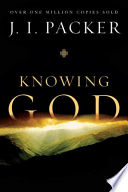
Knowing GodEven though I’ve been posting weekly summaries of my reading from Knowing God by J. I. Packer, I still wanted to do a general review, partly for those who did not want to keep up with the weekly readings, and partly for me to have a general review to link back to.

Even though this book has been considered a classic and has been in print for over 40 years, somehow I had never gotten around to reading it before, though I had heard of it and wanted to.

Packer says the most basic definition of a Christian is that he or she is a person who has God as Father. We are not all God’s children: we become His when we believe on Jesus Christ as our Lord and Savior.

Packer begins with the virtues of studying about God as well as the warning not to stop with just the academics, but to use what we learn to get to know God personally.

To be preoccupied with getting theological knowledge as an end in itself, to approach Bible study with no higher a motive than a desire to know all the answers, is the direct route to a state of self-satisfied self-deception. We need to guard our hearts against such an attitude, and pray to be kept from it (p. 22).

The psalmist [of Psalm 119] was interested in truth and orthodoxy, in biblical teaching and theology, not as ends in themselves, but as means to the further ends of life and godliness. His ultimate concern was with the knowledge and service of the great God whose truth he sought to understand (pp. 22-23).

He talks about what it means to know God, how knowing Him differs from knowing others, the different analogies the Scriptures use to illustrate our relationship to Him.

John 17:3: “And this is life eternal, that they might know thee the only true God, and Jesus Christ, whom thou hast sent.”

Knowing God is more than knowing about him; it is a matter of dealing with him as he opens up to you, and being dealt with by him as he takes knowledge of you. Knowing about him is a necessary precondition of trusting in him (‘how could they have faith in one they had never heard of?’ [Romans 10:4 NEB]), but the width of our knowledge about him is no gauge of the depth of our knowledge of him (pp. 39-40).

He discusses the need to know God as He truly is, not as our mental picture of Him is nor as He has been falsely portrayed by others.

All speculative theology, which rests on philosophical reasoning rather than biblical revelation, is at fault here [emphasis mine here]. Paul tells us where this sort of theology ends: “The world by wisdom knew not God” (1 Cor 1:21 KJV). To follow the imagination of one’s heart in the realm of theology is the way to remain ignorant of God, and to become an idol-worshipper, the idol in this case being a false mental image of God, made by one’s own speculation and imagination (p. 48).

He discusses what it means to believe that Jesus is God Incarnate and yet also fully man, the person and ministry of the Holy Spirit, the truth of the Bible, the need for and nature of propitiation, what the Bible means by adoption, how God guides us, why we still have trials if we know Him and He loves us, and His full adequacy to handle whatever He allows in our lives. He covers in great detail several of God’s attributes: His immutability (His unchanging nature), His majesty, wisdom, love, grace, judgment, wrath, goodness, severity, and jealousy. Each of those topics is the subject of a whole chapter, and it’s impossible to give an overview of them here, but they were quite beneficial and helpful.

As I said in one week’s summaries, sometimes in the middle of a given chapter, it was easy to get occupied with the individual topics or chapters and forget that they are there in connection with how we know God, so it helped me to stop periodically and remember to tie the individual chapters back to the main point of the book. They do all have that connection even though it might not seem like it from the titles.

Though I didn’t agree with every single little point, especially those emphasizing a Calvinistic viewpoint, I did benefit from and can highly recommend the book. I appreciate that it is not full of theologicalese – terminology that only an academic could understand. I wouldn’t call it simple reading: there were a few places that were a little hard to follow. But for the most part I think an average reader could handle it fairly easily.

I am glad I finally made time for this book and thoroughly understand why it is considered a Christian classic. There were multitudes of places I marked and many memorable and helpful quotes in the book, many more than I can possibly recount here. But I’ll close with this one:

In the New Testament, grace means God’s love in action toward people who merited the opposite of love. Grace means God moving heaven and earth to save sinners who could not lift a finger to save themselves. Grace means God sending his only Son to the cross to descend into hell so that we guilty ones might be reconciled to God and received into heaven (p. 249).

For more information, my thoughts on a couple of chapters a week are as follows:

Chapters 1 and 2, “The Study of God” and “The People Who Know Their God”
Chapters 3 and 4, “Knowing and Being Known” and “The Only True God”
Chapters 5 and 6: “God Incarnate” and “He Shall Testify”
Chapters 7 and 8: “God Unchanging” and “The Majesty of God”
Chapters 9 and 10: “God Only Wise” and “God’s Wisdom and Ours”
Chapters 11 and 12: “Thy Word Is Truth” and “The Love of God”
Chapters 13 and 14: “The Grace of God” and “God the Judge”
Chapters 15 and 16: “The Wrath of God” and “Goodness and Severity”
Chapters 17 and 18: “The Jealous God” and “The Heart of the Gospel” (Propitiation)
Chapters 19 and 20: “Sons of God” and “Thou Our Guide”
Chapters 21 and 22: “These Inward Trials” and “The Adequacy of God”

(This review will also be linked to Semicolon‘s Saturday Review of Books.)

Laudable Linkage

It has been a few weeks since I have been able to share with you some interesting things found around the internet. Perhaps you’ll find something of interest in the following:

3 Things to Tell Yourself When Others Prosper While You Suffer.

Thank God for Your Normal, Boring Life.

Grieving Over the Holidays – What You Need to Know.

14 Reasons to Memorize an Entire Book of the Bible. Though some of this addressed to preachers, other parts of it are applicable to us all.

“Mama, What Does $*@#%! Mean?” Wise advice for how to handle those times when, no matter how protective you’ve been, your child overhears a bad word.

Why I Show Children Hospitality (Even Though I Am Not a Parent), HT to The Story Warren.

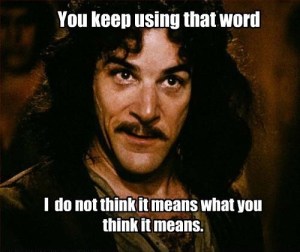
Please Don’t Be Intolerant. As Inigo Montoya says, I think many people use that word without knowing what it really means.

You keep using that word...

Why Readers Are Skipping Crucial Parts of Your Story.

The Most Instagrammed Location In Every State.

12 Ridiculously Warm Products For People Who Are Always Ridiculously Cold. I am usually warmer than everyone else, but I know people who are always cold and could use some of these.

There were so many more Write 31 Days series than I could possibly read, and I dipped in here and there with quite a few, but a few I kept up with almost daily were:

Tools to Memorize a Bible Chapter.

31 Days of Hope for Caregivers.

31 Glimpses Into the Unquiet Mind. A mother and daughter share the daughter’s journey with bipolar disorder and the long journey to diagnosis and treatment.

31 Uplifting Quote Graphics.

31 Ways to Snag a Literary Agent.

Happy Saturday!

Laudable Linkage

With the 31 Days With Elisabeth Elliot series going on every day, I wasn’t sure whether additional posts during the week might be a bit much to keep up with; on the other hand, I don’t want to have an excessively long list of links to share at the end of the month, because I know that can be a bit much, too. So here are a few things I found of interest in the last couple of weeks:

How Your Bible Study Shapes Your Theology.

Hand in Hand, Heart Linked to Heart. A sweet piece about C. H. Spurgeon and his wife.

Why Modesty Scares Me.

Why Christians should Paint, Dance, Quilt, Act, Compose Music, Write Stories, Decorate Cookies, and Participate in the Arts.

The Pinterest feed changes: How to see more of what you want to see. And why you’ll never see all of it. If, like me, you have been frustrated with changes at Pinterest, this article shares how to fix a couple of them, and the powers that be at Pinterest seem to have reached out to this blogger with an interest, so maybe some of the comments there will reach the ears of someone who can and will do something about it.

Happy Saturday!

Reading Classics Together: Knowing God

Knowing GodSomehow I have never read Knowing God by J. I. Packer, though I have heard it is wonderful. The title came to my attention again a few weeks ago, and I thought it might be a good time to start it. Then I saw that Tim Challies was leading readers through the book for his Reading Classics Together Series on Thursdays, and that added impetus to read it now, along with the fact that a few blog friends will be reading it at this time as well.

I’ve only participated in Tim’s Reading Classics Together one other time, with The Disciples of Grace by Jerry Bridges. I had decided I wasn’t going to blog about this book every week like I did then, especially since Tim has closed comments on his blog and readers can only participate via a Facebook group for that purpose. I’m really sad about that, for a number of reasons. But as I read the first chapter, I decided it would help me get more out of it and cement what I was learning to keep notes from each chapter rather than just trying to tie it all together at the end.

Chapter 1 is “The Study of God.” I don’t think I am going to summarize or outline each chapter, as Tim will probably do that. I’m just going to share a few things that stood out to me.

Packer starts out with a lengthy quote from Spurgeon extolling the virtues of studying God, reproduced here. Packer counters charges that such a study would be boring, impractical, and irrelevant and instead asserts that “it is the most practical project anyone can engage in” (p. 19).

He talks in the preface and some in the chapter about the spirit of the modern age of skepticism, and here comments, “I ask you for the moment to stop your ears to those who tell you there is no road to knowledge about God, and come a little way with me and see. After all, the proof of the pudding is in the eating, and anyone who is actually following a recognized road will not be too worried if he hears nontravelers telling each other that no such road exists” (p. 19).

Packer warns that, “To be preoccupied with getting theological knowledge as an end in itself, to approach Bible study with no higher a motive than a desire to know all the answers, is the direct route to a state of self-satisfied self-deception. We need to guard our hearts against such an attitude, and pray to be kept from it” (p. 22).

“There can be no spiritual health without doctrinal knowledge; but it is equally true that there can be no spiritual health with it, if it is sought for the wrong purpose and valued by the wrong standard” (p. 22). I very much appreciate that he doesn’t downplay Bible study or knowledge – too many people today, trying to make the same point Packer does, tend to set up false dichotomies about whether we love God or the Bible when we actually learn to love God through the Bible. Rather, he says, yes, study God’s Word – that’s how we learn what He wants us to know about Him – but don’t stop with the academics and the facts. Yearn to get to know God Himself through your study of His Word.

The psalmist [of Psalm 119] was interested in truth and orthodoxy, in biblical teaching and theology, not as ends in themselves, but as means to the further ends of life and godliness. His ultimate concern was with the knowledge and service of the great God whose truth he sought to understand (pp. 22-23).

One of the ways we do this is by meditation, “the activity of calling to mind, and thinking over, and dwelling on, and applying to oneself, the various things that one knows about the works and ways and purposes and promises of God. It is an activity of holy thought, consciously performed in the presence of God, under the eye of God, by the help of God, and as a means of communion with God. Its purpose is to clear one’s mental and spiritual vision of God, and to let His truth make its full and proper impact on one’s mind and heart. It is a matter of talking to oneself about God and oneself; it is, indeed, often a matter of arguing with oneself, reasoning oneself out of moods of doubt and unbelief into a clear apprehension of God’s power and grace” (p. 23).

Chapter 2, “The People Who Know Their God,” Packer expands on the theme of knowing God vs. just knowing about Him. Daniel 11:32b says, “the people that do know their God shall be strong, and do exploits,” or, as another version states it, “shall stand firm and take action.” Drawing from the book of Daniel, he notes and discusses that:

Those who know their God have great energy for God.
Those who know their God have great thoughts of God.
Those who know their God have great boldness for God.Those who know their God have great contentment in God.

It’s not too late if you’d like to join in on this study. We’re reading and discussing two chapters a week, and the chapters are easy to read and not long. I am finding it very beneficial so far.

Laudable Linkage

It’s been a few weeks since I’ve shared some links that caught my eye. Here are the latest – hope you find something of interest:

As Somebody Somewhere Said. Good reasons to read the Bible as a whole rather than only parts of it.

Hoaxes and Hermeneutics. The need for learning how to interpret the Bible rightly.

How To Complain Without Grumbling. There’s a difference, and I am so glad to see someone finally say so.

Jesus Speaks Out For Marriage.

How the Gospel Ended My Same-Sex Relationship.

Do You Treat Your Husband Worse Than a Stranger?

5 Questions I Wish My Accountability Partner Would Ask Me. I am wary of accountability partner set-ups for several reasons, and while the author still recommends them, he advocates facets that are much more in line with Biblical accountability and relationships that what I usually see.

Twenty Years. A man’s reflection on twenty years of marriage.

Mama, Are You Thinking Ahead?

Teach Your Children to Have Devotions. Wish I’d had something like this to read when mine were small.

It’s OK For Kids to Be Bored During Church.

Why Little Kids Need Big Biblical Words.

Cherishing and Protecting Our Freedoms.

4 Tips For Dealing With Procrastination.

Navigating the Challenges of Real Life Online. “If you share everything, you’re an exhibitionist. If you share nothing, you’re closed-off and unapproachable. If you share too many good things, you’re fake. If you share too many bad things, you’re a whiner.” Jenn discusses some principles and guidelines for finding balance here.

10 Things Photographers Hate With a Passion. I had never seen the dinosaur wedding thing before. Bizarre! I don’t agree with every point – I think some trendy or “as seen on Pinterest” requests are inevitable – but otherwise some good things for us to think about.

And I saw this on the C. S. Lewis Facebook Page.

Lewis

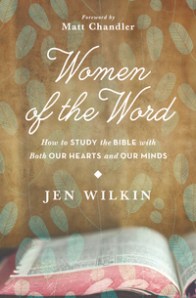
Book Review: Women of the Word

WOTWI have to confess that my first thought when I saw Women of the Word by Jen Wilkin mentioned favorably around the blogosphere was, “Hey! She took my title!” That’s not a very spiritual reaction, I know. 🙂 I’ve been blessed to have been able to compile a ladies’ newsletter for our current church for a couple of years and for a former church for about 9 years, and one column I’ve had in it  for a long time has gone by that same title, “Women of the Word.” It began after a discussion about devotions during one of our ladies’ meetings and the realization that no matter how long one has been a believer, there are always going to be struggles either maintaining a devotional time or making it what it ought to be. So I began the column to encourage ladies along that line and have begun to wonder lately if perhaps I might put them all together and see if they might possibly form a book.

My second thought, after reading a little bit about this book, was that I must get it. Everything I’d heard about it indicated that the author had the same passion as I do for getting women into the Word of God.

And the book definitely did not disappoint in any way.

Jen is not content to just get you into the Bible, however. She wants to equip women to dig for the true meaning of the Bible rather than using the Xanax approach (just seeking something to get through the day) or any number of other faulty approaches. She reminds us that God wants us to love Him not just with our hearts and souls, but also with our minds. She says that when she first began to read her Bible, she approached it with questions like, “Who am I?” and “What should I do?” Though the Bible did give her some insight for those questions, she eventually realized that “I held a subtle misunderstanding about the very nature of the Bible. I believed that the Bible was a book about me…I believed the purpose of the Bible was to help me” (p. 24). She learned that “We must read and study the Bible with our ears trained on hearing God’s declaration of Himself” (p. 26).

When I read that God is slow to anger, I realize that I am quick to anger. When I realize that God is just, I realize that I am unjust. Seeing who He is shows me who I am in a true light. A vision of God high and lifted up reveals to me my sin and increases my love for Him. Grief and love lead to genuine repentance, and I begin to be conformed to the image of the One I behold.

If I read the Bible looking for myself in the text before I look for God there, I may indeed learn that I should not be selfish. I may even try harder not to be selfish. But until I see my selfishness through the lens of the utter unselfishness of God, I have not properly understood its sinfulness (pp. 26-27).

“It’s possible to know Bible stories, yet miss the Bible story” (p. 11). In our quest for Biblical literacy, “we may develop habits of engaging the text that at best do nothing to increase literacy and at worst actually work against it” (p. 37). “We must be those who build on the rock-solid foundation of mind-engaging process, rather than on the shifting sands of ‘what this verse means to me’ subjectivity” (p. 87).

The author then shares ways to read the text within the context and to read it for comprehension, interpretation, and application. There is  an excellent chapter as well for teachers, one section of which makes an excellent case for women Bible teachers. She appears to believe, as I do, that women should teach women rather than men, but she gives some excellent reasons why women should teach other women.

I also appreciated how she dealt with an issue in the conclusion that I have seen some up in just the last couple of years. These days, when you try to encourage Bible reading and study or try to bring to bear what the Bible says on a conversation, you can sometimes be accused of “worshiping the Bible.” Jen answers:

I want to be conformed to the image of God. How can I become conformed to an image I never behold? I am not a Bible-worshiper, but I cannot truly be a God-worshiper without loving the Bible deeply and reverently. Otherwise, I worship an unknown God. A Bible-worshiper loves an object. A God-worshiper loves a person (p. 147).

In short, I love this book and highly recommend it. I do more than recommend it: I don’t often do this, but I encourage you to get it. I’m more than happy that the title I was considering using for a book has been attached to such a one as this.

I’ll close with one last quote:

We must make a study of our God: what He loves, what He hates, how He speaks and acts. We cannot imitate a God whose features and habits we have never learned. We must make a study of Him if we want to be like Him. We must seek His face…

We see Him for who He is, which is certainly a reward in itself, but it is a reward with the secondary benefit of being forever altered by the vision (p. 150).

(This will also be linked to Semicolon‘s Saturday Review of Books.)

Laudable Linkage

There has been a lot of good reading on the Web this week. Here are some posts and articles that stood out to me:

Worship with our lives, not just while singing on Sunday morning. Good exposition of what worship actually is.

Bible Study: Working With God on Your Goal, HT to my friend Kim,  who, by the way, is doing a 31 Day series on Scripture memory.

It’s Not Just a Guy Thing. Sometimes “the second glance has often already been decided long before the first.”

What If Knowing Your Spiritual Gift Doesn’t Matter? Sometimes we need to just step in to meet a need.

How do you train your children to manage their feelings? I think this is an sometimes an overlooked area of parenting.

When Your Friend Hurts. We need to weep with those who weep, not condemn them for hurting.

You can imagine that the Council on Biblical Manhood and Womanhood would be at odds with  A Year of Biblical Womanhood, but I thought this review was balanced and gracious, at least as far as the concerns I’ve had with the book just in the reviews I’ve read. I have it in my Kindle app to read myself some day.

Teaching Boys to Be Respectful.

The Philanthropists: John D. Rockefeller. Sometimes the rich are vilified just by virtue of being rich, but the Bible does not condemn riches: it does instruct us not to trust in them and how to use them. I found this short biography very interesting.

Put the book down. Much as I love books, some times they do get in the way.

The Ultimate Secret to Effective Writing and Preaching.

A Case For Cessationism. I’ve been enjoying Tim Challies’ live-blogging of the “Strange Fire” Conference John MacArthur is having concerning the charismatic movement.

Weight Loss Bible Study.

Hope you have a great weekend!

Devotional Tips

Bible

One of my passions is to get women into the Word of God for themselves. Since this is the time of year many renew their efforts to have read their Bibles, I thought some might find this post from the archives (2006) helpful.

For those who might be unfamiliar with the term, “devotions” or “having devotions” is the time spent in the Bible and prayer. Others call it their quiet time or their “God and I” time or other terms.

Hopefully if you are considering devotions, you already feel it is important to read the Bible, but if you need to be encouraged along those lines, some reason to read the Bible are here.

When I first became a Christian as a teen-ager, the church I was in then had a strong emphasis on reading the Bible through in a year. I am so glad, because I think that, more than anything else, got me grounded spiritually. There are many advantages to reading the Bible through in a year: it kept me focused; I knew where to read next instead of wandering around aimlessly; I discovered choice nuggets in places like II Chronicles and Zephaniah that I probably would never have discovered otherwise; it kept me balanced; it helped me understand passages in their context; and each time through I would understand the passage more. There are, however, a few disadvantages: I felt like I couldn’t stop and ponder anything because I had to keep going in order to finish the day’s reading in the time frame I had, and if I fell behind it would get awfully discouraging trying to catch up. So after some time I continued to read the Bible through, but not necessarily in a year. I feel free to stop and meditate on a particular truth I found or to study it out further. I usually read a couple of chapters a day, but I sometimes stop after a few verses or sometimes go on and read more. Then sometimes between books, I take a break and work through a Bible study book or do a word study or topical study.

Most “reading the Bible through” plans encourage reading from both the Old Testament and the New, or reading a passage from Psalms or Proverbs along with the day’s scheduled reading. I think that is probably to help you through some of those “drier” books like Leviticus.

I think this is one of those areas where anything is better than nothing, though, so if someone says, “I’m sorry, I just can’t get into Leviticus,” I would say that’s fine. Maybe some day you’ll get back to that, but reading somewhere in the Bible is better than reading nothing.

Probably for most people the first big battle is getting regular about it. It does help to make a regular time and place for it. I like to have devotions in the mornings because my mind isn’t as cluttered as it is later on. I get up a little earlier than everyone else so it is quiet, and I have my shower first so I am awake. There were some years during the getting-kids-off-to-school morning rush when the best time was after everyone left for the day. The best time for some people is in the evenings.

There are some seasons of life, like when there is a new baby in the house, or vacation times, or when company is there, when it’s hard to maintain that regular time. It’s easier to let that time slip then, but if we go back to the “anything is better than nothing” principle, we can grab a few quiet moments here and there.

Once some semblance of regularity is maintained, the next big battleground is keeping our minds on what we’re doing. There is a quote from John Donne which expresses it well: “I throw myself down in my chamber, and I call in and invite God and His Angels thither; and when they are there, I neglect God and His Angels for the noise of a fly, for the rattling of a coach, for the whining of a door.”

I think the biggest help in avoiding distractions is to be actively looking for something rather than passively reading (more on that later). Another help is to keep a notepad nearby so that when something else comes to mind, as it so often does, like an item I need to get at the store or someone I need to call today, I can jot it down so I don’t forget it later and so my mind can acknowledge that it will be taken care of and not keeping going back to that thought.

It helps to “get in gear” as we begin. I often pray, “Open thou mine eyes, that I may behold wondrous things out of thy law” (Psalm 119:18), or asking the Lord to make my heart “good ground” that the seed of His Word can fall upon. It can help, also, to ask Him for something from His Word to carry with you through the day. Some people like to begin listening to, singing, or reading through a hymn. I like to start off with the reading from Daily Light on the Daily Path for the day.

Ps. 66:18 says, “If I regard iniquity in my heart, the Lord will not hear me.” We need to ask Him to search us, show us anything wrong, and enable us to get it right so we don’t block the channels of communication.

On to some general tips:

  • I was advised early on to look for a command to follow, a warning to heed, a promise to rely on, and even to underline (this was before highlighters were invented ) those things with different colors (red for warnings, blue for promises, black for commandments, yellow for verses about salvation. etc.) or marking beside the verse with different symbols for each category. The point isn’t “coding” your Bible, but to use that as a method to think through what the passage is saying and how to apply it.
  • Ask the old journalism questions: who, what, why, when, and how. What is being said to whom by whom? Is the promise there to all people or only to a specific person or group?
  • Notice recurring words or phrases, like the phrase “let us” which occurs three times in Hebrews 10:22-24, or the recurrence of the words “know” or “knowledge” in II Peter 1:2-8.
  • Underline verbs in passages like I Cor. 13 (the love chapter) or Proverbs 2:1-5 (about the search for wisdom).
  • In some of those long sentences of Paul’s, going back to basic English can help us understand them better: find the subject and verb to learn what the sentence is actually about, and then see how the phrases fit around it.
  • When reading the epistles, it can be helpful to write them out as they were originally written: as a letter without the chapter and verse markings.
  • Use a basic dictionary. One exercise in Changed Into His Image by Dr. Jim Berg instructed the reader to go through I Corinthians 13: 4-8 and write the definitions of the major words on a separate piece of paper, then write the verses out using those definitions. That was one of the most rewarding studies I have ever done. Even though that passage isn’t hard to understand, going through that exercise opened it up in a fuller way.
  • Some passages lend themselves to charts and diagrams, like the letters to the seven churches in Revelation 2-3 or the different sacrifices in Leviticus. That kind of thing really appeals to some people, and it’s easy to compare the similarities and differences that way.
  • Sometimes it is edifying to have some type of Bible project to study out. For instance, you might look up all the references to “the fear of the Lord” to see exactly what it is and how it manifests itself, or the references to “the fool” in Proverbs so you know what kind of behavior to avoid. Matthew 4 tells us Jesus countered Satan’s temptations with the Word of God, and it’s strengthening to look up verses on the specific temptations we face. Once when I had a fleeting thought doubting God’s goodness in a certain situation, instead of just telling myself, “Don’t be silly; you know God is good,” I began to search out verses that spoke of God’s goodness. Not only did that result in knowing my God better, but it fortified my soul against that doubt. Using a concordance or computer Bible program or even Bible Gateway helps with those kinds of studies, and we can supplement those studies later as we come across verses in other reading. Once I heard someone say that Jesus never claimed to be God, and I knew that Jesus did in fact proclaim His deity. So as I read through the Gospels, I put a “C” (for “claims”) beside each verse where Jesus said something about Himself that indicated His Deity. He may have never climbed on a mountaintop and said the phrase, “I am God,” but His deity is all throughout the gospels (the results of that study are here in The Claims of Christ). When I do a study like that, I usually write all the verses out in one place (I used to do it on index cards, but now I keep it on the computer) so I can refer back to it or add to it later on.
  • Sometimes we divide our devotional time into separate prayer and Bible reading times, but we can combine the two. When we read a verse that convicts about a particular sin, we can confess it immediately. When we read something that tells us about God, we can thank and praise Him immediately. When we read a character trait that we need to incorporate in our lives, we can acknowledge that need and ask for help and grace.
  • On very familiar passages, try to imagine you are reading it for the very first time, that you are there watching the events occur, or that you are reading and trying to convey it’s truth to someone who has never heard it before.
  • Something else that Jim Berg advocates in his book it to look for the Person, the Lord, in our reading, not just the principles.
  • Remember that “all scripture is given by inspiration of God, and is profitable for doctrine, for reproof, for correction, for instruction in righteousness” (II Timothy 3:16) – even the genealogies and Leviticus. We can ask the Lord for help in some of those drier passages to see His purpose for them. For instance, from the genealogies we learn that: God keeps records; God keeps detailed records; God knew all of those people whose names we can’t pronounce and cared about them; He knows and cares for us the same way.
  • Much has been written in recent years about journaling. I stopped doing so some time ago because, for me, it was too easy to spend most of the time and thought during devotions on “what I thought” rather than what God had to say to me. But journaling can be a good way to process what you’ve read and help make it more permanent in your own mind.

There are many good books on this subject. One is Tim LaHaye’s How To Study the Bible For Yourself. One I just read recently was Jason Janz’s Alone With God: A Practical Plan for Dynamic Devotions. His plan might seem a little regimented to some, but he invites the reader to adapt it. The basic idea is that if you don’t have some type of plan for your devotional time, you’ll drift and not benefit from it: having a basic format helps keep you on track just like writing things down on a prayer list helps keep you focused and helps you remember what to pray for. He has a lot of good tips and practical advice as well. Another good book is What Do I Know About My God? by Mardi Collier. I have heard her speak on this topic of how she wanted to get to know God better, and, at her husband’s suggestion, read through the Psalms, making notes of everything that was said about God. That led to a study of several years throughout the Bible. She tells about that study and how it has impacted her life in her book.

There is much more that could be said (and if I don’t stop soon, I’ll almost have a book, myself! 🙂 ). There are days and seasons of life when we might only have one verse to carry us through the day – and it is better to read one verse and truly get something from it than to read 10 chapters inattentively. But there will be some times we’ll be able to read and study a little more extensively than others. However we “do devotions,” we can ask God to show us Himself, that we may know Him, love Him, and serve Him better.

Here are some additional previous posts about devotions:

The blessing of hymns.
I have a preposition for you.
Meet my Bible.
Reasons to read the Bible.
God’s Word...
What do you say about this book?
Having devotions when you’re not feeling very devoted.
When there is no hunger for God’s Word .
Encouragement for mothers of young children .

This post will be also linked to “Works For Me Wednesday,” where you can find an abundance of helpful hints each week at We Are THAT family on Wednesdays.