Reading Plans for 2023

For most of my life, I’ve just read whatever was next in the stack or something I was in the mood for. Reading challenges have helped broaden my horizons and be more intentional in my reading. Plus it’s fun to share reading lists with the other participants. And some challenge hosts offer drawings for prizes!

I dropped one challenge I participated in last year. All of these are categories I already read anyway. Plus they leave me some room to still delve into something new and unexpected through the year.

I have not heard or seen anything from Karen at Books and Chocolate about whether she is hosting the Back to the Classics Challenge again this year–so that probably means she isn’t. That’s too bad, as this was one of my favorites. But I’m sure she has other priorities in her life right now.

I will still read classics, though. I’ve made it a mission to since I wasn’t exposed to many growing up. I’ve been trying to read through Dickens novels that I haven’t read yet. All I have left are Martin Chuzzlewit, Barnaby Rudge, Dombey and Son, and The Mystery of Edwin Drood, so I’ll read at least one of those. I also got the audiobooks for Pilgrim’s Regress by C. S. Lewis and Martyr of the Catacombs. I finished Anthony Trollope’s Barsetshire series last year, so I’d like to explore some of his other works.

Bev at My Reader’s Block hosts the Mount TBR Reading Challenge, which encourages us to get to those books we already own but have not read yet. That’s something I need to do every year, and I have enjoyed participating with Bev the last few years. She has the goals set out as a series of mountains, and we’re supposed to declare which one we’re aiming for. I think I’ll stay with Mt. Vancouver (36 books), even though I’ve reached the next level a couple of years. The sign-up and more information for this challenge are here.

Shelly Rae at Book’d Out hosts the Nonfiction Reader Challenge. This can be done one of two ways. Shelly has twelve books in different categories that we can aim for. Or we can be a “Nonfiction Grazer” and make our own goal. Although I might hit a few of her categories, I’ll go the grazer route. I normally read several nonfiction books (over 30 last year). This year, I’d like to hit these categories:

  • At least one biography, autobiography, or memoir.
  • One writing book
  • One book of humor
  • One Bible study book
  • One Christian living book
  • One book of letters or journals
  • One book by C. S. Lewis that I have not read yet
  • One book on organization or productivity
  • One book pertaining to a holiday (probably Christmas)
  • One book related to midlife or aging

Finally, The Intrepid Reader. hosts the Historical Fiction Reading Challenge. A good many of my fictional reads fit this category. I’m going to aim for the Medieval level at 15 books.

And that does it for this year, I think!

Do you participate in reading challenges? Which ones.

Heaven and Nature Sing

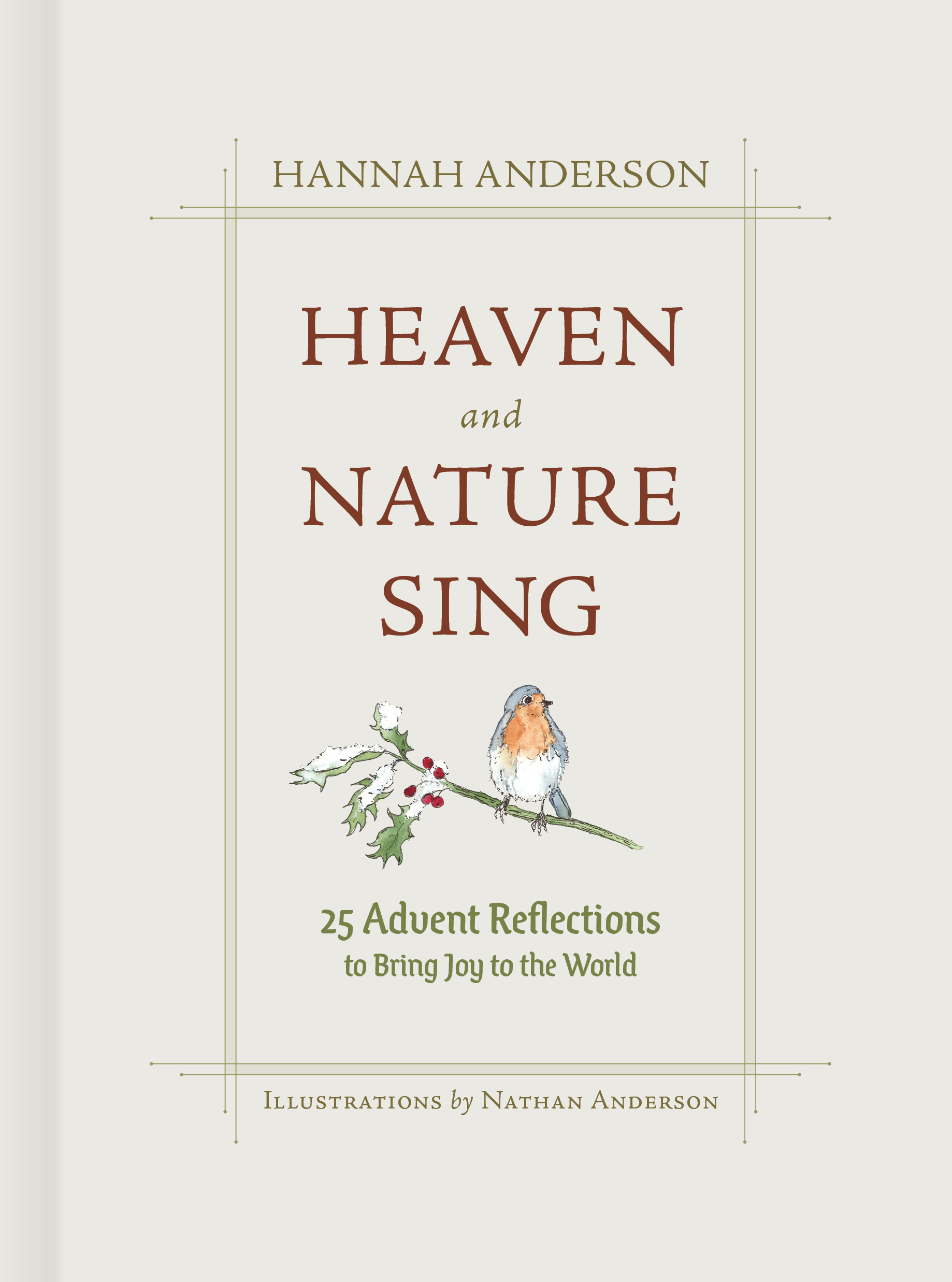
Heaven and Nature Sing: 25 Advent Reflections to Bring Joy to the World by Hannah Anderson was just released last fall. I’m so glad I heard of it in time to use for Advent.

“Heaven and nature sing” is a phrase from “Joy to the World,” written by Isaac Watts. Watts’ hymn looks forward to Jesus’ second coming more than His first, but it’s regularly used as a Christmas carol. Hannah took inspiration from this phrase and wrote 25 Advent devotions based on various aspects of nature connected with the birth of Christ. The Bible tells us creation groans from the effects of sin, waiting for redemption. We also groan or yearn for things to be set right. Hannah writes, “I want to offer you hope—not by ignoring the brokenness but by looking it squarely in the face, knowing your Redeemer has and will come” (p. 1).

One thing that struck me about these meditations was how much sheer thought must have been behind them, to weave so many threads together.

For instance, in the chapter “Family Tree,” Hannah writes of her husband’s discovering some old family genealogies which were written not in flow charts like we’re used to, but in concentric circles. Then she tells of a family visit to see the redwood trees in CA. One cross-section of a stump showed rings developed over the millennia the tree had been alive, and Hannah contemplates all the history the tree lived through. Then she brings up the records of Jesus’ human genealogy. His people were often faithless and disobedient, resulting in judgment by enemy armies taking over Israel and exiling its people. Isaiah compares this to God lopping boughs off a tree (Isaiah 10:33). But He promises “There shall come forth a shoot from the stump of Jesse, and a branch from his roots shall bear fruit. And the Spirit of the Lord shall rest upon him. . . In that day the root of Jesse, who shall stand as a signal for the peoples—of him shall the nations inquire, and his resting place shall be glorious” (Isaiah 11:1-2, 10).

“The story of Christmas is this: the tree is not dead” (p. 20). And eventually, others were grafted into the family (Romans 11:17-24), “strangers and foreigners and all those who thought they’d never know family again, those who never dared to hope that life would run through them” (p. 20).

You and I are links in the chain of generations, called to steward the fragile hope we’ve received. The seventy or eighty years given to us on this earth pale in light of those who have come before us and those who follow after. . .

So whether his work happens over the course of a thousand years or one day, whether it is given to us to play a prominent role in it or simply to stand as a faithful witness to the promise, we will wait on him. And we will wait in hope.

The tree is not dead. The quiet, steady work that came before us will continue on after us. The quiet, steady work we do today—even if it’s as simple as celebrating the Promised Son during this season—will echo through the years (pp. 20-21).

And thus Hannah writes about winter, stars, serpents, holly, evergreens, swaddling bands, shepherds, stars, and more.

One of my favorite quotes is in the chapter “Among the Beasts.”

Yes, the manger signals something about this baby, but it is not simply his poverty. By being placed in the manger, he is revealed as both the rightful son of Adam charged with caring for his creation and also the eternal Son of God who created them and who provides for them. So instead of filling the manger with hay or corn, he fills it with himself (p. 80).

I spent many mornings after my reading in this book in tears or joy, touched and awed by the contemplation of the “old, familiar” Christmas story.

Each devotion is about five pages long and written in an easily readable style. The illustrations on the cover and between chapters were drawn by Hannah’s husband, Nathan.

I can’t recommend this book highly enough. I’m sure I’ll use it again in future Advent seasons. But since these truths are timeless, you could read it any time of year.

I have some of Hannah’s other books in my Kindle app, and I am eager to read them. The only trouble is deciding which one to start with!

Top Twelve Books Read in 2022

This post is one of my favorites to write every year. Looking back through all the books I read during the year is like revisiting old friends. I try to keep my end-of-year favorites between 10-15. Some rise to the top immediately. Others I have to think about and weigh.

Not all of these books were written this year; in fact, most of them weren’t. But most were first-time reads for me this year.

Another Gospel: A Lifelong Christian Seeks Truth in Response to Progressive Christianity by Alisa Childers, nonfiction. I knew fairly soon that this would be one of my top books. Alisa Childers’ faith was shaken by her pastor, of all people, as he undermined the validity of the Bible, the nature of Christ’s atonement, and so many fundamental doctrines of the Christian faith. Alisa realized that she didn’t know why she believed what she believed. And to her credit, instead of just following along, she began to read and study for herself. This book is her testimony as well as her answer to the issues the progressive movement brings up.

Heaven and Nature Sing: 25 Advent Reflections to Bring Joy to the World by Hannah Anderson, nonfiction. As the title indicates, Hannah focuses on various aspects of the Christmas narrative, especially in connection with nature. She brings such a depth of thought and brings out things I had not considered before.

Joy: A Godly Woman’s Adornment by Lydia Brownback, nonfiction, is made up of 42 fairly short devotions on the topic of joy. Being joyful is not a matter of having a bubble personality. It runs much deeper. I enjoyed the truths Lydia bought out.

O Love That Will not Let Me Go: Facing Death with Courageous Confidence, complied by Nancy Guthrie, nonfiction. Most people are uncomfortable thinking about death. Even if we know we’re going to heaven because we’ve believed on Jesus as Savior, we can be a little afraid of death and dying. It’s not for nothing that the Bible calls death the last enemy. Nancy has assembled writings from an assortment of Christian writers over time to help.

Lady Almina and the Real Downton Abbey: The Lost Legacy of Highclere Castle by Lady Carnarvon, nonfiction. The author is the current countess of Highclere Castle, which was used as the ancestral home of the characters in Downton Abbey series on PBS. But you don’t have to be a fan of the show to enjoy the book. Lady Almina oversaw the castle through World War II, when she turned it into a hospital for wounded soldiers. She accompanied her husband on many travels to Egypt for his health, and where he and friend Howard Carter discovered King Tut’s tomb. The first part of the book was largely informational and a little hard to get into, but before long it became fascinating.

The Italian Ballerina by Kristy Cambron, Christian fiction, is my favorite fiction book this year. It was released just this summer. It’s based on the true account of an Italian hospital which made up a contagious disease they called Syndrome K to keep the Nazis away from one ward. They then used that ward to hide Jewish refugees until they could find somewhere for them to go.Two US military men, a newly-orphaned child, and a ballerina and her partner end up in the hospital as well and try to help. The story is uncovered by two descendants of some of the characters in modern times who follow clues to find out what happened. Excellent.

Bringing Maggie Home by Kim Vogel Sawyer, Christian fiction, is another split-time novel involving modern characters trying to find the history of their ancestors. In this case, Hazel DeFord’s younger sister disappeared when they were children, when Hazel was supposed to be watching her. Hazel didn’t tell her daughter, but this loss made her overly controlling, perfectionistic, and anxious–which drove her daughter away. Her granddaughter is a cold-case detective who unwittingly discovers old pictures of Maggie, Hazel’s sister, and uses time healing from an accident to investigate the 70-year-old case, hoping to bring closure to her grandmother and healing to her and her mother.

The Lost Heiress by Roseanna M. White, Christian fiction, is a novel about an adopted heiress who finds out who her true father is. But will the rest of her father’s family accept her, and will her relationship with her friend, Justin, who she secretly loves, survive? And will she realize the man trying to woo her is a predator? This sounds like a fluff read, but there is no fluff in Roseanna’s books. She brings such depth into her characters and plot.

Midnight, Christmas Eve by Andy Clapp, Christian fiction, is a sweet story about two teenagers who decide that in five years time, if they are not married, they’ll come back to “their” bench in their home town at midnight on Christmas Eve and get engaged. He comes; she does not. He continues to come for the next several Christmas Eves.

Once Upon a Wardrobe by Patti Callahan is a novel about a college girl is London whose younger brother is dying. Her brother is obsessed with the world of Narnia and wants to know whether it’s a real place, and if not, where it came from. When he learns the author, C. S. Lewis, teaches at his sister’s college, he begs her to meet Lewis and ask these questions. There are three levels to this story: Megs and George and their family, Lewis’ biography, and Megs’ learning the value of stories. I didn’t agree with every point of theology from the author, but the overall story was very good.

The Other Bennet Sister by Janice Hadlow is secular fiction from the world of Pride and Prejudice, from the viewpoint of Mary, the quiet sister in the background in Austen’s book. It suffered from a bit of over-explanation in a couple of places, but overall it was excellently done. And the audiobook was very good.

The Winnie the Pooh books by A. A. Milne. I reviewed the two books of stories and two of poetry all together. The Pooh videos were a big part of my kids’ growing up. There was a weekly cartoon of Pooh on then with new stories. But somehow we never read the books together. I wish we had. It was sweet and nostalgic to read them as an adult.

So that’s my top twelve this year. What was your favorite among the books you read this year? Have you read any of the ones I listed?

Books Read in 2022

It’s been another great reading year, with a variety of new and old, fiction and nonfiction, mostly good, a handful not so much. By my count, I’ve read 79 books this year—a smidgen fewer than the last couple of years.

I’ll post my favorites tomorrow. The titles link back to my reviews. (MTBR) at the end of some titles refers to the Mount TBR Reading Challenge, where we read books we already owned before the year began. I noted them here instead of making a separate list.

Nonfiction:

  1. 100 Best Bible Verses to Overcome Worry and Anxiety, a devotional book by various authors (MTBR)
  2. Aging With Grace: Flourishing in an Anti-Aging Culture by Sharon Betters and Susan Hunt
  3. Always, Only Good: A Journey of Faith Through Mental Illness by Shelly Garlock Hamilton
  4. Another Gospel: A Lifelong Christian Seeks Truth in Response to Progressive Christianity by Alisa Childers
  5. Be Alive (John 1-12): Get to Know the Living Savior by Warren Wiersbe (MTBR)
  6. Be Compassionate (Luke 1-13): Let the World Know Jesus Cares by Warren Wiersbe (MTBR)
  7. Be Courageous (Luke 14-24): Let the World Know Jesus Cares by Warren Wiersbe (MTBR
  8. Be Determined (Nehemiah): Standing Firm in the Face of Opposition by Warren W. Wiersbe (MTBR)
  9. Be Distinct (2 Kings and 2 Chronicles): Standing Firmly Against the World’s Tides by Warren Wiesrbe (MTBR)
  10. Be Encouraged (2 Corinthians): God Can Turn Your Trials Into Triumphs by Warren W. Wiersbe (MTBR)
  11. Be Free (Galatians): Exchange Legalism for True Spirituality by Warren Wiersbe (MTBR)
  12. Be Responsible (1 Kings): Being Good Stewards of God’s Gifts by Warren Wiersbe (MTBR)
  13. Be Restored (2 Samuel & 1 Chronicles): Trusting God to See Us Through by Warren W. Wiersbe (MTBR)
  14. Be Successful (1 Samuel): Attaining Wealth That Money Can’t Buy by Warren W. Wiersbe (MTBR)
  15. Be Wise (1 Corinthians): Discern the Difference Between Man’s Knowledge and God’s Wisdom by Warren W. Wiersbe (MTBR)
  16. Daily Light on the Daily Path compiled by Samuel Bagster
  17. “Don’t Call Me Spry”: Creative Possibilities for Later Life by Win Couchman
  18. The Enchanted Places: A Childhood Memoir by Christopher Milne
  19. Essentialism: The Disciplined Pursuit of Less by Greg McKeown (MTBR)
  20. The Four Loves by C. S. Lewis (MTBR)
  21. Heaven and Nature Sing: 25 Advent Reflections to Bring Joy to the World by Hannah Anderson
  22. IBS for Dummies by Carolyn Dean and L. Christine Wheeler (MTBR)
  23. I Must Decrease: Biblical Inspiration and Encouragement for Dieters by Janice Thompson (MTBR)
  24. Jesus Led Me All the Way by Margaret Stringer (MTBR)
  25. Joy: A Godly Woman’s Adornment by Lydia Brownback (MTBR)
  26. Lady Almina and the Real Downton Abbey: The Lost Legacy of Highclere Castle by Lady Carnarvon.(MTBR, audiobook)
  27. The Middle Matters: Why That (Extra)Ordinary Life Looks Really Good on You by Lisa-Jo Baker (MTBR)
  28. O Love That Will not Let Me Go: Facing Death with Courageous Confidence, complied by Nancy Guthrie
  29. The Path Through the Trees by Christopher Milne )Audiobook)
  30. Ten Time Management Choices that Can Change Your Life by Sandra Felton and Marsha Sims (MTBR)
  31. Treasures of Encouragement: Women Helping Women by Sharon W. Betters
  32. Where I End: A Story of Tragedy, Truth, and Rebellious Hope by Katherine Elizabeth Clark (MTBR)
  33. Women and Stress: A Practical Approach to Managing Tension by Jean Lush and Pam Vredevelt (MTBR)
  34. The Writer’s Desk by Jill Krementz (MTBR)

Classics:

  1. Eugene Onegin by Alexander Pushkin (Audiobook)
  2. The Confessions of St. Augustine (Audiobook)
  3. Dracula by Bram Stoker
  4. Framley Parsonage by Anthony Trollope (MTBR, Audiobook)
  5. Hospital Sketches by Louisa May Alcott (Audiobook)
  6. The House at Pooh Corner by A. A. Milne (Audiobook)
  7. The Last Chronicle of Barset by Anthony Trollope (Audiobook)
  8. Mary Barton by Elizabeth Gaskell (Audiobook)
  9. Now We Are Six by A. A. Milne
  10. The Small House at Allington by Anthony Trollope (Audiobook)
  11. The Story of Doctor Dolittle by Hugh Lofting (Audiobook)
  12. To Sir, With Love by E. R. Braithwaite (Audiobook)
  13. Victorian Short Stories of Successful Marriages by Elizabeth Gaskell, Thomas Hardy, and others.
  14. When We Were Very Young by A. A. Milne
  15. Winnie the Pooh by A. A. Milne

Christian Fiction:

  1. Bringing Maggie Home by Kim Vogel Sawyer (Audiobook)
  2. A Daily Rate by Grace Livingston Hill (Audiobook)
  3. Enchanted Isle by Melanie Dobson
  4. The Fifth Avenue Story Society by Rachel Hauck (Audiobook)
  5. Half Finished by Lauraine Snelling (MTBR)
  6. The Hatmaker’s Heart by Carla Stewart (MTBR)
  7. The Italian Ballerina by Kristy Cambron (Audiobook)
  8. Just 18 Summers by Michelle Cox and Rene Gutteridge (MTBR)
  9. A Lady Unrivaled by Roseanna M. White (Audiobook)
  10. Midnight, Christmas Eve by Andy Clapp (MTBR)
  11. The Lost Heiress by Roseanna M. White (MTBR)
  12. The Paris Dressmaker by Kristy Cambron (MTBR, Audiobook)
  13. The Reluctant Duchess by Roseanna M. White (Audiobook)
  14. The Road Home by Malissa Chapin
  15. The Search by Grace Livingston Hill (Audiobook)
  16. Shadowed by Grace: A Story of Monuments Men by Cara Putman (MTBR)
  17. Shadows in the Mind’s Eye by Janyre Tromp
  18. Snowed In for Christmas by Cami Checketts (Audiobook)
  19. Something Good by Vanessa Miller
  20. The Stranger by Melanie Dobson (MTBR)
  21. Three Fifty-Seven: Timing Is Everything by Hank Stewart and Kendra Norman-Bellamy (Audiobook)
  22. To Treasure an Heiress by Roseanna White (Audiobook)
  23. Worthy of Legend by Roseanna M. White

Other Fiction:

  1. Call the Midwife: A Memoir of Birth, Joy, and Hard Times by Jennifer Worth (MTBR, Audiobook)
  2. The Christmas Hirelings by Mary Elizabeth Braddon (MTBR, Audiobook)
  3. The Girl in the Painting by Tea Cooper (MTBR)
  4. The London House by Katherine Reay (audiobook)
  5. Mourning Dove by Claire Fullerton (MTBR)
  6. Once Upon a Wardrobe by Patti Callahan (Audiobook)
  7. The Other Bennet Sister by Janice Hadlow (MTBR, Audiobook)

And that just about wraps it up for 2022! I’m close to finishing a couple more, but I’ll save them to review at the beginning of next year so they don’t get lost in the shuffle.

Reading is one of my highlights, so I was very thankful to be able to make time for it.

How was your reading year? The number of books is not as important as whether the books are enjoyable and edifying. In that sense, I’ve had a great year indeed.

Reading Challenge Wrap-Ups

I enjoy participating in reading challenges and sharing books I have enjoyed. Most of these challenges involve the type of books I would be reading anyway. The only difficulty comes in the time it takes for record-keeping. I haven’t decided yet which challenges I will participate in next year. But I can recommend any of these.

Most of the challenge hosts require a wrap-up post at the end of the year. I shared my Back to the Classics Challenge Wrap-Up, hosted by Karen at Books and Chocolate here. But I decided to include all the rest in one post so as not to be tedious for readers.

Bev at My Reader’s Block hosts the Mount TBR Reading Challenge. The idea is to read books you already owned before the start of this year. Bev has made levels in increments of twelve, each named after a mountain, and we’re to choose a level to shoot for. Even though I’ve reached Mt. Ararat (48 books) the last couple of years, I decided to play it safe and stick with Mt. Vancouver (36 books).

That turned out to be a wise decision as I just made it with 38 books. Instead of making a separate list, I marked the books in this category with (MTBR) on my list of all the books I read this year.

Shelly Rae at Book’d Out hosts the Nonfiction Reader Challenge. She provided 12 categories of nonfiction, and participants chose which level they want to aim for. Thankfully, this year she has included a Nonfiction Grazer category where we set our own goals for how many and what kind of nonfiction to read. That worked best for me this year.

I read a total of 33 non-fiction books this year, which can be seen on my Books Read in 2022 post.

As to my personal goals for this challenge:

Even though I didn’t hit every category I wanted to, I did more in others, and I feel I had a rich and varied nonfiction reading experience this year.

The Audiobook Challenge is hosted by Caffeinated Reader. I aimed for the Binge Listener level at 20-30. I finished 30, so I was right on target. I also marked these on my list of books read this year. I posted what I had listened to through June at the check-in here. Here are the ones I listened to through the end of the year:

The Historical Fiction Reading Challenge is hosted by The Intrepid Reader. I aimed for the Medieval level of 15 books. I completed 22.

As you can tell, Roseanna M. White and Kristy Cambron are favorites in the category.

I’ve included split-time novels here, which have both a modern and a historic timeline. I’ve never been sure whether classics count—books written before our time but were modern in the time in which they were written. If so, I’d have eleven more.

And finally:

The Literary Christmas challenge hosted by Tarissa at In the Bookcase. For this I read:

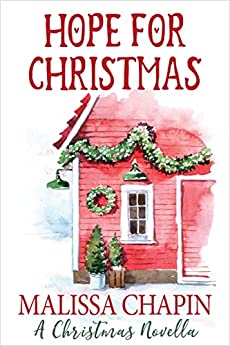
I also started Hope for Christmas by Malissa Chapin, but haven’t finished it yet. Maybe I will by the end of the year.

I didn’t get quite as many in this category as I had hoped to, but we had a very busy December.

Whew. It’s been a good year of reading.

The Fifth Avenue Story Society

(I’m sorry not to have a “Laudable Linkage” post today. I just haven’t had time this week to do much online reading. But I did finish an audiobook I wanted to share.)

In Rachel Hauck’s novel, The Fifth Avenue Story Society, five New Yorkers receive a mysterious invitation to join said society at the library on Fifth Avenue.

Lexa is an executive assistant to the owner and originator of a growing fast food chain. She came up with her boss from the early days of the company to bring it into the limelight it enjoys now. Since she practically fulfills the CEO role, she pushes for that position. But her boss holds her off.

Jett is a college professor grieving over the loss of a marriage in which he’s not quite sure what went wrong. He’s writing his dissertation on his favorite author, determined to quell suspicions that the author is a fraud. But he secretly harbors his own doubts.

Chuck is an Uber driver. His angry response when he discovered his wife was cheating led her to acquire a temporary restraining order. Now he just wants to see his kids and be part of their lives.

Coral is the heiress and president of the multi-million dollar cosmetics company her grandmother founded. Coral became known publicly as the “panicked princess” when she fled her marriage to a prince at the last minute. And her first new product seems to be tanking, despite all the early promising test results.

Ed is an aging retired newspaper man. Now an apartment building superintendent, all he wants to do with his remaining time is write his memoir about his wonderful wife and the love they had together before she died.

When the five meet for the first time, no one knows who sent the invitation or why. After their initial wariness, curiosity and the need for friendship encourages them to continue.

Each is a wounded soul. Each has a dark, guarded secret they are not willing to share with the others. But as they get to know one another and their lives entwine, can they trust each other enough to share their deepest selves?

I had read only one Rachel Hauck novel before about nine years ago, and on purpose had not read her again. In that case, the story was mostly okay, but some of the writing grated. I did not see those problems with writing in this book. I enjoyed the characters’ stories quite a lot.

The one thing I didn’t like in this book was references to some of the characters’ intimate lives. There are no explicit sex scenes, but there are more references than I am comfortable with.

I’m also wary when both the author and one of her characters claim that God spoke audibly to them.

Also, each book had one mysterious character. The one in the previous book struck me as something of a fairy godfather. The one here merges as something akin to an angel in disguise, but is more likeable and believable than the character in the previous book I read. I don’t know if such characters are a hallmark of all this author’s books.

I had thought at first that this was a Christian fiction book, then thought that it wasn’t. But late in the story, one character does share her faith journey.

I’m left with mixed emotions. The overall story and the emerging of each character’s situation were very good. I was caught up in their lives and hoping for the best resolution for each of them. But some of these other elements put me off.

Be Alive: Get to Know the Living Savior

I veered from my Bible reading plan because I wanted to be in one of the gospels over December, and because the plan had not taken me through John in the last few years.

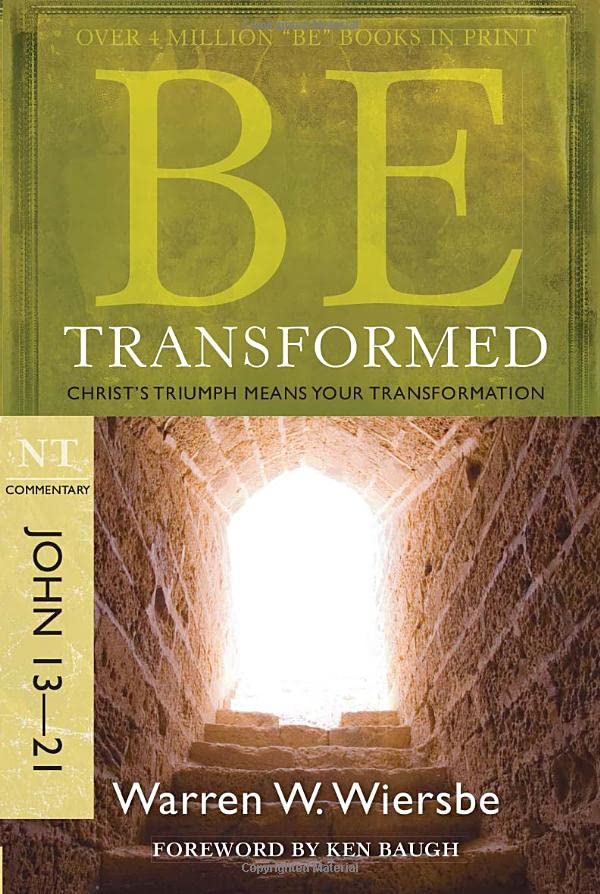
Warren Wiersbe divided his commentary on John into two books, the first being Be Alive (John 1-12): Get to Know the Living Savior.

Each of the four gospels presents Jesus from a different aspect. John’s gospel portrays Jesus as the Son of God.

John shares different titles for Jesus: the eternal, incarnate Word of God (“Much as our words reveal to others our hearts and minds, so Jesus Christ is God’s ‘Word’ to reveal His heart and mind to us”–p. 20); the light of the world; the eternal Son of God; the lamb of God; the Messiah, long promised and prophesied in the Old Testament; the king of Israel; the Son of Man; the good shepherd, the water and bread of life, the door.

When John shares some of the miracles Jesus did, he “seeks to share the inner meaning—the inner significance—of our Lord’s works, so that each miracle is a ‘sermon in action” (p. 38). “Our Lord’s miracles were testimonies (John 5: 36), giving evidence of His divine sonship; but they were also tests, exposing the hearts of the people (John 12: 37ff.). The same events that opened some eyes only made other eyes that much more blind (John 9: 39–41)” (p. 44).

One theme through John’s gospel is Jesus’ “hour.” Throughout, Jesus says His hour was not yet come. Then it was at hand, then it finally culminated in His death for us.

Another theme is that Jesus loves and came to die for the world, not just the Jews.

One of John’s major themes is that Jesus is the Savior of the world, not simply the Redeemer of Israel. He is the Lamb of God who takes away the sin of the world (John 1: 29). “For God so loved the world” (John 3: 16). The Samaritans rightly identified Him as “the Savior of the world” (John 4: 42). He gave His life for the world, and He gives life to the world (John 6: 33). He is the Light of the World (John 8: 12). The universal emphasis of John’s gospel is too obvious to miss. Jesus will bring the “other sheep” who are outside the Jewish fold (John 10: 16; and see 11: 51–52) (p. 190).

The crowds at first flocked to Jesus for His teaching and His provision. They hoped He would throw off Roman oppression and set up His kingdom. Some believed and became loving followers of Christ. Many began to fall away when He spoke of the cost of discipleship and when it became clear that He was not the type of Messiah they had envisioned.

The Pharisees were supposed to be experts in the law of God, but they missed the Savior portrayed in the law.

When a person starts to resist the light, something begins to change within him, and he comes to the place where he cannot believe. There is “judicial blindness” that God permits to come over the eyes of people who do not take the truth seriously. (The quotation of Isa. 6: 9–10 is found in a number of places in the New Testament. See Matt. 13: 14–15; Mark 4: 12; Luke 8: 10; Acts 28: 25–27; Rom. 11: 8.) It is a serious thing to treat God’s truth lightly, for a person could well miss his opportunity to be saved. “Seek ye the LORD while he may be found, call ye upon him while he is near” (Isa. 55: 6)” (p. 194).

John’s gospel is a full and rich portrayal of Christ. There is so much in it, I am not surprised Wiersbe took two books to cover it. I look forward to the next one.

Back to the Classics 2022 Wrap-Up

“A classic is a book that has never finished saying what it has to say” (Italo Calvino, The Uses of Literature).

That’s why I enjoy reading classics: they still speak to us after decades, even hundreds and thousands of years.

I’m thankful that the Back to the Classics Challenge hosted by Karen at Books and Chocolate has expanded my horizons. Without it, I might have never have branched out beyond Dickens, Austen, and Alcott to discover Wilkie Collins, Anthony Trollope, and so many others.

Karen chooses different categories for the challenge each year. The categories this year are (titles are linked to my review of the books):

A 19th century classic. Framley Parsonage by Anthony Trollope
A 20th century classic. The Story of Doctor Dolittle by Hugh Lofting
A classic by a woman author. Mary Barton by Elizabeth Gaskell
A classic in translation. Eugene Onegin by Alexander Pushkin.
A classic by BIPOC author. To Sir, With Love by E. R. Braithwaite
Mystery/Detective/Crime Classic. Dracula by Bram Stoker. Though this is a Gothic novel, the nature and identity of the Count are also a mystery.
A Classic Short Story Collection. Hospital Sketches by Louisa May Alcott
Pre-1800 Classic. The Confessions of St. Augustine.
A Nonfiction Classic. The Four Loves by C. S. Lewis
Classic That’s Been on Your TBR List the Longest. Winnie the Pooh by A. A. Milne. I’m including all four Pooh books as one entry since they are so short.
Classic Set in a Place You’d Like to Visit. The Small House at Allington by Anthony Trollope
Wild Card Classic. The Chronicle of Barset by Anthony Trollope

We’re allowed three children’s classics for this challenge. I just had two: Dr. Dolitte and Pooh.

For completing all twelve categories, my name is entered three times into Karen’s drawing of a $30 prize towards books.

Next week I’ll wrap up my other reading challenges as well as share the books read this year and my top ten or so favorites.

Three Short Christmas Book Reviews

I hope you’ll forgive all the book reviews this week. I happened to finish a few around the same time. Because of that, and because the first two books here are a little shorter than usual, I decided to review them together.

Christmas Hirelings

I first read, or rather listened to, The Christmas Hirelings by Mary Elizabeth Braddon a few years ago when it was free for Audible subscribers. I reviewed it here, so I won’t repeat all that. The condensed version: Sir John Penlyon is an old man in Victorian England who is not a Scrooge, but is a little gruff. He complains to his friend, Danby, that Christmas is boring. Danby replies that “Nobody knows how to enjoy Christmas if he has no children to make happy.” Then Danby proposes that they hire some children to come and stay at the manor over Christmas. He knows of a family with three children who have very nice manners but are reduced in circumstances. If Sir John would “hire” the widow’s children, it would liven up their Christmas plus be a help to the family.

Sir John thinks the idea is preposterous, but agrees as long as he doesn’t have to be involved other than paying for the experiment.

The children get off on the wrong foot with Sir John at first, but soon the children bring joy and life into the old house. Until tragedy strikes.

Sir John’s back story is quite touching. I loved listening to this again. I caught things I had missed the first time.

The audiobook is superbly narrated by Richard Armitage (Thorin Oakenshield in Peter Jackson’s Hobbit movies). I may make listening to this an annual tradition.

I got Snowed In for Christmas by Cami Checketts also through Audible. I don’t remember if it was free with my subscription or on a “2 books for 1 credit” sale.

Charlotte Oliver is a firefighter with a lifelong crush on her sister’s friend, Jace Mitchell. Charlotte suspected her sister, Virginia, and Jace were more than friends. But Jace left eight years ago to go into the military, and Virginia married someone else. Then Virginia and her unborn child tragically died in a car accident.

Now Jace is back in town, trying to establish a medical practice. Charlotte is as attracted as ever, but she thinks Jace probably still loves her sister.

Jace had always thought of Charlotte as a cute little sister, but now she’s grown up into a beautiful woman. But he knows a relationship with her is impossible. He’s sworn to secrecy over an event in his past, and he knows Char would never forgive him if she discovered it.

This book reminded me why I don’t usually read stories that are primarily romances. So much talk about kissing, anticipating kissing, remembering kissing. Sure, kissing is fun, but there is so much more to love than that.

The book actually got more interesting to me when Char did accidentally find out Jace’s secret, and they had to work through that.

I did not like how Char’s “Grams” handled things, but I don’t want to spoil the story by explaining.

If you like clean faith-based Christmas romances, you’d probably like this.

In Midnight, Christmas Eve by Andy Clapp, Brady Jameson was a high school junior out finishing some shopping on Christmas Eve when he saw a girl crying on a park bench. He approached her to see if he could help and discovered the girl was Sarah, the head cheerleader, girlfriend to the school’s best athlete. Brady provided a shoulder to cry on, and he and Sarah became friends.

Sarah’s boyfriend, Aiden, is not good for her, but she stays with him. Brady realizes Sarah has come to mean very much to him, but keeps his distance since she’s dating someone else.

After another chance encounter and another opportunity to comfort Sarah through another crises, she makes a proposition: that if neither of them are married within five years, they’ll meet at Christmas Eve at “their” bench and get married.

Brady agrees and shows up at the appointed time, but Sarah doesn’t. Their lives intersect at various times, but they never mention their promise. Brady comes every Christmas Eve, even when he tells himself he’s a fool for doing so. But Sarah never shows up.

Is Brady a picture of faithful love? Or is he deluded, letting life pass him by while he waits for an impossible dream?

I loved this book. It had me in tears in a couple of places. I appreciated that the characters’ faith was interwoven so naturally and seamlessly.

Though technically this was also a romance, it was so much deeper and so much more was involved than in the previous book I mentioned.

My Christmas reading is off to a good start!

Joy: A Godly Woman’s Adornment

Once when a friend and I were heading toward the same door at church, she called our in her usual cheery voice, “Good morning, Barbara! How are you?”

I replied, “Doing okay. How about you?”

Just okay?” She sounded really dismayed that I wasn’t more than okay.

Well—to my thinking, okay was pretty good. Nothing hurt, nothing was wrong. I’m not an effusive person, so I wouldn’t generally respond in a really excited way unless something spectacular was happening.

For a while, I wondered if there was something wrong with me that I wasn’t more like my friend. In fact, the thought of always being so enthusiastic sounded exhausting to me. I finally attributed our responses to our very different personalities.

Still, I sometimes wondered if joy was always a bubbling brook, or if it was sometimes a steady undercurrent.

Those thoughts, and the fact that I had read and enjoyed some of Lydia Brownback’s other writings, encouraged me to get her book Joy: A Godly Woman’s Adornment.

This book is one in a series of “On the Go Devotionals.” Each entry is short, two to three pages in my Kindle app. There are forty-two devotions which concentrate on a different Bible verse about joy.

While we might go through times of sorrow and trial, gloominess and moodiness usually come from “looking at what we lack rather than all we have” (p. 9).

Even those of us going through a season of darkness can pursue joy, trusting that God designed us for it. Sooner or later, in Christ, we will find it. The trick for some of us is to change our self-oriented, worldly focus to Christ, and for others it is to take fresh hold of God’s promises that no matter how dark life seems, he is going to push you out into the light. . .

Our moodiness dishonors God and robs us of the happiness that lies right at our fingertips. If we want to change—to live with perpetual joy—we must pursue it, and in Christ we are guaranteed to find it. (p. 10).

In the very first entry, Lydia declares, “Self-surrender leads to joy” (p. 15). That doesn’t sound very joyful, does it? We think we’d be pretty happy if everything went our way.

We cannot imagine how we will survive without that certain relationship or plan. It feels like death. That’s because it is death. It’s the losing of our lives that Jesus was talking about [in Matthew 10:39: “Whoever finds his life will lose it, and whoever loses his life for my sake will find it”].

When we are facing the death of self, the costliness of discipleship, we are likely to pull back unless we remember the promise we have been given about how it will all turn out. The man in Jesus’ parable wound up owning the field. And Jesus said that those who lose their lives—all the earthly things they lean on for happiness and security—will find what they have been looking for all along. God will see to that (pp. 15-16).

I have many more quotes marked than I can share, but here are some that especially stood out to me:

Each trial is a gift. It’s a chance to know God’s strength and supernatural joy and to show that following him is worth everything (p. 24).

It is impossible to keep an eye out for God’s blessings while harboring a complaining spirit (p. 28).

We will never know lasting joy in the Lord if we seek to understand him by what goes on in the world or by our circumstances. The only way to joy is to interpret our circumstances by God’s Word rather than to judge God by our circumstances (p. 40).

Joy is the outworking of worship (p. 43).

We don’t need ten tips to a better spiritual life. What we need is to put God out front in our thoughts, priorities, time, and activities. If we allow his Word to govern us, we will see that he delights to show us “the path of life” and the path for our life (p. 45).

The joy promised in Scripture is different from the joy of personal expectation, our hope of some good thing we want God to do in our lives. While it is natural to hope for a good outcome in our difficulties and to trust God for it, we set ourselves up for a spiritual crisis if we expect that things will work out as we think they should (p. 60).

Joyful feelings are also not a yardstick to be used to determine how well we are doing spiritually. Feelings of closeness to the Lord are a wonderful blessing, but they are not an indicator of God’s acceptance of us. Christ is the only indicator. If we blur the distinction, we are going to worry about our spiritual standing whenever the good feelings aren’t present (p. 60).

God wills that we live in constant expectation of his appearing. We are to look for him in his Word, in his providences in our daily lives, in our sorrows, in our needs, and in our failures. He comes to us in Christ in all these things, but we miss him because we aren’t looking for him (p. 71).

The Holy Spirit doesn’t give us more love or more faithfulness or more joy. He gives us Christ, and as he does, joy and all the rest are produced within us as the fruit of that union (p. 73).

The joy of trials is rarely found in the circumstances of our difficulties. Rather, it is found when we stop fighting against what God is doing and seek his purposes and priorities, which always without exception are designed for our welfare. Whatever the difficulty—even one brought about by our sin—we can leave the outcome in God’s hands (p. 76).

How can we help what we feel? We just can’t muster up joyful feelings; that’s true. But we can rejoice, which sooner or later leads to joyful feelings. Rejoicing is not a feeling. It is joy in action. It is the humble willingness to offer God praise and thanks in all things, regardless of how we feel at the moment (p. 98).

We can experience joy in the Lord despite our circumstances. After reading this book, my thoughts ran to Psalm 43:3-5, a passage Lydia didn’t use:

Send out your light and your truth;
    let them lead me;
let them bring me to your holy hill
    and to your dwelling!
T
hen I will go to the altar of God,

    to God my exceeding joy,
and I will praise you with the lyre,
    O God, my God.

Why are you cast down, O my soul,
    and why are you in turmoil within me?
Hope in God; for I shall again praise him,
    my salvation and my God.

That passage in turn reminded me of this song, based on this passage. The words and story behind the song are here.