Book Review: The Gilded Age

The Gilded Age: A Tale of Today is not one of Mark Twain’s more well-known books. It’s the only one he wrote with a collaborator, Charles Dudley Warner, who was also a friend and neighbor. The story goes that their wives challenged them “to write a better novel than what they were used to reading.”

But this book is distinctive for an additional reason: its name became applied to the era after Reconstruction until the 1900s. According to this site, “American economy grew at its fastest rate in history” during this period. Such a rise gave way to more industrialization and a class of sudden and ultra-wealthy citizens. “The period also was marked by social movements for reform, the creation of machine politics, and continued mass immigration.” according to the same site.

Twain’s and Warner’s novel satirizes much that was characteristic of the era. But the story itself focuses on a few individuals.

The Hawkins family is poor but decent, located in Obedstown, TN. The family patriarch, Si, has bought 75,000 acres of Tennessee land. It’s not worth much at present, but with the expected changes on the horizon—the expansion of the railroad and discovery of coal for fuel—Si expects some day the land can be sold for a fortune and provide for his children.

In the meantime, their old friend Eschol Sellers has written to urge them to come to Missouri for the wealth of opportunities there. Mrs. Hawkins supports her husband’s decisions, but following Sellers has not boded well for them in the past. He means well, but he always comes up with grand schemes that never quite work out as expected.

On their way, they acquire two more children by adoption who have been newly orphaned. Their fortunes go up and down—mostly down. Si is tempted to sell the Tennessee land several times, but holds out. The older children venture out to work and help the family.

Parallel to the Hawkins and Sellers story is that of two friends, Harry and Phillip, who set put to make their fortune by becoming civil engineers for the railroad. Harry seems like a more refined version of Sellers, but Phillip is earnest and wants to truly learn the job.

The young men eventually cross paths with Laura Hawkins, the adopted daughter who has grown into a fascinating beauty. Henry is smitten. Laura is not unkind, but neither is she interested in Henry. Phillip is also in love with a girl who wants to become a doctor and isn’t interested in committing herself to a relationship.

Laura has an unfortunate relationship with a man who swept her off her feet and encouraged her to elope. When he gets tired of her, he confesses that he was already married and therefore his marriage to her was a sham. He leaves her. Laura changes as a result, becoming more calculating and ruthless.

Sellers, Laura, and Washington Hawkins end up in Washington DC in a grand scheme to get Congress to buy the Tennessee land to establish a college for Negroes. The book’s authors seems to believe that there is not a sincere, uncorrupt senator or representative, and we see a lot of the machinations of the political process: “The chances are that a man cannot get into congress now without resorting to arts and means that should render him unfit to go there.”

Some of the characters end in tragedy. Some are singed by circumstances but wiser in the end. A couple receive a hard-won happy ending.

Some sections are autobiographical. Twain’s biography says that his father had his own version of Tennessee land that always seemed to hold out hope for a good future, and his brother was killed in a steamboat accident similar to the one that orphaned Laura. One section of the book describing Phillip has a footnote that his life to that point mirrored Warner’s.

I understood how the book’s title could be applied to the era. Of course, the era wasn’t named the Gilded Age at the time Twain and Warner wrote. So, though they were satirizing the times, I think they also might have been pointing out the futility of so many individuals in the story who were seeking after the next great elusive thing instead of settling down and working hard for their goals and livelihoods.

Though this book is satire, it also has some wonderfully sweet and poignant moments.

The book kind of dragged in the middle for me, with the young men’s relationships and everyone’s schemes not going anywhere. But it picked up again in the end, with some parts being riveting.

There are a few “damns” in it. The portrayal of black people was probably accurate to the times but is condescending and insensitive in places.

Eschol Sellers’ first name is different in some versions because a real Eschol Sellers showed up and protested after the book was first published. Sellers was based on a cousin of Twain’s who was influential in his father’s land deal.

A few of my favorite quotes:

He . . . was not wanting in courage, but be would have been a better soldier if he had been less engaged in contrivances for circumventing the enemy by strategy unknown to the books. It happened to him to be captured in one of his self-appointed expeditions, but the federal colonel released him, after a short examination, satisfied that he could most injure the confederate forces opposed to the Unionists by returning him to his regiment.

There are many young men like him in American society, of his age, opportunities, education and abilities, who have really been educated for nothing and have let themselves drift, in the hope that they will find somehow, and by some sudden turn of good luck, the golden road to fortune. He was not idle or lazy, he had energy and a disposition to carve his own way. But he was born into a time when all young men of his age caught the fever of speculation, and expected to get on in the world by the omission of some of the regular processes which have been appointed from of old. And examples were not wanting to encourage him.

Whatever her thoughts may have been they were unknown to Philip, as they are to these historians; if she was seeming to be what she was not, and carrying a burden heavier than any one else carried, because she had to bear it alone, she was only doing what thousands of women do, with a self-renunciation and heroism, of which men, impatient and complaining, have no conception. Have not these big babies with beards filled all literature with their outcries, their griefs and their lamentations? It is always the gentle sex which is hard and cruel and fickle and implacable.

I listened to the audiobook wonderfully read by Bronson Pinchot. He did an amazing job with the nuances, inflections, and numerous accents. One nouveau riche character is Irish but has traveled in France and changed her last name to a French pronunciation. Bronson nails an Irish accent trying to sound French as well as a variety of Southern accents.

This book first came to my attention when I was searching for a book set in TN for the “Classics from a place you have lived” category of the Back to the Classics challenge. As it turned out, only parts of the book take place in TN. But many of the main characters are from TN, and the “Tennessee land” is almost a character itself, so I am hoping this book will still qualify.

Have you ever read this book? What did you think?
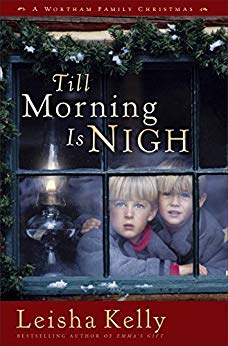
Book Review: Till Morning Is Nigh

Till Morning Is Nigh: A Wortham Family Christmas by Leisha Kelly comes about in the middle of her six-book series about the Wortham family. I finished the series back in September but wanted to save the Christmas story until now.

The Wortham family had been down and out during the Depression. With their last hope of a job fallen through, they hit rock bottom. They took shelter in an abandoned house, then got the idea that perhaps the owners would let them stay there in exchange for fixing up the place. The owner was an elderly woman named Emma who took a chance on the family. She had not been able to live home alone, but the Worthams eventually moved her back into her home with them, and she became a grandmother and mentor to the family. That was back in Book 1, Julia’s Hope.

This story opens several years later. Emma has passed away as has the Wortham’s neighbor, Mrs. Hammond, a mother of ten children. George Hammond had been devastated and unstable after his wife’s death, and the Hammond children often spent as much time at the Wortham’s house as their own.

George had seemed to settle down for a while. But now it’s the first anniversary of his wife’s death, and he’s missing. The older children think perhaps he has drowned his sorrows in a drinking binge, but they fear worse. Some of the middle children are angry. The younger children are just sad and afraid. The Worthams take them all in and try to help. On top of everything else, some of them have the flu.

While nursing the various sick ones, keeping everyone fed, praying and worrying, Samuel and Julia Wortham try to prepare a meager Christmas and discuss what they should do if the worst has happened to George.

When a friend tells Julia, “I don’t know how you do it,” Julia responds, “I don’t. Whatever you think I’m accomplishing, I really can’t manage at all. Nothing but the good Lord could have gotten me through this holiday.”

Someone suggests that they make a Nativity scene out of what materials they have. The project starts out as a diversion but eventually becomes meaningful in various ways to different ones.

This story is a reminder that not all Christmases are giddy parties. Sometimes deep grief and stark need prevent the usual Christmas we’ve come to expect. But joy, love, and light can shine in and touch hearts.

I think this book could be read easily as a stand-alone. Enough of the back story is explained that readers new to the series wouldn’t feel lost. But the story is richer for having read the rest of the Worthams’ books. I enjoyed them all, so I recommend them all to you.

(Sharing with Grace and Truth, Carole’s Books You Loved, Booknificent)

Book Review and Giveaway: Catching Christmas

 In Terri Blackstock’s novel, Catching Christmas, Finn Parrish is a grumpy cab driver called to the house of an old woman named Callie. First he’s put out to make a residential call, as he needs money and can make more in the city or at airports. Then he finds the old woman alone and asleep in her wheelchair. She wakes up and introduces herself—and continues to fall asleep, wake up, and introduce herself for the rest of their time together. When she is awake, she makes unfiltered comments on the people she sees.

Finn takes her to her doctor’s office and tries to explain to the distracted receptionist. He leaves for a few hours, but can’t get his mind off Callie. He drives back by the doctor’s office to check on her, and finds her asleep right where he left her. He makes a fuss insisting that they see her now and waits for her, then takes her home. He leaves his card in case she needs help and wonders what kind of loved ones she has, that they would leave her in such a state.

Callie’s granddaughter, Sydney, is a lawyer in a firm that is downsizing. Her job is hanging by a thread, dependent on her current ridiculous case, one she doesn’t believe in. On top of the extra work created by layoffs, her grandmother suddenly seems to be not quite in her right mind. She wished she could have accompanied her to the doctor, but they both need her job.

The next day Finn gets an early call from his dispatcher. A customer has requested him by name. He’s thrilled until he finds out it’s Callie. She wants him to take her several places in town. He doesn’t want to be stuck with her all day, doesn’t want to be responsible for her, and can’t afford to spend his day on one fare. But he goes. Callie has a way of talking people into what she wants, and she has a secret mission.

This book is outside Terri’s usual suspense dramas (though there’s a touch of suspense when a black limousine shows up). But I’m so glad she wrote it. It’s a sweet and touching story, just right for the holidays. Finn and Sydney don’t have much of a spiritual foundation, but they’re impacted by Callie and some of the people in her life. The faith element is not spelled out quite as much as I’d like: Finn and Sydney are just beginning to understand what it means. But it’s a strong undercurrent.

I also enjoyed reading Terri’s afterword about the influences that went into the story.

I’d like to give away my gently-used copy of this book. If you’d like to enter a drawing to win it, leave a comment on this post. I’ll draw a name on Wednesday morning, Dec. 18, the same day as my giveaway for The Carousel Painter. You can enter both giveaways but only win one: if you’d like to enter both but have a preference of one over the other, let me know. Due to mailing costs, I can only ship to continental US addresses. I’ll count all comments on this posts as entries for Catching Christmas unless you ask me not to.

Even if you don’t win, I hope you’ll check out this great book.

(Sharing with Global Blogging, Senior Salon, Carole’s Books You Loved, Booknificent)


(Update: The giveaway is closed and the winner is Becka. Congratulations, Becka!)

Book Review and Giveaway: The Carousel Painter

In the novel The Carousel Painter by Judith Miller, Carrington Brouwer has just traveled from France to Ohio. Her artist father has died and Carrington needs to find a means to support herself. She had befriended a young American women visiting France named Augusta, who had invited her to Ohio. But now Augusta’s mother, preoccupied with climbing the social ladder, is clearly not pleased. When Carrington learns that Augusta’s kindly father owns a carousel factory and needs an artist to paint the horses, Carrington assures him she could perform the job.

He hires her, but it’s uncommon for a woman to work in a factory full of men in 1890. Some protest and complain; some of the wives accost Carrie in public to try to scold her into quitting. Some men go so far as to quit or sabotage her work. Her supervisor, Josef, is not happy to have her there, but he can only abide by the boss’s wishes. The fact that Carrie is a friend of the boss’s daughter, and Carrie goes to their house every weekend, doesn’t sit well with the men, either.

Eventually Carrie’s talent speaks for itself. But a new enemy arises in the form of Augusta’s suitor, who has eyes for Carrie. Then some of Augusta’s mother’s jewelry is stolen, and Carrie is blamed.

Carrie’s mother had taken her to church, but her father “said God was for weak people who needed a crutch to get through life. Mama didn’t agree. She said believers were the strong ones because they had faith in something beyond what they could see and feel. I tended to agree with Mama. At least until she died.” Part of Carrie’s journey is realizing she has issues with besetting sins like pride.

I enjoyed the story and they way some of the relationships developed over the course of the book. Josef ended up being my favorite character. I also liked learning the background of how carousels were manufactured and painted. I guess they are probably made of molded and dyed plastic now. The old ones were individual works of art. I loved the cover.

Somehow I ended up with both a paperback and Kindle copy of this book. I read the Kindle version, so I’d like to give away the paperback. If you’d like to be entered in the drawing for the book, just leave a comment on this post. (I’ll take all comments here as entries unless you let me know you’re not interested in receiving the book). I’m afraid I can only ship to US addresses due to shipping costs. A week from today, Wednesday, Dec. 18, I’ll draw a name from the entries to determine the winner.

(Update: The giveaway is closed and the winner is Vickie. Congratulations!)

(Sharing with Carole’s Books You Loved, Booknificent)

Book Review: Engaging the Scripture

I enjoyed Deborah Haddix‘s Journaling for the Soul so much, I bought her new Engaging the Scripture: Encountering God in the Pages of His Word not long after I first saw it.

I love that Deborah emphasized engaging the Scripture—not just reading an assignment, not just searching for information. Rather, “we are to read intentionally with the purpose of hearing from God, knowing Him, deepening our relationship, and nourishing our soul” (p. 28).

Deborah has chapters on the importance of God’s gift of His Word, dealing with distractions, further explanation about what’s involved in engaging the Scripture. Then she has a chapter for each aspect of engaging Scripture: reading, writing, meditating, memorizing, and praying it. A later chapter shares ways to interweave these practices (meditating while memorizing, praying verses while writing them, etc,)

Each chapter is fairly short: three to six pages of text, a page of personal reflection about the chapter, a section on resources for implementing the chapter, and a practice page or two.

Each chapter includes multiple ideas for engaging, with the encouragement to chose which works best with your wiring, schedule, and season of life. Tidbits of advice, encouragement, and wisdom are interspersed throughout the pages. Just a few:

Experiencing distractions during our quiet time does NOT make us a failure (p. 34).

Overwhelm often results in total abandonment. Start small. Experience success. Then incorporate additional ideas as you move forward (p. 39).

The physical food we take into our physical body does not nourish us unless we properly digest it and take it into our cells. Just as physical food is needed for physical strength, spiritual food is necessary for spiritual strength. The Word you read (the spiritual food) must be chewed, digested, taken into your being, and one way to chew your food is by memorization (p. 100).

Deborah has mastered the art of writing the way writers for the Internet are advised to: short paragraphs and lots of white space. The book isn’t long, but its style makes it seem even more manageable.

This is a wonderful resource that I highly recommend.

(Sharing with Carole’s Books You Loved, Recharge Wednesday, Booknificent,
Grace and Truth, Senior Salon, Global Blogging, Inspire Me Monday,
InstaEncouragment, Worth Beyond Rubies, Heart Encouragement)

Book Review: The Swiss Family Robinson

Finding a good translation of Swiss Family Robinson is not as easy as one would think.

The book was written by a Swiss pastor, Johann David Wyss, and originally published in 1812. Wyss wrote the story for his sons to teach about spiritual and family values, industriousness, and wise uses of plants and animals. One of his sons edited the book and one of them illustrated it (both named Johann, like their father, but with different middle names).

After that, the book passed through multiple hands which translated and added to or deleted from the story. I listened to an audiobook version and scanned a Kindle version which were alike at the beginning but had different characters and scenes in the second half.

The story, as I am sure you know, involves a family of two parents and four sons shipwrecked on an island somewhere in the East Indies. The family name is not Robinson: their last name is never mentioned. The book is styled somewhat after Robinson Crusoe: he is even referred to often in the book.

Their first order of business is to get as much as they can off the ship before it sinks and to find suitable shelter. They are able to gather some food from the ship, but then need to search the island to see what they can find.

Fortunately, the father has a wealth of knowledge of botany. He knows the scientific names of plants as well as their uses.  One book I read recently said ministers of a certain era were expected to know a lot about botany. That may be the case here, or it may have just been an interest of Wyss’, or he may have crammed as much as possible into the story as a teaching tool.

They also get acquainted with the fauna as well as the flora. They use some animals as food and tame others to help them in their work.

The first half of the book details how they discovered the resources of the island and made a place for themselves. The only real danger they run into is a pack of jackals.

At the end of this section (what I think is the end of the original book), the family is content on their island and want to remain there. They’ve constructed various building projects and have plans for a sawmill and other industries. The father’s only concern is that his children will be alone when he and his wife pass on.

In the version I listened to, the father then espies a vessel at sea after about four years on the island. He meets a couple of men from the ship and gives them the journal he has kept. The men were exploring the island to see if it was suitable for the ship to land. They plan to put their people on boats and bring them in the next day. But a storm drives them out to sea again, and the family fears they ship is lost.

There’s a lot more drama in the second half: a couple of serious injuries, a massive storm, encounters with “savages” from another island. They discover a European missionary and a widow with two daughters on this island. The ship they had encountered was not lost at sea, but eventually made it home, along with the father’s journal. Another ship comes back to find them, and then decisions are made as to their future.

In the Kindle version, which happened to be the Kingston translation and is apparently more well known, the time jump in the second half is closer to ten years. The family discovers a girl who has been shipwrecked, Jenny Montrose. Eventually a ship comes looking for her, and decisions have to made about everyone’s future.

The first part is interesting, but a little dry, since the only action is discovering certain plants and animals, building a couple of different homes, handling whatever problems come up. The second half drew me in more since there was more action.

The four boys’ personalities are well-drawn and distinct.

Christian values form a major part of the story. The father corrects the children in various ways (especially in manifestations of pride). The family prays together, keeps Sunday set apart, applies Christian principles to life. One example, when they first discover the sailors on the ship have left them behind:

See how those on whose skill and good faith we depended have left us cruelly to our fate in the hour of danger. God will never do so. He has not forsaken us, and we will trust Him still. Only let us bestir ourselves, and each cheerily do his best. Who has anything to propose?

All in all, it was an enjoyable story. It was written for young people, but I wonder how it reads for young people now.

Near the end, the father in the story writes:

And my great wish is that young people who read this record of our lives and adventures, should learn from it how admirably suited is the peaceful, industrious and pious life of a cheerful and united family, to the formation of strong, pure and manly character.

You’re probably familiar with the 1960 Disney film version (which added pirates to the mix). We saw it ages ago, but I’d like to see it again some time now that I’ve read the book. There have been various other film versions as well. When my children were young, we saw a cartoon series version from the viewpoint of a daughter.

Besides Wikipedia, a couple of interesting articles about the book are:

I read this book for the Classics in Translation category of the Back to the Classics challenge.

Have you ever read Swiss Family Robinson? What did you think?

(Sharing with Literary Musing Monday, Carole’s Books You Loved, Booknificent)

Book Review: Canteen Dreams

 Canteen Dreams is a novel based on author Cara Putman’s own grandparents. It was her first book, released eleven years ago. But Cara wanted to fine-tune and re-release it. This edition came out on 2017.

The story opens December 6, 1941. Audrey Stone attends a dance in her home town of North Platte, Nebraska, and is asked to dance by local rancher’s son, Willard Johnson. Willard is interested and wants to get to know Audrey better.

Then Sunday morning, the Japanese attack Pearl Harbor, and everything changes.

Willard’s brother, Andrew, was in the Navy. While the family waits to hear about Andrew, Willard would like nothing better than to enlist immediately.

But Willard’s father won’t let him. Farming and ranching are exempted occupations, since the country needs their work. Willard’s father feels he needs Willard’s help more than the military needs him.

Since North Platte is a railroad hub, and lots of troops come through on their way to service, someone gets the idea to offer the boys food and coffee during their brief stop. The young men are so encouraged and appreciative of the effort that the train stop refreshments grow into a canteen, with a nearby building, music, sandwiches, and a friendly atmosphere.

Audrey throws herself into working the canteen, on top of her full-time job as a teacher. She has little time for anyone or anything else, which doesn’t help her budding relationship with Willard.

Willard’s dissatisfaction with not being able to enlist grows into resentment and jealousy of the young soldiers at the canteen, which further impacts things with Audrey.

Both Willard and Audrey are believers and struggle with seeking God’s will for their lives. I liked their pastor’s counsel, especially these bits:

Let the sure hope we have in Christ build a bedrock of faith in your life. It’s the only way to survive a storm like the one your family has entered.

He is the vine, and we are the branches. We cannot expect to have the strength to lay down our lives, our rights, for others until we are firmly growing in a deep relationship with Christ. A superficial relationship is not sufficient. Without more, we will fail every time in our attempts to die, because we attempt to do it without the strength and love God gives.

This was a sweet story in itself, but knowing it was based on a real couple made it even more enjoyable.

(Sharing with Literary Musing Monday, Carole’s Books You Loved, Booknificent)

Book Review: Jessie’s Hope

 In Jennifer Hallmark’s debut novel, Jessie’s Hope, Jessie is a young woman who lives with her grandparents. An accident that claimed her mother’s life left Jessie in a wheelchair since childhood. Jessie’s father abandoned the family.

Jessie is engaged to Matt and looks forward to their marriage. But she wrestles with several issues. Does Matt really love her, or does he just feel sorry for her? Though she longs to be independent, she worries that she won’t be able to be the wife Matt needs. And she wonders about her father and whether she should try to look him up.

Jessie’s grandfather, Homer, wants to provide Jessie with a beautiful wedding, but funds are limited. He goes to a ritzy wedding shop to see what can be done, but can feel their scorn towards a poor farmer in overalls who couldn’t possibly afford anything in their shop.

The course to a perfect wedding never did run smooth (apologies to Shakespeare), and a variety of problems crop up before the big day.

A secondary story line involves Angeline. She works at the ritzy wedding shop and had a crush on Matt, but he rebuffed her. She’s jealous of Jessie and feels Jessie views her as an enemy. But then they are thrown together in unexpected ways.

This is a sweet story with a number of underlying themes: the difficulty and necessity of forgiveness, the need to yield to God’s control instead of our own and to walk with Him by faith, the need to help others.

I love the strong sense of place Jennifer created. The contemporary Southern setting is distinct without being overly romanticized. The dialogue is just what I grew up with:

“What can I do you for?’

“If it tweren’t one thing, it was another.”

The cover is lovely and fits in well with the story.

My only quibble is that when Jessie us talking with another girl about becoming a Christian, the conversation revolves around accepting God as one’s Father. I think probably the author put it that way because both girls had father issues, and even though earthy fathers fail and forsake us, our heavenly Father never will. However, there are people who call on God as Father who do not trust Christ as Savior. Jesus and his death on the cross isn’t even mentioned in the conversation. Perhaps the author felt this character had been exposed to other aspects of the gospel in earlier encounters with Christianity. But I wish this had been a little more clear.

Otherwise, this is an excellent book. At the moment it’s on sale for the Kindle app for $3.99. You can learn more about Jennifer at Alabama Inspired Fiction.

(Sharing with Carole’s Books You Loved)

Laudable Linkage

This is my latest collection of thought-provoking online reads:

Is the God of the Bible a Genocidal Maniac? HT to Challies. No, but some have made that accusation. Here is a thoughtful response.

When Joy Feels Far Away, HT to True Woman. “What do you do when you have tried everything, but joy still feels far away?”

How to Study the Bible. I have not had a chance to watch these videos yet, and I normally wouldn’t post something I haven’t checked out for myself first. But Jen Wilkin’s Women of the Word is one of my favorite books. An updated version has just been released, and Jen published a series of videos showing how to use the Bible study method she writes about.

A Stack of Bibles. “The power of the Reformation was the power of the Word of God in the hands of normal people.”

How to Hope in God When a Door Closes.

My Love Cannot Save You, HT to Challies. As deep and wide and strong as a mother’s love is, we’re still limited in how much we can protect our children. “I can’t prevent her pain or her tears, but I know the One who wraps his arms around her and catches every tear in a bottle, present and attentive to each one.”

How TO (and how NOT to) Raise a Monstrous Son, HT to Lou Ann. “For his own good, and for the good of all the women he will encounter in life, he needs you to stand up to him when he crosses the line, especially in regard to using his physical strength to harm others.”

Four Things the Princess Culture Gets Wrong, HT to True Woman. “Rather than jumping on the bandwagon of the mommy wars—to princess or not to princess—I’ve opted to reframe the concept according to biblical truth.”

Why NO ONE Should Object to Clean Teen Fiction. Believe it or not, some do! These are good reasons they shouldn’t.

I don’t follow many comics online, but xkcd is one. Here are a couple of recent entries:

Happy Saturday!

Book Review: The Printed Letter Bookshop

The Printed Letter Bookshop is the name of a book store as well as the title of Katherine Reay’s novel.

Madeline’s aunt Maddie, for whom she was named, has just died. Madeline has fond memories of staying with her aunt and uncle years ago and helping out in their bookshop. But some altercation came up between Madeline’s father and his sister. In loyalty to her dad, Madeline has kept her distance from Maddie.

Madeline thought she was going to make partner in her law firm, but she doesn’t. At a crossroads, she learns that Maddie has left her store, home, car, everything to Madeline. Madeline figures she will probably sell everything in a few months. For now she goes to check things out.

Janet was one of Maddie’s employees, the one who stayed with her in the last weeks of her illness. Janet has a kind heart but a crusty exterior, at least at first. Her base-level emotion is anger. Her marriage split up recenty, and her children, blaming her, want little to do with her.

Claire, Maddie’s other main employee, is a wife and mom. Her husband is a busy, successful consultant. Her children are constantly busy with friends, school, and activities. Her once close relationship with her daughter has cooled. Claire feels invisible.

Janet and Claire feel uneasy about Madeline, especially with her distance from her aunt and the uncertainty of her future plans for the shop. For them, the shop is their refuge, the place where they find purpose. But in working together and getting to know each other, the three women eventually form new relationships and gain new insights into themselves and each other.

The chapters rotate between the different womens’ points of view. I thought it odd that Madeline’s and Janet’s chapters were written in the first person and Claire’s in the third until near the end. But as Claire’s story unfolds, the reason for the difference in the story’s points of view becomes clear.

Katherine’s books all contain a wealth of literary references, usually to classics. With this story revolving about a bookshop and stories, literary references flow delightfully freely. Her list of classic and modern works referred to at the end covers three and a third kindle-sized pages.

A couple of my favorite quotes from the book:

That’s what books do, Maddie used to say; they are a conversation, and introduce us to ourselves and others.

You could lose yourself in a book and, paradoxically, find yourself as well.

I am from a different faith community than the main spiritual spokesperson in the book. I have dear friends within that community, but we know there are significant areas where we disagree. While I wish a couple of spiritual aspects were clearer, I felt the book did bring out some good spiritual truths.

I enjoyed the literary references and each woman’s unfolding journey individually and together. And I loved the book cover!

(Sharing with Carole’s Books You Loved, Booknificent)