Hebrews for You

Hebrews for You

Most New Testament epistles begin with who wrote the letter and who the audience is. The author of Hebrews does neither. He appears to be someone familiar with the apostles’ teaching. He might even have been an apostle himself. He references the Old Testament. and seems to assume his audience would be familiar with it. Thus we believe he’s writing primarily to Jewish Christians. Many were undergoing persecution for their belief in Jesus and the prophesied Messiah. Some felt maybe they should go back to the Jewish traditions they had been taught.

The main theme of the book is that Jesus is better: better than angels, better than Moses, better than God’s previous revelations. His priesthood, according to the line of Melchizedek Psalm 110:4), is better because it’s eternal. His sacrifice is better because He only had to offer it once; He didn’t have to offer sacrifices for His own sin because He didn’t have any sin.

There are stern warnings at the end of each section–warnings against apostasy, against failing to enter God’s rest.

Probably most people who know anything about Hebrews are familiar with the “hall of faith” in Hebrews 11: the detailed list of people in the Bible who did follow Jesus in faith. They weren’t perfect; some on the list are a surprise. They are an encouragement to us to keep following.

This chapter also tells us, “And without faith it is impossible to please him, for whoever would draw near to God must believe that he exists and that he rewards those who seek him” (verse 6).

Chapter 12 urges readers to endure God’s discipline as a loving father and reminds us of the coming kingdom that cannot be shaken. Chapter 13 ends with practical instructions and applications.

One of my favorite verses in the book comes near the end in chapter 13, verses 20-21: “Now may the God of peace who brought again from the dead our Lord Jesus, the great shepherd of the sheep, by the blood of the eternal covenant, equip you with everything good that you may do his will, working in us that which is pleasing in his sight, through Jesus Christ, to whom be glory forever and ever. Amen.” What a magnificent prayer that we can pray today.

Even though the first audience was Jewish, we Gentiles benefit from reading the book today. The truth it contains is applicable to all. We’re spiritual children of Abraham by faith (Galatians 3:7-9) and we’ve been grafted in (Romans 11). We don’t replace Israel. But we’re part of God’s family. So all this truth pertains to us, too.

If you’ve read through the first five books of the Bible, especially if you’ve gotten lost in Leviticus, reading Hebrews will really help in understanding.

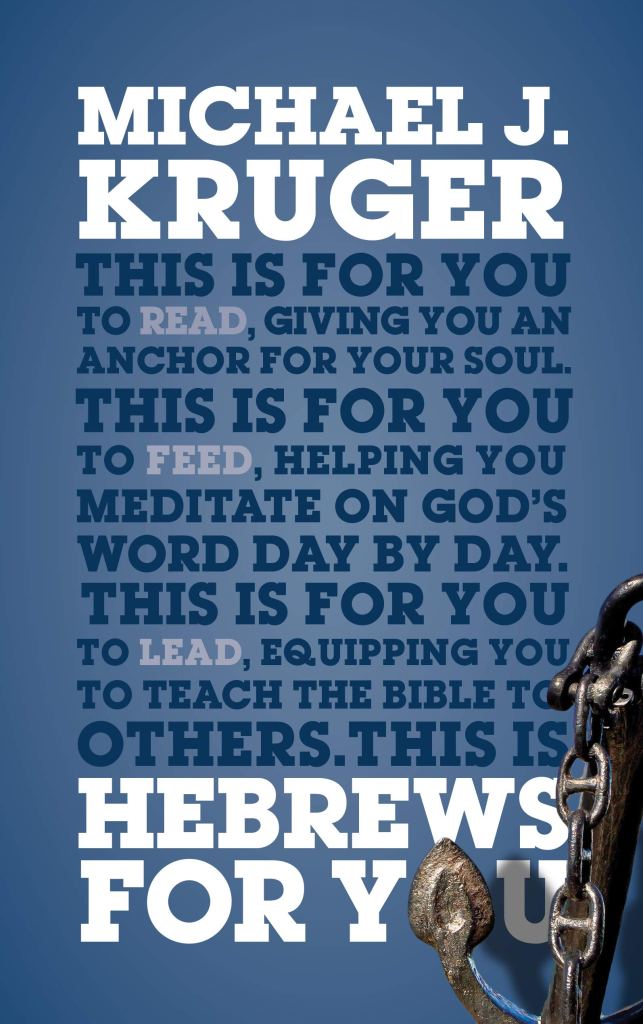
Our ladies’ Bible study has been reading Hebrews this semester using Michael Kruger’s book, Hebrews for You: Giving You an Anchor for Your Soul as an aid. I appreciated the author’s thoughtful insights as he went verse by verse through the book.

Some of the quotes I marked:

The old covenant was not false or wrong. But it was provisional and partial. “The law has but a shadow of the good things to come instead of the true form of these realities [Hebrews 10:1]” (p. 136).

Since God’s word is empowered by the Holy Spirit, when we encounter the word, we encounter God. It is through God’s word that we meet him, learn from him, and have fellowship with him (p. 61).

The word of God is not just a way to get to know God but also a way to get to know yourself. When you read the Bible and let it penetrate your heart, you will see things about yourself that you never saw before. You will see your real intentions, your real motives, and your real character. This is a good thing because there is rot and mildew built up in our hearts which need to be exposed (p. 65).

People in our world today sometimes embrace doubt and uncertainty as things worth striving for in themselves; Christians, by contrast, believe that there are certainties, even though we may find it difficult to hold on to them. So, when we have those struggles with doubt, we fight them. We look for reassurance from God (p. 164).

God does not promise that if we follow him we will have health and wealth—becoming successful or rich. There is a sad trend in evangelicalism today of teachers claiming that if you follow God it will make your life better in earthly ways. Of course, it is better to follow Jesus; but that does not mean bigger bank accounts or more popularity. This is not your best life now (p. 190).

Hebrews has some difficult passages, but Kruger’s commentary helped shed light on them.

I’m happy to recommend this book.

(I often link up with some of these bloggers.)

Two Books by Patti Callahan Henry

I’ll say upfront that I have mixed emotions about these two books by Patti Callahan Henry. I’ll explain why a little later.

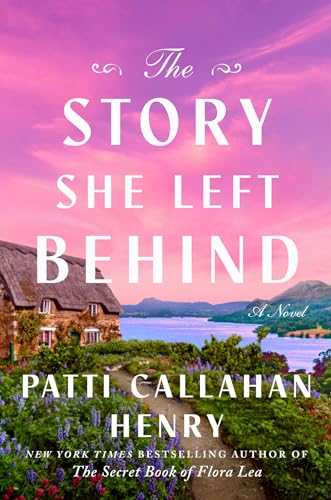
In the first one, The Story She Left Behind, Clara Harrington lives in Bluffton, SC in 1952. Her mother, Bronwyn, was a child prodigy who wrote a best-selling book at the age of twelve. But Bronwyn disappeared twenty-five years ago, taking her dictionary of a language she had created with her. The family’s boat was found, but Bronwyn and her dictionary were not. Most assumed both were at the bottom of the sea.

Clara was eight when her mother disappeared, and she lived under the shadow of that event all her life. Now she’s a divorced mom with an eight-year-old daughter. They live with Clara’s father. Clara is a successful children’s book illustrator who is about to receive the Caldecott medal.

Then one day, out of the blue, Clara receives a phone call from England. A man tying up his father’s affairs found an old satchel in his father’s study. Inside was a stack of papers with words he couldn’t understand, along with a note and a sealed letter addressed to Clara. The note said the contents of the satchel were to be given only to Clara in person. They must not be mailed.

At first, Clara thinks the caller is another scammer, looking for information or seeking remuneration for false information. But as the man, Charlie, describes the satchel and reads the note, Clara realizes they are truly her mother’s.

With her father’s help, Clara and her daughter, Wynnie, take a ship and then a train to England.

The story was inspired by a true one concerning Barbara Newhall Follett, a child prodigy who wrote a book at age eight and had it published at age twelve. She also developed a language for her stories. And she disappeared at age 28. But the comparisons seem to end there. She didn’t have a daughter, and nothing is known about her since her disappearance.

The bones of Henry’s story are very good. I enjoyed the unrolling of the mystery. I liked the historical references, including Beatrix Potter and T. S. Elliot. Clara and Wynnie arrive in London during the “great smog,” a period of several days in which London was covered in an unusually thick fog caused by weather conditions and coal used for heating. Some 4,000 people died and a hundred thousand more were made ill by the air. I had also read of this in Christmas with the Queen by Hazel Gaynor and Heather Webb. In Henry’s story, the smog causes a crisis for Wynnie, who has asthma.

In the two previous books by Henry that I have read, Becoming Mrs. Lewis and Once Upon a Wardrobe, the author expressed some Christian-ish beliefs. That may have been just because C. S. Lewis, a major character in each book, was a Christian. I don’t know what Mrs. Henry’s personal beliefs are. But this book was thoroughly secular. That’s not so much a problem in itself–I wouldn’t expect anything different from a non-Christian. But I was very sorry to see a sex scene in the book plus continued reference to two characters sleeping together. One is even concerned that the other will somehow think less of her because she had only been intimate with her husband until now.

There were a lot of references that made me think the book was going to delve into magical realism. Emjie is the main character in Clara’s mother’s book and also Wynnie’s invisible friend (Wynnie insists she is invisible, not imaginary). There’s talk of Emjie being “sent” to Wynnie. Gaelic curses are mentioned, plus a couple of times the author writes variations of “All things are one and we are all things.” I’m not sure what philosophy that comes from, but I disagree with it.

There was a lot of repeat information, a lot of convenient coincidences, a smattering of “damns” and similar words and way too much taking the Lord’s name in vain. The romance developing over ten days seems unrealistic.

I listened to the audiobook wonderfully narrated by Julia Whelan and Theo Solomon. And I appreciated that the author’s end notes were included, which isn’t often the case in an audiobook.

Wild Swan

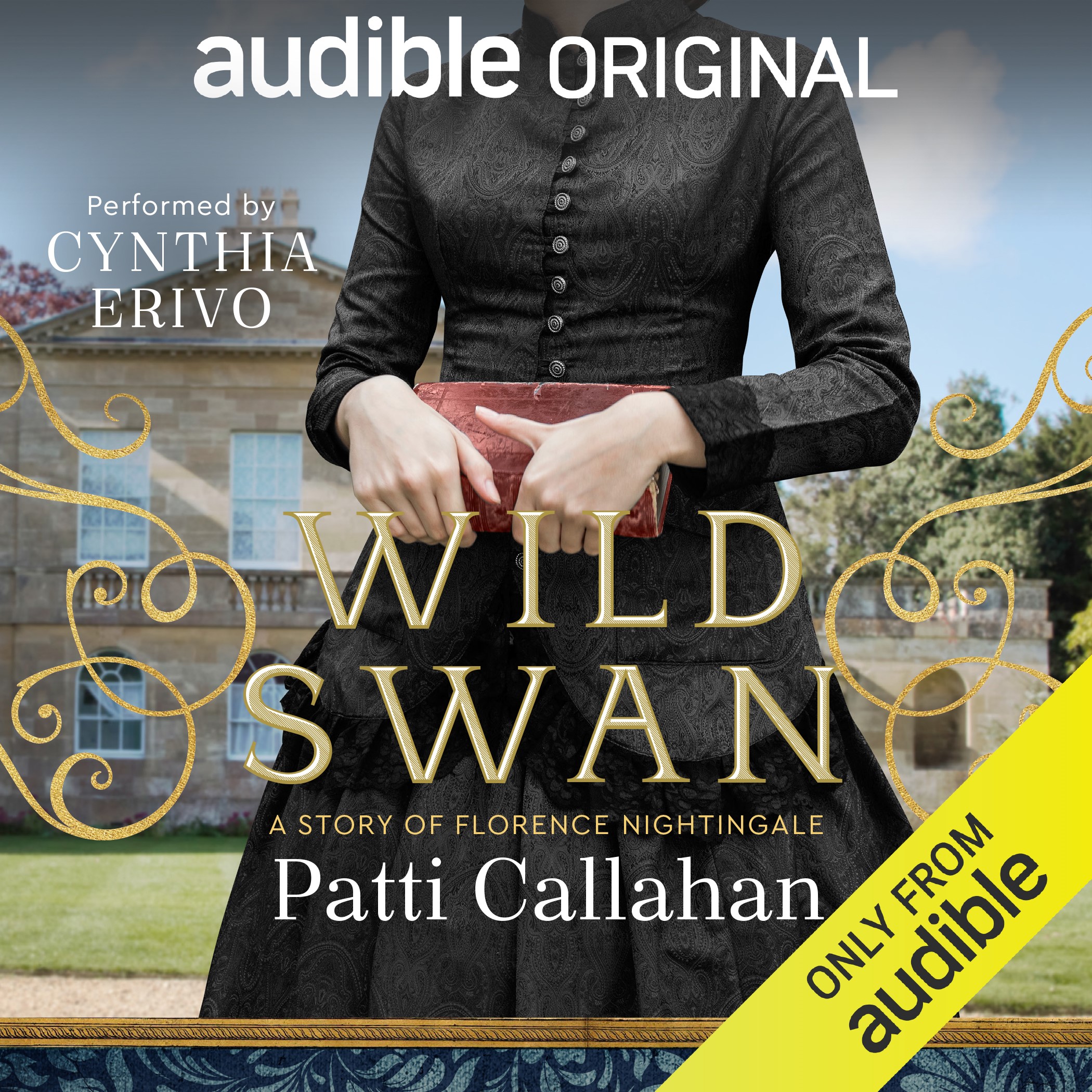
Wild Swan is only available on Audible at this point, and is included with an Audible membership. It’s short, less than two hours. This book tells about Florence Nightingale’s “calling” to become a nurse in an era when cultured, privileged young ladies did not do such things.

When Florence accompanies a friend and her ailing husband on their travels, she spends two weeks at a religious medical community in Germany. The simple, almost spartan lifestyle appealed to her. She felt confirmed in her calling as a nurse.

But when she returned home, her mother and sister called her ambition selfish and said they needed her.

The rest of the story tells her inward struggles and her family’s eventual agreement to let her pursue her calling. A brief few paragraphs at the end tell of her accomplishments as well as a scene at the beginning when she meets with Queen Victoria.

This audiobook was narrated by Cynthia Erivo, who did a great job except for speaking a little too quietly sometimes.

I thought this story was very good. Mrs. Henry portrays Florence as a little too “Woe is me,” but then, she would have been greatly frustrated at being expected to fritter away her life in idle pastimes when she wanted to be useful.

The is the second book of Henry’s in which she compares mountains or hills to a resting woman’s breasts. I don’t see any need to inject a sensual element into such descriptions. It made a little more sense for Joy Davidman in Becoming Mrs. Lewis, but it doesn’t seem like Florence would think in those terms.

Several times, Henry has Florence referring to the Victorian era or Victorian women. I wondered if that term would have been used during Queen Victoria’s lifetime. Perhaps so. But it seems like people in later eras would have referred back to this time as Victorian rather than the people living during that time.

Henry is a gifted writer, and her books are wildly popular (the library’s waiting lists for both the print and Kindle versions of The Story She Left Behind had about thirty people each). Once Upon a Wardrobe was my favorite and had the fewest objectionable elements. Personally, though I liked the main stories in each book, I had reservations about some of the content.

(I often link up with some of these bloggers.)

Review: The Return of the King

The Return of the King

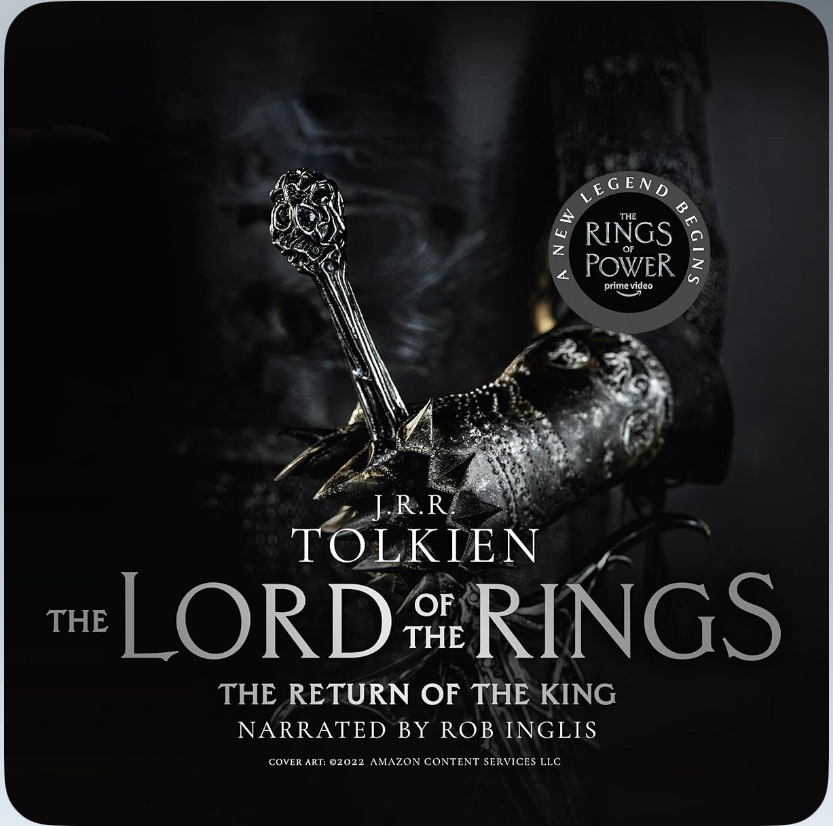
The Return of the King is the third in J. R. R. Tolkien’s trilogy, The Lord of the Rings.

If you’re not familiar with the story, the ring in question was created by Sauron, originally an angelic-type creature who rebelled against his creators. There were actually nine rings made, but that’s a different story. The “one ring” somehow had the power to influence those who had the other rings and would grant Sauron dominion over everyone in Middle Earth. The ring and its power could only be destroyed by being tossed back into the fires of Mordor, from which it was made.

The ring had been lost for thousands of years, but was found by Bilbo Baggins in The Hobbit.

The Fellowship of the Ring told of a group of nine companions on a mission to take the ring to Mordor: Gandalf the wizard; Frodo, the designated ring-bearer and Bilbo’s nephew; Samwise Gamgee, his friend and servant; two more hobbits, Merry and Pippin; one elf, Legolas, a dwarf, Gimli; and two men, Boromir and Aragorn. Aragorn is also know as Strider and is the long-awaited heir to the throne of Gondor, though not everyone knows that at first.

The rest of FOTR and the second book, The Two Towers, tell what happened to the group on their long and dangerous journey.

At the beginning of The Return of the King, Frodo and Sam have been separated from the rest to continue their journey to Mordor. But Frodo had been captured and imprisoned. Sam braves various dangers to rescue him.

Meanwhile, Sauron has sent a great army or orcs (vile creatures) and other beings to Gondor. Gandalf and Pippin go there to warn the steward.

Aragorn, Legolas, and Gimli gather help from an unusual source and Merry joins them to battle Sauron’s troups.

There are a number of subplots with the steward of Gondor and his son (Boromir, his favorite, died, and Faramir, his younger son, isn’t appreciated until almost too late); the area of Rohan with its famous riders and their joining in to help, Merry and the king of Rohan’s daughter being severely wounded, and all kinds of other things going on.

The one ring negatively affects those who have it, especially if they wear it for any length of time. The ring grants the wearer invisibility but builds a craven desire to keep it, plus awakens Sauron to its presence. Frodo is beyond weary with all he has suffered on his long journey plus the increasing influence of the ring the closer he gets to Mordor.

After the last great battle, the fellowship splits up and we see each one as he goes back to his land and people. I didn’t realize that there would be a fairly long section when the hobbits arrive back to the shire. It had been taken over by “ruffians,” and took some time and effort to set right again. The hobbits were not very adventurous folks, but Merry and Pippin had fought orcs and other evil beings. They were not about to put up with some ruffians!

Tolkien said he disliked allegory and didn’t write his saga of the rings that way. But he did feel fairy stories and myths could convey truth. It’s not hard to see Sauron as an instrument of Satan. And the king of Gondor coming into his long-awaited throne has some parallels with Christ, especially in this quote:

But when Aragorn arose all that beheld him gazed in silence, for it seemed to them that he was revealed to them now for the first time. Tall as the sea-kings of old, he stood above all that were near; ancient of days he seemed and yet in the flower of manhood; and wisdom sat upon his brow, and strength and healing were in his hands, and a light was about him (p. 121).

Some of my other favorite quotes:

Yet it is not our part to master all the tides of the world, but to do what is in us for the succour of those years wherein we are set, uprooting the evil in the fields that we know, so that those who live after may have clean earth to till (p. 73).

In that hour of trial it was the love of his master that helped most to hold him firm; but also deep down in him lived still unconquered his plain hobbit-sense: he knew in the core of his heart that he was not large enough to bear such a burden, even if such visions were not a mere cheat to betray him (p. 83).

As a sweet rain will pass down a wind of spring and the sun will shine out the clearer, his tears ceased, and his laughter welled up, and laughing he sprang from his bed (p. 111).

It must often be so, Sam, when things are in danger: some one has to give them up, lose them, so that others may keep them (p. 154).

And this from the appendix: “Let us not be overthrown at the final test, who of old renounced the Shadow and the Ring. In sorrow we must go, but not in despair. Behold! we are not bound for ever to the circles of the world, and beyond them is more than memory” (p. 174).

My favorite quote of all comes when Frodo has reached the end of his strength, and Sam says, “Come, Mr. Frodo! I can’t carry [the ring] for you, but I can carry you and it as well” (p. 105).

On a side note, for many years, we avoided anything to do with witches, wizards, magic, etc., in stories and film. I had to think through those things when the LOTR films came out and the kids wanted to see them. I wrote more about that here, but I concluded most “fairy tale magic” is a different thing than the occult. Gandalf is more like a wise superhero than what we think of as a wizard. But these things require caution and discernment: I’ve seen some alarming aspects of some stories containing “magic.”

Both the audiobook (nicely read by Rob Inglis) and the Kindle version have appendixes at the back, but they are not the same. The audiobook has sections explaining the different races and their characteristics, a history of the kings, a more detailed account of Aragorn’s and Arwen’s lives and romance, a brief account of events in The Hobbit, and a few others. The Kindle ebook has “Annals of the Kings and Rulers,” family trees, a shire calendar, and information about writing and spelling in some of the languages of the book.

I read The Hobbit and the first two books of this trilogy years ago. I had started The Return of the King, but then didn’t finish it when the Peter Jackson films came out. I always meant to get back to it but never did. After I read The Silmarillion (Tolkien’s history and mythology of the world he created in these books), I thought about reading The Return of the King. I wasn’t sure I wanted to get into another lengthy foray into Middle Earth. But then I thought it might be good to read the last book while all the information in The Silmarillion was still fresh. That turned out to be true: I “got” many references that I think I would have otherwise missed.

I almost wish I had started again at The Hobbit and read all the books through. But I am sure I’ll read them again some time.

I thought it would take a little while to get back into Tolkien’s world. But it didn’t: I was caught up in it again right away.

There are many things to love about these books. Yes, they go into much more detail than if they had been written in modern times. But the older style of writing fits in with a story of ancient lore. Tolkien put so much time and thought into the stories, even inventing different languages for the different races.

But what I love most of all is the truth of human nature they contain, and the bravery, heroism, and overcoming evil as well as one’s own limits to accomplish a great quest. And the books contain a couple of sweet love stories as well.

(I often link up with some of these bloggers.)

Review: All the Lost Places

All the Lost Places

In All the Lost Places by Amanda Dykes, Daniel Goodman is a former thief in 1904 California who is trying to make restitution. He saves money from his lowly wages to repay those he robbed from. He has not seen his mother since he got out of prison: he feels he can’t face her until he has righted his wrongs.

When he hears that his mother may lose her home due to lack of finances, he looks for additional work. A seemingly chance encounter finds him interviewing with a man whose boss wants to make a “little Venice” in CA. At first Daniel applies just for physical labor. But upon finding out that someone is needed to translate one of Daniel’s favorite books and travel to Venice to sketch famous buildings, Daniel pushes hard for that role. His mother had come from Venice. She had sent him the book in question when he was in prison. He used to be able to draw–a head injury has left him unable to draw from memory any more, but he can draw something if he can see it.

The man is skeptical at first, but when Daniel draws a nearby building for him, the man agrees.

Daniel had kept himself pretty isolated after his prison confinement, so traveling and interacting with so many people is a strain on his nerves. He barely arrives in Venice when he literally runs into Vittoria, a bookseller. One of his tasks is to try to find the original copy of the book he’s supposed to translate, The Book of Waters. Daniel’s copy is one of only a few, which are all unfinished. It’s hoped that the original will have the closing chapters. He enlists Vittoria’s help to try to find the book.

As Daniel translates, he’s drawn into the story of Sebastien, who was put in a basket and floated toward an orphanage in Venice in 1807. Instead, a gondolier notices the basket, picks him up, and takes him to a guild of five artisans, who adopt him and train him in each of their skills. Though Sebastien loves his blended family, he wrestles all his life with his identity and purpose. One day, a woman washes up on the shore of the island Sebastien lives on, changing both their lives forever.

Sebastien’s story occurs when Napoleon had taken over Venice. Some Venetians planned that at some point, they would revolt and set up their Doge, or governor.

Sebastien and Daniel wrestle with some of the same questions. Though Daniel knows his origins, he can’t free himself from the guilt and losses of his past. Yet just as Venice was “the city that came from a swamp . . . a lost place that grew hope,” perhaps God can build something new and beautiful on the swampy places of a man’s life.

The Napoleonic era is one I know very little about, and I was glad to learn more of that time frame and Venice’s history. Amanda shares a lot of interesting details in in her end notes, including the fact that an Abbot Kinney really did build a “Venice of America” in CA in the early 1900s.

Some of the quotes that stood out to me:

Isn’t that the way of miracles? Something extraordinary because of the faithful ordinary (p. 53, Kindle version).

Found means someone was searching for you, running after you. You, the greatest treasure in all the world. That is what Trovato—Found—means. Sebastien Trovato, you are Found. Always and forever (p. 74).

Life had taught them hope was a dangerous and fragile thing . . . Faith sang a different song: hope was as necessary as breath, and so strong that it carried its own heartbeat (p. 115).

He dug instead for the tiniest slip of hope. And in doing so, hope became . . . purpose (p. 120).

Mosaic . . . it is the art of empty spaces. Broken things, harvested as treasure and pieced together into something entirely . . . different. Old, but new. Broken, but whole (p. 219).

“Do not be downcast, O your soul!’” He raised his face to the sun, reciting a psalm—or what sounded like one.
“Do you mean ‘O my soul’?”
“My soul is very happy in this moment. I mean your soul” (p. 249). 

Perhaps you are becoming a new tool for a new work. God is not bound by the way things used to be (p. 254).

She stood before him, inches and a universe away, all at once (p. 285).

Amanda’s writings always touch the heart. This book took a little longer for me to get into than some of her others, but I loved how all the threads came together in the end.

(I often link up with some of these bloggers.)
Review: Daniel for You

Daniel for You

The Biblical Daniel was a young man, probably a teenager, when he and others were taken captive and exiled to Babylon. He ended up spending his entire life in exile. The first six chapters of the book of Daniel show him and his friends living for God in an atmosphere that’s foreign to them and their beliefs. The last six chapters share visions and messages given to Daniel that reach far into the future, even to end times.

In Daniel for You, David Helm posits that, though God gave His people into the Babylonians’ hands as punishment for their disobedience and idolatry, He had additional purposes in mind.

This book shows that God intends to do more than merely judge an ungodly nation. Instead, he offers a saving word to those under his wrath—his deserved, settled anger. And for that, he will need his people dwelling there. They will need to be at home in Babylon, revealing God’s king and kingdom in ways that ultimately find their fulfillment in Christ (pp. 8-9).

Daniel and three of his friends were among those chosen to be educated, assimilated into Babylonian culture, and taken into the king’s service. They were given Babylonian names. One of their first challenges came with the food apportioned to them.

Daniel felt that eating the king’s food would be defiling to him. Helm shares different reasons that might be the case, among them the possibilities that the food violated Israel’s dietary laws, or possibly had been offered to Babylonian idols. But Daniel doesn’t rail against this requirement. He very respectfully asks the person in charge of them if they could eat vegetables and water for ten days and see how they fared. At the end of that time, Daniel and his three friends “were better in appearance and fatter in flesh than all the youths who ate the king’s food” (Daniel 1:15). So the steward let them eat what they wanted.

This set the tone for the rest of Daniel’s interactions. He never seemed hateful or bitter. He seemed to genuinely care about the king when he had bad news to deliver.

In addition, Daniel was faithful to God, praying three times a day toward Jerusalem, even when threatened with the lion’s den for doing so.

Besides the famous lion’s den story, Daniel contains the account of his three friends who were threatened with the fiery furnace for not bowing down to the king’s statue. Their famous words continue to encourage us in our day: “Our God whom we serve is able to deliver us from the burning fiery furnace, and he will deliver us out of your hand, O king. But if not, be it known to you, O king, that we will not serve your gods or worship the golden image that you have set up” (3:17-18).

And then there’s Nebuchadnezzar’s fall from pride to live like an animal for seven years, until he acknowledges God and is restored to sanity and to his kingdom.

To a mother, Daniel is an encouraging example that young people can live in an ungodly culture and not be taken in by it: they can be “in the world and not of it,” and even more, be a testimony to it.

Daniel is also a stellar example of standing faithful to God in a way that is not condescending or demeaning to those who don’t believe as he does.

The second half of Daniel’s book is what Helm calls apocalyptic literature, which he defines as “an unveiling–a pulling back of the curtain on the unseen transcendent world and its role in bringing this present world to an end (p. 127).

These chapters in Daniel contain some of the most argued-over passages of the Bible. But Helm encourages us not to get lost in numbers and predictions and to remember the purposes for which God gave these visions and dreams to Daniel. They show God’s sovereignty over world affairs, the fact that He has a timeline in mind, His care for His people, His remembrance and faithfulness to His covenant.

In fact, these themes are woven throughout Daniel. One section of Helm’s book that had the biggest impact on me was his pointing out the phrase “The Lord gave” in chapter 1.

  • “The Lord gave Jehoiakim king of Judah into [Nebuchadnezzar’s] hand” (verse 2).
  • “God gave Daniel favor and compassion in the sight of the chief of the eunuchs” in charge of their food (verse 9).
  • “As for these four youths, God gave them learning and skill in all literature and wisdom, and Daniel had understanding in all visions and dreams” (verse 17).

Even though I know looking for repeated words or phrases is a key factor in Bible study, somehow I never noticed these or put them together.

Helm also brings out how various parts of the book point to Christ.

Some of the other quotes that stood out to me:

What Daniel has to offer us is the same thing those first readers must have gleaned: a knowledge that God is still at work, and a confidence that as with those who came before us, it is possible to remain faithful to Christ in our own day and fruitful in our life work (p. 15).

The bulk of Daniel’s life (and ours) is orchestrated by God to be lived out in regulated and strikingly ordinary ways. If we are looking to be useful to him and his ever-expanding kingdom, we ought to be prepared to show up day after day, and decade after decade, simply playing our regular part in the melodic line he is orchestrating (p. 70). [This is said in the context that there are only nine events recorded over the seventy years of Daniel’s life. The rest of his days were “ordinary.”]

God is in the business of revealing himself to prominent, powerful people. He often uses a difficulty in life to get their attention, as well as an ordinary follower of Christ who is ready to speak into the situation (p. 84).

As followers of Christ, we don’t need to be happy about the humiliation of others. Remember, God intends to make a worshiper out of this king (p. 90).

I didn’t agree with every little point Helm made. But overall, this book was a great companion in reading Daniel.

(I often link up with some of these bloggers.)

Review: The Silmarillion

The Silmarillion by J. R. R. Tolkien is a collection of stories and history which precedes The Hobbit and The Lord of the Rings in its setting. Wikipedia says a draft of it was written after The Hobbit’s success, but it was rejected by the publisher. Tolkien went on to write The Lord of the Rings trilogy. After his death in 1973, his son, Christopher, edited, arranged, and added material to publish this book in 1977.

My volume has a foreword by Christopher, in which he says the notes and stories in The Silmarillion, though it wasn’t called that at the time, date back half a century earlier and were added to by his father even in his last years. Christopher writes that his father came to view this book as seeming like a compendium from different (fictional) characters, added to through the years. That helps account for differences of style and tone through the book. It also contains a few separate works and a short summary of The Lord of the Rings at the end. One of these stories was “The Rings of Power,” which the recent series is based on. Taken all together, this provides the history of Tolkien’s mythology.

This edition also contains a very long letter from Tolkien to an editor friend “justifying and explaining” why he thought The Silmarillion and the Lord of the Rings should be published together (for what it’s worth, I think it was wise to separate them). Christopher said he thought this letter was “a brilliant conception of his conception of the earlier ages,” so he included it here are well.

Tolkien says here that he dislikes allegory and writes in the style of myth and fairy tales, though he acknowledges both of those genres use allegorical language. These stories have to do with “Fall, Mortality, and the Machine,” though also with “Art (and Sub-creation) and Primary Reality.” (p. 2, Kindle version). He writes “I believe that legends and myths are largely made of ‘truth’, and indeed present aspects of it can only be received in this mode” (p. 2). C. S. Lewis said something similar: after he had written directly about spiritual truth in Mere Christianity and other books, he wove some of the same truths in stories.

The Silmarillion covers the first two “ages” of Tolkien’s stories, beginning with the creation of the world by Eru, also called Ilúvatar. The angelic-type being he created, the Ainur, then created other things through music. But “it came into the heart of one of them, Melkor [also called Morgoth], to interweave matters of his own imagining that were not in accord with the theme of Ilúvatar; for he sought therein to increase the power and glory of the part assigned to himself” (p. 4).

Some of the Ainur went to live on the world their music created. Later came Elves, called the Firstborn, and later still Men, called Followers.

Much of the book is good vs. evil, the rise and fall of individuals and empires. Some of it is written as history, but a few stories are interwoven.

I thought these lines were particularly apt:

Reward on earth is more dangerous for men than punishment! (p. 2).

There are three phases in their fall from grace. First acquiescence, obedience that is free and willing, though without complete understanding. Then for long they obey unwillingly, murmuring more and more openly. Finally they rebel–and a rift appears between the King’s men and rebels, and the small minority of persecuted Faithful (pp. 2-3).

The title comes from three rings, called the Silmarils crafted with the light of the Two Trees of Valinor before Melkor destroyed them. Melkor stole them and put them in his crown, but battles are fought for them later on.

In the latter part of the book, Sauron, something of a disciple of Melkor, becomes the main villain. He creates the “one ring to rule them all” which figures into The Lord of the Rings.

The wizards and hobbits don’t come into the story until the last few pages. Gandalf shares a line which will become a theme in LOTR: “Help shall oft come from the hands of the weak when the Wise falter” (p. 307).

I listened to the audiobook, read well by Andy Serkis, who played Gollum/Smeagol in the Peter Jackson LOTR films several years ago. I also have the Kindle version, and I think it might have been better to read it than listen to it. Though I enjoyed the audiobook, I found my attention wavering in the historical parts. Plus I think seeing all the names would have helped cement them in my mind.

Many individuals and groups have more than one name, which makes for some confusion at first.

Christopher Tolkien added an index of names as well as “family trees” of some of the main characters in the back of the book.

I was inspired to read this book after seeing the first two seasons of The Rings of Power. I’ll never be an expert on Tolkien lore, but that wasn’t my aim. There are several sites online where we can look up particular people, groups, or events in his books. But reading this did give me a better understanding of events in the LOTR. Some things clicked into place, like Aragorn’s heritage, the buried shards of a sword which are found in the later books, the ancestor of the evil giant spider Shelob, who attacks Frodo, the giant eagles who come to various people’s rescue, etc.

So, though this book doesn’t flow as well as The Hobbit and The Lord of the Rings, I’m glad I finally read it.

(I often link up with some of these bloggers.)
Review: What’s a (Dis)Organized Person to Do?

What's a Disorganized Person to Do?

Stacey Platt’s What’s a (Dis)Organized Person to Do? is subtitled 317 Ideas, Tips, Projects, and Lists to Unclutter Your Home and Streamline Your Life.

Stacey is a professional organizer and runs a company in New York with a wide variety of clients. One reviewer described this book as an organizer’s Pinterest board.

The book is organized according to different rooms in a house, except that the last chapter deals with trips and moves. Yet within each chapter are tips not just for the physical objects there, but for saving time and energy. Scattered throughout the book are one-hour projects, like organizing under the sink, the junk drawer, the bathroom vanity, or making a master grocery list.

I appreciated that the book was filled with specific tips, though some principles were discussed. Many books on organizing/productivity/time management that I have read are filled with broad principles, or are so rigidly organized as a whole system that they are overwhelming. This books lets you pick and choose what works best for you.

The book is probably meant to be dipped into as a reference resource rather than read straight through as I did. But I didn’t want to miss anything. 🙂

Some of the tips didn’t appeal to me; some I already used; some seemed like overkill. A few were outdated (this book was written in 2010. But I marked many tips to remember.

This appears to be the only book Stacey has written. I didn’t find a website for her. I did find one with her company name, but I am not sure it’s hers.

I can recommend this book as a good resource if you’re looking for organizational tips.

Review: Up from the Sea

Up from the Sea by Amanda Dykes

Amanda Dykes’ novella, Up from the Sea is a prequel to Whose Waves These Are, one of my all-time favorite Christian novels.

Savannah Mae Thorpe was raised in Georgia, but is taken in by an aunt and uncle in Maine after her parents die. Savannah is more comfortable walking in the forest than the ballroom with her cousins.

When her cousins and their friends tell of an old legend, Savannah recognizes it as a variation on a story her mother told of a young woman who buried a small chest under what came to be known as the Atonement Tree, asking forgiveness while an unknown observer watched.

When Savannah discovers an updated version of the map her mother drew as a child, she goes with her cousins and Alistair Bliss, a local woodsman and employee of the family, to see if they can find the tree. What they discover has ramifications for all of them.

Along with Savannah’s “fish out of water” story, there are hints of troubled secrets in Alistair’s past, Savannah’s uneasy relationship with the cousin she used to count as a friend, and some Revolutionary War history.

Some of my favorite quotes:

Darkness comes, Savannah my girl. But don’t you let it steal your light.

I have a feeling no matter how mixed up the problem is, the answer’s almost always the most simple thing hiding beneath all our worries. That if we scale it back and look for the simplest truth—there lies the thing to do.

So many dashed hopes between the three women present within, yet it felt like a gathering place. God’s hand moving and weaving, stitching these unlikely hearts to one another.

So far, I have loved everything I’ve read of Amanda’s. This was such a sweet story. I loved the development of Savannah’s relationship with Alistair (who becomes the father of the brothers in Whose Waves These Are). I think both books could be read on their own, but they go well together.

Review: Good Hope Road

Good Hope Road by Lisa Wingate

Good Hope Road by Lisa Wingate begins with a tornado hitting the small town of Poetry, Missouri. Twenty-one-year-old Jenilee Lane is home alone, her father and brother having gone to a cattle auction in Kansas City.. Their house is spared, but Jenilee discovers her elderly neighbor, Mrs. Gibson, and the woman’s granddaughter trapped under debris across their storm cellar.

Jenilee and her family had not been close to their neighbors. Jenilee’s father had a bad temper and kept the family to themselves. They were often regarded as “white trash” by the townspeople. But Jenilee is the only help available, so she gets her neighbors out from the cellar just before Mrs. Gibson’s son and daughter-in-law come.

To keep busy, Jenilee and Mrs. Gibson go to the armory, the only large building in town still standing. Along the way, Jenilee picks up pieces of debris she finds: parts of letters, pictures, certificates.

The veterinarian is the only medical help at the armory until a doctor stranded in the storm is brought in. Jenilee had worked for the vet and seems to have a natural way of calming frightened people while they wait for help.

Jenilee continues going to the armory while waiting to hear about her father and brother. One day she decides to tape the paraphernalia she found on a wall there so people can find their lost treasures. This blossoms into giving hope to people.

Mrs. Gibson begins to see there is more to Jenilee than she’d thought. She also runs into an injured man at the armory with whom she’d had a long-running feud. At first she can’t spare a kind word for him. But she sees sides to him that she had forgotten were there.

As neighbors help neighbors and helpers come from others areas, they see each other with fresh vision and discover good things can arise from tragedies.

The book touches on multiple themes: the difficulties of an abusive family; how we can too easily misjudge others; the need to let go of the past; the fact that difficulties can bring out the best and worst in people; and faith, hope, and forgiveness

Some of my favorite quotes:

I walked to the kitchen, shuffling the way I do when my knees are like old plow handles and my joints are rusted shut.

It’s humbling to realize maybe you ain’t as good as someone you’ve spent years looking down on.

That part of you that wants to care for other folks is like fresh milk. You might as well pour it out as you go along the path. It don’t . . . keep in a bucket . . . very long.

In town after town, people were building anew. Towns just like our own—small, imperfect places beneath which hid the potential for something larger, something stronger, something we may never have seen, if not for the disaster.

The book is the second in a series of five, the sequel to Tending Roses (linked to my review). It’s been a few months since I read the first book, but I didn’t see any characters I recognized in this one. In the author’s notes at the end of the book, she explains one distant connection with the first book which will be delved into later.

There were a few “damns” and misuses of the Lord’s name. But otherwise, this was a great book.

Review: The Tiny Crown

The Tiny Crown by Susan Barnett Braun

In The Tiny Crown by Susan Barnett Braun, Lucinda is a sixteen-year-old high school student who is discontent with her mundane life. One teacher seems out to get her. She wants the cute guy to ask her to the homecoming dance, but she’s afraid the nerdy guy will ask first.

Lucinda loves England and dreams of traveling to “the land of hope and glory” one day. She’s obsessed with royals. What could be more fun than being a princess or having a handsome prince fall in love with you?

She knows her family could never afford to go to England. But, to her surprise, one morning her mother announces that she got bargain tickets for them to do just that!

Lucinda enjoys sight-seeing with her family. When visiting Buckingham palace, she spies a corgi and runs after it–only to find herself passing through the wall into another realm.

While Lucinda finally gets a taste of the life of her dreams, she may discover that royalty isn’t all it’s cracked up to be.

Susan is a long-time blog friend at Girls in White Dresses. She first wrote this book on Kindle’s Vella, which allowed authors to post their books a chapter at a time. Vella is defunct now, but this book is available as an ebook or paperback.

I had read of Susan’s visit to England a while back on her blog, and it was fun to see some of those details show up in this book.

Susan tells more about the book here. The main audience for the book is teens and young adults, but I enjoy a good twist on the Cinderella story. Susan says most of her early readers have been adult women. Susan writes, “The book isn’t overtly Christian, but it has a definite Christian worldview” and “You will probably enjoy ‘The Tiny Crown’ if you 1)can remember some of the angst you experienced as a teen, or 2)would enjoy a little trip to some of London’s most famous spots, or 3)like reading about medieval times and living in a castle, or 4)would enjoy a foray into fantasy, while realizing at the same time that some wishes are best left unrealized.”

I very much enjoyed Lucinda’s journey.