What’s On Your Nightstand: May 2015

 What's On Your NightstandThe folks at 5 Minutes For Books host What’s On Your Nightstand? the fourth Tuesday of each month in which we can share about the books we have been reading and/or plan to read.

I know the months seem to fly by, but this one just zoomed somehow. But I was able to get in some good reading:

Since last time I have completed:

The Monday Morning Club: You’re Not Alone — Encouragement For Women in Ministry by Claudia Barba, reviewed here. Very helpful.

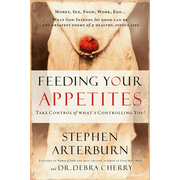
Feeding Your Appetites: Taking Control of What’s Controlling You by Stephen Arterburn, reviewed here. Good.

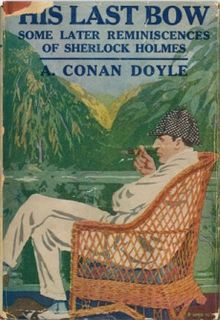
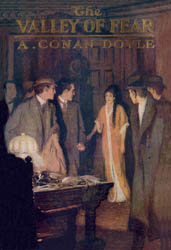
His Last Bow: Some Later Reminiscences of Sherlock HolmesThe Valley of Fear, and The Case-Book of Sherlock Holmes by Sir Arthur Conan Doyle, audiobooks, reviewed here, here, and here respectively, which finishes off the good detective’s stories. I think my favorite was The Valley of Fear. I enjoyed getting to know the original Holmes.

Taken, the latest by Dee Henderson, reviewed here. Christian fiction, a kidnap victim’s story from the time she escapes and seeks out a private detective in order to capture the ones responsible for taking her as well as others. Very good.

Gentle Savage Still Seeking the End of the Spear: The Autobiography of a Killer and the Oral History of the Waorani by Menkaye Aenkaedi with Kemo and Dyowe, reviewed here. The authors are Waorani, formerly known as Aucas, who speared to death Jim Elliot and four other missionaries who had tried to make contact to share the gospel, telling their story, what’s happened to their tribe since then, and proposing some excellent ways for the tribe to move ahead in the future.

I’m currently reading:

Walking With God in the Season of Motherhood by Melissa B. Kruger

Christy by Catherine Marshall for Carrie‘s Reading to Know Classics Book Club for May. Almost done – should have a review up later this week.

The Incorrigible Children of Ashton Place, Book 5: The Unmapped Sea by Maryrose Wood, audiobook. A new little Ashton is on the way! Will he or she have the same…issues as its father?

Growing Up Amish: A Memoir by Ira Wagler, nonfiction. Just started this and am thoroughly drawn in.

Next Up:

Pioneer Girl: The Annotated Autobiography by Laura Ingalls Wilder, edited by Pamela Smith Hill.

The Little Prince by Antoine de Saint-Exupéry for Carrie‘s Reading to Know Classics Book Club for June.

Little Dorrit by Charles Dickens

Strait of Hormuz by Davis Bunn

I’m coming along well with my reading plans for the year: I’ve read 5 out of 12 classics for the Back to the Classics Challenge and should finish two more in the next few weeks, and I’ve finished 8 out of 12 for the TBR Pile Challenge. If I finish what I have listed, I can choose from the remaining ones on my reading plan lists, plus I have several new books accumulated on my nightstand and Kindle app. Now I just need a week’s vacation to delve into them. 🙂

Happy Reading!


Book Review: The Case-Book of Sherlock Holmes

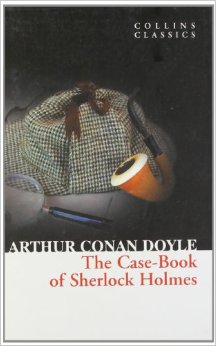
Case Book of SHThe Case-Book of Sherlock Holmes is the last of the Holmes stories by Sir Arthur Conan Doyle. It opens with a preface from Doyle himself, rather than Watson, saying that “I fear that Mr. Sherlock Holmes may become like one of those popular tenors who, having outlived their time, are still tempted to make repeated farewell bows to their indulgent audiences. This must cease and he must go the way of all flesh, material or imaginary.” He says that he “had fully determined at the conclusion of The Memoirs to bring Holmes to an end, as I felt that my literary energies should not be directed too much into one channel,” but he later revived him (reportedly due to public demand, though he doesn’t say so here). He goes on to note:

I have never regretted it, for I have not in actual practice found that these lighter sketches have prevented me from exploring and finding my limitations in such varied branches of literature as history, poetry, historical novels, psychic research, and the drama. Had Holmes never existed I could not have done more, though he may perhaps have stood a little in the way of the recognition of my more serious literary work.

The Wikipedia article on Doyle states that he “wrote seven historical novels, which he and many critics regarded as his best work,” as well as other pieces, but he’s best known for Sherlock Holmes.

A couple of variations in this volume are two stories written as by Holmes himself rather than Watson and one written from a third person point of view. One of the two stories by Holmes occurred when he criticized Watson’s style of storytelling, and Watson told him he should give it a try; the second occurred after Holmes had retired and was no longer in touch with Watson when he came upon an unexpected case.

Twelve stories are included in this book, with some editions arranging them in different orders. The very last Holmes story written was “The Adventure of Shoscombe Old Place” in 1927.

The stories include a variety of cases brought to Holmes’ attention in a variety of ways, most often by someone connected with the case. The include a woman seen only in a veil, a mother accused of vampirism, a missing diamond, the theft of papers from a dead son’s trunk, a man searching for two other men with an unusual last name, a jealous wife, an unusual sea creature, a missing soldier, and a wax effigy of Holmes. In one of them, Holmes says, “In all my chronicles the reader will find no case which brought me so completely to the limit of my powers. Even my imagination could conceive no solution to the mystery.”

They occur in a variety of times as well: some when Watson was rooming with Holmes, some when he was not, one after Holmes retirement.

A few sentences stood out to me concerning Holmes’ regard for Watson. In “The Case of the Blanched Soldier,” one of the stories written from Holmes point of view rather than Watson’s, he says, “Speaking of my old friend and biographer, I would take this opportunity to remark that if I burden myself with a companion in my various little inquiries it is not done out of sentiment or caprice, but it is that Watson has some remarkable characteristics of his own to which in his modesty he has given small attention amid his exaggerated estimates of my own performances.” He says in this same story, “The good Watson had at that time deserted me for a wife, the only selfish action which I can recall in our association. I was alone.” In “The Adventure of the Mazarin Stone,” the one written in the third person, it’s said that, “Watson was always the man of action, and he rose to the occasion.” In one story in which Watson was wounded, Holmes cried out, “You’re not hurt, Watson? For God’s sake, say that you are not hurt!” Watson thought to himself, “It was worth a wound–it was worth many wounds–to know the depth of loyalty and love which lay behind that cold mask. The clear, hard eyes were dimmed for a moment, and the firm lips were shaking. For the one and only time I caught a glimpse of a great heart as well as of a great brain. All my years of humble but single-minded service culminated in that moment of revelation.”

After receiving a note from Holmes in one case which simply read, “Come at once if convenient–if inconvenient come all the same. S.H.,” Watson muses:

The relations between us in those latter days were peculiar. He was a man of habits, narrow and concentrated habits, and I had become one of them. As an institution I was like the violin, the shag tobacco, the old black pipe, the index books, and others perhaps less excusable. When it was a case of active work and a comrade was needed upon whose nerve he could place some reliance, my role was obvious. But apart from this I had uses. I was a whetstone for his mind. I stimulated him. He liked to think aloud in my presence. His remarks could hardly be said to be made to me–many of them would have been as appropriately addressed to his bedstead–but none the less, having formed the habit, it had become in some way helpful that I should register and interject. If I irritated him by a certain methodical slowness in my mentality, that irritation served only to make his own flame-like intuitions and impressions flash up the more vividly and swiftly. Such was my humble role in our alliance.

Other interesting features in this story: in one Holmes refused to eat, and when Watson asked why, he replied, “Because the faculties become refined when you starve them. Why, surely, as a doctor, my dear Watson, you must admit that what your digestion gains in the way of blood supply is so much lost to the brain. I am a brain, Watson. The rest of me is a mere appendix. Therefore, it is the brain I must consider.” I don’t think that’s the wisest course of action for most people, but it is interesting that he thought of himself primarily in terms of his brain. That appears to be a factor in his suppression of emotion and lack of relationships as well. Holmes says in one story: “Women have seldom been an attraction to me, for my brain has always governed my heart, but I could not look upon her perfect clear-cut face, with all the soft freshness of the downlands in her delicate colouring, without realizing that no young man would cross her path unscathed.”

Another observation I thought unusual for Holmes occurred when a man was taking a potion to seem to become more youthful: “There is danger there–a very real danger to humanity. Consider, Watson, that the material, the sensual, the worldly would all prolong their worthless lives. The spiritual would not avoid the call to something higher. It would be the survival of the least fit. What sort of cesspool may not our poor world become?”

One sentence that struck me as particularly clever: “When his castle in the air fell down, it buried him beneath the ruins.”

It’s been fun to read of the “real”…or at least, the original Sherlock Holmes. One of my main curiosities was whether he was really as rude as some modern conceptions of him make him out to be. I was happy to find he wasn’t. He was eccentric in some ways and could be egoistical, but he knew how to interact with people when he needed to and could even be kind and comforting when needed. He was a classic introvert and only had a very few close friends. I was surprised to find that his nemesis, Moriarty, only appeared in two books, with just a mention in one of them. I was also pleased to find that Watson was not a doddering old man, but was vibrant, described as “fleet of foot” in one story, and that Holmes valued him for his medical skills as well as his skills with a revolver, besides his being a good sounding board.

I was concerned, before reading the stories, about his rumored drug addiction, but it wasn’t enough to be an addiction, only appeared in a couple of books, and Watson talked him out of using drugs any more. I was also concerned because I had heard there were instances of spiritism in the book, but I did not find any. I did just read yesterday that Doyle was heavily involved in such, but Holmes, although he was not a religious man, did use various Biblical phrases and did not participate in anything like spiritism. There were a couple of cases where there were evidences of voodoo or something similar, but those involved were always portrayed as being from some island or another.

Here are my reviews of the other Holmes books:

A Study in Scarlet (novel)
The Sign of the Four (novel)
The Adventures of Sherlock Holmes (short stories)
The Memoirs of Sherlock Holmes (short stories)
The Hound of the Baskervilles (novel)
The Return of Sherlock Holmes (short stories)
His Last Bow: Some Reminiscences of Sherlock Holmes (short stories)
The Valley of Fear (novel)

I listened to the first books read by various narrators, and the last ones read by Simon Vance in this collection, who once again did a wonderful job. This edition of all the Holmes stories together came through on a good sale, so I got it, but it was maddening that the divisions weren’t according to the books. They are just run together one after the other, which is fine if you’re listening to them that way, but it’s hard to find a particular book. Thankfully one listener posted a table of contents which shows where the various books begin and end.

I don’t feel all warm and fuzzy toward these stories as I do some other books, so I don’t know that I’d reread or relisten to them, at least not any time soon. But they were fun while they lasted! And Holmes is such an iconic figure with so many cultural references to him, it’s nice to be familiar with him now.

(This review will also be linked to Semicolon‘s Saturday Review of Books.)

Book Review: The Valley of Fear

Valley_of_fearThe Valley of Fear is the fourth of Sir Arthur Conan Doyle’s full-length Sherlock Holmes novels. Like most of his other stories, it first appeared serialized in a magazine, this time in The Strand.

The book opens with Holmes and Watson trying to decipher a message from an informant concerning Professor Moriarty. The only other time Moriarty has been mentioned was in the last chapter of The Memoirs of Sherlock Holmes, in which he died. So this story predates that one, but there is a bit of a disconnect in that Watson didn’t know who Moriarty was in Memoirs, and if the events in The Valley of Fear occurred in the timeline before that book, Watson would surely have known the name. But as far as I know that’s the only major slip up in Doyle’s narratives, so we can forgive him: he may have even been aware of the problem and decided to write this story as is anyway.

At any rate, Holmes and Watson are interrupted by the arrival of a Scotland Yard Inspector MacDonald asking Holmes to assist on a case and then being stunned to learn that the message Holmes had just deciphered concerned the very man who had been killed. The victim had been shot in the face with an American sawed-off shotgun. There are a number of odd incidents and clues that do not add up. Holmes fixates on one that the others do not think is important, and, of course, solves the mystery.

The second part of the book is the back-story of what happened leading up to these events and is written in a completely different style, much like the story within a story in A Study in Scarlet. At first nothing seems related at all, but the reader assumes that some of the characters are going by different names than what they’re known as in the first part. In this story, a young John McMurdo is fleeing from the law in Chicago and comes to a Vermissa Valley to start anew. He’s part of an organization called The Eminent Order of Freemen, which primarily engages in charitable works in Chicago. But in Vermissa Valley, it’s a tightly run gang of thieves, murderers, and extortioners called the Scowrers who have the area under their thumb so much that it is nicknamed the Valley of Fear. McMurdo has no choice but to become involved with the gang, even though his landlord kicks him out over it and refuses to let him see his daughter any more.

Events unfold with the Scowrers for several chapters until they learn that a Pinkerton detective is undercover in the area, and their focus turns to finding and dealing with him.

An epilogue ties up the loose ends of the story and brings it back to Moriarty’s involvement.

Though I eventually guessed who McMurdo was (and rereading the first few pages, I saw several clues which caused me to realize I should have guessed it much sooner), I was totally surprised by the twist in the second story. Though some of the first story gets a little boring with the deciphering and then the arguing over which clues mean what, the last couple of chapters were the most exciting of any of Doyle’s work that I have read so far.

After looking around Wikipedia a bit, I saw that the story was based on the real life Molly Maguires in PA and their encounter with Pinkerton Agency detective James McParland. I had heard the term Molly Maguires before but had no recollection of what it meant until reading about it just now.

I listened to the audiobook read by Simon Vance, who did a wonderful job not only with the various English accents and voices in the story, but also with American, Scottish, and Irish accents as well. I also read parts of the story online at Project Gutenberg.

(This review will also be linked to Semicolon‘s Saturday Review of Books.)

Book Review: Feeding Your Appetites

AppetitesFeeding Your Appetites: Taking Control of What’s Controlling You by Stephen Arterburn and Debra Cherry is based on the premise that most of our out-of-control desires are based on God-given appetites that are not wrong in themselves (food, sex, work, rest), but they can wreak havoc when they get out of balance. Even appetites for things that are wrong in themselves (gambling, drugs) can have a basis in a desire that’s not wrong.

Stephen discusses the nature, good purposes, and value of appetites God created within us. But “when pleasure becomes what we are searching for, we will soon learn that there is never enough to satisfy” (p. 33). “Our poor choices are rooted in self-indulgence and obsession with self-entitlement. We indulge to seek pleasure and avoid pain because we think we are entitled to it. The fleshly pleasure we seek is self-serving” (p. 35).

He discusses how change begins (seek forgiveness, stop make excuses, stop blaming others, stop believing falsehoods, and others), the many factors that influence us (including biology, culture, and a host of others), the ways Satan uses our desires against us to tempt us, ways to deal with or redirect our desires, and ways to cultivate a “divine appetite.” The last chapter on “The Surrendered Life” ties it all together in emphasizing that the only way to keep our appetites in their proper places is to walk surrendered to God every day. An appendix and study guide in the back help apply the truth personally.

Sprinkled throughout the book are case studies which are very helpful in fleshing out the principles Stephen is discussing. My only minor quibble with them is that they came in the middle of rather than at the end of sections. I don’t like having to either interrupt the section I am reading to read the case study or read on to finish the section I am in and then turn back to the case study when it could have easily been placed between sections. But, again, that is a relatively minor irritation.

A few quotes I found helpful:

[In Eden] Eve couldn’t overeat because her appetite for food would have been under control and submissive to her primary appetite to obey God” (p. 18).

When we have an out-of-control appetite for food, it signals that we have put that appetite above its rightful place as a necessary and God-given function (p. 18).

The question of how to satisfy our appetites becomes instead a call to seek to obey God in all circumstances and through all appetites and desires. That means making the necessary choices to satisfy our appetites in a manner that honors Him. When we do, true fulfillment is our reward (p. 25).

There were a few little points where I disagreed with his teaching, but not enough to get into long explanations. I will say that I disagreed with his concept of meditation, which he seemed to define as listening to God as opposed to talking to Him in prayer. Meditation is more of a ruminating, thinking over what He has said in His Word, not listening for Him to speak apart from His Word (see next to last paragraph here.)

Overall it’s a very good book. It covers some of the same ground as Taste For Truth by Barb Raveling except it expands to cover about every appetite you could think of whereas Barb’s book focuses on food. Barb’s style is much more direct, which I tend to prefer. I felt Stephen tended to over-explain or use too many words, but that may have been because I had just read many of the same principles in Barb’s book. This book might be especially helpful for a non-Christian or new Christian or a Christian who had not been taught very well along the way. But really, it can benefit anyone. I gleaned much good from it.

(This review will also be linked to Semicolon‘s Saturday Review of Books.)

Book Review: The Monday Morning Club

Claudia Barba is one author I know in person. I first knew her sister when we were classmates in college. Her dad was one of my teachers there. I met her mother as well through activities with her sister. Claudia and her husband and son came to our church for a week once when her husband was the keynote speaker for a conference, but I am sorry to say I did not introduce myself to her or get to know her at that time. Some years later her sister, now a pastor’s wife in a neighboring city, invited the ladies of our church to a weekend ladies’ conference where Claudia was the speaker. A few of us went…and I was greatly blessed by her speaking. Her strawberry story (which I am glad to see is in her book) especially convicted and touched me.

Claudia’s husband was a pastor at first, then traveled with his family in evangelism for a few years. Then he and his wife began Press On Ministries, in which they travel to spend a few months at a time helping a church planter get a new church off the ground and stable, and then they travel to another new church plant and do the same. One year our ladies’ group was looking for a speaker for our ladies’ luncheon, and Claudia and her husband were working near enough that I thought it might be a possibility that she could speak for us. A few e-mails and it was all arranged, and Claudia’s message was again a blessing.

Now we live in TN, and the Barba’s home base is close enough that they pop into our church every now and then between ministries. At their last visit, Claudia asked me if I had her new book, and when I said I didn’t, she took my address and sent me a copy – for free, with no expectation or request for a review, but rather just to be nice. 🙂

MMCThat book, The Monday Morning Club: You’re Not Alone — Encouragement For Women in Ministry, began with Claudia and her mother and sisters, who were all married to men in the ministry. They would e-mail each other on Monday mornings when they needed a friend to talk to, someone to “share my joys without jealousy and hear my frustrations without judgement” “whether Sundays were thrilling or discouraging.” (p. xiii). Then another friend asked to be included, and eventually it grew into an e-mail list to women all over the world. This book is a compilation of some of these Monday morning thoughts and devotions. Though many of them are aimed at ministry wives in particular, the bulk of them would be applicable to any Christian women. Even those that are specific to pastor’s wives are helpful for the rest of us to read because they give us a window into some of the trials, temptations, thoughts, and feelings a pastor’s wife might wrestle with, and give us a better idea how to pray for and encourage our own.

There are 94 in all, each covering only one to three pages. They could be read one or two at a time straight through, or dipped into at random, or there is a topical index where you can look up columns by need, such as “When you’re discontent,” or “When you’re lonely,” etc.

I love Claudia’s way of writing and speaking. It’s simple, but deep; sweet, but clear. She advises with wisdom and grace. Often she goes straight to my heart.

Here are a few samples:

When a friend thought that “marrying a pastor morphed an ordinary woman into a super saint”: I’m sure in her own mind she was honoring me by placing me on a pedestal. That is, after all, where we place statues of people we admire. But it’s not a comfortable place for a plain old human to live. It’s lonely on a pedestal. Other people think you are looking down on them. There are pigeons. And if you stumble even once, you’ll fall off (p. 5).

The Christlike life has nothing at all to do with satisfying, coddling, or promoting self, but everything to do with being poured out for others (p. 55).

When discussing her husband’s tendency to “jump off cliffs” spiritually in “great leaps of faith” and her own tendency toward security: “The fences I thought meant security were the walls of a prison instead…A fearful spirit is never from the Lord (2 Timothy 1:7). It’s the prison, not the cliff, that’s the scary place. It’s awful to realize that my female anxieties can hinder God’s working through my husband. When His divine leading is clear to my human leader, it’s time for me to stop digging in my heels and join him in bold strides of faith, not because my husband is flawless, but because it’s God’s work we are doing, and He’s the One Who keeps us safe” (p. 123).

Stability is not innate or effortless for most of us female-type humans. Only in Christ is “no variableness, neither shadow of turning.” He is the solid, immutable Rock of Ages, and He can keep you stable. When your earth quakes, anchor your thoughts to His unchanging promises. When storms roll in, hide in His shadow. When you’re too tired to handle the demands of the day, let Him be the Rock of your strength. When your heart is unsatisfied, let the sweet water flowing from the Rock quench your thirst. Whenever any scary or upsetting thing happens, just run straight to the Rock (p. 153).

Sometimes all that’s needed to heal a wounded soul and lift a sagging spirit is one loving listener, for at its core, listening is love–love that sacrifices its need to be heard in favor of hearing, a desire to lecture in favor of learning, an opportunity to show off in favor of showing compassion. Instead of always leading the way, a patient listener, just by nodding in all the right places, can help a wanderer discover the right path on her own (p. 170).

You can read more samples of Claudia’s writing here in their web site. One of my all-time favorites, “His Dear Wife,” is not in the book but a copy is here. I previously reviewed her Bible study When Christ Was Here.

There is a Kindle version of The Monday Morning Club here. I hope you’ll give it a try. I think it will truly challenge, encourage, and bless you.

Book Review: His Last Bow: Some Reminiscences of Sherlock Holmes

HisLastBowHis Last Bow: Some Reminiscences of Sherlock Holmes by Sir Arthur Conan Doyle is another collection of his Sherlock Holmes short stories, most originally published in magazines. One story, “The Cardboard Box,” was originally in another volume and added to this one in later printings.

The book opens with a preface from Dr. Watson saying that Holmes was retired and doing well except for occasional bouts of rheumatism. He had refused many offers to take up cases until called into service by his government on the eve of war with Germany. Watson states that the last story in this collection contains the details of that incident, and the other stories are some that he has had on hand for some time but not used in his other collections, but added them here to supplement the last story.

There are eight stories all together, covering various time periods (some when Watson was married, some when he was rooming with Holmes. Most contain trademarks of the other Holmes stories. A few are different, however.

In “The Adventure of Wisteria Lodge” (sometimes published as two stories, “The Singular Experience of Mr. John Scott Eccles” and “The Tiger of San Pedro”), the inspector on this case, Inspector Baynes, is the only police official that Holmes has thought well of and thought almost as competent as himself. He had learned to work with Lestrade and Grayson and others, though he usually figured out the case long before they did. But Baynes he admired and predicted he would go far in his profession.

Some of the other cases involve assumed identities, stolen naval plans, a woman receiving severed ears in the mail, an incident that kills one sister and drives two brothers mad, a kidnapped woman, and Holmes’ seemingly fatal illness.

The last story, “His Last Bow,” is different in a few ways. It opens with someone other than Holmes or Watson, is told in the third rather than the first person, and is a spy story more than a detective story. It’s set after Holmes has retired but has been asked to help his government, and when it’s over, he and Watson reminisce as if they haven’t seen each other in a while and are catching up. I wonder if Doyle wasn’t planning to write more Holmes stories after this. There is one Holmes novel whose writing overlaps the time period when these stories were published, and one more collection of stories after this one. If all the stories were laid our chronologically, this one would be the last in the time frame though it’s not the last one written. It was published during WWI, and this quote was probably meant to encourage Doyle’s fellow countrymen:

“There’s an east wind coming, Watson.”

“I think not, Holmes. It is very warm.”

“Good old Watson! You are the one fixed point in a changing age. There’s an east wind coming all the same, such a wind as never blew on England yet. It will be cold and bitter, Watson, and a good many of us may wither before its blast. But it’s God’s own wind none the less, and a cleaner, better, stronger land will lie in the sunshine when the storm has cleared.”

In many of the stories, Holmes makes reference to Watson’s writings and even offers suggestions about what to include, even though he doesn’t like the way Watson tells the stories.

I found further evidence that Holmes was neither always rude nor antisocial or even autistic, as some modern portrayals seen to suggest. When interrupted from a project when asked to take on a case he is not interested in at first, Watson notes that  “Holmes was accessible upon the side of flattery, and also, to do him justice, upon the side of kindliness. The two forces made him lay down his gum-brush with a sigh of resignation and push back his chair.” In another case,

Holmes leaned forward and laid his long, thin fingers upon the woman’s shoulder. He had an almost hypnotic power of soothing when he wished. The scared look faded from her eyes, and her agitated features smoothed into their usual commonplace. She sat down in the chair which he had indicated.

In another place he said, “[The landlady] was fond of him, too, for he had a remarkable gentleness and courtesy in his dealings with women. He disliked and distrusted the sex, but he was always a chivalrous opponent.”

Watson does admit, though, in another case that, “It was one of my friend’s most obvious weaknesses that he was impatient with less alert intelligences than his own,” in this case Lestrade’s.

Holmes also doesn’t misuse Watson, as some modern depictions portray. In one case here he sends Watson on a mission when he can’t leave the case he is currently involved with, and when he does catch up with Watson, he exclaims,

“I cannot at the moment recall any possible blunder which you have omitted. The total effect of your proceeding has been to give the alarm everywhere and yet to discover nothing.”

“Perhaps you would have done no better,” I answered bitterly.

“There is no ‘perhaps’ about it. I HAVE done better. Here is the Hon. Philip Green, who is a fellow-lodger with you in this hotel, and we may find him the starting-point for a more successful investigation.”

The only time that he seems genuinely rude was when he was ill but did not want Watson to examine him, saying, “After all, you are only a general practitioner with very limited experience and mediocre qualifications. It is painful to have to say these things, but you leave me no choice.” Watson “was bitterly hurt.” But later Holmes discloses that he did not want Watson near him because he was on a case to try and catch someone, and Watson’s “astute judgment” would determine on a close examination that Holmes was well, and Holmes needed him to believe in the urgency of the situation in order to convince the man Holmes wanted to come. He assures Watson of his high “respect for your medical talents.”

In one unguarded moment after Watson saves both their lives, Holmes declares,

“Upon my word, Watson!” said Holmes at last with an unsteady voice, “I owe you both my thanks and an apology. It was an unjustifiable experiment even for one’s self, and doubly so for a friend. I am really very sorry.”

“You know,” I answered with some emotion, for I have never seen so much of Holmes’s heart before, “that it is my greatest joy and privilege to help you.”

He relapsed at once into the half-humorous, half-cynical vein which was his habitual attitude to those about him.

There was one other glimpse in Holmes’ heart when, in a case where someone avenged the death of his loved one, Holmes said, “I have never loved, Watson, but if I did and if the woman I loved had met such an end, I might act even as [he] has done.” That also seems further proof of something I asserted in an earlier book, that Irene Adler was not the love interest many thought her to be, but rather just a woman he admired for being one of the few people to ever outsmart him.

I listened to the audiobook read by Simon Vance, who did a great job with the different accents and inflections. Overall I enjoyed these continuing adventures of Holmes and Watson and and discovering more of their personalities. I look forward to the last two books.

(This review will also be linked to Semicolon‘s Saturday Review of Books.)

What’s On Your Nightstand: April 2015

 What's On Your NightstandThe folks at 5 Minutes For Books host What’s On Your Nightstand? the fourth Tuesday of each month in which we can share about the books we have been reading and/or plan to read.
Wow – it’s hard to believe we’re in the last week of April. Where did it go so fast?

Since last time I have completed:

A Million Little Ways: Uncover the Art You Were Made to Live by Emily Freeman, reviewed here. Had some issues with parts of it but overall it’s a good message.

He Is There and He Is Not Silent by Francis Schaeffer, reviewed here. A short book about philosophy, apologetics, metaphysics, epistemology – good but stretches one’s brain to the limit.

Being Mortal: Medicine and What Matters In the End by Atul Gawande. As I said in my review, if you’re planning on getting old, dying, or helping a parent as they age, you need to read this book.

War and Peace by Leo Tolstoy, audiobook, reviewed here. Glad to be know the story now but glad to be done with it finally. 🙂

The Swan House by Elizabeth Musser, reviewed here. Loved.

Songs of the Morning: Stories and Poems for Easter compiled by Pat Alexander, including excerpts from C. S. Lewis, E. B. White, and others, reviewed here.

I’m currently reading:

The Monday Morning Club: You’re Not Alone — Encouragement For Women in Ministry by Claudia Barba.

Feeding Your Appetites: Taking Control of What’s Controlling You by Stephen Arterburn

His Last Bow: Some Later Reminiscences of Sherlock Holmes by Sir Arthur Conan Doyle, audiobook

A pre-reading of a friend’s novel – will be happy to share more with you when the time comes! 🙂

Gentle Savage Still Seeking the End of the Spear: The Autobiography of a Killer and the Oral History of the Waorani by Menkaye Aenkaedi with Kemo and Dyowe. Just  started this one. These men were among the Waorani (or Aucas, as they were then known) who killed the five men who came to share the gospel with them (Jim Elliot, Nate Saint, and the others) and who later became Christians, Menkaye becoming like a grandfather to Steve Saint’s children. I am very curious to read their story in their own words.

Next Up:

Walking With God in the Season of Motherhood by Melissa B. Kruger

Christy by Catherine Marshall for Carrie‘s Reading to Know Classics Book Club for May. Read this years ago and am eager to revisit it.

Taken, the latest by Dee Henderson. Just got word it’s on it’s way!!! Can’t wait!

The Valley of Fear and The Case-Book of Sherlock Holmes by Sir Arthur Conan Doyle, audiobooks, to finish off the good detective’s stories.

Pioneer Girl: The Annotated Autobiography by Laura Ingalls Wilder, edited by Pamela Smith Hill. I don’t know if I will actually get to this in the coming month: I hope so.

That should keep me busy for a while. 🙂 What are you reading?

Book Review: The Swan House

Swan HouseI picked up The Swan House by Elizabeth Musser when it came through as a Kindle deal because I liked her Words Unspoken so much (in fact, it was one of my top ten books from 2010.)

This story is told from the vantage point of 16-year-old Mary Swan Middleton, daughter of a wealthy Atlanta family in the 1960s. Tragedy strikes early in the book as her mother dies in an airplane accident along with a number of other Atlantans. The accident wounds her family and community deeply.

There are a number of threads in this book which Elizabeth weaves together nicely:

– Mary’s family and community dealing with their grief

– Mary’s (or Swan, as she’s called most often, or Swannee) quest to determine what happened to some missing paintings, one of them her mother’s, which were lost before they were to be debuted at the High Museum of Art

– Her black maid, Ella Mae, inviting her to come to her church to help with the weekly food distribution to the needy as a way to take her mind off her grief, where her eyes are opened to a whole different world and where she meets Miss Abigail, a white lady who has made it her mission to live and minister in the area.

– Her getting to know and becoming interested in a black teenage boy named Carl.

– The volatile racial tensions 0f the 1960s South and burgeoning civil rights movement

– Mary’s discovering clues that what was thought to be her mother’s artistic temperament might have been something deeper, something worse.

– Mary’s school life and activities, best friend Rachel, and budding interest in a boy named Robbie

– Mary’s spiritual development and crisis of faith.

In a sense it’s a coming-of-age story, but it’s so much more than that. It’s a book of rich depths. One of its themes is that there is often more going on behind the surface of a person’s life that we’re aware of.

Some of my favorite quotes from the book:

We were transported by that music in a ethereal way that later we would try to explain and couldn’t. But it was the first time I really felt what I had long understood: that something could be extremely beautiful and intensely painful at the same time.

She thought every church should be…a place where you could go without no makeup or fancy dress to hide behind and you could jus’ hug yore friends and cry and tell the Lawd how bad you’d messed up and ask Him to forgive ya and let ya git up and keep goin’.

It’s been through the hard times that I been able to he’p someone else. It’s been through believin’ that the Lawd somehow gonna git me through that the others done wanted to hear about my Jesus.

Guess I ain’t got no business tellin’ the good Lawd that He put me in the wrong place. He done shown me ’nuff times that He knows exactly what He is doing.

I mentioned in Why Read Christian Fiction that you would expect to find Christian conversations in Christian fiction but that some authors make it more subtle or only mention Christian truths in an offhand way so as not to be accused of being too heavy-handed with it. While some stories would call for subtlety, I am glad Elizabeth felt the freedom to have her characters have full-fledged conversations about what it means to really be a Christian and how Christianity should impact a life.

Elizabeth is a native Atlantan, and I enjoyed her afterword where she explained that many points of the story came from real life (even the airplane crash was a real one that impacted the Atlanta community). We lived just outside Atlanta for four years, and even though we didn’t go into the city that much, I felt like I was not only revisiting it but getting to know it better while reading this book.

I also enjoyed reading a little more about Elizabeth after reading this book. She and her family are missionaries in France, and she writes in a refurbished tool shed. She tells some of her writing journey here and photos of her writing place are here. I was exciting to see on Goodreads that this book “was named one of Amazon’s Top Christian Books of the Year and one of Georgia’s Top Ten Novels of the Past 100 Years.”

I enjoyed Words Unspoken so much, I am not sure why I waited so long to read another of Elizabeth’s books. But now that I have, I am looking forward to reading more of them.

(This review will also be linked to Semicolon‘s Saturday Review of Books.)

Book Review: War and Peace

I did not grow up reading many classics. Louisa May Alcott, Laura Ingalls Wilder, and Charles Dickens were my most-read classic authors. I don’t remember coming into contact with many classics even in school, though I must have and probably just can’t remember most of them. But because of this, over the last few years I’ve determined to read more classics.

War and PeaceWhenever I’ve perused lists of classics or “books everyone should read,” War and Peace by Leo Tolstoy is almost always mentioned. Whenever I read a short description of it, I never could get a clear idea of what it was about. After reading my first Dostoyevsky last year and finding him not as difficult as I’d thought, I determined one day to read War and Peace. Over the last few months I’ve listened to the audiobook version with occasional forays into the library’s paper and ink version.

And now I know why the descriptions of the book didn’t really give much substance. It’s such a massive book with so many characters, it’s hard to sum up in a few sentences what it’s all about.

It covers the period from the time Napoleon is first seen as a threat in Russia in 1805 to his invasion of Russia in 1812 during the reign of Tsar Alexander and is basically about the lives and interactions of five aristocratic families and how the war affects them.

Pierre Bezukhov is one of many illegitimate sons of a crusty old count. He is kind-hearted and sincere but socially inept and awkward. He’s not afraid to speak his mind, even on controversial issues, but is too naive to realize when it is not socially appropriate to do so. Surprisingly, when his father comes to his death he has Pierre legitimized and leaves the bulk of his fortune to him. But Pierre is ill-prepared for the responsibility and doesn’t realize that everyone’s being nice to him now is because of his new wealth, not because they finally got to know him well enough to like him. He makes a disastrous marriage and spends much of the book searching for the meaning of life.

The Bolkonsky family consists of a cantankerous father and two adult children. Andrei is tolerant of his father, intelligent, ambitious, cynical, married and expecting a child but dissatisfied with his wife and indeed much of life. His sister, Marya, is very religious and tries to show her father love though he takes out the bulk of his eccentricities and bad moods on her.

The Rostov family, with children Nikolai, Natasha, and Petya, are a loving, fairly normal family whose finances are constantly a problem. An orphaned cousin, Sonya, lives with them. Sonya is quiet and dependable, but the three Rostov children are impetuous and immature at the beginning.

Prince Vasili Kuragin is crafty and wily, and his two adult children, Helene and Anatole, are good-looking but immoral.

Anna Drubetskaya has great ambitions for her son, Boris, and doesn’t mind asking for consideration and favors for him. Boris, in turn, has great ambitions for himself and learns quickly how to work the system to move ahead in life.

Tolstoy takes us from the ballroom to home scenes to the battlefield and back again. The lives of these characters intertwine and intersect with each other and historical figures. Some fall in love and marry; some don’t make it to the end of the book.

He also intersperses his story with essays about a number of things: his view of a particular historical event, his disagreement with the general consensus, his low opinion of Napoleon, the belief that great men and great events do not make history but rather there are innumerable small issues that work together to direct the course of history. The last is one of his major themes. In fact, the Encyclopaedia Britannica entry for War and Peace says:

As Tolstoy explains, to presume that grand events make history is like concluding from a view of a distant region where only treetops are visible that the region contains nothing but trees. Therefore Tolstoy’s novel gives its readers countless examples of small incidents that each exert a tiny influence—which is one reason that War and Peace is so long. Tolstoy’s belief in the efficacy of the ordinary and the futility of system-building set him in opposition to the thinkers of his day.

One of the main ways this is shown is on the battlefield. It’s hard to see how anything got done on the battlefield when the information relayed to the commander would have changed by the time he got it, when his orders were disobeyed or not received or when someone acted of their own accord without waiting for orders.

Tolstoy said of this book that it “is not a novel, even less is it an epic poem, and still less an historical chronicle.” He doesn’t say what he does call it, but it is kind of an amalgam of the three.

I had heard that Tolstoy was a Christian, so I was surprised that at first the religion in the book was mixed up with icons, superstition, and freemasonry. I read in various places that after his religious conversion, he renounced his earlier works. But reading about his conversion was confusing as well: it seemed to center primarily in non-resistance to evil (which led to pacifism) and in trying to divest himself of his property (which his family resisted and resented). There are nuggets of spiritual truth in this book, but it’s not where I’d send someone who was seeking to look for answers.

I wondered why so many Russians were speaking French at the beginning of the book. Wikipedia explains that it was the fashion of the day and for some years before in the upper class. But when Napoleon started attacking Russian territory, speaking French fell out of favor.

There is so much I feel I am leaving out, but with a book of 1,316 pages, it would be hard to include everything. I am indebted to SparkNotes, Wikipedia, the online Encyclopaedia Britannica, and the introduction and notes of the library copy I had for giving me more insight into the book that I would have gleaned on my own. I enjoyed the audiobook version narrated by Neville Jason in two parts over 60 hours. It did take a while to settle into it and get the characters straight. I do admit that my mind wandered a bit during the essays, especially the last appendix – I have a harder time listening to nonfiction and usually need to reread it parts of it a number of times to truly “get” it.

As with many older classics, there were parts that were a little dry, and due to the different time period and nationality there were ways people acted that didn’t always make sense to me. But I liked following the characters on their journey, especially Pierre, Natasha, and Marya and one minor character, a peasant named Karataev whom Pierre meets while in captivity. I liked where the ones mentioned at the end of the book ended up.  There were moments of great pathos in the book, moments of truly feeling a character’s pain and joy. Though not a “keep you on the edge of your seat” type of book, there were a few of those moments, such as when Andrei is waking up from surgery in a battlefield hospital and in his hazy state sees someone who looks familiar and is trying to figure out who it is. When I realized who it was, I think I gasped out loud. One of my favorite moments was during beloved oldest son Nikolai’s first battlefield experience when he is astonished that people are shooting at him, thinking, “Me, whom everyone loves!”

Years ago I read a couple of Richard Wurmbrand books about persecution behind the Iron Curtain, and he pleaded then that people not be prejudiced against the whole Soviet Union because of the Communists, remarking that the average Russians were big-hearted people. That came back to mind while reading this book, especially in the characters of Pierre and Count Rostov.

There is a 1970s BBC miniseries starring a young Anthony Hopkins as Pierre that I’d love to see sometime, but it would be quite an investment of time. I just learned that another BBC miniseries is in the works to be shown in six parts this year. Now I am even more glad I read this now!

I was dismayed when I saw a ballet segment from War and Peace in the opening ceremony at the Sochi Olympics that I didn’t know what was going on in it. I was delighted to find that segment on YouTube and watch it again after reading the book. This is Natasha’s first ball and the first time to dance with Andrei. The video quality isn’t great and there is an annoying sound like a rocking chair squeaking, but I was just glad to be able to see it again and understand it this time:

(This review will also be linked to Semicolon‘s Saturday Review of Books.)

Book Review: Being Mortal

Being MortalI could wrap up my comments on Being Mortal by Atul Gawande succinctly by saying that if you plan on getting old or dying or helping a parent as they age, you need to read this book. But I’ll try to give you a bit more to go on.

I don’t know that I would have noticed this book at all except that Lisa and Joyful Reader both mentioned it. I knew they had dealt with deaths of parents and grandparents, Lisa’s mom had been in assisted living and Joyful’s grandmother lives with her, so with their experience, their praise for this book meant a lot.

I ended up marking many more pages than I can possibly share, but it’s safe to say that much in this book resonated with me.

IMG_1174

The subtitle of the book is Medicine and What Matters in the End, and it’s a frank treatment of end-of-life issues. Medicine, Dr. Gawande asserts, is geared to fix things. But in some cases the treatment is worse than the disease itself. And this tendency is part of what had led to institutionalizing people as they age and making it a medical matter rather than trying to give people in such situations the best days they can have in the time they have left.

Gawande notes that until fairly recently, most deaths occurred at home. Now most occur in hospitals and nursing homes “where regimented, anonymous routines cut us off from all the things that matter to us in life” (p. 9). In addition, it used to be that, unless you had a long, wasting illness like consumption, most deaths came suddenly like a thunderstorm. Modern medicine has been a marvel and a gift from God: many things that used to be fatal can now be treated. But like any gift, there are good ways and not so good ways to use it.

“The simple view is that medicine exists to fight death and disease, and that is, of course, its most basic task. Death is the enemy. But the enemy has superior forces. Eventually, it wins. And, in a war that you cannot win, you don’t want a general who fights to the point of total annihilation. You don’t want Custer. You want Robert E. Lee, someone who knew how to fight for territory when he could and how to surrender when he couldn’t, someone who understood that the damage is greatest if all you do is fight to the bitter end.”

I appreciated his explanation of how the style of doctoring has changed over the years, from the authoritative “Dr. Knows-Best” who made all the decisions for you, to “Dr. Informative,” who merely laid out all the options and let you decide. The problem with the latter is that we don’t always know how to process the options. When the author’s own father faced a tumor in his spine, he, his father, and his mother were all doctors yet felt overwhelmed by the information and options they were receiving. A third kind of doctor is called “interpretive” and gives information as well as guidance after asking what’s most important to you and what your concerns are (pp. 100-102).

Gawande proposes a series of questions to consider when the diagnosis is terminal, questions concerning what’s most important, what one’s goals and fears are in facing the time they have left. One man said he wanted to continue to eat ice cream and watch football on TV, and he wasn’t interested in any treatment that interfered with those activities: life wasn’t worth living without them. Some are willing to live with different degrees of disability and pain: some don’t want to suffer at all. It’s good for a family to have these discussions so they have some idea what would be the most important to their loved one. Sometimes it requires more than one hard discussion: “Arriving at acceptance of one’s mortality and a clear understanding of the limits and the possibilities of medicine is a process, not an epiphany” (p. 182), and your preferences might change over time as well. But these discussions are necessary to find the best means of “living for the best possible day today instead of sacrificing time now for time later” (p. 229).

Gawande also details the journey from being independent to needing assistance to needing full time care that elderly and their families face. We’ve faced much of this with my mother-in-law over the last few years. I especially appreciated the history of nursing homes and assisted living facilities and the goals and purposes that Keren Brown Wilson, who “invented” assisted living, had when she started, and how those were originally implemented and maintained and then encroached upon to the point that she had to resign from her own board. Nursing homes themselves “were never created to help people facing dependency in old age. They were created to clear out hospital beds” (p. 71).

Many of the problems he lists in assisted living and nursing homes were the same as what we had found: loss of autonomy and privacy, loss of purpose, “tasks [coming] to matter more than the people” (p. 105), “safe but empty of anything they care about” (p. 109). “Making life meaningful in old age…requires more imagination and invention than making them merely safe does” (p. 137).

In older history and in other countries, the old are revered as having great knowledge and wisdom: “Now we consult Google, and if we have any trouble with the computer we ask a teenager” (p. 18). At least one sibling used to stay with the elderly parent(s) and help care for them, and then got a larger portion of the inheritance or perhaps the family home in place of what they gave up. Now both parents and adult children value their independence. But “our reverence for independence takes no account of the reality of what happens in life: sooner or later, independence will become impossible” (p. 22). Yet the author researched and visited several creative ways for an older adult to retain as much independence and autonomy as long as possible.

One problem is that even though geriatric specialists have been shown to enhance the lives of the elderly, geriatric units are shrinking or being closed rather than growing. “97 percent of medical students take no course in geriatrics” (p. 52). One reason is that it doesn’t pay well; another is that insurance doesn’t see the need for it. It remains for those of us who deal with the elderly or who look ahead to our own old age to be aware of issues.

When I was first looking at information about the book, I was wary that the author might promote assisted suicide for those with terminal illnesses. He does not promote it, but he would support legislation to enable giving people lethal prescriptions if asked, noting that half of them don’t use them: they just like the assurance that they could. He does note, though, that in countries where it is legal, use has grown: “But the fact that, by 2012, one in thirty-five Dutch people sought assisted suicide at their death is not a measure of success. It is a measure of failure. Our ultimate goal, after all, is not a good death but a good life to the very end. The Dutch have been slower than others to develop palliative care programs that might provide for it….We damage entire societies if we let this capability [assisted suicide] divert us from improving the lives of the ill. Assisted living is far harder than assisted death, but its possibilities are far greater, as well” (p. 245). (A good Christian source on some of these thorny issues is When Is It Right to Die: Suicide, Euthanasia, Suffering, Mercy by Joni Earacekson Tada.)

He also points out that it is difficult to know exactly where the lines are sometimes. “We also recognize the necessity of allowing doses of narcotics and sedatives that reduce pain and discomfort even if they may knowingly speed death” (pp. 243-244). Sometimes it is wrong to turn off a ventilator: sometimes it is right. If a 20-tyear-old was diagnosed with Type 2 diabetes and wanted to let “nature take its course” rather than treating the illness, we’d try to convince her that the quality of life she could have with treatment would be well worth it despite the complications: it would be ridiculous to die of diabetes when there is treatment available and the possibility of a long, productive, and happy life. On the other hand, when my father was dying of various other issues and they suspected he had colon cancer, they decided not to put him through what would be involved in diagnosing, much less treating it, because in the long run it would not make a difference in how long he would live and would only make his last months miserable.

The author writes from a secular viewpoint. As a Christian, I thought a lot about how a Christian worldview would affect this topic. As Christians we know where we and our believing loved ones are going, which takes some of the sting out of death. But we don’t take it lightly or flippantly, either. Death is still called an enemy. We hold life as a gift from God and believe He is the only one with the right to end it. It is to be given back to Him and used for His purposes. Sometimes that includes suffering, yet we’re also called to alleviate suffering if possible. While there are fears about loss of independence and abilities in older age, we can trust God to help us through that time: And even to your old age I am he; and even to hoar hairs will I carry you: I have made, and I will bear; even I will carry, and will deliver you.  Isaiah 46:4. But issues and question the author brings up are needful to consider, preferably before crises hit. In some cases there is no one right answer for what kind of treatment to pursue: the answer will vary depending on a number of factors.

I like this summation near the end of the book:

I am leery of suggesting that endings are controllable. No one ever really has control. Physics and biology and accident ultimately have their way in our lives. But the point is that we are not helpless either. Courage is the strength to recognize both realities. We have room to act, to shape our stories, though as time goes on it is within narrower and narrower confines. A few conclusions become clear when we understand this: that our most cruel failure in how we treat the sick and aged is the failure to recognize that they have priorities beyond merely being safe and living longer; that the chance to shape one’s story is essential to sustaining meaning in life; that we have the opportunity to refashion our institutions, our culture, and our conversations in ways that transform the possibilities for the last chapters of everyone’s lives (p. 243).

(This review will also be linked to Semicolon‘s Saturday Review of Books.)