Book Review: Long Way Gone

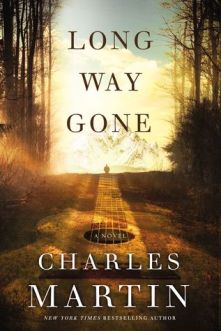
long-way-goneI put Long Way Gone by Charles Martin on my TBR list after reading Susanne’s review of it, and when I needed a new audiobook, checked to see if Audible had it. They did! I usually put new books back behind some of the others already waiting, but I wanted to get to this one right away.

Cooper O’Connor’s father was a traveling preacher who mainly spoke at tent revivals in Colorado and surrounding areas. Cooper’s mother had died when he was very young. A large black man named Big Ivory (or Big Big when Cooper as a boy could not pronounce Ivory), recruited by Cooper’s father when Big Big got out of prison, rounded out their ensemble and played the piano.

Cooper proved to be quite gifted at playing the guitar and singing at a very young age. When he got into his teens, talent agents began to seek him out. His dad wasn’t opposed to his making a career out of music, but he wanted him to be able to be himself and not be taken advantage of by unscrupulous producers. But eventually Cooper began to feel his father was holding him back, so he took his father’s truck, guitar, and some money and drove to Nashville. There he fell on the hardest of times, until about five years later when he met a singer named Daley Cross and gave her one of his songs. Things were riding high for a while until a betrayal and an accident took nearly everything from him.

As you might have guessed, this is a modern-day retelling of the prodigal son story in the Bible. The scene where Cooper left his father was devastating, and it was heartbreaking to see all that he had to go through. But his father, always watching for him, always ready to forgive and receive him back, was such a tender picture of the heavenly Father.

Charles Martin definitely knows how to spin a story and pull on heartstrings. I enjoyed the story, his writing, musings here and there about life, faith, and music, and even a bit of  hymn history.

We would differ on angelology – but I am not sure whether his use of angels in the story is from his belief system or just a part of the story to illustrate how people might “entertain angels unaware.”

This is a book I wish both of my parents were still alive to read. Of course, I wish they were still alive for a myriad other reasons, but what I mean is that they would have understood Cooper and his world quite well.

Narrator Adam Verner did a superb job narrating the audiobook version.

Overall, a beautiful, heart-touching story. If you read the book, be sure to read the author’s afterword as well.

Genre: Christian fiction
Potential objectionable elements: Bar scenes, drinking, 2 or 3 instances of a character almost saying a bad word, with enough of it that the word is obvious.
My rating: 9 out of 10

(Sharing with Semicolon‘s Saturday Review of Books and Literary Musing MondayCarol‘s Books You Loved )

Books you loved 4

literacy-musing-mondays-300x300

Save

Save

Save

Save

“Edgy” Christian Fiction

img_1904

“Edgy” Christian fiction is becoming an increasingly hot topic among authors and readers. Those for it contend that stories need to be realistic for people living in the real world with bigger problems than the color of the church carpet. Opponents say that Christian fiction, of all places, should be a safe haven from objectionable elements in literature.

I think, as do many I know, that we should take our cues from this as well as every facet of life from the Bible. Yes, the Bible is different from a novel, but even in our novels we can operate within its parameters.

There are certainly edgy people in the Bible: harlots, polygamists, thieves, liars, evil kings, adulterers, murderers, zealots, and so on. And edgy situations abound: a man rapes his half-sister and in return is murdered by his brother; a man cuts up his murdered and abused concubine in pieces and sends her out to the various tribes of Israel to drum up support for revenge; a woman seduces a young, naive man; a king sees a woman bathing and takes her to himself though they are both married, then arranges to have her husband killed in battle; a woman has been married five times and is living with a sixth man.

But nowhere in the Bible are any of these situations written in a way to entice people to sinful thoughts in the reading of them. Profane men are shown to be such without spewing profanity. Sexual sin is portrayed in ways to show how it came about and how the people were tempted, but not in enough detail to cause arousal in the reader. Violent scenes are not written with gratuitous detail.

I’ve mentioned before that I grew up in an unsaved family with a father who used bad words (in three different languages! It was humiliating and embarrassing as a child when I said something at a Hispanic neighbor’s house only to find out it was an offensive word. Thankfully I don’t remember what it was.) So it doesn’t necessarily shock me when I hear people say those words. But when I read them, they float around in my head, and I don’t want them there.

Novels will by their nature share more descriptive detail than a Biblical narrative. Good authors know how to draw a reader into a scene and make them feel and experience what the characters do. But that is the very reason Christian authors need to be so careful with sexual or violent scenes. We need to take responsibility for the fact that we’re putting thoughts, images, and ideas in people’s minds and make sure they’re not the kind that lead the reader into a lustful or lurid state.

I don’t object to edgy people or situations in books, depending on how they are handled. I can understand a person is foul-mouthed without hearing the words. I can understand a person succumbing to sexual temptation without details of bodily form and feeling. I can appreciate a violent scene, such as a murder in a crime drama or a battle scene, without descriptors like eyes bugging out, blood spattering, etc.

In addition to how such scenes and people are described and what images those descriptions put in our heads, another factor is how the situation is treated in the novel. For instance, in searching for something in my blog recently I came across a forgotten book review for a story that included a suicide. That happens, so it’s not in itself an objectionable situation in a Christian book. But in this particular novel, it was treated as the only thing the character could do, and more than that, right and sacrificial and even heroic, when Biblically it is never regarded that way. “Thou shalt not kill” certainly applies to one’s own life as well as others. There is a difference between taking a bullet for someone and aiming that bullet at yourself. Suicide is the ultimate taking of your own life into your own hands and the ultimate lack of faith in God to handle one’s life circumstances as He sees fit. There were Bible people who wanted to die, but they left the actual process to the Lord. Suicide is a tragedy, and I can understand its happening in a story, but I think it’s wrong for a Christian book to condone it or present it as a good thing. Similarly, the tone, consequences, and character responses to profanity, sexual sin, and violence can convey that those things are not right without devolving into preachiness and judgmentalism.

I think it actually takes a great deal more talent to portray certain scenes without going into unnecessary specifics. One of the most violent scenes I ever witnessed on film just showed the victim’s feet, kicking at first and then lying still. No blood, no gore, but the effect was chilling. “Less is more” applies in a number of these areas.

I do want to encourage Christian authors that readers don’t want insipid, plain vanilla plots and we do want authentic, full-bodied, real characters and believable circumstances. I know it’s hard sometimes to know where the line is, but it’s possible to write great and realistic Christian fiction without crossing it. I know; I’ve read it. And I’d love to read more.

Related posts:

Why Read? Why Read Fiction? Why Read Christian Fiction?
The Language of Christians
Sexuality in Christian Fiction
The Gospel and Christian Fiction

(Linking with Thought-provoking Thursday) and Literary Musing Monday)


literacy-musing-mondays-300x300

Save

Save

Save

Save

Book Review: Secrets of a Charmed Life

secretsSecrets of a Charmed Life by Susan Meissner begins with history student Kendra Van Zant arriving for an interview with famed watercolor artist Isabel MacFarland for a paper she is writing. Isabel almost never gives interviews, but agreed to this one because one of Kendra’s professors is her friend and arranged it. Kendra’s paper is on the effects of the blitz on London during WWII, and Isobel’s home was bombed during the war. As they start their interview, however, Isabel begins to tell the story of two sisters, teen-age Emmy and seven year old Julia.

They lived in London in the 1940s. Emmy liked to draw sketches of wedding dresses and hoped to be a designer one day. When she happened across a job opportunity in a bridal shop, she seized it. When the owner said she had a cousin who designed costumes and might be willing to take her on as an apprentice, Emmy was overjoyed.

But her plans were cut short when the city called on parents to evacuate their children into the countryside for safety. Emmy protested that she didn’t need to be evacuated, but her mother insisted. The girls were taken to a village in the Cotswolds and taken in by an older single lady and her sister. The setting was peaceful and idyllic, but when Emmy learned that her employer’s cousin was coming to London, she felt this was her only chance to make something of herself. She made arrangements to leave secretly for the rendezvous, but Julia found out in the meantime and insisted on going. Emmy decided to take her along, trusting that her mother could make arrangements to send her back. As the girls quietly sneaked out of the house to make their way back to London, what neither of them could have known was that the Luftwaffe blitz on London was going to start that very day.

I can’t go more into the plot without spoiling it, but slowly, as the story unfolds, the connections between Isabel and the two girls becomes increasingly clear.

I listened to the audiobook of this and was so drawn in, I kept looking for times other than my usual listening times to hear more. I’ve read many WWII novels, some even involving the evacuation of London’s children, but never quite from this angle. I thought the story unfolded wonderfully. I read some readers’ criticism of a section of the book near the end made up of journal entries, but I thought that was as well done as the rest of the novel. The fact that it contained a good bit of information that readers have been wondering about all through the book made it as suspenseful to me as the rest.

The faith element was perhaps a little too subtle for me. It is a vital part of the book, underpinning the plot, but mostly in the background, and only occasionally and somewhat vaguely referred to.

I thought I had not read Meissner before, but a search through my blog showed me I have, and I enjoyed those books as well, so I need to keep a lookout for more of her books.

Genre: Inspirational fiction
Potential objectionable elements: Emmy’s mother is what we would call a kept woman, and unmarried sexual encounters are mentioned, but details are not explicit. A few bad words (I can’t remember if they were “damn” or “hell” – perhaps one or two of both).
My rating: 9 out of 10

(Sharing with Semicolon‘s Saturday Review of Books, Carol‘s Books You Loved and Literary Musing Monday)

Books you loved 4

literacy-musing-mondays-300x300

Save

Save

Save

Laudable Linkage

Here is some good reading for this fine October day:

We Die a Thousand Ways in Love. “If God himself was willing, in love, to wash even feet, why would we refuse to lower ourselves, in love, for one another? Christian love sets aside social status, cultural norms, and the comfort of convenience to joyfully meet the inconvenient needs of others.”

Is It Love If I Don’t Feel It?

An Illustration of Repentance. I found this very helpful.

6 Ways to Transform Your Reading of the Gospels.

5 Ways Persecution in Iran Has Backfired. No one welcomes persecution, but when it comes it’s so great to see how God’s work goes on and even flourishes.

Meet the Perfect Parent and Perfect Child.

Real Life Is Edgy discusses the ongoing arguments about whether Christian fiction should include certain objectionable words, scenes, etc. in order to accurately promote “real” life.

And these graphics from Pinterest describe me well and made me smile:

spontaneityscratchblanketHappy Saturday!

Book Review: A Sparrow in Terezin

sparrow-in-terezinKristy Cambron’s The Butterfly and the Violin was one of my favorite books read last year, so I was delighted when its sequel, A Sparrow in Terezin, came through on a Kindle sale.

As with her first book, this one follows two timelines. The contemporary one picks up where it left off in the last one, with William and Sera getting married, only to have him get arrested shortly afterward. In trying to sell off some of his family’s assets, he unwittingly sold some things that he didn’t realize were no longer his, and now he is being investigated for fraud. To try to clear his name, Sera delves into a past that he’s unwilling to reveal.

The other timeline begins with a young woman, Kaja, heading to a Prague train station with her family in 1939. Her father is Jewish and her mother a Christian, but being even half Jewish is enough to get one in trouble at that time in Eastern Europe. Kaja had thought her whole family was going and is stunned to learn at the train depot that only she and her sister and brother-in-law are leaving: her parents are staying behind. Kaja protests, but it has already been decided. After spending a year with her sister in Palestine, she travels to London to work at a newspaper. There she meets Liam, a reporter who is kind and helpful to her. She suspects he is involved in something covert. Just as their relationship grows to the point of commitment, Kaja learns that her parents are in danger and travels undercover to Prague to help. But she’s caught and sent with her family to the Terezin prison camp.

The two timelines intersect with a little girl named Sophie, whom Adele helped in the last book and whom Sera met at the end. Kaja’s path also crosses Sophie’s and eventually impacts William’s family.

I mentioned in my review of Butterfly that there were a few awkward places in the writing, but I felt the story superseded them. I wished I had made note of them now, because there were some here as well. There were a few things that didn’t make sense to me at first, though they were a little more clear when I looked at them again just now.

One of my pet peeves in movies in when there is some kind of calamity, and the couple involved decide that’s a good time to kiss. That happened in this book. I seriously doubt that if I’m outside with bombs falling in London, I’m going to choose that moment to kiss. No, I’m going to be running for cover, and fast.

I didn’t end up loving this one as much as I did the first one, but it’s still a good story, Kaja’s especially. I always wonder how people could not only survive, but extend grace and love in a situation as awful as a prison camp. I thought the faith element was woven in naturally.

Genre: Christian fiction
My rating: 8 out of 10
Potential objectionable elements: None that I can recall unless one is very sensitive to descriptions of war.
Recommendation: Yes.

(Sharing at Semicolon‘s Saturday Review of Books and Literary Musing Monday and Carol‘s Books You Loved)

literacy-musing-mondays-300x300


Books you loved 4

Save

Save

Save

Save

Book Review: The Promise of Jesse Woods

jesse-woodsThe Promise of Jesse Woods by Chris Fabry opens with Matt Plumley in Chicago receiving a phone call from a voice from his past in West Virginia, sending him straight back there.

Matt had arrived in Dogwood, West Virginia from Pittsburgh when he was near 14 in the 1970s. His dad had grown up in Dogwood and was coming back to pastor the church there. Matt was not only the new kid, the new preacher’s kid at that, but he was also overweight, all of which worked against his making friends. But he did become friends with a couple of fellow outcasts, a boy of mixed race, Dickie Darrel Lee Hancock, and a girl named Jesse Woods from the wrong side of the tracks who took care of her sister because her father had left and her mother was ill.

As the three traipse around the countryside on their bikes, they get into various adventures and misadventures, revealing and keeping each other’s secrets. Matt’s eyes are opened to prejudice and mistreatment, to disappointment in his father, who goes along with Basil Blackwood, who runs everything in town, including the church, and to his first crush in Jesse.

The narration goes back and forth between the events of Matt’s childhood in 1972 and the events of 1984, when he returned. There is indication of something major that happened that caused a fallout between himself and Jesse, and though tidbits are uncovered along the way, the whole truth doesn’t come out until a big climax near the end. Even then it takes Matt a while longer to piece together the ramifications of that event to the present and to learn what he needs to learn, not only about the one promise Jesse didn’t keep, but also about himself.

Chris is a natural storyteller and weaves everything together nicely, though there was a bit too much detail about baseball for my tastes. There were also several mentions about what someone’s breath smelled like, which I thought odd in all but one instance. I would have been just a year or so older than Matt, so the parts about growing up in a small Southern town brought back many memories. There are moments of aching for children in Jesse’s situation. In one sense it’s a coming of age story – at least the 1972 scenes are. But in a larger sense it’s about Matt finally coming to terms with issues in his own life. A few times it’s pointed out to him that he’s concerned about rescuing others when maybe he’s the one who needs rescuing.

I thought the book was a smidgen too long and dragged in a couple of places, but overall it was an enjoyable read.

Genre: Christian fiction
My rating: 8 out of 10
Potential objectionable elements: There are a few “adolescent boy noticing a girl’s body” moments, though not explicit, and an attempted assault.
Recommendation: Yes.

(Sharing at Semicolon‘s Saturday Review of Books, Literary Musing Mondays, and Carol‘s Books You Loved)

Books you loved 4

Save

Save

Save

Save

Save

Book Review: Rescuing Finley

Rescuing FinleyI don’t read many dog stories, but I have enjoyed past books by Dan Walsh, so when Rescuing Finley came up for sale for the Kindle app, I got it.

Many dog stories are designed to be heartwarming, and Walsh is known for his heartwarming stories. My heart needs warming as much or more than everyone else’s, but when I know a story is aiming for that, I can find myself kind of resistant. But, they got me. I was touched and even in tears for part of the story.

The book tells the story of a few different people. One is Amy Wallace, a young woman who has been in trouble with drug addiction and stealing. Her family has cut ties with her, and when she’s caught shoplifting, the value of the item she stole lands her in prison.

Chris Segar is a minesweeper while in the Marines in Afghanistan, who steps on a silent mine, losing a leg and coming home with PTSD.

Then there’s Alicia Perez, whose son is killed in Afghanistan. She had been taking care of his dog, Finley, but she can’t handle him any more and takes him to the pound.

Kim Harper is an “Animal Behavior Manger and dog trainer” for the place where Finley is taken.

And then there is Finley himself, depressed by the loss of his owner and confused by his circumstances.

Walsh weaves their stories all together into a very satisfying book. You may even be able to guess where the story goes, but it’s worth the journey.

The sections from Finley’s point of view could have come across as cheesy, but I thought Walsh did a good job suggesting what Finley might be thinking without going that far.

I enjoyed the Author’s Note at the end, where he explains that, after his wife finished homeschooling all of their children, he encouraged her to do something she enjoyed. She wanted to train and be certified as a dog trainer. He explains that the book isn’t directly based on her or the organization she works with, but they greatly informed his story, along with the other research he did.

There are a few odd mistakes in the book (accept for except, bare for bear, our for are, etc.) that I was really surprised at. I don’t remember seeing anything like this in any of the author’s previous books: I’m wondering if something weird happened when formatting it for the Kindle. But I know it’s possible for little things to be missed in the process between writing and publishing.

This was a really nice read. It would make a great Hallmark movie.

Genre: Christian fiction
My rating: 10 out of 10
Objectionable elements: None.
Recommendation: Yes, I gladly recommend it.

(Sharing at Semicolon‘s Saturday Review of Books)

Save

Save

Save

Book Review: Leaving Oxford

Leaving OxfordThe setting for Leaving Oxford by Janet W. Ferguson is not in England, but in a small town in Mississippi. There advertising expert Sarah Beth LeClair works remotely for her company in CA and teaches a few classes at the University of Mississippi. A trauma has left her suffering from severe panic attacks, and she only feels safe in Oxford, where she grew up. Because of the limitations of her anxieties, she avoids getting into a dating relationship. But a new coach from FL enters her world as a friend and eventually becomes something more. When he has an opportunity to advance in his career by taking a college coaching position in another state, that puts him in a dilemma with the woman he has come to love who can’t leave town.

I thought the first chapter, especially about seven paragraphs in, was just kind of silly, but knowing the subject matter, I knew it would have to get deeper before long. And it did. Overall it was a good story, though I felt the writing fell a little flat in some places. I loved the cover.

The thing I appreciated most about the book will require me to back up to explain. I am a fan of Christian fiction, but some plot lines have everything being resolved in one act of repentance or in the character getting right whatever it is he or she needs to get right in their hearts, and they live happily ever after, when in real life, that act of repentance is just the starting point, not the end. For instance, in one book I read years ago, a couple had a troubled marriage and were even planning to divorce after an event in their daughter’s life. They were just marking time until they could get to that point. The author ended the book in a climatic and dramatic surrender of each to the Lord and to acceptance of each other. In real life, that would be a beginning, but it would still take a lot of work for the marriage to recover from everything it had gone through.

That said, I was happy to see that this author didn’t go that route. Though there is drama that advances the characters to where they need to be, there is also acknowledgment that change and recovery are journeys.

My favorite quote from the book: “Put God first. Don’t confuse passion for love. Love includes the work that happens after the passion. Love becomes a choice.”

Oddest incident in the book: the folk song “The Water Is Wide” is used in an engagement and played at a wedding. It’s one of my favorites and has a gorgeous melody, and the first stanza sounds very romantic – but in most versions, it’s about a love that “proved false” and “grows old and waxes cold And fades away like the morning dew.”

Some readers would want to know that a few of the characters discuss past indiscretions in their relationships, but not in an explicit way.

So, overall it was a good story, though I probably wouldn’t place it on my top ten favorites of the year. But there is a sequel I am considering reading to see what happens to one of the other characters.

(Sharing at Semicolon‘s Saturday Review of Books)

Save

Save

Book Review: The Methusaleh Project

MethusalehLately I seem to be catching up with books that were popular a year or two ago. Maybe that’s how long it takes for them to go on good sales for the Kindle. 🙂 At any rate, when The Methusaleh Project by Rick Barry came up as  Kindle sale last year, I remembered seeing a number of favorable reviews about it, so I got it.

The first part of the book switches between two different story lines. In one, Captain Roger Greene is a US pilot flying on a mission in Nazi Germany in 1943. His plane is shot down and he is captured, but instead of being taken to a POW camp, he is taken to an underground bunker set up like a lab. He and six other captives are subjected to experiments by a Nazi doctor designed to accelerate the body’s healing and prolong life. If successful, the doctor will be able to to pass along this technology to the Nazi powers that be. When an Allied bomb destroys the building, the doctor, and all his research, as well as the six other captives, only Roger and the doctor’s assistant survive. The Nazi regime keeps Roger captive and sets up the doctor’s assistant in a new building to try to figure out what the doctor did to Roger so they can duplicate it.

The alternate story involves Katherine Mueller in Atlanta in 2015. Her parents died long ago and she was raised by her uncle. The major consideration in his life is the Heritage Organization, a secret society “aimed at challenging individuals to higher levels of achievement, improving the world with inventions and positive influences, then passing on a stronger heritage to the next generation.” He wants Katherine to move up the ranks in the organization, which involves excelling in marksmanship and field exercises involving tracking. She doesn’t know exactly what the organization does – only the higher-ups do – and it seems almost cultish to her sometimes. But her Uncle Kurt and both her parents were involved in it, and she trusts her uncle completely, so she wants to carry on the family tradition. Though she loves her uncle, she’s frustrated by his matchmaking involving only men from the organization, none of whom attracts her in any way.

I assumed these story lines would intersect at some point, though they were 70 years apart. And wow, did they ever! I won’t reveal how, but let’s just say this is the fastest I have read any book lately because I kept looking for opportunities to open it.

There were just a few speed bumps in the writing in the first part of the story, but I didn’t even note what they were except that Roger at first seemed beyond the stereotypical brash and breezy WWII American flyboy into something of a cliche in the first chapter or so. But that feeling dissolved pretty quickly, and it wasn’t long before I was totally wrapped up in the story, racing to see how the author would bring various elements together and whether some of my suspicions about some of the characters and the “organization” were accurate.

I’m not sure exactly how you’d classify this book. It’s part sci-fi, part historical fiction, part contemporary fiction, part action and suspense. It is Christian fiction: neither Roger nor Katherine are Christians at the beginning of the book. Roger has faint memories of a former Sunday School teacher encouraging him to pray, and he is given a Bible in captivity that long hours of inaction and desperation drive him to. I thought the author wove the faith element in quite naturally.

Overall – I thoroughly enjoyed this book!

(Sharing at Semicolon‘s Saturday Review of Books)

Save

Save

Book Review: They Almost Always Come Home

RuchtiI picked up They Almost Always Come Home by Cynthia Ruchti when it came up on a Kindle sale because I had seen some favorable reviews for some of her books. I couldn’t remember if this was one I had seen reviewed, but I did remember Ruchti’s name being mentioned favorably.

Libby’s husband, Greg, has been on a solo two-week wilderness trek. He does these often, roughing it in the Canadian wilderness, canoeing, camping, fishing. But this is the first time he has gone completely alone. And now he’s late.

As Libby takes the initial steps to call Greg’s dad and notify the authorities, she also wrestles with her own heart. She had actually planned to leave Greg. Their marriage had been fairly empty since their young daughter died some time before, with Libby holding Greg responsible for what happened  to her. In fact, she wonders if perhaps he took this opportunity to leave her.

As Libby, her best friend Jen, and Greg’s father, Frank, embark on a trip of their own to look for Greg, Libby faces her own assumptions and realizes she might just be wrong in a few areas.

A little over half-way through, the point of view shifted from Libby’s first person to Greg’s third person. I was a little jarred at first, but after I finished the book, I agreed that was probably the best way to unfold the story of what happened to him.

There were a few too many…I don’t know whether to call them object lessons or simile moments or what:

[After wiping crumbs off the counter] How long will it take me to figure out what to do with the crumbs of my life?

I pick up my wide-toothed comb and tackle the tangles in my hair. Working at them little by little, from the bottom up, the knots soon turn to wet but smooth silk. Where can I find a wide-toothed comb for marital tangles?

[After putting her backpack on] How clumsy I am with all those pounds on my back. Like the weight of grief, it makes me stumble on simple motions.

[When biting ants attacked her father-in-law] A tiny intruder can create a great deal of turmoil. Under the microscope, the small choices in my marriage might have seemed insignificant, too.

I just encountered a lot of this in another recent book: Please, please tell me this is not a new trend!

The Kindle formatting is worse than I have seen in other books – first words in sentences not capitalized, words smushed together or unrecognizable.

But overall I really enjoyed the book. There were a number of humorous moments as well as heart-grabbing ones. I was touched by the faith journey each character took.I read that this is the author’s first faith-based novel. I was just a touch disappointed in the ending: I don’t require that every little thing be wrapped up in a tidy bow to be satisfied, but I felt a couple of areas were unresolved. I almost wondered if a sequel was planned, but it doesn’t appear so. Maybe the idea was that once the characters got their hearts right, the circumstances didn’t matter as much because then they could get through anything.

 (Sharing at Semicolon‘s Saturday Review of Books)


Save