Laudable Linkage

Laudable Linkage

Some of the noteworthy reads found this week:

When Ball Becomes Baal, HT to Challies. “’Behold, I say unto you, you have made sports the household god.’ Too strong? OK, not all of you. But the deification of sports is happening to many.”

What God Forbids You to Judge. “I’m often amazed and dismayed by how quickly I leap to judgment, often without facts, without knowledge, without sympathy. Of course there are times when judgment is right and good. God calls us to be discerning, and discernment necessarily involves judging what is true and what is false. Yet there are two broad categories in which judgment is sinful and forbidden by God.”

Lie Detector. “Many of the doubts, fears, and shame in our hearts grow from the seeds of lies Satan plants in us. We often fall for Satan’s tricks because he masquerades them as God’s truth. . . Satan draws a false picture in our minds and signs God’s name to it, making us believe this is truly who God is and who we are.”

Twisted Truth about God’s Promises: Three Lies to Watch For. “In times of suffering and long stretches of waiting, it’s so tempting to wonder, Has God truly been faithful to me? Does He really keep His promises?

Nothing is “Just” Anything, HT to Challies. “As Christian women, we are often harder on ourselves than we are on our friends and family. We tend to feel frustrated with our limitations or guilty about our inadequacies. We can cheer others on, but we’re inclined to lecture ourselves. Can you relate? What I think God wants us to pay attention to are all those times when we use ‘just’ to minimize the good things we are doing.”

The View from Titus 2, HT to Challies. “Many of the older women I relied on as a young mom are in heaven now. Others have retired and moved closer to their children. I miss them dearly, and don’t think I can ever fill their shoes. But since my memory is (mostly) still intact, I can also recall a few things that discouraged me as a young mom. If I can’t match the wisdom of the mothers who helped me, I can at least attempt not to do some of the things that discouraged me.”

The Bible

“What is the best safeguard against false doctrine? The Bible regularly read, regularly prayed over, regularly studied.” J. C. Ryle

Laudable Linkage

Laudable Linkage

I found several noteworthy blog posts this week:

The Good We Cannot See, HT to Challies. “I wanted to see the purpose of the suffering; at least a small glimpse. I wanted to understand even a small piece of why God allowed it. I wanted to see the man that Ezra would become because of the pain he endured. I wanted to see a piece of redemption. I wanted to experience the tangible comfort of knowing that God intended the suffering for good with good defined by me. Therein lies the trouble.”

All the Books I’ll Never Read, HT to Linda. This resonated with me so much! “Not only will I never read all the books I wish I could, but I’ll never be all the things that I want to be, or do all the things that I want to do. When this realization first hit me, I have to confess I did not roll with it well.”

What We Miss When We Skip the Prophets. “The prophetic books of the Old Testament make up 250 of the Bible’s 1189 chapters. That’s about 21% of the Bible! And I think those books are sorely neglected.”

Big Heads or Big Hearts, HT to Knowable Word. “Truth and love ought not be thought of as if they are opposites — as if the pursuit of one will automatically detract from the pursuit of the other. Even in specific situations, we shouldn’t think that we need to decide between standing for the truth and loving. We can always do both!”

Beware Toxic Servant Leadership, HT to Challies. “Sometimes, what people mean by servant leadership is not leadership at all. If I only understand leadership as deferring to others and not stepping on people’s toes, then I’m at risk of ignoring what God has called me to do. We have become so allergic to authority that anytime someone expresses any authority at all we immediately recoil. This is not good.”

Why Does John Mention That He Outran Peter to Jesus’ Tomb? HT to Challies. I don’t remember if I ever wondered about this, but I appreciate this answer.

The 15-Minute Block, HT to Redeeming Productivity. “I am obsessed with this idea of the 15-minute block. Anything and everything becomes possible when you break it down into a manageable chunk.”

Should We Capitalize Divine Pronouns? I’ve been taught all my life that capitalizing pronouns referring to God was a sign of respect to Him. But lately I’ve found several sources saying that capitalizing divine pronouns is not necessary–partly because they are not capitalized in the original languages nor in many Bible translations. I’m glad Tim categorizes this as a conscience issue. Author and editor Lori Hatcher discusses the same question in To Capitalize or not to Capitalize: Exploring the Deity Pronoun Question.

Dead Man Talking. Bob Roberts is frequent camp speaker and the founder of Kids4Truth Clubs. We attended the same church for several years. Bob had cancer a few years ago, which went into remission. But now it’s back in his liver, and the prognosis is not good. While undergoing some experimental treatments as a last effort, Bob didn’t want to “waste” his cancer. So he began a podcast with five men who have been his friends for 30+ years to discuss what God is doing in his life. The one I linked to is the third, where he discusses the first half of his “bucket list.” The first one was more general; the second one discussed friendship and the impact of the group potentially losing one member. These are available wherever one listens to podcasts and on YouTube.

If I listened to the wretched talk of proud men, I might sometimes fancy sin was not so very sinful! But I cannot think little of sin, when I look at the cross of Christ. — J. C. Ryle

Review: An Ocean of Grace

Ocean of Grace

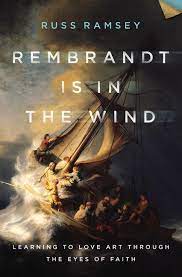
Tim Chester collected collected thoughtful writings about Christ’s death and resurrection and edited them into An Ocean of Grace: A Journey to Easter with Great Voices of the Past.

Some of the selections are from familiar pens: Augustine, Martin Luther, and Charles Spurgeon. Others are more obscure: Cyril of Alexander from the fifth century, Gregory of Myssa from the fourth, Cyprian of the third, and many others. I was delighted to see a piece by Anne Steele, an eighteenth-century female hymn writer. And I was surprised to see a selection from Catherine Parr, Henry VIII’s last wife, leading me to read a little more about her online. I think Spurgeon is the most recent of the authors included.

These selections are divided into daily readings from Ash Wednesday to Easter. They are grouped into themes for each week: The Light of Love, The Welcome of Grace, The Exchange of Places; The Assurance of Faith, The Gift of Christ, and The Victory of God.

In his introduction, Chester says he removed archaic language except for poetry and hymns while trying to retain the “voice” of the original authors. He also says many “descriptions have been turned into a prayer addressed to God or an exhortation addressed to our own souls.” He doesn’t say why, but he also turned what I think were prose selections into a free-verse style of poetry. I wish he had kept the selections closer to the originals–but then maybe I wouldn’t think so if I read the originals.

I began reading this book late in the season due to finishing a previous study. Because of that, and because the selections were fairly short, I read two or three a day. I think that may have lessened the impact of them. If I read this book again, I’ll plan to read one a day as the author intended.

Nevertheless, I did receive much food for thought and warmth for heart by reading this book. I have many places marked, but I will try not to overwhelm you with quotes.

In an excerpt from Catherine Parr’s The Lamentations of a Sinner, she spends several lines listing her sins and Christ’s merits. She concludes:

Shall I fall in desperation?
No, I will call upon Christ,
 the Light of the world,
  the Fountain of life,
   the relief of all careful consciences,
    the Peacemaker between God and man,
     and the only health and comfort of all true repentant sinners.

By his almighty power he can save me
and deliver me out of this miserable state.
For this is the life everlasting, O Lord,
 to believe you to be the true God,
 and him whom you sent, Jesus Christ.
By this faith I am assured,
and by this assurance I feel the forgiveness of my sins:
 this is what gives me confidence,
 this is what comforts me,
 this is what quenches all despair (p. 10).

This line of Puritan Stephen Charnock’s “A Discourse of the Knowledge of Christ Crucified” stood out to me: “May all the charms of sin be overcome by this ravishing love” (p. 27). He goes on to say:

How can we, with thoughts of the cross alive in our hearts, sin against so much tenderness, compassion and grace, and all the other perfections of you, our God, which sound so loud in our ears from the cross of Jesus? Shall we consider him hanging there to deliver us from hell and stain, and retain any desire to walk in the way which led him there? Can we take any pleasure in that which caused so much pain for our best friend? Can we love that which brought a curse better than him who bore the curse for us?” (pp. 26-27. I put this in paragraph form just to save time formatting).

This from Isaac Ambrose also stood out to me: “Surely his death is more satisfactory to God than all your sins can possibly be displeasing to God” (p. 94).

This was from Thomas Watson: “We cannot lift up Christ higher in heaven, but we may lift up him in our hearts. So let us believe him, adore him and love him, and exalt him in our lives, for all the doxologies and prayers in the world do not exalt Christ as much as a holy life” (p. 132).

I loved this closing poem from Henry Vaughan titled “Easter Hymn”:

Death, and darkness get you packing,
Nothing now to man is lacking,
All your triumphs now are ended,
And what Adam marred, is mended;
Graves are beds now for the weary,
Death a nap, to wake more merry;
Youth now, full of pious duty,
Seeks in thee for perfect beauty;
The weak and aged tired, with length
Of days, from thee look for new strength;
And infants with thy pangs contest
As pleasant, as if with the breast.
Then, unto him, who thus hath thrown
Even to contempt thy kingdom down,
And by his blood did us advance
Unto his own inheritance,
To him be glory, power, praise,
From this, unto the last of days! (p. 154).

I had a couple of formatting complaints in the book. Chester writes verse references as, for example, Isaiah 61 v 10 rather than Isaiah 61:10. The latter has been used for centuries. I have never seen the former except in Chester’s books. I wondered if perhaps it’s done that way in the UK, but I have read several books from authors from various countries without having seen this way of writing Bible references. I Googled “how to write Bible verse references” just to see if this is a new style, and I didn’t see it mentioned in any source I looked at. It’s not a big deal in the grand scheme of things. It’s more a commentary on my heart to say it irritated me. But I tried to overlook it

The other complaint is not unique to Mr. Chester, but is to all the books I have from The Good Book Company. They put the table of contents in the back of the book rather than in the front after the title page. That doesn’t make sense to me. I use the Table of Contents to look at where a book is going, not where it has been. When I am considering a new book, I look at the front cover, the back cover, the description, the table of contents, and the first few paragraphs or pages. If I look at a sample on Amazon, they usually only include the first several pages. If the Table of Contents is in the back, I am not able to see it in the sample.

I also wish Chester had listed the titles of all the readings in the Table of Contents rather than just the main section headings.

Again, these are minor issues compared to the content of the book.

There were just two or three places where I put a question mark or didn’t quite agree with how something was worded. But overall, I enjoyed this book and plan to use it again for Lenten reading in the future.

(I often link up with some of these bloggers.)

Redeemed Regrets

Redeemed regrets

One of my biggest regrets is that I often did not have a good attitude when caregiving for my mother-in-law. I wanted her to be well taken care of. But I did not have a natural caregiver’s heart. I often felt the weight of caregiving. I resented the intrusion on my time and plans for that stage of my life. When she was under hospice care for three years, we had bath aides, social workers, a chaplain, and a doctor coming in and out (often without calling first). Even though I liked most of the people, I often felt the introvert sanctuary of my home had been invaded.

I tried to fight these feelings by reminding myself of God’s truth: it was good and right and biblical to care for my mother-in-law. She had lovingly cared for my husband, and then our family after we married; she deserved our care in return. This was my ministry for that time in my life, and it was every bit as important as writing a book or teaching a class. God would give grace for each day, each moment, as needed.

Yet I still felt guilty about having these negative feelings in the first place.

Paul talks about the difference between regret and repentance, or worldly versus godly grief in 2 Corinthians 7:10-11. It’s important that we don’t stop at regret. It’s possible to feel bad about doing wrong without really repenting of it. Repentance will involve realization that we sinned against God, confession to Him that what we did was wrong, with no excuses or self-justification, and asking for His grace and help to change.

But even after repentance, we sometimes still regret what we did.

After my mother-in-law passed away, my guilt multiplied rather than ebbed. I confessed these things to the Lord. I knew He forgave me. But I still regretted my wrong attitudes and wished I had served her better.

I think this might be what people experience when they say they can’t forgive themselves. If God forgives us, who are we to withhold forgiveness? We have to accept that we are fallen creatures with a bent towards selfishness.

But even with forgiveness, we still regret our past actions. We wonder how we could have been so thoughtless or selfish.

When the person we’ve wronged has passed on, or we’ve lost touch, our regret festers. There’s no way to make it right, to apologize to that person.

Something happened recently to help me realize regrets can be redeemed.

I walked into the church restroom to find two ladies talking who were both currently taking care of their mothers. One knew I had taken care of my mother-in-law and pulled me into the conversation.

One of the things that had helped me most during my mother-in-law’s care was talking to other people who were currently or formerly caring for a parent. I could be a little freer to share with them and know I’d be understood. So now, I was able to help others in that way: mainly by listening, but sometimes by sharing something that helped me.

God has redeemed my regrets in other ways as well: softening my heart, helping me to be more watchful and prayerful, reminding of my need of His grace and help.

Of course, caregiving is not the only area where I have regrets. As I get older, past situations where I have failed come to mind–in parenting, relationships, ministry, and just about every area.

I can’t go back and redo the things I’ve done wrong. But I can encourage others. I can learn from my failures. God can use the way He helped me by sharing with others. He truly does work all things together for good to those who love Him (Romans 8:28). This doesn’t excuse the wrongdoing. But God, in His grace, can use it for good.

I imagine David regretted his sin with Bathsheba. Even though he got a wife and a son out of the situation, he faced other consequences. His sensitive heart, once it was right with God again, had to have berated himself. But out of that scenario came Psalm 51, which ministers to any who have sinned with the hope of forgiveness and redemption. God still used him to write psalms, prepare Solomon for his reign, and provide for the temple Solomon would build.

I’m sure Peter always regretted that he denied knowing Christ when Jesus was arrested and crucified. Jesus forgave him, restored him, and gave him a ministry. His epistles exhort readers to humility and to face suffering and persecution with joy–things I think he learned through his experiences.

It’s not that doing good deeds can somehow make up for our bad deeds. That’s how redemption often works in literature, but not with God. Just as we’re saved by His grace at the beginning, so we walk in His grace throughout life. We don’t do good things to rack up points with Him or to “even the scales”–we could never do enough! Rather, when He forgives us, we serve Him with renewed and thankful hearts.

For we ourselves were once foolish, disobedient, led astray, slaves to various passions and pleasures, passing our days in malice and envy, hated by others and hating one another. But when the goodness and loving kindness of God our Savior appeared, he saved us, not because of works done by us in righteousness, but according to his own mercy, by the washing of regeneration and renewal of the Holy Spirit, whom he poured out on us richly through Jesus Christ our Savior, so that being justified by his grace we might become heirs according to the hope of eternal life (Titus 3:3-7).

But shouldn’t we know better after we’re saved? Isn’t sin that much more heinous after salvation?

The Lord is merciful and gracious, slow to anger and abounding in steadfast love. . . . As a father shows compassion to his children, so the Lord shows compassion to those who fear him. For he knows our frame; he remembers that we are dust” (Psalm 103:13-14).

Micah 7:18 says God delights in mercy.

I love what Christina Rossetti wrote: “A fall is a signal not to lie wallowing, but to rise.” We need to let regret do its convicting, humbling work in us. But then we need to seek God’s grace to keep going, walking closely with Him. He might even redeem our regrets by bringing up opportunities to encourage others with what we have learned.

1 John 1:9

(I often link up with some of these bloggers.)
Tending the Soil of Your Heart

Tending the Soil of Your Heart

In Mark 4, Jesus tells a story about different kinds of soil and how they each react to seed. Later, the disciples come to Him privately and ask what the story means.

Jesus said that the seed is the word of God. Some seed in the story fell on the hardened pathway, and birds came and ate the seed. This represents people for whom Satan immediately comes and takes the word from their minds.

Others are like rocky ground. The seed may sprout, but there’s no depth of soil, so the plant dies.

Others are like ground covered with thorns, which represent “the cares of the world and the deceitfulness of riches and the desires for other things.” These “choke” the word, so, again, plants can’t grow.

But the good soil is like people who hear the word, accept it, and bear fruit.

On first reading this parable, you might get to the end of it and think something like, “Well, that’s that. I feel bad for the people whose hearts didn’t receive the word, but what can you do?”

I don’t think that’s meant to be the end of the story, though. Surely, at the end of our lives when we stand before the Lord, we’ll be responsible for how we heard and received God’s word.

But right now, there’s still time to hear and respond.

The word “hear” is repeated eleven times in this chapter. Twice, Jesus says, “If anyone has ears to hear, let him hear.” Then “he said to them, ‘Pay attention to what you hear: with the measure you use, it will be measured to you, and still more will be added to you. For to the one who has, more will be given, and from the one who has not, even what he has will be taken away.'” When you listen and respond, you’ll hear more. But if you turn away, you can lose whatever you have heard.

So what do we do if our hearts seem unfruitful, rocky, shallow, or choked by distractions and concerns?

Pray, asking God to search us and change our hearts:

Search me, O God, and know my heart! Try me and know my thoughts! And see if there be any grievous way in me, and lead me in the way everlasting! (Psalm 139:23-24).

Incline my heart to your testimonies, and not to selfish gain! Turn my eyes from looking at worthless things; and give me life in your ways (Psalm 119:36-37).

Examine ourselves:

Let us test and examine our ways, and return to the Lord! Let us lift up our hearts and hands to God in heaven (Lamentations 3:40-41).

Break up our fallow ground:

Sow for yourselves righteousness; reap steadfast love; break up your fallow ground, for it is the time to seek the LORD, that he may come and rain righteousness upon you. (Hosea 10:12).

For thus says the LORD to the men of Judah and Jerusalem: “Break up your fallow ground, and sow not among thorns (Jeremiah 4:3).

Fallow ground is unplowed, uncultivated. It needs to be dug into, loosened, aerated, so seed can grow down deep. The Hosea passage goes on to talk about plowing iniquity and trusting in one’s own way. Jeremiah adds, “Circumcise yourselves to the Lord; remove the foreskin of your hearts.” We need to get rid of anything we know is standing between us and the Lord. 

Don’t harden your heart.

Today, if you hear his voice, do not harden your hearts as in the rebellion, on the day of testing in the wilderness, where your fathers put me to the test and saw my works for forty years (Hebrews 3:7-9; also verses 13 and 15 and 4:7; also Psalm 95:8).

Other passages associate hardened hearts with pride, unbelief, willfulness, and disobedience.

God would not have said “Don’t harden your hearts” if there was no hope. We can ask Him to soften us and help us to repent of our unbelief and pride. Hebrews 3:13 says, “Exhort one another every day, as long as it is called ‘today,’ that none of you may be hardened by the deceitfulness of sin.” If we haven’t been listening to that exhortation, it’s a good time to start.

Pull out the weeds.

“The cares of the world and the deceitfulness of riches and the desires for other things enter in and choke the word, and it proves unfruitful (Mark 4:19).

This reminds me of the man we call the “rich young ruler” in Mark 10. He came to Jesus asking what he could do to inherit eternal life, thinking he had a pretty good chance since he kept the commandments. But Jesus told him to sell all he had, give it to the poor, and follow Him. Jesus does not call everyone to do this, but he knew this man loved his possessions too much. The man went away sorrowing rather than obeying.

Jesus remarked how difficult it was for a wealthy person to be saved–more difficult than a camel going through the eye of a needle. Astonished, the disciples wondered who then could be saved. Jesus said it was impossible with man, but not with God. Because of what Jesus said here, and the man’s sorrowfulness, and the fact that the text says Jesus loved him, I have hope that this man eventually did repent and turn to God.

But riches and possessions aren’t the only “thorns” that can choke the word. The cares of this world can distract us as well, like John Bunyan’s muckraker in The Pilgrim’s Progress, who wouldn’t look up from his busyness to see the hand of mercy extended to him.

Jesus warned that the desire for other things can distract us from His word as well. Five seconds after we die, we’ll realize that whatever we were holding onto wasn’t worth it. “For what does it profit a man to gain the whole world and forfeit his soul? For what can a man give in return for his soul?” (Mark 8: 36-37).

Sometimes the rocks or weeds in our hearts are intellectual. A woman in one of our former churches had been a biology major, and her biggest obstacle to salvation was her belief in evolution. One doesn’t have to believe in creation rather than evolution to be saved, but evolution was a hindrance to this particular woman’s faith. When God opened her heart to believe in His creation, she was able to believe in Him for salvation as well.

Likewise, Lee Strobel (author of The Case for Christ) and Viggo Olsen (Daktar) didn’t believe in God because they didn’t believe in things like the Bible’s reliability or the resurrection of Christ. Both men set out to disprove Christianity. But each became believers when they researched the truth. What we call apologetics (“the study and practice of giving answers for the reasonableness and truth of the Christian faith,” as defined by Answers in Genesis), is not in itself the gospel, but it can pave the way for the gospel by removing intellectual obstacles.

Read the Bible.

The unfolding of your words gives light; it imparts understanding to the simple (Psalm 119:130).

So faith comes from hearing, and hearing through the word of Christ (Romans 10:17).

Even if you don’t believe the Bible yet, or you’re not sure, God can speak to you through scripture and open your heart to Him.

If you don’t know the Lord, I pray you’ll leave no stone unturned to come to Him, and that He’ll give you understanding, repentance, and faith. 

Jeremiah 24:7

(I often link up with some of these bloggers.)

Defeating the Devil

Defeating the Devil

C. S. Lewis wrote to a friend, “There are two equal and opposite errors into which our race can fall about the devils. One is to disbelieve in their existence. The other is to believe, and to feel an excessive and unhealthy interest in them.”

When I first became a Christian and hadn’t developed a lot of discernment yet, I came across books about “spiritual warfare” that embodied the second view. They scared me rather than helping. I had an almost superstitious fear of the devil.

The February 25 reading of Daily Light on the Daily Path shared a collection of verses dealing with Satan, embodying things I had learned about him over the years. I thought I’d use them as a base and expand on them.

Paul writes in 2 Corinthians 2:11, “We would not be outwitted by Satan; for we are not ignorant of his designs.” It helps to learn about an enemy and his tactics. But that doesn’t mean we need to study the occult. I once read a Christian fiction book about rescuing someone from a satanic cult that went into far more detail than I needed to know. I was troubled by some of that information for a long time.

The Bible tells us Satan’s tricks.

Accuses. Revelation 12:10 calls Satan “the accuser of our brothers . . . who accuses them day and night before our God.” We see this in the first chapter of Job. When God points out “my servant Job, that there is none like him on the earth, a blameless and upright man, who fears God and turns away from evil,” Satan responds that Job only serves God because of His blessings. Satan suggests that if God took away what He had given Job, Job would curse God. The rest of the book disproves Satan’s accusations. God knew Job would be faithful. But he had things to do in Job’s heart and ours by what He allowed Job to endure. 

But what if Satan’s accusations are right? What if we failed in an area where we promised to change? What if we committed the same sin we repented of yesterday?

Romans 8:33-35 and 37-39 tells us:

Who shall bring any charge against God’s elect? It is God who justifies. Who is to condemn? Christ Jesus is the one who died—more than that, who was raised—who is at the right hand of God, who indeed is interceding for us. Who shall separate us from the love of Christ? Shall tribulation, or distress, or persecution, or famine, or nakedness, or danger, or sword?

No, in all these things we are more than conquerors through him who loved us. For I am sure that neither death nor life, nor angels nor rulers, nor things present nor things to come, nor powers, nor height nor depth, nor anything else in all creation, will be able to separate us from the love of God in Christ Jesus our Lord.

Questions God’s Word. When Satan talked with Eve in the garden of Eden, he asked, “Did God actually say, ‘You shall not eat of any tree in the garden’?” Yes, God did say that. But when Satan questions what God has said, we sometimes start questioning, too.

Contradicts God’s Word. After questioning God’s Word in Genesis 3, Satan flat out contradicts it.

Misrepresents God and His Word. Satan planted in Eve’s mind that God had ulterior motives for keeping Adam and Eve from the forbidden fruit. When Satan tempted Jesus in Matthew 4, he quoted Scripture out of context and misapplied it. Peter wrote that “There are some things in [Paul’s writings] that are hard to understand, which the ignorant and unstable twist to their own destruction, as they do the other Scriptures” (2 Peter 3:16).

Lies. Jesus said Satan “does not stand in the truth, because there is no truth in him. When he lies, he speaks out of his own character, for he is a liar and the father of lies” (John 8:44). Satan lies about us to God, about God to us, and about everyone and everything else.

Pretends to be an angel of light. 2 Corinthians 11: 13-15 tells us, “For such men are false apostles, deceitful workmen, disguising themselves as apostles of Christ. And no wonder, for even Satan disguises himself as an angel of light. So it is no surprise if his servants, also, disguise themselves as servants of righteousness. Their end will correspond to their deeds.” Most of the books of the Bible warn about false prophets and false teachers.

Murders. Jesus said Satan “was a murderer from the beginning” (John 8:44). I think Satan must be behind mass murders even if the murderers don’t consciously follow or acknowledge Satan. Who else would inspire people to kill so many others?

But the Bible also links hatred with murder (Matthew 5:21-22 and 1 John 3:15). Jen Wilkin comments on this in Ten Words to Live By, her book about the Ten Commandments.:

Is Jesus adding to the law by broadening our attention from murder to anger and contempt? By no means. He is pointing out the seedling that grows into the thorny vine that chokes out life. He is appealing to us to fastidiously weed the garden of our personal holiness. He is teaching that if every person dealt with anger quickly and rightly, there would be no need for the sixth [commandment] at all (p. 94).

First, I am angry with you in response to a hurt. Next, I begin to question your character with an insult. Then, I begin to question your worth as a person. As anger degrades into contempt, the personhood of another is devalued (p. 93).

How then do we defeat Satan?

Awareness. “Be sober-minded; be watchful. Your adversary the devil prowls around like a roaring lion, seeking someone to devour” (1 Peter 5:8).

Prayer. “Watch and pray that you may not enter into temptation. The spirit indeed is willing, but the flesh is weak” (Matthew 26:41),

Resist him. “Resist him, firm in your faith” (1 Peter 5:9).

Submit to God. “Submit yourselves therefore to God. Resist the devil, and he will flee from you” (James 4:7).

Put on God’s armor in Ephesians 6:

Finally, be strong in the Lord and in the strength of his might. Put on the whole armor of God, that you may be able to stand against the schemes of the devil. For we do not wrestle against flesh and blood, but against the rulers, against the authorities, against the cosmic powers over this present darkness, against the spiritual forces of evil in the heavenly places. Therefore take up the whole armor of God, that you may be able to withstand in the evil day, and having done all, to stand firm. Stand therefore, having fastened on the belt of truth, and having put on the breastplate of righteousness, and, as shoes for your feet, having put on the readiness given by the gospel of peace. In all circumstances take up the shield of faith, with which you can extinguish all the flaming darts of the evil one; and take the helmet of salvation, and the sword of the Spirit, which is the word of God, praying at all times in the Spirit, with all prayer and supplication. To that end, keep alert with all perseverance, making supplication for all the saints.

Know God’s Word. The “sword of the Spirit, which is the Word of God” and prayer are the only offensive spiritual weapons given to us. Jesus responded to each of Satan’s temptations with Scripture. 2 Corinthians 10:4-5 says, “For the weapons of our warfare are not of the flesh but have divine power to destroy strongholds. We destroy arguments and every lofty opinion raised against the knowledge of God, and take every thought captive to obey Christ.” Whether wrong thoughts about God are whispered into our hearts, or we’re reading something false about God, we counteract those thoughts with the truth of God’s Word.

Live for God, by His grace. “Walk as children of light (for the fruit of light is found in all that is good and right and true), and try to discern what is pleasing to the Lord. Take no part in the unfruitful works of darkness, but instead expose them” (Ephesians 5:8b-11). “Put off your old self, which belongs to your former manner of life and is corrupt through deceitful desires, and to be renewed in the spirit of your minds, and to put on the new self, created after the likeness of God in true righteousness and holiness” (Ephesians 4:22-24). The passage goes on to say that if you used to steal, now work to give to those in need, use edifying rather than corrupting speech, and so on. Don’t just focus on what you’re not supposed to do: actively do the right thing.

Look for the way of escape. “Therefore let anyone who thinks that he stands take heed lest he fall. No temptation has overtaken you that is not common to man. God is faithful, and he will not let you be tempted beyond your ability, but with the temptation he will also provide the way of escape, that you may be able to endure it” (1 Corinthians 10:12-13). Too often I look for ways to justify what I want to do rather than looking for a way to avoid temptation.

Don’t give Satan a foothold. “Give no opportunity to the devil” (Ephesians 4:27). This may involve being careful about what we read and watch and where we go. 

I don’t go looking for the devil behind every trouble. Once, when discussing a misunderstanding with a neighbor, she blamed the devil for our lack of communication. But the problem was in our human failures. I don’t give the devil more credit than he is due.

I don’t rebuke him: I leave that to God, like the archangel Michael did. “But when the archangel Michael, contending with the devil, was disputing about the body of Moses, he did not presume to pronounce a blasphemous judgment, but said, ‘The Lord rebuke you'” (Jude 9).

Satan is stronger than I am, but God is stronger than Satan. “Thanks be to God, who gives us the victory through our Lord Jesus Christ” (1 Corinthians 15:57).

1 Corinthians 15:57

(I often link up with some of these bloggers.)
Laudable Linkage

Laudable LInkage

Here are some good reads for the first weekend in March.

The Great Danger is to Assume We Are All Headed for Heaven, HT to Challies. “For every American who believes they’re going to Hell, there are 120 who believe they’re going to Heaven. This optimism stands in stark contrast to Christ’s words in Matthew 7:13-14: ‘…wide is the gate and broad is the road that leads to destruction, and many enter through it. But small is the gate and narrow the road that leads to life, and only a few find it.’”

The Sacred Mundane, HT to Challies. “What about the ordinary and mundane tasks of the homemaker? Can they possibly be more than they are? the making of breakfasts, of lunches and dinners, the folding of laundry, wiping of counters, changing of diapers, the picking up, and the dropping off. Can these have meaning beyond the day after day ‘sameness?’”

All My Heroes Are Broken. “Disappointment. Once again, a Christian leader has fallen off the pedestal. Of course, I should never have placed them on it. But in my mind, they are not what they once were. Maybe they never were. I need good examples–role models who live out what it means to walk by faith and reflect God’s glory. My heart cries out for inspiration to live for God day by day. Can I really do what God made me and saved me to do? How have others done this before me?”

A Congregation Is a Voting Body. I share this because it never occurred to me anyone would think otherwise until a few years ago, when I heard someone say that they didn’t have the church vote on things because there was no instance of it in Scripture. But there is.

You Probably Won’t Get a Book Deal. But We Still Need You to Write, HT to Challies. “It’s difficult to be published. Unless you have a large following, or catch a break, you may face an uphill battle in getting your book published. And yet, I would argue, it’s still important for you to write for at least a couple of reasons.”

The Three Lost Pieces of a Good Romance, HT to Challies. “Today, I’ll be discussing the three essential elements of a good romance novel that have gradually been vanishing from mainstream romance tales, and why these three elements are necessary for a good story.”

C. S. Lewis quote

“But tho’ there is much to be puzzled about, there is nothing to be worried about.”
–C. S. Lewis

He Knows My Name

He knows my name

I was named for two aunts. My mother’s sister was Barbara Ann, and my father’s youngest sister was Lora Lee. So I became Barbara Lee. I supposed I could have ended up with Lora Ann, or a name from another aunt, Faye Elisabeth, whose name was the same as my grandmother’s.

From time to time as I grew up, interest arose in name meanings. My friends were always tickled to discover that my first name, Barbara, means “stranger.” I’d hear good-natured comments the speakers thought were witty, like, “Yeah, you’re the strangest friend I have.”

When I was taking a class in some New Testament epistles in college, the teacher said something like, “I don’t know if we have any Barbaras in here . . . ” (at which point everyone who knew me looked at me), “but the name Barbara comes from the word barbarian.” He said “barbarian” arose from how Greeks described foreigners, whose language sounded like “bar bar” to them.

I loved my aunts and didn’t mind my name. I don’t think my parents had name meanings in mind when they named me. But after I became a Christian I was encouraged to discover the concept of being a stranger in the Bible.

In Ephesians 2, Paul writes that we were “strangers to the covenants of promise, having no hope and without God in the world. But now in Christ Jesus you who once were far off have been brought near by the blood of Christ. For he himself is our peace . . .” Through the cross, He reconciled us to Himself, so when we believe on Jesus Christ, we “are no longer strangers and aliens.” The Getty’s hymn, “Jesus, Joy of the Highest Heaven,” puts it this way:

Jesus, laid in a lowly manger,
Facing a world of dangers,
Come to turn me a stranger
Into a child of God.

Isaac Watts’ hymn, “My Shepherd Will Supply My Need,” captures this beautifully in the last stanza.

The sure pro­vi­sions of my God
Attend me all my days;
O may Thy house be mine abode,
And all my work be praise!
There would I find a set­tled rest,
While oth­ers go and come;
No more a stran­ger, nor a guest,
But like a child at home.

When we were at home in a world that doesn’t know God, we were strangers to Him. But once we became His children, then we also became strangers to the world. Hebrews 11 says the people listed there “all died in faith, not having received the things promised, but having seen them and greeted them from afar, and having acknowledged that they were strangers and exiles on the earth” (verse 13). This world is not the ultimate home of believers. We seek to do good and enjoy God’s gifts and shine as lights for Him here, but ultimately, we “desire a better country, that is, a heavenly one” (verse 16). C. S. Lewis put it this way in The Problem of Pain: “Our Father refreshes us on the journey with some pleasant inns, but will not encourage us to mistake them for home.”

As strangers here, 1 Peter 2:11 urges us “to abstain from the passions of the flesh, which wage war against your soul.” This urging follows the verses that say believers are “a chosen race, a royal priesthood, a holy nation, a people for his own possession, that you may proclaim the excellencies of him who called you out of darkness into his marvelous light. Once you were not a people, but now you are God’s people; once you had not received mercy, but now you have received mercy.” Because we have become God’s people through faith, we live and act differently from what we used to.

Deuteronomy 10:18-19 really elevated my name in my eyes: “He executes justice for the fatherless and the widow, and loves the sojourner [stranger], giving him food and clothing. Love the sojourner [stranger], therefore, for you were sojourners in the land of Egypt.”

In Bible times, name meanings were special. People were given names according to character traits they either had, or that parents hoped they would have.

God often changed a person’s name in the Bible after a significant encounter with God. Thus Abram (“exalted father”) became Abraham (“father of many nations”). Jacob (“planter or deceiver”) became Israel (“prince with God”). Simon (“hearing”) became Peter (“rock”).

Revelation 2:17 contains an interesting situation: “To the one who conquers I will give some of the hidden manna, and I will give him a white stone, with a new name written on the stone that no one knows except the one who receives it.”

This is the only place where such a white stone is mentioned in the Bible. Some sources say ancient jurors cast white stones for a “not guilty” verdict or a black stone for “guilty.”

Some say the stone hearkens back to the breastplate the high priest wore which contains twelve jewels with the twelve tribes of Israel inscribed upon them. The high priest brought the names of the tribes before God as he ministered. So Jesus bears our names before the Father.

GotQuestions.org poses this as the best theory:

The best theory regarding the meaning of the white stone probably has to do with the ancient Roman custom of awarding white stones to the victors of athletic games. The winner of a contest was awarded a white stone with his name inscribed on it. This served as his “ticket” to a special awards banquet. According to this view, Jesus promises the overcomers entrance to the eternal victory celebration in heaven. The “new name” most likely refers to the Holy Spirit’s work of conforming believers to the holiness of Christ.

Jesus said of a good shepherd “The sheep hear his voice, and he calls his own sheep by name and leads them out’ (John 10:3). Then He said, “I am the good shepherd. I know my own and my own know me” (verse 14). 

Imagine–the God of the universe, who made and knows millions (billions? trillions?) of people, knows our name. Those who know Him will receive a new name in heaven known only between Him and them.

I don’t know what my new name will be. But I am immeasurably thankful to be known and loved by God.

He calls his own sheep by name and leads them out. John 10:3.

He calls his own sheep by name and leads them out (John 10:3).

(I often link up with some of these bloggers.)
Lesser Lights

Lesser lights

Before the invention of electricity, it was rare to see a whole city lit up. One could see candlelight or lanterns in windows. Gaslights helped illuminate sidewalks. But if the whole city seemed alight, that meant something unusual was going on.

These days, though, cities seem to dwell in perpetual light.

G. K. Chesterton commented on this in The Illustrated London News in 1927:

In every civilised age and country, it has been a natural thing to talk of some great festival on which “the town was illuminated.” There is no meaning nowadays in saying that the town was illuminated. There is no point or purpose in having it illuminated for any normal and noble enthusiasm, such as the winning of a victory or the granting of a charter. The whole town is illuminated already, but not for noble things. It is illuminated solely to insist on the immense importance of trivial and material things, blazoned from motives entirely mercenary. . . .

It is no good to send up a golden and purple rocket for the glory of the King and Country, or to light a red and raging bonfire on the day of St. George, when everybody is used to seeing the same fiery alphabet proclaiming the importance of Tibble’s Tooth Paste or Giggle’s Chewing Gum. The new illumination has not, indeed, made Tibble and Giggle so important as St. George and King George; because nothing could. But it has made people weary of the way of proclaiming great things, by perpetually using it to proclaim small things. It has not destroyed the difference between light and darkness, but it has allowed the lesser light to put out the greater (quoted in Winter Fire: Christmas with G. K. Chesterton by Ryan Whitaker Smith, pp. 107-108).

Light is one of my favorite symbols of Christmas and one of the things I miss most when we take decorations down.

But light is not just a symbol of Christmas. It’s a symbol of God, a thread running through the whole Bible.

From the Old Testament: “The Lord is my light and my salvation; whom shall I fear?
The Lord is the stronghold of my life; of whom shall I be afraid?” (Psalm 27:1).

To the New: “Again Jesus spoke to them, saying, ‘I am the light of the world. Whoever follows me will not walk in darkness, but will have the light of life'” (John 8:12).

From prediction: “The people who walked in darkness have seen a great light; those who dwelt in a land of deep darkness, on them has light shone.” (Isaiah 9:2).

To fulfillment: “And leaving Nazareth he went and lived in Capernaum by the sea, in the territory of Zebulun and Naphtali, so that what was spoken by the prophet Isaiah might be fulfilled: ‘The land of Zebulun and the land of Naphtali, the way of the sea, beyond the Jordan, Galilee of the Gentiles—the people dwelling in darkness have seen a great light, and for those dwelling in the region and shadow of death, on them a light has dawned'” (Matthew 4:13-16).

From the Father: “God is light, and in him is no darkness at all” (1 John 1:5b).

To the Son: “In him was life, and the life was the light of men. The light shines in the darkness, and the darkness has not overcome it. . . . The true light, which gives light to everyone, was coming into the world.” (John 1:4-5, 9).

My husband loves astronomy and will take his telescope out when some phenomenon is happening in the sky. He often says that to really see the stars best, one needs to get away from the lights of cities, towns, or neighborhoods.

It’s not that lesser lights put out the light of the stars, but they obscure and distract from them.

The lesser lights in our lives do the same. They may be harmless in themselves, but their number and seeming urgency take our attention. They can’t put out the Light. But they make it harder to see Him.

Some day, there will be no lesser lights: “And night will be no more. They will need no light of lamp or sun, for the Lord God will be their light, and they will reign forever and ever” (Revelation 22:5).

Until then, may our hearts cry out with the psalmist, “There are many who say, ‘Who will show us some good? Lift up the light of your face upon us, O Lord!’” (Psalm 4:6).

Psalm 36:9

(I often link up with some of these bloggers.)
We Can Trust God On Our Journey

We can trust God on our journey through life.

Imagine a child or two or three in the back seat during a family trip:

Mom, did you pack my toothbrush?

Dad, are you sure you know the way?

Will we be able to find somewhere to eat at dinner time?

Will Grandma have room for us?

Weren’t we supposed to turn there?

What if the road is out?

Or a tornado comes?

Or a robber comes to our house while we’re away?

Is the GPS working right?

After a while, a weary parent would be tempted to respond, “Just trust me. I’ve traveled before. I know what to do. Even if we have problems along the way, we’ll take care of them. Just relax and enjoy the trip.”

Yet, earthly parents can fail. I did, in fact, forget one child’s underwear one trip, necessitating a stop at Wal-Mart when we arrived at our destination. Once, my husband took us to the airport the wrong day. Drivers can take wrong turns and get lost.

Sometimes we seem like anxious children with God, our perfect Parent. We wonder if He’s really guiding us the right way, if He can truly meet our needs. We wouldn’t put it quite this way, but we act as if we don’t trust that He knows what He’s doing.

God not only knows the way, He is the way.

Jesus said to him, “I am the way, and the truth, and the life. No one comes to the Father except through me‘” (John 14:6).

Trust in the Lord with all your heart, and do not lean on your own understanding. In all your ways acknowledge him, and he will make straight your paths” (Proverbs 3:5-6).

He will take care of all our needs.

But seek first the kingdom of God and his righteousness, and all these things will be added to you (Matthew 6:33).

And my God will supply every need of yours according to his riches in glory in Christ Jesus (Philippians 4:19).

He promises to be with us and help us every step of the way, “From life’s first cry to final breath.”*

Fear not, for I am with you; be not dismayed, for I am your God; I will strengthen you, I will help you, I will uphold you with my righteous right hand (Isaiah 41:10).

Even to your old age I am he, and to gray hairs I will carry you. I have made, and I will bear; I will carry and will save (Isaiah 46:4).

Whatever need we have, God is more than able to meet. We may not like some sections of the path of life. There will be bumps in the road, dark valleys, and occasional detours from the way we thought we should go. But He has good purposes in all He brings us through.

As we face a new year, He bids us cast every anxious care on Him, because He cares for us.

Casting all your anxieties on him, because he cares for you. 1 Peter 5:7

*From “In Christ Alone” by Stuart Townend and Keith Getty.

(I often link up with some of these bloggers.)