The First Step to Murder

The First Step to Murder

If we look through the Ten Commandments, most of us breathe a sigh of relief when we come to the sixth one: “You shall not murder.” At least that’s one thing we haven’t done.

However, Jesus takes the issue beyond outward action to the heart. He said, “You have heard that it was said to those of old, ‘You shall not murder; and whoever murders will be liable to judgment.’ But I say to you that everyone who is angry with his brother will be liable to judgment; whoever insults his brother will be liable to the council; and whoever says, ‘You fool!’ will be liable to the hell of fire” (Matthew 5:21-22).

Some translations show the middle of verse 22 saying “And whoever says to his brother, ‘Raca!’ shall be in danger of the council” (NKJV). According to the Berean Study Bible notes here, “‘Raca’ is an Aramaic term of contempt, roughly equivalent to calling someone ’empty-headed’ or ‘worthless.'” Other translations use the word “idiot.”

The notes go on to say, “Calling someone a ‘fool’ implies moral and spiritual deficiency, not just intellectual lack. In biblical terms, a fool is someone who rejects God and His wisdom (Psalm 14:1). This phrase highlights the destructive power of words and the importance of speaking with love and respect.”

We can understand how lust is the first step toward sexual sin, as Jesus said earlier in Matthew: “You have heard that it was said, ‘You shall not commit adultery.’ But I say to you that everyone who looks at a woman with lustful intent has already committed adultery with her in his heart” (Matthew 5:27-28).

But how are anger and name-calling precursors to murder?

They both dehumanize other people and cheapen their worth. Jen Wilkin describes the progression in her book on the Ten Commandments, Ten Words to Live By: “First, I am angry with you in response to a hurt. Next, I begin to question your character with an insult. Then, I begin to question your worth as a person. As anger degrades into contempt, the personhood of another is devalued” (p. 93).

I’ve often wondered at the atrocities humans have committed against each other during the days of slavery or the Holocaust or in prisoner of war camps. Some people thought of slaves or Jews or enemies as something less than human, and that was the first step to treating them horribly.

Even now, online battles reveal a shocking wish for harm towards others who disagree with opposing politics or views. Seven years ago, author and teacher Karen Swallow Prior was hit by a bus and had a long recovery. Recently, she shared a post on X where someone said he wished that bus had better aim. Like her or not, disagree or agree with her, wishing for her demise is appalling.

But these kinds of things are common online. Harm is wished towards people of differing opinions. Cancel culture is a smaller version of wanting to wipe out, to remove from public view, those we disagree with.

A few years ago, I was in a WalMart when I first realized that Covid was going to be a major issue. I had heard of it, but we’d been warned about viruses before (like H1N1), which didn’t have a great effect on our everyday lives. We figured this new virus would be the same.

But that day in WalMart, shelves were empty of disinfecting wipes, antibacterial soap, and toilet paper, among other things. I had never seen anything like this. I was rattled, wondering what was going on, how big this thing was going to be, and where I was going to find what I needed.

In my preoccupied state, I turned in front of another cart to get something from a shelf. It was the equivalent of cutting someone off in traffic. I wasn’t being malicious: I just wasn’t thinking clearly. But I was definitely in the wrong. I couldn’t seem to form the thoughts or words to apologize.

The person I offended pulled his mask down, looked straight in my eyes, and said to his companion, “I hope she gets the Coronavirus. I hope she dies from it.”

I watched him pass by with my mouth gaping open. I couldn’t believe he said that. I was even more rattled.

Genesis 1 tells us God created people in His image or likeness. Everyone has worth because God made them, even though that image is marred because of sin.

When we become believers, we “put on the new self, created after the likeness of God in true righteousness and holiness” (Ephesians 4:24). We start to look and act more like our Father. The more we behold Him and walk with Him, the more we’ll look like Him. Therefore we take care to “Be angry and do not sin; do not let the sun go down on your anger, and give no opportunity to the devil” (Ephesians 4:24-27).

We don’t keep the sixth commandment just by avoiding murder. We value others as God’s creation.

Jen Wilkin continues:

Because we are accepted in the beloved, we will not be content to simply be not-murderers, or not-contemptuous, or not-angry. We will not merely refrain from taking life—we will run toward giving it. Let us read in the sixth word’s prohibition of murder the exhortation to take every care to preserve life. Let us run to be life-protectors and esteem-givers and peacemakers.

To do so will require that we take stock of how we might be participating in the anger-worship of our cultural moment. It will require that we strive to preserve life in a culture that believes entire categories of image bearers are worthy of our contempt or our disregard—the unborn, the elderly, the physically or mentally challenged, the poor, the powerless, the foreigner. And in a world defined by living at odds with others, it will require that we strive to live at peace with others, as far as it is possible with us. It will ask us to be our brothers’ keepers, even as Christ has been ours (p. 96).

Paul writes in Philippians 2: “Do nothing out of selfish ambition or conceit, but in humility consider others as more important than yourselves. Everyone should look not to his own interests, but rather to the interests of others” (verses 3-4, CSB).

He points us to Jesus’ example: “Adopt the same attitude as that of Christ Jesus, who, existing in the form of God, did not consider equality with God as something to be exploited. Instead he emptied himself by assuming the form of a servant, taking on the likeness of humanity. And when he had come as a man, he humbled himself by becoming obedient to the point of death —even to death on a cross” (verses 5-8, CSB).

If anyone had a right to be angry with others, Jesus did. But He became as a servant and humbled Himself, even to the point of death, for people who, at best, did not understand Him, and, at worst, plotted to do away with Him.

We can’t have the attitude Jesus did in ourselves. We need His grace. We need to look long at Him so that we might become more like Him, showing love instead of contempt.
Philippians 2:3

(I often link up with some of these bloggers.)

Laudable Linkage

Laudable Linkage

Here is some of the thought-provoking writing I found online this week:

The Corner of Sanity. “The Corner of Sanity has ended up being the most graciously extended metaphor for my life as a Mom; I’ve willingly handed over my sleep schedule, my to-do list, and certainly my standards of cleanliness each time a new baby comes along. But from the beginning, I’ve learned the vital importance of holding fast to morning time with God to get me through. Many other priorities can be downgraded or abandoned entirely, but going without time in the Word and in prayer has been akin to spiritual starvation. Trying to love and tend young life while starving is impossible to sustain—at some point, I will just run dry.”

When You Fear Your Best Days Are Behind You. “We notice how our struggles have changed us and fear we may never be able to do anything significant again. We look at how we are now, compare ourselves to how we used to be, and think our most fruitful years are behind us.”

Complaining to God. “In the book of Numbers the people of Israel are judged for moaning and groaning about not having enough food. Then why are there so many Psalms of lament, suggesting that complaining to God is okay?”

How Hannah Found Peace in the Middle of Pain. “Sometimes I’ve told myself, ‘When I get past this, then I’ll quit fretting.’ However, if my peace depends on my circumstances or other people, then peace is fragile and illusive. The story of Hannah in 1 Samuel 1-2 shows sorrow and challenges can either rob our peace or push us toward the Source of peace.”

Proverbs Purpose #4: To Transform People. “He desires nothing less than the transformation of the simple person (‘the youth’) into a wise person (who has ‘prudence’), and of a wise person (‘one who understands’) into a wiser person (one who will ‘increase in learning’).”

Guard Your Heart When Suffering, HT to Challies. “In an effort to pull us away from fellowship with the Lord and our effectiveness in the kingdom of God, Satan is always looking for weak spots to target his assaults on God’s children. His long experience with humans has taught him that we are especially vulnerable in times of physical weakness. This is why he delights in or taking advantage of times of physical suffering.”

What If He’s Faithful? HT to Challies.”I’d like to pose another question when life is hard and you’re fearful of the future. What if He’s faithful? Instead of immediately defaulting to all the potential disasters, what if we take our thoughts captive and force them to settle down in front of the 100% likelihood of who God will be to us no matter how hard life gets?”

He’s Still Working on Me. “As he and I don’t go away by ourselves very often, I had a verrrry hard time with this turn of events. Since I’m a Christian and believe in the sovereignty of God, I knew God could have changed the timing of this sickness or just not allowed it to happen in the first place. But he didn’t. And though it wasn’t a life-threatening illness, I was still less than pleased.”

Clearing Up Confusion About Humility, HT to Challies.”Here’s the simple guideline: To develop humility, don’t put yourself up relative to others, and don’t put others down relative to you. Instead, do the opposite.”

“The only thing that keeps me stable and settled in these days of uncertainty is the absolute dependability of God’s Word.” — Elisabeth Elliot

“The only thing that keeps me stable and settled in these days of uncertainty
is the absolute dependability of God’s Word.” — Elisabeth Elliot

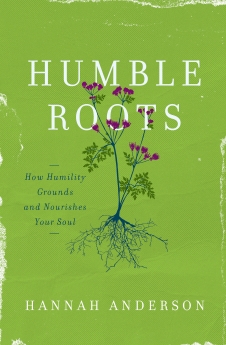
Humble Roots

If people think about humility at all these days, they usually envision self-deprecation, playing down one’s attributes, talents, or accomplishments, or, at the very least, not bragging.

In Humble Roots: How Humility Grounds and Nourishes Your Soul, Hannah Anderson explores humility from a Biblical angle. Instead of viewing humility as a club or prod when we’re feeling too proud, humility frees us and leads us to rest.

I defined humility as a correct sense of self, as understanding where you come from and where you belong in this world (p. 64, Kindle version).

Theologically speaking, humility is a proper understanding of who God is and who we are as a result (p. 102).

I would describe it as a creaturely dependence. We’re “made in His image, but we are made nonetheless (p. 11)—made originally from dirt, to which our bodies return. As Paul reminds Timothy, “we brought nothing into the world, and we cannot take anything out of the world” (1 Timothy 6:7). Everything we are and everything we have comes from God.

The problem is our obsession with ourselves. With our need to fix things, our need to make ourselves better, our need to be approved by God and others, our need to “count for something.”

But this is also why Jesus calls us to come to Him. By coming to Jesus, we remember who we are and who we are not. By coming to Him, we come face to face with God and with ourselves. “It is only in our encounter with a personal God,” writes philosopher Dietrich von Hildebrand, “that we become fully aware of our condition as creatures, and fling from us the last particle of self-glory” (p. 55).

If I can’t handle little things, what can I handle? Failure at small things reminds us of how helpless we are in this great, wide world. When little things spiral out of control, they remind us that even they were never within our control in the first place (p. 26).

Humility, instead of being a negative concept, frees us:

to be the people God created us to be (p. 11).

from the cycle of stress, performance, and competition (p. 12).

from our burdens . . . by calling us to rely less on ourselves and more on Him (p. 32).

to redirect our energies toward God and those whom He has given us to love (p. 3).

from the condemnation of others, . . . from self-condemnation and unnecessary guilt (p. 108).

to hear God’s call and leads you to a place of both rest and flourishing (p. 110).

from the oppression of our emotions, when we finally learn that “God is greater than our heart (p. 114).

from the responsibility of feeling like you have to “do it all.” You are free to do only what you have been made to do (p. 163)

. . . and so much more.

Hannah follows Jesus’ admonition to consider birds and flowers by grounding each chapter in something from the garden or nature. For instance, the chapter “Vine-Ripened” begins with all the work that goes into growing garden tomatoes, then being fooled every year into thinking the ones gassed for redness in stores will be the same. That leads into a discussion of wisdom being rooted not in acquiring facts, but in submitting to the source of wisdom–the fear of the Lord. Then an 1800 court case over whether tomatoes are vegetables or fruit is tied in, along with our relentless desire to be “right.” “Humility simply leaves room that my understanding of a situation could be wrong” (p. 124). We may not have all the facts or may be influenced by culture. Because we’re limited, “my faith cannot rest on my own knowledge . . . or ability to understand . . . humility leaves room for grace” (p. 124). How unlike most social media discussions, where everyone is right in their own eyes. Hannah then refers to an Isaac Watts book which discusses a “dogmatical spirit.” Our wisdom and safety come not from our being right, but from Jesus being right. Then the chapter goes back to the process of creating store-bought tomatoes, compares that with our search for wisdom, and extols the wisdom of waiting: “Humility teaches us to let knowledge ripen on the vine” (p. 129). The chapter is much more beautifully woven together than my cobbled summation here.

Hannah points us to Jesus, “who, though he was in the form of God, did not count equality with God a thing to be grasped, but emptied himself, by taking the form of a servant, being born in the likeness of men. And being found in human form, he humbled himself by becoming obedient to the point of death, even death on a cross (Philippians 2:6-8) and who invites us to “Take my yoke upon you, and learn from me, for I am gentle and lowly in heart, and you will find rest for your souls” (Matthew 11:20).

Besides benefiting from the truths Hannah shares, I marvel at the way she is able to weave together facts from nature, literature, Scripture, and personal example seamlessly into each chapter. I don’t know how she accomplishes this without time to just sit and think, but as a busy pastor’s wife and mom, I’m sure such time is at a premium. I first read one of her books during Advent and have been working my way through her others. She has quickly become one of my favorite authors.

Even though I just finished this book, reading one chapter a week, I am thinking about going through it again. I need to soak in its truths more.

(I often link up with some of these bloggers.)
Laudable Linkage

Here are some of the posts that especially resonated with me this week:

If God Would Outsource His Sovereignty. “I want you to imagine that, at least for a time, the Lord would see fit to involve us in selecting the providences we would receive from his hand. I want you to imagine that through one of his deputies—an angel perhaps—he would approach us to ask how we would prefer to serve him.”

Struggling with the Struggle. “The main feeling that is overwhelming me right now is guilt. After all, shouldn’t I be overjoyed that God is teaching me intense lessons right now? And then I judge myself harshly for thinking that hard times are actually hard and not much fun.”

There Is Something Better Than Never Suffering, HT to Challies. “To suffer, with Christ, is a vastly superior to a life of comfort without him. And if he has saved you through his death, manifesting all his divine power in his own human weakness unto death, do you not think he can be your power in your suffering?”

It All Holds True, HT to Challies. “We want to shield our kids from pain. We want them to learn perseverance and endurance and real, personal faith without having to go through anything hard. That’s not quite how it works in the Christian life. Perseverance is cultivated in adversity.”

He Is Not an It: Understanding the Person of the Holy Spirit. “The Holy Spirit is not a force, feeling, or phenomenon. He is not a ghost or an “it.” He is a Person that we should know and love.”

On Being the Main Character in Your Own Sermon. I can identify with this, even though I am not a preacher. “I pray for the humility to go unseen, unacknowledged, and unremembered, so long as Christ is seen, acknowledged, and remembered. In fact, I pray that Christ would be so present and so visible that people would fail to think of me at all.”

Where Do You Get That From the Text? HT to Knowable Word. “This matters because not every comment in every bible study is of equal worth. Not every application of scripture is a valid application of scripture.”

Why Read If You Forget Most Everything Anyway? HT to Challies. “If you can’t remember most of what you read, why even bother? Aren’t there better ways to use your time?”

God's Word is a treasure

Laudable Linkage

I’m finally caught up on my blog reading! For now. Here are some of the best posts discovered in the last week.

More Than Jumper Cable Christianity, HT to Challies. “We use jumper cables when our car’s battery is depleted, dead, and in need of a jump from another battery to get going. We connect jumper cables to another car, get some juice, and then go about our day and way. I fear far too many of us approach “abiding” in Christ this way. We do some Bible reading, read a devotional book, get some spiritual voltage and roll out.”

Feeding our Longing, HT to Challies. “Have you ever felt like there was more to life than this? Known some sense of longing for the future?”

How to Think About God Promoting His Own Glory, HT to Challies. “Many people misinterpret God’s character when looking at his demands and actions in history because they imagine what they would think of a fallen human being who did the things God has done, and they recoil. Failing to picture God as he is, they picture instead what they’re familiar with—a sinful, human tyrant imposing his preferred laws on people by force, destroying nations, or demanding worship.”

Units of Thought in Narrative Scripture. “One of the most important observations to make in a passage is the structure. And the way to observe structure is to first identify the parts of the passage (the units of thought) so that you can figure out how those parts relate to one another. In this post I’ll show you some of the ways to recognize the units of thought in a narrative.”

Flaunting Your Faithfulness: The Dangers of Conspicuous Christianity. “Conspicuous Christianity is the practice of seeking to appear more godly, not out of devotion to Christ or the love of others, but purely for the sake of winning the approval of other people. Conspicuous Christianity can come in many different forms, but it usually has some of the following characteristics . . .”

Keep Doing the Small Things, HT to Challies. “What if your greatest spiritual growth does not come through some cataclysmic event. What if the most important spiritual breakthroughs in your life are slow and methodical? Are you going to be OK with that?”

All My Not-Enoughness, HT to Challies. “I’m confronted with my not-enoughness a lot lately. As I get dressed, as I parent, as I’m faced with yet another important thing I’ve forgotten. When I try to write and the words won’t come. When I feel so tired that every inch of me longs to slink to the floor and crawl back into bed.”

The Hidden Super-Stars of Missions, HT to Challies. “I coach new missionaries as they prepare to go overseas. I’ve found I can often predict how quickly they’ll be able to raise support based on one crucial factor: whether they have an advocate who will come alongside them.”

Words That Lead, HT to Challies. Loved this post on the myths and responsibilities of writing.

On Reading Widely: Are You Stuck on One Shelf? “Root your thinking in the Word of God first, but be informed about the world around you. Resist being spoon fed by others. Do your own reading and research to form your own opinions.”

Putting Ourselves Forward

When should we put ourselves forward?

Some years ago, a former pastor was speaking about the “selfie generation,” drawing parallels between self-promotion, self-interest, self-centeredness, etc. He mentioned in passing our youth pastor, a young man not long out of college who was very active on Facebook. The older pastor didn’t use the younger as a negative example. I think he just mentioned feeling a little awkward speaking about Facebook with one who knew how to use it so well.

It didn’t take long for the younger pastor to reduce his FaceBook presence. The only times he or his wife post anything any more is when they have a new baby. Of course, a growing family and ministry may have lessened his online time as much as the older pastor’s comment. But I miss hearing how the family is doing and seeing their updates. I suppose I could have, and should have, emailed or written them.

This is not a post for or against Facebook or selfies. Neither is sinful in itself. But incidents like these have caused me to wonder when talking about ourselves goes too far.

We’ve probably all known people who post more than we want to know or see on FaceBook.

On the other hand, we can’t help but speak about ourselves, our thoughts, opinions, etc. We can share examples of what other people have said, but mostly we can only share from our own frame of reference.

Sharing ourselves is part of being human, being a friend, ministering to others. 2 Corinthians 1: 4 tells us to “comfort those who are in any affliction, with the comfort with which we ourselves are comforted by God.” What we write, speak, and share would sound clinical if we don’t put ourselves into it.

In my Christian college, each person in the dorms had to take turns sharing a devotional with the other members of their “prayer group,” which consisted of three rooms that met every evening. One particular roommate always struggled with what to share. Once she said, “I know what God has been teaching me, but how do I know if that’s what others need?” Well, we can only share out of what God has been teaching us. He’s probably showing us those things not only for our benefit, but also for those with whom we interact.

Once when a guest speaker was invited to speak at our church, he was in the middle of research for a book. He quipped, “If you want me to provide the meal, you’ll have to eat what’s cooking on my grill”—another way of saying he could only share what was primary in his own heart and mind at the time.

In Write Better by Andrew T. Le Peau, he suggests sharing something personal with one’s audience as a way to make a connection. But he acknowledges the difficulty:

Writing is a tightrope because on the one hand we are told as Christians not to think more highly of ourselves than we ought, and on the other we are told that as writers we should talk about ourselves so audiences can identify with us. By being vulnerable we can draw readers in and so help them benefit from our life and work (p. 190).

Here are some principles that I need to keep in mind.

God promises wisdom when we ask for it. I clearly need wisdom.

Do I listen before I respond? James says, “let every person be quick to hear, slow to speak, slow to anger” (James 1:19). We’ve probably all had the experience of someone telling us what we need to do when they clearly don’t understand the issue. Few things are more frustrating. I shouldn’t assume. Maybe I don’t even need to answer; maybe I just need to provide a listening ear or shoulder to lean on.

Do I show interest in others? I have one friend who asks lots of questions. After one time we were together, I realized that we had spent most of our time talking about what was going on in my life. Sure, I was mostly responding to her queries. But I neglected to ask about how she was doing. I have tried to rectify that in our subsequent visits.

Am I the star of my own narrative? Am I, in my own mind, the hero, the one who came up with the right answer or best solution and saved the day?

Now, sometimes we did come up with the best solution, and it’s not wrong to say so. Thomas Umstaddt, Jr. tells the story of Dr. Barry Marshall’s work on the cause and treatment of ulcers. His research led to a different theory than that of prevailing medical opinion. He was denied permission to conduct human trials. So he experimented on himself to prove his theory that ulcers could be treated with antibiotics. Thomas makes the point that it would have been wrong of Marshall to hold back his discovery because he didn’t want to put himself out there and promote his own work. He helped others by sharing his research.

In the apostle Paul’s writings, he had to stand fast on the truth and oppose false doctrine. He did so not because he couldn’t tolerate anyone else’s opinions, but because God’s glory and people’s souls were at stake.

So sometimes it’s right to share my research or solutions or whatever. But I need to make sure I don’t view every opinion or solution of mine in that way.

What is my motive? Am I seeking God’s glory or mine? Am I seeking to minister to people or seeking attention?

Am I operating from humility? As Andrew Le Peau stated above, the Bible does tell us, “For by the grace given to me I say to everyone among you not to think of himself more highly than he ought to think” (Romans 12:3). That doesn’t mean we put ourselves down. The verse goes on to say, “but to think with sober judgment, each according to the measure of faith that God has assigned.” I like what C. S. Lewis said about humility: a truly humble man will “not be thinking about humility: he will not be thinking about himself at all.” Part of humility is acknowledging that all our gifts, talents, experiences, and the truth we know all comes from God.

Can I help? I have an inner, competitive, over-eager student who would squirm in my chair saying, “PIck me! Pick me!” if I weren’t so self-conscious. So, to combat that tendency, I often don’t answer in a group setting. But sometimes the poor teacher asks a simple question that she wants a quick answer to, and we’re all holding back because we don’t want to put ourselves forward. So going ahead and answering–as long as I am not monopolizing the conversation—is sometimes the best help to the situation. Or a hostess asks for people to help themselves to a buffet, but no one wants to go first. And we’re all holding up the evening’s activities and letting the food get cold. Sometimes it’s more self-forgetful in those situations to just do what’s needed. And sometimes God lays a burden to say something or brings a situation to our attention because He does want us to pitch in or share our perspective.

Some of us are like Peter: quick to jump in or to speak. Others of us are more like Moses or Gideon: we need a little convincing before we step out or speak up.

I’m drawn back to Matthew 5:16: “Let your light shine before others, so that they may see your good works and give glory to your Father who is in heaven.” Letting our light shine involves letting others see us and what we do. But our motive is that they might see Him, not glorify us.

I’m sure there’s much more that could be said on the subject of when and whether to put ourselves forward. But these are the thoughts I have at this time.

How about you? Have you wrestled these issues? What principles help you?

(Sharing with Hearth and Soul, Sunday Scripture Blessing, Selah, Scripture and a Snapshot, Inspire Me Monday, Senior Salon, Tell His Story, InstaEncouragements,
Recharge Wednesday, Let’s Have Coffee, Share a Link Wednesday,
Heart Encouragement, Grace and Truth, Blogger Voices Network)

Laudable Linkage

IMG_0195

Thank you so much for your kind thoughts, comments, and prayers regarding my post yesterday about being in the hospital. We got home mid-afternoon yesterday, and I have follow-up appointments in the next couple of weeks.

Here are good reads collected through the week. I used to make a list of these as I found them, then would have to turn them into a blog post. Now I open a draft and list and format them as I come across them through the week, so by Saturday the post is almost completely ready to go.

“What Do You Want From Me, God?” Part 4: A Humble Walk. “Isn’t it remarkable that the God of the universe, the One who is perfectly satisfied in himself, to whom we cannot possibly be intellectually stimulating, comes to us every morning and asks, ‘Do you want to go for a walk?’”

Enjoying Imperfection, HT to Challies. “Only God does all things perfectly. In a world that has written God out of the story, we have written ourselves into the role of perfection-attainment. And it is killing us—our dusty little frames, our finite abilities can’t handle it.”

The Local Church Was Made To Serve The Christian, Not The Christian The Local Church. “If we judge our faith or our spiritual maturity or our commitment to the local church by the quantity of activities we participate in (or choose not to participate in), we are judging ourselves not by the freedom of the gospel but by the captivity of the law.”

When Your Mother Grows Old: Open Letter to Younger Believers, HT to Challies. “Being old is a topic that Scripture does not shy away from. Proverbs, for example — such a valuable book for young people — addresses it directly. As one who is both learning and observing a mother’s experience of growing older, I want to ask you to think in particular about old women, while you are young — in order to encourage clear vision now, and farsighted vision for the years ahead.”

In Support of Our Law Enforcement Officers. “That’s what police officers do. They keep the rest of us safe. They are the representatives of human government that enforce the law and protect citizens. Saved or not, believers or not, they put their lives on the line on a daily basis in order to provide for us a peaceful society in which we can live, work, worship, and pray.”

C. S. Lewis and His Stepsons, HT to Challies. “While the relationship between Lewis and Joy Davidman has been a matter of endless fascination to Lewis fans and academics alike, many have ignored the fact that the marriage made Lewis a stepfather.”

How to Run a Good Meeting–And Why it Matters More than You Think, also HT to Challies. Spirituality and efficiency are not mutually exclusive (though God’s idea of efficiency may differ from ours). I appreciate these evaluations of the best way to conduct necessary but numbing ministry meetings. I’d add a sub-note to his last point: don’t have a meeting if an email can take care of the meeting agenda.

Finally, I think I’ve seen all of these at a potluck (minus the alcohol).

Laudable Linkage

Here’s my latest round-up of noteworthy reads:

Lies That Keep Women from the Word: Busyness Is Not the Problem, HT to True Woman. “Imagine if you thought that in order for a green bean to nourish you, you had to eat it in a calm place with nice lighting and no kids. What if a shower cleaned you only when you had a journal on hand to write about it? Or what if toothpaste worked only in Instagrammable moments?” Silly, yet we do the same thing with Bible reading. Good stuff here.

A Different Kind of Christmas List. Doing all the things leaves us exhausted. Choose the ones that mean the most to you and your family.

The Christmas Rush. From the first Christmas to now, people rush by the most important aspect of Christmas.

Someone Needs to See You Suffer Well. “Don’t assume your suffering is a detour. Suffering may hinder or even halt a hundred things in our lives, but God loves to use our griefs to magnify our small visions of him. And suffering makes the gospel run with a pace unknown in prosperity.”

Some Kids Barely Survive Christmas: Celebrating the Son with Special Needs. “Special needs can isolate families. When a child’s sensitivities preclude even a routine trip to the grocery store, the usual avenues of fellowship — birthday parties, baby showers, church-wide dinners — become unfeasible. But love and fellowship from other believers, offered without judgment, can provide parents a cool cup of water as they labor through arid terrain.”

The Humility of the Given Self. Wise words on sacrifice and humility in motherhood, but applicable to all of us who are task-oriented.

Why Did God Give My Kids a Sick Mom? HT to True Woman. “For mothers struggling with chronic pain, fatigue, physical or mental illness, our inabilities can be soul-crushing. . . . We want our kids to see us smile, even though it’s hard. . . . Whether or not you’ve struggled with significant illness, we all have seasons when we worry we don’t have enough to give to our children. And we can all be encouraged that God has good purposes for us and our children in every season.”

From Girl Power Strong to the Right Kind of Strong. HT to True Woman. “The Bible’s concept of weak and strong doesn’t line up with culture’s. This is especially the case when it comes to ideas about womanhood.”

And for a Christmas smile:

Happy Saturday!

Laudable Linkage

IMG_0195

Here are the latest, greatest reads I’ve found:

For My Angry Friends, Part 7: Foundation II. This is a continuation of a link I posted last time.

A Different Kind of Humble Pie. I like this idea! And it would help us avoid having to eat the other kind.

I’m So Glad Our Vows Kept Us, HT to Challies. “God has not given you your love to protect your vows, but he’s given you your vows to protect your love.”

Don’t Squander the Little Years, HT to Story Warren. “The endless demands of parenting little ones can feel heightened by the fact that this is often the very season of life—late 20s through the 30s—when budding careers are most demanding and precarious. The need to be tirelessly devoted outside the home can tempt young parents to be less devoted inside the home.”

How Parenting Exposes Our Need for Faith. “Like nothing else in my following life, mothering has taken me to the edge of what I know for sure about God and how to follow him well.”

What Is the Aim of Christian Writing? HT to Challies. If you are at all into writing as a Christian, I encourage you to read this. “Writing is an attempt to take the truth of God’s Word and apply it to the crevices of life.”

Elderly Couples’ Photos. A professional photographer asked several older couple to pose for engagement-style photos. So sweet and beautiful.

It Is What It Is”…but God IS Bigger.” I’ve followed Carol at Blessed But Stressed for many years now. A few years ago, her son fought leukemia, and God graciously healed him. Now he’s facing serious surgery on his eye. Would you join in prayer for as much healing as possible in God’s perfect will?

I don’t know the origin of this graphic, but it looks like something Little Birdie Blessings might do. But I like what it says.

Happy Saturday!