Review: Gay Girl, Good God

I think I first came across Jackie Hill Perry on Twitter. I wasn’t familiar with her work, but somehow I saw things that she had tweeted. I liked what she said, so I followed her. Unfortunately, she’s not on Twitter any more.

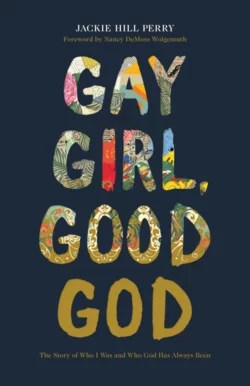
I don’t know at what point I learned that Jackie had written a book, Gay Girl, Good God: The Story of Who I Was and Who God Has Always Been. I saw some good reviews and put it on my To Be Read list.

Jackie grew up with a single mother and a father who breezed in and out of her life. Her father once told her that he loved her, but it wouldn’t bother him if she never wanted to see him again. His absence and lack of love plus Jackie’s being sexually abused by a boy at a young age were major factors in Jackie’s gender confusion, which then led to her becoming a lesbian.

Jackie had attended church and knew that Christians believed homosexuality was wrong. She fully believed she was going to hell. But she didn’t care.

Yet she felt God’s pursuit of her. She felt Him calling her, “haunting” her.

The only thing that made sense was that someone had obviously been talking to God about me and it was the reason why God wouldn’t leave me alone. Obviously, whatever was being asked of Him, regarding me, was making my little sinful world spin. It was dizzying to live on now-a-days. Trying to stand up straight (or should I say, queer), made everything I loved, mainly myself and my girlfriend, blurry. Nothing was clear except God’s loud voice saying, “Come.” (p. 50, Kindle version).

Eventually, Jackie did come. Yet life was not then miraculously easy. She wasn’t just saved from homosexuality. She was saved from sin, any and all sin. And like every other new believer, she learned that discipleship consists of taking up one’s cross daily and following Jesus, just as He said it would.

In the last section of her book, Jackie deals with Biblical truths like our identity in Christ and some common misconceptions, especially of what she calls the “heterosexual gospel.” In witnessing to homosexuals, well-meaning Christians sometimes promise or emphasize things which the Bible does not.

A few quotes that stood out to me:

Why hadn’t they ever mentioned the place happiness had within righteousness, or how the taking up of the cross would be a practice of obtaining delight? Delight in all that God is? Even their Savior had this kind of joy in mind as He endured His cross. So why hadn’t they set their focus on the same? In their defense, they were not to blame for my unbelief. I just wonder if they would’ve told me about the beauty of God just as much, if not more, than they told me about the horridness of hell, if I would’ve burned my idols at a faster pace (p. 64).

Because a good God made the woman, then being a woman was a good thing (p. 87).

Our sexuality is not our soul, marriage is not heaven, and singleness is not hell (p. 139).

To tell you about what God has done for my soul is to invite you into my worship (p. 140).

Do you know why we have a hard time believing that a gay girl can become a completely different creature? Because, we have a hard time believing God. The Pharisees saw the man born blind, heard his testimony, heard about his past and how it was completely different from the present one, and refused to believe the miracle because of Who the miracle pointed to. They were skeptical of the miracle because they didn’t have a real faith in the God who’d done it. The miracle was less about the blind man and more about a good God. It showed Him off. His power. His ability to do what He wants. How He wants, when He wants, and to whomever He chooses (p. 107).

I especially loved this, in telling about the man who had been born blind whom Jesus healed by combing His spit with dirt, rubbing the mixture on the man’s eyes, then telling hm to go wash in the pool of Siloam: “Using his palms to brush the stubborn sections away from his eyelids, light startled him. As more mud fell, more sight came. Until at once, he could see” (p. 106).

I looked at Goodreads yesterday to see what some of the reviews said. Not surprisingly, I saw review after review with one star scathingly critical of Jackie’s story. I thought, how sad it is that her book is rated so low just because people disagree with her. But then I scrolled up and saw that only three percent of the reviews were one star. 83% were four and five stars. Yet of the ten reviews Goodreads showed on the first page, seven were one-star.

I would love to say to those who discount Jackie’s story (one review accused her and her husband of pretending to be heterosexual)—if, according to the world, life is all supposed to be about choice these days, why would anyone argue with Jackie’s choices? If everyone’s supposed to have their own truth (which I disagree with, and Jackie would, too), why would you discount the truth of her experience? Why is it that if someone has lived a heterosexual lifestyle but then thinks they might be gay, that determination is supposed to be the real, lifelong one and there’s no turning back? Why can one supposedly only turn one way, and not the other?

One can, of course. But Satan wants to blind and deceive people.

I enjoyed Jackie’s story of God’s grace. I have not heard or read her poetry, but she has a poet’s heart and her expressiveness shines through here. Her knowledge of Biblical truth is solid.

I’d recommend her books to anyone, gay or straight, Christian or not. I think it would be particularly eye-opening to Christians who can sometimes come across as glib in their witness or opinions.

I listened to the audiobook, read by Jackie. At the moment, it’s free to those with an Audible subscription. Then I bought the Kindle version so I could keep this book on hand.

Humble Roots

If people think about humility at all these days, they usually envision self-deprecation, playing down one’s attributes, talents, or accomplishments, or, at the very least, not bragging.

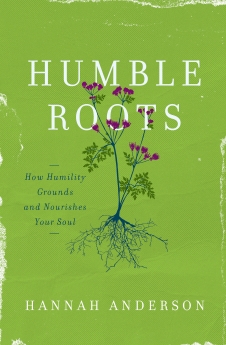
In Humble Roots: How Humility Grounds and Nourishes Your Soul, Hannah Anderson explores humility from a Biblical angle. Instead of viewing humility as a club or prod when we’re feeling too proud, humility frees us and leads us to rest.

I defined humility as a correct sense of self, as understanding where you come from and where you belong in this world (p. 64, Kindle version).

Theologically speaking, humility is a proper understanding of who God is and who we are as a result (p. 102).

I would describe it as a creaturely dependence. We’re “made in His image, but we are made nonetheless (p. 11)—made originally from dirt, to which our bodies return. As Paul reminds Timothy, “we brought nothing into the world, and we cannot take anything out of the world” (1 Timothy 6:7). Everything we are and everything we have comes from God.

The problem is our obsession with ourselves. With our need to fix things, our need to make ourselves better, our need to be approved by God and others, our need to “count for something.”

But this is also why Jesus calls us to come to Him. By coming to Jesus, we remember who we are and who we are not. By coming to Him, we come face to face with God and with ourselves. “It is only in our encounter with a personal God,” writes philosopher Dietrich von Hildebrand, “that we become fully aware of our condition as creatures, and fling from us the last particle of self-glory” (p. 55).

If I can’t handle little things, what can I handle? Failure at small things reminds us of how helpless we are in this great, wide world. When little things spiral out of control, they remind us that even they were never within our control in the first place (p. 26).

Humility, instead of being a negative concept, frees us:

to be the people God created us to be (p. 11).

from the cycle of stress, performance, and competition (p. 12).

from our burdens . . . by calling us to rely less on ourselves and more on Him (p. 32).

to redirect our energies toward God and those whom He has given us to love (p. 3).

from the condemnation of others, . . . from self-condemnation and unnecessary guilt (p. 108).

to hear God’s call and leads you to a place of both rest and flourishing (p. 110).

from the oppression of our emotions, when we finally learn that “God is greater than our heart (p. 114).

from the responsibility of feeling like you have to “do it all.” You are free to do only what you have been made to do (p. 163)

. . . and so much more.

Hannah follows Jesus’ admonition to consider birds and flowers by grounding each chapter in something from the garden or nature. For instance, the chapter “Vine-Ripened” begins with all the work that goes into growing garden tomatoes, then being fooled every year into thinking the ones gassed for redness in stores will be the same. That leads into a discussion of wisdom being rooted not in acquiring facts, but in submitting to the source of wisdom–the fear of the Lord. Then an 1800 court case over whether tomatoes are vegetables or fruit is tied in, along with our relentless desire to be “right.” “Humility simply leaves room that my understanding of a situation could be wrong” (p. 124). We may not have all the facts or may be influenced by culture. Because we’re limited, “my faith cannot rest on my own knowledge . . . or ability to understand . . . humility leaves room for grace” (p. 124). How unlike most social media discussions, where everyone is right in their own eyes. Hannah then refers to an Isaac Watts book which discusses a “dogmatical spirit.” Our wisdom and safety come not from our being right, but from Jesus being right. Then the chapter goes back to the process of creating store-bought tomatoes, compares that with our search for wisdom, and extols the wisdom of waiting: “Humility teaches us to let knowledge ripen on the vine” (p. 129). The chapter is much more beautifully woven together than my cobbled summation here.

Hannah points us to Jesus, “who, though he was in the form of God, did not count equality with God a thing to be grasped, but emptied himself, by taking the form of a servant, being born in the likeness of men. And being found in human form, he humbled himself by becoming obedient to the point of death, even death on a cross (Philippians 2:6-8) and who invites us to “Take my yoke upon you, and learn from me, for I am gentle and lowly in heart, and you will find rest for your souls” (Matthew 11:20).

Besides benefiting from the truths Hannah shares, I marvel at the way she is able to weave together facts from nature, literature, Scripture, and personal example seamlessly into each chapter. I don’t know how she accomplishes this without time to just sit and think, but as a busy pastor’s wife and mom, I’m sure such time is at a premium. I first read one of her books during Advent and have been working my way through her others. She has quickly become one of my favorite authors.

Even though I just finished this book, reading one chapter a week, I am thinking about going through it again. I need to soak in its truths more.

(I often link up with some of these bloggers.)

Murder Your Darlings

Murder Your Darlings is not a detective mystery or true crime drama.

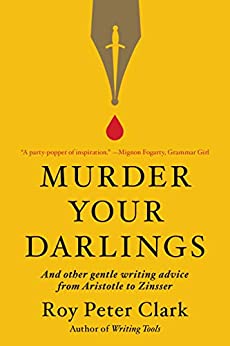
Murder Your Darlings is writing advice. You see it a lot in writing circles these days, but it originally came from Sir Arthur Quiller-Couch, a British author and professor (known as Q, not to be confused with the WWII spy-gadget-maker). This phrase was first delivered in a lecture to his students in 1914 which was later published. In context, he said, “Whenever you feel an impulse to perpetrate a piece of exceptionally fine writing, obey it—whole-heartedly—and delete it before sending your manuscript to press. Murder your darlings” (p. 17).

Roy Peter Clark interprets Q’s advice thus: “Ask yourself, ‘Am I including this because it provides the reader with a memorable and delightful piece of evidence to prove the point of my text? Or is it beside the point even though it reveals what a good wordsmith I am?'” (p. 21).

In other words, the phrase, sentence, or paragraph that’s the most precious to you, but doesn’t really add anything to your thesis, must go. Clark opines that you don’t have to “commit verbicide on the words you love the most” (p. 17). You can save them in a file for another day.

Clark, known as “America’s writing coach,” shares advice from over 50 other writing sources in Murder Your Darlings: And Other Gentle Writing Advice from Aristotle to Zinsser. Clarks says, “I am not trying to steal their thunder. I am trying, instead, to amplify it, to pay back my debt to the authors who shaped my craft” (p. 8).

Some of these books are filled with writing advice, and Clark pulls out a lesson or two to discuss. “Most of what you will read here is why I appreciate them, what I or others have learned from them, and what I think you, the reader, can take away and apply to your own work” (p. 23).

Clark begins each chapter with a “toolbox,” a brief summary of the particular principle or writing instruction he’s going to discuss. Then he’ll give a little background about the work he is drawing from, the author, illustrations of the writing advice under consideration, whether he agrees or disagrees and to what extent. He ends each chapter with a short list of “Lessons” summarizing the main points of the chapter.

Clark’s book is quite readable. The Lessons at the end are particularly helpful to remind oneself of the salient tips from a chapter. Some of the writers he quotes from are well-known, others are not.

As you can imagine, I have multitudes of passages highlighted from the book. Here are a few:

It turns out that the internet is not an information superhighway. It is, instead, a polluted ocean with buried treasure sitting here and there on the bottom. Neutralize the poison of the propagandists, hackers, conspiracy theorists, trolls, and bullies by devoting your online efforts to the public good (p. 83).

Early writing is not sculpture, but clay, the stuff in which you will find the better work (p. 105).

An implied social contract exists between the reader and an author of nonfiction and that the contract reads, “Please believe me, my memory of events may be flawed, but none of this was intentionally made up.” If the author decides to veer from this standard, say, by using composite characters, the author must be transparent, revealing the strategies before the story begins, not in a footnote at the end (p. 222).

Donald Murray . . . advised writers to use “Shorter words, shorter sentences, shorter paragraphs at the points of greatest complexity” (p. 231).

Another Roman author, Horace, steps into the light with a sense of mission that is both public and aesthetic, arguing that the purpose of great literature is to delight and instruct or, on the good days, to do both! (p. 237).

This is a secular book, and there are words I wouldn’t use and situations and philosophies I wouldn’t agree with. But I found it fairly easy to sidestep those things just to glean the writing advice.

Clark’s book will help you hone your craft by sharing wisdom with you from sources that you might not have found yet. And the sources he quotes might inspire you to look up the authors’ original works.

Seven Words You Never Want to Hear

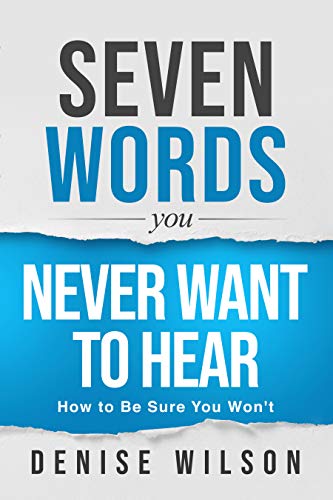
The Seven Words You Never Want to Hear that Denise Wilson writes about are from Jesus: “I never knew you; depart from me” (Matthew 7:23). Those are frightening words indeed. I struggled with them when I was unsure of my salvation. Thankfully, as Denise’s subtitle indicates, she doesn’t stop there: she tell How to Be Sure You Won’t hear those words.

Those words of Jesus occurred in what we call the Sermon on the Mount in Matthew 5-7. The full paragraph is as follows:

Not everyone who says to me, ‘Lord, Lord,’ will enter the kingdom of heaven, but the one who does the will of my Father who is in heaven. On that day many will say to me, ‘Lord, Lord, did we not prophesy in your name, and cast out demons in your name, and do many mighty works in your name?’ And then will I declare to them, ‘I never knew you; depart from me, you workers of lawlessness.’ (7:21-23).

It’s possible to “do many mighty works in your name” and yet still miss salvation, miss knowing Jesus personally.

Denise discusses several ways that could happen. One is praying “the sinner’s prayer” without faith or repentance. Another is growing up in a Christian atmosphere without ever believing on Christ personally. Or one could be deceived by the prosperity gospel or a works-based religion. Perhaps we haven’t counted the cost of discipleship and only wanted passage to heaven rather than a life of denying ourselves, taking up our cross, and following Him.

People might need to examine their hearts if they say they have been saved yet their life has not changed. We won’t be perfect after salvation. We’re forgiven and cleansed, but we still have an old nature and still need to grow. We’ll still battle with sin—yet if we’re not battling it, but letting it have full sway on our lives, something is amiss.

Denise points out that Jesus did not use a cookie-cutter approach in dealing with people. Years ago I attended classes where we were trained in how to lead someone to the Lord using the “Romans Road,” a series of verses in Romans that explain salvation. That approach is fine as far as it goes. But leading someone to the Lord is not just a matter of getting them to allow you to read them a handful of verses and then you getting them to pray. We need to be open to the Lord’s leading as we speak to people. Only He knows what obstacles to salvation are in their hearts.

Denise includes several testimonies from the Bible, from history, and from modern times. Some of them, she points out, don’t look like what we think salvation looks like. Take the thief on the cross next to Jesus. He knew he was guilty and Jesus was innocent. He asked, “Jesus, remember me when you come into your kingdom” (Luke 23:39-42). Was anyone else ever saved using those words? I don’t know. But one thing I learned in my own struggle was that becoming a Christian was not a matter of saying the “right” words, like a magic formula or an initiation rite. It’s a matter of repentance and faith in Jesus.

2 Corinthians 13:5 tells us to, “Examine yourselves, to see whether you are in the faith.” Denise provides helps to do that in this book.

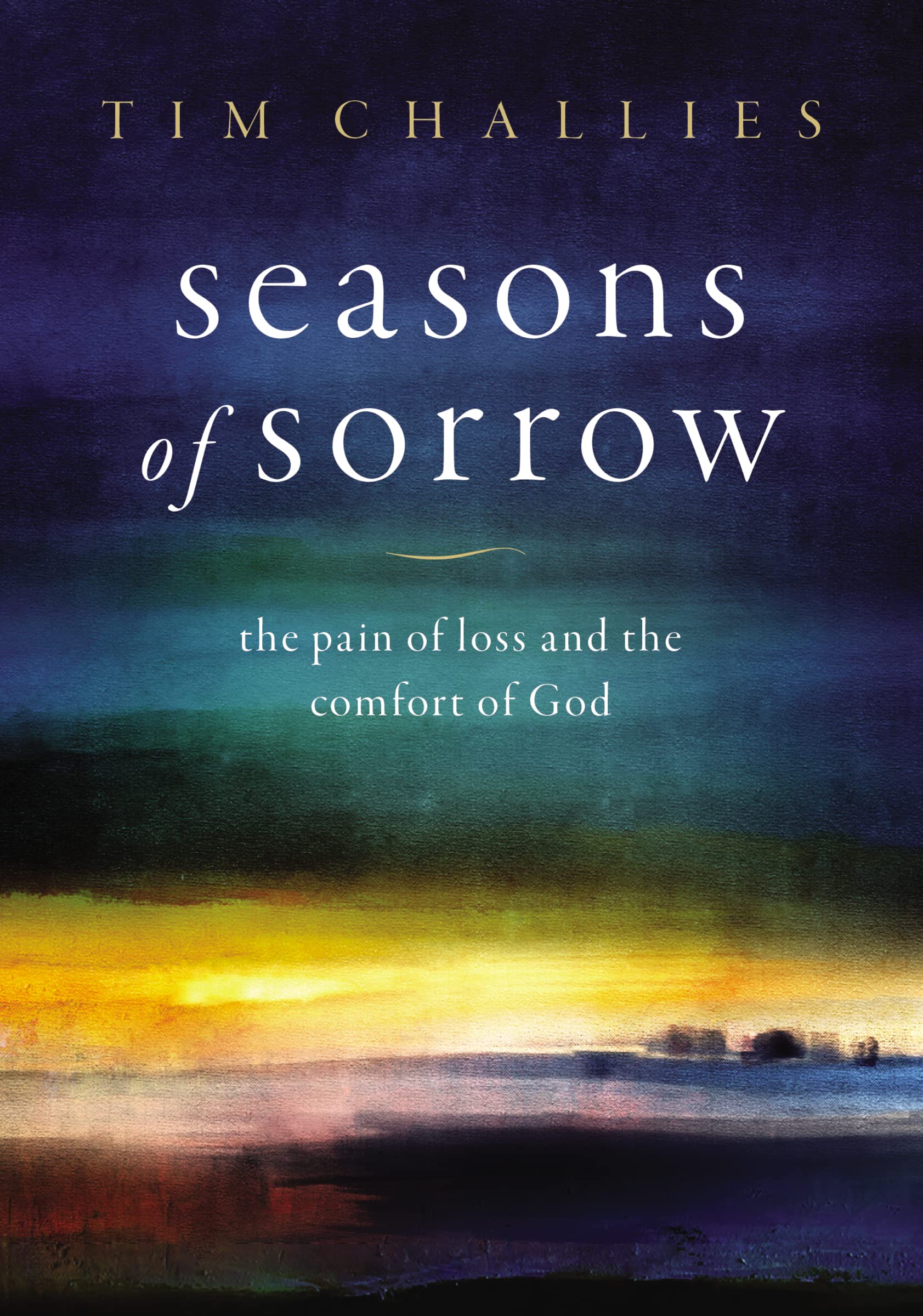
Seasons of Sorrow

One November day in 2020, Tim and Aileen Challies learned the stunning news that their 20-year-old son, Nick, had suddenly died. He had not been ill. There were no known congenital health issues. He was playing a game with his sister and their friends at college when he suddenly collapsed. Efforts to revive him failed.

Though grief never goes completely away, it is probably at its most intense the first year. Like many of us who write, Tim processed what he was thinking and feeling by writing. Some of what he wrote was published on his blog. But much was not. He gathered his writings from the year into a book titled Seasons of Sorrow: The Pain of Loss and the Comfort of God. The book is laid out across seasons, beginning with fall, when Nick died, through winter, spring, summer, and then fall again on the first anniversary of Nick’s passing.

Nick was a young man training for gospel ministry. This is not the first time I have wondered why would God take someone with so much potential to heaven instead of allowing them to do His work here. We don’t know all the answers. But we do know our times are in His hands. Anyone’s death, but especially that of one so young, reminds us that we’re not guaranteed a certain number of years. By all accounts, Nick used his time here well. May God give us grace to do with same, with a heart fixed on eternity.

Even though the book deals with the recent loss of an adult child, much of it can be applied to any loss. I found help and comfort in dealing with the seventeen year loss of my mom, who died seemingly (to us) too early at 68.

One of the things I appreciated most about Tim’s testimony was his desire to honor God in the midst of his grief. There is nothing wrong with grief and tears. Jesus wept with his friends at the loss of Lazarus, even while knowing He was about to raise him from the dead. We don’t go off on a season of grieving and then come back to faith in and peace with God. Tim demonstrates that we can trust Him through and in the midst of grief.

Tim wrestles honestly with what he knows of the goodness of God in circumstances that don’t seem good.

One aftermath of loss is fearing more loss.

I, whose son collapsed and died, cannot fall asleep in the evening until I have received assurance that both my daughters are still alive and cannot be content in the morning until I am sure both have made it through the night. Nick’s death has made us face mortality and human fragility in a whole new way. My children may as well be made of glass. I’m just so afraid that if Providence directed I lose one, it may direct that I lose another. If it has determined I face this sorrow, why not many more?

How, then, can I let go of such anxiety? How can I continue to live my life? The only antidote I know is this: deliberately submitting myself to the will of God, for comfort is closely related to submission. As long as I fight the will of God, as long as I battle God’s right to rule his world in his way, peace remains distant and furtive. But when I surrender, when I bow the knee, then peace flows like a river and attends my way. For when I do so, I remind myself that the will of God is inseparable from the character of God. I remind myself that the will of God is always good because God is always good. Hence I pray a prayer of faith, not fatalism: “Your will be done. Not as I will, but as you will”  (p. 76).

Another section that particularly spoke to me was when Tim found his longings for heaven mixed up with seeing Nick again as much, and sometimes more, than seeing Jesus. He confessed this to a friend, ending with the thought that he must sound like a pagan. The friend replied, “No, you sound like a grieving father” (p. 122).

And I’m content to leave it there. It was God who called me to himself and God who put a great love for himself in my heart. It was God who gave me my son, God who gave me such love for him, and God who took him away from me. The Lord knows I love the Lord, and the Lord knows I love my boy. I’ll leave it to him to sort out the details (p. 122).

Ecclesiastes 7:2 tells us, “It is better to go to the house of mourning than to go to the house of feasting, for this is the end of all mankind, and the living will lay it to heart.” God doesn’t condemn feasting and gladness: He incorporated such into Israel’s calendar year and tells us the joy of the Lord is our strength (Nehemiah 8:10). But we do tend to learn deeper lessons through mourning. I appreciate Tim’s sharing what he experienced and learned with us.

(I often link up with some of these bloggers.)

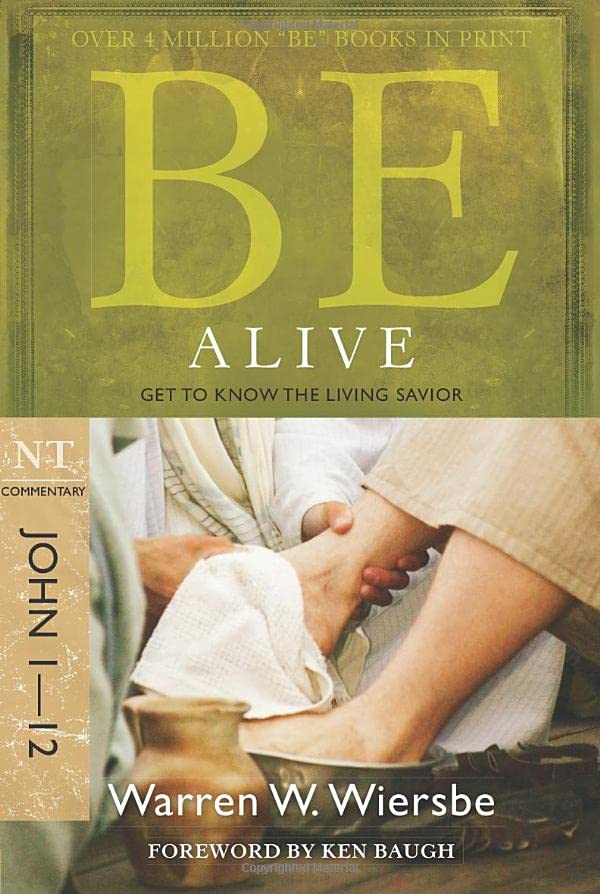
Be Alive: Get to Know the Living Savior

I veered from my Bible reading plan because I wanted to be in one of the gospels over December, and because the plan had not taken me through John in the last few years.

Warren Wiersbe divided his commentary on John into two books, the first being Be Alive (John 1-12): Get to Know the Living Savior.

Each of the four gospels presents Jesus from a different aspect. John’s gospel portrays Jesus as the Son of God.

John shares different titles for Jesus: the eternal, incarnate Word of God (“Much as our words reveal to others our hearts and minds, so Jesus Christ is God’s ‘Word’ to reveal His heart and mind to us”–p. 20); the light of the world; the eternal Son of God; the lamb of God; the Messiah, long promised and prophesied in the Old Testament; the king of Israel; the Son of Man; the good shepherd, the water and bread of life, the door.

When John shares some of the miracles Jesus did, he “seeks to share the inner meaning—the inner significance—of our Lord’s works, so that each miracle is a ‘sermon in action” (p. 38). “Our Lord’s miracles were testimonies (John 5: 36), giving evidence of His divine sonship; but they were also tests, exposing the hearts of the people (John 12: 37ff.). The same events that opened some eyes only made other eyes that much more blind (John 9: 39–41)” (p. 44).

One theme through John’s gospel is Jesus’ “hour.” Throughout, Jesus says His hour was not yet come. Then it was at hand, then it finally culminated in His death for us.

Another theme is that Jesus loves and came to die for the world, not just the Jews.

One of John’s major themes is that Jesus is the Savior of the world, not simply the Redeemer of Israel. He is the Lamb of God who takes away the sin of the world (John 1: 29). “For God so loved the world” (John 3: 16). The Samaritans rightly identified Him as “the Savior of the world” (John 4: 42). He gave His life for the world, and He gives life to the world (John 6: 33). He is the Light of the World (John 8: 12). The universal emphasis of John’s gospel is too obvious to miss. Jesus will bring the “other sheep” who are outside the Jewish fold (John 10: 16; and see 11: 51–52) (p. 190).

The crowds at first flocked to Jesus for His teaching and His provision. They hoped He would throw off Roman oppression and set up His kingdom. Some believed and became loving followers of Christ. Many began to fall away when He spoke of the cost of discipleship and when it became clear that He was not the type of Messiah they had envisioned.

The Pharisees were supposed to be experts in the law of God, but they missed the Savior portrayed in the law.

When a person starts to resist the light, something begins to change within him, and he comes to the place where he cannot believe. There is “judicial blindness” that God permits to come over the eyes of people who do not take the truth seriously. (The quotation of Isa. 6: 9–10 is found in a number of places in the New Testament. See Matt. 13: 14–15; Mark 4: 12; Luke 8: 10; Acts 28: 25–27; Rom. 11: 8.) It is a serious thing to treat God’s truth lightly, for a person could well miss his opportunity to be saved. “Seek ye the LORD while he may be found, call ye upon him while he is near” (Isa. 55: 6)” (p. 194).

John’s gospel is a full and rich portrayal of Christ. There is so much in it, I am not surprised Wiersbe took two books to cover it. I look forward to the next one.

Mixed Emotions About a Book

I’ve been conflicted about whether I should even mention a book I recently listened to. But I finally decided that others might appreciate being forewarned, as I wish I had been.

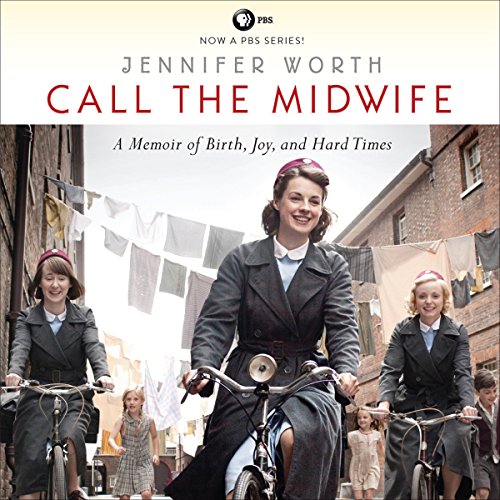
I have not watched the Call the Midwife series on PBS. I like period pieces, but I had the impression this would be something like a “birth story of the week.” Each birth is its own miracle—or tragedy if things go wrong. But I didn’t necessarily want to watch a show about births in the 1950s.

But when I saw the audiobook by the same name was in a “two books for one credit” sale for Audible, I decided to check it out.

As it turns out, the book is a memoir about the life of a midwife in the 1950s in London’s East End, based on Jennifer Worth’s experiences.

Jenny Lee, as she is known in the book, became a nurse and then a midwife in the 1950s. She worked with other midwives out of a convent though they were not Catholic. The East End of London was a poor area, with most of the men working at the docks. Though crime was common, the midwives were respected and untouched though they rode their bikes alone day and night.

In past millennia, women were helped in giving birth by neighbors or a woman who was a midwife by means of experience gained in helping with deliveries and not through formal training. Normally, such help was fine, unless there was a problem.

Infant and mothers’ deaths finally led to midwifery becoming more of a science. Births still took place at home most of the time. But midwives in the 1950s had more training and tools to handle problem situations.

Though all of Jenny’s clients were poor, they varied greatly. Some homes were cheerful and neat though bare; others were in terrible condition.

As you might expect with a book like this, a number of birth stories are shared, both the happy and the tragic ones. Jenny shares what happened in graphic clinical detail, so if such things make you squeamish, you might not enjoy this book. Or you might skip through portions.

But the book is not all birth stories. Jenny tells about the different nuns at the convent, one of whom was brilliant but whose mind was failing. She tells about some of her coworkers and friends.

In one lengthy section, Jenny tells of a teenager named Mary who ran away from an abusive stepfather in Ireland and ended up roaming the streets of London. Mary was fourteen and evidently either didn’t know about places like the YWCA, where she could find temporary shelter, or didn’t know how to find them.

One day while Mary was looking longingly in a bakery window, a handsome young man saw her and offered to buy her breakfast. He was very kind, and soon Mary’s story came out. The man told Mary his uncle owned a cafe where they had “the best entertainment in London.” Perhaps his uncle would give her a job running the coffee machine.

In her naivete, Mary thought this man was romantically interested in her. She went with him to his uncle’s cafe—which turned out to be a brothel.

I don’t have a problem with this story being part of the book, because these kinds of things happened—and still do today. Young people, particularly runaways or orphans who have no one to call for help, are either lured with promise of food and shelter or outright kidnapped. Then they are trapped in a system they can’t get out of.

What I did object to, however, was a graphic description of the “show” one of the dancers put on at the brothel. I was navigating across busy lanes of traffic when this part of the story came on the audiobook, so I couldn’t stop and fast forward. I didn’t have the presence of mind while watching several directions for oncoming cars to just turn the sound off.

The dancer’s act wasn’t told in an approving or tantalizing manner. It was meant to be shocking and disgusting (and it was). But it wasn’t needed. We already had a good idea what kind of place Mary was being taken to. Even if Worth felt the need to share what went on, she didn’t have to tell as much as she did as graphically as she did. I regret having those images planted in my mind.

I almost laid the book aside at that point. But then I figured that scene was probably the worst, and the rest would be better. And that turned out to be the case.

There were a few other smaller problems–a few bad words, a couple of bawdy crude references, mention of a mixed group swimming nude.

Jennifer wrote the book some fifty years after her experiences when she read an article by Terri Coates wishing that some midwife would “do for midwifery what James Herriot did for vets.” I think Jennifer could have achieved what Herriot did, but I think she missed the mark by including scenes like the one I mentioned. What was otherwise a great book was marred by these negatives.

But Jennifer’s book became a bestseller when it was reissued in 2007 after having been originally published in 2002. She wrote three more, and the Call the Midwife series began in 2012.

I listened to the audiobook narrated by Nicola Barber. The narrator did a great job with the dialects. But she spoke almost in a whisper much of the time, making it hard to hear.

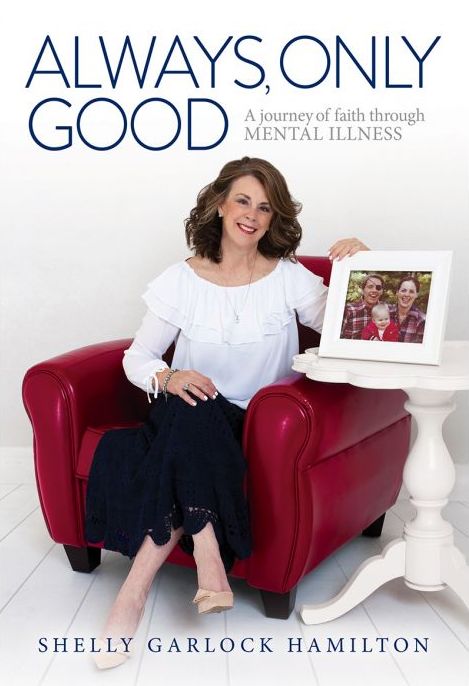
Always, Only Good: A Journey of Faith Through Mental Illness

Ron and Shelly Hamilton’s oldest son, Jonathan, began experiencing strange symptoms after taking a medicine prescribed by a dermatologist for acne. Shelly called the doctor’s office to ask about the medication, but the nurse said the medication was not responsible for Jonathan’s symptoms. When Shelly took Jonathan back in to see the dermatologist and explained how Jonathan was acting, the doctor told her to take Jonathan off the medication immediately. He said it would take a couple of weeks for the medicine to get out of Jonathan’s system, and then he would return to normal.

But Jonathan did not return to normal. He began a downward spiral of mental illness which was eventually diagnosed as schizophrenia. After fifteen years with his illness, Jonathan took his own life on Mother’s Day.

Shelly wrote Always, Only Good: A Journey of Faith Through Mental Illness for several reasons. She wanted to share her son’s story, give an idea what life is like for someone suffering from mental illness, and encourage those with mental illness and their caregivers that they are not alone and there is hope. She also wanted to help remove the stigma of mental illness, especially among Christians, so sufferers would feel more freedom to get help.

Sadly, many well-meaning people feel that mental illness is a only spiritual problem.One friend’s college professor called psychiatrists “quacks” and belittled taking drugs for mental problems.

Shelly differentiates between “the brain, which is an organ, and the mind, consisting of spirit, will, and emotions” (p. 207). Like any other organ, the brain can have physical problems which then affect the mind and body. A person with a mental illness can’t just “reason his way back” to right thinking.

Unfortunately, it can take a doctors a lot of tries to find the right medications or combination of medications which help each individual. And sometimes it takes weeks of trying medications to see if they work. Then, many have unpleasant side effects. When they are thinking right, most patients agree that being able to function is worth the side effects. But then many go through a cycle of becoming stable, thinking they don’t need their medicines any more, stopping them, feeling great for a couple of weeks until the medicine gets out of their system, and then crashing.

The title Always, Only Good comes from two sources.One was Shelly’s struggle at the beginning of Jonathan’s illness with how a good God could allow someone who loved Him and wanted to serve Him to have such an illness. Through struggle, counsel, and Bible study, she reaffirmed her belief that God is always, only good.

The other inspiration for the title was a song written to the last music Jonathan composed. Shelly gave the music and some verses and thoughts to Chris Anderson (pastor and author of “His Robes for Mine,” “My Jesus Fair,” and other hymns at Church Works Media). Chris put together this beautiful song as a testimony of Jonathan’s life. Here it is sung by Shelly, her youngest son, Jason, her daughter Tara and son-in-law Ben Farrell, and her daughter Megan and son-in-law Adam Morgan.

Shelly shares about her book here:

My family and I have listened to the Hamilton’s Majesty Music and Patch the Pirate recordings for decades. I knew some of the family’s story, particularly Ron’s testimony of trusting God through losing his eye to cancer. I didn’t know Jonathan’s troubles until his suicide. I am grateful Shelly was willing to be transparent in order to help and give hope to others. This book is a good resource for those suffering from mental illness and their families and those who want to be a help to them. It’s also a testimony of faith, of God’s grace and help through the hardest circumstances.

(I often link up with some of these bloggers.)

Essentialism: The Disciplined Pursuit of Less

Normally I wouldn’t have looked twice at a book like Essentialism: The Disciplined Pursuit of Less by Greg McKeown. I’ve read a number of books on time management, achieving goals, etc., so I wasn’t looking for one more.

But I listened to an interview with the author as part of one writer’s group’s attempts to draw in new members. And though I decided not to join the writer’s group, I appreciated much that Greg had to say.

These days, we’re all beset by having more opportunities and responsibilities than we can keep up with. Plus other people can pile their agendas on to us. We spend much of our time “busy but not productive.”

The way of the Essentialist means living by design, not by default. Instead of making choices reactively, the Essentialist deliberately distinguishes the vital few from the trivial many, eliminates the nonessentials, and then removes obstacles so the essential things have clear, smooth passage. In other words, Essentialism is a disciplined, systematic approach for determining where our highest point of contribution lies, then making execution of those things almost effortless (p. 7).

Lest that sound cold and heartless, one of our essentials is our loved ones. One of the catalysts to McKeown’s journey towards essentialism was when he was pressured to be at a meeting with a client just hours after his daughter was born. He was told the client would respect him for his sacrifice of being there. But the client didn’t, and the meeting in the end turned out to be pretty worthless.

Trade-offs are going to happen as we learn we can’t do everything. It’s better to decide ahead of time what’s really most important and spend our energy there, even when that means saying no to other things, even good things.

Part 1 of McKeown’s book focuses on essence: to do what’s essential, we first have to figure out what’s essential according to our goals and values. We have to determine what’s non-negotiable and what’s a trade-off.

Part 2 is Explore: the “perks of being unavailable,” the necessity of sleep and even play.

Part 3 is Eliminate: to say yes to some things, we have to say no to others. Part 3 explores principles and methods for eliminating the nonessential.

Part 4 is Execute: protecting our essential goals by implementing buffer zones, starting small and celebrating small wins, the helpfulness of routines to eliminate unnecessary decisions, flow and focus.

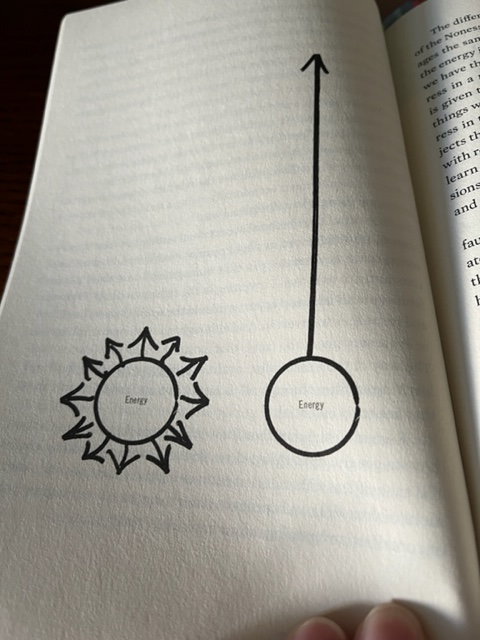
Sprinkled throughout the book are simple but very effective illustrations. This one, for example, shows “the unfulfilling experience of making a millimeter of progress in a million directions” vs. “investing in fewer things” to “have the satisfying experience of making significant progress in the things that matter most” (pp. 6-7).

Here are a few of the other quotes that stood out to me:

For capable people who are already working hard, are there limits to the value of hard work? Is there a point at which doing more does not produce more? Is there a point at which doing less (but thinking more) will actually produce better outcomes? (p. 42).

We need to be as strategic with ourselves as we are with our careers and our businesses. We need to pace ourselves, nurture ourselves, and give ourselves fuel to explore, thrive, and perform (p. 94).

An essential intent, on the other hand, is both inspirational and concrete, both meaningful and measurable. Done right, an essential intent is one decision that settles one thousand later decisions. It’s like deciding you’re going to become a doctor instead of a lawyer. One strategic choice eliminates a universe of other options and maps a course for the next five, ten, or even twenty years of your life. Once the big decision is made, all subsequent decisions come into better focus (p. 126).

The way of the Essentialist isn’t just about success; it’s about living a life of meaning and purpose. When we look back on our careers and our lives, would we rather see a long laundry list of “accomplishments” that don’t really matter or just a few major accomplishments that have real meaning and significance? (p. 230).

McKeown includes multiple examples from businesses and institutions. Just about the time I wished he brought some of his illustrations and principles down to a person level, he did.

One problem that he didn’t discuss, though, is when you can’t say no to obligations that seem meaningless. He says several times that saying no to the unnecessary meeting or obligation actually garners respect instead of resentment. But that’s not always the case. And you can’t always say no if your boss requires something that you think is a waste of time.

And you have to be careful that your time-savers don’t become an imposition on someone else. For instance, he mentions someone who skipped a regular hour-long meeting at work to get his own work done, then got a ten-minute summary from a coworker, thus saving himself forty minutes. But he doesn’t note that this guy was putting an unnecessary drain on his coworker’s time. If I had been the coworker, I would have been tempted to say, “If you want to know what happens at the meetings, you need to be there. I have too much to do to recap them for you every week.”

But those instances are minor. Most of what the author had to say was very good.

This isn’t a Christian book, and the author recommends a wide range of resources that I wouldn’t always agree with.

But overall, McKeown gave me much to chew on.

Lady Almina and the Real Downton Abbey

You don’t have to be a fan of Downton Abbey to enjoy Lady Almina and the Real Downton Abbey: The Lost Legacy of Highclere Castle. If you enjoy British manor houses and history, especially the Edwardian era, you’ll like the book whether you’ve seen the series or not. But if you are a Downton Abbey aficionado, you’ll probably enjoy some of the behind-the-scenes information about the setting for the series.

The fictional Downton Abbey is set in a real castle called Highclere, home to the current eighth Earl of Carnarvon and his wife, the author of this book, the Countess of Carnarvon.

An able historian, the Countess draws from diaries, letters, and other information to tell of one of her predecessors, Lady Almina, who married the fifth Earl of Carnavon in 1895.

Almina was the illegitimate daughter of Alfred de Rothschild, a wealthy banker. Though she had been presented at court, “she had not been invited to the highly exclusive, carefully policed social occasions that followed. Almina’s paternity was the subject of a great deal of rumour, and no amount of fine clothes or immaculate manners could gain her access to the salons of the grand ladies who quietly ruled Society. So Almina had not attended all the crucial balls of her debut season, occasions that were designed to allow a young lady to attract the attentions of an eligible gentleman” (p. 4). But somehow she drew the attention of George Edward Stanhope Molyneux Herbert. Apparently her beauty and large dowry overcame the circumstances of her birth. But from all accounts, Almina and George were fortunate to have a genuine marriage where they truly loved each other.

One of Almina’s main functions was to plan and host dinners and gatherings, even for the Prince of Wales, her husband’s friend. She was a master of organization and a charming hostess.

Unlike many women, she traveled with her husband, a man of many and varying interests.

But life changed during WWI. Almina had found a knack for nursing during one of her husband’s illnesses. During the war, she converted part of the castle into a hospital. She wanted the soldiers to feel like guests at a country estate. She knew they needed respite for the mind and soul as well as the body. But she wasn’t just a distant financier: she donned a nurse’s uniform, made rounds with the doctor every morning, and helped in various ways, even bathing gangrenous feet.

After the war, when travel could resume again, Almina and George traveled to Egypt. George had been to Egypt many times, because of his love for travel and the area, but also for his heath. The damp winters of England were unhealthy for him, so he often spent winters in Egypt. He had financed several excavations over the years without finding much for his efforts. He was going to give up, but then his partner in the work, Howard Carter, wanted to go one more time. George agreed, and this time, to their amazement, they found the tomb of Tutankhamun (not a spoiler as this is mentioned early in the book).

Between these major events, the book tells various details about George and Almina’s family, upstairs vs. downstairs life, the progression of the war and its aftermath, details around the Earl’s discovery of King Tut’s tomb, and Almina’s long-term legacy.

Almina grasped early on “that she was only one part of a machine that would long survive her. Part of her initial task on arrival was to understand the history and community that she was becoming a part of” (p. 15). “Everyone at Highclere, whether they worked above or below stairs, on the farm or in the kitchen, had a role to fulfil, and Almina was no different,” (p. 11).

In shows and films about this era, we often see lords of the manor not doing much besides hosting lavish dinner parties and going hunting. But, in fact, they had a lot of responsibility. Before the war, the Earl had an idea where things were going, and took a large sum of money out of the bank. “Considering that he was morally responsible for the welfare of the entire household, as well as the tenants, he refused the offer [of selling some of his land to the government] and set about adding to his flocks and herds. He also bought one and a half tons of cheese and an immense amount of tea. . . Once he had deposited the gold in his bank in Newbury, he was in a position to provide 243 men women and children with all essentials for at least three months” (pp. 125-126).

The current countess adds in the epilogue that even now, “The challenge for Highclere is to ensure that the Castle and its estate businesses remain strong enough to preserve their rich heritage. It is the same need to balance business and conservation that confronted Almina” (p. 292). “It was the economic fallout of the Second World War, combined with new tax structures, that made it impossible to maintain the opulence of previous generations at Highclere Castle,” (p. 301). When Almina’s son became the sixth earl, he had a reduced staff. WWII took a further toll on the whole country in many ways. The current earl and countess live at the castle part of the time and in a cottage at other times. They offer the house for various gatherings and other purposes (like settings for films) not only as a means of upkeep, but to preserve the house’s legacy.

The countess says in the prologue this book “is not a history, although it is set against the exuberance of the Edwardian period, the sombre gravity of the Great War and the early years of recovery after the conflict. It is neither a biography nor a work of fiction, but places characters in historical settings, as identified from letters, diaries, visitor books and household accounts written at the time.”

It took me a little while to get into this book. The first part was largely informational. But by the time the book got to the war and the castle becoming a hospital, my attention was more engaged. Overall, I really enjoyed it.

I got the Kindle version of this book a while back during a sale, but got the audiobook recently during another sale. Wanda McCaddon is a wonderful narrator for the book: I had previously heard her narration of several other classics.

There is a sequel to this book which I don’t have yet but would like to read some day: Lady Catherine, the Earl, and the Real Downton Abbey. Lady Catherine was Almina’s daughter-in-law, an American who was not an heiress and wasn’t raised in anything like the society she married into. Her husband inherited the estate at a fairly young age, so they were both thrust into big responsibilities sooner than expected. Then they had to manage during WWII and the subsequent changes to the country and their lives.

If you’re interested in the castle, the countess has an Instagram account for it here: https://www.instagram.com/highclere_castle/. She shares some of the hidden nooks and crannies as well as the gatherings they currently host and other interesting details.

This book could fit in the Celebrity category of the the Nonfiction Reader Challenge. George and Almina were celebrities in their day, Downton Abbey has brought a new celebrity to the castle, and the current The Earl and Countess are celebrities now.