Review: Hillbilly Elegy

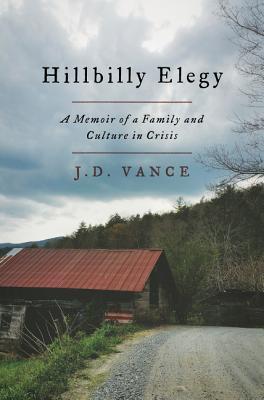
Hillbilly Elegy

I saw Hillbilly Elegy making the rounds a few years ago and almost read it then, but kept deciding on something else instead. The title stuck with me, the author’s name did not, so it was only recently that I realized the author, J. D. Vance, is the current Republican Vice-Presidential nominee. I decided to finally read this book to learn more about him.

I almost gave up reading it a number of times due to the language. At first, it was easy to compartmentalize that most of vulgarities came from Vance’s grandmother. But later in the book, Vance himself used these same words.

About halfway through, I had just about decided to abandon this book when I read Rebekah Matt’s testimony of how much this book helped her as she grew up in similar circumstances to Vance’s. I decided to keep reading because this story is a real account of what many go through. I’m sure the language goes with the other characteristics Vance described, but I think he could have demonstrated that factor without .giving so many examples.

Vance’s grandparents moved from the Appalachia region of Kentucky to Ohio to try to escape the poverty they grew up with. Vance didn’t think his tumultuous family situations were anything but normal, because everyone he knew had the same kinds of experiences: poverty, drug addiction, violent arguments, an absent father, and a mom cycling through one boyfriend after another.

Vance says in his introduction that he wasn’t extraordinary by escaping his roots, joining the Marines, going to college, then Yale, eventually becoming a Senator (and, after this book was written, the vice-presidential nominee). “I didn’t write this book because I’ve accomplished something extraordinary. I wrote this book because I’ve achieved something quite ordinary, which doesn’t happen to most kids who grew up like me” (p. 1, Kindle version).

I want people to know what it feels like to nearly give up on yourself and why you might do it. I want people to understand what happens in the lives of the poor and the psychological impact that spiritual and material poverty has on their children. I want people to understand the American Dream as my family and I encountered it. I want people to understand how upward mobility really feels. And I want people to understand something I learned only recently: that for those of us lucky enough to live the American Dream, the demons of the life we left behind continue to chase us (pp. 1-2).

Nobel-winning economists worry about the decline of the industrial Midwest and the hollowing out of the economic core of working whites. What they mean is that manufacturing jobs have gone overseas and middle-class jobs are harder to come by for people without college degrees. Fair enough—I worry about those things, too. But this book is about something else: what goes on in the lives of real people when the industrial economy goes south. It’s about reacting to bad circumstances in the worst way possible. It’s about a culture that increasingly encourages social decay instead of counteracting it (pp. 6-7).

One stabilizing influence in Vance’s life was his grandmother. Although she had what he called a quirky faith, she didn’t go to church, had a foul mouth, and was as likely as anyone else to get physically violent in an argument.

Another big factor in Vance’s journey were teachers, one in particular.

Vance doesn’t think the answer to the problems of people in the area he grew up in are political.

Public policy can help, but there is no government that can fix these problems for us. . . .I don’t know what the answer is, precisely, but I know it starts when we stop blaming Obama or Bush or faceless companies and ask ourselves what we can do to make things better (p. 255-256).

Powerful people sometimes do things to help people like me without really understanding people like me (p. 186).

To me, the fundamental question of our domestic politics over the next generation is how to continue to protect our society’s less fortunate while simultaneously enabling advancement and mobility for everyone. We can easily create a welfare state that accepts the fact of a permanent American underclass, one where family dysfunction, childhood trauma, cultural segregation, and hopelessness coexist with some basic measure of subsistence. Or we can do something considerably more difficult: reject the notion of a permanent American underclass. Yet . . . doing better requires that we acknowledged the role of culture (p. 261).

A couple of odd things in the book were his assertions that the nicknames “Mamaw: and “Papaw” were only used for hillbilly grandparents, and the phrase “too big for your britches” was a hillbilly saying. I grew up in southern Texas, and my grandparents on my mother’s side were Mamaw and Papaw. I’ve heard “too big for your britches” all my life.

Another oddity is that many referred to this as the “book that got Trump elected.” But there are only a couple of paragraphs that mention Trump, and Vance disagreed with him at the time.

Vance writes that he told his story the way he did because he thought “if people experienced these problems through the perspectives of real people, they might appreciate their complexity” (p. 269).

I think he succeeded in that goal. Although the family I grew up in was poor and dysfunctional to some degree until my teen years, when my parents divorced, I didn’t face all that Vance did. He helped me understand that poverty and dysfunction become mindsets that are hard to escape from. As he “made it” in terms of upward mobility, he called himself a “cultural emigrant” in trying to understand and adjust to people and institutions who were so fundamentally different from himself. Though he didn’t put it quite this way, he showed that just improving circumstances and economic well-being in themselves were not all that was needed.

Note: This post is about Vance’s book and not Vance as a political candidate. I will not approve comments that are personal or political rants.

Review: Help for the Hungry Soul

Kristen Wetherell’s book, Help for the Hungry Soul: Eight Encouragements to Grow Your Appetite for God’s Word, is not about how to read or study the Bible. She goes further back than that to our appetite for God’s Word. We’re made to hunger for God. Satan tempted Adam and Eve to hunger for the wrong thing for the wrong reasons. Our spiritual appetites have been skewed ever since.

People often sense longing for something real, something beyond this life, but don’t know, or turn away, from where to find it. Even those of who know and love God’s Word can start filling our souls with other things, lessening our appetite for the Bible.

“The stirring up of our souls is something only God can do” (p. 18, Kindle version), but Kristen hopes this book will whet appetites to engage with God’s Word.

Kristen discusses different kinds of spiritual hunger, hindrances to Bible reading, the need to ask God to help us hunger for His Word and then position ourselves for Him to do so. She encourages us to remember to seek Jesus in our reading. She reminds us what a privilege it is to have the Bible: just five hundred years ago, it was not available on a wide scale to everyday people. She also reminds us that the church is vital in our taking in God’s Word. She tells us “There is no one ‘right’ way to meet with the Lord in Scripture” (p. 83), so we can try different methods and plans. But we need to “feed and not just read” what it says, taking time to meditate on it. She inspires us to trust the process when we don’t feel different or see “results” after reading. “When you engage with God’s Word, more is happening than you can see” (p. 87).

There are exercises at the end of most of the chapters to help apply what was said as well as testimonies from others concerning the aspect of the individual chapters.

Overall, I thought this was a very helpful, encouraging book. Probably my favorite chapter was the one about trusting God is nourishing us through His Word even when we don’t feel we’ve “gotten anything” out of it.

There was one place where I disagreed with the author, when she said, “Your main spiritual meal is to be enjoyed at church” (p. 72). She wrote that “quiet time” or “devotions” as we think of them today started with the Pietist Movement in the seventeenth century, when German Protestants encouraged people to read the Bible for themselves after years of being told they shouldn’t by the Catholic church. But there are examples in Scripture of people meditating on God’s Word alone (the psalmist on his bed at night; Daniel studying Jeremiah, and others). I agree that we heap a lot of false guilt on ourselves over devotions. Gathering with others to feast on the Word is as important as feeding on it alone, but I don’t see in Scripture that it is more important.

Here are some of the quotes that especially stood out to me:

Right there is the blessing of true Godward hunger: the more of God we come to know, the more of God we want to know. This doesn’t mean perfection, for all our yearnings in this life will be incomplete until we see Jesus; but it does mean we have endless potential to grow, as we seek more of God and receive the fullness of joy that only he can give (Ps. 16: 11)” (pp. 25-26).

Will we allow these discouragements to drive us to his word or away from it? (p. 28).

Do we recognize our helplessness, that even our very desires need to be changed by the Spirit’s transforming grace? Or do we approach Scripture pridefully, thinking we’ve “got this,” attempting to impress God, others, and even ourselves by our obedience? (p. 39).

For too many years, this was the way I approached Scripture, because I didn’t understand my neediness. I thought that by opening my Bible I was seeking something good and right to do, rather than primarily seeking someone to love (p. 39).

There is no magic bullet here, only a constant dependence on God’s supernatural help as we put ourselves in the position to receive from him (p. 53).

Obedience is evidence of true faith in Jesus. It demonstrates that we trust him enough to do what he says. It demonstrates that we love him and actually want to know him. It demonstrates that we acknowledge that, without him, we would be lost (p. 101).

God’s words are purposeful, nourishing, and invaluable. They are worth trusting, for God’s words come from God’s heart. We cling to them because God is the only trustworthy, unchanging rock upon which we can stand. And so we keep coming to God’s word, and we keep clinging to the promises we find there (p. 101).

The beautiful thing about the story of the Bible is its realism. Scripture does not provide an escape from reality, but enters right into it. If you feel like every day is a struggle, you’re right; it is. If you feel like your desires are messed up (even those related to the Bible) and that you can’t get your act together, you’re right; they are, and you can’t (p. 110).

Every hardship—whether obvious and acute suffering, or the daily, lingering futility we all feel—is readying us for Jesus. Every groan anticipates glory. Every hunger pang points us to heaven (p. 111).

What would you lose by turning away from Scripture? What would you gain by staying in the word? . . . What might others gain by your endurance in the word? (p. 116).

I don’t recommend starting with a BHAG (a “big hairy audacious goal”) but rather with a realistic goal. . . Small adjustments can bring meaningful change (p. 119).

I think this book is an excellent resource both for those just beginning to establish a habit of regularly reading God’s Word as well as those of us who have been reading for a while but need to be reminded of these truths. Thanks to Michele for alerting me to this book.

(I often link up with some of these bloggers.)

Review: A Boy’s War

A Boy's War by David Michell

David Michell was the tender age of six when he was sent to the Chefoo School, a Protestant boarding school for missionary children in what is now known as Yantai. He and his parents had no idea they would not see each other for six years because the Japanese captured the school during WWII.

David tells his story in A Boy’s War. His parents moved from Australia to be missionaries to China with China Inland Mission, originally founded by Hudson Taylor, in 1930. David was born in China and lived with his parents and older sister until they were later joined by a younger sister. When it came time for school:

In the China of those years the only way for most children of missionaries to get a good education in English was to go away to boarding school. Chefoo offered this opportunity. At Chefoo children of missionaries and a few sons and daughters of business people lived and studied together at the preparatory school, the Boys’ School, and the Girls’ School, getting a truly Christian education for body, mind, and spirit. So good was that education, in fact, that others, non-CIMers, wanted to take advantage of it, too (Location 59, Kindle version.

Some of the school’s famous graduates were Henry Luce of Time Magazine and Thornton Wilder.

On a side note, when I first read in missionary biographies of parents sending their children away to school so young, I was horrified. But home schooling materials were not as available then as now. Plus the British boarding school system had been in place for ages. Parents wanted their older children to have the credentials for college. And in some cases, the environment was such that children were more vulnerable to some of the horrific practices of the parents’ mission field, so parents felt they were safer away at school. These days, many mission boards work with parents to teach their children at home, especially in the younger years.

David tells of his trip to school (“two thousand miles and a six-week journey away,” Location 145) and early days of adjustments. Though he missed his parents and younger sister and had some homesickness and struggles, for the most part he settled in fairly easily.

Many of the teachers had been Chefoo students themselves. Outside the classroom, “housekeepers” helped the children write letters home, mended their clothes, and generally helped where needed. I was touched to see that many of these women were widows who now “mothered” these children.

As early as 1940, the school’s headmaster conferred with the British Embassy about what they should do in the face of the conflict between Japan and China. They decided to keep the school open. However, many children could not travel home at Christmas break due to the dangers, so a larger number than usual were at the school over the holidays. The staff provided a memorable Christmas for them.

They were used to seeing Japanese soldiers in the area, but the military didn’t bother anyone at the school. That changed after Japan attacked the US at Pearl Harbor the following year. Now British and Americans were the enemies. Immediately, Japanese soldiers arrested the headmaster for a month and took over the campus.

Classes and activities were allowed to continue under the watchful eye of the Japanese, but supplies ran low and freedoms were curtailed.

In November, 1942, the whole campus was sent on foot to an abandoned Presbyterian mission at Temple Hill, where conditions were even more crowded and supplies were even fewer.

Then in September 1943, the school was sent on a longer journey to the Weihsien interment camp, where they remained until the end of the war. There they joined some 1,500 other people from all walks of life and several nationalities held by the Japanese.

One of the detainees was Olympic medalist Eric Liddell. He had become a missionary to China after his Olympic feats. He had sent his pregnant wife and two children home, planning to join them later. But the Japanese took over before he could. One chapter of the book is a mini-biography of Liddell. He took an active part in teaching the children, who all called him Uncle Eric. He drew pictures of chemistry equipment they didn’t have so older students could be prepared for their Oxford exams. He arranged races and athletic activities and was generally thought of as a man “whose humble life combined with muscular Christianity with radiant godliness” (Location 1516). Sadly, he died of a brain tumor while at Weihsien.

Another detainee was Herbert Taylor, oldest son of Hudson Taylor, in his eighties, having been a missionary in China for over sixty years.

Though their years in camp were fraught with hardships, the children managed to have adventures as well.

David describes the joy of seeing six American soldiers parachute nearby and the Japanese surrendered.

Then came the scramble to get everyone home and taken care of.

Though David exulted in freedom, he found some aspects hard to adjust to.

In the last chapter of the book, David described going back to Weihsien with a few of his friends from there and their sons on the fortieth anniversary of their rescue. 

I had read this book some decades ago but had forgotten much of it. Reading a frictional account of the Chefoo school’s captivity in When We Were Young and Brave by Hazel Gaynor made me want to revisit this book. I am so glad I did. Hazel’s book may have more emotion, but it’s imagined emotion. David’s book is more factual. While he doesn’t downplay the hardships, he doesn’t go into great detail about them, either. I appreciated what he had to say here:

A situation like Weihsien is fertile soil for producing people of exceptional character. In our eyes, for instance, our teachers were heroes in the way they absorbed the hardships and fears themselves and tried to make life as normal as possible for us.

In fact, I think at times all of us in camp considered ourselves as heroes. We were surviving, some would say even thriving, in the midst of war. By dint of hard work, ingenuity, faith, prayer and perseverance we had transformed a compound that was a hopeless mess into a habitable and in some rare corners, almost an attractive living place (Location 1333).

Someone in the camp, Hugh Hubbard, wrote this of Eric Liddell after his death, but I think it was true of them all:

Weihsien—the test—whether a man’s happiness depends on what he has or what he is; on outer circumstances or inner heart; on life’s experiences—good or bad—or on what he makes out of the materials those experiences provide (Location 1504).

You can read a couple of testimonies of David Michell here and here.

I’m thankful to have reread this book, and for God’s sustaining grace of His people through the hardest of times.

Review: Be Decisive (Jeremiah)

Be Decisive commentary on Jeremiah

Pastor and Bible teacher Warren Wiersbe shared his thoughts and insights on the book of Jeremiah in Be Decisive (Jeremiah): Taking a Stand for the Truth.

Jeremiah had a tough job. God’s people had worshiped idols for decades. They hadn’t obeyed His laws. They had also gone to other nations for help instead of God, in spite of the fact that He had provided for them and delivered them time and again. He sent prophets at various times to point them back to Him. But they refused.

The time came that God had to deal with them more severely. He was sending punishment in the form of the Babylonians, who would conquer their nation, destroy their temple, and take most of the population back to Babylon.

God would not annihilate them completely. He would preserve a remnant. He would keep His promises to maintain David’s lineage and bring forth the promised Messiah. “The purpose of chastening is that we might seek the Lord, confess our sins, and draw near to Him (Heb. 12: 3–13)” (p. 140). But for now, they were to go to Babylon, make their homes there, and settle in for seventy years.

God called Jeremiah to give this message to His people. They didn’t listen any better than they had before.

The false prophets preached what the people wanted to hear, but Jeremiah preached what the people needed to hear (p. 134).

The civil and religious leaders of Judah preferred the pleasant messages of the false prophets to the strong words of God’s true servant, because the human heart wants to rest, not repent. It wants peace, but it wants it without having to deal with the basic cause of unrest—unbelief (p. 211).

Further, Jeremiah’s instruction to actually submit to Babylon sounded like treason.

Jeremiah is sometimes called the “weeping prophet.” Though he had to point out the people’s sins in order to try to bring them to repentance, and though he knew they deserved what was coming, he still had compassion on them.

At least sixty-six times the word heart is found in the book of Jeremiah, for he is preeminently the prophet of the heart (p. 16).

We call Jeremiah “the weeping prophet,” and he was (9: 1), but he was also a courageous man who faced many dangers and trials and remained true to the Lord (p. 22).

Like many of us, Jeremiah balked at first at God’s calling.

Jeremiah hesitated as he looked at the work before him and the wickedness around him, and when he looked at the weakness within himself, Jeremiah was certain that he wasn’t the man for the job.

When it comes to serving the Lord, there’s a sense in which nobody is adequate. “And who is sufficient for these things?” (2 Cor. 2: 16) asked the great apostle Paul as he pondered the responsibilities of ministry. Paul then answered his own question: “Not that we are sufficient of ourselves to think any thing as of ourselves; but our sufficiency is of God” (3: 5).

When God calls us, however, He isn’t making a mistake, and for us to hesitate or refuse to obey is to act on the basis of unbelief and not faith (p. 20).

At the end of Jeremiah’s ministry, it may not have looked like he accomplished much.

By today’s human standards of ministry, Jeremiah was a dismal failure. He preached to the same people for over forty years, and yet few of them believed him or obeyed his message. He had few friends who stood with him and encouraged him. The nation he tried to save from ruin abandoned their God and plunged headlong into disaster (p. 213).

Jeremiah may have thought he had failed, but God saw him as a faithful servant, and that’s all that really counts (p. 213).

Jeremiah is one of Scripture’s greatest examples of faithfulness and decisive action in the face of physical danger and national decay (p. 20).

Some other quotes that stood out to me:

Any theology that minimizes God’s holiness and tolerates people’s deliberate sinfulness is a false theology (p. 52).

That on which I center my attention and affection and for which I am willing to sacrifice is my god, and if it isn’t Jesus Christ, then it’s an idol. “Little children, keep yourselves from idols” (1 John 5: 21) (p. 60).

The remedy for idolatry is for us to get caught up in the majesty and grandeur of God, the true God, the living God, the everlasting King. An idol is a substitute, and you would never want a substitute once you have experienced the love and power of the Lord God Almighty (p. 60).

That, however, is what faith is all about: obeying God in spite of what we see, how we feel, and what may happen. It’s well been said that faith is not believing in spite of evidence but obeying in spite of consequence” (p. 153).

Lamentations, the book that follows Jeremiah in the Old Testament, is thought by some to also be authored by Jeremiah. Whether it is or not, I thought it would be included with this commentary, because its author laments the devastation that has come to Jerusalem after the Babylonian invasion. I looked at the table of contents of Wiersbe’s “Be” books on the minor prophets and later historical books, thinking his commentary on Lamentations might have been included with other books. But I couldn’t find it anywhere

The middle of the Lamentations contains some of the most hopeful verses. In the midst of sorrow over deserved chastening, the prophet said:

But this I call to mind,
    and therefore I have hope:
The steadfast love of the Lord never ceases,
    his mercies never come to an end;
they are new every morning;
    great is your faithfulness.
“The Lord is my portion,” says my soul,
    “therefore I will hope in him.”

The Lord is good to those who wait for him,
    to the soul who seeks him.
It is good that one should wait quietly
    for the salvation of the Lord.

For the Lord will not
    cast off forever,
but, though he cause grief, he will have compassion
    according to the abundance of his steadfast love;
for he does not afflict from his heart
    or grieve the children of men.

Let us test and examine our ways,
    and return to the Lord!
Let us lift up our hearts and hands
    to God in heaven.

Lamentations 3:21-27, 31-33, 40-41

Most of the prophets did that: issued warnings, pointed out sins, yes, but also shared God’s love, compassion, and willingness to forgive.

I benefited from reading Jeremiah again, and Dr. Wiersbe’s insights were a great help.

Review: Read This First

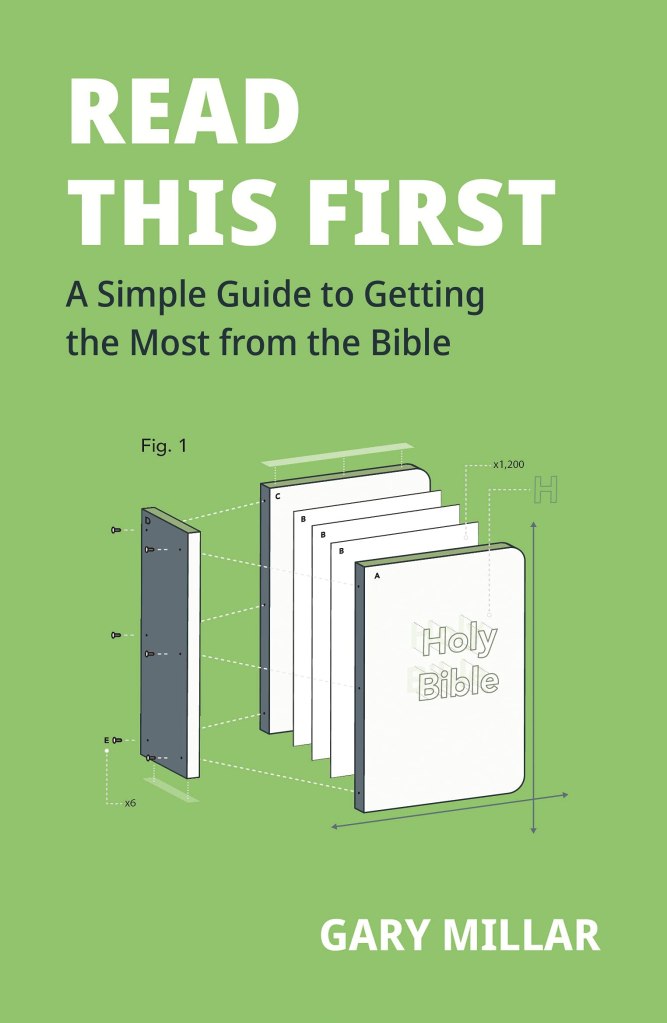
Gary Millar wrote Read This First: A Simple Guide to Getting the Most from the Bible to “help people who would like to read the Bible but don’t really know where to start or how to go about it” (p. 2, Kindle version). Whether one is a new Christian or has never really gotten into regular reading, Millar hopes you will “read this first and go back to the Bible with the skills and confidence to truly enjoy it (p. 3).

First, Gary deals with the question, “Why bother with the Bible?” and lists reasons people don’t.

But he says, “I’ve written this book to help you meet a person—a living, loving, being like no other—through the pages of a book like no other. . . He made us, he loves us, he knows us inside out, and he speaks to us. And he does that through the Bible. That’s why reading the Bible matters so much—because when we read it, we meet the one and only God ” ( p. 10).

Millar assures that “the Bible was written to be understood by ordinary people like us. It doesn’t need insider knowledge or a special code to make sense of it. It’s not written for experts and professionals. It’s written for people like you and me (pp. 17-18).

Millar then gives tips on how to read, to pick up what he calls the “vibe” of a given passage, to understand different genres within the Bible, to discern meaning, and to apply what we’ve learned.

Every chapter ends with a couple of examples of Scripture to work through using the skills detailed in that chapter.

The appendix, titled “What Is the Bible?” gives a little background such as the difference between the two testaments, how we got the chapter and verse references that weren’t in the original manuscripts, and more.

Gary writes in a warm and simple style, so this book would be accessible to almost anyone.

This would be an excellent resource for someone new to reading the Bible or to anyone who feels they need a refresher course in how to do so.

Review: The Story of the Trapp Family Singers

Several weeks ago, we watched The von Trapp Family: A Life of Music, the story of the family from The Sound of Music, from the viewpoint of Agathe, the oldest daughter (Liesel from the film). There were quite a few differences between the two films, though the basic story line was the same. I remembered I had a book in my Kindle app about the family written by Maria, so I thought it was high time I got around to reading it.

I had wondered which came first: did the book inspire the movie, or was the movie made first and then the book written to “set the record straight.” The book was published in 1949, and a musical based on it began in 1959. The movie we all know came out in 1965.

Maria was training to be a nun when she was asked to tutor Captain von Trapp’s daughter, also named Maria, who had been ill. Eventually she began helping with the other six children as well.

The book doesn’t mention any animosity between Maria and the children at the beginning. There also didn’t seem to be any distance between the children and their father as the film suggests. Later Maria write in passing that they had their share of normal family squabbles.

The Captain fell in love with Maria over time. She had never given any thought to marriage, so she went back to the convent to ask what to do. She was told it was God’s will to marry the Captain. She loved the children like a mother, but it took her a while to love their father. They went on to have three more children together but also experienced several miscarriages due to a kidney condition of Maria’s.

The family loved to sing together in the evenings. Once while singing outdoors, a well-known soprano heard them and encouraged them to sing publicly, saying “You must not keep that for yourselves . . You have to share this with the people” (p. 121, Kindle version). The Captain was mortified at first, but eventually decided they wouldn’t be doing anything wrong. Then they were invited to sing on the radio, then someone heard them and wanted to sign them up for some concerts, and one thing led to another.

A bank failure led to the loss of most of the family’s cash. As the children took everything well and pitched in to help, Maria thought it lucky that they had lost the money. “How would we ever have found out what fine fellows the children are?” (p. 115). She was happy to find out that “we were not really rich, we just happened to have a lot of money. That’s why we can never be poor” (p. 115).

They took in boarders to supplement heir income, but eventually their singing hobby had to become their profession.

The Nazis invaded Austria, something Hitler had promised not to do. When the Chancellor announced on the radio that he was “yielding to force” and the next voice on the radio proclaimed Austria was dead and the Reich was in control, the Captain tearfully said, “Austria, you are not dead. You will live on in our hearts. This is only a sleep. We promise you to do all we can to help you wake up again” (p. 130).

The family found themselves unable to comply with several demands of the new regime. They knew that would not be tolerated for long, so they looked for a way to leave the country. Someone in America had invited them to come and give some concerts, loaning them the money to do so.

Their adjustments to American customs bewildered them but also provided a lot of humor. For instance, they put their shoes outside their hotel doors at night so they could be shined, like they always had. They were informed that not only would their shoes not be shined, but they might disappear. They were confused when a couple of them found they could get their shoes shined in the barber shop, of all places.

Maria applied logic to learning English: if the past tense of freeze was frozen, then it followed that the past tense of squeeze should be squozen and sneeze/snozen. If a drunkard was someone who drank too much, then a thunkard was someone who thought too much (p. 162). Unfortunately for them, English is not that logical.

Someone had taught her what to say in various instances–“If you want someone to leave the room quickly, just say . . . scram” (p. 168). When she and a Bishop caused a traffic jam, wanting him to go first, she told him to please scram. His entourage was “petrified,” but thankfully he laughed (p. 168).

They experienced adventures and trials along the way til they eventually were allowed to become US citizens and settled in Vermont, which they found to be much like Austria.

They had a penchant—or at least Maria did—for getting into ventures that were over their heads and having to figure things out as they went.

It was interesting and touching to read of the last years that were unmentioned in both films.

Some parts of the family’s story were more exciting than others—which I suppose could be said of anyone. It was a little disappointing that some parts of the movie weren’t true to life. I disagreed with much of the theology in the book. But overall, I enjoyed learning what happened to the real Trapp family.

The blurb of the book on Amazon says it contains pictures, and there’s even a copyright notification in the book for pictures—but, sadly, there are no pictures in the Kindle version I have except for the cover. However, I found several online.

This is a cute interchange between Julie Andrews, who played Maria in the film, and the real Maria:

Review: Everything Sad Is Untrue

Everything Sad Is Untrue (A True Story) by Daniel Nayeri is, on one level, a story about a boy who came to America as a refugee from Iran. Besides encountering a different language, different ways of doing things, even different kinds of toilets, Daniel has to deal with losses.

First he lost his name, Khosrou, because no one could pronounce it. He lost the presence of his father, who stayed behind in Iran. He lost his language and culture. He lost his position in society: his mother had been a doctor in Iran but worked cutting cardboard in a company that made business cards in the US. And he lost his connection with his extended family, his memories of them in fragments. “A patchwork memory is the shame of a refugee” is something he says often.

That was when I realized I had to write down the memories and myths and the legends—and even the phrases and jokes. Or I’d lose everything. Maybe even the recipes (p. 235, Kindle version).

Another layer of the story is the sad human tendency not only not to welcome anyone “different,” but to actively persecute them.

Yet another major facet is Daniel’s mother’s conversion to Christianity and the fatwa that was placed on her head, which led to her fleeing Iran with her two children. They ended up in a refugee camp in Italy for three years before finally making it to the US.

Sima, my mom, read about him and became a Christian too. Not just a regular one, who keeps it in their pocket. She fell in love. She wanted everybody to have what she had, to be free, to realize that in other religions you have rules and codes and obligations to follow to earn good things, but all you had to do with Jesus was believe he was the one who died for you (p. 195).

How can you explain why you believe anything? So I just say what my mom says when people ask her. She looks them in the eye with the begging hope that they’ll hear her and she says, “Because it’s true.” Why else would she believe it? It’s true and it’s more valuable than seven million dollars in gold coins, and thousands of acres of Persian countryside, and ten years of education to get a medical degree, and all your family, and a home, and the best cream puffs of Jolfa, and even maybe your life. My mom wouldn’t have made the trade otherwise (p. 196).

If you believe it’s true, that there is a God and He wants you to believe in Him and He sent His Son to die for you—then it has to take over your life. It has to be worth more than everything else, because heaven’s waiting on the other side. That or Sima is insane (pp. 196-197).

Daniel tells his story from his viewpoint as a twelve-year-old boy in the style of Scheherazade, the storyteller in One Thousand and One Nights. Sometimes he addresses the reader directly. Sometimes he addresses his teacher as if what he is writing is for an assignment.

If you listen, I’ll tell you a story. We can know and be known to each other, and then we’re not enemies anymore (p. 1).

The point of the Nights is that if you spend time with each other—if we really listen in the parlors of our minds and look at each other as we were meant to be seen—then we would fall in love. We would marvel at how beautifully we were made. We would never think to be villain kings, and we would never kill each other. Just the opposite. The stories aren’t the thing. The thing is the story of the story. The spending of the time. The falling in love. All the good stuff is between and around the things that happen (p. 299).

Being a Persian/Eastern tale, it isn’t told in a way we’re used to.

Mrs. Miller says I have “lost the plot,” and am now just making lists of things that happened to fill space. But I replied that she is beholden to a Western mode of storytelling that I do not accept and that the 1,001 Nights are basically Scheherazade stalling for time, so I don’t see the difference. She laughed when I said this (p. 299).

I had heard marvelous things about the book, but was confused when I started reading it. It jumps from a scene at school to a story about Daniel’s ancestors to a story about his mother or something that happened on their journey here. At first I thought this was because the narrator is a twelve-year-old boy. Then I realized it was a different style. I don’t often do this with fiction, but when I finished the book, I immediately started rereading it. I understood it much better the second time–I felt I had all the pieces, so I wasn’t confused. Plus, I just wasn’t ready to let go of the book yet.

I hadn’t paid much attention to the cover until another reviewer mentioned the tornado (which is in the book) is swirling around various things Nayeri mentions throughout his story. Plus, his style of storytelling is cyclical, like the tornado. That helped things click into place for me, plus it made me think the cover designer was a genius.

The title of the book comes from a scene in The Lord of the Rings when Samwise Gamgee “sees Gandalf come back and it’s like seeing his grandpa return from the land of death and memories.” “And Sam thinks maybe all the sad parts of the adventure will come untrue, now that this one has. And the beautiful part is that they do” (p. 232).

Though the story stops at a sad place, it seems a turning point towards hope.

Daniel makes his mother the heroine of story, the one who always had hope, who was unstoppable. “What you believe about the future will change how you live in the present” (p. 347).

The legend of my mom is that she can’t be stopped. Not when you hit her. Not when a whole country full of goons puts her in a cage. Not even if you make her poor and try to kill her slowly in the little-by-little poison of sadness. And the legend is true. I think because she’s fixed her eyes on something beyond the rivers of blood, to a beautiful place on the other side (p. 213).

Once I got into the book, I totally loved it. Well—almost totally. There were a lot of poop stories—maybe because the narrator is a twelve-year-old boy. But there were such poignant moments as well as many funny ones. I couldn’t help but admire and connect with Daniel’s mother. But my eyes were also opened to what refugees experience and to Persian culture.

Some of my other favorite quotes from the book:

I am ugly and I speak funny. I am poor. My clothes are used and my food smells bad. I pick my nose. I don’t know the jokes and stories you like, or the rules to the games. I don’t know what anybody wants from me. But like you, I was made carefully, by a God who loved what He saw. Like you, I want a friend (p. 2).

To lose something you never had can be just as painful—because it is the hope of having it that you lose (p. 51).

The lesson here is that people have scales in their heads and they measure other people for their value and ugly refugee boys are near the bottom and pretty blond girls are at the top. This is not a happy lesson. But you either get the truth, or you get good news—you don’t often get both (p. 80).

Does writing poetry make you brave? It is a good question to ask. I think making anything is a brave thing to do. Not like fighting brave, obviously. But a kind that looks at a horrible situation and doesn’t crumble. Making anything assumes there’s a world worth making it for . . . making something is a hopeful thing to do. And being hopeful in a world of pain is either brave or crazy (p. 122).

My mom comes home exhausted every night. I have never seen her not exhausted. And also, I have never seen her not working (p. 154).

Love is empty without justice. Justice is cruel without love (p. 217).

I found this video of the author and his mother making cream puffs, which I thought was really sweet. I had almost finished my second reading of the book when I saw this, and it was neat to actually see Daniel and his mother

I loved what Kathryn Butler said in her review of this book: “He weaves fragments of myth and personal history into his story, with threads intricately looping like the magnificent Persian rugs he describes (some of them studded with jewels, as can also be said of his prose).”

I’m sure this will be one of my favorite books of the year . . . and of all time.

Review: Lenten Lands: My Childhood with Joy Davidman and C. S. Lewis

Douglas Gresham was the son of Joy Davidman Gresham, who married C. S. Lewis when Douglas was eleven years old. In 1973, ten years after Lewis’s death, Gresham wrote Lenten Lands: My Childhood with Joy Davidman and C. S. Lewis, partly because he was asked to, partly to correct some misconceptions concerning C. S. Lewis. Yet Lenten Lands is his own biography, not Lewis’s.

The title of the book comes from a poem that Lewis had originally written for a friend, but then adapted to be put on Joy’s tombstone:

Here the whole world (stars, water, air,
And field, and forest, as they were
Reflected in a single mind)
Like cast off clothes was left behind
In ashes, yet with hopes that she,
Re-born from holy poverty,
In lenten lands, hereafter may
Resume them on her Easter Day.

Joy married fellow writer William Gresham in 1942. They had two sons, David and Douglas. But their marriage was troubled. They had been atheists, but searched other religions. Joy was drawn to the writings of C. S. Lewis as he told of his own journey from atheism to Christianity. She began writing to Lewis and eventually visited him in England.

When she returned home, she found that her husband was having an affair with the cousin she had left to keep house for her husband and sons while she was away. She tried to reconcile the marriage, but it was too late. Joy took her two sons and moved to England.

Joy and Lewis and Lewis’s brother, Warnie (Warren) enjoyed a strong, intellectual friendship. Joy and Lewis influenced each other’s writing. When Joy’s visa was not renewed in 1956, Lewis married her in a civil ceremony.

But before long, the couple grew to love each other as more than friends and sought a Christian marriage, difficult since the church of England did not condone Joy’s divorce. But they found someone who would perform the ceremony.

Joy developed bone cancer but went into remission. The cancer came back a few years later, and Joy died in 1960. C. S. Lewis wrote A Grief Observed under a pseudonym. He had not been well himself, and died three years after Joy.

Douglas experienced all these things as a child: he was just eighteen when Lewis passed. He kept in touch with Warnie for some years, but Warnie’s grief and alcoholism were too much for Douglas to bear. He later regretted that he was not more attuned to Warnie’s grief and more of a help to him.

Douglas then tells of his various jobs, marriage, and children.

In his afterword, written in 2003, thirty years after the original publication of the book, he tells how he “committed [his] life to Christ and His service.” He had “always believed in God and in Jesus Christ; my problem was not one of belief, but one of arrogance and pride. I did not want to submit my life to any authority other than my own and it took me a long time to realize that I am simply not qualified to run it myself.” At that time he “was working more and more for the C. S. Lewis Literary Estate.” His Wikipedia page says he “hosted Focus on the Family Radio Theatre’s adaptations of his stepfather’s most famous works, and he was named co-producer for the series of theatrical films adaptations of The Chronicles of Narnia” and is now a “stage and voice-over actor, biographer, film producer, and executive record producer.”

Not much is said of his brother, David, in the book. Douglas’s Wikipedia page says David returned to Judaism and was later diagnosed as a paranoid schizophrenic.

My heart went out to Douglas, having experienced so much loss at heartache at such a young age. His young adult years were somewhat tumultuous. A good talking to by the woman who would become his wife helped set him on the right course.

One of my favorite moments in the book was when Douglas actually met Jack. He had regarded him as “a cross between Sir Galahad and Merlin the Wise (p. 27), “on speaking terms with King Peter, with the Great Lion, Aslan himself” (p. 55). But Jack was “a slightly stooped, round-shouldered, balding gentleman whose full smiling mouth revealed long, prominent teeth, yellowed like those of some large rodent, by tobacco staining” (p. 55). “Well, so much for imagery,” Douglas concluded. But he also noticed “His florid and rather large face was lit as if from within with the warmth of his interest and his welcome. I never knew a man whose face was more expressive of the vitality of his person” (p. 55).

Another favorite part was when Douglas said “When I was home from school, the dinner table of The Kilns was the scene of my real education. Jack and Warnie were both brilliant at sustaining a conversation at any one of a dozen different levels and on almost any topic, and I learnt more sitting and conversing over meals than I ever learnt at school (p. 81). I imagine so!

I appreciated what was said about the interaction between Joy and a friend named Jean: “Though they did not always agree upon matters of religion, politics, or taste, they could argue for hours and finally simply agree to disagree, without the dissent having the slightest adverse effect on their friendship” (p. 92).

I became interested in this book after reading a fictional account of the relationship between Joy and Lewis, Becoming Mrs. Lewis by Patti Callahan (linked to my review). Since much of what the author wrote (like letters between the two) was made up, I wanted to read the account from one who was actually there at the time. It’s taken me a few years to get to it, but I am glad I finally did.

Review: The Lazy Genius Way

The Lazy Genius Way

Suppose you want to reorganize your pantry. You might research organizational systems, pull everything out, dust shelves and canned goods, check expiration dates, sweep, buy cute containers, make labels, and spend the better part of a day, if not days, placing items in just the right order. And then you get frustrated when that order is not maintained.

Or you might go the opposite extreme and decide nobody has the time and energy for that.

Kendra Adachi calls these the “genius” and “lazy” approaches. She proposes a happy medium: that we be geniuses about what matters and lazy about what doesn’t. She shares thirteen principles for implementing this in her book, The Lazy Genius Way: Embrace What Matters, Ditch What Doesn’t, and Get Stuff Done.

For those of us who tend to make any small need into a major project, Kendra says, “When you care about something, you try to do it well. When you care about everything, you do nothing well, which then compels you to try even harder. Welcome to being tired” (p. 11. Kindle version).

On the other hand, “Little did I know you can be just as exhausted from not trying as you can from trying too hard. Managing apathy and survival mode takes as much energy as managing rules and perfection” (p. 15).

One of her premises is that there is no one right method or tool that will appeal to and work for everyone. If we’re to be geniuses about what matters, that will differ from person to person.

She mentioned that she likes to make bread. She cares about it and puts a lot of effort into it. But it’s fine if others have no desire to make bread and buy the bargain brand.

She likes comfortable clothes in neutral colors and doesn’t like top spend a lot of time on clothing decisions. But she acknowledges that others like to pill out five different outfits before they decide what to wear, and that’s fine.

That’s why she comes back again and again to acknowledging what’s important to you, not Instagram or the neighbors or whoever.

Some quotes that stood out to me:

I want to stop judging women who have it all together, assuming they have something to hide. I want to stop applauding chaos as the only indicator of vulnerability (p. 16).

You might think a routine is nothing more than doing the same things in the same order every day, but that’s not the whole story. Routines are meant to lead you into something else (p. 74).

It’s easier to clean up a cup of spilled milk than it is to mend a second-grader’s hurt feelings (p. 89).

House rules are about connection, not protection. They keep the first domino from tipping and knocking over a lot more (p. 99).

The goal isn’t to maintain control but to be in a better headspace to engage with what matters—namely, your people (p. 99).

You can celebrate where you are without being distracted by where you’re not yet (p. 210).

You’re tired because you’re trying to overcome the world. but we can take heart because the God of the universe has already done that (p. 211).

Though this book is not advertised as a Christian book, and the author doesn’t base her principles on the Bible, a few sentences like that last one are sprinkled through the book.

One thing I loved about the book is the recap statements at the end of each chapter. I get frustrated wishing I could retain everything I read from nonfiction. Having the key points collected at intervals helps me pull things together at the end of each chapter plus provides a quick place to review.

Kendra writes in an easily understandable and relatable way. Don’t miss her footnotes—many of them are funny asides.

My only minor criticism is that the explanations and examples seemed perhaps a little overdone in places. But I suppose a wide variety of examples makes the book applicable to more people.

Kendra also has a Lazy Genius Podcast, but I have not listened to it yet.

This book was all the rage a few years ago. I kept seeing it mentioned everywhere. I was intrigued, but didn’t get around to it. I’m glad I finally did.

(I often link up with some of these bloggers.)

Review: Life Without Limits

When Nick Vujicic was born without arms and legs, his parents were shocked and grieved. They were concerned about how he could ever grow up to be independent. They were devout Christians yet wondered why God would allow such a thing to happen.

Nick wondered the same thing as he got older.

I have to confess, I wondered the same thing. Even with as much comfort and reassurance I’ve received studying God’s reasons for allowing suffering, and as much as I have come to trust His character and will, thinking of a person growing up in this condition was hard to come to grips with.

Maybe that’s why I had Nick’s book, Life Without Limits: Inspiration for a Ridiculously Good Life, on the shelf for so long without picking it up. It was one we had bought for my husband’s mother. I remember her saying her tears were streaming as she read this, and she felt she had nothing to complain about after reading this book.

Recently, I saw several Facebook posts from friends about a young wife and mother they knew who ended up in the hospital with several severe infections. The doctor said her condition was a 10 out of 10 on the scale of a serious illness. The treatment reduced blood flow to her limbs, which resulted in amputation of both arms and legs. She’s been in the hospital since December.

As my heart went out to this family and I’ve been praying for them, I decided to pick up Nick’s book to see how he dealt with his situation.

After his parents’ initial shock, they strove to give him as normal a life as possible. He was a determined little boy and found ways to do most things he wanted to do.

However, school was a different story. His family wanted him to attend regular classes rather than special-needs classes. He faced the cruel remarks of some of his classmates, which was depressing. He was even suicidal at one point until his father encouraged him.

Nick found that often he had to be the one to reach out to make people feel comfortable approaching him. That and a good sense of humor helped people to see he was just a regular guy on the inside.

Discussions with others about how he coped with no limbs led to speaking to student, church, and youth organizations. In the years since, speaking became Nick’s vocation and ministry, not only in his native Australia, but around the world.

This book is part memoir, part motivational encouragement. He does include Christian principles but also a lot of secular motivation (love yourself, etc.).

Some of the quotes that stood out to me:

Experiences like that helped me realize that being “different” just might help me contribute something special to the world. I found that people were willing to listen to me speak because they had only to look at me to know I’d faced and overcome my challenges. I did not lack credibility. Instinctively, people felt I might have something to say that could help them with their own problems (pp. 20-21).

As difficult as it might be to live without limbs, my life still had value to be shared. There was nothing I lacked that would prevent me from making a difference in the world. My joy would be to encourage and inspire others. Even if I didn’t change this planet as much as I would like, I’d still know with certainty that my life would not be wasted. I was and am still determined to make a contribution (p. 24).

Often the very challenges that we think are holding us back are, in fact, making us stronger. You should be open to the possibility that today’s handicap might be tomorrow’s advantage (pp. 43-44).

Nick was encouraged by the man who was born blind in John 2. The disciples asked Jesus, “Who sinned, this man or his parents, that he was born blind?” Jesus responded, “It was not that this man sinned, or his parents, but that the works of God might be displayed in him.”

This book was published in 2010. Since then, Nick has gotten married, had four children, written more books and traveled and spoken to even more people.

I appreciated Nick’s attitude and willingness to help and encourage others.

You might be interested in this piece about Nick on Australia’s 60 Minutes program:

(I often link up with some of these bloggers.)