Middle Child and Other Syndromes

My middle son like to tease about having “Middle Child Syndrome.” Recently he shared this:

Middle child

It’s true that there is such a thing as Middle Child Syndrome, with middle children feeling often overlooked between the oldest, who did everything first, and the youngest, who is new and cute and takes the focus off the middle one. But, really, each position has its problems and could have its own syndrome. I have always loved Erma Bombeck’s piece to each of her children and why she loved each one “best.”

The oldest is the guinea pig. Usually parents are most cautious with their firstborn because everything is new to them and they’re not sure what to do. That cautiousness usually rubs off on the child. Or, more rarely, I think, first-time parents are too sure of what to do and then have to find out the hard way that they’re not always right. Perhaps being surrounded by adults also usually makes him a little more serious and introvertish. He might have the biggest shock to his system when the next baby comes, compared to other children, because everything was his and only his before – his parents’ attention, every toy, piece of clothing, etc. Now it all has to be shared with a newcomer. The oldest also has a built-in set of responsibilities. He usually has to help mom and dad in various ways when another baby comes, has to watch them at times, has full-blown baby-sitting responsibilities when he’s older. Because the parents are usually just getting started and then having more children, money is tighter, so there may be fewer opportunities available. When the kids as a group get in trouble, he’s often held to a higher standard because he’s older and should have “known better.”

Middle children can indeed feel like they’ll never stand out because they’ll never be the first to walk, talk, etc. But their parents are usually a little more relaxed with them: the firstborn didn’t die from their mistakes, and they’ve learned that some of the things they worried about were not that big a deal after all. That in turn helps the child to be a little more relaxed. Middle children are usually more sociable and make friends more easily because they’ve been around other people near their age since birth. Middle children are said to be peacemakers: I didn’t see that in my own middle child growing up (or in my siblings, either), at least not with his brothers, but I do see it in him as an adult. Middle children have the advantage of seeing what’s involved when the oldest starts school, tries out for a sports team, starts piano lessons, etc., and that may work hand in hand with their more easygoing nature to make them less afraid to try new things.

Youngest children are accused of getting away with everything. If that is true because the parents are getting tired, distracted, and lax in their discipline, that is a definite problem. But often it just looks that way because the parents are even more relaxed, have more of a handle on what works and what doesn’t, what is concerning and what isn’t, etc. The youngest is usually even more sociable and makes friends easily, again, perhaps because he has always grown up with other people around. Youngest children may feel like they are never taken seriously, like their family will always see them as the baby. They may feel “picked on” by their older siblings. They may have unfinished baby books and the fewest baby pictures because the parents were busy with a growing family. They may get tired of hand-me-downs (or they may look forward to them: mine was delighted when his older brother game him a bunch of toys he had grown out of). The financial situation of the family can go two ways: if the older children have moved out on their own, there may be more money and therefore more stability and opportunities for the youngest. However, if older children are in college, etc., and the family has to care for grandparents, time and resources might be tighter for the youngest. I’ve felt bad for my youngest that he doesn’t remember a lot of the family trips and activities we participated in as a family because he was so young, and now, with his older brothers moved out and Great-Grandma moved in, there is not an opportunity for a family vacation in the sense of all of us going somewhere together. In his mind we “never” took a family vacation. But we have taken individual days to do fun things together in recent years. The parents of youngest children may be transitioning to empty-nest mindset while he is still there: my husband is the youngest of four, and when he was a teen-ager, he was often out for school or youth group functions or work during dinner time. His parents had gotten into the habit of eating dinner in front of the TV, and when he came home, they were distracted. He told me when we were first married that it meant a lot that I stopped and greeted him when he got home. The youngest also has parents who are older – which is better in some ways for their wisdom and life experience, but perhaps they might not be up for more physical pursuits. Siblings may be harder on them. They’re often not quite as sensitive as oldest kids because they’ve had to take a lot of flack from siblings as they grew up. I don’t mean not sensitive in a bad way, but in that they don’t get “crushed” when other kids say and do stupid things because they’re used to a certain amount of that from their own siblings. Youngest kids can feel loneliness as older siblings leave the nest – he may feel the most upheaval from the family constantly changing.

This isn’t an exhaustive list of birth order traits – there have been whole books and many articles written about them. These are just some thoughts that came to mind from my family’s experience. There are exceptions, of course, to every list of traits: in the articles I have read, no one list fits everyone in my family in its entirety (either my siblings or my own children).

The main thing I wanted to consider, though, is that God uses everything, even our place in our families and the good and bad parts of that experience, to shape us and to make us the kinds of vessels He wants us to be. Sometimes it’s even the very thing we most thought unfair or most felt we lacked that helps us focus on handling things differently with our own children. I am the oldest of six, and there were times I hated having to be “the responsible one.” Once when my mom called me her “built-in babysitter,” I wanted to stomp my foot and say, “I am NOT a baby-sitter! I am a daughter!” But I wasn’t allowed to do things like that. 🙂 As an adult, though, I am glad that sense of responsibility was forged into my character. Sure, I was overcautious and fairly tense, but God paired me with someone who is the youngest of four and much more relaxed. I didn’t even realize that about myself until after we had been married for a while, so I wouldn’t have thought to look for someone to offset that trait in me. I am thankful God did that for me. 🙂 And a cautious outlook is not entirely a bad thing, unless it’s paralyzing. Every trait has its good and bad sides. My more cautious nature has held me back sometimes but it has kept me out of trouble other times.

In the article The Secret Powers of Middle Children, the authors point out that “They achieve because of the way they’re being brought up. They develop strategies and skills that stand them in good stead as adults.” I didn’t agree with everything in the article, and not all of the traits mentioned are ones I have seen in my own child. But it was an interesting overview of middle children. Some of the very traits that middle (and oldest or youngest as well) children most disliked growing up go into making them the adults they become.

My own middle son was the first to spend an entire summer away from home, the first to travel to another country, the first to marry and have a child. I don’t know if any of those were done specifically in order to be the first at something or if they just happened that way – I think the latter. But I think it is an illustration that we don’t have to be bound by our birth order.

I chafed a bit at the article’s suggestion that middle children are “neglected” by parents. It may actually help them that they are not under the microscopic focus of parents like the oldest was. Personally, I was glad that I had some alone time with each child. My oldest was almost three when his brother was born, so I had those three years with him. Then when he went to school, I had a lot of alone time with my middle child until his younger brother was born when he was six. Then when my middle child went to school, I had a lot of alone time with the youngest. But I think even in families with more children than that or closer together than that, they strive to have some personal alone time with each one.

I also resented a bit the article’s assertion that “Middles have lower self-esteem than other birth orders because of their lack of uniqueness and attention at home.” We always felt that each child was unique and enjoyed finding the personality traits of each one, and, as I said above, strove to make sure each one had attention.

Another factor here, though, is that every parent will make mistakes, have blind spots, overlook or miss cues, etc. Even when parents strive to be the best, most attentive parents they can, they’re only human, and sinners as well.

But whatever our place in the order of our families, the type of families we have, the amount of parenting we did or didn’t have, and any other trait that went into our growing up – God uses all of it to develop in us traits we need. He can make up for any lack and pitfalls and help us to balance out in the areas we need to.

Laudable Linkage

It has again been a little while since I have been able to share good reading I’ve found on the web. I try to do them about every other week so there’s not such a long list, but life doesn’t always work out that way. But here they are, and maybe you’ll find something of interest among them:

The First Cut Is the Deepest: Self-Harmers in the Church.

When We Are the Ones Who Persecute.

Back to School: Helping Kids Stay in the Word.

The Best Day of the Week. “Lord’s Day worship isn’t a burden to endure, but a joyful offering from God to receive. Christians don’t put aside their earthly cares each week to earn God’s favor, but to enjoy worshiping the God whose favor has already been granted in Jesus Christ. It is a true delight to forego even the best worldly endeavors for the day, without feeling any sense of guilt for being lazy or uncaring, to revel in the heavenly things of God which are the truest and greatest treasure for any Christian (Matthew 6:19-21).”

Dear Moms: You Do More Than You Know.

Your Children Are Your Neighbor. This is excellent. There is one difference in that parents are authorities over their children and supposed to correct them, while they are not with neighbors, but even still, authority can be handled with grace and not authoritarianism.

Five Boys’ Reaction to One Being Bullied.

5 Ways to Ruin a Perfectly Good Dating Relationship.

An Open Letter to Ann Coulter about the use of the word “retard”. We need to scourge that noun from our vocabulary.

How Making Time For Books Made Me Fell Less Busy, HT to Challies

Easy Tips to Add Text to Photos.

Here are a few about writing:

Why I Write.

How to Evoke Powerful Images in Your Reader’s Mind.

How to Write a Devotional: The Definitive Guide.

Saw this going around Facebook:

Open Bible

And this is adorable and made me laugh: a little baby fakes out her dad when he tries to cut her fingernails:

Happy Saturday!

Laudable Linkage

It’s been a few weeks since I have had time to share, but here are some thought-provoking reads discovered recently:

How to Repent Without Really Repenting.

For the Woman Who Is Simply Weary of Serving.

10 Ways to Overcome Spiritual Weariness.

How to Move On When You’ve Been Betrayed.

Invent a Ministry. HT to Challies. Love this. One of my themes is that ministry isn’t always in an official church-sponsored activity. It’s being available for God to use you all throughout the day. Another is the “Someone should…” or “The church should…” mentality, forgetting we ARE the church. I’ve been thinking about a possible blog post along these lines.

Unavoidable Tantrums. Good thoughts here.

12 Things That Every First-Time Dad Should Know.

Have This Conversation Before You Send Your Baby Back to School. I wouldn’t say, “Don’t strive to do your best,” but otherwise very sound advice.

The Dramatic, Adrenaline Soaked Life of a Missionary, or, It’s Not Like You Read in All Those Classic Biographies, and That’s OK. From a missionary we know in real life.

What It’s Like When You Publish a Book. Interesting thoughts on the type of people God uses (clue: messed-up ones, because that’s the only type available).

Sticking With It, on reading long books with dull spots, either personally or to children. I don’t think the author is advocating for never putting a book aside, but I like the analogy that life is going to be that way sometimes.

25 Ways to Ask Your Kids ‘So How Was School Today?’ Without Asking Them ‘So How Was School Today?’ HT to The Story Warren. I had to learn this with one child who would always just answer, “Normal.” I don’t think I used any of these, but I did learn to ask specific questions.

Finally, this cute little boy, his reaction to hearing he is going to become a big brother, and his accent are all adorable:

And this was sweet: an orphaned kangaroo hugging a teddy bear:

Happy Saturday!

Laudable Linkage

It has been quite a while since I have been able to do one of these, but here are some posts I’ve found interesting the last few weeks. Maybe you’ll enjoy one or two of them as well:

Planned Parenthood: Four Ways to Respond.

Explaining the Problem Does Not Eliminate the Problem.

Gentle Selfishness, HT to Challies. Guilty.

How We Do Family Devotions.

Are You Believing This Lie About Love?

Getting Acquainted With God.

The Sunday Worship Killer.

A Right Theology of Fear (and Why You Need It.)

A few on mothering:

Talking to Your Kids About Same-Sex Marriage.

The Beginning of the Sacrifice of motherhood.

How Much Should a Mom Minster Outside the Home?

Hidden. God has a purpose in “hidden years.”

A few on online communication:

How Should Christians Comment Online?

An Embarrassing Week For Christians Sharing Fake News. Yes! Confirm before you share.

Why I Removed Extremely Effective Pop-ups From My Web Site. Yes! Wish everyone would do this!

What Makes Readers Lose Interest in a Blog?

Four Easy Ways to Create Quote Graphics for Facebook, Pinterest, and Your Blog. Do you use any of these, or any others? I’ve used Quozio a few times.

21 Self-Editing Secrets That Can Supercharge Your Manuscript.

In Zimbabwe, We Don’t Cry For Lions. HT to Challies. A different and refreshing perspective on the Cecil the Lion story.

Someone shared this on Facebook:

Spurgeon - Faith

Amen! Happy Saturday!

Laudable Linkage

It’s been a few weeks since I’ve shared some links that caught my eye. Here are the latest – hope you find something of interest:

As Somebody Somewhere Said. Good reasons to read the Bible as a whole rather than only parts of it.

Hoaxes and Hermeneutics. The need for learning how to interpret the Bible rightly.

How To Complain Without Grumbling. There’s a difference, and I am so glad to see someone finally say so.

Jesus Speaks Out For Marriage.

How the Gospel Ended My Same-Sex Relationship.

Do You Treat Your Husband Worse Than a Stranger?

5 Questions I Wish My Accountability Partner Would Ask Me. I am wary of accountability partner set-ups for several reasons, and while the author still recommends them, he advocates facets that are much more in line with Biblical accountability and relationships that what I usually see.

Twenty Years. A man’s reflection on twenty years of marriage.

Mama, Are You Thinking Ahead?

Teach Your Children to Have Devotions. Wish I’d had something like this to read when mine were small.

It’s OK For Kids to Be Bored During Church.

Why Little Kids Need Big Biblical Words.

Cherishing and Protecting Our Freedoms.

4 Tips For Dealing With Procrastination.

Navigating the Challenges of Real Life Online. “If you share everything, you’re an exhibitionist. If you share nothing, you’re closed-off and unapproachable. If you share too many good things, you’re fake. If you share too many bad things, you’re a whiner.” Jenn discusses some principles and guidelines for finding balance here.

10 Things Photographers Hate With a Passion. I had never seen the dinosaur wedding thing before. Bizarre! I don’t agree with every point – I think some trendy or “as seen on Pinterest” requests are inevitable – but otherwise some good things for us to think about.

And I saw this on the C. S. Lewis Facebook Page.

Lewis

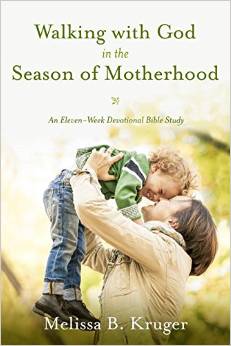
Book Review: Walking With God in the Season of Motherhood

Walking With GodI first saw Walking With God in the Season of Motherhood by Melissa B. Kruger when someone linked to her blog, and I saw this story of how the book came to be written. I thought it might be a good book to pass along to young moms, but I found much for my own heart, though my children are all grown.

This study grew out of Melissa’s desire for “a Bible study that intersected who I was as a believer with the role I had been given as a mother.” It’s not necessarily a “how to be a better parent” study. It’s more of a “how to walk with God and then let that relationship impact your ministry to your children” study.

She begins with our purpose – to glorify God and enjoy Him forever – then reminds us of our responsibility to teach the same to our children and our inability to do so for ourselves or for them on our own. Succeeding chapters discuss walking in faith, wisdom, prayer, carefulness, and then each facet of the fruit of the Spirit, ending with a discussion of the Perfect Mom Syndrome.

The study is laid out over eleven weeks, with four days of study per week and a fifth wrap-up summary of the truths covered in that week. I really like that the Bible verses are included within the study, so a busy mom trying to feed a baby or grab a few minutes of study while waiting for piano lessons or ball practice to end has everything needed right there within the book. There is an additional study guide at the back that would be great for a group study but is also helpful for personal use.

I have several quotes marked but will try to pull out just a few:

It is important to assess regularly whether my family is suffering from an overly busy calendar. However, rather than simply removing activities, my greatest need is to add one particular meeting to my schedule. Every day I need time with Jesus. While it seems counterintuitive, the addition of this one meeting promises to positively affect every other part of my day (pp. 30-31).

When impatience, anger, or discontent well up in our hearts, these are signs that we are mothering in our own strength. Rather than dealing only with our outward behavior, we need the Lord to renew and recharge our hearts…our souls find renewed energy only by abiding in Jesus. Without this time we will find ourselves depleted, discouraged, and unable to bear fruit (p. 33).

[Re the Proverbs 31 woman], We can view her as an older woman to learn from rather than a standard against which to measure ourselves (p. 73).

An additional benefit of a home at peace is that it overflows into loving care and service for our community. The goal is not to create a place to escape or avoid the world but to carefully build our home so that it is a light to the world, shining the grace of Christ to those who are without hope. A peaceful home offers a place of respite and care in the midst of a weary world (p. 76).

When we receive the abundant love of Christ, we are free to pursue others with love, not to gain their affection but to give back what we have already received (p. 93).

True joy does not discount real suffering; it shines all the greater in the midst of it (p. 115).

The ability to extend kindness requires an other-awareness. We are apt to miss the needs of those around us if we remain self-focused. Helping children to see the needs of others will bless them with perspective on their own lives, as well as propel them toward good works that display the kindness of God (p. 157).

God uses these moments to grow our hearts in grace. We can only bear the fruit of patience when we have something to be patient about (p. 164).

In Jesus the performance pendulum stops — both the pride of success and the despair of failure are absorbed by grace (p. 208).

I cannot protect my children from my weaknesses. As hard as I may try, at some point my sin will affect their lives. However, the way I deal with my failure can provide an example for them to follow. I am a sinner raising sinners. Each of my children will face the weight and sorrow of his or her own sins. Just as we teach daily hygiene habits like brushing teeth, our children need instruction on how to find cleansing for their souls. By teaching our children about confession and repentance as well as grace and forgiveness, we bless their lives for years to come (p. 213).

At some points the study seemed a bit long, both in number of weeks and in how long it took to complete the day’s reading and answer the questions. But it’s not, really – eleven weeks is a good length of time for a study. I went through the book in less time than that because I used it six days a week and went on to the next chapter after finishing one rather than reading one chapter per week, but I think the latter would be the better course, to really soak in the truths for that week before going on. And each day’s lesson only took about fifteen minutes. One could spend longer – I tend to answer the basic questions in writing but answer some of the more thoughtful ones in my head. If one did more with the writing sections, one could spend more time with each lesson. And if a day’s reading and questions take more time than one has, there is no reason you can’t take a couple of days or whatever time is needed to complete it. It’s better to go at one’s own pace and really dig into it than barrel through just to get it done. Melissa’s summaries at the end of each week’s lessons really help to review the material and help tie it all together.

I really enjoyed going through this study, found it very beneficial, and am happy to recommend it to you in whatever season you are in.

(This review will also be linked to Semicolon‘s Saturday Review of Books.)

Laudable Linkage

Here are some thought-provoking reads from the past couple of weeks – maybe you’ll find one or two of interest:

My Father Killed My Mother. “How am I supposed to keep the command to honor my father when all I really know of him is that he hurts people to the point of shattering the very next command about murder?”

A Pastor’s Response to the Death of a Childhood Abuser.

What Missionaries Aren’t Telling You (And What They Need From You)

When Your Heart Isn’t In It. “Do you really think that avoiding worship will be the means by which your heart will changed, prepared to engage in worship?”

How Much of My Sinful Past Should I Share With My Children?

The Duggars and the Evil Outside, HT to my friend Ann. You may be getting tired of all the posts about their situation, and I have been mainly staying out of it since I don’t watch the show and only know what I’ve heard, but I thought this made an important point: We can try to shield children from all the evil “out there,” but we still have a sin nature in our own hearts that we have to learn how to deal with. Then just this morning I saw an article on an interview with Jill and Jessa Duggars that “The media coverage has been 1,000 times worse than the incident.

Korean Artist Beautifully Illustrates What Real Love Looks Like. These are sweet.

And, finally, I think I may have posted it before, but I saw it again recently and it still cracks me up:

Laudable Linkage

It’s been a few weeks since I’ve been able to share links I found interesting recently. But I don’t have as many as you might expect for a longer time period. Here they are:

What Does It Mean to “Accept Jesus”? “Accepting Jesus’ is not just adding Jesus. It is also subtracting the idols.”

No, Hanging Out With Your Friends Is Not the Church. Love this blog name, too: The Wardrobe Door.

Freedom From Parenting Guilt.

10 Amazingly Enjoyable Things About Having Kids. We hear so much negativity in the world about the frustrations of having children, but there are many fun things, too. This is from a secular source and therefore has a couple of philosophical bits I wouldn’t agree with, but overall some great observations.

Love Theologically. HT to Challies. Love and theology should feed each other, not oppose each other.

Sweet video about Moms.

If you’re a fan of Pixar movies (we are!), you might enjoy this video of “Easter eggs” in the films – little surprises from one film in another:

Happy Saturday!

Laudable Linkage

Here are just a few commendable links from the last week:

Borrowed Lights: Inspiration for Christian Living. Benefits of reading about the lives of other Christians who follow the Lord closely. Loved this that Robert Murray McCheyne said of Jonathan Edwards: “How feeble does my spark of Christianity appear beside such a sun! But even his was a borrowed light, and the same source is still open to enlighten me.” I liked it so much I added it to my previous post Why Read Biographies.

Are You a Mentoring Momma? “Most likely if you asked them, not one [of these women] would say she mentored me. Yet her life influenced mine in profound ways. The common thread among each of these unique women is that she was further along in the journey, loved me, loved Christ more, and modeled how to treasure Him above all else.” To me that’s the best mentoring – not an official program, not a formal set-up mentor-mentee relationship, but just this.

When Motherhood Drains Your Happiness. The truths here of what to do when you feel drained ministered to me even though I wasn’t feeling that way with regard to motherhood at this point.

My Mother Practiced the Piano. “There’s nothing selfish about working toward your artistic interests as God allows the time. In fact, your children can benefit from watching you model discipline and discovery.”

And, for a smile – I’ve watched this several times and love the look on this cat’s face – although it wouldn’t really be funny to live with a cat who does this:

Happy Saturday!

Laudable Linkage

Here are some posts I found worth reading and sharing over the last couple of weeks:

The Dead End of Sexual Sin along with some advice from John Owen about overcoming sin of any kind.

Providential Dullness: An Easter Meditation. We give the disciples a hard time for missing that Jesus said He would rise again, but Luke 18:34 says, “this saying was hid from them.” Why would that be? Some good answers in this piece.

The Ones in the Front Row.“I cannot control the reception my children’s God-given callings receive out there in the wide world. But I can raise them to be appreciators of beauty, loveliness, and skill. Then, maybe they will be the ones in the front row, clapping their hearts out, whistling, standing and cheering at all the beauty the world holds for them.”

Thanks For Raising the Man of My Dreams! I hate mother-in-law jokes and did long before I became a m-i-l. I did have  relatively good relationship with mine. Here are some good thoughts to enhance that relationship.

10 Ways to Create a Home of Warmth and Grace.

How to Get Published.

For those who like Christian fiction, especially free Christian fiction, there’s a Christian Fiction Scavenger Hunt going on this weekend with a possibility of winning 17-34 books from 30+ authors. Some of the individual authors are hosting their own giveaways as well.

Happy Saturday!