Top Twelve Books Read in 2022

This post is one of my favorites to write every year. Looking back through all the books I read during the year is like revisiting old friends. I try to keep my end-of-year favorites between 10-15. Some rise to the top immediately. Others I have to think about and weigh.

Not all of these books were written this year; in fact, most of them weren’t. But most were first-time reads for me this year.

Another Gospel: A Lifelong Christian Seeks Truth in Response to Progressive Christianity by Alisa Childers, nonfiction. I knew fairly soon that this would be one of my top books. Alisa Childers’ faith was shaken by her pastor, of all people, as he undermined the validity of the Bible, the nature of Christ’s atonement, and so many fundamental doctrines of the Christian faith. Alisa realized that she didn’t know why she believed what she believed. And to her credit, instead of just following along, she began to read and study for herself. This book is her testimony as well as her answer to the issues the progressive movement brings up.

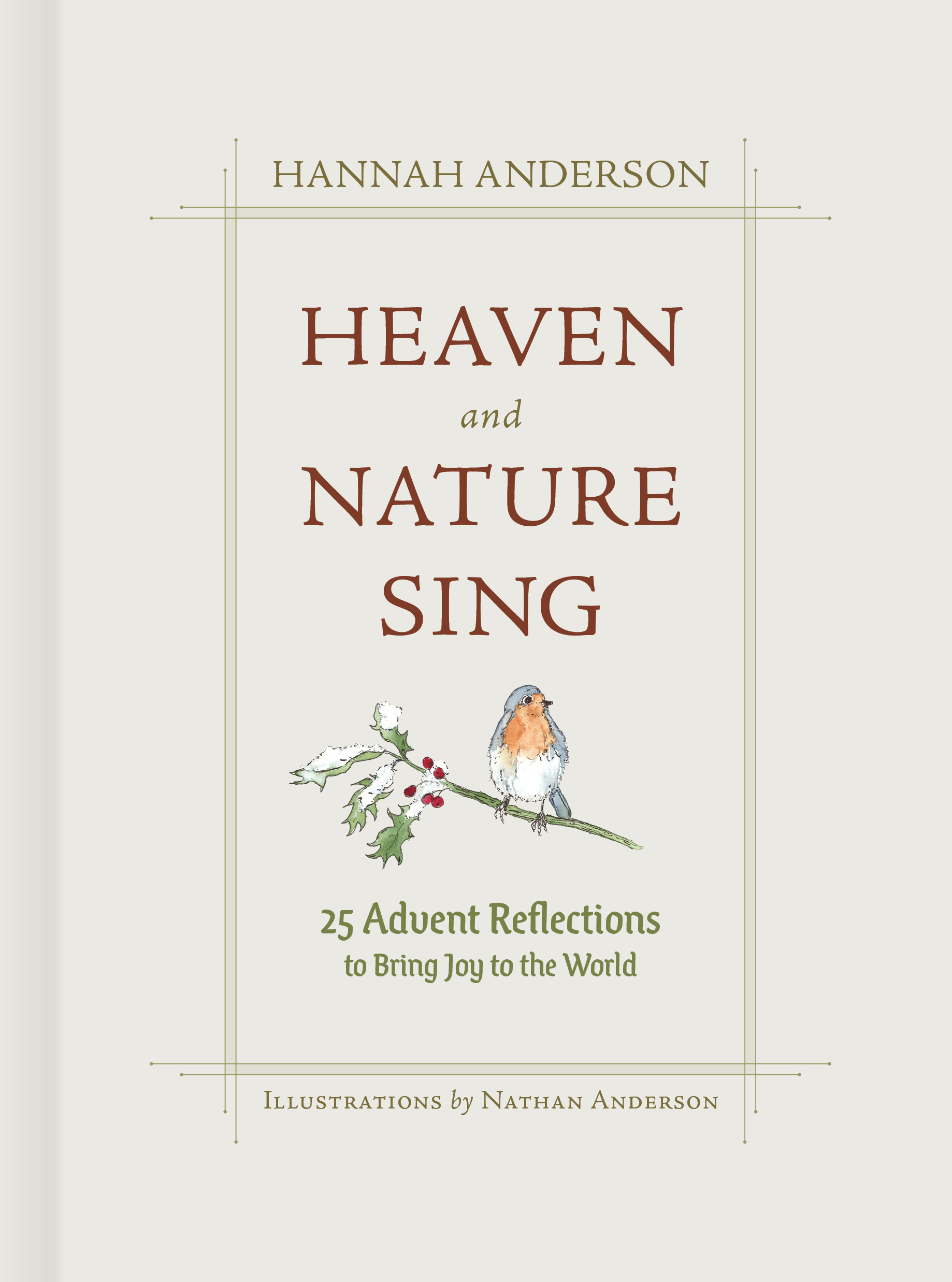
Heaven and Nature Sing: 25 Advent Reflections to Bring Joy to the World by Hannah Anderson, nonfiction. As the title indicates, Hannah focuses on various aspects of the Christmas narrative, especially in connection with nature. She brings such a depth of thought and brings out things I had not considered before.

Joy: A Godly Woman’s Adornment by Lydia Brownback, nonfiction, is made up of 42 fairly short devotions on the topic of joy. Being joyful is not a matter of having a bubble personality. It runs much deeper. I enjoyed the truths Lydia bought out.

O Love That Will not Let Me Go: Facing Death with Courageous Confidence, complied by Nancy Guthrie, nonfiction. Most people are uncomfortable thinking about death. Even if we know we’re going to heaven because we’ve believed on Jesus as Savior, we can be a little afraid of death and dying. It’s not for nothing that the Bible calls death the last enemy. Nancy has assembled writings from an assortment of Christian writers over time to help.

Lady Almina and the Real Downton Abbey: The Lost Legacy of Highclere Castle by Lady Carnarvon, nonfiction. The author is the current countess of Highclere Castle, which was used as the ancestral home of the characters in Downton Abbey series on PBS. But you don’t have to be a fan of the show to enjoy the book. Lady Almina oversaw the castle through World War II, when she turned it into a hospital for wounded soldiers. She accompanied her husband on many travels to Egypt for his health, and where he and friend Howard Carter discovered King Tut’s tomb. The first part of the book was largely informational and a little hard to get into, but before long it became fascinating.

The Italian Ballerina by Kristy Cambron, Christian fiction, is my favorite fiction book this year. It was released just this summer. It’s based on the true account of an Italian hospital which made up a contagious disease they called Syndrome K to keep the Nazis away from one ward. They then used that ward to hide Jewish refugees until they could find somewhere for them to go.Two US military men, a newly-orphaned child, and a ballerina and her partner end up in the hospital as well and try to help. The story is uncovered by two descendants of some of the characters in modern times who follow clues to find out what happened. Excellent.

Bringing Maggie Home by Kim Vogel Sawyer, Christian fiction, is another split-time novel involving modern characters trying to find the history of their ancestors. In this case, Hazel DeFord’s younger sister disappeared when they were children, when Hazel was supposed to be watching her. Hazel didn’t tell her daughter, but this loss made her overly controlling, perfectionistic, and anxious–which drove her daughter away. Her granddaughter is a cold-case detective who unwittingly discovers old pictures of Maggie, Hazel’s sister, and uses time healing from an accident to investigate the 70-year-old case, hoping to bring closure to her grandmother and healing to her and her mother.

The Lost Heiress by Roseanna M. White, Christian fiction, is a novel about an adopted heiress who finds out who her true father is. But will the rest of her father’s family accept her, and will her relationship with her friend, Justin, who she secretly loves, survive? And will she realize the man trying to woo her is a predator? This sounds like a fluff read, but there is no fluff in Roseanna’s books. She brings such depth into her characters and plot.

Midnight, Christmas Eve by Andy Clapp, Christian fiction, is a sweet story about two teenagers who decide that in five years time, if they are not married, they’ll come back to “their” bench in their home town at midnight on Christmas Eve and get engaged. He comes; she does not. He continues to come for the next several Christmas Eves.

Once Upon a Wardrobe by Patti Callahan is a novel about a college girl is London whose younger brother is dying. Her brother is obsessed with the world of Narnia and wants to know whether it’s a real place, and if not, where it came from. When he learns the author, C. S. Lewis, teaches at his sister’s college, he begs her to meet Lewis and ask these questions. There are three levels to this story: Megs and George and their family, Lewis’ biography, and Megs’ learning the value of stories. I didn’t agree with every point of theology from the author, but the overall story was very good.

The Other Bennet Sister by Janice Hadlow is secular fiction from the world of Pride and Prejudice, from the viewpoint of Mary, the quiet sister in the background in Austen’s book. It suffered from a bit of over-explanation in a couple of places, but overall it was excellently done. And the audiobook was very good.

The Winnie the Pooh books by A. A. Milne. I reviewed the two books of stories and two of poetry all together. The Pooh videos were a big part of my kids’ growing up. There was a weekly cartoon of Pooh on then with new stories. But somehow we never read the books together. I wish we had. It was sweet and nostalgic to read them as an adult.

So that’s my top twelve this year. What was your favorite among the books you read this year? Have you read any of the ones I listed?

Books Read in 2022

It’s been another great reading year, with a variety of new and old, fiction and nonfiction, mostly good, a handful not so much. By my count, I’ve read 79 books this year—a smidgen fewer than the last couple of years.

I’ll post my favorites tomorrow. The titles link back to my reviews. (MTBR) at the end of some titles refers to the Mount TBR Reading Challenge, where we read books we already owned before the year began. I noted them here instead of making a separate list.

Nonfiction:

  1. 100 Best Bible Verses to Overcome Worry and Anxiety, a devotional book by various authors (MTBR)
  2. Aging With Grace: Flourishing in an Anti-Aging Culture by Sharon Betters and Susan Hunt
  3. Always, Only Good: A Journey of Faith Through Mental Illness by Shelly Garlock Hamilton
  4. Another Gospel: A Lifelong Christian Seeks Truth in Response to Progressive Christianity by Alisa Childers
  5. Be Alive (John 1-12): Get to Know the Living Savior by Warren Wiersbe (MTBR)
  6. Be Compassionate (Luke 1-13): Let the World Know Jesus Cares by Warren Wiersbe (MTBR)
  7. Be Courageous (Luke 14-24): Let the World Know Jesus Cares by Warren Wiersbe (MTBR
  8. Be Determined (Nehemiah): Standing Firm in the Face of Opposition by Warren W. Wiersbe (MTBR)
  9. Be Distinct (2 Kings and 2 Chronicles): Standing Firmly Against the World’s Tides by Warren Wiesrbe (MTBR)
  10. Be Encouraged (2 Corinthians): God Can Turn Your Trials Into Triumphs by Warren W. Wiersbe (MTBR)
  11. Be Free (Galatians): Exchange Legalism for True Spirituality by Warren Wiersbe (MTBR)
  12. Be Responsible (1 Kings): Being Good Stewards of God’s Gifts by Warren Wiersbe (MTBR)
  13. Be Restored (2 Samuel & 1 Chronicles): Trusting God to See Us Through by Warren W. Wiersbe (MTBR)
  14. Be Successful (1 Samuel): Attaining Wealth That Money Can’t Buy by Warren W. Wiersbe (MTBR)
  15. Be Wise (1 Corinthians): Discern the Difference Between Man’s Knowledge and God’s Wisdom by Warren W. Wiersbe (MTBR)
  16. Daily Light on the Daily Path compiled by Samuel Bagster
  17. “Don’t Call Me Spry”: Creative Possibilities for Later Life by Win Couchman
  18. The Enchanted Places: A Childhood Memoir by Christopher Milne
  19. Essentialism: The Disciplined Pursuit of Less by Greg McKeown (MTBR)
  20. The Four Loves by C. S. Lewis (MTBR)
  21. Heaven and Nature Sing: 25 Advent Reflections to Bring Joy to the World by Hannah Anderson
  22. IBS for Dummies by Carolyn Dean and L. Christine Wheeler (MTBR)
  23. I Must Decrease: Biblical Inspiration and Encouragement for Dieters by Janice Thompson (MTBR)
  24. Jesus Led Me All the Way by Margaret Stringer (MTBR)
  25. Joy: A Godly Woman’s Adornment by Lydia Brownback (MTBR)
  26. Lady Almina and the Real Downton Abbey: The Lost Legacy of Highclere Castle by Lady Carnarvon.(MTBR, audiobook)
  27. The Middle Matters: Why That (Extra)Ordinary Life Looks Really Good on You by Lisa-Jo Baker (MTBR)
  28. O Love That Will not Let Me Go: Facing Death with Courageous Confidence, complied by Nancy Guthrie
  29. The Path Through the Trees by Christopher Milne )Audiobook)
  30. Ten Time Management Choices that Can Change Your Life by Sandra Felton and Marsha Sims (MTBR)
  31. Treasures of Encouragement: Women Helping Women by Sharon W. Betters
  32. Where I End: A Story of Tragedy, Truth, and Rebellious Hope by Katherine Elizabeth Clark (MTBR)
  33. Women and Stress: A Practical Approach to Managing Tension by Jean Lush and Pam Vredevelt (MTBR)
  34. The Writer’s Desk by Jill Krementz (MTBR)

Classics:

  1. Eugene Onegin by Alexander Pushkin (Audiobook)
  2. The Confessions of St. Augustine (Audiobook)
  3. Dracula by Bram Stoker
  4. Framley Parsonage by Anthony Trollope (MTBR, Audiobook)
  5. Hospital Sketches by Louisa May Alcott (Audiobook)
  6. The House at Pooh Corner by A. A. Milne (Audiobook)
  7. The Last Chronicle of Barset by Anthony Trollope (Audiobook)
  8. Mary Barton by Elizabeth Gaskell (Audiobook)
  9. Now We Are Six by A. A. Milne
  10. The Small House at Allington by Anthony Trollope (Audiobook)
  11. The Story of Doctor Dolittle by Hugh Lofting (Audiobook)
  12. To Sir, With Love by E. R. Braithwaite (Audiobook)
  13. Victorian Short Stories of Successful Marriages by Elizabeth Gaskell, Thomas Hardy, and others.
  14. When We Were Very Young by A. A. Milne
  15. Winnie the Pooh by A. A. Milne

Christian Fiction:

  1. Bringing Maggie Home by Kim Vogel Sawyer (Audiobook)
  2. A Daily Rate by Grace Livingston Hill (Audiobook)
  3. Enchanted Isle by Melanie Dobson
  4. The Fifth Avenue Story Society by Rachel Hauck (Audiobook)
  5. Half Finished by Lauraine Snelling (MTBR)
  6. The Hatmaker’s Heart by Carla Stewart (MTBR)
  7. The Italian Ballerina by Kristy Cambron (Audiobook)
  8. Just 18 Summers by Michelle Cox and Rene Gutteridge (MTBR)
  9. A Lady Unrivaled by Roseanna M. White (Audiobook)
  10. Midnight, Christmas Eve by Andy Clapp (MTBR)
  11. The Lost Heiress by Roseanna M. White (MTBR)
  12. The Paris Dressmaker by Kristy Cambron (MTBR, Audiobook)
  13. The Reluctant Duchess by Roseanna M. White (Audiobook)
  14. The Road Home by Malissa Chapin
  15. The Search by Grace Livingston Hill (Audiobook)
  16. Shadowed by Grace: A Story of Monuments Men by Cara Putman (MTBR)
  17. Shadows in the Mind’s Eye by Janyre Tromp
  18. Snowed In for Christmas by Cami Checketts (Audiobook)
  19. Something Good by Vanessa Miller
  20. The Stranger by Melanie Dobson (MTBR)
  21. Three Fifty-Seven: Timing Is Everything by Hank Stewart and Kendra Norman-Bellamy (Audiobook)
  22. To Treasure an Heiress by Roseanna White (Audiobook)
  23. Worthy of Legend by Roseanna M. White

Other Fiction:

  1. Call the Midwife: A Memoir of Birth, Joy, and Hard Times by Jennifer Worth (MTBR, Audiobook)
  2. The Christmas Hirelings by Mary Elizabeth Braddon (MTBR, Audiobook)
  3. The Girl in the Painting by Tea Cooper (MTBR)
  4. The London House by Katherine Reay (audiobook)
  5. Mourning Dove by Claire Fullerton (MTBR)
  6. Once Upon a Wardrobe by Patti Callahan (Audiobook)
  7. The Other Bennet Sister by Janice Hadlow (MTBR, Audiobook)

And that just about wraps it up for 2022! I’m close to finishing a couple more, but I’ll save them to review at the beginning of next year so they don’t get lost in the shuffle.

Reading is one of my highlights, so I was very thankful to be able to make time for it.

How was your reading year? The number of books is not as important as whether the books are enjoyable and edifying. In that sense, I’ve had a great year indeed.

Reading Challenge Wrap-Ups

I enjoy participating in reading challenges and sharing books I have enjoyed. Most of these challenges involve the type of books I would be reading anyway. The only difficulty comes in the time it takes for record-keeping. I haven’t decided yet which challenges I will participate in next year. But I can recommend any of these.

Most of the challenge hosts require a wrap-up post at the end of the year. I shared my Back to the Classics Challenge Wrap-Up, hosted by Karen at Books and Chocolate here. But I decided to include all the rest in one post so as not to be tedious for readers.

Bev at My Reader’s Block hosts the Mount TBR Reading Challenge. The idea is to read books you already owned before the start of this year. Bev has made levels in increments of twelve, each named after a mountain, and we’re to choose a level to shoot for. Even though I’ve reached Mt. Ararat (48 books) the last couple of years, I decided to play it safe and stick with Mt. Vancouver (36 books).

That turned out to be a wise decision as I just made it with 38 books. Instead of making a separate list, I marked the books in this category with (MTBR) on my list of all the books I read this year.

Shelly Rae at Book’d Out hosts the Nonfiction Reader Challenge. She provided 12 categories of nonfiction, and participants chose which level they want to aim for. Thankfully, this year she has included a Nonfiction Grazer category where we set our own goals for how many and what kind of nonfiction to read. That worked best for me this year.

I read a total of 33 non-fiction books this year, which can be seen on my Books Read in 2022 post.

As to my personal goals for this challenge:

Even though I didn’t hit every category I wanted to, I did more in others, and I feel I had a rich and varied nonfiction reading experience this year.

The Audiobook Challenge is hosted by Caffeinated Reader. I aimed for the Binge Listener level at 20-30. I finished 30, so I was right on target. I also marked these on my list of books read this year. I posted what I had listened to through June at the check-in here. Here are the ones I listened to through the end of the year:

The Historical Fiction Reading Challenge is hosted by The Intrepid Reader. I aimed for the Medieval level of 15 books. I completed 22.

As you can tell, Roseanna M. White and Kristy Cambron are favorites in the category.

I’ve included split-time novels here, which have both a modern and a historic timeline. I’ve never been sure whether classics count—books written before our time but were modern in the time in which they were written. If so, I’d have eleven more.

And finally:

The Literary Christmas challenge hosted by Tarissa at In the Bookcase. For this I read:

I also started Hope for Christmas by Malissa Chapin, but haven’t finished it yet. Maybe I will by the end of the year.

I didn’t get quite as many in this category as I had hoped to, but we had a very busy December.

Whew. It’s been a good year of reading.

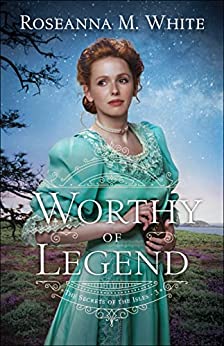
Worthy of Legend

Worthy of Legend is the third installment in Roseanna M. White’s Secrets of the Isles trilogy. The first was The Nature of a Lady; the second was To Treasure an Heiress.

The Secrets of the Isles involves two different groups in search of legendary pirate treasure. One loves “the hunt” and the thrill of archeological finds. The other wants the fame and fortune of such discoveries and employs underhanded means in the race to discover treasure.

Lady Emily Scofield is good friends with the people in the first group. But her father and brother are the primary instigators in the bad group.

Emily has lived her entire life in the background of her brother, Nigel. Nigel was her father’s favorite, and his misdeeds were excused away. Emily is expected to desert her friends and show loyalty to her family. But she can’t.

Instead of writing off her family completely, though, she tries to show love to them. Her friends fear she’ll be taken advantage of again.

Bram Sinclair, Earl of Telford, is the brother of the heroine in the first book. He has had an interest in the King Arthur legends since childhood. As he and his friends piece together clues to the artifact that both groups are pursuing, he realizes what they are looking for might be related to King Arthur. They try to keep this information secret from the other group.

As Bram and Emily’s group works together, Bram is concerned for Emily. He recognizes her conflict with her family and her lack of confidence and self-esteem from having been dismissed and overlooked for so many years. As he tries to encourage her, he discovers a true treasure in her character and heart.

A secondary plot line involves Emily’s maid, Thomasina, who has, unknown to Emily, been violated by Nigel. When a young man from the islands becomes interested in Tommie, she feels he would not be if he knew what had happened to her.

A couple of my favorite quotes from the book:

And if she lost everything all over again . . . well then, she’d just have to trust that the Lord could do more with her shattered than He could with her as she was now, barely holding together. That He meant her to be a mosaic instead of a whole.

Your worth, Thomasina, rests on no one else’s opinion of you. It doesn’t rest even on you. It rests in the Lord. He sees your heart, your soul. And that is all the approval any of us needs.

Bram and Emily were background characters in the previous books, and I enjoyed getting to know them better. I also loved the humorous bantering between Bram and his friend, Sheridan.

I especially liked the fact that these books were in a place I had never heard of, the Isles of Scilly. Now I feel I know the isles and the people on them. And the time frame of the early 1900s isn’t one we see often in historical fiction.

I enjoyed these stories very much and am going to miss these characters.

The Hatmaker’s Heart

In The Hatmaker’s Heart by Carla Stewart, Nell Marchwold is an apprentice designer at Oscar Fields Millinery in 1920 New York City. Nell loves to make hats that frame a woman’s face and bring out her best features.

But Nell speaks with a lisp when she’s flustered, so Mr. Fields has kept her in the background—until one of his best clients falls in love with Nell’s designs. The prestigious Mrs. Benchley wants to commission Nell to make hats for herself and her two daughters for an upcoming event.

Then another well-known designer wants to use Nell’s talents for a show he is putting together.

Mr. Fields allows Nell to work on these other projects, but under the auspices of his shop. He’s two-faced, promoting her in public but treating her like dirt in private.

When Nell and Mr. Fields have an opportunity to go to London, Nell seeks a chance to visit her grandmother and a childhood friend, Quentin. Nell realizes she loves Quentin, but he seems to have moved on. And Mr. Fields is not giving her much time to spend with other people.

It’s hard to imagine that Nell just keeps taking what Mr. Fields is dishing out. But then, she’s young and naive. A big part of her character development is becoming her own person, deciding what she truly wants, and developing the backbone to stand up for it. Nell’s grandmother’s counsel reminds her to seek the Lord and walk with Him.

The book’s setting was interesting with the details about hatmaking. I had done just a tiny bit of that when working for a florist friend part time years ago, but we mostly just decorated hat forms. We didn’t make them from scratch like they did in the 1920s. And I never would have suspected that hat designs could be such a cutthroat business. But I guess they were a big enough fashion item in the day for designers to compete for their sales and designs.

A friend recommended a counselor to Nell to deal with her stammer. I wondered if his methods were true to the times–concluding that the stammer was related to a childhood trauma, having Nell remember specific incidents and draw pictures of them.

Quentin didn’t seem terribly well developed as a character. Since he and Nell were apart for most of the book, we really didn’t get a feel for any chemistry between them. Plus he seemed to have abrupt changes of heart in a couple of places.

So, I have mixed responses to the book. But overall it’s a good story.

Audiobook Challenge Check-In

The Audiobook Challenge, hosted by Caffeinated Reader and That’s What I’m Talking About, is having its mid-year checkpoint today. Here are the audiobooks I have listened to so far this year (titles link to my reviews):

  1. The Other Bennet Sister by Janice Hadlow. The events of Jane Austen’s Pride and Prejudice and beyond from the viewpoint of Mary, the quiet, bookish middle sister. Excellent.
  2. Framley Parsonage by Anthony Trollope, the fourth of his Barsetshire Chronicles. A young vicar trying to get in with society’s elite gets into trouble. The village matron’s son falls in love with the vicar’s sister rather than the beautiful but cold society maiden his mother had picked out for him.
  3. The Path Through the Trees by the “real” Christopher Robin of the Winnie-the-Pooh books, Christopher Milne. This book is the sequel to his first, The Enchanted Places (both are reviewed at the ink.
  4. The Small House at Allington by Anthony Trollope, the fifth in his Barsetshire Chronicles, had numerous threads, but the main plot focuses on a widow and her two daughters who live in a small house on the property of her brother-in-law, who owns the manor house and never liked his sister-in-law.
  5. The Last Chronicle of Barset by Anthony Trollope, the final book in his Chronicles of Barsetshire series. A stern vicar is accused of stealing and resistant to the community’s attempts to help him. All the threads from the previous books in the series are satisfyingly tied up.
  6. To Sir, With Love, an autobiographical novel by E. R. Braithwaite about a Black teacher in a London school of rowdy students in the 60s.
  7. The Winnie the Pooh books by A. A. Milne (When We Were Very Young, Winnie-the-Pooh, The House at Pooh Corner, and Now We Are Six). All four reviewed together. I’ll just count them as one entry since they are so short.
  8. Mary Barton by Elizabeth Gaskell. Part helping rich and poor understand each other, part coming-of-age, part unraveling a crime.
  9. Eugene Onegin by Alexander Pushkin. Russian classic about a bored young rich man who turns away the naive girl who loves him only to find he does lover her when it’s too late.
  10. The Confessions of St. Augustine. Challenging to listen to, but I am glad I did.
  11. Once Upon a Wardrobe by Patti Callahan. Novel about a college girl asking C. S. Lewis about Narnia for her dying younger brother.
  12. Hospital Sketches by Louisa May Alcott. Stories about her brief time as a Civil War nurse.

I had chosen to aim for the Binge Listener level at 20-30 audiobooks this year, and I am well on my way to that goal.

Be Successful: 1 Samuel

The book of 1 Samuel in the Bible is something of a bridge between eras in Israel’s history. Samuel himself is something of a bridge. He’s the last of the judges. He’s a prophet. He anoints two different kings. He oversaw the transition between Israel as a group of tribes in which everyone “did that which was right in his own eyes” (the theme of Judges) to Israel as a unified nation under a king.

But the transition was not a smooth one. In desiring a king, Israel had rejected the Lord’s leadership. The first king, Saul, had much to recommend him, but he failed spectacularly. David was anointed king, but didn’t come to the throne for several years, and he was on the run from Saul much of that time.

Perhaps the contrast between David and Saul is why Warren W. Wiersbe titled his commentary on 1 Samuel Be Successful: Attaining the Wealth that Money Can’t Buy. But other characters in 1 Samuel have varying degrees of success in following and serving the Lord as well.

The book begins with a childless woman with a longing. Hannah had no children, and she pleaded with the Lord to grant her a son. She promised that she would give the child back to the Lord.

There’s so much treachery, bloodshed, and confusion recorded in 1 Samuel that it’s refreshing to meet at the very beginning of the book a woman who represents the very best that God has to give. The leaders of Israel had failed, so God sought out a woman He could use to help bring truth, peace, and order to His people. She served God simply by being a woman and doing what only a woman could do—give birth to a baby and dedicate that child to the Lord (p. 194).

It’s an awesome fact that, humanly speaking, the future of the nation rested with this godly woman’s prayers, and yet, how much in history has depended on the prayers of suffering and sacrificing people, especially mothers (p. 20).

Eli was a priest whose sons committed awful atrocities in their offices as priests. Eli knew what they were doing and rebuked them, but didn’t restrain them. When Hannah weaned Samuel, the child the Lord had given her, she brought him to Eli’s care in the tabernacle.Somehow Eli protected Samuel from the corruption of Eli’s sons.

The Bible says that during this time, “the word of the Lord was rare in those days” (1 Samuel 3:1). Wiersbe comments, “It was a tragic day in the nation of Israel when the living God no longer sent His people signs and prophetic messages (Ps. 74: 9; Ezek. 7: 26; Amos 8: 11–12; Mic. 3: 6). The silence of God was the judgment of God” (p. 32).

Yet at this time, God spoke to Samuel, and Eli taught Samuel to listen and respond, “Speak, Lord, for your servant hears” (1 Samuel 3:4-18). And “the Lord revealed himself to Samuel at Shiloh by the word of the Lord” (1 Samuel 3:21).

Blessed are those older saints who help the new generation know God and live for Him! However Eli may have failed with his own sons, he helped to point Samuel in the right direction, and the whole nation benefited from it. . . . Eli hadn’t been a great spiritual leader, but he was one small link in the chain that led to the anointing of David and eventually the birth of the Redeemer (pp. 195-196).

Samuel became a godly man who followed the Lord all his life and led the people faithfully. The one spot on his record is that his sons also abused their ministry. We don’t know the circumstances, but Samuel isn’t blamed for his sons’ behavior as Eli had been. Wiersbe offers some possibilities as to what could have gone wrong with Samuel’s sons, but ultimately we just don’t know. Samuel repeatedly pointed the people to the Lord.

Samuel is an example to all older believers who are prone to glorify the past, resist change in the present, and lose hope in the future. Without abandoning the past, Samuel accepted change, did all he could to make things work, and when they didn’t work, trusted God for a brighter future. God didn’t abandon the kingdom; He just chose a better man to be in charge, and Samuel helped to mentor that man. Every leader needs a Samuel, a person in touch with God, appreciative of the past (p. 197).

Saul started out well. He seemed humble in the beginning. But there doesn’t seem to have been much of a personal relationship between him and the Lord. Wiesrbe says, “His was the shallow heart of our Lord’s parable of the sower. There was no depth, the tears were temporary, and no lasting fruit ever appeared” (p. 195). Saul began taking matters into his own hands instead of waiting on God and following His directions. “Serving God acceptably involves doing the will of God in the right way, at the right time, and for the right motive” (p. 92). “To know God’s will and deliberately disobey it is to put ourselves above God and therefore become our own god. This is the vilest form of idolatry” (p. 95). Then Saul began to be jealous of David’s fame, then became murderous and unstable. His decline is one of the saddest parts of Scripture.

When Saul was chosen king, he was given authority from God and from the nation, but when he won this great victory, he gained stature before the people. It takes both to be an effective leader. The difficulties began later when Saul’s pride inflated his authority and began to destroy his character and his stature. David was humbled by his success, but Saul became more and more proud and abusive (p. 65).

Jonathan was Saul’s son and heir to the throne, yet Jonathan recognized his own father’s instability and David’s call. He was a true friend to David.

Jonathan leaves behind a beautiful example of what true friendship should be: honest, loving, sacrificing, seeking the welfare of others, and always bringing hope and encouragement when the situation is difficult. Jonathan never achieved a crown on earth, but he certainly received one in heaven. “Be thou faithful unto death, and I will give thee the crown of life” (Rev. 2: 10) (p. 200).

David was a “man after God’s own heart.” As I mentioned in an earlier post, pastor Stephen Davey says this doesn’t mean David was perfect, but his priority was God and His will and his relationship with God. Much could be said about David. He’s one of my favorite Bible characters, though I’ve grieved over the fall to come in the next book.

David was a unique blending of soldier and shepherd, musician and military tactician, commander and commoner. In spite of his sins and failures—and we all have them—he was Israel’s greatest king, and always will be until King Jesus reigns on David’s throne as Prince of Peace. The next time we’re tempted to emphasize the negative things in David’s life, let’s remember that Jesus wasn’t ashamed to be called “the son of David” (p. 200).

Finally, 1 Samuel isn’t just a book of exciting stories, downfalls and successes, battles and failures. “The Lord is mentioned over sixty times in 1 Samuel 1—3, for He is the chief actor in this drama” (p. 17). Throughout the book, God orchestrated His will to be done and His coming Messiah’s preparation.

Laudable Linkage

IMG_0195

Once again, I’m behind on my blog-reading due to a busy week. But here are a few noteworthy reads:

A Special Valentine Invitation: Will You Be Mine? “Many of us have experienced both highs and lows when it comes to love and special valentine invitations.But the most lavish, epic, and monumental Valentine’s Day to ever take place in history, celebrates the best kind of love—God’s extravagant love.”

All This Wasted Worry, HT to Challies. “A few months ago, I was about to begin onto one of my nighttime worry rituals. There was a flight the next day, and I pictured myself gripping the armrest tightly throughout the flight like I always do—as though holding the armrest with all my might somehow keeps the plane in the air. And I laughed because there isn’t anything as ludicrous as believing that one’s white-knuckled grip on a piece of plastic in economy seating has anything to do with keeping an airplane in the sky.”

The Education of Whoopi Goldberg and Race in Christian Culture. “Whoopi Goldberg was suspended two weeks from The View for stating on air that the holocaust was not about race. . . Personally, I am not sure she should have been suspended. What she said was ignorant and insensitive, but such statements do foster discussion, education, and eventually enlightenment. If we constantly penalize one another for saying stupid things, we will eventually stop talking with one another altogether.”

How Did the Apostle Paul Stand for His Rights? “As we’ve discussed religious liberty in recent months, several people said something along these lines to me, ‘Didn’t Paul stand up for his rights when the Romans threatened him?’ This is a fair question since Paul did use his Roman citizenship on two occasions when interacting with representatives of the government. Let’s look at both incidents and think about how Paul went about this.”

On Christians Reading Fiction: Stealing Past the Watchful Dragons. This is the first in a series about the value to Christians of reading quality fiction. I especially like the last reason given here, and I’m looking forward to the rest of the series.

An 8-year-old slid his handwritten book onto a library shelf—and now it has a yearslong waitlist, HT to Linda. I love that the library staff’s reaction.

Do you remember Irene Ryan, who played “Granny” on The Beverly Hillbillies? It’s hard not to think of her as perpetually Granny, because that’s the only way we ever saw her. I’m not sure why, but a couple of videos of her were in my YouTube suggestions. This was from one of her early films. The other was a pre-Granny episode of Password against fellow actor Bob Crane of Hogan’s Heroes. I also just recently learned that she was only five years older than co-star Buddy Ebsen, who played her son-on-law, Jed.

Happy Saturday!

Reading Plans for 2022

One of my favorite activities is setting my reading plans for the year.

For many years I just read whatever came to hand, whatever I was in the mood for. I like to allow for that and for reading new books and unplanned discoveries. But making plans for the year helps me be more intentional, work in the books I plan to “get to someday,” and broaden my horizons.

Reading challenges also help with those purposes, plus they are fun. And some offer prizes!

The reading challenges I plan to participate in this year are:

The Back to the Classics Challenge hosted by Karen at Books and Chocolate. This is one of my favorites. Through this challenge, I’ve been introduced to classics I never knew about before and authors I had never tried. My usual classics taste tend toward 19th century Britain: Dickens, Wilkie Collins, Anthony Trollope, Elizabeth Gaskell, George Elliot. These are the cozy classics to me, and I try to read from them every year. But it’s good to branch out, and Karen’s categories help me do that. The categories this year are:

  • A 19th century classic.
  • A 20th century classic.
  • A classic by a woman author.
  • A classic in translation.  Any book first published in a language that is not your primary language.
  • A classic by BIPOC author. Any book published by a non-white author.
  • Mystery/Detective/Crime Classic. It can be fiction or non-fiction.
  • A Classic Short Story Collection.
  • Pre-1800 Classic.
  • A Nonfiction Classic.
  • Classic That’s Been on Your TBR List the Longest.
  • Classic Set in a Place You’d Like to Visit.
  • Wild Card Classic. Any classic you like, any category, as long as it’s at least 50 years old!

Since the categories were just posted, I haven’t had time to think about them and decide what to read. But I’ll enjoy contemplating them! I’m sure I’ll continue with the next in Trollope’s Barsetshire series for the 19th century classic. I might delve into The Four Loves by C. S. Lewis for the nonfiction: I’ve been wanting to read that for a while.

Shelly Rae at Book’d Out hosts the Nonfiction Reader Challenge. She provided 12 categories of nonfiction, and participants choose which level they want to aim for. Thankfully, this year she has included a Nonfiction Grazer category where we set our own goals for how many and what kind of nonfiction to read. That will work best for me this year.

I’m going to plan on at least 12 nonfiction books. I usually read more than that, but many are in the same categories. This year I want to read:

  • At least one biography, autobiography, or memoir.
  • One writing book
  • One book of humor
  • One Bible study book
  • One Christian living book
  • One book of letters or journals
  • One book by C. S. Lewis that I have not read yet
  • One book on organization or productivity (I have 13 on my shelf! Some read, some dipped into, some unread.)
  • One book pertaining to a holiday (probably Christmas)
  • One book related to midlife or aging

Bev at My Reader’s Block hosts the Mount TBR Reading Challenge. The idea is to read books you already owned before the start of this year. Bev has made levels in increments of twelve, each named after a mountain, and we’re to choose a level to shoot for. Even though I’ve reached Mt. Ararat (48 books) the last couple of years, I think I will play it safe and stick with Mt. Vancouver (36 books).

There are a couple of other TBR challenges I have participated in for previous years, but the rules of each are slightly different. So, to keep it simple, I think I’ll just stick with this one. It’s such a feeling of accomplishment to get to those books!

These next to are new to me. They focus on books I usually read anyway, so they won’t require extra effort except for the record keeping.

The Audiobook Challenge is hosted by Caffeinated Reader. Last year I listened to 25 audiobooks, so I’ll aim for that again with the Binge Listener level at 20-30.

The Historical Fiction Reading Challenge is hosted by The Intrepid Reader. I read 15 in this genre last year, so I will aim for that again with the Medieval level.

I’ve seen some other interesting-looking challenges with various categories, like this one. But I don’t want to get involved in too many to keep up with. I may have already! We’ll see how it goes.

Do you participate in reading challenges? Which ones?

How to Read Books and Support Authors Inexpensively

I’ve always been a little amazed that people will plunk down good money to see a movie or concert or ball game that will last two to three hours, but then balk at paying $15 for a book that will give them 10-15 hours of enjoyment. Or they’ll shell out several dollars a week for expensive coffees which will give them a few moments of pleasure, rather than pay for a book that will feed the mind, imagination, even the soul for years to come.

I believe books are a worthy investment.

However, if we read a lot, $10-15 per book adds up quickly. I read 84 books last year and 76 the year before. That would be quite an outlay if I paid full price for each book.

I want to pay full price as much as possible to support authors. They work months or even years to produce one book. I’ve learned from the multiple writing blogs I follow that most authors do not make a living on their writing. “The labourer is worthy of his hire,” Jesus said. They can’t keep producing books if they don’t make enough to live on. And it’s not sin to pay full price for something.

But it’s true many of us could not read nearly as much if we paid full price for every book.

So how can we read inexpensively?

Public libraries. What a treasure trove! Print, audio, and ebooks are all available just for the trouble of registering for a library card.

Library sales. Many libraries will purge their shelves or sell donated books they can’t use, usually in a big sale once or twice a year.

Little free libraries. Some neighborhoods have mini boxes where people can leave books they are done with and choose others to take home.

Church libraries. Some churches will have a library of donated books, or may have a budget to stock new books.

Discount stores. Costco, WalMart, and other stores have books for lesser prices. Some online sites do as well. Feel free to share in the comments your favorite place for discount books.

Book exchange stores. There’s a big store here in Knoxville where you can trade in your used books for credits for more used books.

Project Gutenberg has many ebooks online for free. I thought they mostly did classics, but they have newer titles as well.

Kindle sales. Books for the Kindle app go on sale every day, anywhere from free to a few dollars. You don’t have to have a Kindle device: you can get the Kindle app and read on a tablet or even your phone. (It would be hard to read an entire book on a phone, but it can be done. It’s handy if you find yourself waiting somewhere unexpectedly.) Some sites online curate Kindle sales almost every day. Tim Challies lists a few most days, usually Christian nonfiction and some classics. Inspired Reads lists half a dozen or so and Gospel eBooks lists several, but you need discernment with these two: I wouldn’t recommend everything they list.

Audiobooks. Audible.com has a few different plans for audiobooks. The one I’m on charges $14.95 a month, which gives me one credit, resulting in one audiobook per month. But they often have two-books-for-one-credit sales, and many of their classics are free or only a dollar or two. And some books are included free with membership. Librivox has audiobooks for free, but they have ads. Plus, they are read by volunteers who may or may not use any kind of inflection. And different readers might read different chapters in the same book. But . . . they’re free.

Free books for a review. Some sites or publishers will give readers free books in exchange for an honest review. The only one of these I tried was for a Christian publisher, but I quit early on. They sent a box of six books for one month. Not only was I not interested in all of them, but I didn’t want my “read for review” reading to take over all of my reading time. I understand there are some now where you can choose which books you’re willing to read and review. I know some of you do this: would you share what sites or publishers you work with in the comments?

Author’s launch teams. Publishers expect authors to do most of their own marketing and publicity these days. One way authors do this is to have a small group of people they’ll send a free copy (usually ebook these days) of an upcoming book before it is published. That way they can get reviews in right away. People are more willing to take a chance on a book that has some reviews. If there are no reviews, people are wary. I would recommend only doing this for authors you know and enjoy and want to support. It’s probably not fair to a new-to-you author to volunteer for his or her launch team if you have no idea about their style and whether they’ll appeal to you.

Gifts. Our family does “wish lists” for gift-giving occasions, and a few books are always on mine.

If your book budget is limited, there are still ways you can support your favorite authors. Word of mouth goes a long way. A review on Amazon or GoodReads or your blog helps more than you know. Even listing a book on GoodReads as one you want to read helps bring attention to it. So does posting a book cover on Instagram with the hashtag #bookstagram and hashtags for the genre, author’s name, and anything else you can think of.

These measures still help even if you get most of your books from a library. Also, a library is more willing to keep an author’s books if they’re being checked out. And asking your library to stock a particular book helps, too. Many have a form on their web sites where you can submit book requests.

Agents and publishers look at the number of a new or hopeful author’s followers on social media or in a newsletter list (one reason you see so many offering newsletters). So following an author’s social media accounts or signing up for their newsletters can aid them. If you’re like me, you can only do this for a few of your most favorite authors (or bloggers hoping to be authors), lest social media following takes up more time than you have. But if you’re active on social media, or want to give a boost to someone whose writing you like, these measures are helpful.

Do you have any other ideas for reading inexpensively? Do you have other ways of supporting authors?

(I often link up with some of these bloggers.)