Unknown's avatar

About Barbara Harper

https://barbarah.wordpress.com

The Other Bennet Sister

If you are a Pride and Prejudice fan, you might remember middle sister Mary Bennet as being bookish and quiet. In fact, the only significant scene of hers I can recall is when she’s playing the piano at the Bingley ball (the one where all the Bennet family comes across as ridiculous in front of Mr. Darcy) to the point that her father has to pull her away with “You’ve entertained us enough for now.”
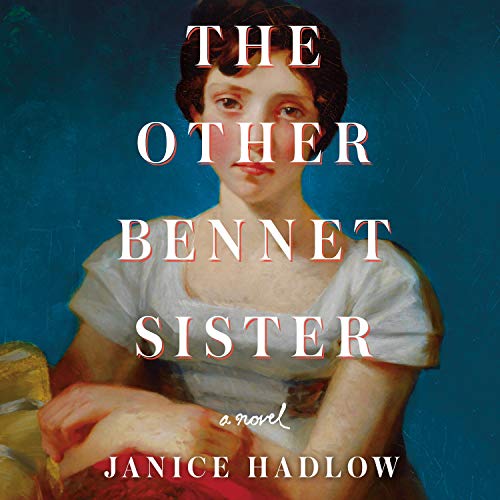
Janice Hadlow has crafted a novel from Mary’s point of view: The Other Bennet Sister. Hadlow delves more deeply into Mary’s character and what might have been after P&P ended.

The Bennets had five daughters. Mr. Bennets property is entailed, meaning it will go to a male cousin upon Mr. Bennet’s death rather than a Bennet daughter.

Even though the Bennets are landed gentry, there’s not enough money for any of the girls to have large enough dowries to attract the “right” kind of husband. But most of the girls are pretty enough to attract attention, and their ambitious mother is determined to place them where they can be seen and admired.

Mary, however, is plain. In Mrs. Bennet’s book, that’s almost a sin. At the very least, Mary’s plainness is a great disappointment to her mother. Mrs. Bennet is one of the most annoying characters in literature, and one of my least favorite. Mary’s mother not only has little use for Mary, she constantly berates her daughter. “She had learned from Mrs. Bennet that without beauty, no real and lasting happiness was attainable. It never occurred to her to question what she had been taught.” Mrs. Bennet didn’t even want Mary to get needed glasses because they would further hamper her ability to get a husband.

Since Mary doesn’t have the looks or personality to be “pleasing,” and she loves to learn, she sets herself to study in her father’s library. Perhaps at some point she can discuss books with him. But he demands absolute silence in the library—except when Lizzie, his favorite, is there.

Mary tries other venues, like music, in which to stake her significance, with poor results.

Mary is also in the very middle of the five sisters. The older two are close, as are the younger two, leaving Mary with no one. Lizzie and Jane are not unkind, but they don’t draw Mary in, either.

Since Mary feels invisible, she looks invisible as well, wearing very plain dresses with no color or frill.

The first part of the book covers the events of P&P, but from Mary’s point of view.

Then the book jumps ahead a couple of years. Mr. Bennet had died, and all the Bennet daughters are married except Mary. Mary and her mother go to live with Jane and Mr. Bingley. But the days there are dreary for Mary, with her mother’s constant harping and Caroline Bingley’s sniping remarks. Mary goes to visit Elizabeth and Mr. Darcy for a while, then Charlotte (Elizabeth’s close friend) and Mr. Collins, the obsequious cousin who inherited the Bennet family home. Charlotte and Mary have several talks about life as a plain woman.

Single women did not have many options in those days. Spinsters were pitied and often poor, earning money as governesses or music teachers. Mary is not interested in either profession, but living with one of her sisters is not ideal, either.

Finally Mary goes to London to stay with her aunt and uncle, the Gardiners—the same aunt and uncle Lizzie stayed with in P&P. Things start to turn a corner as Mrs. Gardiner gently draws Mary out and convinces her that it is not drawing undue attention to herself to dress nicely. And the Gardiner’s friend, Mr. Hayward, convinces Mary’s very rational mind that poetry and feeling are valuable.

I loved a lot of Mrs. Gardiner’s advice, some of which had a double meaning.

Sometimes the very best stuff can seem quite plain, until one examines it closely. It is only then that one sees its true quality.

I see plainly enough that you don’t like to make a fuss about dress—that you dislike having attention drawn to you. But there are times when the best way to ensure you are not remarkable is to conform to the expectations of those around you.

There is a middle way between an obsession with one’s appearance and an absolute denial of its importance.

It’s hard to persuade anyone, especially a man, that your regard is worth having if you have none for yourself.

In our house, no-one is obliged to sparkle. Which, I find, makes it far more likely that they might.

There were several things I liked about this novel. One is Mary’s slow “blossoming,” often with one step forward and two back as she makes mistakes.

I thought the author did an admirable job keeping the personality of each of Austen’s main characters close to what they were in P&P. Even though Hadlow’s style is different from Austen’s, the book still had a cozy Regency feel to it.

I had two minor complaints, though. One is that, especially in the beginning of the book, there was a lot more “telling” than “showing.” That improved after the story got into new material after the P&P timeline.

The other complaint is that sometimes there was too much explanation. The narrative would belabor a point long after the reader understood.

Those two aspects made the story drag just a little in places, but not enough to ruin the book.

Overall, I really enjoyed this story. I wanted to speed ahead to see how things worked out for Mary, but then I didn’t want it to end. Some parts of the book had me in tears.

I listened to the audiobook wonderfully narrated by Carla Mendonca.

Thanks to Lois for putting this book on my radar.

Blameless?

I can’t wear white until I get to heaven.

At least, I can’t wear white without frustration. I invariably spill food or find scuffs and stains from unknown sources that speckle my white garment.

I can wash white clothes, with varying degrees of success. But eventually they turn gray or yellowish.

So I prefer to wear clothes that make the occasional spill or scuff less noticeable.

Four times since December 30, my Daily Light on the Daily Path devotional book, compiled from Scripture by Samuel Bagster, has had readings about being blameless. Here are a few:

And it is my prayer that your love may abound more and more, with knowledge and all discernment, so that you may approve what is excellent, and so be pure and blameless for the day of Christ, filled with the fruit of righteousness that comes through Jesus Christ, to the glory and praise of God (Philippians 1:9-11).

And may the Lord make you increase and abound in love to one another and to all, just as we do to you, so that He may establish your hearts blameless in holiness before our God and Father at the coming of our Lord Jesus Christ with all His saints (1 Thessalonians 3:12-13).

Therefore, beloved, since you are waiting for these, be diligent to be found by him without spot or blemish, and at peace (2 Peter 3:14).

Sometimes the word “blameless” caused me the same kind of frustration as a white shirt. My flesh fails daily. How can I ever be blameless?

Well, first of all, we’re not only forgiven, but also cleansed when we trust Christ for our salvation.

Christ loved the church and gave himself up for her, that he might sanctify her, having cleansed her by the washing of water with the word, so that he might present the church to himself in splendor, without spot or wrinkle or any such thing, that she might be holy and without blemish (Ephesians 5:25-27).

And you, who once were alienated and hostile in mind, doing evil deeds, he has now reconciled in his body of flesh by his death, in order to present you holy and blameless and above reproach before him (Colossians 1:21-22)

In 1 Corinthians 6:9-10, Paul lists some of the kinds of people who will not inherit the kingdom of God. Then he says in verse 11:

And such were some of you. But you were washed, you were sanctified, you were justified in the name of the Lord Jesus Christ and by the Spirit of our God.

The ESV Study Bible comments on this passage:

God has already declared the Corinthians Christians to be ‘righteous’ (see Rom. 5:1; 8:1, 33). God was able to do this because the ‘righteousness’ that belongs to Christ, due to his perfect life, has become ‘our . . . righteousness’ (1 Cor. 1:30; see also 2 Cor. 5:21). Paul’s point in 1 Cor. 6:1-11 is that the Corinthians need to live in a way that is consistent with this verdict and status (p. 2198).

If you’re familiar with the Corinthians at all, you know they weren’t living as people washed and sanctified. They weren’t going to lose their salvation, but they needed to live in light of it. We’ll never be perfect in this life, but our lives should reflect the change God has made in us. We should be continually growing more and more like our Savior.

It can be easy, as Christians, to take grace for granted. I have my sins that I continually battle with; I am sure you have yours. We can be tempted to accept that they are a part of who we are. Under the umbrella of being “authentic,” we can even wallow in our “mess” in ways that make it seem we’re proud of it.

Sure, we want to be real with people. We don’t want to portray ourselves as anywhere near perfection or above anyone.

But the Bible continually points us higher. It’s not that we rely on God’s goodness to save us and ours to walk with Him. No, we depend on His goodness all the way. We don’t compare ourselves to each other. But we strive to be like Christ. Not in our own efforts or strength, but relying on His. We rest in His grace, but we don’t presume on it.

For if you live according to the flesh you will die, but if by the Spirit you put to death the deeds of the body, you will live (Romans 8:13).

Do all things without grumbling or disputing, that you may be blameless and innocent, children of God without blemish in the midst of a crooked and twisted generation, among whom you shine as lights in the world (Phil 2:14-15).

Beloved, I urge you as sojourners and exiles to abstain from the passions of the flesh, which wage war against your soul. Keep your conduct among the Gentiles honorable, so that when they speak against you as evildoers, they may see your good deeds and glorify God on the day of visitation (1 Peter 2:11-12).

Not just forgiven, but actively living unblameable before the world.

Abstain from every form of evil. Now may the God of peace himself sanctify you completely, and may your whole spirit and soul and body be kept blameless at the coming of our Lord Jesus Christ. He who calls you is faithful; he will surely do it (1 Thessalonians 5: 22-24).

This shows both our effort–our abstaining–as well as God’s keeping us. Isn’t it interesting that verse 24, which we take out of context and apply to all kinds of other things, was a promise given to encourage us of God’s faithfulness to sanctify and keep us?

But how do we live a blameless life when we’re so prone to go our own way?

Our relationship with the Father, the Son, and the Holy Spirit. Back in Romans 8, our relationship with God is woven through the passage. We’re in Christ Jesus (verses 1-2); in the Spirit (verse 9); Jesus is in us (verses 10-11); we call God our Father (verses 14-16); the Spirit helps us in our weakness (verse 26); God foreknew us and predestined us to be like Christ (verses 29-30); nothing can separate us from God’s love (verses 31-37). These truths of our relationship with the Father, Son, and Holy Spirit are throughout the Scripture.

Remember you are a temple of God. Not your own. Bought with a price.  Flee from sexual immorality. Every other sin a person commits is outside the body, but the sexually immoral person sins against his own body. Or do you not know that your body is a temple of the Holy Spirit within you, whom you have from God? You are not your own, for you were bought with a price. So glorify God in your body” (1Corinthians 6:18-20).

Word of God. “So put away all malice and all deceit and hypocrisy and envy and all slander. Like newborn infants, long for the pure spiritual milk, that by it you may grow up into salvation” (1 Peter 2:1-2).  “How can a young man keep his way pure? By guarding it according to your word. With my whole heart I seek you; let me not wander from your commandments! I have stored up your word in my heart, that I might not sin against you” (Psalm 119:9-11).

Prayer. “Keep back your servant also from presumptuous sins; let them not have dominion over me! Then I shall be blameless, and innocent of great transgression” (Psalm 19:13).

Confession: “If we confess our sins, he is faithful and just to forgive us our sins and to cleanse us from all unrighteousness” (1 John 1:9).

Don’t just “don’t,” but “do“—actively follow right.  Flee also youthful lusts; but pursue righteousness, faith, love, peace with those who call on the Lord out of a pure heart” (2 Timothy 2:22).

Don’t make provision for the flesh. “Let us walk properly as in the daytime, not in orgies and drunkenness, not in sexual immorality and sensuality, not in quarreling and jealousy. But put on the Lord Jesus Christ, and make no provision for the flesh, to gratify its desires” (Romans 13:13-15).

Be renewed in our minds. Ephesians 4 shows the difference being a Christian should make in our lives. Paul urges us to “walk in a manner worthy of the calling to which you have been called” (verse 1) and explains why. In the middle he calls us to “put off your old self, which belongs to your former manner of life and is corrupt through deceitful desires, and to be renewed in the spirit of your minds, and to put on the new self, created after the likeness of God in true righteousness and holiness” (Ephesians 4:22-24).

Abide in Christ. “Abide in me, and I in you. As the branch cannot bear fruit by itself, unless it abides in the vine, neither can you, unless you abide in me. I am the vine; you are the branches. Whoever abides in me and I in him, he it is that bears much fruit, for apart from me you can do nothing” (John 15:4-5).

Yield to God. “Neither yield ye your members as instruments of unrighteousness unto sin: but yield yourselves unto God, as those that are alive from the dead, and your members as instruments of righteousness unto God” (Romans 6:13).

Walk in the Spirit. “Walk by the Spirit, and you will not gratify the desires of the flesh) Galatians 5:16).

Beholding His glory. “And we all, with unveiled face, beholding the glory of the Lord, are being transformed into the same image from one degree of glory to another. For this comes from the Lord who is the Spirit” (Corinthians 3:18). Ultimately, our change comes as we behold Him.

Does this all seem a little overwhelming, a little too much to keep up with? It’s probably supposed to, to remind us that we can’t do it on our own. The word “walk” in Galatians 5 is encouraging to me because a walk is a series of steps. I don’t have to worry about the whole pathway of the rest of my life. I just have to take this step yielding to Him, walking in fellowship with Him.

I think of this similarly to parents and children. In most cases, parents love children even when they mess up or wills clash. They’ll do everything they can to help a child do right. A child isn’t ever going to stop being his parents’ child, even if they aren’t on good terms. But a child who loves and respects his parents will want to do what they say and please them, even though sometimes he fails.

As a father shows compassion to his children, so the Lord shows compassion to those who fear him. For he knows our frame; he remembers that we are dust” (Psalm 103:13-14). But He also said, “If you love me, you will keep my commandments” (John 14:15). We don’t do His will to earn or increase His love, but to show our love to Him. And when we fail, we come to Him for cleansing and forgiveness and carry on.

Now to him who is able to keep you from stumbling and to present you blameless before the presence of his glory with great joy, 25 to the only God, our Savior, through Jesus Christ our Lord, be glory, majesty, dominion, and authority, before all time and now and forever. Amen. (Jude 24-25).

(I often link up with some of these bloggers.)

Laudable Linkage

A collection of good reading online

Here are the best of the good reads found this week:

How Do We Process the Scariest Passage in All of Scripture? HT to Challies. The passage discussed is Matt. 7:21–23, where many who think they are going to heaven will hear Jesus say, “Depart, I never knew you.”

Why Does God Hide Himself from Christians? HT to Challies. “’So God never forsakes his people, but he sometimes withdraws from them the sweetness of communion with him. He hides his face, as the psalmist says in about a dozen places.’ His question is, Why would God do that to his own children?”

A Known Way. “The year stretches out before me like an uncharted sea. Some now-secret stories will bring me joy, I know. There will be tender beauty and many good gifts from my Father’s hand. But what if the churning darkness also contains a violent, unexpected storm? What if my ship is disabled? What if I am taken to an unwanted, difficult place?”

Yes, You Need to Talk to the Manager. HT to Challies. Some interesting, and I think accurate, considerations here. “The older generation acts as if the proper recipient of their frustration is the institution itself and that asking them to make it better is reasonable and right. The younger generation believes that their anger should be directed toward the audience, and that the goal of complaining in these spaces is not to get anything fixed by the institution but to see the institution punished by others.”

Song of Songs: The Intoxication of True Love in its Time. An overview of Song of Solomon.

What Does It Mean to be Pro-Life? Good thoughts for any time, but especially in light of Sanctity of Life Sunday tomorrow.

God Is With Us on the Long Walk Home. “The length of our days, as well as what the end looks like for each of us, falls under the purview of God’s sovereignty, just like everything else.”

Winter Crafts for Kids, HT to The Story Warren.

I enjoyed this flight attendant’s attempts to liven up the safety announcements to help people pay attention and perhaps relieve some travel stress.

Happy Saturday!

Friday’s Fave Five

It’s Friday, time to look back over the blessings of the week
with Susanne at Living to Tell the Story and other friends.

This is one of those weeks where nothing horrible has happened, but neither has anything that stood out, at least at first glance. Those kinds of weeks are a little harder to come up with five favorites. But it’s always a good exercise.

1. Wellness and mild cases. Just after our last day all together when Jeremy was here, Mittu and Timothy developed fevers and coughs. Jason took them for Covid tests, and the place did not have any of the rapid kind. They were tested on the 4th and just got back results Wednesday of this week that Mittu and Timothy tested positive. It’s amazing that with all the time spent together the week before, none of the rest of us got it. I hate that they didn’t feel good all week. But I am glad that they didn’t have breathing problems or any of the more severe issues of Covid.

2. Healthy birth. Our pastor and his wife were surprised with an unexpected, middle age pregnancy. My pastor’s wife has several health issues as well, which put her in a high risk category. She safely delivered their little boy this week. They have some issues doctors are monitoring, but all seems relatively well.

3. Unpleasant tasks done. My feeling towards unpleasant tasks (no need to go into details) is to avoid them or put them off. But I was motivated to get them over with so I didn’t have to think about them any more.

4. Convenience foods. I know, they are often not the healthiest. But they are better than burgers and fries, right? And we all have those days when something runs late or we’re tired. I had made ham and potato soup in December with the bone from our Christmas ham. We had lots of broth left, but no more ham. I found some cubed ham at the store, which wasn’t quite as good as our glazed ham at Christmas, but it worked okay for another round of this good, hearty soup. Then one day errands ran late, the last of which was the grocery store. It seems every grocery run these days requires two store trips to get everything as each has shortages. I got a microwave meatloaf, loaded potatoes, and gave mashed cauliflower a try (the latter was runnier than I would have expected and tasted more like grits). I made a salad while everything was cooking. It was nice to have those often for a quick meals after a busy day.

5. Zaxby’s salad. One afternoon, I fell asleep in my desk chair until dinner time. My husband suggested getting a Zaxby’s salad for takeout. I love their grilled chicken Cobb salad.

It’s hard to believe we’re about halfway through January already. January is supposed to be my slow, unbusy month! Oh, well.

Hope you’ve had a great week.

Be Wise (1 Corinthians)

If there was ever a church full of problems, it was the one in Corinthians in the NT era. The church was divided over their favorite preachers. Blatant immorally was tolerated. They turned the Lord’s Supper into a feast which showed up who had plenty and who did not. They were proud of their gifts.

But Paul didn’t wash his hands of them, at least not without trying to help them first. He wrote them in one letter that we don’t have. They responded with questions, and 1 Corinthians is his answer to them

In Be Wise (1 Corinthians): Discern the Difference Between Man’s Knowledge and God’s Wisdom, Warren W. Wiersbe gives us some insights into Paul’s letter.

Wiersbe points out that “when you have proud people depending on human wisdom, adopting the lifestyle of the world, you are going to have problems. In order to help them solve their problems, Paul opened his letter by reminding them of their calling in Christ” (p. 20, Kindle version). Everything Paul would say to the Corinthians would be couched in and would spring from that truth.

Then Paul thanked God for them and commended them. This was not just a softening in preparation for the hard things he would have to say to them, but a recognition that God was at work in them. That’s a good reminder for us when we tend to have “all or nothing” views about people’s standing with the Lord. The Corinthians had some severe problems and some stern truths which needed to be pointed out, yet there was evidence God was at work in them.

Then Paul addresses the Corinthians issues while also answering questions they had sent him. He discusses their divisions, sexual immorality in the church, their ungodly way of handling disputes with each other, marriage, how to handle differences of opinion concerning food offered to idols, the Lord’s Supper (communion), spiritual gifts, and the resurrection.

All of these issues are vital for us today. Most of the world doesn’t have to deal with food offered to idols, but the principles Paul discusses are helpful with differences of opinions believers face over other issues today.

1 Corinthians also contains classic passages like chapter 13 on godly love (placed, interesting, in the middle of discussion about spiritual gifts) and chapter 15 about the resurrection (which we tend to hear a lot from during funerals, but we need its truths daily.

Paul wraps up his letter, as he often does, with personal greetings, news, travel plans. It’s easy just to breeze past this section, but Wiersbe points out good food for thought here as well. For instance, Paul mentions Apollos, one of the preachers that a “fan club” had developed around. The fact that Paul urged Apollos to go to the Corinthians showed that there was no animosity or competition between the men themselves.

Then Wiersbe gives a brief history of Timothy and Priscilla and Aquilla, who are also mentioned in this section, and how their ministries intertwined with Paul’s.

Here are a few of the quotes in the book that stood out to me:

Paul depended on the power of the Holy Spirit. It was not his experience or ability that gave his ministry its power; it was the work of the Spirit of God. His preaching was a “demonstration,” not a “performance” (p. 35).

To “have the mind of Christ” does not mean we are infallible and start playing God in the lives of other people. Nobody instructs God! (Paul quoted Isa. 40: 13. Also see Rom. 11: 33–36.) To “have the mind of Christ” means to look at life from the Savior’s point of view, having His values and desires in mind. It means to think God’s thoughts and not think as the world thinks (p. 43).

A mature Christian uses his gifts as tools to build with, while an immature believer uses gifts as toys to play with or trophies to boast about. Many of the members of the Corinthian church enjoyed “showing off” their gifts, but they were not interested in serving one another and edifying the church (p. 50).

Perhaps we cannot help but have our personal preferences when it comes to the way different men minister the Word. But we must not permit our personal preferences to become divisive prejudices. In fact, the preacher I may enjoy the least may be the one I need the most! (p. 57).

There can be a fine line between a clear conscience and a self-righteous attitude, so we must beware (p. 63).

Church discipline is not a group of “pious policemen” out to catch a criminal. Rather, it is a group of brokenhearted brothers and sisters seeking to restore an erring member of the family (p. 73).

Knowledge can be a weapon to fight with or a tool to build with, depending on how it is used. If it “puffs up” then it cannot “build up [edify]” (p. 99).

“A know-it-all attitude is only an evidence of ignorance. The person who really knows truth is only too conscious of how much he does not know. Furthermore, it is one thing to know doctrine and quite something else to know God. It is possible to grow in Bible knowledge and yet not grow in grace or in one’s personal relationship with God. The test is love, which is the second factor Paul discussed (p. 99).

It is interesting that Paul mentioned the offering just after his discussion about the resurrection. There were no “chapter breaks” in the original manuscripts, so the readers would go right from Paul’s hymn of victory into his discussion about money. Doctrine and duty go together; so do worship and works. Our giving is “not in vain” because our Lord is alive. It is His resurrection power that motivates us to give and to serve (p. 178).

As always, Wiersbe’s knowledge and insights were very helpful in navigating the important truths in this book of the Bible.

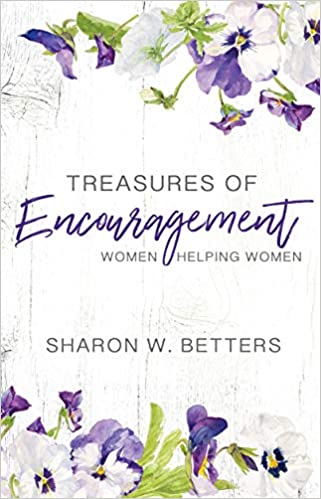
Treasures of Encouragement

Although Treasures of Encouragement: Women Helping Women is not primarily about author Sharon W. Betters, the book grew out of her situation. Her teenage son and his friend were killed in a car accident within minutes of leaving the Betters’ home in 1993.

The book’s theme verse comes from Isaiah 45:3, where Sharon found hope in her deep grief: “I will give you the treasures of darkness and the hoards in secret places, that you may know that it is I, the Lord, the God of Israel, who call you by your name.” Though God sometimes leads through dark valleys, treasures are there that can’t be found anywhere else.

Sharon writes:

The healing balm of encouragement eventually stopped the spread of despair’s infection and began replacing it with hope’s healthy glow. God’s Word was the healing balm, and God’s people applied it lavishly to sooth the searing pain in my soul. Biblical encouragement is soul work. God unleashes its mysterious power every time a child of God follows the Holy Spirit’s direction and steps into the suffering of another person (pp. 9-10).

Each chapter starts with one or two women’s testimonies about being either on the receiving or giving end of encouragement.

Throughout the book. two points are repeatedly emphasized. First, encouraging someone else spiritually is the outgrowth of our own walk with the Lord and time spent in His Word. Second, because we have those resources–God’s Word to inform and guide us and His Spirit within us—we have what we need to encourage others.

Part 1 of the book explores thinking Biblically: defining and exploring what encouragement involves and what our responsibilities are as believers to each other.

To ease the guilt of noninvolvement, we charge the church with the job of meeting needs. We forget that we are the church! (p. 18)

Biblical encouragers know that their role is part of a process; it is seldom, if ever, the solution. They understand God is doing soul work through the interaction of members of His body. They recognize that He uses circumstances to strip people of obstacles that keep them from knowing Him, and so they ask themselves, How can I help this person through the peeling process of sanctification without hindering what the Holy Spirit is doing?

Often we want to rush into a difficult situation and make everything better. But that is not God’s method. He uses the rough spots of life to sand away the rough spots in character so that the reflection of “Christ in us” becomes increasingly clear (p. 73).

Because of who our Father is, and because of the riches of our inheritance, we always have something to offer to others (p. 37).

Part 2 covers living Biblically: the necessity of prayer, listening well, helpful vs. non-helpful words, spiritual mothering, pursuing restoration rather than judgment, Biblical exhortation, letting God use your spiritual gifts in large or small ways, offering practical help.

The church, like a home, is not a place where perfect people enjoy each other’s company. It’s a place where spiritual nurture, training, and discipline help imperfect people take on the image of their perfect heavenly Father. The church is not a place for hibernation; it’s a place where we learn, grow, take risks, make mistakes, and get up and try again (p. 99).

Will it be easy? No. Initially, obedience is hard, but in the long run, disobedience is harder (p. 131).

When we have a clear picture of our own sinfulness and inadequacies, we may conclude that we are unfit to carry the great gospel message. But our wrong conclusions will not thwart God’s purposes. For reasons we do not understand, God has chosen us to spread His message of hope and redemption (p. 198).

Spiritual mothering often happens more around a kitchen table that in a structured study (p. 213).

Though the book can be read by individuals, it’s designed for a twelve-week group study. Each chapter ends with six day’s work of questions or exercises. On one hand, I didn’t want to take twelve weeks to read the book. But on the other, I didn’t want to skip over the “homework” between chapters. I felt the time exploring further or meditating on each chapter’s truths would help the ideas take firmer root. I did sometimes combine some of the individual days’ exercises, though.

One appendix shares 50 very practical ideas for extending encouragement to others. All 50 won’t appeal to or be possible for everyone, but they give a rich variety to choose from.

I appreciated the address to older and younger women in the church with encouragement to settle the differences that can sometimes arise between the two groups (pp. 137-138).

This book was originally published twenty-five years ago. It was updated and reprinted in 2021.

Just occasionally, I found the tone in the book got a little more authoritarian than encouraging. One example from the exercise questions after the first chapter: “Who will you encourage today? Write a brief statement about how Christ, through you, can encourage that person. Now do it!” (p. 26).

But overall, I found much good food for thought on both the necessity to be an encourager and the ways God can work in and through us. This is a book I am sure I will return to in the future.

(I often link up with some of these bloggers.)

Books Shape Our Thinking

A couple of times in our lives, my husband and I attended churches where we didn’t quite agree with everything, but we felt these churches were the closest we could find to our own understanding of Scripture. The differences weren’t a matter of false teaching or heresy: they were areas where good people could differ and should be able to give each other grace. We felt as long as the Bible was preached and taught rather than a particular system, then everything would be okay.

In one church, over time, we began to notice that everyone from the pastor to Sunday School teachers to lay leaders began quoting the same authors. Then their vocabulary began changing to match the authors they revered. Concepts that used to be alluded to were now main points. Sermons and lessons changed emphasis to feature points from these authors, and Bible passages were viewed through their lens. When one man spoke about this belief system as being “in the club,” it almost seemed a little cultish.

In another church, the issue wasn’t a particular belief system. But every Christian bestseller that came along was eventually taught in our church. When we moved, I found sermon notes from our first year there which were rich and meaty and directly from the Bible. Later sermons were second- or third-hand thoughts from popular books.

One of my favorite writers reads and quotes authors that I am uncomfortable with because their view of Scriptural truth seems a little skewed to me. Instead of following standard hermeneutics, principles for interpreting Scripture, they twist things a little to get a different outcome more in line with popular culture. They are not quite heretical yet, but this subtle shift will lead that way if continued. This lovely author, with so much talent and potential, is getting more entrenched in this kind of thinking every year. It grieves me to see it.

We’ve seen a couple of young men we’ve known get caught up in belief systems that, again, I don’t think are heretical, but I don’t agree with. It wouldn’t be a problem except that these belief systems now dominate their conversation and online presence. They like to bait and argue over their points of belief. Even though they are not being heretical, their ministry and outreach has been hijacked into debating rather than gently persuading people of God’s truth.

We observed over the course of years a definite shift in thinking and beliefs in each of these cases. The speaker or writer didn’t come to their new views from their Bible reading, but from the books they read. Those books then colored their view of Scripture.

One of our former pastors used to frequently quote Charlie “Tremendous” Jones as saying, “You will be the same person in five years as you are today except for the people you meet and the books you read.

If that’s true, and I think it may be, we need to be watchful about what we read. Of course, these days many people read online articles and listen to podcasts as well.

Does this mean we should only read books where we know we’ll agree with everything? Not necessarily. It’s good to exercise discernment. Sometimes when we are entrenched in our own tenets and lingo, we can get a little myopic.

But we should filter everything we read through the Scriptures. The Bible tells us to “test everything; hold fast what is good” (1 Thessalonians 5:21). Early Christians were called noble because they checked everything even the apostle Paul said against the Scriptures.

We need to be careful not to swallow everything an author says just because they use Scripture or religious talk. The devil does that. “Satan disguises himself as an angel of light. So it is no surprise if his servants, also, disguise themselves as servants of righteousness. Their end will correspond to their deeds” (2 Corinthians 11:14-15). With Eve, Satan questioned what God said and then skewed His meaning. He quoted and misapplied Scripture when tempting Jesus. Peter said of Paul’s writing:

There are some things in them that are hard to understand, which the ignorant and unstable twist to their own destruction, as they do the other Scriptures. You therefore, beloved, knowing this beforehand, take care that you are not carried away with the error of lawless people and lose your own stability. But grow in the grace and knowledge of our Lord and Savior Jesus Christ.(2 Peter 3:16-18).

Some writers don’t go that far–they are not exactly heretical. But a subtle shift in emphasis can skew their teaching, and therefore our thinking. Then a particular facet of their understanding becomes a hobbyhorse. So we need to be discerning not just with writing we might be prepared to be on guard with, but also with popular writing.

We need to make sure we are spending more time with the Bible itself than even books about the Bible. If we’re spending thirty minutes a day in a theological book and ten minutes in the Bible, we’re off balance. One former pastor used to say that bank tellers were instructed in discerning counterfeit money not by studying counterfeits, but by studying the real thing. The more familiar they were with legal money, the more easily they could tell when something was a little off with money they were handling. “Do your best to present yourself to God as one approved, a worker who has no need to be ashamed, rightly handling the word of truth” (2 Timothy 2:15). As we read and study, we need to pray with the psalmist, “I am your servant; give me understanding, that I may know your testimonies!” (Psalm 119:125). Then our “powers of discernment” will be “trained by constant practice to distinguish good from evil” (Hebrews 5:14).

We need to ask God to search our hearts, show us our blind spots, and “Open my eyes, that I may behold wondrous things out of your law” (Psalm 119:18).

I love good books. I’ve had my thinking shaped in good ways by authors who faithfully studied and represented God’s truth shared in His Word. I especially love writers and teachers who, like the Levites in Nehemiah’s time, “read from the book, from the Law of God, clearly, and they gave the sense, so that the people understood the reading” (Nehemiah 8:8).

But we need discernment to know when a teacher is giving the sense of the Word itself or twisting it a bit for their own purposes or from their own mistaken understanding.

And we need to be careful that our thoughts, understanding, and resulting actions are shaped by the Bible itself.

(I often link up with some of these bloggers.)

Laudable Linkage

Blog reading was hit-or-miss over the holidays while family was here. I’ve been catching up this week and almost have my Feedly account worked down. But this week’s list of noteworthy links might be a little longer than usual. Perhaps you’ll find an item of two of interest to you.

A Real Christmas, HT to Challies. I don’t think we’re too far from Christmas to contemplate this. “We gloss over the harsh, cruel parts of the story because they don’t fit the narrative we want. But aren’t those parts the point of it all? Jesus came because we needed him – need him still, as evil rages around the globe and even in our own backyards.”

End of the Year Journaling Prompts. There are some for the new year as well. Some would work as blog post ideas.

You Don’t Have to Read the Whole Bible This Year. “Reading the Bible is a glorious privilege; it is entirely worthwhile; it is revealing and convicting and strengthening and encouraging in ways we can barely imagine beforehand. But in the Bible itself we do not find any prescription for the amount we must read each day or year.”

We Should Trust God—But for What? HT to Challies. “I cannot trust God to answer every prayer exactly how I want them answered. I cannot trust him to orchestrate my life so there is no suffering, toil, or disappointment. I cannot trust him to give me everything I want. I cannot trust him to stick to the timeline I had planned for my life.”

How Are We to Live in What Feels Like Unprecedented Times? “Yet all these likely end-of-the-world scenarios have come and gone. G. K. Chesterton wrote, ‘With every step of our lives we enter into the middle of some story which we are certain to misunderstand.’ Our perspective is limited. We’re not God, we don’t hold the universe in the palm of our hands, and we just don’t know what lies ahead of us.”

Did the Pandemic Wreck the Church? Good news here.

Father In Every Way but One, HT to Challies. Beautiful writing here.

Let Us Rediscover the Power of Forgiveness, HT to Challies. “Is this Jesus so dangerous that a young woman finds in Him the power to want good for her father’s killer? Even that she might one day be able to tell him about Jesus?”

In the Darkest Night: Draw Near, Hold Fast, Consider Others, HT to Challies. “In the darkest season of my life, I was lifted decisively out of the pit by a passage in the book of Hebrews. The three simple commands embedded in it made all the difference.”

A Tale of Two Dogs, HT to Challies. This illustrates an excellent point.

Old Spiritual Journals—Keep or Destroy? HT to Linda. This article also shares another side of the issue: Why I Burned 90 Journals . . . And Still Journal Daily. The short answer: it partly depends on why you’re writing in the first place.

This is courtesy of Denny Burk’s Top Ten You Tube video list for 2021, HT to Challies. What a testimony—to play that song in the aftermath of such a storm.

Happy Saturday!

Friday’s Fave Five

It’s Friday, time to look back over the blessings of the week
with Susanne at Living to Tell the Story and other friends.

This FFF button is particularly apt because we’ve had snow twice this week. Thankfully it wasn’t heavy and didn’t impact travel either time.

This first week of the new year ended up not being quite as back-to-the-routine as I was expecting. But overall, everything went well. Here are a few favorites.

1. Time with family and safe travels. We had one last weekend all together before my oldest had to fly back to RI. It’s always hard to say goodbye, but I so treasure those weeks together. Thankfully all his flights went as scheduled even though we heard of massive numbers of flights being cancelled due to staff shortages.

2. A hot water heater fix. On the last shower of the last day of Jeremy’s visit, the hot water heater went out. My husband cleaned out the motor area and took some things apart. He looked up the part he thought was needed, but it wouldn’t get here for several days. I began to think of all the ramifications of not having hot water for several days. He worked on it a good bit of the afternoon and got it going. My hero!

3. New calendars. One of my favorite things is setting up new wall calendars for the new year. I have two, one near my desk and one in the kitchen. I go through them and put all our birthdays and anniversaries in it before hanging it up. It’s such a pleasure to see those clean pages.

4. A good first doctor’s visit. I’ve had some digestive issues for a number of years which have steadily gotten worse. I saw a gastroenterologist when this all first started, but he was the kind of doctor who could only help if he found something he could cut out. When he didn’t, he referred me to the internet. :-/ We’ve moved since then, and I finally decided to ask my family doctor for a referral. I had my first appointment with the new doctor this week, and he was very easy to talk to and much more knowledgeable about the various facets of digestive troubles. He gave me a couple of things to try and scheduled a couple of easy tests. Then we’ll get those results and see what steps we need to take next.



5. A beautiful sunrise. Our house is positioned such that we don’t normally see sunrises or sunsets. Sometimes we’ll catch a bit of beautiful color in one window, but will have to step outside to see much more. And even then, we’re surrounded by so many trees that we only get what looks like a few feet of skyline before it’s gone. I had to leave the house while it was still dark one morning and was able to see the whole sunrise stretch across the sky while I was driving. It was so glorious and such a pleasure. I couldn’t stop to get a picture, but I enjoyed it immensely.

(Edited to add): Bonus: Help putting Christmas things away. The whole family comes over to help decorate for Christmas. This is our first Christmas without Jesse living at home, and I was not relishing putting everything away with just Jim and I. Thankfully, Jesse was willing to stay after Jeremy left and help, and Jason and Mittu also helped a bit before they had to leave. As tired as I was afterward even with help, I can’t imagine how wiped out I’d have been if we’d had to do it alone. It was also nice to get it done and not have all the totes everywhere for days.

I hope your first week of 2022 contained blessings large and small.

Reading Plans for 2022

One of my favorite activities is setting my reading plans for the year.

For many years I just read whatever came to hand, whatever I was in the mood for. I like to allow for that and for reading new books and unplanned discoveries. But making plans for the year helps me be more intentional, work in the books I plan to “get to someday,” and broaden my horizons.

Reading challenges also help with those purposes, plus they are fun. And some offer prizes!

The reading challenges I plan to participate in this year are:

The Back to the Classics Challenge hosted by Karen at Books and Chocolate. This is one of my favorites. Through this challenge, I’ve been introduced to classics I never knew about before and authors I had never tried. My usual classics taste tend toward 19th century Britain: Dickens, Wilkie Collins, Anthony Trollope, Elizabeth Gaskell, George Elliot. These are the cozy classics to me, and I try to read from them every year. But it’s good to branch out, and Karen’s categories help me do that. The categories this year are:

  • A 19th century classic.
  • A 20th century classic.
  • A classic by a woman author.
  • A classic in translation.  Any book first published in a language that is not your primary language.
  • A classic by BIPOC author. Any book published by a non-white author.
  • Mystery/Detective/Crime Classic. It can be fiction or non-fiction.
  • A Classic Short Story Collection.
  • Pre-1800 Classic.
  • A Nonfiction Classic.
  • Classic That’s Been on Your TBR List the Longest.
  • Classic Set in a Place You’d Like to Visit.
  • Wild Card Classic. Any classic you like, any category, as long as it’s at least 50 years old!

Since the categories were just posted, I haven’t had time to think about them and decide what to read. But I’ll enjoy contemplating them! I’m sure I’ll continue with the next in Trollope’s Barsetshire series for the 19th century classic. I might delve into The Four Loves by C. S. Lewis for the nonfiction: I’ve been wanting to read that for a while.

Shelly Rae at Book’d Out hosts the Nonfiction Reader Challenge. She provided 12 categories of nonfiction, and participants choose which level they want to aim for. Thankfully, this year she has included a Nonfiction Grazer category where we set our own goals for how many and what kind of nonfiction to read. That will work best for me this year.

I’m going to plan on at least 12 nonfiction books. I usually read more than that, but many are in the same categories. This year I want to read:

  • At least one biography, autobiography, or memoir.
  • One writing book
  • One book of humor
  • One Bible study book
  • One Christian living book
  • One book of letters or journals
  • One book by C. S. Lewis that I have not read yet
  • One book on organization or productivity (I have 13 on my shelf! Some read, some dipped into, some unread.)
  • One book pertaining to a holiday (probably Christmas)
  • One book related to midlife or aging

Bev at My Reader’s Block hosts the Mount TBR Reading Challenge. The idea is to read books you already owned before the start of this year. Bev has made levels in increments of twelve, each named after a mountain, and we’re to choose a level to shoot for. Even though I’ve reached Mt. Ararat (48 books) the last couple of years, I think I will play it safe and stick with Mt. Vancouver (36 books).

There are a couple of other TBR challenges I have participated in for previous years, but the rules of each are slightly different. So, to keep it simple, I think I’ll just stick with this one. It’s such a feeling of accomplishment to get to those books!

These next to are new to me. They focus on books I usually read anyway, so they won’t require extra effort except for the record keeping.

The Audiobook Challenge is hosted by Caffeinated Reader. Last year I listened to 25 audiobooks, so I’ll aim for that again with the Binge Listener level at 20-30.

The Historical Fiction Reading Challenge is hosted by The Intrepid Reader. I read 15 in this genre last year, so I will aim for that again with the Medieval level.

I’ve seen some other interesting-looking challenges with various categories, like this one. But I don’t want to get involved in too many to keep up with. I may have already! We’ll see how it goes.

Do you participate in reading challenges? Which ones?