Thank you so much for your kind comments yesterday and your prayers while I was in the hospital. I’m back at home now and feeling well. I have follow-up appointments with my primary care doctor and cardiologist soon.
I’m probably going to have to have a second ablation. I can’t tell you how much I hate the thought of going through that again. But I also hate having afib and going to the ER. We’ve known people that were much improved after the second one. So, we’ll see what the doctors say.
Meanwhile, I’m going to mainly relax the rest of the weekend.
Hi folks. I’m in the hospital again with atrial fibrillation. I’d appreciate your prayers that my heart would covert to the right rhythm and for wisdom in how to proceed afterward. I don’t have a Friday’s Fave Five post together at this point – maybe later. Thank you!
Even if you’ve never watched the game show Jeopardy!, you are likely familiar with the program and its host, Alex Trebek. He had never planned to write about his life, though he had been urged to several times. But after his pancreatic cancer diagnosis, he received such an outpouring of love and support, he thought perhaps he should share with his supporters “a little more about the person they have been cheering on”. He also said in one interview that he noticed chemo patients didn’t have much to do while receiving treatment, so he thought he’d provide “a little light reading.” And he also thought that someone would probably write about him at some point, so he wanted to have his say first . (As it happened, the biography Who Is Alex Trebek? by Lisa Rogak was released the same day as Alex’s autobiography. Because of that, I suspect her book might not have been authorized.)
The title of Alex’s book is the phrase he spoke when revealing clues on Jeopardy!: The Answer Is… (by the way, I didn’t realize the exclamation mark was part of the show’s name until reading this book). The chapter titles are formatted like the questions and answers from the show: “The answer is . . .Neckties” or “Who is . . .The Great Gildersleeve?”
Alex’s subtitle, Reflections on My Life, aptly describes the book. Most of the chapters aren’t long and don’t go into great detail. He shares some memories from his family, growing-up years in Canada, his beginnings in show business, and various memories from his 36-year run as Jeopardy! host. He philosophizes a little about different topics..
I’ve watched the show occasionally for decades (I even remember the original Jeopardy! with Art Fleming), but my husband and I have watched regularly the last few years.So I enjoyed reading about the show, especially the chapters on Ken Jennings’ and James Holzhauer’s, historic runs as Jeopardy champions. I’m glad they included a picture of the “script sheet” Alex uses as he hosts (I had thought the clues and answers must come up on a computer screen at his podium, but they are printed out). I liked that photos are scattered throughout the book rather than just on a few glossy pages in the middle.
I enjoyed learning more about Alex personally as well. He insisted that he be called the host of the show rather than the star. He feels viewers see him “not so much as a showbiz personality but as an uncle” (p. 221). He has always come across as someone who doesn’t take himself very seriously.
I was surprised to find a lot of swear words in the book. Alex said he started cursing deliberately because he “needed a vice.” He felt held back from “becoming one of the guys” in his early career because “people can be suspicious of someone who’s so chaste.” Later he felt that cursing “didn’t help me become one of the guys. It just made me look like a jerk. My bad” (p. 93).
I’m always interested in people’s encounters with spiritual truth. Though Alex was raised Catholic, he says he believes “we are all part of the Great Soul—what some call God. We are God and God is us. We are one with our maker. How do I know this? It’s not that I know it. It’s that I feel it.” However, he says that, facing the end of his life, “I’ve been thinking more and more about that old line they used to use in the military: ‘No one’s an atheist in a foxhole.’ If ever there was an opportunity to believe in God—a god—this might be a good one. Trebek, now that you’re on the verge. What have you got to lose?” (p. 284). I hope he had an opportunity to hear, understand, and truly consider the gospel before his passing.
Except for the swearing, this was a nice overview and a bit of insight into the man so many of us knew and loved.
I enjoy participating in the the Back to the Classics challenge hosted by Karen at Books and Chocolate. I wasn’t exposed to many classics growing up, and I’ve determined to educate myself with several of them. The categories help me expand my reading horizons. The titles link back to my reviews. I included the publication dates to verify that the books are 50 years old, as required:
1. 19th Century Classic: Hard Times by Charles Dickens (1854) 2. 20th Century Classic: My Antonia by Willa Cather (1918) 3.Classic by a Woman Author: Eight Cousins by Louisa My Alcott (1875) 4. Classic in Translation (originally written in something other than your native language): Phantom of the Opera by Gaston Leroux (1910) 5. Classic by a Person of Color: Wynema: A Child of the Forest (1891) 6. A Genre Classic:1984 by George Orwell (1949) 7. Classic with a Person’s Name in the Title: The Merry Adventures of Robin Hood by Howard Pyle (1883) 8. Classic with a Place in the Title: Lark Rise (1939), Candleford Green (1943), and Over to Candleford (1941), the Lark Rise to Candleford trilogy by Flora Thompson 9. Classic with Nature in the Title: Rose in Bloom by Louisa May Alcott (1876) 10. Classic About a Family (multiple members of the same family as principal characters): Amberwell (1955) and Summerhills by D. E. Stevenson (1956) 11. Abandoned Classic (one you started but never finished). Billy Budd by Herman Melville (1924) 12: Classic Adaptation (Any classic that’s been adapted as a movie or TV series): Doctor Thorne by Anthony Trollope (1858)
Anthony Trollope, D. E. Stevenson, and Willa Cather were all new-to-me authors whose other works I look forward to exploring.
We’re allowed up to three children’s books: mine were Eight Cousins, Rose in Bloom, and Robin Hood.
Karen has a points system where the number of categories we complete gives us a corresponding number of entries in a prize drawing she holds. I don’t get extra points for reading more than one book in a couple of the categories—I did so just because I wanted to keep reading a series. Karen likes for us to calculate our number of entries. For completing all twelve categories, I get three entries.
If you are interested in participating next year, the rules, categories, and sign up post are here at the Back to the Classics 2021 post. Thanks to Karen for hosting! I enjoyed it very much.
Routines can help us establish good habits. Half the battle in establishing a regular quiet time or devotional time is staking out a workable, regular time and place. Some days—and some seasons of life—upend our schedules, and all we can do is watch for any available minutes. But we usually do better when we plan to work Bible reading into our day.
But a routine can become—routine. A rut, even.
How can we keep our Bible reading from becoming routine—or dig it out of the rut if it’s already there?
Pray. Ask God to remind us of the treasure His Word is. Sometimes I pray Psalm 119:18 just before starting my Bible reading: “Open my eyes, that I may behold wondrous things out of your law.” Or Psalm 119:25: “My soul clings to the dust; Revive me according to Your word” (NKJV).
Don’t expect high excitement every time. A Thanksgiving feast is wonderful and memorable. But the monthly tuna casserole and everyday peanut butter sandwiches nourish us as well. Some devotional times leave us overflowing with joy or conviction or inspiration. Most quiet times don’t end that way, yet the Word feeds us every time we partake of it.
Remember the purpose of time in the Word: not just to get through a certain number of chapters or a certain amount of time, but to meet with the Lord and get to know Him better.
Change your plan. If you usually read the Bible through in a year, maybe switch to a two-year plan or a five-year plan—or a 90-day plan. Or a biographical plan or a chronological plan. Bible Gateway lists 18 different plans. Near the end of the year you’ll see a number of posts and articles about ways to read the Bible in the New Year (though you don’t have to wait til then to start).
Change your style. We benefit from both reading and studying the Bible, but most of us are inclined one way or the other. If you usually read large chunks for an overview, perhaps study a particular book in more detail. If you like to camp out in one passage for days, maybe get the bigger picture by reading several chapters or a whole book at one sitting.
Add aids. I’ve only had a study Bible the last few years. The background information and notes help so much in comprehending more of the passage. One year I used Warren Wiersbe’s With the Word as a companion. This year I am using his “Be” commentaries.
Have a Bible reading project. Once I read through the gospels looking particularly for claims Jesus made about Himself. I put a “C” in the margin beside every verse of Jesus’ claims and then put them all together. Doing so provided a valuable resource plus woke me up from falling into familiar patterns from familiar passages. I’d love to read through the Bible noting every reference to God as Creator and what the passage shares about Him (His greatness, His power, etc.) I’d love to do the same thing with every passage where God promises to be with someone. Mardi Collier started reading the Psalms, jotting down every truth about God that she came across. As she came to a new truth, she’d write it across the top of a notebook page, and then list verses underneath as she found them. Some of the page titles focused on what kind of Person God is: My God is holy, My God is good, etc. Others shared God’s actions: My God hears me, My God is in control, and so on. Her study ended up covering the whole Bible and eventually became a book, What Do I Know About My God?
Ask different questions. When I first started reading the Bible on my own, I was instructed to look for a command to follow, a warning to heed, a promise to claim. I underlined them in different colors as I found them. Later I heard of asking the old journalism questions of a passage: who, what, when, where, why, and how. Those are great questions, but If you’ve asked them several times, chances are you already know the answers. Maybe ask, instead or along with those, what does this passage show me about God? Or, how does this person change over the course of his story? For example, the first few times I read Genesis, I missed the transition of Judah from Genesis 37-50. Now, reading in Exodus, I am noticing Moses’ change from arguing with God that he couldn’t fulfill His calling in Exodus 3 and 4 to becoming a great leader over the rest of the book. The changes in people in the Bible come about as God works in them and enables them through the circumstances He puts them in. That can inspire us that He is doing th same in our lives.
Try a different translation. I used the KJV for some 25 years. When I read the NASB and ESV, I saw passages with new eyes. I prefer to stay with the translations that are as close to word-for-word as possible rather than paraphrases. But sometimes I look up the paraphrases as commentaries.
Remove the references. Before we could cut and paste from the Internet, one of our former Sunday School teachers suggested that we type out some of the epistles as the actual letters they are without the verse numbers and headings. The chapter and verse numbers weren’t in the original text, but they do help us find and discuss passages. Sometimes, however, they are not well placed. One sentence can be broken up into several verses. So sometimes reading without the verse numbers can help us not to fragment the verse. Now you can buy Bibles printed without chapter and verse numbers.
Stop and think. Paul tells Timothy in 2 Timothy 2:7: “Think over what I say, for the Lord will give you understanding in everything.” It’s easy to sail through a familiar passage. In the narrative portions, we see how everything turned out just a few pages later. Remember the people in those situations—David hiding in caves from Saul, Joseph in prison, Daniel facing the lion’s den, etc.—didn’t know how everything would turn out. If we put ourselves in their situations the passage opens up to us more.
Make notes. I stopped journaling during my quiet time when I found I was spending more time writing than reading. But recently I’ve gone back to just writing a few notes both to reinforce what I just read or to remind myself later. My notes are usually just a short summary, but thinking about how I’d describe the passage helps me not gloss over it. Some people like to draw charts and diagrams and arrows and circles to engage the Scriptures more.
Don’t compartmentalize. Often we read for so many chapters or minutes and then pray, or vice versa. But we don’t have to separate prayer and reading. If we’re in a section of praise, we can stop and praise God. If a passage convicts us about something we’re doing wrong, we can stop and confess it to God right then.
How about you? What ways have you found to avoid or get out of a Bible reading rut?
Here are some great reads found this week, the first few Christmas-related.
Christmas Is for Dark Times, HT to Challies. “For many, 2020 has been a dark year – physically, emotionally, mentally, financially. People have lost their loved ones, their jobs, their security and their health. Does this mean Christmas should be cancelled? No. The real Christmas happens in the darkness.”
A Simple Strategy for Meditating in God’s Word, HT to Challies. “God speaks to you directly through His Word. He directs your heart as you read it and meditate on it. Here is a simple strategy that can help you to feed on God’s Word directly.”
The Biggest Threat Faced by the Church, HT to Challies. “What is the biggest threat faced by the church today? Many in the U.S. seem to think the answer is government tyranny. Tyranny is always a danger, but tyranny is not the biggest threat faced by the church in the U.S. or any other nation.”
All Moms Need to Do Is Remain, HT to the Story Warren. “But moms already have so much work to do, and our relationship with God is often put on the backburner. Well-meaning friends, family, and podcast hosts may tell you that it’s okay, busy moms just don’t have time to meet with God. People think they are letting you off the hook, but it makes remaining with God seem impossible (or at least improbable).”
Are Masks a Conscience Issue? HT to Challies. “I’m not qualified to offer a defining medical word on masks, but I want to offer some thoughts on the implications for Christians who refuse to wear a mask because they say it violates their conscience.”
And finally, a fun look at different kinds of Christmas shoppers, HT to Steve Laube:
On Fridays I like to pause for a few moments with Susanne and friends to reflect on some of the blessings of the week.
Well, most of us are officially in the Christmas season now. Here are some favorites from the first week in December
1. Christmas tree shopping and decorating. We got our tree Saturday. We still do it the old-fashioned way and buy a live one from a lot. Jason and Mittu and Timothy come along to help choose the tree and then decorate it at our house. Jesse got decorations from the attic. Mittu made soup and sandwich for lunch. It’s always fun to hear the kids exclaim over the ornaments as they put them on the tree. And I love how Timothy plunges right in. I love how everyone takes part, and we get it all done in a few hours.
It hadn’t seemed like it was time for Christmas yet. But once we got everything decorated and started playing Christmas music, the Christmas spirit definitely arrived.
2. Christmas music. I enjoy listening to Christian music in the kitchen and other times, but there is something special about Christmas music.
3. Productive days. I made a little shift in my order of doing things, and it has made a big difference.
4. Enough leftovers for meals. With just three of us home, I still pretty much cook like I always have, and we use the leftovers for lunches. Somehow we ended up with a stuffed refrigerator, not even counting Thanksgiving fare. I didn’t think we’d conquer it all at lunchtime, and I had enough of two main dishes to use for dinner two nights. It was nice having a couple of evenings of just warming up food and adding a new side.
Jim’s mom asked me once, years ago, if my family minded leftovers. I told her it depended on what was left over. Thankfully, everyone was ok with what we had, though we were glad to see some of it finished off.
5. Sweaters, heaters, throw blankets, and fingerless gloves have all helped keep me warm during the cold snap we’ve had this week. We even had our first snowfall—the kind I love: big fat fluffy flakes that don’t accumulate on the roads and only stay around for a day.
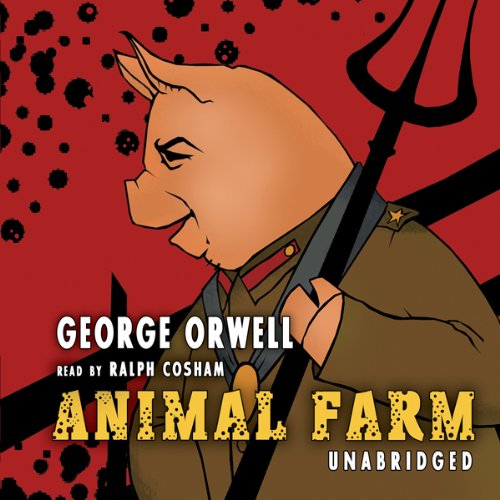
George Orwell’s 1984 depicts a futuristic totalitarian state. An oligarchy known as “the Party,” headed by an unseen Big Brother, rules Oceania, one of three superpowers. Telescreens broadcast only what the Party allows, but they also observe people at work and home. Thought Police come for anyone whose words, actions, or even expressions step outside of party policy. Those who do not comply become nonpersons and are “vaporized”: all trace of them disappears and they are never referred to again.
Winston Smith is a member of the party, but he hates it. He remembers fragments of what life was like before the revolution, when the Party took over. He also works for the Ministry of Truth, which, ironically, rewrites and “corrects” news to line up with current Party position. He wonders that no one else seems to see the absurdity in the contradictory reports coming from the party. But he doesn’t dare try to talk to anyone about it.
In an atmosphere like this, everyone is suspect. When one woman seems to have her eye on Winston, he fears she is looking for some reason to report him. But, to his surprise, she gets a secret message to him that she loves him. Through much subterfuge, they arrange to meet, and then embark on an illicit relationship.
Sadly, however, another relationship turns out to be false.
1984 is based on the totalitarianism of Stalinist Russia but also warns against the dangers of totalitarianism in any context. Wikipedia points out many of the corresponding details.
The novel brought many new terms into the mainstream: Big Brother and the phrase “Big Brother is Watching You,” Thought Police, Doublespeak.
I thought I had read this back in high school. Maybe I did. But some of the frank sexual content makes me surprised that the book would have been required reading by teenagers, especially that many years ago. Yet the sexuality is not titillating. It’s not exactly clinical, either. It’s there to show that the Party control reached even into bedrooms: sexual relations were illegal even between married people except for purposes of bringing forth children as their duty to the Party. The novel reveals later the purpose for suppression of sexual desire was to channel all passion to the Party.
What drew me to 1984 at this time was coming across a quote from the book: “Who controls the past controls the future. Who controls the present controls the past.” That struck a chord with me because we see traces of it even now in revisionist history and “fake news.”
1984 has one of the most interesting opening lines: “It was a bright cold day in April, and the clocks were striking thirteen.” A few other quotes:
If you want a picture of the future, imagine a boot stamping on a human face—for ever.
Being in a minority, even in a minority of one, did not make you mad. There was truth and there was untruth, and if you clung to the truth even against the whole world, you were not mad.
For, after all, how do we know that two and two make four? Or that the force of gravity works? Or that the past is unchangeable? If both the past and the external world exist only in the mind, and if the mind itself is controllable – what then?
Nothing was your own except the few cubic centimetres inside your skull.
Every record has been destroyed or falsified, every book rewritten, every picture has been repainted, every statue and street building has been renamed, every date has been altered. And the process is continuing day by day and minute by minute. History has stopped. Nothing exists except an endless present in which the Party is always right.
One does not establish a dictatorship in order to safeguard a revolution; one makes the revolution in order to establish the dictatorship.
We know that no one ever seizes power with the intention of relinquishing it.
In the past the Middle had made revolutions under the banner of equality, and then had established a fresh tyranny as soon as the old one was overthrown.
Don’t you see that the whole aim of Newspeak is to narrow the range of thought? In the end we shall make thoughtcrime literally impossible, because there will be no words in which to express it.
The heresy of heresies was common sense.
If you can feel that staying human is worth while, even when it can’t have any result whatever, you’ve beaten them.
1984 is not a pleasant read. It’s depressing in places. It’s deeply disturbing, but in a way that provokes thought. Hopefully it’s a warning to every generation who reads it.
In Roseanna M. White’s novel, On Wings of Devotion, Phillip Camden’s nickname is “Black Heart.” He earned it when his squadron went down in flames and he was thought to be the cause due to a loud argument and threat to one of his men. A friend pulled some strings to get Phillip out of prison and into Room 40, where the codebreakers worked during WWI. But his surliness and bitterness keep everyone at bay.
Arabelle Denler is a nurse and an heiress. She’s warm and kind, but not considered attractive. Since her father had been absent most of her childhood, all she ever wanted was a family. When a lifelong friend suggested a marriage of convenience so her money could help preserve his family home, she readily agreed. But then her fiance fell in love with someone else.
Phillip puts himself forth as Arabelle’s protector from the stream of men seeking her hand—and her money—now that she’s free. As they come to know each other, Arabelle sees beyond the surface of Phillip’s brusque exterior. He sees the goodness and kindness of her heart.
But an old acquaintance seeks Phillip out. He knows she’s up to no good. But he doesn’t realize that she’s setting him up as part of a larger target.
This book is the second of the Codebreaker series, which is a continuation of the Shadows over England series. I enjoyed seeing a few characters from the previous books pop up. But I enjoyed Phillip’s and Arabelle’s stories even more. All the threads of the story—the characters, the spiritual and mental journeys, the intrigue—kept me listening to the audiobook every chance I got, especially the last fourth or so of the book.
A couple of quotes:
This war was destroying her entire generation. Those it hadn’t wiped out entirely it was trying to take apart piece by piece. And what could she do?
We can be sure it will be painful. Cutting out what stands between us and God always is. But we can also trust that in the giving, we’ll gain something far more precious.
The audiobook was wonderfully read by Susan Lyons. The only negative about the audiobook is that it doesn’t include the author’s notes at the end, where she tells how she came to write the story, what historical details she drew on, etc.
Each book I read from Roseanna is my favorite. Until I read the next.
I enjoy reading Christmas books after Thanksgiving through the end of the year. Tarissa at In the Bookcase hosts a Literary Christmas challenge for that purpose. You can find the details here, but the basic idea is to read Christmas books and write posts about them.
I have ten unread Christmas books on my Kindle app, plus one I’ve read but don’t remember and would like to reread. I don’t think I can get through them all in a month. I don’t want the challenge to be pressured, especially during a month with a lot else going on. So I’ll start with these and add some in if I have time and inclination.
A Christmas by the Sea by Melody Carlson. This appealed to me because I grew up on the Texas coastline, so my early Christmases were more seaside than wintery.
Mistletoe and Murder: A Christmas Suspense Collection of ten novellas by different authors. Not the usual Christmas fare, eh? I’ve only read two of the authors and heard of a couple more. I’m mainly reading it for Adam Blumer’s entry, but I hope to enjoy all of them.
A Very Bookish Christmas by Sarah Holman, J. Grace Pennington, Kate Willis, and Rebekah Jones. A series of stories based on classic books. I loved the Thanksgiving version so much, I couldn’t wait to get the Christmas one.
That gives me a good start! Do you like to read Christmas stories? Do you have plans to read any this year?