Unknown's avatar

About Barbara Harper

https://barbarah.wordpress.com

Book Review: The Color of Hope

The overarching story in Kim Cash Tate’s The Color of Hope is that of two different churches, one predominately while, the other predominately black, who try to meet together once a month. Many folks are for this occasional merging, but there’s a small but loud opposition.

But several other stories lines are woven together.

One woman runs into her old boyfriend at a reunion in Hope Springs, NC. She thinks sparks are still there, but in the time since they knew each other, he became a pastor and she walked away from God.

Another woman plans to leave the area, but is unexpectedly offered a position coaching in the high school. Could this be God’s sign that He wants her to stay—and is the assistant principal’s interest purely professional?

One couple lived away from Hope Springs but now feel drawn back to this town of the wife’s father’s roots. The wife misses her multi-ethnic church in the city and isn’t quite sure she’s going to be happy. But she’s asked to substitute teach in the high school and befriends a young outcast named Sam.

There are several subplots as well.

Some would want to know there is a rape and a suicide in the book. The descriptions are not explicit, but they might be triggers for some.

There are so many characters, the first few chapters were confusing trying to sort out who was related to whom, who was with whom, and who was interested in whom. But eventually all the relationships fell into place. Kim has a number of books about the people of Hope Springs, so readers of the series would be more familiar with the characters..

My one little quibble with the book is that, since it’s about primarily racial tensions between two churches, there was no indication for most of the book about which church and characters were what race. I just reread the first four chapters to see if I missed something, but there was only one mention of one girl being blond, which doesn’t really indicate anything. The young girl, Sam, is described as biracial and and feeling like she doesn’t fit in anywhere. Eventually all of that becomes clear, but it made me as a reader feel another layer of confusion trying to figure out the characters.

But, that one little complaint aside, I thought Kim did a great job weaving so many characters and stories and conveying the need to come together rather than pull apart. This book was published in 2013 but seems apropos to 2020.

(Sharing with Booknificent Thursday, Carole’s Books You Loved)

Book Review: Be Victorious

The book of Revelation in the Bible is a challenge for many reasons. Readers and interpreters argue about what’s literal and what’s symbolic, what the symbols mean, what’s going to happen when. In Warren Wiersbe’s brief commentary, Be Victorious (Revelation): In Christ You Are an Overcomer, he mentions “I have dozens of commentaries on this book, and no two authors completely agree on everything.”

But I like Wiersbe’s emphasis:
John’s prophecy is primarily the revelation of Jesus Christ, not the revelation of future events. You must not divorce the Person from the prophecy, for without the Person there could be no fulfillment of the prophecy.

In fact, Wiersbe says in his first chapter:

The word translated “revelation” simply means “unveiling.” It gives us our English word apocalypse which, unfortunately, is today a synonym for chaos and catastrophe. The verb simply means “to uncover, to reveal, to make manifest.” In this book, the Holy Spirit pulls back the curtain and gives us the privilege of seeing the glorified Christ in heaven and the fulfillment of His sovereign purposes in the world.

Although Wiersbe gives a more detailed outline of the book, this one emphasizes how Christ is pictured in each section:

In Revelation 1—3, Christ is seen as the exalted Priest-King ministering to the churches. In Revelation 4—5, He is seen in heaven as the glorified Lamb of God, reigning on the throne. In Revelation 6—18, Christ is the Judge of all the earth, and in Revelation 19, He returns to earth as the conquering King of Kings. The book closes with the heavenly Bridegroom ushering His bride, the church, into the glorious heavenly city.

Wiersbe suggests four reasons for the heavy use of symbolism in this particular book. At the time John wrote it, he was an old man exiled on the island of Patmos, a Roman penal colony. He might have used symbols as a kind of code, so the Roman officers wouldn’t pick up on what he was saying. Another reason: the symbols’ meaning and strength would last through the years rather than being specific to a certain time and culture. A third possible reason: “symbols not only convey information, but also impart values and arouse emotion. John could have written, ‘A dictator will rule the world,’ but instead he describes a beast.” Also, some of the symbols carry over from the rest of the Bible: the church as a bride, Jesus as a lamb. In fact, Wiersbe notes that “Nearly 300 references to the Old Testament are found in Revelation! This means that we must anchor our interpretations to what God has already revealed, lest we misinterpret this important prophetic book.” And he warns that we “must not conclude that John’s use of symbolism indicates that the events described are not real.”

Something that stood out to me this time around reading Revelation was the parallels between it and Genesis. Wiesrbe has a chart with the things that began in Genesis (heaven and earth created, day and night established, the curse for sin, death, people driven from Eden, beginning of sorrow and pain, marriage instituted) and were brought to completion in Revelation (new heavens and earth, no need of sun, no night, curse, death, sorrow, tears, people restored to paradise, marriage supper of the Lamb). I know these must have been pointed in in previous studies or sermon series through Revelation, but it it was like I noticed it for the first time. Maybe I had just forgotten.

I’m not going to get into the explanation and exposition of Revelation and the arguments over the whether and what and when of millennium—that would take too much time and space. Wiersbe presents the reasons for the different views but confesses to be a premillennialist. That’s what I was taught the majority of my Christian life. Our current church is the first we’ve been in that has a different view. I also read from my ESV Study Bible. The commentator there was also careful to explain the different views before stating which he thought was correct. Though he differed from Wiersbe regarding the millennium, they agreed on many other things. Good people can differ on these things. I don’t think different views of the end times are anything to argue or separate over. But, I agree that, as Wiersbe says, “no matter what ‘key’ a student may use to unlock Revelation, he cannot help but see the exalted King of Kings as He vindicates His people and gives victory to His overcomers.”

One good reason for reading and studying Revelation, besides the fact that it’s as inspired as the rest of the Bible, is that “When you have assurance for the future, you have stability in the present.” As more than one Christian has said, “I’ve read the end of the book—I know how it all turns out.” Plus, “A true understanding of Bible prophecy should both motivate us to obey God’s Word and to share God’s invitation with a lost world.”

Here are a few other quotes that stood out to me:

Labor is no substitute for love; neither is purity a substitute for passion. The church must have both if it is to please Him.

The church that loses its love will soon lose its light, no matter how doctrinally sound it may be.

The “overcomers” are not a “spiritual elite,” but rather the true believers whose faith has given them victory (1 John 5: 4–5).

No amount of loving and sacrificial works can compensate for tolerance of evil.

Unloving orthodoxy and loving compromise are both hateful to God.

The first step toward renewal in a dying church is honest awareness that something is wrong.

If men and women will not yield to the love of God and be changed by the grace of God, then there is no way for them to escape the wrath of God.

God’s Word will be there. “The word that I have spoken, the same shall judge him in the last day” (John 12: 48). Every sinner will be held accountable for the truth he or she has heard in this life.

It’s always challenging to go through the book of Revelation, But I am thankful for the help this book gave this time around.

(Sharing with InstaEncouragement, Booknificent Thursday, Carole’s Books You Loved)


Three Children’s Books About Race

Recently, my daughter-in-law and I were discussing the lack of diversity in children’s books. Bible story books, in particular, seemed to draw Biblical people lily white, when in reality they would have been Middle Eastern in appearance.

Not long afterward, I came across What God’s Family Looks Like, a post from The Story Warren about children’s books that deal with race. I looked up the main book mentioned, then followed a rabbit trail of recommended reading. I ended up getting these three books.

Why be colorblind when we can be colorFULL insteadThe first is Colorfull: Celebrating the Colors God Gave Us by Dorena Williamson, illustrated by Cornelius Van Wright and Ying-Hwa Hu. I love the tagline: “Why be colorblind when we can be colorFULL instead?”

The back of the book says this:

Imani and Kayla are the best of friends who are learning to celebrate their different skin colors. As they look around them at the amazing colors in nature, they can see that their skin is another example of God’s creativity! This joyful story takes a new approach to discussing race: instead of being colorblind, we can choose to celebrate each color God gave us and be colorFULL instead.

Imani’s Granny Mac helps gives the kids some perspective. My daughter-in-law said she wished adults would read this book, too.

When God Made You by Matthew Paul Turner, illustrated by David Catrow, doesn’t explain or emphasize race: the story just incorporates it naturally as part of who God made you to be. God planned each person with their particular gifts, appearances, personalities, etc. to reflect His image.

One line in this gave me pause: “Have faith but love more.” At first it seemed to downplay faith. But you could also read it as saying, “Have faith, but don’t stop there: love others.”

An inside page:

Trillia Newbell’s God’s Very Good Idea (illustrated by Catalina Echeverri) took several weeks to get here. I hope that means lots of people are buying it!

Trillia begins at the beginning: with creation. Making people, and making them in all different colors and varieties, was God’s idea. They would “all enjoy loving him and all enjoy loving each other . . . reflecting what God is like.”

But the first people chose to disobey God. That plunged all of us into sin. We don’t love God or each other as we ought. “Sometimes we treat others badly because they are different than us.”

But part of God’s very good plan was sending Jesus to come and live on earth, to show us how to love, to die on the cross so we could be forgiven, and to rise from the dead, and to give us the Holy Spirit to help us live for Him.

He also gave us the church as a foretaste of what it will be like in heaven some day, “lots of different people enjoying loving him and loving each other.”

I love that Trillia’s story is couched firmly in the Bible and the gospel. She gives an overview of creation, sin, and redemption in words a child could understand.

I didn’t get a chance to read these with my grandson. I sent him home with them. But I hope he enjoys them!

I believe children need to be taught early that God created all people in His image.

Now that I look again at the post I first mentioned, I see a whole list that I must have forgotten to look up when I got distracted earlier. So I will probably explore some of those. Now that we have some books with a good, Biblical worldview about race, I’d love to find some that just show kids of all different colors naturally as characters in a story.

Do you know of any good books for kids along these lines?

(Sharing with InstaEncouragement, Worth Beyond Rubies, Grace and Truth,
Hearth and Soul, Senior Salon, Booknificent Thursday, Carole’s Books You Loved)

Remembering the Relationship

“It’s not a religion; it’s a relationship.”

Christians often say this when sharing the gospel with unbelievers. We want them to understand that Christianity isn’t just a matter of changing churches or habits or rituals.

We enter into a relationship with God when we repent of our own way and believe on the Lord Jesus Christ. We actually become God’s children.

Jesus answered him, “Truly, truly, I say to you, unless one is born again he cannot see the kingdom of God” (John 3:3). (See What does it mean to be a born again Christian?)

And this is eternal life, that they know you, the only true God, and Jesus Christ whom you have sent” (John 17:3).

This relationship changes everything, and we spend the rest of our lives growing in it and learning the implications of it.

The main way we grow in that relationship is the same way we grow in other relationships: communication. We read the Word God left here for us, the record of what He wants us to know and practice. We talk to Him in prayer.

Because we’re human, we set up habits and routines to helps us incorporate prayer and Bible reading into our everyday lives. We find a Bible reading plan or study book that works with our schedule. We stake out a serviceable spot and assemble tools: good lighting, highlighters, pens, journals.

And then life happens. We wake up too late one morning. Or we wake up early because we have to be somewhere. Or someone is sick or company comes. Or we don’t feel inspired.

If our time with any other member of the family gets disrupted, what do we do? We touch base as we can and make arrangements to talk one-on-one another time.

When our time with God gets disrupted, what do we do? We feel nagging guilt because an item on our to-do list didn’t get crossed off. We forget the relationship aspect of it

I love what Sue Donaldson says here: “We don’t worship the habit, but habits help us worship.” We set up the habits in love, in order to foster our relationship with God. But then we devolve into just keeping up the habits and forget what they’re for.

We often approach our devotional time out of duty rather than anticipation of spending time with God. A quiet time begun as a sense of duty can turn into something that touches out hearts and draws us close. Remembering our purpose will motivate us to look for Him rather than just dragging our eyes across the page.

We don’t always feel warm fuzzies when in any relationship. But love isn’t always warm fuzzies. Sometimes it’s doing for another when we don’t “feel” like it. A mom awakened at 2 a.m. by her baby’s cries might not feel warm and nurturing at first. But she gets up out of love for her child, and the warm feelings kick in later. Remembering our purpose, our history, and the relationship can help restore the warm feelings.

There are other ways we often lose the focus of our relationship with God:

  • When we have a need, we look for verses to plug into it rather than remembering, “This is what my Father said about this issue.”
  • We avoid sin to avoid punishment or protect our reputation rather than, like Joseph, cringing at the thought of acting unseemly toward God. He’s done so much for us. How can we disregard Him or do things that hurt or displease Him?
  • We set up our ministries and cram all of our service into that time slot, thinking we’re “off” the rest of the time. Instead, we should remember God’s family is our own, and we minister by His grace whenever a need comes up.
  • We treat prayer like a vending machine—insert request, receive answer—rather than a conversation with our God.
  • We witness for Christ during our official church visitation time instead of looking for ways to point people to Him all through the day.
  • Modesty becomes rigid standards for hairlines, hemlines, and necklines rather than a heart attitude to please and rightly represent God.
  • We feel we’ve had a great worship experience because we knew all the songs or sang our favorites, even if we didn’t have a conscious thought of the greatness of God while singing.

Israel was rebuked all through the prophetical books for forgetting their why and their who. Their habits and rituals then became empty, a weariness. It wasn’t too long before idolatry provided a seemingly more exciting alternative.

But they weren’t the only ones. The Pharisees in Jesus’ day stressed God’s law, but missed its heart and purpose. The church in Ephesus did all the right things outwardly but had left their first love.

How can we guard against just going through the motions? How can we keep a warm, nurturing, and loving relationship with God at the forefront of all we do?

God gave Ephesus a twofold instruction: “Remember therefore from where you have fallen; repent, and do the works you did at first” (Revelation 2:5a).

Remember. Remember how God saved us. Remember what our life was like before: “separated from Christ, alienated from the commonwealth of Israel and strangers to the covenants of promise, having no hope and without God in the world” (Ephesians 2:12). Those who were saved very young can think about what life might have been like if you hadn’t heard the gospel from your earliest days.

Remember our “Ebenezers,” those times we especially saw God’s hand at work. Remember prayers God has answered and how He has led in the past. “I remember the days of old; I meditate on all that you have done; I ponder the work of your hands” (Psalm 143:5).

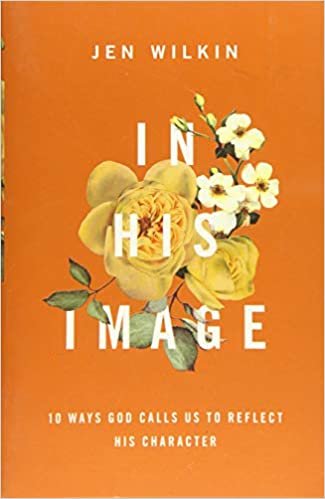
Remember and meditate on His attributes. Focus on Him in our Bible study and worship. Perhaps go through a book like Jen Wilkin’s None Like Him and In His Image.

Read though some psalms or other Bible passages that especially drew us close to God’s heart in the past.

Repent. We pray and ask His help to love Him as we ought.. We reverse the list above. We go back and evaluate all those activities and relationships in light of our relationship with God.

There for me the Savior stands,
Shows His wounds and spreads His hands.
God is love! I know, I feel;
Jesus weeps and loves me still.

Pity from Thine eye let fall,
By a look my soul recall;
Now the stone to flesh convert,
Cast a look, and break my heart.

Now incline me to repent,
Let me now my sins lament,
Now my foul revolt deplore,
Weep, believe, and sin no more.

From “Depths of Mercy” by Charles Wesley

(Sharing with Inspire Me Monday, Hearth and Home, Senior Salon, Remember Me Monday, Purposeful Faith, Tell His Story, InstaEncouragement, Recharge Wednesday, Worth Beyond Rubies, Legacy Linkup, Share a Link Wednesday, Let’s Have Coffee, Heart Encouragement, Faith on Fire, Grace and Truth, Blogger Voices Network)

Laudable Linkage

IMG_0195

Here are some of the good reads that caught my eye this week:

The Quiet Power of Ordinary Devotions, HT to Challies. “If we are reading our Bibles rightly, in fact, we should expect many mornings of ordinary devotions: devotions that do not sparkle with insight or direct-to-life application, but that nevertheless do us good. Just as most meals are ordinary, but still nourish, and just as most conversations with friends are ordinary, but still deepen affection, so most devotions are ordinary, but still grow us in the grace and knowledge of Jesus Christ.”

A Dangerous Trend. “Whether you’re a new believer or seasoned saint, don’t fall prey to the danger of replacing the Scriptures with other books. Let your love for God’s Word be rekindled as you come to the Word afresh to see, meditate, and delight in God’s glory. Don’t read the Bible merely to acquire knowledge or be challenged. Come to meet with God. ”

That Time I Went After an Older, Godlier Man. I’m thankful for this confession and the questions that arose from it.

People Need the Lord. How a pastor renews his compassion for people. Good not just for pastors.

Love What’s Near. “I now look askance at anyone who seems to speak primarily in the abstract: ‘fixing the economy,’ or ‘changing the culture,’ or ‘loving humankind.’ Why? Because it’s easy to succumb to self-righteousness when you pursue utopian visions in regard to great and massive things. It’s when you are faced with the smaller things and the people nearest you where you begin to spot your own flaws and diagnose your lovelessness.”

How to Explain to Your Kids Why Social Justice Warriors Hate Christians So Much. “Events like these that suddenly and explicitly pit Christianity against the cause of many Social Justice Warriors (“SJWs”) are the tip of an ideological iceberg that many Christians are (to a large degree) unaware of.”

Alone Against the Mob: Crowds, Cancel Culture, and Courage. “There really is nothing new under the sun. Today’s issues, as desperate as they can be, were first yesterday’s issues. This means one convenient and profound truth for the Christian: the solutions have not changed.”

How to Be Consistent in Memorizing Scripture. Great tips!

Are You Having Doubts? The doubts in question are whether/when/how this COVID thing is going to end. But I love the example of turning away from fears and frustrations and turning toward tangible ways to help others.

Finally, this almost made me cry: a baby sees her mother clearly for the first time:

Happy Saturday!

Friday’s Fave Five

On Fridays I like to press the pause button for a few moments with Susanne and friends to reflect on some of the blessings of the week.

1. A quiet week after a busy one.

2. A portable phone charger. My phone battery needs recharging in the middle of the day. Our chargers are in hard-to-unplug places behind end tables and nightstands, so I couldn’t easily transfer them to my desk or the kitchen. I’ve had to leave my phone in another room to recharge during the middle of the day. I asked for and received a portable phone battery charger to use at my desk. Works great!.

3. Pink charging cables. My husband knows my pink-loving heart.

4. Encouragement from a more experienced writer.

5. Sleep, for whatever reason, is sometimes elusive in “middle age.” But this week I’ve fallen asleep early most nights and gotten back to sleep pretty easily after waking up during the night.

What’s something good from our week?

Book Review: Chasing Jupiter

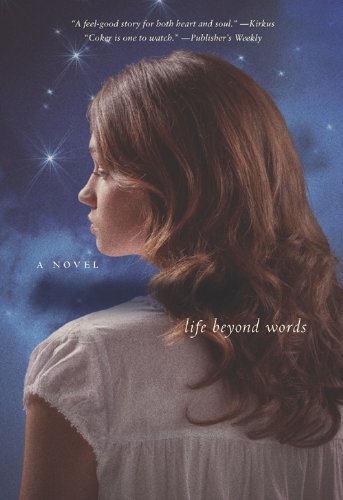
I enjoyed Rachel Coker’s debut novel, Interrupted: A Life Beyond Words, so much, that after finishing it I immediately looked up her second book, Chasing Jupiter.

In this book, Scarlett Blaine is a teenager in Georgia in the 1960s. Her parents are busy fighting and going to political meetings, so Scarlett becomes the main cook and caregiver for her elderly grandfather and younger brother. Her brother, Cliff, has some kind of unnamed mental or processing disorder. Not as much was known about such things then, so he’s just generally regarded as “different.” Partly out of standing up for him, Scarlett takes on the mantle of being “different,” too—not in a mental way, but just in her personality.

Cliff has decided he wants to build a rocket to go to Jupiter. Scarlett knows they can’t build a real one, but she helps Cliff raise money for materials. They decide to make and sell peach pies, with the help of the local farmer’s son, Frank.

Scarlett grows to like Frank, but Frank has eyes for Scarlett’s wild sister, Juli.

Scarlett’s pastor’s wife hears about her culinary skills and invites her over to help make food for the church’s shut-ins. Scarlett is reluctant at first, but then enjoys getting to know the pastor’s wife.

A series of family tragedies shakes Scarlett’s faith. Her pastor’s wife tells her, “The beauty of salvation and God’s grace isn’t in him solving all of our problems instantly, like a magic genie. Its beauty comes in the assurance that he has a greater plan for you.” Can Scarlett trust Him with all the problems and find peace in the midst of them?

Rachel has written another beautiful story. It took me just a bit longer to connect with Scarlett than Allie in the previous book. But I could empathize with much in her situation.

This book was written in 2012, and I’ve seen nothing from Rachel since these two books. There’s nothing on her Facebook page since 2017, when she was newly married. Looks like she went into photography for a while, but that sight has not been updated since 2016. Perhaps everyday life precluded her writing. But I hope she finds her way back to it some day.

(Sharing with Booknificent, Carole’s Books You Loved)

Shining light in a dark and drowsy world

The room is just the right temperature. The covers are the perfect weight. The lights are off, your body relaxes, and you’re just about to drop off to sleep.

What’s the last thing you want to happen in that moment?

Someone to shine a light in your face.

It might help to remember, when we’re trying to let our light shine in this world, that some people don’t necessarily want to be awakened.

And this is the verdict: The Light has come into the world, but men loved the darkness rather than the Light, because their deeds were evil (John 3:19).

Many missionaries have heard calls to the field telling the woes of people who have never heard the gospel and are crying out for someone to come. They invest a great deal of time and money preparing to uproot their families, leave their loved ones, and go to a faraway country, full of hope and big plans. But then they find no one is really crying out in need. No one wants their message. Everyone seems pretty self-satisfied. It’s no wonder that some missionaries of old who blazed the trails, like Adoniram Judson, went for seven years in Burma without any response.

Does that mean we don’t shine our lights? No, Jesus told us to:

You are the light of the world. A city set on a hill cannot be hidden. Nor do people light a lamp and put it under a basket, but on a stand, and it gives light to all in the house. In the same way, let your light shine before others, so that they may see your good works and give glory to your Father who is in heaven (Matthew 5:14-16).

But we understand that people might resist, even reject it at first. We try to make the message as inviting as possible, but we understand that others consider the cross itself foolish, or even an offense, no matter how unoffensively we try to present it.

For the message of the cross is foolishness to those who are perishing, but to us who are being saved it is the power of God. (1 Corinthians 1:18).

Sometimes we need to wake people up in a hurry due to an emergency or danger. Or some don’t wake up to a gentle approach. Some people need a sudden Damascus Road experience like Paul , where the light suddenly shines forth in such brightness that they’re blinded. And only then, the scales fall from their eyes and they begin to see.

But many people experience more of a slow dawning. The light of the world we share is Jesus. As they see glimpses of Him and His truth, they are drawn to Him.

Again Jesus spoke to them, saying, “I am the light of the world. Whoever follows me will not walk in darkness, but will have the light of life” (John 8:12).

In him was life, and the life was the light of men. The light shines in the darkness, and the darkness has not overcome it (John 1:4-5).

When I am trying to fall asleep, light is an irritant. When I lay down on the couch for a nap, the overheard light in the living room or dining room is right in my eyes. Then I have to wrestle with getting up to turn it off, which will wake me up more, or trying to ignore it to go to sleep.

And we have the prophetic word more fully confirmed, to which you will do well to pay attention as to a lamp shining in a dark place, until the day dawns and the morning star rises in your heart (1 Peter 1:19).

But once I am awake, I am thankful for the light that drew me from drowsy darkness, even if I was irritated and grumpy at first. Sometimes I even berate myself for not responding to the light earlier.

For God, who said, “Let light shine out of darkness,” made His light shine in our hearts to give us the light of the knowledge of the glory of God in the face of Jesus Christ. (2 Peter 1:19).

We shine our lights by using the Word of God.

Your word is a lamp to my feet and a light to my path (Psalm 119:105).

We shine our lights by how our transformed conduct differs from the world.

For at one time you were darkness, but now you are light in the Lord. Walk as children of light (for the fruit of light is found in all that is good and right and true), and try to discern what is pleasing to the Lord. Take no part in the unfruitful works of darkness, but instead expose them (Ephesians 5:8-11).

Do all things without grumbling or disputing, that you may be blameless and innocent, children of God without blemish in the midst of a crooked and twisted generation, among whom you shine as lights in the world, holding fast to the word of life, so that in the day of Christ I may be proud that I did not run in vain or labor in vain (Philippians 2:14-16).

The night is far gone; the day is at hand. So then let us cast off the works of darkness and put on the armor of light. Let us walk properly as in the daytime, not in orgies and drunkenness, not in sexual immorality and sensuality, not in quarreling and jealousy. But put on the Lord Jesus Christ, and make no provision for the flesh, to gratify its desires (Romans 13:12-14).

We shine our lights by pointing back to our light Source.

I have come into the world as a light, so that no one who believes in Me should remain in darkness (John 12:46).

We try to stress the urgency of waking.

Besides this you know the time, that the hour has come for you to wake from sleep. For salvation is nearer to us now than when we first believed (Romans 13:11).

Therefore stay awake—for you do not know when the master of the house will come, in the evening, or at midnight, or when the rooster crows, or in the morning— lest he come suddenly and find you asleep (Mark 13:35-36).

We hope, we trust, we pray that the Light will chase away the shadows and drowsiness, and draw the spiritually sleepy to the joys of the full light of day.

For with you is the fountain of life; in your light do we see light (Psalm 36:9).

For it is you who light my lamp; the Lord my God lightens my darkness (Psalm 18:28).

(Sharing with Inspire Me Monday, Hearth and Home, Senior Salon,
Remember Me Monday, Tell His Story, InstaEncouragement,
Recharge Wednesday, Share a Link Wednesday, Let’s Have Coffee,
Heart Encouragement, Grace and Truth, Faith on Fire,
Blogger Voices Network)

Laudable Linkage

A collection of good reading onlineHere’s my latest collection o good online reads:

The Song That Was Sharper Than Sting. This is a lovely piece of writing, referencing Tolkien and Lewis and the Bible about songs of Home that encourage us in the darkness.

Redemption May Be Closer Than You Think. “I have learned not to lose heart when everything around me crumbles. God is working. I can trust Him. It may be that what looks dead is about to spring to life.”

The Day I Scheduled God Out of My Life, HT to True Woman. “Your schedule will be different, and you’ll have a choice: to let your schedule dictate the depth of your relationship with Christ, or to let Christ dictate your schedule.”

Carrying a Knapsack, HT to Challies. Thoughts from Galatians 6 about what it means to bear burdens and carry our own load while relying on God’s grace to do so. “Problems arise when people act as if their ‘boulders’ are daily loads and refuse help, or as if their ‘daily loads’ are boulders they shouldn’t have to carry. The results of these two instances are either perpetual pain or irresponsibility.”

Be Quiet: Cultivating a Gentle Spirit in a World That Loves Noise. “Quiet, they claim, is weakness. Being still and speechless is no longer an acceptable option in a culture that values its own noise above all else.”

10 Awesome Art Appreciation Book Series for Your Homeschool (or to supplement whatever kind of schooling you do), HT to Story Warren. This is an area I wished we’d had more time for. These books would have helped.

Since we had two birthdays in our family this month, here’s Happy Birthday in 12 major keys and different styles:

Friday’s Fave Five

I’m glad to join Susanne and friends today to note some of the blessings of the week. It has been another full one.

1. Family time. My oldest son’s visit extended through last weekend. We had such a great time together as a family with everyone here. I wrote more about it on my end-of-the-month post yesterday. We added two more new games to our repertoire: Click Clack Lumberjack and Incan Gold.

2. My birthday was just beginning when I posted for FFF last Friday. I wrote more about this yesterday, too, but I appreciate all the effort my family puts into making it a special day for me.

3. A special gift from Timothy. He made a bracelet for himself and me.

And he also made his own card! It’s me with a hat on. 🙂

And he wrote his name on the back just like I do with the cards I make.

4. Reading with Timothy. We don’t read together often—he’s usually pretty busy when he’s here. But one day last week, his mom and dad had to go pick something up and he stayed here. He picked out a couple of books, and we cozied up under the throw blanket to read. I not only enjoyed the time with him, but it brought back a wave of nostalgia, remembering reading with my boys when they were little.

5. Sheltering a bunny. One day during a rain shower, we noticed a bunny taking shelter under a tree in our yard. So cute!

What’s something good from your week?