Unknown's avatar

About Barbara Harper

https://barbarah.wordpress.com

Laudable Linkage

IMG_0195

Here are some thought-provoking reads discovered recently:

How Should Christians Respond to Racism? HT to Challies. “We have so confused Christianity with politics that people often assume Christian equals the stuff political conservatives identify with and non-Christian equals the stuff progressives talk about. And since racial justice often tends to be at the forefront of the discussion in politically progressive circles, we shy away from them because we think that to discuss the evil of racism is to identify with the liberal left. But here’s the thing. When we call out the evil of racism, we’re identifying with the word of Almighty God.” (Update: I removed the link to this one because evidently it was taken down from the Core Christianity site. The quote is included in the show notes of this podcast of the same title.  Perhaps what I originally saw was the transcript that was later taken down. That’s too bad—it was a good article. Probably a lot of people who would have read the article would not take the time to listen to a podcast.)

Three Thoughts on Current Events.

Three Tips on Teaching Your Children about Racism, HT to The Story Warren. “Parenting is hard, but learning how to parent as a white mom to black, white, and biracial children and discuss racial issues with them has been quite the journey. They are not naïve to the realities of living in a broken society.”

Canceled: How the Eastern Honor-Shame Mentality Traveled West, HT to Challies. “Today’s cancel culture is the 21st-century Western version of the Eastern honor-shame paradigm.”

How to Walk with Jesus When Your Kids Are Little. This is one of the hardest times to have any time with God. But it doesn’t have to be quiet, solitary, or lengthy.

How to Care for Your Pastor, Part 6: Rewarding. I’ve known people who didn’t believe pastors should be paid by the church, or at least supported full time by the church. But that’s not Biblical, as Dan Olinger shows in this sixth post in a series on caring for one’s pastor.

What It’s Like to Get Doxed for Taking a Bike Ride. This is scary. A man was misidentified as someone who was racist and assaulted someone. The Twitter mob turned on him, threatening him, with someone even publishing his address. “We must align in the fight for justice and equality — but not at the cost of due process and the right to privacy and safety.”

This is an engaging video explaining the concept of peace, or shalom in Hebrew. As often as I have heard this word, I don’t think I have heard it explained this way. HT to The Story Warren.

Friday’s Fave Five

Every Friday, Susanne at Living to Tell the Story invites us to pause for a few minutes and recount some of the blessings of the week. It’s harder some weeks than others to find them, but they are always there. And looking for them can transform our whole outlook. So here are a few from my week.

1. A park outing. We went with my son, daughter-in-law, and grandson last weekend to Norris Dam State Park for a picnic lunch and fishing. We had our little picnic area to ourselves most of the time. The few people who came and went stayed more than six feet away. Jesse and I left a little early after watching the others fish for a bit—neither of us was interested in fishing and the heat was getting to me. I can’t remember if this was Timothy’s first time to fish, but it was fun to watch him get the hang of it.

2. A potty tent. 🙂 Though the state parks are open, the restrooms are closed. Personally, I’d rather use a public a restroom and sanitize than wonder where people might have relieved themselves outdoors. A while back Jim had invested in a camping toilet and a little pop-up tent to put it in, so he brought all of that and set it up. Yes, I did feel funny using it when another family was in the area, but it was much better than finding a tree to hide behind. I don’t know if they thought it was really weird or a good idea. 🙂

3. Time off. This was something from the week before last that I forgot to mention. Everyone in my husband’s company was required to take a week of vacation in May since business was running a little slow and some of their clients were closed. Jim chose the last week in May plus a couple of Fridays before that. He got a lot done in our yard and our son’s, rearranged his office a bit, cleared some things out of the garage, and took some things we both had culled to the thrift store.

4. An actual letter! My oldest son and I used to write back and forth when he first moved out-of-state, but that eventually fell by the wayside since we FaceTime pretty regularly. So it was a nice surprise to get a letter from him.

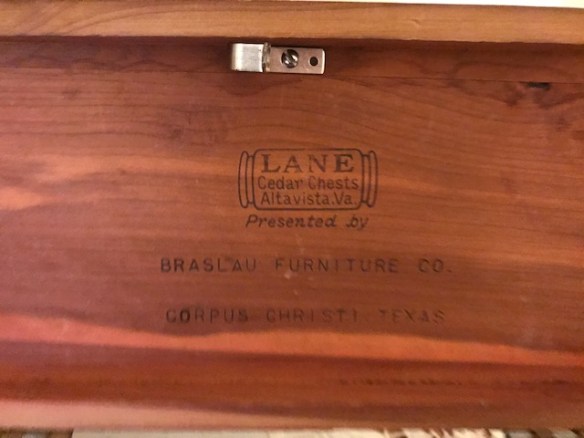
5. An unexpected history. I’ve had this little mini cedar chest for years. Lane mini cedar chestIt had been my mom’s, and I kept all kinds of childhood treasures in it. Now it just has odds and ends. It never occurred to me to ask when or where she got it. Then my friend Susan had a post about these Lane chests. It turns out that for many years, the Lane company gave these out to female high school seniors who requested them. It was fun perusing this site and finding out about the history of them. They share a way to find out when a box was made by its dimensions and inscription (which I have not done yet).

Lane mini cedar boxIt was so fun to discover that this little box that I have used for decades had such a history!

That was my week. How was yours?

Book Review: Summerhills

Summerhills is the sequel to Amberwell by D. E. Stevenson. This book focuses primarily on three of the adult Ayrton children.

Roger is the oldest and the heir since his father died. But he assured his four siblings that Amberwell would always be the family home and they would always be welcome. In the last book, his wife had died in the London bombings, leaving him with their infant son, who nearly died as well. Since Roger was in the military, he sent his son, Stephen, home to Amberwell to be taken care of by his sister, Nell. In this book, Stephen is approaching the age to go to boarding school. But Nell can’t stand the thought of Stephen being sent away. Roger had inherited his wife’s fortune and had been pondering the best way to use it. Now he decides perhaps opening a boarding school nearby would help others as well as himself and Stephen. Summerhills is the name of the new school, and almost all of Roger’s time on leave is spent preparing for the school: consulting with a builder, finding a headmaster, etc. Roger had no interest in other women. He felt his wife was the only woman he would ever love. But perhaps becoming reacquainted with a childhood friend will reawaken the part of his heart that he thought was closed.

Nell had kept Amberwell afloat all during the war. With the loss of most of the staff during the war, Nell continues all of the tasks involved in attending to Amberwell while also caring for her nephew and her confused mother. Nell had always been the shyest Ayrton, content to be at home. When her brother Tom’s friend, Dennis, comes to visit, he is drawn to her. But he knows he will have to win her slowly, through friendship, before he can share his heart.

Ann had been missing from a large part of the last book after her aunt more or less pushed her into marrying a man that her parents would not have approved of. In time, this man proved abusive and eventually died. Ann did her best to provide for her young daughter on her own until the rector of their village found her and urged her to come home. Now she keeps house for the rector. The new headmaster is an old friend, and Ann senses he would like for their relationship to develop into something more. But marriage has been ruined for her.

Tom, the other brother, is away at sea throughout the book but is mentioned. Connie, the oldest sister, had been married and had three children in the last book, and had gotten hold of a book advising against thwarting or correcting children. Consequently, her children are rude, uncontrolled little monsters.

There are comic scenes, often involving Connie’s children, a pretty young governess, and the banter between Nanny and Mrs. Duff, the cook. There’s not a great deal to the plot besides getting the school ready and the various romances. But it’s a sweet, cozy book with some touching moments.

A couple of characters’ fates were left up in the air. There is no other sequel, but, according the this site, some from Amberwell make an appearance in a later book, Still Glides the Stream.

Objectionable elements: a few “damns” and mentions of blacks and Chinese that would be considered racist today. Though I don’t condone such references, I wouldn’t avoid a book with them any more than I would avoid any book where the characters do something wrong in some way.

I listened to the audiobook, wonderfully read by the same reader who narrated Amberwell, Leslie Mackie.

(Sharing with Carole’s Books You Loved, Booknificent Thursday)

Book Review: Breaking Anxiety’s Grip

Dr. Michelle Bengston writes from her own experience as an anxiety sufferer, a neuropsychologist, and most of all, as a Christian, in Breaking Anxiety’s Grip: How to Reclaim the Peace God Promises.

Everyone experiences worry, anxiety, and fear on occasion to some degree. But for some, they are regular companions.

After defining terms, Dr. Bengston discusses what contributes to anxiety, etc., brain chemistry, heredity, example, our own thoughts and heart, and Satanic influence. Interestingly, “While brain chemistry can impact mood and behavior, thoughts (e.g., ‘This place isn’t safe,’ ‘I can’t handle this any more,’ ‘I’m overwhelmed,’ etc.) actually impact brain chemistry” (p. 35).

The author spends the rest of the book explaining “the tools to effectively exchange our worry, anxiety, and fear for his peace” (p. 28). She doesn’t spout empty platitudes: she has put these principles to work in response to cancer diagnoses for herself and her husband, problems in her practice, a son’s major obstacles in his career path, as well as “everyday” problems and concerns. Her tools are based on the sure foundation of Scripture.

I had read a few of Michelle’s posts when she participated in some of the same of the same blog link-ups I participate in. I always enjoyed what she had to say, so when I saw she had written this book, I got it. It sat on my shelf for a while, then I picked it up, then set it aside for another book. When I finally delved into it in earnest, I knew God had led me to read it at just the perfect time. The coronavirus pandemic began just after I started this book, and the chapters I read then helped me immensely in the uncertainty and anxiety of that unprecedented situation.

Here are just a few of the principles that most helped me:

Dealing with worry, anxiety, and fear isn’t a one-time event: it’s a process.

I’m not in control. God is. He knows best and knows the big picture. What He allows may not be what I would have chosen, but He has a purpose in it for my good.

“When concern about the future comes, we can recognize it and then refuse to entertain it. We can determine to stay in the present and in God’s presence, trusting in his perfect plan” (pp. 70-71).

We can reframe our worried thoughts to focus on God’s provision: “Instead of saying, ‘I’m worried I won’t be able to make ends meet,’ exert your trust in God and declare, ‘God, I’m trusting you to provide because you promised to supply all my needs according to your glorious riches.’ Or instead of saying, ‘I’m afraid to be alone,’ look to his promises and declare your trust in him: ‘Thank you, God, that you promise you will never leave me and will always be with me so I won’t be alone'” (p. 119).

“God’s peace is not the calm after the storm. It is the steadfastness during the storm. It is in his presence that we can find peace in the midst of the storm” (p. 140).

“When self-protection is our goal, there’s no room for trusting God’s protective love. That self-protective stance leaves us lonely and unwilling to invite others in, including God. Fear is not from God. It is a direct attack from the one who wants to prevent us from drawing close to God or knowing his trustworthy love. In reality, we are powerless to protect ourselves. Fear doesn’t protect. So self-protection is futile. What we really need is a sure protector—and only a trustworthy God can be that for us” (pp. 171-172).

“Emotions are the outward manifestations of the thoughts we believe. So when we feel anxious, it’s because we’ve believe the thoughts that prompt anxiety. Instead of acting on our feelings, we must speak out against the thoughts that caused them. We must recognize that the thoughts are from the enemy, refute them, and speak back to them” (p. 186).

2 Timothy 1:7 says, “God gave us a spirit not of fear but of power and love and self-control” (the KJV and NKJV says “sound mind”). Michelle spends a lot of time unpacking and applying those verses.

There were just a couple of places in the book where I had a question mark or maybe would have had a somewhat different view. And I wish she would have said a little more about anxiety that seems to come out of nowhere, not triggered by worry, as described here. But whatever the cause, the solution of taking our thoughts captive and applying God’s truth would be the same.

Overall, however, I found this book a great encouragement to my faith. Much of it was truth I already knew, but as was said earlier, fighting against anxiety is an ongoing process rather than a once-for-all victory. This book is an excellent tool and help in the fight.

(Sharing with Grace and Truth, Literary Musing Monday, Hearth and Soul,
Senior Salon, Global Blogging, InstaEncouragement, Worth Beyond Rubies,
Carole’s Books You Loved, Booknificent Thursday)


Stray thoughts about racism

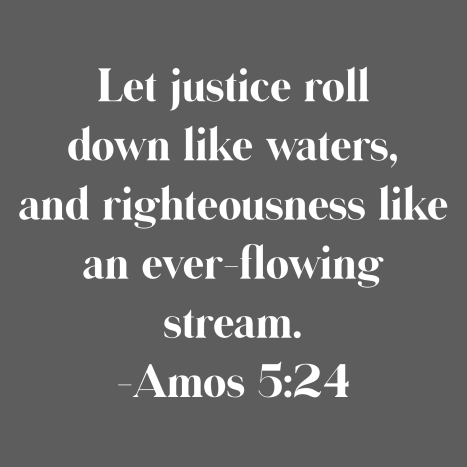
Justice and righteousnessI usually avoid controversy here. But several things have been on my heart the last few days.

I appreciate what one pastor said about feeling the need to make a statement, yet needing time to process and be with his people first. I’m not in any kind of leadership. No one is waiting on me to make a statement. But I have felt the need to say something while also needing to listen and take in and process before responding to horrible events that have happened in our country the last several days.

Some have decried white silence. Personally, my social media accounts have been filled with posts denouncing Floyd’s death. But, please understand, some are fearful of saying something wrong and making things worse.

Others accuse whites who speak out of virtue signalling. Some have said they don’t need whites standing up for them.

What to do? I don’t have all the answers. I don’t even know all the questions. But here are some things on my heart:

No question, what happened to George Floyd was atrocious and criminal. I was sickened, saddened, and angry by his unjust death. I’ve read opposite views about what kind of person he was. But that doesn’t matter. No one deserves to be kneed in the back, pinned to the ground and unable to breathe, until their breath is gone. I’m thankful the officers involved have been arrested.

No question there are bad policemen on the force. But I know they are not all bad. I know many are just as grieved as everyone else over Floyd’s death.

I have friends and relatives on the police force. I appreciate their service. Many take their lives in their hands every day. They never know when a seemingly everyday traffic stop or call will escalate into violence. I would guess that the great majority of law enforcement personnel are just trying to do the best job they can.

However. I don’t think anyone can deny that there have been too many instances of black men unjustly stopped, arrested, and killed. One instance would be too many.

I think racism is only part of the problem, though it’s a big part. The other is power. We’ve personally experienced and observed instances where a policeman has been unnecessarily aggressive and unwilling to listen. Authority is one thing, and I appreciate a policeman’s authority to step in when needed. But stepping in on the basis of snap judgments and a desire to exercise one’s own power is another.

These issues need to be addressed before they end up in abuse and murder. I’ve seen a meme going around listing several previous issues with the policeman who killed George Floyd. If these are true, action on them would have prevented Floyd’s death. If this policeman had been reprimanded or removed from his position earlier, the events on that fateful day would have turned out differently.

Racist and power-hungry people will show themselves. They need to be called on the carpet and either educated or removed. Other law enforcement people need to feel free to report questionable actions of their brother officers. The public good needs to be more important than protecting the brotherhood. Really, the brotherhood is not protected by covering for abusive officers, because reactions to the abuse will come back to haunt everyone, as we’ve seen in the recent riots.

I believe in peaceful protests. I can understand the anger and frustration spilling over. But rioting and looting only hurt the cause, harming innocents. It’s not even revenge, because it’s not aimed at the people who have done wrong. People have died in these riots, and those who killed them are no better than the policeman who killed George Floyd. There have to be more productive ways to demand justice.

But from comments on social media, it seems that outrage over the riots is superseding the outrage over George Floyd’s death.

Some of the rioters are not after justice. Some are opportunists. I’ve seen accusations of political involvement from both parties. It will take time to sort all that out. But don’t let the riots drown out the voices that need to be heard.

As I’ve read and listened to several responses, the one that resonates most with me is, “I’m listening.” James 1:19 tells us to ” be quick to hear, slow to speak, slow to anger.”

I admit that for most of my adult life, I didn’t think racism was much of a problem. Sure, in some places and among some people. But I thought that, by and large, we were mostly past that. I grew up in the 60s. With all the strides that have been made in the decades since, surely people had equal opportunities now. But I was wrong.

I bristled at the mention of white privilege. “Privilege” brought up images of mansions and butlers and high society, which most of us have not experienced.

Buy my friend Laurie put it this way: ” White privilege doesn’t mean your life hasn’t been without struggles; it means those struggles weren’t brought about by the color of your skin.”

As I have listened, I’ve learned that racism is still prevalent despite progress since the 60s.

A friend shared on Facebook My White Friend Asked Me to Explain White Privilege. I Decided to Be Honest (warning: a couple of bad words). Just one instance: her boyfriend had been repeatedly stopped by police while driving. He started keeping a teddy bear in the back windshield and baby wipes in the car so he’d look like a family man and would be stopped less frequently.

Some of you might know Paul Whitt. He was with the Northland camps for many years and is now an assistant pastor. He was a friend of our former pastor and spoke at our church. He interviewed four African-American friends here, all Christians, about their experiences, feelings, and fears. I don’t know Paul or any of these men personally, but I share several friends in common with a couple of them. This is a long recording, but well worth listening to.

My daughter-in-law is Indian. She has sometimes been mistaken for black. I’ve been astounded by ignorant and racists remarks and actions she has experienced. I’m sorry to say that sometimes I tried to explain away what she told me. For instance, once a lady almost mowed her and Timothy down with her cart in the grocery store. Mittu felt it was because they were brown. But, I said, not all offenses are racially motivated; some people are just rude. In fact, the very next week, the same thing happened to me.

But I should not have responded that way. I wasn’t there; I didn’t see the woman’s expression. Just like when someone has been abused, our first response should be to listen and protect.

A few of my daughter-in-law’s other experiences, shared with her permission:

She recently told us of working in an office as the only female. The men would constantly attribute something she said to did to her “just being Indian.” If she tried to say that those comments bothered her, they said they were just teasing, the same as if they teased someone about having red hair. One of them, while leaning over her desk to look at or answer a question about what she was working on, said, “You’re making me hungry for brownies,” referring to the color of her skin. That is a horrible thing to say on many levels.

She worked at a Christian camp one summer. After the counselors met with a particular speaker, he handed her a tract. He knew she was a counselor. She explained that she was saved, and suggested he keep the tract to give to someone who needed it. He insisted that she take it—as if, since she was brown and he was white, he needed to be a missionary to her.

My daughter-in-law told me of being in a store with her mother and aunties, who all spoke in Hindi. Someone passing by muttered “Stupid foreigners.”

I admit, I used to be of the mindset that people who move here should learn English. I still think that’s a good idea for a number of reasons. But then I realized that if I moved to another country, even if I learned the language there fluently, I would still speak English when with other English-speakers. So why should it bother me when other people speak in their native tongue?

I didn’t know until recently that on the day my grandson was born, one of my daughter-in-law’s reactions was fear and dismay that she had brought a brown boy into the world because of what he would have to face growing up. A lot of things that she just put up with before, she’s speaking out about now so that we understand the kinds of things Timothy might have to deal with.

It breaks my heart that my sweet, adorable, witty, kind grandson may someday be stopped and harassed, or worse,  just because of his beautiful skin tone. Recently his school assigned a book on Martin Luther King, Jr. My grandson was horrified as my daughter-in-law explained what civil rights meant and what happened to Dr. King. I was sad not only that his innocence was stripped away, but that he’ll have to hear more on these topics in the future.

As I said, I don’t know all the answers. The problem is so big and pervasive, it’s hard to know where to start. But I think these are good steps:

  • We need to invite friends from other races to share with us, safely and openly. Ignorance is not the same thing as malice, and some of us are just ignorant and need to be helped to understand. I saw one post that said education is not the answer; reconciliation is the answer. But education is a step towards reconciliation.
  • We need to listen to and take seriously these kinds of experiences without trying to explain them away.
  • When someone says we’re making them uncomfortable or they’re offended by what we say and do, we need to stop.
  • We need to avoid sweeping generalities. All white people are not racist; all cops are not abusive; all black people are not threats. All Indians are not doctors and lawyers. All middle Eastern men are not terrorists.
  • We need to get over our idea that anything “other” is bad. God made a big, wide, wonderful world with people in all shades and cultures of every kind.
  • We need to be careful what we post on social media. We need to take the time to fact-check anything we post so that we’re not spreading misinformation.
  • We need to teach our children from their earliest years that “different” is okay. We need to get over the idea that “kids are going to be kids” and it’s okay to tease. Along with racial slurs and digs, we need to eliminate words like “four-eyes” and “retard” and anything else that’s demeaning and hateful. We need to model kind and thoughtful speech for our children.
  • We need to be genuine and consistent. I saw on someone’s Facebook post one meme with a white and black hand intertwined and a promise of standing with the other, and a meme just below it with the “n” word. Posting “I’m with you” memes doesn’t mean anything if our other words and actions contradict it.
  • We need to understand that every person is created in God’s image (Genesis 1:26-27). We all come from the same ancestors: God “made from one man every nation of mankind to live on all the face of the earth” (Acts 17:26). Heaven will be filled with “people for God from every tribe and language and people and nation” (Revelation 5:9).
  • We need to ask God to search our hearts and show us whatever is wrong there. We need to confess and repent of our wrong heart attitudes.
  • We need to weep with those who weep. (Romans 12:15).
  • We need to “Love one another with brotherly affection. Outdo one another in showing honor” (Romans 12:10).
  • We need to “Do to others as you would have them do to you” (Luke 6:31, NIV).

I heard the story of the Good Samaritan for years before I realized the racial implications. The Jews and Samaritans were enemies in New Testament times. When a man was beaten, robbed, and left for dead, two of his own countrymen, religious leaders, passed him by. But a Samaritan, a person of a mixed race, the Jews’ enemy, stopped, helped the man, took him to an inn, and paid for his care. Jesus told this story as an example of what it meant to love your neighbor. Jesus ministered specifically to a woman of Samaria, who then led her whole village out to hear Him (John 34). How have Christians missed the implications of this for so many years?

I’ve seen many good people say that there is no such thing as race, that we’re all one race, that race was not a thing until Darwin. It’s true that, as I said above, we’re all from the same ancestors. But there are different people groups or ethnicities or whatever you want to call them. The Bible speaks of different people groups, especially Jews and Gentiles, and their conflicts through the years. I think people who emphasize this point that we’re all one race are trying to emphasize the unity we should have as people made by God in His image. However, think how that makes a person of color feel when they express sorrow and dismay at mistreatment because of their color, and we say, “We’re all one race. There are no distinct races.” It’s like we’re deflecting and not taking seriously their very real pains and problems.

Forgive me, this has become twice as long as my usual Monday posts. There’s even more swirling in my head, but this is enough for now.

For he himself is our peace, who has made us both one and has broken down in his flesh the dividing wall of hostility (Ephesians 2:14).
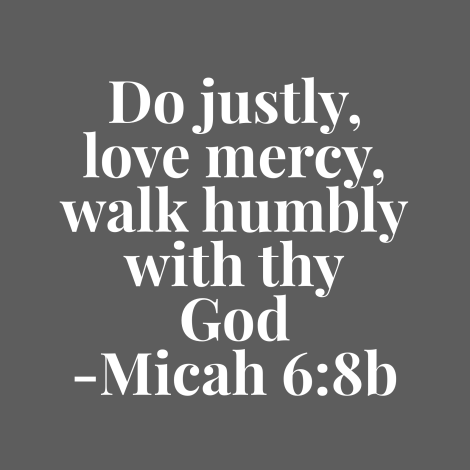
Do justly, love mercy, walk humbly with thy God

(Sharing with Inspire Me Monday, Global Blogging, Hearth and Home, Senior Salon,
Literary Musing Monday, Tell His Story, Purposeful Faith, InstaEncouragement,
Anchored Abode, Recharge Wednesday, Worth Beyond Rubies,
Share a Link Wednesday, Let’s Have Coffee, Grace and Truth,
Faith on Fire,
Blogger Voices Network)

 

Laudable Linkage

A collection of good reading onlineHere are some great reads collected in the last couple of weeks.

How to Be Refreshed by Opening Your Bible.

It’s Time to Conquer that Midyear Bible Reading Slump. What a great idea to revisit the plans we made for Bible reading back in January. Michele suggests several great resources.

A Statement About Statements, HT to Challies. I appreciate the difficulty of being expected to come up with a statement on issues while still processing them.

We Need Rainy Times, HT to Challies. “We all love the sunshine, but the Arabs have a proverb that ‘all sunshine makes the desert.'”

I Know a Place, of justice, righteousness, mercy, grace, and more. HT to Challies.

Dear Worthless Cockroach, HT to Challies. “Is there anything about me (as myself, as the person I am apart from God’s saving grace) that is actually worthwhile or lovable? Am I just a worthless, sinful cockroach that God has chosen to love? And if so, am I wrong to feel bad or uneasy about this? To feel (as I sometimes do) that underneath everything, I really am pretty worthless and unlovable?”

The Exchange of Pleasures, HT to Challies. “Achieving a fitness goal and killing sin both happens through the exchange of pleasures.”

Pluckers. Proverbs 14:1 in the KJV says, “Every wise woman buildeth her house: but the foolish plucketh it down with her hands.” I enjoyed this post about ways we might unwittingly be “pluckers.”

A Cake on the Back Seat, HT to to Challies. “Dear sister, don’t underestimate your voice, especially when many others do. In speaking wisdom to us, reminding us of cakes being carried on back seats, you carry with you the spirit of Abigail as she rode out in 1 Samuel 25.”

Ten Questions Missionaries Love to Answer, HT to to Challies.

From Camping To Dining Out: Here’s How Experts Rate The Risks of 14 Summer Activities, HT to Lisa.

Giant List of Indoor Activities for Kids, HT to Story Warren. With playgrounds and restaurants closed and play dates off the calendar, this is good if you need some fresh ideas for the kids.

The Elisabeth Elliot.org site has gotten a complete overhaul in order to put the writings of Elisabeth, Jim Elliot, and their daughter, Valerie Elliot Shepard all under one “roof.” I miss “Ramblings from the Cove” that Elisabeth’s third husband, Lars, used to write, and I hope they include a word from him sometimes.

And finally, this was pretty clever. HT to Steve Laube.

Happy Saturday!

Friday’s Fave Five

It’s Friday, time to look back over the blessings of the week
with Susanne at Living to Tell the Story and other friends.

There are so many sorrowful things going on in the world today. It takes intention sometimes to look for the good. Here are some of the bright spots in my week:

1. Little Caesar’s. We haven’t felt comfortable getting take-out while the pandemic is going on. Some of you know how much I love take-out, so I have missed the breaks in cooking. We decided we’d be fine with something like pizza, which isn’t touched by the makers after it’s done and put into a box. A couple of times in the past couple of weeks we’ve been out just before dinner and brought Little Caesar’s pizza home. Hit the spot.

2. Ankle feeling better. Ever since contracting transverse myelitis, my right lower leg registers pain as tingling. I had a few days where my right ankle was tingling like crazy and giving out sometimes when I put my weight on it. We decided to give it a couple of days to see if it righted itself, and it did, thankfully. I remembered later that when I had gone to my sewing machine a few days earlier, the foot pedal was too far away and in an odd position. I tried to maneuver it with my right foot. I must have wrenched my ankle somehow then without realizing it.

3. Time at my son’s house. My son and daughter-in-law invited us over for dinner last Saturday. We had a nice meal and visit and ended by eating brownies and ice cream while watching Timothy play outside.

4. Submission acceptance. A writing blog I follow has people guest post sometimes. I submitted a post, and it was accepted this week! I’ll let you know when it comes out.

5. Ladies’ Zoom Bible study. We were a bit fewer in number than usual, but we had a great time.

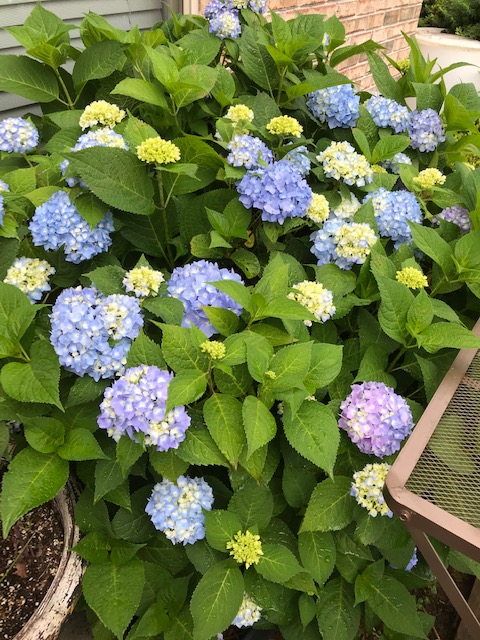
Bonus: These beauties are blooming:

HydrangeasWhat are some bright spots from your week?

Book Review: The Wonder Years: 40 Women Over 40

The Wonder Years 40 Women over 40 The Wonder Years: 40 Women over 40 on Aging, Faith, Beauty, and Strength is a collection of essays compiled by Leslie Leyland Fields .

Many of the authors are well known (Elisabeth Elliot, Joni Eareckson Tada, Madeleine L’Engle, Ann Voscamp, Brene´ Brown). A few have passed on. Some are bloggers. Most have published a book.

They come from a variety of faith communities. I wouldn’t agree with every theological point or endorse every person or ministry represented, but I appreciated the perspective of each writer on midlife and aging.

Some of the entries came from published books; others appear to be written for this collection.

The essays cover just about every topic one could think of in connection with aging as a Christian woman. Physical issues. Changes in marriage, new marriage, new singleness. New challenges. Attitude adjustments. The empty nest. Care-giving. Preparing for our inevitable end.

As I read the first entries, I found several instances of “doing new big things.” I appreciated the emphasis that life doesn’t end at 40—or 50 or 60. But I hoped all the essays weren’t going to be like this. I didn’t particularly want to learn to ride a horse, row a canoe for ten hours, climb a mountain, move to a different country, or start a major ministry any more at this stage of life than I did when I was thirty. Or twenty. Some of us like more sedate lifestyles. I looked back at the table of contents and saw that this beginning sections was appropriately labeled “Firsts.”

The next section is labeled “Lasts.” This stage of life brings some things to an end. Some are laid aside gratefully, other regretfully.

The last section’s title and theme is “Always”—things that ring true at any age but perhaps became more poignant or are brought more into focus the older we get.

To give you just a sampling, here are some of the quotes I highlighted:

But maybe all this is more than the universal human hunt for the fountain of youth and innocence. Maybe it’s something more modest, more possible. Maybe we older women just want to be seen again. Leslie Leyland Fields, Introduction

It takes courage to stop and take stock of who we are, where we’ve been, and where we’re going. It takes strength to keep our hearts open. It takes fearlessness to keep questing after the good, the beautiful, the true. We’ll do exactly that in these pages, knowing that no matter our age, it’s never too late to keep becoming the women God wants us to be. Leslie Leyland Fields, Introduction

I want to maintain the balance between foolish risk and boring safety. I dread growing stale, losing energy. I know my senses need awakening. Luci Shaw, “Rowing into the Wild”

At fifty-one, I was learning that maturity involves living with unmet needs and unanswered questions. I began to realize that in beauty or in tragedy, God alone is in control. He is the source of my real security. Sheila Wise Rowe, “Awakened to Adventure”

Unresolved regret is a leech that steals from our present in order to feed the pain of our past, hindering our future in the process. Michelle Van Loon, “The Gift of Regret”

As the Creator of years and time, he advises us to “number our days,” not to count down to retirement, but to “gain a heart of wisdom” (Psalm 90: 12). Patricia Raybon, “Answer the Phone”

When we get old, in many situations we must either act foolishly or look foolish. It may be wise to walk more slowly, carry a cane, whatever else is needed. Even if it looks foolish to onlookers, to be prudent, we must change our ways to match our season. We needed grace to be diminished. Win Couchman, “The Grace to Be Diminished”

If you’ve read or listened to Elisabeth Elliot much, you’ve heard her talk about offering whatever happens to us up as an offering to God. Her entry here talks about the origin of that concept for her, something I had not heard before. I found that was because this entry was from the only book of hers that I had not read: A Path Through Loneliness.

Many of the entries are humorous, many are challenging. I found myself nodding along in several places, and tucking away thoughts for the future in others.

Despite my light-hearted (but true!) comment about not wanting to face certain kinds of challenges at this stage of life, I agree with Luci Shaw that I don’t want to become stale. I want to keep growing, learning, being useful.

I loved that the title proclaims this season a time of wonder. There’s still a lot of life left in us “women of a certain age,” a lot to learn, a lot to do. We become more settled in some areas, but we can always find new areas to serve and show love to others.

My blog friend Michele also reviewed this book here. I don’t remember for sure, but her post may have been what prompted me to put this book on my TBR list.

(Sharing with Booknificent, Grace and Truth, Hearth and Home, Global Blogging,
Senior Salon, Literary Musing Monday, InstaEncouragement, Worth Beyond Rubies,  Carole’s Books You Loved, Booknificent Thursday)


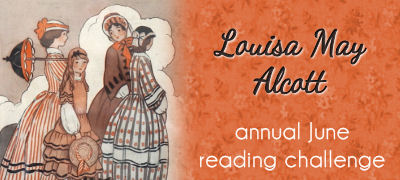
The Louisa May Alcott Reading Challenge

Louisa May Alcott Reading ChallengeTarissa at In the Bookcase hosts the Louisa May Alcott Reading Challenge in June. You can read all the particulars here. She’s also offering a nice little prize here.

Louisa is one of my favorite authors, so I am happy to be joining in again. I plan to read:

  • The Mother-Daughter Book Club by Heather Vogel Frederick, a modern story about four girls who read through Little Women with their moms.
  • Eight Cousins by Louisa
  • Rose in Bloom, the sequel to Eight Cousins, if there’s time.

I’ve read Little Women multiple times, Little Men and Jo’s Boy’s just a few, but some of Louisa’s other books only once. So I wanted to reread a couple of those this time.

If you’ve wanted to read, or reread, something by or about Louisa, now is the perfect time!

When the props are removed

Have you ever felt like the rug has been completely pulled out from under you? Or have the props you leaned on been pulled away? Are the things you always depended on just not there for you any more?

Those hard times of life contain some of the greatest potential for spiritual growth.

Here are some of my prop-removal times:

Family

When I was fifteen, my mother left my father and took us children to Houston. My parents’ marriage had been floundering for some time, so I knew something was bound to happen. But the family break-up was still a shock to my system.

We also moved from a very small town (less than 200 people) to a teeming metropolis of over a million. The culture shock hit me the worst when I went to register at the local high school. I left without registering.

To further complicate matters, these were the days before Internet and cell phones. We had moved during the summer. I had no way to make new friends and couldn’t afford land line long distance calls to my old ones.

So there I was in a new and vastly different city, a new family situation, facing a new school I did not want to go to. I felt alone and cast adrift.

Ours had not been a church-going family, but my parents had let me attend services with my aunt and grandfather or friends. I didn’t know a lot, but I knew I could go to God for help. I prayed.

God answered by leading us to a Christian school and laying it on someone’s heart to pay my tuition for two years. I started attending the church connected to the school and started reading my Bible at the pastor’s urging. I had prayed and asked the Lord to save me several times over the years, but this time I finally understood and believed. My life turned totally around.

Marriage

Fast-forward four years. God provided for me to go to a Christian college, where I met my husband. When we were first married, I still had one semester left and he had two. We went to school together and worked together. I guess I thought that blissful togetherness would continue!

But I graduated, he went back to school, and we had separate jobs. I spent a lot of time at home alone. Then he took a third shift job, and I was a basket case home alone at night. Then, after graduation, his jobs required traveling. With two different moves, while kids finished their school year, my husband worked in the town we were moving to during the week and came home on weekends. Before the last move, we lived like that a whole year.

I cried and wailed to the Lord. It’s not supposed to be like this. I didn’t get married to spend so much time alone.

It’s natural to want companionship and to depend on a spouse. But God wants us to know our ultimate source of companionship, provision, protection, and security come from Him. A few years ago I shared some of what I learned through this experience in Coping When a Husband Is Away, and that has been my most-viewed post several years in a row.

Health

I’d had some health issues, but most were fixed by surgery and/or medication. But when I was 38, one morning my left hand felt numb, like I had slept on it wrong. Within three hours, my left arm and both legs were numb, I couldn’t walk, and I was having trouble using the restroom. I thought I was having a stroke.

After eight days in the hospital and multitudes of tests, the diagnosis came back: transverse myelitis. A virus attacks the spine, and the body’s autoimmune system attacks the myelin sheath around the nerves as well as the virus. Symptoms vary depending on where the virus hits the spine. Some have mild numbness and tingling; on the other end of the spectrum, some are paralyzed and ventilator-dependent.

I was fortunate that my symptoms were somewhere in the middle. With physical therapy and much prayer, I progressed from a wheelchair to a walker to a cane, and finally to my own wobbly gait.

But the body I had always depended on was changed. Continuing numbness, weird nerve signals, balance and urinary issues plagued me the first few years. My neurologist told me whatever I didn’t gain back, I’d get used to. No way, I thought. I could never get used to this.

But I did. And in the meantime, I had to draw close to God in the midst of uncertainty and limitations. In the early days, it was hard to make plans because I never knew how I would be feeling. Any outing or exertion would set me back for a day or two. I often asked God for complete healing, pleading that I could serve Him so much better without the distractions and frustrations my body experienced.

But Elisabeth Elliot’s words about limitations helped me. “My limitations…become, in the sovereignty of God, gifts. For it is with the equipment that I have been given that I am to glorify God. It is this job, not that one, that He gave me.” Limitations didn’t hinder my ministry; they defined it.

I’ve always loved this poem, which I found in Amy Carmichael of Dohnavur by Frank Houghton:

Two glad services are ours,
Both the Master loves to bless.
First we serve with all our powers —
Then with all our feebleness.

Nothing else the soul uplifts
Save to serve Him night and day,
Serve Him when He gives His gifts —
Serve Him when He takes away.

C. A. Fox

Other health issues have sprung up over the last couple of decades, reinforcing my dependence on God day by day.

Pandemic

When this pandemic first started, I was shaken. We know much more about it now, and the recovery rate is high for most. But at first, I felt like I was taking my life in my hands any time I left the house. I’d seen shortages of bread and milk before a snow forecast, but nothing like store shelves completely empty of paper products. I was grateful for directives to stay home, but worried about the economy.

Our total way of life had been affected by an unknown invader.

I had to remind myself of lessons learned before: God is in control. He’s not taken by surprise. He has promised to take care of His children.

Our church has been reading through the Old Testament prophets. God often had to deal with His people’s trust in everything else but Him. Some objects of their trust were bad, like false gods and despicable religious practices. Some were not wrong in themselves, like other nations or their own wealth and military might; but those things could and did fail them. Some were even wonderful things, like the fact that they were God’s people, and they had the temple and the holy city. But they didn’t realize that they were trusting in everything except God Himself.

Family, a spouse, a healthy, capable body, and our normal routines are not sinful things: they are God’s good gifts. There’s nothing wrong with depending on them and enjoying them.

But sometimes, instead of seeing God worth through those “props,” we lean on them instead of Him. God weans us away from depending on anything instead of Him, because nothing else will satisfy or help in the long run, and because He alone is capable and worthy.

The eternal God is your dwelling place, and underneath are the everlasting arms. Deuteronomy 33:27

The Lord is my light and my salvation; whom shall I fear? The Lord is the stronghold of my life; of whom shall I be afraid? Psalm 27:1

God is our refuge and strength, a very present help in trouble. Psalm 46:1

And we know that for those who love God all things work together for good, for those who are called according to his purpose. Romans 8:28

Trust in the Lord with all your heart, and do not lean on your own understanding. In all your ways acknowledge him, and he will make straight your paths. Proverbs 3:5-6

Blessed is the man who trusts in the Lord, whose trust is the Lord. He is like a tree planted by water, that sends out its roots by the stream, and does not fear when heat comes, for its leaves remain green, and is not anxious in the year of drought, for it does not cease to bear fruit. Jeremiah 17:7-8

When our props are pulled away, we’re shaken for a bit til we remember the One who never fails. He may not answer prayer just the way we’d like, but we learn to trust His will. When we know God and rely on Him, we find Him abundantly faithful and capable. Then we come to know Him better and our faith grows even more.

Have you ever struggled with the loss of something you depended on and learned to lean more on God? I’d love to hear about it in the comments.

IMG_0653

(Sharing with Global Blogging, Senior Salon, Hearth and Home, Inspire Me Monday,
Purposeful Faith, Tell His Story, InstaEncouragement, Anchored Abode,
Recharge Wednesday, Worth Beyond Rubies, Share a Link Wednesday,
Let’s Have Coffee, Grace and Truth, Faith on Fire, Blogger Voices Network)

(On a side note: The original graphic I had here showed feet with clouds underneath and a building off to the side. I wanted to convey the idea of free-falling, the way we sometimes feel when props are taken away. It didn’t occur to me until Facebook showed only a grey area in place of the picture that perhaps that image might have been disturbing to some. It was obviously photoshopped and edited by the person who originally made it (I found it in the WordSwag app). But it could have conveyed the idea of jumping off a building. We knew a family whose son committed suicide that way. I didn’t realize that connotation at first, and I apologize if that was a trigger or unsettling for anyone. Also, if the graphic you clicked on to get here had a different picture than the one above, this is why I decided to change it.)