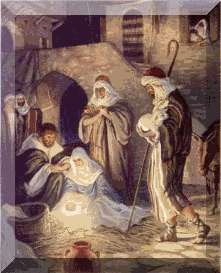
Blue homespun and the bend of my breast
keep warm this small hot naked star
fallen to my arms. (Rest…
you who have had so far to come.)
Now nearness satisfies
the body of God sweetly. Quiet he lies
whose vigor hurled a universe. He sleeps
whose eyelids have not closed before.
His breath (so slight it seems
no breath at all) once ruffled the dark deeps
to sprout a world. Charmed by dove’s voices,
the whisper of straw, he dreams,
hearing no music from his other spheres.
Breath, mouth, ears, eyes
he is curtailed who overflowed all skies,
all years. Older than eternity, now he
is new. Now native to earth as I am, nailed
to my poor planet, caught
that I might be free, blind in my womb
to know my darkness ended,
brought to this birth for me to be new-born,
and for him to see me mended
I must see him torn.
God May Not Have a Wonderful Plan for Your Life. He does, in the sense that He made it possible for us to go to heaven when we repent and believe He sent His Son to take our sins on the cross, and He has promised to be with us in this life, but some things in life are hard. The Bible said they would be, and we can give people the wrong picture of Christianity and rub salt in an open wound sometimes by spouting phrases like this.
Scowling at the Angel. “There in my brokenness I had so little to give. But grace, she never left. She met me in all my frailty, raw and wrathful, as exposed and defenseless as the day I was born.”
It Takes a Pirate to Raise a Child, HT to Bobbi. Loved this – about how children’s stories shape their ideas of right and wrong, e.g., telling the author’s son that he was acting like Edmund in The Lion, the Witch, and the Wardrobe helped him understand his behavior towards his siblings was wrong when explaining and exhorting wasn’t getting through.
Welcome to Friday’s Fave Five, hosted by Susanne at Living to Tell the Story, in which we can share five of our favorite things from the last week, a wonderful exercise in looking for and appreciating the good things God blesses us with. Click on the button to learn more, then go to Susanne’s to read others’ faves and link up your own.
It’s beginning to look and feel and sound a lot more like Christmas! Here are a few highlights since last week:
1. Ladies’ Christmas party. The Christmas party for our ladies from church was last Friday, and I especially enjoyed the fellowship and the testimonies. A favorite moment: the songleader asked us for favorite Christmas carols to sing, and someone volunteered “As the Deer.” The songleader gently explained that we wanted Christmas songs, and someone said, “As the Reindeer, then.” 🙂
2. The children’s Christmas program at church was Sunday night. They always do the Nativity story and sing various songs, and it’s always cute, especially the littlest ones dressed up in pajama-type costumes to represent the animals in the stable. This year it seemed like there were a record number of parents there from our church’s van ministry whose children come to the children’s ministry, and I pray that the gospel message found its way to their hearts.
3. Online shopping. Love it! Much nicer than traveling place to place to place to shop, though I do like to get out and about for Christmas shopping a little bit. And then all the packages coming in the mail as a result is fun, too. 🙂
4. Progress. When I realized that, with the lateness of Thanksgiving this year, we had just a few short weeks until Christmas, I almost started to panic, but this week I got most of my shopping done (thanks to online shopping! 🙂 ) and am almost finished with my Christmas cards and letters, so I am feeling pretty good about the Christmas schedule now.
5. Cake pops. Just discovered these yesterday. I had been wanting something chocolate and cakey, but I don’t dare buy or bake a whole cake for just the three of us, and when I saw this, I thought, “That’s it! Just what I want!”
Do any of you remember when bloggers used to do this kind of thing all the time – make up memes or questionnaires that others could chime in on or use on their own blogs? Those were fun – I guess maybe people just don’t have time for them as much as they once did.
But some fun questions came to mind this week, so I thought I’d make up a new one. If you’d like to copy these questions and use them on your own blog, you are welcome to. I’d appreciate a link back with acknowledgement as the originator of it, but it’s not like I am going to hunt you down if you don’t. 🙂 If you’d like to answer in the comments, or just leave a comment without answering the questions yourself, or just choose a few of the questions, that’s fine as well.
What is your favorite Christmas song? Hymn: “Infant Holy, Infant Lowly.” Secular: “I’m Dreaming of a White Christmas.”
Favorite Christmas special/movie? Charlie Brown Christmas, White Christmas.
What kind of special goodies do you make in December?Harvest Loaf Cake is a must.
We used to do decorated sugar cookies when the kids were little, mainly for fun and the experience of it, but I was never particularly good at those and marveled at how some of my friends could make them look so beautiful.
Favorite Christmas beverage?Apple cider. It’s not exclusive to Christmas, of course, but that’s usually when I have it. The rest of the family likes eggnog, but I think it’s nasty stuff.
How many Christmas parties do you usually attend? Usually just two, the church ladies’ Christmas party and our adult Sunday School Christmas party. This year we’re putting off the SS one until January both to reduce some of the busyness of the season plus to have something to look forward to after it’s all over. In some years we’ve had choir or deacon Christmas parties, depending on what we were involved in during any given year. One friend used to have after-Christmas parties for the same reason mentioned earlier
Do you go Christmas caroling?Does anyone come Christmas caroling to your house? We don’t go caroling although we have occasionally in past years. Last year some folks from church went out caroling to all the “at-home” members who can’t make it out to services, and they included my mother-in-law for that at her assisted living place. She’s at our home now, and they are planning to do that again, so I imagine we’ll benefit from some carolers then.
When do you put the tree up and take it down? Nowadays we put it up after Thanksgiving because Jeremy is here then and the whole family can decorate together. We didn’t used to get it up until a couple of weekends into December, but I like doing it after Thanksgiving – we can enjoy it longer plus it’s less stressful to get it up earlier rather than mid-December when there are a ton of things going on (or used to be, when the kids were home and had Christmas programs, recitals, and parties both at school and church). We don’t have a particular time to take it down – just whenever we can get to it, usually within a week or so after Christmas.
Do you decorate with traditional red and green or with other colors? We have a variety of colors. I don’t have much red in my home, so I try to de-emphasize red a bit, but we do have both red and green as well as other colors. We have a lot of blue because the family room, where the Christmas tree is, has a lot of blue. There is also some silver and gold and white and a little pink. 🙂 I have a little pink-decorated tree on my desk.
How many Christmas trees do you put up (large and small?) The main big one is in the family room.
I have three little ones: the pink one I mentioned on my desk:
A miniature tree in the dining room on the dry sink:
And a small one on the living room end table in front of the window:
Are your Christmas tree decorations themed or hodgepodge?Hodgepodge. I like it that way. 🙂 When I was growing up, a lot of families had a themed or more formally decorated tree in the living room (remember the white or aluminum ones with the circular multi-colored disk that would revolve and throw different colors onto it? We never had those but many did) and a more hodgepodge “family” tree in the family room. My own family always had just the family one.
Ham, turkey, both, or something else for Christmas dinner? Usually ham with cheesy potatoes, some kind of vegetable, rolls, and apple and pumpkin pie.
Do you have any Christmas traditions that are unusual, out of the ordinary? Not that I can think of, except that we like to have these snacks during the Christmas season which aren’t in themselves Christmasy: Chicken in a Bisket crackers, spray cheese, and Pirouette cookies. Plus in our old house, there was a hook in the ceiling right above where we put the tree, where I guess the previous owners must have had a house plant or hanging lamp, and the boys would always put a snowflake ornament there above the tree. Our house now doesn’t have that, so they are creative about finding ways to hang that snowflake. And we continue to use some of our misfit ornaments – those are some of their favorites.
Otherwise we’re pretty traditional, I think. 🙂
Do you display Christmas cards in particular way? I used to hang them up on a garland until we moved to a house where there wasn’t a place to hang one, so for a few years I kept them in a basket. This year we’ve found a place to hang a garland up again, so I am looking forward to having them displayed again. I enjoy having them out like that to enjoy more than the momentary opening. A lot of families have to just sending a Christmas letter instead of a card rather than in a card – I’ll probably keep those in a basket.
What do you do with the Christmas cards you received after the holidays are over? I’m actually asking this question to get some ideas. 🙂 I hate to throw them away. I usually keep them in a stack for a while and then go through and throw some out and keep the particularly meaningful ones (if I kept every single one, they’d just end up in a box in the attic and no one would ever go through them). When the kids were little I kept them, thinking the next year we’d use them to cut off the fronts and make a collage – but we never got around to that. 🙂
Christmas newsletters: Love ’em or hate ’em? I love them. I enjoy hearing what’s gone on with friends during the year. Some times they share things I didn’t know about, sometimes I enjoy reviewing in a condensed form what I already knew about.
There you have it! Let me know if you do these on your blog and I’ll come see what you have to say.
I first wrote this three years ago, but I’ve reposted it before and am doing so again this year, because it seems like almost every year I run into someone having a hard time over the holidays, and maybe this will help. I’ve edited it a bit so the time frames are current.
___________________________________
December could be a rather gloomy month for my family. My mother passed away Dec. 10 eight years ago, my father Dec. 12 fifteen years ago, and my grandmother Christmas Eve a few years prior to that, leading my brother to exclaim once that he just wanted to cancel the whole month. In more recent years the husband of a good college friend passed away in December 21 on our anniversary, and our family dog died the same day.
The death of a loved any any time of year can shadow the whole Christmas season as we miss our normal interactions with that loved one, and several years later, though maybe the pangs aren’t quite as sharp, they’re still there, and it’s not abnormal to be caught off guard by a memory or a longing leading to a good crying jag.
When someone is grieving over the holidays, they may not want to participate in some of the “normal” happy pastimes. It’s not that they don’t ever laugh or enjoy gatherings. But as Sherry said yesterday, “I am enjoying the traditional holiday celebrations, and at the same time they move me to tears, sad tears for things that have been lost this year. I am singing the music, and yet I’m tired of the froth of jingling bells and pa-rumpumpum.” I remember almost wishing that we still observed periods of mourning with wearing black or some sign of “Grief in progress” — not to rain on anyone else’s good time, but just to let people know there was woundedness under the surface, and just as physical wounds need tenderness while healing, so do emotional ones. Normally I love baby and bridal showers and make it a point to attend, but for several months after my mom’s death I did not want to go to them. I rejoiced with those who rejoiced…but just did not want to rejoice in quite that way. I first heard the news of my mom’s death during our adult Sunday School Christmas party, and the next year I just did not want to attend – the grief was still too close to the surface and would probably erupt in that setting where I first heard the news. Even just three years ago when our ladies’ Christmas party was on the anniversary of my mom’s death, I was concerned that at some point during the evening I would have to find the restroom and lock myself in to release some tears (though thankfully that did not happen).
Other events can cast a pall over Christmas: illness, job loss, a family estrangement, etc. One Christmas we were all sick as dogs, and my father-in-law had just had a major health crisis and wanted us to come up from SC to ID to visit. There was just no way we could drag ourselves onto a plane until antibiotics had kicked in a few days later, but we did go, and if I remember correctly, that was the last time any of us except my husband saw him alive, so in retrospect we were glad we went, though it wasn’t the merriest of Christmases. A good friend grieved over “ruining” her family’s Christmas by being in the hospital with a severe kidney infection. Lizzie wrote about visiting her husband in prison for Christmas. Quilly commented yesterday about being homeless one Christmas. Yet both Lizzie and Quilly mentioned reasons for rejoicing in the midst of those circumstances.
If you’re grieving this Christmas, don’t feel guilty if you’re not quite into the “froth” this year. One quote I shared on a Week In Words post earlier had to do with giving yourself time to heal. On the other hand, there may be times to go through with the holiday festivities for family’s sake — and, truly, those times can help keep you from the doldrums. Sherry shared how making a list of reasons to celebrate Christmas helped. Look for the good things to rejoice in. Don’t let the grief turn you into a Scrooge who hates Christmas: your loved one who is gone probably wouldn’t want that to happen. I think they’d probably prefer that you enjoy the best parts of the season while still remembering them in it. E-mom left a valuable comment yesterday that we can treasure up the memories of good Christmases to tide us over the not so good ones, and then look forward to better things ahead. And as I said yesterday, remember that the first Christmas was not all about the froth, either, but was messy, lonely, and painful, yet out of it was born the Savior of the world and the hope of mankind. Rejoice in that hope and promise. Draw near to Him who has borne our griefs and carries our sorrows until grief and sorrow are done away forever.
Let the stable still astonish: Straw-dirt floor, dull eyes, Dusty flanks of donkeys, oxen; Crumbling, crooked walls; No bed to carry that pain,
And then, the child, Rag-wrapped, laid to cry In a trough. Who would have chosen this? Who would have said: “Yes, Let the God of all the heavens and earth Be born here, in this place”? Who but the same God Who stands in the darker, fouler rooms of our hearts and says, “Yes, let the God of Heaven and Earth be born here– in this place.”– Leslie Leyland Fields
Welcome to Friday’s Fave Five, hosted by Susanne at Living to Tell the Story, in which we can share five of our favorite things from the last week, a wonderful exercise in looking for and appreciating the good things God blesses us with. Click on the button to learn more, then go to Susanne’s to read others’ faves and link up your own.
I apologize if several posts with no content popped up in your feed readers from me yesterday. Every time I hit “Publish” or “Save Draft,” everything would disappear except the title. I tried several times and put in a note with the WordPress forums, with no help from that quarter yet, but I am hoping it was a temporary fluke and that everything will work like it it supposed to today.
Here are some favorite parts of the last week or so:
1. Praise service. This was actually the Sunday before Thanksgiving, and I can’t believe I forgot to mention it. In all of the other churches we have been in, the Wednesday or Tuesday before Thanksgiving has always been a time for testimonies about how God has worked in our lives the previous year, and it has always been the highlight of the church year for me. Up to this point our current church provided that time at the end of a fall festival earlier in the month, but not everyone can attend that, and and fewer people can participate since it is at the end of a number of other activities. This month they decided to have it the Sunday night before Thanksgiving, and it was a joy to hear different people share how God met them in the circumstances of the past year.
2. Family time. My oldest son was home for Thanksgiving and stayed until Monday, and everyone else (except Mom 🙂 ) was off until Monday as well, so we enjoyed a nice long weekend of feasting, playing games, decorating for Christmas, and enjoying each other.
3. Dinner at Cheddar’s. Not only is it one of my favorite places to eat, but it was nice to have a break from cooking and dishwashing.
4. Making gingerbread houses. This is a new tradition our daughter-in-law introduced to us. This year we had a Charlie Brown theme.
5. The end of a bad day. Yesterday was an extremely frustrating day for a number of reasons. The post I was trying to publish yesterday took much longer to write than I had planned, and then the silly thing wouldn’t publish, and I spent a great deal of time trying to get it to. Then I had a couple of mishaps in the kitchen, including burning the caramel for caramel corn (burnt caramel is not a good scent for the home…:)). But that day is over, and hopefully this one will be better.
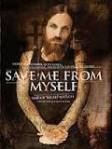
Save Me From Myself: How I Found God, Quit Korn, Kicked Drugs, and Lived to Tell My Story by Brian Welch wasn’t on my radar. I had heard of Korn, but I was never into metal music, never heard them, and did not know any of the band members’ names. But this book caught my eye when it was on sale for a low price for both the Kindle and audiobooks versions, so I thought I’d check it out. I was wary at first about how explicit he might have been about his former life, but Amazon reviews assured that he wasn’t graphic about it.
Brian grew up as an ordinary kid in Bakersfield, CA, who had a passion for music and was a part of several bands before Korn came together and exploded onto the music scene. He first tried drugs at the age of eight with a friend but didn’t get into them heavily until later on. By young adulthood he drank heavily, was addicted to meth, and sometimes tried other drugs. He says that meth was considered a “dirty’ drug but Xanax and prescription drugs were more respectable. He describes an ER doctor bringing drugs to the band, getting high with them all night, and then getting ready to go back to work at the ER the next morning (I would have hated to have been that guy’s patient).
Though he attained his childhood dream of becoming a rock star and loved performing, he found he was unsatisfied. There was an undercurrent of anger in his life beginning with his father’s “Mr. Hyde” moments and his own insecurities from being bullied as child. That was an aspect that caught me by surprise: I think we sometimes think of drug addicts as into it for pleasure and partying and don’t realize that they want the same things everyone else does: a home, a family, someone to love. When relationships fail and when life’s problems surface, it hurts them as deeply as anyone else, and they try to deal with the pain by anesthetizing it with drugs. But the drugs wear off, leaving them depressed, and they know they should stop, but they’re hooked. I also hadn’t realized that meth could leave a user severely depressed as they came off of it, perpetuating a vicious cycle of taking the drug again to numb the pain.
Brian quit several times, but after a time would try it again “just once,” and then “once in a while,” and before long he would be using regularly again. And before we scowl at that, we need to remember how often we’ve decided we need to “cut down” on sweets or TV or social media or whatever, only to pick it all back up again at the slightest provocation. It’s hard enough to break any habit, but when a drug is tailor-made to be physically and mentally addicting, getting off of it for good seems hopeless.
When Brian heard his five year old daughter singing around the house one of Korn’s songs about being addicted to sex, he felt something had to change, but he was so foggy from drug use that he couldn’t think clearly. He was suicidal much of the time that he wasn’t on drugs and felt that the drugs would do him in at some point, but he felt powerless to change anything.
Then God created a perfect storm to draw him to Himself: a real estate business partner who was a Christian shared a Scripture verse with him that spoke to his heart (Matthew 11:28: “Come to me, all who labor and are heavy laden, and I will give you rest”), he began to run into old friends who had become Christians, he attended a church service with a friend, and he gradually came to a point of believing for himself on the Lord Jesus Christ for salvation. I was almost in tears at this part of the book.
Around the same time he felt he should quit Korn to focus on raising his daughter, and the rest of the book tells of his early “baby steps” as a Christian, his growth, trips to Israel and India, and working on new music.
Sometimes when a celebrity professes faith, we can be wary because we don’t know exactly what they’ve heard or why they’re responding, but as far as I can tell, Brian’s faith is the real deal. Do I agree with every little thing he wrote and has done since? No. 🙂 Some things he wrote caused me to think, “Wow, that’s some good insight,” but then a few paragraphs later I’d wince a bit. He had only been a believer for a couple of years or so when he wrote this, so I pray he will continue to grow in the Lord.
I know some of you would want to be forewarned that there is a bit of bad language scattered through the book. Most of you who have read here long know that the “f word” is usually a deal-breaker for me in books and films, particularly when it is thrown in gratuitously. It’s not just that I don’t like it (though I don’t: I loathe it), but I don’t want words like that floating around in my brain that can then come to the forefront at an inopportune moment, and the more I read them, the more likely it is that they’ll do just that. On the other hand, I have relatives who use such words, and I have to delete about every other post of theirs on Facebook because I don’t want that language on my screen and in my mind, but I can’t unfriend them, because they’re family, after all. I don’t want to be aloof from them and make them feel like they have to clean up their act before I’ll interact with them: that is the complete opposite of the grace of Jesus Christ. Sometimes we have to take people where they are. Brian did say at some point in the book that God was working on him about cussing, and hopefully as he grows in the Lord, God will speak to him about the language of Christians.
There is another issue I wanted to comment on mainly because I feel a responsibility when I mention a book here, because sometimes people have bought books on my recommendation, and I don’t want anyone to get the mistaken idea that I am promoting something in a book that I’m not. That issue in this book is speaking in tongues. The pastor and church Brian was initially under were not charismatic, but later he came under some charismatic teaching and followed it. I know there are good people on both sides of this issue: some of our relatives that we are closest to in other doctrinal issues we would differ from in this. I don’t doubt anyone’s salvation or sincerity if they speak in tongues (though we have had people doubt ours because we don’t), but I personally believe there is a good case for believing that some of the miraculous “sign” gifts like tongues, prophecies, etc., ceased once the Bible was completed. I wrestled with this a lot in my early Christian days after reading The Cross and the Switchblade and being exposed to some charismatic television. I even called in to the TV show one day, and I don’t remember if the person on the line asked me if I was saved or believed in the Lord: they asked me if I had spoken in tongues. They tried to get me to come out with a few syllables to get things going. Alone in my room I prayed that if this was something God had for me, that He would allow it to happen, and I was disappointed when nothing happened. It took me a while to realize He answered my prayer, and that He didn’t have that for me. I don’t think that the modern charismatic movement is much like the tongues-speaking in the book of Acts: there was no trying to work it up by mouthing a few syllables there, and according to Acts 2, the tongues were actual languages that the speaker didn’t know but the hearer did. I do agree with Brian when he writes that God is not going to love you more if you do or don’t speak in tongues.
I would also say to him, if I could, that though I understand his frustration over factions of Christians fighting over doctrinal issues, that doesn’t mean they’re not important and that we can chuck them overboard. The Bible has much to say about sound doctrine, and the apostles spent a lot of time correcting false doctrine. We are all at different stages of our understanding level and maturity level, so there are going to be differences of opinion. I’ve mentioned ere before that years ago when I read 50 People Every Christian Should Know by Warren Wiersbe, I was struck by the fact that many of the people he mentioned were on opposites sides of the fence on some issues, yet God mightily used all of them. That doesn’t mean those issues aren’t important: each of us is responsible to study them out before the Lord. But people can differ on some side issues and still be friends and love God and be greatly used by Him.
Brian’s style of writing is conversational and easy to read. I was immensely blessed by hearing how God brought Brian to Himself. I was a little dismayed to read that in recent years he has gone back to playing with Korn, in that the lifestyle as well as the lyrics of their old songs (at least what little I know of them from what he says of them) do not seem conducive to Christian life and growth. I hope he’s not setting himself up for a fall. Yes, as he said in an interview, Jesus did hang out with sinners, but the Bible also tells us there are some things to flee and some things to follow. But I do pray he continues to grow in the Lord and to shine for Him, and I wish him all the best.
(This will also be linked to Semicolon‘s Saturday Review of Books.)
The Healer’s Apprentice by Melanie Dickerson is something of a Christian fiction retelling of Sleeping Beauty based in medieval Germany (forgive me, I think I have been saying Cinderella. The story made a lot more sense once I realized it was based on Sleeping Beauty. 🙂 ) There are some changes to the original story but some elements remain the same.
Rose is the daughter of a woodcutter and is an apprentice to the town healer. One day one of her patients is none other than Lord Hamlin, son of the duke. They are attracted to each other, but as they are from different classes of society, they can’t think of a relationship. Even if they could, he is engaged in an arranged marriage to someone he has never met, whose parents have her in hiding because an evil sorcerer is after her. It becomes Lord Hamlin’s job to find the evil sorcerer and do away with him before the wedding, but he can’t quite catch him.
Rose, meanwhile, is pursued by Lord Rupert, the younger son of the duke. He’s a bit of a rake, but tries to convince Rose that his love for her has changed him and his intentions are honorable. She doesn’t love him but is flattered by his attentions and believes his promises of change.
Rose soon has to face two disappointments: she discovers Lord Rupert is indeed a rake, and the couple who raised her are not her real parents. Plus she is not so good at the job she is apprenticing for and is dismayed at facing a long, lonely future in it.
Knowing this is based on Sleeping Beauty, you can guess who Rose really is and how it all turns out after a few more bumps in the road, including encounters with the sorcerer.
(Spoiler alert in this paragraph): Since this story is written without the benefit of fairy godmothers and true love’s kiss that overcomes a sleeping spell, the author had to come up with a different dilemma for the duke son’s to rescue Rose from, and this is the part that is a little off for me. One of the reviews on Amazon says that the sorcerer sends demons into Rose, and I would have had a problem with that since Rose is a believer. But that is not what he does, yet it does involves demons that Lord Hamlin then has to cast out from where they are.
I have to say I didn’t enjoy this quite as much as The Merchant’s Daughter, based on Beauty and the Beast. This is Melanie’s first book, but if I had read it first I probably would not have gone on to read the others, so I am glad I read The Merchant’s Daughter first, and I am looking forward to The Fairest Beauty based on Snow White. Nevertheless I did enjoy the story to a degree and appreciated especially Lord Hamlin’s character. Both Rose and Lord Hamlin learn to do the right thing despite feelings and to wait on God’s timing.
(This will also be linked to Semicolon‘s Saturday Review of Books.)
I first saw Praying for Your Addicted Loved One by Sharron K. Cosby mentioned by Joyful Reader, and it caught my eye because we have had loved ones on both sides of our family struggle with various kinds of addictions.
The book is a series of 90 devotionals set up along the lines that in 12-step recovery programs, when people first start they are supposed to attend 90 meetings in 90 days as a help in breaking their old habits, forming new ones, and finding support. The author’s own son was addicted to drugs for years with various successes and relapses along the way, and her son says where he was once a “hopeless dope addict,” he now calls himself a “dope-less hope addict.”
That’s what stood out to me the most in this book: hope. If someone close to you has ever been addicted to drugs, you know how hopeless it can seem some times. You can’t reason with them because their addiction messes up their thinking. Even if they agree that drugs are destroying them and vow to stop, it takes very little to draw them in again.
“With man this is impossible, but with God all things are possible” (Matthew 19:26). Sharron shares that hope in the midst of dark and despairing times, through all of the problems and heartache that go along with having an addicted loved one. She also shares some good advice for interacting with them and encouraging hope in them and assuring of your love while not enabling them further in their addiction.
While a promise in Scripture that God will bring Israel back from the land of their captivity is not a direct promise that He will deliver an addicted loved one, verses like Jeremiah 30:10 do give hope: “Then fear not, O Jacob my servant, declares the Lord, nor be dismayed, O Israel; for behold, I will save you from far away, and your offspring from the land of their captivity. Jacob shall return and have quiet and ease, and none shall make him afraid.” Calling wanderers back, releasing captives, setting prisoners free is what He loves to do. Jesus said, “The Spirit of the Lord is upon me, because he has anointed me to proclaim good news to the poor. He has sent me to proclaim liberty to the captives and recovering of sight to the blind, to set at liberty those who are oppressed, to proclaim the year of the Lord’s favor” (Luke 4:18-19).
I can heartily recommend this book to anyone with a loved one snared in any kind of addiction.
(This will also be linked to Semicolon‘s Saturday Review of Books.)